1. Introduction
The leaps made by artificial intelligence (AI), particularly in generative AI (GenAI), in recent years have begun to influence many sectors of society, including education. In higher education, the integration of GenAI tools represents nothing less than a transformation in how students engage with learning, particularly in self-regulated and hybrid instructional environments. GenAI tools such as ChatGPT and Claude offer unprecedented opportunities for personalized, on-demand learning support that challenge traditional instructional paradigms, forcing institutions to grapple with these evolving technological capabilities and their associated pedagogical demands (
Adiguzel et al., 2023;
ElSayary, 2024;
Kurtz et al., 2024). However, academic institutions, faculty, and students are only beginning to understand and internalize the implications of these tools.
Recent studies have begun to explore the multifaceted impact of GenAI on student learning, revealing both promising opportunities and significant concerns. Studies highlight GenAI’s potential to support comprehension, provide instant feedback, and enhance metacognitive skill development (
Chan & Hu, 2023;
Usher & Amzalag, 2025). At the same time, they raise concerns about overreliance, reduced authenticity of learning, and the risk of passive consumption (
Denny et al., 2024;
Eke, 2023;
Zviel-Girshin, 2024). A recent study by
Kohen-Vacs et al. (
2025), conducted in the context of programming education, further emphasized the tensions between students’ enthusiasm for GenAI tools and their difficulties in applying them to complex tasks such as debugging and evaluating AI-generated outputs. In light of this, the authors called on higher education instructors to adopt pedagogical models that combine learner autonomy with structured instructor support, an approach aligned with the blended design proposed in the present study. However, their study did not include a controlled comparison with traditional face-to-face instruction. Addressing this gap, the present study employs a controlled experimental design to compare GenAI-supported learning with instructor-led sessions in a real higher education lesson.
This study addresses this gap by conducting a controlled experiment comparing GenAI-supported learning with traditional instructor-led sessions in a mandatory undergraduate Database Management course. Based on a sample of 96 students, we investigated the impact of exposure to GenAI-supported learning on students’ learning experiences, academic performance, and engagement patterns compared to traditional classroom instruction. In designing our research, we were guided by pedagogical frameworks that emphasize motivation, self-regulated learning, and self-efficacy as underpinnings of effective learning. In particular, the frameworks we drew on are inspired by self-determination theory (SDT;
Ryan & Deci, 2020)—the idea that human behavior is motivated by three basic psychological needs: for autonomy, competence, and relatedness. In SDT, autonomy refers to the learner’s perceived sense of volition and choice in the learning process; competence reflects a feeling of effectiveness and mastery when dealing with learning tasks; and relatedness captures a sense of social connection and belonging within the learning environment (
Ryan & Deci, 2020;
Niemiec & Ryan, 2009). Together, the degree to which these needs are met determines the extent to which learning experiences foster intrinsic motivation and sustained engagement.
Within this framework, the three constructs mentioned above—motivation (especially intrinsic motivation), self-regulated learning, and self-efficacy—serve as baseline variables through which the impact of GenAI-supported instruction can be explored. Self-regulated learning (SRL;
Pintrich, 1991;
Tekkol & Demirel, 2018) operationalizes how students plan, monitor, and evaluate their learning behaviors, while self-efficacy (
Bandura, 1997) reflects learners’ belief in their ability to succeed in specific academic tasks. Intrinsic motivation, for its part, is the inner drive to complete a task because it is inherently satisfying, rather than to earn external rewards or avoid penalties. All three constructs are theoretically linked to SDT. Intrinsic motivation is inherently linked to autonomy and competence; self-regulated learning contributes to autonomy and competence by teaching learners how their personal decisions and choices (e.g., in time management or learning strategies) affect outcomes; and self-efficacy reinforces competence by fostering persistence and confidence.
We aimed to address two primary questions: In light of the frameworks and constructs mentioned above, (a) how do students’ learning experiences differ when using GenAI tools compared to traditional face-to-face instruction? (b) What differences in knowledge construction and academic performance might exist between these two approaches? Guided by these questions, we used both quantitative and qualitative data to glean insights into how the two learning modes might differentially help satisfy the need for autonomy, competence, and relatedness posited by SDT.
Our findings reveal a nuanced picture of the educational impact of GenAI. Students in the GenAI group reported significantly more positive learning experiences, particularly regarding personalization, pace, and time efficiency. In addition, the GenAI group demonstrated superior performance on moderately difficult quiz questions, suggesting particular effectiveness for mid-level conceptual understanding. However, the qualitative interviews revealed that while students appreciated GenAI’s efficiency and accessibility, they valued instructor-led sessions for more profound and emotionally resonant learning experiences, as well as complex problem-solving support.
This research makes both theoretical and practical contributions to the emerging field of AI-enhanced education. Theoretically, it extends self-determination theory and self-regulated learning frameworks by demonstrating how GenAI tools can enhance autonomy and competence, while also revealing limitations in supporting relatedness and higher-order cognitive scaffolding. Practically, it offers evidence-based guidance for educators seeking to integrate GenAI tools strategically rather than as wholesale replacements for traditional instruction. Our results suggest that optimal implementation involves using GenAI for targeted knowledge acquisition and technical content delivery, while preserving instructor-led sessions for collaborative, conceptual, and integrative learning tasks.
While we acknowledge that the pedagogical community is only at the beginning of this investigation, one of the most significant insights to emerge from our study-and our primary recommendation- is that GenAI should be viewed not as a replacement for human instruction, but as part of a complementary model that leverages the strengths of both approaches. This finding aligns with the insight that AI tools in academic settings represent a natural evolution of active learning methodologies, which have consistently shown positive impacts on student outcomes (
Beimel et al., 2024).
2. Literature Review
Blended or hybrid learning, combining face-to-face instruction with digital tools, has been widely adopted by educational institutions in recent years, partly in response to the differing needs and preferences of a diverse student body (
Garrison & Vaughan, 2008;
Graham, 2006). In these hybrid models, the flexibility afforded by digital tools enables differentiated instruction, while the instructor’s role remains crucial for scaffolding deeper understanding and complex problem-solving (
Deslauriers et al., 2019;
Freeman et al., 2014).
1In such hybrid or self-regulated learning contexts—and, indeed, in higher education generally—the integration of GenAI tools has the potential to transform the student learning experience (
Adiguzel et al., 2023;
ElSayary, 2024). These tools, which include chatbots such as ChatGPT, offer instant feedback, personalized explanations, and an always-available learning companion, prompting both enthusiasm and skepticism among educators (
Chan & Hu, 2023;
Eke, 2023). On the positive side, recent research has explored how GenAI can support comprehension, metacognitive skill development, and technological fluency. On the negative side, studies highlight challenges in areas such as student agency, the authenticity of learning, and the risk of passive consumption (
Bair & Bair, 2011;
Fernandez et al., 2022). Capturing these challenges and opportunities,
Denny et al. (
2024) raise concerns about overreliance on AI-generated solutions in the domain of computing education. However, they also suggest that this shift could encourage pedagogical innovation focused on higher-order thinking and conceptual understanding.
Within this body of work, recent empirical research has begun to examine how generative AI tools affect students’ self-regulated learning and motivational experiences in higher education. Here, too, findings offer scope for both optimism and concern. For example,
Usher and Amzalag (
2025) found that students strategically use chatbots for academic writing support, combining curiosity with self-directed goal setting and iterative refinement. Their findings point to the potential for harnessing GenAI to scaffold SRL processes, such as planning and monitoring. Similarly,
Kohen-Vacs et al. (
2025) reported that integrating GenAI into programming education encouraged autonomous problem solving. At the same time, that study also revealed challenges in students’ ability to critically evaluate AI outputs, highlighting risks for self-regulated learning alongside motivational benefits. These findings resonate with the self-determination theory framework (
Ryan & Deci, 2020), which emphasizes autonomy and competence as key drivers of intrinsic motivation, and they provide a conceptual basis for examining how GenAI-supported instruction may shape students’ motivational and self-regulatory experiences compared to traditional teaching.
Several scholars have outlined potential directions for integrating GenAI successfully into contemporary pedagogy. For example,
Chan and Tsi (
2023) offer a roadmap of practical and conceptual issues that may arise as educators come to grips with these new technologies, emphasizing the importance of guided integration rather than automation if AI is to complement rather than replace human educators.
Rudolph et al. (
2023) similarly explored ChatGPT’s role in reshaping assessment, teaching, and learning in higher education, highlighting both opportunities and risks, and offering practical guidance for institutions, educators, and students in leveraging AI effectively. Some studies also suggest a generational divide in receptiveness to these tools (
Chan & Lee, 2023), indicating that effective implementation requires an understanding of learner identity and preferences.
As described above, the foundational frameworks of self-regulated learning and intrinsic motivation, grounded in self-determination theory (
Ryan & Deci, 2020) and related empirical instruments (
Pintrich, 1991;
Tekkol & Demirel, 2018), emphasize autonomy, competence, and relatedness as core psychological needs that support effective learning and development. When these needs are satisfied, learners are more likely to engage in deep cognitive processing, construct knowledge actively, and achieve higher academic outcomes, as demonstrated in prior SDT research (
Deci & Ryan, 2017;
Niemiec & Ryan, 2009;
Ryan & Deci, 2020). In GenAI-supported contexts, these needs may be engaged differently compared to traditional instruction, influencing motivation and perceived efficacy.
Stroet et al. (
2013) and
Leenknecht et al. (
2021), among others, show that environments that support learner autonomy, including learner-directed pacing and tool choice, enhance motivation and engagement. However, the effectiveness of such environments depends on students’ self-regulatory skills and prior experience (
Boelens et al., 2018;
Jääskelä et al., 2021). This is particularly relevant in GenAI-based learning, where the adaptability of these new tools can foster engagement but also introduce cognitive overload or confusion (
Yang & Zhang, 2024).
The current study builds on this literature by examining how the use of GenAI vs. instructor-led sessions affects students’ motivation, engagement, and academic performance in a real-world course. It aims to extend prior work by offering a controlled design that isolates the effect of instructional mode while accounting for learner variability.
In summary, prior studies highlight both the opportunities and challenges associated with integrating GenAI tools in higher education. However, there remains limited empirical evidence from controlled comparisons between GenAI-supported and instructor-led learning in real classroom settings. Building on the theoretical frameworks of SDT and SRL, the present study seeks to address this gap.
5. Findings
5.1. Quantitative Findings
As noted above, before addressing the main research questions, we conducted a preliminary analysis to assess the equivalence of the two study groups on key baseline measures at the beginning of the academic year. The comparison was based on responses from Week 1 regarding motivation, self-regulated learning, and self-efficacy. An independent samples t-test revealed no statistically significant differences between the groups in most of the scales and subscales. Specifically, no significant differences were found in intrinsic motivation (t(70) = −0.709, p = 0.481), extrinsic motivation (t(70) = −0.044, p = 0.965), or overall motivation (t(70) = −0.330, p = 0.742). Likewise, no significant differences were found in the self-efficacy measures: expectation of success (t(34.7) = −1.453, p = 0.155), perceived ability (t(70) = −1.324, p = 0.190), and overall self-efficacy (t(70) = −1.630, p = 0.108). With respect to self-regulated learning (SRL), no differences were found in planning and organization (t(70) = −0.317, p = 0.752), learning strategies (t(70) = 0.575, p = 0.567), or overall SRL (t(70) = 0.595, p = 0.554). A marginal difference emerged in SRL–motivation, with higher scores for the Lecturer group (M = 4.31, SD = 0.54) compared to the AI group (M = 4.05, SD = 0.58), t(70) = 1.855, p = 0.068. However, the effect size was small (d = 0.45), and the result did not reach statistical significance. These findings support the baseline equivalence of the two groups and strengthen the internal validity of subsequent comparisons.
We next addressed the research questions. RQ1 inquired about the differences in students’ learning experiences when using generative AI tools versus traditional face-to-face instruction. For this purpose, we compared students’ responses on the week 10 learning experience and satisfaction measures between the Lecturer group and the AI group.
As summarized in
Table 3, students in the AI group reported a significantly more positive learning experience than those in the Lecturer group, with a large effect size. No significant difference was found between the groups in terms of satisfaction.
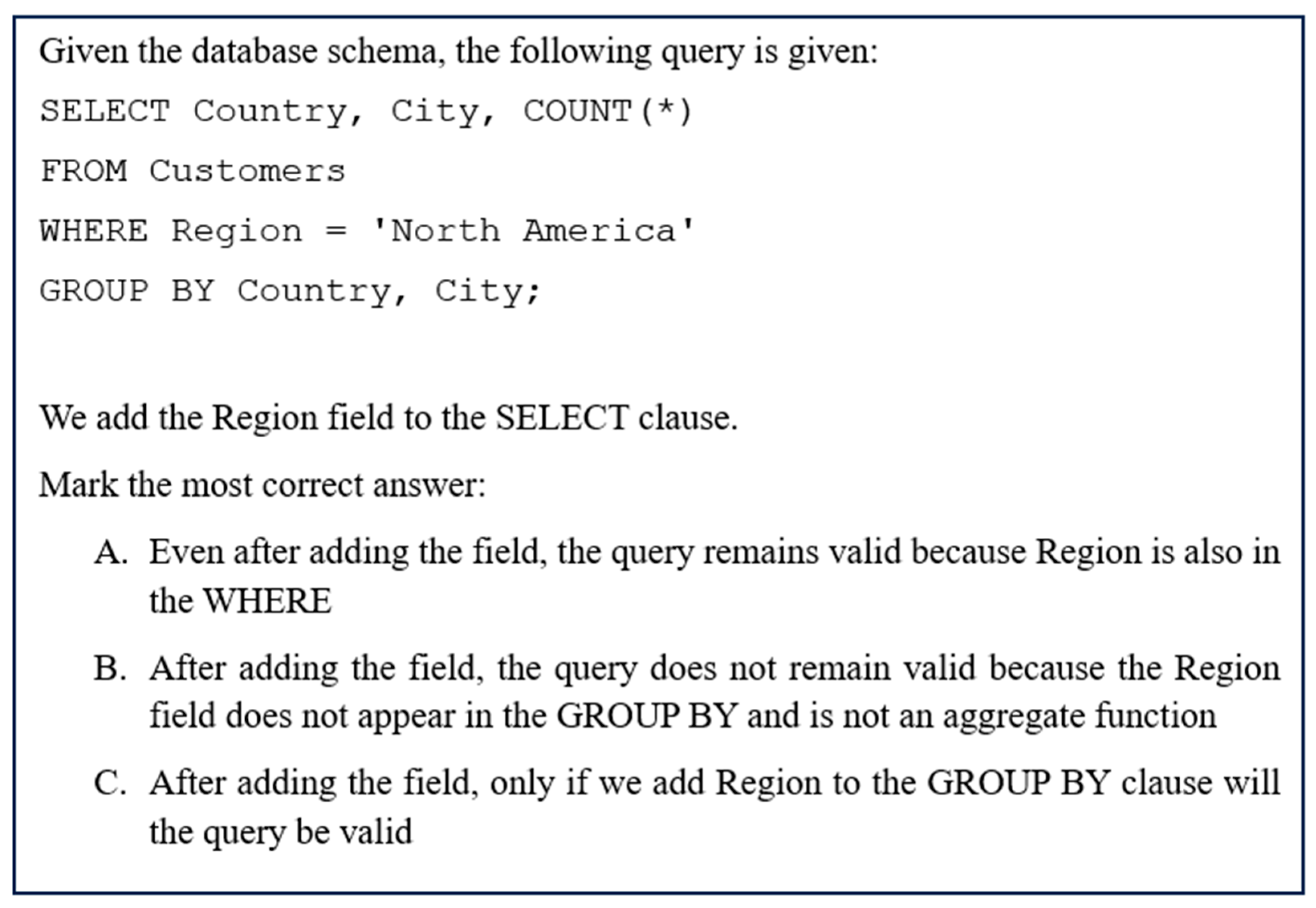
RQ2 concerned the differences in knowledge construction and academic performance between students using generative AI tools and those engaged in traditional instruction. To address this, we examined students’ performance in the short quiz administered at the end of the week in which the material being tested was taught (week 10). The quiz included six items of varying difficulty (easy, moderate, and difficult), and performance was compared between the two instructional groups. Since the distribution of total quiz scores was not normal in either group (Shapiro–Wilk test, p < 0.01), a nonparametric Mann–Whitney U test was conducted. No statistically significant difference was found in total quiz scores between the groups (U = 820.50, p > 0.05).
To gain deeper insight, performance was further examined in terms of question difficulty.
Table 4 presents the success rates (%) for each group across the three levels of question difficulty.
As shown in
Table 4, both groups performed similarly on easy and difficult questions, with no significant differences observed. However, on the moderate-difficulty questions, the AI group outperformed the Lecturer group (68.5% vs. 45.2%), with a statistically significant difference (
p = 0.034) corresponding to a 23.3% gap in performance.
5.2. Qualitative Findings
The qualitative analyses reveal complexities that are not directly reflected in the quantitative findings.
4Looking first at RQ1, although AI-supported learning received significantly higher scores on quantitative measures such as comfort, quality, and contribution to learning, most participants described the learning experience with the instructor as more emotionally and cognitively fulfilling. In general, interviewees linked learning with an instructor to a sense of depth, security, and personal connection. When discussing learning with AI, they highlighted its efficiency and accessibility, but also the possibility of information overload or confusion.
Participants who favored instructor-led learning often referred to the interactive and structured nature of the classroom experience. For example, SL (female) remarked that she “enjoys it much more when the teacher is teaching… she shares her thinking process, and then we build the answer together, step by step.” Similarly, NM (female) explained that “with a teacher… I pay more attention… even if I zone out for a moment, I can come back and still stay with her.”
Some students appreciated the AI’s ability to deliver quick, streamlined explanations, allowing faster access to information and more focused engagement with the material. NM (female) noted that with AI-supported learning, “in just 40 min I was done, compared to the lecture which could take more than two hours.” MA (female) remarked, “It was very focused… without all the sidetracks that happen with teachers.” DA (male) described the difference in terms of modern efficiency: “It surprisingly shortens time. It’s like texting instead of sending a letter—you get what you need without the hassle.” TB (male) added, “It summarizes a two-hour lecture in three pages. That’s pretty wild. It saves time and makes things more efficient.” Correspondingly, participants noted that classroom learning, while potentially rich, was prone to distractions or inefficient use of time. For instance, MA (female) pointed out that with teachers, “sometimes the train of thought goes off track,” and SL (female) mentioned that lessons often “drift into small talk or anecdotes… which can help but do take up time.” LL (male) added that in a classroom setting, “I avoid asking questions so I don’t interrupt… with AI it’s just me and the tool, no one else to consider.”
Our findings on study time bear out these qualitative observations. Recall that we further examined differences in engagement between the two instructional methods by comparing the amount of time students spent in their last study session before the quiz. All students in the lecturer group attended a scheduled 50-min face-to-face session, while the AI group engaged in self-directed study. The AI group reported an average study duration of 36.26 min (SD = 10.2), with a 95% confidence interval of [33.36, 39.16]. A one-sample t-test comparing this mean to the fixed 50-min session revealed a statistically significant difference, t(49) = −9.53, p < 0.001, with a large effect size (Cohen’s d = −1.35). These findings suggest that students using AI-based learning completed their preparation in significantly less time.
However, the time savings afforded by AI were not an unmixed blessing. Some students expressed frustration with the lack of direction and the overwhelming nature of some AI-generated content. YR (female) commented that “it gives you things we didn’t even learn, combines material… it kind of thinks ahead… and that confused me.” TB (male) noted that “it gives an immediate answer… but sometimes you just don’t know what’s important and what’s not.”
This pattern was echoed when we examined the qualitative accounts through the lens of RQ2. Many students described AI as an efficient tool for acquiring straightforward or technical knowledge. For example, DA (male) explained that “if it’s something small and technical, I’d definitely go with AI—it’s fast and gets you what you need.” TB (male) similarly noted that “AI is great for learning definitions or short explanations… but when it comes to edge cases or harder questions, I’m not sure it can help.” As such, participants tended to rely more on instructor-led learning when they faced unfamiliar or abstract material. AA (male) stated that “when I learn with the teacher, I feel she prepares me better for the tricky parts of the exam… things I wouldn’t think to ask about.” YR (female) added that “with the teacher, I understood what would be on the test. With the AI, I wasn’t sure if I had covered the right things.”
Overall, the qualitative findings offer important nuances that are sometimes lacking in the quantitative findings. In terms of the learning experience, AI was often viewed as a functional and effective tool, especially when students had some prior understanding of the content. However, the instructor was perceived as fostering a deeper, more emotionally resonant, and experientially rich learning process, even if standard quantitative metrics do not always capture these. In terms of academic outcomes, while AI-based learning may provide clear advantages for foundational material, it can fall short in supporting higher-order thinking or exam preparation in more complex domains. These findings support the idea that combining instructional approaches may provide the most effective path, using AI to solidify basic understanding and human instruction to guide deeper learning.
6. Discussion
The controlled experiment reported in this paper provides compelling evidence that generative AI tools and traditional face-to-face instruction each offer distinct advantages in higher education contexts. Specifically, the findings reveal that while AI-supported learning enhances perceived learning experience, efficiency, and performance on moderately difficult tasks, instructor-led sessions remain crucial for deeper engagement and complex problem-solving. These findings challenge simplistic narratives of AI as either an educational panacea or a threat, instead pointing toward the need for strategic integration that leverages the strengths of both modalities.
First and foremost, it is important to underscore that the two instructional groups examined in our study were statistically equivalent at baseline. No significant differences were found in motivation, self-regulated learning, or self-efficacy measures at the beginning of the semester. This reinforces the internal validity of our findings, supporting the interpretation that any observed differences in learning experience and performance were likely a result of the instructional method itself rather than pre-existing differences between the students.
Second, most quantitative measures revealed no statistically significant differences between GenAI-supported and instructor-led instruction. This finding by itself is theoretically and practically meaningful. The absence of differences in performance, coupled with the significantly shorter time-on-task in the GenAI group, suggests that GenAI can support learning outcomes comparable to traditional instruction while offering greater flexibility and efficiency. This aligns with emerging evidence that GenAI tools can complement, rather than replace, instructor-led teaching by providing autonomous learning opportunities without compromising academic achievement. Moreover, the lack of overall differences should not be interpreted as evidence of no effect, but rather as an indication that the two modes may engage students differently, with qualitative data highlighting distinctions in motivation, relatedness, and perceived support. Together, these patterns underscore the relevance of examining how GenAI changes the learning experience, rather than expecting uniformly higher scores.
Overall, the results suggest that AI-supported learning environments offer a distinct advantage in terms of perceived learning experience, particularly in areas related to personalization, pace, and accessibility. Students in the AI group reported higher comfort levels, high perceived quality of information, and a more efficient use of time. Yet, importantly, looking separately at the easy, moderate, and difficult quiz questions reveals an intriguing pattern: no significant differences in performance were found for easy or difficult items, but the AI group outperformed the Lecturer group on moderately difficult quiz questions. These findings imply that AI may be particularly effective in consolidating mid-level conceptual understanding, but less impactful at the extremes of difficulty, due perhaps to the simplicity of the content at one end, and the need for higher-order cognitive scaffolding at the other. They thus provide compelling evidence for a differential impact of AI-supported versus instructor-led learning.
The performance gap on questions of moderate difficulty observed in our study also aligns with previous research on effective teaching and learning. According to
Crocker and Algina (
2006) and
Embretson and Reise (
2000), items with moderate difficulty tend to offer the highest discrimination power, effectively differentiating between students of higher and lower performance levels. These mid-range questions are also exceptionally informative when evaluating instruction, as they are most sensitive to the learning gains that stem from effective teaching (
Popham, 2007). This aligns with
Anderson and Krathwohl’s (
2001) revision of Bloom’s Taxonomy, which emphasizes that instructional interventions are most impactful at the application and analysis levels of cognitive processing—levels typically targeted by moderately difficult assessment items. While easy questions often reflect surface-level recall and hard questions may exceed what was taught, it is the moderate ones that best capture the zone of proximal development, which may be influenced by instructional strategies.
Turning to the qualitative findings, the disconnect between positive AI ratings and students’ overall preference for instructor-led learning reveals a fundamental paradox in the adoption of educational technology—namely, the fact that immediate satisfaction metrics may not fully capture deeper aspects of meaningful learning. Students may be drawn to AI’s convenience and efficiency while simultaneously recognizing the irreplaceable value of human connection and contextual understanding that instructors can provide. Our qualitative findings from the student interviews support this narrative: many participants appreciated the AI’s efficiency but highlighted its limitations in guiding deeper, more contextualized learning. The instructor, by contrast, was often perceived as emotionally engaging and pedagogically grounding, especially in moments of confusion or complexity. This dichotomy aligns with broader theories of blended learning and self-determination theory (
Ryan & Deci, 2020), suggesting that while AI tools can enhance autonomy and competence, the relatedness and mentoring functions of human instructors remain irreplaceable.
Another important insight concerns time-on-task. Students using AI reported significantly shorter study durations, yet did not demonstrate diminished comprehension or lower quiz performance. This raises compelling pedagogical questions. In particular, are shorter, focused AI sessions truly more efficient, or do they risk sacrificing long-term retention and critical thinking for immediate convenience?
In this respect, while students frequently described AI as a faster and more concise learning resource, this perception should be interpreted cautiously. From an ethical and pedagogical standpoint, the notion of “efficiency” in learning does not necessarily equate to educational quality or depth of understanding. Moreover, relying on AI to condense information raises concerns regarding critical engagement, authorship, and intellectual integrity (
Eke, 2023). Thus, although participants viewed AI’s speed as an advantage, it must be balanced against these broader ethical considerations. These trade-offs merit further exploration, particularly in courses that build upon cumulative knowledge or require ethical reasoning and reflective practice.
Taken together, our findings suggest that AI tools are best viewed not as replacements for traditional teaching but as complementary assets. Their optimal use may lie in reinforcing basic understanding and offering flexible, student-paced exploration, while human-led instruction remains vital for complex problem-solving, adaptive feedback, and emotional resonance. The findings also have important implications for how we measure and evaluate educational innovations, offering the crucial insight that conventional quantitative satisfaction metrics cannot, by themselves, fully assess either satisfaction or learning.
6.1. Theoretical Contributions
This study contributes to the emerging body of literature on the pedagogical integration of GenAI in higher education by providing empirical evidence from a controlled field experiment. By comparing AI-supported and lecturer-led instruction within the same student population and instructional content, the study isolates the impact of learning modality on student experience, motivation, and academic performance. Our findings reinforce and extend self-determination theory (
Ryan & Deci, 2020) and self-regulated learning frameworks (
Pintrich, 1991;
Tekkol & Demirel, 2018) by demonstrating how GenAI environments can enhance perceptions of autonomy and competence, while also exposing challenges related to cognitive overload and content coherence. Notably, the findings highlight the trade-offs between efficiency and depth, underscoring that instructional mode interacts with the cognitive demands of the learning task. These results advance our theoretical understanding of how AI tools function not only as content providers but also as mediators of learner agency and self-regulation.
6.2. Practical Contributions
For educators and instructional designers, this study offers actionable insights into how GenAI tools can be meaningfully incorporated into hybrid or blended learning environments. The results show that AI-supported instruction is especially well-suited for delivering technical, mid-level content in a time-efficient manner, making it a valuable option for self-paced review or flipped classroom models. However, the qualitative data underscores the continued value of human instructors for building trust, addressing ambiguity, and facilitating deep learning. Practitioners should therefore consider a strategic integration: using GenAI for targeted knowledge acquisition, and reserving instructor-led sessions for collaborative, conceptual, or integrative tasks.
At the institutional level, the findings suggest several important considerations for policy and practice. We note here implications in four main domains:
Faculty development. Universities should invest in training programs that help instructors understand when and how to effectively integrate AI tools, rather than viewing them as competitive threats.
Curriculum design. Course structures should be reimagined to optimize the strengths of both modalities, with AI supporting foundational knowledge building and human instruction focusing on higher-order thinking and application.
Assessment reform. Traditional assessment methods may need revision to account for AI’s differential effectiveness across cognitive levels and to ensure authentic evaluation of student learning.
Technology infrastructure. Institutions must consider the implications of allowing students to choose their preferred AI tools versus standardizing platforms for consistency and evaluation purposes.
6.3. Limitations
Several limitations must be acknowledged. First, although we confirmed baseline equivalence, the sample came from a single computer science course, limiting the generalizability of the findings. The overall sample size was modest and the two groups were uneven, which may reduce the statistical power of the findings. Some constructs examined, such as learning experience and motivation, are also challenging to measure with high reliability, which could further limit the strength of the conclusions drawn. Consequently, the findings should be interpreted with caution, and broad recommendations for university curricula or technical infrastructure would be premature. Moreover, because this study is discipline-specific, the results should not be assumed to apply broadly across other academic fields. The technical nature of database management may have particularly favored AI-supported learning; outcomes could differ substantially in disciplines such as the humanities or social sciences, where critical thinking and cultural interpretation play a more significant role.
Second, the duration of each learning activity was limited to a single session per instructional mode. Longer-term exposure to each condition might yield different outcomes.
Third, the AI tools used were not restricted to a single platform (students could choose their preferred chatbot). While this has advantages, allowing students to use the tools with which they were most comfortable, it also introduces significant variability in the AI experience that was not systematically controlled. Different AI platforms may have varying capabilities, interfaces, and response qualities that could impact learning outcomes. Future research could reduce this variability by standardizing the AI tool used or by intentionally comparing selected tools under controlled conditions to examine how platform differences influence learning.
Fourth, our study did not control for students’ prior experience with AI tools, which may have influenced both their comfort level and effectiveness in using these technologies. Students with greater AI fluency may have achieved better outcomes simply due to their familiarity rather than the inherent superiority of the learning method.
Finally, quiz performance was assessed immediately after instruction. This design does not capture long-term effects, such as knowledge retention or sustained impact on learning outcomes. Delayed post-tests could provide more robust insights into long-term retention and understanding.
6.4. Future Research Directions
In light of the limitations mentioned above, future studies should expand the present line of inquiry by replicating the experimental design across diverse academic fields and learner populations. Research could also examine longitudinal effects of sustained AI-supported instruction on academic outcomes, self-regulation skills, and student attitudes toward learning. In terms of the tool itself, a comparative analysis of various GenAI tools, using standardized prompts and scaffolding levels, could help establish best practices for instructional design in AI-enhanced environments.
In addition, several specific research questions emerge from our findings. The first concerns transfer effects: How well does knowledge acquired through AI support transfer to novel problems and contexts compared to instructor-mediated learning? A second question relates to individual differences: What student characteristics (prior knowledge, learning preferences, digital literacy) moderate the effectiveness of AI versus traditional instruction? A third concern is optimal integration models: What specific combinations of AI-supported and human-led instruction maximize learning outcomes in different domains and at various cognitive levels? Finally, further exploration is warranted into the differential effectiveness of AI with respect to different learning objectives, such as factual recall, conceptual transfer, and critical reasoning, and how these outcomes vary with learner characteristics, including prior knowledge, digital literacy, and motivation profile.
Ultimately, as educational institutions continue to navigate the complexities of the AI revolution, they need empirical evidence to inform strategic decisions about pedagogical innovation in the digital age. The present study takes a step toward meeting this need. The implications extend beyond individual classroom practices to institutional policy development and faculty training initiatives.