
Article

Diagnostic Assessment of Academic Reading: Peeping into Students’ Annotated Texts
1
Department of Linguistics, University of the Western Cape, Bellville 7535, South Africa
2
Department of English, University of Education Heidelberg, D-69120 Heidelberg, Germany
*
Author to whom correspondence should be addressed.
Languages 2022, 7(2), 84; https://doi.org/10.3390/languages7020084

Submission received: 7 November 2021 / Revised: 21 March 2022 / Accepted: 22 March 2022 / Published: 30 March 2022
(This article belongs to the Special Issue Recent Developments in Language Testing and Assessment)

Abstract

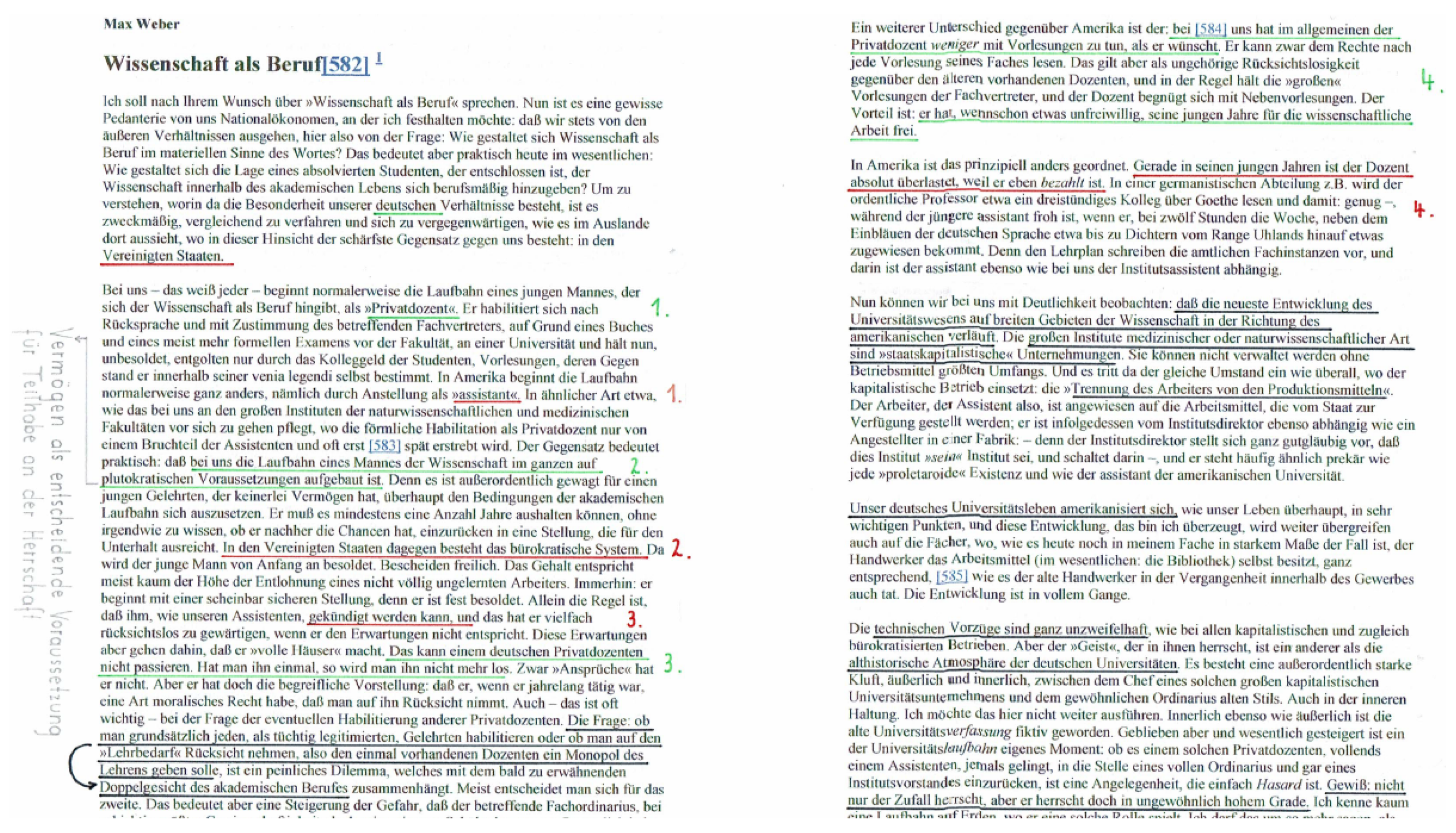
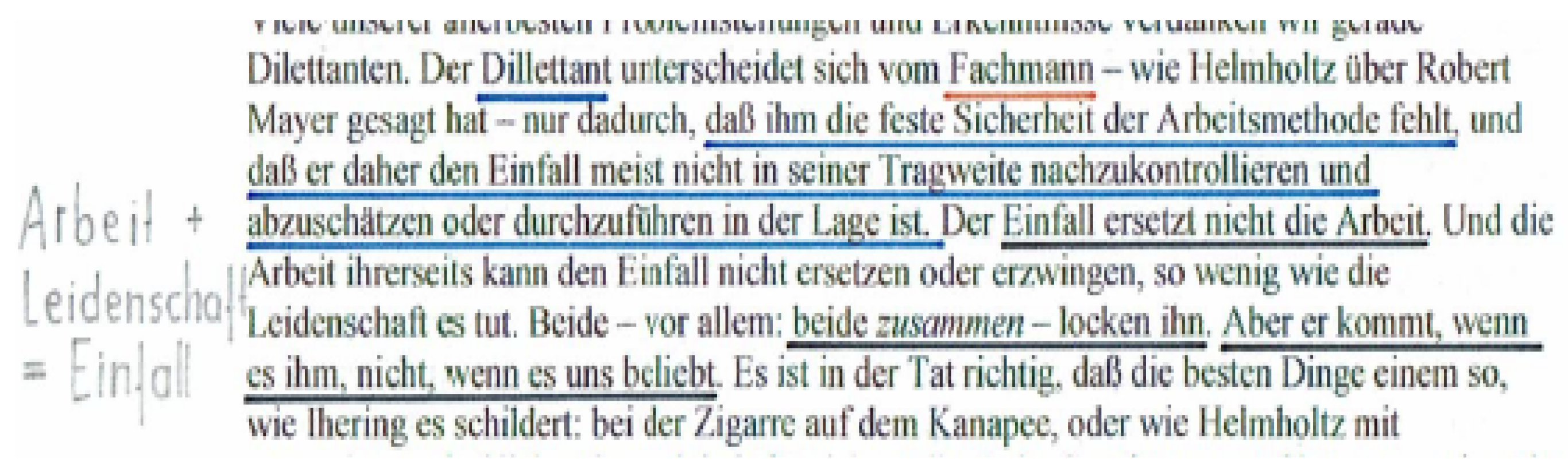
Text annotations are literacy practices that are not uncommon in the reading experience of university students. Annotations may be multilingual, monolingual, or multimodal. Despite their enormous diagnostic potentials, annotations have not been widely investigated for what they can reveal about the cognitive processes that are involved in academic reading. In other words, there has been limited exploration of the insights that signs (verbal and non-verbal) inscribed by students on texts offer for understanding and intervening in their academic reading practices. The aim of this exploratory study is to examine the diagnostic assessment potentials of student-annotated texts. On the basis of text annotations obtained from teacher trainee students (n = 7) enrolled at a German university, we seek to understand what different students attend to while reading, what their problem-solving strategies are, what languages and other semiotic systems they deploy, what their level of engagement with text is, and, critically, how the foregoing provide a basis for intervening to validate, reinforce, correct, or teach certain reading skills and practices. Theoretically, the study is undergirded by the notion of text movability. Data suggestive of how students journey through text are argued to have implications for understanding and teaching how they manage attention, use dictionaries, own text meaning, and appraise text.
Keywords: diagnostic assessment; annotations; text movability; multilingualism; academic reading diagnostic assessment; annotations; text movability; multilingualism; academic reading