Article

Aerodynamic Shape Optimisation Using Parametric CAD and Discrete Adjoint

by
Dheeraj Agarwal
1,*,†,
Simão Marques
2,† and
Trevor T. Robinson
1,†
1
School of Mechanical and Aerospace Engineering, Queen’s University Belfast, Belfast BT9 5AH, UK
2
School of Mechanical Engineering Sciences, The University of Surrey, Guildford GU2 7XH, UK
*
Author to whom correspondence should be addressed.
These authors contributed equally to this work.
Aerospace 2022, 9(12), 743; https://doi.org/10.3390/aerospace9120743

Submission received: 18 October 2022 / Revised: 15 November 2022 / Accepted: 19 November 2022 / Published: 23 November 2022
(This article belongs to the Special Issue Aerodynamic Shape Optimization)

Abstract

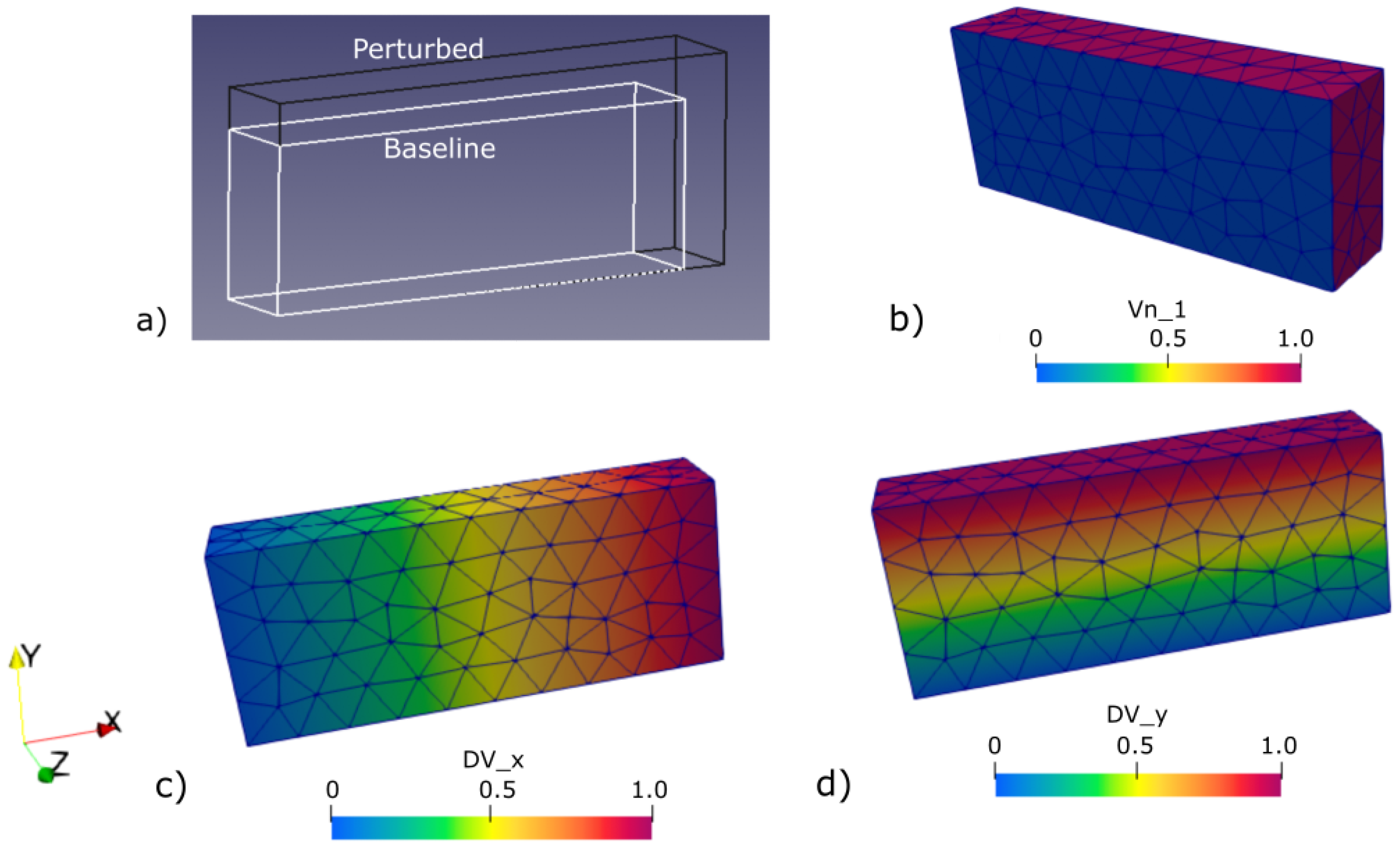
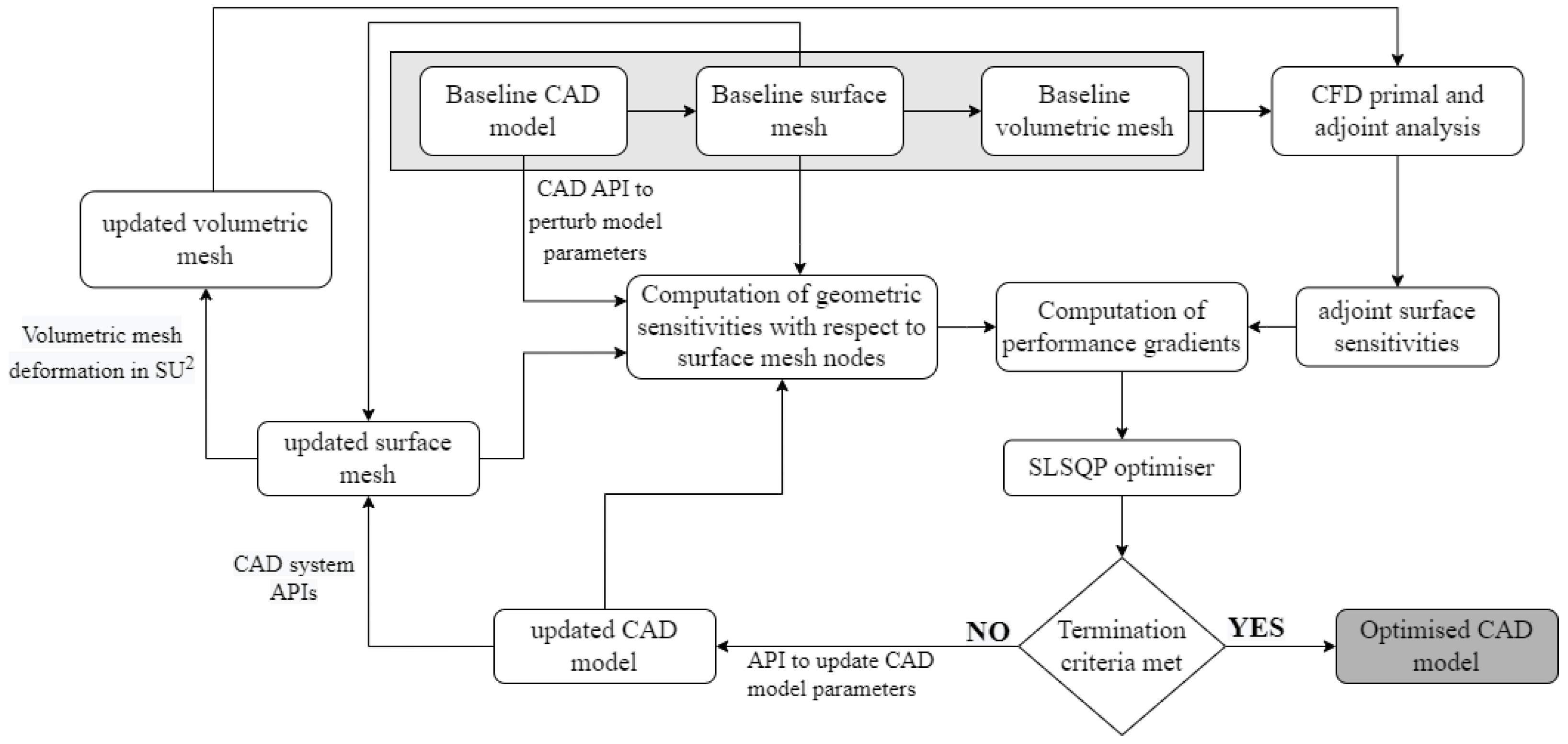
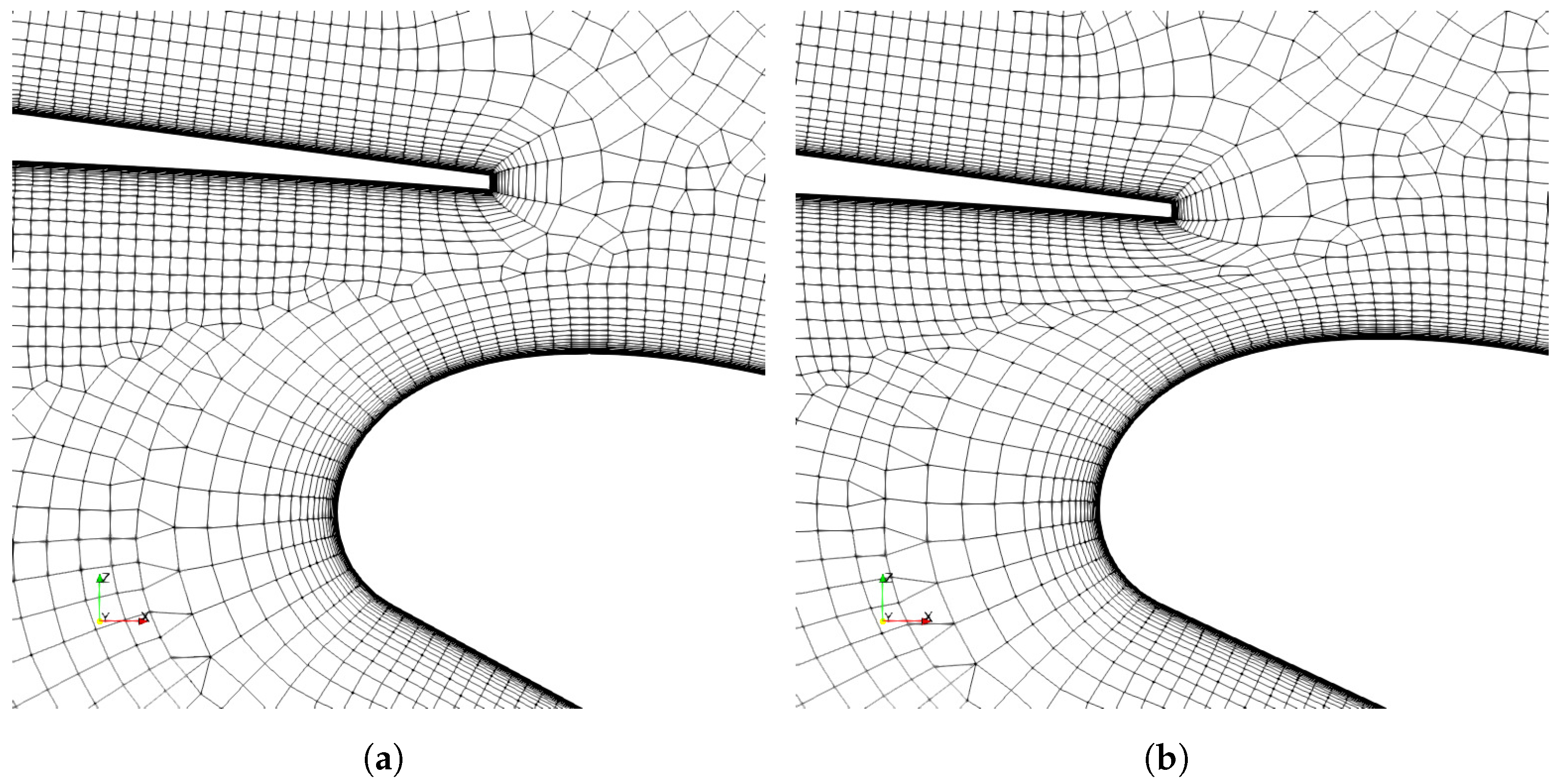
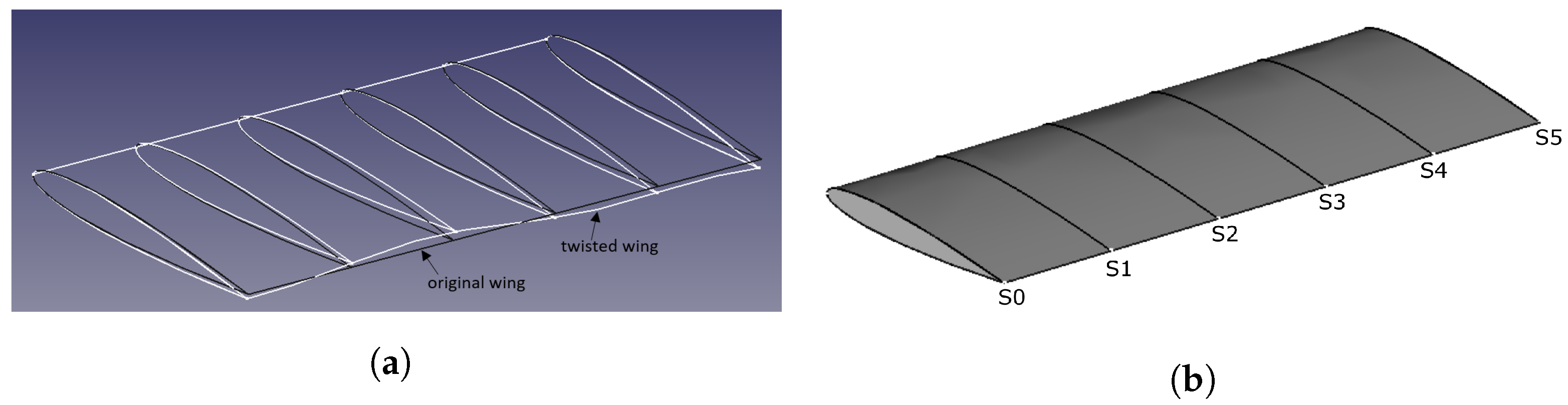
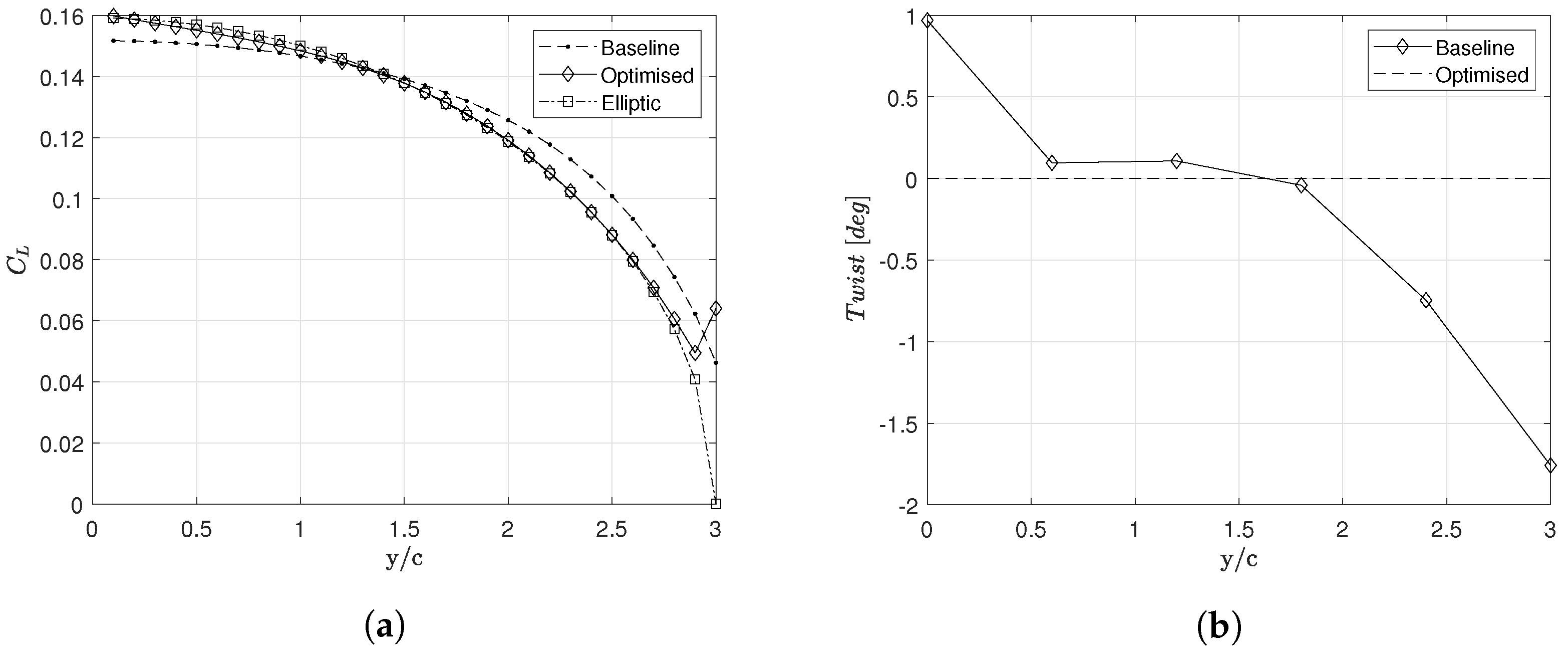
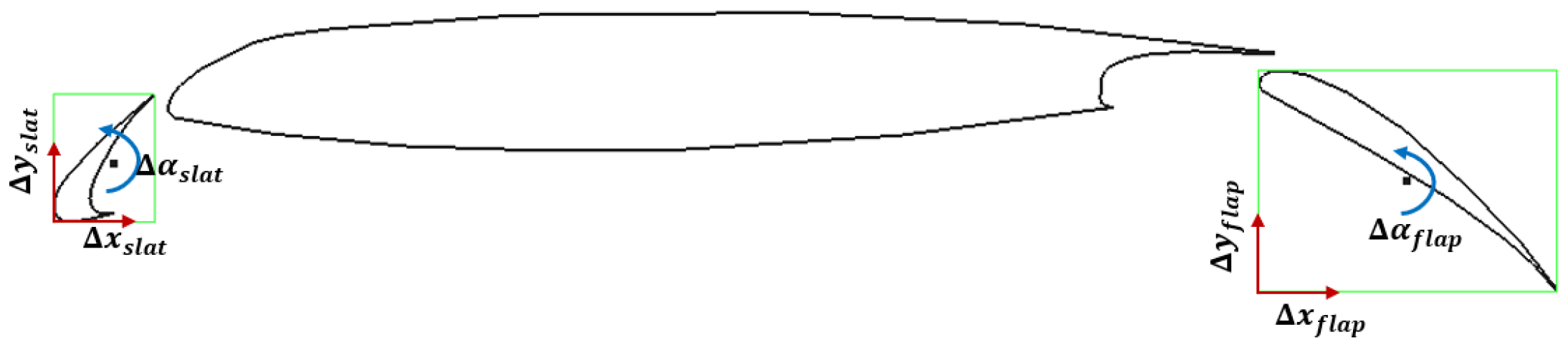
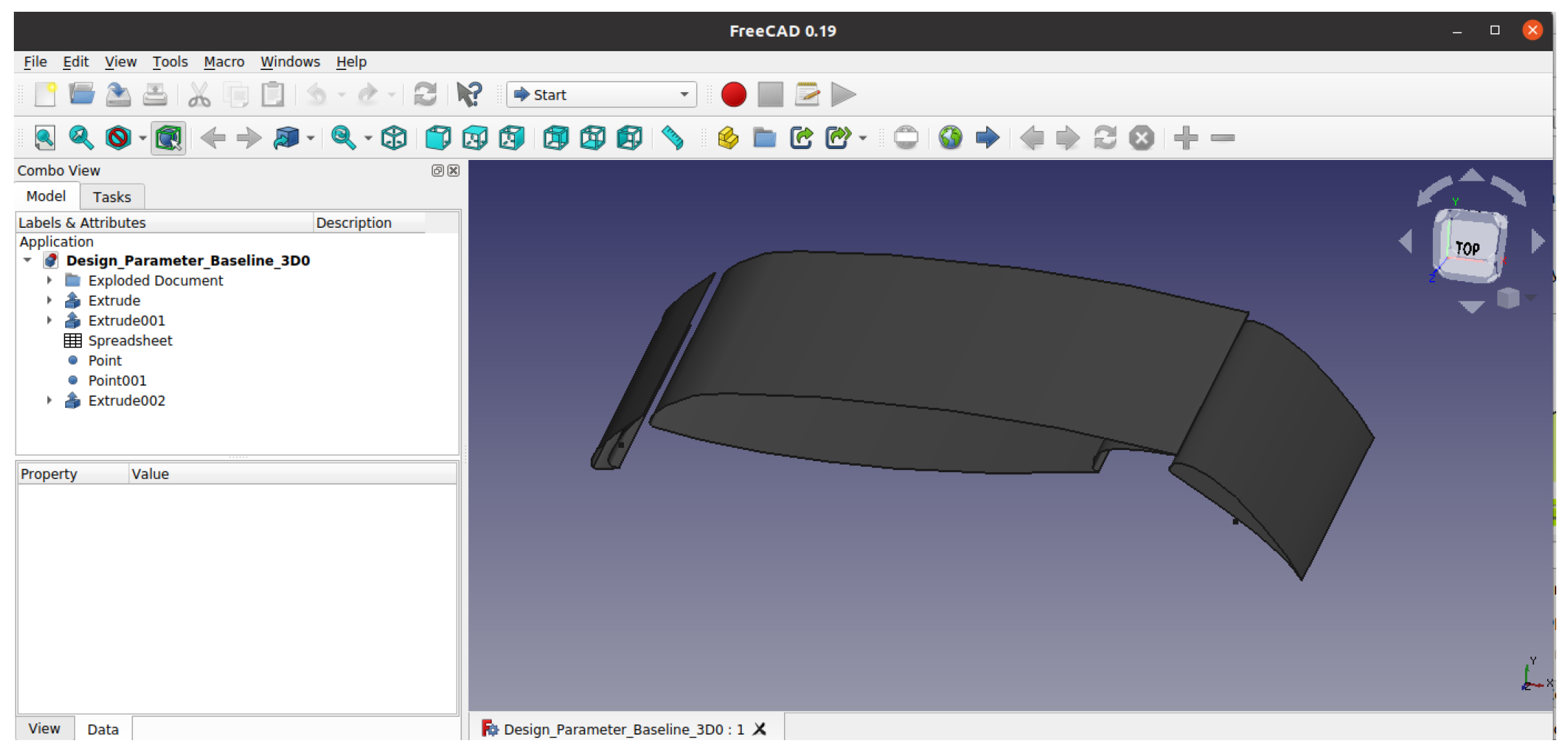
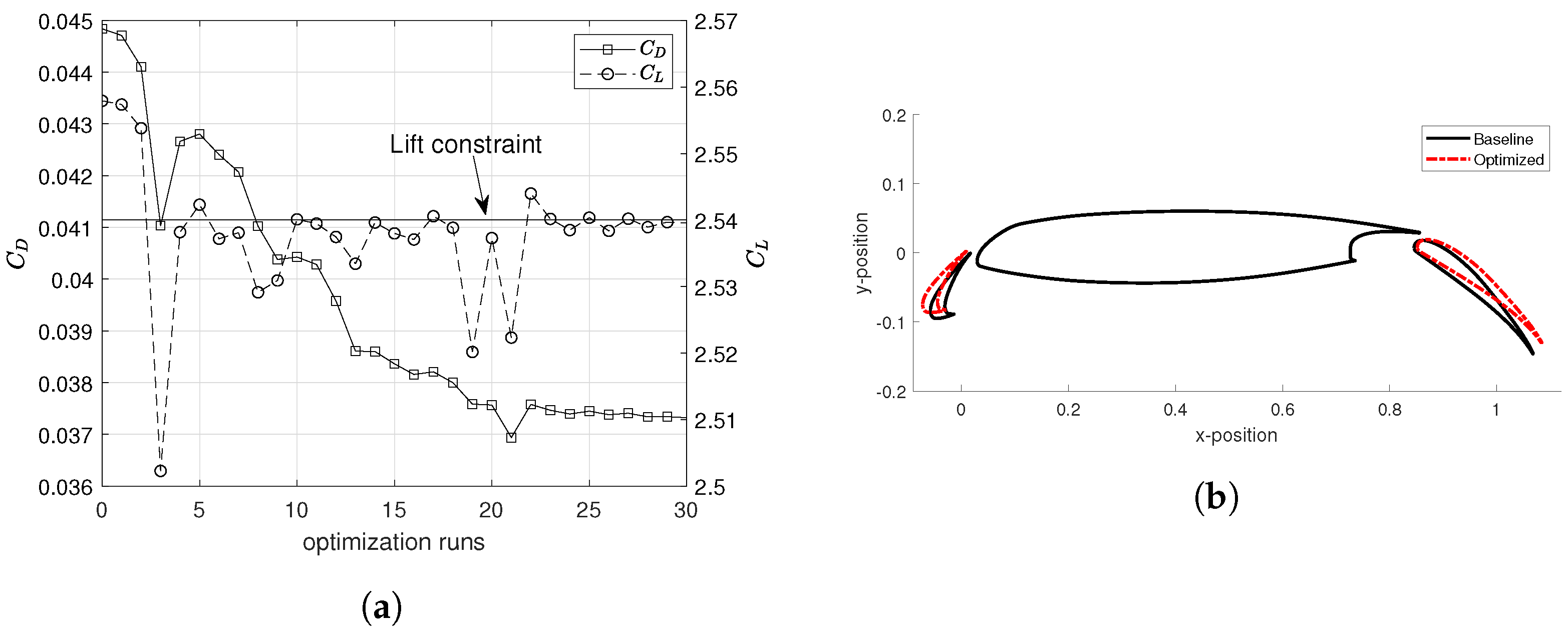
This paper presents an optimisation framework based on an open-source CAD system and CFD solver. In this work, the high-fidelity flow solutions and surface sensitivities are obtained using the primal and discrete adjoint formulations of SU2. This paper shows the direct use of CAD models for optimisation by developing a CAD system application programming interface and creating a link between the CAD-MESH-CFD analysis. A methodology to obtain geometric sensitivities is introduced, enabling the calculation of accurate gradients with respect to CAD variables and the deformation of the analysis mesh during the optimisation process. This methodology guarantees that the new surface mesh lies exactly on the CAD geometry. The optimisation framework is applied to a rectangular wing and a three section high-lift aerofoil configuration derived from the NASA CRM-HL configuration. Both geometries are created using FreeCAD. The performance objectives are to decrease the drag while constraining the lift to be above a desired value. The twist distribution of the wing was parameterised within the CAD system, allowing the minimisation of the induced drag by obtaining a nearly elliptical lift distribution. For the high-lift configuration, the position and rotation of the flap and slat were parameterised with respect to the original section; the final optimised positions yield a drag reduction of approximately 16.5%. These results show that the CAD parameterisation can be reliably used to obtain efficient optimums while operating directly on the CAD geometries.
Keywords: shape optimisation; CAD; parameterisation; aerodynamics; discrete adjoint shape optimisation; CAD; parameterisation; aerodynamics; discrete adjoint