
Development and Optimal Probe Selection of an In Situ Penetration and Shear Apparatus for the Lunar Surface


Abstract
1. Introduction
2. Development of the Penetration Shear Apparatus
2.1. Hardware and Software Design
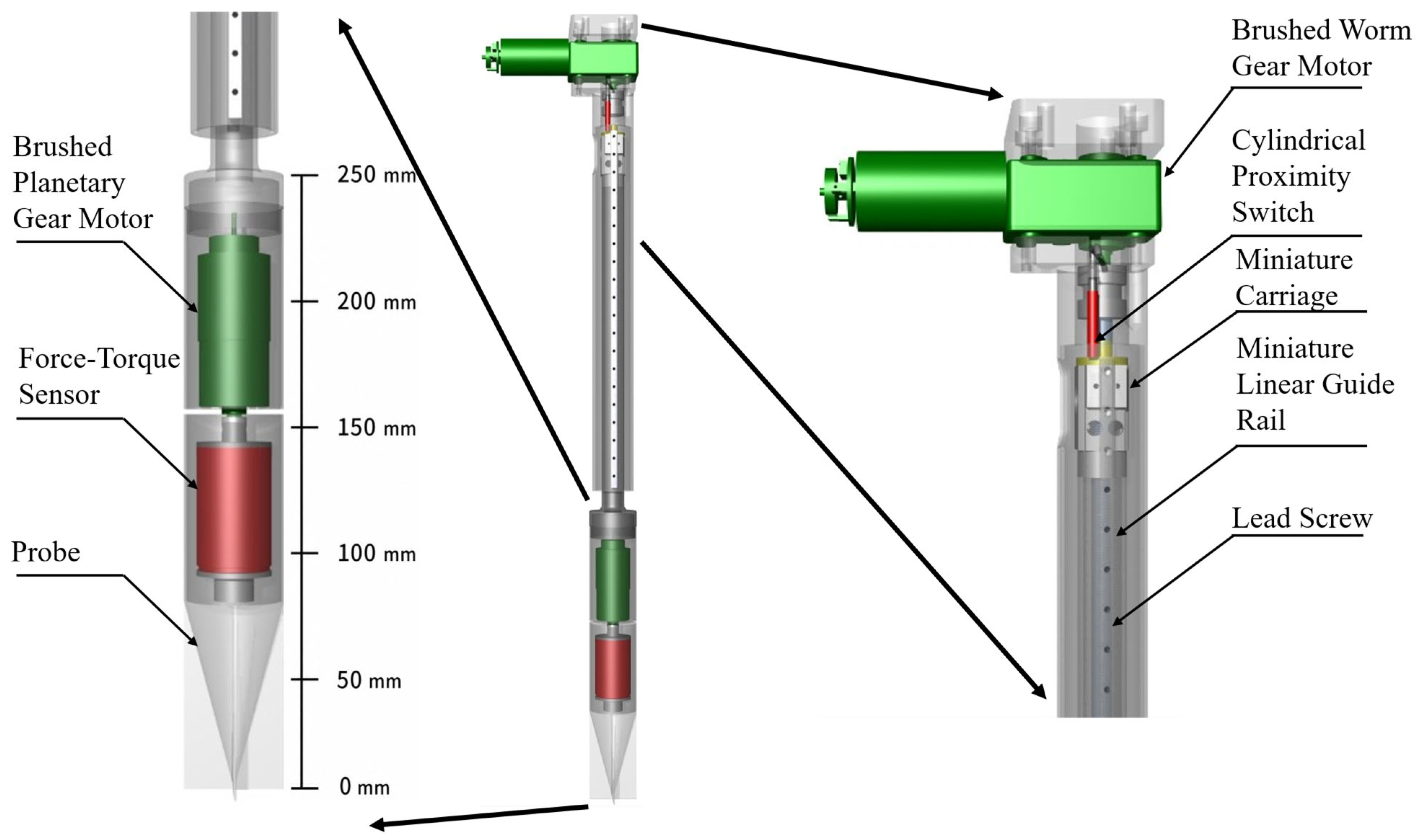
2.1.1. Penetration and Shear Unit
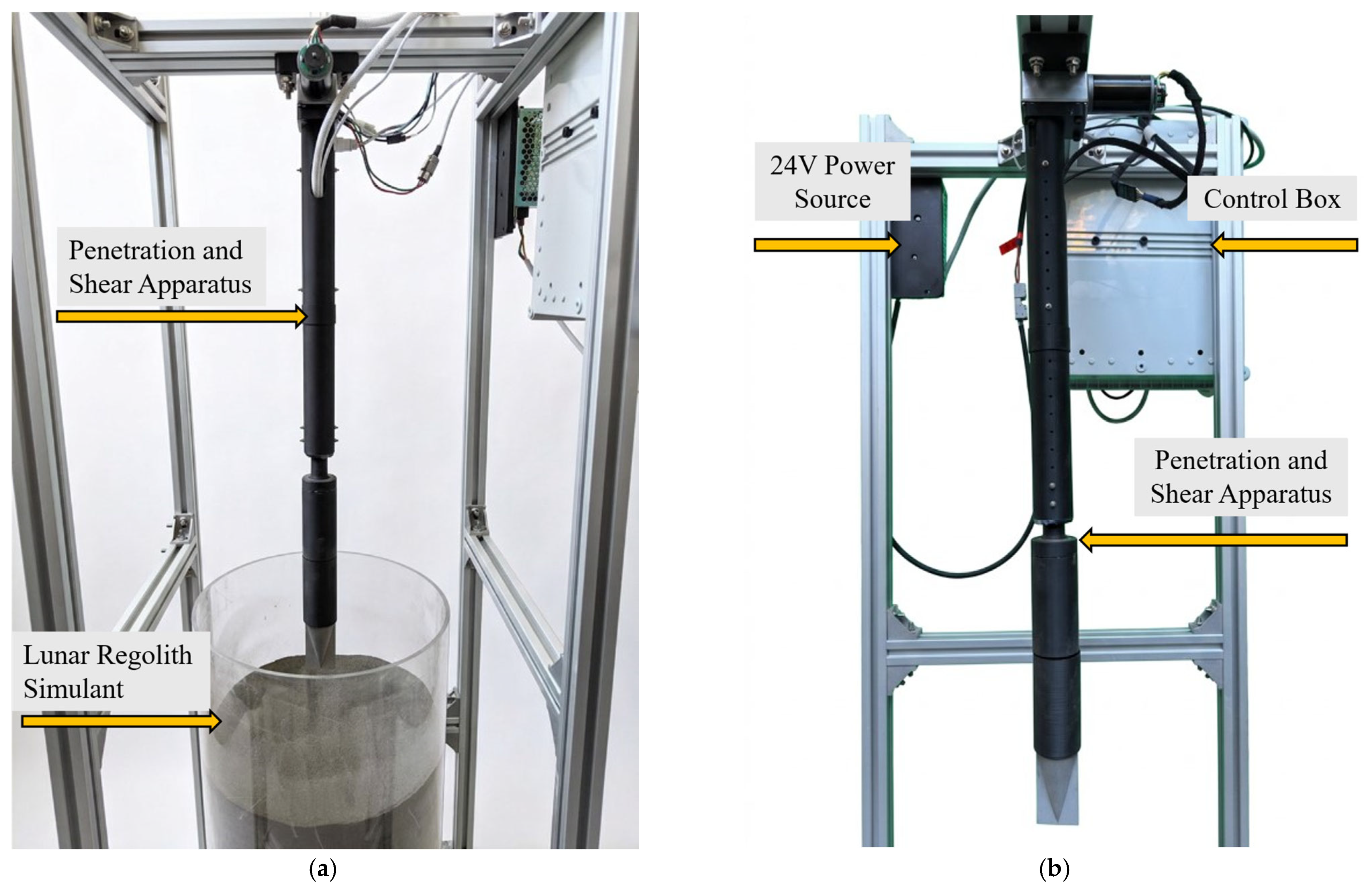
2.1.2. Penetration Shear Apparatus Processor Unit
2.1.3. Development of PC-Side Host Software
2.2. Calibration Setup and Procedures
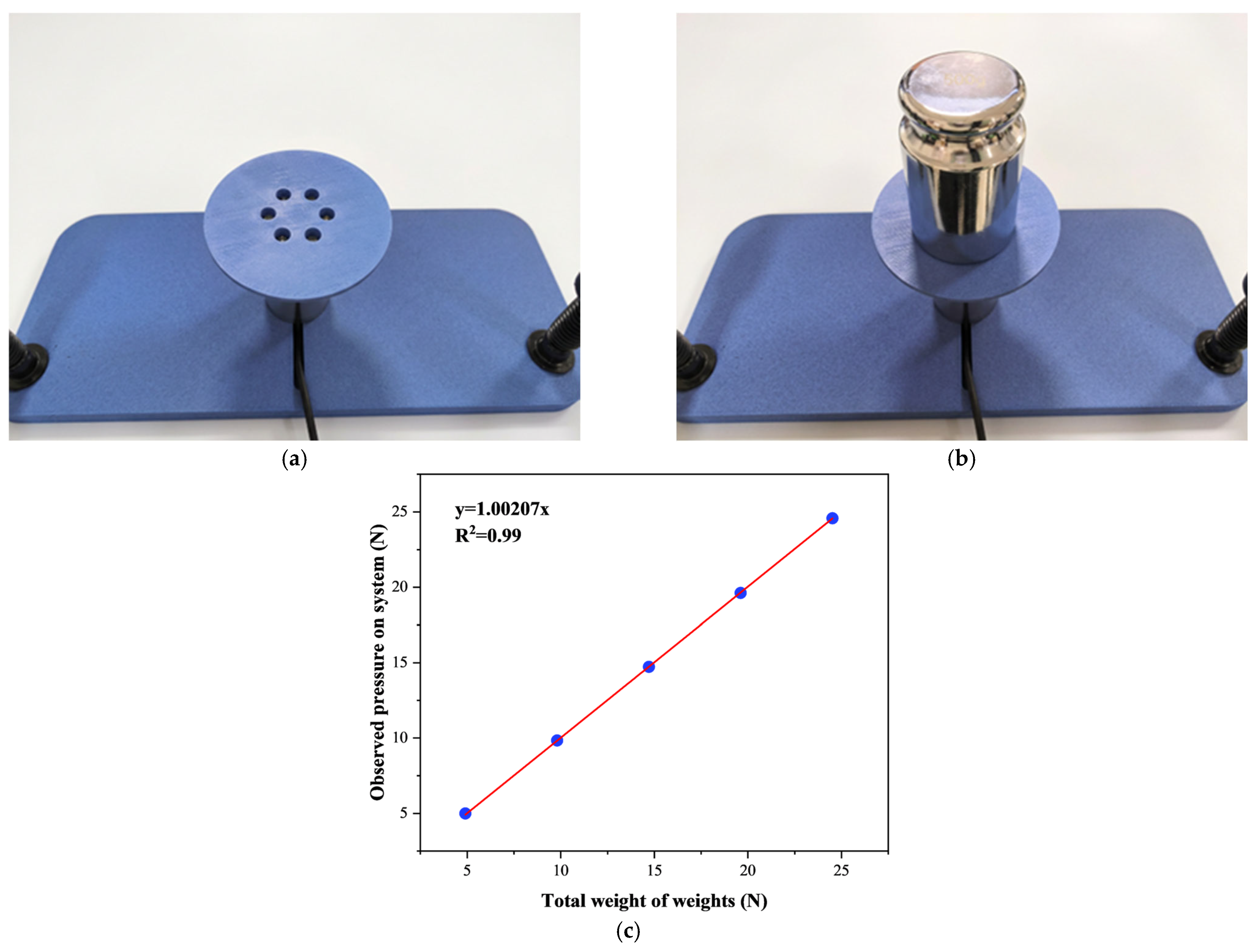
2.2.1. Load Cell Calibration in Compression Mode
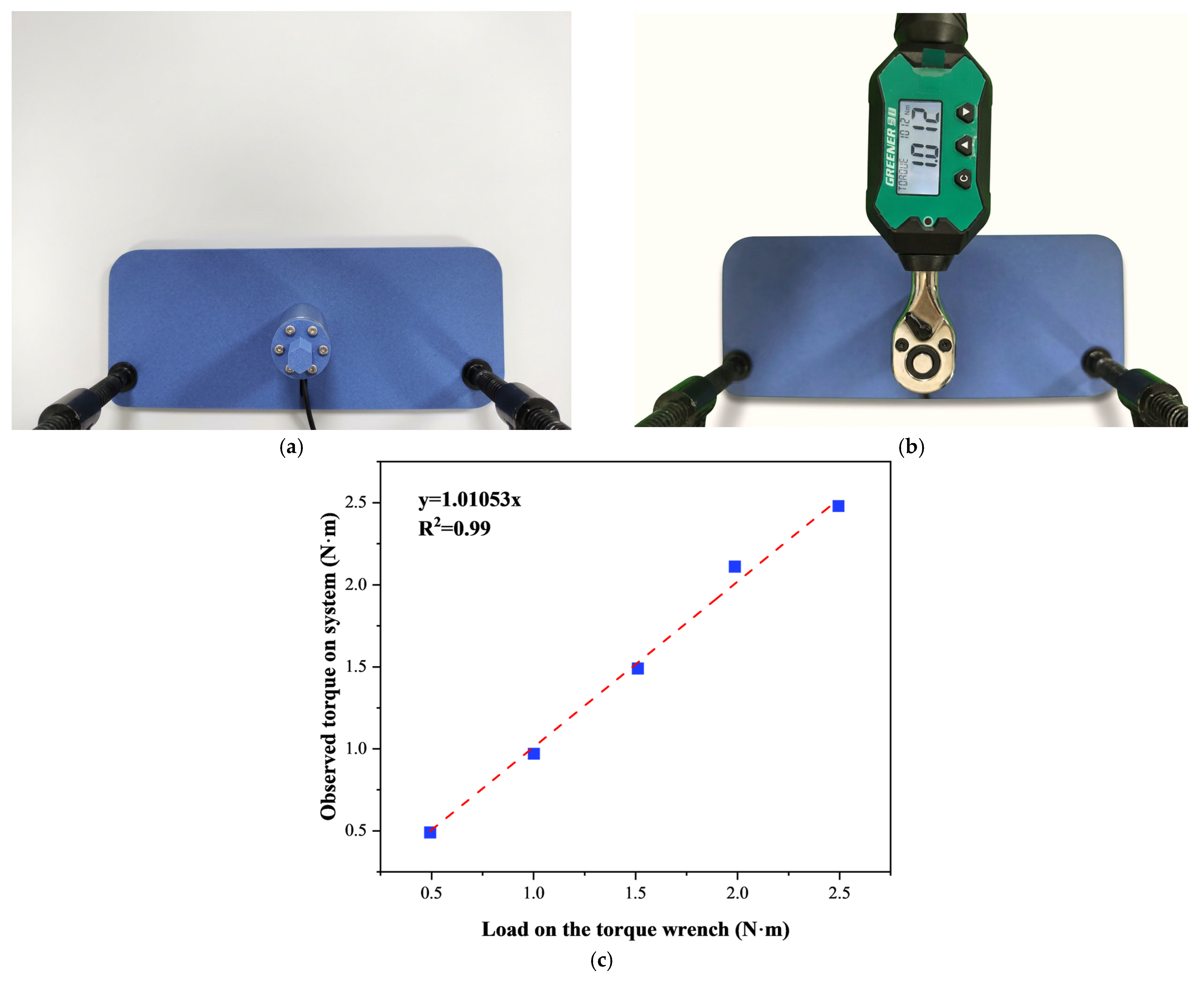
2.2.2. Torque Element Calibration in Shear Mode
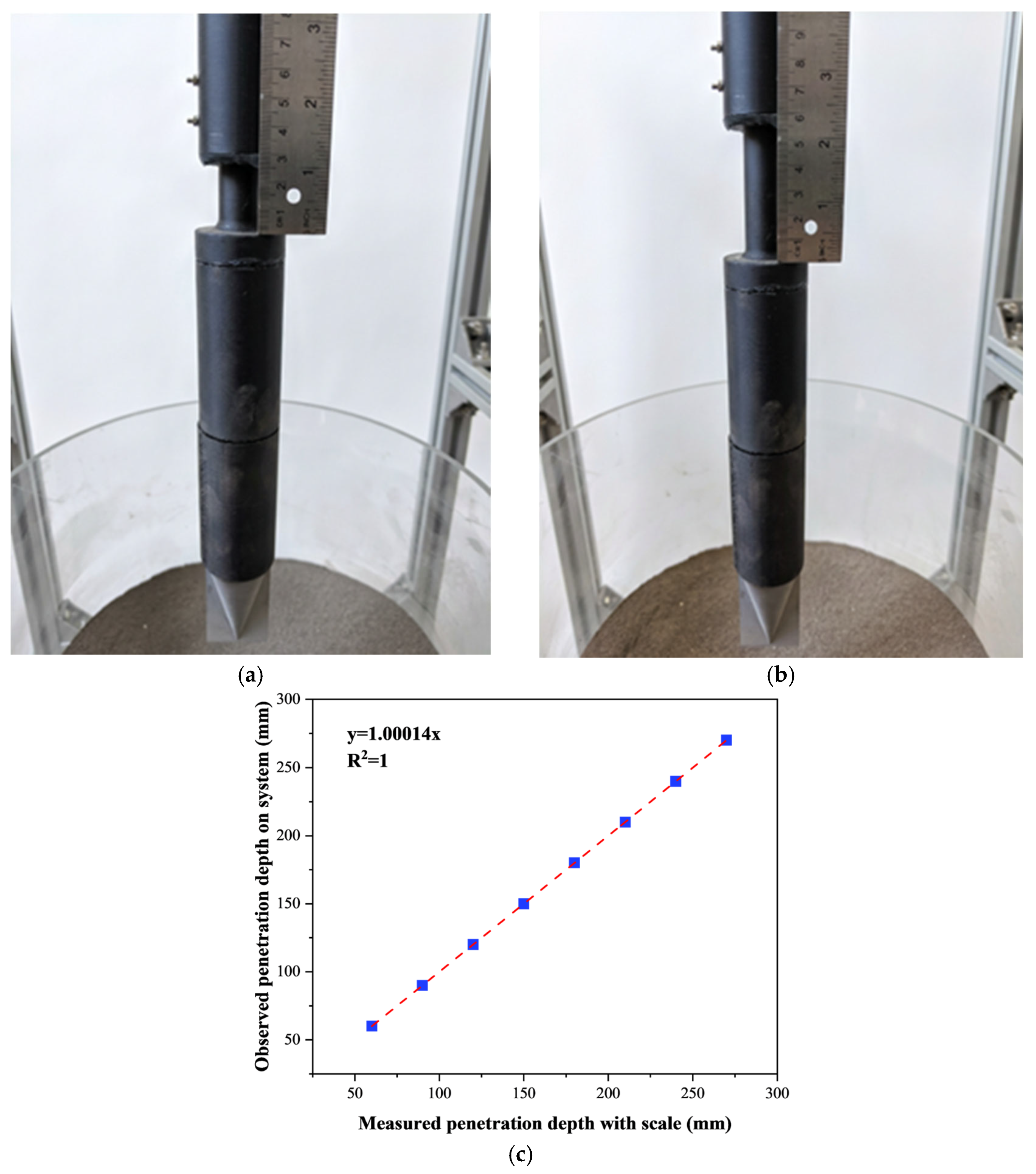
2.2.3. Calibration of the Penetration Motor for Depth Measurement
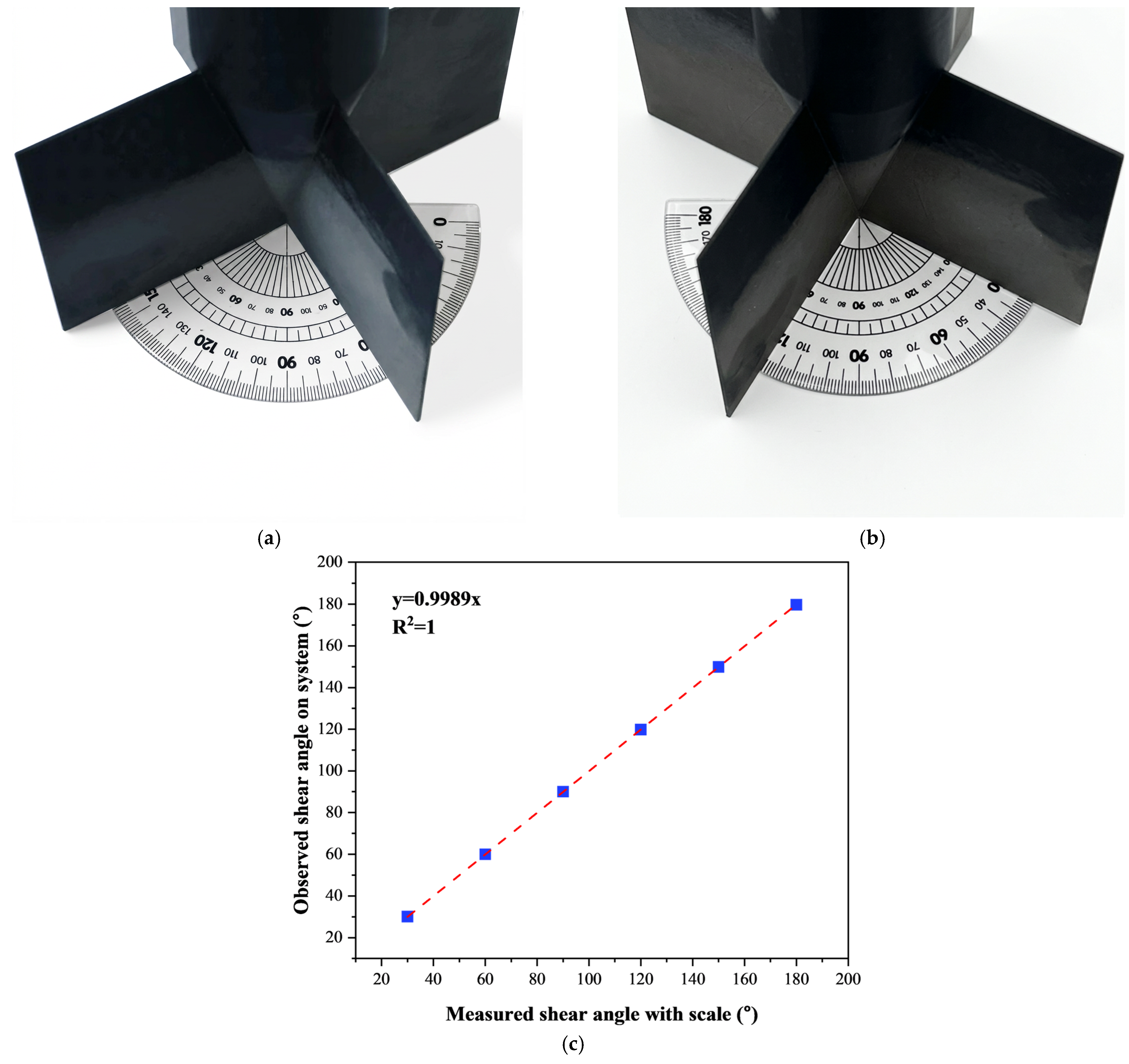
2.2.4. Calibration of the Shear Motor for Conicity Measurement
3. On-Site Experimental Optimization of Cone Tip Dimensions
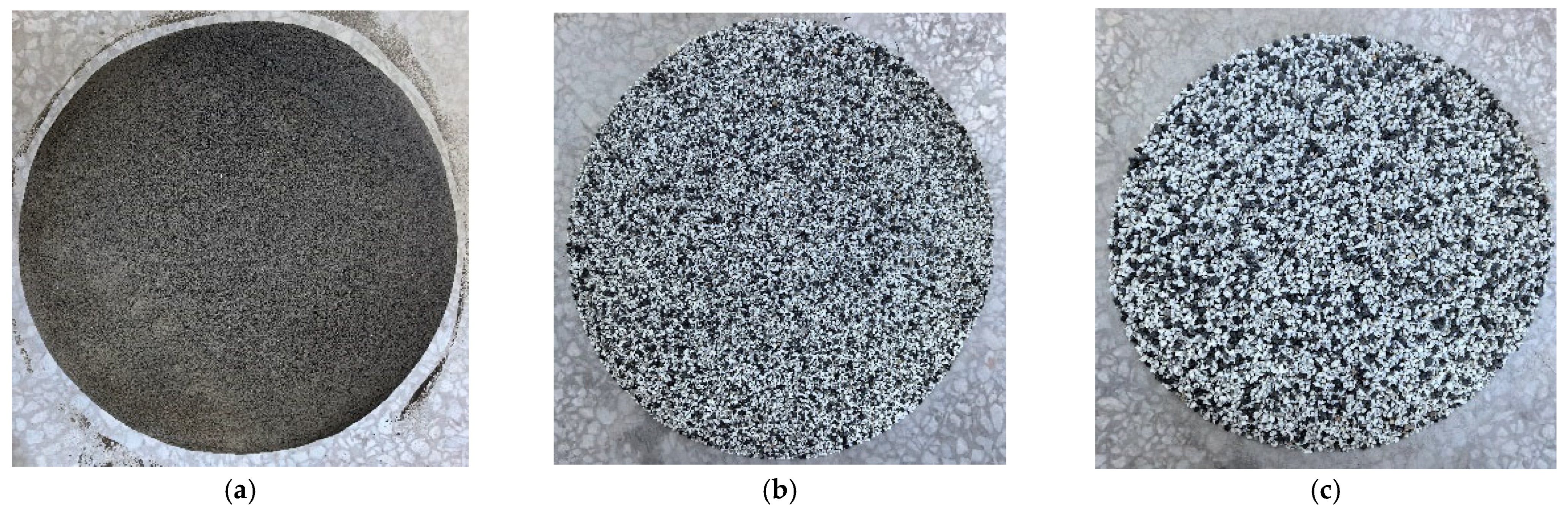
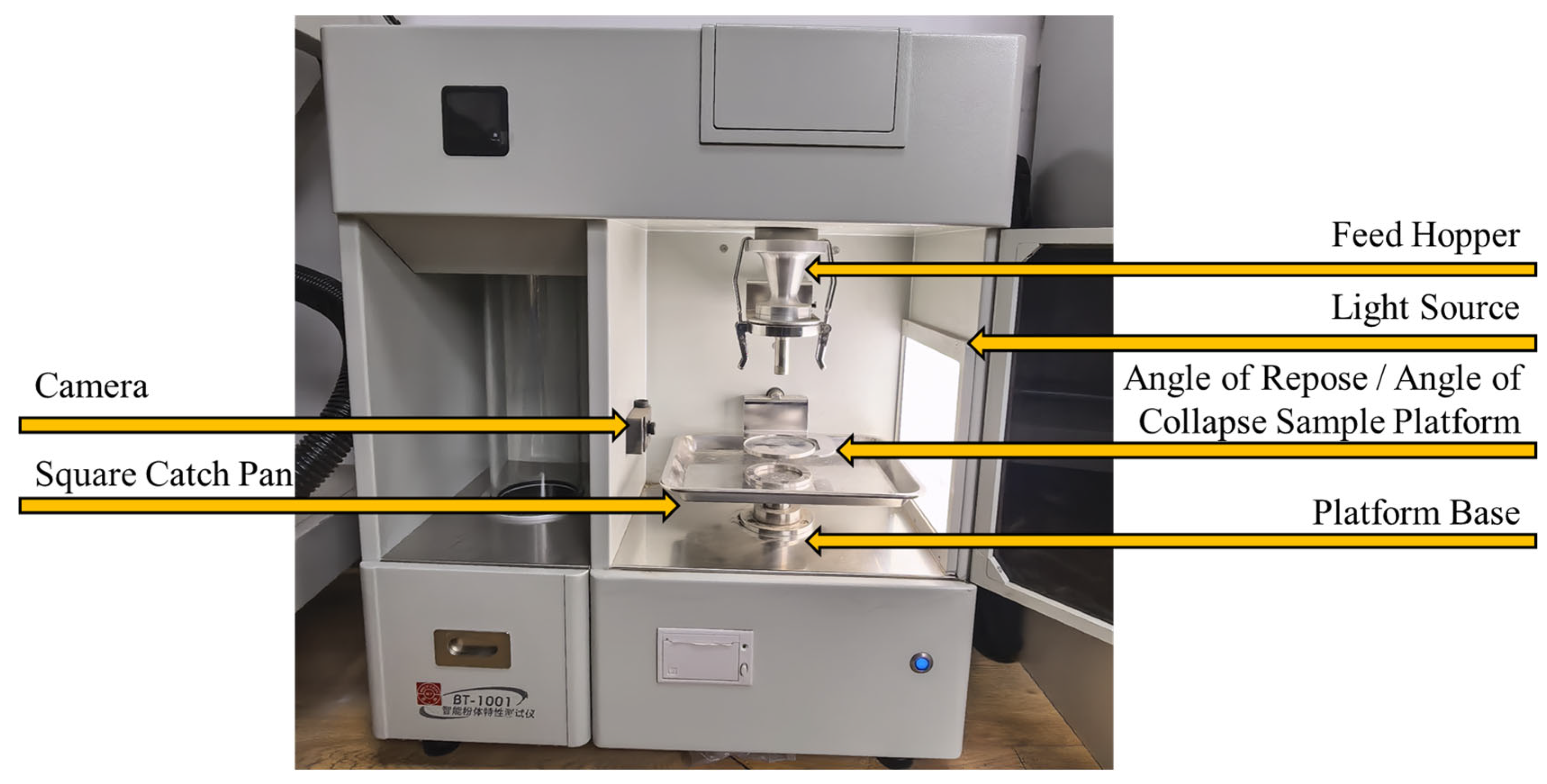
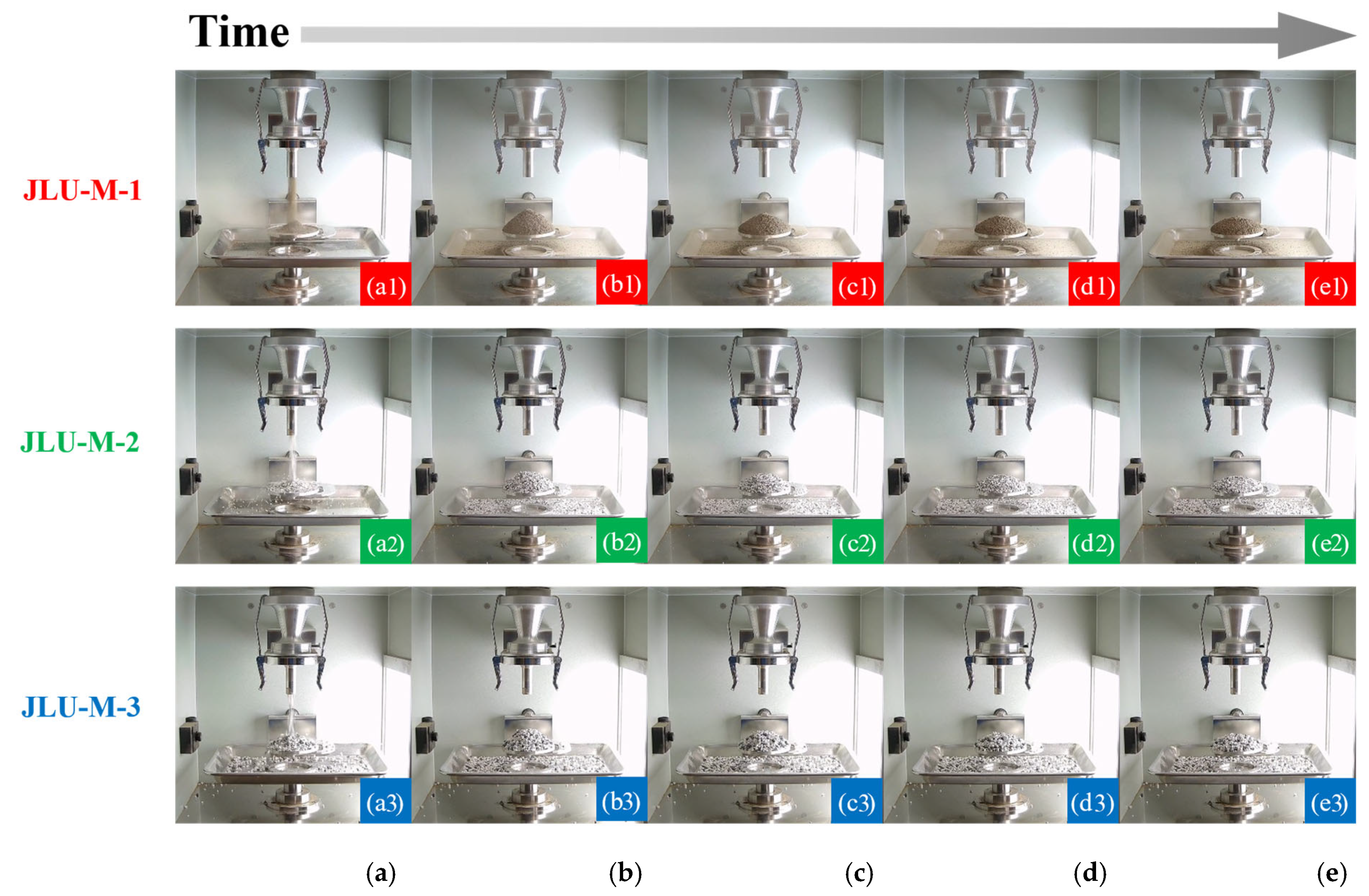
3.1. Preparation of Simulated Lunar Soil
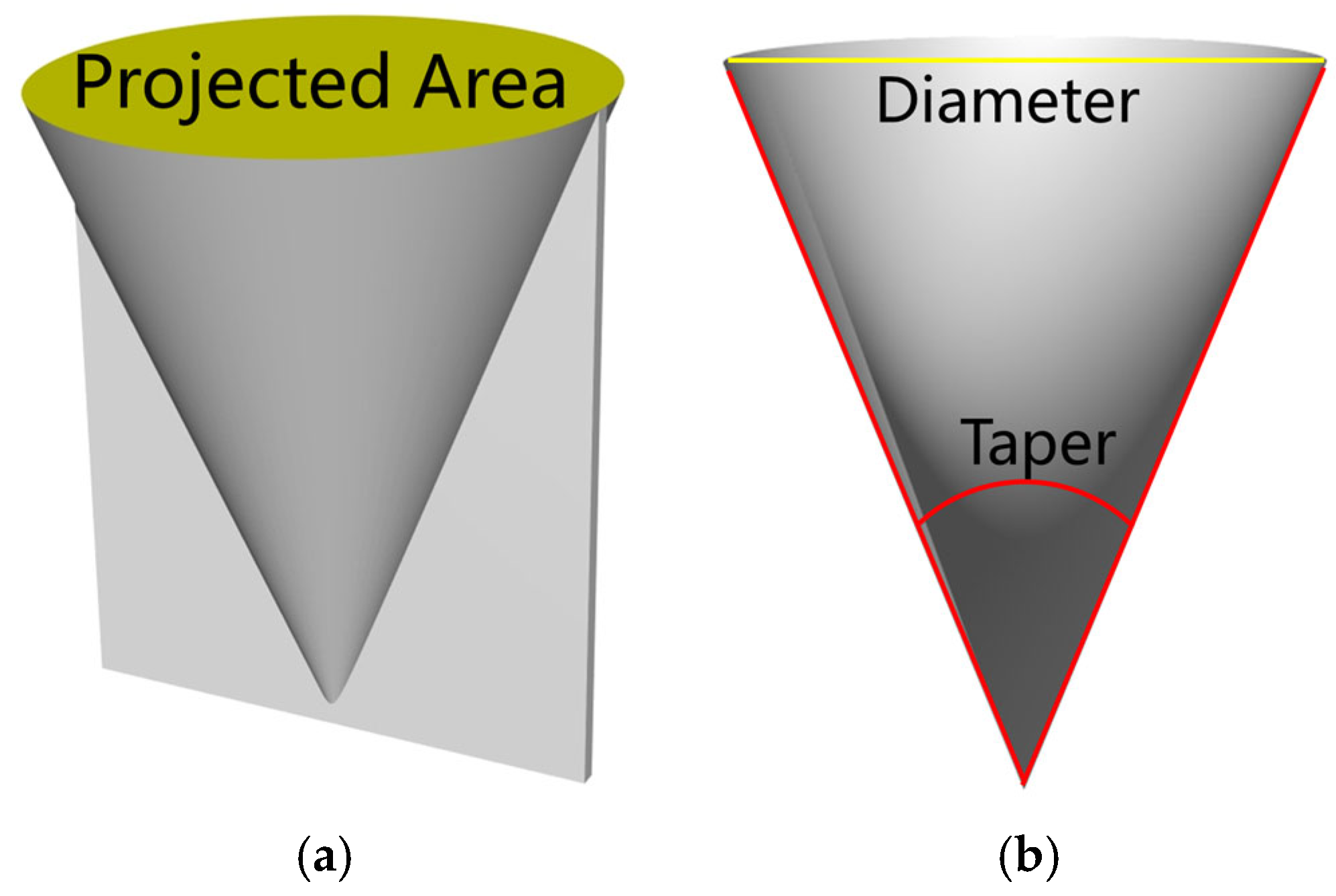
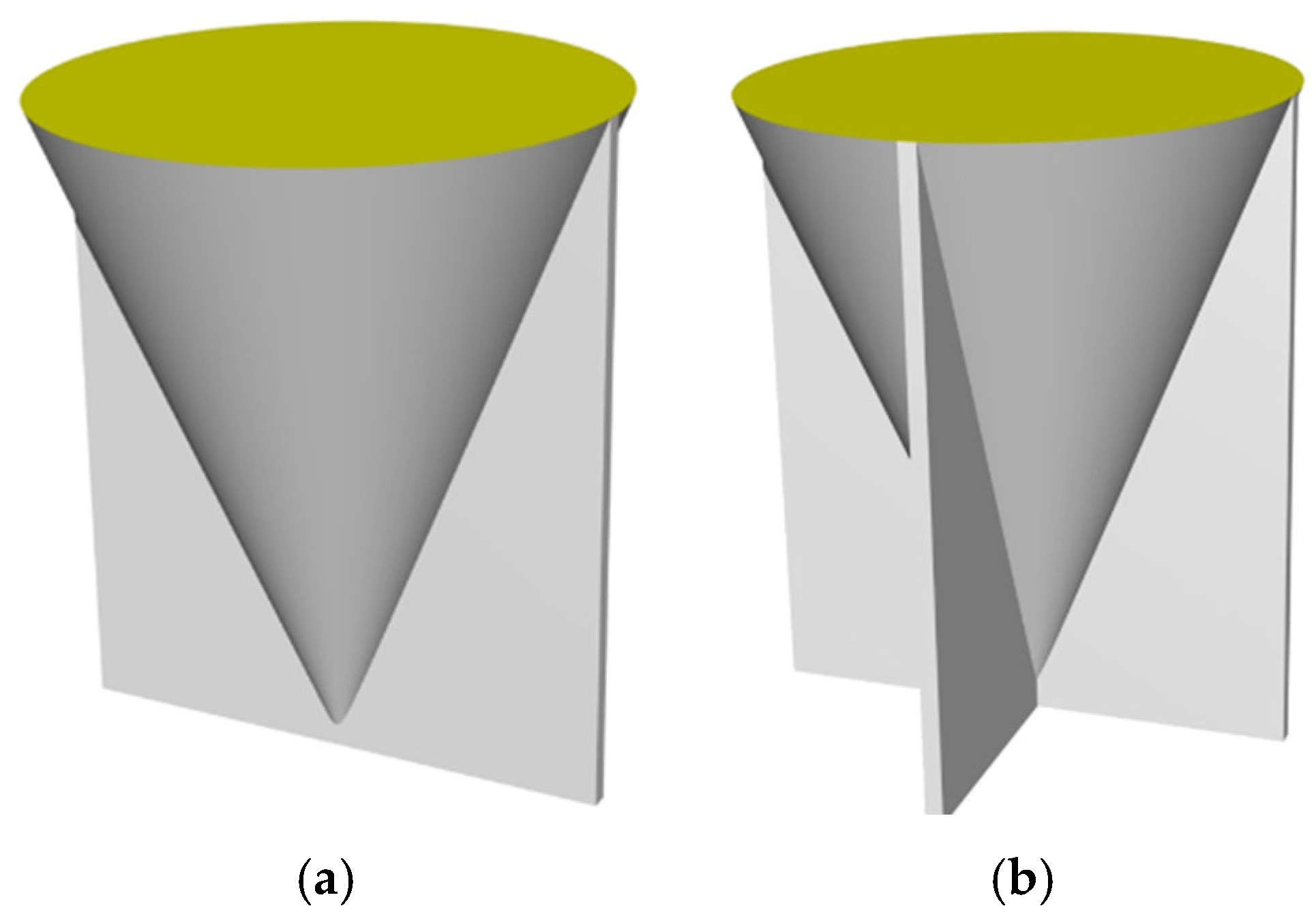
3.2. Cone Tip Dimension Design
3.3. Field Testing
3.4. Multi-Objective Optimization Model and Pareto Frontier Solution
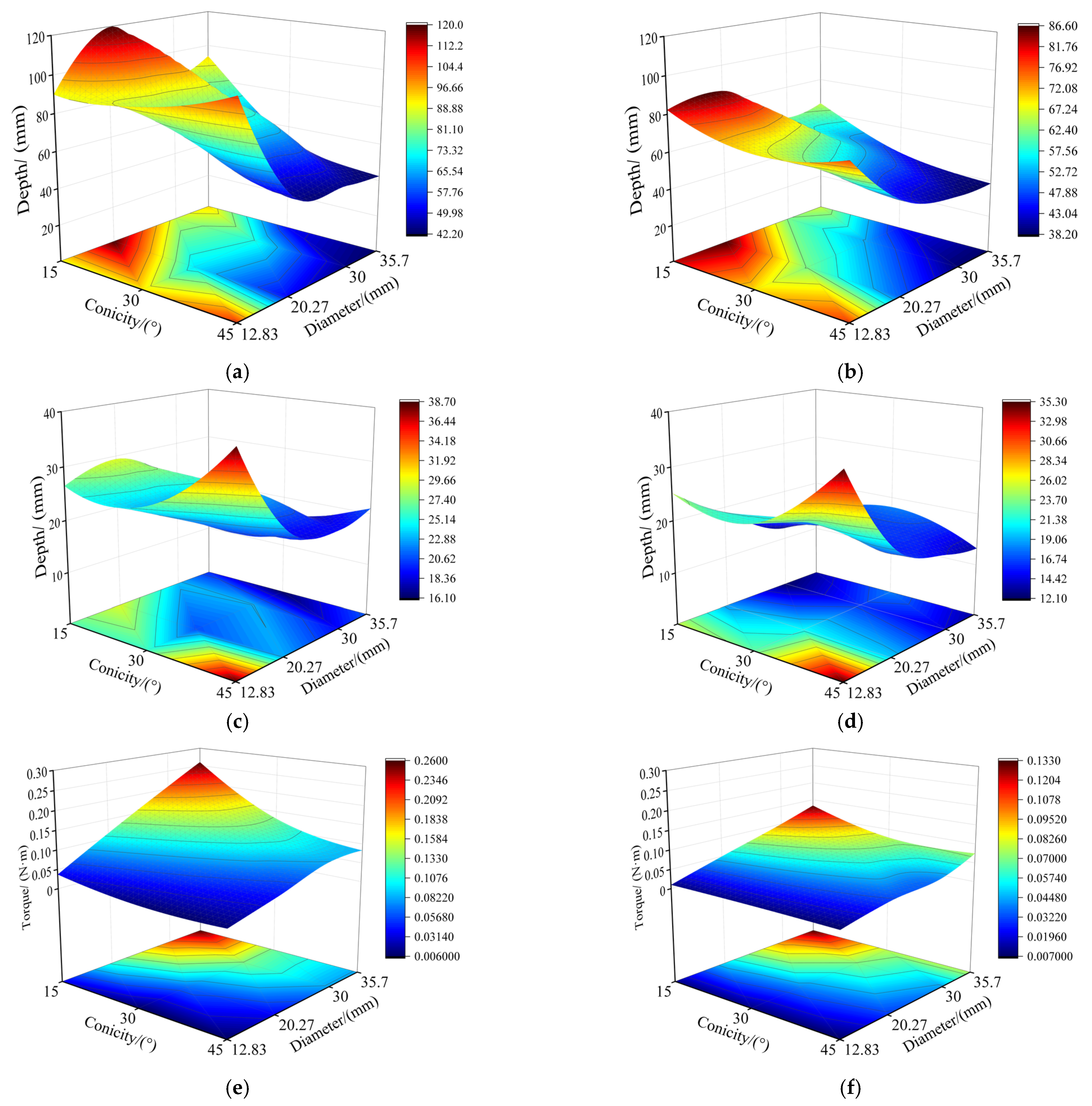
3.5. Optimization Results of Cone Tip Dimensions
4. Conclusions
4.1. Key Findings
- (1)
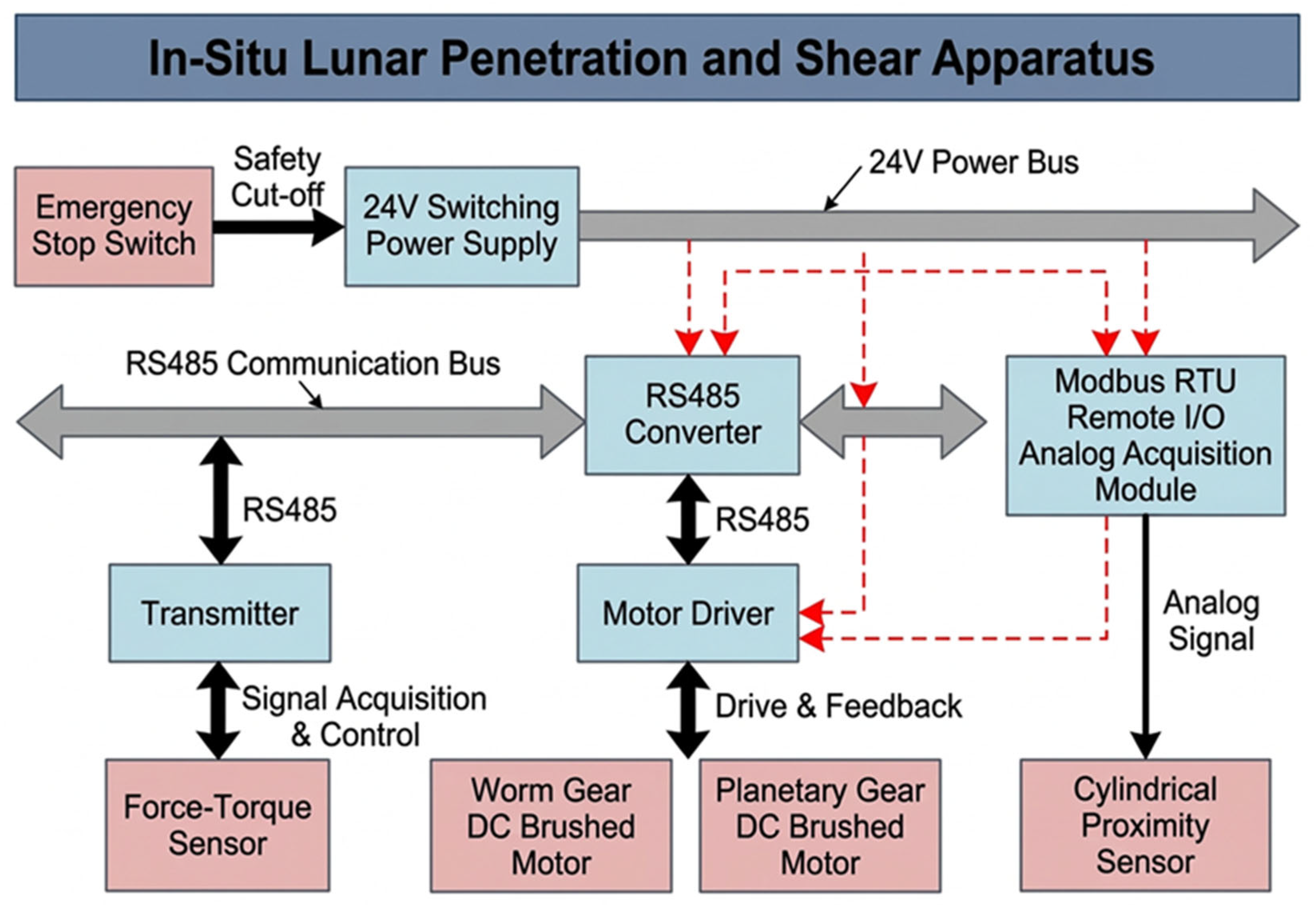
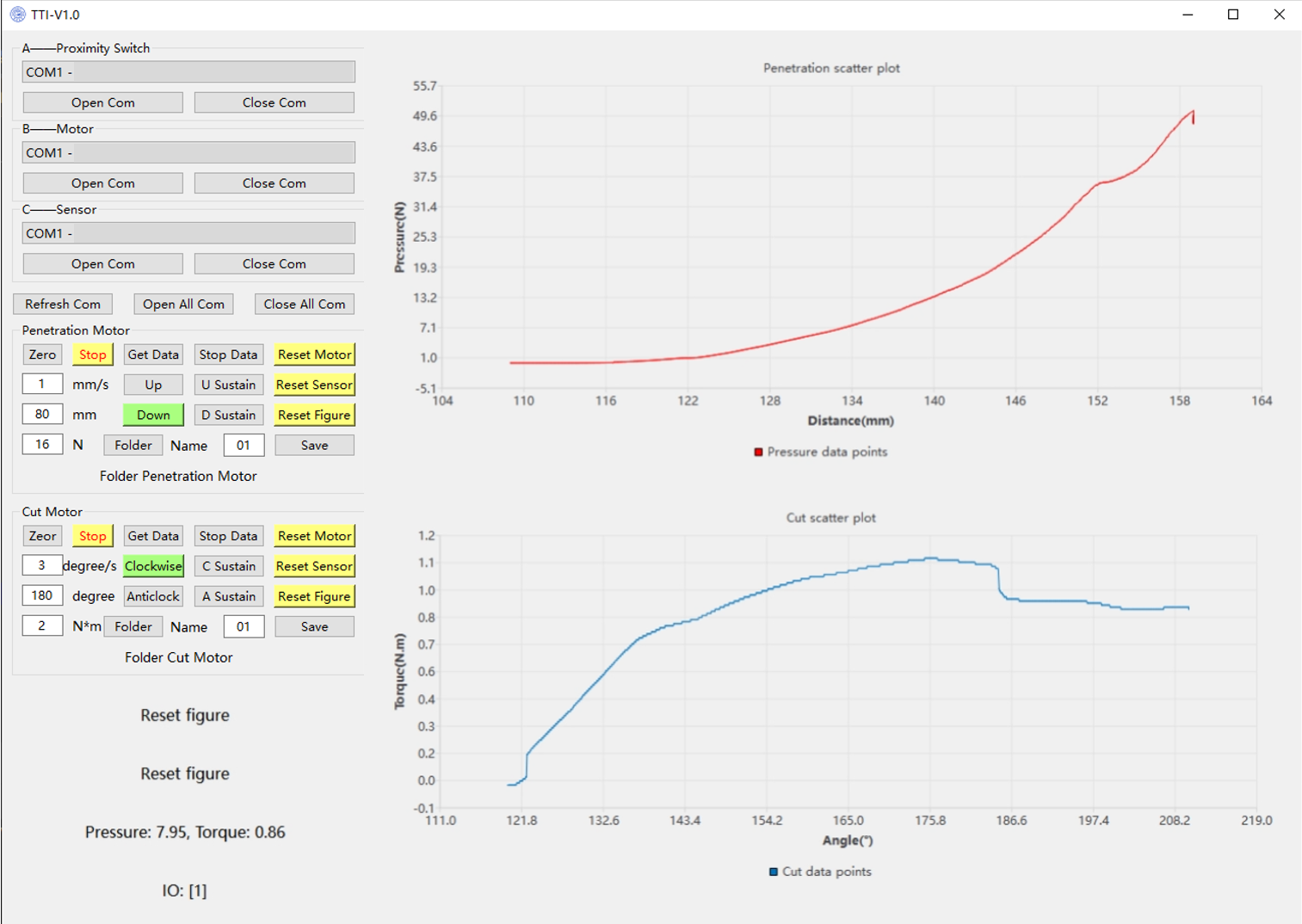
- An in situ penetration shear apparatus designed for the lunar surface has been successfully developed, with a maximum measurement force of 25 N and a maximum torque of 2.5 N·m. The probe can achieve a penetration depth of 300 mm and rotate 360°. A Python-based PC host software was successfully developed to display and record displacement-force and angular displacement-torque data curves and time parameters, as well as to export field-acquired data. The working principle of the developed penetration shear apparatus is suitable for future unmanned lunar exploration missions.
- (2)
- The accuracy of the Force-Torque Sensor and motor encoders of the in situ penetration shear apparatus was verified. The R2 of the force sensor is 0.99, the R2 of the torque sensor is 0.99, the R2 of the penetration motor used for depth measurement is 1, and the R2 of the shear motor used for angle measurement is 1, demonstrating good working performance.
- (3)
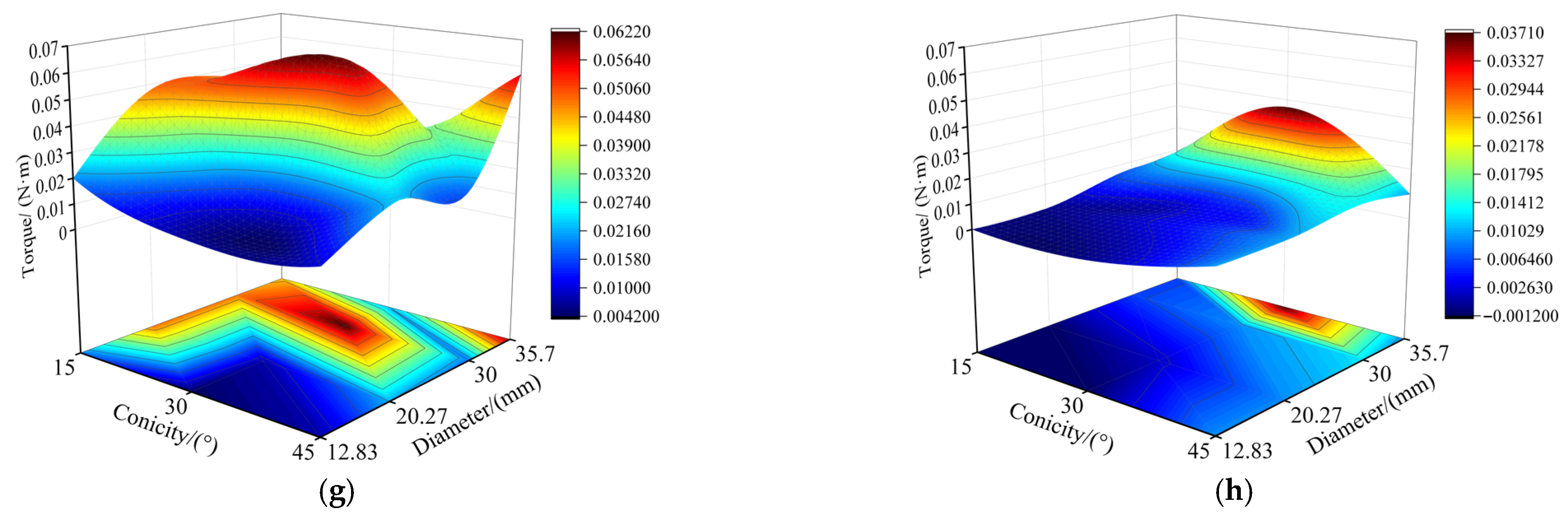
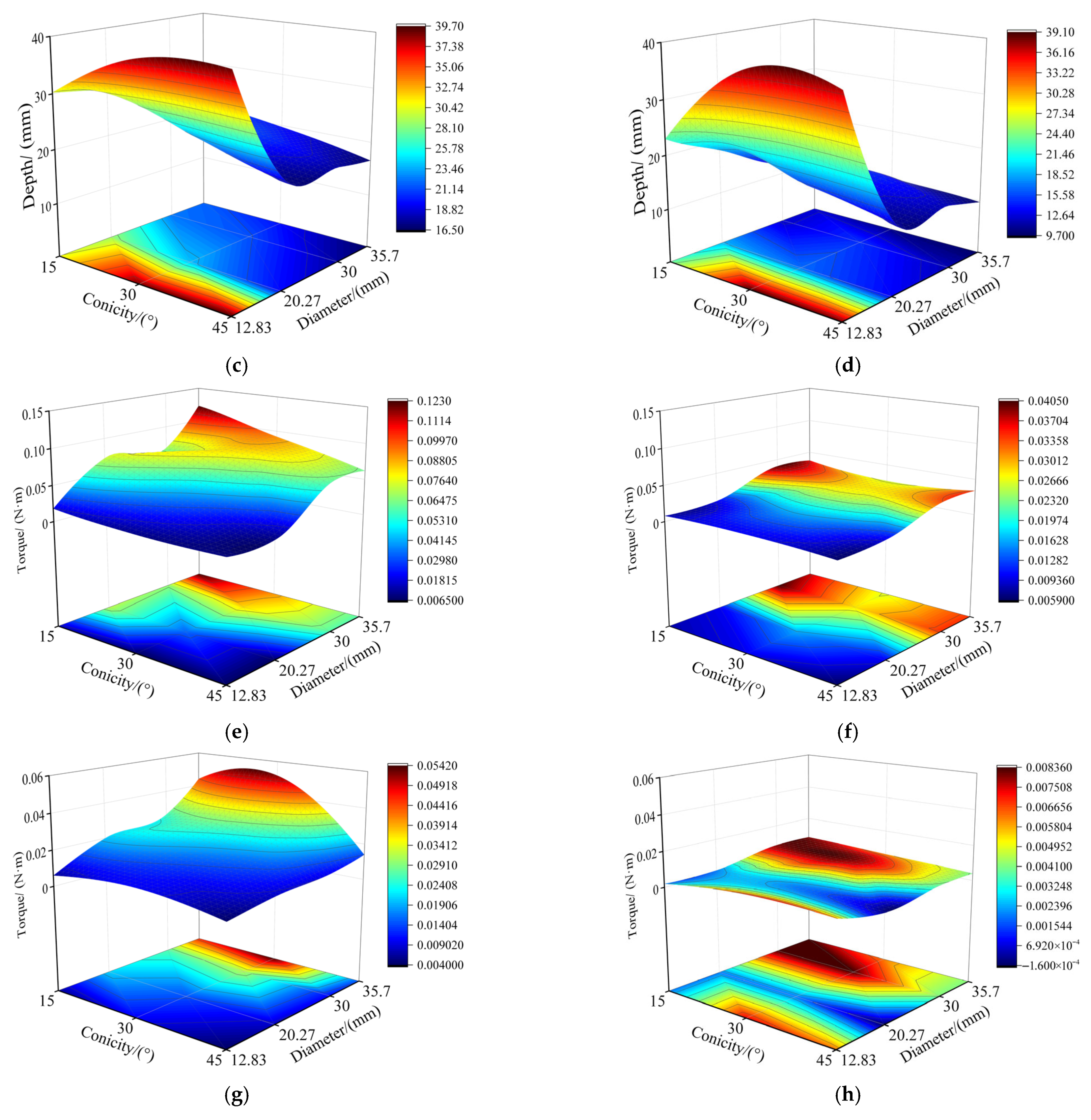
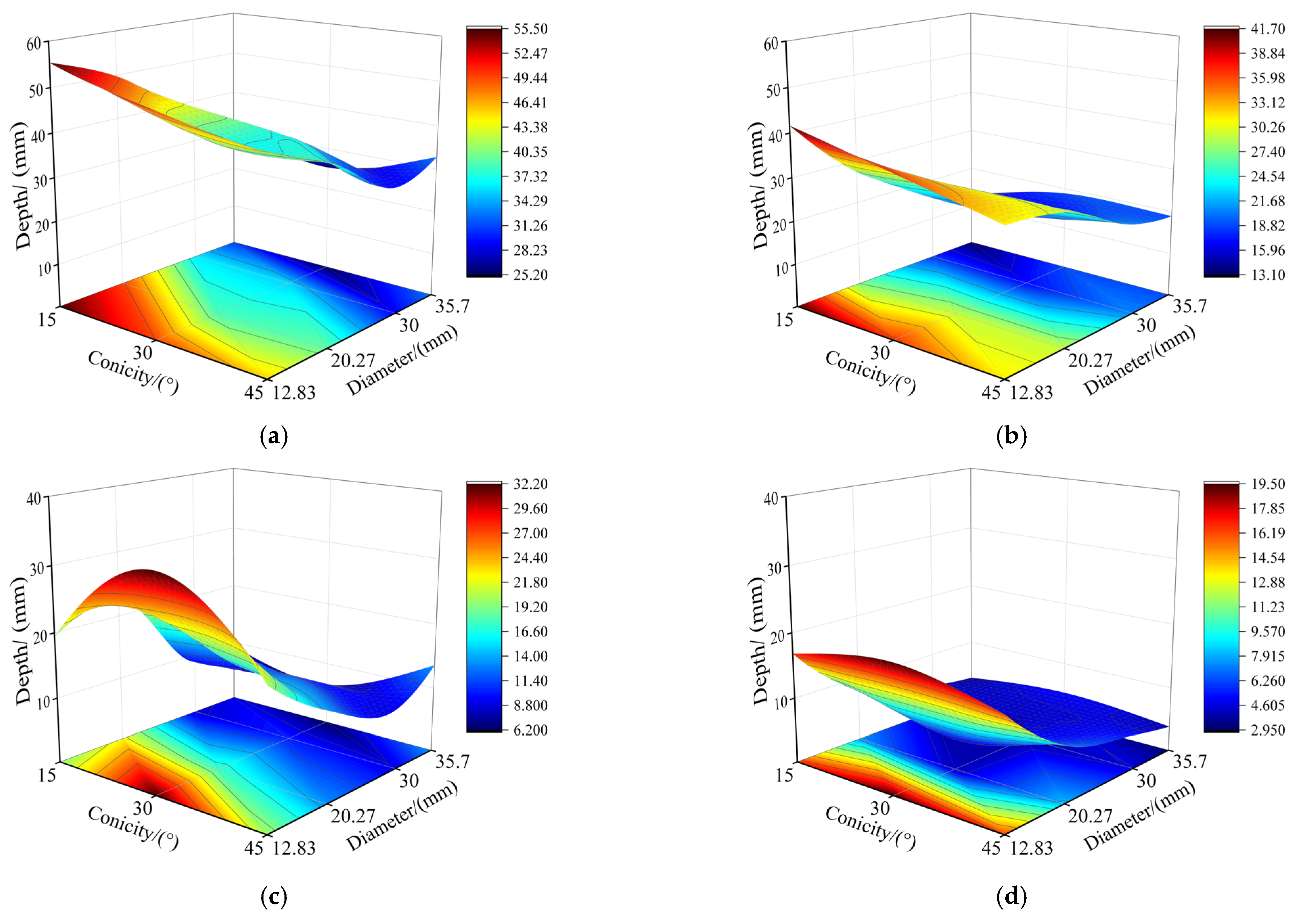
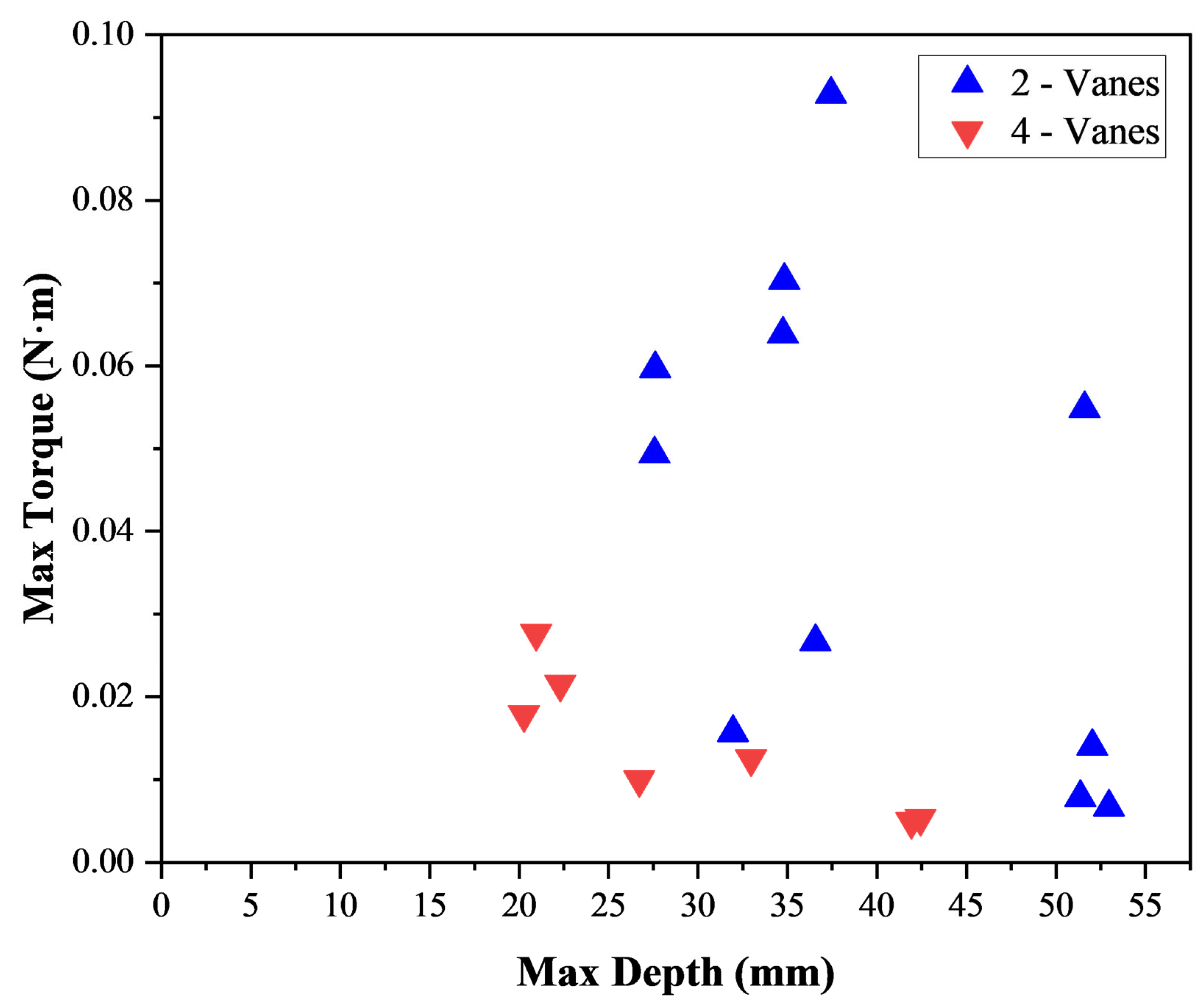
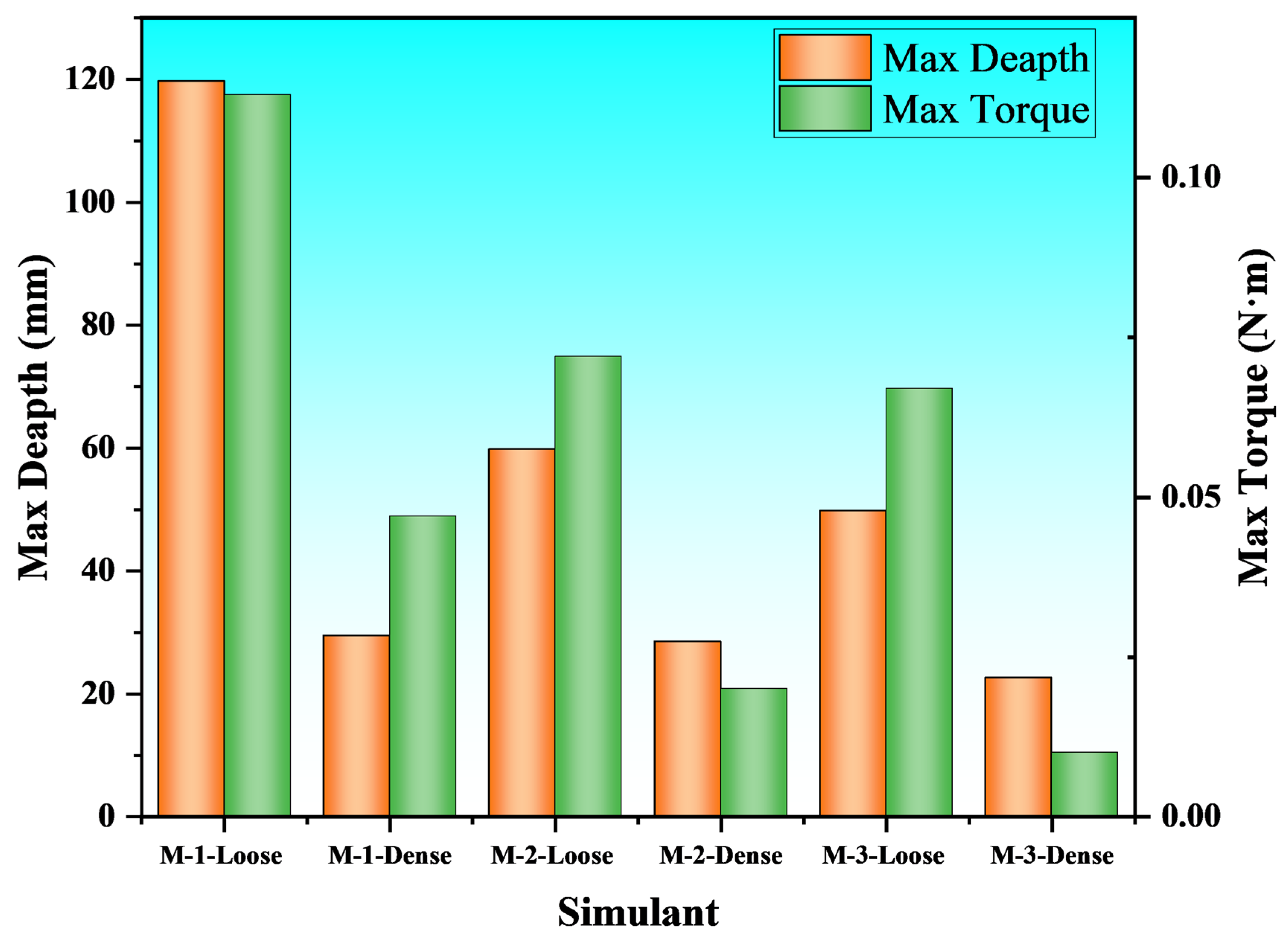
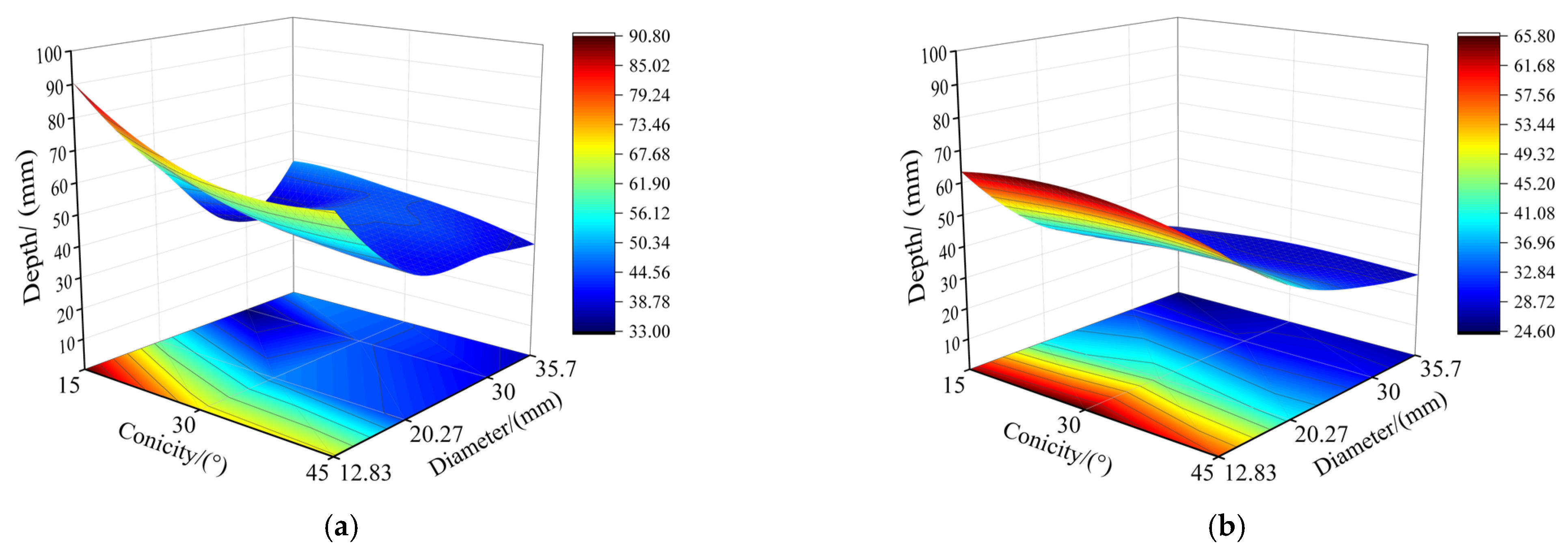
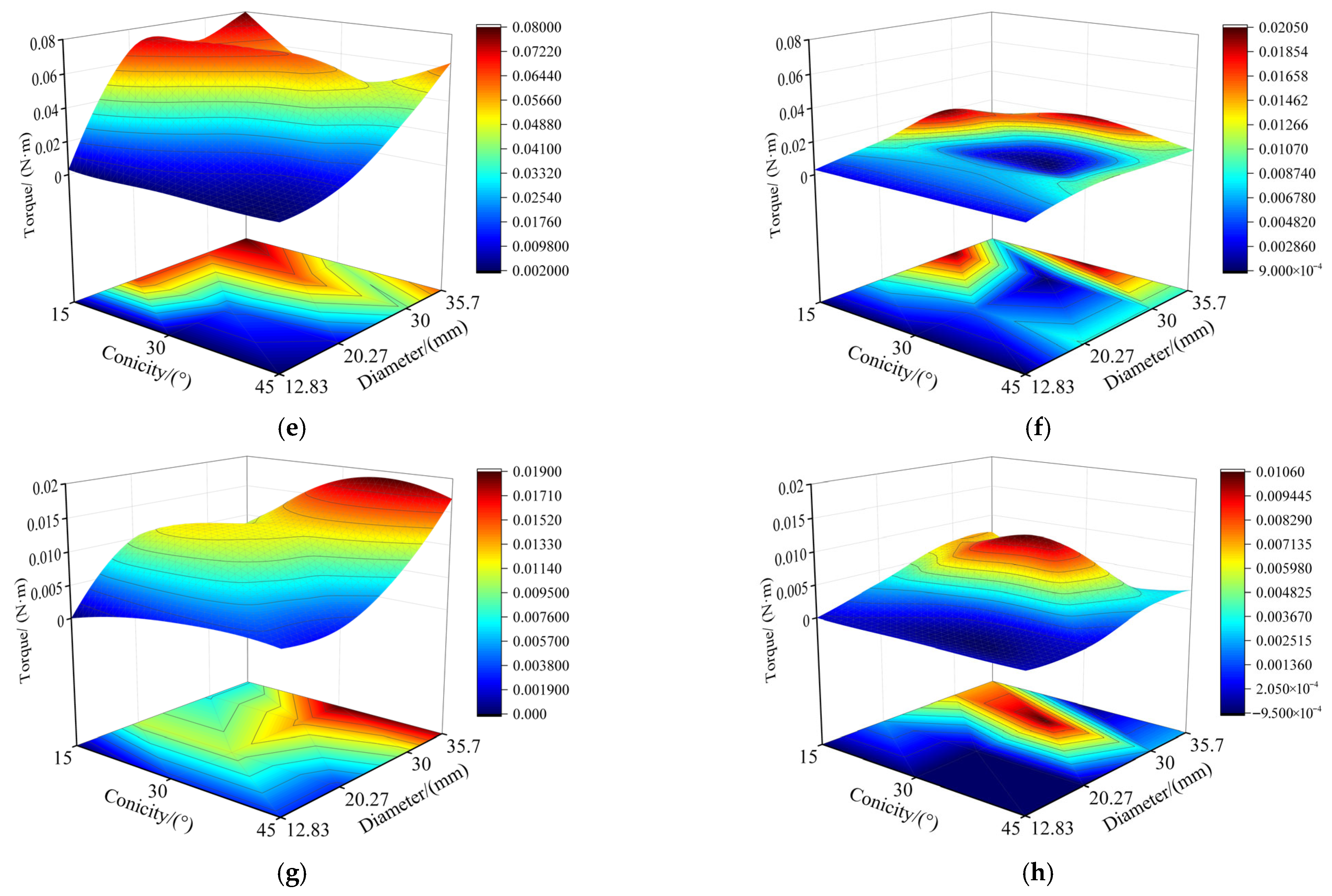
- Simulated lunar surface conditions were established under different particle sizes. There are three particle size ranges: less than 1 mm, 1 mm–2 mm, and 2 mm–4 mm. Two density states were controlled simultaneously: loose and dense. Probes of different dimensions were adopted, with the following: conicities of 15°, 30°, and 45°; vane diameters of 12.83 mm, 20.27 mm, 30 mm, and 35.7 mm; and vane counts of 2 and 4. Using a full-factorial experimental design, test results for all conditions were obtained. The Pareto-optimal solution set results indicate that the optimal combination is conicity 15°, vane diameter 20.27 mm, and vane count 2. The average maximum penetration depth is 51.61 mm, and the average maximum torque is 0.055 N·m. This optimization result indicates that, under limited normal load (16 N), adopting a probe with a smaller conicity and a medium diameter can effectively balance penetration depth and signal strength, providing theoretical support for the payload design of future missions, such as Chang’e 8. In the future, for simulated lunar soil, modeling will be performed on the mechanical properties of the simulated lunar soil, such as cohesion and internal friction angle, in relation to probe dimensions and experimental data. This will enable in situ prediction of lunar soil mechanical characteristics during the operation of the penetration shear apparatus. The regolith mechanical property data obtained by the probe system could also support in situ resource utilization efforts, particularly by informing excavation and drilling strategies for water extraction from volatile-bearing polar regolith [35].
4.2. Future Work
- (1)
- It should be noted that the simulants used in this study, while representative of lunar regolith in terms of bulk particle size range, possess several important differences from actual lunar polar regolith that may affect the transferability of the results. First, regarding grain-size distribution, the experiments employed three discrete, narrowly graded particle size fractions to isolate grain-size effects, whereas natural lunar regolith exhibits a continuous, broadly graded distribution with a significant fraction below 20 μm. Second, concerning particle angularity, lunar regolith grains are highly angular and irregular due to the absence of aqueous or aeolian rounding processes, whereas the simulant particles may exhibit comparatively lower angularity depending on their terrestrial formation and processing history. This difference could affect inter-particle interlocking and, consequently, the measured shear resistance. Third, with respect to cohesion, actual lunar regolith exhibits significant apparent cohesion (on the order of 0.1–1 kPa) attributed to electrostatic charging, solar wind implantation, and van der Waals forces in vacuum—effects that cannot be replicated under terrestrial atmospheric conditions. Fourth, lunar polar regions may contain volatile-bearing regolith (e.g., ice-cemented grains) that would substantially alter mechanical behavior compared to the dry simulant used here. These limitations imply that the optimal probe dimensions identified in this study should be validated through future testing with higher-fidelity simulants (e.g., those matching the Apollo-measured gradation curves) and, where possible, under vacuum conditions. For future South Polar missions, the extremely low temperatures in permanently shadowed regions may significantly increase regolith penetration resistance due to ice cementation, posing additional challenges for drilling and probe-based measurement systems [36].
- (2)
- It should be noted that the present experimental campaign was conducted under terrestrial gravitational conditions (1 g) as a foundational parametric study. On the lunar surface, the reduced gravitational acceleration (approximately 1/6 g) directly affects the available reaction force from the rover platform, the overburden stress profile within the regolith, and consequently the penetration resistance and shear strength mobilization at any given depth. However, the 16 N normal load constraint adopted in this study already accounts for the reduced lunar gravity, as it was derived from the rover’s lunar weight (35 kg × 1.63 m/s2 ≈ 57 N) and the associated stability analysis. The relative ranking of probe configurations is expected to remain valid because the dominant factor—the limited normal load budget—is the same constraint that would govern performance on the lunar surface. Nevertheless, future work will include testing under simulated reduced-gravity conditions (e.g., using counterweight systems or parabolic flight experiments) and the development of mechanics-based predictive models that explicitly account for the depth-dependent stress state under lunar gravity, enabling direct extrapolation of ground-based results to lunar operating conditions and further optimization of the apparatus for flight deployment. Additionally, space weathering processes—such as micrometeorite bombardment and solar wind implantation—may modify grain surface characteristics and consequently alter the bulk frictional and cohesive behavior of in situ regolith compared to terrestrial simulants [37,38]. Furthermore, machine-learning approaches have shown promise in predicting mechanical properties of lunar minerals from compositional and structural data [39], offering a potential pathway to complement probe-based in situ measurements with predictive models for rapid geotechnical assessment across diverse lunar terrains.
- (3)
- Beyond the near-term application to China’s Chang’e lunar exploration program, the in situ geotechnical measurement methodology and optimized probe design presented in this study hold relevance for a range of future lunar surface activities. As international interest in sustained lunar presence intensifies, accurate characterization of regolith mechanical properties will become essential for site selection, foundation engineering, and resource extraction operations. For example, Ahrens et al. identified candidate test mining sites on the lunar surface where knowledge of local soil bearing capacity, shear strength, and compaction state would directly inform excavation strategy and equipment design [40]. Similarly, Leone proposed the Sverdrup–Henson crater near the lunar South Pole as a candidate location for the first permanent settlement [41], where geotechnical surveying of the regolith would be a prerequisite for habitat construction, trafficability assessment, and infrastructure planning. The lightweight, rover-deployable probe system developed in this work offers a practical means of conducting such preliminary geotechnical surveys across multiple candidate sites with minimal payload mass, thereby supporting mission planning for lunar mining, construction, and long-duration habitation activities.
Author Contributions
Funding
Data Availability Statement
Conflicts of Interest
References
- Li, J.; Xi, J.; He, M.; Li, B. Formation Control for Networked Multiagent Systems with a Minimum Energy Constraint. Chin. J. Aeronaut. 2023, 36, 342–355. [Google Scholar] [CrossRef] [Scilit]
- Jia, Y.; Zou, Y.; Ping, J.; Xue, C.; Yan, J.; Ning, Y. The Scientific Objectives and Payloads of Chang’e−4 Mission. Planet. Space Sci. 2018, 162, 207–215. [Google Scholar] [CrossRef] [Scilit]
- Li, C.; Hu, H.; Yang, M.-F.; Pei, Z.-Y.; Zhou, Q.; Ren, X.; Liu, B.; Liu, D.; Zeng, X.; Zhang, G.; et al. Characteristics of the Lunar Samples Returned by the Chang’e-5 Mission. Natl. Sci. Rev. 2022, 9, nwab188. [Google Scholar] [CrossRef] [Scilit]
- Knez, D.; Zamani, M.A. A Review of the Geomechanics Aspects in Space Exploration. Energies 2021, 14, 7522. [Google Scholar] [CrossRef] [Scilit]
- Pease Jonathan, W. Discussion of “Seismic Earth Pressures on Cantilever Retaining Structures” by Linda Al Atik and Nicholas Sitar. J. Geotech. Geoenviron. Eng. 2012, 138, 1045. [Google Scholar] [CrossRef] [Scilit]
- Zhang, H.; Huang, M.; Hu, X. Heat Exchange Structure Design and Overall Performance Analysis of Double-Concentrator Solar Thermal Thruster. Acta Astronaut. 2022, 199, 277–292. [Google Scholar] [CrossRef] [Scilit]
- Zhang, X.; Lv, W.; Zhang, L.; Zhang, J.; Lin, Y.; Yao, Z. Self-Organization Characteristics of Lunar Regolith Inferred by Yutu-2 Lunar Penetrating Radar. Remote Sens. 2021, 13, 3017. [Google Scholar] [CrossRef] [Scilit]
- King, E. The Lunar Regolith: Physical Characteristics and Dynamics. Philos. Trans. R. Soc. London. Ser. A Math. Phys. Sci. 1977, 285, 273–278. [Google Scholar] [CrossRef] [Scilit]
- Arvidson, R.E.; Bellutta, P.; Calef, F.; Fraeman, A.A.; Garvin, J.B.; Gasnault, O.; Grant, J.A.; Grotzinger, J.P.; Hamilton, V.E.; Heverly, M.; et al. Terrain Physical Properties Derived from Orbital Data and the First 360 Sols of Mars Science Laboratory Curiosity Rover Observations in Gale Crater. J. Geophys. Res. Planets 2014, 119, 1322–1344. [Google Scholar] [CrossRef] [Scilit]
- Ishigami, G.; Miwa, A.; Nagatani, K.; Yoshida, K. Terramechanics-Based Model for Steering Maneuver of Planetary Exploration Rovers on Loose Soil. J. Field Robot. 2007, 24, 233–250. [Google Scholar] [CrossRef] [Scilit]
- Arvidson, R.E.; Bonitz, R.G.; Robinson, M.L.; Carsten, J.L.; Volpe, R.A.; Trebi-Ollennu, A.; Mellon, M.T.; Chu, P.C.; Davis, K.R.; Wilson, J.J.; et al. Results from the Mars Phoenix Lander Robotic Arm Experiment. J. Geophys. Res. Plan. 2009, 114, E00E02. [Google Scholar] [CrossRef] [Scilit]
- Ono, S.; Namikawa, S.; Yoshida, K. Analysis of Soil Flow and Traction Mechanics for Lunar Rovers over Different Types of Soils Using Particle Image Velocimetry. J. Terramech. 2021, 95, 89–100. [Google Scholar] [CrossRef] [Scilit]
- Shibly, H.; Iagnemma, K.; Dubowsky, S. An Equivalent Soil Mechanics Formulation for Rigid Wheels in Deformable Terrain, with Application to Planetary Exploration Rovers. J. Terramech. 2005, 42, 1–13. [Google Scholar] [CrossRef] [Scilit]
- Watanabe, K.; Horiguchi, T.; Tanaka, K. Effect of Soil Type on Running Performance of Small Lunar Rover. Aerospace 2025, 12, 24. [Google Scholar] [CrossRef] [Scilit]
- Tomka, R.; Boazman, S.; Bradák, B.; Heather, D.; Kereszturi, A.; Pal, B.; Steinmann, V. Boulder Distribution, Circular Polarization, and Optical Maturity: A Survey of Example Lunar Polar Terrains for Future Landing Sites. Adv. Space Res. 2024, 73, 2243–2260. [Google Scholar]
- Mitchell, K.J.; Bromwell, L.G.; Carrier, W.D., III; Castes, N.C.; Houston, W.N.; Scott, R.F. Soil Mechanics Experiment. In Apollo 15: Preliminary Science Report; NASA SP-289; NASA: Washington, DC, USA, 1972; Available online: https://www.lpi.usra.edu/lunar/documents/NASA%20SP%20289.pdf (accessed on 8 May 2026).
- Center, M.S. Apollo 16: Preliminary Science Report; Scientific and Technical Information Office, National Aeronautics and Space Administration: Hampton, VA, USA, 1972.
- Mitchell, J.; Bromwell, L.; Carrier, W.; Costes, N.; Scott, R. Soil Mechanics Experiment. In Apollo 14 Preliminary Science Report; NASA SP-272; NASA: Washington, DC, USA, 1971. Available online: https://www.lpi.usra.edu/lunar/documents/NASA-SP-272.pdf (accessed on 8 May 2026).
- Mitchell, J.K.; Carrier, W.D., III; Costes, N.C.; Houston, W.N.; Scott, R.F.; Hovland, H.J. Soil Mechanics. In NASA. Johnson Space Center Apollo 17 Preliminary Science Report; NASA: Washington, DC, USA, 1973. Available online: https://ntrs.nasa.gov/citations/19740010325 (accessed on 8 May 2026).
- Slyuta, E.N. Physical and Mechanical Properties of the Lunar Soil (a Review). Sol. Syst. Res. 2014, 48, 330–353. [Google Scholar] [CrossRef] [Scilit]
- Stefanow, D.; Dudziński, P.A. Soil Shear Strength Determination Methods—State of the Art. Soil Tillage Res. 2021, 208, 104881. [Google Scholar] [CrossRef] [Scilit]
- Golanbari, B.; Mardani, A.; Farhadi, N.; Reina, G. Machine Learning Applications in Off-Road Vehicles Interaction with Terrain: An Overview. J. Terramech. 2024, 116, 101003. [Google Scholar] [CrossRef] [Scilit]
- Windisch, L.; Linke, S.; Jütte, M.; Baasch, J.; Kwade, A.; Stoll, E.; Schilde, C. Geotechnical and Shear Behavior of Novel Lunar Regolith Simulants Tubs-M, Tubs-T, and Tubs-I. Materials 2022, 15, 8561. [Google Scholar] [CrossRef] [Scilit]
- Janik, D.; Dudziński, P.A. Soil Penetration Testers—State of the Art—Part 2—The Bevameter Approach. Soil Tillage Res. 2024, 244, 106240. [Google Scholar] [CrossRef] [Scilit]
- Basilevsky, A.T.; Abdrakhimov, A.M.; Head, J.W.; Pieters, C.M.; Wu, Y.; Xiao, L. Geologic Characteristics of the Luna 17/Lunokhod 1 and Chang’e-3/Yutu Landing Sites, Northwest Mare Imbrium of the Moon. Planet. Space Sci. 2015, 117, 385–400. [Google Scholar] [CrossRef] [Scilit]
- He, C.; You, Y.; Wang, D.; Wu, H. Estimating Soil Failure Due to Torsion Via Vane Shear Test by Varying Vane Diameter and Soil Properties. Soil Tillage Res. 2018, 177, 68–78. [Google Scholar] [CrossRef] [Scilit]
- Ding, C.; Xiong, S.; Li, J.; Su, Y.; Huang, S. Yutu-2 Radar Observation of the Lunar Regolith Heterogeneity at the Chang’e-4 Landing Site. Astron. Astrophys. 2022, 664, A43. [Google Scholar] [CrossRef] [Scilit]
- Zhang, Y.; Gao, H.; Fang, X.; Xing, S.; Xiao, L.; Duan, L. Research on the Compactness of Lunar Soil Simulant Based on Static Cone Penetration Test. Appl. Sci. 2025, 15, 7553. [Google Scholar] [CrossRef] [Scilit]
- Carrier, W.D., III. Particle Size Distribution of Lunar Soil. J. Geotech. Geoenviron. Eng. 1968, 16, 956–959. [Google Scholar] [CrossRef] [Scilit]
- Sourcebook, L. Lunar Sourcebook: A User’s Guide to the Moon; Cambridge University Press: Cambridge, UK, 1991. [Google Scholar]
- He, R.; Sandu, C.; Mousavi, H.; Shenvi, M.N.; Braun, K.; Kruger, R.; Els, P.S. Updated Standards of the International Society for Terrain-Vehicle Systems. J. Terramech. 2020, 91, 185–231. [Google Scholar] [CrossRef] [Scilit]
- Janik, D.; Dudziński, P.A. Soil Penetration Testers—State of the Art—Part 1—The Penetrometer Approach. Soil Tillage Res. 2024, 244, 106219. [Google Scholar] [CrossRef] [Scilit]
- Teng, Y.; Wang, S.; Cui, Y.; Pang, Y. Influence of Loading Conditions on Mechanical Behaviors of Lunar Regolith Simulant Whu-1 Based on Chang’e-5 Returned Samples. Acta Geotech. 2025, 20, 2327–2344. [Google Scholar] [CrossRef] [Scilit]
- Matsushima, T.; Ishikawa, T. Particle Grading Effect on Mechanical Properties of Lunar Soil Simulant Fjs-1. In Earth and Space; ASCE Library: Reston, VA, USA, 2014; Volume 2014, pp. 60–68. [Google Scholar]
- Liu, Y.; Wang, C.; Pang, Y.; Wang, Q.; Zhao, Z.; Lin, T.; Wang, Z.; Shen, T.; Liu, S.; Song, J. Water Extraction from Icy Lunar Regolith by Drilling-Based Thermal Method in a Pilot-Scale Unit. Acta Astronaut. 2023, 202, 386–399. [Google Scholar] [CrossRef] [Scilit]
- Gscheidle, C.; Biswas, J.; Ivanov, D.; Fernandes, D.; Calzada-Diaz, A.; Lamamy, J.-A.; Tattusch, T.; Bergemann, C. Challenges of Operating a Drilling Instrument on a Small Rover at the Lunar Poles-Lvs-Pie Phase a Study Results. Planet. Space Sci. 2022, 212, 105426. [Google Scholar] [CrossRef] [Scilit]
- Guo, J.-G.; Ying, T.; Gao, H.; Chen, X.; Song, Y.; Lin, T.; Zhang, Q.; Zheng, Q.; Li, C.; Xu, Y.; et al. Surface Microstructures of Lunar Soil Returned by Chang’e-5 Mission Reveal an Intermediate Stage in Space Weathering Process. Sci. Bull. 2022, 67, 1696–1701. [Google Scholar] [CrossRef] [Scilit]
- Grèbol-Tomàs, P.; Ibáñez-Insa, J.; Trigo-Rodríguez, J.M.; Peña-Asensio, E.; Oliva, R.; Díaz-Anichtchenko, D.; Botella, P.; Sánchez-Martín, J.; Turnbull, R.; Errandonea, D. Mechanical Softening of Lunar Olivine Probed Via Nanoindentation and High-Pressure X-Ray Diffraction Measurements. Geosci. Front. 2025, 16, 102110. [Google Scholar] [CrossRef] [Scilit]
- Peña-Asensio, E.; Trigo-Rodríguez, J.M.; Sort, J.; Ibáñez-Insa, J.; Rimola, A. Machine Learning Applications on Lunar Meteorite Minerals: From Classification to Mechanical Properties Prediction. Int. J. Min. Sci. Technol. 2024, 34, 1283–1292. [Google Scholar] [CrossRef] [Scilit]
- Ahrens, C.; Leone, G.; Joutsenvaara, J.; Kereszturi, A.; Calabrese, G.; Schmidt, G.W.; Bernal, A.; Palanco, S. Test Mining Sites at the Moon: A Review of Resource Extraction Opportunities and Challenges at De Gerlache, Shackleton, and Sverdrup-Henson Regions. Eng. Geol. 2026, 365, 108628. [Google Scholar] [CrossRef] [Scilit]
- Leone, G.; Ahrens, C.; Korteniemi, J.; Gasparri, D.; Kereszturi, A.; Martynov, A.; Schmidt, G.W.; Calabrese, G.; Joutsenvaara, J. Sverdrup-Henson Crater: A Candidate Location for the First Lunar South Pole Settlement. Iscience 2023, 26, 107853. [Google Scholar] [CrossRef] [Scilit]

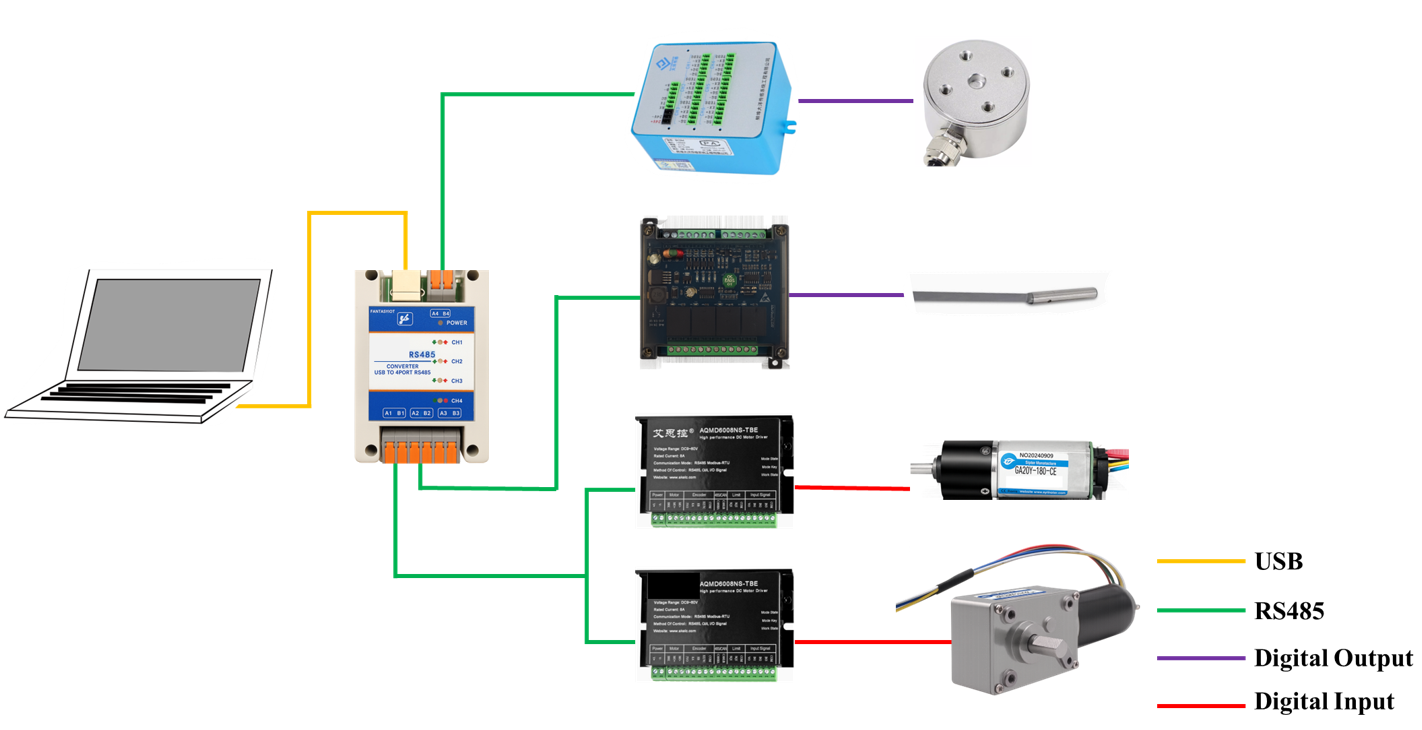








| Components | Specifications |
|---|---|
| USB to RS485 Converter | Baud Rate Range: 1200 bps–6 Mbps RS485 Ports: four channels Power Supply: 5 V via USB |
| Force-Torque Sensor | Tension/Compression Force: 25 N Torque: 2.5 N·m |
| Multi-Channel Force Sensor Transmitter | Voltage Range: 12–30 V Control Signals: RS232, RS485 Channels: three channels |
| Aisikong (AQMD) DC Brushed Motor Driver | Model: AQMD6008NS-TBE Voltage Range: 9–60 V Control Signals: Potentiometer, Analog, PWM, Pulse, Frequency, Switch, RS485/CAN Applicable Motor: DC Brushed Motor |
| Worm Gear DC Brushed Motor | Rated Speed: 470 RPM Voltage: 24 V |
| Planetary Gear DC Brushed Motor | Rated Speed: 11 RPM Voltage: 24 V |
| Modbus RTU Remote I/O Analog Acquisition Module | Output Type: Relay Control Signal: RS485 Configuration: 4 Inputs/4 Outputs |
| Cylindrical Proximity Sensor | Diameter: 4 mm Output Type: NPN Normally Closed (NC) |
| Switching Power Supply | Output Voltage: 24 V Output Current: 4.5 A |
| Simulant | JLU-M-1 | JLU-M-2 | JLU-M-3 |
|---|---|---|---|
| Particle Size/mm | <1 | 1~2 | 2~4 |
| Simulant Type | No. | Conicity of Repose (°) | Conicity of Collapse (°) | Mean Conicity of Repose (°) | Mean Conicity of Collapse (°) |
|---|---|---|---|---|---|
| Simulant I | 1 | 39.16 | 23.83 | 42.35 | 26.32 |
| 2 | 43.73 | 26.11 | |||
| 3 | 44.16 | 29.01 | |||
| Simulant II | 1 | 39.02 | 21.87 | 39.26 | 22.23 |
| 2 | 39.23 | 22.84 | |||
| 3 | 39.53 | 21.98 | |||
| Simulant III | 1 | 38.71 | 20.82 | 37.9 | 22.78 |
| 2 | 36.63 | 23.9 | |||
| 3 | 38.36 | 23.62 |
| Density/(g/cm3) | Loose State | Dense State |
|---|---|---|
| Simulant I | 1.37 | 1.71 |
| Simulant II | 1.27 | 1.37 |
| Simulant III | 1.44 | 1.51 |
| Name | Conicity (°) | Vane Diameter (mm) | Projected Area (mm2) | Radius (mm) |
|---|---|---|---|---|
| Cone Tip I | 15 | 12.83 | 129 | 6.415 |
| Cone Tip I | 30 | 12.83 | 129 | 6.415 |
| Cone Tip I | 45 | 12.83 | 129 | 6.415 |
| Cone Tip II | 15 | 20.27 | 324 | 10.135 |
| Cone Tip II | 30 | 20.27 | 324 | 10.135 |
| Cone Tip II | 45 | 20.27 | 324 | 10.135 |
| Cone Tip III | 15 | 30 | 707 | 15 |
| Cone Tip III | 30 | 30 | 707 | 15 |
| Cone Tip III | 45 | 30 | 707 | 15 |
| Cone Tip IV | 15 | 35.7 | 1000 | 17.85 |
| Cone Tip IV | 30 | 35.7 | 1000 | 17.85 |
| Cone Tip IV | 45 | 35.7 | 1000 | 17.85 |
Disclaimer/Publisher’s Note: The statements, opinions and data contained in all publications are solely those of the individual author(s) and contributor(s) and not of MDPI and/or the editor(s). MDPI and/or the editor(s) disclaim responsibility for any injury to people or property resulting from any ideas, methods, instructions or products referred to in the content. |
© 2026 by the authors. Licensee MDPI, Basel, Switzerland. This article is an open access article distributed under the terms and conditions of the Creative Commons Attribution (CC BY) license.
Share and Cite
Liu, Z.; Zou, M.; Shen, Y.; Zeng, Y.; Richter, L.; Chen, Z. Development and Optimal Probe Selection of an In Situ Penetration and Shear Apparatus for the Lunar Surface. Aerospace 2026, 13, 465. https://doi.org/10.3390/aerospace13050465
Liu Z, Zou M, Shen Y, Zeng Y, Richter L, Chen Z. Development and Optimal Probe Selection of an In Situ Penetration and Shear Apparatus for the Lunar Surface. Aerospace. 2026; 13(5):465. https://doi.org/10.3390/aerospace13050465
Chicago/Turabian StyleLiu, Zihao, Meng Zou, Yan Shen, Yuqi Zeng, Lutz Richter, and Zhen Chen. 2026. "Development and Optimal Probe Selection of an In Situ Penetration and Shear Apparatus for the Lunar Surface" Aerospace 13, no. 5: 465. https://doi.org/10.3390/aerospace13050465
APA StyleLiu, Z., Zou, M., Shen, Y., Zeng, Y., Richter, L., & Chen, Z. (2026). Development and Optimal Probe Selection of an In Situ Penetration and Shear Apparatus for the Lunar Surface. Aerospace, 13(5), 465. https://doi.org/10.3390/aerospace13050465