1. Introduction
Dielectric barrier discharge (DBD) plasma actuators have been investigated for more than two decades as a practical, all-electric approach to active flow control. The appeal of AC-DBD actuation lies in its surface-mounted implementation, absence of moving parts, and ability to induce a near-wall jet through electrohydrodynamic body forcing. Comprehensive reviews have summarized the actuator physics, operating modes, and representative aerodynamic applications, including airfoil separation control and stall mitigation [
1,
2]. In airfoil flows, the primary objective is often to delay the onset of flow separation or to reduce the extent of separated flow at elevated angles of attack, thereby improving lift performance and robustness under off-design conditions [
3,
4].
Despite these advantages, implementing AC-DBD plasma actuators in wind-tunnel and practical aerodynamic systems poses several challenges. Because the actuation authority is produced through near-wall electrohydrodynamic forcing, the achievable momentum addition is often limited and strongly dependent on the baseline boundary-layer state (transition/separation), actuator geometry and dielectric configuration, and the applied waveform and voltage/frequency settings; consequently, the outcome can be beneficial, neutral, or even adverse, depending on the operating condition [
1,
2,
3,
4,
5,
6]. In addition, the need for high-voltage hardware introduces practical constraints related to the electrical safety, insulation and arcing margins, electromagnetic interference, and long-term reliability of the dielectric and electrodes (e.g., aging, surface contamination, and discharge non-uniformity), while the energetic cost and the definition/normalization of “actuation strength” remain nontrivial for engineering comparison [
1,
2,
7,
8,
9]. Relative to more conventional flow-control approaches—such as passive devices (e.g., vortex generators), mechanical devices, or fluidic methods (steady blowing/suction and synthetic/pulsed jets)—DBD actuation offers attractive features including surface-mounted integration, fast response, and the absence of moving parts and external plumbing; however, it may provide weaker momentum authority under some constraints and can exhibit stronger condition dependence than fluidic forcing designed to inject a prescribed mass/momentum flux [
1,
2,
3,
4]. Therefore, a key practical motivation is to evaluate DBD actuation in a reproducible manner under well-defined electrical settings and clearly stated performance metrics, while explicitly acknowledging the variability observed across operating conditions and measurement definitions.
State-of-the-art studies have demonstrated that plasma-based actuation can modify airfoil separation and stall characteristics, but the reported benefits vary widely across configurations and operating conditions. Early work established separation control at high angles of attack using AC-DBD actuation [
3], and subsequent studies discussed broader turbulent-boundary-layer control perspectives and mechanisms [
4]. For airfoil applications, actuator placement and implementation have been explored as critical design choices, including chordwise-location optimization to target separation behavior (e.g., on NACA 0015) [
10], measurement methodologies and characterization metrics for thrust/power and actuator diagnostics [
11,
12,
13], and approaches that alter airfoil loading through (virtual) Gurney-flap effects [
14,
15]. Related plasma-actuation studies have also reported stall-control outcomes at high angles of attack [
6] and demonstrated leading-edge implementations intended to influence separation initiation [
5]. Motivated by the literature, the present study adopts a fixed leading-edge AC-DBD setting to intentionally probe baseline-state dependence across an angle-of-attack sweep, while independently quantifying actuation strength using thrust-based characterization for repeatable comparison under practical electrical constraints [
7,
8,
9,
16,
17,
18].
A key design choice in airfoil applications is actuator placement along the chord and its intended interaction with the separation process. Several studies have optimized the actuation location to influence the separation behavior on airfoils (e.g., by moving the actuator downstream to act on a separation line that has shifted aft with the operating condition) [
10]. Other work has demonstrated lift/drag changes and stall-control benefits using different actuator concepts and placements [
11,
12,
13], including implementations that exploit (virtual) Gurney-flap effects to modify airfoil loading [
14,
15]. Stall control at high angles of attack has also been reported in related plasma-actuation studies [
6]. From a physical standpoint, this placement choice determines whether the actuator is primarily attempting to (i) influence the boundary-layer response and separation triggering near the leading edge, or (ii) interact with an already developed separated shear layer farther downstream on the upper surface. These are not equivalent control targets: the former aims at the initiation mechanism, while the latter acts on the dynamics of an established separated region and its shear layer. Consistent with this distinction, wind-tunnel experiments using leading-edge SDBD plasma actuators have reported increased maximum lift and delayed stall, underscoring the relevance of targeting separation initiation near the leading edge [
5].
In this context, the present study focuses on a leading-edge configuration because it is explicitly aligned with the earliest stage of separation development. In this study, the actuator was placed at the leading edge to act on the separation initiation point, rather than on an already separated flow farther downstream on the upper surface. This choice is particularly relevant for angle-of-attack sweeps that traverse attached, near-stall, and post-stall regimes, where a modest change in early boundary-layer behavior can produce a qualitatively different global flow state, pressure field, and load response. At the same time, the literature clearly indicates that DBD aerodynamic benefits are strongly condition-dependent. The reported outcomes vary with the baseline flow state, actuator geometry and dielectric configuration, driving waveform and amplitude, and the evaluation metric [
3,
4]. Similar sensitivity to boundary conditions and near-surface coupled transport has also been discussed in other surface-driven engineering systems (as a conceptual analogy) [
19]. This perspective underscores the importance of accurately characterizing the imposed forcing when interpreting performance changes in DBD-aerodynamic applications. This conditionality becomes most critical near-stall and post-stall, where the separated shear layer is highly unsteady and its receptivity to forcing can change markedly with the angle of attack, potentially weakening suction enhancement or producing an unfavorable pressure shift even when the same actuation setting is applied.
In addition, pulse-modulated (burst-mode) actuation introduces further control parameters—most notably, the burst repetition frequency and duty cycle—that can strongly influence separation-control effectiveness. Prior airfoil studies using burst-mode driving have reported that the optimal burst settings depend on the baseline flow state and Reynolds number, and that the achievable benefit can change markedly across near-stall and post-stall regimes [
20,
21,
22]. More recent wind-tunnel/flight-scale investigations likewise suggest that plasma-based stall control may yield only modest increases in maximum lift in some configurations, while still providing improvements in post-stall behavior and robustness, reinforcing that the net aerodynamic benefit is not universal but case-dependent [
23].
Another practical issue is how to quantify actuation strength in a way that is repeatable and interpretable for wind-tunnel testing. While velocity-field diagnostics and body-force estimations are powerful, they may not always be available in early-stage experiments. Prior studies have established useful actuator-characterization measurements, including induced wall-flow measurements, thrust/power scaling, and diagnostics for comparing actuator configurations [
7,
9,
16,
17,
18]. In particular, thrust measurements in quiescent air provide a simple, repeatable proxy for the net momentum imparted by an AC-DBD actuator, and methodology details—including the antithrust hypothesis and installation effects—have been carefully documented [
8]. Accordingly, thrust-based characterization is adopted here as an experimentally grounded indicator of actuation strength that can be used to compare dielectric configurations under voltage/frequency sweeps.
A further methodological challenge arises when aerodynamic performance is evaluated from discrete surface-pressure measurements. Pressure integration is widely used to estimate lift from upper- and lower-surface pressure distributions. However, pressure-derived lift can be sensitive to pressure tap effects, tap layout, and the chosen integration interval, especially when comparisons are made across an angle-of-attack sweep or when the available tap coverage differs between the upper and lower surfaces [
24,
25]. This sensitivity is practically important for actuator experiments because actuator installation can partially occlude taps, alter the local surface condition, or lead to non-overlapping chordwise coverage between the upper and lower surfaces. Without consistent processing, apparent actuator-OFF/ON differences can be confounded by differences in sampling coverage, rather than reflecting a true actuation effect. To mitigate this issue, the present study evaluates pressure-derived lift by integrating the pressure difference over the common chordwise interval instrumented on both surfaces, following standard pressure-integration practice [
26]. This approach enforces a consistent comparison basis across angles of attack and between actuator-OFF/ON cases.
The objective of this paper is to quantify how a fixed leading-edge DBD actuation setting modifies the surface-pressure field and the resulting pressure-derived lift of a NACA 0012 airfoil while independently characterizing actuation strength. The study proceeds in two steps. First, actuation strength is characterized in quiescent air with thrust measurements for two dielectric configurations under voltage and frequency sweeps, following established thrust-measurement practice [
8]. Second, the actuator is applied in wind-tunnel tests, where upper- and lower-surface pressure distributions are measured over an angle-of-attack sweep. The pressure-derived lift is then evaluated by integrating the pressure difference over the common instrumented chordwise interval, enabling robust actuator-OFF/ON comparisons across angles [
26]. Finally, the results are interpreted in the context of the known conditionality of plasma-based separation control near-stall and post-stall [
3,
4,
6], with emphasis on clarifying when and why a fixed leading-edge setting can yield a positive lift response in attached flow yet become neutral or adverse as the baseline state transitions toward strong separation. In the present study, the actuator is operated in a single fixed electrical condition (continuous sinusoidal mode) to reflect practical constraints in early-stage wind-tunnel testing, where stable and reproducible settings are often prioritized over case-by-case tuning; this design therefore requires a condition-dependent interpretation supported by independent actuation-strength characterization.
The remainder of this paper is organized as follows.
Section 2 describes the experimental setup, including the wind-tunnel facility, the airfoil model and DBD actuator configurations, the electrical driving conditions and thrust measurements, the surface-pressure measurements, the smoke-wire visualization procedure, and the data-processing method for pressure-derived lift over the common instrumented chordwise interval.
Section 3 presents the thrust characteristics obtained in quiescent air and the measured surface-pressure distributions and pressure-derived lift results across the angle-of-attack sweep.
Section 4 discusses the angle-of-attack-dependent actuation response in conjunction with the smoke-wire observations, and summarizes the implications, limitations, and recommended improvements for future measurements and evaluation.
2. Materials and Methods
2.1. Wind-Tunnel Facility and Test Conditions
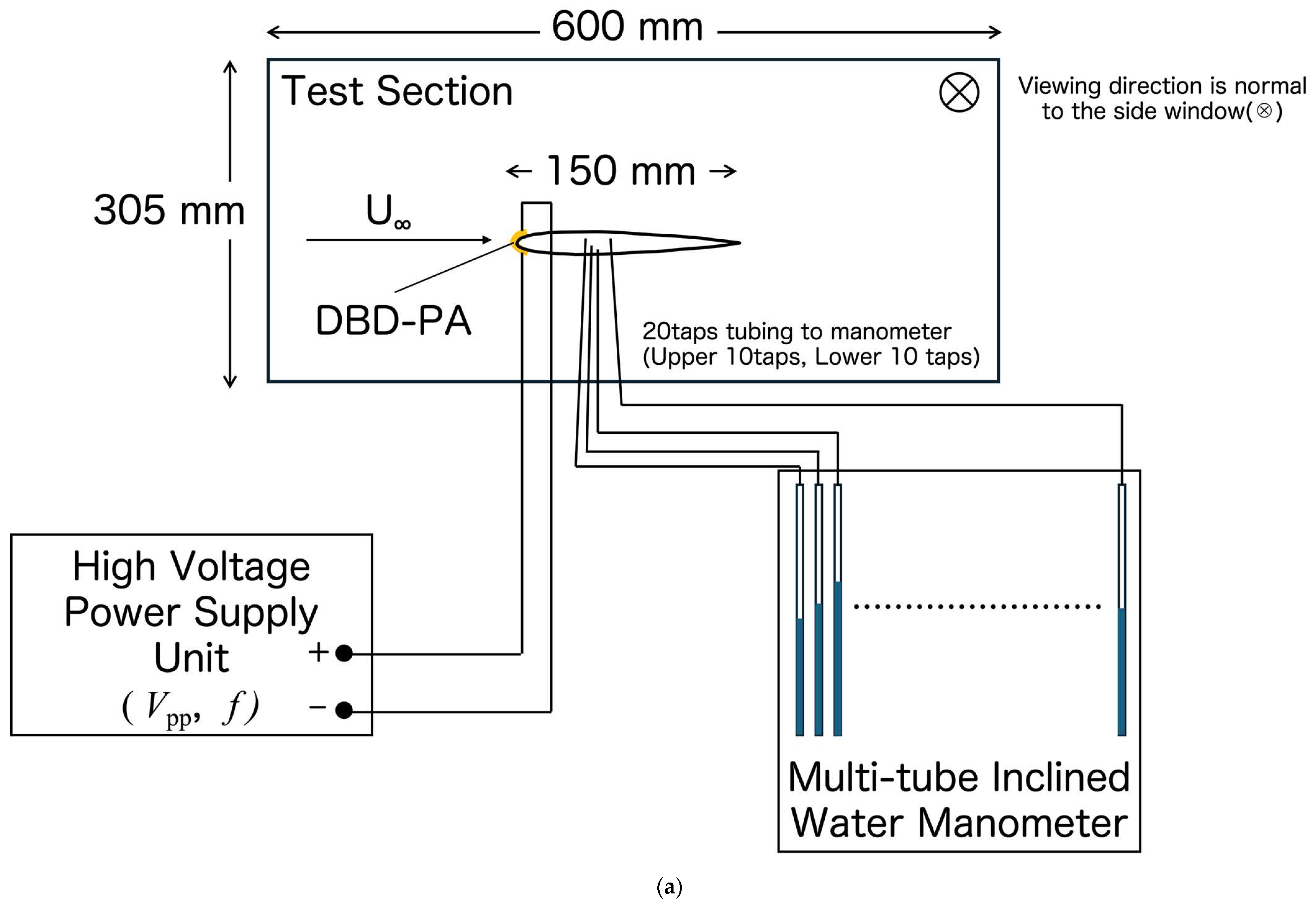
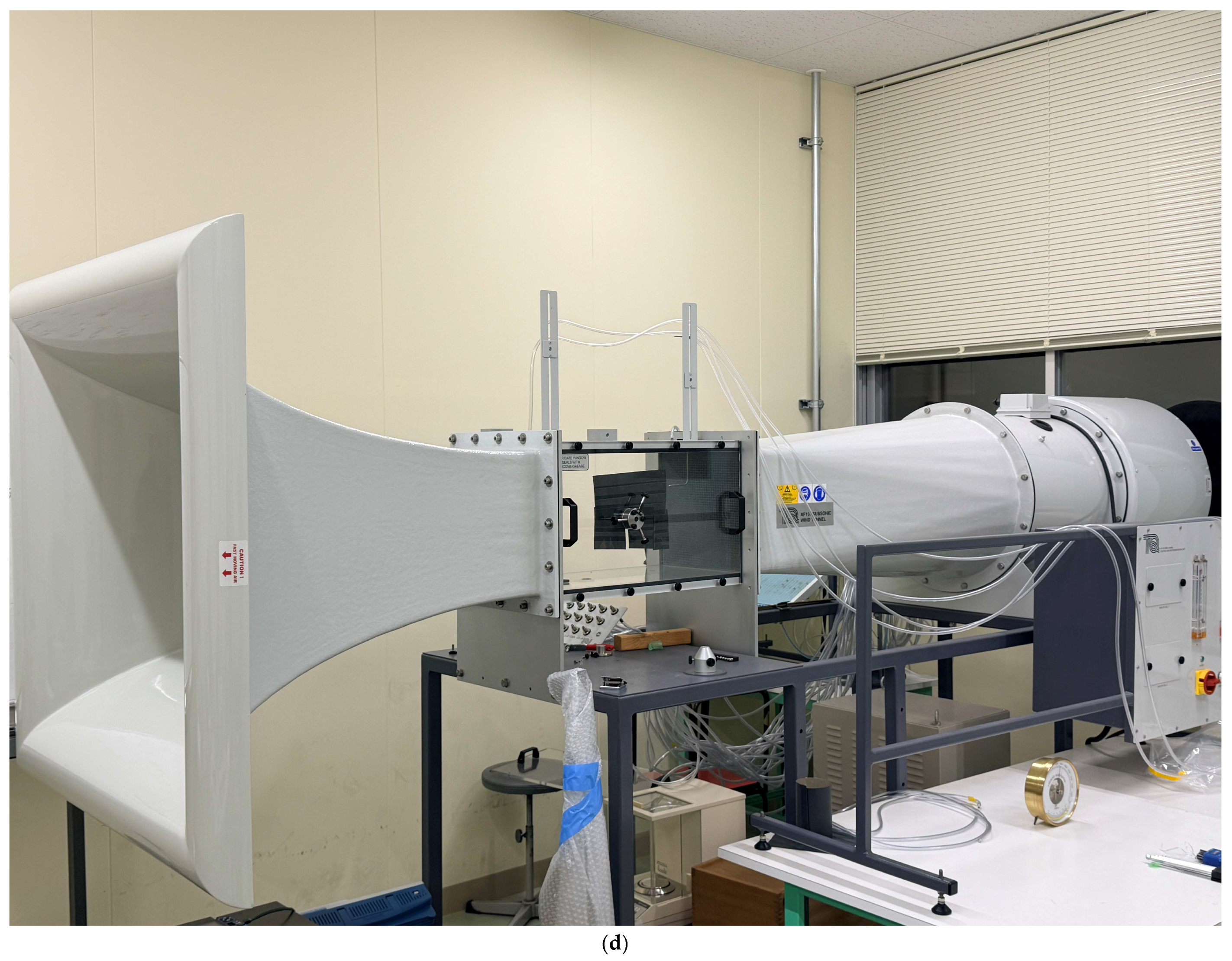
Experiments were conducted in a low-speed wind tunnel (AF-100, TECQUIPMENT, Nottingham, UK) at the National Institute of Technology, Tsuyama College. An overview of the test-section setup and instrumentation is shown in
Figure 1a; a photograph of the facility is provided in
Figure 1d. The test section size was 305 × 305 × 600 mm (0.305 × 0.305 × 0.600 m). The tests were performed at a free-stream velocity of
m/s. The angle of attack was set to
, and
. The coordinate system was defined such that
is aligned with the free-stream direction and y is normal to the free stream; the positive
-direction corresponds to the upward direction, relative to the airfoil model.
The free-stream dynamic pressure was evaluated as , where is the air density. The Reynolds number based on the airfoil chord was , where is the chord length and is the dynamic viscosity. Unless otherwise noted, all measurements were conducted under identical wind-tunnel settings for the plasma-actuator-OFF and plasma-actuator-ON cases. The free-stream turbulence (velocity-fluctuation) intensity in the test section was measured at the test-section center, using a hot-wire anemometer (GM8903, Shenzhen Wintact Electronics, Guangdong, China) at m/s. From three 60 s records logged at 1 Hz, the intensity was (mean ± SD, ). Because the logging rate is 1 Hz, this value primarily reflects low-frequency freestream velocity fluctuations and may underestimate higher-frequency turbulence components; nevertheless, all actuator-OFF/ON cases were tested under identical wind-tunnel settings, so the present discussion focuses on robust relative differences between the two conditions.
As shown in
Figure 1a, the pressure taps on the airfoil were connected via tubing to a multi-tube inclined water manometer (AFA1, TECQUIPMENT) located outside the test section, and the DBD plasma actuator was driven by a high-voltage power supply unit (PA Series, PSI, Kawagoe, Japan) placed outside the test section.
Figure 1.
Wind-tunnel facility and experimental setup for surface-pressure measurement and smoke-wire visualization. (
a) Side-view schematic of the wind-tunnel test section (305 × 305 × 600 mm) showing the NACA 0012 airfoil model (
mm), pressure tap tubing (upper 10 taps and lower 10 taps) connected to the multi-tube inclined water manometer (dotted ellipsis indicates omitted repeated tubes for clarity), and the high-voltage power supply; the free-stream direction
and the viewing direction for smoke-wire visualization (normal to the side window; ⊗) are indicated. (
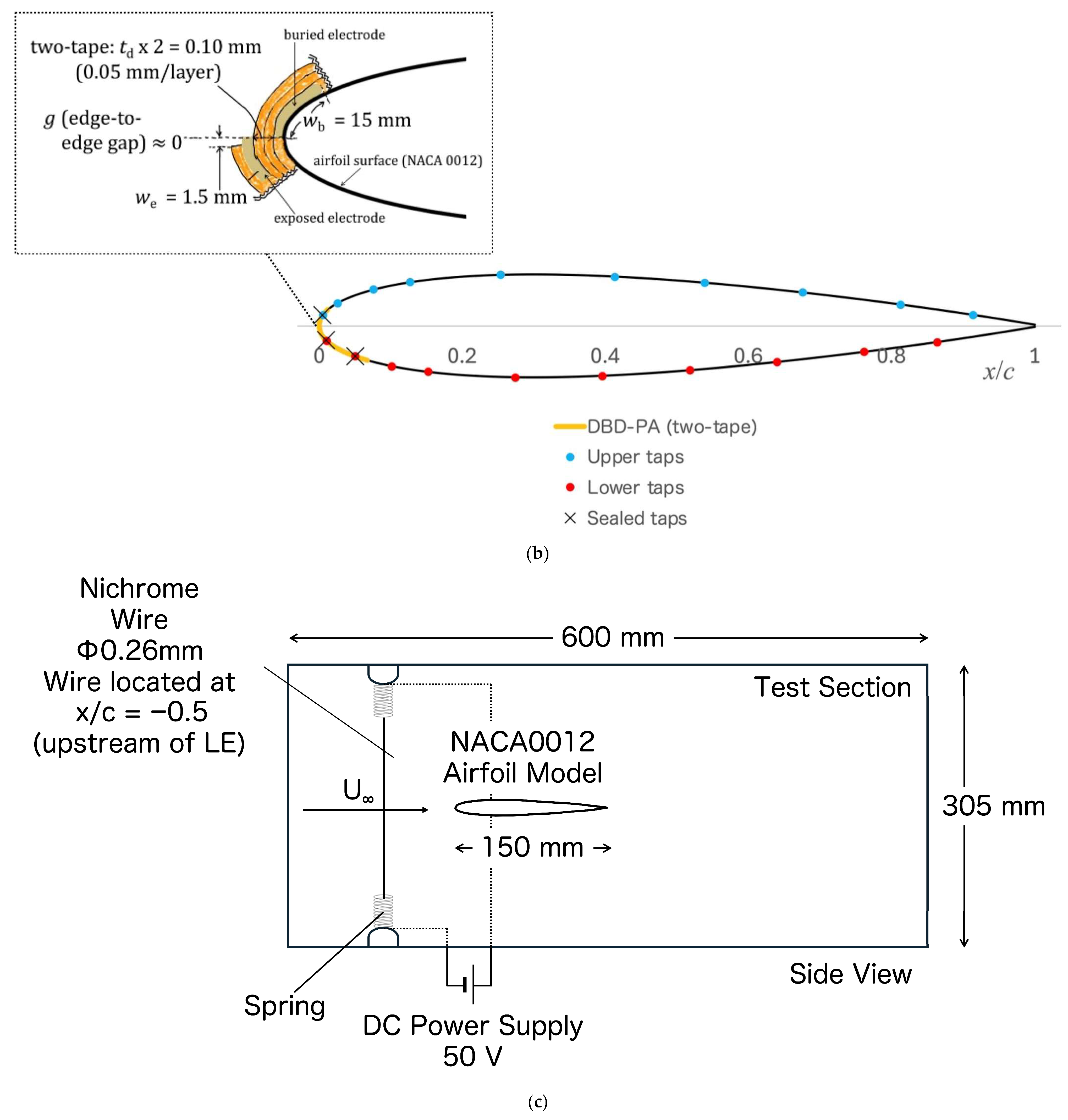
b) Pressure tap distribution, actuator placement, and taps sealed by the actuator installation (×); the exposed electrode was installed in the immediate vicinity of the leading edge (
). Chordwise tap locations are listed in
Table 1. (
c) Side-view arrangement of the smoke-wire visualization system (nichrome wire, ϕ0.26 mm) placed upstream of the leading edge and powered by a DC supply (50 V). (
d) Photograph of the low-speed wind-tunnel facility used in this study.
Figure 1.
Wind-tunnel facility and experimental setup for surface-pressure measurement and smoke-wire visualization. (
a) Side-view schematic of the wind-tunnel test section (305 × 305 × 600 mm) showing the NACA 0012 airfoil model (
mm), pressure tap tubing (upper 10 taps and lower 10 taps) connected to the multi-tube inclined water manometer (dotted ellipsis indicates omitted repeated tubes for clarity), and the high-voltage power supply; the free-stream direction
and the viewing direction for smoke-wire visualization (normal to the side window; ⊗) are indicated. (
b) Pressure tap distribution, actuator placement, and taps sealed by the actuator installation (×); the exposed electrode was installed in the immediate vicinity of the leading edge (
). Chordwise tap locations are listed in
Table 1. (
c) Side-view arrangement of the smoke-wire visualization system (nichrome wire, ϕ0.26 mm) placed upstream of the leading edge and powered by a DC supply (50 V). (
d) Photograph of the low-speed wind-tunnel facility used in this study.
Table 1.
Chordwise locations of pressure taps on the NACA 0012 airfoil.
Table 1.
Chordwise locations of pressure taps on the NACA 0012 airfoil.
| No. | Upper Surface x/c | Lower Surface x/c |
|---|
| 1 | 0.0051 × | 0.0101 × |
| 2 | 0.0254 | 0.0508 × |
| 3 | 0.0762 | 0.1016 |
| 4 | 0.1270 | 0.1524 |
| 5 | 0.2533 | 0.2743 |
| 6 | 0.4133 | 0.3963 |
| 7 | 0.5385 | 0.5182 |
| 8 | 0.6757 | 0.6401 |
| 9 | 0.8128 | 0.7620 |
| 10 | 0.9144 | 0.8636 |
2.2. Airfoil Model and DBD Plasma Actuator Configuration
A NACA 0012 airfoil model was used in the present study. The chord length and span of the model were
m and
m, respectively. The model was mounted in the wind-tunnel test section described in
Section 2.1, and the angle of attack was adjusted by rotating the model about the quarter-chord location.
A dielectric barrier discharge (DBD) plasma actuator was installed near the leading edge of the airfoil. The actuator consisted of an exposed electrode and an encapsulated (buried) electrode separated by a dielectric layer, forming a conventional single-sided DBD configuration. The electrodes were made of copper-foil tape (TERAOKA SEISAKUSYO, Tokyo, Japan) with a thickness of mm. The exposed- and buried-electrode widths were mm and mm, respectively, and the spanwise electrode length was mm. The streamwise gap , defined as the distance from the downstream edge of the exposed electrode to the upstream edge of the buried electrode, was set to approximately zero in the immediate vicinity of the leading edge. The dielectric layer was formed using polyimide tape (3M, St. Paul, MN, USA) with a nominal thickness of mm per layer. Two actuator builds were considered in this study: a two-layer (“two-tape”, i.e., two-zone) configuration and a three-layer (“three-tape”, i.e., three-zone) configuration, corresponding to total nominal dielectric thicknesses of 0.10 mm and 0.15 mm, respectively. The three-tape actuator was used only for the standalone thrust characterization (mounted on an acrylic plate), whereas the two-tape configuration was used for the wind-tunnel experiments on the airfoil.
Surface-pressure taps were distributed on both the upper and lower surfaces. The pressure tap layout, actuator placement, and sealed taps are summarized in
Figure 1b, and the chordwise tap locations are listed in
Table 1. Taps sealed by the actuator assembly (marked by × in
Table 1) were excluded from the pressure-derived analysis. In addition, the experimental arrangement for the smoke-wire flow visualization is shown in
Figure 1c.
2.3. Electrical Driving Conditions and Thrust Measurement
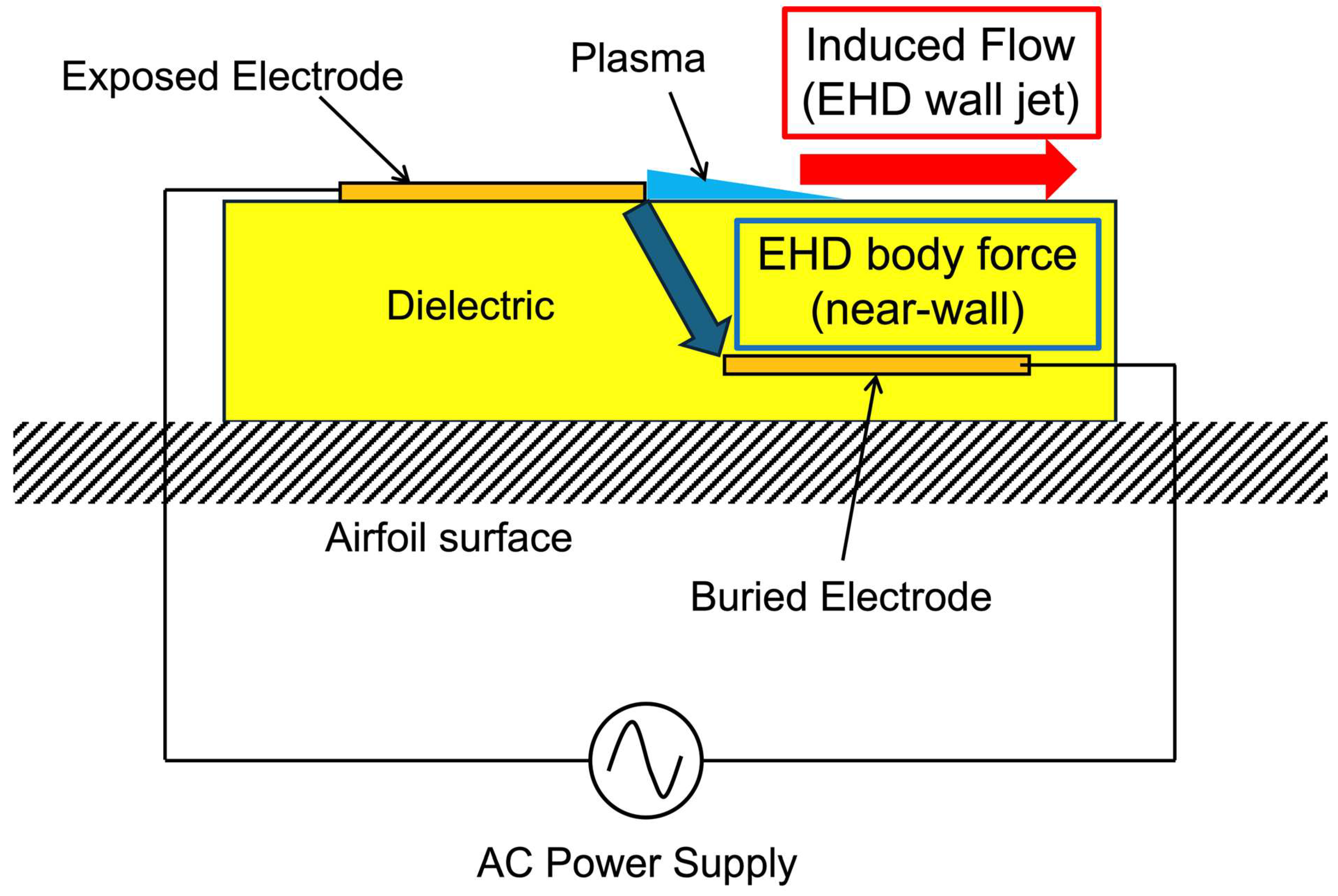
The working principle of the single-sided DBD plasma actuator is illustrated in
Figure 2. The actuator was driven by a sinusoidal high-voltage power supply. In this study, no burst (pulse) modulation was applied; it was operated in continuous sinusoidal mode throughout all measurements. The applied voltage is reported as the peak-to-peak value,
, and the carrier (driving) frequency is denoted by
. The electrical power consumption was measured under the representative operating frequency used in the wind-tunnel sweep (
kHz; measured
kHz). The measurement was repeated
times at each voltage, yielding
W at
kV,
W at
kV, and
W at
kV (mean ± 1 SD). The corresponding power–voltage sweep is provided in the
Supplementary Materials (Table S1). According to the power-supply manual, the recommended operating frequency range is 5–10 kHz; however, in the present thrust characterization, stable and repeatable readings were obtained at
kHz. Therefore,
kHz was adopted as the reference condition for the thrust voltage sweep and as a representative fixed carrier frequency for the subsequent wind-tunnel angle-of-attack sweep, so that actuator-OFF/ON comparisons are not confounded by changes in electrical settings.
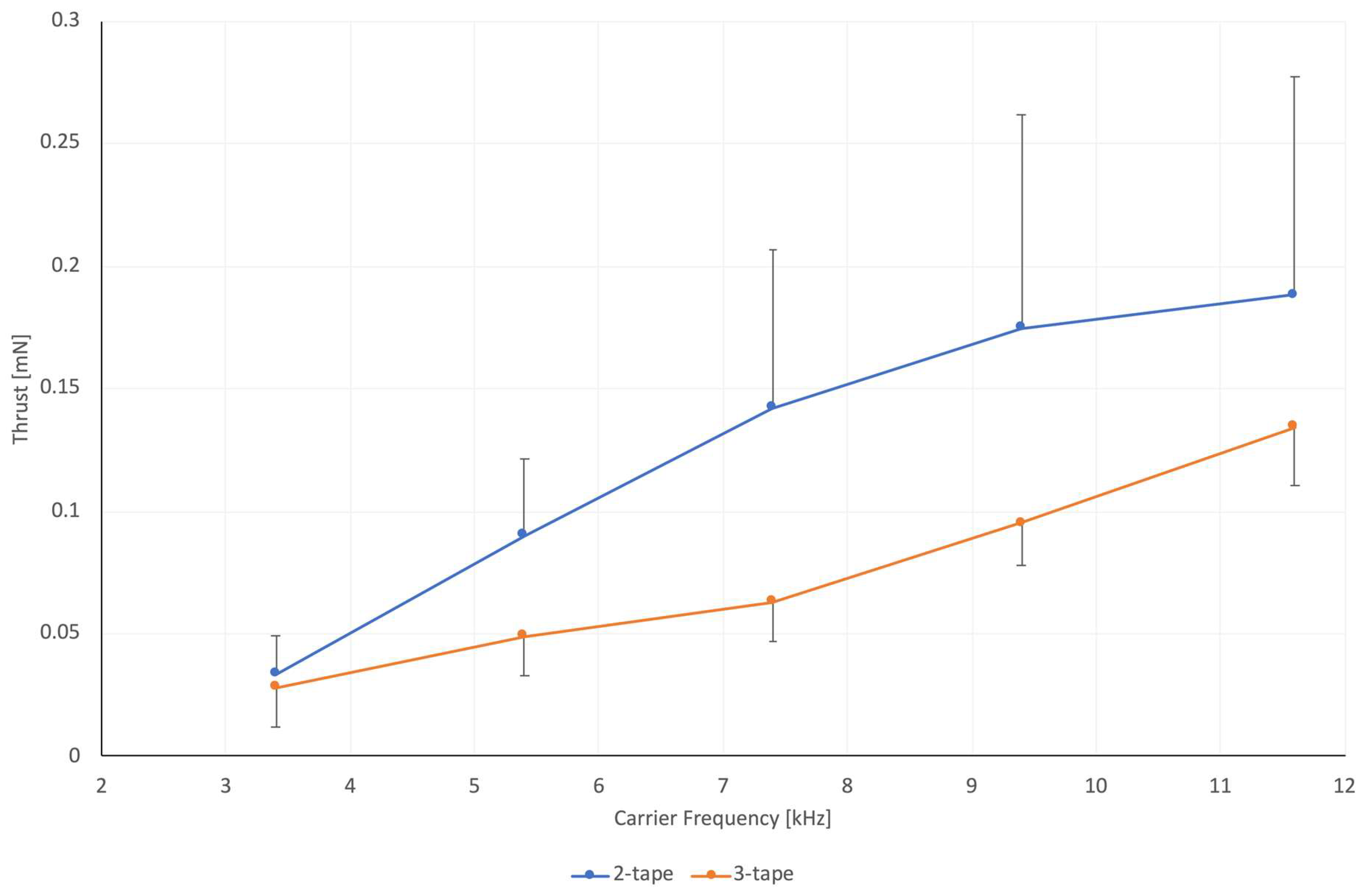
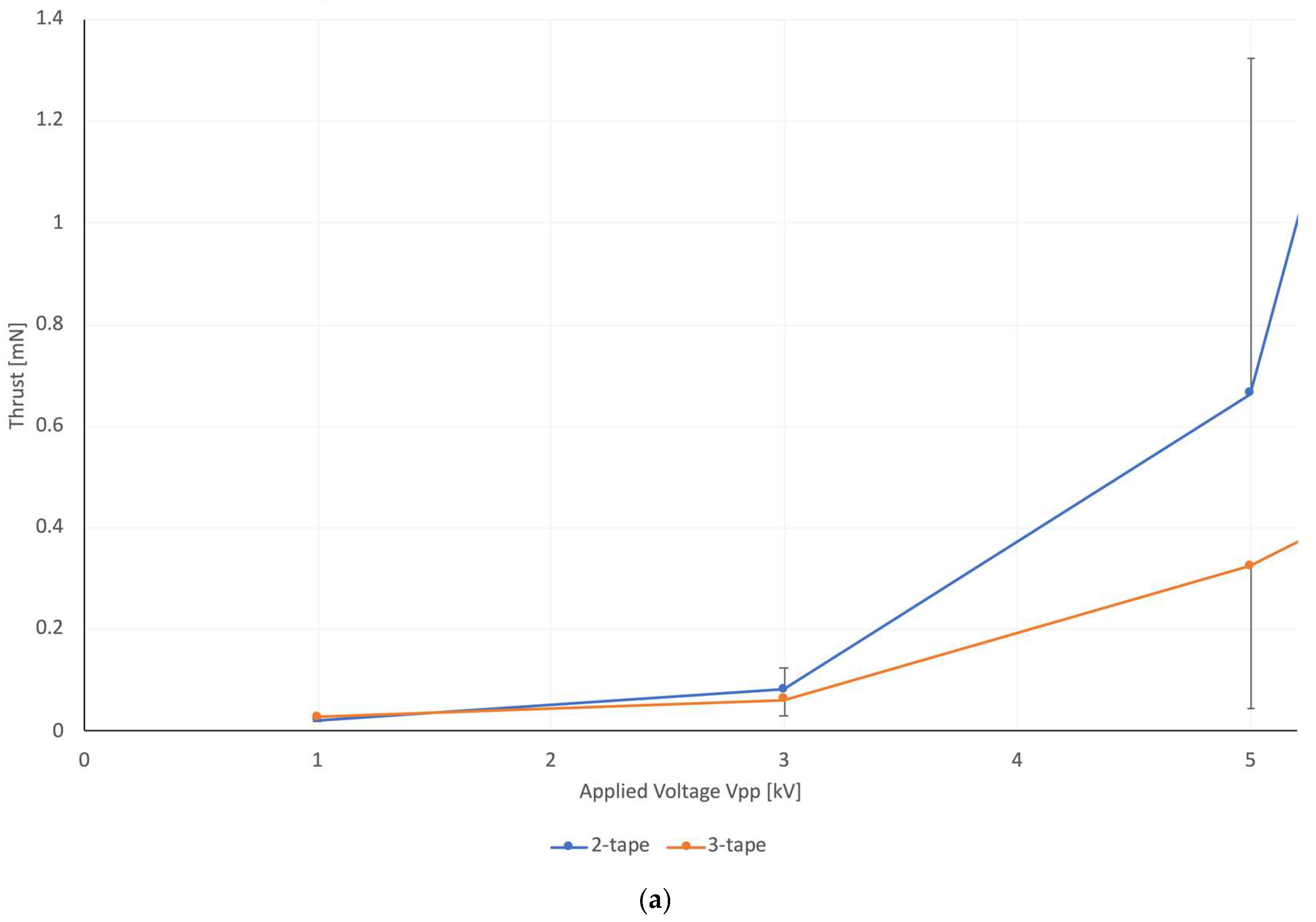
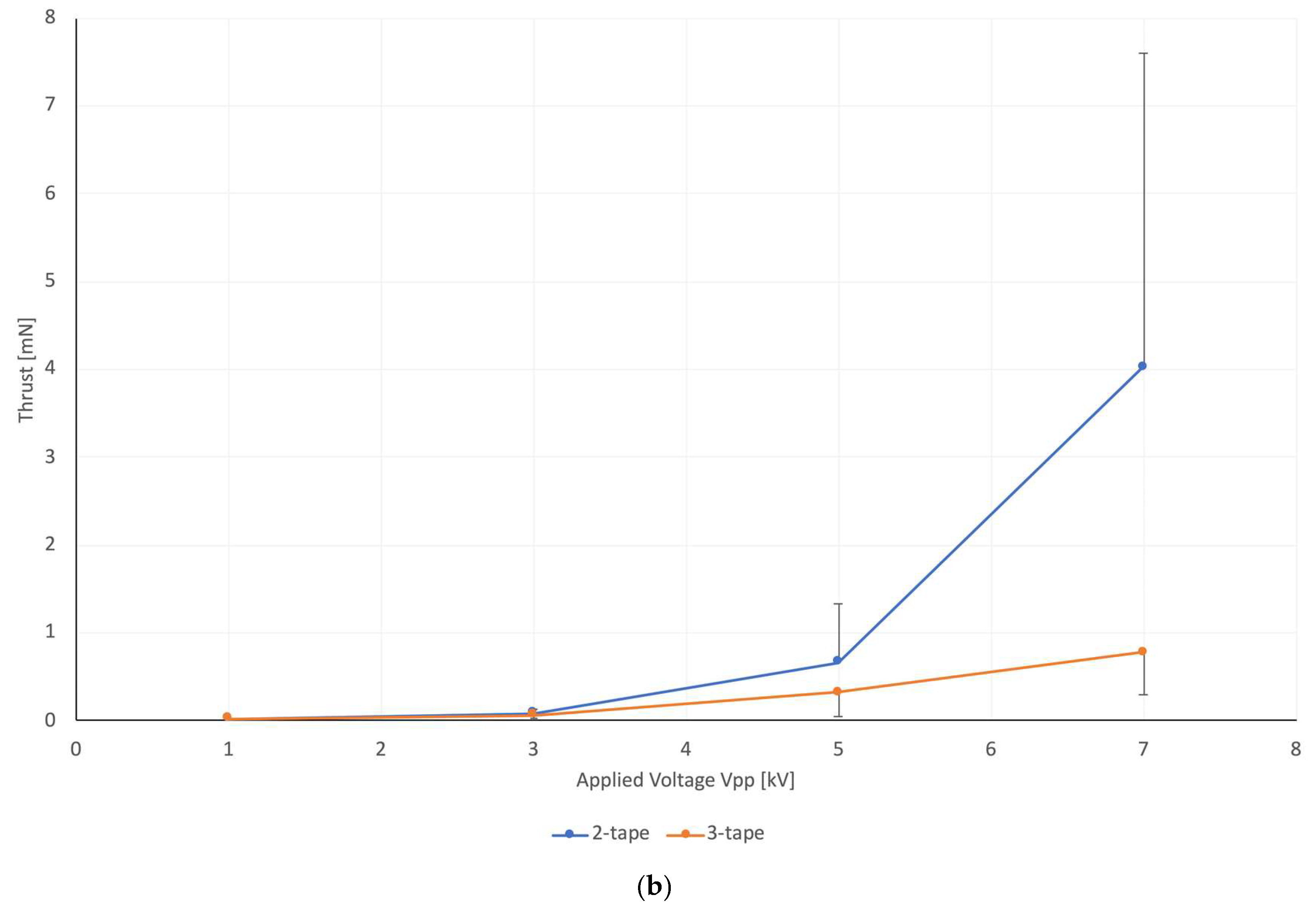
To quantify the actuation strength in a practical and repeatable manner, the actuator thrust was measured in quiescent air, using a standalone setup. For the thrust characterization, the actuator was mounted on an acrylic plate, and thrust was measured using a precision electronic balance (LIBROR AEG-202, SHIMADZU, Kyoto, Japan) with a readability of 1/10,000 g (0.1 mg). For each electrical setting, the balance reading was recorded after it visually stabilized. Two parameter sweeps were performed: (i) a frequency sweep at fixed
kV with
, and 11.6 kHz, and (ii) a voltage sweep at fixed
kHz with
, and 7 kV. For the wind-tunnel measurements,
kV was selected as the highest voltage that could be operated reliably in our setup without arcing while maintaining repeatability over repeated runs. The thrust data are used as a proxy for the forcing level introduced by the actuator when interpreting changes in surface pressure and the smoke-wire visualization presented in
Section 4.
2.4. Surface Pressure Measurement
Surface pressure was measured using discrete pressure taps distributed on the upper and lower surfaces (
Figure 1b and
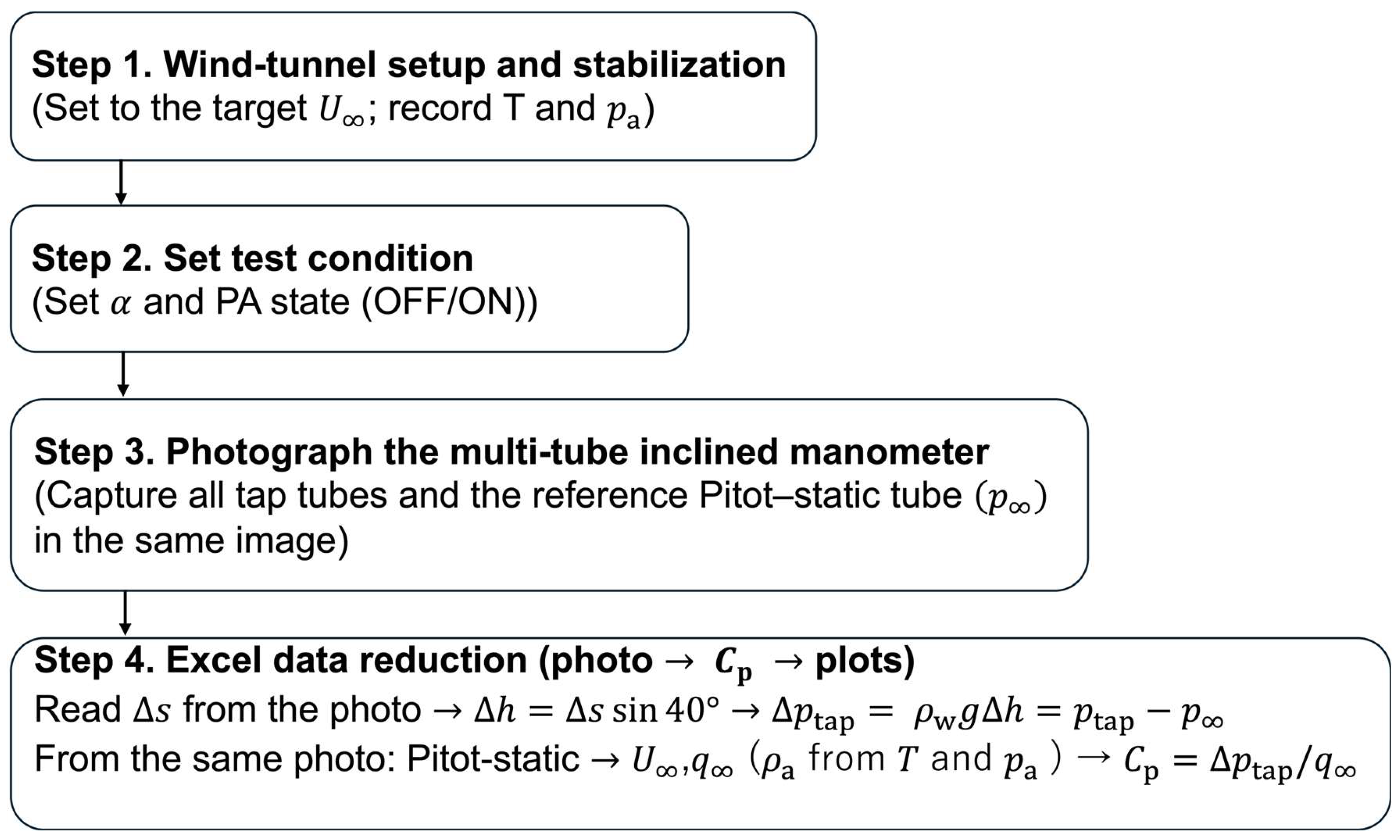
Table 1). The pressure measurement and data-reduction procedure is summarized in
Figure 3. For each test condition (angle of attack
and plasma-actuator state OFF/ON), the wind tunnel was first set to the target free-stream velocity and stabilized, while the ambient temperature
and pressure
were recorded.
All pressure taps were connected via tubing to a multi-tube inclined water manometer placed outside the test section (
Figure 1a). One reference tube was connected to the free-stream static port of a Pitot-static probe installed in the test section, so that the free-stream static pressure
was captured in the same manometer image as the tap pressures. For each condition, the manometer was photographed, and the reading along the inclined tube
was obtained from the photograph for each tap and for the reference tube.
The vertical height difference was computed from the inclined reading as
and the corresponding pressure difference for each tap was obtained as
where
is the water density and
is the gravitational acceleration. The pressure coefficient was then computed as
Here, and were obtained from the Pitot-static probe, and the air density was evaluated from the recorded and .
For each test condition, the manometer photograph was taken five times and the mean value was used for
. Taps sealed by the actuator installation (marked by
in
Table 1) were excluded from the pressure-derived analysis.
2.5. Smoke-Wire Flow Visualization
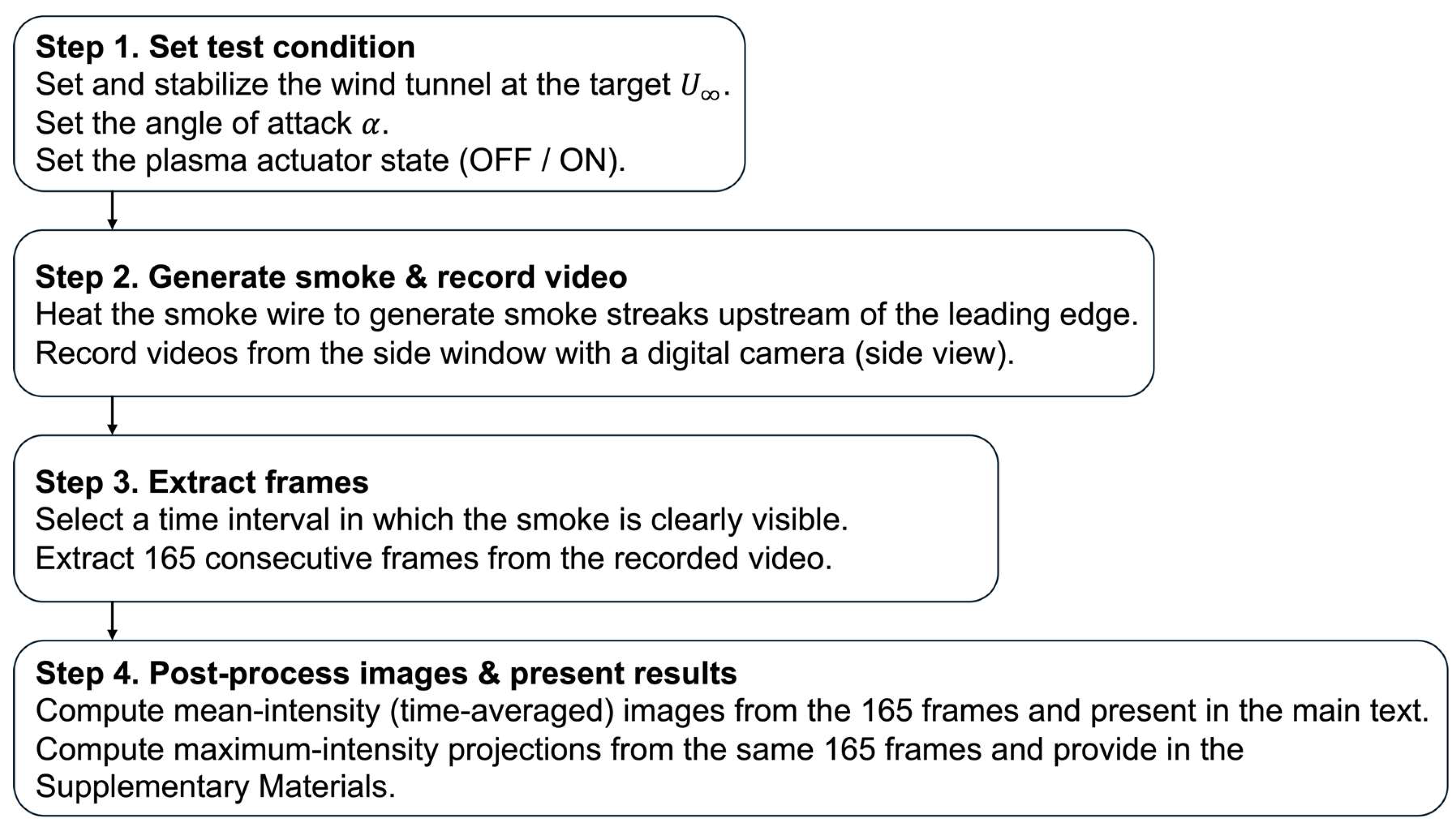
Qualitative flow visualization was conducted using the smoke-wire method to observe the near-airfoil flow field under plasma-actuator-OFF and plasma-actuator-ON conditions (the overall workflow is summarized in
Figure 4). A thin nichrome wire (ϕ0.26 mm) was installed upstream of the airfoil at
(measured from the leading edge), spanning the test section at the mid-span location of the model. The wire was coated with a small amount of a liquid-paraffin/benzene mixture (5:1 by volume) and electrically heated to generate smoke streaks, which were convected through the airfoil region by the free-stream flow.
The visualization was performed at the same free-stream velocity as the pressure measurements,
m/s, and at the same angles of attack (
). The smoke streaks were recorded using a digital camera (EOS Kiss X5, Canon, Tokyo, Japan) from the side window (side view) at a resolution of 1280 × 720 and an encoded frame rate of 59.94 fps (
60 fps). The visualization images presented in the Discussion section are time-averaged (mean-intensity) fields, computed by averaging 165 consecutive frames extracted from the recorded videos after selecting a time interval in which the smoke is clearly visible. For reference, the corresponding maximum-intensity projections (computed from the same 165 frames) are provided in the
Supplementary Materials (Figures S1 and S2) to highlight the outer envelope of the smoke distribution and intermittently appearing structures. The procedural flow from condition-setting to frame-extraction and post-processing is outlined in
Figure 4.
2.6. Data Processing and Pressure-Integrated Lift over the Common Instrumented Range
To quantify the net pressure-loading change due to actuation, a pressure-derived lift coefficient was estimated by integrating the pressure difference between the lower and upper surfaces over the chordwise region, where both surfaces were instrumented. Using the surface-pressure coefficients defined in
Section 2.4, the pressure-derived lift over the common range is defined as
where
and
denote the upper- and lower-surface pressure coefficients, respectively. In the present setup, the leading-edge region is partially affected by the actuator installation and associated tap sealing, and the most downstream usable tap locations are not identical between the upper and lower surfaces. Therefore, integrating over the full tap coverage of either surface would require extrapolation or would introduce non-overlapping chordwise coverage, which can artificially bias the pressure-integrated lift and the actuator-OFF/ON comparison. For this reason, the integration limits
and
were selected as the overlap of the usable (unsealed) pressure tap locations available on both surfaces (see
Table 1 and
Figure 1b), and this fixed common interval was applied to all angles of attack and both actuation conditions to ensure a consistent and unbiased comparison basis.
Because the pressure taps on the upper and lower surfaces are not located at identical
positions,
and
were linearly interpolated onto a common
grid prior to integration. To assess the uncertainty introduced by the linear interpolation, we performed a sensitivity check by repeating the integration using different common chordwise grids (coarser and finer; e.g.,
and 0.005), and confirmed that the resulting
and
changed only marginally compared with the dominant trends discussed in this paper. Because both actuator-OFF and actuator-ON cases use the same pressure tap locations and are processed with an identical interpolation and integration procedure, the interpolation-related bias is expected to largely cancel out in
; therefore, the conclusions are not sensitive to the use of linear interpolation for mapping
and
onto a common
grid. The integral was then evaluated using the trapezoidal rule. The actuation-induced change in the pressure-derived lift coefficient was defined as
where the subscripts “on” and “off” indicate the plasma-actuator-ON and plasma-actuator-OFF conditions, respectively.
Finally, as described in
Section 2.4, the pressure coefficient resolution of the inclined manometer under
m/s is approximately
; thus, pressure coefficients reported as
should be interpreted as indistinguishable from zero within this resolution. Accordingly, the present study focuses on robust trends (e.g., sign reversal and large
redistributions), rather than subtle
differences near the measurement resolution.
2.7. Measurement Uncertainty and Repeatability
This section summarizes the primary sources of uncertainty that are relevant to interpreting the present pressure- and thrust-based trends. Surface pressures were read using an inclined water manometer with a tube inclination of 40°. The smallest scale division is 2 mm along the tube; accounting for the inclination, this corresponds to a pressure resolution of under m/s. This resolution is reported transparently, and it motivates a key point in how the dataset is interpreted: the present study is intended to support the interpretation of robust, condition-dependent changes (e.g., sign reversal and large redistribution of and ), rather than to resolve subtle differences near the measurement resolution. In addition, repeated readings occasionally returned as zero for some taps; these are treated as practical zeros within the measurement resolution, rather than as an exact zero pressure difference.
The free-stream reference pressures used for normalization (static pressure and dynamic pressure ) were obtained from a Pitot tube measurement. Because the same tunnel settings and normalization procedure were used consistently across actuator-OFF and actuator-ON cases at each angle of attack, the main conclusions are drawn from the relative differences and repeatable trends, rather than from the absolute values that may be sensitive to small systematic offsets in the reference quantities.
For the thrust characterization (
Section 2.3), thrust was measured using a precision electronic balance with a readability of 0.1 mg. For each electrical setting, the value was recorded after the reading visually stabilized; thus, the reported thrust levels should be interpreted as practical, repeatable indicators of actuation strength, rather than as absolute force measurements with a fully quantified uncertainty budget. Accordingly, the uncertainty discussion in this paper is intended to support the interpretation of trends with angle of attack and actuation settings, rather than to provide a comprehensive metrological uncertainty analysis. Unless otherwise stated, the error bars in the surface-pressure plots indicate the minimum–maximum range over the repeated measurements.
5. Conclusions
This study investigated the aerodynamic response of a NACA 0012 airfoil to a leading-edge DBD plasma actuator, using thrust characterization, surface-pressure measurements, and smoke-wire flow visualization. Here, “pressure-derived lift” refers to the pressure-derived lift over the common instrumented range,
, obtained by integrating
over
~0.7620 (see
Section 2.6).
The actuator thrust increased with both the carrier (driving) frequency and the applied voltage. The voltage sweep showed a strongly nonlinear increase in thrust, and under the tested electrical constraints, the two-tape configuration consistently produced larger thrust than the three-tape configuration. Based on this practical actuation-strength characterization, wind-tunnel experiments were conducted by comparing actuator-OFF and actuator-ON cases under identical tunnel settings.
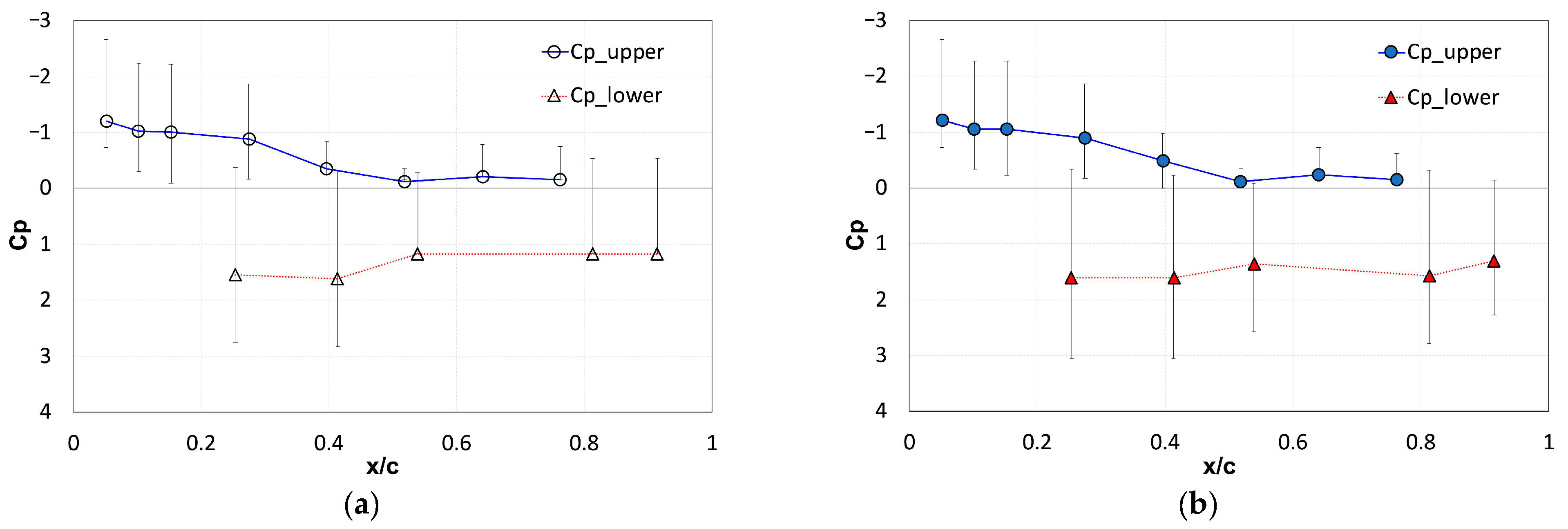
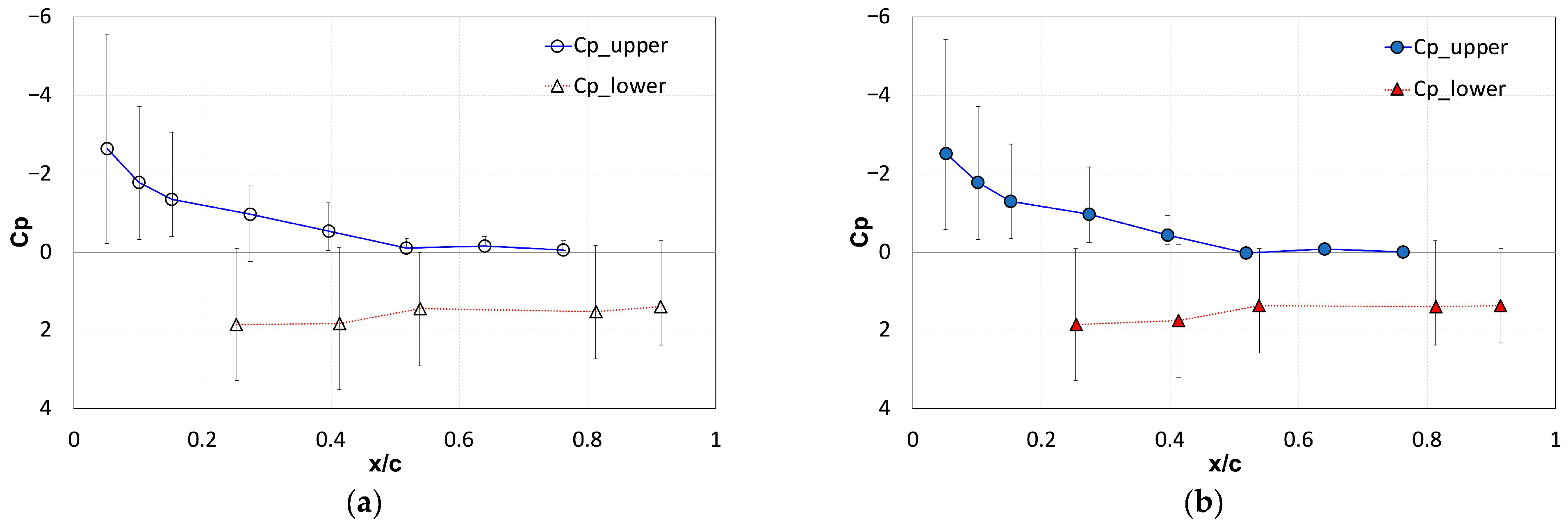
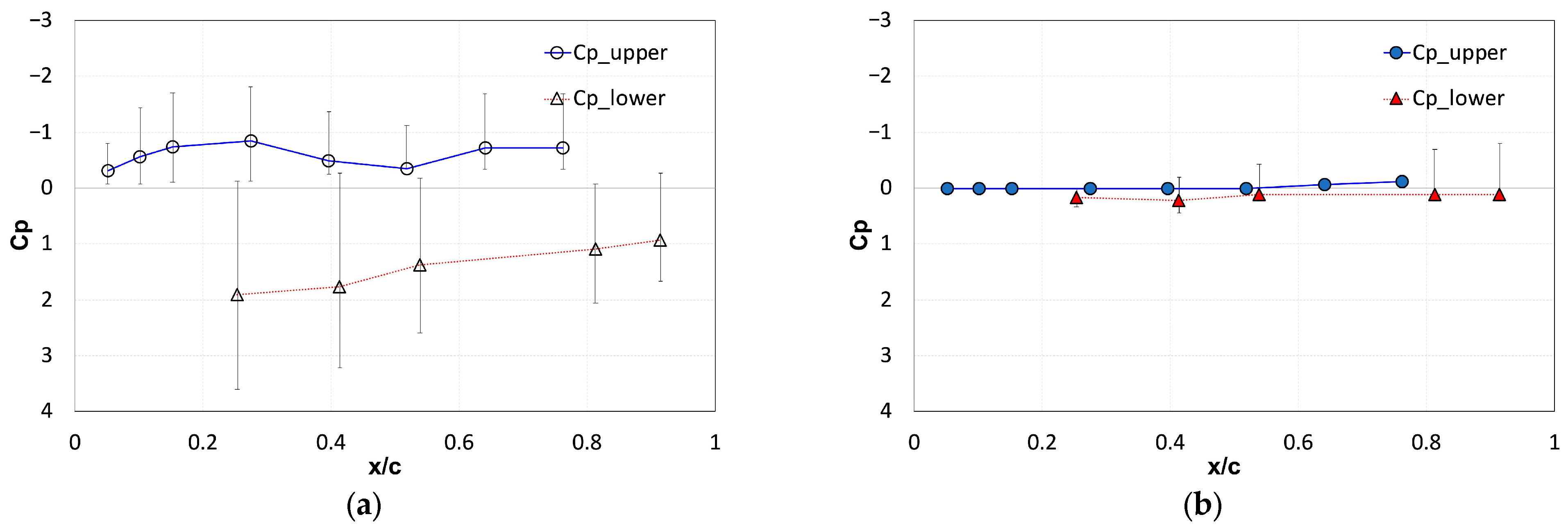
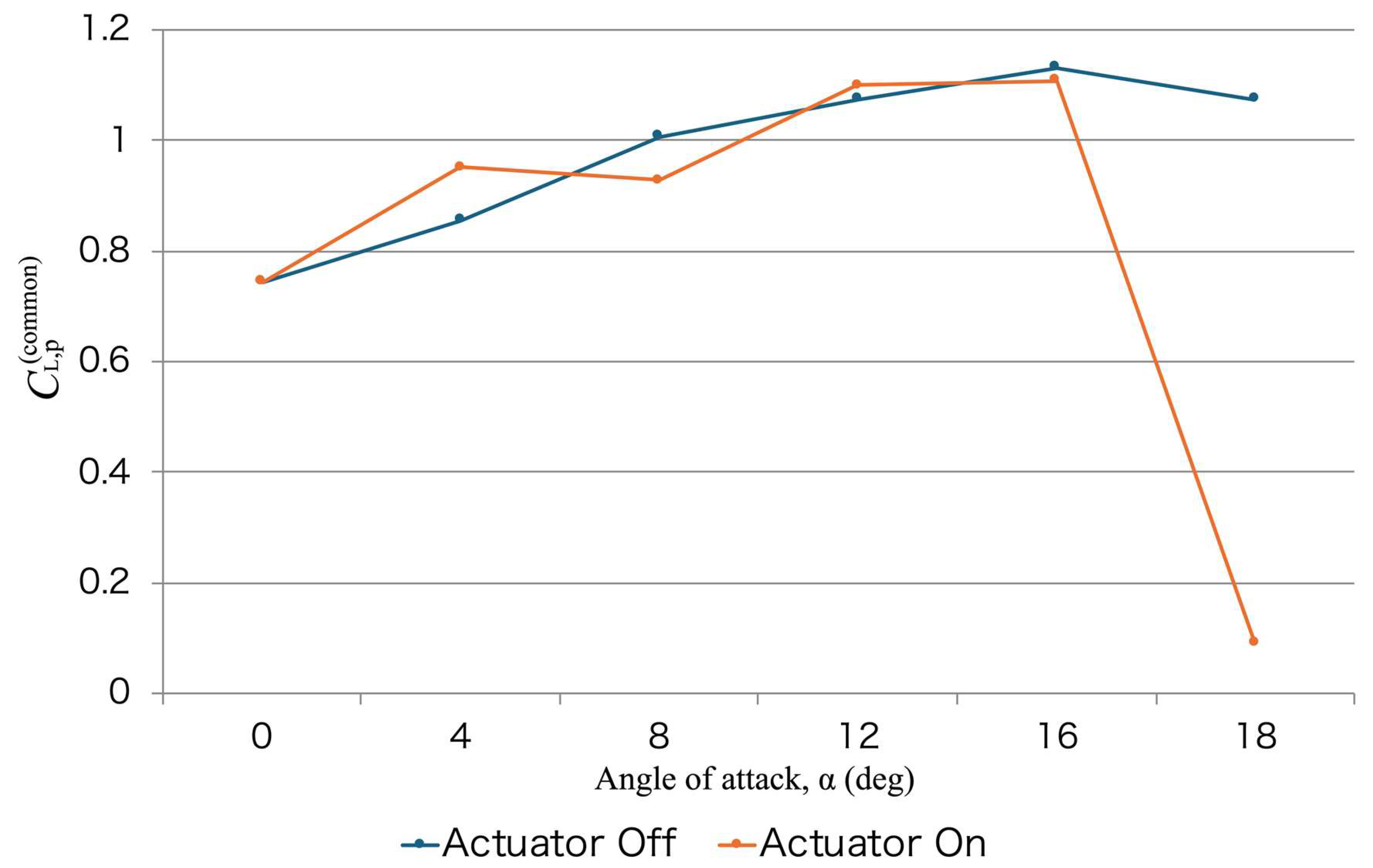
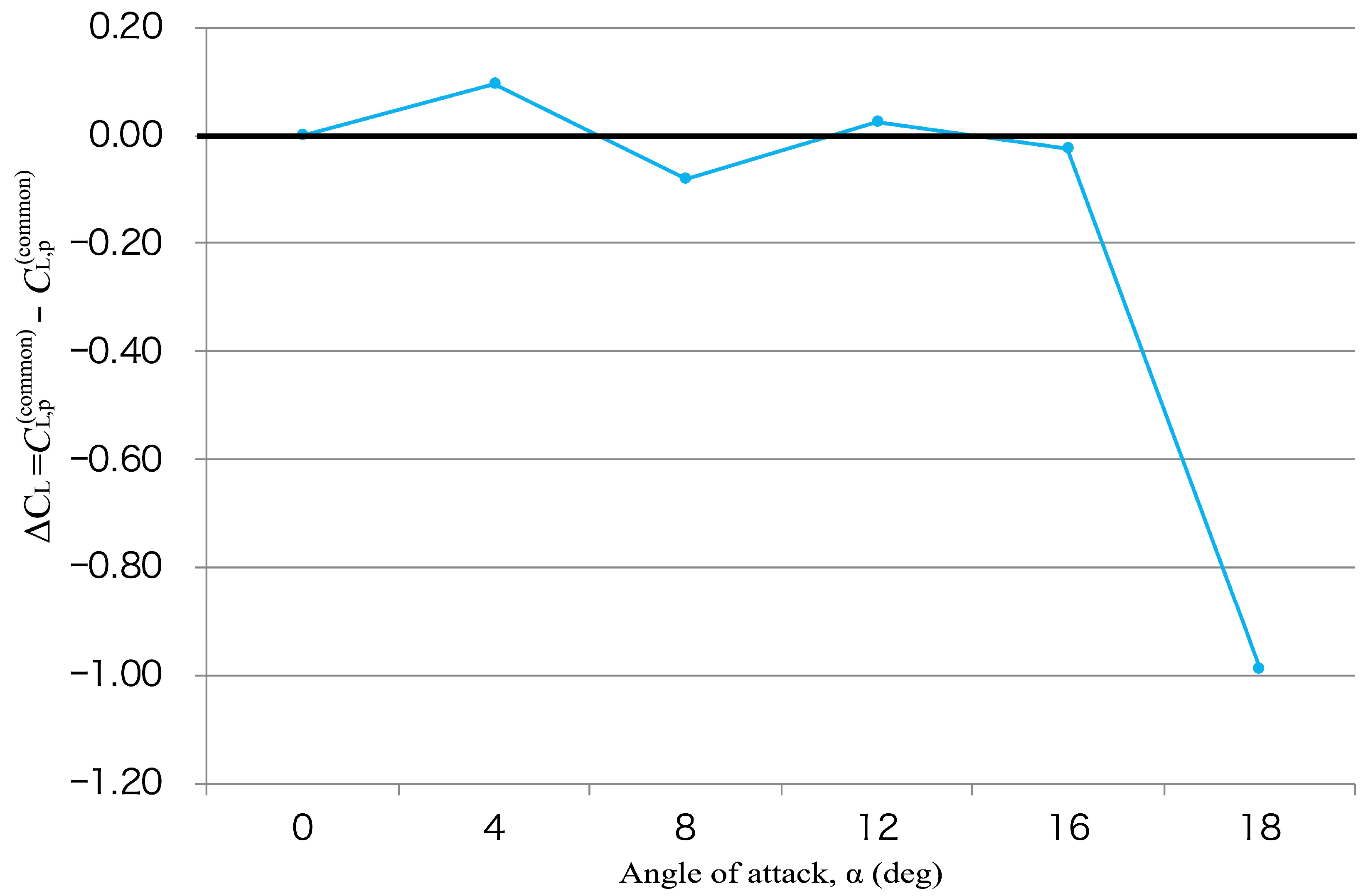
The surface-pressure response to actuation was strongly dependent on the angle of attack. At , the actuation increased the upper-surface suction over the measured mid- to aft-chord region, whereas at , it reduced leading-edge suction relative to the actuator-OFF case. Under the post-stall condition (), both upper- and lower-surface approached values near zero over much of the measured chord, indicating a diminished pressure difference within the available tap range. Consistently, the pressure-derived lift estimate and the lift increment indicated that the actuation effect was small at and and should be interpreted cautiously, given the pressure coefficient resolution ( at m/s). In contrast, a robust post-stall change was observed: became strongly negative at
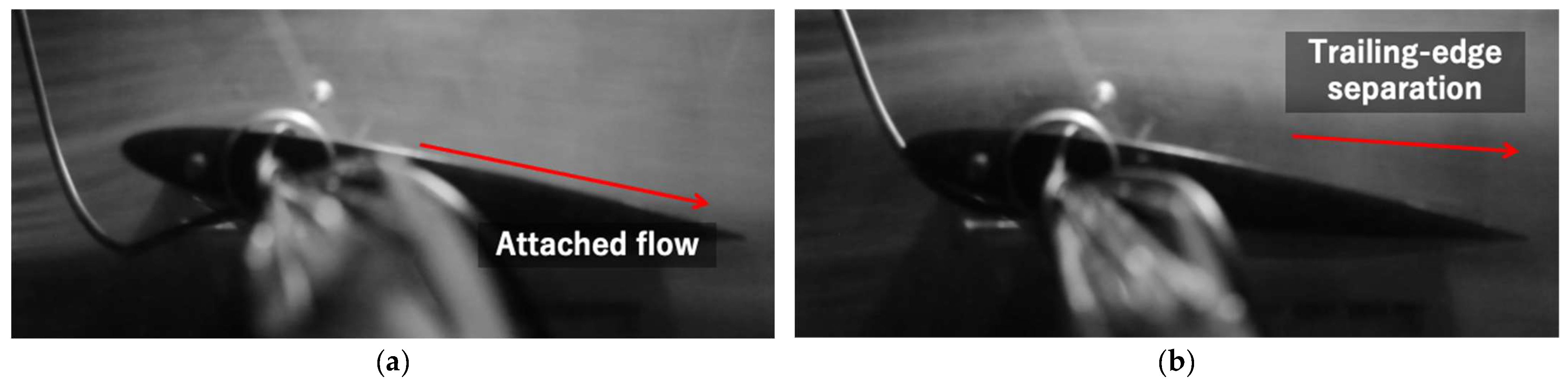
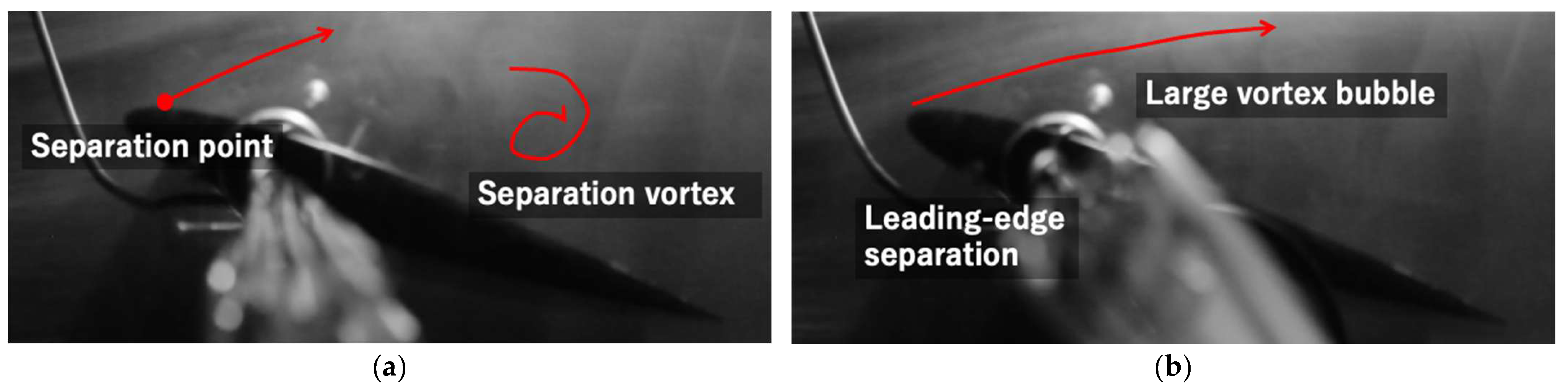
Smoke-wire visualization provided qualitative context for the pressure-field changes at higher angles. At , the actuator-ON case showed smoke streaks lifting off from the upper surface near the trailing edge, compared with the actuator-OFF case. At , visualization indicated immediate leading-edge separation and a larger separated region in the actuator-ON case, which was consistent with a separation-dominated pressure field. Overall, these results indicate that a fixed actuation setting is not universally beneficial across the angle of attack. Robust design guidelines—particularly for near-stall and post-stall applications—will require condition-dependent strategies and more quantitative diagnostics (e.g., denser surface-pressure measurements and time-resolved velocity/pressure data) to link the forcing level to separation behavior and integrated aerodynamic performance.