
Multidisciplinary Design Optimization for the Conceptual Design of Supersonic Civil Aircraft Based on Full-Carpet Sonic Boom/Aerodynamic Characteristics Employing Differential Evolution


Abstract
1. Introduction
2. Sonic Boom/Aerodynamic Prediction Methods in AERO-BOOM
2.1. Efficient Aerodynamic Force Prediction Method
2.2. Sonic Boom Characteristics Prediction Methods
2.3. Benchmark Model Cases Study Validation
2.3.1. SEEB-ALR
2.3.2. DWB at Zero Angle of Attack
2.3.3. DWB with Angle of Attack
3. Multidisciplinary Optimization Design Platform for the Full-Carpet Sonic Boom/Aerodynamic Characteristics of Supersonic Civil Aircraft
3.1. Optimization Algorithm
3.2. Optimization Process
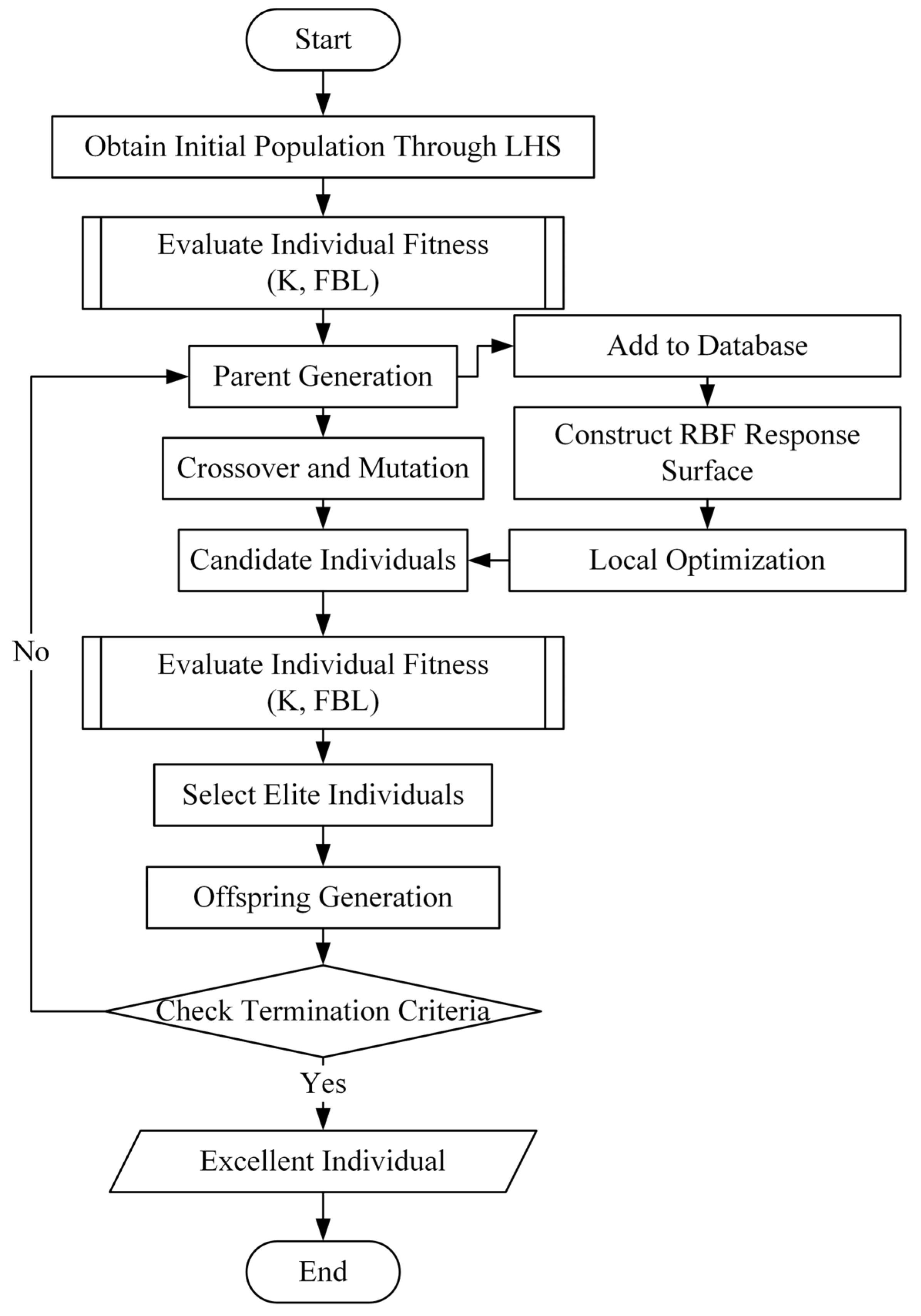
- An initial candidate population is generated through Latin Hypercube Sampling. This approach ensures a uniform and space-filling distribution of individuals across the predefined design space of the variables.
- The fitness of each individual in the initial population (i.e., lift-to-drag ratio and full-carpet sonic boom loudness ) is systematically evaluated, thereby establishing the initial parent generation for the optimization process.
- The parent generation generates a subset of offspring individuals through crossover and mutation. The parent generation is also added to the database, and a Radial Basis Function (RBF) response surface is constructed from the database. A portion of new individuals is then derived through localized search performed on the RBF surrogate.
- The two subsets of offspring collectively constitute the candidate pool. Their fitness is subsequently evaluated using the AERO-BOOM.
- Based on the evaluation results, elite individuals are selected to form the offspring generation.
- If the termination condition is not met, the current population is updated and serves as the parent generation for the subsequent iteration, repeating steps 3 through 5. If the termination condition is met, the optimization process concludes.
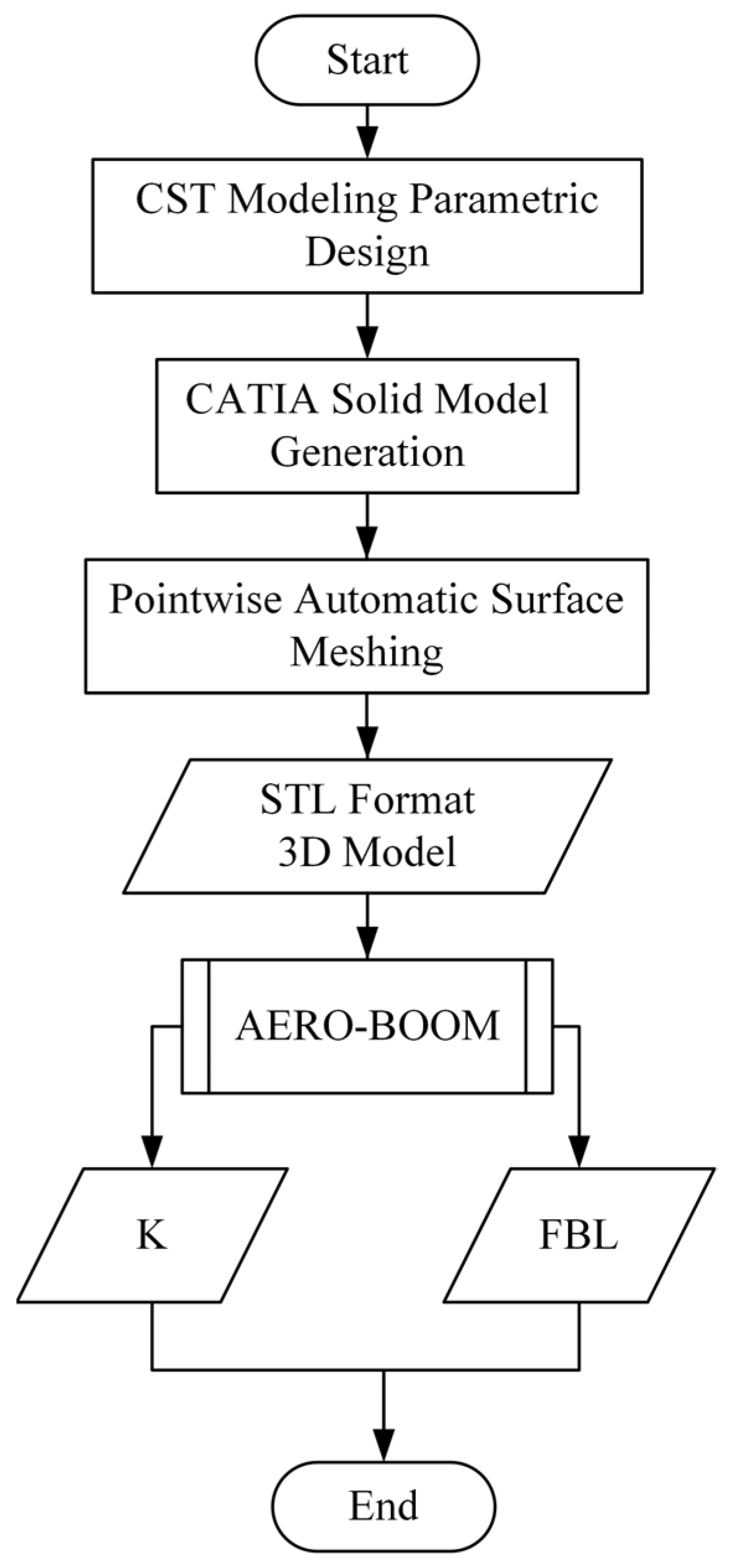
- For each individual, the optimization algorithm assigns a specific vector of design variables. Subsequently, the geometric model is generated using the CST modeling [56] parametric shaping method, and a solid model is automatically reconstructed via the CATIA secondary development interface.
- The generated solid model is imported into Pointwise to facilitate the automated generation of a triangular surface mesh. The discretized surface is subsequently exported in STL format, serving as the geometric input for the AERO-BOOM solver.
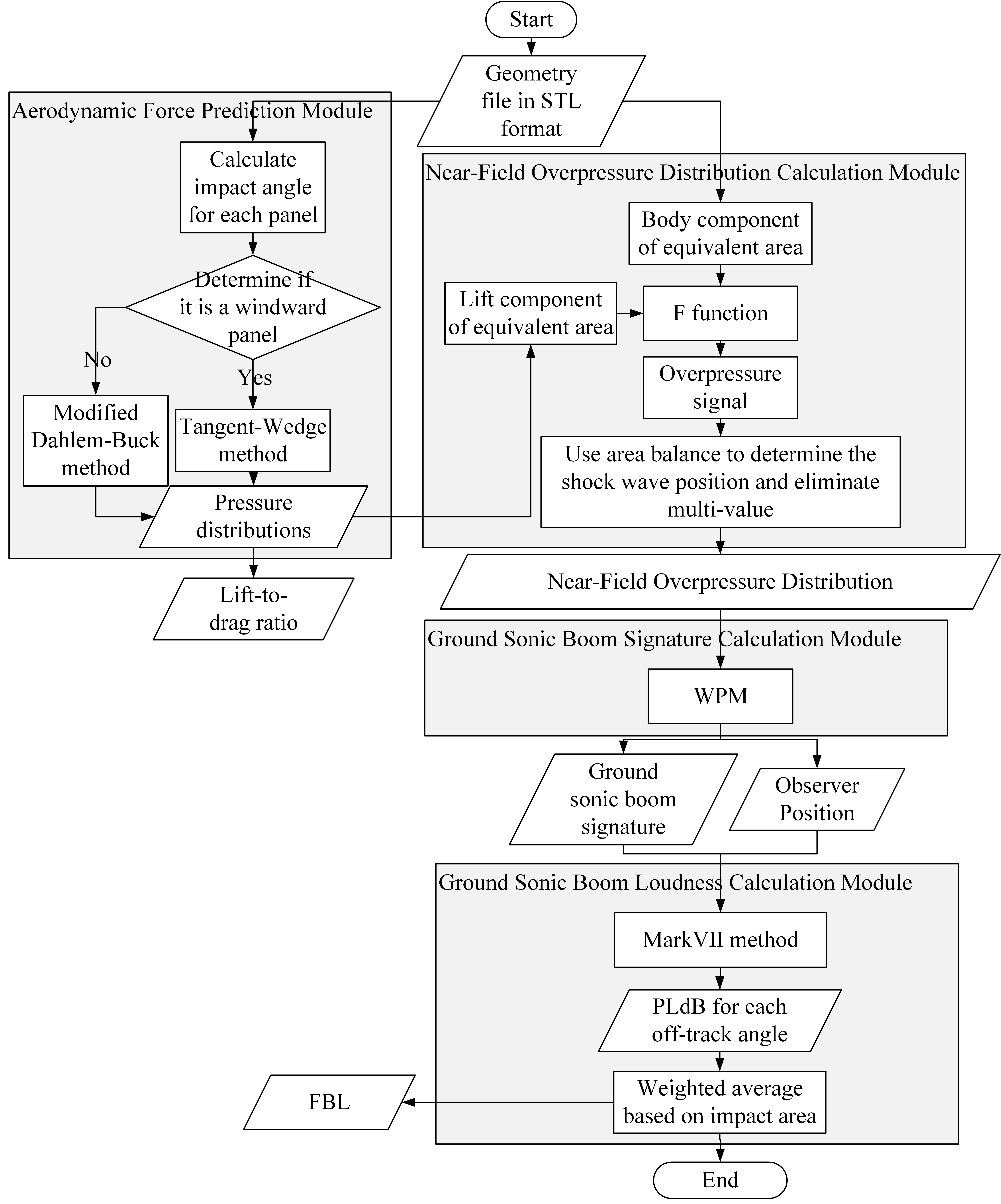
- AERO-BOOM executes the calculation process shown in Figure 1 and outputs and .
4. Optimization Platform Case Validation
4.1. Parametric Modeling of Supersonic Civil Aircraft
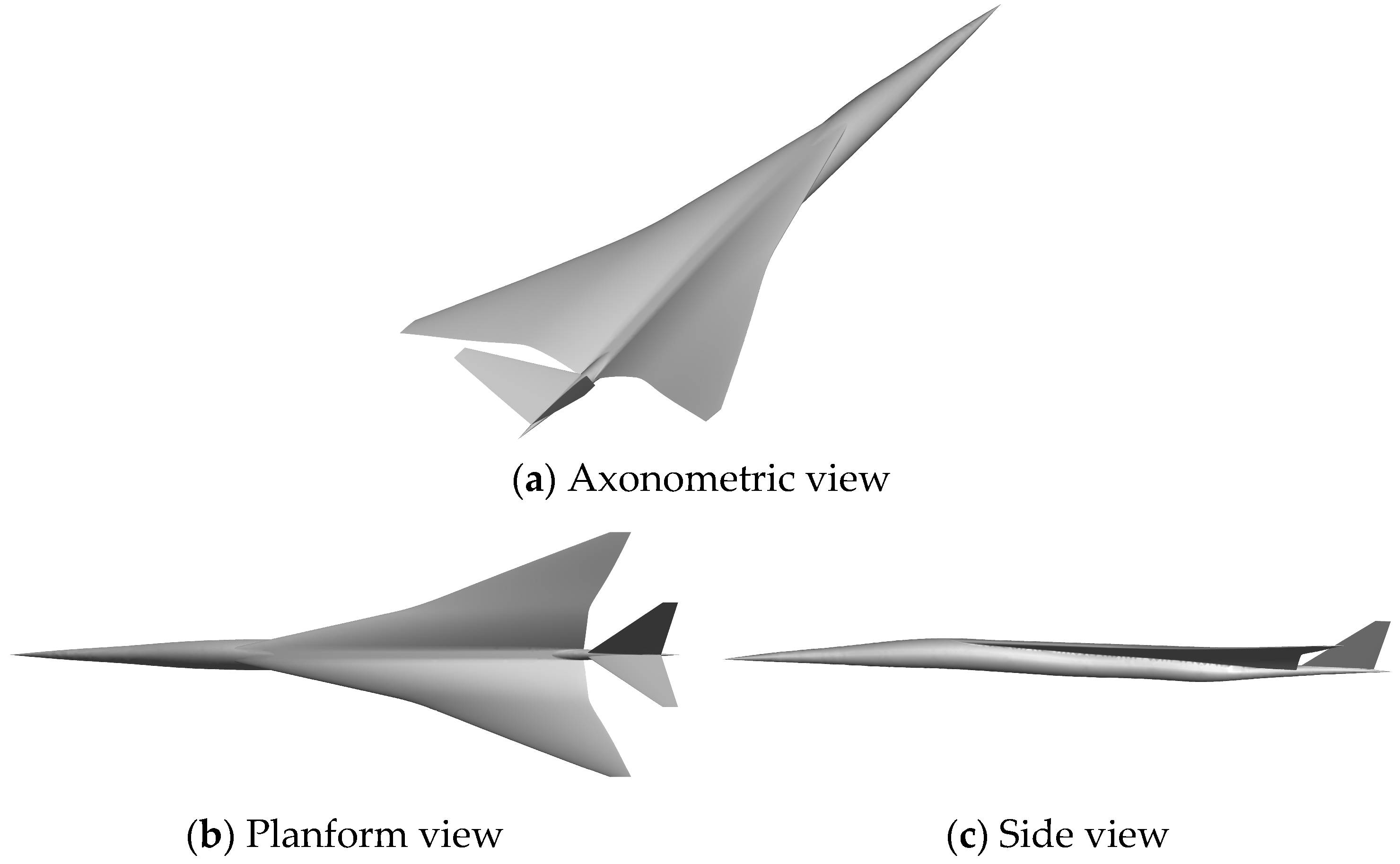
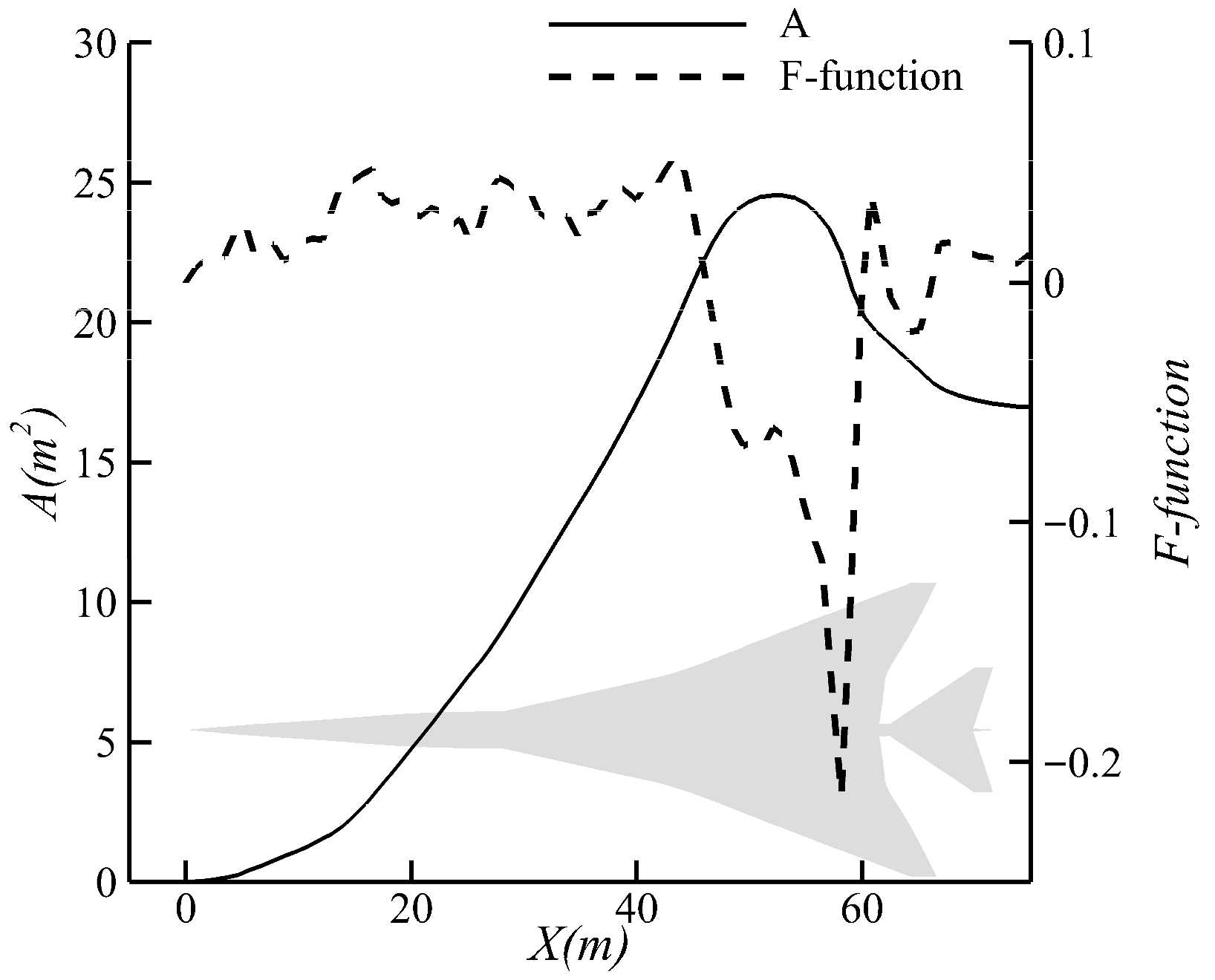
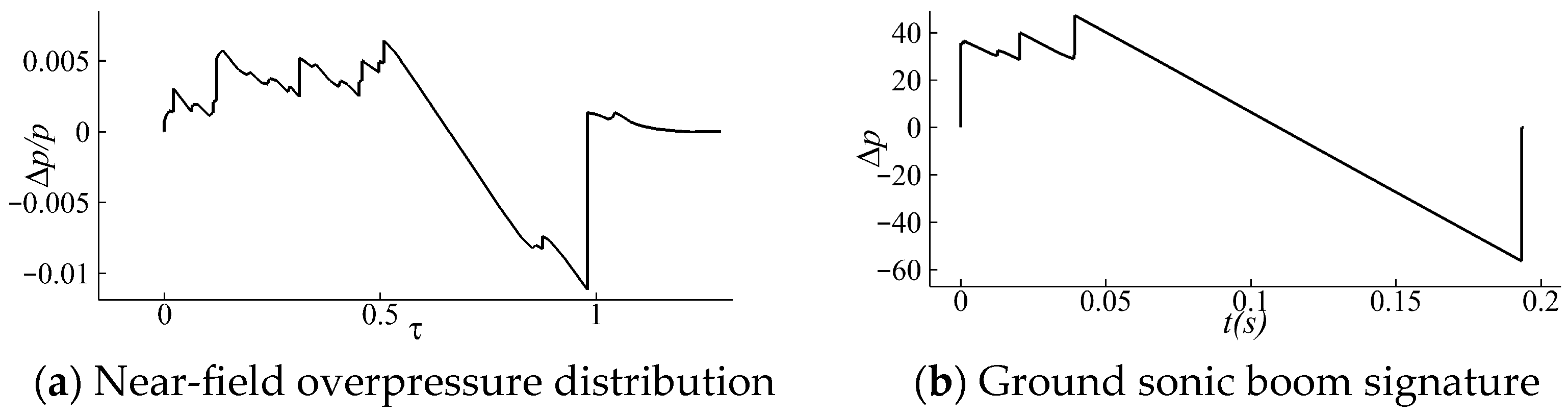
4.2. Baseline Configuration
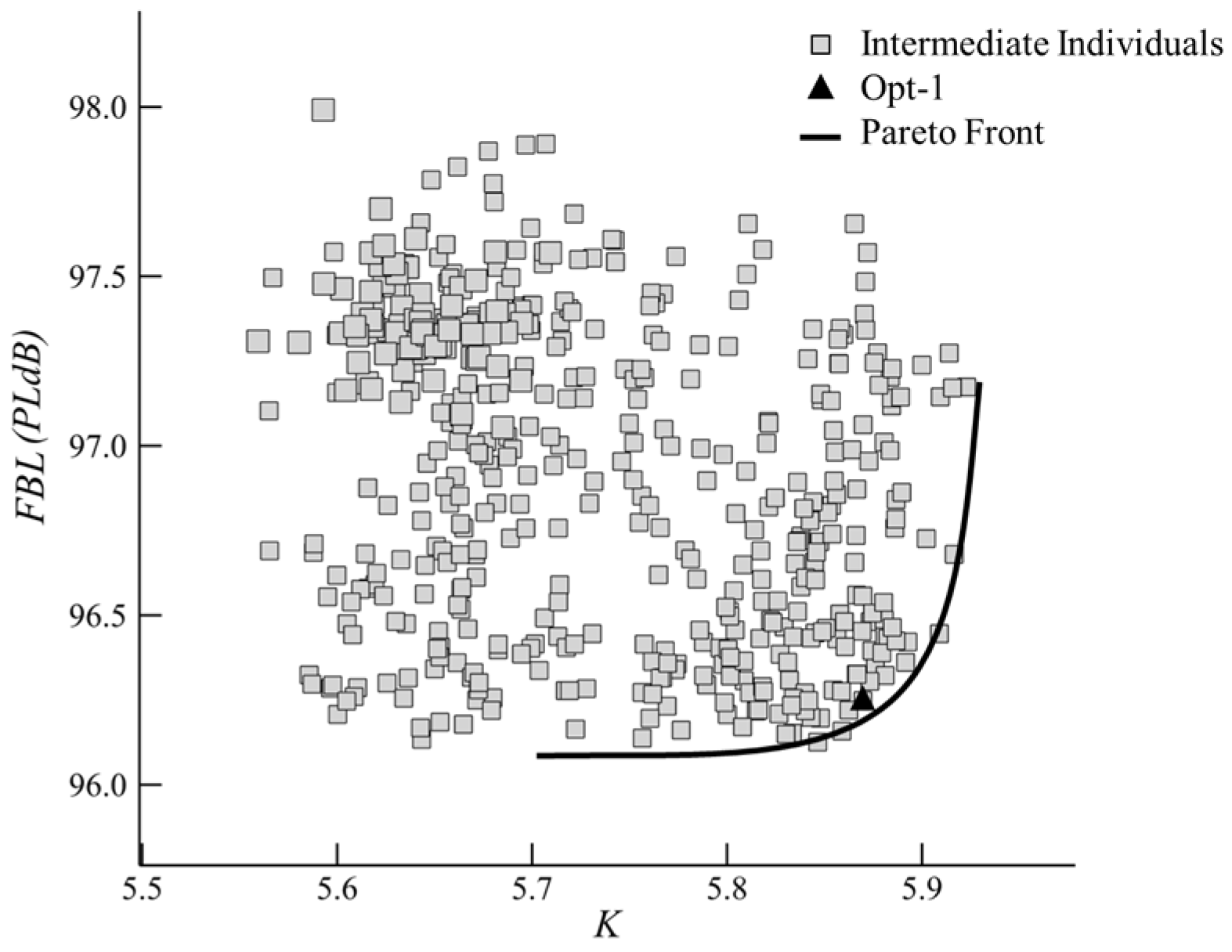
4.3. Fuselage Optimization
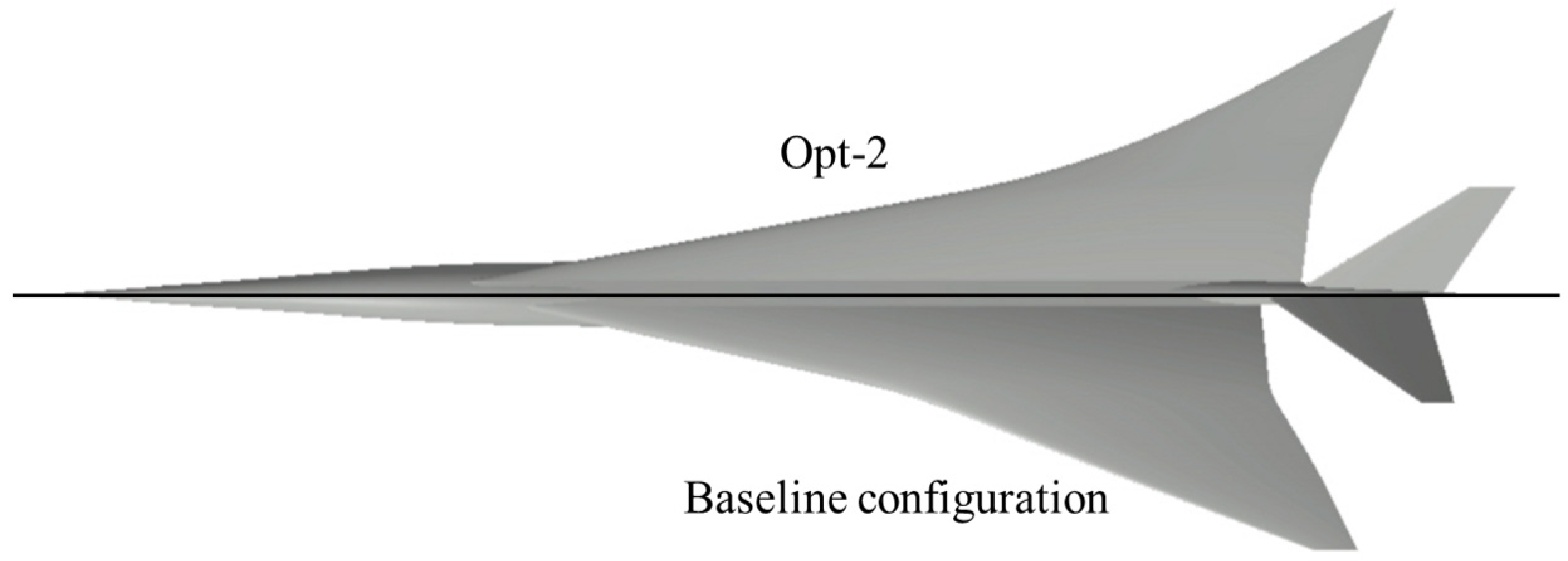
4.4. Overall Aircraft Optimization
5. Conclusions
- AERO-BOOM uses the Panel Method to evaluate aerodynamic characteristics of supersonic civil aircraft, applies the Modified Linearized Theory to predict near-field overpressure, uses the WPM to propagate signatures to the ground, and applies Stevens’ Mark VII method to convert the signature into PLdB, which is then averaged to obtain the FBL. The computational fidelity of all modules have been benchmarked against established cases, and the accuracy meets the requirements for the conceptual design stage of supersonic civil aircraft.
- Based on AERO-BOOM, an MDO design platform for full-carpet sonic boom and aerodynamic performance was established, using the HSADE optimization algorithm combined with RSM, and integrating open-source or commercial tools such as CST modeling and Pointwise. This platform offers significant practical utility for the conceptual design of supersonic civil aircraft.
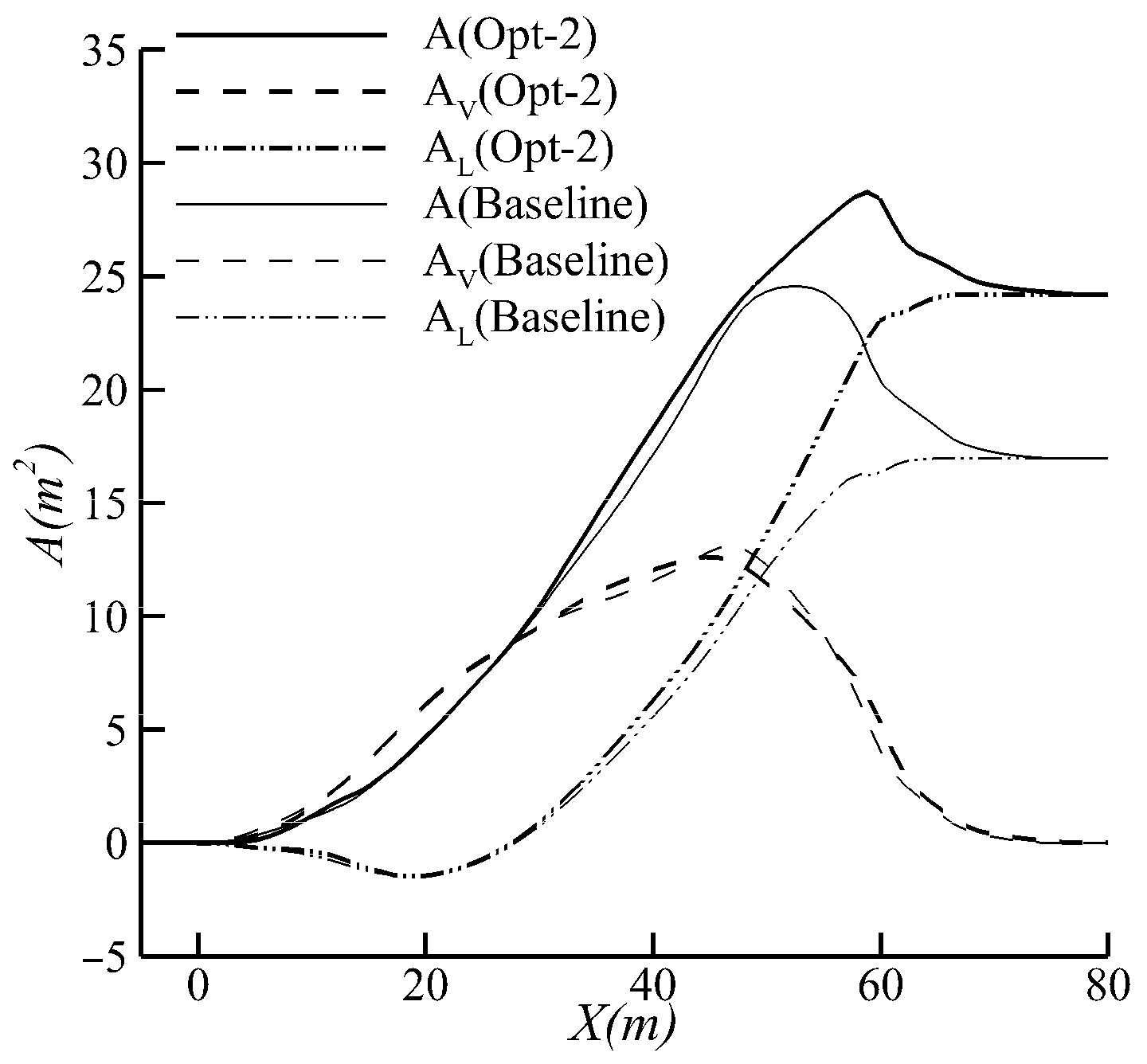
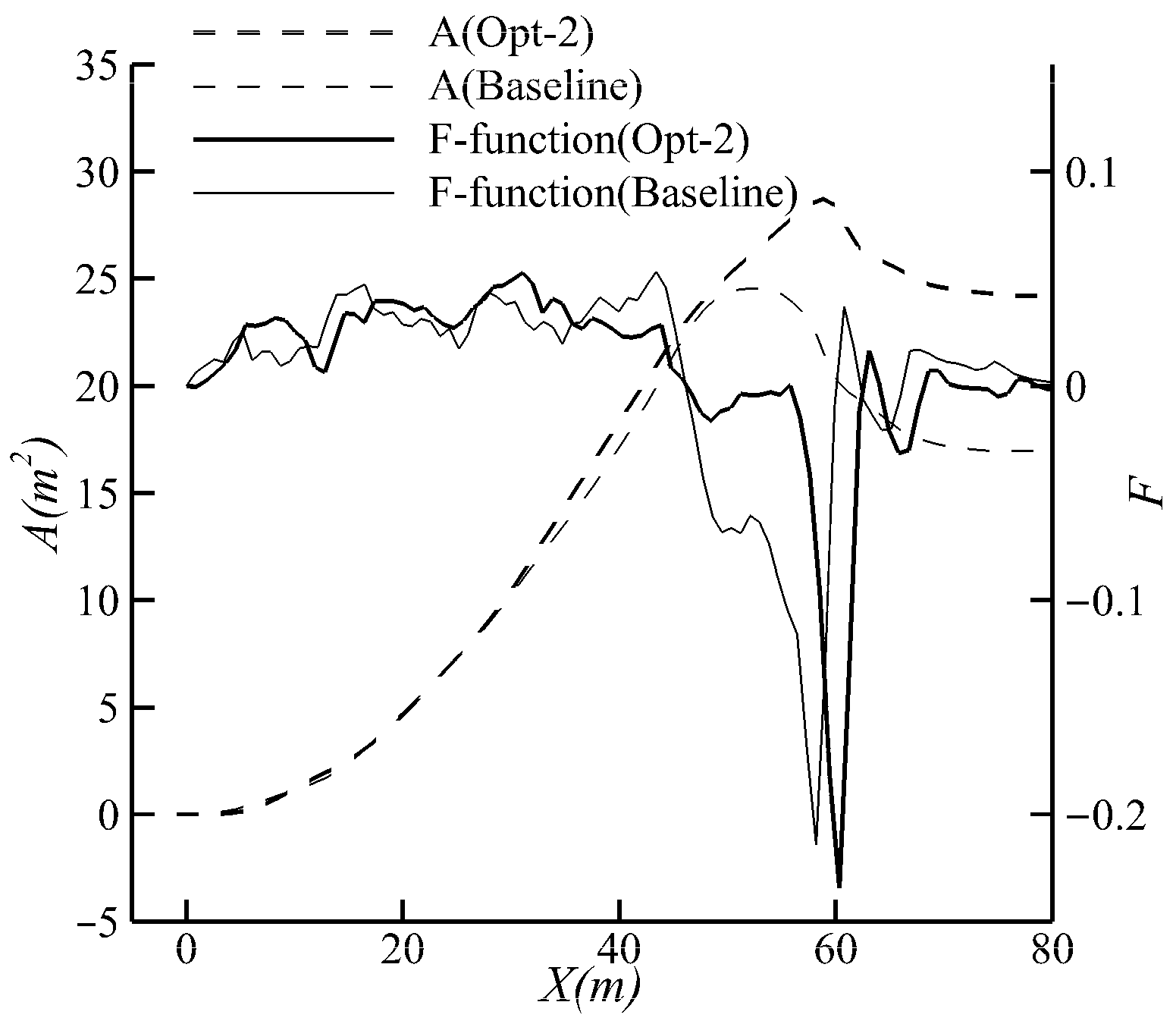
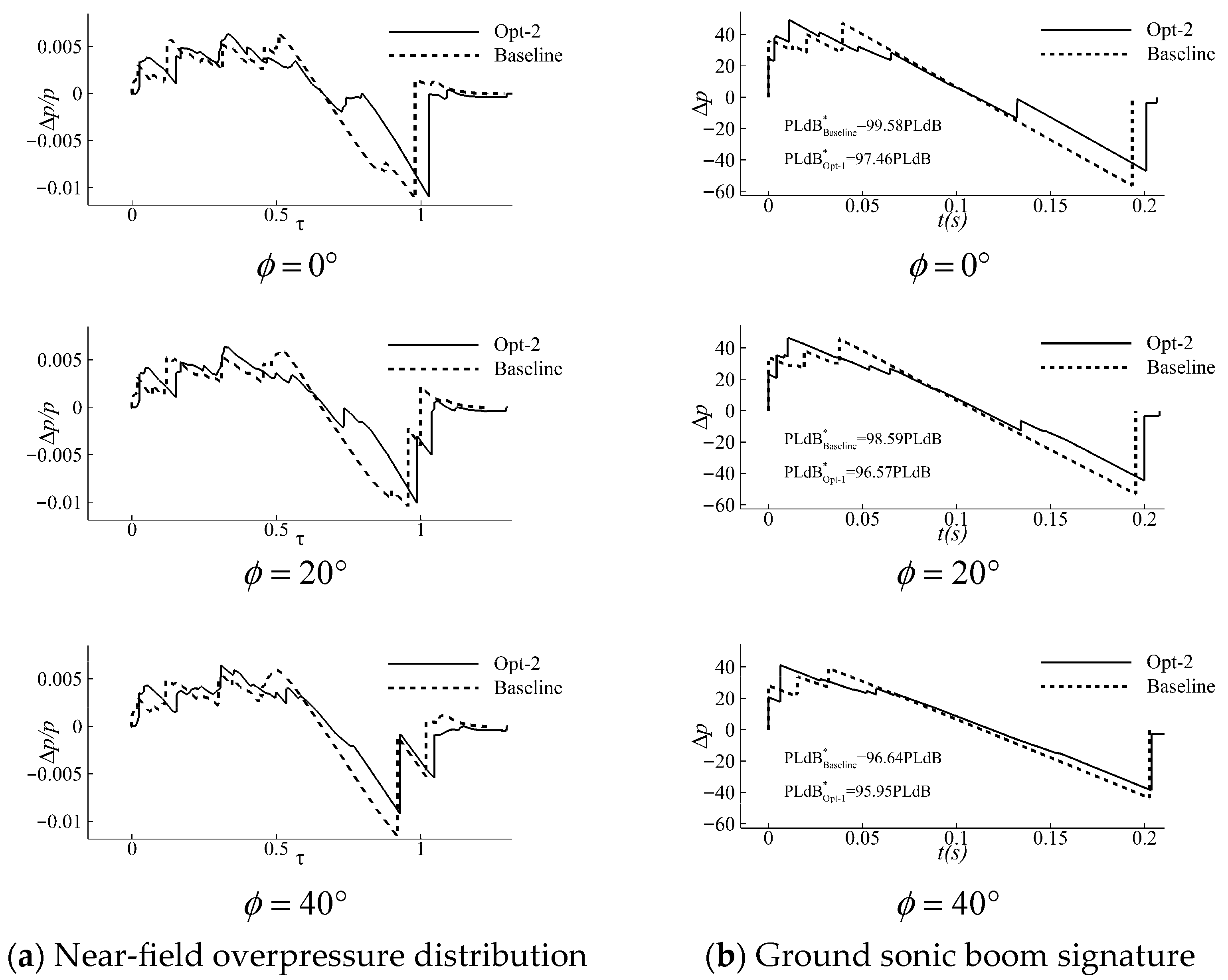
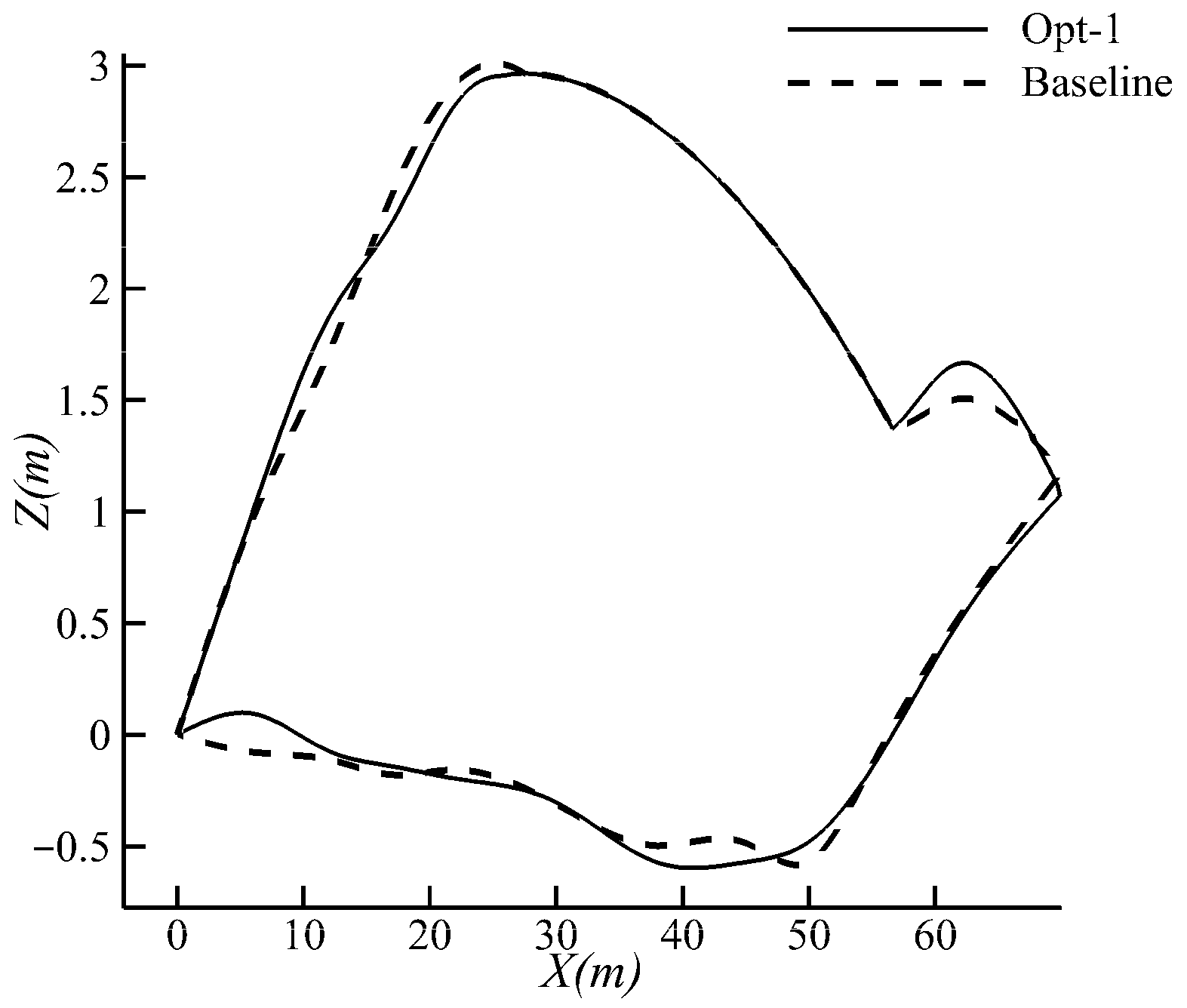
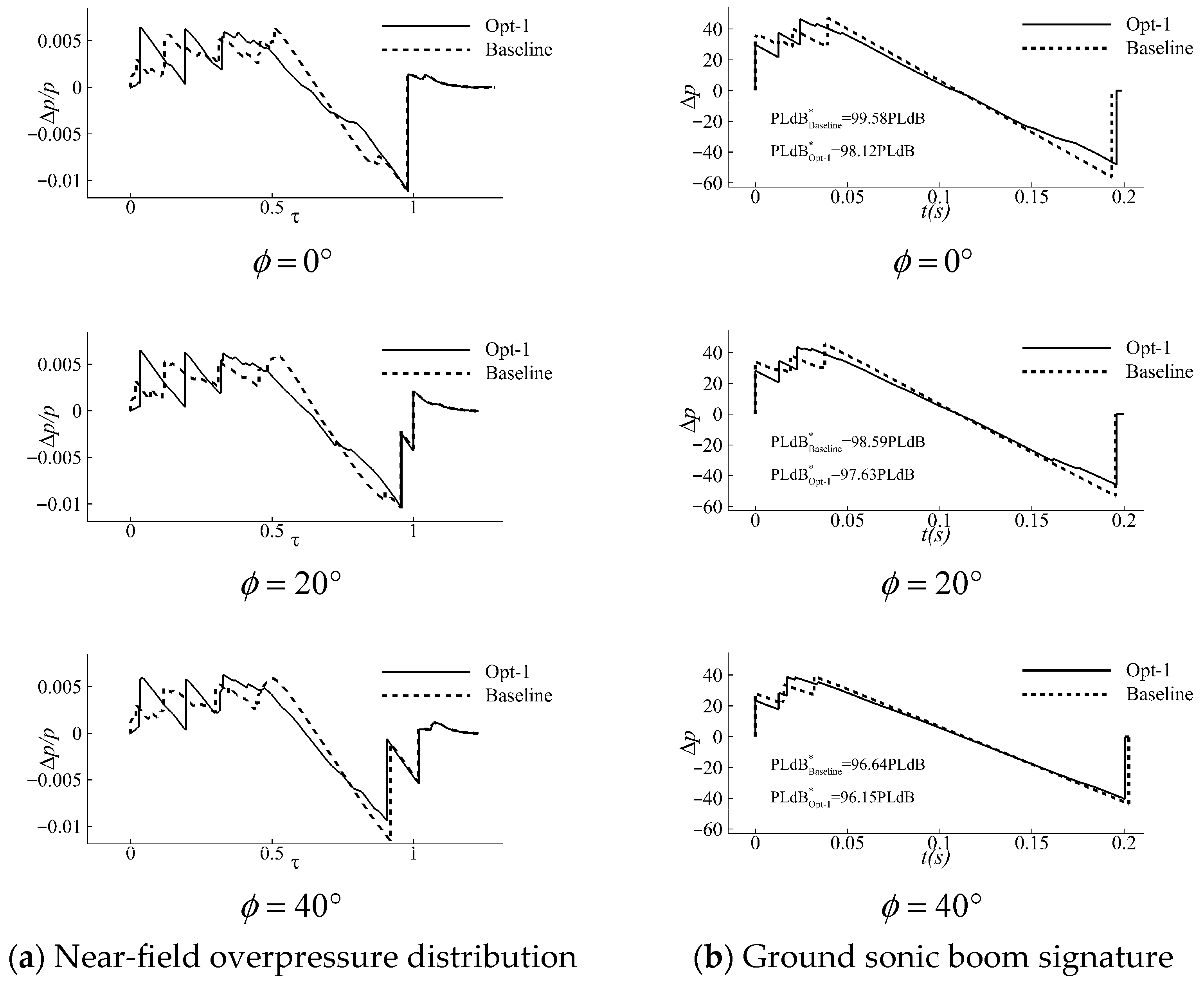
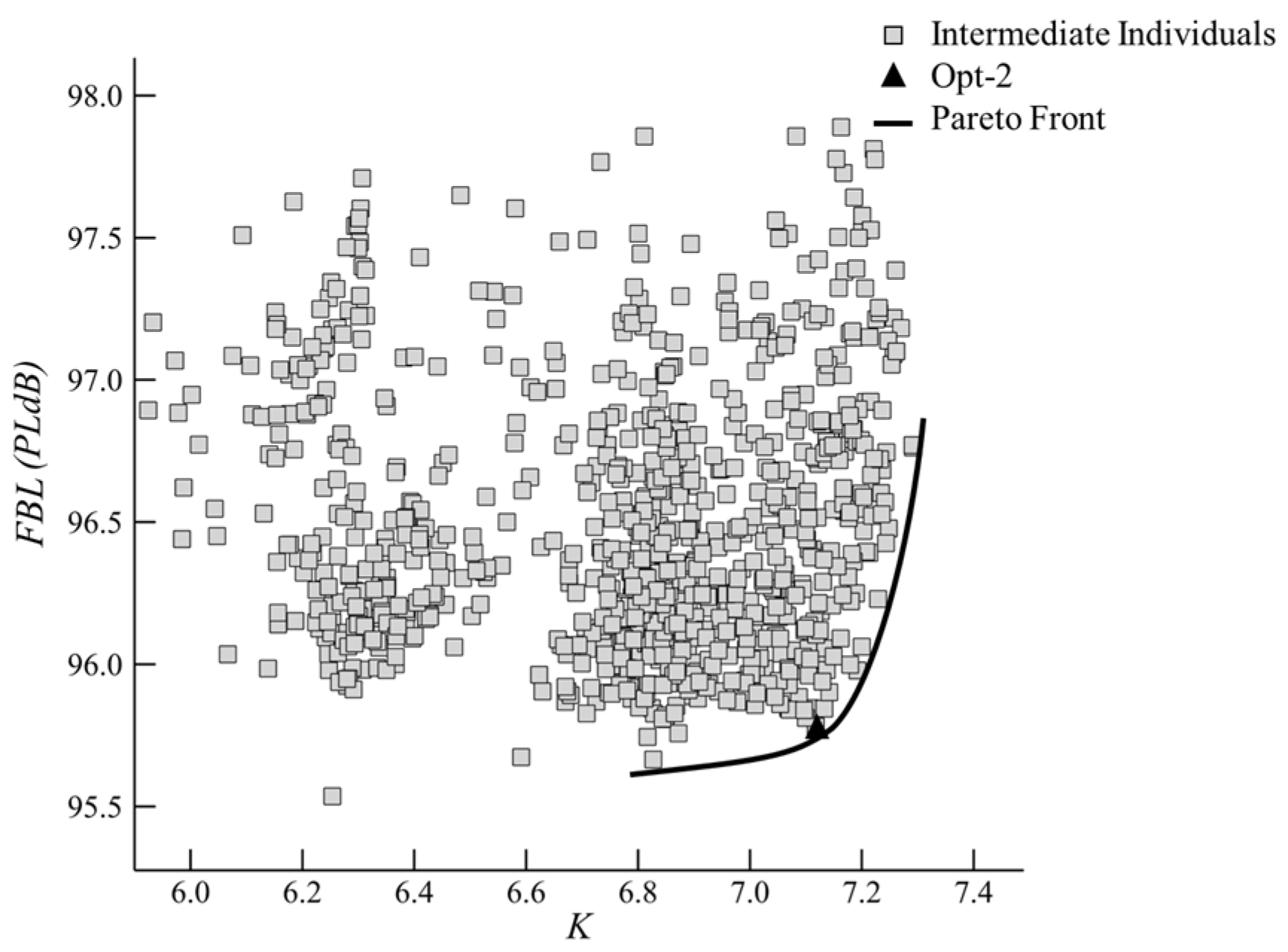
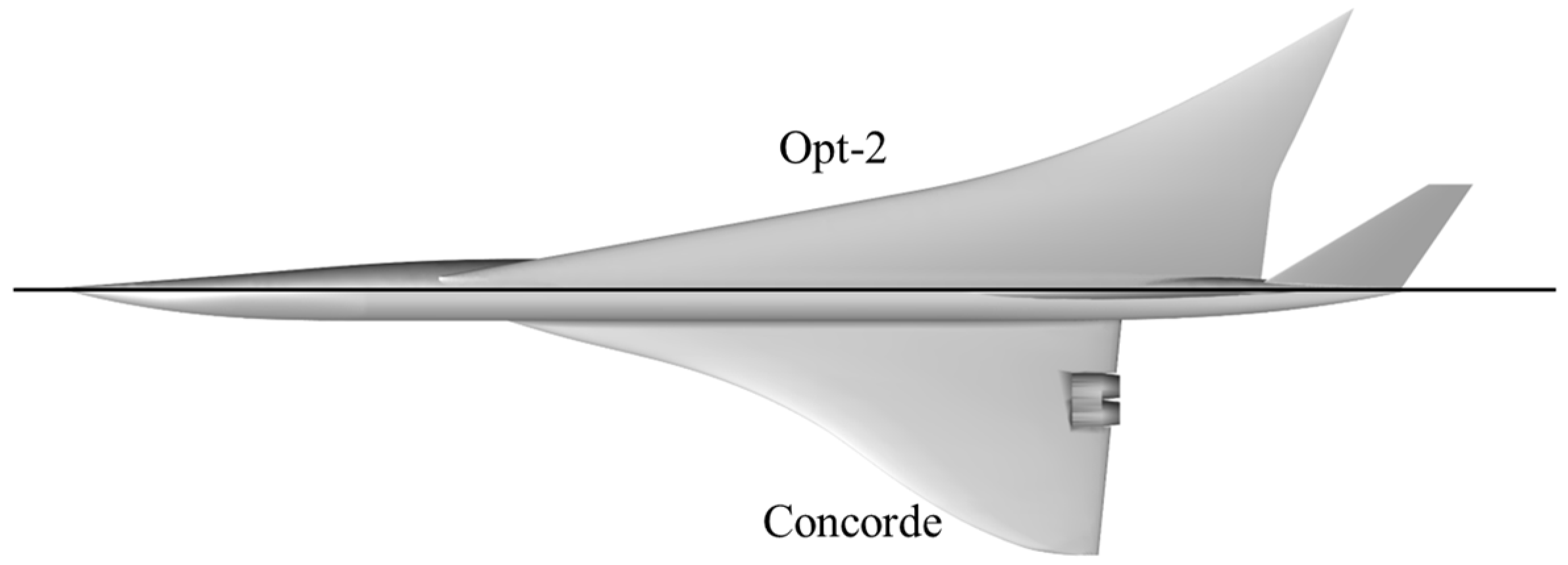
- Using the established optimization platform, fuselage optimization and overall aircraft optimization were performed on a supersonic civil aircraft with a V-tail layout, yielding Pareto fronts for both the lift-to-drag ratio and FBL. Compared with the baseline configuration, the representative solution from the fuselage optimization, Opt-1, attained an increment of 0.26 in lift-to-drag ratio and a reduction of in FBL; the representative solution from the overall aircraft optimization, Opt-2, showed an increase of 1.51 in lift-to-drag ratio and a reduction of in FBL. The optimization results demonstrate the efficacy of the full-carpet sonic boom and aerodynamic MDO method developed in this study.
Author Contributions
Funding
Data Availability Statement
Conflicts of Interest
Abbreviations
| AERO-BOOM | Full-carpet sonic boom and aerodynamic characteristics prediction software |
| HSADE | Hybrid surrogate-aided differential evolution optimization algorithm |
| FBL | Full-carpet sonic boom loudness |
| WPM | Waveform Parameter Method |
| CFD | Computational Fluid Dynamics |
| MOD | Multidisciplinary Optimization |
| JSGD | Jones–Seebass–George–Darden |
| MOGA | Multi-Objective Genetic Algorithm |
| off-track angle | |
| RANS | Reynolds-Averaged Navier–Stokes |
| RSM | Response Surface Methodology |
| PLDB | Perceived Loudness in Decibels |
| Surface pressure coefficient | |
| Lift | |
| Inviscid drag | |
| Lift-to-drag ratio | |
| Freestream Mach number | |
| Ratio of specific heats of air | |
| Area | |
| Whitham F-function | |
| Equivalent area | |
| Body component of equivalent area | |
| Lift component of equivalent area | |
| Coordinate of the sonic boom carpet cutoff point | |
| DWB | 69° Delta Wing-Body Model |
| SBPW-1 | First AIAA Sonic Boom Prediction Workshop |
| DE | Differential Evolution |
| Sweep angle | |
| Dihedral angle | |
| Twist angle | |
| Radius of cross-section | |
| Fuselage volume | |
| Leading-edge coordinates of the tail root | |
| Aspect ratio | |
| Taper ratio |
References
- Zhang, L.; Song, W.; Han, Z.; Qian, Z.; Song, B. Recent Progress of Sonic Boom Generation, Propagation, and Mitigation Mechanism. Acta Aeronaut. Astronaut. Sin. Chin. 2022, 43, 025649. [Google Scholar] [CrossRef]
- Li, J.; Chen, Q.; Wang, W.; Han, Z.; Tan, Y.; Ding, Y.; Xie, L.; Qiao, J.; Song, K.; Ai, J. Design of Low Sonic Boom High Efficiency Layout for Advanced Supersonic Civil Aircraft. Acta Aeronaut. Astronaut. Sin. Chin. 2024, 45, 629613. [Google Scholar] [CrossRef]
- Shan, C.; Gong, T.; Yi, L.; Yang, H.; Long, Y. High-Efficiency and High-Reliability Sonic Boom/Aerodynamic Multidisciplinary Optimization Method for Supersonic Civil Aircraft. Acta Aeronaut. Astronaut. Sin. Chin. 2024, 45, 51–68. [Google Scholar] [CrossRef]
- Han, Z.; Qiang, Z.; Qiao, J. Sonic Boom Prediction and Low-Boom Design Method; Science Press: Beijing, China, 2022. [Google Scholar]
- Liu, B.; Gao, B.; Pan, R. Economic Research on Major Supersonic Civil Aircrafts and Its Implications. In Proceedings of the 6th China Aeronautical Science and Technology Conference (CASTC 2023), Wuzhen, China, 26–27 September 2023; pp. 58–64. (In Chinese) [Google Scholar]
- U.S. Supersonic Commercial Aircraft: Assessing NASA’s High Speed Research Program; National Academies Press: Washington, DC, USA, 1997; p. 5848. ISBN 978-0-309-05878-0.
- Bonavolontà, G.; Lawson, C.; Riaz, A. Review of Sonic Boom Prediction and Reduction Methods for Next Generation of Supersonic Aircraft. Aerospace 2023, 10, 917. [Google Scholar] [CrossRef] [Scilit]
- Rötger, T.; Eyers, C.; Fusaro, R. A Review of the Current Regulatory Framework for Supersonic Civil Aircraft: Noise and Emissions Regulations. Aerospace 2024, 11, 19. [Google Scholar] [CrossRef] [Scilit]
- Morgenstern, J.; Norstrud, N.; Stelmack, M.; Skoch, C. Final Report for the Advanced Concept Studies for Supersonic Commercial Transports Entering Service in the 2030 to 2035 Period, N+3 Supersonic Program; NASA: Washington, DC, USA, 2010. [Google Scholar]
- Whitham, G.B. The Flow Pattern of a Supersonic Projectile. Commun. Pure Appl. Math. 1952, 5, 301–348. [Google Scholar] [CrossRef] [Scilit]
- Walkden, F. The Shock Pattern of a Wing-Body Combination, Far from the Flight Path. Aeronaut. Q. 1958, 9, 164–194. [Google Scholar] [CrossRef] [Scilit]
- Carlson, H.W. Simplified Sonic-Boom Prediction; NASA: Washington, DC, USA, 1978. [Google Scholar]
- Thomas, C.L. Extrapolation of Sonic Boom Pressure Signatures by the Waveform Parameter Method; NASA: Washington, DC, USA, 1972. [Google Scholar]
- Cheung, S.H.; Edwards, T.A.; Lawrence, S.L. Application of CFD to Sonic Boom near and Mid Flow-Field Prediction. In Proceedings of the 13th Aeroacoustics Conference, Tallahassee, FL, USA, 22–24 October 1990. [Google Scholar]
- Siclari, M.J.; Darden, C.M. An Euler Code Prediction of near Field to Midfield Sonic Boom Pressure Signatures. J. Aircr. 1993, 30, 911–917. [Google Scholar] [CrossRef] [Scilit]
- Aftosmis, M.; Nemec, M.; Cliff, S. Adjoint-Based Low-Boom Design with Cart3D (Invited). In Proceedings of the 29th AIAA Applied Aerodynamics Conference; American Institute of Aeronautics and Astronautics: Reno, NV, USA, 2012. [Google Scholar]
- Park, M.A.; Morgenstern, J.M. Summary and Statistical Analysis of the First AIAA Sonic Boom Prediction Workshop. J. Aircr. 2016, 53, 578–598. [Google Scholar] [CrossRef] [Scilit]
- Park, M.A.; Aftosmis, M.J.; Campbell, R.L.; Carter, M.B.; Cliff, S.E.; Bangert, L.S. Summary of the 2008 NASA Fundamental Aeronautics Program Sonic Boom Prediction Workshop. J. Aircr. 2014, 51, 987–1001. [Google Scholar] [CrossRef] [Scilit]
- Alonso, J.; Jameson, A.; Kroo, I. Advanced Algorithms for Design and Optimization of Quiet Supersonic Platforms. In Proceedings of the 40th AIAA Aerospace Sciences Meeting & Exhibit, Reno, NV, USA, 14–17 January 2002; American Institute of Aeronautics and Astronautics: Reston, VA, USA. [Google Scholar]
- Meredith, K.; Dahlin, J.; Graham, D.; Malone, M.; Haering, E.; Page, J.; Plotkin, K. Computational Fluid Dynamics Comparison and Flight Test Measurement of F-5E Off-Body Pressures. In Proceedings of the 43rd AIAA Aerospace Sciences Meeting and Exhibit, Reno, NV, USA, 10–13 January 2005; American Institute of Aeronautics and Astronautics: Reston, VA, USA. [Google Scholar]
- Laflin, K.; Klausmeyer, S.; Chaffin, M. A Hybrid Computational Fluid Dynamics Procedure for Sonic Boom Prediction. In Proceedings of the 24th AIAA Applied Aerodynamics Conference, San Francisco, CA, USA, 5–8 June 2006; American Institute of Aeronautics and Astronautics: Reston, VA, USA. [Google Scholar]
- Park, M.A.; Nemec, M. Nearfield Summary and Statistical Analysis of the Second AIAA Sonic Boom Prediction Workshop. J. Aircr. 2019, 56, 851–875. [Google Scholar] [CrossRef] [Scilit]
- Graziani, S.; Petrosino, F.; Jäschke, J.; Glorioso, A.; Fusaro, R.; Viola, N. Evaluation of Sonic Boom Shock Wave Generation with CFD Methods. Aerospace 2024, 11, 484. [Google Scholar] [CrossRef] [Scilit]
- Cleveland, R.O. Propagation of Sonic Booms Through a Real, Stratified Atmosphere; The University of Texas at Austin: Austin, TX, USA, 1995. [Google Scholar]
- Zhao, J.; Gu, L.; Ma, H. A Rapid Approach to Convective Aeroheating Prediction of Hypersonic Vehicles. Sci. China Technol. Sci. 2013, 56, 2010–2024. [Google Scholar] [CrossRef] [Scilit]
- An, X.; Kang, W.; Li, G.; Xu, M. Hypersonic Vehicle Aerodynamics; Northwestern Polytechnical University Press: Xian, China, 2022. [Google Scholar]
- Huang, T.; He, G.; Wang, Q. Calculation of Aerodynamic Characteristics of Hypersonic Vehicles Based on the Surface Element Method. Adv. Aerosp. Sci. Technol. 2022, 7, 112–122. [Google Scholar] [CrossRef]
- Li, P.; Gao, Z. An Engineering Method of Aerothermodynamic Environments Prediction for Complex Reentry Configurations. In Proceedings of the AIAA SPACE 2014 Conference and Exposition, San Diego, CA, USA, 4–7 August 2014; American Institute of Aeronautics and Astronautics: Reston, VA, USA. [Google Scholar]
- Darden, C.M. Sonic-Boom Minimization with Nose-Bluntness Relaxation; National Aeronautics and Space Administration, Scientific and Technical Information Office: Springfield, VA, USA, 1979. [Google Scholar]
- Feng, X.; Li, Z.; Song, B. Research of Low Boom and Low Drag Supersonic Aircraft Design. Chin. J. Aeronaut. 2014, 27, 531–541. [Google Scholar] [CrossRef] [Scilit]
- Yang, C.; Tan, Y.; Wang, W.; Zhao, Y.; Yu, X. Multidisciplinary Optimization with Low-Boom Design for Supersonic Civil Aircraft Conceptual Design. Acta Aeronaut. Astronaut. Sin. Chin. 2025, 46, 115–134. [Google Scholar] [CrossRef]
- Liu, S.; Bai, J.; Yu, P.; Chen, B.; Zhou, B. Aerodynamic Optimization Design on Supersonic Transports Considering Sonic Boom Intensity. Northwest. Polytech. Univ. Chin. 2020, 38, 271–278. [Google Scholar] [CrossRef] [Scilit]
- Liu, G.; Huang, J.; Zhou, Z.; Chen, Z.; Gao, Z.; Zhong, S.; Xiao, H. Investigation of Supersonic Low Sonic Boom Aerodynamic Configuration Design. Acta Aerodyn. Sin. Chin. 2020, 38, 858–865. [Google Scholar] [CrossRef]
- Chan, M.K.-Y. Supersonic Aircraft Optimization for Minimizing Drag and Sonic Boom. Ph.D. Thesis, Stanford University, Stanford, CA, USA, 2003. [Google Scholar]
- Ordaz, I.; Li, W. Integration of Off-Track Sonic Boom Analysis for Supersonic Aircraft Conceptual Design. J. Aircr. 2014, 51, 23–28. [Google Scholar] [CrossRef] [Scilit]
- Nayani, S. Evaluation of Grid Modification Methods for On- and Off-Track Sonic Boom Analysis. In Proceedings of the 51st AIAA Aerospace Sciences Meeting including the New Horizons Forum and Aerospace Exposition, Grapevine, TX, USA, 7–10 January 2013; American Institute of Aeronautics and Astronautics: Reston, VA, USA. [Google Scholar]
- Ordaz, I.; Wintzer, M.; Rallabhandi, S.K. Full-Carpet Design of a Low-Boom Demonstrator Concept. In Proceedings of the 33rd AIAA Applied Aerodynamics Conference, Dallas, TX, USA, 22–26 June 2015; American Institute of Aeronautics and Astronautics: Reston, VA, USA. [Google Scholar]
- Kirz, J. Surrogate Based Shape Optimization of a Low Boom Fuselage Wing Configuration. In AIAA Aviation 2019 Forum; American Institute of Aeronautics and Astronautics: Reno, NV, USA, 2019. [Google Scholar]
- Anderson, G.R.; Aftosmis, M.J.; Nemec, M. Cart3D Simulations for the Second AIAA Sonic Boom Prediction Workshop. J. Aircr. 2019, 56, 896–911. [Google Scholar] [CrossRef] [Scilit]
- Chen, Q.; Han, Z.; Yang, H.; Ding, Y.; Qiao, J.; Zheng, K.; Song, W. Research on the Effect of Wing Dihedral on Full-Carpet Sonic Boom. Aerodyn. Res. Exp. Chin. 2024, 2, 50–58. [Google Scholar] [CrossRef]
- Chen, Q.; Han, Z.; Zhang, K.; Qiao, J.; Ding, Y.; Song, W. A Full-Carpet Design Optimization Method for Low-Boom Supersonic Civil Aircraft Configuration. Acta Aeronaut. Astronaut. Sin. Chin. 2025, 46, 324–339. [Google Scholar] [CrossRef]
- Deng, K.; Chen, H. A Hybrid Aerodynamic Optimization Algorithm Based on Differential Evolution and RBF Response Surface. In Proceedings of the 17th AIAA/ISSMO Multidisciplinary Analysis and Optimization Conference, Washington, DC, USA, 13–17 June 2016. [Google Scholar] [CrossRef] [Scilit]
- Stevens, S.S. Perceived Level of Noise by Mark VII and Decibels (E). J. Acoust. Soc. Am. 1972, 51, 575–601. [Google Scholar] [CrossRef] [Scilit]
- Zhang, B.; Yang, T.; Ma, Y.; Feng, Z.; Ge, J. Fast Computation of Hypersonic Gliding Lifting Body Aerodynamic Based on Configuration Parameters. In Proceedings of the 2015 7th International Conference on Intelligent Human-Machine Systems and Cybernetics; IEEE: New York, NY, USA, 2015; Volume 2, pp. 194–197. [Google Scholar]
- Anderson, J.D., Jr. Hypersonic and High-Temperature Gas Dynamics, 2nd ed.; American Institute of Aeronautics and Astronautics: Reston, VA, USA, 2006; ISBN 978-1-56347-780-5. [Google Scholar]
- Gentry, A.E.; Smyth, D.N.; Oliver, W.R. The Mark IV Supersonic-Hypersonic Arbitrary-Body Program. Volume II. Program Formulation; Defense Technical Information Center: Fort Belvoir, VA, USA, 1973. [Google Scholar]
- Flaherty, J. Evaluation of USSAERO and HABP Computer Codes for Aerodynamic Predictions for Slender Bodies; Defense Technical Information Center: Fort Belvoir, VA, USA, 1981. [Google Scholar]
- BopngMa/Waveform-Parameter-Method: The Code Was First Published as a Reference Code in NASA TN D-6832. The Code Is Re-Present Here for Academic Exchange Only. All Rights Are Reserved to the Original Authors. Available online: https://github.com/BopngMa/Waveform-Parameter-Method (accessed on 25 November 2024).
- Usuaero/PyLdB: Calculates the Perceived Loudness of a Pressure Signature. Available online: https://github.com/usuaero/PyLdB (accessed on 25 November 2024).
- Cliff, S.E.; Durston, D.A.; Elmiligui, A.A.; Walker, E.L.; Carter, M.B. Experimental and Computational Sonic Boom Assessment of Lockheed-Martin N+2 Low Boom Models; NASA: Washington, DC, USA, 2015. [Google Scholar]
- Aftosmis, M.J.; Nemec, M. Cart3D Simulations for the First AIAA Sonic Boom Prediction Workshop. In Proceedings of the 52nd Aerospace Sciences Meeting, National Harbor, MD, USA, 13–17 January 2014; American Institute of Aeronautics and Astronautics: Reston, VA, USA. [Google Scholar]
- Hunton, L.W.; Hicks, R.M.; Mendoza, J.P. Some Effects of Wing Planform on Sonic Boom; NASA: Washington, DC, USA, 1973. [Google Scholar]
- Zhang, Y.; Fang, X.; Chen, H.; Fu, S.; Duan, Z.; Zhang, Y. Supercritical Natural Laminar Flow Airfoil Optimization for Regional Aircraft Wing Design. Aerosp. Sci. Technol. 2015, 43, 152–164. [Google Scholar] [CrossRef] [Scilit]
- Ji, Q.; Zhang, Y.; Chen, H.; Ye, J. Aerodynamic Optimization of a High-Lift System with Adaptive Dropped Hinge Flap. Chin. J. Aeronaut. 2022, 35, 191–208. [Google Scholar] [CrossRef] [Scilit]
- Li, R.; Deng, K.; Zhang, Y.; Chen, H. Pressure Distribution Guided Supercritical Wing Optimization. Chin. J. Aeronaut. 2018, 31, 1842–1854. [Google Scholar] [CrossRef] [Scilit]
- LI, R. Swayli94/Cst-Modeling3d 2024. 2 November 2024. Available online: https://github.com/swayli94/cst-modeling3d (accessed on 11 January 2026).
- Cliff, S.E.; Durston, D.; Chan, W.M.; Elmiligui, A.A.; Moini-Yekta, S.; Sozer, E.; Jensen, J.C. Computational and Experimental Assessment of Models for the First AIAA Sonic Boom Prediction Workshop. In Proceedings of the 52nd Aerospace Sciences Meeting, National Harbor, MD, USA, 13–17 January 2014; American Institute of Aeronautics and Astronautics: Reston, VA, USA. [Google Scholar]














| Benchmark Model | Mach Number | Angle of Attack/° | Target of Validation |
|---|---|---|---|
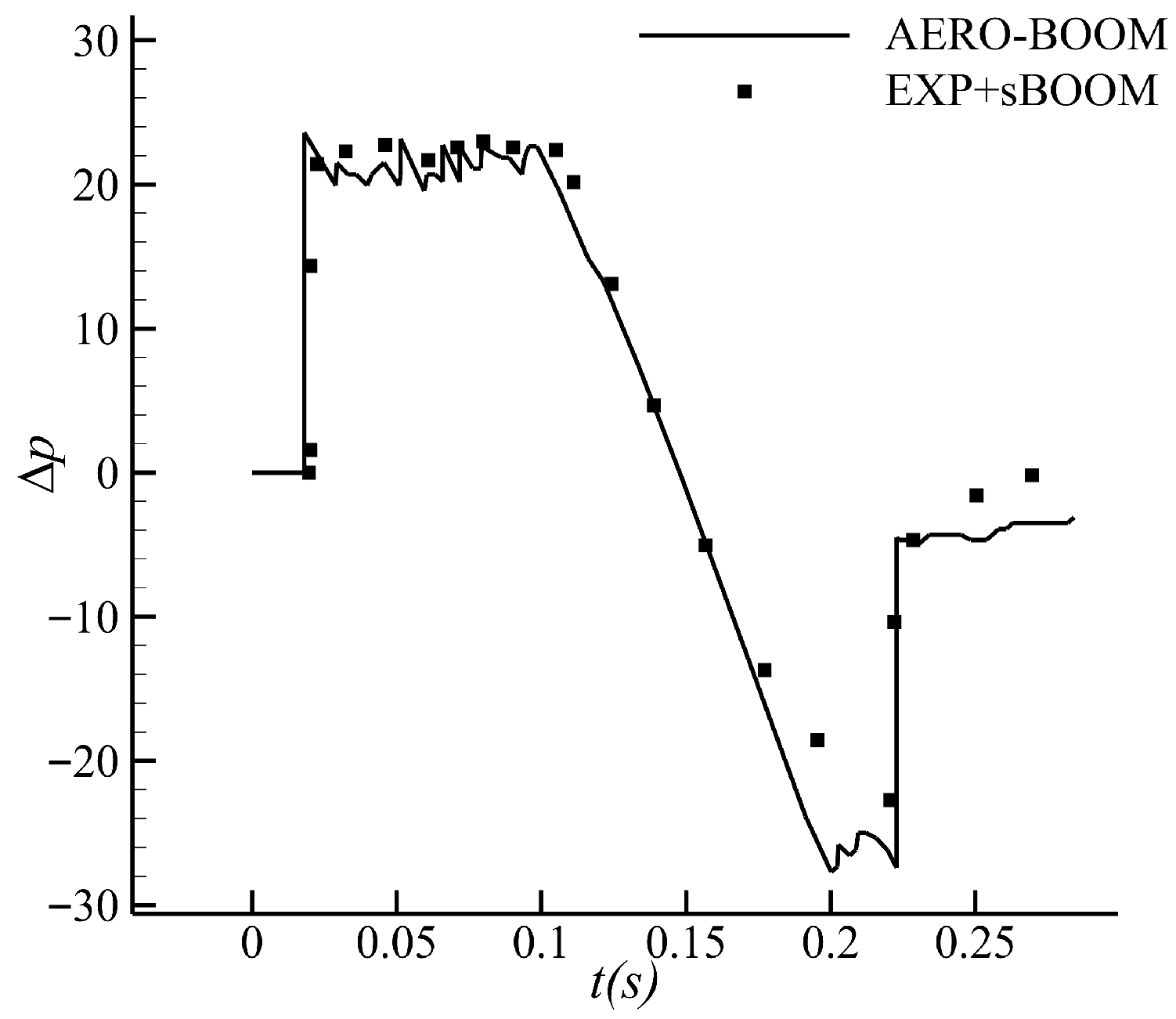
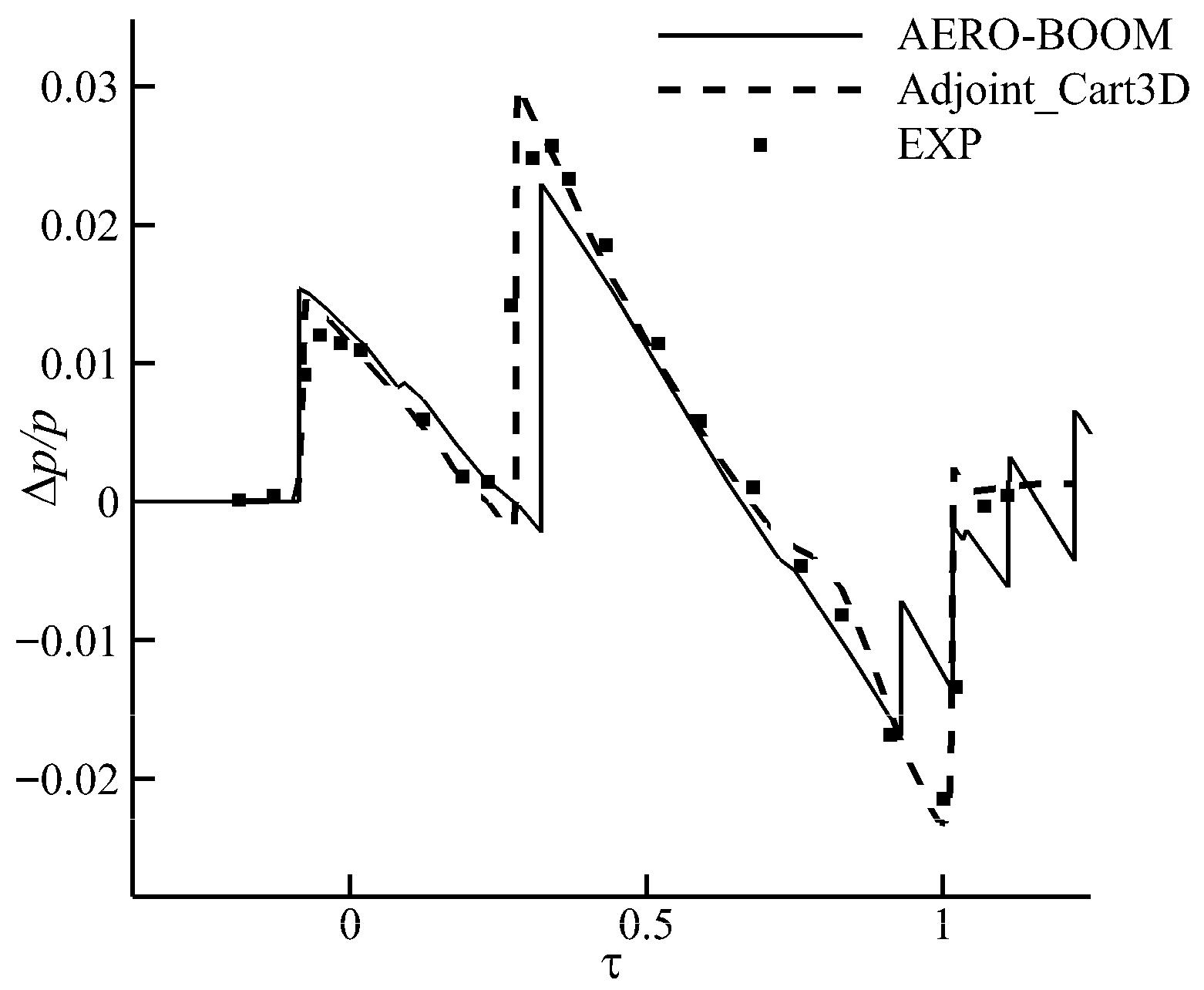
| SEEB-ALR | 1.6 | 0 | Near-Field Overpressure Distribution Calculation Module Ground Sonic Boom Signature Calculation Module Ground Sonic Boom Loudness Calculation Module |
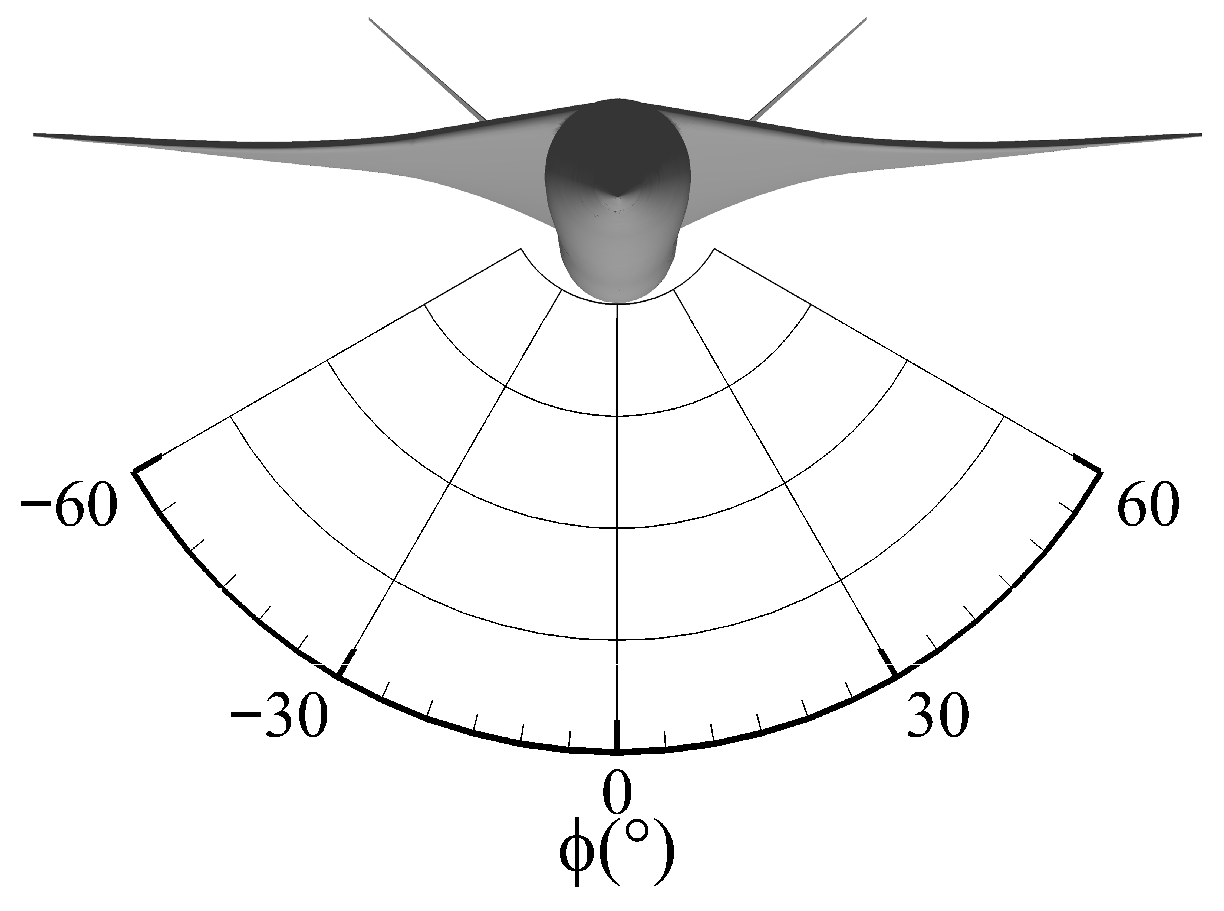
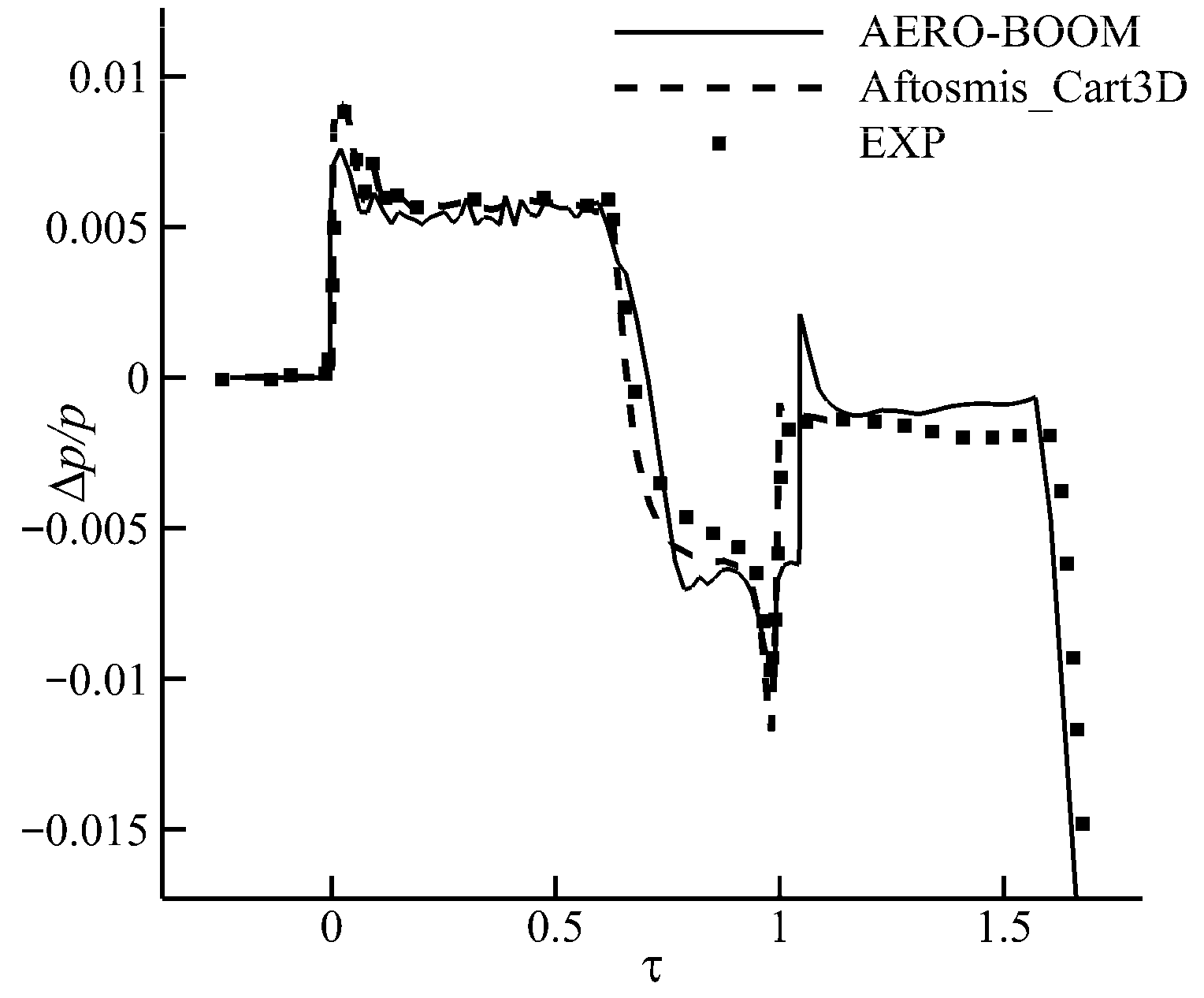
| DWB 1 | 1.7 | 0 | Near-Field Overpressure Distribution Calculation Module (Multi-Off-Track Angle) |
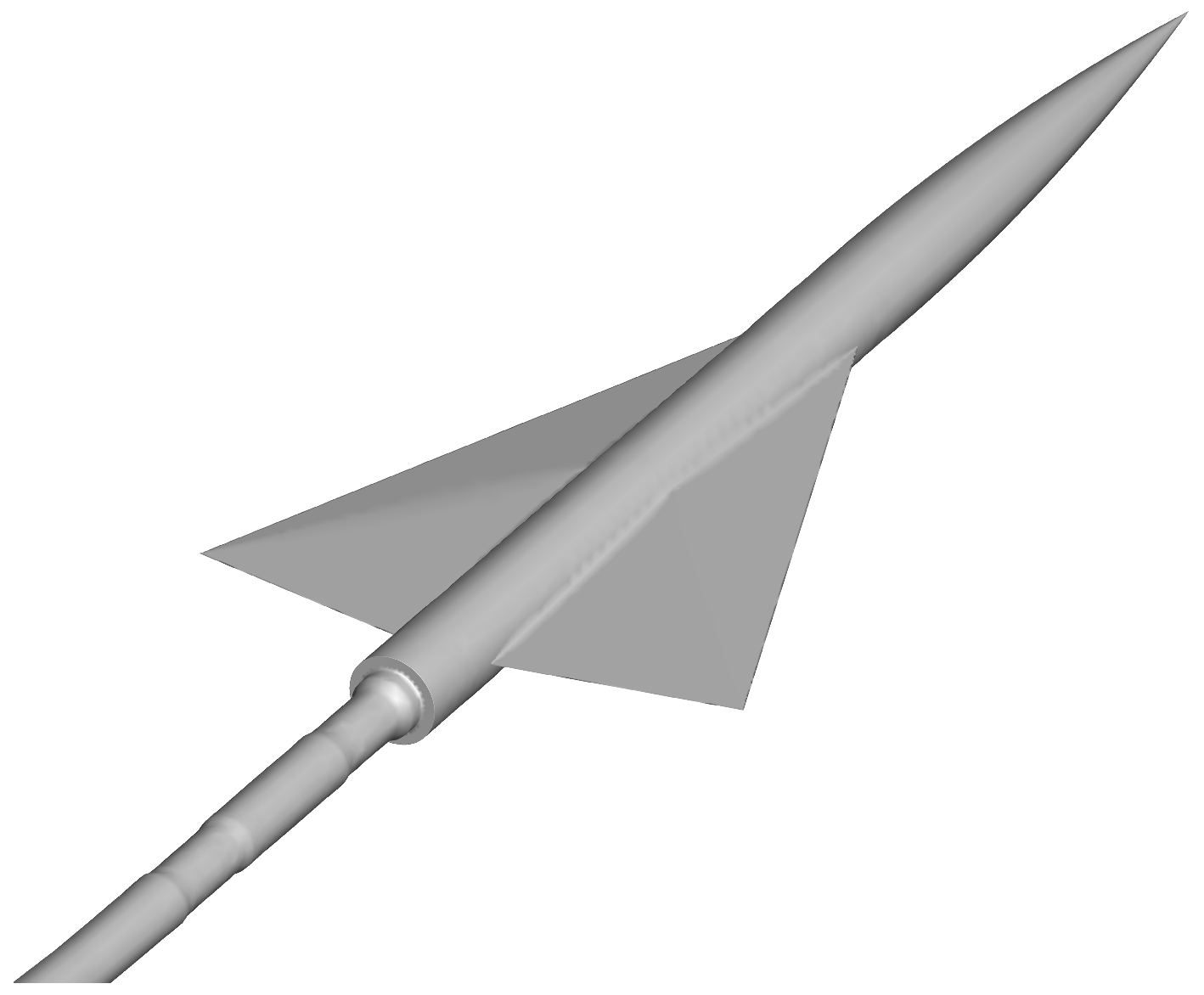
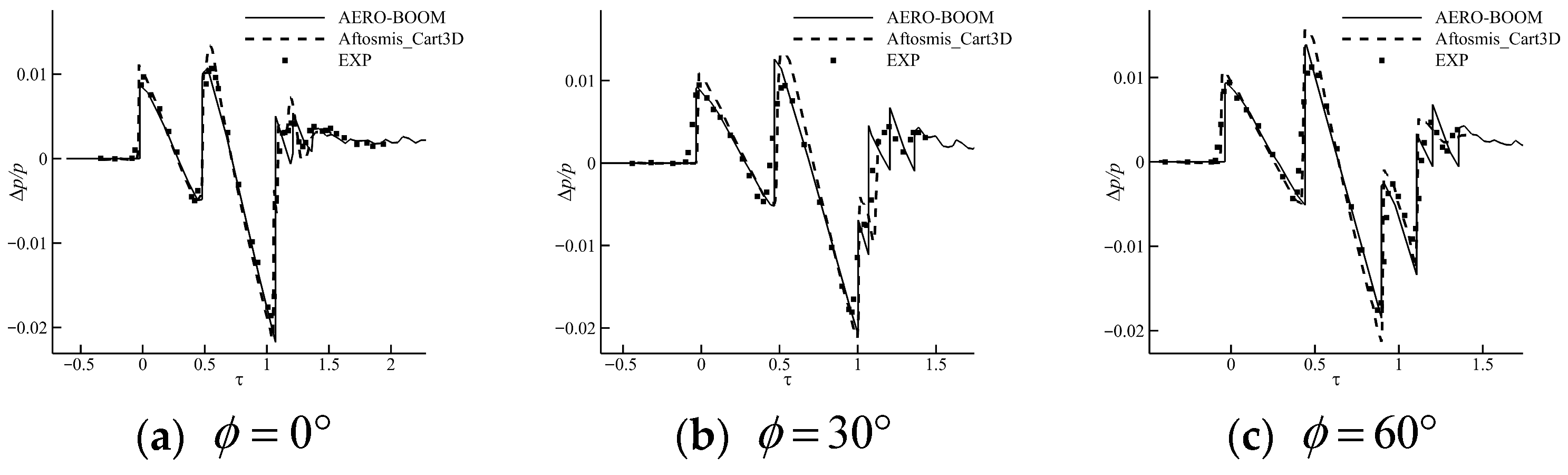
| DWB | 1.68 | 4.74 | Aerodynamic Force Prediction Module Near-Field Overpressure Distribution Calculation Module |
| Data Sources | Lift Coefficient | Lift-to-Drag Ratio |
|---|---|---|
| Wind-Tunnel [18] | 0.15 | |
| CFD | 0.1541 | 6.58 |
| AERO-BOOM | 0.1587 | 6.03 |
| Parts | Optimization Variables | Constraints | Optimization Objectives |
|---|---|---|---|
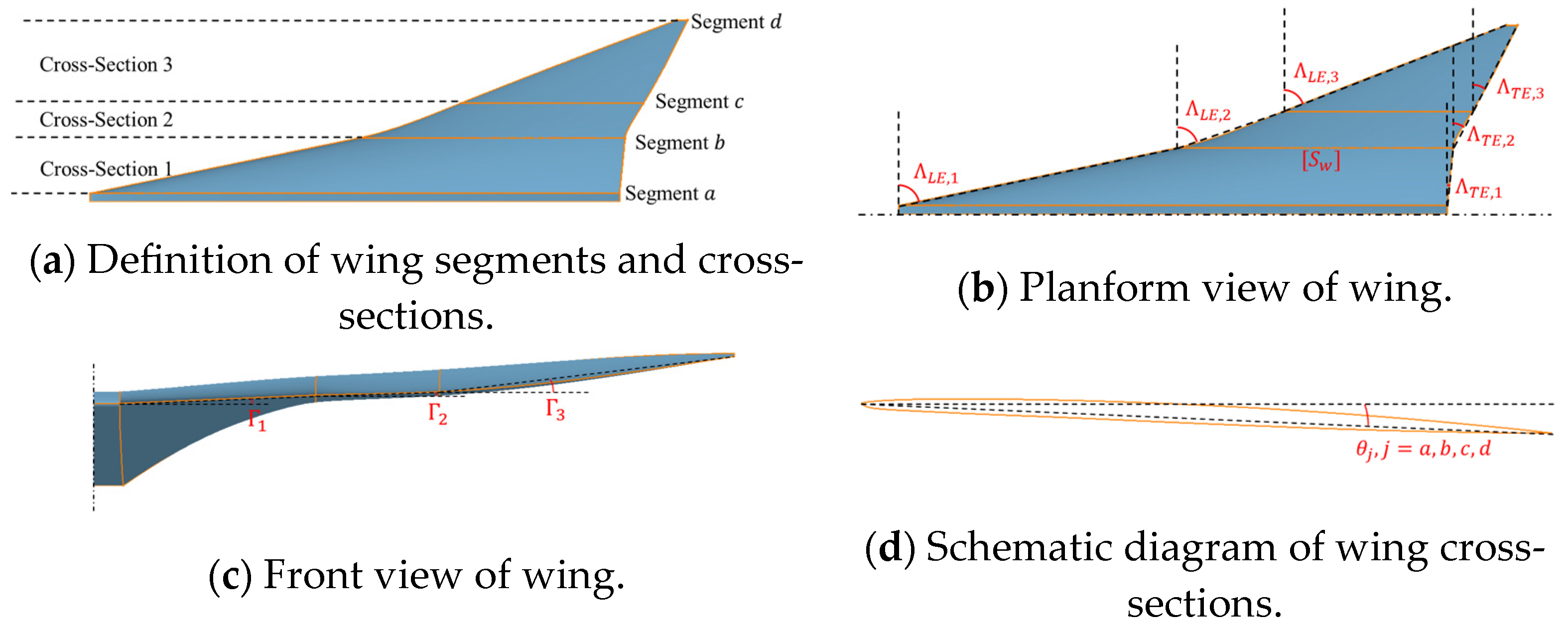
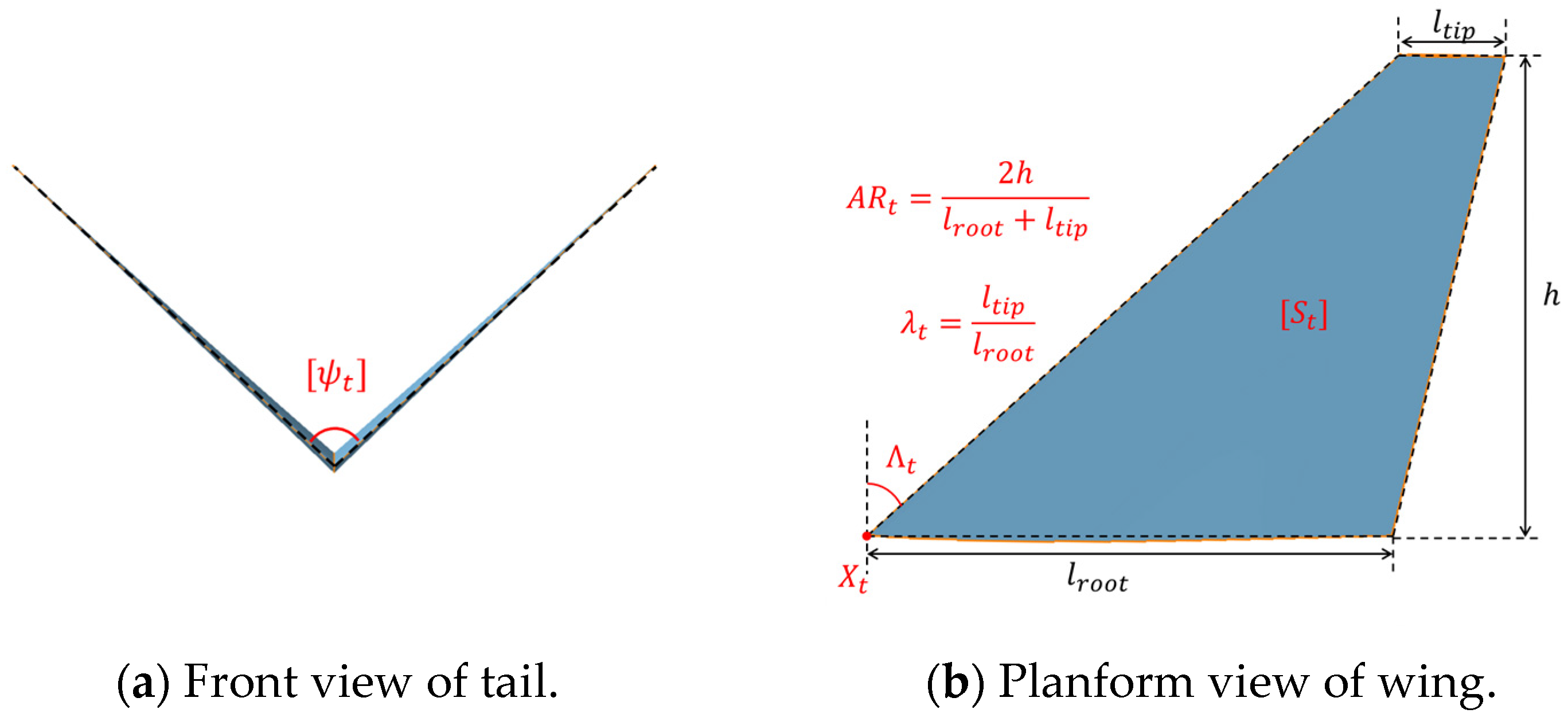
| Wing | Leading-Edge Sweep Angle Trailing-Edge Sweep Angle Dihedral Angle Twist Angle | Projected Area Wingtip Chord ≮ 0 | Lift-To-Drag Ratio Full-Carpet Sonic Boom Loudness |
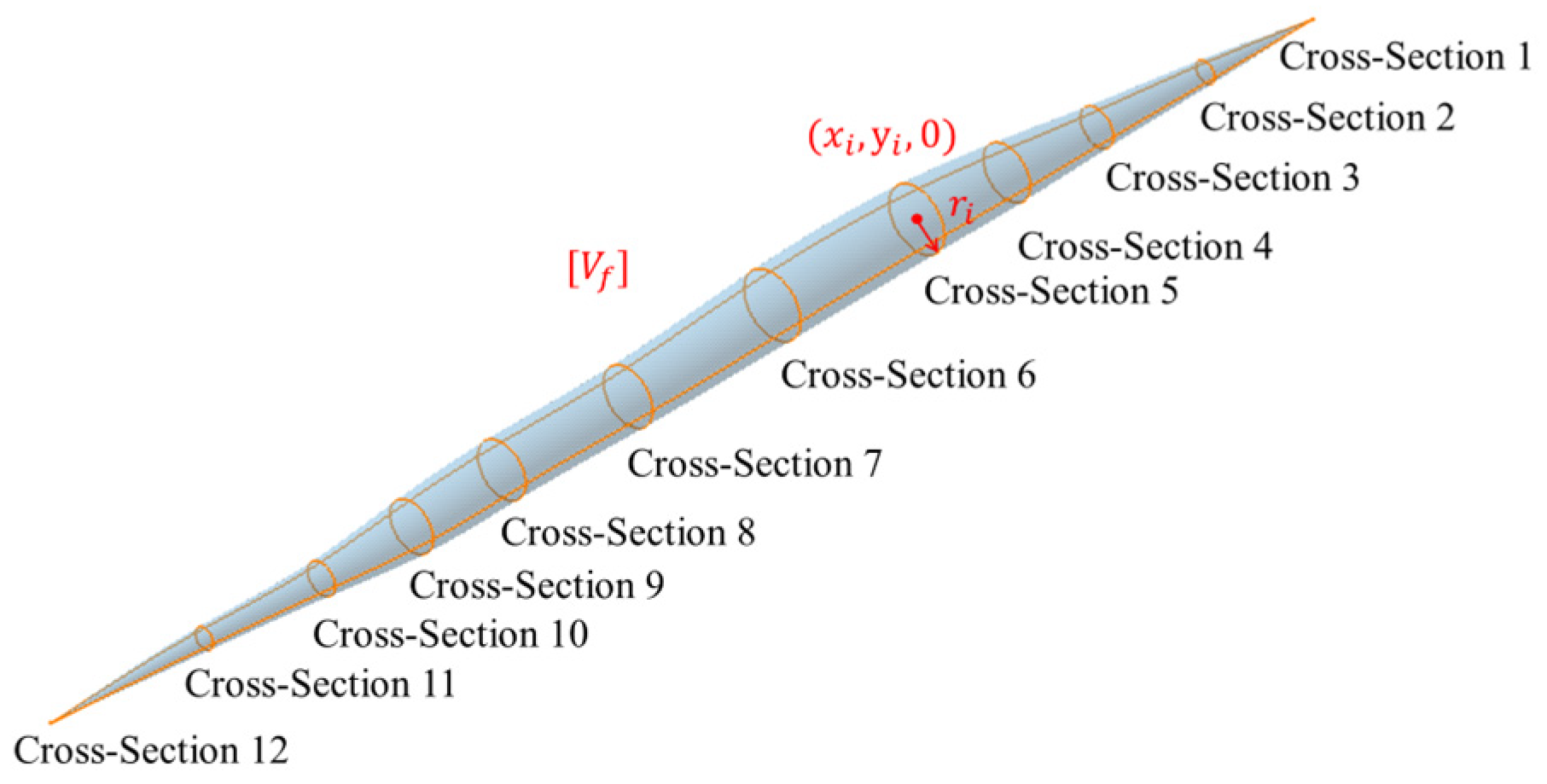
| Fuselage | Cross-Section Center Y-Coordinate Cross-Section Radius | Nose CoordinateVolumeLength | |
| Tail | Leading-Edge Coordinates of Root Leading-Edge Sweep Angle Aspect Ratio Taper Ratio | Dihedral AngleArea | |
| Quantity | 38 | 7 | 2 |
Disclaimer/Publisher’s Note: The statements, opinions and data contained in all publications are solely those of the individual author(s) and contributor(s) and not of MDPI and/or the editor(s). MDPI and/or the editor(s) disclaim responsibility for any injury to people or property resulting from any ideas, methods, instructions or products referred to in the content. |
© 2026 by the authors. Licensee MDPI, Basel, Switzerland. This article is an open access article distributed under the terms and conditions of the Creative Commons Attribution (CC BY) license.
Share and Cite
Duan, Y.; Wan, C.; Li, R.; Chen, H. Multidisciplinary Design Optimization for the Conceptual Design of Supersonic Civil Aircraft Based on Full-Carpet Sonic Boom/Aerodynamic Characteristics Employing Differential Evolution. Aerospace 2026, 13, 96. https://doi.org/10.3390/aerospace13010096
Duan Y, Wan C, Li R, Chen H. Multidisciplinary Design Optimization for the Conceptual Design of Supersonic Civil Aircraft Based on Full-Carpet Sonic Boom/Aerodynamic Characteristics Employing Differential Evolution. Aerospace. 2026; 13(1):96. https://doi.org/10.3390/aerospace13010096
Chicago/Turabian StyleDuan, Yuyu, Chonweng Wan, Runze Li, and Haixin Chen. 2026. "Multidisciplinary Design Optimization for the Conceptual Design of Supersonic Civil Aircraft Based on Full-Carpet Sonic Boom/Aerodynamic Characteristics Employing Differential Evolution" Aerospace 13, no. 1: 96. https://doi.org/10.3390/aerospace13010096
APA StyleDuan, Y., Wan, C., Li, R., & Chen, H. (2026). Multidisciplinary Design Optimization for the Conceptual Design of Supersonic Civil Aircraft Based on Full-Carpet Sonic Boom/Aerodynamic Characteristics Employing Differential Evolution. Aerospace, 13(1), 96. https://doi.org/10.3390/aerospace13010096