
Article

Fuzzy Modeling Framework Using Sector Non-Linearity Techniques for Fixed-Wing Aircrafts
by
Pablo Brusola
1,
Sergio Garcia-Nieto
1,*,
Jose Vicente Salcedo
1,
Miguel Martinez
1 and
Robert H. Bishop
2
1
Instituto de Automática e Informática Industrial, Universitat Politècnica de València, Camino de Vera s/n, 46022 Valencia, Spain
2
College of Engineering, University of South Florida, 4202 East Fowler Avenue ENB118, Tampa, FL 33620-5350, USA
*
Author to whom correspondence should be addressed.
Aerospace 2024, 11(4), 258; https://doi.org/10.3390/aerospace11040258

Submission received: 30 January 2024 / Revised: 13 March 2024 / Accepted: 20 March 2024 / Published: 26 March 2024
(This article belongs to the Special Issue Advanced Aircraft Technology)

Abstract

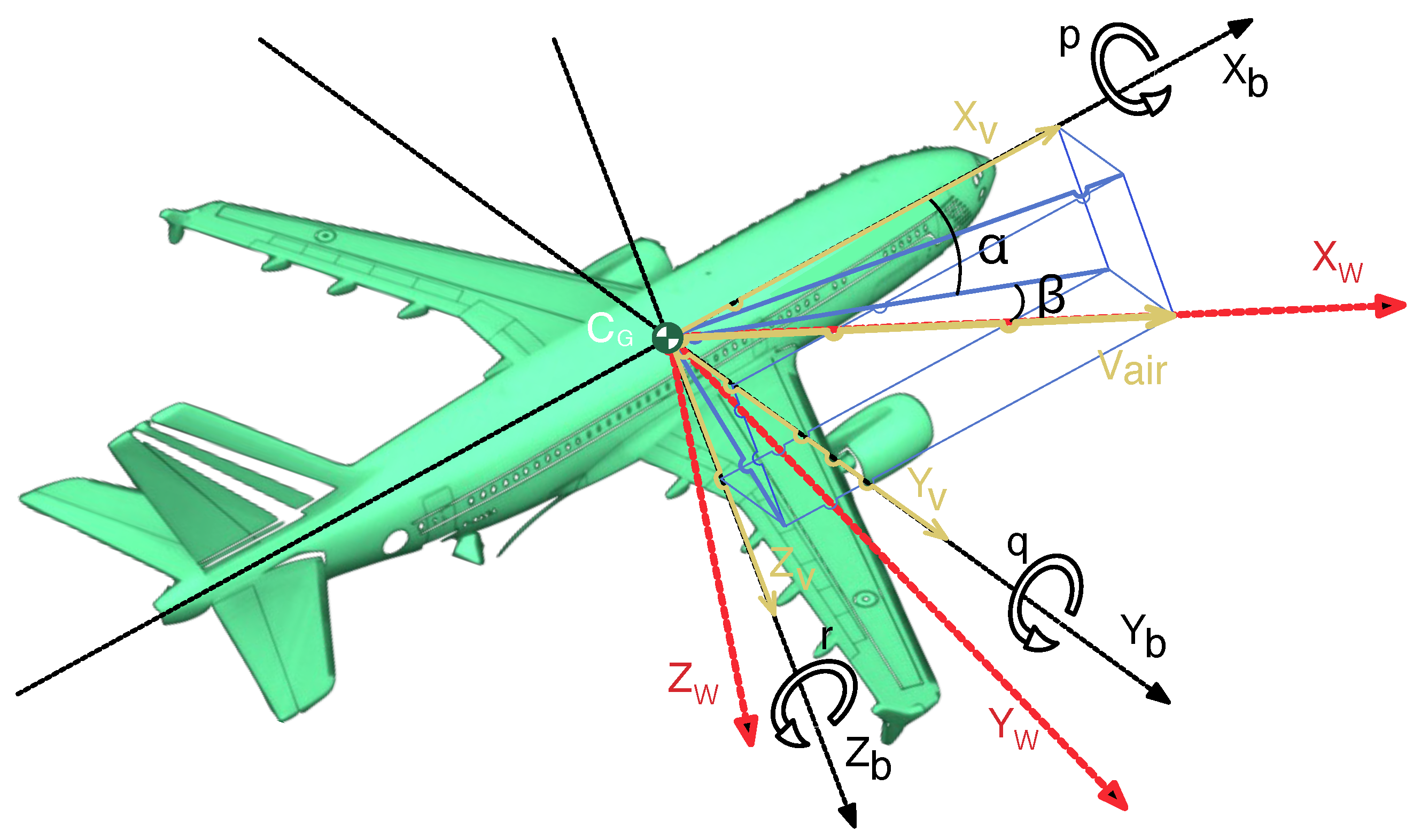
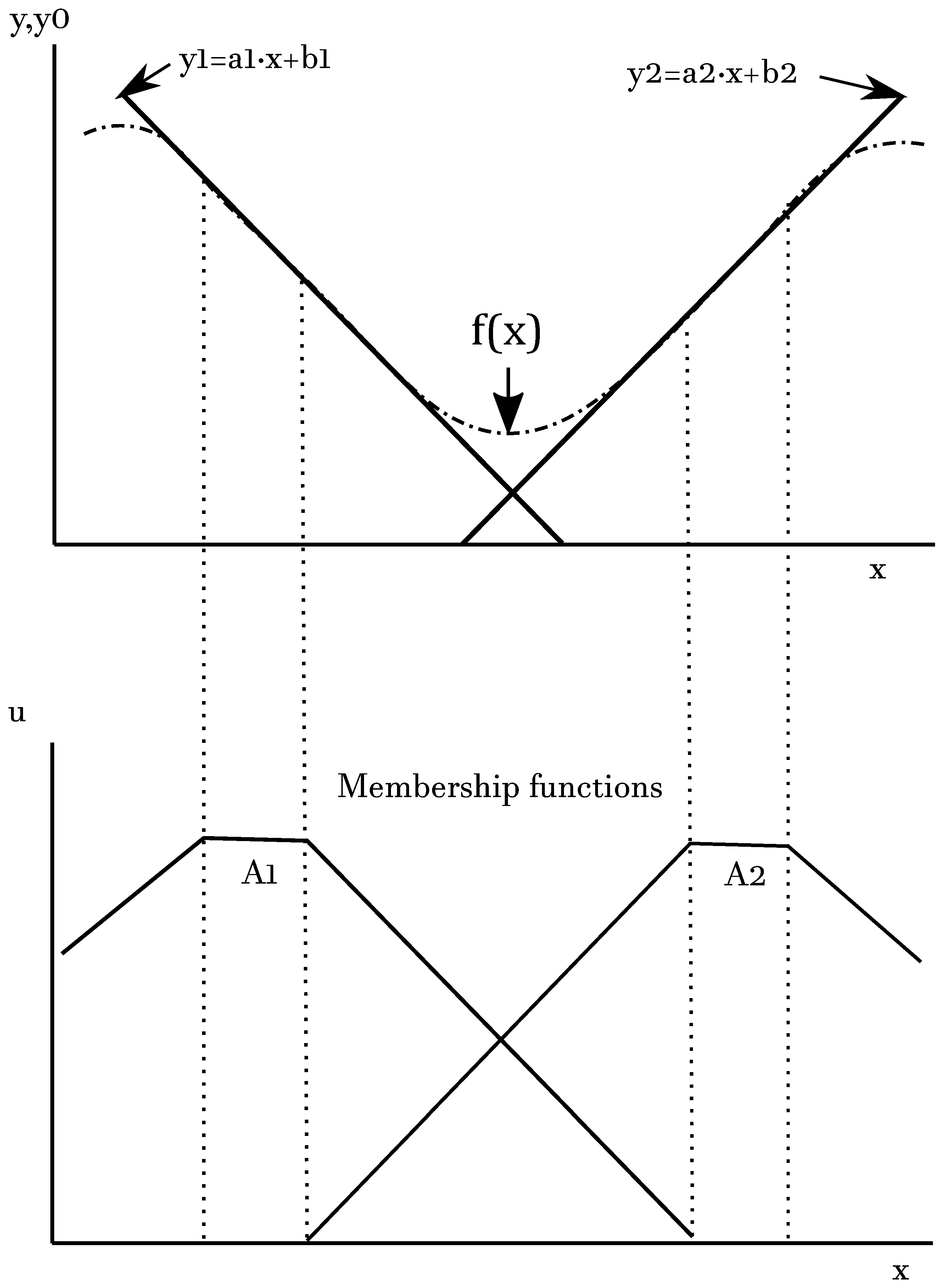
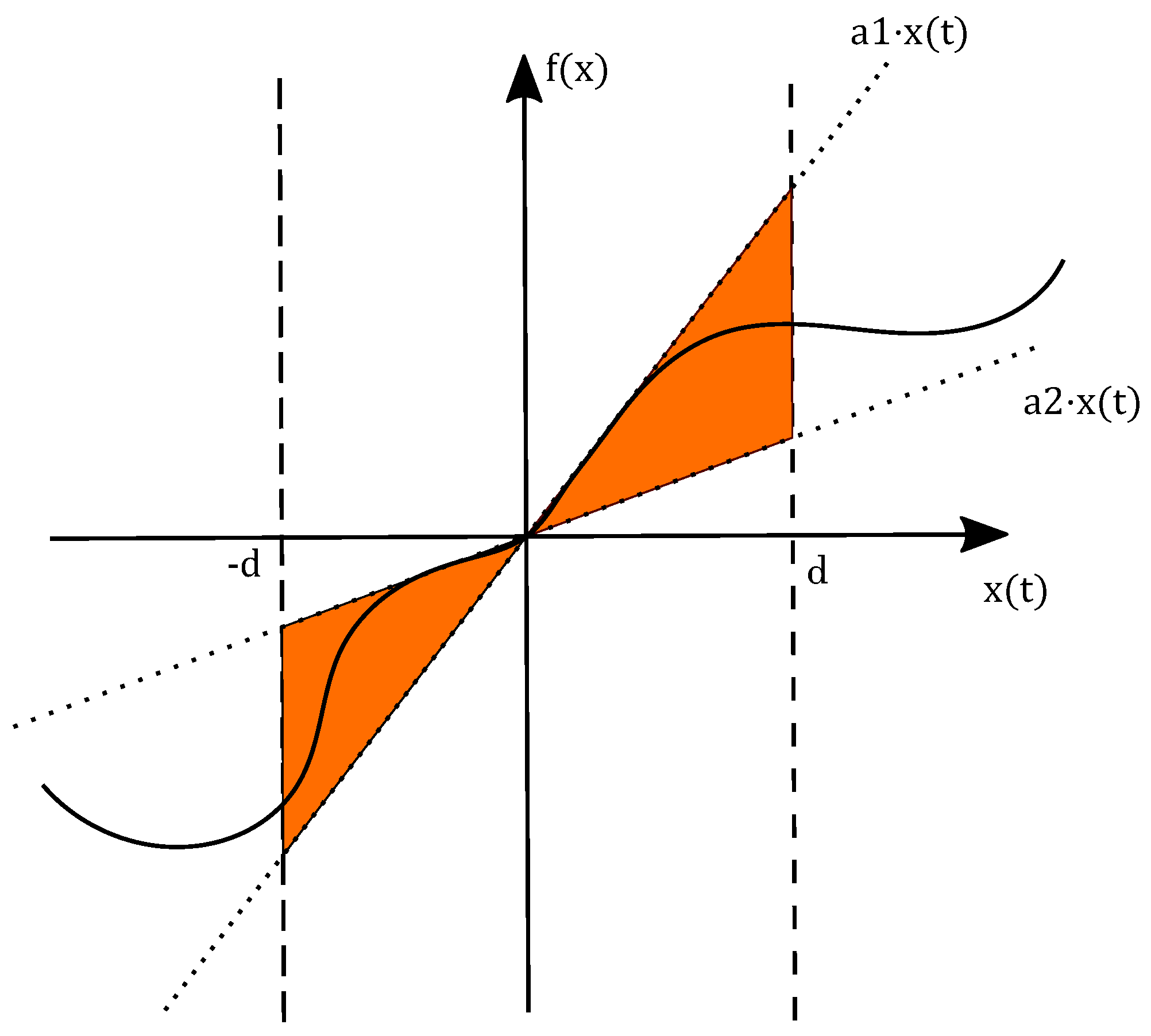
This paper presents a mathematical modeling approach utilizing a fuzzy modeling framework for fixed-wing aircraft systems with the goal of creating a highly desirable mathematical representation for model-based control design applications. The starting point is a mathematical model comprising fifteen non-linear ordinary differential equations representing the dynamic and kinematic behavior applicable to a wide range of fixed-wing aircraft systems. Here, the proposed mathematical modeling framework is applied to the AIRBUS A310 model developed by ONERA. The proposed fuzzy modeling framework takes advantage of sector non-linearity red techniques to recast all the non-linear terms from the original model to a set of combined fuzzy rules. The result of this fuzzification is a more suitable mathematical description from the control system design point of view. Therefore, the combination of this fuzzy model and the wide range of control techniques available in the literature for such kind of models, like parallel and non-parallel distributed compensation control laws using linear matrix inequality optimization, enables the development of control algorithms that guarantee stability conditions for a wide range of operations points, avoiding the classical gain scheduling schemes, where the stability issues can be extremely challenging.
Keywords: aircraft mathematical modeling; fixed-wing aircraft; fuzzy mathematics; fuzzy modeling; non-linear systems; simulation aircraft mathematical modeling; fixed-wing aircraft; fuzzy mathematics; fuzzy modeling; non-linear systems; simulation