1. Introduction
Drought is a high-impact climate hazard that unfolds slowly over time, with annual costs in the United States exceeding USD 6 billion and ranking among the top environmental phenomena associated with billion-dollar disasters [
1,
2,
3]. Unlike hurricanes, floods, or tornadoes, drought is a slow-onset phenomenon that can intensify gradually, making onset and termination difficult to detect and complicating attribution of impacts and losses. Prolonged precipitation deficits and resulting water shortages threaten ecosystems and food security and generate substantial economic losses across multiple sectors, including agriculture, energy, water resources, and, through these real-economy linkages, financial markets [
4,
5,
6]. Recent events such as the 2012–2016 California drought and the widespread drought condition that affected Texas during 2022 illustrate the breadth of these impacts, from crop failures and reservoir drawdowns to stressed municipal and industrial water systems [
7,
8].
Despite extensive documentation of drought impacts on physical and real-economy outcomes, the linkage between drought and stock market performance remains comparatively underexplored within the broader climate–finance literature. A growing body of work shows that equity markets can price physical climate risk, but findings are heterogeneous and sensitive to hazard measurement, exposure definition, and outcome specification [
5,
9,
10]. Evidence specific to drought is still limited and often mixed; some studies provide direct evidence that drought risk is priced in capital markets, while others emphasize context dependence across economic sectors, regions, and drought metrics [
4,
5]. Reported impacts can also depend on analyses accounting for delays between the onset of drought and its manifestation in production, supply chains, financial statements, and investor expectations. This delays transmission, a perspective that is consistent with the evidence that weather-related shocks can affect firms’ fundamentals and earnings news and may not be incorporated into prices instantaneously [
11]. More recent firm-level work continues to expand this evidence base but also highlights that the magnitude and direction of drought effects depend on drought duration/severity and firm characteristics, suggesting that the empirical literature is still emerging [
12].
At the policy level, recurring droughts have motivated efforts to systematically evaluate and strengthen drought management strategies. For example, European Union member states have undertaken stock-taking exercises to assess drought policies and planning frameworks, with the goal of enhancing resilience in water resource management, agriculture, and energy systems [
13]. These initiatives underscore the recognition that drought is not only an environmental and social issue but also a financial and macroeconomic risk that requires improved quantification and management.
Robust drought indices are essential for linking hydroclimatic variability to economic and financial outcomes. The Drought Severity and Coverage Index (DSCI), derived from the U.S. Drought Monitor (USDM), condenses the spatial extent and intensity of drought categories (D0–D4) into a single scalar value ranging from 0 (no area is abnormally dry or in drought) to 500 (all areas are in exceptional drought) [
14]. DSCI is important in this context because it provides a consistent, nationwide, high-frequency (weekly) measure of drought burden that integrates both severity and coverage—features that align with drought’s slow-onset nature and cumulative impacts. Moreover, the USDM is not merely an academic product: it is a widely used operational decision-support tool, and its classifications are used by federal and state agencies to trigger drought responses and determine eligibility for certain drought-assistance programs, underscoring its real economic salience. For financial applications, DSCI’s standardized formulation and national coverage enable reproducible construction of multi-year lag exposures, which are critical for evaluating delayed transmission pathways through production, supply chains, and earnings. While DSCI has been widely used in environmental and agricultural contexts, its application to sector-specific stock market responses remains limited, motivating this study’s focus on integrating DSCI within a time-series framework capable of capturing lagged and potentially non-linear effects.
This study addresses these gaps by developing a sector-focused, non-linear modeling framework to examine how U.S. drought severity influences stock returns in selected drought-sensitive and climate-adjacent sectors. We focus on four publicly traded companies representing water management American Water Works (AWK; Camden, NJ, USA), food services including Chipotle Mexican Grill (CMG; Newport Beach, CA, USA) and Starbucks (SBUX; Seattle, WA, USA), and industrial manufacturing Tesla (TSLA; Austin, TX, USA)—sectors that differ in their dependence on domestic water resources and the geographic diversification of their operations. Using weekly U.S. DSCI values and stock price data from 2013 to 2023, aggregated to monthly compound returns, we construct lagged drought features that span multi-year horizons and embed them as exogenous drivers in an autoregressive (AR) modeling framework.
Specifically, we model monthly stock returns using an autoregressive framework with exogenous drought inputs (ARX), leveraging tree-boosting to flexibly capture potential non-linearities and delayed responses. This approach allows us to test whether lagged DSCI metrics add information beyond a stock’s own return history, to pinpoint which lag horizons (1–5 years) matter most and how they vary across water management, food services, and industrial manufacturing, and to evaluate whether non-linear specifications improve upon regularized linear ARX baselines. Accordingly, the study is guided by three research questions: (1) Do lagged drought conditions provide incremental explanatory and predictive power for returns after controlling for autoregressive dynamics? (2) Which drought lags are most informative, and how do lag structures differ across sectors and firms? and (3) Do tree-based non-linear ARX models outperform regularized linear alternatives in capturing drought–return linkages and identifying drought-relevant lags? Building on these questions, our objectives are to characterize drought exposure in selected U.S. firms using DSCI with explicit multi-year lag consideration, develop and apply a flexible non-linear ARX framework suited to financial time series, and diagnose sector-specific drought sensitivities relevant to climate-aware investment, risk management, and policy design. By linking hydroclimatic indicators to firm-level financial performance within a dynamic predictive framework, this work contributes to emerging climate–finance research and provides a template for incorporating lagged drought risk into forward-looking financial analyses.
2. Review of the Literature
Prior research showed that droughts affected economic activity through multiple channels that begin with water constraints on production systems and propagate through supply chains, prices, and household demand. In agriculture, there were extended periods of low precipitation and reduced crop yields and pasture productivity, increased irrigation demands, and raised production costs, which, in turn, translated into higher food prices and compressed profit margins for agricultural producers and related industries [
15,
16,
17,
18,
19]. These physical impacts propagated through input suppliers and downstream firms, such as agricultural equipment manufacturers, seed companies, and food processors, ultimately affecting earnings and balance sheets. At the household and firm level, drought-related price and income shocks can reallocate expenditures away from discretionary goods and services toward necessities, thereby depressing revenues in consumer-facing sectors such as retail and food services [
20,
21].
Adaptation and resilience investments constitute an additional channel. During prolonged dry periods, utilities, farmers, and industries often increased spending on drought-resilient technologies and water-saving infrastructure, including efficient irrigation systems, water reuse and desalination, leakage detection, and drought monitoring/forecasting tools [
6,
20,
21,
22]. These investments raised demand and revenues for firms providing such technologies, even as water scarcity constrained other parts of the economy.
The energy sector was similarly sensitive to hydrologic availability. Hydropower generation depended directly on streamflow and reservoir storage; drought reduced generation capacity, increased reliance on alternative (often more expensive) energy sources, and contributed to higher wholesale electricity prices in affected regions [
8,
23,
24]. Drought also increased wildfire risk, particularly in the western U.S., where fires have damaged transmission lines, substations, and other critical infrastructure, disrupting energy supply and increasing operating and maintenance costs [
24,
25]. These dynamics created both direct and indirect cost channels for utilities and energy-reliant industries.
Drought also affected macroeconomic performance and household behavior. Regional and cross-country analyses indicated that droughts weakened economic activity and amplified macroeconomic volatility, partly through persistent impacts on agriculture and other water-dependent sectors [
6]. Micro-level evidence showed that households often adjusted budgets by prioritizing essential expenditures and prioritizing necessities such as water, food, and energy, leading to shifts in food versus non-food spending patterns [
26,
27]. In addition, drought conditions were linked to short-run increases in food and energy prices, which strained purchasing power and suppressed demand for discretionary goods and services, creating downstream exposure for consumer-facing sectors such as retail and food services [
28,
29]. Collectively, these pathways create multiple channels through which droughts affect firm revenues, costs, and ultimately stock prices.
The implications of drought for stock markets are inherently complex and heterogeneous across firms. Companies with operations and supply chains concentrated in drought-prone regions, and those heavily dependent on water-intensive inputs, are likely more vulnerable than globally diversified firms whose production and sourcing networks span multiple climate regimes. Water-dependent industries such as hydropower, manufacturing, and food services can face increased input costs, supply chain disruptions, and operational constraints during drought, while firms in less water-intensive or more geographically diverse sectors experience weaker direct impacts. These differences suggest that drought effects on financial performance are strongly sector-specific and emerge only after multi-year lags as physical impacts propagate into earnings, investment decisions, and investor beliefs.
Capturing these lagged and potentially non-linear relationships requires moving beyond purely contemporaneous or short-horizon analysis. Drought impacts on crop yields, reservoir storage, infrastructure investments, and regulatory responses often accumulate over multiple seasons and years, implying that stock prices may respond with substantial delay. In addition, the relationship between drought severity and financial outcomes may involve thresholds (e.g., only extreme drought affects revenues), interactions with firm-specific characteristics, and regime shifts associated with macroeconomic conditions or events such as the COVID-19 pandemic. These considerations motivate the use of modeling frameworks that can accommodate lag structures and non-linear responses when quantifying drought effects on firm-level stock returns.
3. Data and Methods
3.1. Study Area and Firm Selection
This study focuses on the United States, where drought conditions are monitored weekly by the U.S. Drought Monitor (USDM) and where several recent multi-year droughts (e.g., California 2012–2016, Western U.S. 2020–2022) have produced substantial agricultural and water-resource impacts. At the national scale, we use USDM-based indices to characterize drought severity, but we place particular emphasis on two drought-prone states, including both California and Texas, as representative high-exposure regions given their repeated experience with severe drought and their importance to the U.S.’s agriculture, water management, and industrial activity.
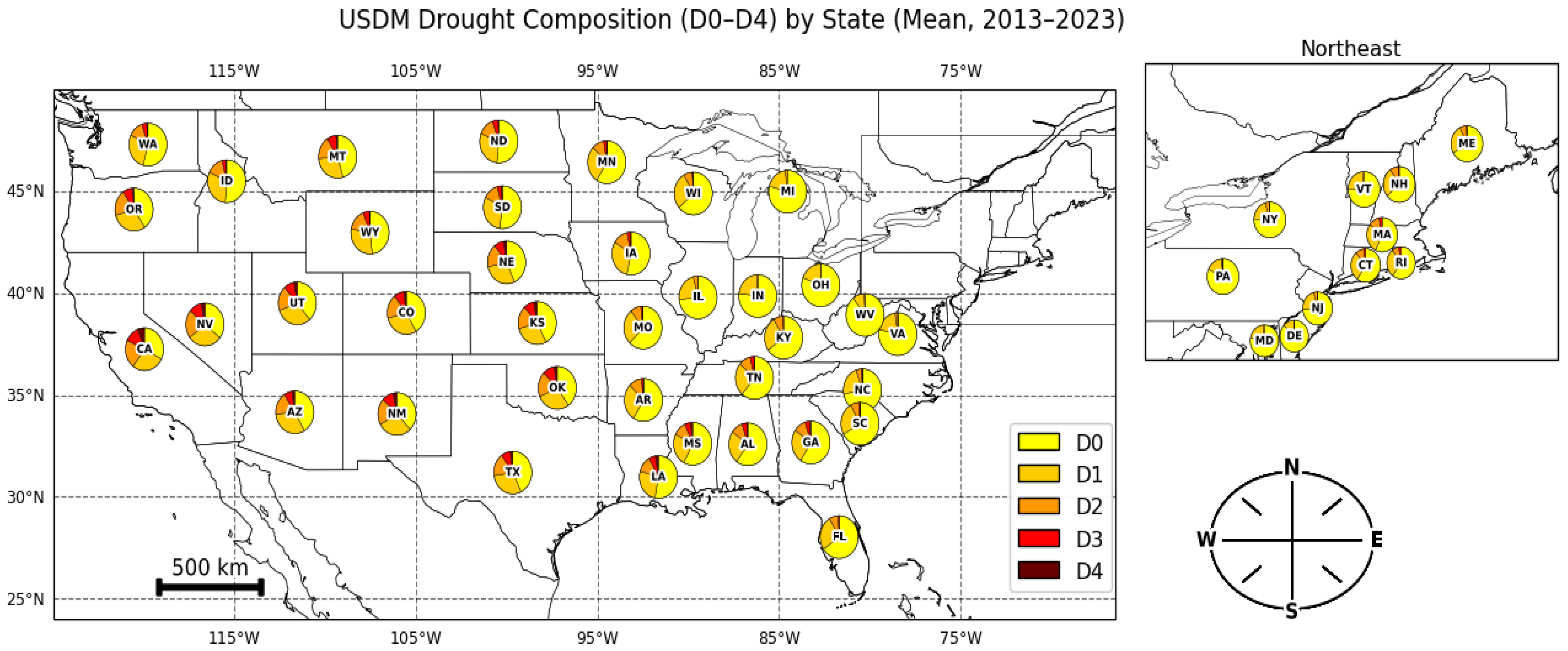
Figure 1 summarizes the spatial distribution and frequency of drought conditions across the U.S. based on average USDM data from 2013 to 2023. Drought categories range from D
0 to D
4, where D
0 represents abnormally dry conditions (yellow) and D4 denotes exceptional drought (brown). Over the study period, an average of 39%, 21%, 11%, 4%, and 1% of the U.S. land area experienced abnormally dry (D
0), moderate (D
1), severe (D
2), extreme (D
3), and exceptional (D
4) drought, respectively. These national averages, however, mask substantial regional heterogeneity.
When it comes to states, California and Texas stand out as persistent drought hotspots. In California, 71%, 58%, 46%, 26%, and 12% of the state, on average, were classified as abnormally dry, moderate, severe, extreme, and exceptional drought, respectively, during 2013–2023. In Texas, the corresponding averages were 56%, 39%, 22%, 10%, and 3%. As shown in
Figure S1, California experienced a notably higher proportion of exceptional drought (12%) compared to Texas (3%) and the U.S. average (1%), reflecting the intensity and duration of recent drought episodes in the western U.S. The lower national percentages relative to those of California and Texas arise primarily because wetter states dilute the nationwide averages.
To examine whether drought sensitivity in financial performance varies with sectoral characteristics and operational geography, we adopt a sector-representative case-study design and analyze four publicly traded firms to represent contrasting exposure pathways. American Water Works (AWK) represents water management and has direct exposure through water demand management, infrastructure operations, and regulatory environments. Chipotle Mexican Grill (CMG) represents food services with relatively strong linkages to U.S.-based agricultural inputs and domestic logistics. Starbucks (SBUX) provides a within-sector contrast due to its globally diversified sourcing operations, which may dampen sensitivity to U.S.-specific drought. Tesla (TSLA) represents industrial manufacturing with complex supply chains and indirect exposure through energy, water, and regional production constraints, while also serving as a benchmark for firms whose returns may be dominated by non-climatic drivers. Collectively, these firms span a spectrum from more domestic, water-intensive exposure (AWK; partially CMG) to more globally diversified exposure profiles (SBUX; TSLA), enabling a mechanism-based comparison of lagged drought effects rather than population-level inference.
3.2. Data Sources and Preprocessing
Weekly drought conditions were obtained from the United States Drought Monitor (USDM) and summarized using the
DSCI. Equity price data for American Water Works (AWK), Chipotle Mexican Grill (CMG), Starbucks (SBUX), and Tesla (TSLA) were compiled for the 2013–2023 study period from Nasdaq [
30], using stock prices to compute returns. We used the Friday closing of stock prices to compute returns, ensuring that the return series reflects corporate actions such as splits/dividends, if they were adjusted close and remained comparable across firms and over time. All datasets were processed using a consistent workflow to enable cross-firm comparison of estimated drought sensitivities and lag structures.
3.3. Return Construction, Temporal Alignment, and Aggregation
For each stock, we compute a weekly simple return series,
, where
is the closing price at week
t. These weekly returns and corresponding weekly
DSCI values form the basis for the initial vector autoregression (VAR) analysis (
Section 3.4).
Because the main focus of the paper is on lagged, medium-horizon relationships between drought severity and stock performance, and to reduce high-frequency noise, we subsequently aggregate the weekly data to a monthly frequency for the ARX modeling (
Section 3.5). Monthly stock returns
are computed by compounding weekly simple returns within each calendar month:
and the monthly
DSCI series is constructed by taking the last weekly
DSCI value in each month, which represents the prevailing drought conditions at month-end. This yields a monthly panel of drought conditions and compound returns for each stock that is better aligned with the multi-month to multi-year propagation of drought impacts through physical and economic systems.
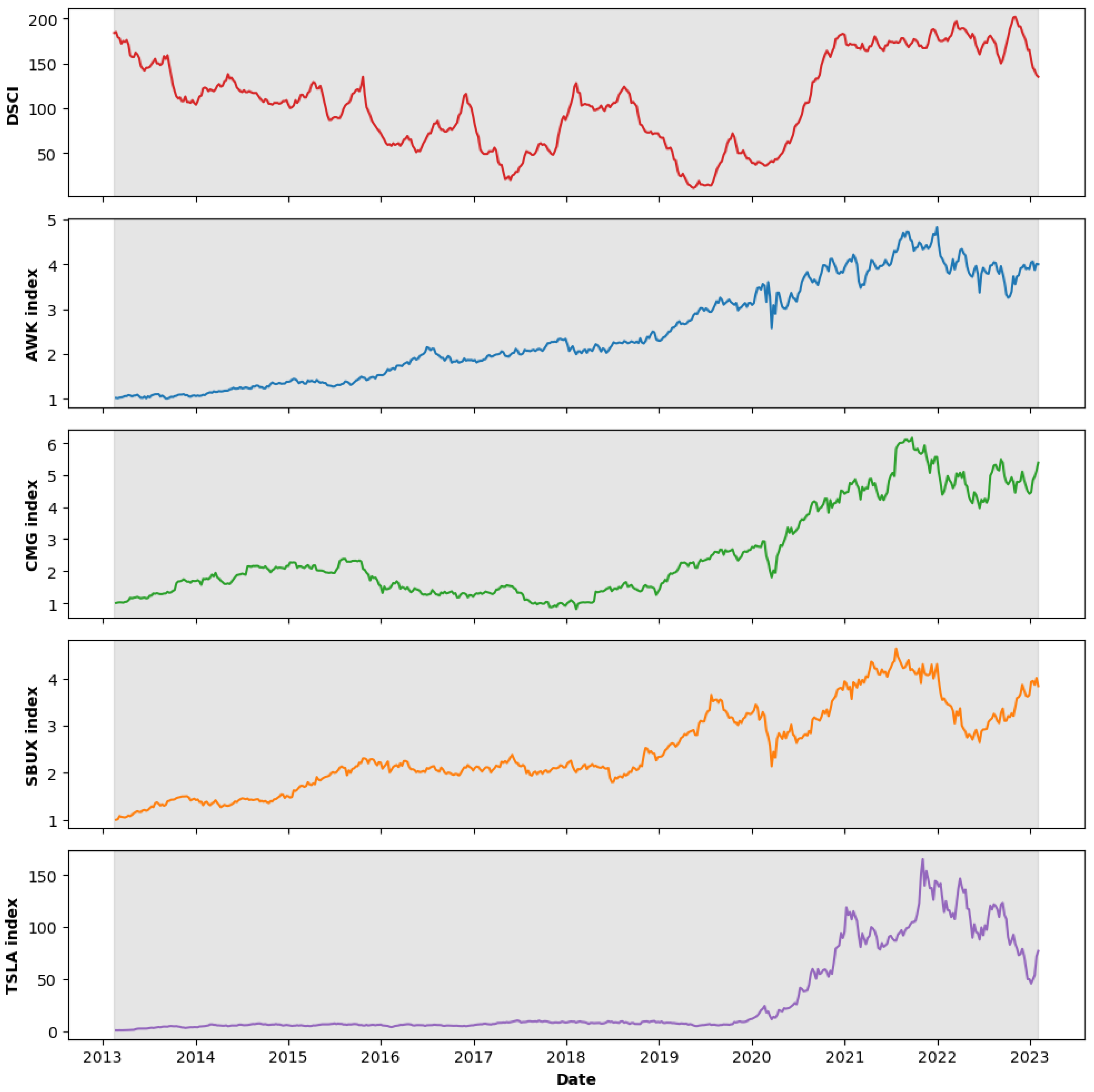
Figure 2 summarizes these aligned drought and market time series over 2013–2023, providing a descriptive baseline for the lagged return models developed in the following sections.
3.4. Preliminary VAR Modeling with Year-Lagged Drought Indices
As an exploratory step, we assessed whether a multivariate linear time-series model could detect lagged drought signals in weekly stock returns. Because drought impacts may emerge over multi-year horizons, directly fitting a high-order VAR with hundreds of weekly lags is impractical. Instead, we constructed a compact set of long-horizon drought predictors by shifting the weekly DSCI series by whole-year increments and then estimated a low-order VAR on the resulting multivariate system. This design allows the return series to depend on its own short-run dynamics while testing whether drought conditions observed one-to-six years earlier contain predictive information for current returns.
Let denote the weekly return of a given stock (e.g., ) and let denote the weekly DSCI value. For each year of lag y ∈ {1,2,3,4,5,6}, we constructed a helper series representing the DSCI value approximately y years prior to week t:
These helper series were created via shifts in the weekly DSCI time series using a 52-week year approximation. The data matrix for the VAR thus consisted of the target weekly return and the set of helpers
After ensuring a clean weekly datetime index and dropping rows with missing values induced by the long shifts, we standardized all series (zero mean, unit variance) to improve numerical stability. We then fit a VAR (1) such that , where c is a vector of intercepts, is the 7 × 7 lag-1 coefficient matrix, and is a vector of residuals. Entries in the first row of quantify the extent to which last week’s return rt−1 and last week’s shifted drought values in the return equation represent the estimated association between returns and drought states at approximately y years lag, conditional on return autocorrelation.
Prior to estimation, we aligned all series on a clean weekly datetime index, dropped observations lost to the long shifts, and standardized each series to zero mean and unit variance for numerical stability. The final 26 weeks were held out as a test set; the VAR was estimated on the remaining observations. We summarized the results in three ways: (i) the coefficients on
in the return equation; (ii) Wald/Granger tests of whether each helper series provides statistically significant predictive information for returns; and (iii) out-of-sample predictive performance, assessed via the
RMSE of the return component from multi-step forecasts over the 26-week test horizon. We also evaluated residual autocorrelation in the return equation using Ljung–Box tests (
Figure S2).
In practice, this weekly VAR specification exhibited limited predictive skill and produced unstable or weakly significant coefficients on the long-lag drought helpers. The long shifts (up to six years) substantially reduced the effective sample size, and the VAR (1) structure did not yield clear, robust patterns in how year-lagged DSCI influenced weekly returns. As a result, the VAR approach was deemed unsuitable as the primary modeling framework for this study, and we transitioned to a more parsimonious univariate ARX formulation with drought indices treated as exogenous predictors at a lower (monthly) frequency.
3.5. Non-Linear ARX Modeling Framework
Given the limitations of the VAR approach, we adopted an AR model with exogenous inputs (ARX) at a monthly time resolution, treating each stock’s return as a univariate target series driven by its own history and lagged drought conditions. This choice aligns with our main objective, to quantify whether lags and drought indices carry incremental predictive information for stock returns beyond their intrinsic AR behavior. Here is the ARX model we used:
where
denote the monthly compound return of stock
i at month
t, and let
denote the monthly
DSCI level at month-end. For each stock
i, we specify a feature vector where
enriched drought and volatility features.
3.5.1. Lag Structure and Base Features
For all stocks, we include three autoregressive lags of monthly returns, except Tesla, which had two lags capturing short-memory dynamics and momentum/reversion effects. To represent delayed drought effects at multi-year horizons, we choose stock-specific sets of exact
DSCI lags (in months), motivated by sectoral considerations and exploratory time-series diagnostics as shown in
Table 1.
For a given lag k, we construct by shifting the monthly DSCI series by k months, ensuring that each row at time t only uses information available at or before t − k. The base design matrix for stock i thus includes AR lags and DSCI lags for all . Rows with missing values induced by shifting are dropped, yielding a clean design matrix X and response vector y for each stock.
3.5.2. Enriched Features
To capture additional structure in how drought evolves and how return volatility may respond, we augmented the base design with enriched features derived from monthly DSCI series and returns, including:
- (1)
DSCI momentum and moving averages, which include 1-month and 3-month relative changes, i.e., and
- (2)
With both 6-month and 12-month moving averages (MA), where , , and a 12-month standardized anomaly such that , where is the 12-month rolling standard deviation.
- (3)
Also, return volatility proxies with absolute monthly return, 6-month rolling standard deviation of returns, and 12-month rolling standard deviation of returns.
These enriched features are computed without any future information, only based on past and contemporaneous data, and they are then aligned with the base design matrix, ensuring that the final feature set for each stock uses only information that would have been available at the time of prediction.
3.5.3. Model Classes
We estimate three classes of models for each stock i, including:
- (1)
Elastic Net ARX, where a linear regression with both and penalties is fit using a rolling time series split cross-validation scheme. This model serves as a flexible linear baseline that can perform feature selection and shrinkage.
- (2)
Ridge ARX, where a linear ARX with only regularization is fit, and the regularization strength is selected from a log-spaced grid. Ridge typically retains all features but shrinks coefficients to mitigate overfitting.
- (3)
Histogram-based Gradient Boosting Regression ARX, where a tree-based gradient boosting model is used to approximate the unknown non-linear function. We use square-error loss and moderate-depth trees with regularization to balance flexibility and overfitting risk.
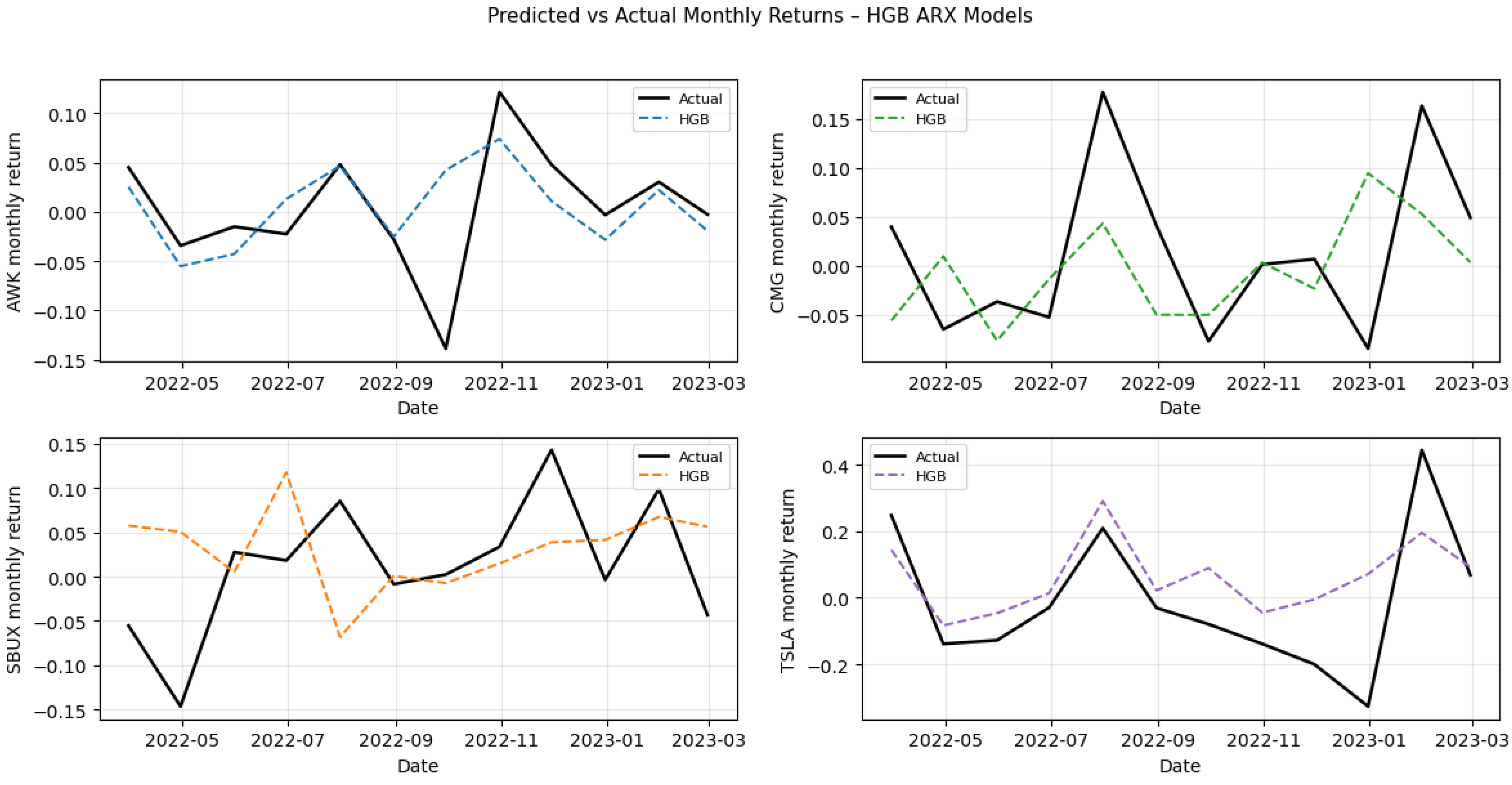
All models fit separately for each stock. The final training/testing split for the monthly ARX models holds out the most recent 12 months as a purely out-of-sample test, with the remaining months used for training and cross-validation. All analyses were conducted in Python 3.13 with VAR estimated using statsmodels and ARX models (Ridge, Elastic Net, HistogramGradientBoostingRegressor) implemented in scikit-learn; permutation importance was computed using sklearn.inspection.
3.6. Model Evaluation and Drought Feature Importance
We evaluated the ARX models along two complementary dimensions, including error magnitude and directional accuracy. Two complementary error metrics were used to evaluate model performance on the test set, including:
- (1)
Root Mean Squared Error, , where and are the observed and predicted monthly returns, respectively. RMSE measures the typical magnitude of forecast errors.
- (2)
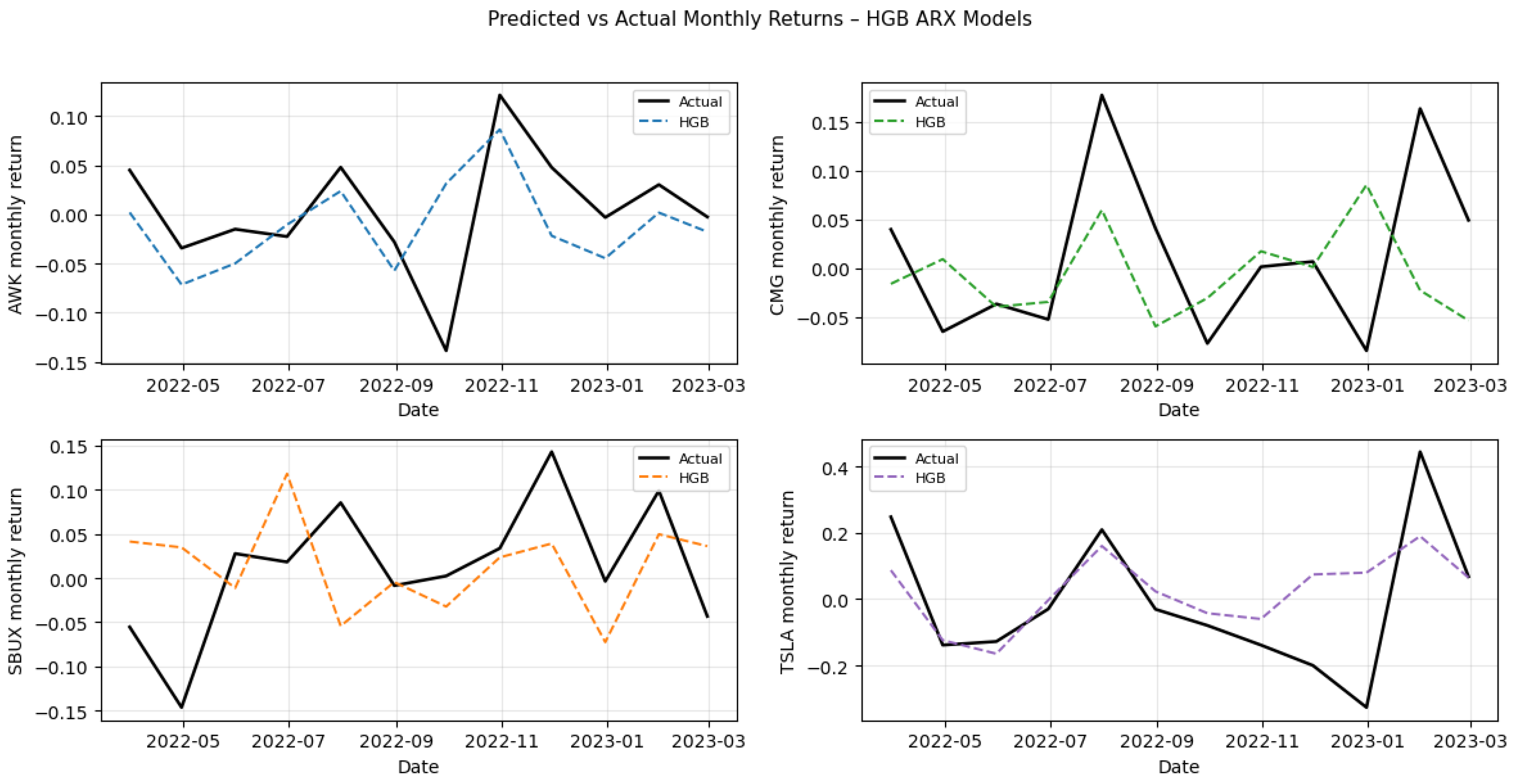
Directional Accuracy, , which measures the fraction of months in which the model correctly predicts whether the return is positive or negative. Directional accuracy is particularly relevant for investment decisions, where the sign of the return often matters at least as much as its exact magnitude.
Comparing RMSE and DA across Elastic Net, Ridge, and HGB models allows us to quantify the extent to which non-linear structure improves skill over purely linear ARX formulations.
3.7. Permutation-Based Importance of Drought Lags
To assess how lagged drought conditions contribute to predictive performance beyond autoregressive and volatility effects, we compute permutation importance for DSCI-related features in the fitted HGB models. For each stock, we proceed on the test set as follows:
Record the baseline prediction error and directional accuracy using the original (unshuffled) test features.
For each DSCI lag feature (and, where of interest, selected enriched DSCI features), randomly permute its values across the test observations, holding all features fixed.
Recompute predictions and the associated error metrics.
Define the importance of the feature as the mean degradation in performance relative to the baseline.
Features whose randomization substantially worsens model performance are interpreted as carrying meaningful predictive information, whereas features with near-zero or negative permutation importance do not materially influence the model’s forecasts and may simply represent noise or overfitting.
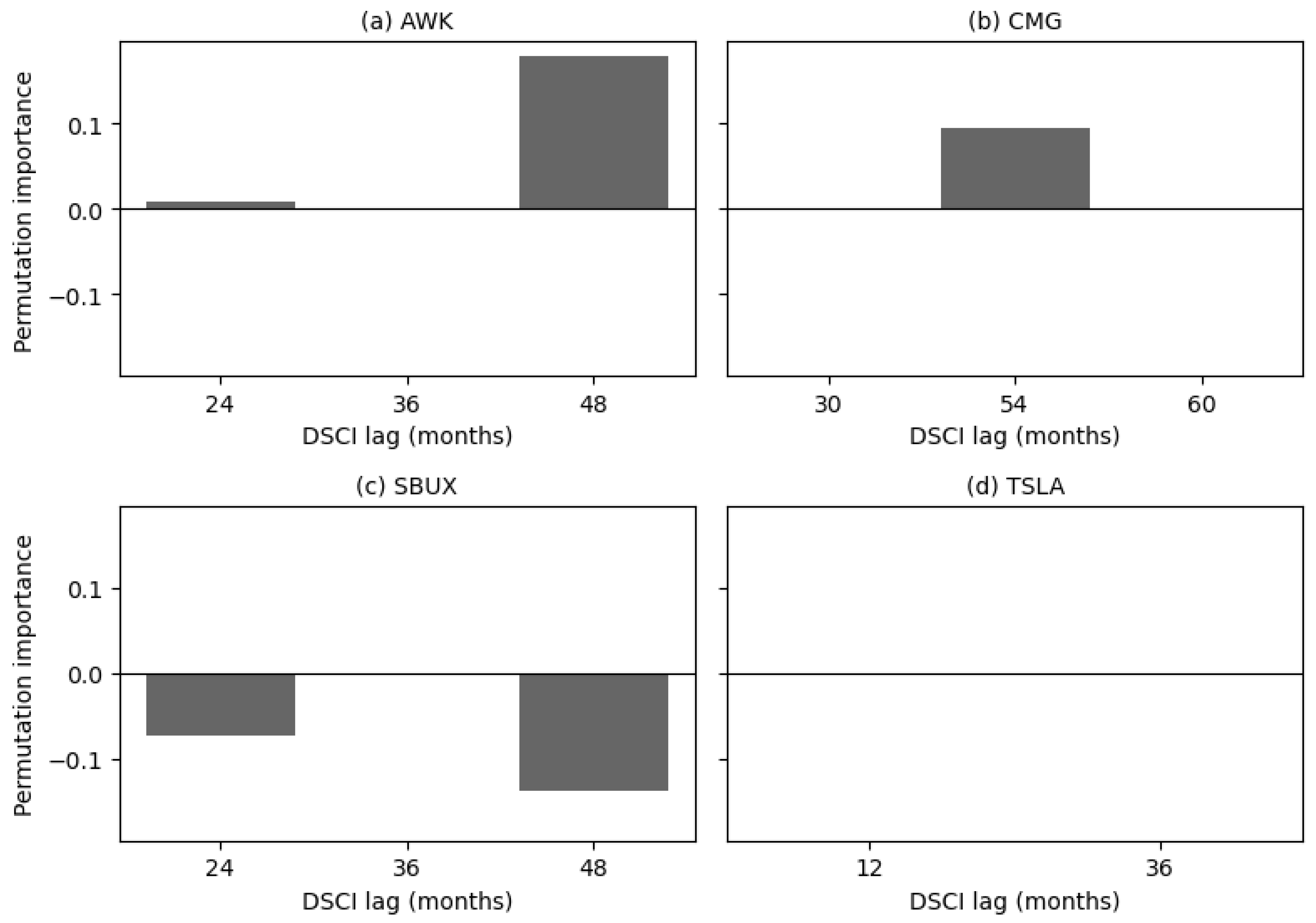
By applying this procedure specifically to the DSCI lag features, we obtain a stock-level ranking of drought lags, highlighting which horizons (e.g., 12, 24, 36, 48, 54, or 60 months) matter most for predicting returns. These rankings, combined with the overall model performance metrics, underpin the sectoral interpretations presented in the Results and Discussion sections, particularly the finding that drought at a roughly 4-year lag plays a meaningful role for water utilities such as AWK, whereas drought carries little incremental predictive information for globally diversified firms such as SBUX and TSLA.
5. Discussion
5.1. Sector-Specific Vulnerability and Lag Structure
The strong and delayed drought signal for AWK is intuitive from a sectoral perspective. Water utilities face increased operating costs and capital expenditure during protracted droughts (e.g., securing alternative sources, investing in infrastructure hardening), while regulatory processes can lag physical impacts by several years. Consequently, financial consequences, reflected in earnings, rate cases, and investor expectations, may materialize with multi-year delays, consistent with the dominant 4-year lag in AWK’s HGB permutation importance.
In the food services sector, heterogeneous patterns reflect differences in business models and supply chains. CMG’s emphasis on fresh, often U.S.-sourced ingredients suggests a more direct link to domestic drought conditions, especially for drought-sensitive crops and livestock. Moisture deficits can drive input price volatility, contract renegotiations, and menu price adjustments over multi-year horizons, potentially aligning with the 54-month lag signal observed in the model. However, the limited sample size and weaker overall predictive performance warrant caution in interpreting this result as determinative. Within the food services sector, inference is based on two case study firms and is therefore illustrative rather than population-level; future work should expand to a larger panel of restaurant/retail firms and sector portfolios to evaluate robustness and generalizability.
SBUX, by contrast, sources key commodities, such as coffee, from multiple global regions. While drought in any given region can be severe, global diversification and hedging strategies can attenuate the impact of U.S.-specific drought on corporate earnings and stock returns. The near-zero or negative permutation importance of DSCI lags for SBUX is therefore consistent with expectations.
TSLA’s case underscores that even in climate-adjacent sectors, stock price dynamics can be dominated by non-climatic drivers, including technology adoption curves, policy changes (e.g., electric vehicle incentives), competition, and broader equity market conditions. For such firms, internal growth narratives and risk–return perceptions can easily overshadow any second-order influences from drought during the relatively short 10-year sample.
5.2. Methodological Contributions and Limitations
Methodologically, this study shows how non-linear ARX models based on gradient boosting can integrate a climate index (DSCI) with financial return series in a leak-safe, time-series cross-validated workflow. By evaluating out-of-sample performance (RMSE and directional accuracy) and using permutation importance, the approach isolates the incremental contribution of multi-year drought lags beyond autoregressive return dynamics and provides stock-specific diagnostics of whether drought contains meaningful predictive information, and at which lag horizons. At the same time, several limitations should be acknowledged. First, the sample size is modest (on the order of 60–80 monthly observations per firm with a 12-month holdout), which can constrain non-linearity and make results sensitive to the selected lag window and training period despite regularization and time-aware validation. Relatedly, the analysis uses a small, sector-representative case-study design (four firms), and the food services sector is represented by only two firms; therefore, inference for that sector is illustrative rather than population-level. Second, DSCI is a national aggregate, whereas firms differ substantially in the geography of operations and supply chains; drought measures tailored to firm-specific footprints or key sourcing/production regions may yield stronger and more interpretable signals. Third, the models intentionally prioritize drought and autoregressive structure, and therefore omit potentially important macro-financial controls (such as interest rates, inflation, commodity prices, and volatility), which could help disentangle drought effects from broader economic conditions and reduce spurious associations. Finally, the analysis focuses on drought as a single hazard, even though compound stresses, such as drought combined with heat extremes or wildfire, may drive financial impacts in some sectors. Accordingly, the results should be interpreted as evidence of delayed sector- and firm-specific associations between drought and returns rather than as definitive causal effects.
5.3. Implications for Climate-Aware Investment and Policy
Despite the above caveats, the findings have several implications; for investors and risk managers, the strong drought signal in AWK highlights that water utilities and similar infrastructure-intensive firms may face non-trivial climate-related financial risk over multi-year horizons, even in regulated sectors. Portfolio construction and stress testing frameworks should incorporate such lagged climate exposures. For corporate managers, quantitative evidence of drought–return linkages can motivate investments in water efficiency, diversified sourcing, and resilience planning, particularly in firms heavily dependent on U.S. agricultural inputs or water availability. For policymakers and regulators, sector-specific lag structures underscore the need for anticipatory regulatory approaches—for instance, integrating drought scenarios and hydroclimatic indices such as HADI into long-term planning, rate design, and disclosure requirements.
Future work could extend this framework by incorporating HADI and other multi-variable drought indicators, expanding to cross-sectional models across many firms, and testing robustness across different time periods and market regimes.
6. Conclusions
This study develops and applies a non-linear ARX modeling framework to quantify the lagged effects of U.S. drought severity, measured by DSCI, on monthly stock returns for four sector-representative firms. The results show that drought effects are strongly sector- and firm-specific and, when present, can emerge only after multi-year delays. In this study, American Water Works (AWK) exhibits a clear and robust sensitivity to drought at a 4-year lag, with DSCI_lag48 the dominant feature of importance in the non-linear HGB model, and yields high directional accuracy (83.3%). By contrast, the food services sector displays heterogeneous exposure where CMG shows suggestive long-lag relationships that vary across model specifications, and where SBUX exhibits negligible incremental information from drought lags, consistent with greater geographic and supply chain diversification. For industrial manufacturing, TSLA is largely driven by non-drought factors, and although the HGB model improves the predictive performance, drought-related features contribute to measurable importance, implying that internal growth dynamics and broader market conditions dominate drought effects over the study period. Overall, these findings indicate that drought can exert delayed but economically meaningful impacts on certain sectors, particularly water utilities, and that such impacts can be detected and quantified using flexible non-linear ARX methods that isolate drought indicators. For instance, extending this modeling framework to incorporate advanced drought indices like HADI, which capture compound hydroclimatic stress, thereby strengthening climate-aware financial risk assessment and improving the interpretability and generalizability of drought-market linkages.




 ,
,