Article

Selenium Enrichment Enhances the Quality and Shelf Life of Basil Leaves


by
Martina Puccinelli
1,*,
Beatrice Pezzarossa
2,*,
Irene Rosellini
2 and
Fernando Malorgio
1,3
1
Department of Agriculture, Food and Environment, University of Pisa, 56124 Pisa, Italy
2
Research Institute on Terrestrial Ecosystems, CNR, 56124 Pisa, Italy
3
Interdepartmental Research Center “Nutraceuticals and Food for Health”, University of Pisa, 56124 Pisa, Italy
*
Authors to whom correspondence should be addressed.
Plants 2020, 9(6), 801; https://doi.org/10.3390/plants9060801
Submission received: 18 May 2020 / Revised: 23 June 2020 / Accepted: 24 June 2020 / Published: 26 June 2020

Abstract

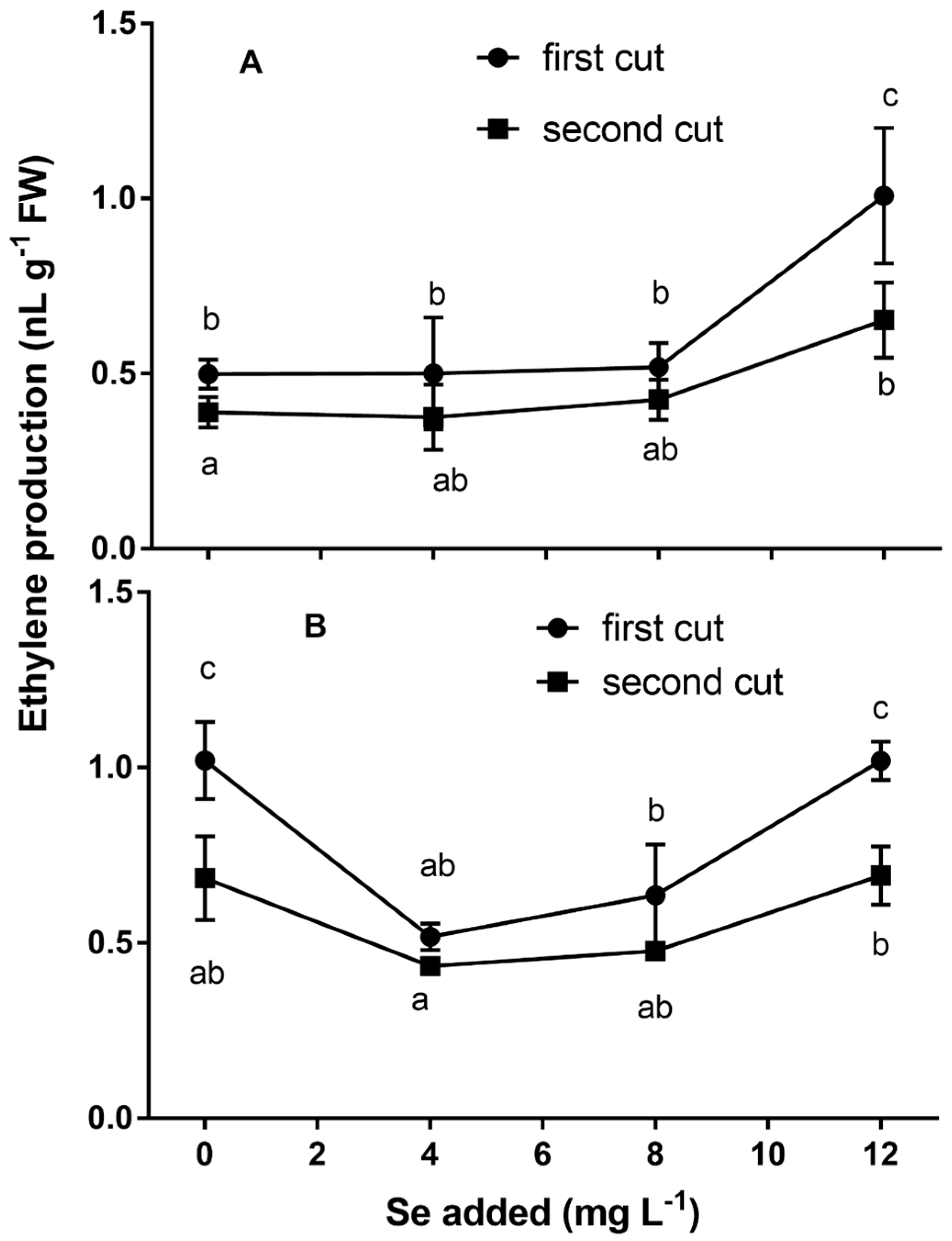
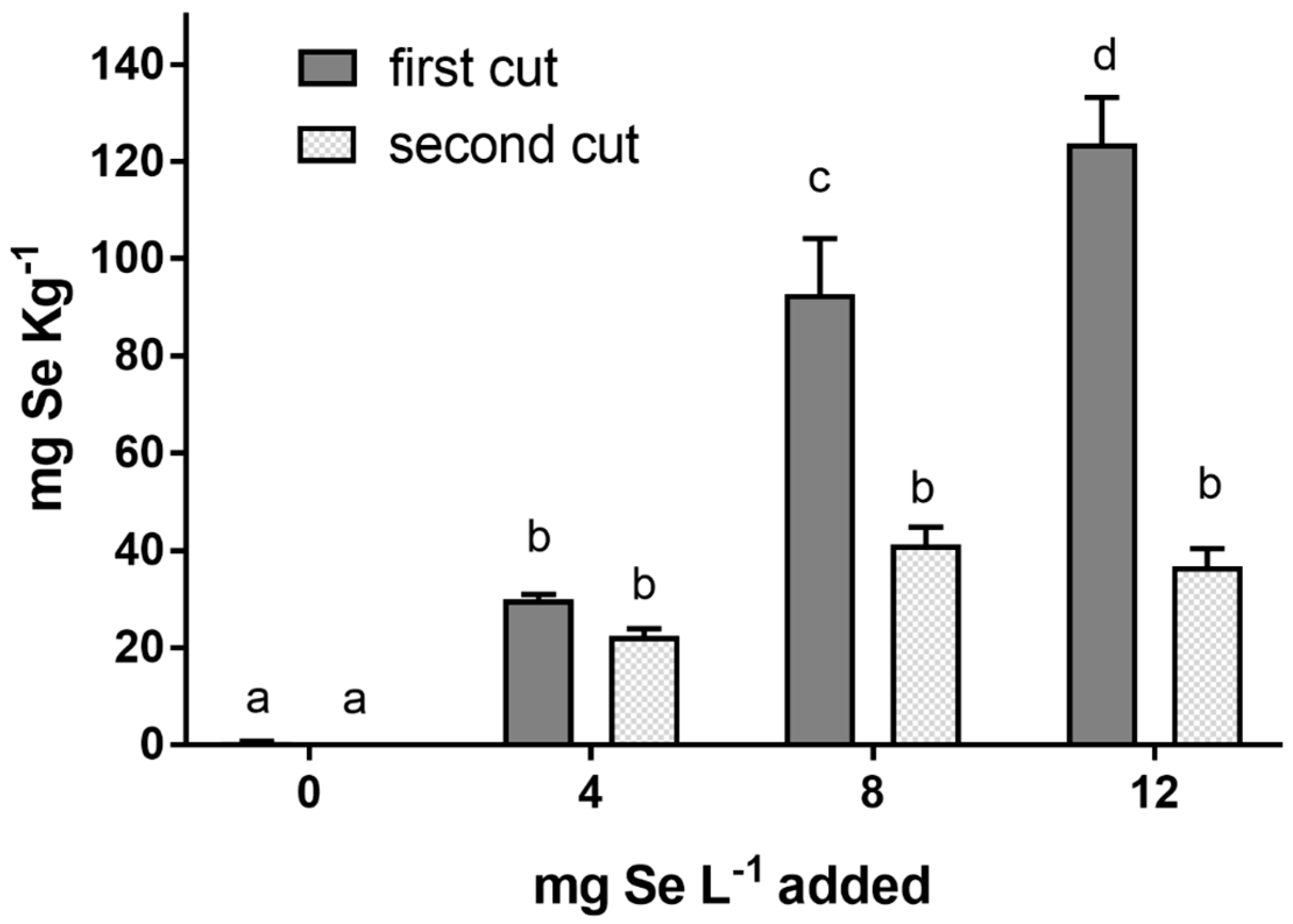
The biofortification of leafy vegetables with selenium (Se) is a good way to increase human dietary Se intake. In addition, selenium delays plant senescence by enhancing the antioxidant capacity of plant tissues, decreasing postharvest losses. We investigated the effects of selenium addition on the production and quality of sweet basil (Ocimum basilicum) leaves of two harvesting phases, hereafter referred to as cuts, during the crop cycle. Plants were hydroponically grown and treated with 0 (control), 4, 8 and 12 mg Se L−1 as selenate. To evaluate the growth, nutritional value and quality of the basil leaves, selected qualitative parameters were determined at harvest and after five days of storage. Application of Se at varying rates (4, 8 and 12 mg L−1) was associated with an increased leaf selenium concentration in the first, but not the second cut. The application of Se significantly affected the antioxidant capacity as well as the total phenol and rosmarinic acid contents at harvest. The reduction in ethylene production observed in the plants at 4 mg Se L−1 after five days of storage suggests that this Se treatment could be used to prolong and enhance the shelf-life of basil. The daily consumption of 10 g of Se-enriched basil leaves, which, as an example, are contained in a single portion of Italian pesto sauce, would also satisfy the recommended selenium supplementation in humans.
Keywords: biofortification; Ocimum basilicum; hydroponic cultivation; antioxidant capacity; ethylene production biofortification; Ocimum basilicum; hydroponic cultivation; antioxidant capacity; ethylene production