1. Introduction
Strawberry (
Fragaria ×
ananassa Duch.) belongs to the perennial herb of the Rosaceae family. Its berries are bright in color, soft and juicy, sweet and sour, and rich in aroma, protein, organic acids and essential minerals and other nutrients. Known as the “Queen of Fruits”, it is an edible plant with both horticultural and ornamental elements, and is well received by consumers [
1]. Strawberry is a typical non-climacteric fruit. It has a high water content, but is fragile and susceptible to environmental factors. It is susceptible to aging and rot postharvest, and has a short storage period [
2,
3]. Fruit maturation and aging is a complex and orderly biochemical process. Not only the color, but the texture, aroma, flavor and other metabolisms also will change postharvest. Tissue appearance traits are also highly coordinated and controlled by their inherent genes [
4,
5,
6,
7].
Triacontanol (TA) is a long-chain fatty alcohol composed of 30 carbon atoms. The chemical name is triacontanol-1 or n-triacontanol, referred to as triacontanol or TA or TRIA, also known as benzyl alcohol. Its chemical formula is: CH
3 (CH
2)
28CH
2OH. In 1933, Chibnall and others first isolated TA from alfalfa and regarded it as the main component of alfalfa leaf wax. Afterwards, TA was extracted from many plant waxes and insect waxes, and artificially synthesized finally. But its effect on plants was not known, but just a chemical agent [
8]. In 1975, Ries discovered that TA has certain physiological activities. After a series of experiments, it was found that TA has an effect of increasing yields of corn, rice, wheat, tomato, carrot, cucumber, lettuce, soybean, etc. In 1977, Ries et al. announced that TA was a new naturally plant growth regulator [
9]. Ries’ discovery has aroused great interest and attention of other scholars in many countries. Studies have shown that TA is a broad-spectrum plant growth regulator [
10]. TA can increase the activities of nitrate reductase, amylase, peroxide isoenzyme [
11], promote carbon-nitrogen metabolism, and increase the carbon-nitrogen ratio and the storage and accumulation of ATP to increase production [
12]. TA can promote the absorption of water and mineral elements by plants, as well as significantly increase the content of chlorophyll and the net photosynthetic rate of leaves, promote the flow of more photosynthetic products to crop seeds and fruits, and accelerate the transport of organic substance stored in the stem to the grains. It can regulate the transport, distribution and accumulation of photosynthetic products [
13,
14]. Many studies have shown that TA can also regulate the plant’s resistance to abiotic stress, such as water stress, salt stress, drought and high temperature stress [
15,
16,
17,
18]. In addition, TA can delay the senescence of rice leaves, cut tulips, and improve freshness. Its long carbon chain structure acts easily on the cell membrane, changes the composition and structure of the cell membrane, promotes material movement, accelerates plant growth, and delays aging [
19,
20,
21]. TA has been extensively and intensively studied in regulating plant growth and development and improving stress resistance, but there are few reports on its regulation of fruit senescence.
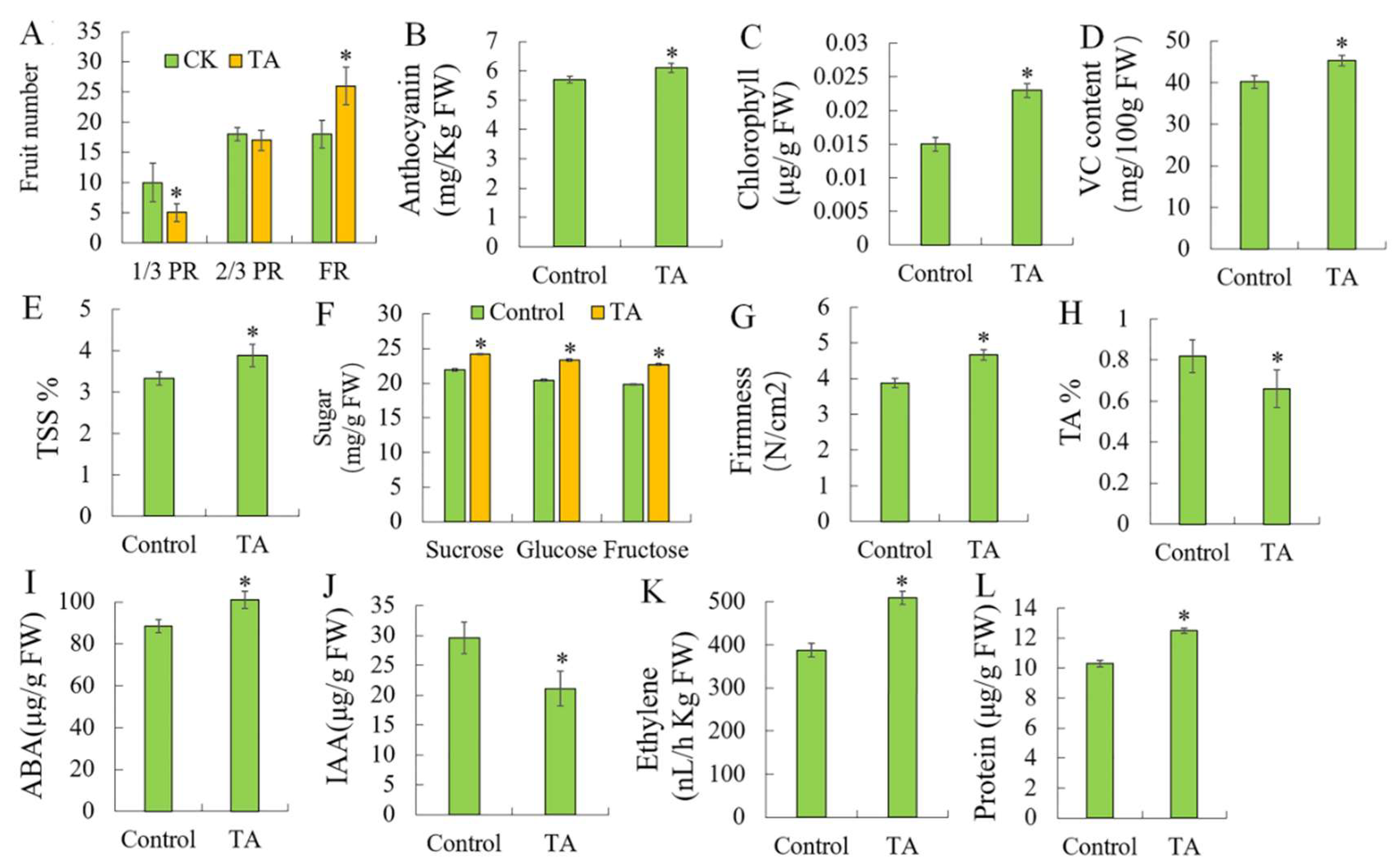
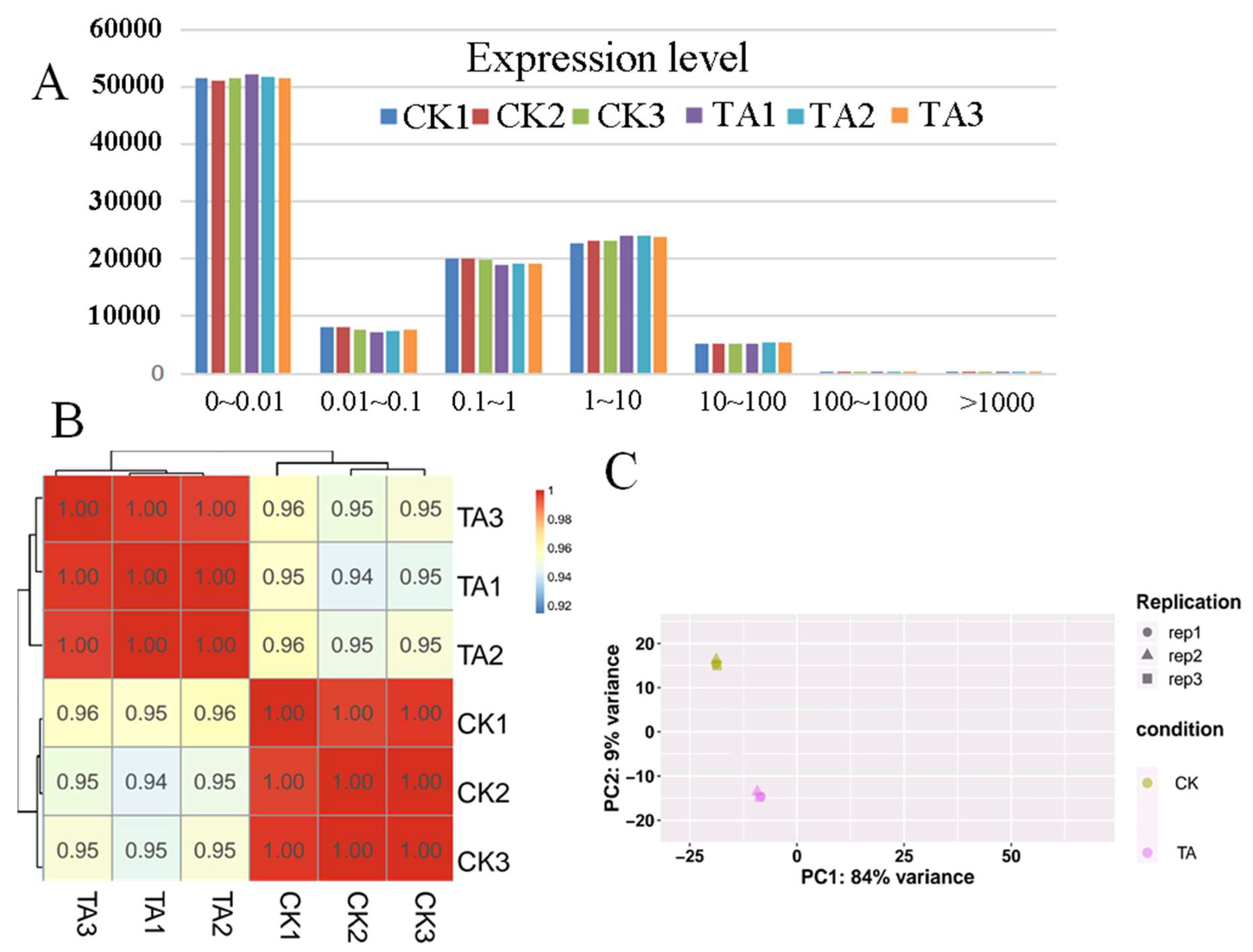
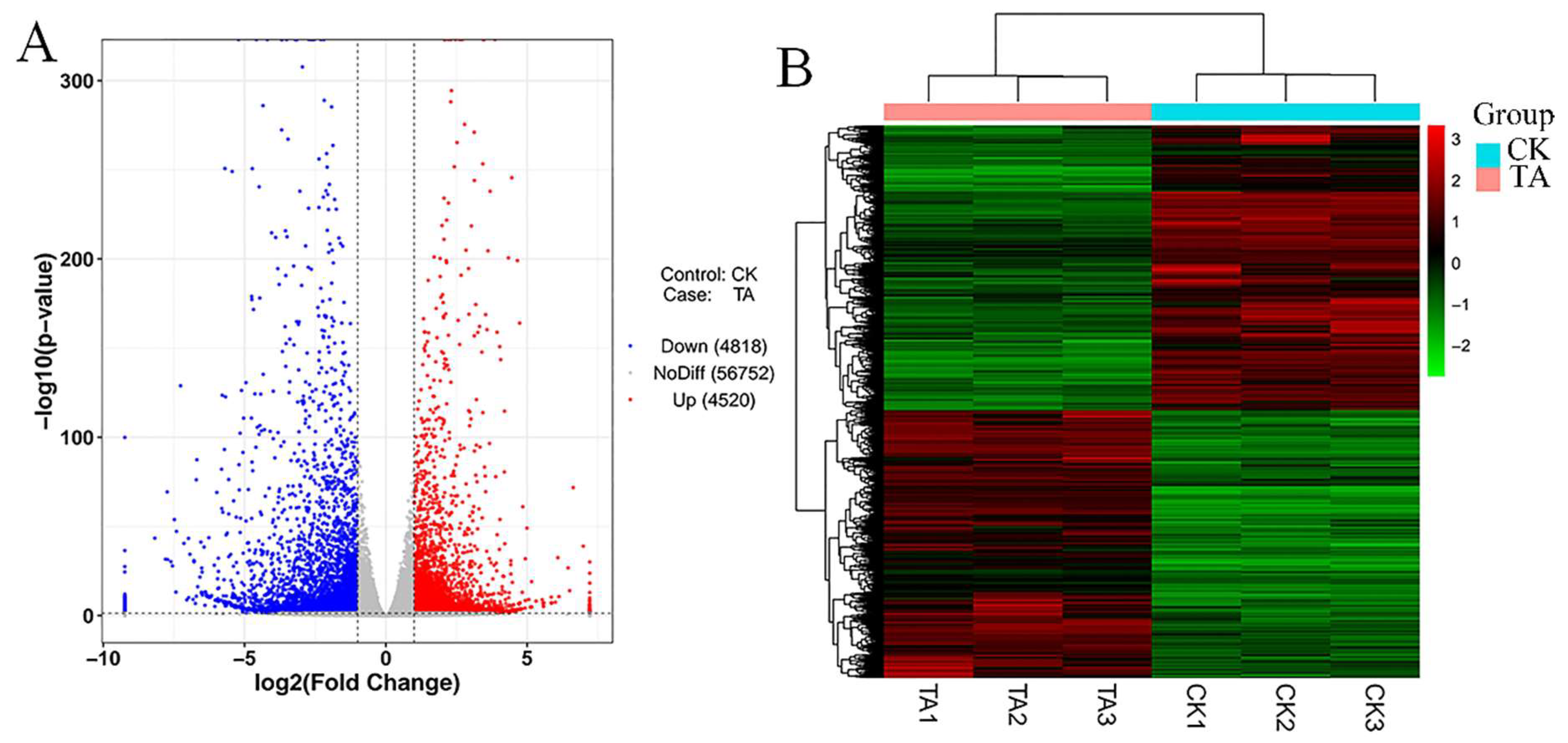
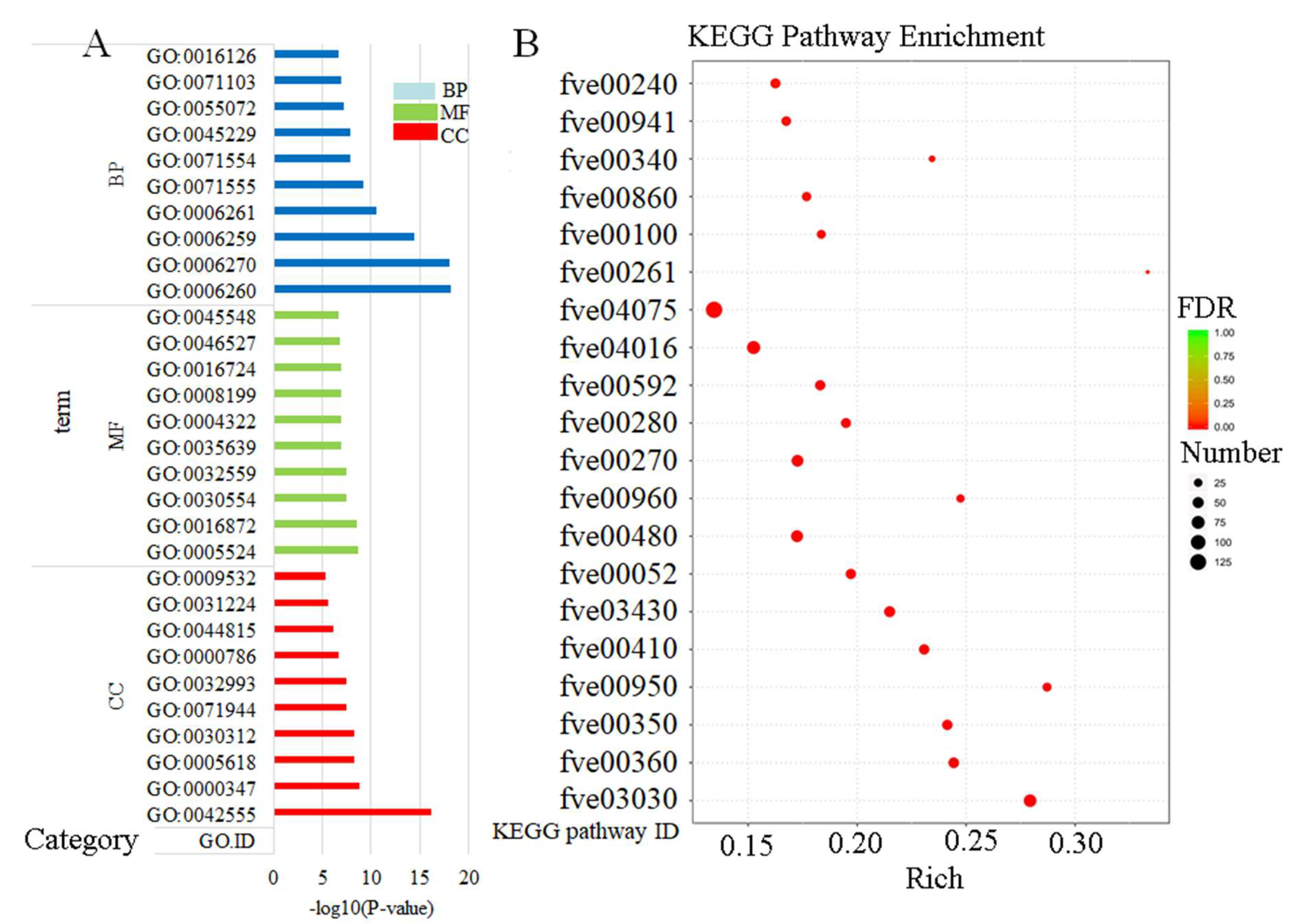
In order to know the effect of TA on strawberry fruit development and postharvest storage, we analyzed the physiological index changes after TA treatment on the strawberry plant, and molecular changes after TA treatment on the initial ripening (IR, 16 days after flowering) strawberry fruit senescence using RNA-sequencing. We performed transcriptome sequencing on octaploid strawberries and obtained high-quality data. In total, we identified a number of differentially expressed genes (DEGs), performed gene ontology (GO) and Kyoto Encyclopedia of Genes and Genomes (KEGG) functional annotations, and analyzed biological pathways affected by TA. The genetic information and molecular mechanism provided by this study will help to understand the effect of TA on strawberry senescence, and have guiding significance for strawberry storage and preservation.
3. Discussion
Fruit senescence is a complex and orderly biochemical process, which is regulated by many factors, such as hormones, antioxidant enzymes, and softening enzymes.
The accumulation of reactive oxygen species is an important factor to promote strawberry fruit senescence [
22,
23]. As the fruit matures and senesces, superoxide anion radical (O
2−) is produced in the metabolic process, which causes lipid peroxidation and produces MDA accumulation in cells. It destroys the structure and function of the membrane, causes electron leakage, and increases the rate of active oxygen radicals, which further accelerates the senescence of the fruit [
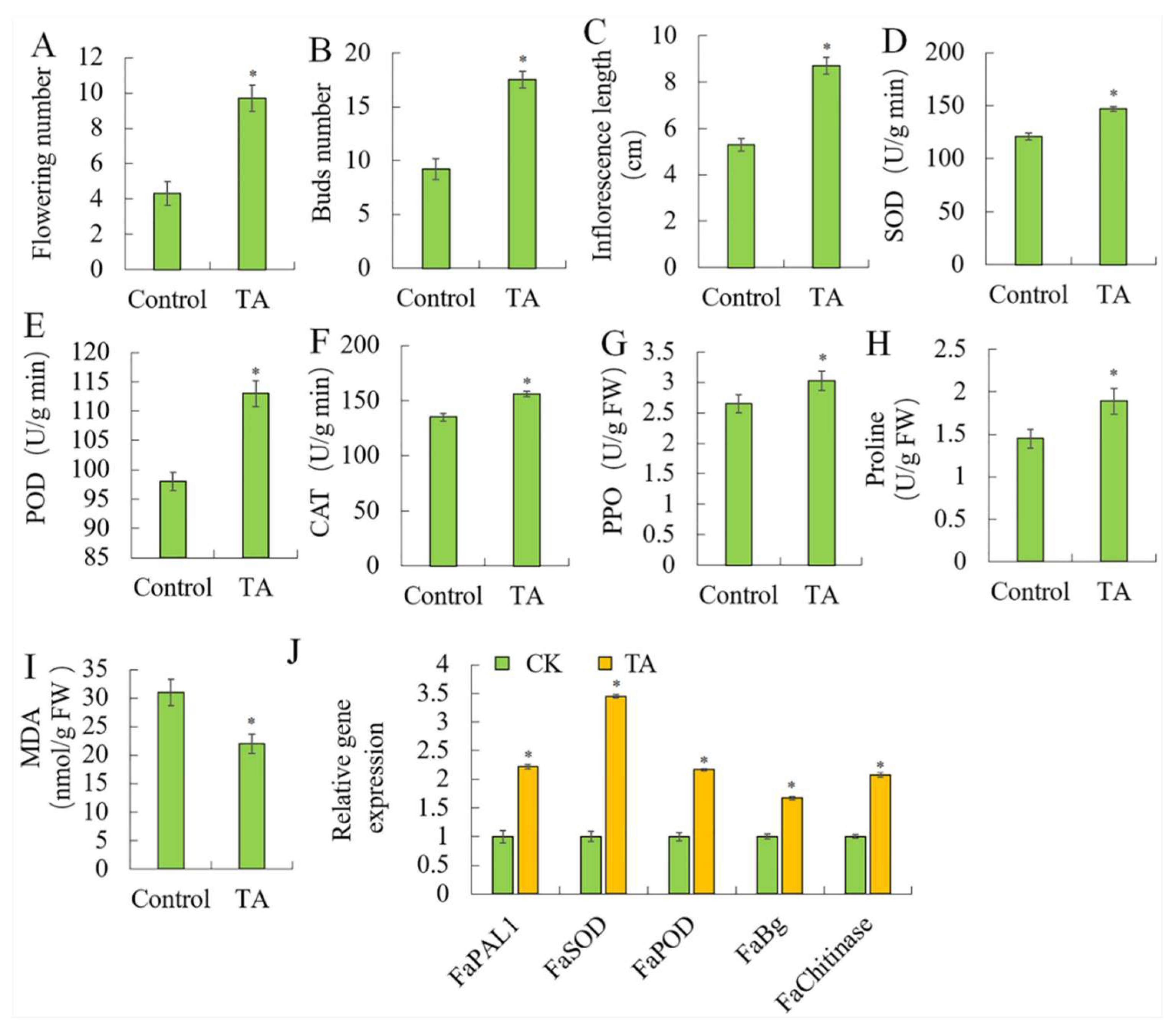
32]. SOD is an important cytoprotective enzyme that scavenges oxygen free radicals in plants [
33]. SOD converts harmful superoxide free radicals into hydrogen peroxide. CAT and peroxidase POD decompose hydrogen peroxide into completely harmless water [
34]. PPO is related to the browning of fruits and crops. Reducing the content of PPO in fruits can prevent fruit browning and maintain the freshness of fruits [
35,
36]. TA treatment increased the activity of SOD, CAT and POD, inhibited the activity of PPO, reduced the content of MDA, increased the resistance of the fruit to oxidative stress through synergy, and delayed the senescence of the fruit. This study also found that among the up-regulated SOD genes, one gene was Cu/Zn-SOD and four were four genes Fe-SOD. Recent studies have shown that Cu/Zn SOD may be involved in plant resistance to abiotic stresses such as drought, salinity, aluminum ions, and low temperature [
37,
38,
39,
40]. Fe-SOD is closely related to plant disease resistance [
41], and PPO can also Increase plant resistance to pathogens [
36]. Therefore, we think that TA may also have the effect of enhancing the resistance and resistance of plants.
Strawberry fruit is low in firmness, soft and fragile, and perishable. Fruit firmness is important for strawberry quality and postharvest physiology. The strawberry’s firmness decreases rapidly during storage. The softening of the fruit involves complex physiological and biochemical processes, the degradation of cell wall materials and the destruction of the pectin-cellulose-hemicellulose structure are the beginning of cell separation and fruit softening [
42]. Cellulase can promote the degradation of cellulose and thus promote the lysis of the cell wall, and promote the ripening and subsequent softening and decay of strawberries [
43,
44]. A-L-arabinofuranosidase (α-Af) belongs to sugar A family of hydrolase can hydrolyze non-reducing furan arabinose residues, and pectin side chain arabinose residues have an important effect on the stability of cell wall polysaccharides or cell wall structures. α-Af activity is of great significance in fruit ripening and softening [
45,
46,
47,
48]. Polygalacturonase, pectinesterase, and beta-galactosidase are the key enzymes for pectin solubilization [
49]. Expansin (EXP) also has the effect of relaxing cell walls. In our study, TA treatment inhibited the activities of Cx, α-Af, PE, and EXP, and promoted the activities of PG, β-Gal, and XET. More down-regulated genes indicated that TA may delay the softening process of strawberry fruits, thereby delaying fruit senescence.
Color change is also an important feature of aging. Chlorophyll, carotenoids and anthocyanins regulate strawberry color. Strawberry color is mainly affected by anthocyanins [
26]. In our study, TA treatment promoted the biosynthesis and degradation of chlorophyll, and the effect on synthesis may be greater than that on degradation. Because more genes in the carotenoid synthesis pathway, including the rate-limiting enzyme PSY, were down-regulated after TA treatment, we believe that TA treatment may inhibit carotenoid biosynthesis. Anthocyanins are ubiquitous in plants, a large number of colors result from the anthocyanin synthesis [
50,
51]. Anthocyanin biosynthesis is one of the branches of the flavonoid biosynthesis pathway [
52,
53]. In the anthocyanin biosynthetic pathway, phenylalanine ammonia-lyase (PAL) catalyzes phenylalanine to form cinnamic acid. Cinnamic acid is catalyzed to form coumaryl-CoA by cinnamic acid 4-hydroxylase (C4H) and 4-coumarate CoA ligase (4CL). Coumaryl-CoA and malonyl-CoA are catalyzed by chalcone synthase (CHS) to produce tetrahydroxychalcone. Tetrahydroxychalcone was catalysed by chalcone isomerase (chi), Flavanone 3-hydroxylase (F3H), flavanone 3’-hydroxylase (F3H) and flavanone 3’5’-hydroxylase (F3’5’h) to produce dihydroquercetin and dihydromyricetin. They are catalyzed by dihydroflavanone-4-reductase (DFR) to produce colorless anthocyanin. Colorless anthocyanin was synthesized by anthocyanidin synthase (ANS) [
26,
54,
55]. ANS and UDP-glucose flavonoid 3-O-glucosyltransferase (UFGT) are responsible for the last step in the anthocyanin biosynthesis process. They work synergistically in the cytoplasm and vacuoles to convert unstable anthocyanins into stable anthocyanins [
56]. In our study, the genes of key enzymes in anthocyanin biosynthesis, PAL, CHS, CHI, F3H, DFR, and ANS, were down-regulated and their activity decreased. UFGT down-regulated genes were more than up-regulated genes, and their activity was also decreased. Apparently, TA inhibited anthocyanin synthesis. We believe that TA retards the change of strawberry fruit color by promoting chlorophyll synthesis and inhibiting carotenoid and anthocyanin synthesis, thereby delaying fruit senescence.
Plant hormones regulate strawberry senescence. Ethylene is one of the most studied plant hormones that regulates mature aging. As a starter of mature aging, ethylene affects the transcription and translation of many related genes [
7,
57,
58,
59,
60,
61]. More and more studies show that ethylene plays an important role in regulating the maturity and senescence of non-jumping fruits [
62]. Studies have shown that treating strawberries with 1-methylcyclopropene (1-MCP), an ethylene inhibitor, can reduce strawberry respiration rate, maintain the firmness and color of strawberry fruits after harvest.
Inhibiting the activity of phenylalnine ammonialyase (PAL) enzyme, increasing the activity of SOD and CAT, slowing the increase of anthocyanin and phenol content, and delaying the aging process [
63,
64,
65,
66]. This is very similar to our results. In our study, after TA treatment, the activity of ACO and ACS, the rate-limiting enzymes of ethylene biosynthesis, decreased, and the activity of most enzymes in ethylene signal transduction (ETR, SIMKK, EIN3, EBF1/2, and ERF1/2) were also reduced, and the results showed that TA treatment could inhibit ethylene biosynthesis and signal transduction, which may explain why TA delays the senescence of strawberry fruits. During the ripening and aging of strawberry fruits, the production of abscisic acid increased rapidly, and treatment with ABA increased fruit respiration and cellulase activity. ABA plays an important role in strawberry ripening and aging [
67,
68,
69]. After TA treatment, the activities of key enzymes SDR and AAO3 in ABA biosynthesis increased. In ABA signal transduction, PYR/PYL and ABF were both down-regulated, and PP2C, a negative regulator of signal transduction, was up-regulated. Although TA promoted the synthesis of abscisic acid, it inhibited its signal transduction, which may be one of the important reasons for delaying strawberry senescence by TA treatment. Auxin can promote the early expansion of strawberry fruits. Auxin may delay the fruit maturation by activating the auxin signal and down-regulating the expression of cell wall degradation, anthocyanin synthesis and sucrose synthesis [
70,
71,
72]. After TA treatment, during auxin signal transduction, most positive genes including auxin-responsive protein IAA (AUX/IAA) were up-regulated, and transport inhibitor response 1 (TIR1) was down-regulated. This indicates that TA treatment promoted IAA synthesis and auxin signal transduction, which may explain why TA retards strawberry senescence. In addition, GA, JA, SA, BR, and CTK signal transduction were also affected by TA.
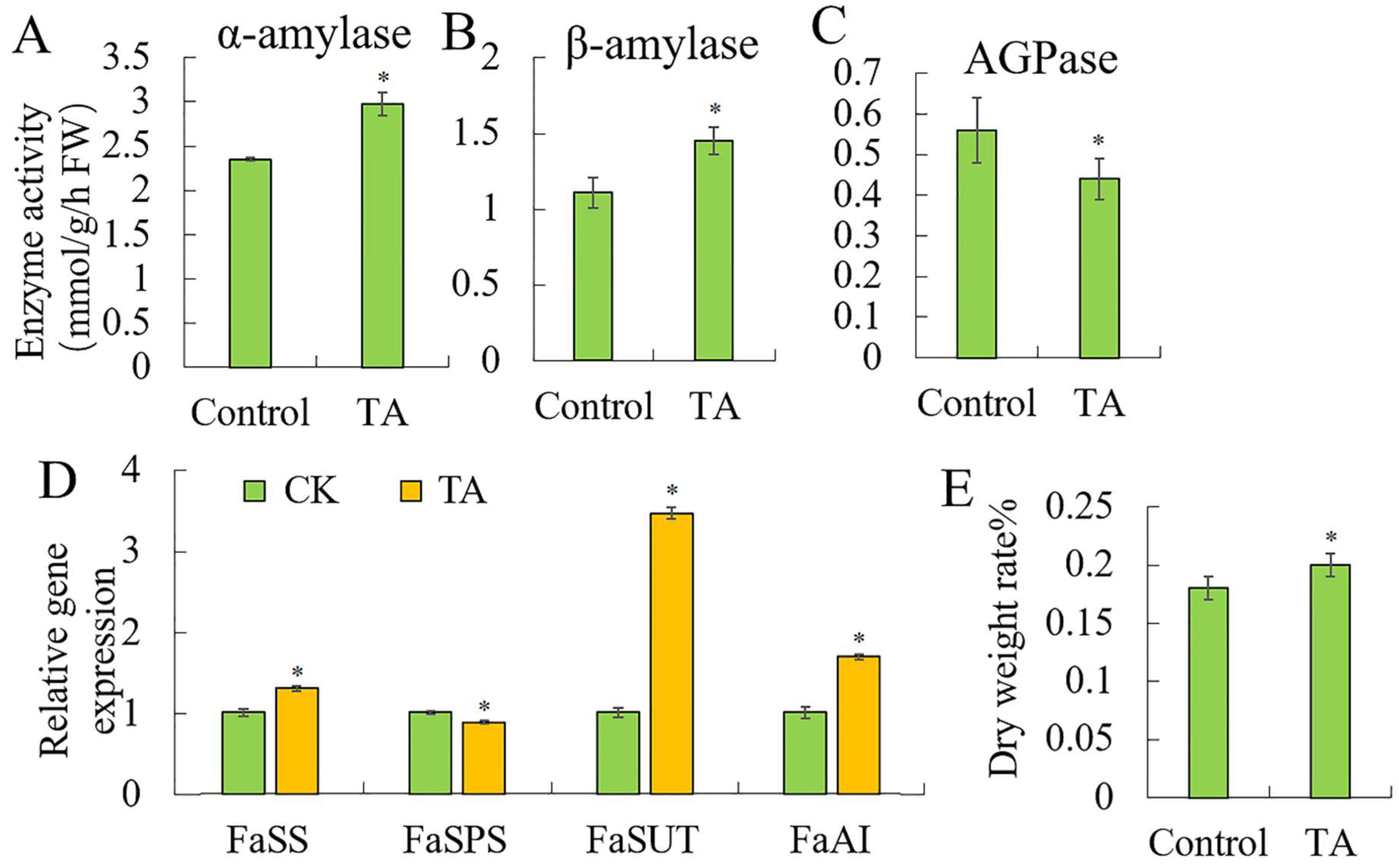
As an important carbohydrate storage during fruit development, starch is very important in maintaining the fruit’s firmness and normal growth and development [
31]. The activities of key enzymes SSY, GBSS, SS, GBE1 in starch synthesis were enhanced, and the enzyme BAM activity of starch hydrolysis was also enhanced. TA treatment promoted starch synthesis and degradation, which may have a greater effect on synthesis than degradation. The activities of EGs and bgl, which catalyzed cellulose hydrolysis, were reduced, and TA also inhibited cellulose degradation. The activity of SS was enhanced. It can catalyze both sucrose synthesis and sucrose decomposition. It is generally believed that the main function of SS is to provide precursors for polysaccharide synthesis in the direction of sucrose degradation. Sucrose synthase plays an important role in plant starch synthesis, improving plant stress resistance, and affecting plant growth [
28,
29,
30]. In total, TA treatment not only affects sugar metabolism in fruits, but also has a positive effect in delaying softening and enhancing stress resistance.
4. Materials and Methods
4.1. Plant Material
Strawberry (Fragaria × ananassa ‘Sweet Charlie’) fruits of uniform size were used for TA treatment. Before flowering, the TA (50 μM) was sprayed on the strawberry plant, the plant was cared for and recorded every day for the flowering time, bud appearance, and the inflorescence length. After fruits started to show, they were marked with a brand to record the fruit development. When the fruit ripened, the physiological and molecular changes were measured. The achenes on the fruit surface were removed, and the leftover pulp was cut into 0.5–0.8 cm3 cubes frozen in liquid nitrogen and stored quickly at −80 °C until use.
IR fruit (16 days after flowering) was used for TA (50 μM) treatment to measure the effect of TA on fruit senescence. The TA fruit was sprayed on the surface of IR fruit and covered with silver paper, the control fruits were treated with an equal amount of ddH2O, then put them into the greenhouse, and perform fruit treatment every other day for a total of 3 times. After 16 days, the fruits were collected, the seeds were removed, the left pulp was frozen in liquid nitrogen and stored at −80 °C.
4.2. Determination of Soluble Sugars, Amino Acids, PA, Anthocyanins by HPLC
20 g sample was taken from storage at −80 ° C and ground into powder with liquid nitrogen. 10 mL of 80% ethanol and 0.5 g of powder were mixed, incubated at 80 °C with a water bath for 3 min, and centrifuged at 10,000 g for 10 min. The supernatant was collected into a 200 mL Erlenmeyer flask. The residue was washed with 10 mL of 80% ethanol twice with the above process, and then the supernatants were mixed. The remaining residue was filtered with 1 mL of 80% ethanol again and the filtrate was transferred to a new tube, and 5% α-naphthol of two drops was added into the filtrate. If there was no purple ring, suggesting that the sugar had been isolated from the sample completely. The mixed supernatant above was evaporated using boiling water, and the sugar was washed twice with distilled water of 20 mL, and the volume was 50 mL in total by added the distilled water to. In total, 2 mL of it was used for LC-18 solid phase extraction. Of these 2 mL, 1 mL was extracted and discarded, and the other 1 mL was collected and passed through a 0.45 mm membrane to measure the sugar content.
After that, HPLC condition was as follows: Agilent Technologies 1200 series, 6.5 × 3300 mm Sugar-Pak TM-1 column (Waters); ChemStation version B.02.01-SR2; ultrapure water as mobile phase, The flow rate was 0.4 mL min-1; the column temperature was 60 °C; the temperature of the refractive index detector was 50 °C; and the injection volume was 20 μL. The standard samples used were D-(+) Glc, D-(-) Fru, Suc (Sigma-Aldrich). The whole process was repeated three times. The measurement of PA and anthocyanins were described as by Fuleki and Francis [
73,
74].
4.3. The ABA, IAA, and Ethylene Contents Measurement
The pulp of strawberry fruits (
n = 3) was used to analyzed the ABA and IAA content. For ABA and IAA extractions, 1 g of strawberry pulp was ground into powder with liquid nitrogen and added with 80% methanol (
v/v) to mix. Then these was centrifuged at 10,000
g for 20 min. To remove the polar compounds, the Sep-Pak C18 cartridge (Waters) was used to elute the supernatants. After that, the supernatants were assayed as described by Zhang et al. [
75]. The strawberry fruits (
n = 3) were put in 200 mL glass jars in greenhouse at 25 °C for 2 h, and 1 mL of gas from the glass was drawn out and injected into the gas chromatograph for ethylene assay as described by Sun et al. [
76]. The experiment was performed with three replications.
4.4. Total RNA Extraction, cDNA Library Construction and Illumina Sequencing
1 g of fruits was taken from the −80 °C refrigerator and ground into powder with liquid nitrogen, the modified cetyltrimethylammonium bromide (CTAB) method was used to extract total RNA, and DNase (Takara, Beijing, China) was added to remove DNA interference. RNA concentration was analyzed with a NanoDrop 2000 spectrophotometer (Thermo Scientific, Wilmington, NC, USA) and the total RNA integrity was analyzed using 1.0% agarose gel electrophoresis. The library was constructed using an RNA library preparation kit (New England BioLbs, Ipswich, MA, USA) (NEB), and quality was checked by an Agilent 2100 Bioanalyzer and ABI StepOnePlus real-time PCR system, and qualified cDNA libraries were used for RNA sequences Hiseq (Personalbio, Nanjing, China) Next-Generation Sequencing (NGS) performed paired-end (PE) sequencing on all samples. There was an average of 6 GB of data per sample.