
Article

An Indoor Space Model of Building Considering Multi-Type Segmentation
1
School of Geographic and Biologic Information, Nanjing University of Posts and Telecommunications, Nanjing 210023, China
2
Smart Health Big Data Analysis and Location Services Engineering Research Center of Jiangsu Province, Nanjing University of Posts and Telecommunications, Nanjing 210023, China
3
Key Lab of Virtual Geographic Environment (Nanjing Normal University), Ministry of Education, Nanjing 210023, China
4
Jiangsu Center for Collaborative Innovation in Geographical Information Resource Development and Application, Nanjing 210023, China
*
Author to whom correspondence should be addressed.
ISPRS Int. J. Geo-Inf. 2022, 11(7), 367; https://doi.org/10.3390/ijgi11070367
Submission received: 9 May 2022 / Revised: 20 June 2022 / Accepted: 24 June 2022 / Published: 28 June 2022

Abstract

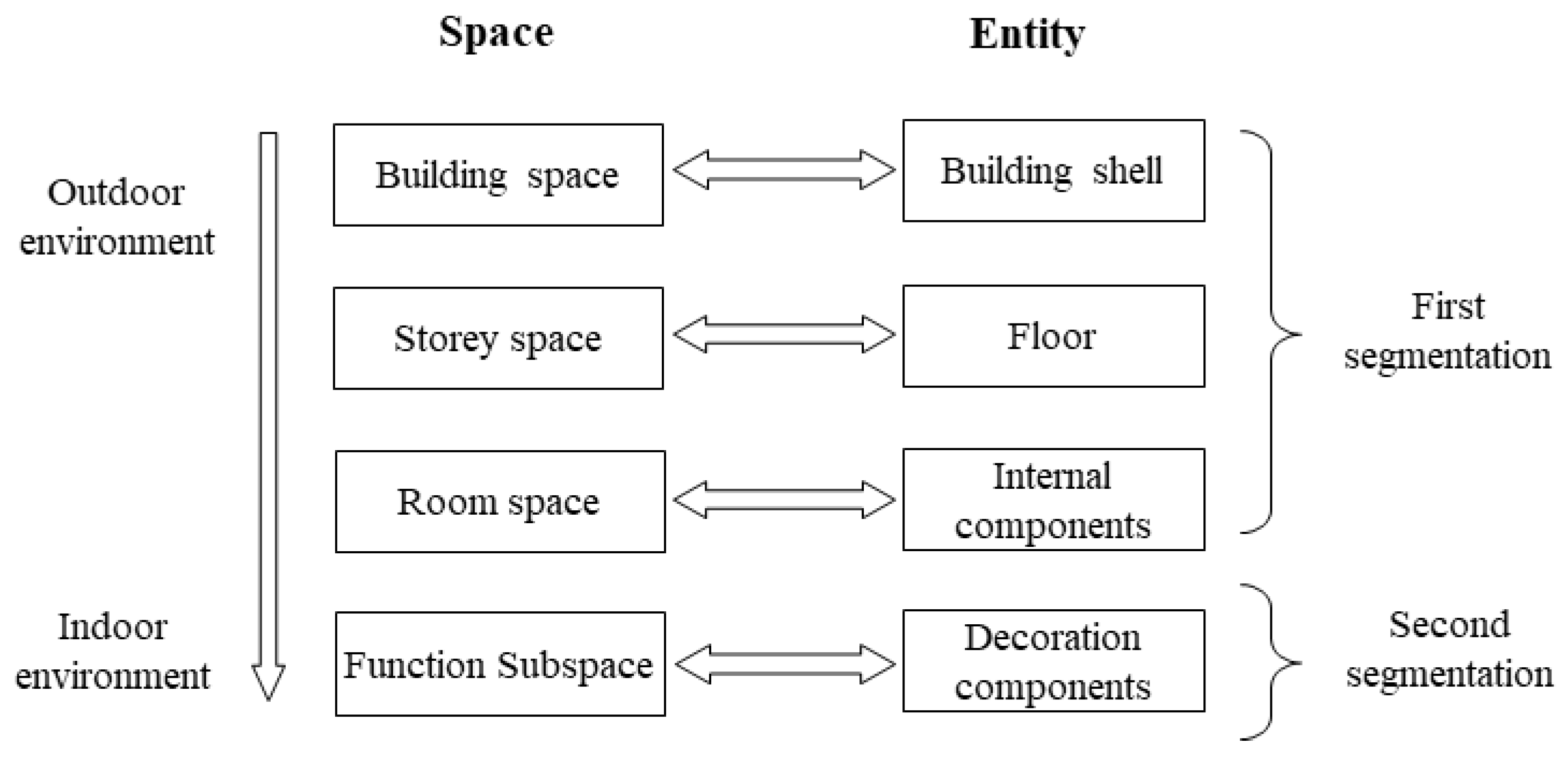
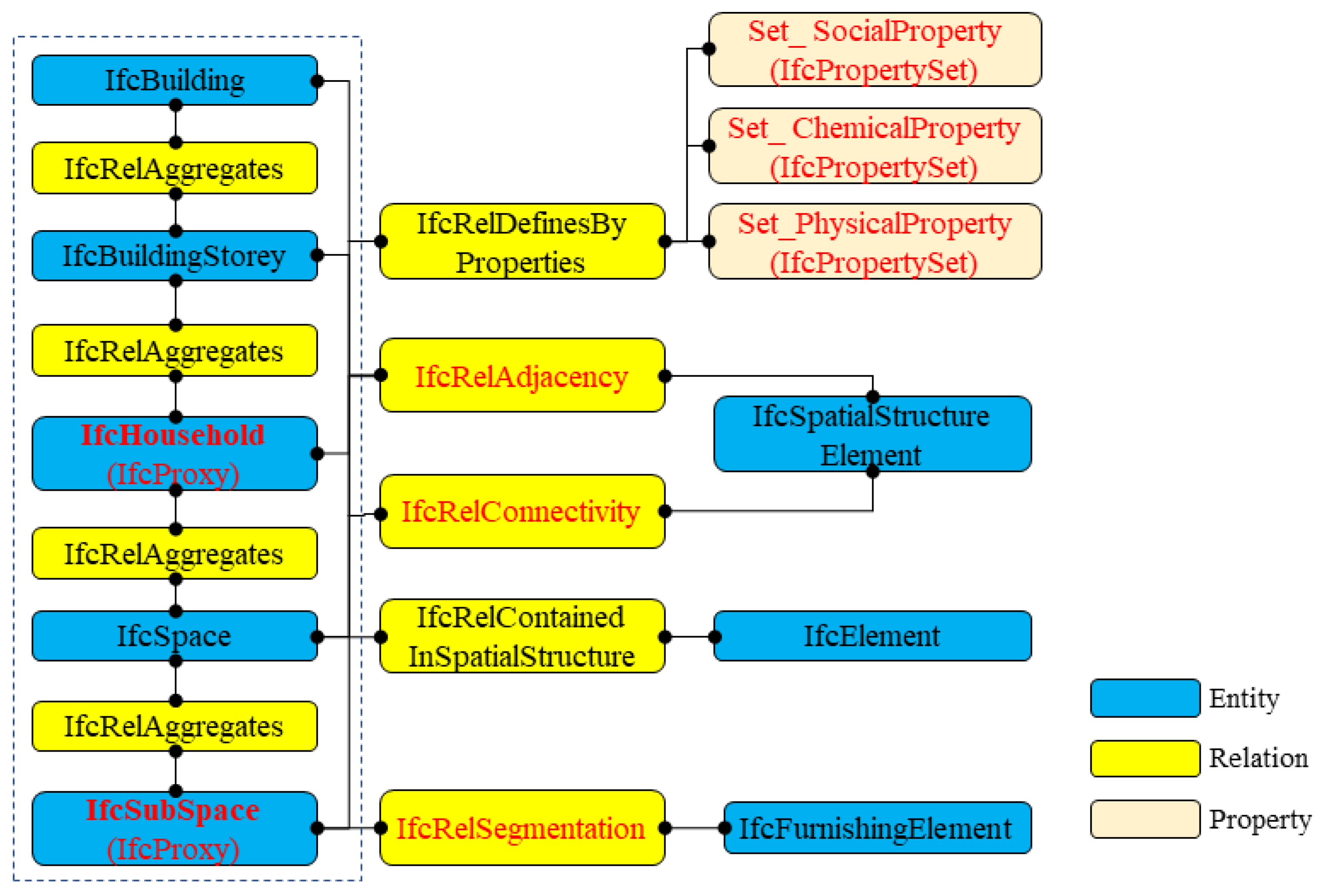
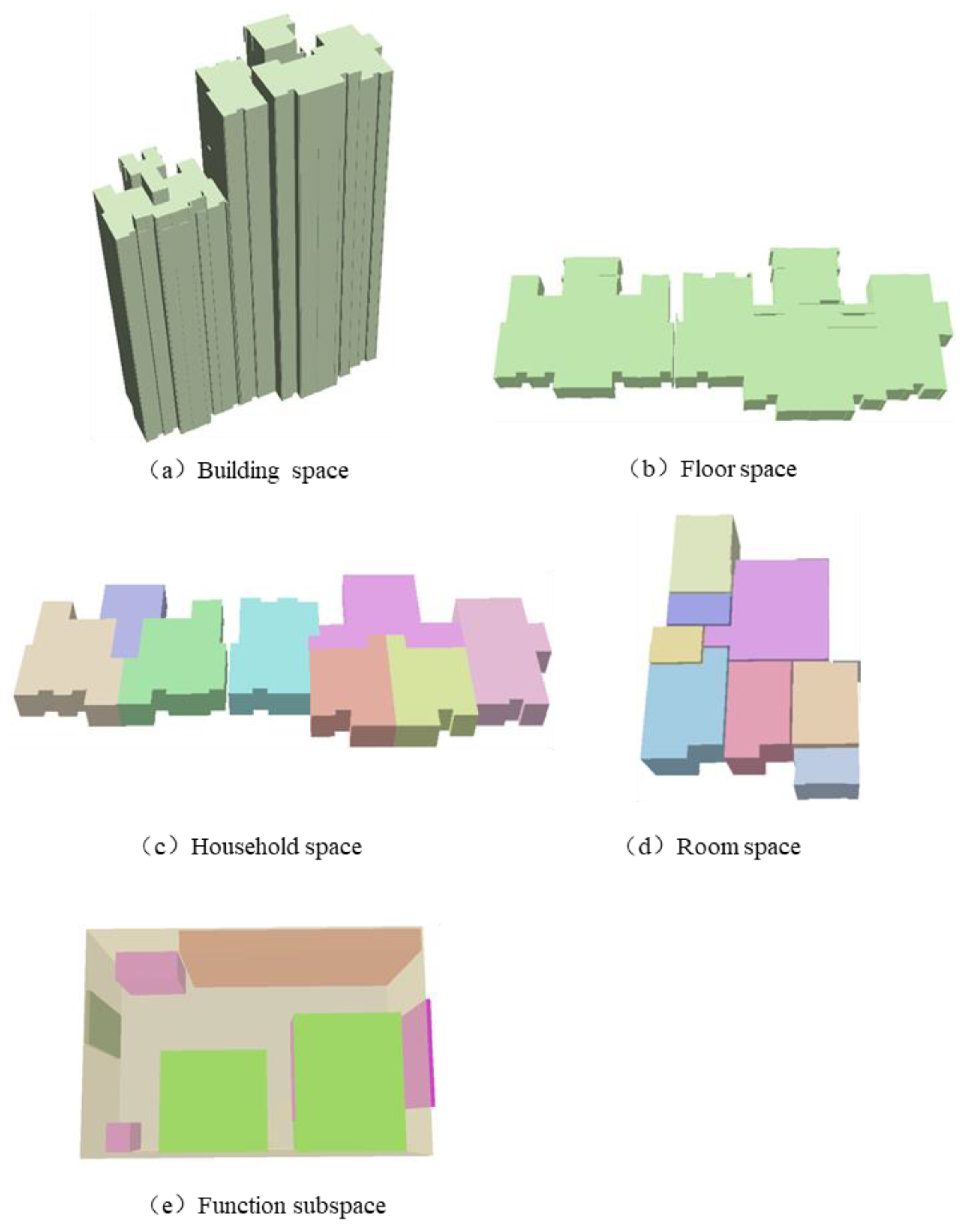
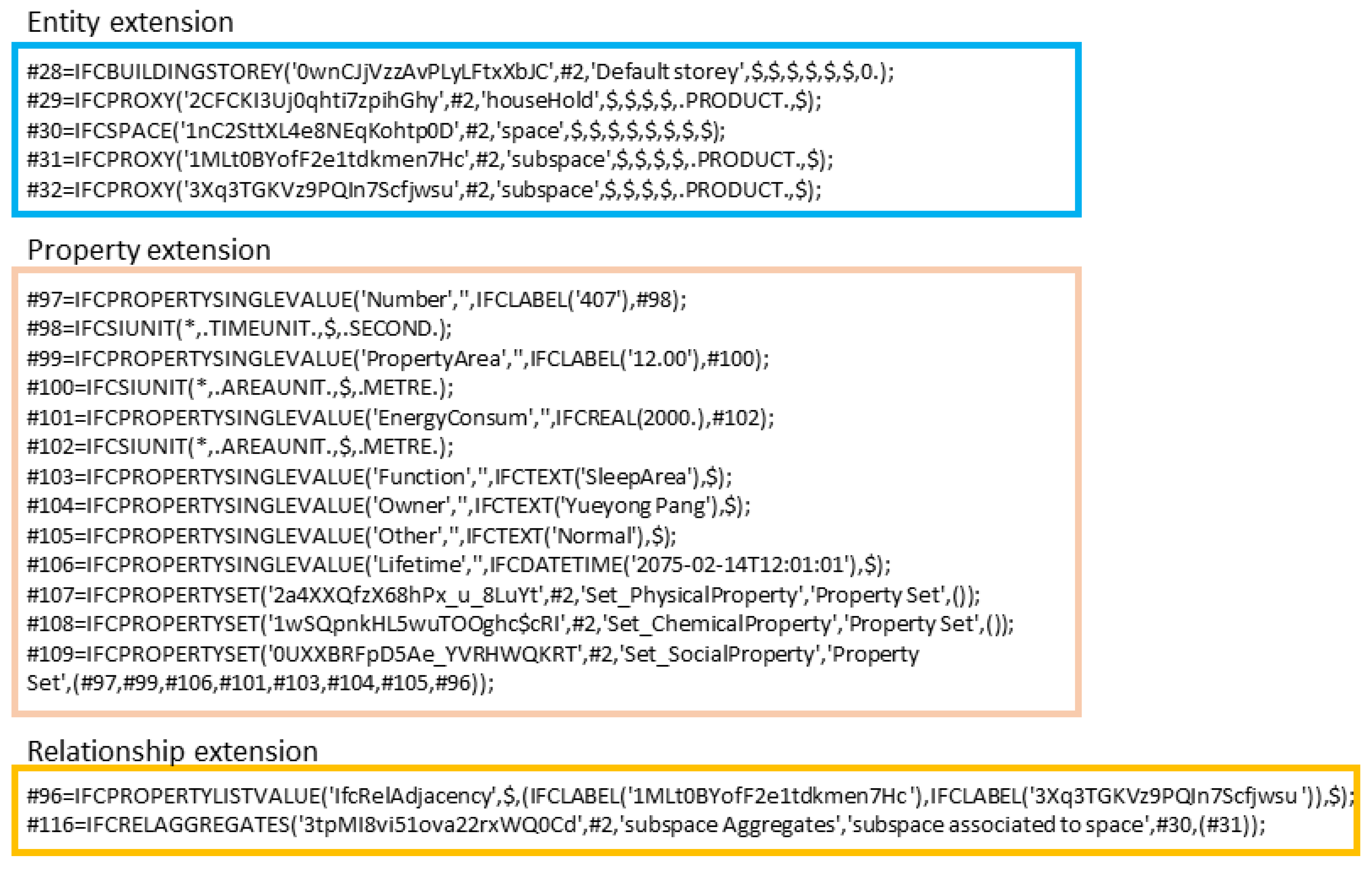
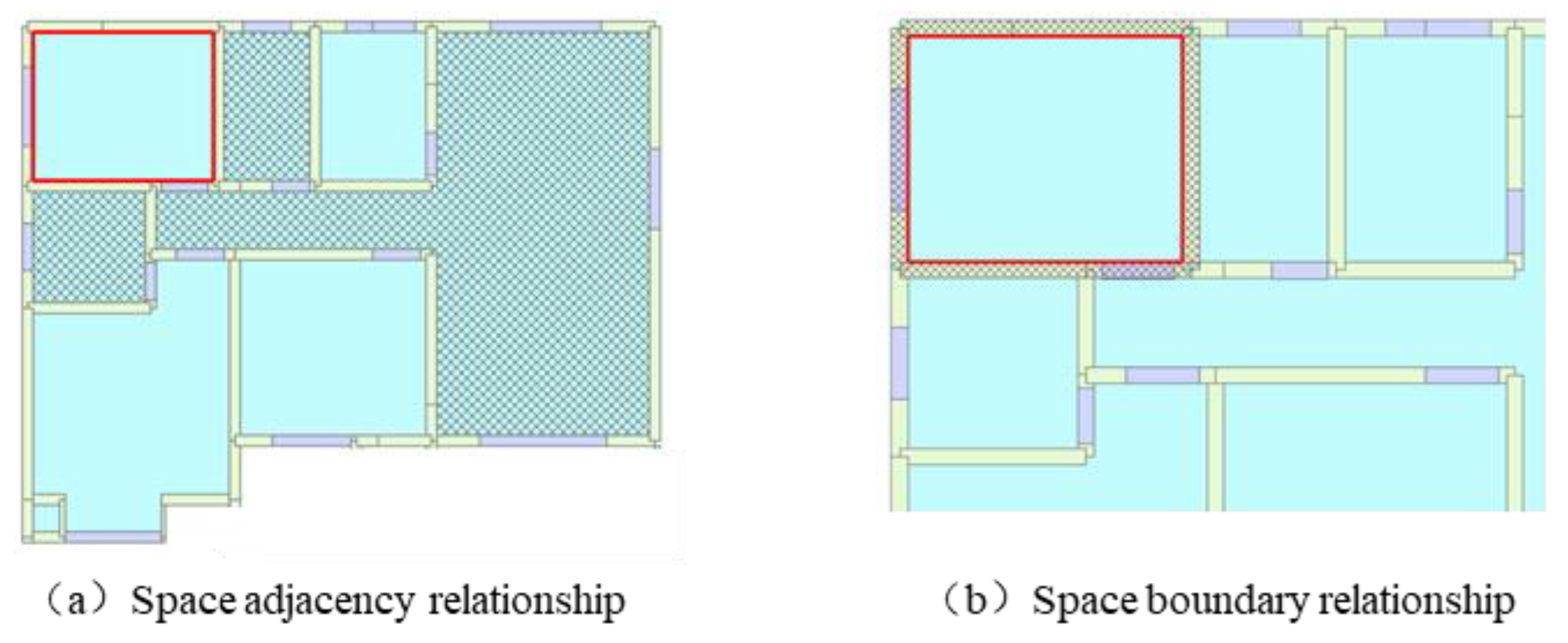
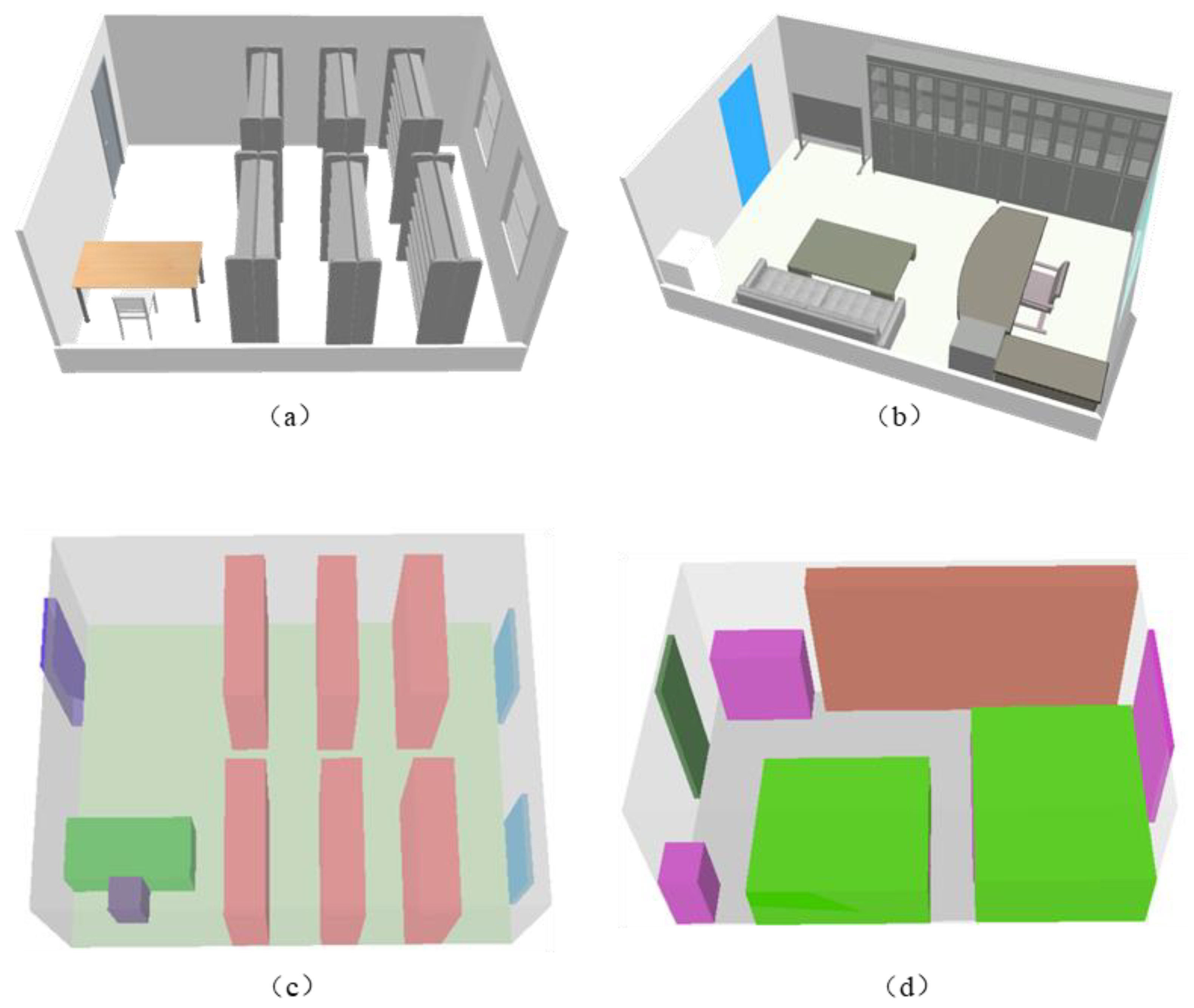
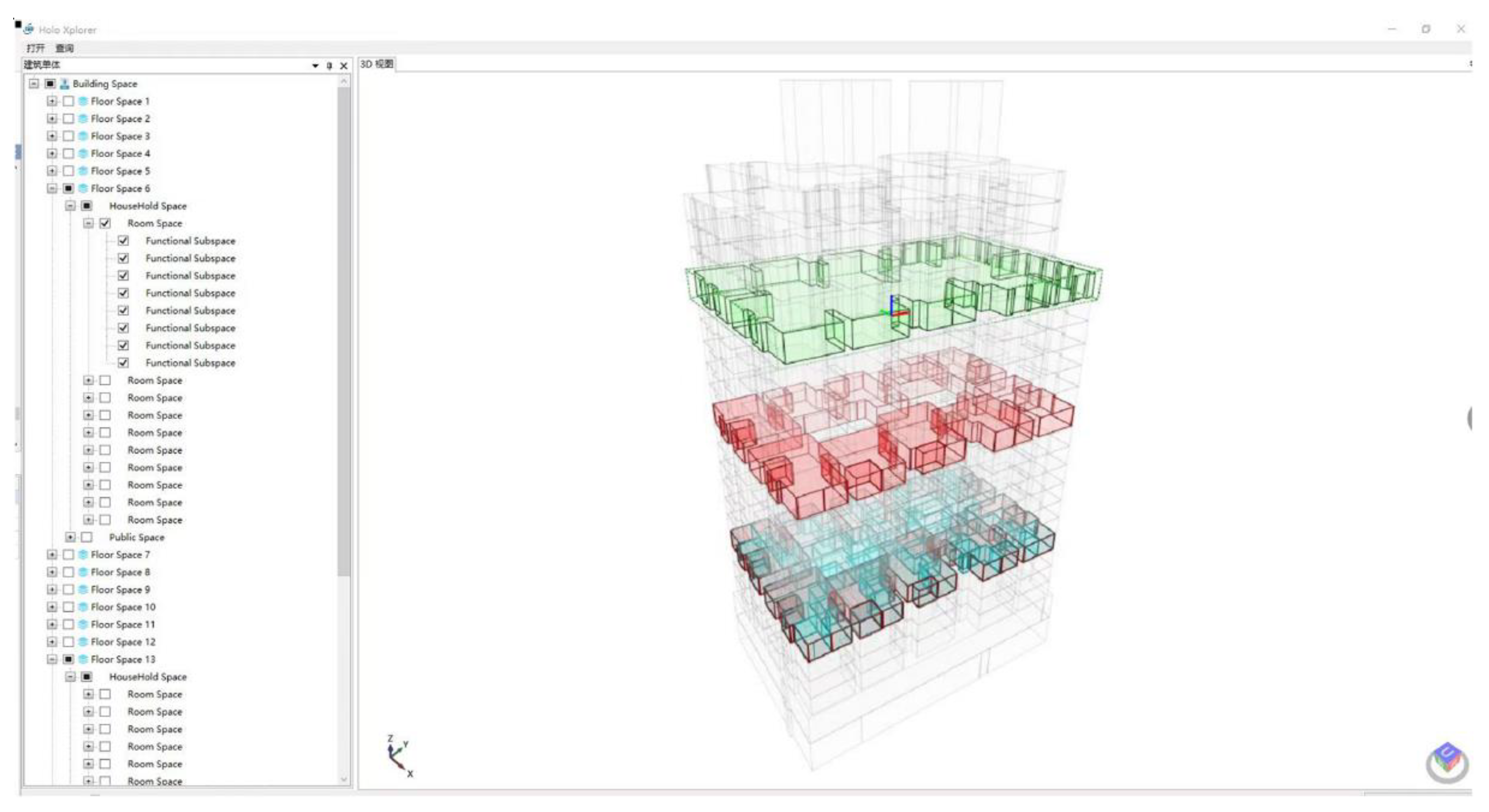
Indoor space is a core part of supporting indoor applications. Most of the existing indoor space models are expressed from three space scales: building, floor, and room, and the granularity is not fine enough, lacking the expression of each functional subspace inside the room. In this study, we first analyzed the spatio-temporal segmentation characteristics of indoor space, and proposed a multi-level indoor space model framework that takes into account multiple types of segmentation. As well, based on the IFC (Industry Foundation Classes) standard, the extension of the indoor functional subspace was realized. The experimental results showed that the indoor space model proposed in this paper can effectively support the expression of functional subspace under the multi-type segmentation based on indoor elements, especially from the aspects of semantics, geometry, relationship, and attribute. This study enriches the granularity of existing indoor models and provides support for refined indoor navigation and evacuation applications.
Keywords: indoor space model; multi-type segmentation; IFC; functional subspace; extension indoor space model; multi-type segmentation; IFC; functional subspace; extension