
Article

Mitigating Imbalance of Land Cover Change Data for Deep Learning Models with Temporal and Spatiotemporal Sample Weighting Schemes

by
Alysha van Duynhoven
* and
Suzana Dragićević
Spatial Analysis and Modeling Laboratory, Department of Geography, Simon Fraser University, 8888 University Drive, Burnaby, BC V5A1S6, Canada
*
Author to whom correspondence should be addressed.
ISPRS Int. J. Geo-Inf. 2022, 11(12), 587; https://doi.org/10.3390/ijgi11120587
Submission received: 18 September 2022 / Revised: 5 November 2022 / Accepted: 20 November 2022 / Published: 23 November 2022

Abstract

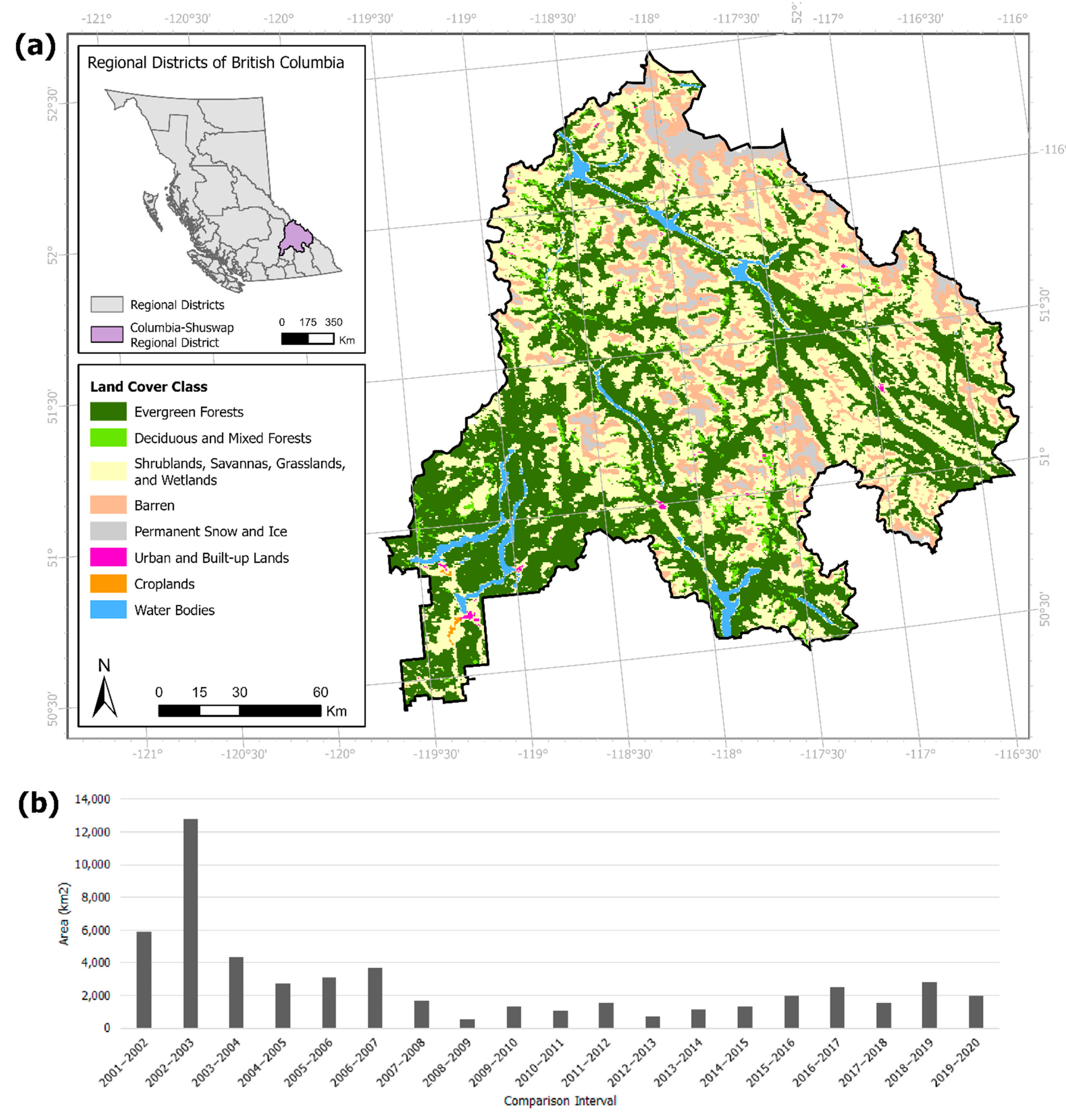
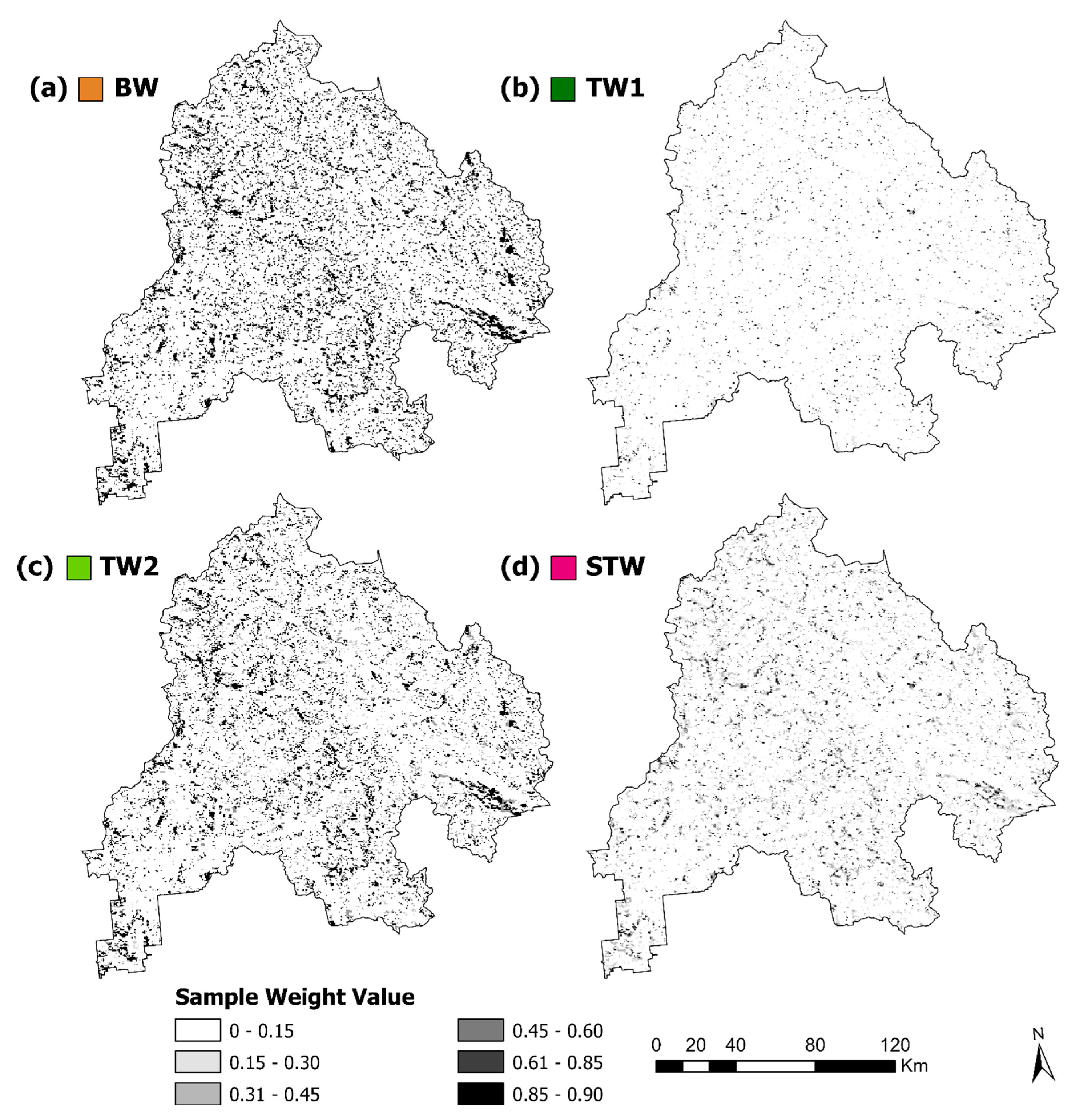
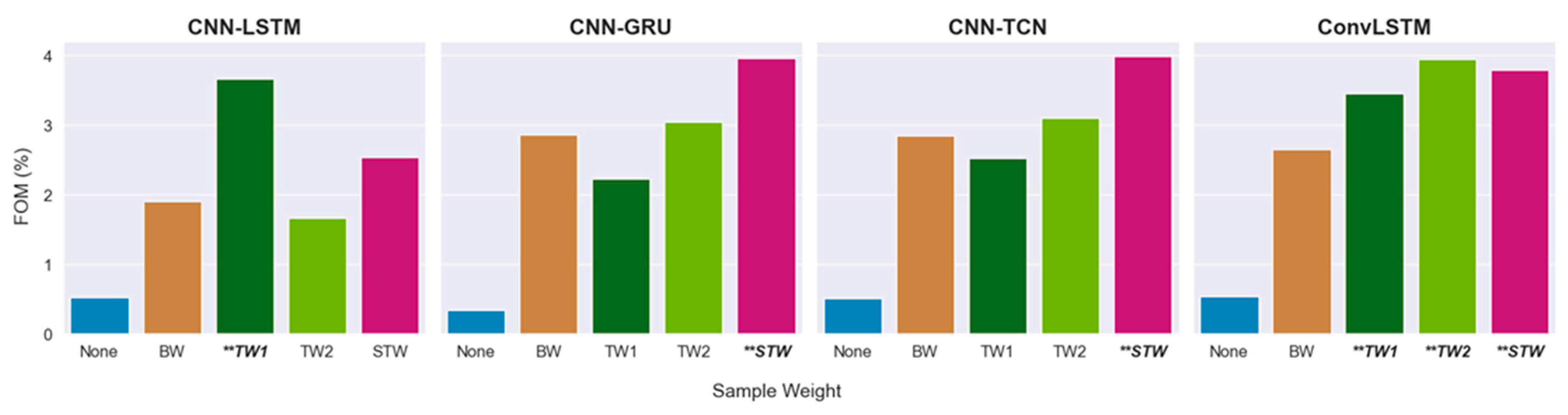
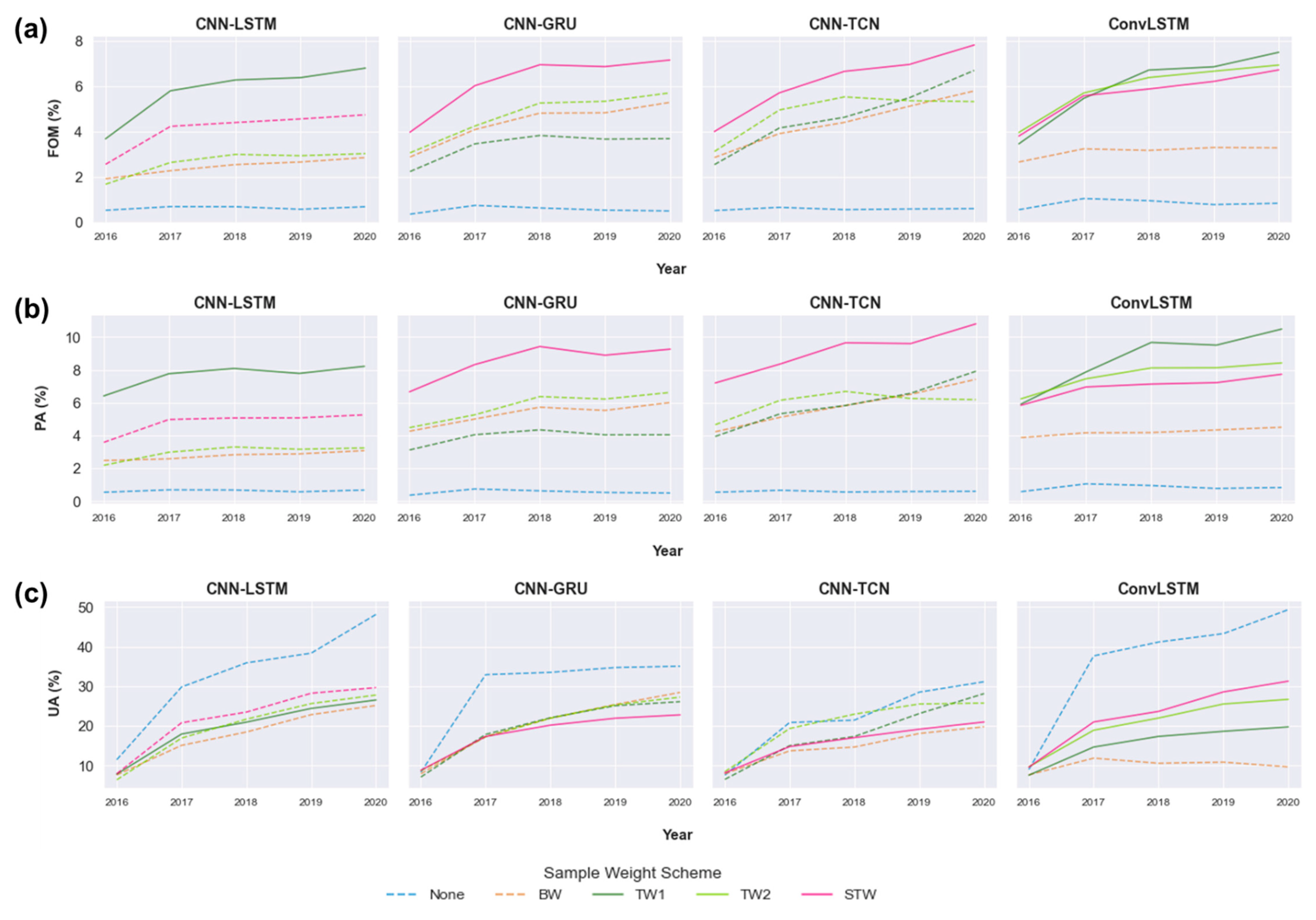
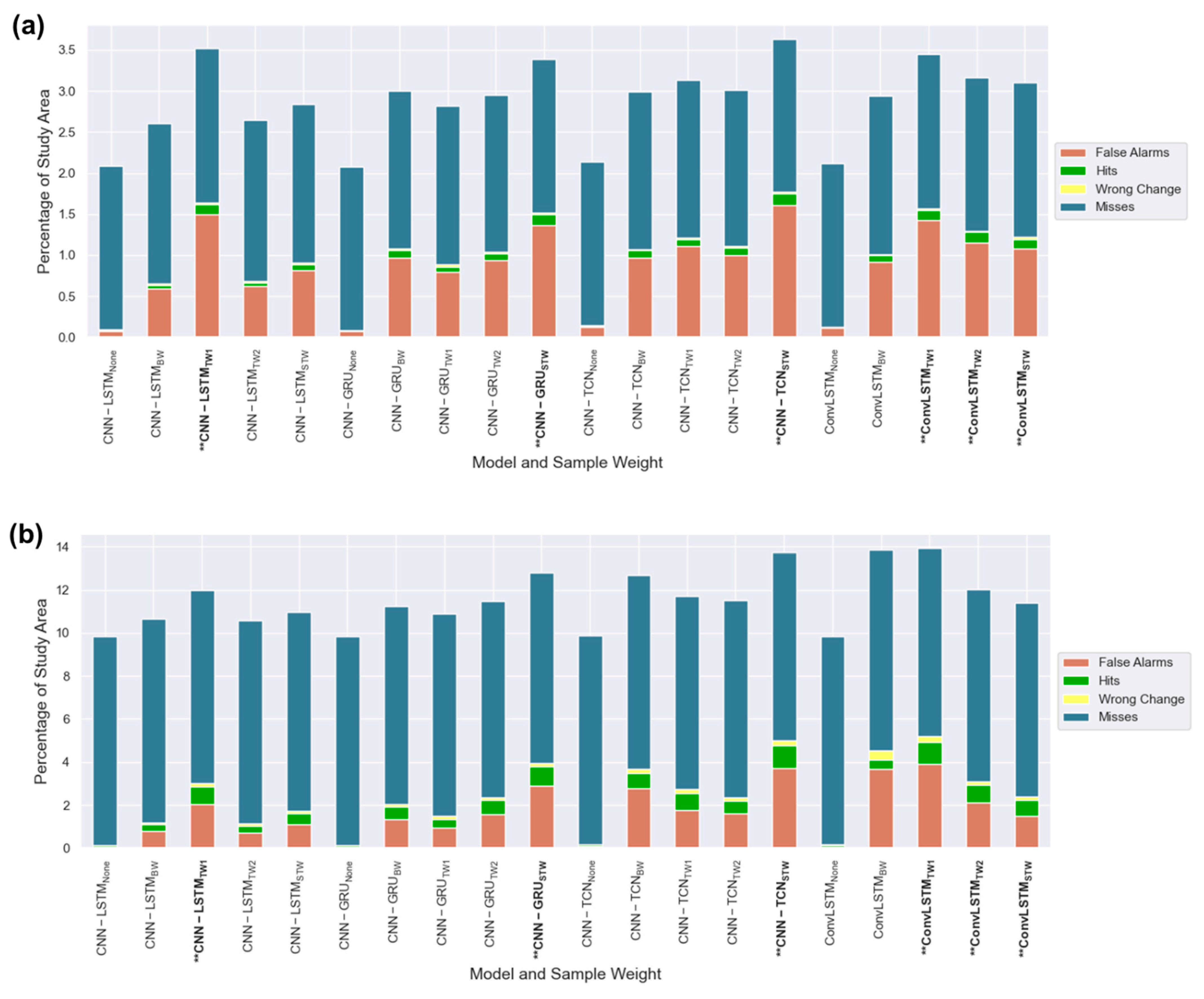
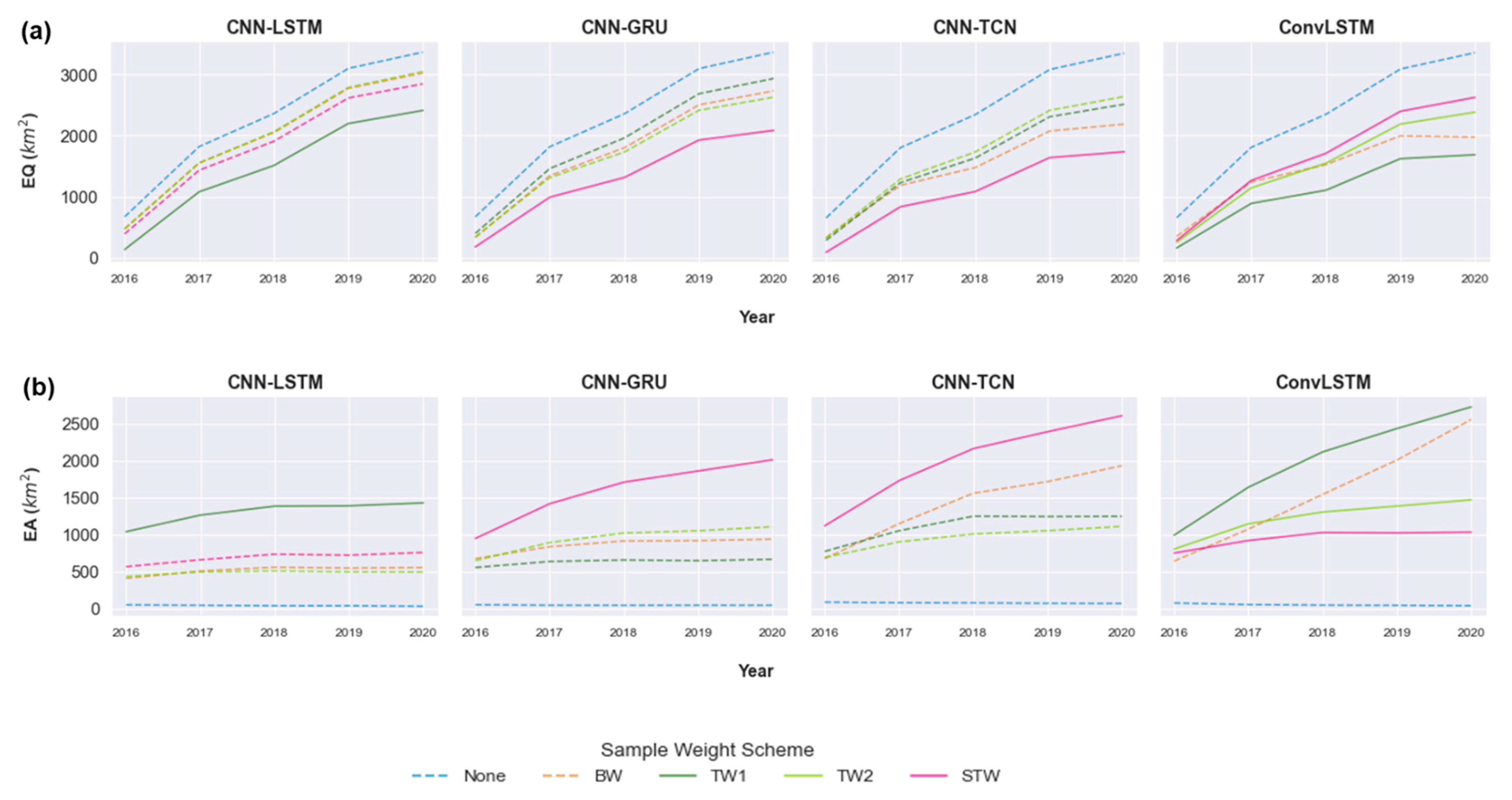
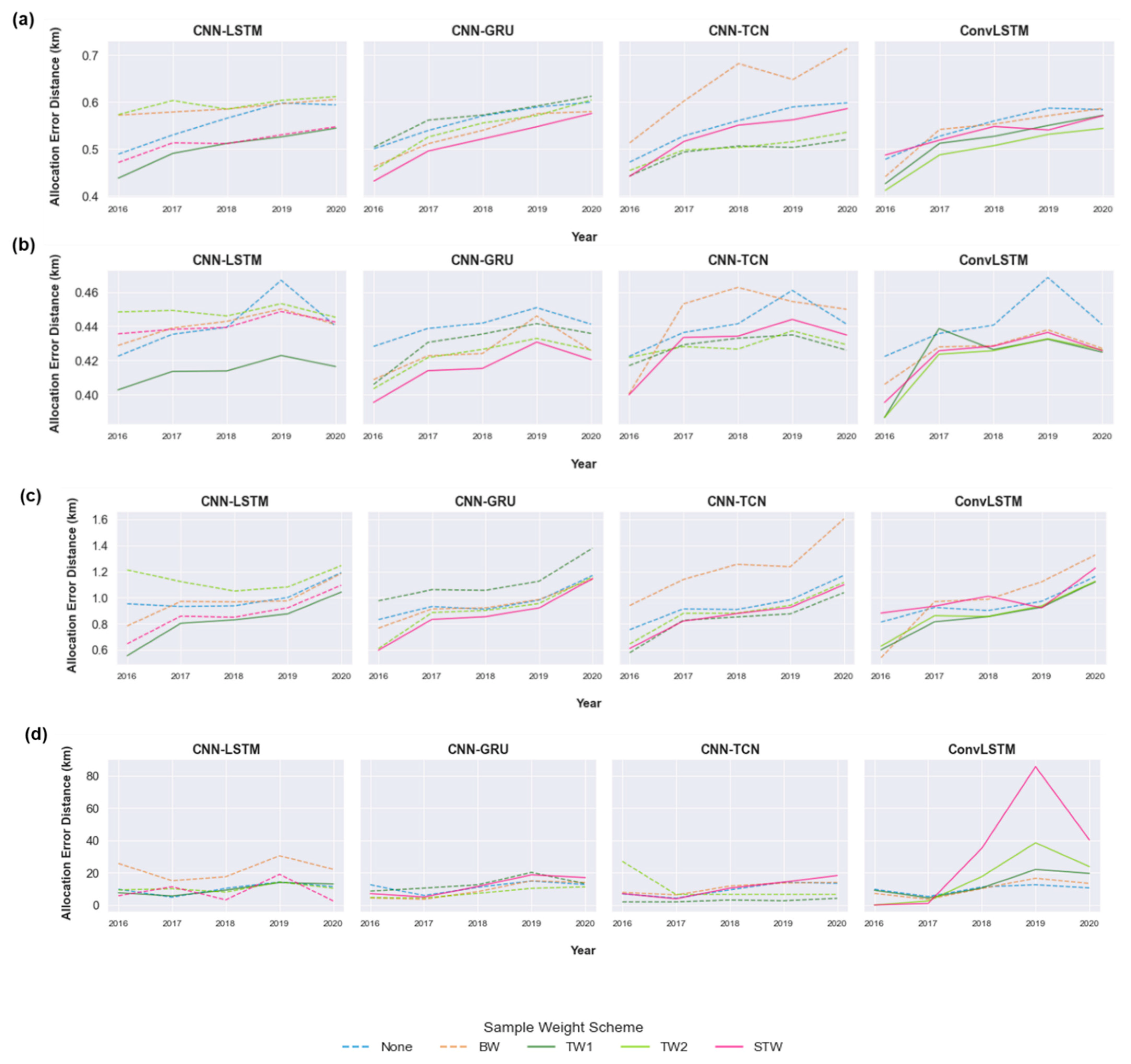
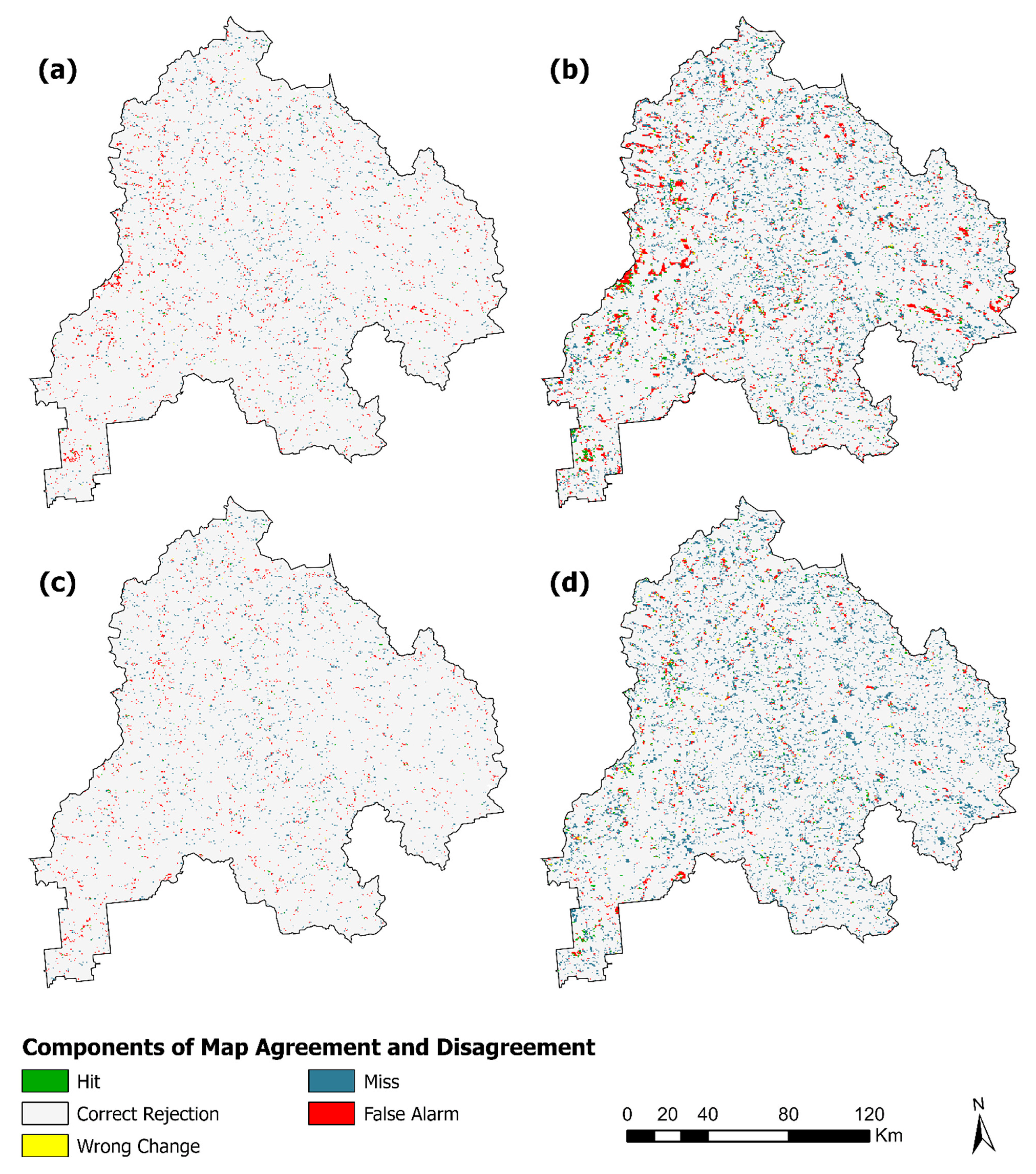
An open problem impeding the use of deep learning (DL) models for forecasting land cover (LC) changes is their bias toward persistent cells. By providing sample weights for model training, LC changes can be allocated greater influence in adjustments to model internal parameters. The main goal of this research study was to implement and evaluate temporal and spatiotemporal sample weighting schemes that manage the influence of persistent and formerly changed areas. The proposed sample weighting schemes allocate higher weights to more recently changed areas based on the inverse temporal and spatiotemporal distance from previous changes occurring at a location or within the location’s neighborhood. Four spatiotemporal DL models (CNN-LSTM, CNN-GRU, CNN-TCN, and ConvLSTM) were used to compare the sample weighting schemes to forecast the LC changes of the Columbia-Shuswap Regional District in British Columbia, Canada, using data obtained from the MODIS annual LC dataset and other auxiliary spatial variables. The results indicate that the presented weighting schemes facilitated improvement over no sample weighting and the common inverse frequency weighting scheme for multi-year LC change forecasts, lowering errors due to quantity while reducing overall allocation error severity. This research study contributes to strategies for addressing the characteristic imbalances of multitemporal LC change datasets for DL modeling endeavors.
Keywords: land cover change; spatiotemporal deep learning; geospatial data imbalance; sample weights; inverse temporal distance weighting; spatiotemporal distance weighting; temporal convolutional networks; recurrent neural networks; convolutional neural networks; land cover data imbalance land cover change; spatiotemporal deep learning; geospatial data imbalance; sample weights; inverse temporal distance weighting; spatiotemporal distance weighting; temporal convolutional networks; recurrent neural networks; convolutional neural networks; land cover data imbalance