
Article

Beyond Objects in Space-Time: Towards a Movement Analysis Framework with ‘How’ and ‘Why’ Elements

1
School of Surveying, University of Otago, Dunedin 9016, New Zealand
2
Department of Information Science, University of Otago, Dunedin 9016, New Zealand
*
Author to whom correspondence should be addressed.
ISPRS Int. J. Geo-Inf. 2021, 10(3), 190; https://doi.org/10.3390/ijgi10030190
Submission received: 18 December 2020 / Revised: 16 February 2021 / Accepted: 19 March 2021 / Published: 22 March 2021
(This article belongs to the Special Issue Innovations in Agent-Based Modelling of Spatial Systems)

Abstract

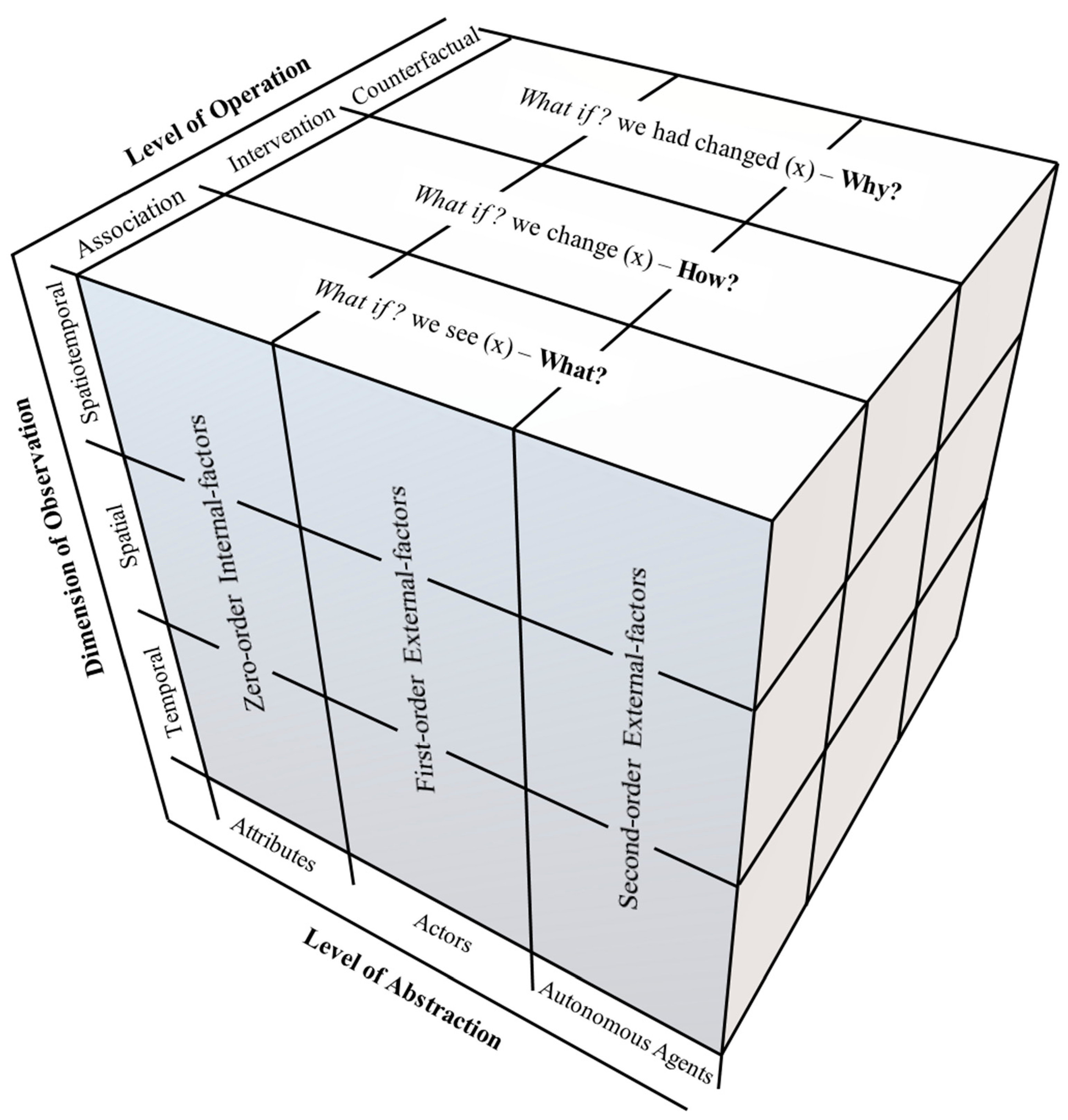
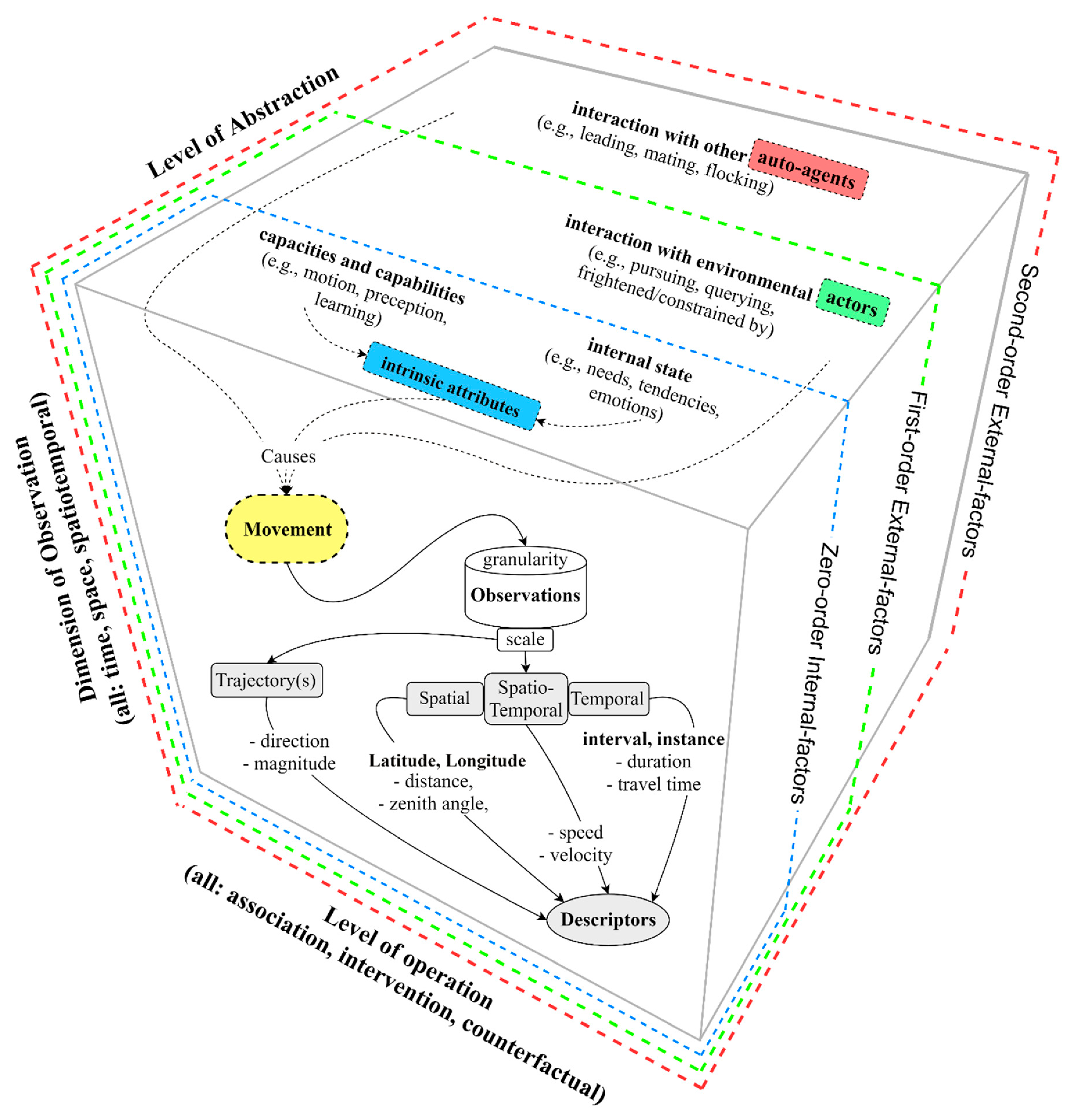
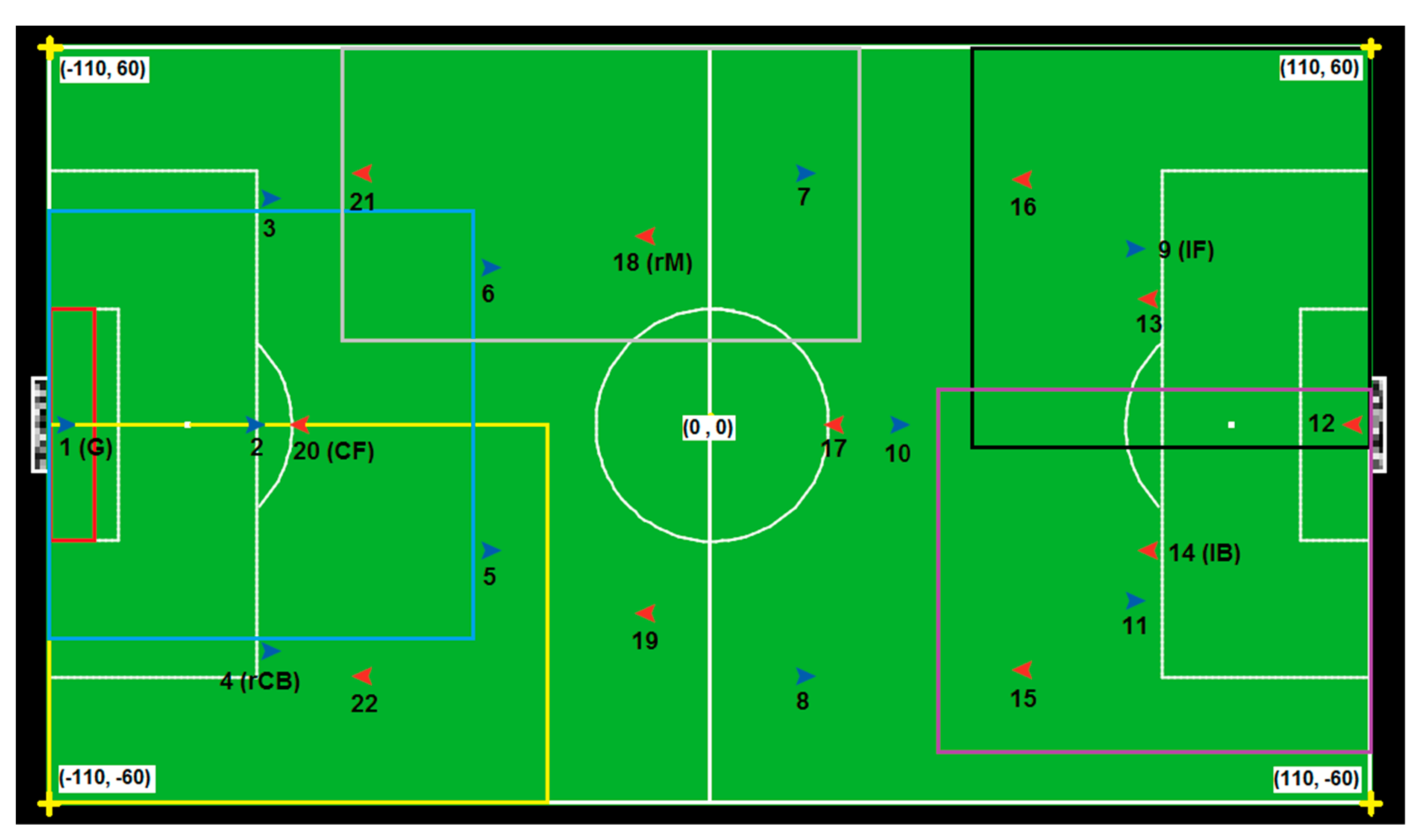
Current spatiotemporal data has facilitated movement studies to shift objectives from descriptive models to explanations of the underlying causes of movement. From both a practical and theoretical standpoint, progress in developing approaches for these explanations should be founded on a conceptual model. This paper presents such a model in which three conceptual levels of abstraction are proposed to frame an agent-based representation of movement decision-making processes: ‘attribute,’ ‘actor,’ and ‘autonomous agent’. These in combination with three temporal, spatial, and spatiotemporal general forms of observations distinguish nine (3 × 3) representation typologies of movement data within the agent framework. Thirdly, there are three levels of cognitive reasoning: ‘association,’ ‘intervention,’ and ‘counterfactual’. This makes for 27 possible types of operation embedded in a conceptual cube with the level of abstraction, type of observation, and degree of cognitive reasoning forming the three axes. The conceptual model is an arena where movement queries and the statement of relevant objectives takes place. An example implementation of a tightly constrained spatiotemporal scenario to ground the agent-structure was summarised. The platform has been well-defined so as to accommodate different tools and techniques to drive causal inference in computational movement analysis as an immediate future step.
Keywords: computational movement analysis; conceptual model; agent-based modelling; graphical causal models; intelligent agent computational movement analysis; conceptual model; agent-based modelling; graphical causal models; intelligent agent