Article

Assessment of Occupational Exposure to Indium Dust for Indium-Tin-Oxide Manufacturing Workers

Institute of Occupation and Environment, Korea Workers’ Compensation and Welfare Service, Incheon 21417, Korea
*
Authors to whom correspondence should be addressed.
Biomolecules 2021, 11(3), 419; https://doi.org/10.3390/biom11030419
Submission received: 13 January 2021 / Revised: 6 March 2021 / Accepted: 9 March 2021 / Published: 12 March 2021

Abstract

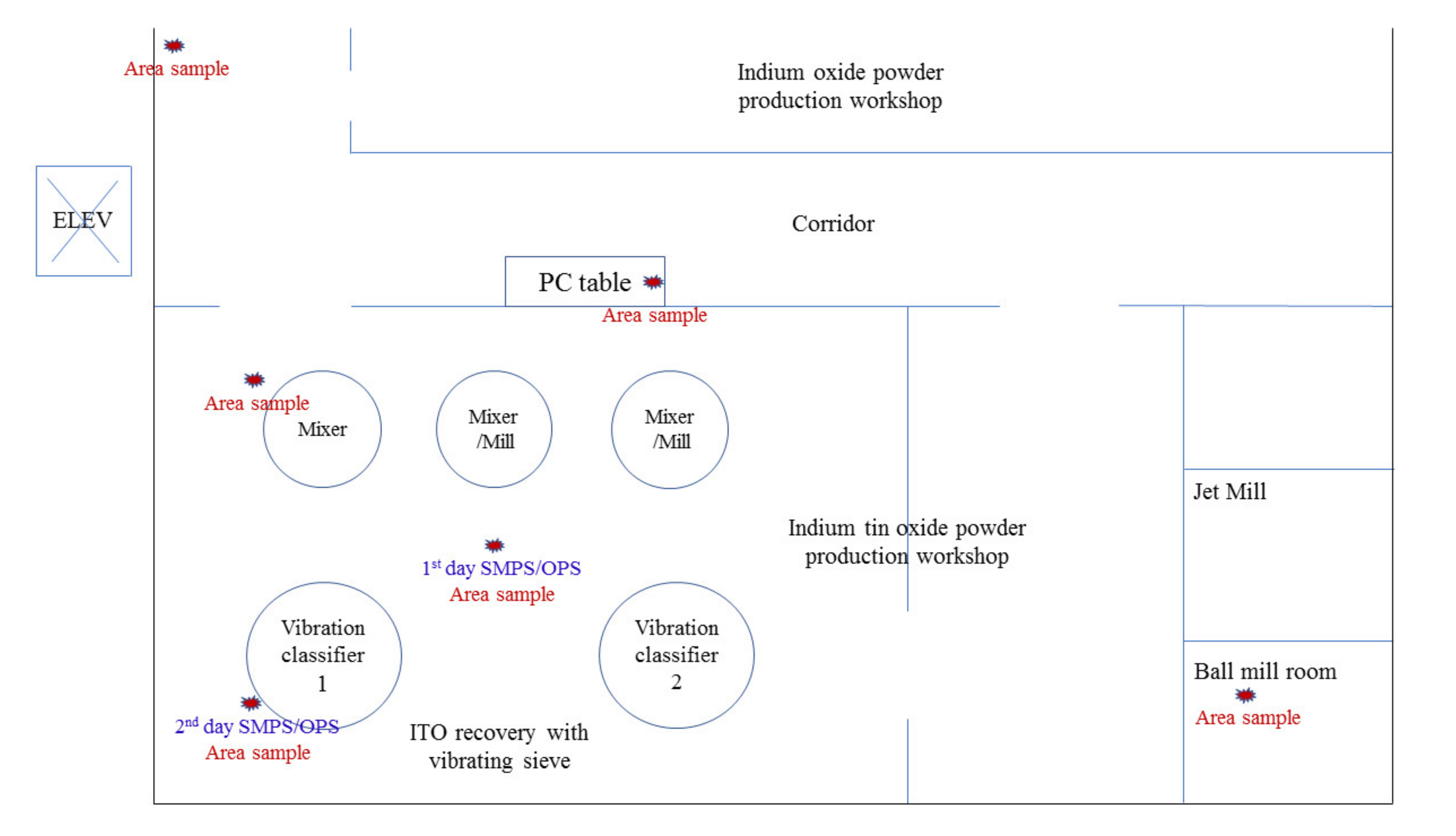
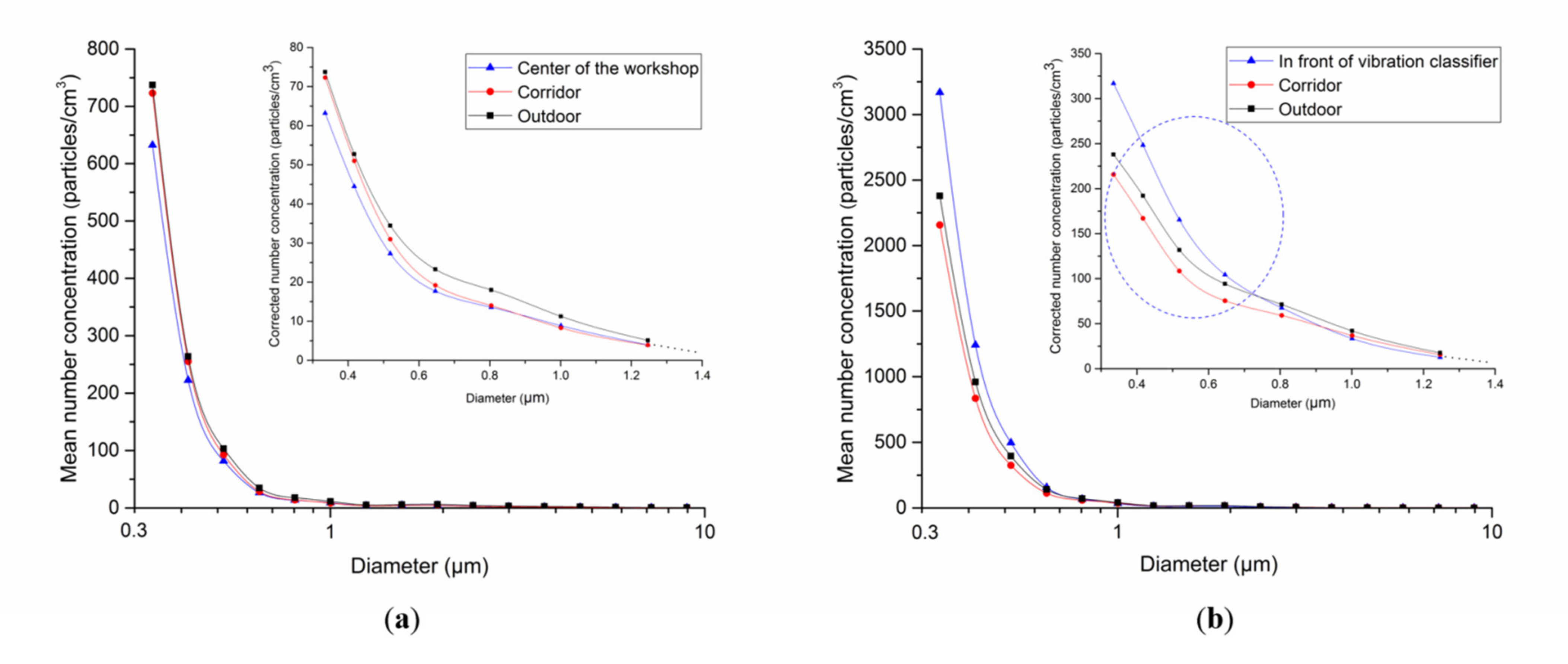
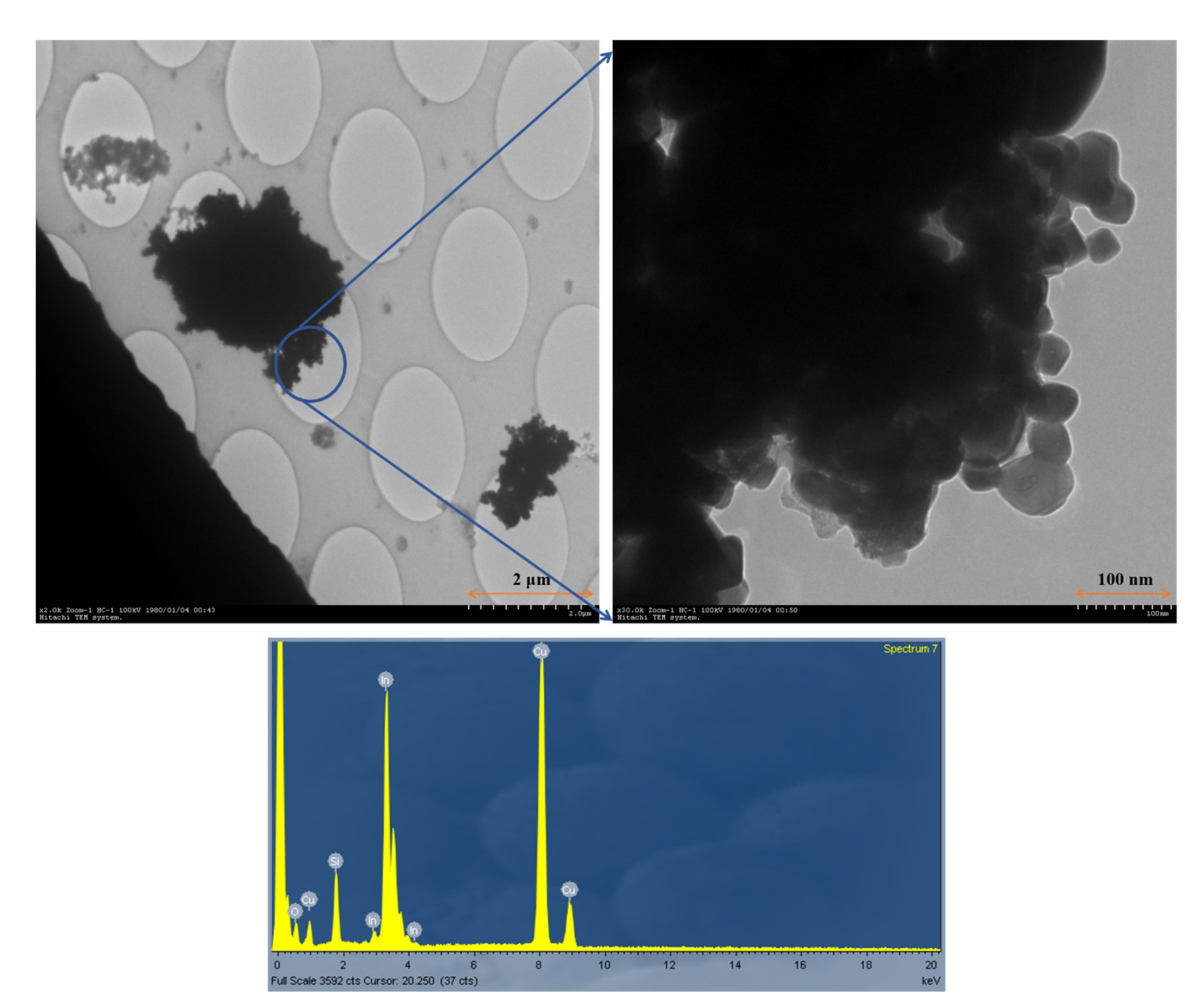
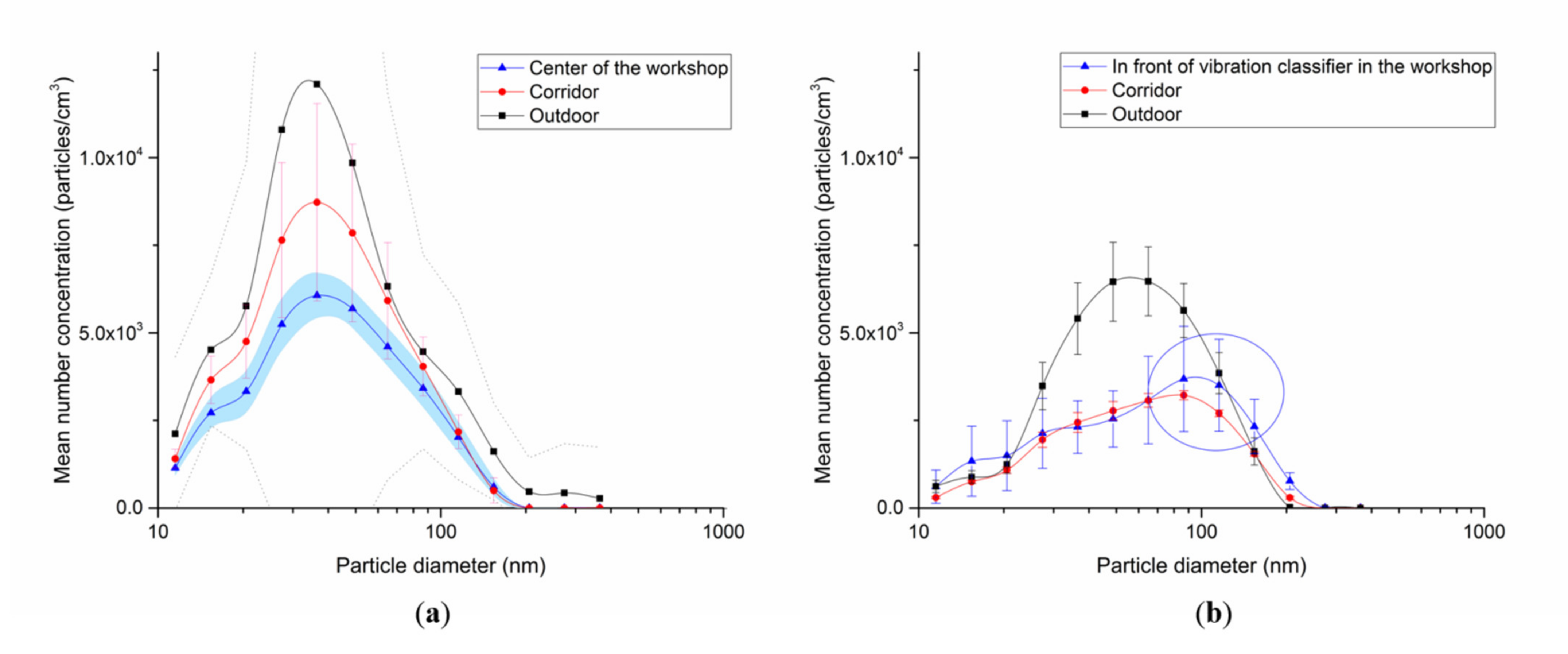
According to recent research, indium nanoparticles (NPs) are more toxic than micro-sized particles. While cases of indium lung disease have been reported worldwide, very little research has been conducted on the occupational exposure to indium NPs. Recently, an indium-related lung disease was reported in Korea, a global powerhouse for display manufacturing. In this study, we conducted an assessment ofoccupational exposure at an indium tin oxide (ITO) powder manufacturing plant, where the first case of indium lung disease in Korea occurred. Airborne dustwas obtained from a worker’s breathing zone, and area sampling in the workplace environment was conducted using real-time monitoring devices. Personal samples were analyzed for the indium concentrations in total dust, respirable dust fraction, and NPs using personal NPs respiratory deposition samplers. The total indium concentration of the personal samples was lower than the threshold limit value recommended by the American Conference of Governmental Industrial Hygienists (ACGIH TLV), which was set as occupational exposure limit (OEL). However, the respirable indium concentration exceeded the recently set ACGIH TLV for the respirable fraction of indium dust. The concentration of indium NPs ranged between 0.003 and 0.010 × 10⁻² mg/m3, accounting for only 0.4% of the total and 2.7% of the respirable indium particles. This was attributed to the aggregating of NPs at the µm sub-level. Given the extremely low fraction of indium NPs in the total and respirable dust, the current OEL values, set as the total and respirable indium concentrations, do not holistically represent the occupational exposure to indium NPs or prevent health hazards. Therefore, it is necessary to set separate OEL values for indium NPs. This study covers only the process of handling ITO powder. Therefore, follow-up studies need to be conducted on other ITO sputtering target polishing and milling processes, which typically generate more airborne NPs, to further investigate the effects of indium on workers and facilitate the necessary implementation of indium-reducing technologies.
Keywords: indium; nanoparticle; ITO; indium lung disease; exposure assessment; occupational exposure; occupational exposure limit indium; nanoparticle; ITO; indium lung disease; exposure assessment; occupational exposure; occupational exposure limit