Age and Gender Effects on Genotoxicity in Diesel Exhaust Particles Exposed C57BL/6 Mice
 ,
,
Abstract
1. Introduction
2. Materials and Methods
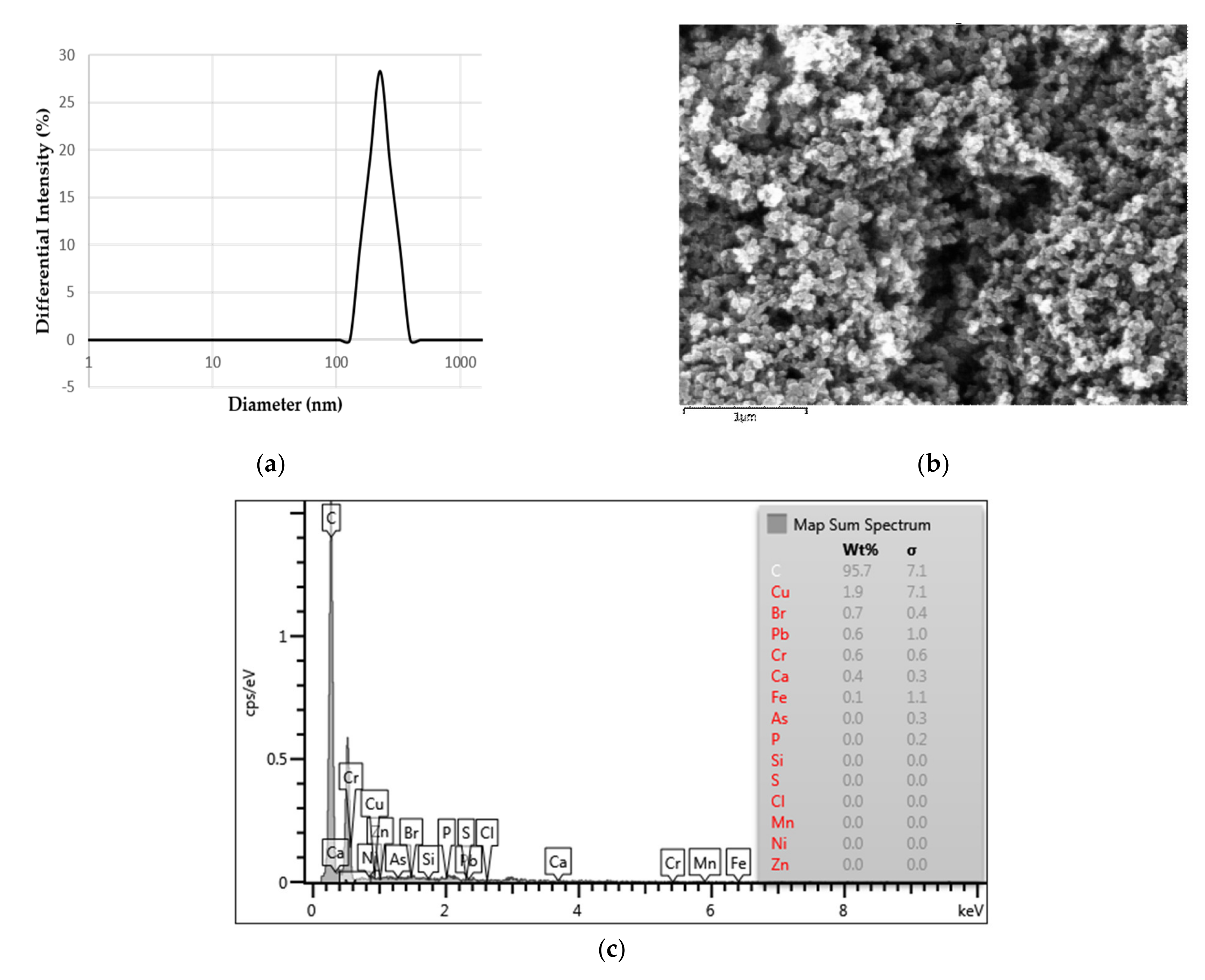
2.1. Characterization of the Prepared DEP
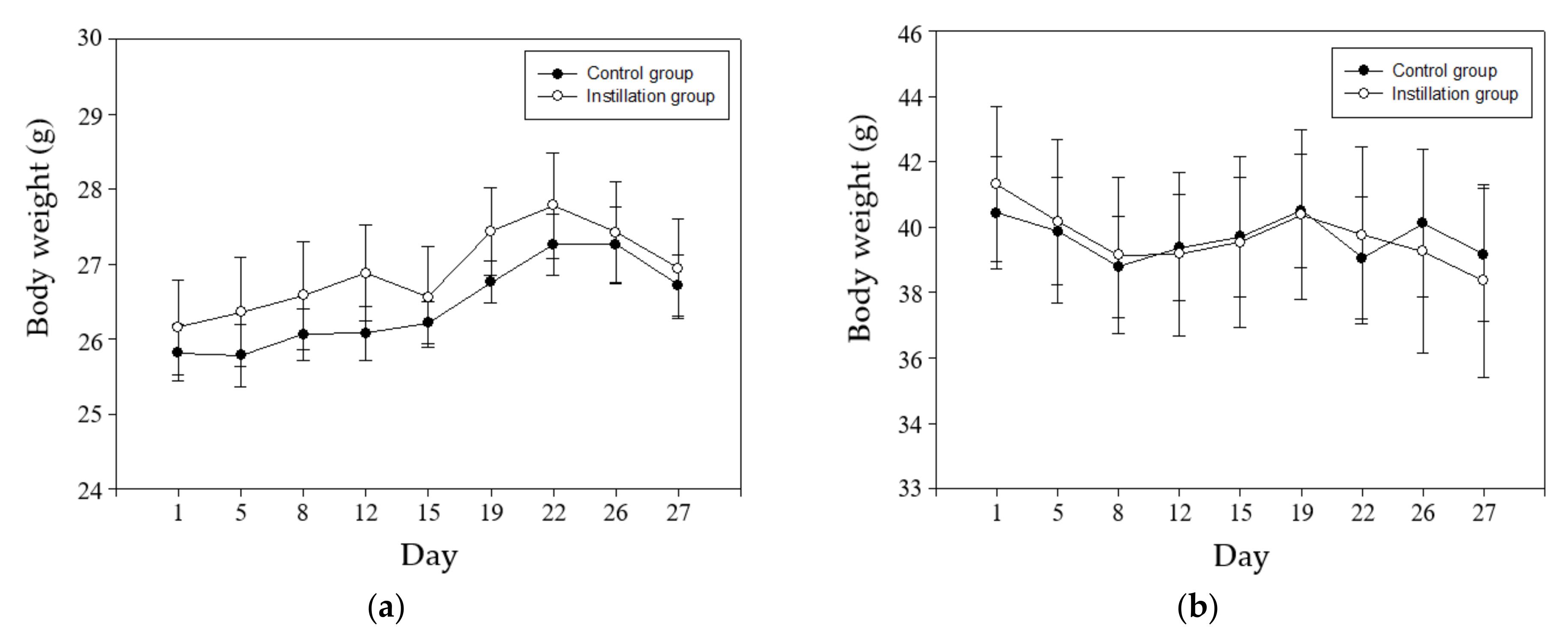
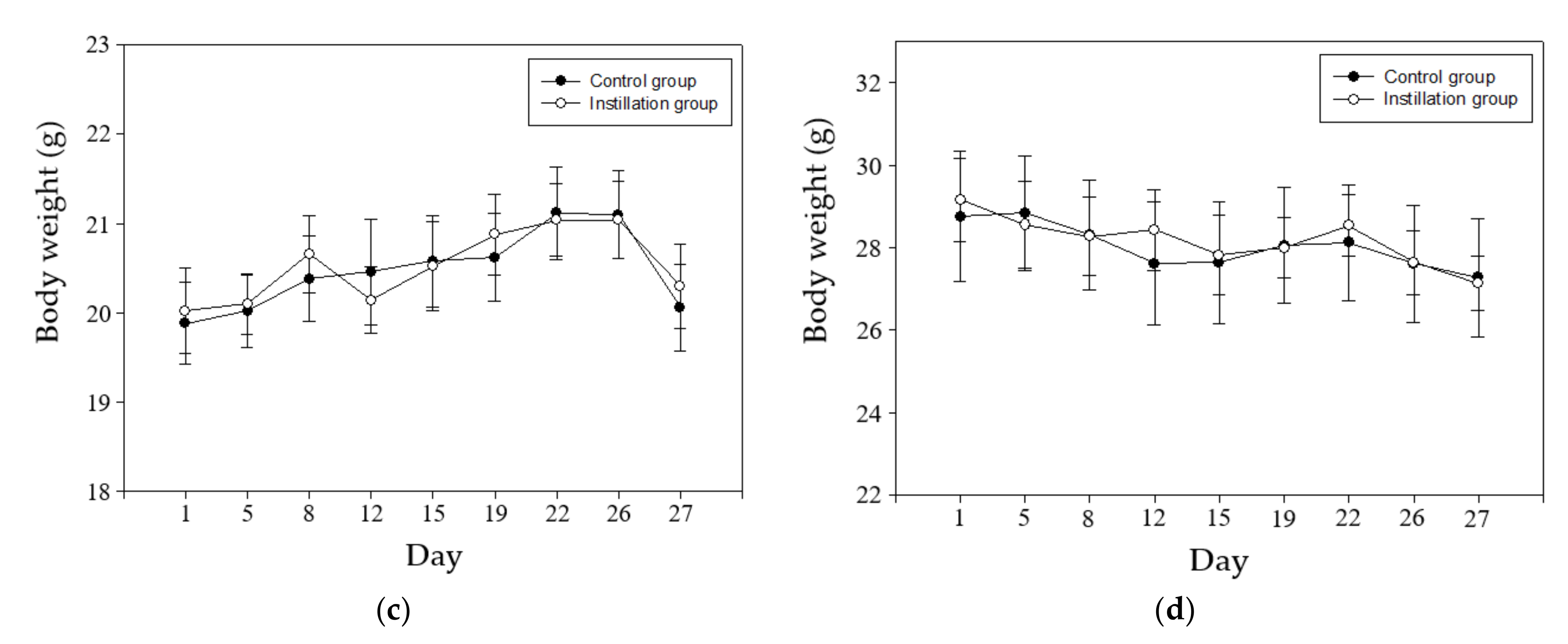
2.2. Animals
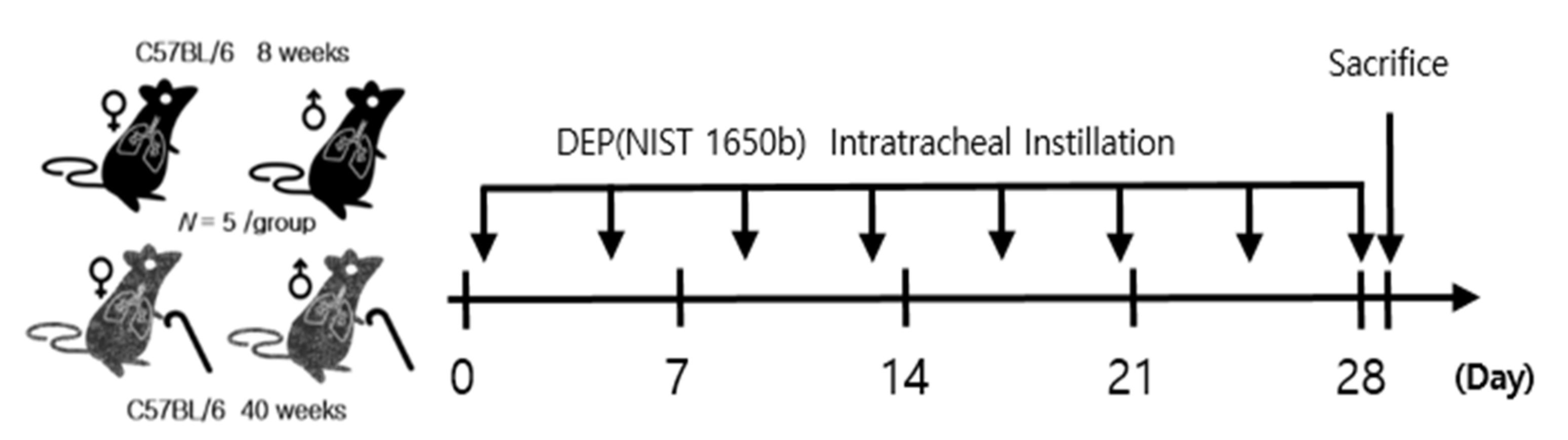
2.3. Intratracheal Instillation of DEP
2.4. In Vivo Micronuclei Assay
2.5. In Vivo Comet Assay (Single Cell Gel Electrophoresis Assay)
2.6. Statistical Analysis
3. Results
3.1. Physical and Chemical Characteristics of DEP
3.2. Effects of DEP Exposure on Cytogenetic Damage
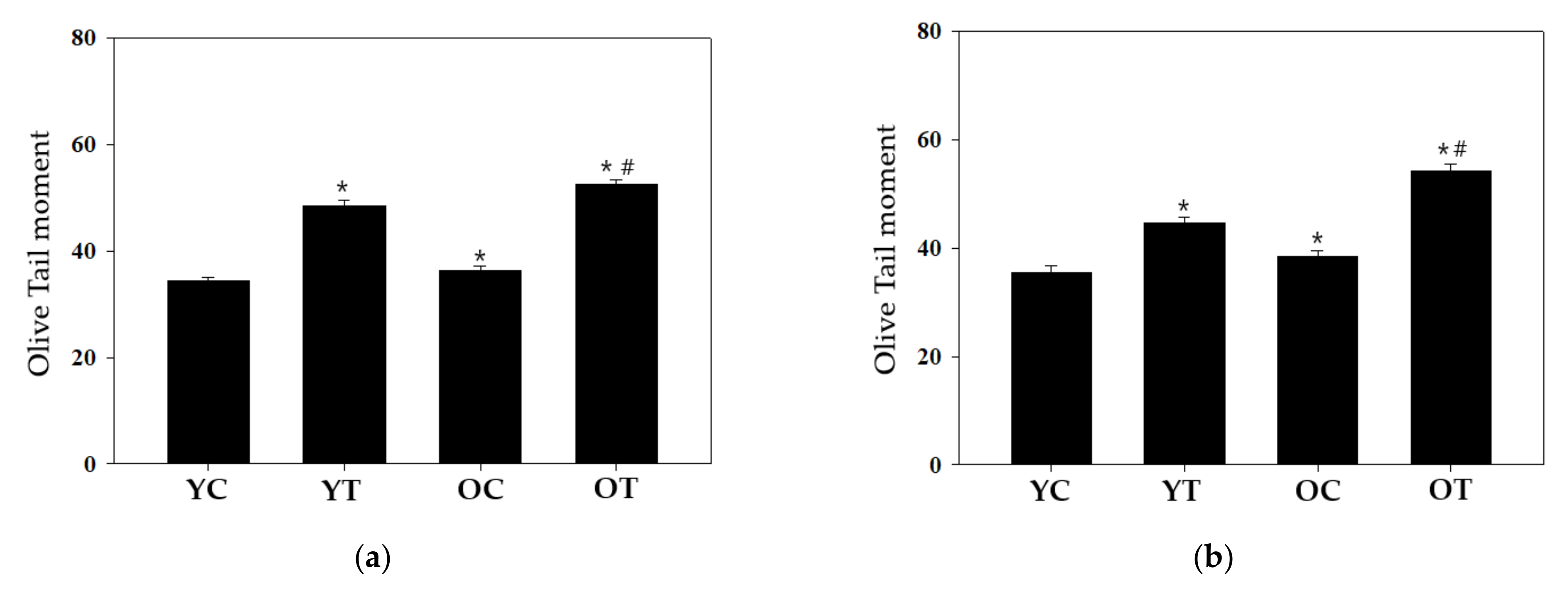
3.3. Effects of DEP Exposure on DNA Damage
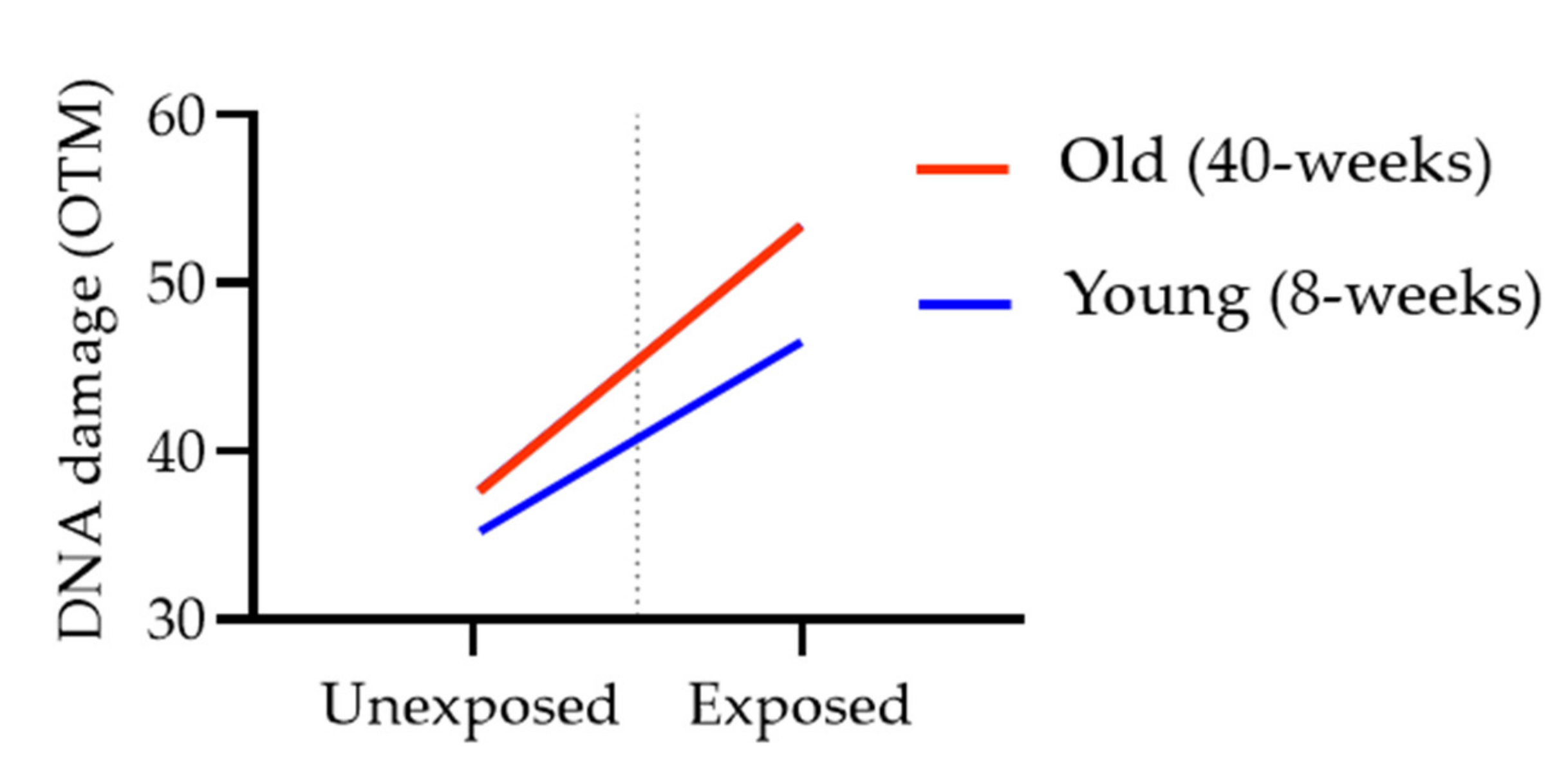
3.4. Effects of Age and Gender on DNA Damage in DEP-Exposed Mouse Lung
4. Discussion
5. Conclusions
Author Contributions
Funding
Institutional Review Board Statement
Informed Consent Statement
Data Availability Statement
Conflicts of Interest
References
- Kim, K.-H.; Kabir, E.; Kabir, S. A review on the human health impact of airborne particulate matter. Environ. Int. 2015, 74, 136–143. [Google Scholar] [CrossRef]
- Xing, Y.-F.; Xu, Y.-H.; Shi, M.-H.; Lian, Y.-X. The impact of PM2.5 on the human respiratory system. J. Thorac. Dis. 2016, 8, E69–E74. [Google Scholar]
- Bilal, M.; Nichol, J.E.; Nazeer, M.; Shi, Y.; Wang, L.; Kumar, K.R.; Ho, H.C.; Mazhar, U.; Bleiweiss, M.P.; Qiu, Z.; et al. Characteristics of Fine Particulate Matter (PM2.5) over Urban, Suburban, and Rural Areas of Hong Kong. Atmosphere 2019, 10, 496. [Google Scholar] [CrossRef]
- Al-Naiema, I.M.; Hettiyadura, A.P.S.; Wallace, H.W.; Sanchez, N.P.; Madler, C.J.; Cevik, B.K.; Bui, A.A.T.; Kettler, J.; Griffin, R.J.; Stone, E.A. Source apportionment of fine particulate matter in Houston, Texas: Insights to secondary organic aerosols. Atmos. Chem. Phys. Discuss. 2018, 18, 15601–15622. [Google Scholar] [CrossRef]
- International Agency for Research on Cancer (IARC). IARC: Diesel Engine Exhaust Carcinogenic. Press Release 2012, 213. Available online: https://www.iarc.who.int/news-events/iarc-diesel-engine-exhaust-carcinogenic/ (accessed on 28 February 2021).
- Steiner, S.; Bisig, C.; Petri-Fink, A.; Rothen-Rutishauser, B. Diesel exhaust: Current knowledge of adverse effects and underlying cellular mechanisms. Arch. Toxicol. 2016, 90, 1541–1553. [Google Scholar] [CrossRef]
- Leikauf, G.D.; Kim, S.-H.; Jang, A.-S. Mechanisms of ultrafine particle-induced respiratory health effects. Exp. Mol. Med. 2020, 52, 329–337. [Google Scholar] [CrossRef] [PubMed]
- Ristovski, Z.D.; Miljevic, B.; Surawski, N.C.; Morawska, L.; Fong, K.M.; Goh, F.; Yang, I.A. Respiratory health effects of diesel particulate matter. Respirology 2012, 17, 201–212. [Google Scholar] [CrossRef] [PubMed]
- Huggins, F.E.; Huffman, G.P.; Robertson, J. Speciation of elements in NIST particulate matter SRMs 1648 and 1650. J. Hazard. Mater. 2000, 74, 1–23. [Google Scholar] [CrossRef]
- Tang, S.; LaDuke, G.; Chien, W.; Frank, B.P. Impacts of biodiesel blends on PM2.5, particle number and size distribution, and elemental/organic carbon from nonroad diesel generators. Fuel 2016, 172, 11–19. [Google Scholar] [CrossRef]
- Danielsen, P.H.; Loft, S.; Møller, P. DNA damage and cytotoxicity in type II lung epithelial (A549) cell cultures after exposure to diesel exhaust and urban street particles. Part. Fibre Toxicol. 2008, 5, 6. [Google Scholar] [CrossRef]
- Dybdahl, M.; Risom, L.; Bornholdt, J.; Autrup, H.; Loft, S.; Wallin, H. Inflammatory and genotoxic effects of diesel particles in vitro and in vivo. Mutat. Res. Toxicol. Environ. Mutagen. 2004, 562, 119–131. [Google Scholar] [CrossRef] [PubMed]
- Carero, A.D.P.; Hoet, P.; Verschaeve, L.; Schoeters, G.; Nemery, B. Genotoxic effects of carbon black particles, diesel exhaust particles, and urban air particulates and their extracts on a human alveolar epithelial cell line (A549) and a human monocytic cell line (THP-1). Environ. Mol. Mutagen. 2001, 37, 155–163. [Google Scholar] [CrossRef]
- Risom, L.; Dybdahl, M.; Bornholdt, J.; Vogel, U.; Wallin, H.; Møller, P.; Loft, S. Oxidative DNA damage and defence gene expression in the mouse lung after short-term exposure to diesel exhaust particles by inhalation. Carcinogenesis 2003, 24, 1847–1852. [Google Scholar] [CrossRef]
- Møller, P.; Daneshvar, B.; Loft, S.; Wallin, H.; Poulsen, H.E.; Autrup, H.; Ravn-Haren, G.; Dragsted, L.O. Oxidative DNA damage in vitamin C-supplemented guinea pigs after intratracheal instillation of diesel exhaust particles. Toxicol. Appl. Pharmacol. 2003, 189, 39–44. [Google Scholar] [CrossRef]
- Danielsen, P.H.; Risom, L.; Wallin, H.; Autrup, H.; Vogel, U.; Loft, S.; Møller, P. DNA damage in rats after a single oral exposure to diesel exhaust particles. Mutat. Res. Mol. Mech. Mutagen. 2008, 637, 49–55. [Google Scholar] [CrossRef]
- Müller, A.K.; Farombi, E.; Møller, P.; Autrup, H.N.; Vogel, U.; Wallin, H.; Dragsted, L.O.; Loft, S.; Binderup, M.-L. DNA damage in lung after oral exposure to diesel exhaust particles in Big Blue® rats. Mutat. Res. Mol. Mech. Mutagen. 2004, 550, 123–132. [Google Scholar] [CrossRef]
- Clayton, J.A.; Collins, F.S. Policy: NIH to balance sex in cell and animal studies. Nat. News 2014, 509, 282. [Google Scholar] [CrossRef] [PubMed]
- Council, N.R. Guidance for the Description of Animal Research in Scientific Publications; National Academies Press: Washington, DC, USA, 2011. [Google Scholar]
- Heuser, V.D.; Da Silva, J.; Moriske, H.J.; Dias, J.F.; Yoneama, M.L.; de Freitas, T.R. Genotoxicity biomonitoring in regions exposed to vehicle emissions using the comet assay and the micronucleus test in native rodent Ctenomys minutus. Environ. Mol. Mutagenesis 2002, 40, 227–235. [Google Scholar] [CrossRef] [PubMed]
- Da Silva, J.; de Freitas, T.R.; Heuser, V.; Marinho, J.R.; Erdtmann, B. Genotoxicity biomonitoring in coal regions using wild rodent Ctenomys torquatus by comet assay and micronucleus test. Environ. Mol. Mutagenesis 2000, 35, 270–278. [Google Scholar] [CrossRef]
- Bemis, J.C.; Torous, D.K.; Dertinger, S.D. Part 2. Assessment of Micronucleus Formation in Rats after Chronic Exposure to New-Technology Diesel Exhaust in the ACES Bioassay; Research Report; Health Effects Institute: Boston, MA, USA, 2015; pp. 69–82. [Google Scholar]
- Kyjovska, Z.O.; Jacobsen, N.R.; Saber, A.T.; Bengtson, S.; Jackson, P.; Wallin, H.; Vogel, U.B. DNA damage following pulmonary exposure by instillation to low doses of carbon black (Printex 90) nanoparticles in mice. Environ. Mol. Mutagen. 2014, 56, 41–49. [Google Scholar] [CrossRef] [PubMed]
- Kyjovska, Z.O.; Jacobsen, N.R.; Saber, A.T.; Bengtson, S.; Jackson, P.; Wallin, H.; Vogel, U. DNA strand breaks, acute phase response and inflammation following pulmonary exposure by instillation to the diesel exhaust particle NIST1650b in mice. Mutagenesis 2015, 30, 499–507. [Google Scholar] [CrossRef]
- Morimoto, Y.; Izumi, H.; Yoshiura, Y.; Tomonaga, T.; Oyabu, T.; Myojo, T.; Kawai, K.; Yatera, K.; Shimada, M.; Kubo, M.; et al. Evaluation of Pulmonary Toxicity of Zinc Oxide Nanoparticles Following Inhalation and Intratracheal Instillation. Int. J. Mol. Sci. 2016, 17, 1241. [Google Scholar] [CrossRef]
- Morimoto, Y.; Ogami, A.; Todoroki, M.; Yamamoto, M.; Murakami, M.; Hirohashi, M.; Oyabu, T.; Myojo, T.; Nishi, K.-I.; Kadoya, C.; et al. Expression of inflammation-related cytokines following intratracheal instillation of nickel oxide nanoparticles. Nanotoxicology 2009, 4, 161–176. [Google Scholar] [CrossRef]
- Kim, D.I.; Song, M.-K.; Kim, H.-I.; Han, K.M.; Lee, K. Diesel exhaust particulates induce neutrophilic lung inflammation by modulating endoplasmic reticulum stress-mediated CXCL1/KC expression in alveolar macrophages. Molecules 2020, 25, 6046. [Google Scholar] [CrossRef]
- Lee, S.J.; Park, J.-H.; Lee, J.-Y.; Jeong, Y.-J.; Song, J.A.; Lee, K.; Kim, N.-J. Establishment of a mouse model for pulmonary inflammation and fibrosis by intratracheal instillation of polyhexamethyleneguanidine phosphate. J. Toxicol. Pathol. 2016, 29, 95–102. [Google Scholar] [CrossRef] [PubMed]
- Kim, D.I.; Song, M.-K.; Kim, S.-H.; Park, C.Y.; Lee, K. TF-343 Alleviates Diesel Exhaust Particulate-Induced Lung Inflammation via Modulation of Nuclear Factor-κB Signaling. J. Immunol. Res. 2019, 2019, 12. [Google Scholar] [CrossRef]
- Wu, L.; Zhang, J.; Watanabe, W. Physical and chemical stability of drug nanoparticles. Adv. Drug Deliv. Rev. 2011, 63, 456–469. [Google Scholar] [CrossRef] [PubMed]
- OECD. Test No. 474: Mammalian Erythrocyte Micronucleus Test; OECD Publishing: Paris, France, 2016; Available online: https://www.oecd.org/env/test-no-474-mammalian-erythrocyte-micronucleus-test-9789264264762-en.htm (accessed on 28 February 2021).
- Singh, N.P.; McCoy, M.T.; Tice, R.R.; Schneider, E.L. A simple technique for quantitation of low levels of DNA damage in individual cells. Exp. Cell Res. 1988, 175, 184–191. [Google Scholar] [CrossRef]
- Møller, P. The comet assay: Ready for 30 more years. Mutagenesis 2018, 33, 1–7. [Google Scholar] [CrossRef]
- Kumaravel, T.; Jha, A.N. Reliable Comet assay measurements for detecting DNA damage induced by ionising radiation and chemicals. Mutat. Res. Toxicol. Environ. Mutagen. 2006, 605, 7–16. [Google Scholar] [CrossRef] [PubMed]
- Vojtisek-Lom, M.; Pechout, M.; Dittrich, L.; Beránek, V.; Kotek, M.; Schwarz, J.; Vodička, P.; Milcová, A.; Rossnerová, A.; Ambrož, A.; et al. Polycyclic aromatic hydrocarbons (PAH) and their genotoxicity in exhaust emissions from a diesel engine during extended low-load operation on diesel and biodiesel fuels. Atmos. Environ. 2015, 109, 9–18. [Google Scholar] [CrossRef]
- Larsson, M.; Hill, A.; Duffy, J. Suspension stability; why particle size, zeta potential and rheology are important. Annu. Trans. Nord. Rheol. Soc. 2012, 20, 209–214. [Google Scholar]
- Morimoto, K.; Kitamura, M.; Kondo, H.; Koizumi, A. Genotoxicity of diesel exhaust emissions in a battery of in-vitro short-term and in-vivo bioassays. Dev. Toxicol. Environ. Sci. 1986, 13, 85–101. [Google Scholar]
- Ong, T.; Whong, W.-Z.; Xu, J.; Burchell, B.; Green, F.; Lewis, T. Genotoxicity studies of rodents exposed to coal dust and diesel emission particulates. Environ. Res. 1985, 37, 399–409. [Google Scholar] [CrossRef]
- Pereira, M.A. Genotoxicity of diesel exhaust emissions in laboratory animals. Dev. Toxicol. Environ. Sci. 1982, 10, 265–276. [Google Scholar]
- Pereira, M.; Connor, T.; Meyne, J.; Legator, M. Metaphase analysis, micronuclei assay, and urinary mutagenicity assay of mice exposed to diesel emissions. Environ. Int. 1981, 5, 435–438. [Google Scholar] [CrossRef]
- Mauderly, J.L.; Snipes, M.B.; Barr, E.B.; Belinsky, S.A.; Bond, J.A.; Brooks, A.L.; Chang, I.Y.; Cheng, Y.S.; Gillett, N.A.; Griffith, W.C. Pulmonary Toxicity of Inhaled Diesel Exhaust and Carbon Black in Chronically Exposed Rats. Part I: Neoplastic and Nonneoplastic Lung Lesions; Research Report; Health Effects Institute: Boston, MA, USA, 1994; pp. 1–75. [Google Scholar]
- Pereira, M.; Sabharwal, P.; Kaur, P.; Ross, C.; Choi, A.; Dixon, T. In vivo detection of mutagenic effects of diesel exhaust by short-term mammalian bioassays. Environ. Int. 1981, 5, 439–443. [Google Scholar] [CrossRef]
- Hashimoto, A.H.; Amanuma, K.; Hiyoshi, K.; Sugawara, Y.; Goto, S.; Yanagisawa, R.; Takano, H.; Masumura, K.i.; Nohmi, T.; Aoki, Y. Mutations in the lungs of gpt delta transgenic mice following inhalation of diesel exhaust. Environ. Mol. Mutagenesis 2007, 48, 682–693. [Google Scholar] [CrossRef] [PubMed]
- Sato, H.; Sone, H.; Sagai, M.; Suzuki, K.T.; Aoki, Y. Increase in mutation frequency in lung of Big Blue rat by exposure to diesel exhaust. Carcinogenesis 2000, 21, 653–661. [Google Scholar] [CrossRef]
- Møller, P.; Scholten, R.H.; Roursgaard, M.; Krais, A.M. Inflammation, oxidative stress and genotoxicity responses to biodiesel emissions in cultured mammalian cells and animals. Crit. Rev. Toxicol. 2020, 50, 383–401. [Google Scholar] [CrossRef]
- Kawanishi, S.; Ohnishi, S.; Ma, N.; Hiraku, Y.; Murata, M. Crosstalk between DNA Damage and Inflammation in the Multiple Steps of Carcinogenesis. Int. J. Mol. Sci. 2017, 18, 1808. [Google Scholar] [CrossRef]
- Gangwar, R.S.; Bevan, G.H.; Palanivel, R.; Das, L.; Rajagopalan, S. Oxidative stress pathways of air pollution mediated toxicity: Recent insights. Redox Biol. 2020, 34, 101545. [Google Scholar] [CrossRef] [PubMed]
- Lodovici, M.; Bigagli, E. Oxidative Stress and Air Pollution Exposure. J. Toxicol. 2011, 2011, 1–9. [Google Scholar] [CrossRef] [PubMed]
- Farina, F.; Lonati, E.; Milani, C.; Massimino, L.; Ballarini, E.; Donzelli, E.; Crippa, L.; Marmiroli, P.; Botto, L.; Corsetto, P.A.; et al. In Vivo Comparative Study on Acute and Sub-acute Biological Effects Induced by Ultrafine Particles of Different Anthropogenic Sources in BALB/c Mice. Int. J. Mol. Sci. 2019, 20, 2805. [Google Scholar] [CrossRef] [PubMed]
- Knol, M.J.; VanderWeele, T.J. Recommendations for presenting analyses of effect modification and interaction. Int. J. Epidemiol. 2012, 41, 514–520. [Google Scholar] [CrossRef] [PubMed]
- Pagiatakis, C.; Musolino, E.; Gornati, R.; Bernardini, G.; Papait, R. Epigenetics of aging and disease: A brief overview. Aging Clin. Exp. Res. 2019, 1–9. [Google Scholar] [CrossRef]
- Liu, J.-P. Molecular mechanisms of ageing and related diseases. Clin. Exp. Pharmacol. Physiol. 2014, 41, 445–458. [Google Scholar] [CrossRef]
- Crocco, P.; Montesanto, A.; Dato, S.; Geracitano, S.; Iannone, F.; Passarino, G.; Rose, G. Inter-Individual Variability in Xenobiotic-Metabolizing Enzymes: Implications for Human Aging and Longevity. Genes 2019, 10, 403. [Google Scholar] [CrossRef]



| Particle | Media | pH | Diameter (nm) | PDI | Zeta Potential (mV) |
|---|---|---|---|---|---|
| DEP (NIST 1650b) | dH2O | 6 | 268.7 | 0.143 | −26.29 |
| Groups | Animal No. | The Frequency of Micronuclei (%, Mean ± S.E.) | PCE/(PCE+NCE) (%, Mean ± S.E.) |
|---|---|---|---|
| Young mice control (8 weeks old) | 5 | 0.26 ± 0.03 | 0.55 ± 0.01 |
| DEP-instilled young mice (8 weeks old) | 5 | 0.22 ± 0.04 | 0.55 ± 0.02 |
| Old mice control (40 weeks old) | 5 | 0.17 ± 0.03 | 0.54 ± 0.01 |
| DEP-instilled old mice (40 weeks old) | 5 | 0.16 ± 0.05 | 0.53 ± 0.01 |
| Groups | Animal No. | The Frequency of Micronuclei (%, Mean ± S.E.) | PCE/(PCE+NCE) (%, Mean ± S.E.) |
|---|---|---|---|
| Young mice control (8 weeks old) | 5 | 0.15 ± 0.02 | 0.55 ± 0.01 |
| DEP-instilled young mice (8 weeks old) | 5 | 0.11 ± 0.01 | 0.55 ± 0.02 |
| Old mice control (40 weeks old) | 5 | 0.10 ± 0.01 | 0.54 ± 0.01 |
| DEP-instilled old mice (40 weeks old) | 5 | 0.09 ± 0.01 | 0.53 ± 0.01 |
| Variable | Estimate | 95% CI | p-Value |
|---|---|---|---|
| Intercept | 33.65 | 32.20 to 35.10 | <0.0001 |
| Gender a (Female) | 0.32 | −1.12 to 1.77 | 0.66 |
| Age b (Old) | 4.63 | 3.18 to 6.07 | <0.0001 |
| DEP c (Exposure) | 13.84 | 12.39 to 15.28 | <0.0001 |
Publisher’s Note: MDPI stays neutral with regard to jurisdictional claims in published maps and institutional affiliations. |
© 2021 by the authors. Licensee MDPI, Basel, Switzerland. This article is an open access article distributed under the terms and conditions of the Creative Commons Attribution (CC BY) license (http://creativecommons.org/licenses/by/4.0/).
Share and Cite
Lee, J.W.; Kim, J.S.; Lee, H.J.; Jang, J.-H.; Kim, J.-H.; Sim, W.J.; Lim, Y.-b.; Jung, J.-W.; Lim, H.J. Age and Gender Effects on Genotoxicity in Diesel Exhaust Particles Exposed C57BL/6 Mice. Biomolecules 2021, 11, 374. https://doi.org/10.3390/biom11030374
Lee JW, Kim JS, Lee HJ, Jang J-H, Kim J-H, Sim WJ, Lim Y-b, Jung J-W, Lim HJ. Age and Gender Effects on Genotoxicity in Diesel Exhaust Particles Exposed C57BL/6 Mice. Biomolecules. 2021; 11(3):374. https://doi.org/10.3390/biom11030374
Chicago/Turabian StyleLee, Joong Won, Jin Sik Kim, Hee Jae Lee, Ji-Hye Jang, Ja-Hyun Kim, Woo Jong Sim, Yong-beom Lim, Ji-Won Jung, and Hyun Joung Lim. 2021. "Age and Gender Effects on Genotoxicity in Diesel Exhaust Particles Exposed C57BL/6 Mice" Biomolecules 11, no. 3: 374. https://doi.org/10.3390/biom11030374
APA StyleLee, J. W., Kim, J. S., Lee, H. J., Jang, J.-H., Kim, J.-H., Sim, W. J., Lim, Y.-b., Jung, J.-W., & Lim, H. J. (2021). Age and Gender Effects on Genotoxicity in Diesel Exhaust Particles Exposed C57BL/6 Mice. Biomolecules, 11(3), 374. https://doi.org/10.3390/biom11030374