

Galanin Receptors: G Protein-Dependent Signaling and Beyond


Abstract
1. Introduction: The Galaninergic System
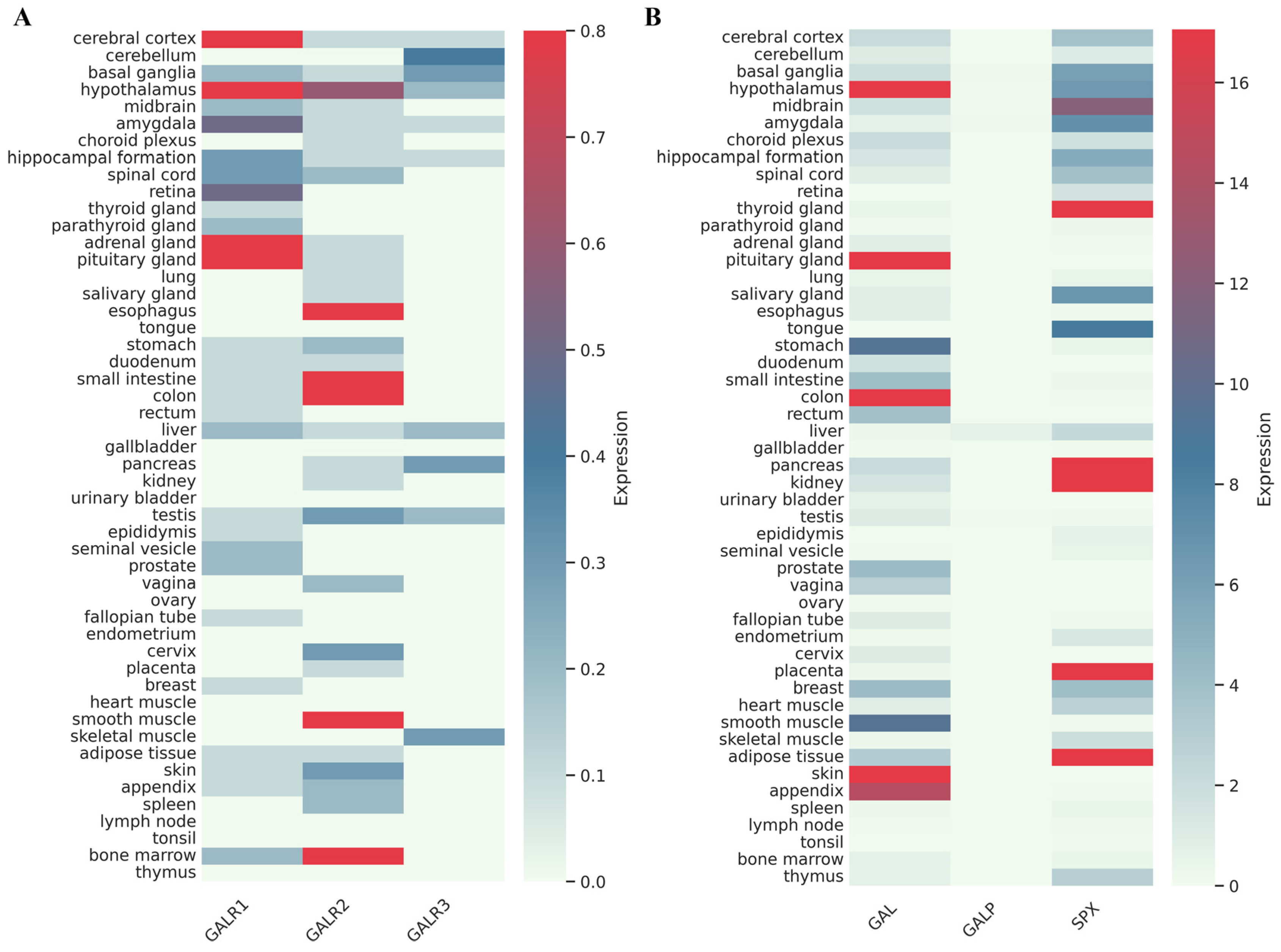
2. The Distribution of the Galanin Receptors and Peptides in Humans
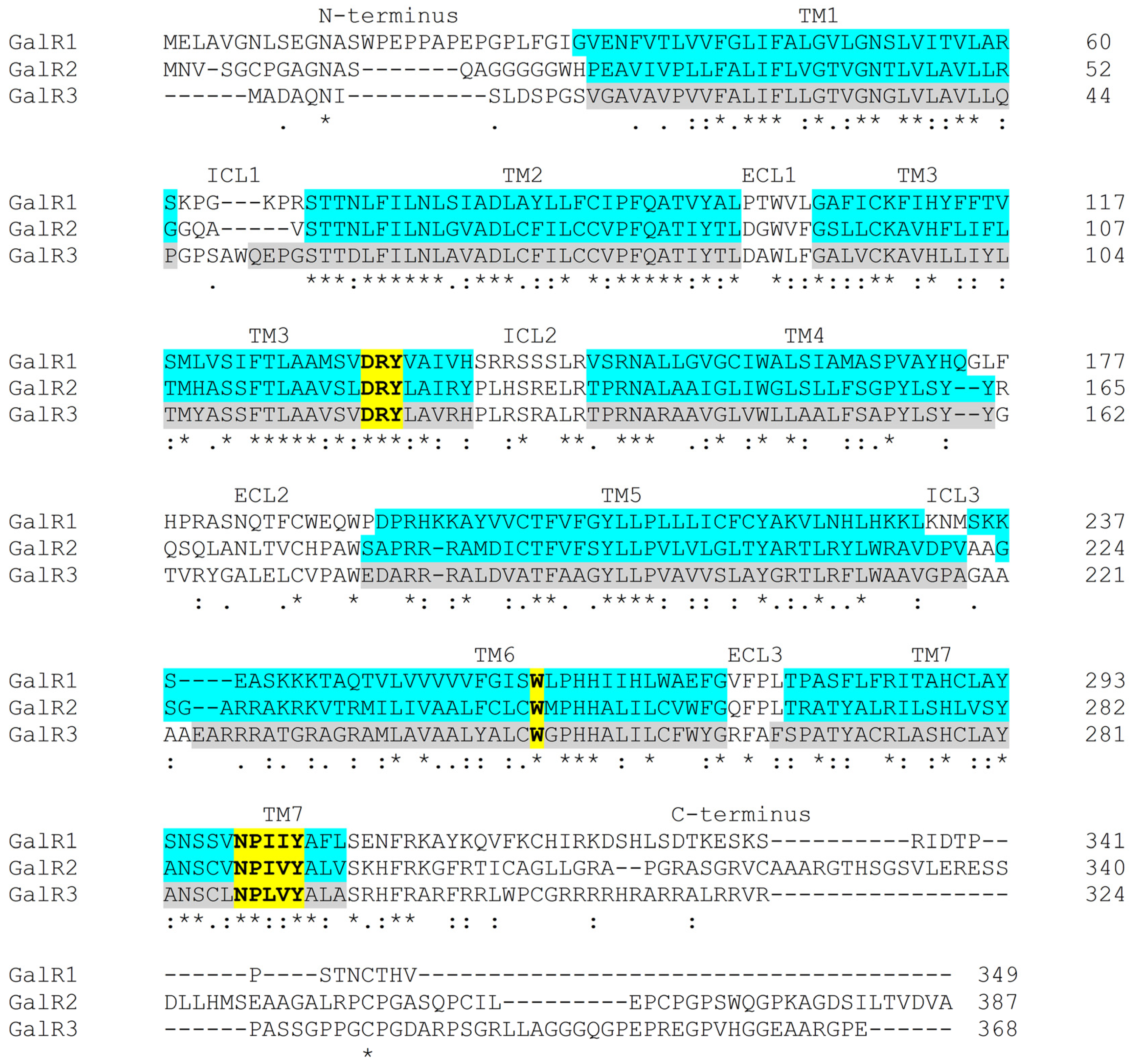
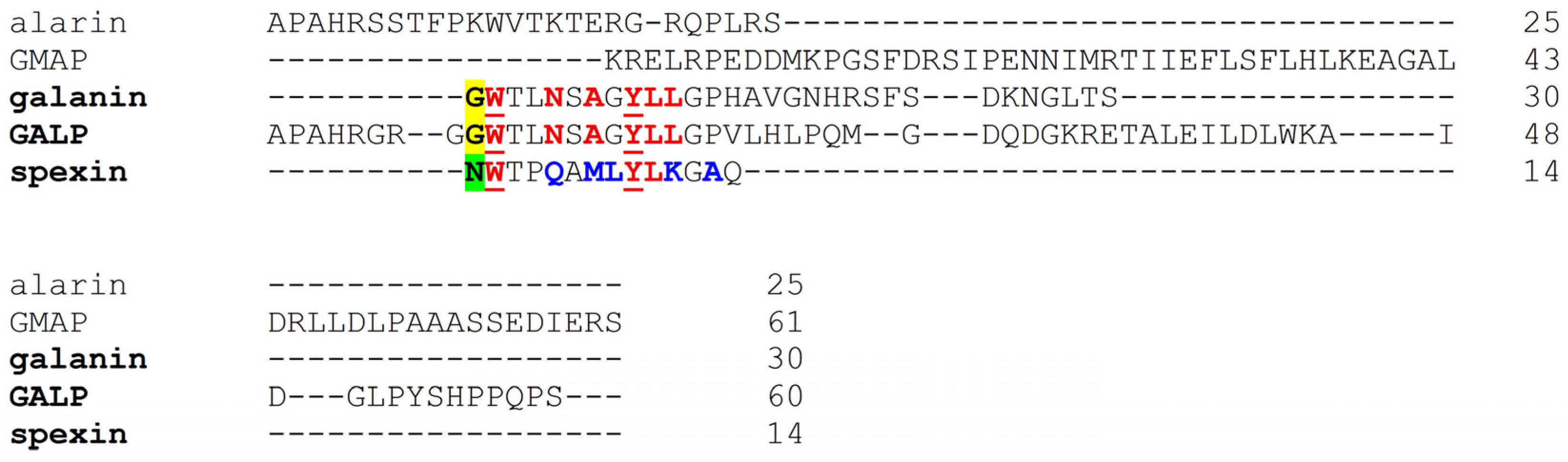
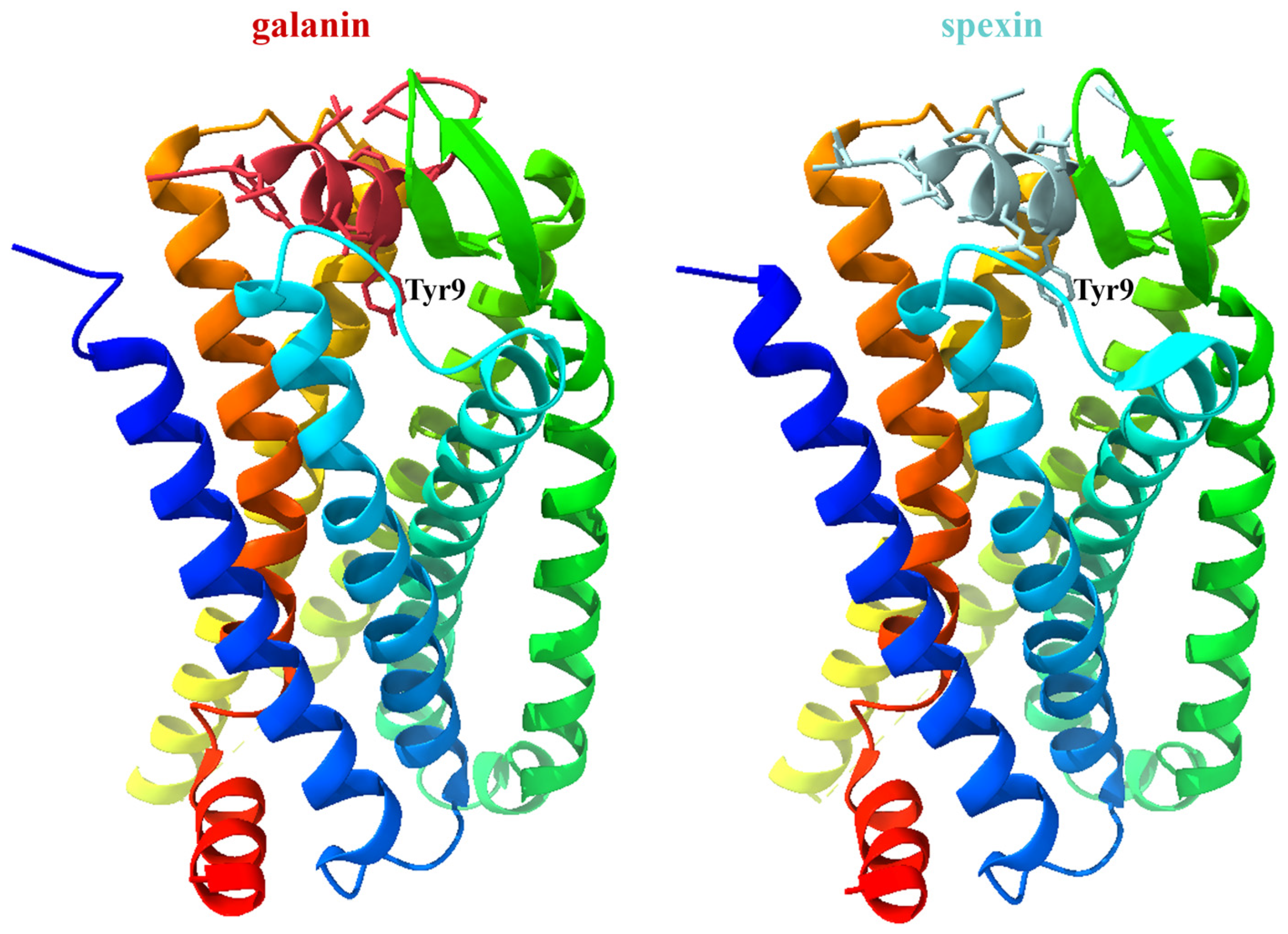
3. Structural Insight into the Ligand Binding and Specificity of Galanin Receptors
4. G Protein and β-Arrestin-Coupled Signaling Pathways of Galanin Receptors
4.1. G Protein-Dependent Signaling

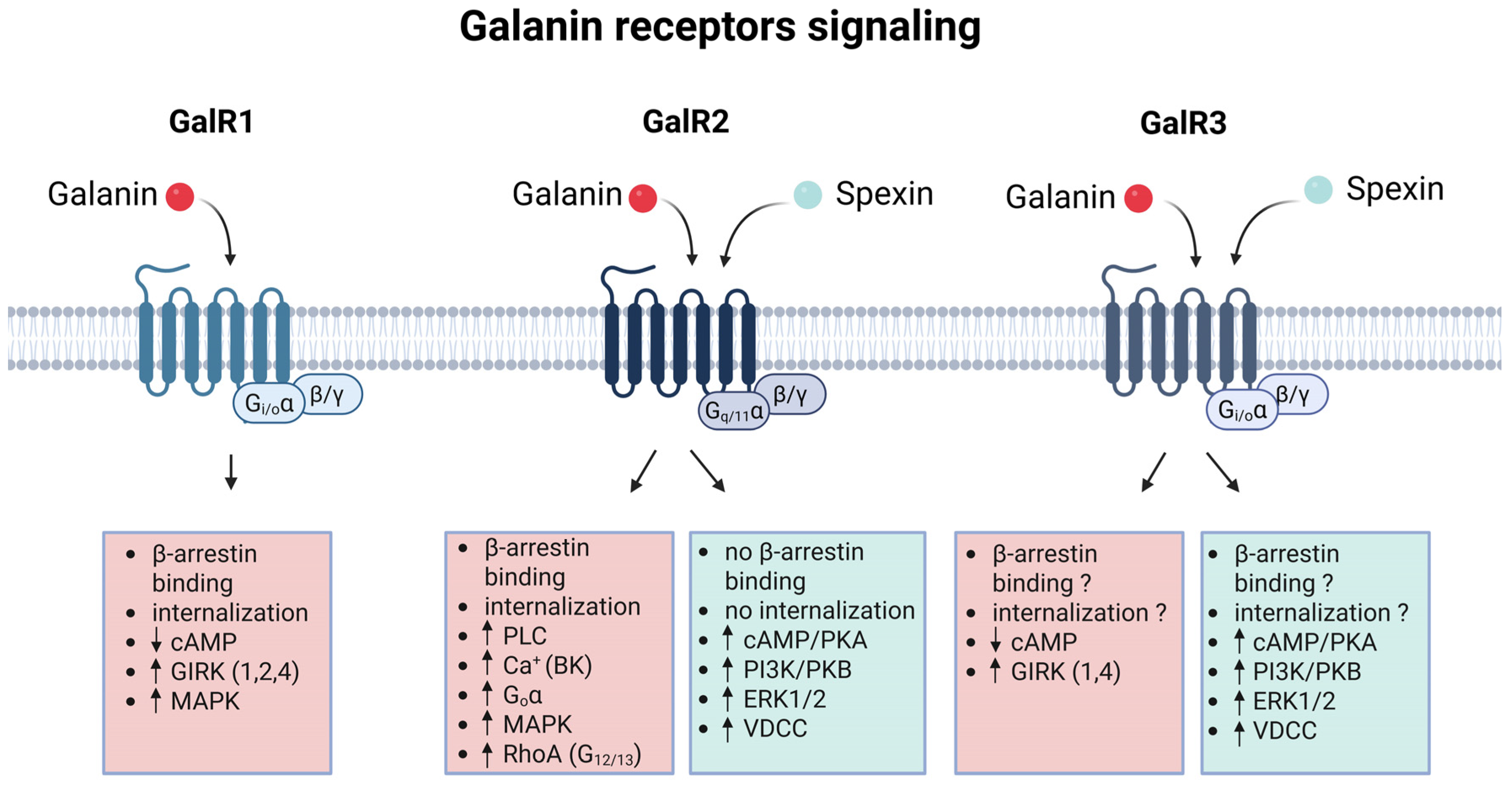
| GalR1 P47211 | GalR2 O43603 | GalR3 O60755 | ||
|---|---|---|---|---|
| Endogenous agonists | galanin P22466 | pKi 9.1–10.5 [4,47] | pKi 8.6–9.1 [48,49] | pKi 7.2 [37] |
| pEC50 7.1 [17] | pEC50 5.9 [17] | |||
| spexin Q9BT56 | pEC50 6.8 [17] | pEC50 6.2 [17] | ||
| GALP Q9UBC7 | pIC50 7.1 [50] | pIC50 7.6–7.7 [15,50] | pIC50 8.0 [50] | |
| alarin | pIC50 < 6.0 in rat [51] | in rat pIC50 < 6.0 [51] | in rat pIC50 < 6.0 [51] | |
| G protein-dependent pathway | Gαi/o-type G proteins ↓ adenylate cyclase ↓ cAMP ↑ MAPK activity ↑ GIRK (GIRK1, GIRK2, GIRK4) [38,39,40] | Gαq/11-type G proteins ↑ phospholipase C ↑ Ca2+-dependent ion channels (BK), ↑ Ca2+ [40,41] | Gαi/o-type G proteins ↓ adenylate cyclase ↓ cAMP ↑ GIRK (GIRK1, GIRK4) [37,44] | |
| Gαo-type G proteins ↑ MAPK activity [40] | ||||
| Gα12/13-type G protein ↑ Rho A [42] | ||||
| spexin: ↑ cAMP/PKA ↑ PI3K/PKB, ↑ ERK1/2 ↑ VDCC [44,45] | spexin: ↑ cAMP/PKA ↑ PI3K/PKB, ↑ ERK1/2 ↑ VDCC [44,45] | |||
| β-arrestin | yes [52] | yes [53] | ? | |
| internalization [54,55] | internalization [56] | ? | ||
4.2. β-Arrestin-Dependent Signaling of GPCRs
4.3. Structural Insight into β-Arrestin Binding of GPCRs
4.4. β-Arrestin-Dependent Pathways of the Galanin Receptors
5. Homo- and Heterodimerization of Galanin Receptors
6. Physiological and Pathological Functions of the Galaninergic System
6.1. Physiological Roles of the Galaninergic System
6.2. Pathological Functions
6.2.1. Diabetes Mellitus and Obesity
6.2.2. Cardiovascular Diseases
6.2.3. Alzheimer’s Disease
7. Therapeutic Potency of the Galaninergic System
8. Conclusions, Challenges and Future Perspectives
Author Contributions
Funding
Institutional Review Board Statement
Informed Consent Statement
Data Availability Statement
Acknowledgments
Conflicts of Interest
Abbreviations
References
- Kim, D.; Tokmakova, A.; Woo, J.A.; An, S.S.; Goddard, W.A., 3rd; Liggett, S.B. Selective Signal Capture from Multidimensional GPCR Outputs with Biased Agonists: Progress Towards Novel Drug Development. Mol. Diagn. Ther. 2022, 26, 383–396. [Google Scholar] [CrossRef]
- Sipkova, J.; Kramarikova, I.; Hynie, S.; Klenerova, V. The galanin and galanin receptor subtypes, its regulatory role in the biological and pathological functions. Physiol. Res. 2017, 66, 729–740. [Google Scholar] [CrossRef]
- Lang, R.; Gundlach, A.L.; Holmes, F.E.; Hobson, S.A.; Wynick, D.; Hokfelt, T.; Kofler, B. Physiology, signaling, and pharmacology of galanin peptides and receptors: Three decades of emerging diversity. Pharmacol. Rev. 2015, 67, 118–175. [Google Scholar] [CrossRef]
- Habert-Ortoli, E.; Amiranoff, B.; Loquet, I.; Laburthe, M.; Mayaux, J.F. Molecular cloning of a functional human galanin receptor. Proc. Natl. Acad. Sci. USA 1994, 91, 9780–9783. [Google Scholar] [CrossRef]
- Howard, A.D.; Tan, C.; Shiao, L.L.; Palyha, O.C.; McKee, K.K.; Weinberg, D.H.; Feighner, S.D.; Cascieri, M.A.; Smith, R.G.; Van Der Ploeg, L.H.; et al. Molecular cloning and characterization of a new receptor for galanin. FEBS Lett. 1997, 405, 285–290. [Google Scholar] [CrossRef]
- Wang, S.; He, C.; Hashemi, T.; Bayne, M. Cloning and expressional characterization of a novel galanin receptor. Identification of different pharmacophores within galanin for the three galanin receptor subtypes. J. Biol. Chem. 1997, 272, 31949–31952. [Google Scholar] [CrossRef]
- Gurevich, V.V.; Gurevich, E.V. GPCR Signaling Regulation: The Role of GRKs and Arrestins. Front. Pharmacol. 2019, 10, 125. [Google Scholar] [CrossRef] [PubMed]
- Madeira, F.; Madhusoodanan, N.; Lee, J.; Eusebi, A.; Niewielska, A.; Tivey, A.R.N.; Lopez, R.; Butcher, S. The EMBL-EBI Job Dispatcher sequence analysis tools framework in 2024. Nucleic Acids Res. 2024, 52, W521–W525. [Google Scholar] [CrossRef] [PubMed]
- Jiang, W.; Zheng, S. Structural insights into galanin receptor signaling. Proc. Natl. Acad. Sci. USA 2022, 119, e2121465119. [Google Scholar] [CrossRef]
- Heo, Y.; Ishimoto, N.; Jeon, Y.E.; Yun, J.H.; Ohki, M.; Anraku, Y.; Sasaki, M.; Kita, S.; Fukuhara, H.; Ikuta, T.; et al. Structure of the human galanin receptor 2 bound to galanin and Gq reveals the basis of ligand specificity and how binding affects the G-protein interface. PLoS Biol. 2022, 20, e3001714. [Google Scholar] [CrossRef] [PubMed]
- Duan, J.; Shen, D.D.; Zhao, T.; Guo, S.; He, X.; Yin, W.; Xu, P.; Ji, Y.; Chen, L.N.; Liu, J.; et al. Molecular basis for allosteric agonism and G protein subtype selectivity of galanin receptors. Nat. Commun. 2022, 13, 1364. [Google Scholar] [CrossRef]
- Filipek, S. Molecular switches in GPCRs. Curr. Opin. Struct. Biol. 2019, 55, 114–120. [Google Scholar] [CrossRef] [PubMed]
- Tatemoto, K.; Rokaeus, A.; Jornvall, H.; McDonald, T.J.; Mutt, V. Galanin—A novel biologically active peptide from porcine intestine. FEBS Lett. 1983, 164, 124–128. [Google Scholar] [CrossRef]
- Rokaeus, A.; Brownstein, M.J. Construction of a porcine adrenal medullary cDNA library and nucleotide sequence analysis of two clones encoding a galanin precursor. Proc. Natl. Acad. Sci. USA 1986, 83, 6287–6291. [Google Scholar] [CrossRef] [PubMed]
- Ohtaki, T.; Kumano, S.; Ishibashi, Y.; Ogi, K.; Matsui, H.; Harada, M.; Kitada, C.; Kurokawa, T.; Onda, H.; Fujino, M. Isolation and cDNA cloning of a novel galanin-like peptide (GALP) from porcine hypothalamus. J. Biol. Chem. 1999, 274, 37041–37045. [Google Scholar] [CrossRef]
- Santic, R.; Fenninger, K.; Graf, K.; Schneider, R.; Hauser-Kronberger, C.; Schilling, F.H.; Kogner, P.; Ratschek, M.; Jones, N.; Sperl, W.; et al. Gangliocytes in neuroblastic tumors express alarin, a novel peptide derived by differential splicing of the galanin-like peptide gene. J. Mol. Neurosci. MN 2006, 29, 145–152. [Google Scholar] [CrossRef]
- Kim, D.K.; Yun, S.; Son, G.H.; Hwang, J.I.; Park, C.R.; Kim, J.I.; Kim, K.; Vaudry, H.; Seong, J.Y. Coevolution of the spexin/galanin/kisspeptin family: Spexin activates galanin receptor type II and III. Endocrinology 2014, 155, 1864–1873. [Google Scholar] [CrossRef]
- Krasnow, S.M.; Hohmann, J.G.; Gragerov, A.; Clifton, D.K.; Steiner, R.A. Analysis of the contribution of galanin receptors 1 and 2 to the central actions of galanin-like peptide. Neuroendocrinology 2004, 79, 268–277. [Google Scholar] [CrossRef]
- Kordower, J.H.; Mufson, E.J. Galanin-like immunoreactivity within the primate basal forebrain: Differential staining patterns between humans and monkeys. J. Comp. Neurol. 1990, 294, 281–292. [Google Scholar] [CrossRef]
- Le Maitre, E.; Barde, S.S.; Palkovits, M.; Diaz-Heijtz, R.; Hokfelt, T.G. Distinct features of neurotransmitter systems in the human brain with focus on the galanin system in locus coeruleus and dorsal raphe. Proc. Natl. Acad. Sci. USA 2013, 110, E536–E545. [Google Scholar] [CrossRef] [PubMed]
- Mir, F.A.; Jha, S.K.; Nehs, C.J. Noradrenergic dysregulation in the locus coeruleus: Implications for neuropsychiatric disease pathophysiology- A systematic review. Neurosci. Biobehav. Rev. 2025, 179, 106442. [Google Scholar] [CrossRef]
- Weinshenker, D.; Holmes, P.V. Regulation of neurological and neuropsychiatric phenotypes by locus coeruleus-derived galanin. Brain Res. 2016, 1641, 320–337. [Google Scholar] [CrossRef] [PubMed]
- Foster, S.L.; Galaj, E.; Karne, S.L.; Ferre, S.; Weinshenker, D. Cell-type specific expression and behavioral impact of galanin and GalR1 in the locus coeruleus during opioid withdrawal. Addict. Biol. 2021, 26, e13037. [Google Scholar] [CrossRef]
- Gentleman, S.M.; Falkai, P.; Bogerts, B.; Herrero, M.T.; Polak, J.M.; Roberts, G.W. Distribution of galanin-like immunoreactivity in the human brain. Brain Res. 1989, 505, 311–315. [Google Scholar] [CrossRef]
- Gu, L.; Ma, Y.; Gu, M.; Zhang, Y.; Yan, S.; Li, N.; Wang, Y.; Ding, X.; Yin, J.; Fan, N.; et al. Spexin peptide is expressed in human endocrine and epithelial tissues and reduced after glucose load in type 2 diabetes. Peptides 2015, 71, 232–239. [Google Scholar] [CrossRef]
- Tran, A.; He, W.; Chen, J.T.C.; Belsham, D.D. Spexin: Its role, regulation, and therapeutic potential in the hypothalamus. Pharmacol. Ther. 2022, 233, 108033. [Google Scholar] [CrossRef]
- Mills, E.G.; Izzi-Engbeaya, C.; Abbara, A.; Comninos, A.N.; Dhillo, W.S. Functions of galanin, spexin and kisspeptin in metabolism, mood and behaviour. Nat. Rev. Endocrinol. 2021, 17, 97–113. [Google Scholar] [CrossRef]
- Kim, J.; Kim, J.; Choi, C.; Bae, J.; Choi, H.J. Structural insights into GPCR signaling activated by peptide ligands: From molecular mechanism to therapeutic application. Exp. Mol. Med. 2025, 57, 1467–1481. [Google Scholar] [CrossRef] [PubMed]
- Vu, O.; Bender, B.J.; Pankewitz, L.; Huster, D.; Beck-Sickinger, A.G.; Meiler, J. The Structural Basis of Peptide Binding at Class A G Protein-Coupled Receptors. Molecules 2021, 27, 210. [Google Scholar] [CrossRef]
- Calebiro, D.; Koszegi, Z.; Lanoiselee, Y.; Miljus, T.; O’Brien, S. G protein-coupled receptor-G protein interactions: A single-molecule perspective. Physiol. Rev. 2021, 101, 857–906. [Google Scholar] [CrossRef] [PubMed]
- Zhou, Q.; Yang, D.; Wu, M.; Guo, Y.; Guo, W.; Zhong, L.; Cai, X.; Dai, A.; Jang, W.; Shakhnovich, E.I.; et al. Common activation mechanism of class A GPCRs. eLife 2019, 8, e50279. [Google Scholar] [CrossRef]
- Ballesteros, J.A.; Weinstein, H. [19] Integrated methods for the construction of three-dimensional models and computational probing of structure-function relations in G protein-coupled receptors. Methods Neurosci. 1995, 25, 366–428. [Google Scholar] [CrossRef]
- Berthold, M.; Kahl, U.; Jureus, A.; Kask, K.; Nordvall, G.; Langel, U.; Bartfai, T. Mutagenesis and ligand modification studies on galanin binding to its GTP-binding-protein-coupled receptor GalR1. Eur. J. Biochem. 1997, 249, 601–606. [Google Scholar] [CrossRef]
- Church, W.B.; Jones, K.A.; Kuiper, D.A.; Shine, J.; Iismaa, T.P. Molecular modelling and site-directed mutagenesis of human GALR1 galanin receptor defines determinants of receptor subtype specificity. Protein Eng. 2002, 15, 313–323. [Google Scholar] [CrossRef][Green Version]
- Bartfai, T.; Hokfelt, T.; Langel, U. Galanin—A neuroendocrine peptide. Crit. Rev. Neurobiol. 1993, 7, 229–274. [Google Scholar]
- Lee, Y.N.; Reyes-Alcaraz, A.; Yun, S.; Lee, C.S.; Hwang, J.I.; Seong, J.Y. Exploring the molecular structures that confer ligand selectivity for galanin type II and III receptors. PLoS ONE 2020, 15, e0230872. [Google Scholar] [CrossRef]
- Smith, K.E.; Walker, M.W.; Artymyshyn, R.; Bard, J.; Borowsky, B.; Tamm, J.A.; Yao, W.J.; Vaysse, P.J.; Branchek, T.A.; Gerald, C.; et al. Cloned human and rat galanin GALR3 receptors. Pharmacology and activation of G-protein inwardly rectifying K+ channels. J. Biol. Chem. 1998, 273, 23321–23326. [Google Scholar] [CrossRef] [PubMed]
- Counts, S.E.; McGuire, S.O.; Sortwell, C.E.; Crawley, J.N.; Collier, T.J.; Mufson, E.J. Galanin inhibits tyrosine hydroxylase expression in midbrain dopaminergic neurons. J. Neurochem. 2002, 83, 442–451. [Google Scholar] [CrossRef] [PubMed]
- Bai, Y.F.; Ma, H.T.; Liu, L.N.; Li, H.; Li, X.X.; Yang, Y.T.; Xue, B.; Wang, D.; Xu, Z.D. Activation of galanin receptor 1 inhibits locus coeruleus neurons via GIRK channels. Biochem. Biophys. Res. Commun. 2018, 503, 79–85. [Google Scholar] [CrossRef]
- Wang, S.; Hashemi, T.; Fried, S.; Clemmons, A.L.; Hawes, B.E. Differential intracellular signaling of the GalR1 and GalR2 galanin receptor subtypes. Biochemistry 1998, 37, 6711–6717. [Google Scholar] [CrossRef] [PubMed]
- Pan, N.C.; Bai, Y.F.; Yang, Y.; Hokfelt, T.; Xu, Z.Q. Activation of galanin receptor 2 stimulates large conductance Ca2+-dependent K(+) (BK) channels through the IP3 pathway in human embryonic kidney (HEK293) cells. Biochem. Biophys. Res. Commun. 2014, 446, 316–321. [Google Scholar] [CrossRef]
- Wittau, N.; Grosse, R.; Kalkbrenner, F.; Gohla, A.; Schultz, G.; Gudermann, T. The galanin receptor type 2 initiates multiple signaling pathways in small cell lung cancer cells by coupling to G(q), G(i) and G(12) proteins. Oncogene 2000, 19, 4199–4209. [Google Scholar] [CrossRef] [PubMed]
- Robinson, J.; Smith, A.; Sturchler, E.; Tabrizifard, S.; Kamenecka, T.; McDonald, P. Development of a high-throughput screening-compatible cell-based functional assay to identify small molecule probes of the galanin 3 receptor (GalR3). Assay Drug Dev. Technol. 2013, 11, 468–477. [Google Scholar] [CrossRef] [PubMed]
- Yu, M.; Ju, M.; Fang, P.; Zhang, Z. Emerging central and peripheral actions of spexin in feeding behavior, leptin resistance and obesity. Biochem. Pharmacol. 2022, 202, 115121. [Google Scholar] [CrossRef]
- Lin, C.Y.; Zhang, M.; Huang, T.; Yang, L.L.; Fu, H.B.; Zhao, L.; Zhong, L.L.; Mu, H.X.; Shi, X.K.; Leung, C.F.; et al. Spexin Enhances Bowel Movement through Activating L-type Voltage-dependent Calcium Channel via Galanin Receptor 2 in Mice. Sci. Rep. 2015, 5, 12095. [Google Scholar] [CrossRef] [PubMed]
- Gopalakrishnan, L.; Chatterjee, O.; Raj, C.; Pullimamidi, D.; Advani, J.; Mahadevan, A.; Keshava Prasad, T.S. An assembly of galanin-galanin receptor signaling network. J. Cell Commun. Signal. 2021, 15, 269–275. [Google Scholar] [CrossRef]
- Fitzgerald, L.W.; Patterson, J.P.; Conklin, D.S.; Horlick, R.; Largent, B.L. Pharmacological and biochemical characterization of a recombinant human galanin GALR1 receptor: Agonist character of chimeric galanin peptides. J. Pharmacol. Exp. Ther. 1998, 287, 448–456. [Google Scholar] [CrossRef]
- Bloomquist, B.T.; Beauchamp, M.R.; Zhelnin, L.; Brown, S.E.; Gore-Willse, A.R.; Gregor, P.; Cornfield, L.J. Cloning and expression of the human galanin receptor GalR2. Biochem. Biophys. Res. Commun. 1998, 243, 474–479. [Google Scholar] [CrossRef]
- Borowsky, B.; Walker, M.W.; Huang, L.Y.; Jones, K.A.; Smith, K.E.; Bard, J.; Branchek, T.A.; Gerald, C. Cloning and characterization of the human galanin GALR2 receptor. Peptides 1998, 19, 1771–1781. [Google Scholar] [CrossRef]
- Lang, R.; Berger, A.; Santic, R.; Geisberger, R.; Hermann, A.; Herzog, H.; Kofler, B. Pharmacological and functional characterization of galanin-like peptide fragments as potent galanin receptor agonists. Neuropeptides 2005, 39, 179–184. [Google Scholar] [CrossRef]
- Boughton, C.K.; Patterson, M.; Bewick, G.A.; Tadross, J.A.; Gardiner, J.V.; Beale, K.E.; Chaudery, F.; Hunter, G.; Busbridge, M.; Leavy, E.M.; et al. Alarin stimulates food intake and gonadotrophin release in male rats. Br. J. Pharmacol. 2010, 161, 601–613. [Google Scholar] [CrossRef]
- Zhu, H.; Daly, H.C.; Yang, T.G.; Born, J.; Camacho-Hernandez, G.A.; Yuan, M.; Inglese, M.; Chenniappan, V.K.; Zimmerman, K.; Hurst, R.; et al. Development of a HiBiT Peptide-Based NanoBRET Ligand Binding Assay for Galanin Receptor 1 in Live Cells. ACS Chem. Biol. 2025, 20, 1594–1608. [Google Scholar] [CrossRef] [PubMed]
- Reyes-Alcaraz, A.; Lee, Y.N.; Yun, S.; Hwang, J.I.; Seong, J.Y. Conformational signatures in beta-arrestin2 reveal natural biased agonism at a G-protein-coupled receptor. Commun. Biol. 2018, 1, 128. [Google Scholar] [CrossRef]
- Wirz, S.A.; Davis, C.N.; Lu, X.; Zal, T.; Bartfai, T. Homodimerization and internalization of galanin type 1 receptor in living CHO cells. Neuropeptides 2005, 39, 535–546. [Google Scholar] [CrossRef]
- Xia, S.; Dun, X.P.; Hu, P.S.; Kjaer, S.; Zheng, K.; Qian, Y.; Solen, C.; Xu, T.; Fredholm, B.; Hokfelt, T.; et al. Postendocytotic traffic of the galanin R1 receptor: A lysosomal signal motif on the cytoplasmic terminus. Proc. Natl. Acad. Sci. USA 2008, 105, 5609–5613. [Google Scholar] [CrossRef]
- Xia, S.; Kjaer, S.; Zheng, K.; Hu, P.S.; Bai, L.; Jia, J.Y.; Rigler, R.; Pramanik, A.; Xu, T.; Hokfelt, T.; et al. Visualization of a functionally enhanced GFP-tagged galanin R2 receptor in PC12 cells: Constitutive and ligand-induced internalization. Proc. Natl. Acad. Sci. USA 2004, 101, 15207–15212. [Google Scholar] [CrossRef] [PubMed]
- Karnam, P.C.; Vishnivetskiy, S.A.; Gurevich, V.V. Structural Basis of Arrestin Selectivity for Active Phosphorylated G Protein-Coupled Receptors. Int. J. Mol. Sci. 2021, 22, 12481. [Google Scholar] [CrossRef] [PubMed]
- Peterson, Y.K.; Luttrell, L.M. The Diverse Roles of Arrestin Scaffolds in G Protein-Coupled Receptor Signaling. Pharmacol. Rev. 2017, 69, 256–297. [Google Scholar] [CrossRef]
- van Gastel, J.; Leysen, H.; Boddaert, J.; Vangenechten, L.; Luttrell, L.M.; Martin, B.; Maudsley, S. Aging-related modifications to G protein-coupled receptor signaling diversity. Pharmacol. Ther. 2021, 223, 107793. [Google Scholar] [CrossRef]
- Oakley, R.H.; Laporte, S.A.; Holt, J.A.; Caron, M.G.; Barak, L.S. Differential affinities of visual arrestin, beta arrestin1, and beta arrestin2 for G protein-coupled receptors delineate two major classes of receptors. J. Biol. Chem. 2000, 275, 17201–17210. [Google Scholar] [CrossRef]
- Kee, T.R.; Khan, S.A.; Neidhart, M.B.; Masters, B.M.; Zhao, V.K.; Kim, Y.K.; McGill Percy, K.C.; Woo, J.A. The multifaceted functions of beta-arrestins and their therapeutic potential in neurodegenerative diseases. Exp. Mol. Med. 2024, 56, 129–141. [Google Scholar] [CrossRef]
- Haider, R.S.; Matthees, E.S.F.; Drube, J.; Reichel, M.; Zabel, U.; Inoue, A.; Chevigne, A.; Krasel, C.; Deupi, X.; Hoffmann, C. beta-arrestin1 and 2 exhibit distinct phosphorylation-dependent conformations when coupling to the same GPCR in living cells. Nat. Commun. 2022, 13, 5638. [Google Scholar] [CrossRef] [PubMed]
- Kenakin, T. Agonist-receptor efficacy. II. Agonist trafficking of receptor signals. Trends Pharmacol. Sci. 1995, 16, 232–238. [Google Scholar] [CrossRef]
- Zurn, A.; Zabel, U.; Vilardaga, J.P.; Schindelin, H.; Lohse, M.J.; Hoffmann, C. Fluorescence resonance energy transfer analysis of alpha 2a-adrenergic receptor activation reveals distinct agonist-specific conformational changes. Mol. Pharmacol. 2009, 75, 534–541. [Google Scholar] [CrossRef] [PubMed]
- Szakadati, G.; Toth, A.D.; Olah, I.; Erdelyi, L.S.; Balla, T.; Varnai, P.; Hunyady, L.; Balla, A. Investigation of the fate of type I angiotensin receptor after biased activation. Mol. Pharmacol. 2015, 87, 972–981. [Google Scholar] [CrossRef]
- Toth, A.D.; Turu, G.; Hunyady, L. Functional consequences of spatial, temporal and ligand bias of G protein-coupled receptors. Nat. Rev. Nephrol. 2024, 20, 722–741. [Google Scholar] [CrossRef]
- Ranjan, R.; Dwivedi, H.; Baidya, M.; Kumar, M.; Shukla, A.K. Novel Structural Insights into GPCR-beta-Arrestin Interaction and Signaling. Trends Cell Biol. 2017, 27, 851–862. [Google Scholar] [CrossRef]
- Toth, A.D.; Soltesz-Katona, E.; Kis, K.; Guti, V.; Gilzer, S.; Prokop, S.; Boros, R.; Misak, A.; Balla, A.; Varnai, P.; et al. ArreSTick motif controls beta-arrestin-binding stability and extends phosphorylation-dependent beta-arrestin interactions to non-receptor proteins. Cell Rep. 2024, 43, 114241. [Google Scholar] [CrossRef] [PubMed]
- Bous, J.; Fouillen, A.; Orcel, H.; Trapani, S.; Cong, X.; Fontanel, S.; Saint-Paul, J.; Lai-Kee-Him, J.; Urbach, S.; Sibille, N.; et al. Structure of the vasopressin hormone-V2 receptor-beta-arrestin1 ternary complex. Sci. Adv. 2022, 8, eabo7761. [Google Scholar] [CrossRef]
- Shukla, A.K.; Manglik, A.; Kruse, A.C.; Xiao, K.; Reis, R.I.; Tseng, W.C.; Staus, D.P.; Hilger, D.; Uysal, S.; Huang, L.Y.; et al. Structure of active beta-arrestin-1 bound to a G-protein-coupled receptor phosphopeptide. Nature 2013, 497, 137–141. [Google Scholar] [CrossRef]
- Zhang, H.; Wang, X.; Xi, K.; Shen, Q.; Xue, J.; Zhu, Y.; Zang, S.K.; Yu, T.; Shen, D.D.; Guo, J.; et al. The molecular basis of mu-opioid receptor signaling plasticity. Cell Res. 2025, 35, 1021–1036. [Google Scholar] [CrossRef]
- Zhuang, Y.; Wang, Y.; He, B.; He, X.; Zhou, X.E.; Guo, S.; Rao, Q.; Yang, J.; Liu, J.; Zhou, Q.; et al. Molecular recognition of morphine and fentanyl by the human mu-opioid receptor. Cell 2022, 185, 4361–4375 e4319. [Google Scholar] [CrossRef]
- Wang, S.; Clemmons, A.; Strader, C.; Bayne, M. Evidence for hydrophobic interaction between galanin and the GalR1 galanin receptor and GalR1-mediated ligand internalization: Fluorescent probing with a fluorescein-galanin. Biochemistry 1998, 37, 9528–9535. [Google Scholar] [CrossRef] [PubMed]
- Fuxe, K.; Borroto-Escuela, D.O. Heteroreceptor Complexes and their Allosteric Receptor-Receptor Interactions as a Novel Biological Principle for Integration of Communication in the CNS: Targets for Drug Development. Neuropsychopharmacol. Off. Publ. Am. Coll. Neuropsychopharmacol. 2016, 41, 380–382. [Google Scholar] [CrossRef] [PubMed]
- Boal, F.; Cinato, M.; Timotin, A.; Munzberg, H.; Qualls-Creekmore, E.; Kramar, S.; Loi, H.; Roncalli, J.; Keita, S.; Tronchere, H.; et al. Galanin Regulates Myocardial Mitochondrial ROS Homeostasis and Hypertrophic Remodeling Through GalR2. Front. Pharmacol. 2022, 13, 869179. [Google Scholar] [CrossRef]
- Fuxe, K.; Borroto-Escuela, D.O.; Romero-Fernandez, W.; Tarakanov, A.O.; Calvo, F.; Garriga, P.; Tena, M.; Narvaez, M.; Millon, C.; Parrado, C.; et al. On the existence and function of galanin receptor heteromers in the central nervous system. Front. Endocrinol. 2012, 3, 127. [Google Scholar] [CrossRef]
- Borroto-Escuela, D.O.; Narvaez, M.; Ambrogini, P.; Ferraro, L.; Brito, I.; Romero-Fernandez, W.; Andrade-Talavera, Y.; Flores-Burgess, A.; Millon, C.; Gago, B.; et al. Receptor(-)Receptor Interactions in Multiple 5-HT1A Heteroreceptor Complexes in Raphe-Hippocampal 5-HT Transmission and Their Relevance for Depression and Its Treatment. Molecules 2018, 23, 1341. [Google Scholar] [CrossRef]
- Tena-Campos, M.; Ramon, E.; Borroto-Escuela, D.O.; Fuxe, K.; Garriga, P. The zinc binding receptor GPR39 interacts with 5-HT1A and GalR1 to form dynamic heteroreceptor complexes with signaling diversity. Biochim. Biophys. Acta 2015, 1852, 2585–2592. [Google Scholar] [CrossRef]
- Borroto-Escuela, D.O.; Carlsson, J.; Ambrogini, P.; Narvaez, M.; Wydra, K.; Tarakanov, A.O.; Li, X.; Millon, C.; Ferraro, L.; Cuppini, R.; et al. Understanding the Role of GPCR Heteroreceptor Complexes in Modulating the Brain Networks in Health and Disease. Front. Cell. Neurosci. 2017, 11, 37. [Google Scholar] [CrossRef] [PubMed]
- Perez de la Mora, M.; Borroto-Escuela, D.O.; Crespo-Ramirez, M.; Rejon-Orantes, J.D.C.; Palacios-Lagunas, D.A.; Martinez-Mata, M.K.; Sanchez-Luna, D.; Tesoro-Cruz, E.; Fuxe, K. Dysfunctional Heteroreceptor Complexes as Novel Targets for the Treatment of Major Depressive and Anxiety Disorders. Cells 2022, 11, 1826. [Google Scholar] [CrossRef]
- Flores-Burgess, A.; Millon, C.; Gago, B.; Garcia-Duran, L.; Cantero-Garcia, N.; Puigcerver, A.; Narvaez, J.A.; Fuxe, K.; Santin, L.; Diaz-Cabiale, Z. Galanin (1-15) Enhances the Behavioral Effects of Fluoxetine in the Olfactory Bulbectomy Rat, Suggesting a New Augmentation Strategy in Depression. Int. J. Neuropsychopharmacol. 2022, 25, 307–318. [Google Scholar] [CrossRef]
- Borroto-Escuela, D.O.; Narvaez, M.; Di Palma, M.; Calvo, F.; Rodriguez, D.; Millon, C.; Carlsson, J.; Agnati, L.F.; Garriga, P.; Diaz-Cabiale, Z.; et al. Preferential activation by galanin 1–15 fragment of the GalR1 protomer of a GalR1–GalR2 heteroreceptor complex. Biochem. Biophys. Res. Commun. 2014, 452, 347–353. [Google Scholar] [CrossRef]
- Cai, N.S.; Quiroz, C.; Bonaventura, J.; Bonifazi, A.; Cole, T.O.; Purks, J.; Billing, A.S.; Massey, E.; Wagner, M.; Wish, E.D.; et al. Opioid-galanin receptor heteromers mediate the dopaminergic effects of opioids. J. Clin. Investig. 2019, 129, 2730–2744. [Google Scholar] [CrossRef]
- De Oliveira, P.A.; Moreno, E.; Casajuana-Martin, N.; Casado-Anguera, V.; Cai, N.S.; Camacho-Hernandez, G.A.; Zhu, H.; Bonifazi, A.; Hall, M.D.; Weinshenker, D.; et al. Preferential Gs protein coupling of the galanin Gal(1) receptor in the micro-opioid-Gal(1) receptor heterotetramer. Pharmacol. Res. 2022, 182, 106322. [Google Scholar] [CrossRef] [PubMed]
- Moreno, E.; Quiroz, C.; Rea, W.; Cai, N.S.; Mallol, J.; Cortes, A.; Lluis, C.; Canela, E.I.; Casado, V.; Ferre, S. Functional mu-Opioid-Galanin Receptor Heteromers in the Ventral Tegmental Area. J. Neurosci. Off. J. Soc. Neurosci. 2017, 37, 1176–1186. [Google Scholar] [CrossRef] [PubMed]
- Diaz-Cabiale, Z.; Parrado, C.; Rivera, A.; de la Calle, A.; Agnati, L.; Fuxe, K.; Narvaez, J.A. Galanin-neuropeptide Y (NPY) interactions in central cardiovascular control: Involvement of the NPY Y receptor subtype. Eur. J. Neurosci. 2006, 24, 499–508. [Google Scholar] [CrossRef]
- Diaz-Cabiale, Z.; Parrado, C.; Narvaez, M.; Puigcerver, A.; Millon, C.; Santin, L.; Fuxe, K.; Narvaez, J.A. Galanin receptor/Neuropeptide Y receptor interactions in the dorsal raphe nucleus of the rat. Neuropharmacology 2011, 61, 80–86. [Google Scholar] [CrossRef]
- Demsie, D.G.; Altaye, B.M.; Weldekidan, E.; Gebremedhin, H.; Alema, N.M.; Tefera, M.M.; Bantie, A.T. Galanin Receptors as Drug Target for Novel Antidepressants: Review. Biol. Targets Ther. 2020, 14, 37–45. [Google Scholar] [CrossRef] [PubMed]
- Sun, X.; Yu, Z.; Xu, Y.; Pu, S.; Gao, X. The role of spexin in energy metabolism. Peptides 2023, 164, 170991. [Google Scholar] [CrossRef]
- Lawrence, C.; Fraley, G.S. Galanin-like peptide (GALP) is a hypothalamic regulator of energy homeostasis and reproduction. Front. Neuroendocrinol. 2011, 32, 1–9. [Google Scholar] [CrossRef]
- Webling, K.E.; Runesson, J.; Bartfai, T.; Langel, U. Galanin receptors and ligands. Front. Endocrinol. 2012, 3, 146. [Google Scholar] [CrossRef]
- Abebe, E.C.; Mengstie, M.A.; Seid, M.A.; Malik, T.; Dejenie, T.A. The evolving roles of alarin in physiological and disease conditions, and its future potential clinical implications. Front. Endocrinol. 2022, 13, 1028982. [Google Scholar] [CrossRef]
- Wray, N.R.; Pergadia, M.L.; Blackwood, D.H.; Penninx, B.W.; Gordon, S.D.; Nyholt, D.R.; Ripke, S.; MacIntyre, D.J.; McGhee, K.A.; Maclean, A.W.; et al. Genome-wide association study of major depressive disorder: New results, meta-analysis, and lessons learned. Mol. Psychiatry 2012, 17, 36–48. [Google Scholar] [CrossRef]
- Sanchez, M.L.; Covenas, R. The Galaninergic System: A Target for Cancer Treatment. Cancers 2022, 14, 3755. [Google Scholar] [CrossRef]
- Marcos, P.; Covenas, R. Neuropeptidergic Control of Feeding: Focus on the Galanin Family of Peptides. Int. J. Mol. Sci. 2021, 22, 2544. [Google Scholar] [CrossRef] [PubMed]
- Oliveira de Souza, C.; Sun, X.; Oh, D. Metabolic Functions of G Protein-Coupled Receptors and beta-Arrestin-Mediated Signaling Pathways in the Pathophysiology of Type 2 Diabetes and Obesity. Front. Endocrinol. 2021, 12, 715877. [Google Scholar] [CrossRef]
- Varney, M.J.; Benovic, J.L. The Role of G Protein-Coupled Receptors and Receptor Kinases in Pancreatic beta-Cell Function and Diabetes. Pharmacol. Rev. 2024, 76, 267–299. [Google Scholar] [CrossRef] [PubMed]
- Je, I.G.; Kim, T.K.; Lee, H.J.; Lee, M.Y.; An, K.M.; Park, J.T.; Kim, K.Y. YN1548: A novel small-molecule agonist of human glucagon-like peptide-1 receptor for the treatment of type 2 diabetes mellitus and obesity. Eur. J. Pharmacol. 2025, 1006, 178143. [Google Scholar] [CrossRef]
- Qaseem, A.; Obley, A.J.; Shamliyan, T.; Hicks, L.A.; Harrod, C.S.; Crandall, C.J.; Clinical Guidelines Committee of the American College of Physicians; Balk, E.M.; Cooney, T.G.; Cross, J.T., Jr.; et al. Newer Pharmacologic Treatments in Adults with Type 2 Diabetes: A Clinical Guideline From the American College of Physicians. Ann. Intern. Med. 2024, 177, 658–666. [Google Scholar] [CrossRef] [PubMed]
- Chen, A.; Li, M.; Song, L.; Zhang, Y.; Luo, Z.; Zhang, W.; Chen, Y.; He, B. Effects of the Galanin Receptor Antagonist M40 on Cardiac Function and Remodeling in Rats with Heart Failure. Cardiovasc. Ther. 2015, 33, 288–293. [Google Scholar] [CrossRef]
- Pisarenko, O.; Timotin, A.; Sidorova, M.; Studneva, I.; Shulzhenko, V.; Palkeeva, M.; Serebryakova, L.; Molokoedov, A.; Veselova, O.; Cinato, M.; et al. Cardioprotective properties of N-terminal galanin fragment (2–15) in experimental ischemia/reperfusion injury. Oncotarget 2017, 8, 101659–101671. [Google Scholar] [CrossRef]
- Sipkova, J.; Sida, P.; Kasprikova, N.; Kramarikova, I.; Hynie, S.; Klenerova, V. Effect of Stress on the Expression of Galanin Receptors in Rat Heart. Folia Biol. 2017, 63, 98–104. [Google Scholar] [CrossRef] [PubMed]
- Li, D.; Liu, Y.; Li, C.; Zhou, Z.; Gao, K.; Bao, H.; Yang, J.; Xue, G.; Yin, D.; Zhao, X.; et al. Spexin Diminishes Atrial Fibrillation Vulnerability by Acting on Galanin Receptor 2. Circulation 2024, 150, 111–127. [Google Scholar] [CrossRef]
- Savchenko, L.; Kramar, S.; Todua, N.; Marsal, D.; Kang, R.; Swiader, A.; Pizzinat, N.; Kunduzova, O. Galanin Coordinates Macrophage-Associated Fibro-Inflammatory Response and Mitochondrial Integrity in Myocardial Infarction Reperfusion Injury. Int. J. Mol. Sci. 2024, 25, 6211. [Google Scholar] [CrossRef] [PubMed]
- Timotin, A.; Pisarenko, O.; Sidorova, M.; Studneva, I.; Shulzhenko, V.; Palkeeva, M.; Serebryakova, L.; Molokoedov, A.; Veselova, O.; Cinato, M.; et al. Myocardial protection from ischemia/reperfusion injury by exogenous galanin fragment. Oncotarget 2017, 8, 21241–21252. [Google Scholar] [CrossRef]
- Li, J.; Wang, L.; Zhang, X.; Shi, J.; Zhu, Y.; Wang, H.; Zhu, X.; Zhu, Q.; Luo, J.L. Translating Alzheimer’s Disease Mechanisms into Therapeutic Opportunities. Biomolecules 2025, 15, 1290. [Google Scholar] [CrossRef] [PubMed]
- Fang, P.; Yu, M.; Wan, D.; Zhang, L.; Han, L.; Shen, Z.; Shi, M.; Zhu, Y.; Zhang, Z.; Bo, P. Regulatory effects of galanin system on development of several age-related chronic diseases. Exp. Gerontol. 2017, 95, 88–97. [Google Scholar] [CrossRef]
- Rodriguez-Puertas, R.; Nilsson, S.; Pascual, J.; Pazos, A.; Hokfelt, T. 125I-galanin binding sites in Alzheimer’s disease: Increases in hippocampal subfields and a decrease in the caudate nucleus. J. Neurochem. 1997, 68, 1106–1113. [Google Scholar] [CrossRef]
- Perez, S.; Basile, M.; Mash, D.C.; Mufson, E.J. Galanin receptor over-expression within the amygdala in early Alzheimer’s disease: An in vitro autoradiographic analysis. J. Chem. Neuroanat. 2002, 24, 109–116. [Google Scholar] [CrossRef]
- Counts, S.E.; Perez, S.E.; Ginsberg, S.D.; Mufson, E.J. Neuroprotective role for galanin in Alzheimer’s disease. Exp. Suppl. 2010, 102, 143–162. [Google Scholar] [CrossRef]
- Cheng, Y.; Yu, L.C. Galanin protects amyloid-beta-induced neurotoxicity on primary cultured hippocampal neurons of rats. J. Alzheimer’s Dis. JAD 2010, 20, 1143–1157. [Google Scholar] [CrossRef]
- Alexandris, A.S.; Walker, L.; Liu, A.K.L.; McAleese, K.E.; Johnson, M.; Pearce, R.K.B.; Gentleman, S.M.; Attems, J. Cholinergic deficits and galaninergic hyperinnervation of the nucleus basalis of Meynert in Alzheimer’s disease and Lewy body disorders. Neuropathol. Appl. Neurobiol. 2020, 46, 264–278. [Google Scholar] [CrossRef]
- Program, C.Z.I.C.S.; Abdulla, S.; Aevermann, B.; Assis, P.; Badajoz, S.; Bell, S.M.; Bezzi, E.; Cakir, B.; Chaffer, J.; Chambers, S.; et al. CZ CELLxGENE Discover: A single-cell data platform for scalable exploration, analysis and modeling of aggregated data. Nucleic Acids Res. 2025, 53, D886–D900. [Google Scholar] [CrossRef] [PubMed]
- Jiang, T.; Yu, J.T.; Tan, M.S.; Zhu, X.C.; Tan, L. beta-Arrestins as potential therapeutic targets for Alzheimer’s disease. Mol. Neurobiol. 2013, 48, 812–818. [Google Scholar] [CrossRef]
- Bossers, K.; Wirz, K.T.; Meerhoff, G.F.; Essing, A.H.; van Dongen, J.W.; Houba, P.; Kruse, C.G.; Verhaagen, J.; Swaab, D.F. Concerted changes in transcripts in the prefrontal cortex precede neuropathology in Alzheimer’s disease. Brain A J. Neurol. 2010, 133, 3699–3723. [Google Scholar] [CrossRef] [PubMed]
- Liu, X.; Zhao, X.; Zeng, X.; Bossers, K.; Swaab, D.F.; Zhao, J.; Pei, G. beta-arrestin1 regulates gamma-secretase complex assembly and modulates amyloid-beta pathology. Cell Res. 2013, 23, 351–365. [Google Scholar] [CrossRef]
- Thathiah, A.; Horre, K.; Snellinx, A.; Vandewyer, E.; Huang, Y.; Ciesielska, M.; De Kloe, G.; Munck, S.; De Strooper, B. beta-arrestin 2 regulates Abeta generation and gamma-secretase activity in Alzheimer’s disease. Nat. Med. 2013, 19, 43–49. [Google Scholar] [CrossRef]
- Azam, S.; Haque, M.E.; Jakaria, M.; Jo, S.H.; Kim, I.S.; Choi, D.K. G-Protein-Coupled Receptors in CNS: A Potential Therapeutic Target for Intervention in Neurodegenerative Disorders and Associated Cognitive Deficits. Cells 2020, 9, 506. [Google Scholar] [CrossRef]
- Luttrell, L.M.; Ferguson, S.S.; Daaka, Y.; Miller, W.E.; Maudsley, S.; Della Rocca, G.J.; Lin, F.; Kawakatsu, H.; Owada, K.; Luttrell, D.K.; et al. Beta-arrestin-dependent formation of beta2 adrenergic receptor-Src protein kinase complexes. Science 1999, 283, 655–661. [Google Scholar] [CrossRef] [PubMed]
- Zhang, D.; Liu, Y.; Zaidi, S.A.; Xu, L.; Zhan, Y.; Chen, A.; Guo, J.; Huang, X.P.; Roth, B.L.; Katritch, V.; et al. Structural insights into angiotensin receptor signaling modulation by balanced and biased agonists. EMBO J. 2023, 42, e112940. [Google Scholar] [CrossRef]
- Violin, J.D.; DeWire, S.M.; Yamashita, D.; Rominger, D.H.; Nguyen, L.; Schiller, K.; Whalen, E.J.; Gowen, M.; Lark, M.W. Selectively engaging beta-arrestins at the angiotensin II type 1 receptor reduces blood pressure and increases cardiac performance. J. Pharmacol. Exp. Ther. 2010, 335, 572–579. [Google Scholar] [CrossRef] [PubMed]
- Pang, P.S.; Butler, J.; Collins, S.P.; Cotter, G.; Davison, B.A.; Ezekowitz, J.A.; Filippatos, G.; Levy, P.D.; Metra, M.; Ponikowski, P.; et al. Biased ligand of the angiotensin II type 1 receptor in patients with acute heart failure: A randomized, double-blind, placebo-controlled, phase IIB, dose ranging trial (BLAST-AHF). Eur. Heart J. 2017, 38, 2364–2373. [Google Scholar] [CrossRef]
- DeWire, S.M.; Yamashita, D.S.; Rominger, D.H.; Liu, G.; Cowan, C.L.; Graczyk, T.M.; Chen, X.T.; Pitis, P.M.; Gotchev, D.; Yuan, C.; et al. A G protein-biased ligand at the mu-opioid receptor is potently analgesic with reduced gastrointestinal and respiratory dysfunction compared with morphine. J. Pharmacol. Exp. Ther. 2013, 344, 708–717. [Google Scholar] [CrossRef]
- Acevedo-Canabal, A.; Grim, T.W.; Schmid, C.L.; McFague, N.; Stahl, E.L.; Kennedy, N.M.; Bannister, T.D.; Bohn, L.M. Hyperactivity in Mice Induced by Opioid Agonists with Partial Intrinsic Efficacy and Biased Agonism Administered Alone and in Combination with Morphine. Biomolecules 2023, 13, 935. [Google Scholar] [CrossRef]
- Strachan, R.T.; Sun, J.P.; Rominger, D.H.; Violin, J.D.; Ahn, S.; Rojas Bie Thomsen, A.; Zhu, X.; Kleist, A.; Costa, T.; Lefkowitz, R.J. Divergent transducer-specific molecular efficacies generate biased agonism at a G protein-coupled receptor (GPCR). J. Biol. Chem. 2014, 289, 14211–14224. [Google Scholar] [CrossRef] [PubMed]
- Cui, Y.; Kassmann, M.; Nickel, S.; Zhang, C.; Alenina, N.; Anistan, Y.M.; Schleifenbaum, J.; Bader, M.; Welsh, D.G.; Huang, Y.; et al. Myogenic Vasoconstriction Requires Canonical G(q/11) Signaling of the Angiotensin II Type 1 Receptor. J. Am. Heart Assoc. 2022, 11, e022070. [Google Scholar] [CrossRef]
- Liu, C.H.; Gong, Z.; Liang, Z.L.; Liu, Z.X.; Yang, F.; Sun, Y.J.; Ma, M.L.; Wang, Y.J.; Ji, C.R.; Wang, Y.H.; et al. Arrestin-biased AT1R agonism induces acute catecholamine secretion through TRPC3 coupling. Nat. Commun. 2017, 8, 14335. [Google Scholar] [CrossRef] [PubMed]
- Runesson, J.; Saar, I.; Lundstrom, L.; Jarv, J.; Langel, U. A novel GalR2-specific peptide agonist. Neuropeptides 2009, 43, 187–192. [Google Scholar] [CrossRef]
- Ogren, S.O.; Kuteeva, E.; Hokfelt, T.; Kehr, J. Galanin receptor antagonists: A potential novel pharmacological treatment for mood disorders. CNS Drugs 2006, 20, 633–654. [Google Scholar] [CrossRef]
- Sanchez-Varo, R.; Lopez-Salas, A.; Beltran-Casanueva, R.; Diaz-Sanchez, E.; Alvarez-Contino, J.E.; Barbancho-Fernandez, M.A.; Serrano-Castro, P.; Fuxe, K.; Borroto-Escuela, D.O.; Garcia-Casares, N.; et al. Enhancement of neurogenesis and cognition through intranasal co-delivery of galanin receptor 2 (GALR2) and neuropeptide Y receptor 1 (NPY1R) agonists: A potential pharmacological strategy for cognitive dysfunctions. Behav. Brain Funct. BBF 2024, 20, 6. [Google Scholar] [CrossRef]
- Ata, C.; Bildaci, T.B.; Atlihan, U.; Avsar, H.A.; Erkilinc, S. Diagnostic role of galanin in distinguishing endometrial atypical hyperplasia and carcinoma from benign endometrial conditions. Sci. Rep. 2025, 15, 37438. [Google Scholar] [CrossRef] [PubMed]
- Gul, O.; Gul, H.F.; Parsanoglu, Z.; Balaban, O.D. Investigation of serum galanin, alarin, meteorin-like protein, and ischemia modified albumin levels in patients with schizophrenia. Acta Neuropsychiatr. 2024, 36, 485–494. [Google Scholar] [CrossRef] [PubMed]
- Celik, C.; Demir, B.; Cicek, D.; Kuloglu, T.; Artas, G.; Hancer, S.; Gural, Y.; Celik, M.S. Immunohistochemical investigation of transient receptor potential melastatin-2 and spexin immunoreactivity in atopic dermatitis and mycosis fungoides. Arch. Dermatol. Res. 2025, 317, 222. [Google Scholar] [CrossRef]
- Yuan, N.; Ren, R.; Li, D.; Liang, X.; Pang, X.; Wang, J.; Feng, X.; Zhang, Z. Advancing colorectal cancer diagnosis: The role of tumor-derived serum galanin and haptoglobin as novel biomarkers. J. Cancer Res. Ther. 2025, 21, 417–424. [Google Scholar] [CrossRef] [PubMed]
- Talaat, I.M.; Yakout, N.M.; Soliman, A.S.A.; Venkatachalam, T.; Vinod, A.; Eldohaji, L.; Nair, V.; Hareedy, A.; Kandil, A.; Abdel-Rahman, W.M.; et al. Evaluation of Galanin Expression in Colorectal Cancer: An Immunohistochemical and Transcriptomic Study. Front. Oncol. 2022, 12, 877147. [Google Scholar] [CrossRef]
- Uygur, F.A.; Disci, E.; Peksoz, R.; Ozturk, N.; Yildirgan, M.I.; Albayrak, Y. Diagnostic value of serum levels of galanin and obestatin in patients with gastric cancer. Rev. Assoc. Medica Bras. 2022, 68, 888–892. [Google Scholar] [CrossRef]
- Turk, A.; Metin, T.O.; Kuloglu, T.; Yilmaz, M.; Artas, G.; Ozercan, I.H.; Hancer, S. Isthmin-1 and spexin as promising novel biomarker candidates for invasive ductal breast carcinoma. Tissue Cell 2024, 91, 102601. [Google Scholar] [CrossRef]
- Xue, Z.; Zhang, K.; Luo, B.; Fan, L.; Zhao, R.; Hu, G. Increased Serum Neuropeptide Galanin Level Is a Predictor of Cognitive Dysfunction in Patients with Hip Fracture. Dis. Markers 2021, 2021, 9141978. [Google Scholar] [CrossRef]
- Saad, K.; Abdel-Rahman, A.A.; Al-Atram, A.A.; Abdallah, A.M.; Elhoufey, A.; Abdelsalam, E.M.N.; Nigm, D.A.; Elshora, O.; Ahmad, A.R.; El-Tellawy, M.M.; et al. Serum Galanin in Children with Autism Spectrum Disorder. Child Psychiatry Hum. Dev. 2022, 53, 300–306. [Google Scholar] [CrossRef]
- Kim, S.H.; Chun, Y.H. Associations Between Circulating Spexin, Obesity, and Insulin Resistance in Korean Children and Adolescents. Nutrients 2025, 17, 3177. [Google Scholar] [CrossRef]
- Ozgurluk, I.; Kavak, R.P.; Turhan, B.; Kaymak, S.D.; Seker, R.; Yegin, G.F.; Dogan, I.S. The relationship between spexin and liver steatosis in polycystic ovary syndrome: A novel analysis using ultrasound-guided attenuation parameter. Rev. Assoc. Medica Bras. 2025, 71, e20241313. [Google Scholar] [CrossRef] [PubMed]



| Disease/Condition | Biomarker | Observation Related to Galanin/Spexin | Reference |
|---|---|---|---|
| Endometrial hyperplasia | Serum galanin level | ↑ serum galanin level in patients | [131] |
| Schizophrenia | Serum levels of ischemia modified albumin, galanin, alarin, and meteorin-like protein | ↓ serum galanin level in patients | [132] |
| Atopic dermatitis, mycosis fungoides | Transient receptor potential melastatin-2, spexin | ↑ spexin in skin samples of patients | [133] |
| Colorectal cancer | Serum galanin | ↓ serum galanin level in patients | [134] |
| Colorectal cancer | Expression of galanin and GALR1 by immunohistochemistry | ↓ galanin intensity in stage IV | [135] |
| Gastric cancer | Serum levels of galanin and obestatin | ↓ serum galanin level in patients | [136] |
| Breast cancer | Isthmin-1 and spexin by immunohistochemistry | ↑ spexin immunoreactivity across all grades of breast carcinoma | [137] |
| Hip fracture patients at risk of cognitive decline | Serum galanin level | ↑ serum galanin in the “cognitive decline” group | [138] |
| Autism spectrum disorder (ASD) | Serum galanin level | ↑ serum galanin level in children with ASD relative to healthy children; ↑ galanin levels in children with severe ASD than in those with less severe disease | [139] |
| Obesity and insulin resistance (IR) | Plasma spexin level | ↓ circulating spexin levels were associated with obesity and IR | [140] |
| Polycystic ovary syndrome (with liver steatosis) | Spexin level | ↓ spexin level in patients strong negative correlation between spexin levels and liver steatosis grading | [141] |
| NCT Number | Related Disease | Peptide |
|---|---|---|
| NCT05446025 | Hyperemesis gravidarum | Galanin |
| NCT00663247 | Diverticular disease | Galanin |
| NCT02019654 | Traumatic brain injury | Galanin |
| NCT03230149 | Fabry disease (FD) | Galanin |
| NCT05579964 | Tetralogy of fallot | Galanin |
| NCT01655979 | Medium-term bedrest whey protein (MEP) | Galanin |
| NCT04514757 | Postoperative atrial fibrillation (POAF) | Galanin |
| NCT05300802 | Cyanotic congenital heart disease (CCHD) | Galanin |
| NCT06333548 | Irritable bowel syndrome with diarrhea (IBS-D) | Spexin |
Disclaimer/Publisher’s Note: The statements, opinions and data contained in all publications are solely those of the individual author(s) and contributor(s) and not of MDPI and/or the editor(s). MDPI and/or the editor(s) disclaim responsibility for any injury to people or property resulting from any ideas, methods, instructions or products referred to in the content. |
© 2026 by the authors. Licensee MDPI, Basel, Switzerland. This article is an open access article distributed under the terms and conditions of the Creative Commons Attribution (CC BY) license.
Share and Cite
Oláh, J.; Soltész-Katona, E.; Kaci, H.; Turu, G.; Hunyady, L. Galanin Receptors: G Protein-Dependent Signaling and Beyond. Biomolecules 2026, 16, 236. https://doi.org/10.3390/biom16020236
Oláh J, Soltész-Katona E, Kaci H, Turu G, Hunyady L. Galanin Receptors: G Protein-Dependent Signaling and Beyond. Biomolecules. 2026; 16(2):236. https://doi.org/10.3390/biom16020236
Chicago/Turabian StyleOláh, Judit, Eszter Soltész-Katona, Hana Kaci, Gábor Turu, and László Hunyady. 2026. "Galanin Receptors: G Protein-Dependent Signaling and Beyond" Biomolecules 16, no. 2: 236. https://doi.org/10.3390/biom16020236
APA StyleOláh, J., Soltész-Katona, E., Kaci, H., Turu, G., & Hunyady, L. (2026). Galanin Receptors: G Protein-Dependent Signaling and Beyond. Biomolecules, 16(2), 236. https://doi.org/10.3390/biom16020236