Synergistic Effects of Protein Intake and Exercise on Biomarkers of Sarcopenia: A Systematic Review


Abstract
1. Introduction
2. Materials and Methods
2.1. Protocol
2.2. Search Strategy
2.3. Selection Criteria
2.4. Methods to Minimize Risk of Bias
2.5. Data Extraction Method
2.6. Use of GenAI Tools
3. Results
3.1. Protein Intake
3.2. Role of Exercise
3.3. Sarcopenia Biomarkers
3.4. Other Relevant Results
3.4.1. Increase in Fat-Free Mass
3.4.2. Increase in Lean Mass
3.4.3. Decreased Fat Mass
3.4.4. Increased Muscle Volume
3.4.5. Improvements in Strength
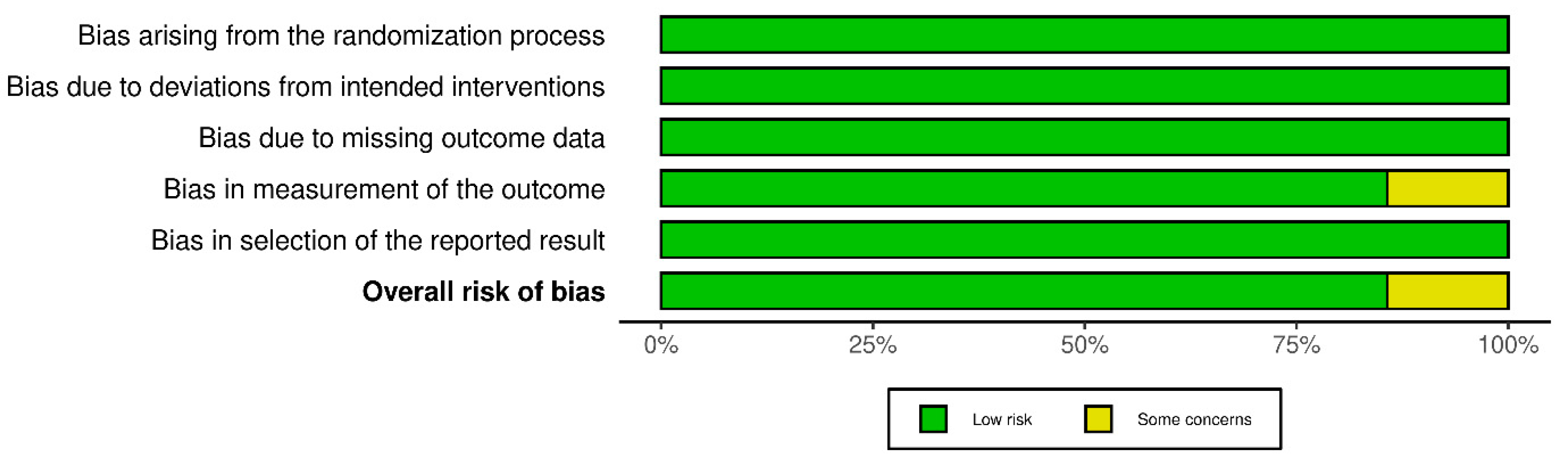
3.5. Risk of Bias Assessment
4. Discussion
Limitations and Perspectives
5. Conclusions
Supplementary Materials
Author Contributions
Funding
Institutional Review Board Statement
Informed Consent Statement
Data Availability Statement
Acknowledgments
Conflicts of Interest
Appendix A

| Database | Search Strategy |
|---|---|
| Pubmed | ((“Sarcopenia”[Mesh] OR sarcopenia[tiab] OR “muscle wasting”[tiab] OR “muscle loss”[tiab] OR “muscle atrophy”[tiab]) AND (“Dietary Proteins”[Mesh] OR “Amino Acids”[Mesh] OR dietary protein [tiab] OR protein [tiab] OR “protein supplementation”[tiab] OR supplement [tiab] OR leucine[tiab] OR whey[tiab] OR “essential amino acid”[tiab]) AND (“Exercise”[Mesh] OR “Exercise Therapy”[Mesh] OR exercise[tiab] OR “resistance training”[tiab] OR “strength training”[tiab] OR “physical activity”[tiab]) AND (biomarker[Mesh] OR “muscle mass”[tiab] OR “lean mass”[tiab] OR “muscle strength”[tiab] OR “grip strength”[tiab] OR “gait speed”[tiab] OR “physical performance”[tiab] OR myostatin[tiab] OR IGF-1[tiab] OR interleukin-6[tiab] OR IL-6[tiab] OR CRP[tiab])) |
| Scopus | TITLE-ABS-KEY( sarcopenia OR “muscle wasting” OR “muscle loss” OR “muscle atrophy”) AND TITLE-ABS-KEY( protein OR “dietary protein” OR “protein supplementation” OR leucine OR whey OR “essential amino acid”) AND TITLE-ABS-KEY(exercise OR “resistance training” OR “strength training” OR “physical activity” OR “exercise therapy”) AND TITLE-ABS-KEY(biomarker OR “muscle mass” OR “lean mass” OR “muscle strength” OR “grip strength” OR “gait speed” OR “physical performance” OR myostatin OR “IGF-1” OR “interleukin 6” OR CRP ) |
| ScienceDirect | (“sarcopenia” OR “muscle wasting” OR “muscle loss” OR “muscle atrophy”) AND (“protein” OR “dietary protein” OR “protein supplementation” OR “amino acid” OR “leucine” OR “whey”) AND (“exercise” OR “resistance training” OR “strength training” OR “physical activity” OR “exercise therapy”) AND (“biomarker” OR “muscle mass” OR “lean mass” OR “muscle strength” OR “grip strength” OR “gait speed” OR “physical performance” OR “myostatin” OR “IGF-1” OR “IL-6” OR “CRP”) |
| Cochrane | 1 MeSH descriptor: [Sarcopenia] explode all trees, 2 sarcopenia OR “muscle wasting” OR “muscle loss” OR “muscle atrophy”, 3 MeSH descriptor: [Dietary Proteins] explode all trees, 4 protein* OR “dietary protein” OR “protein supple-mentation” OR leucine OR whey, 5 MeSH descriptor: [Exercise] explode all trees, 6 exercise OR “resistance training” OR “strength training” OR “physical activity” OR “exercise therapy”, 7 MeSH descriptor: [Biological Markers] explode all trees, 8 biomarker OR “muscle mass” OR “lean mass” OR “muscle strength” OR “grip strength” OR “gait speed” OR myostatin OR IGF-1 OR IL-6 OR CRP, Final: (1 OR 2) AND (3 OR 4) AND (5 OR 6) AND (7 OR 8) |
References
- Hernández Rodríguez, J.; Arnold Domínguez, Y.; Licea Puig, M.E. Sarcopenia y algunas de sus características más importantes. Rev. Cuba. Med. Gen. Integral 2019, 35. Available online: http://scielo.sld.cu/scielo.php?script=sci_arttext&pid=S0864-21252019000300009 (accessed on 23 October 2024).
- Martínez-Calvache, V.; Herrera-Peña, Á.; Carrera-Gil, F. Sarcopenia y fragilidad en pacientes hospitalizados en salas de medicina interna. Acta Med. Colomb. 2020, 45. [Google Scholar] [CrossRef]
- Yáñez-Yáñez, R.; Cigarroa, I. Sarcopenia: Una condición evitable en las personas mayores, y un desafío para la próxima década. Rev. Med. Chil. 2021, 149, 1817–1818. [Google Scholar] [CrossRef] [PubMed]
- Salvà, A.; Serra-Rexach, J.A.; Artaza, I.; Formiga, F.; Rojano, I.; Luque, X.; Cuesta, F.; López-Soto, A.; Masanés, F.; Ruiz, D.; et al. La prevalencia de sarcopenia en residencias de España: Comparación de los resultados del estudio multicéntrico ELLI con otras poblaciones. Rev. Esp. Geriatr. Gerontol. 2016, 51, 260–264. [Google Scholar] [CrossRef] [PubMed]
- Ramos Jácome, M.S.; Guevara Villacís, M.V. Importancia nutricional en el manejo de sarcopenia en adultos mayores. Rev. Vive 2023, 6, 337–353. Available online: http://www.scielo.org.bo/pdf/vrs/v6n16/a28-337-353.pdf (accessed on 23 October 2024). [CrossRef]
- Sánchez Tocino, M.L.; Cigarrán, S.; Ureña, P.; González Casaus, M.L.; Mas-Fontao, S.; Gracia Iguacel, C.; Ortíz, A.; Parra, E.G. Definición y evolución del concepto de sarcopenia. Nefrologia 2024, 44, 323–330. [Google Scholar] [CrossRef]
- Instituto Nacional del Cáncer EEUU. Diccionario de Cáncer del NCI Cancer.gov. 2011. Available online: https://www.cancer.gov/espanol/publicaciones/diccionarios/diccionario-cancer/def/sarcopenia (accessed on 23 October 2024).
- Crespo-Salgado, J.J.; Blanco-Moure, A. Pruebas útiles y prácticas para la detección precoz de sarcopenia en adultos mayores. Rev. Esp. Geriatr. Gerontol. 2011, 46, 330–331, author reply 331. [Google Scholar] [CrossRef]
- Mastaglia, S. Vista de Marcadores bioquímicos propuestos para el estudio de la sarcopenia. Actual. Osteol. 2023, 19, 9–17. Available online: https://ojs.osteologia.org.ar/ojs33010/index.php/osteologia/article/view/78/57 (accessed on 23 October 2024).
- Silva-Fhon, J.R.; Rojas-Huayta, V.M.; Aparco-Balboa, J.P.; Céspedes-Panduro, B.; Partezani-Rodrigues, R.A. Sarcopenia y albúmina sanguínea: Revisión sistemática con metaanálisis. Biomedica 2021, 41, 590–603. [Google Scholar] [CrossRef]
- Garza-González, E.L.; Gallegos-Flores, E.A.; Hernández Gutiérrez, J.; Flores-Monsivais, J.E.; Nava González, E.J. Biomarcadores moleculares en la predicción de sarcopenia. Rev. Salud Pública Nutr. 2017, 16, 23–32. [Google Scholar] [CrossRef][Green Version]
- Rexach, J.A.S. Consecuencias clínicas de la sarcopenia. Nutr. Hosp. 2006, 21, 46–50. Available online: https://scielo.isciii.es/scielo.php?script=sci_arttext&pid=S0212-16112006000600007 (accessed on 23 October 2024).
- Denison, H.J.; Cooper, C.; Sayer, A.A.; Robinson, S.M. Prevention and optimal management of sarcopenia: A review of combined exercise and nutrition interventions to improve muscle outcomes in older people. Clin. Interv. Aging 2015, 10, 859–869. Available online: https://pubmed.ncbi.nlm.nih.gov/25999704/ (accessed on 9 December 2025). [CrossRef]
- Moher, D.; Liberati, A.; Tetzlaff, J.; Altman, D.G.; The PRISMA Group. Preferred reporting items for systematic reviews and meta-analyses: The PRISMA statement. PLoS Med. 2009, 6, e1000097. [Google Scholar] [CrossRef]
- Higgins, J.P.T.; Thomas, J.; Chandler, J.; Cumpston, M.; Li, T.; Page, M.J.; Welch, V. (Eds.) Cochrane Handbook for Systematic Reviews of Interventions; Version 6.2; John Wiley & Sons: Chichester, UK, 2021. [Google Scholar] [CrossRef]
- Griffen, C.; Duncan, M.; Hattersley, J.; Weickert, M.O.; Dallaway, A.; Renshaw, D. Effects of resistance exercise and whey protein supplementation on skeletal muscle strength, mass, physical function, and hormonal and inflammatory biomarkers in healthy active older men: A randomised, double-blind, placebo-controlled trial. Exp. Gerontol. 2022, 158, 111651. [Google Scholar] [CrossRef] [PubMed]
- Bülow, J.; Khakimov, B.; Reitelseder, S.; Bechshøft, R.; Jensen, M.; van Hall, G.; Engelsen, S.B.; Holm, L. Effect of 1-year daily protein supplementation and physical exercise on muscle protein synthesis rate and muscle metabolome in healthy older Danes: A randomized controlled trial. Eur. J. Nutr. 2023, 62, 2673–2685. [Google Scholar] [CrossRef] [PubMed]
- Hajj-Boutros, G.; Jacob, K.; Sonjak, V.; Broering, F.; Morais, J.A. Resistance training but not leucine can reverse frailty by increasing basal muscle protein synthesis in older women consuming optimized protein intake. Clin. Nutr. ESPEN 2023, 54, 714–715. Available online: https://linkinghub.elsevier.com/retrieve/pii/S2405457722012451 (accessed on 23 October 2024). [CrossRef]
- Bagheri, R.; Hooshmand Moghadam, B.; Candow, D.G.; Elliott, B.T.; Wong, A.; Ashtary-Larky, D.; Forbes, S.C.; Rashidlamir, A. Effects of Icelandic yogurt consumption and resistance training in healthy untrained older males. Br. J. Nutr. 2022, 127, 1334–1342. [Google Scholar] [CrossRef]
- Huschtscha, Z.; Parr, A.; Porter, J.; Costa, R.J.S. The effects of a high-protein dairy milk beverage with or without progressive resistance training on fat-free mass, skeletal muscle strength and power, and functional performance in healthy active older adults: A 12-week randomized controlled trial. Front. Nutr. 2021, 8, 644865. [Google Scholar] [CrossRef]
- Holwerda, A.M.; Paulussen, K.J.M.; Overkamp, M.; Goessens, J.P.B.; Kramer, I.-F.; Wodzig, W.K.W.H.; Verdijk, L.B.; de Groot, L.C.P.G.M.; van Loon, L.J.C. Leucine coingestion augments the muscle protein synthetic response to the ingestion of 15 g of protein following resistance exercise in older men. Am. J. Physiol. Endocrinol. Metab. 2019, 317, E473–E482. [Google Scholar] [CrossRef]
- Holwerda, A.M.; Paulussen, K.J.M.; Overkamp, M.; Goessens, J.P.B.; Kramer, I.F.; Wodzig, W.K.W.H.; Verdijk, L.B.; van Loon, L.J.C. Dose-dependent increases in whole-body net protein balance and dietary protein-derived amino acid incorporation into myofibrillar protein during recovery from resistance exercise in older men. J. Nutr. 2019, 149, 221–230. [Google Scholar] [CrossRef]
- Lian, R.; Liu, Q.; Xu, H.; Yin, M.; Zhang, Y.; Li, J. Blood biomarkers for sarcopenia: A systematic review of diagnostic test accuracy studies. Exp. Gerontol. 2024, 180, 112036. Available online: https://pubmed.ncbi.nlm.nih.gov/38036104/ (accessed on 23 October 2024). [CrossRef]
- Galvis Rincón, J.C.; Velásquez Mendoza, J.A.; Camargo Velandia, J.F. Validez Diagnóstica de los Marcadores Bioquímicos para el Diagnóstico de Sarcopenia en Personas Adultas. Revisión Sistemática. Rev. Arch. SOCHMEDEP 2018, 63, 25–36. Available online: https://revistasochmedep.cl/index.php/Revista/article/view/32 (accessed on 23 October 2024).
- Nejati Bervanlou, R.; Hlaváčová, N.; Figueiredo, V.C.; Attarzadeh Hosseini, S.R.; Motahari Rad, M. The impact of exercise and protein intake on inflammaging: A meta-analysis and systematic review of randomized controlled trials. Nutr. Rev. 2024, 83, e1458–e1471. [Google Scholar] [CrossRef] [PubMed]
- Prokopidis, K.; Mazidi, M.; Sankaranarayanan, R.; Tajik, B.; McArdle, A.; Isanejad, M. Effects of whey and soy protein supplementation on inflammatory cytokines in older adults: A systematic review and meta-analysis. Br. J. Nutr. 2023, 129, 759–770. [Google Scholar] [CrossRef] [PubMed]
- Ding, Y.; Xu, X. Effects of regular exercise on inflammasome activation-related inflammatory cytokine levels in older adults: A systematic review and meta-analysis. J. Sports Sci. 2021, 39, 2338–2352. [Google Scholar] [CrossRef] [PubMed]
- Deng, B.; Wehling-Henricks, M.; Villalta, S.A.; Wang, Y.; Tidball, J.G. IL-10 triggers changes in macrophage phenotype that promote muscle growth and regeneration. J. Immunol. 2012, 189, 3669–3680. [Google Scholar] [CrossRef]
- de Sá Souza, H.; de Melo, C.M.; Piovezan, R.D.; Miranda, R.E.E.P.C.; Carneiro-Junior, M.A.; Silva, B.M.; Thomatieli-Santos, R.V.; Tufik, S.; Poyares, D.; D’almeida, V. Resistance training improves sleep and anti-inflammatory parameters in sarcopenic older adults: A randomized controlled trial. Int. J. Environ. Res. Public. Health 2022, 19, 16322. [Google Scholar] [CrossRef]
- Pedraza-Vázquez, G.; Mena-Montes, B.; Hernández-Álvarez, D.; Gómez-Verjan, J.C.; Toledo-Pérez, R.; López-Teros, M.T.; Königsberg, M.; Gómez-Quiroz, L.E.; Luna-López, A. A low-intensity lifelong exercise routine changes miRNA expression in aging and prevents osteosarcopenic obesity by modulating inflammation. Arch. Gerontol. Geriatr. 2023, 105, 104856. [Google Scholar] [CrossRef]
- Lan, X.-Q.; Deng, C.-J.; Wang, Q.-Q.; Zhao, L.-M.; Jiao, B.-W.; Xiang, Y. The role of TGF-β signaling in muscle atrophy, sarcopenia and cancer cachexia. Gen. Comp. Endocrinol. 2024, 353, 114513. [Google Scholar] [CrossRef]
- Chiariello, A.; Conte, G.; Rossetti, L.; Trofarello, L.; Salvioli, S.; Conte, M. Different roles of circulating and intramuscular GDF15 as markers of skeletal muscle health. Front. Endocrinol. 2024, 15, 1404047. [Google Scholar] [CrossRef]
- Ascenzi, F.; Barberi, L.; Dobrowolny, G.; Villa Nova Bacurau, A.; Nicoletti, C.; Rizzuto, E.; Rosenthal, N.; Scicchitano, B.M.; Musarò, A. Effects of IGF-1 isoforms on muscle growth and sarcopenia. Aging Cell 2019, 18, e12954. [Google Scholar] [CrossRef]
- Nissinen, T.A.; Hentilä, J.; Fachada, V.; Lautaoja, J.H.; Pasternack, A.; Ritvos, O.; Kivelä, R.; Hulmi, J.J. Muscle follistatin gene delivery increases muscle protein synthesis independent of periodical physical inactivity and fasting. FASEB J. 2021, 35, e21387. [Google Scholar] [CrossRef]
- Han, X.; Møller, L.L.V.; De Groote, E.; Bojsen-Møller, K.N.; Davey, J.; Henríquez-Olguin, C.; Li, Z.; Knudsen, J.R.; Jensen, T.E.; Madsbad, S.; et al. Mechanisms involved in follistatin-induced hypertrophy and increased insulin action in skeletal muscle. J. Cachexia Sarcopenia Muscle 2019, 10, 1241–1257. [Google Scholar] [CrossRef] [PubMed]
- Kazemi, A.; Speakman, J.R.; Soltani, S.; Djafarian, K. Effect of calorie restriction or protein intake on circulating levels of insulin like growth factor I in humans: A systematic review and meta-analysis. Clin. Nutr. 2020, 39, 1705–1716. [Google Scholar] [CrossRef]
- Li, B.; Feng, L.; Wu, X.; Cai, M.; Yu, J.J.; Tian, Z. Effects of different modes of exercise on skeletal muscle mass and function and IGF-1 signaling during early aging in mice. J. Exp. Biol. 2022, 225, jeb244650. [Google Scholar] [CrossRef] [PubMed]
- Bojsen-Møller, K.N.; Svane, M.S.; Jensen, C.Z.; Kjeldsen, S.A.S.; Holst, J.J.; Wewer Albrechtsen, N.J.; Madsbad, S. Follistatin secretion is enhanced by protein, but not glucose or fat ingestion, in obese persons independently of previous gastric bypass surgery. Am. J. Physiol. Gastrointest. Liver Physiol. 2021, 320, G753–G758. [Google Scholar] [CrossRef] [PubMed]
- Perakakis, N.; Mougios, V.; Fatouros, I.; Siopi, A.; Draganidis, D.; Peradze, N.; Ghaly, W.; Mantzoros, C.S. Physiology of activins/follistatins: Associations with metabolic and anthropometric variables and response to exercise. J. Clin. Endocrinol. Metab. 2018, 103, 3890–3899. [Google Scholar] [CrossRef]
- Li, C.-W.; Yu, K.; Shyh-Chang, N.; Li, G.-X.; Jiang, L.-J.; Yu, S.-L.; Xu, L.-Y.; Liu, R.-J.; Guo, Z.-J.; Xie, H.-Y.; et al. Circulating factors associated with sarcopenia during ageing and after intensive lifestyle intervention. J. Cachexia Sarcopenia Muscle 2019, 10, 586–600. [Google Scholar] [CrossRef]
- Morley, J.E. Hormones and sarcopenia. Curr. Pharm. Des. 2017, 23, 4484–4492. [Google Scholar] [CrossRef]
- Geraci, A.; Calvani, R.; Ferri, E.; Marzetti, E.; Arosio, B.; Cesari, M. Sarcopenia and menopause: The role of estradiol. Front. Endocrinol. 2021, 12, 682012. [Google Scholar] [CrossRef]
- Veronesi, F.; Salamanna, F.; Borsari, V.; Ruffilli, A.; Faldini, C.; Giavaresi, G. Unlocking diagnosis of sarcopenia: The role of circulating biomarkers—A clinical systematic review. Mech. Ageing Dev. 2024, 222, 112005. [Google Scholar] [CrossRef]
- Murphy, C.H.; McCarthy, S.N.; Roche, H.M. Nutrition strategies to counteract sarcopenia: A focus on protein, LC n-3 PUFA and precision nutrition. Proc. Nutr. Soc. 2023, 82, 419–431. [Google Scholar] [CrossRef]
- Kramer, I.F.; Verdijk, L.B.; Hamer, H.M.; Verlaan, S.; Luiking, Y.C.; Kouw, I.W.K.; Senden, J.M.; van Kranenburg, J.; Gijsen, A.P.; Bierau, J.; et al. Both basal and post-prandial muscle protein synthesis rates, following the ingestion of a leucine-enriched whey protein supplement, are not impaired in sarcopenic older males. Clin. Nutr. 2017, 36, 1440–1449. [Google Scholar] [CrossRef]
- Murphy, C.H.; Shankaran, M.; Churchward-Venne, T.A.; Mitchell, C.J.; Kolar, N.M.; Burke, L.M.; Hawley, J.A.; Kassis, A.; Karagounis, L.G.; Li, K.; et al. Effect of resistance training and protein intake pattern on myofibrillar protein synthesis and proteome kinetics in older men in energy restriction. J. Physiol. 2018, 596, 2091–2120. [Google Scholar] [CrossRef] [PubMed]
- Salvador, A.F.; McKenna, C.F.; Paulussen, K.J.M.; Keeble, A.R.; Askow, A.T.; Fang, H.-Y.; Li, Z.; Ulanov, A.V.; Paluska, S.A.; Moore, D.R.; et al. Early resistance training-mediated stimulation of daily muscle protein synthetic responses to higher habitual protein intake in middle-aged adults. J. Physiol. 2021, 599, 4287–4307. [Google Scholar] [CrossRef] [PubMed]
- Gielen, E.; Beckwée, D.; Delaere, A.; De Breucker, S.; Vandewoude, M.; Bautmans, I. Sarcopenia Guidelines Development Group of the Belgian Society of Gerontology and Geriatrics (BSGG). Nutritional interventions to improve muscle mass, muscle strength, and physical performance in older people: An umbrella review of systematic reviews and meta-analyses. Nutr. Rev. 2021, 79, 121–147. [Google Scholar] [CrossRef] [PubMed]
- Liao, C.-D.; Huang, S.-W.; Chen, H.-C.; Huang, M.-H.; Liou, T.-H.; Lin, C.-L. Comparative efficacy of different protein supplements on muscle mass, strength, and physical indices of sarcopenia among community-dwelling, hospitalized or institutionalized older adults undergoing resistance training: A network meta-analysis of randomized controlled trials. Nutrients 2024, 16, 941. [Google Scholar] [CrossRef]
- Vieira, A.F.; Santos, J.S.; Costa, R.R.; Cadore, E.L.; Macedo, R.C.O. Efectos de la suplementación proteica asociada al entrenamiento de resistencia sobre la composición corporal y la fuerza muscular en adultos mayores: Una revisión sistemática de revisiones sistemáticas con metanálisis. Sports Med. 2022, 52, 2511–2522. [Google Scholar] [CrossRef]
- Hou, L.; Yu, P.; He, J.; Xu, J.; Lin, J.; Yang, B. Effect of protein supplementation combined with resistance training on muscle mass, strength and function in the elderly: A systematic review and meta-analysis. J. Nutr. Health Aging 2019, 23, 451–458. Available online: https://pubmed.ncbi.nlm.nih.gov/31021362/ (accessed on 9 December 2025). [CrossRef]
- O’Bryan, K.R.; Doering, T.M.; Morton, R.W.; Coffey, V.G.; Phillips, S.M.; Cox, G.R. ¿Los suplementos proteicos de múltiples ingredientes aumentan las ganancias inducidas por el entrenamiento de resistencia en la masa y la fuerza del músculo esquelético? Una revisión sistemática y un metanálisis de 35 ensayos. Br. J. Sports Med. 2020, 54, 573–581. [Google Scholar] [CrossRef]
- Ji, X.; Ye, X.; Ji, S.; Zhang, S.; Wang, Y.; Zhou, Z.; Xiang, D.; Luo, B. Whey Protein Supplementation Combined with Exercise on Muscle Protein Synthesis and the AKT/mTOR Pathway in Healthy Adults: A Systematic Review and Meta-Analysis. Nutrients 2025, 17, 2579. [Google Scholar] [CrossRef]
- Langer, H.T.; West, D.; Senden, J.; Spuler, S.; van Loon, L.J.C.; Baar, K. Myofibrillar protein synthesis rates are increased in chronically exercised skeletal muscle despite decreased anabolic signaling. Sci. Rep. 2022, 12, 7553. [Google Scholar] [CrossRef]
- Page, M.J.; McKenzie, J.E.; Bossuyt, P.M.; Boutron, I.; Hoffmann, T.C.; Mulrow, C.D.; Shamseer, L.; Tetzlaff, J.M.; Akl, E.A.; Brennan, S.E.; et al. The PRISMA 2020 statement: An updated guideline for reporting systematic reviews. BMJ 2021, 372, n71. [Google Scholar] [CrossRef]



| Type | Biomarkers | Description and Relevance in Sarcopenia |
|---|---|---|
| Muscle | Myostatin, Creatine Kinase (CK), and Follistatin. | Indicators of muscle metabolism, muscle protein degradation, and inhibition of muscle growth. Myostatin inhibits muscle protein synthesis, while follistatin antagonizes myostatin and promotes hypertrophy [9]. |
| Inflammatory | IL-6, TNF-α, CRP, and IL-10. | Pro-inflammatory cytokines promote protein degradation and inhibit muscle synthesis, contributing to chronic low-grade inflammation, while IL-10 exerts anti-inflammatory effects [1,6]. |
| Endocrine | Growth Hormone (GH), Testosterone, Insulin, and IGF-1. | Endocrine factors that decline with aging are directly involved in anabolic signaling and preservation of muscle mass and strength, particularly IGF-1 [1,6]. |
| Bone metabolism and serum proteins | Prealbumin, Collagen degradation proteins, Osteocalcin, and Albumin. | Indicators of bone and blood protein metabolism. Low albumin levels are associated with sarcopenia and poor prognosis in older adults [5,9,10]. |
| Oxidative stress | Superoxide dismutase (SOD), Malondialdehyde (MDA), and Glutathione peroxidase (GPx). | Markers of oxidative muscle damage and imbalance in free radical production and elimination. Oxidative stress contributes to muscle fiber damage and impaired regeneration [4,6]. |
| Nutritional | Levels of leucine or other amino acids, Vitamin D, and Omega-3 fatty acids. | Nutrients relevant to protein synthesis, muscle regeneration, and prevention of sarcopenia. Adequate protein and micronutrient intake is essential to counteract anabolic resistance in older adults [5,9]. |
| Author and Year of Publication | Number and Type of Participants | Intervention | Biochemical Biomarkers Evaluated | Results | Conclusions |
|---|---|---|---|---|---|
| Griffen et al. (2022) [16]. | Healthy older men, mean age 67 ± 1 years (n = 36). Control group (n = 9). Whey protein group (n = 9). Exercise + control group (n = 9). Exercise + whey protein group (n = 9). | 12-week intervention: Resistance exercise: Whole-body sessions, twice a week. 2 sets of 8 repetitions and 1 set to voluntary muscular failure at 80% of 1RM. Supplementation: 25 g of whey protein isolate, twice daily. Control: 23.75 g of maltodextrin, twice daily. | Hormonal: Unspecified. Inflammatory: IL-6 and TNF-α. | Systemic inflammation: Reduction in IL-6 (−1.0 ± 0.4 pg/mL) and TNF-α (−0.7 ± 0.3 pg/mL) in the exercise groups. Fat-free mass increased (+0.9 ± 0.3 kg), while fat mass decreased (−0.4 ± 0.4 kg). | Resistance exercise improved levels of systemic inflammation. Protein supplementation did not show synergistic effects with exercise. |
| Bülow et al. (2023) [17]. | Healthy older adults, aged 65 years or older (n = 66, 29 women, 37 men). CHO group (n = 12). Collagen group (n = 15). Whey group (n = 15). Light resistance training group with whey (n = 12). Heavy resistance training group with whey (n = 12, 8). | 12-month intervention: Carbohydrate supplementation (20 g of maltodextrin + 10 g of sucrose). Collagen supplementation (20 g of hydrolyzed bovine collagen protein + 10 g of sucrose). Whey supplementation (20 g of whey protein isolate + 10 g of sucrose). All were taken twice daily. Light resistance training at home with whey supplementation. Supervised heavy resistance training in a center with whey supplementation. | Muscle protein synthesis is measured by deuterium (D2O). Muscle metabolome: gas chromatography and GC–MS, at baseline and 4 h after consumption of a shake containing 20 g of hydrolyzed whey protein and 10 g of glucose. | No significant differences were observed between groups in the basal rate of muscle protein synthesis or in the postprandial response to protein supplementation after 12 months. Changes in basal and postprandial rates were minimal and similar between groups. Seventy-four major metabolites were identified by GC–MS, with no significant alterations in the muscle metabolomic profile before and after supplementation. However, 3-hydroxybutyric acid and 2-butenedioic acid consistently decreased by 4 h post-ingestion, indicating a possible relationship with postprandial energy metabolism. | Daily protein supplementation (whey or collagen), combined or not with carbohydrates and exercise, for one year did not induce significant changes in muscle protein synthesis or the metabolic profile of healthy older adults. These results suggest that, in this population, long-term interventions with these supplements may not generate relevant metabolic adaptations. |
| Hajj-Boutros et al. (2023) [18]. | Pre-frail or frail older women, mean age 77.5 ± 1.3 years (n = 19) Intervention group: (n = 10). Placebo control group: (n = 9) | 12-week intervention: Training: Progressive RT training program. Protein-optimized diet (1.2 g of protein/kg of body weight per day). Supplementation: 7.5 g/day of Leu. Placebo: Ala. | Myofibrillar fractional synthesis rate: in postabsorptive and postprandial states by infusion of L-[ring-2H5] phenylalanine. | Effect of resistance training with an optimized diet: Significant 66% increase in the basal rate of myofibrillar fractional synthesis. Effect of leucine supplementation: No additional benefit was observed with leucine supplementation compared to placebo. | The combination of resistance training and a high-protein diet significantly improved the frailty phenotype, increasing physical function, muscle strength, basal rate of muscle protein synthesis, and lean mass. However, additional leucine supplementation provided no additional benefits compared to placebo. |
| Bagheri et al. (2022) [19]. | Healthy older adults, mean age 68 ± 4 years (n = 30). Intervention group (n = 15). Control group (n = 15). | Duration: 8 weeks. Experimental group: Training and consumption of 200 g of Icelandic yogurt (18 g of protein) after each session. Control group: Performed the same training but consumed a placebo (protein-free pudding). Training: Frequency: 3 times per week. Type: Strength training. Intensity: Moderate to high, 60–80% 1RM. Volume: 3 sets of 8–12 repetitions per exercise. | Muscle regulatory factors: IGF-1, TGF-β1, GDF15, Activin A, MST, and FST evaluated in serum using ELISA kits. | Positive changes were observed in several blood markers related to muscle growth and repair. For example, IGF-1 levels increased, and inflammatory markers such as TGF-β, GDF15, and activin A decreased. Furthermore, FST increased and MST decreased, suggesting greater activation of muscle growth processes and a significant improvement in strength. | Consumption of Icelandic yogurt after training significantly increased gains in lean muscle mass and strength compared to placebo. Icelandic yogurt may be an effective and cost-effective strategy to improve muscle health in older men and prevent sarcopenia. |
| Huschtscha et al. (2021) [20]. | Healthy older adults (n = 37). DM (n = 8). EX + DM (n = 9). EX (n = 10). CON (n = 10). | 12-week intervention: Groups: DM and EX + DM: Consumption of 500 mL/day of low-fat milk (15 g of protein per serving). EX and EX + DM: Supervised progressive resistance training three times per week. CON: Self-directed physical activity and diet without specific interventions. | Hormonal: Insulin, cortisol, IGF-1, testosterone, and estradiol. Inflammatory cytokines: IL-10, TNF-α, IL-6, IL-8, and IL-2. | Insulin levels: no significant changes in all groups. Cortisol levels: no changes in all groups. IGF-1, testosterone, and estradiol levels: no significant differences between groups. Cytokine IL-10: significant increase in the EX + DM group (88% at 6 weeks and 46% at 12 weeks). Absolute fat-free mass increased in the EX + DM groups. No significant changes in the remaining cytokines. | High-protein milk consumption combined with resistance training significantly improves muscle strength in active older adults. No additional effects on fat-free mass or hormonal biomarkers were observed compared to exercise alone. |
| Holwerda et al. (2019a) [21]. | Older adults, mean age 67 ± 1 year (n = 24). 15 g protein group (n = 12). 15 g protein group with 1.5 g of free crystalline leucine (n = 12). | Both groups underwent a single 60 minutes bout of moderate-to-high-intensity whole-body resistance exercise. Supplementation included either 15 g of protein or 15 g of protein plus crystalline-free leucine. | Postmeal protein digestion kinetics and amino acid absorption and muscle protein synthesis rates were evaluated using continuous infusions of radiolabeled phenylalanine, tyrosine, and leucine. | Post-exercise myofibrillar protein synthesis rates were 16% higher in the 15 g + leucine group compared to the 15 g protein group. Similar results were obtained using L-[1-13C] leucine as a marker (19% higher). | Leucine co-ingestion further increases the post-exercise muscle protein synthetic response to the ingestion of a single 15 g dose of protein in older men. |
| Holwerda et al. (2019b) [22]. | Healthy older adults, mean age 66 ± 1 years (n = 48). PLA group (n = 12). 15G group (n = 12). 30G group (n = 12). 45G group (n = 12). | 32-week intervention: Different doses of milk protein (0, 15, 30, and 45 g) affected muscle protein synthesis after a resistance training session. Participants performed compound exercises at 75–80% of their 1RM, and muscle biopsies were taken before and 6 h after exercise. The milk protein contained labeled amino acids to measure protein synthesis. | Myofibrillar protein synthesis. Net body protein balance. Incorporation of amino acids derived from dietary protein into muscle. Plasma concentrations of essential amino acids and isotopic tracers. | Dose-dependent increase in total body net protein balance after ingestion of 0, 15, 30, or 45 g of protein. Higher myofibrillar protein synthesis rates after ingestion of 30 or 45 g of protein. Incorporation of amino acids from dietary protein (phenylalanine) into de novo myofibrillar protein showed a dose-dependent increase after ingestion of 15, 30, or 45 g of protein. | Ingesting at least 30 g of protein after exercise promotes muscle protein synthesis, helping to counteract age-related anabolic resistance. Increasing dietary protein after exercise is considered a positive strategy for preventing sarcopenia in older populations. |
Disclaimer/Publisher’s Note: The statements, opinions and data contained in all publications are solely those of the individual author(s) and contributor(s) and not of MDPI and/or the editor(s). MDPI and/or the editor(s) disclaim responsibility for any injury to people or property resulting from any ideas, methods, instructions or products referred to in the content. |
© 2026 by the authors. Licensee MDPI, Basel, Switzerland. This article is an open access article distributed under the terms and conditions of the Creative Commons Attribution (CC BY) license.
Share and Cite
Cruz-Pierard, S.; Iñiguez-Jiménez, S. Synergistic Effects of Protein Intake and Exercise on Biomarkers of Sarcopenia: A Systematic Review. Biomolecules 2026, 16, 195. https://doi.org/10.3390/biom16020195
Cruz-Pierard S, Iñiguez-Jiménez S. Synergistic Effects of Protein Intake and Exercise on Biomarkers of Sarcopenia: A Systematic Review. Biomolecules. 2026; 16(2):195. https://doi.org/10.3390/biom16020195
Chicago/Turabian StyleCruz-Pierard, Stephanie, and Samuel Iñiguez-Jiménez. 2026. "Synergistic Effects of Protein Intake and Exercise on Biomarkers of Sarcopenia: A Systematic Review" Biomolecules 16, no. 2: 195. https://doi.org/10.3390/biom16020195
APA StyleCruz-Pierard, S., & Iñiguez-Jiménez, S. (2026). Synergistic Effects of Protein Intake and Exercise on Biomarkers of Sarcopenia: A Systematic Review. Biomolecules, 16(2), 195. https://doi.org/10.3390/biom16020195