Review

α-Mangostin Is a Xanthone Derivative from Mangosteen with Potent Immunomodulatory and Anti-Inflammatory Properties


by
Amin F. Majdalawieh
1,2,*,
Bayan K. Khatib
1 and
Tala M. Terro
1
1
Department of Biology, Chemistry and Environmental Sciences, College of Arts and Sciences, American University of Sharjah, Sharjah P.O. Box 26666, United Arab Emirates
2
Advanced Biosciences and Bioengineering Research Center, American University of Sharjah, Sharjah P.O. Box 26666, United Arab Emirates
*
Author to whom correspondence should be addressed.
Biomolecules 2025, 15(5), 681; https://doi.org/10.3390/biom15050681
Submission received: 25 March 2025 / Revised: 28 April 2025 / Accepted: 6 May 2025 / Published: 7 May 2025
(This article belongs to the Section Natural and Bio-derived Molecules)

Abstract

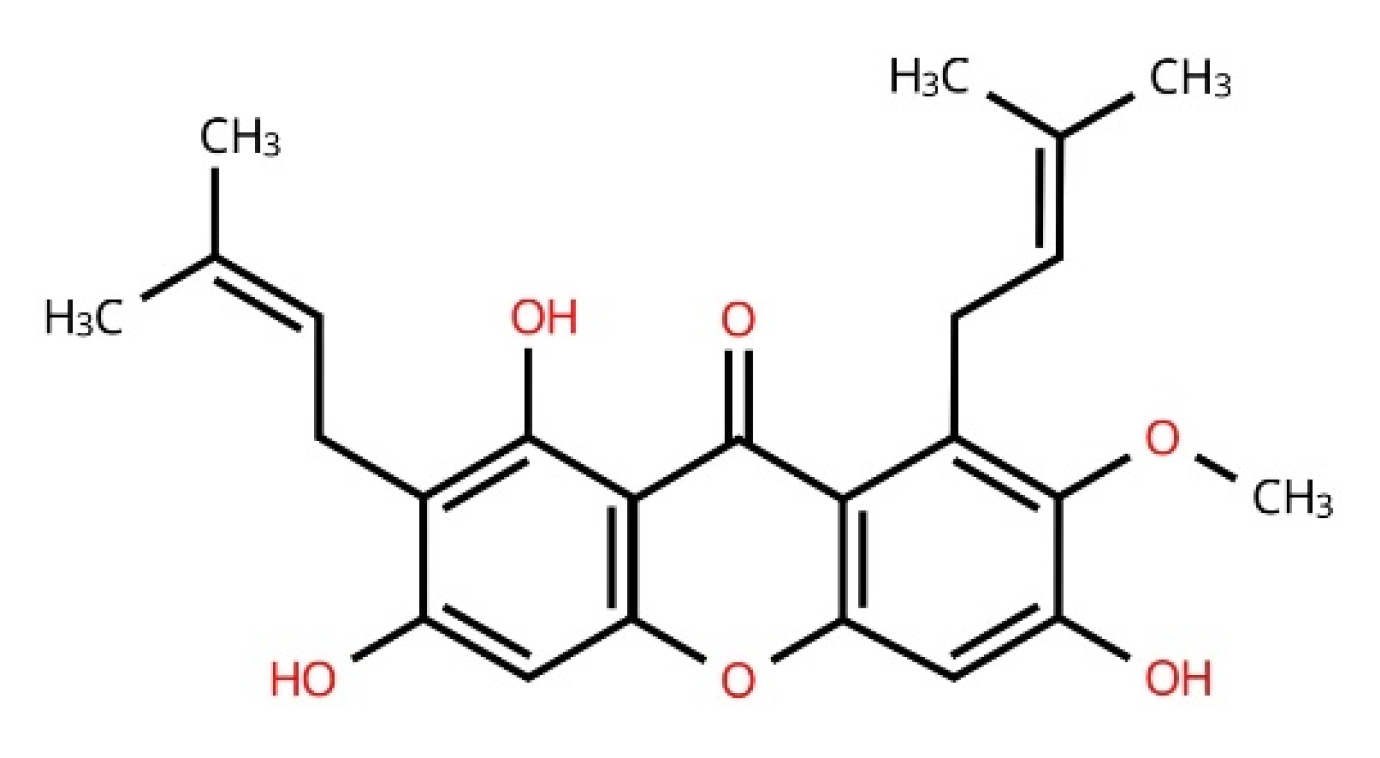
α-Mangostin, a bioactive xanthone derived from the Garcinia mangostana L. Clusiaceae (G. mangostana) fruit, has demonstrated significant anti-inflammatory and immunomodulatory properties. Chronic inflammation plays a critical role in the pathogenesis of various diseases, including metabolic disorders, autoimmune conditions, and cancer. Conventional anti-inflammatory therapies, such as non-steroidal anti-inflammatory drugs (NSAIDs), often carry undesirable side effects, prompting the need for safer, natural alternatives. This review consolidates the existing literature on the mechanisms by which α-mangostin exerts its anti-inflammatory effects, including the suppression of pro-inflammatory cytokines, modulation of immune cell activity, and inhibition of key signaling pathways such as nuclear factor-kappa B (NF-κB) and mitogen-activated protein kinase (MAPK). Additionally, α-mangostin exhibits immunomodulatory properties by influencing both innate and adaptive immune responses, affecting macrophage polarization, T cell differentiation, and cytokine production. Its efficacy has been observed in numerous disease models, including joint disorders, digestive and metabolic conditions, hepatic diseases, neurological disorders, and respiratory ailments. The potential therapeutic applications of α-mangostin as an anti-inflammatory agent warrant further investigation through preclinical and clinical studies to validate its efficacy and safety.
Keywords: α-mangostin; inflammation; xanthone derivative; oxidative stress; NF-κB signaling pathway α-mangostin; inflammation; xanthone derivative; oxidative stress; NF-κB signaling pathway