

Circulating Levels of the Heparan Sulfate Proteoglycan Syndecan-4 Positively Associate with Blood Pressure in Healthy Premenopausal Women


Abstract
1. Introduction
2. Materials and Methods
2.1. Study Participants and Design
2.2. Body Composition
2.3. Blood Pressure and Arterial Elasticity
2.4. Fractionated Catecholamines
2.5. Laboratory Analyses
2.6. Statistical Analysis
3. Results
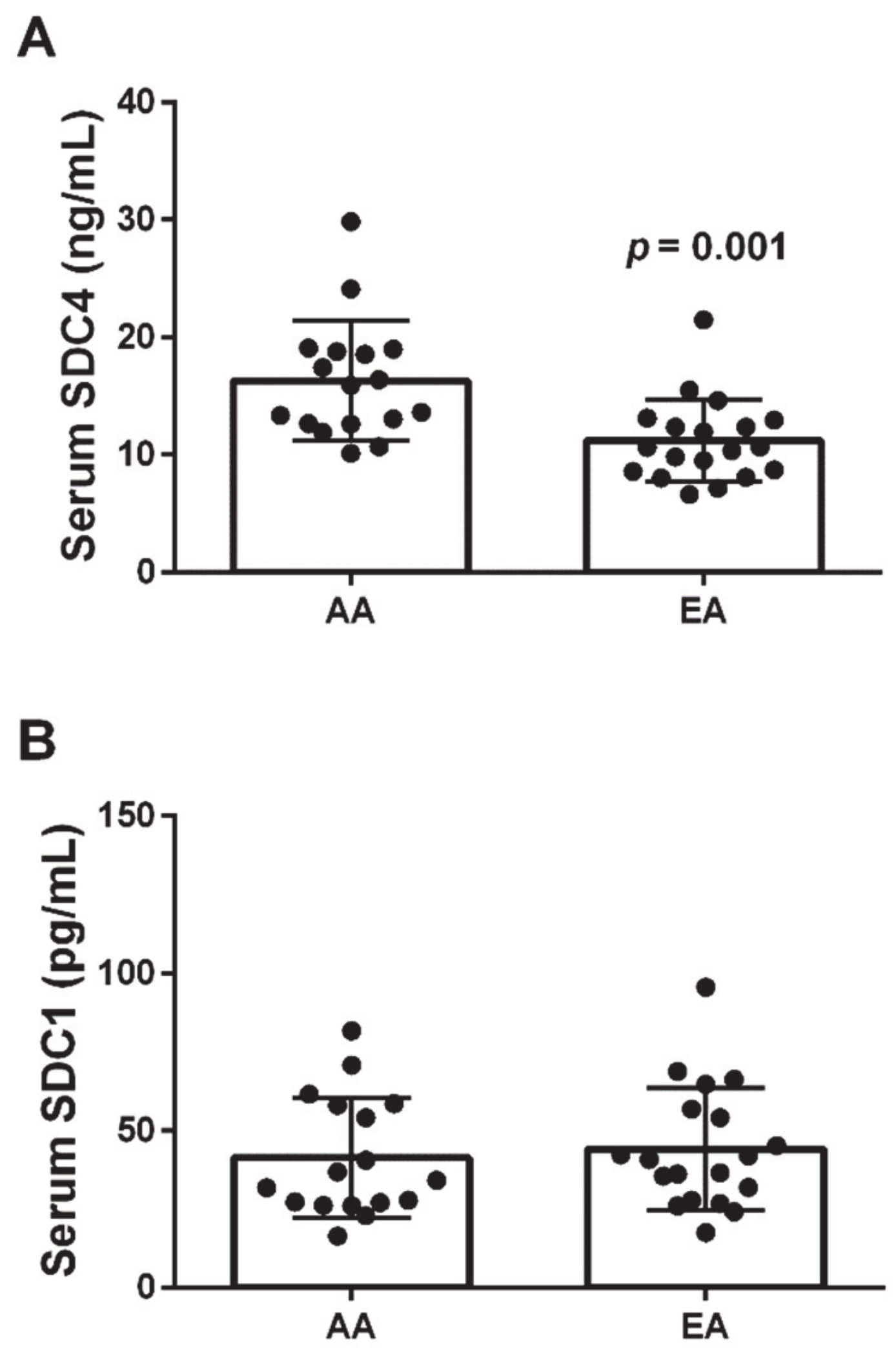
3.1. Premenopausal AA Women Have Higher Abundance of Circulating SDC4 than EA Women.
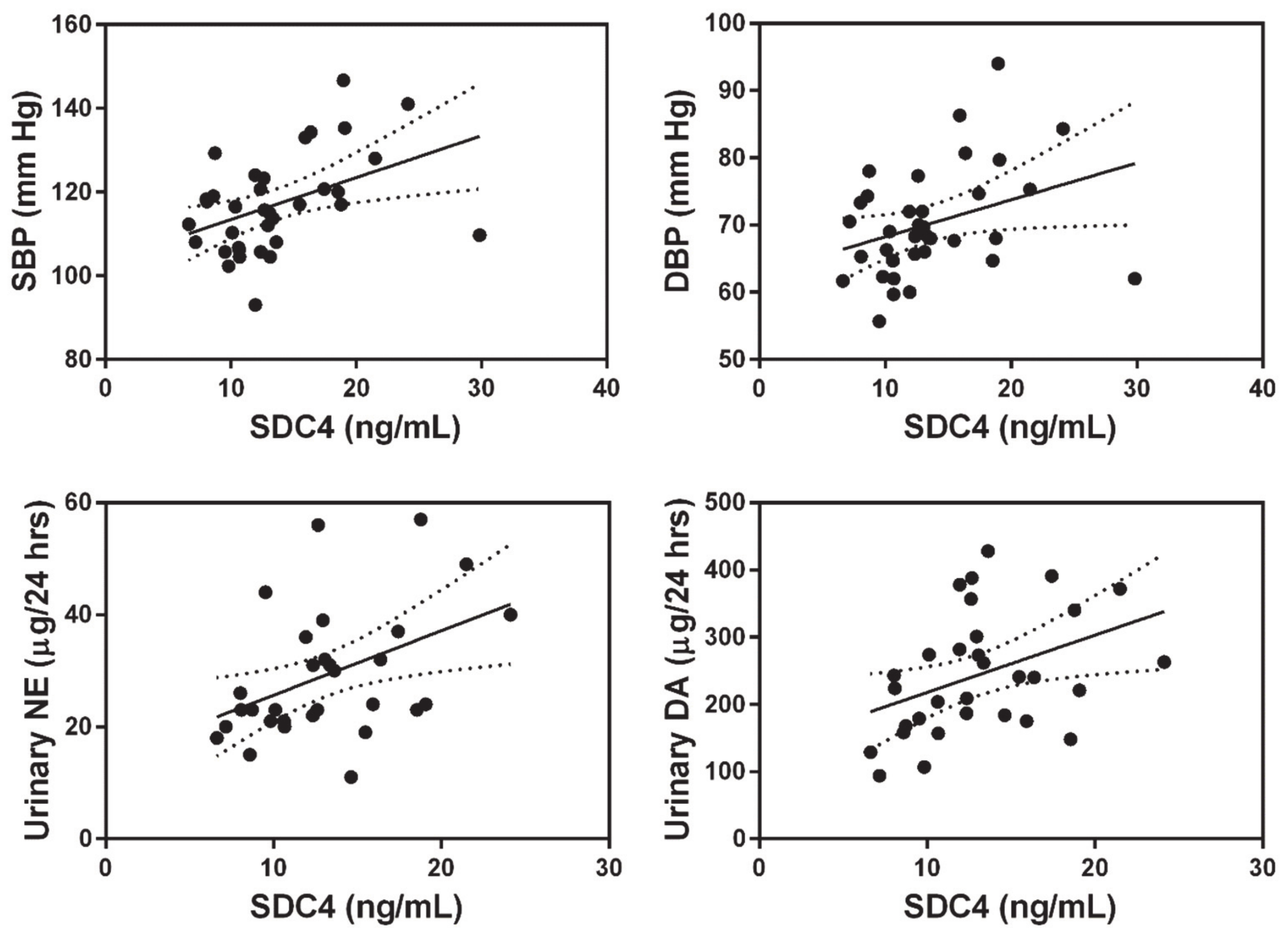
3.2. An Independent Relationship Exists between Serum SDC4 and Blood Pressure in Healthy Premenopausal Women
3.3. The Association between Circulating Levels of SDC4 and Blood Pressure is Independent of Differences in Body Composition, Urinary Dopamine, and Race
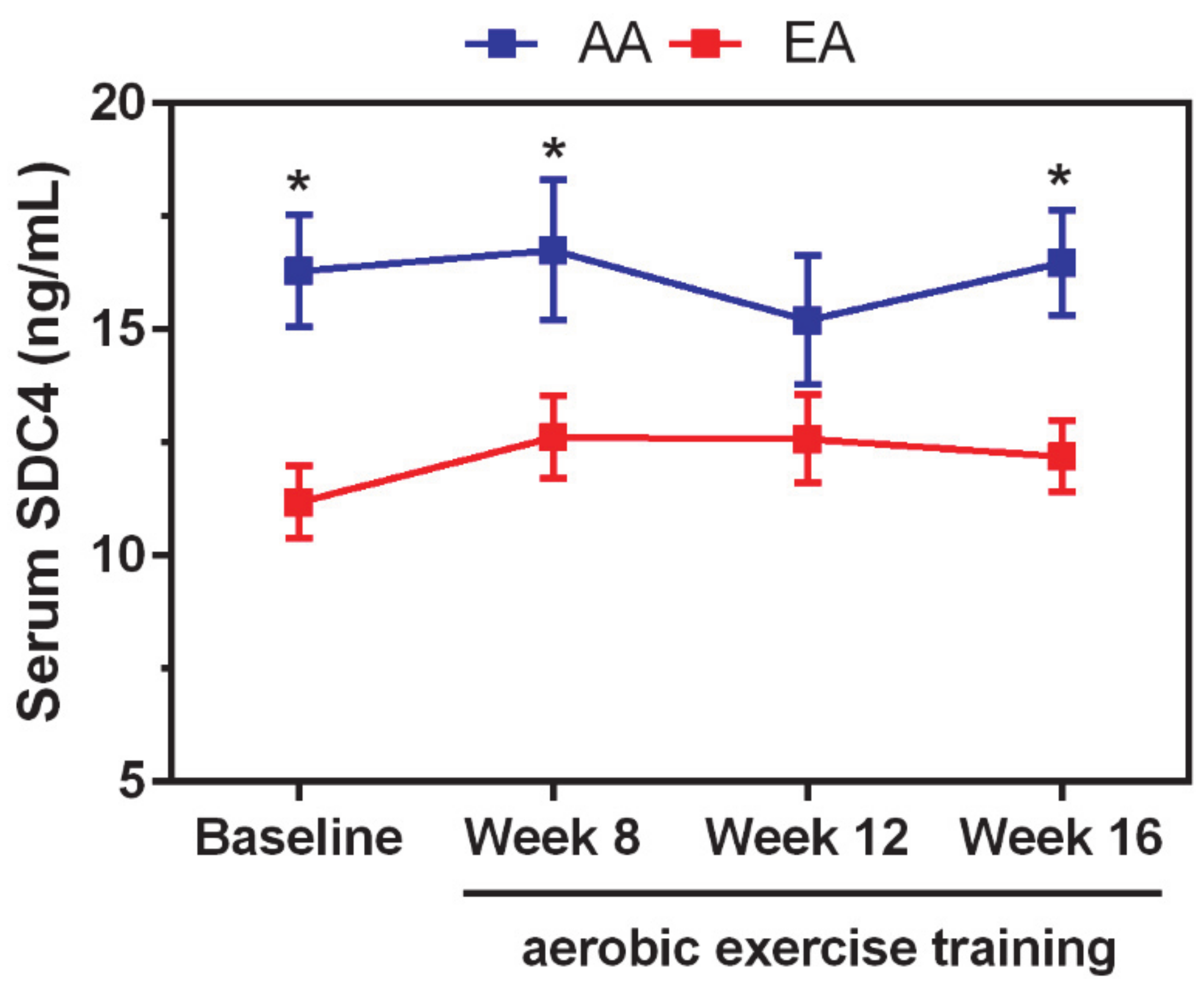
3.4. Long-Term Aerobic Exercise Does Not Impact the Abundance of Circulating SDC4
4. Discussion
5. Conclusions
Author Contributions
Funding
Institutional Review Board Statement
Informed Consent Statement
Data Availability Statement
Acknowledgments
Conflicts of Interest
References
- Sarrazin, S.; Lamanna, W.C.; Esko, J.D. Heparan Sulfate Proteoglycans. Cold Spring Harb. Perspect. Biol. 2011, 3, a004952. [Google Scholar] [CrossRef]
- Chakravarti, R.; Adams, J.C. Comparative genomics of the syndecans defines an ancestral genomic context associated with matrilins in vertebrates. BMC Genom. 2006, 7, 83. [Google Scholar] [CrossRef] [PubMed]
- Manon-Jensen, T.; Multhaupt, H.A.B.; Couchman, J.R. Mapping of matrix metalloproteinase cleavage sites on syndecan-1 and syndecan-4 ectodomains. FEBS J. 2013, 280, 2320–2331. [Google Scholar] [CrossRef]
- Fitzgerald, M.L.; Wang, Z.; Park, P.W.; Murphy, G.A.; Bernfield, M. Shedding of Syndecan-1 and -4 Ectodomains Is Regulated by Multiple Signaling Pathways and Mediated by a Timp-3–Sensitive Metalloproteinase. J. Cell Biol. 2000, 148, 811–824. [Google Scholar] [CrossRef] [PubMed]
- Manon-Jensen, T.; Itoh, Y.; Couchman, J.R. Proteoglycans in health and disease: The multiple roles of syndecan shedding. FEBS J. 2010, 277, 3876–3889. [Google Scholar] [CrossRef] [PubMed]
- Morgan, M.R.; Humphries, M.J.; Bass, M.D. Synergistic control of cell adhesion by integrins and syndecans. Nat. Rev. Mol. Cell Biol. 2007, 8, 957–969. [Google Scholar] [CrossRef] [PubMed]
- Xian, X.; Gopal, S.; Couchman, J.R. Syndecans as receptors and organizers of the extracellular matrix. Cell Tissue Res. 2010, 339, 31–46. [Google Scholar] [CrossRef] [PubMed]
- Hayashida, K.; Stahl, P.D.; Park, P.W. Syndecan-1 Ectodomain Shedding Is Regulated by the Small GTPase Rab5. J. Biol. Chem. 2008, 283, 35435–35444. [Google Scholar] [CrossRef] [PubMed]
- Yilmaz, O.; Afsar, B.; Ortiz, A.; Kanbay, M. The role of endothelial glycocalyx in health and disease. Clin. Kidney J. 2019, 12, 611–619. [Google Scholar] [CrossRef]
- Möckl, L. The Emerging Role of the Mammalian Glycocalyx in Functional Membrane Organization and Immune System Regulation. Front. Cell Dev. Biol. 2020, 8, 253. [Google Scholar] [CrossRef] [PubMed]
- Baeyens, N.; Mulligan-Kehoe, M.J.; Corti, F.; Simon, D.D.; Ross, T.D.; Rhodes, J.M.; Wang, T.Z.; Mejean, C.O.; Simons, M.; Humphrey, J.; et al. Syndecan 4 is required for endothelial alignment in flow and atheroprotective signaling. Proc. Natl. Acad. Sci. 2014, 111, 17308–17313. [Google Scholar] [CrossRef]
- Voyvodic, P.L.; Min, D.; Liu, R.; Williams, E.; Chitalia, V.; Dunn, A.K.; Baker, A.B. Loss of Syndecan-1 Induces a Pro-inflammatory Phenotype in Endothelial Cells with a Dysregulated Response to Atheroprotective Flow. J. Biol. Chem. 2014, 289, 9547–9559. [Google Scholar] [CrossRef] [PubMed]
- Florian, J.A.; Kosky, J.R.; Ainslie, K.; Pang, Z.; Dull, R.O.; Tarbell, J.M. Heparan Sulfate Proteoglycan Is a Mechanosensor on Endothelial Cells. Circ. Res. 2003, 93, e136–e142. [Google Scholar] [CrossRef] [PubMed]
- Rehm, M.; Bruegger, D.; Christ, F.; Conzen, P.; Thiel, M.; Jacob, M.; Chappell, D.; Stoeckelhuber, M.; Welsch, U.; Reichart, B.; et al. Shedding of the Endothelial Glycocalyx in Patients Undergoing Major Vascular Surgery with Global and Regional Ischemia. Circulation 2007, 116, 1896–1906. [Google Scholar] [CrossRef] [PubMed]
- Arthur, A.; McCall, P.J.; Jolly, L.; Kinsella, J.; Kirk, A.; Shelley, B.G. Endothelial glycocalyx layer shedding following lung resection. Biomarkers Med. 2016, 10, 1033–1038. [Google Scholar] [CrossRef]
- Henrich, M.; Gruss, M.; Weigand, M.A. Sepsis-Induced Degradation of Endothelial Glycocalix. Sci. World J. 2010, 10, 917–923. [Google Scholar] [CrossRef] [PubMed]
- Kim, Y.-H.; Nijst, P.; Kiefer, K.; Tang, W.H.W. Endothelial Glycocalyx as Biomarker for Cardiovascular Diseases: Mechanistic and Clinical Implications. Curr. Hear. Fail. Rep. 2017, 14, 117–126. [Google Scholar] [CrossRef]
- Solbu, M.D.; Kolset, S.O.; Jenssen, T.G.; Wilsgaard, T.; Løchen, M.-L.; Mathiesen, E.B.; Melsom, T.; Eriksen, B.O.; Reine, T.M. Gender differences in the association of syndecan-4 with myocardial infarction: The population-based Tromsø Study. Atheroscler. 2018, 278, 166–173. [Google Scholar] [CrossRef] [PubMed]
- Lipphardt, M.; Dihazi, H.; Maas, J.-H.; Schäfer, A.-K.; Amlaz, S.I.; Ratliff, B.B.; Koziolek, M.J.; Wallbach, M. Syndecan-4 as a Marker of Endothelial Dysfunction in Patients with Resistant Hypertension. J. Clin. Med. 2020, 9, 3051. [Google Scholar] [CrossRef] [PubMed]
- Sueta, D.; Hokimoto, S. Could Circulatory Syndecan-1 Be a Predictable Biomarker for Acute Kidney Injury in Patients with Acute Decompensated Heart Failure? Circ. J. 2015, 79, 1444–1445. [Google Scholar] [CrossRef] [PubMed]
- Bertrand, J.; Bollmann, M. Soluble syndecans: Biomarkers for diseases and therapeutic options. Br. J. Pharmacol. 2018, 176, 67–81. [Google Scholar] [CrossRef]
- Li, L.; Chaikof, E.L. Mechanical stress regulates syndecan-4 expression and redistribution in vascular smooth muscle cells. Arter. Thromb. Vasc. Biol. 2002, 22, 61–68. [Google Scholar] [CrossRef] [PubMed]
- Julien, M.A.; Wang, P.; Haller, C.A.; Wen, J.; Chaikof, E.L. Mechanical strain regulates syndecan-4 expression and shedding in smooth muscle cells through differential activation of MAP kinase signaling pathways. Am. J. Physiol. Physiol. 2007, 292, C517–C525. [Google Scholar] [CrossRef] [PubMed]
- Reizes, O.; Goldberger, O.; Smith, A.C.; Xu, Z.; Bernfield, M.; Bickel, P.E. Insulin Promotes Shedding of Syndecan Ectodomains from 3T3-L1 Adipocytes: A Proposed Mechanism for Stabilization of Extracellular Lipoprotein Lipase†. Biochemistry 2006, 45, 5703–5711. [Google Scholar] [CrossRef]
- Maas, A.H.; Van Der Schouw, Y.T.; Regitz-Zagrosek, V.; Swahn, E.; Appelman, Y.E.; Pasterkamp, G.; Cate, H.T.; Nilsson, P.M.; Huisman, M.V.; Stam, H.C.; et al. Red alert for women’s heart: The urgent need for more research and knowledge on cardiovascular disease in women: Proceedings of the Workshop held in Brussels on Gender Differences in Cardiovascular disease, 29 September 2010. Eur. Hear. J. 2011, 32, 1362–1368. [Google Scholar] [CrossRef]
- Lackland, D.T. Racial Differences in Hypertension: Implications for High Blood Pressure Management. Am. J. Med Sci. 2014, 348, 135–138. [Google Scholar] [CrossRef]
- Collier, S.R.; Kanaley, J.A.; Carhart, R.; Frechette, V.; Tobin, M.M.; Hall, A.K.; Luckenbaugh, A.N.; Fernhall, B. Effect of 4 weeks of aerobic or resistance exercise training on arterial stiffness, blood flow and blood pressure in pre- and stage-1 hypertensives. J. Hum. Hypertens. 2008, 22, 678–686. [Google Scholar] [CrossRef] [PubMed]
- Carter, S.J.; Goldsby, T.U.; Fisher, G.; Plaisance, E.P.; Gower, B.A.; Glasser, S.P.; Hunter, G.R. Systolic blood pressure response after high-intensity interval exercise is independently related to decreased small arterial elasticity in normotensive African American women. Appl. Physiol. Nutr. Metab. 2016, 41, 484–490. [Google Scholar] [CrossRef]
- Cohn, J.N.; Finkelstein, S.; McVeigh, G.; Morgan, D.; Lemay, L.; Robinson, J.; Mock, J. Noninvasive Pulse Wave Analysis for the Early Detection of Vascular Disease. Hypertension 1995, 26, 503–508. [Google Scholar] [CrossRef] [PubMed]
- Zeng, C.; Jose, P.A. Dopamine Receptors. Hypertens. 2011, 57, 11–17. [Google Scholar] [CrossRef] [PubMed]
- Ittermann, T.; Werner, N.; Lieb, W.; Merz, B.; Nöthlings, U.; Kluttig, A.; Tiller, D.; Greiser, K.H.; Vogt, S.; Thorand, B.; et al. Changes in fat mass and fat-free-mass are associated with incident hypertension in four population-based studies from Germany. Int. J. Cardiol. 2019, 274, 372–377. [Google Scholar] [CrossRef]
- Weise, C.M.; Thiyyagura, P.; Reiman, E.M.; Chen, K.; Krakoff, J. Fat-free body mass but not fat mass is associated with reduced gray matter volume of cortical brain regions implicated in autonomic and homeostatic regulation. NeuroImage 2013, 64, 712–721. [Google Scholar] [CrossRef]
- Oh, Y.S. Arterial stiffness and hypertension. Clin. Hypertens. 2018, 24, 17. [Google Scholar] [CrossRef] [PubMed]
- Mannelli, M.; Pupilli, C.; Lanzillotti, R.; Ianni, L.; Serio, M. Catecholamines and Blood Pressure Regulation. Horm. Res. 1990, 34, 156–160. [Google Scholar] [CrossRef] [PubMed]
- Johansson, P.I.; Bro-Jeppesen, J.; Kjaergaard, J.; Wanscher, M.; Hassager, C.; Ostrowski, S.R. Sympathoadrenal Activation and Endothelial Damage Are Inter Correlated and Predict Increased Mortality in Patients Resuscitated after Out-Of-Hospital Cardiac Arrest. A Post Hoc Sub-Study of Patients from the TTM-Trial. PLoS ONE 2015, 10, e0120914. [Google Scholar] [CrossRef]
- Ostrowski, S.R.; Pedersen, S.H.; Jensen, J.S.; Mogelvang, R.; Johansson, P.I. Acute myocardial infarction is associated with endothelial glycocalyx and cell damage and a parallel increase in circulating catecholamines. Crit. Care 2013, 17, R32. [Google Scholar] [CrossRef]
- Wernly, B.; Fuernau, G.; Masyuk, M.; Muessig, J.M.; Pfeiler, S.; Bruno, R.R.; Desch, S.; Muench, P.; Lichtenauer, M.; Kelm, M.; et al. Syndecan-1 Predicts Outcome in Patients with ST-Segment Elevation Infarction Independent from Infarct-related Myocardial Injury. Sci. Rep. 2019, 9, 1–7. [Google Scholar] [CrossRef]
- Dehghani, T.; Panitch, A. Endothelial cells, neutrophils and platelets: Getting to the bottom of an inflammatory triangle. Open Biol. 2020, 10, 200161. [Google Scholar] [CrossRef]
- Harding, I.C.; Mitra, R.; Mensah, S.A.; Nersesyan, A.; Bal, N.N.; Ebong, E.E. Endothelial barrier reinforcement relies on flow-regulated glycocalyx, a potential therapeutic target. Biorheol. 2019, 56, 131–149. [Google Scholar] [CrossRef] [PubMed]
- Tomek, J.; Bub, G. Hypertension-induced remodelling: On the interactions of cardiac risk factors. J. Physiol. 2017, 595, 4027–4036. [Google Scholar] [CrossRef]
- Herum, K.M.; Romaine, A.; Wang, A.; Melleby, A.O.; Strand, M.E.; Pacheco, J.; Braathen, B.; Dunér, P.; Tønnessen, T.; Lunde, I.G.; et al. Syndecan-4 Protects the Heart From the Profibrotic Effects of Thrombin-Cleaved Osteopontin. J. Am. Hear. Assoc. 2020, 9, e013518. [Google Scholar] [CrossRef]
- Drager, L.F.; Bortolotto, L.A.; Figueiredo, A.C.; Silva, B.C.; Krieger, E.M.; Lorenzi-Filho, G. Obstructive Sleep Apnea, Hypertension, and Their Interaction on Arterial Stiffness and Heart Remodeling. Chest 2007, 131, 1379–1386. [Google Scholar] [CrossRef]
- Lee, S.; Kolset, S.O.; Birkeland, K.I.; Drevon, C.A.; Reine, T.M. Acute exercise increases syndecan-1 and -4 serum concentrations. Glycoconj. J. 2019, 36, 113–125. [Google Scholar] [CrossRef] [PubMed]
- Howard, G.; Lackland, D.T.; Kleindorfer, D.O.; Kissela, B.M.; Moy, C.S.; Judd, S.E.; Safford, M.M.; Cushman, M.; Glasser, S.P.; Howard, V.J. Racial Differences in the Impact of Elevated Systolic Blood Pressure on Stroke Risk. JAMA Intern. Med. 2013, 173, 46–51. [Google Scholar] [CrossRef]
- Wang, X.; Poole, J.C.; Treiber, F.A.; Harshfield, G.A.; Hanevold, C.D.; Snieder, H. Ethnic and Gender Differences in Ambulatory Blood Pressure Trajectories. Circulation 2006, 114, 2780–2787. [Google Scholar] [CrossRef] [PubMed]
- Voors, A.W.; Foster, T.A.; Frerichs, R.R.; Webber, L.S.; Berenson, G.S. Studies of blood pressures in children, ages 5-14 years, in a total biracial community: The Bogalusa Heart Study. Circulation 1976, 54, 319–327. [Google Scholar] [CrossRef] [PubMed]
- Palacios, C.; Wigertz, K.; Martin, B.R.; Jackman, L.; Pratt, J.H.; Peacock, M.; McCabe, G.; Weaver, C.M. Sodium Retention in Black and White Female Adolescents in Response to Salt Intake. J. Clin. Endocrinol. Metab. 2004, 89, 1858–1863. [Google Scholar] [CrossRef] [PubMed]
- Choi, H.Y.; Park, H.C.; Ha, S.K. Salt Sensitivity and Hypertension: A Paradigm Shift from Kidney Malfunction to Vascular Endothelial Dysfunction. Electrolytes Blood Press. 2015, 13, 7–16. [Google Scholar] [CrossRef]
- Engberink, R.H.G.O.; Rorije, N.M.; Van Der Heide, J.J.H.; Born, B.-J.H.V.D.; Vogt, L. Role of the Vascular Wall in Sodium Homeostasis and Salt Sensitivity. J. Am. Soc. Nephrol. 2015, 26, 777–783. [Google Scholar] [CrossRef]
- De Luca, M.; Vecchie’, D.; Athmanathan, B.; Gopalkrishna, S.; Valcin, J.A.; Swain, T.M.; Sertie, R.; Wekesa, K.; Rowe, G.C.; Bailey, S.M.; et al. Genetic Deletion of Syndecan-4 Alters Body Composition, Metabolic Phenotypes, and the Function of Metabolic Tissues in Female Mice Fed A High-Fat Diet (Running Title: Sdc4 Deficiency Affects Metabolic Phenotypes). Nutr. 2019, 11, 2810. [Google Scholar] [CrossRef] [PubMed]
- Kasza, I.; Suh, Y.; Wollny, D.; Clark, R.J.; Roopra, A.; Colman, R.J.; MacDougald, O.A.; Shedd, T.A.; Nelson, D.W.; Yen, M.-I.; et al. Syndecan-1 Is Required to Maintain Intradermal Fat and Prevent Cold Stress. PLoS Genet. 2014, 10, e1004514. [Google Scholar] [CrossRef] [PubMed]
- Pessentheiner, A.R.; Ducasa, G.M.; Gordts, P.L.S.M. Proteoglycans in Obesity-Associated Metabolic Dysfunction and Meta-Inflammation. Front. Immunol. 2020, 11, 769. [Google Scholar] [CrossRef] [PubMed]
- Shaw, L.J.; Merz, C.N.B.; Pepine, C.J.; Reis, S.E.; Bittner, V.; Kelsey, S.F.; Olson, M.; Johnson, B.D.; Mankad, S.; Sharaf, B.L.; et al. Insights From the NHLBI-Sponsored Women’s Ischemia Syndrome Evaluation (WISE) Study. J. Am. Coll. Cardiol. 2006, 47, S4–S20. [Google Scholar] [CrossRef] [PubMed]

| Variables | African American (n =17) | European American (n = 20) | p-Values |
|---|---|---|---|
| Age (years) | 32.44 ± 1.30 | 31.62 ± 1.39 | 0.568 |
| FM (kg) | 31.86 ± 2.21 | 25.77 ± 2.35 | 0.133 |
| BF% | 39.05 ± 1.37 | 36.21 ± 1.79 | 0.230 |
| FFM (kg) | 47.73 ± 1.61 | 42.04 ± 0.91 | 0.004 |
| SBP (mm Hg) | 121.89 ± 2.97 | 112.19 ± 2.14 | 0.010 |
| DBP (mm Hg) | 73.41 ± 2.20 | 67.39 ± 1.44 | 0.023 |
| LAE (mL/mm Hg·100) | 17.10 ± 1.46 | 15.80 ± 0.99 | 0.352 |
| SAE (mL/mm Hg·100) | 6.89 ± 0.58 | 7.73 ± 0.53 | 0.355 |
| SVR (dyne/s/cm−5) | 1331.05 ± 74.14 | 1324.75 ± 32.23 | 0.936 |
| ECO (L/min) | 5.60 ± 0.19 | 5.14 ± 0.14 | 0.059 |
| Serum CRP (mg/L) | 2.09 ± 0.39 | 2.51 ± 0.72 | 0.607 |
| Serum IL-6 (pg/mL) | 1.70 ± 0.65 | 2.79 ± 1.43 | 0.498 |
| Serum TNF-α (pg/mL) | 3.05 ± 0.33 | 3.14 ± 0.25 | 0.774 |
| Urinary NE (µg/24 h)a | 33.43 ± 3.01 | 25.22 ± 2.46 | 0.041 |
| Urinary DA (µg/24 h)a | 299.71 ± 22.06 | 205.28 ± 18.72 | 0.007 |
| Serum SDC4 | Serum SDC1 | |||
|---|---|---|---|---|
| r | p-Value | r | p-Value | |
| BF% | 0.2585 | 0.1280 | −0.4135 | 0.0122 |
| FFM | 0.2201 | 0.1971 | −0.0967 | 0.5749 |
| SBP | 0.4202 | 0.0120 | 0.1921 | 0.2688 |
| DBP | 0.3611 | 0.0331 | 0.2980 | 0.0821 |
| LAE | −0.1720 | 0.3232 | −0.1915 | 0.2705 |
| SAE | −0.2108 | 0.2242 | 0.1606 | 0.3568 |
| SVR | −0.0171 | 0.9223 | 0.2498 | 0.1479 |
| ECO | 0.2785 | 0.1052 | −0.1423 | 0.4149 |
| Serum CRP | −0.2154 | 0.2072 | −0.0932 | 0.5888 |
| Serum IL-6 | −0.1130 | 0.5118 | −0.1333 | 0.4383 |
| Serum TNF-α | −0.1482 | 0.3884 | −0.2150 | 0.2080 |
| Urinary NE | 0.4494 | 0.0112 | 0.1462 | 0.4326 |
| Urinary DA | 0.4341 | 0.0147 | 0.0782 | 0.6757 |
| Independent Variables | Standardized Coefficient (β) | p-Values | ||
|---|---|---|---|---|
| SBP | Model 1 p = 0.0096 R2 = 0.35 | SDC4 | 0.8828 | 0.0408 |
| BF% | −0.3368 | 0.2068 | ||
| FFM | 0.7176 | 0.0389 | ||
| Race | 1.6507 | 0.7187 | ||
| Model 2 p = 0.0003 R2 = 0.56 | SDC4 | 1.5683 | 0.0008 | |
| FFM | 0.7215 | 0.0155 | ||
| DA | −0.0482 | 0.0149 | ||
| Race | 1.2001 | 0.7683 | ||
| Model 3 p = 0.0007 R2 = 0.46 | SDC4 | 0.1455 | 0.7183 | |
| LAE | −1.3221 | 0.0016 | ||
| SAE | 0.4358 | 0.5577 | ||
| Race | 12.0860 | 0.0070 | ||
| DBP | Model 1 p = 0.0113 R2 = 0.34 | SDC4 | 0.4898 | 0.1020 |
| BF% | −0.4648 | 0.0168 | ||
| FFM | 0.3796 | 0.1146 | ||
| Race | 2.8209 | 0.3840 | ||
| Model 2 p = 0.0306 R2 = 0.34 | SDC4 | 0.7201 | 0.0445 | |
| FFM | 0.2786 | 0.2383 | ||
| DA | −0.0137 | 0.3795 | ||
| Race | 2.2456 | 0.5082 | ||
| Model 3 p = 0.0022 R2 = 0.42 | SDC4 | −0.1048 | 0.7207 | |
| LAE | −0.9781 | 0.0013 | ||
| SAE | 0.6203 | 0.2547 | ||
| Race | 9.4848 | 0.0039 |
Publisher’s Note: MDPI stays neutral with regard to jurisdictional claims in published maps and institutional affiliations. |
© 2021 by the authors. Licensee MDPI, Basel, Switzerland. This article is an open access article distributed under the terms and conditions of the Creative Commons Attribution (CC BY) license (http://creativecommons.org/licenses/by/4.0/).
Share and Cite
De Luca, M.; Bryan, D.R.; Hunter, G.R. Circulating Levels of the Heparan Sulfate Proteoglycan Syndecan-4 Positively Associate with Blood Pressure in Healthy Premenopausal Women. Biomolecules 2021, 11, 342. https://doi.org/10.3390/biom11030342
De Luca M, Bryan DR, Hunter GR. Circulating Levels of the Heparan Sulfate Proteoglycan Syndecan-4 Positively Associate with Blood Pressure in Healthy Premenopausal Women. Biomolecules. 2021; 11(3):342. https://doi.org/10.3390/biom11030342
Chicago/Turabian StyleDe Luca, Maria, David R. Bryan, and Gary R. Hunter. 2021. "Circulating Levels of the Heparan Sulfate Proteoglycan Syndecan-4 Positively Associate with Blood Pressure in Healthy Premenopausal Women" Biomolecules 11, no. 3: 342. https://doi.org/10.3390/biom11030342
APA StyleDe Luca, M., Bryan, D. R., & Hunter, G. R. (2021). Circulating Levels of the Heparan Sulfate Proteoglycan Syndecan-4 Positively Associate with Blood Pressure in Healthy Premenopausal Women. Biomolecules, 11(3), 342. https://doi.org/10.3390/biom11030342


