

From Sunlight to Signaling: Evolutionary Integration of Vitamin D and Sterol Metabolism


Abstract
1. Introduction
2. Vitamin D Metabolism: Evolutionary Origins and Ecological Distribution
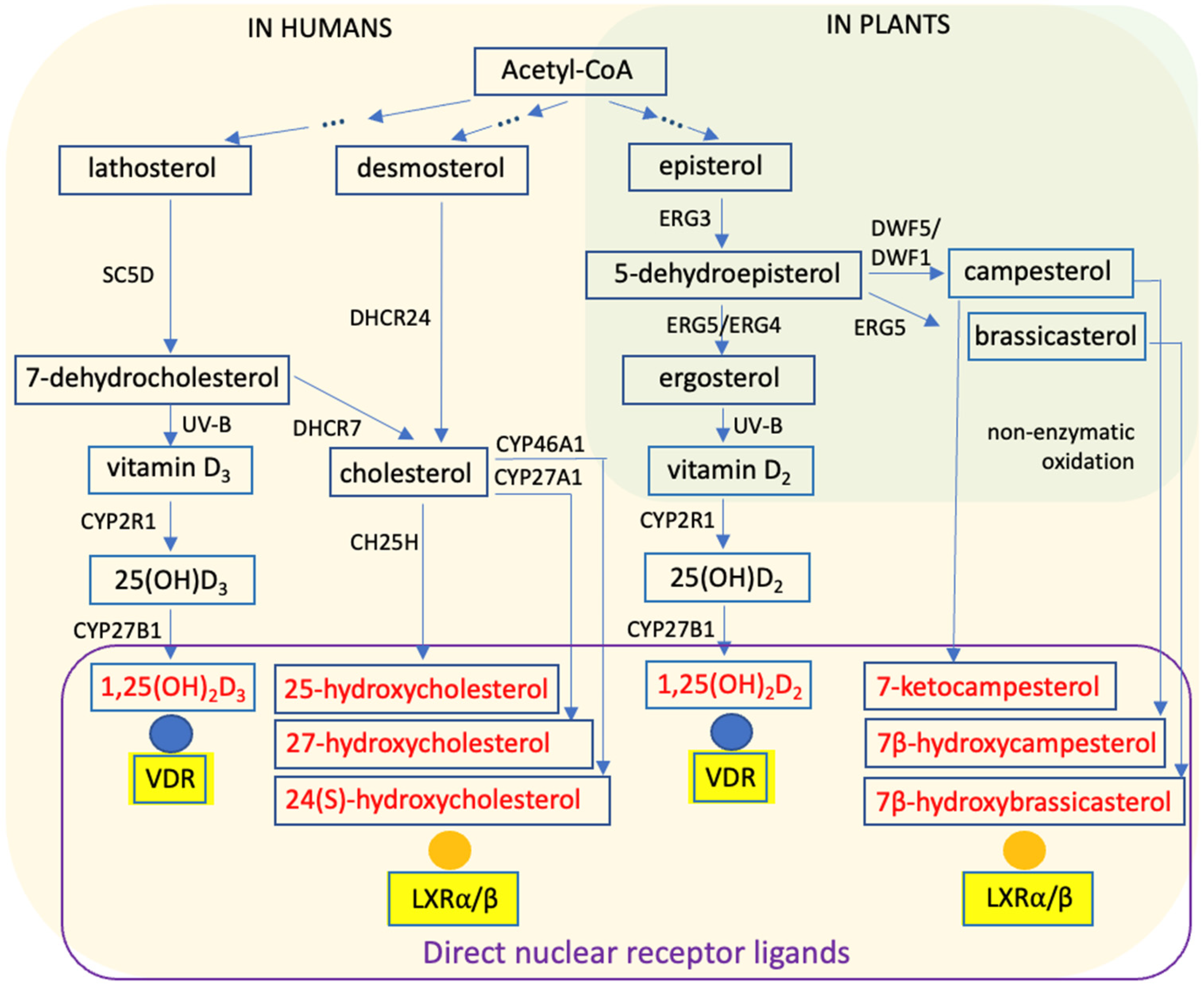
3. Integration of Sterol Biosynthesis and Vitamin D Signaling
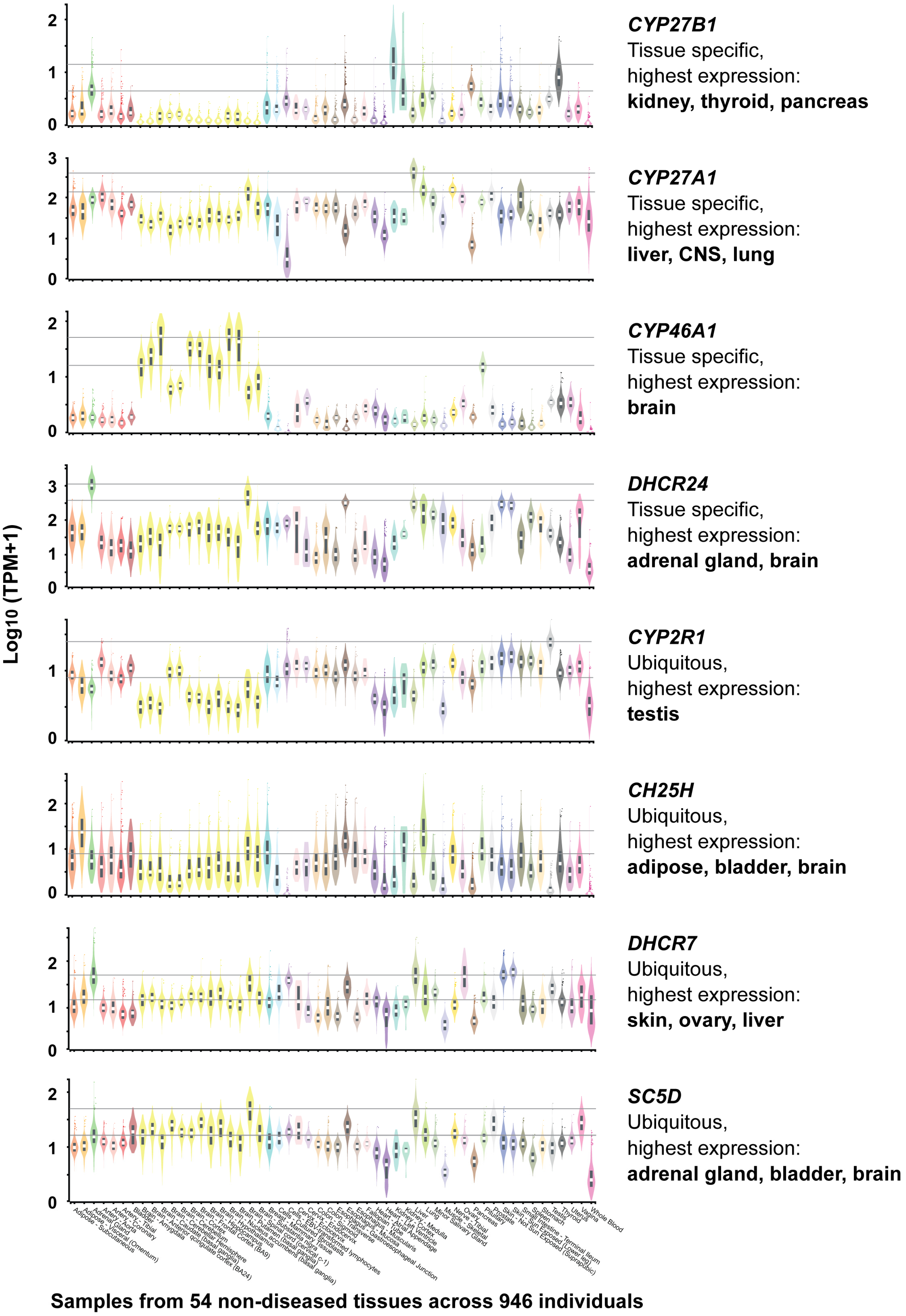
4. Integrated Enzymatic Networks Linking Vitamin D Activation, Sterol Metabolism, and Tissue-Specific Signaling
5. Evolutionary and Genetic Adaptation of Vitamin D and Sterol Metabolism in Human Populations
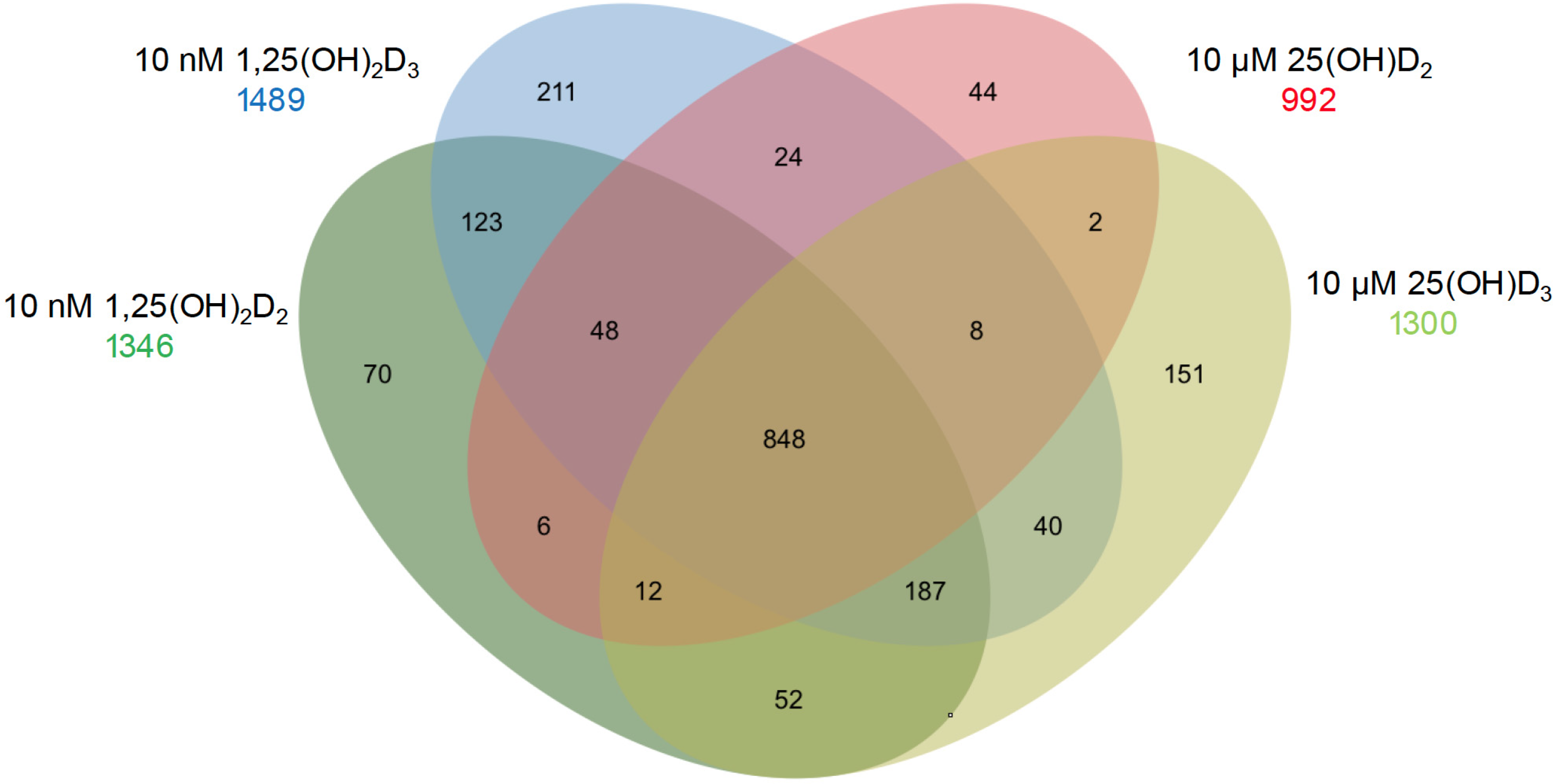
6. Ligand Specificity, Structural Determinants, and Dietary Modulation of VDR and LXR Signaling
7. Conclusions
Author Contributions
Funding
Institutional Review Board Statement
Informed Consent Statement
Data Availability Statement
Conflicts of Interest
References
- Wacker, M.; Holick, M.F. Sunlight and vitamin D: A global perspective for health. Derm.-Endocrinol. 2013, 5, 51–108. [Google Scholar] [CrossRef] [Scilit]
- Sebe-Pedros, A.; Degnan, B.M.; Ruiz-Trillo, I. The origin of Metazoa: A unicellular perspective. Nat. Rev. Genet. 2017, 18, 498–512. [Google Scholar] [CrossRef] [Scilit]
- Prabhu, A.V.; Luu, W.; Sharpe, L.J.; Brown, A.J. Cholesterol-mediated degradation of 7-dehydrocholesterol reductase switches the balance from cholesterol to vitamin D synthesis. J. Biol. Chem. 2016, 291, 8363–8373. [Google Scholar] [CrossRef] [Scilit]
- Duan, Y.; Gong, K.; Xu, S.; Zhang, F.; Meng, X.; Han, J. Regulation of cholesterol homeostasis in health and diseases: From mechanisms to targeted therapeutics. Signal Transduct. Target. Ther. 2022, 7, 265. [Google Scholar] [CrossRef] [Scilit]
- Vogel, P.; Persson, S.; Moreno-Pescador, G.; Noack, L.C. Sterols in plant biology—Advances in studying membrane dynamics. Cell Surf. 2025, 13, 100147. [Google Scholar] [CrossRef] [Scilit]
- Hanel, A.; Carlberg, C. Vitamin D and evolution: Pharmacologic implications. Biochem. Pharmacol. 2020, 173, 113595. [Google Scholar] [CrossRef] [Scilit]
- Carlberg, C. Vitamin D in the context of evolution. Nutrients 2022, 14, 3018. [Google Scholar] [CrossRef] [Scilit] [PubMed]
- Bouillon, R.; Suda, T. Vitamin D: Calcium and bone homeostasis during evolution. BoneKEy Rep. 2014, 3, 480. [Google Scholar] [CrossRef] [Scilit] [PubMed]
- Carlberg, C.; Raczyk, M.; Zawrotna, N. Vitamin D: A master example of nutrigenomics. Redox Biol. 2023, 62, 102695. [Google Scholar] [CrossRef] [Scilit]
- Japelt, R.B.; Jakobsen, J. Vitamin D in plants: A review of occurrence, analysis, and biosynthesis. Front. Plant Sci. 2013, 4, 136. [Google Scholar] [CrossRef] [Scilit] [PubMed]
- Durrant, L.R.; Bucca, G.; Hesketh, A.; Moller-Levet, C.; Tripkovic, L.; Wu, H.; Hart, K.H.; Mathers, J.C.; Elliott, R.M.; Lanham-New, S.A.; et al. Vitamins D2 and D3 have overlapping but dfferent rfects on the human immune system revealed through analysis of the blood transcriptome. Front. Immunol. 2022, 13, 790444. [Google Scholar] [CrossRef] [Scilit] [PubMed]
- Hanel, A.; Veldhuizen, C.; Carlberg, C. Gene-regulatory potential of 25-hydroxyvitamin D3 and D2. Front. Nutr. 2022, 9, 910601. [Google Scholar] [CrossRef] [Scilit]
- Jablonski, N.G.; Chaplin, G. Colloquium paper: Human skin pigmentation as an adaptation to UV radiation. Proc. Natl. Acad. Sci. USA 2010, 107, 8962–8968. [Google Scholar] [CrossRef] [Scilit]
- Valitova, J.N.; Sulkarnayeva, A.G.; Minibayeva, F.V. Plant sterols: Diversity, biosynthesis, and physiological functions. Biochemistry 2016, 81, 819–834. [Google Scholar] [CrossRef] [Scilit]
- Andrulis, E.D. Theory of the origin, evolution, and nature of life. Life 2011, 2, 1–105. [Google Scholar] [CrossRef] [Scilit] [PubMed]
- Pike, J.W.; Christakos, S. Biology and mechanisms of action of the vitamin D hormone. Endocrinol. Metab. Clin. N. Am. 2017, 46, 815–843. [Google Scholar] [CrossRef] [Scilit]
- Tripkovic, L.; Lambert, H.; Hart, K.; Smith, C.P.; Bucca, G.; Penson, S.; Chope, G.; Hypponen, E.; Berry, J.; Vieth, R.; et al. Comparison of vitamin D2 and vitamin D3 supplementation in raising serum 25-hydroxyvitamin D status: A systematic review and meta-analysis. Am. J. Clin. Nutr. 2012, 95, 1357–1364. [Google Scholar] [CrossRef] [Scilit]
- Hurst, E.A.; Homer, N.Z.; Mellanby, R.J. Vitamin D metabolism and profiling in veterinary species. Metabolites 2020, 10, 371. [Google Scholar] [CrossRef] [Scilit] [PubMed]
- Kilincalp, S.; Deveci, M.; Basar, O.; Ekiz, F.; Coban, S.; Yuksel, O. Shark liver oil: Hidden dangers. Ann. Hepatol. 2012, 11, 728–730. [Google Scholar] [CrossRef] [Scilit]
- Pierens, S.L.; Fraser, D.R. The origin and metabolism of vitamin D in rainbow trout. J. Steroid Biochem. Mol. Biol. 2015, 145, 58–64. [Google Scholar] [CrossRef] [Scilit]
- Eliason, O.; Malitsky, S.; Panizel, I.; Feldmesser, E.; Porat, Z.; Sperfeld, M.; Segev, E. The photo-protective role of vitamin D in the microalga Emiliania huxleyi. iScience 2024, 27, 109884. [Google Scholar] [CrossRef] [Scilit]
- Ljubic, A.; Jacobsen, C.; Holdt, S.L.; Jakobsen, J. Microalgae Nannochloropsis oceanica as a future new natural source of vitamin D3. Food Chem. 2020, 320, 126627. [Google Scholar] [CrossRef] [Scilit]
- Luo, X.; Su, P.; Zhang, W. Advances in microalgae-derived phytosterols for functional food and pharmaceutical applications. Mar. Drugs 2015, 13, 4231–4254. [Google Scholar] [CrossRef] [Scilit] [PubMed]
- Kuwabara, N.; Ohta-Shimizu, M.; Fuwa, F.; Tomitsuka, E.; Sato, S.; Nakagawa, S. Ergosterol increases 7-dehydrocholesterol, a cholesterol precursor, and decreases cholesterol in human HepG2 cells. Lipids 2022, 57, 303–311. [Google Scholar] [CrossRef] [Scilit] [PubMed]
- Hansen, C.C.; Nelson, D.R.; Moller, B.L.; Werck-Reichhart, D. Plant cytochrome P450 plasticity and evolution. Mol. Plant 2021, 14, 1772. [Google Scholar] [CrossRef] [Scilit]
- Farrell, C.J.; Herrmann, M. Determination of vitamin D and its metabolites. Best. Pract. Res. Clin. Endocrinol. Metab. 2013, 27, 675–688. [Google Scholar] [CrossRef] [Scilit] [PubMed]
- Alonso, N.; Zelzer, S.; Eibinger, G.; Herrmann, M. Vitamin D metabolites: Analytical challenges and clinical relevance. Calcif. Tissue Int. 2023, 112, 158–177. [Google Scholar] [CrossRef] [Scilit]
- Bikle, D.D. Vitamin D: Production, metabolism, and mechanism of action. In Endotext; Feingold, K.R., Ahmed, S.F., Anawalt, B., Blackman, M.R., Boyce, A., Chrousos, G., Corpas, E., de Herder, W.W., Dhatariya, K., Dungan, K., et al., Eds.; MDText.com, Inc.: South Dartmouth, MA, USA, 2000. [Google Scholar]
- Tuckey, R.C.; Cheng, C.Y.S.; Slominski, A.T. The serum vitamin D metabolome: What we know and what is still to discover. J. Steroid Biochem. Mol. Biol. 2019, 186, 4–21. [Google Scholar] [CrossRef] [Scilit]
- Sempos, C.T.; Heijboer, A.C.; Bikle, D.D.; Bollerslev, J.; Bouillon, R.; Brannon, P.M.; DeLuca, H.F.; Jones, G.; Munns, C.F.; Bilezikian, J.P.; et al. Vitamin D assays and the definition of hypovitaminosis D: Results from the First International Conference on Controversies in Vitamin D. Br. J. Clin. Pharmacol. 2018, 84, 2194–2207. [Google Scholar] [CrossRef] [Scilit]
- Bikle, D.D. Vitamin D metabolism, mechanism of action, and clinical applications. Chem. Biol. 2014, 21, 319–329. [Google Scholar] [CrossRef] [Scilit]
- Fleet, J.C. The role of vitamin D in the endocrinology controlling calcium homeostasis. Mol. Cell Endocrinol. 2017, 453, 36–45. [Google Scholar] [CrossRef] [Scilit]
- Hewison, M.; Burke, F.; Evans, K.N.; Lammas, D.A.; Sansom, D.M.; Liu, P.; Modlin, R.L.; Adams, J.S. Extra-renal 25-hydroxyvitamin D3-1α-hydroxylase in human health and disease. J. Steroid Biochem. Mol. Biol. 2007, 103, 316–321. [Google Scholar] [CrossRef] [Scilit]
- Hutchinson, P.E.; Pringle, J.H. Consideration of possible effects of vitamin D on established cancer, with reference to malignant melanoma. Pigment. Cell Melanoma Res. 2022, 35, 408–424. [Google Scholar] [CrossRef] [Scilit]
- Slominski, A.T.; Chaiprasongsuk, A.; Janjetovic, Z.; Kim, T.K.; Stefan, J.; Slominski, R.M.; Hanumanthu, V.S.; Raman, C.; Qayyum, S.; Song, Y.; et al. Photoprotective properties of vtamin D and lumisterol hydroxyderivatives. Cell Biochem. Biophys. 2020, 78, 165–180. [Google Scholar] [CrossRef] [Scilit] [PubMed]
- Zhang, J.; Zhong, J.; Li, Y.; Zhou, Q.; Du, Z.; Lin, L.; Shu, P.; Jiang, L.; Zhou, W. A marine-derived sterol, ergosterol, mtigates UVB-iduced skin photodamage via dual inhibition of NF-kappaB and MAPK sgnaling. Mar. Drugs 2025, 23, 445. [Google Scholar] [CrossRef] [Scilit] [PubMed]
- Li, Y.; Cai, Y.; Ma, Q.; Yang, X.; He, C.; Xu, Y.; Zhang, M.; Lu, Z.; Chen, C.; Ning, C.; et al. Genetic atlas of plasma metabolome across 40 human common diseases: Mapping causal metabolites to disease risk. Genome Med. 2025, 17, 153. [Google Scholar] [CrossRef] [Scilit] [PubMed]
- Artusa, P.; White, J.H. Vitamin D and its analogs in immune system regulation. Pharmacol. Rev. 2025, 77, 100032. [Google Scholar] [CrossRef] [Scilit]
- Fuchs, M.A.; Grabner, A.; Shi, M.; Murray, S.L.; Burke, E.J.; Latic, N.; Thiriveedi, V.; Roper, J.; Ide, S.; Abe, K.; et al. Intestinal Cyp24a1 regulates vitamin D locally independent of systemic regulation by renal Cyp24a1 in mice. J. Clin. Investig. 2024, 135, e179882. [Google Scholar] [CrossRef] [Scilit]
- Umetani, M.; Ghosh, P.; Ishikawa, T.; Umetani, J.; Ahmed, M.; Mineo, C.; Shaul, P.W. The cholesterol metabolite 27-hydroxycholesterol promotes atherosclerosis via proinflammatory processes mediated by estrogen receptor alpha. Cell Metab. 2014, 20, 172–182. [Google Scholar] [CrossRef] [Scilit]
- Das, S.; Parigi, S.M.; Luo, X.; Fransson, J.; Kern, B.C.; Okhovat, A.; Diaz, O.E.; Sorini, C.; Czarnewski, P.; Webb, A.T.; et al. Liver X receptor unlinks intestinal regeneration and tumorigenesis. Nature 2025, 637, 1198–1206. [Google Scholar] [CrossRef] [Scilit]
- Li, T.; Chen, W.; Chiang, J.Y. PXR induces CYP27A1 and regulates cholesterol metabolism in the intestine. J. Lipid Res. 2007, 48, 373–384. [Google Scholar] [CrossRef] [Scilit]
- Nes, W.D. Biosynthesis of cholesterol and other sterols. Chem. Rev. 2011, 111, 6423–6451. [Google Scholar] [CrossRef] [Scilit]
- Ohyama, K.; Suzuki, M.; Kikuchi, J.; Saito, K.; Muranaka, T. Dual biosynthetic pathways to phytosterol via cycloartenol and lanosterol in Arabidopsis. Proc. Natl. Acad. Sci. USA 2009, 106, 725–730. [Google Scholar] [CrossRef] [Scilit]
- Evtyugin, D.D.; Evtuguin, D.V.; Casal, S.; Domingues, M.R. Advances and challenges in plant sterol research: Fundamentals, aalysis, applications and production. Molecules 2023, 28, 6526. [Google Scholar] [CrossRef] [Scilit]
- Du, Y.; Fu, X.; Chu, Y.; Wu, P.; Liu, Y.; Ma, L.; Tian, H.; Zhu, B. Biosynthesis and the roles of plant sterols in development and stress responses. Int. J. Mol. Sci. 2022, 23, 2332. [Google Scholar] [CrossRef] [Scilit]
- Consortium, G. The GTEx Consortium atlas of genetic regulatory effects across human tissues. Science 2020, 369, 1318–1330. [Google Scholar] [CrossRef] [Scilit] [PubMed]
- Bikle, D.D.; Patzek, S.; Wang, Y. Physiologic and pathophysiologic roles of extra renal CYP27b1: Case report and review. Bone Rep. 2018, 8, 255–267. [Google Scholar] [CrossRef] [Scilit]
- Hanel, A.; Carlberg, C. Skin color and vitamin D: An update. Exp. Dermatol. 2020, 29, 864–875. [Google Scholar] [CrossRef] [Scilit] [PubMed]
- Jablonski, N.G. Skin color and race. Am. J. Phys. Anthropol. 2021, 175, 437–447. [Google Scholar] [CrossRef] [Scilit] [PubMed]
- Jablonski, N.G. The evolution of human skin pigmentation involved the interactions of genetic, environmental, and cultural variables. Pigment. Cell Melanoma Res. 2021, 34, 707–729. [Google Scholar] [CrossRef] [Scilit]
- Lucock, M.D. The evolution of human skin pigmentation: A changing medley of vitamins, genetic variability, and UV radiation during human expansion. Am. J. Biol. Anthropol. 2022, 180, 252–271. [Google Scholar] [CrossRef] [Scilit]
- Ju, D.; Mathieson, I. The evolution of skin pigmentation-associated variation in West Eurasia. Proc. Natl. Acad. Sci. USA 2021, 118, e2009227118. [Google Scholar] [CrossRef] [Scilit]
- Karrow, N.A.; Leuschner, S.E.; Shandilya, U.K.; Mallard, B.A.; Wagter-Lesperance, L.; Bridle, B.W. Genetic variants influencing Individual vitamin D status. Nutrients 2025, 17, 2673. [Google Scholar] [CrossRef] [Scilit]
- Ma, X.; Xie, Z.; Qin, J.; Luo, S.; Zhou, Z. Association of vitamin D pathway gene CYP27B1 and CYP2R1 polymorphisms with autoimmune endocrine disorders: A meta-analysis. J. Clin. Endocrinol. Metab. 2020, 105, dgaa525. [Google Scholar] [CrossRef] [Scilit]
- Nowacka, A.; Sniegocki, M.; Bozilow, D.; Ziolkowska, E.A. CYP24A1 in small intestinal vitamin D metabolism and clinical implications. Nutrients 2025, 17, 3348. [Google Scholar] [CrossRef] [Scilit]
- Manousaki, D.; Dudding, T.; Haworth, S.; Hsu, Y.H.; Liu, C.T.; Medina-Gomez, C.; Voortman, T.; van der Velde, N.; Melhus, H.; Robinson-Cohen, C.; et al. Low-frequency synonymous coding variation in CYP2R1 has large efects on vitamin D levels and risk of multiple sclerosis. Am. J. Hum. Genet. 2017, 101, 227–238. [Google Scholar] [CrossRef] [Scilit]
- Kuan, V.; Martineau, A.R.; Griffiths, C.J.; Hypponen, E.; Walton, R. DHCR7 mutations linked to higher vitamin D status allowed early human migration to northern latitudes. BMC Evol. Biol. 2013, 13, 144. [Google Scholar] [CrossRef] [Scilit] [PubMed]
- Manousaki, D.; Mitchell, R.; Dudding, T.; Haworth, S.; Harroud, A.; Forgetta, V.; Shah, R.L.; Luan, J.; Langenberg, C.; Timpson, N.J.; et al. Genome-wide association study for vitamin D levels reveals 69 independent loci. Am. J. Hum. Genet. 2020, 106, 327–337. [Google Scholar] [CrossRef] [Scilit] [PubMed]
- Waterham, H.R.; Koster, J.; Romeijn, G.J.; Hennekam, R.C.; Vreken, P.; Andersson, H.C.; FitzPatrick, D.R.; Kelley, R.I.; Wanders, R.J. Mutations in the 3beta-hydroxysterol Delta24-reductase gene cause desmosterolosis, an autosomal recessive disorder of cholesterol biosynthesis. Am. J. Hum. Genet. 2001, 69, 685–694. [Google Scholar] [CrossRef] [Scilit] [PubMed]
- Pflugfelder, A.; Yong, X.L.H.; Jagirdar, K.; Eigentler, T.K.; Soyer, H.P.; Sturm, R.A.; Flatz, L.; Duffy, D.L. Genome-wide association study suggests the variant rs7551288*A within the DHCR24 gene is associated with poor overall survival in melanoma patients. Cancers 2022, 14, 2410. [Google Scholar] [CrossRef] [Scilit]
- Shraim, R.; Timofeeva, M.; Wyse, C.; van Geffen, J.; van Weele, M.; Romero-Ortuno, R.; Lopez, L.M.; Kleber, M.E.; Pilz, S.; Marz, W.; et al. Genome-wide gene-environment interaction study uncovers 162 vitamin D status variants using a precise ambient UVB measure. Nat. Commun. 2025, 16, 10774. [Google Scholar] [CrossRef] [Scilit]
- Haussler, M.R.; Jurutka, P.W.; Mizwicki, M.; Norman, A.W. Vitamin D receptor (VDR)-mediated actions of 1α,25(OH)2vitamin D3: Genomic and non-genomic mechanisms. Best. Pract. Res. Clin. Endocrinol. Metab. 2011, 25, 543–559. [Google Scholar] [CrossRef] [Scilit]
- Rochel, N.; Wurtz, J.M.; Mitschler, A.; Klaholz, B.; Moras, D. Crystal structure of the nuclear receptor for vitamin D bound to its natural ligand. Mol. Cell 2000, 5, 173–179. [Google Scholar] [CrossRef] [Scilit]
- Maestro, M.A.; Molnar, F.; Carlberg, C. Vitamin D and is synthetic analogs. J. Med. Chem. 2019, 62, 6854–6875. [Google Scholar] [CrossRef] [Scilit]
- Janowski, B.A.; Grogan, M.J.; Jones, S.A.; Wisely, G.B.; Kliewer, S.A.; Corey, E.J.; Mangelsdorf, D.J. Structural requirements of ligands for the oxysterol liver X receptors LXRa and LXRb. Proc. Natl. Acad. Sci. USA 1999, 96, 266–271. [Google Scholar] [CrossRef] [Scilit]
- Farnegardh, M.; Bonn, T.; Sun, S.; Ljunggren, J.; Ahola, H.; Wilhelmsson, A.; Gustafsson, J.A.; Carlquist, M. The three-dimensional structure of the liver X receptor beta reveals a flexible ligand-binding pocket that can accommodate fundamentally different ligands. J. Biol. Chem. 2003, 278, 38821–38828. [Google Scholar] [CrossRef] [Scilit]
- Zhu, C.Y.; Yu, P.H.; Sun, Q.; Hong, D.F.; Yang, C.; Naranmandura, H. Nuclear receptors in metabolism and diseases: Mechanistic and therapeutic insights. Pharmacol. Res. 2025, 218, 107862. [Google Scholar] [CrossRef] [Scilit] [PubMed]
- Jaceldo-Siegl, K.; Lutjohann, D.; Sirirat, R.; Mashchak, A.; Fraser, G.E.; Haddad, E. Variations in dietary intake and plasma concentrations of plant sterols across plant-based diets among North American adults. Mol. Nutr. Food Res. 2017, 61, 1600828. [Google Scholar] [CrossRef] [Scilit]
- Grandgirard, A.; Martine, L.; Demaison, L.; Cordelet, C.; Joffre, C.; Berdeaux, O.; Semon, E. Oxyphytosterols are present in plasma of healthy human subjects. Br. J. Nutr. 2004, 91, 101–106. [Google Scholar] [CrossRef] [Scilit] [PubMed]
- Schupbach, R.; Wegmuller, R.; Berguerand, C.; Bui, M.; Herter-Aeberli, I. Micronutrient status and intake in omnivores, vegetarians and vegans in Switzerland. Eur. J. Nutr. 2017, 56, 283–293. [Google Scholar] [CrossRef] [Scilit] [PubMed]



| Metabolite | In Human Plasma (nM) | In Fungi (nM) | In Higher Plants (nM) | |||
|---|---|---|---|---|---|---|
| min. | max. | min. | max. | min. | max. | |
| lathosterol | 2380 | 9900 | 0 | 0 | 0 | 0 |
| desmosterol | 790 | 2900 | 0 | 0 | 0 | 0 |
| 7-dehydrocholesterol | 2800 | 7200 | 0 | 0 | 1 | 50 |
| cholesterol | 1,000,000 | 6,500,000 | 300 | 40,000 | 100 | 30,000 |
| ergosterol | 9.3 | 14.9 | 150,000 | 1,200,000 | 13 | 6300 |
| episterol | 0 | 0 | 250 | 62,700 | 25 | 2500 |
| 5-dehydroepisterol | 0 | 0 | 25 | 25,200 | 2 | 1260 |
| campesterol | 240 | 87,000 | 0.2 | 10 | 25 | 500 |
| brassicasterol | 250 | 1800 | 0.1 | 5 | 10 | 200 |
| vitamin D3 | 1 | 5 | 0 | 0 | 20 | 2600 |
| vitamin D2 | 1 | 3 | 2520 | 380,000 | 25 | 12,600 |
| 25(OH)D3 | 50 | 125 | 0 | 0 | 0 | 0 |
| 25(OH)D2 | 2 | 30 | 0 | 0 | 0 | 0 |
| 1,25(OH)2D3 | 0.03 | 0.16 | 0 | 0 | 0 | 0 |
| 1,25(OH)2D2 | 0.001 | 0.02 | 0 | 0 | 0 | 0 |
| 25-hydroxycholesterol | 25 | 200 | 0 | 50 | 0 | 30 |
| 27-hydroxycholesterol | 13 | 538 | 0 | 50 | 0 | 30 |
| 24-hydroxycholesterol | 120 | 250 | 0 | 50 | 0 | 30 |
| 7-ketocampesterol | 1.5 | 3.0 | 0.25 | 627 | 10 | 500 |
| 7β-hydroxycampesterol | 0.8 | 5.0 | 0.25 | 620 | 25 | 100 |
| 7β-hydroxybrassicasterol | 0.6 | 1.0 | 3.0 | 15 | 5 | 60 |
| Gene | SNP | Location | Genetic Variation in Populations |
|---|---|---|---|
| DHCR7 | rs12785878 | Regulatory, 3.53 kb upstream of TSS |  |
| CYP27B1 | rs10877012 | Regulatory, 1.26 kb upstream of TSS |  |
| CYP27A1 | rs933994 | Regulatory, 3.75 kb downstream of TSS |  |
| CYP46A1 | rs8003602 | Regulatory, 1.79 kb upstream of TSS |  |
| CYP46A1 | rs754203 | Regulatory, 4.46 kb downstream of TSS |  |
| CYP2R1 | rs10766196 | Regulatory, 1.46 kb upstream of TSS |  |
| DHCR24 | rs7551288 | Regulatory, 12.3 kb downstream of TSS |  |
| CH25H | rs1131706 | Regulatory, 6.60 kb upstream of TSS |  |
Disclaimer/Publisher’s Note: The statements, opinions and data contained in all publications are solely those of the individual author(s) and contributor(s) and not of MDPI and/or the editor(s). MDPI and/or the editor(s) disclaim responsibility for any injury to people or property resulting from any ideas, methods, instructions or products referred to in the content. |
© 2026 by the authors. Licensee MDPI, Basel, Switzerland. This article is an open access article distributed under the terms and conditions of the Creative Commons Attribution (CC BY) license.
Share and Cite
Raczyk, M.; Carlberg, C. From Sunlight to Signaling: Evolutionary Integration of Vitamin D and Sterol Metabolism. Metabolites 2026, 16, 74. https://doi.org/10.3390/metabo16010074
Raczyk M, Carlberg C. From Sunlight to Signaling: Evolutionary Integration of Vitamin D and Sterol Metabolism. Metabolites. 2026; 16(1):74. https://doi.org/10.3390/metabo16010074
Chicago/Turabian StyleRaczyk, Marianna, and Carsten Carlberg. 2026. "From Sunlight to Signaling: Evolutionary Integration of Vitamin D and Sterol Metabolism" Metabolites 16, no. 1: 74. https://doi.org/10.3390/metabo16010074
APA StyleRaczyk, M., & Carlberg, C. (2026). From Sunlight to Signaling: Evolutionary Integration of Vitamin D and Sterol Metabolism. Metabolites, 16(1), 74. https://doi.org/10.3390/metabo16010074