
Lactic Acid in Tumour Biology

Abstract
1. Introduction
2. The Origin of Lactic Acid in the Tumour Microenvironment
3. Acidification of the Extracellular Medium
4. Lactic Acid as an Energy Source: The Reverse Warburg Effect
5. Lactate as a Signalling Molecule
6. Effects of Lactic Acid on the Immune System
6.1. Macrophages
6.2. T-Cells
6.3. Other Stromal and Immune Cells
7. Lactic Acid and Senescence

| Target | Effector | Result | Mechanism | Ref. |
|---|---|---|---|---|
| Tumoral Cells | Lactic acid | Tumour progression | GPR81 | [76] |
| Immune evasion | Lactlylation | [96] | ||
| Inhibition of apoptosis | Lactlylation | [97] | ||
| Cell migration and invasion | Lactlylation | [132] | ||
| Senescence | SNAIL | [129] | ||
| Senescence | [131] | |||
| Low pH | Cell Invasion | NF-κB | [38] | |
| Increase in PD-L1 | STAT1 INF-γ | [39] | ||
| Macrophages | Lactic Acid | Pro-tumoral phenotype | [23,48] | |
| Pro-tumoral phenotype | Lactlylation | [90,94] | ||
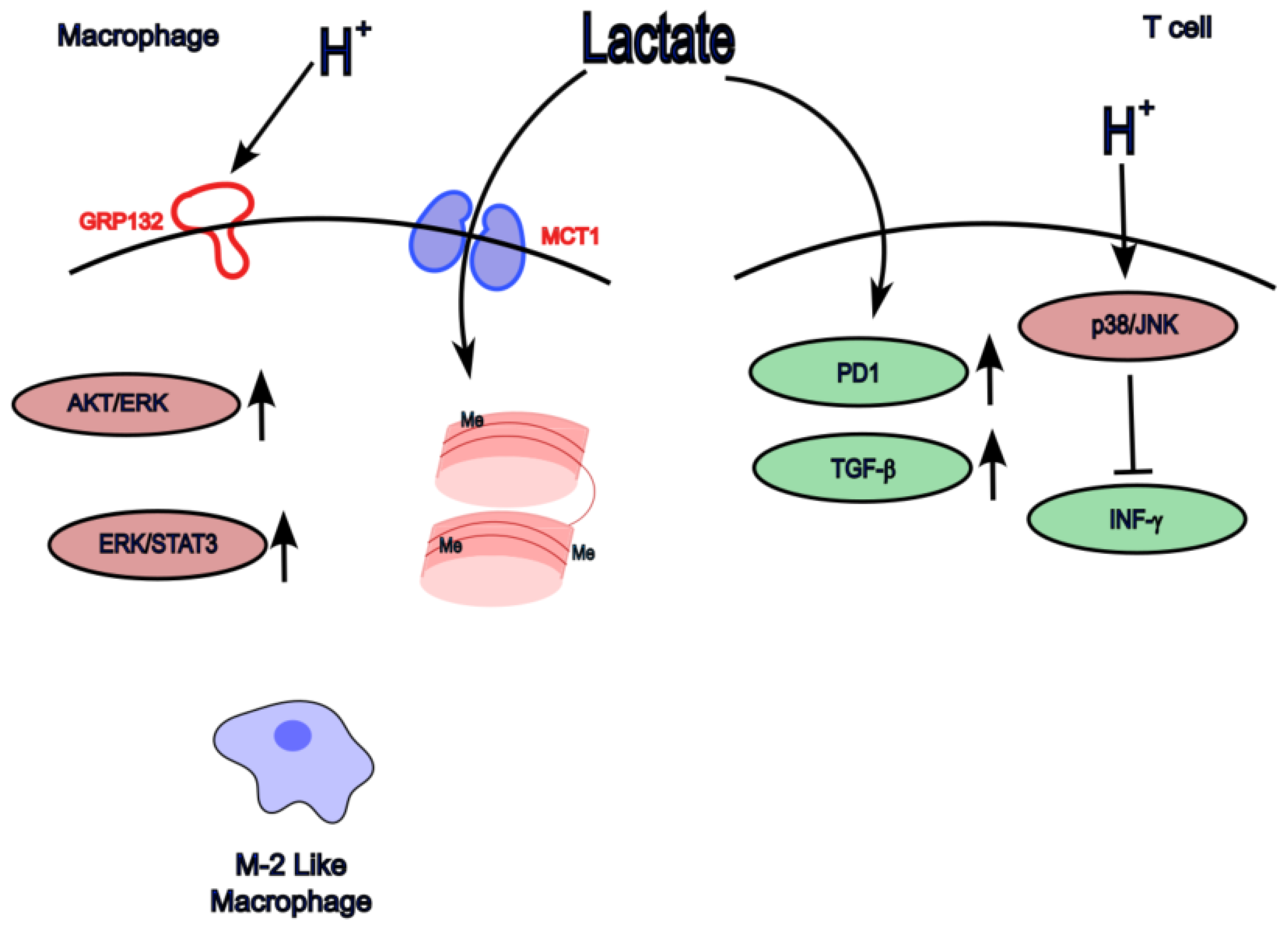
| Pro-tumoral phenotype | ERK/STAT3 | [113] | ||
| Pro-tumoral phenotype | AKT/ERK | [99] | ||
| Pro-tumoral phenotype | GPR132 | [100,101] | ||
| T-cells | Low pH | Attenuates T-cell function | [43,44] | |
| Attenuates T-cell function | P38/JNK | [106] | ||
| GPR81 | T-cell migration | CX3CL1 | [76] | |
| Lactic acid | T-cell apoptosis | [120] | ||
| Lactic acid | Immunosuppressive function | PD-1 Expression | [121] | |
| Lactic acid | Immunosuppressive function | Lactylation, TGF-β | [95] | |
| Lactic acid | Immunosuppressive function | Mondo-A | [122] | |
| NK Cells | Lactic acid | Impaired cytotoxicity | GPR132 mTOR | [125] |
| Lactic acid | Impaired cytotoxicity | [124] | ||
| Lactic acid | Apoptosis | [42] | ||
| Fibroblasts | Low pH | Transition to CAF | [52] |
8. Effects Beyond the Microenvironment: Lactic Acid and Metastasis
9. Clinical Implications
9.1. Therapeutic Targeting of Lactate Metabolism
9.2. Imaging and Biomarker Applications
10. Challenges and Open Questions
11. Concluding Remarks
Author Contributions
Funding
Institutional Review Board Statement
Informed Consent Statement
Data Availability Statement
Conflicts of Interest
Abbreviations
| TME | Tumour microenvironment |
| LDH | Lactate dehydrogenase (A or B) |
| MCT | Monocarboxylate transporter (1 or 4) |
| OXPHOS | Oxidative phosphorylation |
| CAF | Cancer-associated fibroblast |
| TAM | Tumour-associated macrophage |
| LIF | Leukemia inhibitory factor |
| NSCLC | Non-small-cell lung cancer |
| TXNIP | MondoA-induced thioredoxin interacting protein |
| TRAIL | Tumour necrosis factor-related apoptosis-inducing ligand |
References
- Kompanje, E.J.O.; Jansen, T.C.; Van Der Hoven, B.; Bakker, J. The First Demonstration of Lactic Acid in Human Blood in Shock by Johann Joseph Scherer (1814–1869) in January 1843. Intensive Care Med. 2007, 33, 1967–1971. [Google Scholar] [CrossRef]
- Katz, J.; Tayek, J.A. Gluconeogenesis and the Cori Cycle in 12-, 20-, and 40-h-Fasted Humans. Am. J. Physiol. (Endocrinol. Metab.) 1998, 275, E537–E542. [Google Scholar] [CrossRef]
- Perez-Ramirez, C.A.; Nakano, H.; Law, R.C.; Matulionis, N.; Thompson, J.; Pfeiffer, A.; Park, J.O.; Nakano, A.; Christofk, H.R. Atlas of Fetal Metabolism during Mid-to-Late Gestation and Diabetic Pregnancy. Cell 2024, 187, 204–215.e14. [Google Scholar] [CrossRef]
- Cori, C.F. Glycogen Bareakdown and Synthesis in Animal Tissues. Endocrinology 1940, 26, 285–296. [Google Scholar] [CrossRef]
- Rabinowitz, J.D.; Enerbäck, S. Lactate: The Ugly Duckling of Energy Metabolism. Nat. Metab. 2020, 2, 566–571. [Google Scholar] [CrossRef]
- Hanahan, D.; Weinberg, R.A. Hallmarks of Cancer: The next Generation. Cell 2011, 144, 646–674. [Google Scholar] [CrossRef] [PubMed]
- Pavlova, N.N.; Thompson, C.B. The Emerging Hallmarks of Cancer Metabolism. Cell Metab. 2016, 23, 27–47. [Google Scholar] [CrossRef]
- Barba, I.; Carrillo-Bosch, L.; Seoane, J. Targeting the Warburg Effect in Cancer: Where Do We Stand? Int. J. Mol. Sci. 2024, 25, 3142. [Google Scholar] [CrossRef]
- Walenta, S.; Wetterling, M.; Lehrke, M.; Schwickert, G.; Sundfor, K.; Rofstad, E.K.; Mueller-Klieser, W. High Lactate Levels Predict Likelihood of Metastases, Tumor Recurrence, and Restricted Patient Survival in Human Cervical Cancers. Cancer Res. 2000, 60, 916–921. [Google Scholar] [PubMed]
- Walenta, S.; Mueller-Klieser, W.F. Lactate: Mirror and Motor of Tumor Malignancy. Semin. Radiat. Oncol. 2004, 14, 267–274. [Google Scholar] [CrossRef] [PubMed]
- Autry, A.W.; Vaziri, S.; LaFontaine, M.; Gordon, J.W.; Chen, H.Y.; Kim, Y.; Villanueva-Meyer, J.E.; Molinaro, A.; Clarke, J.L.; Oberheim Bush, N.A.; et al. Multi-Parametric Hyperpolarized 13C/1H Imaging Reveals Warburg-Related Metabolic Dysfunction and Associated Regional Heterogeneity in High-Grade Human Gliomas. Neuroimage Clin. 2023, 39, 103501. [Google Scholar] [CrossRef]
- Li, Q.; Zhang, D.; Sui, X.; Song, T.; Hu, L.; Xu, X.; Wang, X.; Wang, F. The Warburg Effect Drives Cachectic States in Patients with Pancreatobiliary Adenocarcinoma. FASEB J. 2023, 37, e23144. [Google Scholar] [CrossRef] [PubMed]
- Woitek, R.; Brindle, K.M. Hyperpolarized Carbon-13 MRI in Breast Cancer. Diagnostics 2023, 13, 2311. [Google Scholar] [CrossRef]
- Guo, Y.; Meng, X.; Ma, J.; Zheng, Y.; Wang, Q.; Wang, Y.; Shang, H. Human Papillomavirus 16 E6 Contributes HIF-1α Induced Warburg Effect by Attenuating the VHL-HIF-1α Interaction. Int. J. Mol. Sci. 2014, 15, 7974–7986. [Google Scholar] [CrossRef]
- Anderson, N.M.; Simon, M.C. The Tumor Microenvironment. Curr. Biol. 2020, 30, R921–R925. [Google Scholar] [CrossRef]
- Sadeghi Rad, H.; Monkman, J.; Warkiani, M.E.; Ladwa, R.; O’Byrne, K.; Rezaei, N.; Kulasinghe, A. Understanding the Tumor Microenvironment for Effective Immunotherapy. Med. Res. Rev. 2021, 41, 1474–1498. [Google Scholar] [CrossRef]
- Liu, C.; Jin, Y.; Fan, Z. The Mechanism of Warburg Effect-Induced Chemoresistance in Cancer. Front. Oncol. 2021, 11, 698023. [Google Scholar] [CrossRef]
- Li, Z.; Cui, J. Targeting the Lactic Acid Metabolic Pathway for Antitumor Therapy. Mol. Ther. Oncolytics 2023, 31, 100740. [Google Scholar] [CrossRef] [PubMed]
- Apostolova, P.; Pearce, E.L. Lactic Acid and Lactate: Revisiting the Physiological Roles in the Tumor Microenvironment. Trends Immunol. 2022, 43, 969–977. [Google Scholar] [CrossRef] [PubMed]
- Wang, Z.H.; Peng, W.B.; Zhang, P.; Yang, X.P.; Zhou, Q. Lactate in the Tumour Microenvironment: From Immune Modulation to Therapy. EBioMedicine 2021, 73, 103627. [Google Scholar] [CrossRef]
- Chen, S.; Xu, Y.; Zhuo, W.; Zhang, L. The Emerging Role of Lactate in Tumor Microenvironment and Its Clinical Relevance. Cancer Lett. 2024, 590, 216837. [Google Scholar] [CrossRef]
- Vaupel, P.; Multhoff, G. Revisiting the Warburg Effect: Historical Dogma versus Current Understanding. J. Physiol. 2021, 599, 1745–1757. [Google Scholar] [CrossRef]
- Ohashi, T.; Aoki, M.; Tomita, H.; Akazawa, T.; Sato, K.; Kuze, B.; Mizuta, K.; Hara, A.; Nagaoka, H.; Inoue, N.; et al. M2-like Macrophage Polarization in High Lactic Acid-Producing Head and Neck Cancer. Cancer Sci. 2017, 108, 1128–1134. [Google Scholar] [CrossRef] [PubMed]
- Urbańska, K.; Orzechowski, A. Unappreciated Role of LDHA and LDHB to Control Apoptosis and Autophagy in Tumor Cells. Int. J. Mol. Sci. 2019, 20, 2085. [Google Scholar] [CrossRef]
- Payen, V.L.; Mina, E.; Van Hée, V.F.; Porporato, P.E.; Sonveaux, P. Monocarboxylate Transporters in Cancer. Mol. Metab. 2020, 33, 48–66. [Google Scholar] [CrossRef]
- Contreras-Baeza, Y.; Sandoval, P.Y.; Alarcón, R.; Galaz, A.; Cortés-Molina, F.; Alegriá, K.; Baeza-Lehnert, F.; Arce-Molina, R.; Guequén, A.; Flores, C.A.; et al. Monocarboxylate Transporter 4 (MCT4) Is a High Affinity Transporter Capable of Exporting Lactate in High-Lactate Microenvironments. J. Biol. Chem. 2019, 294, 20135–20147. [Google Scholar] [CrossRef]
- Brizel, D.M.; Schroeder, T.; Scher, R.L.; Walenta, S.; Clough, R.W.; Dewhirst, M.W.; Mueller-Klieser, W. Elevated Tumor Lactate Concentrations Predict for an Increased Risk of Metastases in Head-and-Neck Cancer. Int. J. Radiat. Oncol. Biol. Phys. 2001, 51, 349–353. [Google Scholar] [CrossRef] [PubMed]
- Benjamin, D.; Robay, D.; Hindupur, S.K.; Pohlmann, J.; Colombi, M.; El-Shemerly, M.Y.; Maira, S.M.; Moroni, C.; Lane, H.A.; Hall, M.N. Dual Inhibition of the Lactate Transporters MCT1 and MCT4 Is Synthetic Lethal with Metformin Due to NAD+ Depletion in Cancer Cells. Cell Rep. 2018, 25, 3047–3058.e4. [Google Scholar] [CrossRef] [PubMed]
- Fuchs, A.L.; Schiller, S.M.; Keegan, W.J.; Ammons, M.C.B.; Eilers, B.; Tripet, B.; Copié, V. Quantitative 1H NMR Metabolomics Reveal Distinct Metabolic Adaptations in Human Macrophages Following Differential Activation. Metabolites 2019, 9, 248. [Google Scholar] [CrossRef]
- Fiaschi, T.; Marini, A.; Giannoni, E.; Taddei, M.L.; Gandellini, P.; De Donatis, A.; Lanciotti, M.; Serni, S.; Cirri, P.; Chiarugi, P. Reciprocal Metabolic Reprogramming through Lactate Shuttle Coordinately Influences Tumor-Stroma Interplay. Cancer Res. 2012, 79, 5130–5140. [Google Scholar] [CrossRef]
- Halestrap, A.P.; Wilson, M.C. The Monocarboxylate Transporter Family-Role and Regulation. IUBMB Life 2012, 64, 109–119. [Google Scholar] [CrossRef]
- Griffiths, J.R. Are Cancer Cells Acidic? Br. J. Cancer 1991, 64, 425–427. [Google Scholar] [CrossRef]
- Gallagher, F.A.; Kettunen, M.I.; Day, S.E.; Hu, D.E.; Ardenkjær-Larsen, J.H.; In ’T Zandt, R.; Jensen, P.R.; Karlsson, M.; Golman, K.; Lerche, M.H.; et al. Magnetic Resonance Imaging of PH in Vivo Using Hyperpolarized 13C-Labelled Bicarbonate. Nature 2008, 453, 940–943. [Google Scholar] [CrossRef]
- White, K.A.; Grillo-Hill, B.K.; Barber, D.L. Cancer Cell Behaviors Mediated by Dysregulated PH Dynamics at a Glance. J. Cell Sci. 2017, 130, 663–669. [Google Scholar] [CrossRef]
- Boedtkjer, E.; Pedersen, S.F. The Acidic Tumor Microenvironment as a Driver of Cancer. Annu. Rev. Physiol. 2020, 82, 103–126. [Google Scholar] [CrossRef] [PubMed]
- Rolver, M.G.; Holland, L.K.K.; Ponniah, M.; Prasad, N.S.; Yao, J.; Schnipper, J.; Kramer, S.; Elingaard-Larsen, L.; Pedraz-Cuesta, E.; Liu, B.; et al. Chronic Acidosis Rewires Cancer Cell Metabolism through PPARα Signaling. Int. J. Cancer 2023, 152, 1668–1684. [Google Scholar] [CrossRef]
- Gründer, S.; Vanek, J.; Pissas, K.P. Acid-Sensing Ion Channels and Downstream Signalling in Cancer Cells: Is There a Mechanistic Link? Pflugers Arch. 2024, 476, 659–672. [Google Scholar] [CrossRef]
- Gupta, S.C.; Singh, R.; Pochampally, R.; Watabe, K.; Mo, Y.Y. Acidosis Promotes Invasiveness of Breast Cancer Cells through ROS-AKT-NF-ΚB Pathway. Oncotarget 2014, 5, 12070–12082. [Google Scholar] [CrossRef] [PubMed]
- Knopf, P.; Stowbur, D.; Hoffmann, S.H.L.; Hermann, N.; Maurer, A.; Bucher, V.; Poxleitner, M.; Tako, B.; Sonanini, D.; Krishnamachary, B.; et al. Acidosis-Mediated Increase in IFN-γ-Induced PD-L1 Expression on Cancer Cells as an Immune Escape Mechanism in Solid Tumors. Mol. Cancer 2023, 22, 207. [Google Scholar] [CrossRef] [PubMed]
- Park, H.J.; Lyons, J.C.; Ohtsubo, T.; Song, C.W. Acidic Environment Causes Apoptosis by Increasing Caspase Activity. Br. J. Cancer 1999, 80, 1892–1897. [Google Scholar] [CrossRef]
- Hagelund, S.; Trauzold, A. Impact of Extracellular PH on Apoptotic and Non-Apoptotic TRAIL-Induced Signaling in Pancreatic Ductal Adenocarcinoma Cells. Front. Cell Dev. Biol. 2022, 10, 768579. [Google Scholar] [CrossRef]
- Harmon, C.; Robinson, M.W.; Hand, F.; Almuaili, D.; Mentor, K.; Houlihan, D.D.; Hoti, E.; Lynch, L.; Geoghegan, J.; O’Farrelly, C. Lactate-Mediated Acidification of Tumor Microenvironment Induces Apoptosis of Liver-Resident NK Cells in Colorectal Liver Metastasis. Cancer Immunol. Res. 2019, 7, 335–346. [Google Scholar] [CrossRef]
- Matsuo, T.; Sadzuka, Y. Extracellular Acidification by Lactic Acid Suppresses Glucose Deprivation-Induced Cell Death and Autophagy in B16 Melanoma Cells. Biochem. Biophys. Res. Commun. 2018, 496, 1357–1361. [Google Scholar] [CrossRef]
- Sun, W.; Jia, M.; Feng, Y.; Cheng, X. Lactate Is a Bridge Linking Glycolysis and Autophagy through Lactylation. Autophagy 2023, 19, 3240–3241. [Google Scholar] [CrossRef]
- Bergers, G.; Fendt, M. The Metabolism of Cancer Cells during Metastasis. Nat. Rev. Cancer 2021, 3, 162–180. [Google Scholar] [CrossRef] [PubMed]
- Hosonuma, M.; Yoshimura, K. Association between PH Regulation of the Tumor Microenvironment and Immunological State. Front. Oncol. 2023, 13, 1175563. [Google Scholar] [CrossRef] [PubMed]
- Zheng, Y.; Xu, R.; Chen, X.; Lu, Y.; Zheng, J.; Lin, Y.; Lin, P.; Zhao, X.; Cui, L. Metabolic Gatekeepers: Harnessing Tumor-Derived Metabolites to Optimize T Cell-Based Immunotherapy Efficacy in the Tumor Microenvironment. Cell Death Dis. 2024, 15, 775. [Google Scholar] [CrossRef] [PubMed]
- Colegio, O.R.; Chu, N.-Q.; Szabo, A.L.; Chu, T.; Rhebergen, A.M.; Jairam, V.; Cyrus, N.; Brokowski, C.E.; Eisenbarth, S.C.; Phillips, G.M.; et al. Functional Polarization of Tumour-Associated Macrophages by Tumour-Derived Lactic Acid. Nature 2014, 513, 559–563. [Google Scholar] [CrossRef]
- El-Kenawi, A.; Gatenbee, C.; Robertson-Tessi, M.; Bravo, R.; Dhillon, J.; Balagurunathan, Y.; Berglund, A.; Visvakarma, N.; Ibrahim-Hashim, A.; Choi, J.; et al. Acidity Promotes Tumour Progression by Altering Macrophage Phenotype in Prostate Cancer. Br. J. Cancer 2019, 121, 556–566. [Google Scholar] [CrossRef]
- Fischer, K.; Hoffmann, P.; Voelkl, S.; Meidenbauer, N.; Ammer, J.; Edinger, M.; Gottfried, E.; Schwarz, S.; Rothe, G.; Hoves, S.; et al. Inhibitory Effect of Tumor Cell-Derived Lactic Acid on Human T Cells. Blood 2007, 109, 3812–3819. [Google Scholar] [CrossRef]
- Hirschhaeuser, F.; Sattler, U.G.A.; Mueller-Klieser, W. Lactate: A Metabolic Key Player in Cancer. Cancer Res. 2011, 71, 6921–6925. [Google Scholar] [CrossRef]
- Li, Y.; He, C.; Shen, A.N.; Wang, Y.; Xu, Z.P.; Zhang, L.; Wang, R. PH of Microenvironment Directly Modulates the Phenotype and Function of Cancer-Associated Fibroblasts. ACS Omega 2025, 10, 3937–3943. [Google Scholar] [CrossRef]
- Kim, Y.; Dube, S.E.; Park, C.B. Brain Energy Homeostasis: The Evolution of the Astrocyte-Neuron Lactate Shuttle Hypothesis. Korean J. Physiol. Pharmacol. 2025, 29, 1–8. [Google Scholar] [CrossRef]
- Nakajima, E.C.; Van Houten, B. Metabolic Symbiosis in Cancer: Refocusing the Warburg Lens. Mol. Carcinog. 2013, 52, 329–337. [Google Scholar] [CrossRef]
- Sonveaux, P.; Végran, F.; Schroeder, T.; Wergin, M.C.; Verrax, J.; Rabbani, Z.N.; De Saedeleer, C.J.; Kennedy, K.M.; Diepart, C.; Jordan, B.F.; et al. Targeting Lactate-Fueled Respiration Selectively Kills Hypoxic Tumor Cells in Mice. J. Clin. Investig. 2008, 118, 3930–3942. [Google Scholar] [CrossRef] [PubMed]
- Jayathilake, P.G.; Victori, P.; Pavillet, C.E.; Lee, C.H.; Voukantsis, D.; Miar, A.; Arora, A.; Harris, A.L.; Morten, K.J.; Buffa, F.M. Metabolic Symbiosis between Oxygenated and Hypoxic Tumour Cells: An Agent-Based Modelling Study. PLoS Comput. Biol. 2024, 20, e1011944. [Google Scholar] [CrossRef] [PubMed]
- Kennedy, K.M.; Scarbrough, P.M.; Ribeiro, A.; Richardson, R.; Yuan, H.; Sonveaux, P.; Landon, C.D.; Chi, J.T.; Pizzo, S.; Schroeder, T.; et al. Catabolism of Exogenous Lactate Reveals It as a Legitimate Metabolic Substrate in Breast Cancer. PLoS ONE 2013, 8, e75154. [Google Scholar] [CrossRef]
- Curry, J.M.; Tuluc, M.; Whitaker-Menezes, D.; Ames, J.A.; Anantharaman, A.; Butera, A.; Leiby, B.; Cognetti, D.M.; Sotgia, F.; Lisanti, M.P.; et al. Cancer Metabolism, Stemness and Tumor Recurrence: MCT1 and MCT4 Are Functional Biomarkers of Metabolic Symbiosis in Head and Neck Cancer. Cell Cycle 2013, 12, 1371–1384. [Google Scholar] [CrossRef]
- Faubert, B.; Li, K.Y.; Cai, L.; Hensley, C.T.; Kim, J.; Zacharias, L.G.; Yang, C.; Do, Q.N.; Doucette, S.; Burguete, D.; et al. Lactate Metabolism in Human Lung Tumors. Cell 2017, 171, 358–371.e9. [Google Scholar] [CrossRef] [PubMed]
- McCleland, M.L.; Adler, A.S.; Deming, L.; Cosino, E.; Lee, L.; Blackwood, E.M.; Solon, M.; Tao, J.; Li, L.; Shames, D.; et al. Lactate Dehydrogenase B Is Required for the Growth of KRAS-Dependent Lung Adenocarcinomas. Clin. Cancer Res. 2013, 19, 773–784. [Google Scholar] [CrossRef]
- Ždralević, M.; Brand, A.; Ianni, L.D.; Dettmer, K.; Reinders, J.; Singer, K.; Peter, K.; Schnell, A.; Bruss, C.; Decking, S.M.; et al. Double Genetic Disruption of Lactate Dehydrogenases A and B Is Required to Ablate the “Warburg Effect” Restricting Tumor Growth to Oxidative Metabolism. J. Biol. Chem. 2018, 293, 15947–15961. [Google Scholar] [CrossRef]
- Doherty, J.R.; Cleveland, J.L. Targeting Lactate Metabolism for Cancer Therapeutics. J. Clin. Investig. 2013, 123, 3685–3692. [Google Scholar] [CrossRef]
- Pavlides, S.; Whitaker-Menezes, D.; Castello-Cros, R.; Flomenberg, N.; Witkiewicz, A.K.; Frank, P.G.; Casimiro, M.C.; Wang, C.; Fortina, P.; Addya, S.; et al. The Reverse Warburg Effect: Aerobic Glycolysis in Cancer Associated Fibroblasts and the Tumor Stroma. Cell Cycle 2009, 8, 3984–4001. [Google Scholar] [CrossRef]
- Pértega-Gomes, N.; Vizcaíno, J.R.; Attig, J.; Jurmeister, S.; Lopes, C.; Baltazar, F. A Lactate Shuttle System between Tumour and Stromal Cells Is Associated with Poor Prognosis in Prostate Cancer. BMC Cancer 2014, 14, 352. [Google Scholar] [CrossRef]
- Ippolito, L.; Morandi, A.; Taddei, M.L.; Parri, M.; Comito, G.; Iscaro, A.; Raspollini, M.R.; Magherini, F.; Rapizzi, E.; Masquelier, J.; et al. Cancer-Associated Fibroblasts Promote Prostate Cancer Malignancy via Metabolic Rewiring and Mitochondrial Transfer. Oncogene 2019, 38, 5339–5355. [Google Scholar] [CrossRef] [PubMed]
- Affinito, A.; Quintavalle, C.; Chianese, R.V.; Roscigno, G.; Fiore, D.; D’Argenio, V.; Thomas, G.; Savarese, A.; Ingenito, F.; Cocca, L.; et al. MCT4-Driven CAF-Mediated Metabolic Reprogramming in Breast Cancer Microenvironment Is a Vulnerability Targetable by MiR-425-5p. Cell Death Discov. 2024, 10, 140. [Google Scholar] [CrossRef] [PubMed]
- Chen, P.; Geng, H.; Ma, B.; Zhang, Y.; Zhu, Z.; Li, M.; Chen, S.; Wang, X.; Sun, C. Integrating Spatial Omics and Single-Cell Mass Spectrometry Imaging Reveals Tumor–Host Metabolic Interplay in Hepatocellular Carcinoma. Proc. Natl. Acad. Sci. USA 2025, 122, e2505789122. [Google Scholar] [CrossRef]
- Pavlides, S.; Tsirigos, A.; Vera, I.; Flomenberg, N.; Frank, P.G.; Casimiro, M.C.; Wang, C.; Pestell, R.G.; Martinez-Outschoorn, U.E.; Howell, A.; et al. Transcriptional Evidence for the “Reverse Warburg Effect” in Human Breast Cancer Tumor Stroma and Metastasis: Similarities with Oxidative Stress, Inflammation, Alzheimer’s Disease, and “Neuron-Glia Metabolic Coupling”. Aging 2010, 2, 185–199. [Google Scholar] [CrossRef] [PubMed]
- Whitaker-Menezes, D.; Martinez-Outschoorn, U.E.; Lin, Z.; Ertel, A.; Flomenberg, N.; Witkiewicz, A.K.; Birbe, R.C.; Howell, A.; Pavlides, S.; Gandara, R.; et al. Evidence for a Stromal-Epithelial “Lactate Shuttle” in Human Tumors: MCT4 Is a Marker of Oxidative Stress in Cancer-Associated Fibroblasts. Cell Cycle 2011, 10, 1772–1783. [Google Scholar] [CrossRef]
- Kitamura, F.; Semba, T.; Yasuda-Yoshihara, N.; Yamada, K.; Nishimura, A.; Yamasaki, J.; Nagano, O.; Yasuda, T.; Yonemura, A.; Tong, Y.; et al. Cancer-Associated Fibroblasts Reuse Cancer-Derived Lactate to Maintain a Fibrotic and Immunosuppressive Microenvironment in Pancreatic Cancer. JCI Insight 2023, 8, e163022. [Google Scholar] [CrossRef]
- Roche, M.E.; Ko, Y.H.; Domingo-Vidal, M.; Lin, Z.; Whitaker-Menezes, D.; Birbe, R.C.; Tuluc, M.; Győrffy, B.; Caro, J.; Philp, N.J.; et al. TP53 Induced Glycolysis and Apoptosis Regulator and Monocarboxylate Transporter 4 Drive Metabolic Reprogramming with C-MYC and NFkB Activation in Breast Cancer. Int. J. Cancer 2023, 153, 1671–1683. [Google Scholar] [CrossRef]
- Gu, X.; Zhu, Y.; Su, J.; Wang, S.; Su, X.; Ding, X.; Jiang, L.; Fei, X.; Zhang, W. Lactate-Induced Activation of Tumor-Associated Fibroblasts and IL-8-Mediated Macrophage Recruitment Promote Lung Cancer Progression. Redox Biol. 2024, 74, 103209. [Google Scholar] [CrossRef]
- Jin, Z.; Lu, Y.; Wu, X.; Pan, T.; Yu, Z.; Hou, J.; Wu, A.; Li, J.; Yang, Z.; Li, C.; et al. The Cross-Talk between Tumor Cells and Activated Fibroblasts Mediated by Lactate/BDNF/TrkB Signaling Promotes Acquired Resistance to Anlotinib in Human Gastric Cancer. Redox Biol. 2021, 46, 102076. [Google Scholar] [CrossRef]
- Certo, M.; Llibre, A.; Lee, W.; Mauro, C. Understanding Lactate Sensing and Signalling. Trends Endocrinol. Metab. 2022, 33, 722–735. [Google Scholar] [CrossRef]
- Mohammad Nezhady, M.A.; Modaresinejad, M.; Zia, A.; Chemtob, S. Versatile Lactate Signaling via HCAR1: A Multifaceted GPCR Involved in Many Biological Processes. Am. J. Physiol. Cell Physiol. 2023, 325, C1502–C1515. [Google Scholar] [CrossRef]
- Roland, C.L.; Arumugam, T.; Deng, D.; Liu, S.H.; Philip, B.; Gomez, S.; Burns, W.R.; Ramachandran, V.; Wang, H.; Cruz-Monserrate, Z.; et al. Cell Surface Lactate Receptor GPR81 Is Crucial for Cancer Cell Survival. Cancer Res. 2014, 74, 5301–5310. [Google Scholar] [CrossRef] [PubMed]
- Jin, L.; Guo, Y.; Chen, J.; Wen, Z.; Jiang, Y.; Qian, J. Lactate Receptor HCAR1 Regulates Cell Growth, Metastasis and Maintenance of Cancerspecific Energy Metabolism in Breast Cancer Cells. Mol. Med. Rep. 2022, 26, 268. [Google Scholar] [CrossRef]
- Ishihara, S.; Hata, K.; Hirose, K.; Okui, T.; Toyosawa, S.; Uzawa, N.; Nishimura, R.; Yoneda, T. The Lactate Sensor GPR81 Regulates Glycolysis and Tumor Growth of Breast Cancer. Sci. Rep. 2022, 12, 6261. [Google Scholar] [CrossRef]
- Lee, W.D.; Weilandt, D.R.; Liang, L.; MacArthur, M.R.; Jaiswal, N.; Ong, O.; Mann, C.G.; Chu, Q.; Hunter, C.J.; Ryseck, R.P.; et al. Lactate Homeostasis Is Maintained through Regulation of Glycolysis and Lipolysis. Cell Metab. 2025, 37, 758–771. [Google Scholar] [CrossRef] [PubMed]
- Longhitano, L.; Vicario, N.; Tibullo, D.; Giallongo, C.; Broggi, G.; Caltabiano, R.; Barbagallo, G.M.V.; Altieri, R.; Baghini, M.; Di Rosa, M.; et al. Lactate Induces the Expressions of MCT1 and HCAR1 to Promote Tumor Growth and Progression in Glioblastoma. Front. Oncol. 2022, 12, 871798. [Google Scholar] [CrossRef] [PubMed]
- Choi, E.J.; Jang, Y.Y.; Choi, E.J.; Oh, C.J. The Role of Lactate in Immune Regulation: A Metabolic Rheostat via Transporters, Receptors, and Epigenetic Modifiers. Cells 2025, 14, 1096. [Google Scholar] [CrossRef]
- Yang, K.; Xu, J.; Fan, M.; Tu, F.; Wang, X.; Ha, T.; Williams, D.L.; Li, C. Lactate Suppresses Macrophage Pro-Inflammatory Response to LPS Stimulation by Inhibition of YAP and NF-ΚB Activation via GPR81-Mediated Signaling. Front. Immunol. 2020, 11, 587913. [Google Scholar] [CrossRef]
- He, J.; Chai, X.; Zhang, Q.; Wang, Y.; Wang, Y.; Yang, X.; Wu, J.; Feng, B.; Sun, J.; Rui, W.; et al. The Lactate Receptor HCAR1 Drives the Recruitment of Immunosuppressive PMN-MDSCs in Colorectal Cancer. Nat. Immunol. 2025, 26, 391–403. [Google Scholar] [CrossRef]
- Brown, T.P.; Bhattacharjee, P.; Ramachandran, S.; Sivaprakasam, S.; Ristic, B.; Sikder, M.O.F.; Ganapathy, V. The Lactate Receptor GPR81 Promotes Breast Cancer Growth via a Paracrine Mechanism Involving Antigen-Presenting Cells in the Tumor Microenvironment. Oncogene 2020, 39, 3292–3304. [Google Scholar] [CrossRef] [PubMed]
- Su, J.; Mao, X.; Wang, L.; Chen, Z.; Wang, W.; Zhao, C.; Li, G.; Guo, W.; Hu, Y. Lactate/GPR81 Recruits Regulatory T Cells by Modulating CX3CL1 to Promote Immune Resistance in a Highly Glycolytic Gastric Cancer. Oncoimmunology 2024, 13, 2320951. [Google Scholar] [CrossRef] [PubMed]
- Liu, X.; Li, S.; Cui, Q.; Guo, B.; Ding, W.; Liu, J.; Quan, L.; Li, X.; Xie, P.; Jin, L.; et al. Activation of GPR81 by Lactate Drives Tumour-Induced Cachexia. Nat. Metab. 2024, 6, 708–723. [Google Scholar] [CrossRef] [PubMed]
- Chen, P.; Zuo, H.; Xiong, H.; Kolar, M.J.; Chu, Q.; Saghatelian, A.; Siegwart, D.J.; Wan, Y. Gpr132 Sensing of Lactate Mediates Tumor-Macrophage Interplay to Promote Breast Cancer Metastasis. Proc. Natl. Acad. Sci. USA 2017, 114, 580–585. [Google Scholar] [CrossRef]
- Payen, V.L.; Hsu, M.Y.; Rädecke, K.S.; Wyart, E.; Vazeille, T.; Bouzin, C.; Porporato, P.E.; Sonveaux, P. Monocarboxylate Transporter MCT1 Promotes Tumor Metastasis Independently of Its Activity as a Lactate Transporter. Cancer Res. 2017, 77, 5591–5601. [Google Scholar] [CrossRef]
- Liu, S.; Zhao, H.; Hu, Y.; Yan, C.; Mi, Y.; Li, X.; Tao, D.; Qin, J. Lactate Promotes Metastasis of Normoxic Colorectal Cancer Stem Cells through PGC-1α-Mediated Oxidative Phosphorylation. Cell Death Dis. 2022, 13, 651. [Google Scholar] [CrossRef]
- Zhang, D.; Tang, Z.; Huang, H.; Zhou, G.; Cui, C.; Weng, Y.; Liu, W.; Kim, S.; Lee, S.; Perez-Neut, M.; et al. Metabolic Regulation of Gene Expression by Histone Lactylation. Nature 2019, 574, 575–580. [Google Scholar] [CrossRef]
- Shi, P.; Ma, Y.; Zhang, S. Non-Histone Lactylation: Unveiling Its Functional Significance. Front. Cell Dev. Biol. 2025, 13, 1535611. [Google Scholar] [CrossRef] [PubMed]
- Yang, K.; Fan, M.; Wang, X.; Xu, J.; Wang, Y.; Tu, F.; Gill, P.S.; Ha, T.; Liu, L.; Williams, D.L.; et al. Lactate Promotes Macrophage HMGB1 Lactylation, Acetylation, and Exosomal Release in Polymicrobial Sepsis. Cell Death Differ. 2022, 29, 133–146. [Google Scholar] [CrossRef]
- Hou, X.; Hong, Z.; Zeng, H.; Zhang, C.; Zhang, P.; Ma, D.; Han, Z. Lactylation in Cancer Biology: Unlocking New Avenues for Research and Therapy. Cancer Commun. 2025, 45, 1367–1406. [Google Scholar] [CrossRef]
- Noe, J.T.; Rendon, B.E.; Geller, A.E.; Conroy, L.R.; Morrissey, S.M.; Young, L.E.A.; Bruntz, R.C.; Kim, E.J.; Wise-Mitchell, A.; Barbosa De Souza Rizzo, M.; et al. Lactate Supports a Metabolic-Epigenetic Link in Macrophage Polarization. Sci. Adv. 2021, 7, 8602. [Google Scholar] [CrossRef]
- Gu, J.; Zhou, J.; Chen, Q.; Xu, X.; Gao, J.; Li, X.; Shao, Q.; Zhou, B.; Zhou, H.; Wei, S.; et al. Tumor Metabolite Lactate Promotes Tumorigenesis by Modulating MOESIN Lactylation and Enhancing TGF-β Signaling in Regulatory T Cells. Cell Rep. 2022, 39, 110986. [Google Scholar] [CrossRef]
- Zhou, S.; Xiao, L.; Hu, L.; Zuo, F.; Wang, Y.; Fei, B.; Dai, J.; Zhou, X. CAFs Promote Immune Evasion in Gastric Cancer through Histone Lactylation-Mediated Suppression of NCAPG Ubiquitination. J. Transl. Med. 2025, 23, 989. [Google Scholar] [CrossRef] [PubMed]
- Lin, Z.; Long, F.; Liu, J.; Kang, R.; Klionsky, D.J.; Kroemer, G.; Tang, D.; Yang, M. Metabolic Reprogramming Promotes Apoptosis Resistance in Acute Lymphoblastic Leukemia through CASP3 Lactylation. Mol. Cancer 2025, 24, 204. [Google Scholar] [CrossRef] [PubMed]
- Chen, B.; Deng, Y.; Hong, Y.; Fan, L.; Zhai, X.; Hu, H.; Yin, S.; Chen, Q.; Xie, X.; Ren, X.; et al. Metabolic Recoding of NSUN2-Mediated M5C Modification Promotes the Progression of Colorectal Cancer via the NSUN2/YBX1/M5C-ENO1 Positive Feedback Loop. Adv. Sci. 2024, 11, 2309840. [Google Scholar] [CrossRef]
- Zhou, J.; Ma, X.; Liu, X.; Liu, Y.; Fu, J.; Qi, Y.; Liu, H. The Impact of Histone Lactylation on the Tumor Microenvironment and Metabolic Pathways and Its Potential in Cancer Therapy. Genes Genom. 2024, 46, 991–1011. [Google Scholar] [CrossRef]
- Tufail, M.; Jiang, C.H.; Li, N. Immune Evasion in Cancer: Mechanisms and Cutting-Edge Therapeutic Approaches. Signal Transduct. Target. Ther. 2025, 10, 227. [Google Scholar] [CrossRef]
- Batlle, E.; Massagué, J. Transforming Growth Factor-β Signaling in Immunity and Cancer. Immunity 2019, 50, 924–940. [Google Scholar] [CrossRef]
- Pascual-García, M.; Bonfill-Teixidor, E.; Planas-Rigol, E.; Rubio-Perez, C.; Iurlaro, R.; Arias, A.; Cuartas, I.; Sala-Hojman, A.; Escudero, L.; Martínez-Ricarte, F.; et al. LIF Regulates CXCL9 in Tumor-Associated Macrophages and Prevents CD8+ T Cell Tumor-Infiltration Impairing Anti-PD1 Therapy. Nat. Commun. 2019, 10, 2416. [Google Scholar] [CrossRef]
- Wegiel, B.; Vuerich, M.; Daneshmandi, S.; Seth, P. Metabolic Switch in the Tumor Microenvironment Determines Immune Responses to Anti-Cancer Therapy. Front. Oncol. 2018, 8, 284. [Google Scholar] [CrossRef]
- Caslin, H.L.; Abebayehu, D.; Pinette, J.A.; Ryan, J.J. Lactate Is a Metabolic Mediator That Shapes Immune Cell Fate and Function. Front. Physiol. 2021, 12, 688458. [Google Scholar] [CrossRef]
- Sangsuwan, R.; Thuamsang, B.; Pacifici, N.; Allen, R.; Han, H.; Miakicheva, S.; Lewis, J.S. Lactate Exposure Promotes Immunosuppressive Phenotypes in Innate Immune Cells. Cell Mol. Bioeng. 2020, 13, 541–557. [Google Scholar] [CrossRef] [PubMed]
- Morrot, A.; da Fonseca, L.M.; Salustiano, E.J.; Gentile, L.B.; Conde, L.; Filardy, A.A.; Franklim, T.N.; da Costa, K.M.; Freire-de-Lima, C.G.; Freire-de-Lima, L. Metabolic Symbiosis and Immunomodulation: How Tumor Cell-Derived Lactate May Disturb Innate and Adaptive Immune Responses. Front. Oncol. 2018, 8, 81. [Google Scholar] [CrossRef]
- Jin, R.; Neufeld, L.; McGaha, T.L. Linking Macrophage Metabolism to Function in the Tumor Microenvironment. Nat. Cancer 2025, 6, 239–252. [Google Scholar] [CrossRef] [PubMed]
- Zhang, Q.; Wang, J.; Yadav, D.K.; Bai, X.; Liang, T. Glucose Metabolism: The Metabolic Signature of Tumor Associated Macrophage. Front. Immunol. 2021, 12, 702580. [Google Scholar] [CrossRef] [PubMed]
- Jin, X.; Zhang, N.; Yan, T.; Wei, J.; Hao, L.; Sun, C.; Zhao, H.; Jiang, S. Lactate-Mediated Metabolic Reprogramming of Tumor-Associated Macrophages: Implications for Tumor Progression and Therapeutic Potential. Front. Immunol. 2025, 16, 1573039. [Google Scholar] [CrossRef]
- Fang, X.; Zhao, P.; Gao, S.; Liu, D.; Zhang, S.; Shan, M.; Wang, Y.; Herrmann, J.; Li, Q.; Wang, F. Lactate Induces Tumor-Associated Macrophage Polarization Independent of Mitochondrial Pyruvate Carrier-Mediated Metabolism. Int. J. Biol. Macromol. 2023, 237, 123810. [Google Scholar] [CrossRef]
- Zhao, Y.; Wang, D.; Xu, T.; Liu, P.; Cao, Y.; Wang, Y.; Yang, X.; Xu, X.; Wang, X.; Niu, H. Bladder Cancer Cells Re-Educate TAMs through Lactate Shuttling in the Microfluidic Cancer Microenvironment. Oncotarget 2015, 6, 39196–39210. [Google Scholar] [CrossRef]
- Mu, X.; Shi, W.; Xu, Y.; Xu, C.; Zhao, T.; Geng, B.; Yang, J.; Pan, J.; Hu, S.; Zhang, C.; et al. Tumor-Derived Lactate Induces M2 Macrophage Polarization via the Activation of the ERK/STAT3 Signaling Pathway in Breast Cancer. Cell Cycle 2018, 17, 428–438. [Google Scholar] [CrossRef]
- Zhang, C.; Cheng, W.; Yang, T.; Fang, H.; Zhang, R. Lactate Secreted by Esophageal Cancer Cells Induces M2 Macrophage Polarization via the AKT/ERK Pathway. Thorac. Cancer 2023, 14, 2139–2148. [Google Scholar] [CrossRef]
- Chen, X.; Zhang, Z.; Wang, K. Lactate Released by Lung Adenocarcinoma (LUAD) Cells Promotes M2 Macrophage Polarization via the GPR132/CAMP/PKA Pathway. Genes Genom. 2025, 47, 521–531. [Google Scholar] [CrossRef]
- Lin, Y.; Qi, Y.; Jiang, M.; Huang, W.; Li, B. Lactic Acid-Induced M2-like Macrophages Facilitate Tumor Cell Migration and Invasion via the GPNMB/CD44 Axis in Oral Squamous Cell Carcinoma. Int. Immunopharmacol. 2023, 124, 110972. [Google Scholar] [CrossRef]
- DeNardo, D.G.; Ruffell, B. Macrophages as Regulators of Tumour Immunity and Immunotherapy. Nat. Rev. Immunol. 2019, 19, 369–382. [Google Scholar] [CrossRef] [PubMed]
- Scharping, N.E.; Menk, A.V.; Moreci, R.S.; Whetstone, R.D.; Dadey, R.E.; Watkins, S.C.; Ferris, R.L.; Delgoffe, G.M. The Tumor Microenvironment Represses T Cell Mitochondrial Biogenesis to Drive Intratumoral T Cell Metabolic Insufficiency and Dysfunction. Immunity 2016, 45, 374–388. [Google Scholar] [CrossRef]
- Watson, M.L.J.; Vignali, P.D.A.; Mullett, S.J.; Overacre-Delgoffe, A.E.; Peralta, R.M.; Grebinoski, S.; Menk, A.V.; Rittenhouse, N.L.; DePeaux, K.; Whetstone, R.D.; et al. Metabolic Support of Tumour-Infiltrating Regulatory T Cells by Lactic Acid. Nature 2021, 591, 645–651. [Google Scholar] [CrossRef] [PubMed]
- Wen, H.; Zhang, P.; Zhao, J.; Liu, Y.; Wan, L.; Li, H.; Yi, J.; Li, X. Metabolic Alterations Driven by LDHA in CD8 + T Cells Promote Immune Evasion and Therapy Resistance in NSCLC. Sci. Rep. 2025, 15, 24440. [Google Scholar] [CrossRef]
- Xia, H.; Wang, W.; Crespo, J.; Kryczek, I.; Li, W.; Wei, S.; Bian, Z.; Maj, T.; He, M.; Liu, R.J.; et al. Suppression of FIP200 and Autophagy by Tumor-Derived Lactate Promotes Naïve T Cell Apoptosis and Affects Tumor Immunity. Sci. Immunol. 2017, 17, 248–256. [Google Scholar] [CrossRef] [PubMed]
- Kumagai, S.; Koyama, S.; Itahashi, K.; Tanegashima, T.; Lin, Y.T.; Togashi, Y.; Kamada, T.; Irie, T.; Okumura, G.; Kono, H.; et al. Lactic Acid Promotes PD-1 Expression in Regulatory T Cells in Highly Glycolytic Tumor Microenvironments. Cancer Cell 2022, 40, 201–218.e9. [Google Scholar] [CrossRef]
- Xu, N.; Zhu, Y.; Han, Y.; Liu, Q.; Tong, L.; Li, Y.; Chen, Z.; Shao, S.; He, W.; Li, M.; et al. Targeting MondoA–TXNIP Restores Antitumour Immunity in Lactic-Acid-Induced Immunosuppressive Microenvironment. Nat. Metab. 2025, 7, 1889–1904. [Google Scholar] [CrossRef]
- Nasi, A.; Fekete, T.; Krishnamurthy, A.; Snowden, S.; Rajnavölgyi, E.; Catrina, A.I.; Wheelock, C.E.; Vivar, N.; Rethi, B. Dendritic Cell Reprogramming by Endogenously Produced Lactic Acid. J. Immunol. 2013, 191, 3090–3099. [Google Scholar] [CrossRef]
- Langin, D. Adipose Tissue Lipolysis Revisited (Again!): Lactate Involvement in Insulin Antilipolytic Action. Cell Metab. 2010, 11, 242–243. [Google Scholar] [CrossRef]
- Hui, X.; Xue, M.; Ren, Y.; Chen, Y.; Chen, X.; Asad Farooq, M.; Ji, Y.; Zhan, W.; Huang, Y.; Du, B.; et al. GPR132 Regulates the Function of NK Cells through the Gαs/CSK/ZAP70/NF-ΚB Signaling Pathway as a Potential Immune Checkpoint. Sci. Adv. 2025, 11, 9395. [Google Scholar] [CrossRef]
- Schmitt, C.A.; Wang, B.; Demaria, M. Senescence and Cancer—Role and Therapeutic Opportunities. Nat. Rev. Clin. Oncol. 2022, 19, 619–636. [Google Scholar] [CrossRef] [PubMed]
- Colucci, M.; Sarill, M.; Maddalena, M.; Valdata, A.; Troiani, M.; Massarotti, M.; Bolis, M.; Bressan, S.; Kohl, A.; Robesti, D.; et al. Senescence in Cancer. Cancer Cell 2025, 43, 1204–1226. [Google Scholar] [CrossRef]
- Dou, X.; Fu, Q.; Long, Q.; Liu, S.; Zou, Y.; Fu, D.; Xu, Q.; Jiang, Z.; Ren, X.; Zhang, G.; et al. PDK4-Dependent Hypercatabolism and Lactate Production of Senescent Cells Promotes Cancer Malignancy. Nat. Metab. 2023, 5, 1887–1910. [Google Scholar] [CrossRef] [PubMed]
- Li, X.; Zhang, Z.; Zhang, Y.; Cao, Y.; Wei, H.; Wu, Z. Upregulation of Lactate-Inducible Snail Protein Suppresses Oncogene-Mediated Senescence through P16 INK4a Inactivation. J. Exp. Clin. Cancer Res. 2018, 37, 39. [Google Scholar] [CrossRef] [PubMed]
- Capparelli, C.; Guido, C.; Whitaker-Menezes, D.; Bonuccelli, G.; Balliet, R.; Pestell, T.G.; Goldberg, A.F.; Pestell, R.G.; Howell, A.; Sneddon, S.; et al. Autophagy and Senescence in Cancer-Associated Fibroblasts Metabolically Supports Tumor Growth and Metastasis, via Glycolysis and Ketone Production. Cell Cycle 2012, 11, 2285–2302. [Google Scholar] [CrossRef]
- Li, L.; Dong, J.; Xu, C.; Wang, S. Lactate Drives Senescence-Resistant Lineages in Hepatocellular Carcinoma via Histone H2B Lactylation of NDRG1. Cancer Lett. 2025, 616, 217567. [Google Scholar] [CrossRef]
- Hou, X.; Ouyang, J.; Tang, L.; Wu, P.; Deng, X.; Yan, Q.; Shi, L.; Fan, S.; Fan, C.; Guo, C.; et al. KCNK1 Promotes Proliferation and Metastasis of Breast Cancer Cells by Activating Lactate Dehydrogenase A (LDHA) and up-Regulating H3K18 Lactylation. PLoS Biol. 2024, 22, e3002666. [Google Scholar] [CrossRef]
- Xing, W.; Li, X.; Zhou, Y.; Li, M.; Zhu, M. Lactate Metabolic Pathway Regulates Tumor Cell Metastasis and Its Use as a New Therapeutic Target. Explor. Med. 2023, 4, 541–549. [Google Scholar] [CrossRef]
- Ganesh, K.; Massagué, J. Targeting Metastatic Cancer. Nat. Med. 2021, 27, 34–44. [Google Scholar] [CrossRef]
- Wu, C.; Zheng, C.; Chen, S.; He, Z.; Hua, H.; Sun, C.; Yu, C. FOXQ1 Promotes Pancreatic Cancer Cell Proliferation, Tumor Stemness, Invasion and Metastasis through Regulation of LDHA-Mediated Aerobic Glycolysis. Cell Death Dis. 2023, 14, 699. [Google Scholar] [CrossRef]
- Tasdogan, A.; Faubert, B.; Ramesh, V.; Ubellacker, J.M.; Shen, B.; Solmonson, A.; Murphy, M.M.; Gu, Z.; Gu, W.; Martin, M.; et al. Metabolic Heterogeneity Confers Differences in Melanoma Metastatic Potential. Nature 2020, 577, 115–120. [Google Scholar] [CrossRef] [PubMed]
- Jiang, C.; He, X.; Chen, X.; Huang, J.; Liu, Y.; Zhang, J.; Chen, H.; Sui, X.; Lv, X.; Zhao, X.; et al. Lactate Accumulation Drives Hepatocellular Carcinoma Metastasis through Facilitating Tumor-Derived Exosome Biogenesis by Rab7A Lactylation. Cancer Lett. 2025, 627, 217636. [Google Scholar] [CrossRef] [PubMed]
- Mantovani, A.; Marchesi, F.; Di Mitri, D.; Garlanda, C. Macrophage Diversity in Cancer Dissemination and Metastasis. Cell Mol. Immunol. 2024, 21, 1201–1214. [Google Scholar] [CrossRef]
- Lin, Y.; Xu, J.; Lan, H. Tumor-Associated Macrophages in Tumor Metastasis: Biological Roles and Clinical Therapeutic Applications. J. Hematol. Oncol. 2019, 12, 76. [Google Scholar] [CrossRef]
- Morrissey, S.M.; Zhang, F.; Ding, C.; Montoya-Durango, D.E.; Hu, X.; Yang, C.; Wang, Z.; Yuan, F.; Fox, M.; Zhang, H.G.; et al. Tumor-Derived Exosomes Drive Immunosuppressive Macrophages in a Pre-Metastatic Niche through Glycolytic Dominant Metabolic Reprogramming. Cell Metab. 2021, 33, 2040–2058. [Google Scholar] [CrossRef]
- Ippolito, L.; Duatti, A.; Iozzo, M.; Comito, G.; Pardella, E.; Lorito, N.; Bacci, M.; Pranzini, E.; Santi, A.; Sandrini, G.; et al. Lactate Supports Cell-Autonomous ECM Production to Sustain Metastatic Behavior in Prostate Cancer. EMBO Rep. 2024, 25, 3506–3531. [Google Scholar] [CrossRef] [PubMed]
- Sun, Y.; Chen, Y.; Zhao, H.; Wang, J.; Liu, Y.; Bai, J.; Hu, C.; Shang, Z. Lactate-Driven Type I Collagen Deposition Facilitates Cancer Stem Cell-like Phenotype of Head and Neck Squamous Cell Carcinoma. iScience 2024, 27, 109340. [Google Scholar] [CrossRef]
- Wang, Z.; Gu, Z.; Mo, W.; Zhang, H. Lactate Metabolic Checkpoint in Immuno-Oncology: Mechanisms and Therapeutic Implications. Cancer Lett. 2025, 633, 218038. [Google Scholar] [CrossRef] [PubMed]
- Wang, M.; Zhou, Q.; Cao, T.; Li, F.; Li, X.; Zhang, M.; Zhou, Y. Lactate Dehydrogenase A: A Potential New Target for Tumor Drug Resistance Intervention. J. Transl. Med. 2025, 23, 713. [Google Scholar] [CrossRef] [PubMed]
- Le, A.; Cooper, C.R.; Gouw, A.M.; Dinavahi, R.; Maitra, A.; Deck, L.M.; Royer, R.E.; Vander Jagt, D.L.; Semenza, G.L.; Dang, C.V. Inhibition of Lactate Dehydrogenase A Induces Oxidative Stress and Inhibits Tumor Progression. Proc. Natl. Acad. Sci. USA 2010, 107, 2037–2042. [Google Scholar] [CrossRef]
- Hermans, D.; Gautam, S.; García-Cañaveras, J.C.; Gromer, D.; Mitra, S.; Spolski, R.; Li, P.; Christensen, S.; Nguyen, R.; Lin, J.-X.; et al. Lactate Dehydrogenase Inhibition Synergizes with IL-21 to Promote CD8+ T Cell Stemness and Antitumor Immunity. Proc. Nat. Acad. Sci. USA 2020, 117, 6047–6055. [Google Scholar] [CrossRef]
- Verma, S.; Budhu, S.; Serganova, I.; Dong, L.; Mangarin, L.M.; Khan, J.F.; Bah, M.A.; Assouvie, A.; Marouf, Y.; Schulze, I.; et al. Pharmacologic LDH Inhibition Redirects Intratumoral Glucose Uptake and Improves Antitumor Immunity in Solid Tumor Models. J. Clin. Investig. 2024, 134, e177606. [Google Scholar] [CrossRef]
- Halford, S.; Veal, G.J.; Wedge, S.R.; Payne, G.S.; Bacon, C.M.; Sloan, P.; Dragoni, I.; Heinzmann, K.; Potter, S.; Salisbury, B.M. A A Phase I Dose-Escalation Study of AZD3965, an Oral Monocarboxylate Transporter 1 Inhibitor, in Patients with Advanced Cancer. Clin. Cancer Res. 2023, 29, 1429–1439. [Google Scholar] [CrossRef]
- Halford, S.E.R.; Walter, H.; McKay, P.; Townsend, W.; Linton, K.; Heinzmann, K.; Dragoni, I.; Brotherton, L.; Veal, G.; Siskos, A.; et al. Phase I Expansion Study of the First-in-Class Monocarboxylate Transporter 1 (MCT1) Inhibitor AZD3965 in Patients with Diffuse Large B-Cell Lymphoma (DLBCL) and Burkitt Lymphoma (BL). J. Clin. Oncol. 2021, 39, 3115. [Google Scholar] [CrossRef]
- Bonglack, E.N.; Messinger, J.E.; Cable, J.M.; Chng, J.; Mark Parnell, K.; Reinoso-Vizcaíno, N.M.; Barry, A.P.; Russell, V.S.; Dave, S.S.; Christofk, H.R.; et al. Monocarboxylate Transporter Antagonism Reveals Metabolic Vulnerabilities of Viral-Driven Lymphomas. Proc. Natl. Acad. Sci. USA 2021, 118, 18–32. [Google Scholar] [CrossRef]
- Fang, Y.; Liu, W.; Tang, Z.; Ji, X.; Zhou, Y.; Song, S.; Tian, M.; Tao, C.; Huang, R.; Zhu, G.; et al. Monocarboxylate Transporter 4 Inhibition Potentiates Hepatocellular Carcinoma Immunotherapy through Enhancing T Cell Infiltration and Immune Attack. Hepatology 2023, 77, 109–123. [Google Scholar] [CrossRef]
- Li, N.; Kang, Y.; Wang, L.; Huff, S.; Tang, R.; Hui, H.; Agrawal, K.; Gonzalez, G.M.; Wang, Y.; Patel, S.P.; et al. ALKBH5 Regulates Anti–PD-1 Therapy Response by Modulating Lactate and Suppressive Immune Cell Accumulation in Tumor Microenvironment. Proc. Natl. Acad. Sci. USA 2020, 117, 20159–20170. [Google Scholar] [CrossRef]
- Cao, Y.; Chang, T.; Schischlik, F.; Wang, K.; Sinha, S.; Hannenhalli, S.; Jiang, P.; Ruppin, E. Inferring Characteristics of the Tumor Immune Microenvironment of Patients with HNSCC from Single-Cell Transcriptomics of Peripheral Blood. Cancer Res. Commun. 2024, 4, 2335–2348. [Google Scholar] [CrossRef]
- Puchades-Carrasco, L.; Jantus-Lewintre, E.; Pérez-Rambla, C.; García-García, F.; Lucas, R.; Calabuig, S.; Blasco, A.; Dopazo, J.; Camps, C.; Pineda-Lucena, A. Serum Metabolomic Profiling Facilitates the Non-Invasive Identification of Metabolic Biomarkers Associated with the Onset and Progression of Non-Small Cell Lung Cancer. Oncotarget 2016, 7, 12904–12916. [Google Scholar] [CrossRef]
- Ma, N.-Y.; Li, Q.; Li, X.-L.; Zeng, Y.-J.; Huang, D.-Z.; Duan, Y.-S.; Xia, J.; Liu, B.-D.; Rao, L.-Y.; Rao, J.; et al. Lactate Decreases Bortezomib Sensitivity and Predicts Poor Clinical Outcomes of Multiple Myeloma. Curr. Med. Sci. 2023, 43, 679–688. [Google Scholar] [CrossRef]
- Vlachostergios, P.J.; Oikonomou, K.G.; Gibilaro, E.; Apergis, G. Elevated Lactic Acid Is a Negative Prognostic Factor in Metastatic Lung Cancer. Cancer Biomark. 2015, 15, 725–734. [Google Scholar] [CrossRef] [PubMed]
- Kerslake, R.; Panfilov, S.; Mustafa, N.; Hall, M.; Kyrou, I.; Randeva, H.S.; Karteris, E.; Godfrey, R. Elevated Circulating Lactate Levels and Widespread Expression of Its Cognate Receptor, Hydroxycarboxylic Acid Receptor 1 (HCAR1), in Ovarian Cancer. J. Clin. Med. 2023, 12, 217. [Google Scholar] [CrossRef]
- Atamna, B.; Rozental, A.; Haj Yahia, M.; Itchaki, G.; Gurion, R.; Yeshurun, M.; Raanani, P.; Wolach, O. Tumor-Associated Lactic Acidosis and Early Death in Patients With Lymphoma. Cancer Med. 2025, 14, e70824. [Google Scholar] [CrossRef] [PubMed]
- Wei, Y.; Xu, H.; Dai, J.; Peng, J.; Wang, W.; Xia, L.; Zhou, F. Prognostic Significance of Serum Lactic Acid, Lactate Dehydrogenase, and Albumin Levels in Patients with Metastatic Colorectal Cancer. BioMed Res. Int. 2018, 2018, 1804086. [Google Scholar] [CrossRef] [PubMed]
- Cheung, S.M.; Husain, E.; Masannat, Y.; Miller, I.D.; Wahle, K.; Heys, S.D.; He, J. Lactate Concentration in Breast Cancer Using Advanced Magnetic Resonance Spectroscopy. Br. J. Cancer 2020, 123, 261–267. [Google Scholar] [CrossRef]
- Maldonado, F.; Fábregas, N.; Aldecoa, I.; González, J.; García-Orellana, M.; Belda, I.; Hurtado, P.; Gracia, I.; de Riva, N.; Tercero, J.; et al. Association between Preoperative Serum Lactate Concentrate with Tumor Cell Proliferative Index in Primary Brain Tumor. J. Neurosurg. Sci. 2022, 66, 91–95. [Google Scholar] [CrossRef] [PubMed]
- Puchades-Carrasco, L.; Lecumberri, R.; Martínez-Ĺopez, J.; Lahuerta, J.J.; Mateos, M.V.; Prośper, F.; San-Miguel, J.F.; Pineda-Lucena, A. Multiple Myeloma Patients Have a Specific Serum Metabolomic Profile That Changes after Achieving Complete Remission. Clin. Cancer Res. 2013, 19, 4770–4779. [Google Scholar] [CrossRef]
- Day, S.E.; Kettunen, M.I.; Gallagher, F.A.; Hu, D.E.; Lerche, M.; Wolber, J.; Golman, K.; Ardenkjær-Larsen, J.H.; Brindle, K.M. Detecting Tumor Response to Treatment Using Hyperpolarized 13C Magnetic Resonance Imaging and Spectroscopy. Nat. Med. 2007, 13, 1382–1387. [Google Scholar] [CrossRef] [PubMed]
- Warburg, O. On the Origin of Cancer Cells. Science 1956, 123, 309–314. [Google Scholar] [CrossRef]
- Barba, I.; Andrés-Villarreal, M.; Picón, I.; Aguadé-Bruix, S.; Garcia-Dorado, D. Sex Differences in the 1H NMR Metabolic Profile of Serum in Cardiovascular Risk Patients. Sci. Rep. 2019, 9, 2380. [Google Scholar] [CrossRef] [PubMed]
- Ippolito, J.E.; Yim, A.K.Y.; Luo, J.; Chinnaiyan, P.; Rubin, J.B. Sexual Dimorphism in Glioma Glycolysis Underlies Sex Differences in Survival. JCI Insight 2017, 2, 92142. [Google Scholar] [CrossRef]
- Cai, Y.; Rattray, N.J.W.; Zhang, Q.; Mironova, V.; Santos-Neto, A.; Hsu, K.S.; Rattray, Z.; Cross, J.R.; Zhang, Y.; Paty, P.B.; et al. Sex Differences in Colon Cancer Metabolism Reveal A Novel Subphenotype. Sci. Rep. 2020, 10, 4905. [Google Scholar] [CrossRef]
- Iozzo, M.; Comito, G.; Ippolito, L.; Sandrini, G.; Pardella, E.; Pranzini, E.; Capone, M.; Madonna, G.; Ascierto, P.A.; Chiarugi, P.; et al. Sex-Related Changes in Lactate Dehydrogenase A Expression Differently Impact the Immune Response in Melanoma. FEBS J. 2025, 292, 3056–3071. [Google Scholar] [CrossRef]
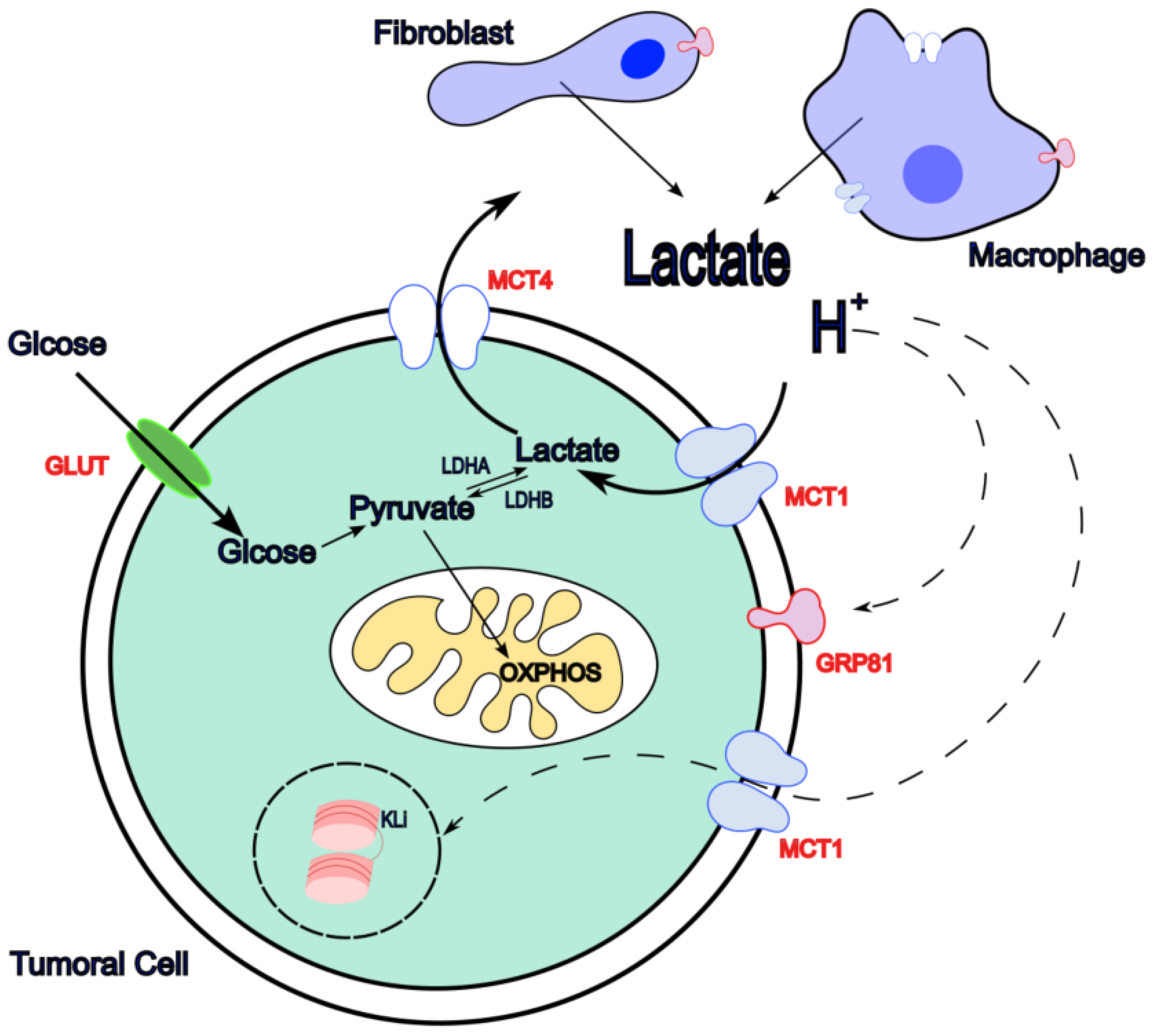
 ). Glucose enters the cell via GLUT transporters, where it is metabolized to pyruvate and lactate that is exported from the cell through MCT4 transporters together with protons. This leads to the accumulation of lactate and acidification of the extracellular medium. Stroma cells can also contribute to TME lactate accumulation. Lactic acid can also enter the cell through the MCT1 transporter and can be incorporated into tumour cell OXPHOS metabolism, a process known as the reverse Warburg effect. Lactic acid can induce signalling (
 ), mainly through lactate receptor GPR81, but also through histone and other protein lactylation and MCT1 as a receptor. Lactic acid-induced signalling pathways can affect tumoral and stromal cells where they tend to induce a pro-tumoral phenotype in immune cells.
). Glucose enters the cell via GLUT transporters, where it is metabolized to pyruvate and lactate that is exported from the cell through MCT4 transporters together with protons. This leads to the accumulation of lactate and acidification of the extracellular medium. Stroma cells can also contribute to TME lactate accumulation. Lactic acid can also enter the cell through the MCT1 transporter and can be incorporated into tumour cell OXPHOS metabolism, a process known as the reverse Warburg effect. Lactic acid can induce signalling (), mainly through lactate receptor GPR81, but also through histone and other protein lactylation and MCT1 as a receptor. Lactic acid-induced signalling pathways can affect tumoral and stromal cells where they tend to induce a pro-tumoral phenotype in immune cells.
), mainly through lactate receptor GPR81, but also through histone and other protein lactylation and MCT1 as a receptor. Lactic acid-induced signalling pathways can affect tumoral and stromal cells where they tend to induce a pro-tumoral phenotype in immune cells.
). Glucose enters the cell via GLUT transporters, where it is metabolized to pyruvate and lactate that is exported from the cell through MCT4 transporters together with protons. This leads to the accumulation of lactate and acidification of the extracellular medium. Stroma cells can also contribute to TME lactate accumulation. Lactic acid can also enter the cell through the MCT1 transporter and can be incorporated into tumour cell OXPHOS metabolism, a process known as the reverse Warburg effect. Lactic acid can induce signalling (), mainly through lactate receptor GPR81, but also through histone and other protein lactylation and MCT1 as a receptor. Lactic acid-induced signalling pathways can affect tumoral and stromal cells where they tend to induce a pro-tumoral phenotype in immune cells.

| Authors | Year | Key Findings | Ref. |
|---|---|---|---|
| Warburg | 1956 | Demonstration that tumoral cells produce lactate. | [164] |
| Walenta et al. | 2000 | Lactic acid as a biomarker. Correlation between tumour lactate concentration in biopsies with patient survival. | [9] |
| Day et al. | 2007 | In vivo tumour lactate production is an early marker of therapeutic response. | [164] |
| Fischer et al. | 2007 | Lactic acid inhibits T-cell function. | [50] |
| Gallager et al. | 2008 | In vivo TME pH values close to 6 in animal models. | [33] |
| Whitaker-Menezes et al. | 2011 | Evidence of a lactate shuttle between tumour and stroma (CAF) cells. | [66] |
| Capparelli | 2012 | Lactic acid can modulate senescence. | [130] |
| Colegio et al. | 2014 | Lactic acid, but not lactate at neutral pH, is able to polarize macrophages towards a pro-tumoral phenotype. | [48] |
| Vlachosterios et al. | 2015 | Retrospective clinical study showing that serum lactic acid is a negative prognostic factor in lung cancer. | [156] |
| Zhang et al. | 2019 | First evidence of lactate-induced post-transcriptional modification of histones; lactylation. | [90] |
Disclaimer/Publisher’s Note: The statements, opinions and data contained in all publications are solely those of the individual author(s) and contributor(s) and not of MDPI and/or the editor(s). MDPI and/or the editor(s) disclaim responsibility for any injury to people or property resulting from any ideas, methods, instructions or products referred to in the content. |
© 2026 by the authors. Licensee MDPI, Basel, Switzerland. This article is an open access article distributed under the terms and conditions of the Creative Commons Attribution (CC BY) license.
Share and Cite
Cruz, C.; Barba, I. Lactic Acid in Tumour Biology. Metabolites 2026, 16, 75. https://doi.org/10.3390/metabo16010075
Cruz C, Barba I. Lactic Acid in Tumour Biology. Metabolites. 2026; 16(1):75. https://doi.org/10.3390/metabo16010075
Chicago/Turabian StyleCruz, Cristina, and Ignasi Barba. 2026. "Lactic Acid in Tumour Biology" Metabolites 16, no. 1: 75. https://doi.org/10.3390/metabo16010075
APA StyleCruz, C., & Barba, I. (2026). Lactic Acid in Tumour Biology. Metabolites, 16(1), 75. https://doi.org/10.3390/metabo16010075