Article

Correlated Blocking in mmWave Cellular Networks: Macrodiversity, Outage, and Interference


Lane Department of Computer Science and Electrical Engineering, West Virginia University, Morgantown, WV 26506, USA
*
Author to whom correspondence should be addressed.
Electronics 2019, 8(10), 1187; https://doi.org/10.3390/electronics8101187

Submission received: 30 September 2019 / Revised: 16 October 2019 / Accepted: 16 October 2019 / Published: 18 October 2019
(This article belongs to the Special Issue Millimeter-Wave (mmWave) Communications)

Abstract

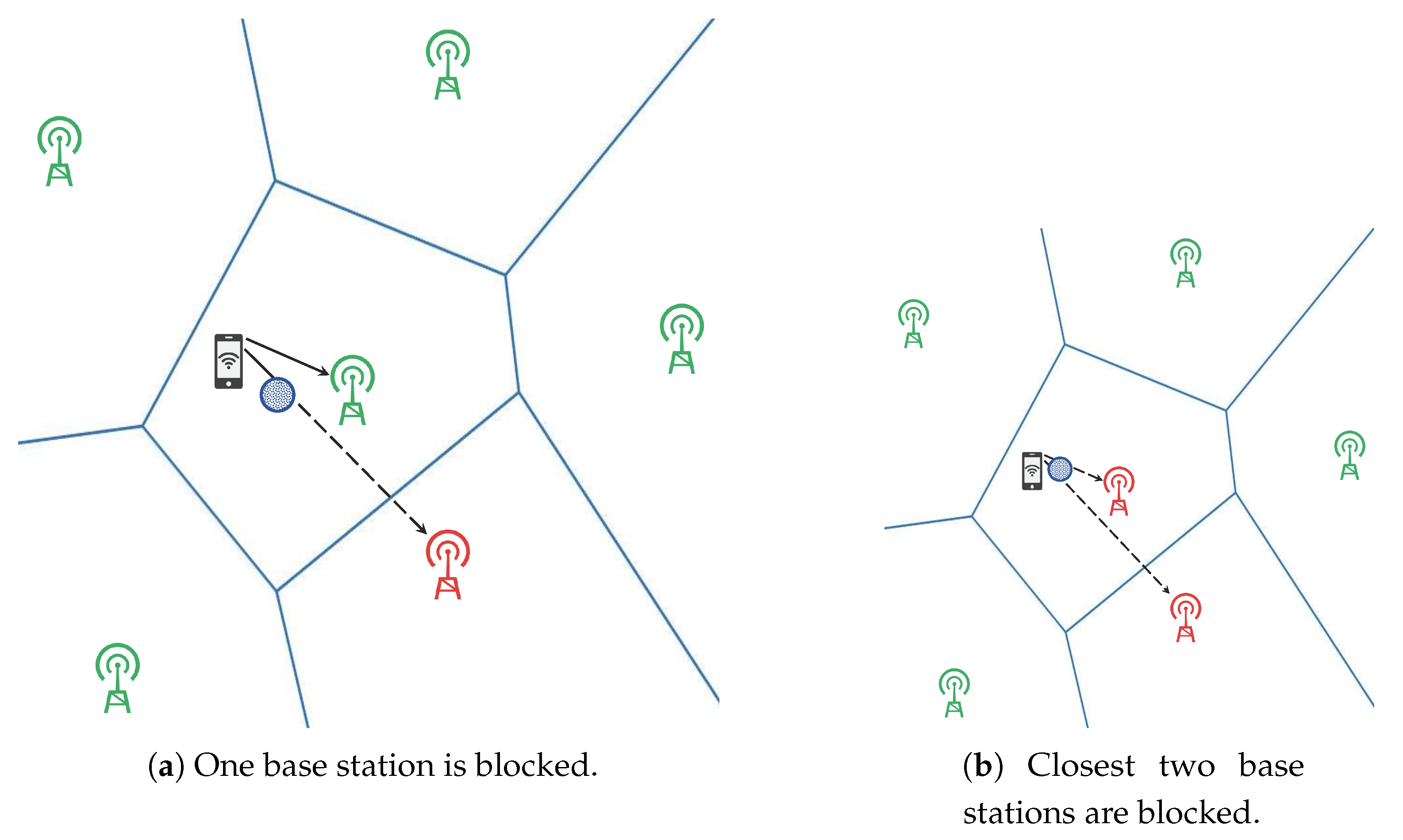
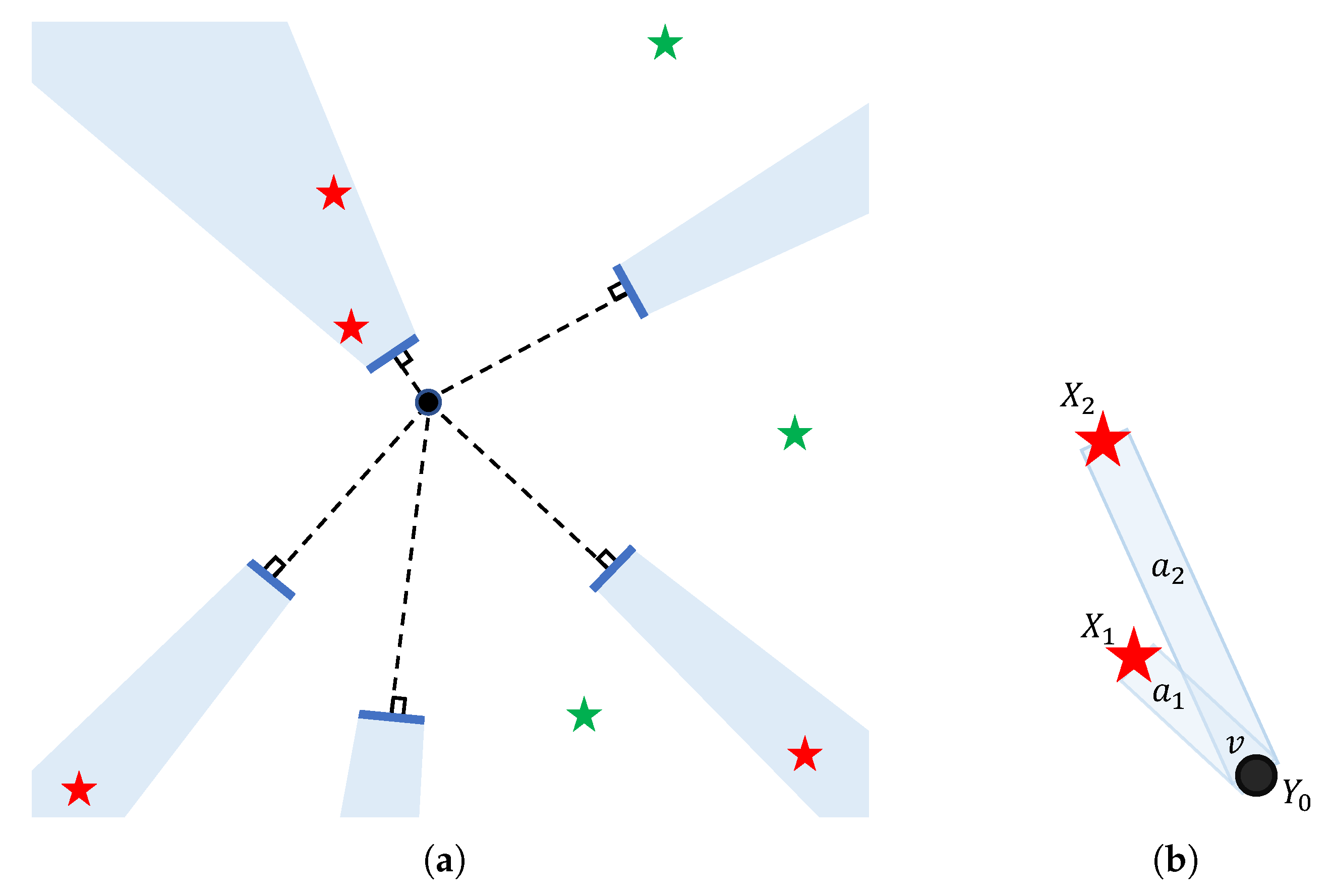
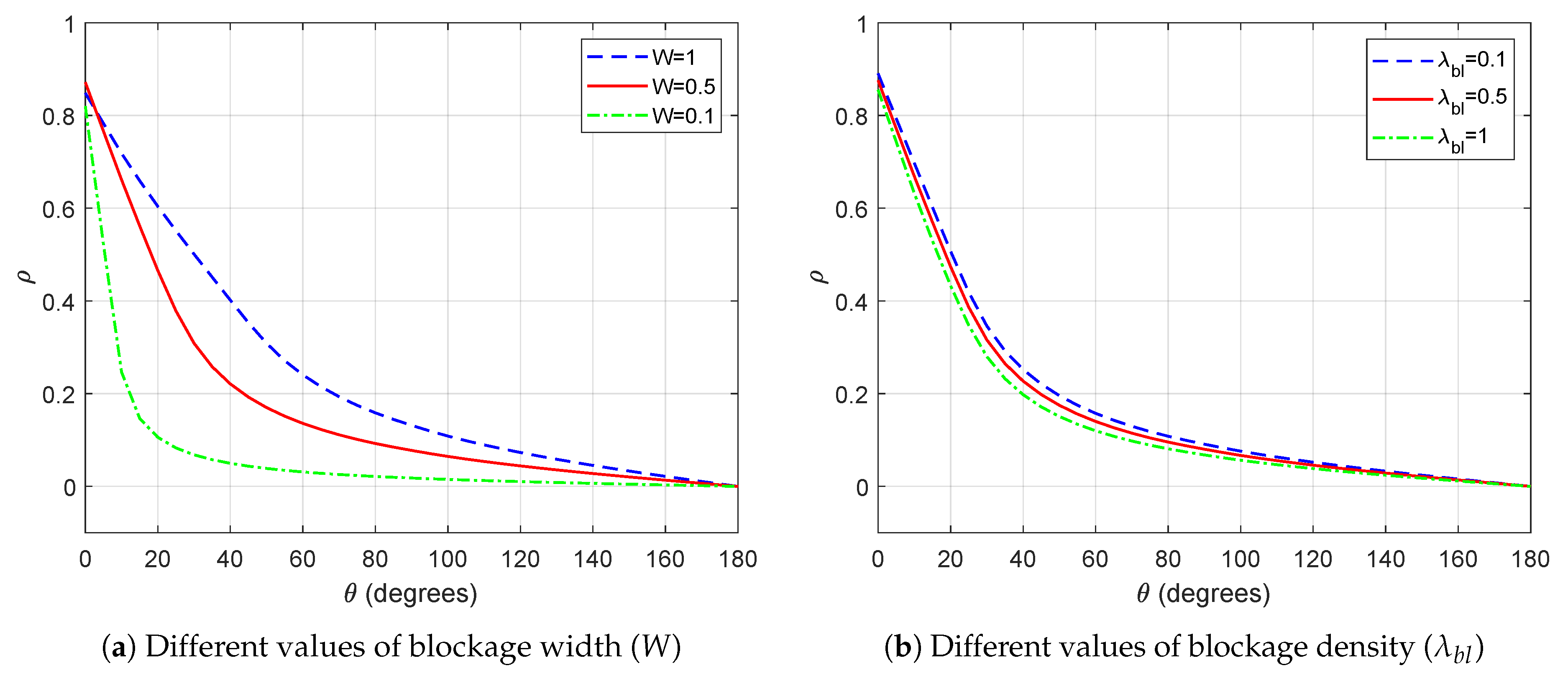
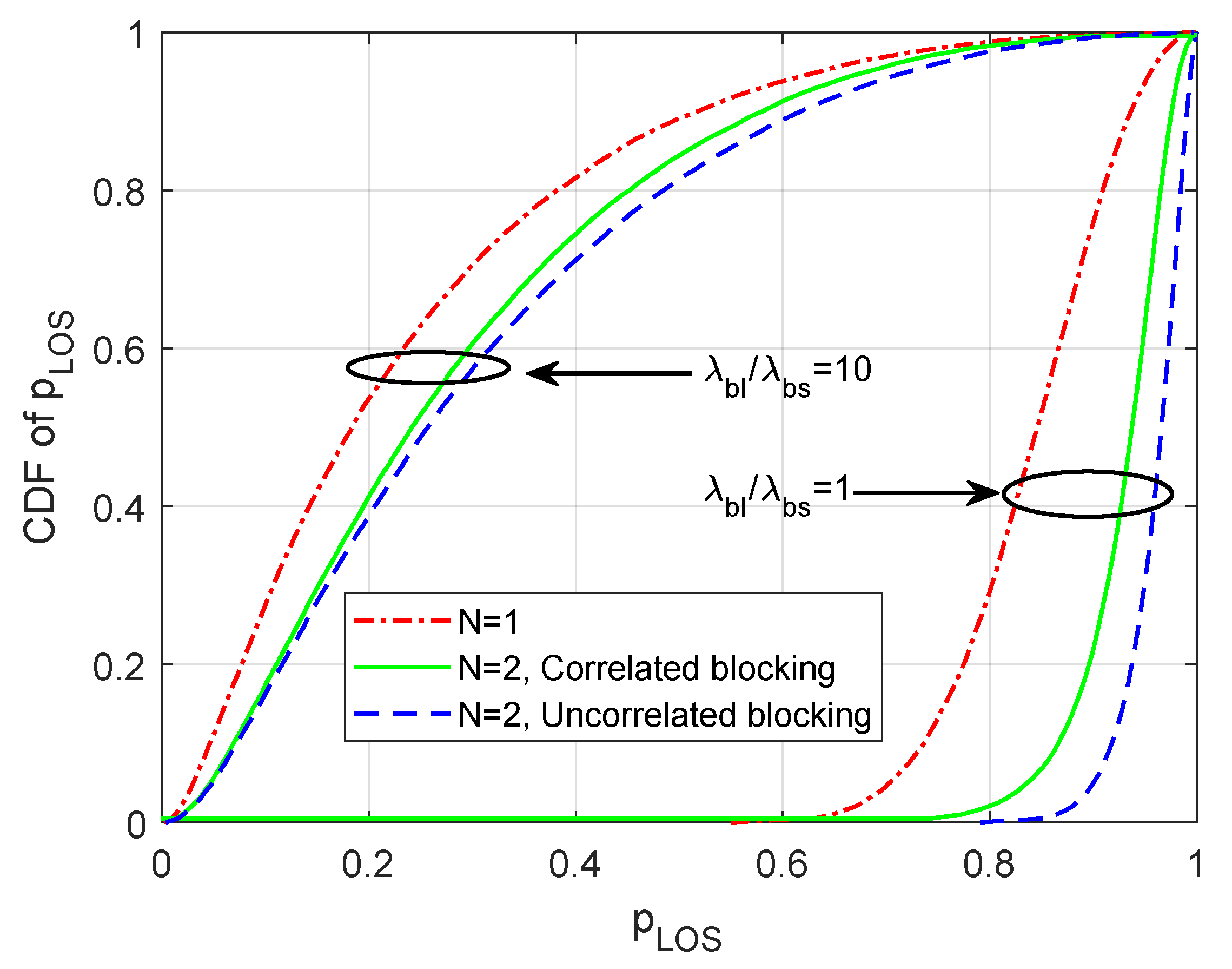
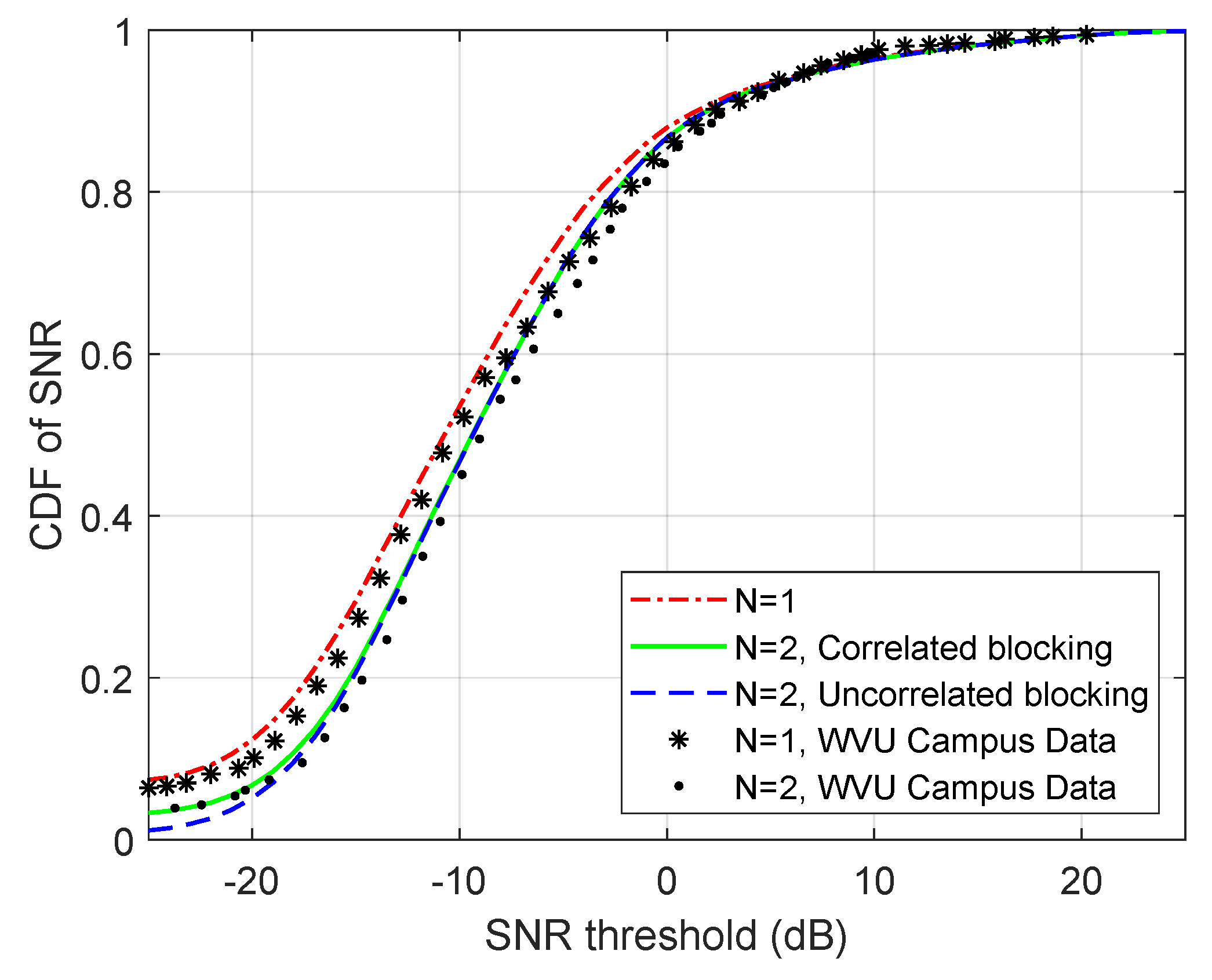
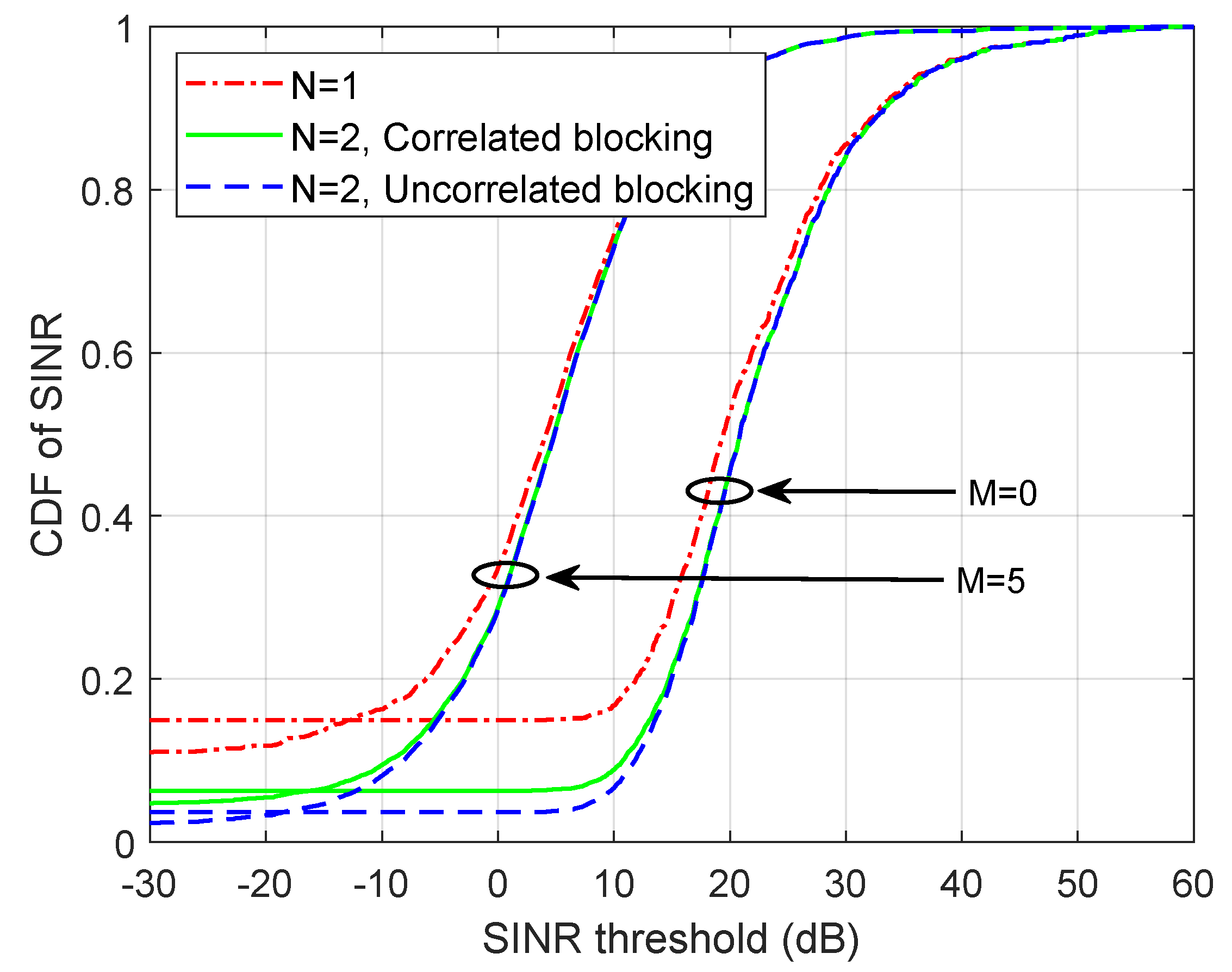
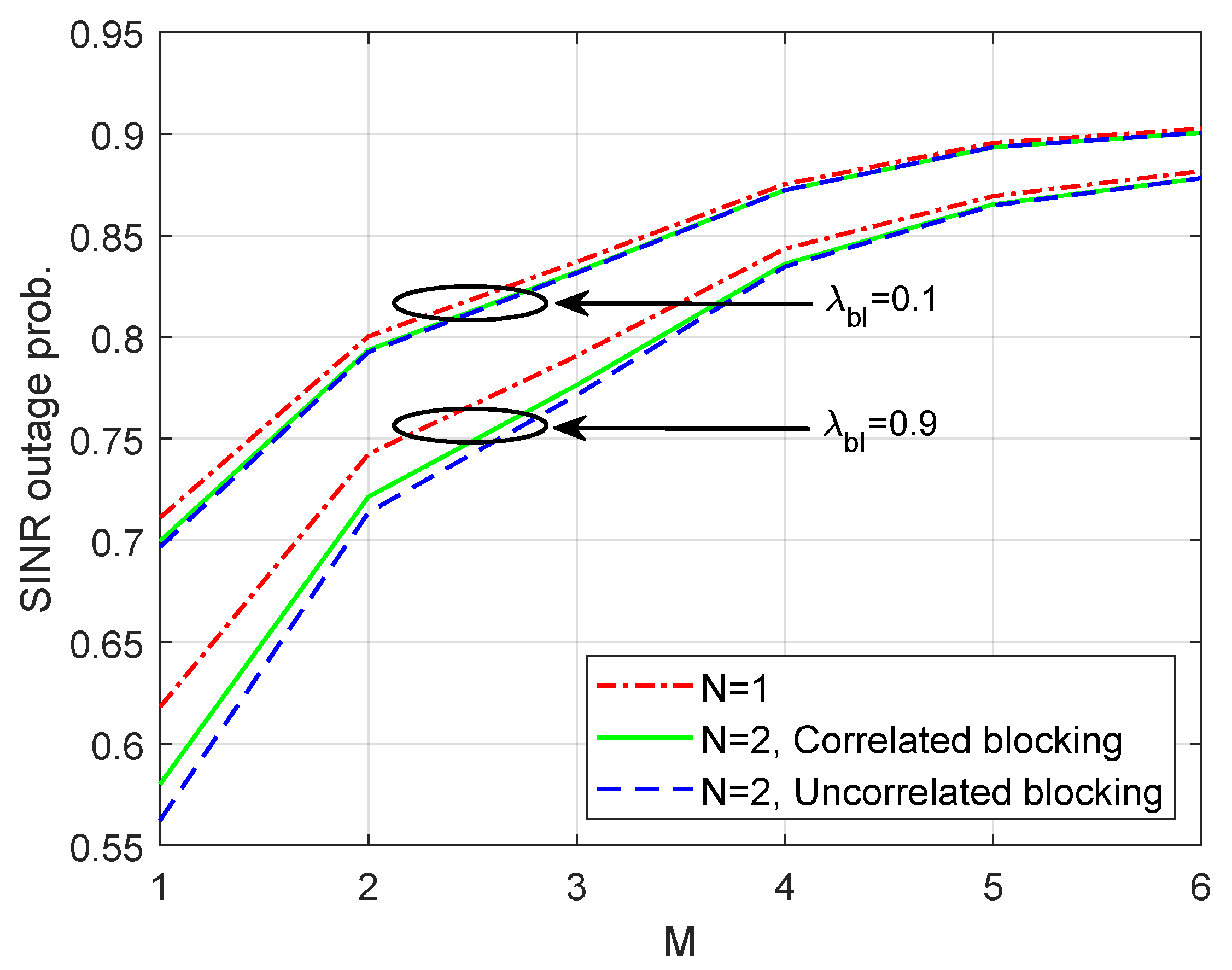
In this paper, we provide a comprehensive analysis of macrodiversity for millimeter wave (mmWave) cellular networks. The key issue with mmWave networks is that signals are prone to blocking by objects in the environment, which causes paths to go from line-of-sight (LOS) to non-LOS (NLOS). We identify macrodiversity as an important strategy for mitigating blocking, as with macrodiversity the user will attempt to connect with two or more base stations. Diversity is achieved because if the closest base station is blocked, then the next base station might still be unblocked. However, since it is possible for a single blockage to simultaneously block the paths to two base stations, the issue of correlated blocking must be taken into account by the analysis. Our analysis characterizes the macrodiverity gain in the presence of correlated random blocking and interference. To do so, we develop a framework to determine distributions for the LOS probability, Signal to Noise Ratio (SNR), and Signal to Interference and Noise Ratio (SINR) by taking into account correlated blocking. We validate our framework by comparing our analysis, which models blockages using a random point process, with an analysis that uses real-world data to account for blockage. We consider a cellular uplink with both diversity combining and selection combining schemes. We also study the impact of blockage size and blockage density along with the effect of co-channel interference arising from other cells. We show that the assumption of independent blocking can lead to an incorrect evaluation of macrodiversity gain, as the correlation tends to decrease macrodiversity gain.
Keywords: correlated blocking; millimeter wave; line-of-sight; macrodiversity correlated blocking; millimeter wave; line-of-sight; macrodiversity