Article

A Novel Low-Voltage-Based Methodology for Short-Circuit Withstand Time Screening of Commercial 4H-SiC MOSFETs


1
Department of Electrical & Computer Engineering, The Ohio State University, Columbus, OH 43210, USA
2
Ford Motor Co., Ltd., Dearborn, MI 48124, USA
*
Author to whom correspondence should be addressed.
Electronics 2026, 15(3), 579; https://doi.org/10.3390/electronics15030579
Submission received: 30 December 2025 / Revised: 26 January 2026 / Accepted: 27 January 2026 / Published: 29 January 2026

Abstract

With the rapid advancement of silicon carbide technology, device reliability has emerged as a critical concern for high-performance power electronics applications. Among various reliability challenges, the limited short-circuit withstand time (SCWT) of SiC MOSFETs, coupled with significant device-to-device variation, poses a serious risk, as it can lead to catastrophic field failures. In addition, established short-circuit screening technique utilizes high-voltage and high-stress condition that may degrade the long-term reliability of otherwise good devices. Hence, this work proposes a novel short-circuit screening methodology employing lower voltages and verifies it using commercial 1.2 kV 4H-SiC MOSFETs. The proposed approach can remove devices with lower SCWT while minimizing electrical and thermal overstress during screening. The results indicate that the proposed low-voltage screening technique offers a safe, repeatable, and reliable alternative to conventional short-circuit screening method, making it well suited for practical manufacturing, leading to system-level reliability enhancement in SiC-based power electronics applications.

1. Introduction

Short-circuit withstand time (SCWT) is a critical reliability benchmark for power semiconductor devices, as insufficient short-circuit (SC) ruggedness can result in catastrophic failures during operation [1]. With the rapid adoption of silicon carbide (SiC) technology, SiC metal-oxide-semiconductor field-effect transistors (MOSFETs) have increasingly replaced conventional silicon IGBTs in high-performance power electronics systems. This transition is driven by the superior material properties of 4H-SiC, including its wide bandgap, high thermal conductivity, and high critical electric field. These characteristics enable higher switching frequencies, increased power density, and improved efficiency [2]. These advantages are particularly attractive in industrial, automotive, and traction applications such as electric vehicle (EV) power converters and traction inverters where reliability and long-term ruggedness are of paramount importance.
Despite these benefits, the SC robustness of commercial 4H-SiC MOSFETs remains a major reliability concern. The inherently smaller chip area and higher power density of SiC devices result in severe thermal stress, leading to rapid thermal runaway, accompanied by gate oxide degradation and eventual gate failure, thereby severely limiting the SCWT of the device [3,4,5,6].
Significant research efforts have been directed toward improving device-level short-circuit reliability [7,8,9,10,11,12,13,14] and detailed investigations have been carried out to understand short-circuit failure mechanisms under different gate and drain voltage conditions for both planar and trench MOSFETs [4,5,15,16,17,18,19,20,21,22,23,24,25,26,27,28]. Nevertheless, commercially available state-of-the-art SiC MOSFETs typically exhibit SCWTs in the range of 2-7 μs, which further degrade at elevated voltages and temperatures [26]. In addition, considerable device-to-device variation in SCWT, often approaching 1 μs even within a small batch of devices, has been reported [29]. This variability is primarily attributed to the minor process-induced differences in device structure during fabrication. The combination of limited SCWT, large device-to-device variability, and the high-frequency switching capability of SiC MOSFETs poses serious challenges for protection circuit design. As highlighted in prior studies, the fast switching speed of SiC devices necessitates enhanced noise suppression, which often compromises the response time of SC protection circuits [30], thereby increases system-level vulnerability.
To address these challenges, it is essential to screen commercial SiC MOSFETs for short-circuit capability and selectively eliminate devices with inferior SCWT before deployment without compromising the reliability of robust devices. The conventional high-voltage short-circuit screening approach known as Peak Transient Drain Current Methodology (PTDM) [29] suffers from several limitations, although effective in specific cases. This method applies high drain voltage for a short period of time, which may reduce device lifetime and adversely affect the long-term reliability of otherwise healthy devices. Moreover, the reported technique is limited to planar MOSFET structure and is prone to false rejection, thereby reducing manufacturing yield.
In this work, a novel low-voltage SCWT screening methodology for commercial 1.2 kV 4H-SiC MOSFETs is proposed and experimentally validated using both planar and trench gate devices. The proposed approach, termed Low-Voltage Short-Circuit Energy Evaluation (LVSCEE), utilizes controlled low-voltage stress to accurately differentiate devices with lower SCWT from reliable ones while minimizing degradation of the screened devices. Unlike high-voltage screening technique, the proposed method significantly reduces electrical and thermal overstress, enabling safe and repeatable screening, applicable to both planar and trench commercial SiC MOSFETs. Furthermore, key electrical parameters are extracted and analyzed before and after screening to assess potential performance degradation. The results demonstrate that the proposed methodology achieves consistent SCWT screening with negligible impact on device characteristics, making it a practical and reliable solution for improving system-level robustness in SiC power electronics applications.

2. Experimental Methodology

2.1. Device Details

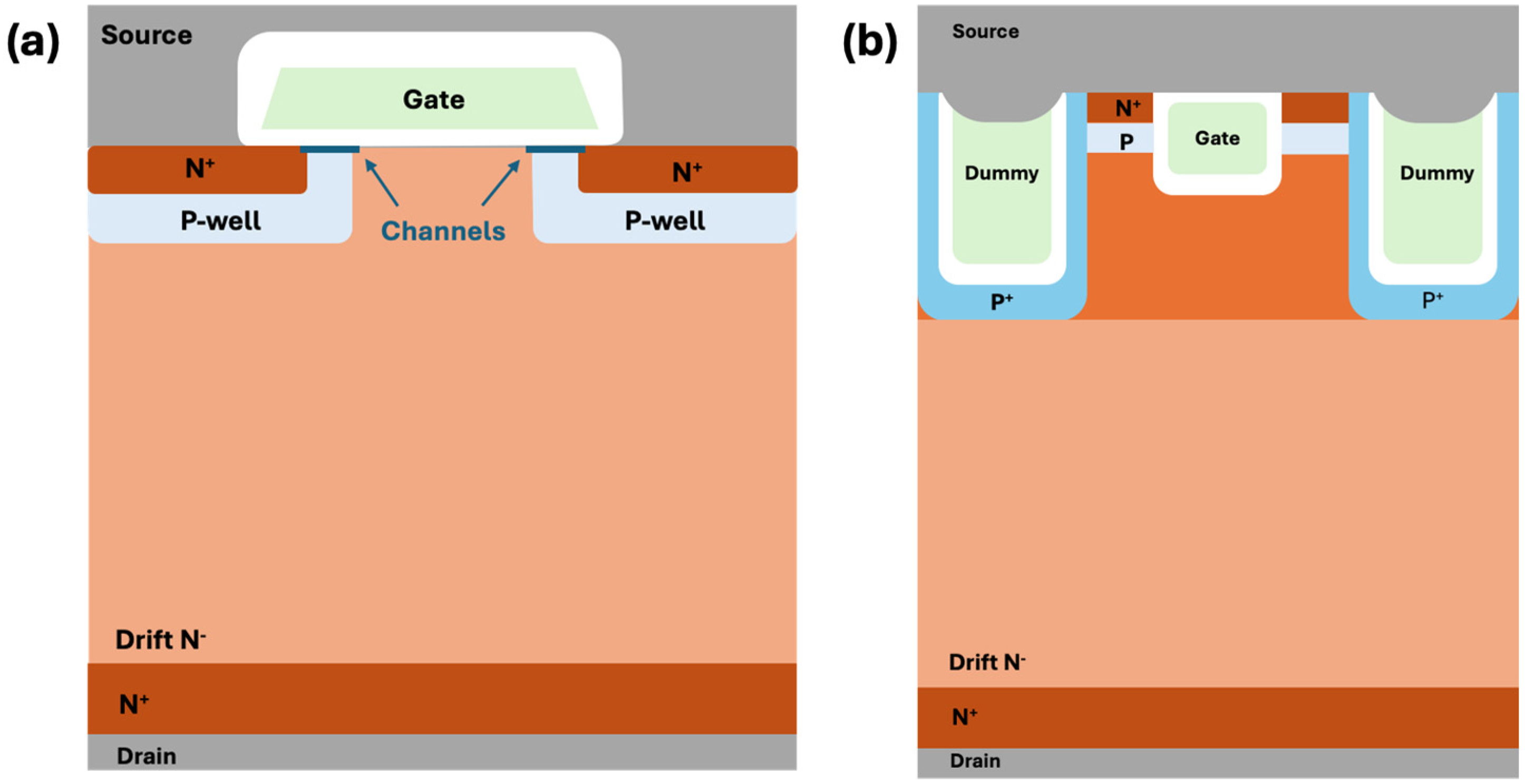
Commercial 1.2 kV SiC MOSFETs with planar gate and reinforced double-trench gate structures from Vendor F and Vendor G2, respectively, were utilized in this study. The typical device structures are shown in Figure 1. The device parameters are presented in Table 1. Before SC measurement, each device underwent typical electrical characterizations using a Keysight B1506A Power Device Analyzer (Keysight Technologies, Colorado Springs, CO, USA) to obtain threshold voltage (Vth) and on-resistance (Ron). Vth of these devices were extracted using the linear extrapolation method [31] at drain-to-source voltage (Vds) of 100 mV, whereas Ron was calculated at gate-to-source voltage (Vgs) of 20 V and Vds = 1.5 V.

2.2. Short-Circuit Evaluation

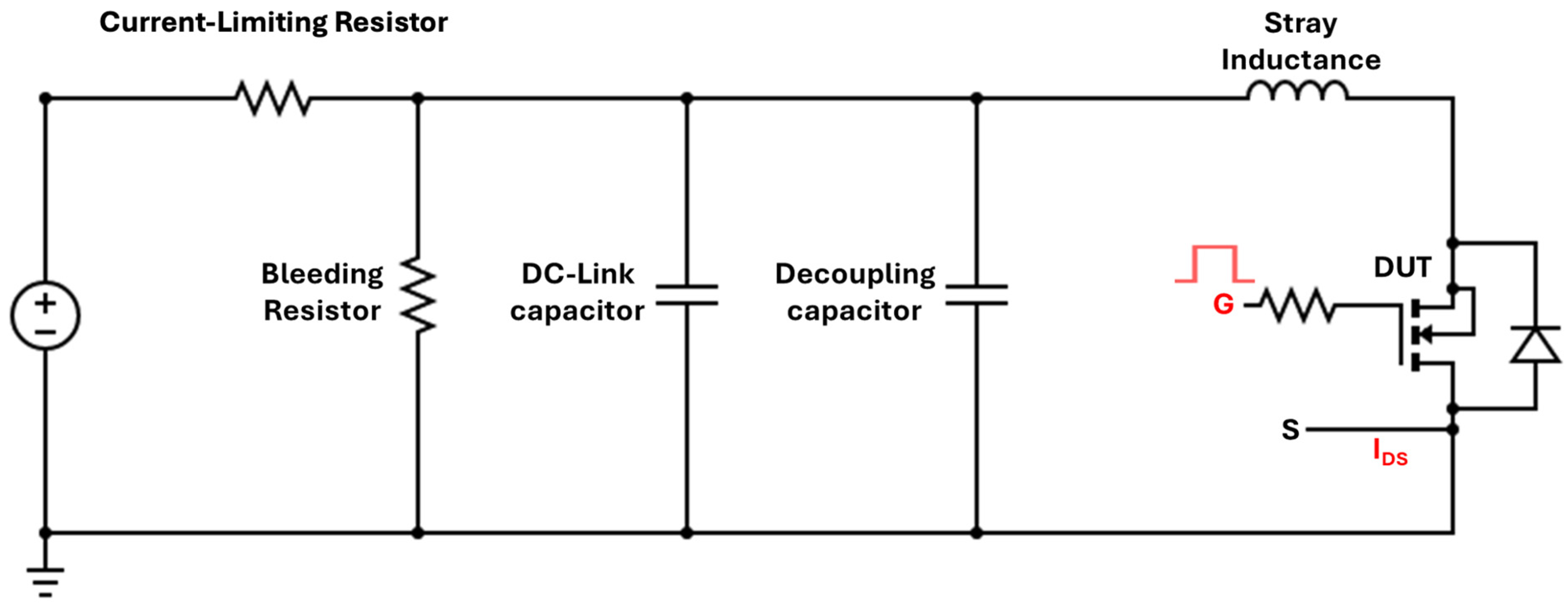
SC evaluation of commercial 4H-SiC MOSFETs was carried out using a typical SC setup, as shown in Figure 2 [29]. The setup contained three 100 μF thick film capacitors to stabilize the DC source voltage, along with a 1 μF decoupling capacitor with low ESL (equivalent serial inductance) and ESR (equivalent serial resistance), guaranteeing high frequency switching conditions. A 10 Ω gate resistor was used to ensure controlled turn-on and turn-off of the device under test (DUT). Drain-to-source transient current during SC evaluation (Ids) was measured using a 10 mV/A sensitive PEM CWT3 Rogowski coil with a rated peak current of 600 A. For enhanced safety of the setup, 5 kΩ current-limiting resistors along with 66 kΩ bleeding resistors were provided. The SC measurements were carried out at varying Vds = 200 V, 400 V, 600 V, and 800 V under Vgs = 20 V. Depending on the condition, the gate turn-on pulse width was varied to ensure minimum heating effect. To evaluate the SCWT of the DUT, Vgs = 20 V and Vds = 800 V condition was selected where the starting pulse was kept at 0.5 μs, which was then increased by a step of 0.1 μs until failure was observed. Sufficient cooling time was provided in between two consecutive pulses to guarantee minimum heating effect. The time of failure (or the pulse width) was termed as the SCWT of the DUT. The setup was kept unchanged throughout the experiments to ensure consistent results.

3. Low-Voltage Short-Circuit Energy Evaluation (LVSCEE)

3.1. Variation in SCWT

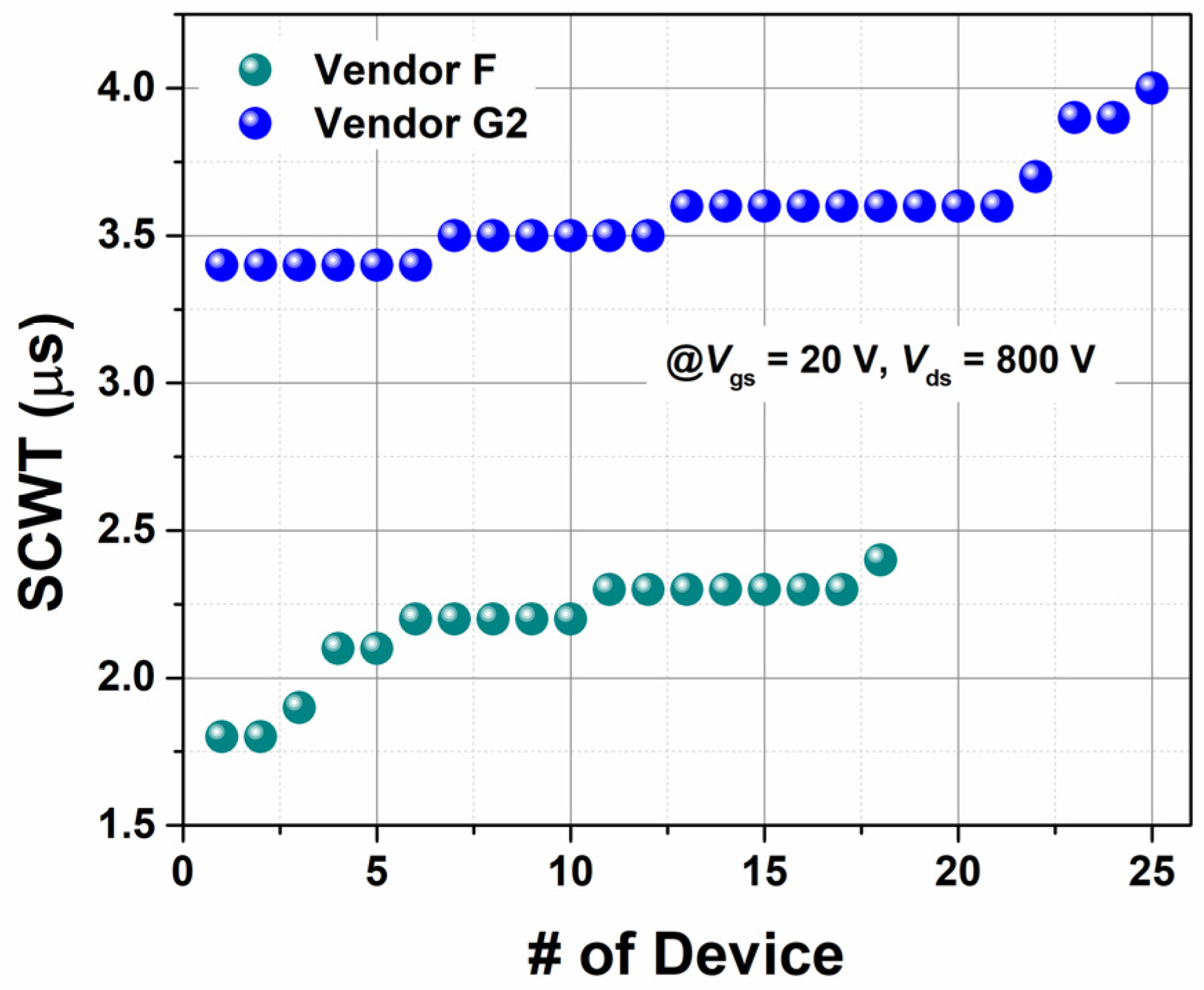
1.2 kV 4H-SiC MOSFETs from Vendor F and Vendor G2 underwent SCWT measurement at Vgs = 20 V and Vds = 800 V, and the results are shown in Figure 3. DUTs were carefully selected from same batch and lot to ensure consistency among devices. The results show a 0.6 μs SCWT variation for both vendors.

3.2. Peak Transient Drain Current Methodology and False Rejection Rate

P T D M = I p e a k s l o p e
s l o p e = I p e a k I m i n t s c r e e n t p e a k
where Ipeak, Imin, tscreen, and tpeak are peak drain current, turn-off drain current at tscreen, screening pulse width, and time at which drain current achieves Ipeak, respectively.
The high-voltage PTDM [29] has been proposed to selectively screen out devices with lower SCWT without damaging reliable devices. First, a SCWT screening parameter PTDM is calibrated using Equations (1) and (2) with a preliminary set of devices. This is performed by measuring the SCWT of the preliminary set at Vds = 800 V and Vgs = 20 V while the gate pulse duration tscreen is incremented in 0.1 μs steps until the device fails. Depending on the minimum SCWT requirement, a permissible range of PTDM can be established for devices from the same vendor and production lot. Once the PTDM range is defined, only a single pulse of tscreen duration is needed to remove devices with inferior SCWT, without destroying reliable ones.
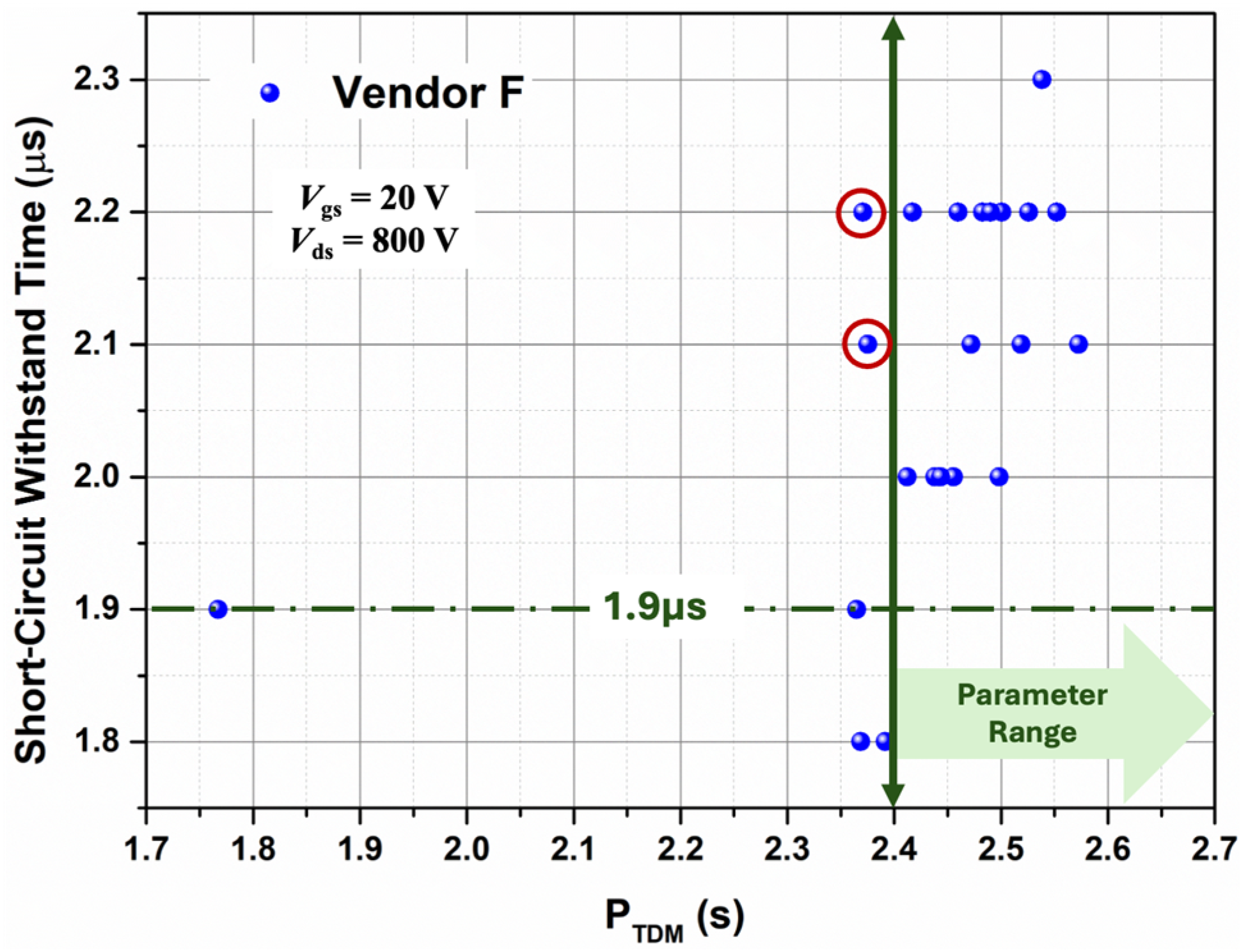
The variation in PTDM is influenced by several device design and process parameters, such as die area, die volume, channel design, active area design, gate oxide thickness and quality, interface defect state density, doping profile, temperature diffusion process, etc. [32,33,34]. Consequently, both the manufacturers and the end users must experimentally determine PTDM ranges for different vendors and process flows. However, a major concern of PTDM is the possibility of incorrectly rejecting reliable devices during the screening process, as illustrated in Figure 4 for Vendor F devices. This phenomenon is referred to as false rejection.
The false rejection rate (FRR) can be defined as follows:
F R R = N u m b e r   o f   r e l i a b l e   d e v i c e s   f a l s e l y   s c r e e n e d   o u t   T o t a l   n u m b e r   o f   d e v i c e s   ×   100 %
Using this definition, an FRR of 8.69% is observed for Vendor F devices (number of devices tested are 23) at PTDM ≥ 2.4 s. Such a level of false rejection is undesirable, as it adversely affects device yield and overall manufacturing efficiency.

3.3. Proposed LVSCEE Method

Fundamentally, the proposed LVSCEE method is based on the SC energy during different applied Vds under a particular gate pulse width (tpulse). Mathematically, SC energy at a particular pulse (Epulse) can be defined as follows:
E p u l s e = 0 t p u l s e V d s I d s d t
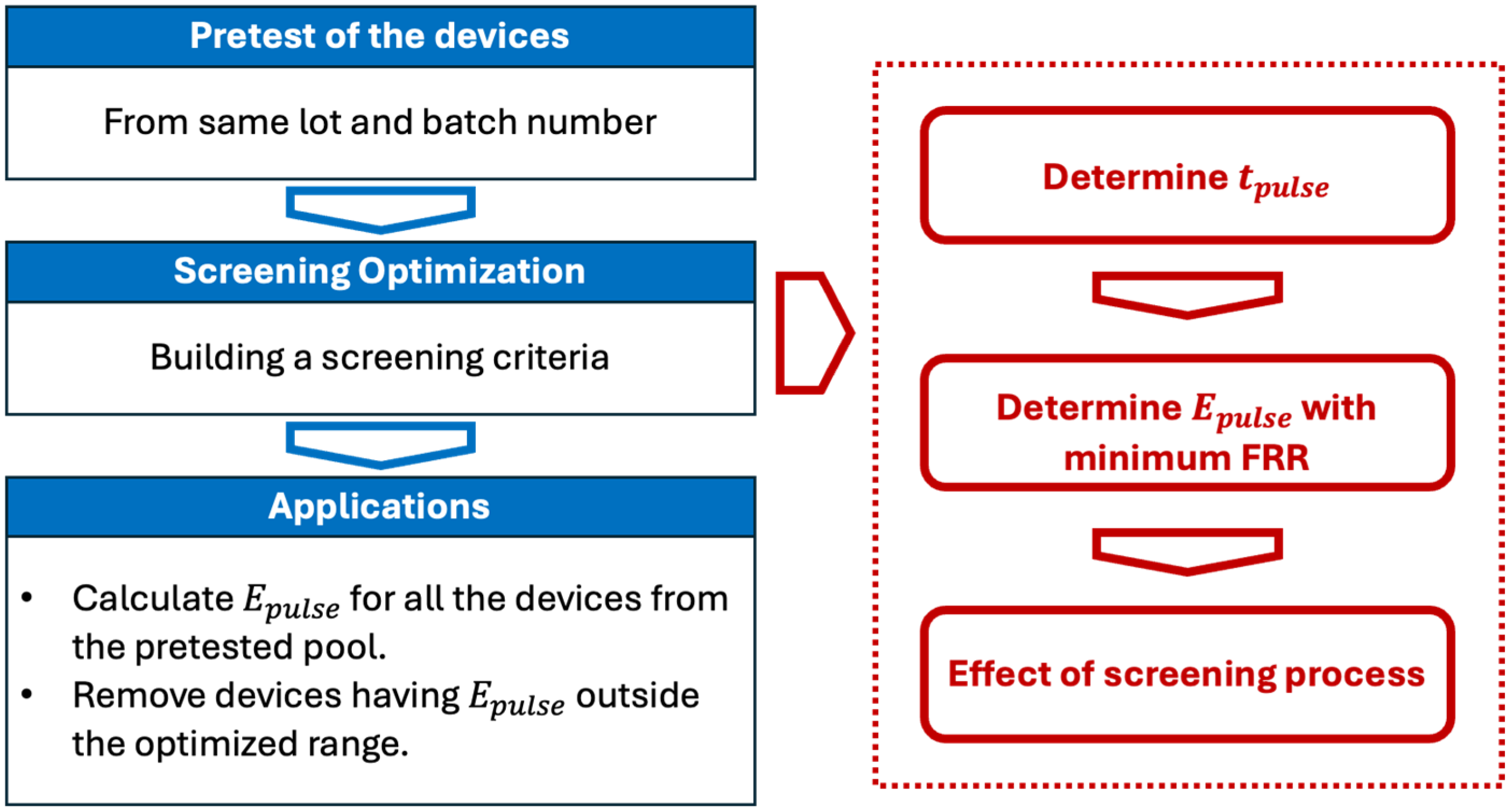
During the event of SC, the DUT experiences lattice heating [26], which eventually causes the failure of the device. This effect of heating is directly correlated to the transient energy Epulse at each time frame. Hence, a correlation between Epulse and SCWT can be established. The proposed LVSCEE method is graphically shown in Figure 5.
For successful screening, the key factors include determining the appropriate Epulse under a certain Vds and pulse width (tpulse) as well as setting the minimum SCWT threshold to effectively screen out weaker devices, while maintaining an extremely low false rejection rate. Furthermore, the effect of the screening on the devices needs to be examined using static characteristics and interface defect analysis pre- and post-screening to ensure no degradation. Upon establishing the Epulse window needed for the reliable devices, this methodology can be used in thousands of devices just by applying a low-voltage single pulse to remove the weaker devices without damaging the reliable ones. Moreover, as this methodology relies solely on the dissipation energy under a given Vds and tpulse, it enables the applicability of this technique irrespective of screening or operating voltage level, and cross-voltage correlation can be established.

3.3.1. Drain Current Behaviour Under Different Drain Voltages

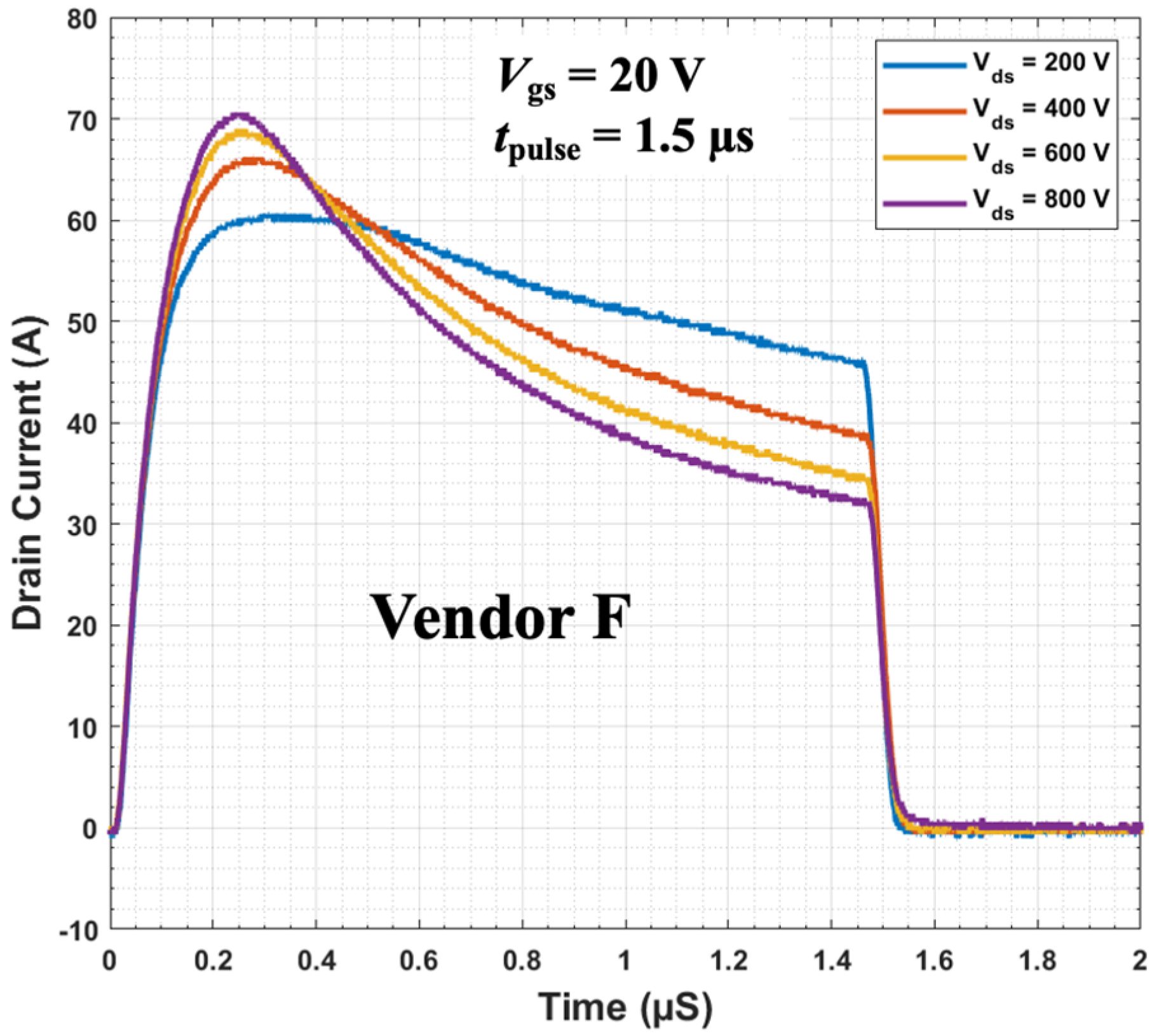
The first part of this work aims to understand the behaviour of the drain current under different applied drain voltages. Figure 6 shows the Ids vs. transient time characteristics of a representative Vendor F device under tpulse = 1.5 μs for Vds = 200 V, 400 V, 600 V, and 800 V. It can be clearly seen that under a fixed tpulse, with the increase in Vds level from 200 V to 800 V, the peak drain current (Ids,peak) enhances significantly, indicating more heat generation.

3.3.2. Determining Screening Pulse Energy, Pulse Width, and SC Screening

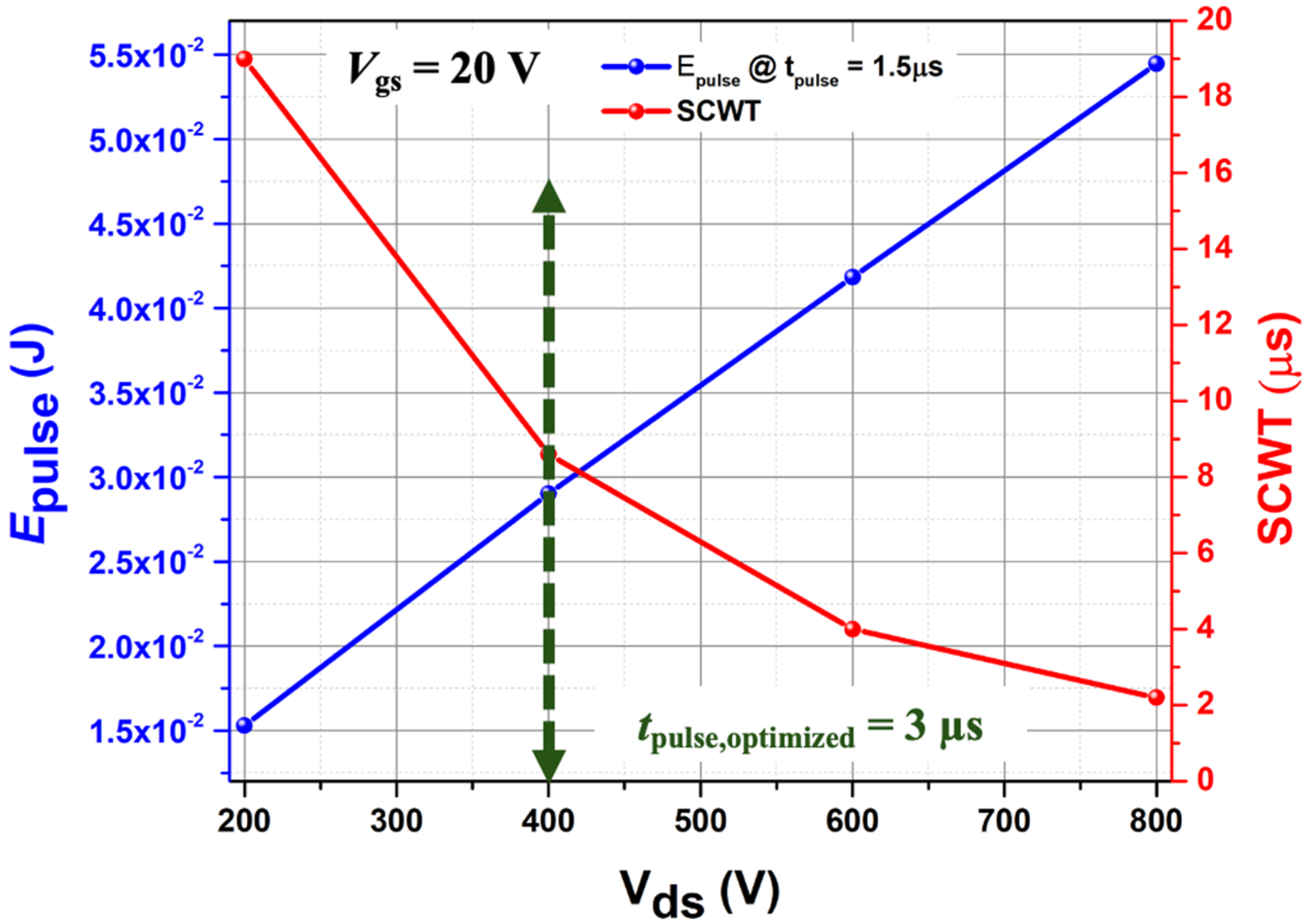
Using Equation (4), the screening pulse energy (Epulse) under different Vds and tpulse = 1.5 μs was calculated and is shown in Figure 7 for the Vendor F devices. SCWT at different drain voltage levels is also plotted in Figure 7. It is evident that as Vds increases, Epulse under the same tpulse increases and SCWT decreases. Under Vds = 400 V, the representative device can withstand ~9 μs, after which SC occurs.
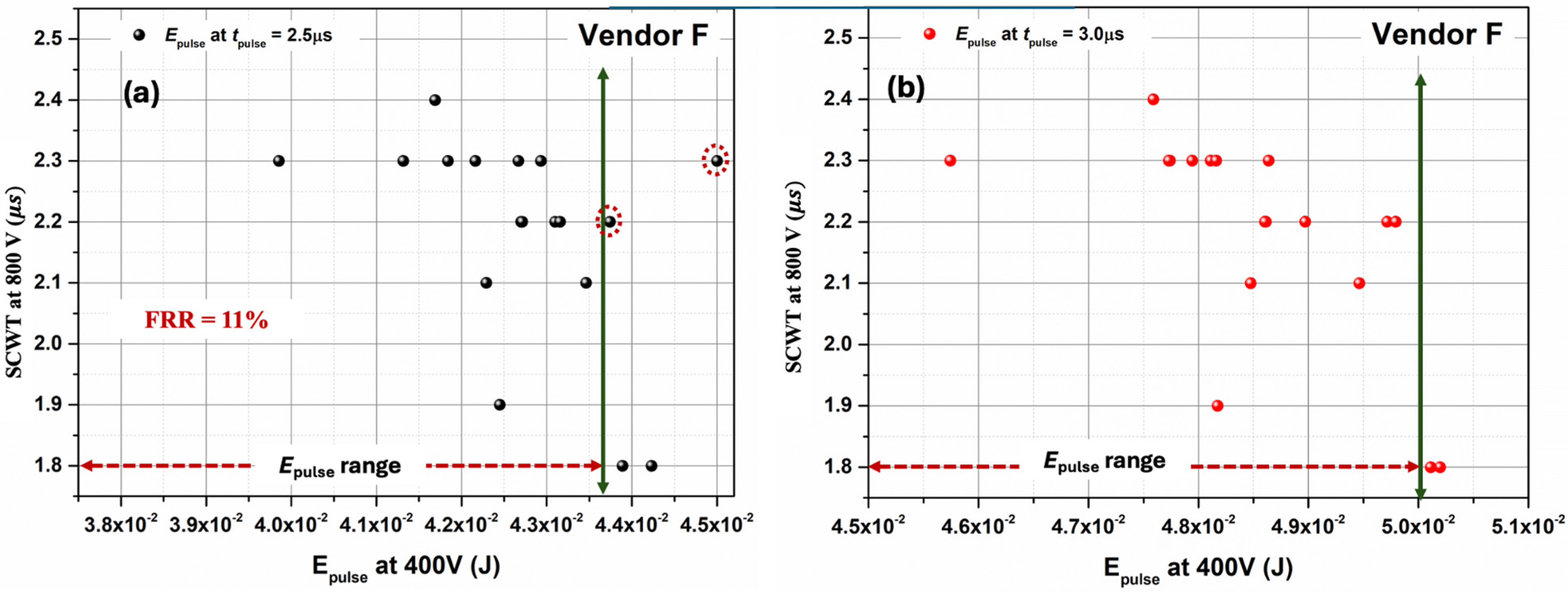
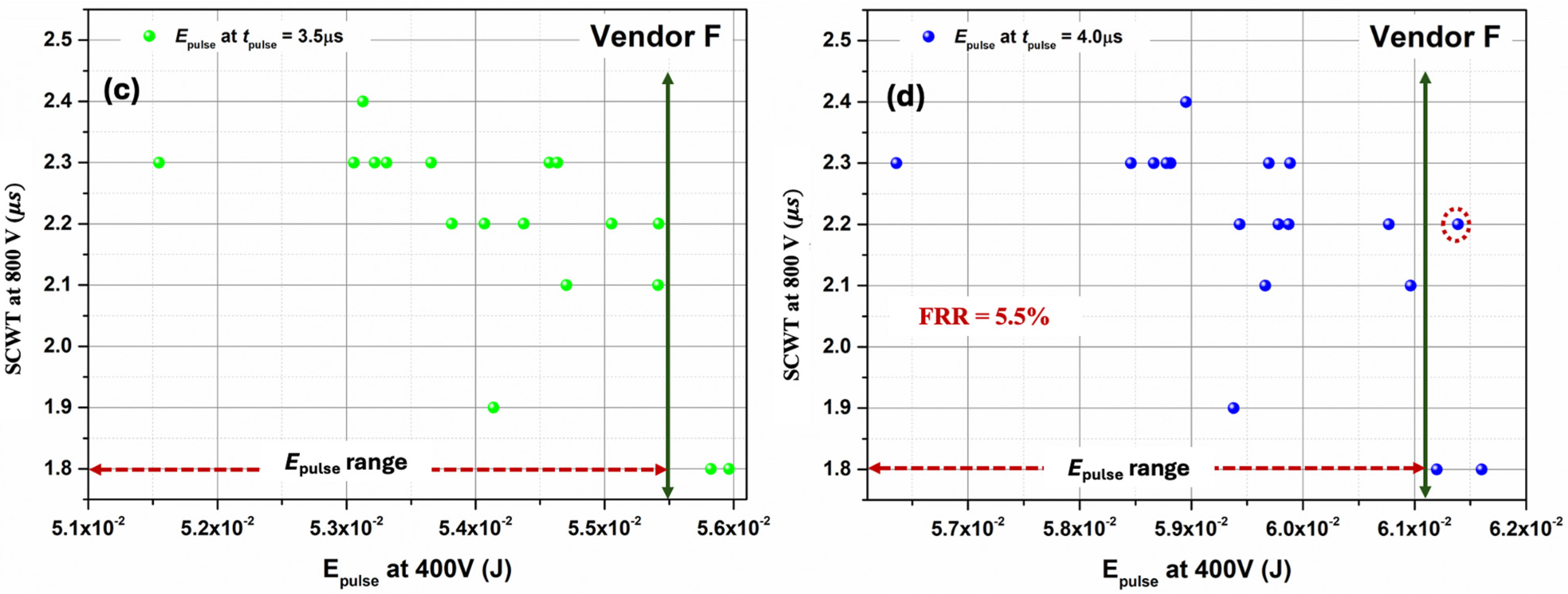
Another critical aspect of effective short-circuit screening is the optimization of the tpulse to minimize FRR. Figure 8 illustrates the SCWT measured at Vds = 800 V as a function of Epulse calculated at Vds = 400 V for different tpulse values using Vendor F devices. The pulses are varied from 2.5 μs to 4.0 μs in steps of 0.5 μs. It can be clearly seen that, under tpulse = 3.0 μs (Figure 8b) and tpulse = 3.5 μs (Figure 8c), no device was falsely rejected.
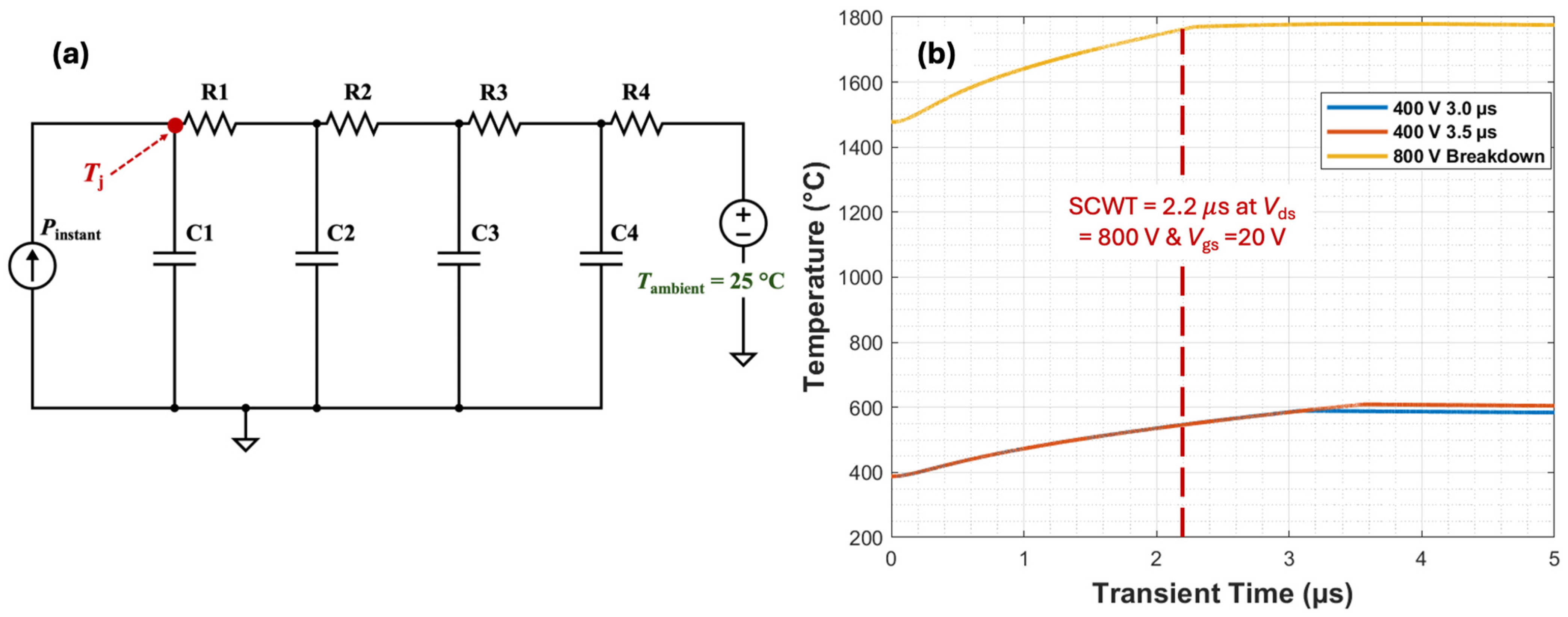
To further assess the impact of screening conditions on devices’ thermal integrity, additional electro-thermal simulations were performed using LTspice to estimate the junction temperature (Tj) of a typical Vendor F device under tpulse corresponding to an extremely low FRR. Tj has been evaluated using a Cauer thermal network model [35], as shown in Figure 9a. This model utilizes an equivalent RC network, where the input is the instantaneous power dissipation (Vds × Ids) as a function of transient time. The equivalent RC parameters are listed in Table 2.
The simulation result (Figure 9b) indicates that, under the optimized conditions (Vds = 400 V, tpulse = 3 μs, and 3.5 μs), maximum junction temperature (Tj,max) remains below one-third of the value observed during convention SCWT measurement at Vds = 800 V. Based on this analysis, in this work, we considered Vds = 400 V with optimized pulse width (tpulse,optimized) of 3 μs for screening of Vendor F devices, to assure no thermal damage occurs while maintaining reliable screening output.
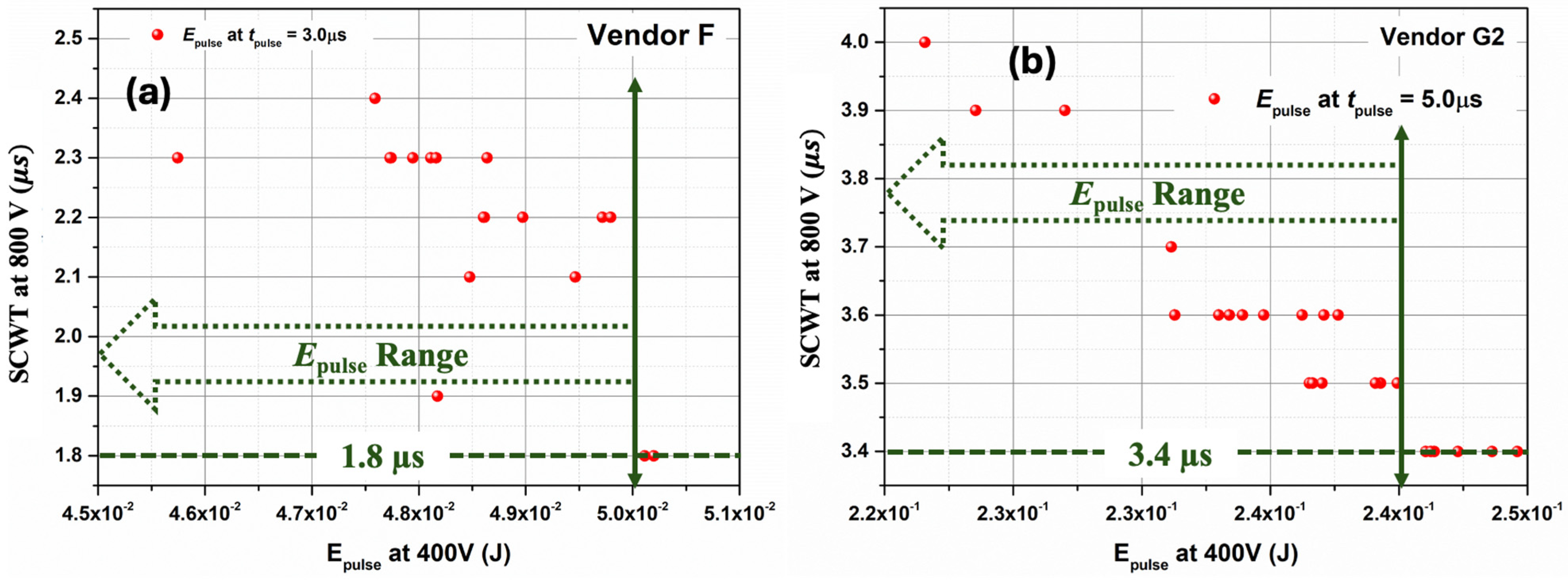
Figure 10a shows the SCWT as a function of optimized Epulse at tpulse,optimized = 3.0 μs for Vendor F devices. Although the Epulse is calculated at a lower drain voltage level of 400 V, to maintain consistency, SCWT is determined at Vds = 800 V for the same devices. It is apparent that to remove devices with SCWT lower than or equal to 1.8 μs at Vds = 800 V, Epulse should be less than 0.05 J. Similar analysis was performed on Vendor G2 devices, considering tpulse,optimized = 5.0 μs at Vds = 400 V, and is shown in Figure 10b. To successfully remove devices with SCWT less than or equal to 3.4 μs at Vds = 800 V, Epulse should be less than 0.24 J.
It is evident that devices with lower Epulse indicate lower heat generation and hence lower thermal effect, leading to higher SCWT. The tpulse and Vds need to be optimized for different vendors to ensure optimal screening. The analysis further shows that this methodology is independent of device design parameters or fabrication process flow and can be implemented easily without any prior device knowledge.

3.3.3. Effect of Short-Circuit Screening Process

The effect of the LVSCEE method on the devices’ characteristics was studied by measuring and comparing Vth, Ron, and gate leakage current (Igss) on a batch of devices from each vendor before and after applying the Epulse. The Vth of these devices was extracted using the linear extrapolation method [31] at Vds = 100 mV, whereas the Ron was calculated at Vgs = 20 V and Vds = 1.5 V. Igss is measured at Vgs = 30 V. The results are consolidated in Table 3. All results are representative in nature.
Moreover, the effect of screening on the interface is determined by utilizing the subthreshold method [36] at room temperature. The mathematical model of this technique is briefly discussed below.
The drain current at subthreshold region is defined as
I d s = I 0 e q V g s n k T 1 e q V d s k T
where the ideality factor n is given as
n = q 2.3 k T l o g I D S V g s 1 = 1 + C D + C i t C o x
where C D is depletion capacitance, C o x is oxide capacitance, and C i t is the interface trap capacitance per unit area.
The energy-dependent interface trap density is given as
D i t ( φ s ) = C i t q
and the energy distribution of the trap level ( E c s E T )
E c s E T = E g 2 q φ F 2.3 k T q log I D S ( 2 φ F ) I D S ( φ s )
where surface potential ( φ s ) is in the range φ F   < φ s < 2 φ F and φ F is the Fermi potential.
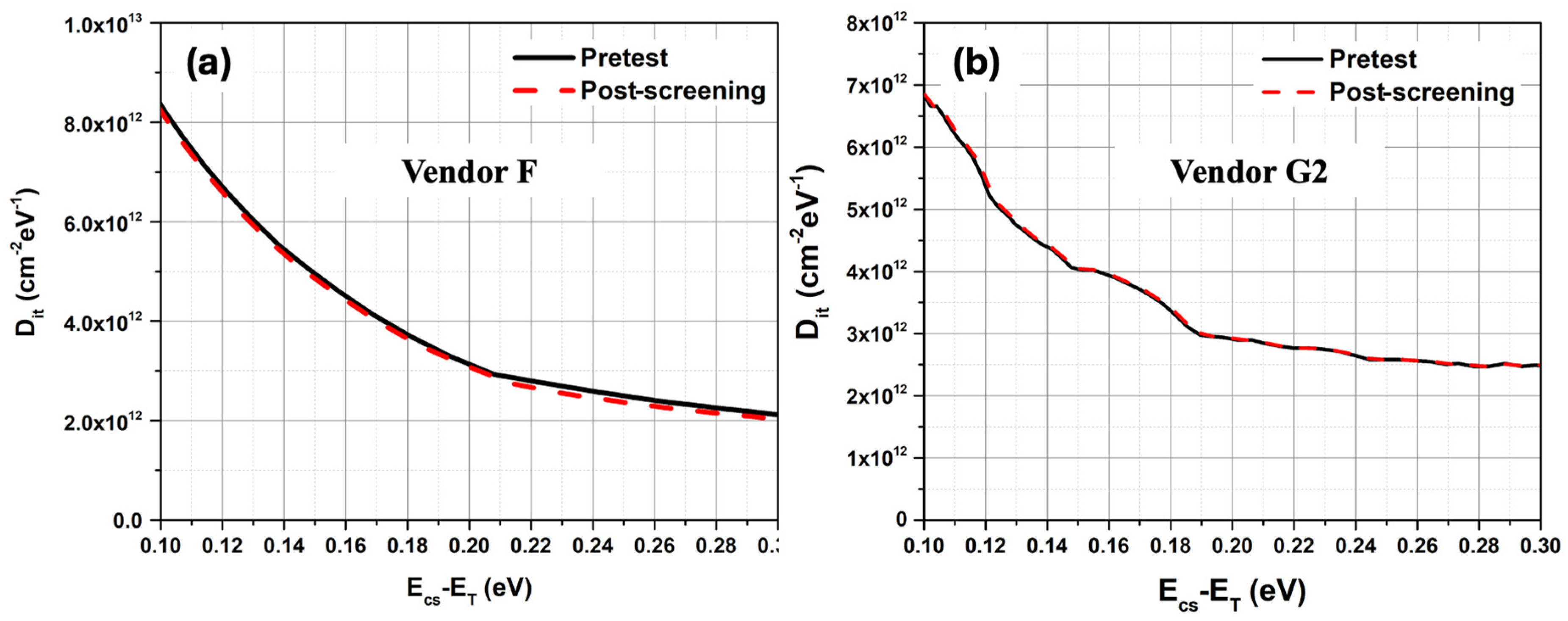
Using Equations (7) and (8), D i t ( φ s ) of the representative devices from Vendor F and Vendor G2 were extracted before and after applying screening pulse, and the results are shown in Figure 11. It can be clearly seen that no significant degradation occurred due to the screening, and hence this methodology can be safely applied to remove devices with lower SCWT from a batch of devices without harming the reliable ones.

4. Conclusions

This paper presents a novel low-voltage short-circuit screening methodology, termed as LVSCEE, aimed to address the reliability challenges associated with poor SCWT and large device-to-device variability in commercial 1.2 kV 4H-SiC MOSFETs. Unlike the conventional high-voltage Peak Transient Drain Current Methodology, the proposed approach utilizes a lower screening voltage, and thus significantly reduces electrical and thermal overstress during screening. This minimizes the risk of latent damage and long-term reliability degradation. Experimental validation on both planar and trench gate SiC MOSFETs confirms that the LVSCEE method effectively removes devices with inferior SCWT while preserving the electrical integrity of robust devices. The analysis of key electrical parameters before and after screening indicates negligible performance degradation, highlighting the suitability of the proposed technique for practical manufacturing and qualification environments.
Overall, the LVSCEE methodology provides a reliable, repeatable, and structure-independent solution for SCWT screening of SiC MOSFETs. By enabling early elimination of weak devices without compromising healthy ones, the proposed approach contributes to enhanced system-level robustness and increased reliability of next-generation SiC-based power electronics applications.

Author Contributions

Conceptualization, M.B., M.H.W. and A.K.A.; methodology, M.B.; software, M.B.; validation, M.B., M.J. and H.Y.; formal analysis, M.B., M.J., H.Y., S.H., M.H.W., A.S. and A.K.A.; investigation, M.B. and M.J.; resources, M.B. and M.J.; data curation, M.B.; writing—original draft preparation, M.B.; writing—review and editing, M.B., M.J. and H.Y.; visualization, M.B.; supervision, A.K.A.; project administration, A.S.; funding acquisition, A.S. All authors have read and agreed to the published version of the manuscript.

Funding

This work was supported in part by the Ford Motor Company under the Ford Alliance 2019 Project to The Ohio State University (Funding Number: GR136168) and in part by the Block Gift Grant from the II–VI (Coherent) Foundation (Funding Number: GR135802).

Data Availability Statement

Data is contained within this article.

Conflicts of Interest

Author Atsushi Shimbori is employed by the company Ford Motor Company. The remaining authors declare that this research was conducted in the absence of any commercial or financial relationships that could be construed as potential conflicts of interest. The authors declare that this study received funding from Ford Motor Company and II–VI (Coherent) Foundation. The funders had no role in the design of this study; in the collection, analyses, or interpretation of data; in the writing of this manuscript; or in the decision to publish the results.

Abbreviations

The following abbreviations are used in this manuscript:
SCShort Circuit
SCWTShort-Circuit Withstand Time
PTDMPeak Transient Drain Current Methodology
LVSCEELow-Voltage Short-Circuit Energy Evaluation
DUTDevice Under Test
FRRFalse Rejection Rate

References

  1. Kampitsis, G.; Papathanassiou, S.; Manias, S. Comparative evaluation of the short-circuit withstand capability of 1.2 kV silicon carbide (SiC) power transistors in real life applications. Microelectron. Reliab. 2015, 55, 2640–2646. [Google Scholar] [CrossRef]
  2. Liu, G.; Tuttle, B.R.; Dhar, S. Silicon carbide: A unique platform for metal-oxide-semiconductor physics. Appl. Phys. Rev. 2015, 2, 021307. [Google Scholar] [CrossRef]
  3. Romano, G.; Maresca, L.; Riccio, M.; d’Alessandro, V.; Breglio, G.; Irace, A.; Fayyaz, A.; Castellazzi, A. Short-circuit failure mechanism of SiC power MOSFETs. In Proceedings of the 2015 IEEE 27th International Symposium on Power Semiconductor Devices & IC’s (ISPSD), Hong Kong, China, 10–14 May 2015; pp. 345–348. [Google Scholar]
  4. Wang, Z.; Shi, X.; Tolbert, L.M.; Wang, F.; Liang, Z.; Costinett, D.; Blalock, B.J. Temperature-dependent short-circuit capability of silicon carbide power MOSFETs. IEEE Trans. Power Electron. 2015, 31, 1555–1566. [Google Scholar] [CrossRef]
  5. Cao, L.; Guo, Q.; Sheng, K. Comparative evaluation of the short circuit capability of SiC planar and trench power MOSFET. In Proceedings of the 2018 IEEE 2nd International Electrical and Energy Conference (CIEEC), Beijing, China, 4–6 November 2018; pp. 653–656. [Google Scholar]
  6. Cao, L.; Gao, Z.; Guo, Q.; Sheng, K. Experimental investigations of SiC MOSFETs under short-circuit operations. In Proceedings of the 2019 31st International Symposium on Power Semiconductor Devices and ICs (ISPSD), Shanghai, China, 19–23 May 2019; pp. 227–230. [Google Scholar]
  7. Nguyen, T.-T.; Ahmed, A.; Thang, T.V.; Park, J.-H. Gate Oxide Reliability Issues of SiC MOSFETs Under Short-Circuit Operation. IEEE Trans. Power Electron. 2015, 30, 2445–2455. [Google Scholar] [CrossRef]
  8. Hatta, H.; Tominaga, T.; Hino, S.; Miura, N.; Tomohisa, S.; Yamakawa, S. Suppression of Short-Circuit Current with Embedded Source Resistance in SiC-MOSFET. Mater. Sci. Forum 2018, 924, 727–730. [Google Scholar] [CrossRef]
  9. Diaz Reigosa, P.; Schulz, N.; Minamisawa, R. Short-circuit robustness of retrograde channel doping 1.2 kV SiC MOSFETs. Microelectron. Reliab. 2021, 120, 114117. [Google Scholar] [CrossRef]
  10. Kanale, A.; Baliga, B.J. A New User-Configurable Method to Improve Short-Circuit Ruggedness of 1.2-kV SiC Power MOSFETs. IEEE Trans. Power Electron. 2021, 36, 2059–2067. [Google Scholar] [CrossRef]
  11. Kono, H.; Asaba, S.; Ohashi, T.; Ogata, T.; Furukawa, M.; Sano, K.; Yamaguchi, M.; Suzuki, H. Improving the specific on-resistance and short-circuit ruggedness tradeoff of 1.2-kV-class SBD-embedded SiC MOSFETs through cell pitch reduction and internal resistance optimization. In Proceedings of the 2021 33rd International Symposium on Power Semiconductor Devices and ICs (ISPSD), Nagoya, Japan, 30 May–3 June 2021; pp. 227–230. [Google Scholar]
  12. Yu, H.; Wang, J.; Deng, G.; Liang, S.; Liu, H.; Shen, Z.J. A Novel 4H-SiC JBS-Integrated MOSFET with Self-Pinching Structure for Improved Short-Circuit Capability. IEEE Trans. Electron Devices 2022, 69, 5104–5109. [Google Scholar] [CrossRef]
  13. Okada, M.; Kyogoku, S.; Kumazawa, T.; Saito, J.; Morimoto, T.; Takei, M.; Harada, S. Superior Short-Circuit Performance of SiC Superjunction MOSFET. In Proceedings of the 2020 32nd International Symposium on Power Semiconductor Devices and ICs (ISPSD), Vienna, Austria, 13–18 September 2020; pp. 70–73. [Google Scholar]
  14. Kim, D.; Sung, W. Improved Short-Circuit Ruggedness for 1.2kV 4H-SiC MOSFET Using a Deep P-Well Implemented by Channeling Implantation. IEEE Electron Device Lett. 2021, 42, 1822–1825. [Google Scholar] [CrossRef]
  15. Sun, J.; Xu, H.; Wu, X.; Sheng, K. Comparison and analysis of short circuit capability of 1200V single-chip SiC MOSFET and Si IGBT. In Proceedings of the 2016 13th China International Forum on Solid State Lighting: International Forum on Wide Bandgap Semiconductors China (SSLChina: IFWS), Beijing, China, 15–17 November 2016; pp. 42–45. [Google Scholar]
  16. Ionita, C.; Nawaz, M.; Ilves, K.; Iannuzzo, F. Short-circuit ruggedness assessment of a 1.2 kV/180 A SiC MOSFET power module. In Proceedings of the 2017 IEEE Energy Conversion Congress and Exposition (ECCE), Cincinnati, OH, USA, 1–5 October 2017; pp. 1982–1987. [Google Scholar]
  17. Han, K.; Kanale, A.; Baliga, B.J.; Ballard, B.; Morgan, A.; Hopkins, D.C. New Short Circuit Failure Mechanism for 1.2kV 4H-SiC MOSFETs and JBSFETs. In Proceedings of the 2018 IEEE 6th Workshop on Wide Bandgap Power Devices and Applications (WiPDA), Atlanta, GA, USA, 31 October–2 November 2018; pp. 108–113. [Google Scholar]
  18. Jiang, X.; Wang, J.; Lu, J.; Chen, J.; Yang, X.; Li, Z.; Tu, C.; Shen, Z.J. Failure modes and mechanism analysis of SiC MOSFET under short-circuit conditions. Microelectron. Reliab. 2018, 88–90, 593–597. [Google Scholar] [CrossRef]
  19. Namai, M.; An, J.; Yano, H.; Iwamuro, N. Investigation of short-circuit failure mechanisms of SiC MOSFETs by varying DC bus voltage. Jpn. J. Appl. Phys. 2018, 57, 074102. [Google Scholar] [CrossRef]
  20. Reigosa, P.D.; Iannuzzo, F.; Ceccarelli, L. Failure Analysis of a Degraded 1.2 kV SiC MOSFET after Short Circuit at High Temperature. In Proceedings of the 2018 IEEE International Symposium on the Physical and Failure Analysis of Integrated Circuits (IPFA), Singapore, 16–19 July 2018; pp. 1–5. [Google Scholar]
  21. Wei, J.; Liu, S.; Tong, J.; Zhang, X.; Sun, W.; Huang, A.Q. Understanding Short-Circuit Failure Mechanism of Double-Trench SiC Power MOSFETs. IEEE Trans. Electron Devices 2020, 67, 5593–5599. [Google Scholar] [CrossRef]
  22. Yao, K.; Yano, H.; Tadano, H.; Iwamuro, N. Investigations of SiC MOSFET Short-Circuit Failure Mechanisms Using Electrical, Thermal, and Mechanical Stress Analyses. IEEE Trans. Electron Devices 2020, 67, 4328–4334. [Google Scholar] [CrossRef]
  23. Bashar, E.; Wu, R.; Agbo, N.; Mendy, S.; Jahdi, S.; Gonzalez, J.O.; Alatise, O. Comparison of Short Circuit Failure Modes in SiC Planar MOSFETs, SiC Trench MOSFETs and SiC Cascode JFETs. In Proceedings of the 2021 IEEE 8th Workshop on Wide Bandgap Power Devices and Applications (WiPDA), Redondo Beach, CA, USA, 7–11 November 2021; pp. 384–388. [Google Scholar]
  24. Cui, R.; Xin, Z.; Liu, Q.; Kang, J.; Luo, H.; Zhang, L.; Loh, P.C. Review of Methodologies for Evaluating Short-Circuit Robustness and Reliability of SiC Power MOSFETs. IEEE J. Emerg. Sel. Top. Power Electron. 2022, 10, 4665–4679. [Google Scholar] [CrossRef]
  25. Yu, R.; Jahdi, S.; Alatise, O.; Ortiz-Gonzalez, J.; Munagala, S.P.; Simpson, N.; Mellor, P. Measurements and Review of Failure Mechanisms and Reliability Constraints of 4H-SiC Power MOSFETs Under Short Circuit Events. IEEE Trans. Device Mater. Reliab. 2023, 23, 544–563. [Google Scholar] [CrossRef]
  26. Liu, L.; Pang, B.; Li, S.; Zhen, Y.; Li, G. Research on the Short-Circuit Characteristics of Trench-Type SiC Power MOSFETs Under Single and Repetitive Pulse Strikes. Micromachines 2025, 16, 768. [Google Scholar] [CrossRef]
  27. Yu, H.; Jin, M.; Shi, L.; Bhattacharya, M.; Qian, J.; Houshmand, S.; Shimbori, A.; Agarwal, A.K. Failure and degradation analysis of commercial 1.2-kV SiC trench MOSFETs under repetitive short-circuit stress. IEEE Trans. Electron Devices 2025, 72, 1878–1884. [Google Scholar] [CrossRef]
  28. Li, X.; Wu, Y.; Qi, Z.; Fu, Z.; Chen, Y.; Zhang, W.; Zhang, Q.; Zhao, H.; Deng, X.; Zhang, B. An In-Depth Investigation into Short-Circuit Failure Mechanisms of State-of-the-Art 1200 V Double Trench SiC MOSFETs. IEEE Trans. Power Electron. 2024, 39, 15576–15583. [Google Scholar] [CrossRef]
  29. Bhattacharya, M.; Yu, H.; Jin, M.; Houshmand, S.; Qian, J.; Shi, L.; White, M.H.; Shimbori, A.; Agarwal, A.K. Short Circuit Withstand Time Screening of 1.2 kV Commercial SiC MOSFETs: A Non-Destructive Approach. Electronics 2025, 14, 2786. [Google Scholar] [CrossRef]
  30. Zhang, M.; Li, H.; Yang, Z.; Zhao, S.; Wang, X.; Ding, L. Short Circuit Protection of Silicon Carbide MOSFETs: Challenges, Methods, and Prospects. IEEE Trans. Power Electron. 2024, 39, 13081–13095. [Google Scholar] [CrossRef]
  31. Jouha, W.; Oualkadi, A.E.; Dherbécourt, P.; Joubert, E.; Masmoudi, M. A new extraction method of SiC power MOSFET threshold voltage using a physical approach. In Proceedings of the 2017 International Conference on Electrical and Information Technologies (ICEIT), Rabat, Morocco, 15–18 November 2017; pp. 1–6. [Google Scholar]
  32. Romano, G.; Riccio, M.; Maresca, L.; Breglio, G.; Irace, A.; Fayyaz, A.; Castellazzi, A. Influence of design parameters on the short-circuit ruggedness of SiC power MOSFETs. In Proceedings of the 2016 28th International Symposium on Power Semiconductor Devices and ICs (ISPSD), Prague, Czech Republic, 12–16 June 2016; pp. 47–50. [Google Scholar]
  33. Kakarla, B. Short Circuit Behavior of SiC MOSFETs; ETH ZURICH: Zürich, Switzerland, 2021. [Google Scholar]
  34. Meng, J.; Sun, P.; Cai, Y.; Zhang, H.; Zhao, Z.; Xin, Z. Influence of Short-Circuit Time on Short-Circuit Failure Modes of Planar Silicon Carbide MOSFETs. IEEE Trans. Device Mater. Reliab. 2024, 1. [Google Scholar] [CrossRef]
  35. Zheng, S.; Du, X.; Zhang, J.; Yu, Y.; Sun, P. Measurement of thermal parameters of SiC MOSFET module by case temperature. IEEE J. Emerg. Sel. Top. Power Electron. 2019, 8, 311–322. [Google Scholar] [CrossRef]
  36. Yu, S.; White, M.H.; Agarwal, A.K. Experimental Determination of Interface Trap Density and Fixed Positive Oxide Charge in Commercial 4H-SiC Power MOSFETs. IEEE Access 2021, 9, 149118–149124. [Google Scholar] [CrossRef]
Figure 1. Cross-sectional view of a typical (a) planar and (b) reinforced double-trench MOSFET.
Electronics 15 00579 g001
Figure 2. Topology of a typical short-circuit experiment setup.
Electronics 15 00579 g002
Figure 3. SCWT variation of devices from Vendor F and Vendor G2.
Electronics 15 00579 g003
Figure 4. PTDM distribution of Vendor F devices. The red circles indicate devices that will be falsely rejected while screened using PTDM.
Electronics 15 00579 g004
Figure 5. Novel LVSCEE methodology along with SC screening energy (Epulse) optimization process.
Electronics 15 00579 g005
Figure 6. Drain current behaviour of a representative Vendor F device under Vds = 200 V, 400 V, 600 V, and 800 V at tpulse = 1.5 μs.
Electronics 15 00579 g006
Figure 7. Epulse and SCWT of Vendor F devices under different Vds.
Electronics 15 00579 g007
Figure 8. Screening pulse optimization for Vendor F devices under different pulse widths of (a) tpulse = 2.5 μs, (b) tpulse = 3.0 μs, (c) tpulse = 3.5 μs, and (d) tpulse = 4.0 μs to achieve minimum false rejection. Red arrow indicates allowable Epulse range to achieve SCWT ≥ 1.8 µs under Vds = 800 V. Devices that are falsely rejected are highlighted by red circles. For tpulse of 3.0 μs and 3.5 μs, no device has been falsely rejected.
Electronics 15 00579 g008aElectronics 15 00579 g008b
Figure 9. (a) Cauer thermal network model; (b) LTspice simulation result of a typical Vendor F device. The red dashed line shows the SCWT of the simulated device under Vds = 800 V.
Electronics 15 00579 g009
Figure 10. SCWT as a function of Epulse for (a) Vendor F and (b) Vendor G2 devices. Ranges of Epulse for SCWT ≥ 1.8 µs and SCWT ≥ 3.4 µs for Vendor F and Vendor G2 devices, respectively, are shown using green arrows.
Electronics 15 00579 g010
Figure 11. Dit profile extracted at room temperature for (a) Vendor F and (b) Vendor G2 representative devices pre- and post-screening.
Electronics 15 00579 g011
Table 1. 1.2 kV Commercial devices details.
VendorVendor FVendor G2
Device TypePlanarReinforced Double-Trench
Rated Voltage (kV)1.21.2
Rated Current (A)7.626
Typical Threshold Voltage (V)2.52.8
Typical On-Resistance (mΩ)35062
Number of Devices Tested1825
Table 2. RC parameter values of Cauer thermal network model.
ParameterValues
R1406 mΩ
R21.088 Ω
R3481 mΩ
R4341 mΩ
C1238 μF
C21.15 mF
C35.86 mF
C490.1 mF
Table 3. Key electrical parameters variations pre- and post-screening.
VendorThreshold Voltage (V)On-Resistance (mΩ)Gate Leakage Current (nA)
PretestPost-ScreeningPretestPost-ScreeningPretestPost-Screening
F6.116.09313.9300.0125.825.6
G26.03651.9651.684201.714201.89
Disclaimer/Publisher’s Note: The statements, opinions and data contained in all publications are solely those of the individual author(s) and contributor(s) and not of MDPI and/or the editor(s). MDPI and/or the editor(s) disclaim responsibility for any injury to people or property resulting from any ideas, methods, instructions or products referred to in the content.