1. Introduction
In the field of infrastructure management, the rapid advancement of geospatial technologies is revolutionizing how monitoring, maintenance, and operational processes are conducted [
1,
2]. Among these cutting-edge innovations, point cloud data has emerged as a transformative tool, offering unparalleled precision in capturing three-dimensional (3D) representations of physical structures and environments [
3]. Unlike traditional mapping approaches—such as two-dimensional (2D) imagery or vector-based systems—point clouds provide dense, high-resolution spatial data that enable intricate analysis of surfaces, volumes, and structural elements [
4]. This unique capability has positioned point clouds as a cornerstone technology in various engineering applications, particularly in transportation infrastructure, where accuracy, reliability, and timeliness are paramount [
5].
The generation of point clouds relies on advanced reality capture techniques such as Light Detection and Ranging (LiDAR), photogrammetry, and other sensor-based methodologies [
6]. Over the past decade, substantial advancements in sensor accuracy, autonomous platforms, and data acquisition technologies have elevated the utility of point clouds for diverse engineering tasks [
7]. For instance, LiDAR-equipped unmanned aerial vehicles (UAVs) now facilitate rapid assessments of large-scale infrastructure, including bridges, tunnels, and railway systems, while terrestrial laser scanners and handheld devices offer detailed scans of specific structural components. This ability to efficiently capture high-resolution, 3D spatial data in diverse and challenging environments has made point cloud technology indispensable in transportation engineering [
8].
Transportation infrastructure, encompassing roadways, railways, bridges, and tunnels, demands a robust framework for routine inspections and long-term maintenance planning. Traditionally, these activities have relied on periodic manual inspections, which are labor-intensive, time-consuming, and often subjective [
9]. The integration of point cloud technology into these workflows offers a non-invasive, automated solution for monitoring infrastructure conditions in near-real time [
10]. For example, detailed 3D models derived from point cloud data can detect critical structural issues, such as deflections in bridge girders, rail misalignments, or cracks in concrete, with significantly higher precision than traditional methods. This capability not only enhances the accuracy of defect detection but also facilitates proactive maintenance strategies, reducing downtime and extending the service life of critical assets [
11].
Despite these advantages, processing and analyzing point cloud datasets pose significant challenges due to their complexity, noise, and scale. High-resolution scans often generate billions of data points, requiring substantial computational resources for storage, processing, and analysis [
12]. Additionally, raw point cloud data are often noisy and irregular, necessitating sophisticated algorithms for denoising, registration, segmentation, and feature extraction. While traditional processing algorithms perform well in controlled or small-scale scenarios, they frequently struggle to handle the heterogeneity and scale of large infrastructure datasets. These limitations underscore the need for innovative computational approaches to fully leverage point cloud technology in transportation engineering [
13].
Recent advancements in artificial intelligence (AI) and machine learning (ML) have opened new avenues for addressing the computational challenges associated with point cloud processing [
12]. AI-driven algorithms are increasingly employed for automated denoising, feature extraction, and semantic segmentation, enabling the efficient analysis of complex datasets [
14]. For instance, deep learning models trained on annotated datasets can classify structural elements within a point cloud, such as beams, columns, or pavement, with remarkable accuracy. Moreover, these models are capable of detecting and quantifying structural defects, such as cracks, spalling, or corrosion, which are critical for ensuring the safety and functionality of transportation infrastructure [
15].
The integration of AI and ML frameworks into point cloud processing workflows has also enabled significant advancements in predictive maintenance and structural health monitoring [
12]. By analyzing historical point cloud data in conjunction with real-time assessments, these technologies can model the progression of structural degradation under various environmental and operational conditions [
16]. For example, AI-driven stress–strain analysis derived from point cloud models can estimate the fatigue life of critical components, providing actionable insights for maintenance planning. Similarly, point cloud intelligence supports the development of digital twin models, which serve as virtual replicas of physical infrastructure assets [
17]. These digital twins, continuously updated with real-world data, enable scenario simulations, risk assessments, and optimization of maintenance schedules, ultimately enhancing the resilience and sustainability of transportation systems [
18].
The benefits of point cloud intelligence in transportation infrastructure extend beyond operational efficiency. The technology also addresses critical challenges related to accessibility and interoperability. Infrastructure projects typically involve multidisciplinary teams, requiring seamless integration of spatial data across various platforms and systems [
19]. Traditional point cloud processing workflows often require extensive pre-processing, such as format conversions and manual alignments, which can hinder collaboration and delay decision-making. Intelligent point cloud processing systems, however, streamline these workflows by enabling direct integration with geographic information systems (GIS) [
20], building information modeling (BIM) platforms [
4], and other decision-support tools. This interoperability enhances collaboration among engineers, planners, and policymakers, ensuring that accurate and up-to-date information is available for informed decision-making [
21].
While the transformative potential of point cloud intelligence in transportation engineering is evident, several challenges remain [
22]. One of the most pressing issues is the scarcity of labeled datasets for training AI and ML models. The domain-specific nature of infrastructure monitoring demands extensive and diverse annotated data to ensure the robustness and generalizability of these models [
4]. Furthermore, the heterogeneity of transportation infrastructure, encompassing various materials, designs, and environmental conditions, necessitates the development of adaptive algorithms capable of handling diverse scenarios. Computational efficiency is another critical concern, as the processing of large-scale point cloud datasets can be resource-intensive, requiring advances in high-performance computing, cloud computing, and edge processing technologies [
23].
Standardization in data formats and processing protocols is also essential for promoting consistency and scalability in the adoption of point cloud intelligence across the transportation sector. The lack of standardized practices often results in fragmented workflows and compatibility issues, limiting the broader implementation of this technology [
24,
25]. Addressing these challenges requires a collaborative approach, bringing together researchers, engineers, and policymakers to develop innovative solutions and establish best practices for point cloud processing in transportation engineering.
This review aims to provide a comprehensive analysis of the engineering applications of point cloud technology, with a particular focus on transportation infrastructure. By synthesizing state-of-the-art advancements in data acquisition, processing methodologies, and practical applications, the discussion highlights how point cloud intelligence is reshaping transportation engineering practices. The article also identifies key challenges and emerging trends, emphasizing the need for interdisciplinary collaboration to address existing limitations and unlock the full potential of point cloud technology in infrastructure management.
Point cloud intelligence represents a paradigm shift in the way transportation infrastructure is monitored and maintained. By integrating advanced data acquisition technologies with intelligent computational frameworks, this approach offers solutions to long-standing challenges while paving the way for more efficient, sustainable, and resilient infrastructure systems. As the transportation sector continues to evolve, the adoption of point cloud technology will play a crucial role in ensuring the safety, functionality, and longevity of critical infrastructure assets. This review provides a structured and critical overview of point cloud technology with an emphasis on its methodological foundations and relevance to infrastructure-scale applications. The main contributions of this work are threefold:
- (1)
it systematically synthesizes advances in point cloud data acquisition and processing, covering denoising, completion, registration, segmentation, and surface reconstruction within a unified framework;
- (2)
it critically analyzes methodological limitations in current research, including evaluation practices, scalability considerations, and the gap between algorithmic development and engineering-level interpretation; and
- (3)
It identifies open challenges and research directions related to robustness, computational efficiency, and reproducibility.
The paper is organized as follows.
Section 2 reviews point cloud data collection technologies and acquisition platforms.
Section 3 discusses core point cloud processing methodologies, including denoising, completion, registration, segmentation, and surface reconstruction.
Section 4 examines data processing challenges for infrastructure-scale point cloud analysis.
Section 5 summarizes representative application domains. Finally, the outlook and conclusion synthesize key findings and outline future research directions.
2. Data Collection
The ability to capture detailed geospatial information is undergoing a significant transformation driven by advancements in point cloud data collection methods. This data, offering a three-dimensional representation of the world, goes beyond traditional imagery and vector maps, providing intricate spatial and spectral details for diverse applications [
26,
27]. At the forefront of this evolution lies active data acquisition through laser scanning. This technology, often integrated with GPS and IMU hardware for precise positioning, plays a key role in capturing detailed terrestrial and celestial environments. Spaceborne platforms like NASA’s ICESat and China’s ZiYuan-3 series exemplify this approach, while industry leaders like Riegl, Optech, and Hexagon are pushing the boundaries of performance with advanced vehicle-based, airborne, and backpack laser scanning systems. Notably, dual-wavelength laser bathymetric systems are proving pivotal in accurately measuring underwater topography for marine mapping applications [
28,
29,
30].
Meanwhile, oblique photogrammetry has emerged as a powerful complementary technique. This method captures ground textures from various angles during flight, and software like SURE (version 3.0) leverages this data to generate dense image point clouds [
31]. Consumer-grade depth cameras equipped with Time of Flight (TOF) technology, structured light sensors, or binocular cameras further contribute to the data acquisition landscape, enabling close-range 3D point cloud capture by individuals [
32]. The future of point cloud data collection is not solely focused on geometric details. Innovations like multispectral laser scanning systems, utilizing advanced optical phased array or single-photon LiDAR technology, highlight the trend towards capturing spectral information alongside geometric data. Acquisition platforms are also diversifying, with a growing emphasis on miniaturization, lightweight design, and cost-effectiveness for consumer-level intelligent devices. This technological progress extends beyond civilian applications, with DARPA spearheading advancements in autonomous collaborative scanning using ground and aerial robots, particularly suited for hazardous environments and leveraging SLAM technology for real-time operation [
33,
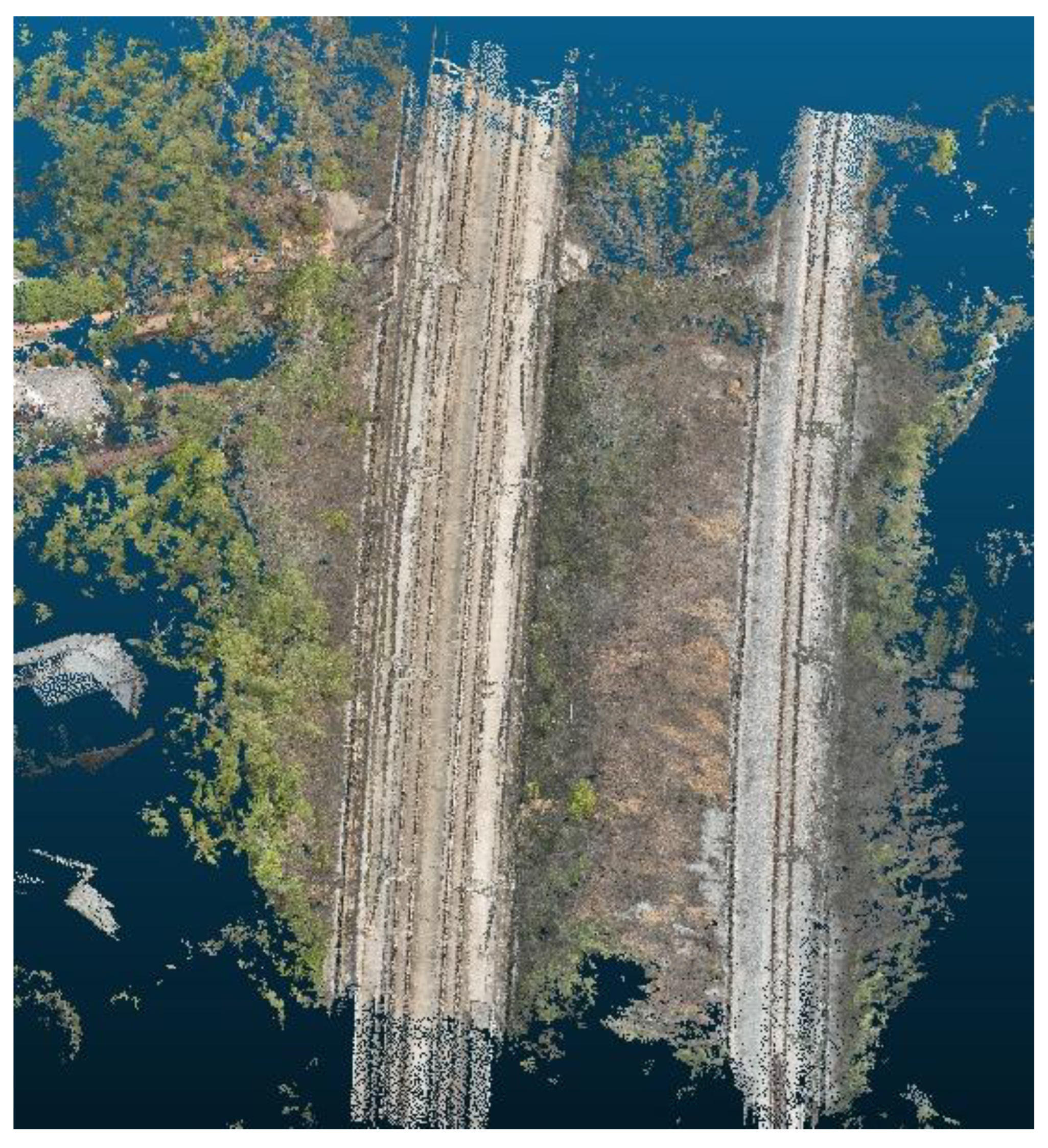
34]. The point cloud data landscape is evolving to meet increased demands for detailed geospatial information, expanding from geometric to include spectral and textural details. A few self-collected point clouds are given below in
Figure 1.
The convergence of photogrammetry and remote sensing also presents exciting possibilities for joint interpretation and acquisition of LiDAR data and optical imagery. However, this rapid expansion of platforms and methods, while driving innovation, brings forth new challenges. Variations in sampling granularity, quality, and the representation of point clouds across different platforms pose significant hurdles for seamless integration of data from diverse sources. Existing platform-specific processing approaches often struggle to effectively combine multi-platform point clouds to extract complementary insights [
35,
36,
37]. Technological progress extends to defense applications, with DARPA leading in autonomous collaborative scanning using ground and air robots [
38,
39].
This leverages SLAM technology to operate effectively in hazardous settings. Photogrammetry and remote sensing are converging, emphasizing the joint acquisition and interpretation of LiDAR data and optical imagery [
40]. While expanding methods for acquiring point cloud data has driven innovation, it also introduces challenges such as variations in sampling granularity, quality, and representation. Existing platform-focused approaches often struggle to integrate multi-platform point clouds seamlessly, limiting complementary insights [
41,
42]. Consequently, there is an urgent need for advanced tools and scientific methodologies that can intelligently interpret complex point cloud datasets. Point cloud intelligence, supported by robust decision-making frameworks, provides transformative solutions for extracting meaningful insights from these datasets, fully harnessing their potential as a rapidly evolving geospatial resource.
3. Methodology
This section provides a detailed examination of point cloud intelligence techniques crucial for addressing challenges in engineering applications, particularly transportation infrastructure management. The methodologies discussed encompass denoising, shape completion, registration, segmentation, and surface reconstruction. Each of these techniques forms the backbone of efficient point cloud data utilization, enabling advanced applications like digital twin models, predictive maintenance, and post-disaster reconstruction in transportation systems.
3.1. Literature Search Strategy
The literature reviewed in this study was collected through a structured search across major academic databases commonly used in engineering and computer science research, including Web of Science, Scopus, IEEE Xplore, and ScienceDirect. These databases were selected to ensure broad coverage of journal and conference publications related to point cloud processing, remote sensing, computer vision, and infrastructure-oriented applications. The search queries combined terms related to point cloud data and processing tasks, such as point cloud, 3D sensing, LiDAR, denoising, registration, semantic segmentation, and surface reconstruction, along with application-oriented terms associated with large-scale built environments and infrastructure monitoring. Boolean operators were used to refine the queries and eliminate irrelevant results.
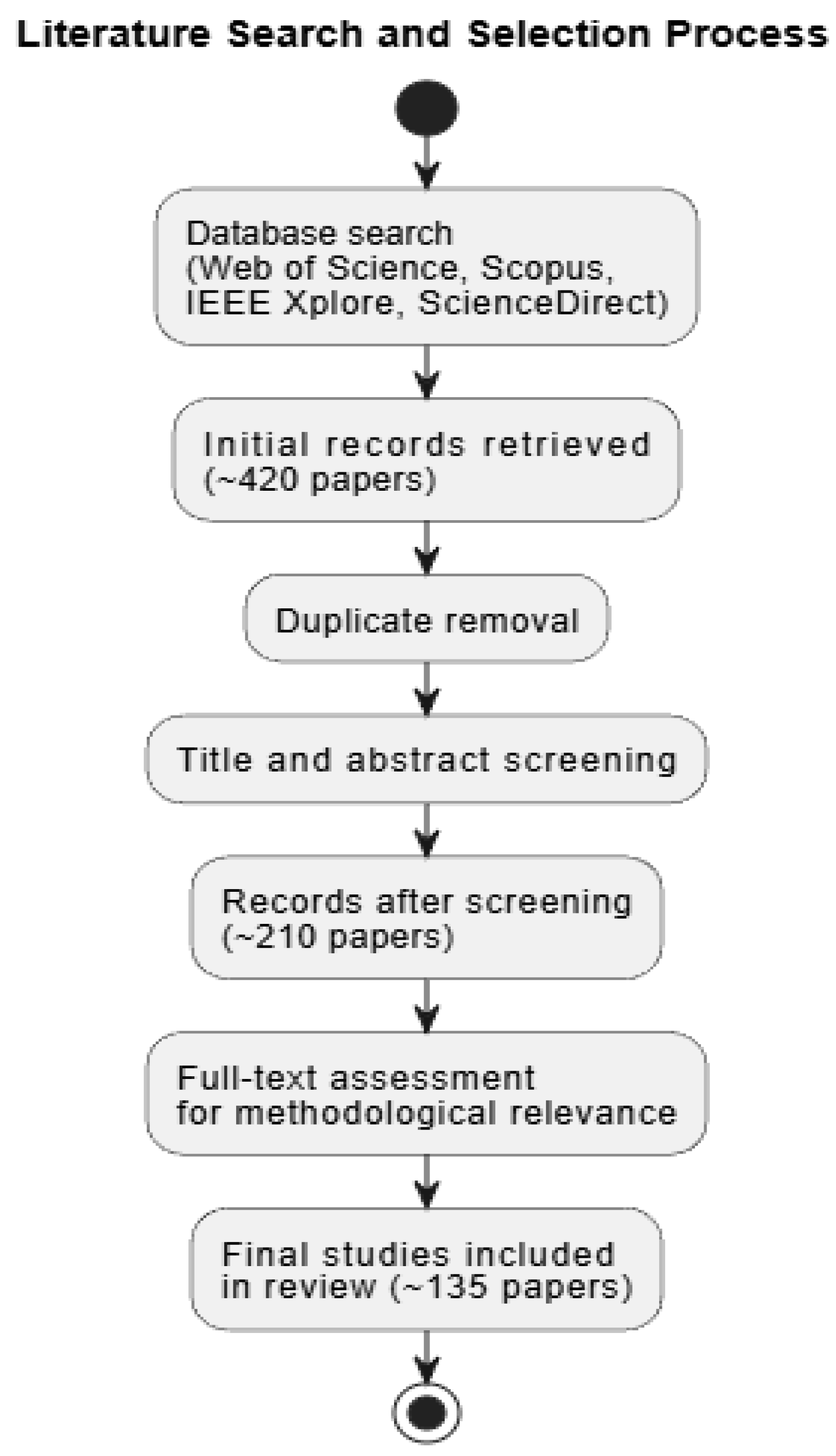
The temporal scope of the review primarily spans publications from 2015 to 2025, a period that captures the rapid transition from traditional geometry-based approaches to learning-driven and hybrid point cloud analysis methods. Only peer-reviewed journal articles and high-impact conference papers were considered to maintain scientific reliability. The summary of the literature search is provided in
Figure 2.
The initial database search across Web of Science, Scopus, IEEE Xplore, and ScienceDirect yielded approximately 420 publications after keyword-based retrieval. Following duplicate removal and title–abstract screening, around 210 studies were retained for full-text assessment. After evaluating methodological relevance, clarity, and applicability to large-scale point cloud analysis, approximately 135 representative studies were selected for detailed synthesis and comparative discussion. While these numbers are indicative rather than exact, they reflect the structured and selective nature of the review process and support the methodological rigor of the study.
3.2. Study Selection and Scope Definition
Following the initial database retrieval, the collected publications were screened through a multi-stage relevance assessment. Titles and abstracts were first examined to remove studies that were clearly unrelated to point cloud data analysis or that focused exclusively on small-scale object modeling without relevance to complex scenes. The remaining papers were then reviewed in full text to assess their methodological contribution, clarity of technical description, and applicability to large-scale or infrastructure-oriented point cloud scenarios.
Studies were retained when they provided explicit methodological detail on core point cloud processing tasks, including denoising, completion, registration, segmentation, or surface reconstruction, and when their proposed approaches applied to complex, real-world environments. Papers were excluded when they lacked sufficient technical transparency, duplicated previously published work without substantive extension, or addressed highly specialized scenarios with limited generalizability. This screening process ensured that the final corpus of literature reflects representative and influential contributions rather than an exhaustive but unfocused compilation.
Rather than presenting the selected studies as an unstructured reference list, the review adopts a task-oriented analytical synthesis. The literature is grouped according to major functional stages of point cloud processing, and representative methods within each group are comparatively examined in terms of underlying principles, strengths, limitations, and practical considerations. Comparative summary tables are used to highlight methodological differences and recurring challenges, such as robustness to noise, scalability, and sensitivity to data imbalance.
Given the heterogeneity of datasets, evaluation metrics, and experimental setups across the reviewed studies, a formal meta-analysis is not attempted. Instead, the emphasis is placed on identifying consistent methodological trends, dominant design choices, and unresolved research gaps. This approach provides a transparent and systematic foundation for critical discussion while remaining appropriate for a technical review that spans multiple research communities and application contexts.
3.3. Denoising
Denoising plays a critical role in point cloud processing, particularly in applications related to infrastructure management. The inherent noise in point cloud data arises from various factors such as sensor limitations, environmental interferences, and scanning inaccuracies. This noise often compromises the accuracy of critical engineering analyses, making denoising an indispensable preprocessing step. The precise removal of noise ensures that the geometric and structural details of the scanned objects are preserved, enabling accurate modeling, assessment, and decision-making. This discussion focuses on state-of-the-art denoising methodologies, integrating their relevance to transportation engineering and addressing the reviewer’s suggestion for a closer connection between point cloud technology and specific engineering applications [
43,
44,
45].
Point clouds serve as a digital representation of physical infrastructure, capturing intricate details of complex structures like tunnels, bridges, and railway systems. However, the presence of noise in these datasets often leads to distorted measurements, misplaced points, and erroneous interpretations [
46,
47,
48]. For example, a noisy point cloud of a tunnel might exaggerate or obscure cracks, significantly affecting maintenance and safety assessments. Similarly, noise in railway data can skew alignment metrics, resulting in flawed predictive maintenance algorithms. Effective denoising, therefore, is not merely a computational necessity but a crucial enabler for the reliable use of point cloud data in transportation engineering. By enhancing the quality of the data, denoising facilitates applications such as structural deformation analysis, crack detection, and digital twin development [
49].
Denoising techniques can be broadly categorized into optimization-based methods and deep learning-based approaches. Each methodology offers unique strengths and limitations, making them suitable for different types of noise and engineering scenarios. Optimization-based denoising relies on mathematical frameworks to refine point clouds, focusing on minimizing predefined error functions or optimizing geometric criteria. These methods are particularly effective for infrastructure applications requiring interpretability and robustness. For example, spline interpolation and surface fitting techniques are often used to smooth noisy datasets, ensuring accurate modeling of curved structures such as railway tunnels or bridge arches. Similarly, graph Laplacian filters leverage the graph-based representation of point clouds to denoise local neighborhoods, making them ideal for preserving fine geometric details in complex structures [
38].
Despite their mathematical rigor, optimization-based methods often struggle with real-world datasets characterized by non-Gaussian noise or irregular point distributions. Such scenarios are common in transportation engineering, where point cloud data may include noise from dynamic environmental factors like wind, vibrations, or traffic movements. To address these challenges, researchers have developed advanced techniques like kernel density estimation (KDE) and sparse regularization [
50,
51]. KDE uses probabilistic reasoning to estimate the density of points in a given region, enabling the identification and removal of outliers without compromising the dataset’s structural integrity. Sparse regularization, on the other hand, introduces constraints to enhance the robustness of point updates, making it suitable for datasets with limited prior knowledge of noise characteristics [
52].
The advent of deep learning has significantly advanced the field of point cloud denoising, introducing adaptive, data-driven methods capable of handling complex noise patterns. Neural networks, particularly convolutional and graph-based architectures, have demonstrated exceptional performance in learning the intricate relationships between points in a cloud. These models are trained on large datasets to predict clean surfaces from noisy inputs, making them highly effective for applications in infrastructure management. For instance, in railway inspection systems, deep learning-based denoising can refine point clouds to accurately identify misalignments, ensuring the safe operation of trains [
53].
One prominent example of a deep learning-based denoising model is PointCleanNet, which employs supervised learning to reconstruct clean point clouds. By leveraging labeled datasets, PointCleanNet can identify and remove noise while preserving essential geometric features, making it an invaluable tool for bridge inspections and tunnel assessments. Another notable approach is multi-scale point cloud denoising, which uses hierarchical representations to address both global and local noise. This technique is particularly useful for large-scale projects, such as city-wide transportation infrastructure monitoring, where point clouds often vary in resolution and noise intensity [
54].
Hybrid methods combining optimization and deep learning principles have emerged as a promising solution for infrastructure-specific challenges. These models integrate prior knowledge, such as geometric constraints, into neural network architectures to enhance their interpretability and performance. For example, a hybrid approach could be applied to denoise point clouds of a collapsed tunnel, preserving critical structural details needed for post-disaster reconstruction planning. By combining the strengths of both methodologies, hybrid models offer a balanced solution that addresses the limitations of individual approaches.
Transportation engineering presents unique requirements for point cloud denoising, necessitating the development of methods tailored to specific use cases. For instance, the denoising of railway point clouds requires techniques that can handle elongated structures with repetitive patterns, such as tracks and sleepers. Noise in these datasets can distort track alignments, leading to inaccuracies in predictive maintenance models. By applying advanced denoising methods, engineers can ensure the reliability of track geometry assessments, minimizing the risk of derailments or operational disruptions. Similarly, tunnel point clouds often suffer from occlusions and irregularities due to the scanning environment. Effective denoising techniques, such as graph-based filters or deep learning models, can restore the tunnel’s geometric fidelity, enabling accurate deformation analyses and crack detections [
55].
Case studies further illustrate the impact of denoising in transportation engineering. For example, a study on tunnel inspection using noisy point clouds demonstrated the efficacy of multi-scale denoising frameworks in restoring structural details. By refining the tunnel’s inner surface geometry, these methods enabled accurate evaluations of deformation patterns and structural integrity, highlighting their practical value in maintenance planning. Another case study focused on railway track inspections, where denoising algorithms were used to eliminate noise caused by vibrations during data acquisition. The cleaned datasets facilitated precise alignment measurements, ensuring the safe and efficient operation of trains [
56,
57].
While significant progress has been made in point cloud denoising, several challenges remain. One major limitation is the assumption of Gaussian noise distributions prevalent in many existing methods. Real-world point clouds often exhibit non-Gaussian noise patterns, such as speckle or salt-and-pepper noise, necessitating the development of more versatile frameworks. Addressing this limitation requires innovative approaches that combine statistical modeling with adaptive learning techniques, enabling the denoising of diverse noise types. Another challenge lies in the scalability of denoising methods for large-scale projects. Transportation infrastructure monitoring often involves extensive datasets that demand efficient processing capabilities. Integrating denoising algorithms with edge computing and Internet of Things (IoT) devices could enhance their scalability, enabling real-time data processing for smart infrastructure systems [
58].
In addition to addressing technical challenges, future research should focus on enhancing the practical applicability of denoising techniques. This includes developing user-friendly software tools and algorithms that can be seamlessly integrated into existing infrastructure management workflows. For instance, a denoising module embedded within a digital twin platform could automate the preprocessing of point clouds, providing clean datasets for structural analyses and maintenance simulations. Such advancements would bridge the gap between research and real-world implementation, maximizing the utility of point cloud technology in transportation engineering [
59].
Denoising is not merely a preprocessing step but a foundational enabler for the effective use of point cloud data in transportation engineering. By addressing noise-related challenges, advanced denoising techniques unlock the potential of point clouds for applications ranging from structural monitoring to post-disaster reconstruction planning. The integration of optimization-based and deep learning-based methods offers a comprehensive solution to the diverse noise patterns encountered in real-world datasets. Through continued research and innovation, denoising methodologies will play a pivotal role in advancing the field of infrastructure management, ensuring the reliability and accuracy of point cloud data for critical engineering applications [
60].
3.4. Completion
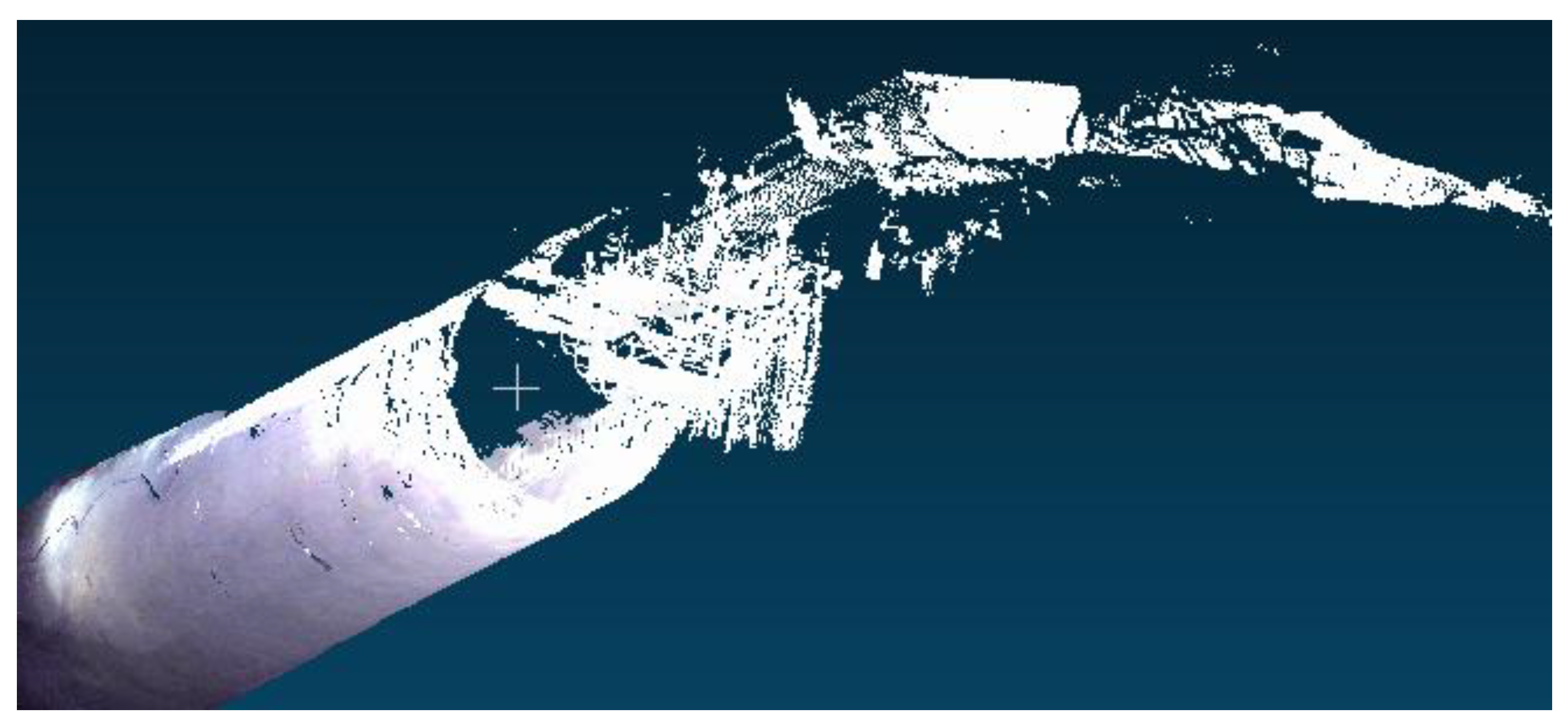
Incomplete point cloud data is a critical issue in 3D scanning, particularly in transportation infrastructure monitoring and maintenance, where precise geometric and structural analyses are indispensable. Missing data can occur due to occlusions, limited sensor coverage, or adverse environmental conditions during data acquisition. These deficiencies undermine tasks such as structural modeling, damage assessment, and predictive maintenance. Consequently, developing advanced point cloud completion techniques is essential for ensuring reliable, accurate datasets tailored to infrastructure-related applications. For example, gaps in tunnel or bridge scans can obscure critical structural features, leading to incomplete evaluations of wear, deformation, or damage.
Figure 3 exemplifies an incomplete tunnel point cloud, emphasizing the limitations of conventional methods in reconstructing intricate geometries with substantial missing parts [
61].
Traditional approaches to point cloud completion fall into two primary categories: geometry-based and alignment-based methods. Geometry-based methods use geometric primitives or parametric surfaces to approximate missing data, but often struggle with the irregular and complex structures prevalent in real-world infrastructure. Alignment-based methods, which integrate multiple partial scans, demonstrate efficacy under controlled conditions but falter when faced with noisy data or inconsistent scanning conditions. The emergence of deep learning has transformed point cloud completion by addressing the limitations of traditional techniques. These methods utilize neural networks to infer complete shapes from partial data, enabling accurate reconstruction even in the presence of extensive gaps [
62]. Early innovations like the Point Completion Network (PCN) introduced a framework combining a PointNet-based encoder and decoder to generate complete point clouds, paving the way for more advanced models [
63].
Modern approaches to point cloud completion often employ coarse-to-fine strategies, which generate a rough approximation before refining local geometric details. This dual-stage approach ensures the preservation of global shape consistency and intricate features. Prominent advancements include:
NSFA and VRC-Net: These methods integrate local geometric information with global shape priors for improved completion.
PMP-Net and SnowflakeNet: Leveraging multi-scale processing and progressive refinement, these networks excel in reconstructing intricate structures.
ASFM-Net: Incorporates adaptive surface modeling to retain finer details, making it particularly applicable for infrastructure analysis.
GRNet and VE-PCN: Voxel-based architectures adeptly handle large-scale datasets, ensuring robust completion.
While supervised learning has propelled progress, challenges persist in obtaining paired ground truth datasets for real-world scans. To mitigate this, researchers have explored unsupervised and semi-supervised strategies, including:
Amortized Maximum Likelihood: Operates in latent spaces to predict the most probable complete shape from partial inputs.
Pcl2Pcl: Uses pre-trained autoencoders to reconstruct missing regions by mapping partial shapes to complete ones.
Cycle4Completion: Establishes geometric correspondence by cycling between partial and complete shapes for consistency.
Shape Inversion: Employs generative adversarial networks (GANs) to reconstruct missing sections with high fidelity.
Table 1 outlines a comparative analysis of traditional and learning-based methods, highlighting their evolution and applications across varying scenarios.
The completion of incomplete point clouds holds immense significance in transportation infrastructure. For example, detailed reconstructions of tunnel point clouds can enable deformation analysis critical to safety assessments, while complete bridge models assist in identifying structural vulnerabilities. In one case, deep learning-based completion techniques were applied to reconstruct extensive missing regions in scanned railway bridges, facilitating accurate fatigue analysis and predictive maintenance strategies. These reconstructions also enable the generation of digital twins, providing a virtual replica for simulations and decision-making processes [
67].
Real-time completion capabilities have emerged as a necessity in autonomous inspection systems, such as drones and robotic platforms, deployed for large-scale infrastructure monitoring. For instance, autonomous systems equipped with real-time point cloud completion algorithms can efficiently inspect highways and tunnels, identifying anomalies such as cracks or deformation without halting traffic.
Despite advancements, achieving robust point cloud completion for transportation infrastructure remains challenging. A key issue lies in preserving fine details in delicate or minimal structures, such as cables, wires, or railing components, which are essential for comprehensive evaluations but are often underrepresented in datasets. Additionally, optimizing algorithms for real-time applications without sacrificing accuracy is critical for enabling autonomous inspections and dynamic monitoring of infrastructure assets.
Another major hurdle is generalizing completion techniques to diverse datasets. Current models frequently underperform when applied to new environments or data with distinct characteristics, limiting their applicability. Future research should focus on integrating domain-specific knowledge with advanced data-driven techniques to enhance reliability. For example, incorporating material properties and structural behaviors specific to transportation engineering could improve the adaptability of these methods.
Innovative strategies such as hybrid frameworks that combine traditional and deep learning techniques may also address existing gaps. These approaches can harness the strengths of both paradigms, ensuring robustness while maintaining computational efficiency. For instance, geometry-based pre-processing combined with deep learning-based refinement could enable the completion of highly irregular or noisy datasets, as seen in post-disaster reconstruction planning for damaged railways and highways.
The successful development and deployment of advanced point cloud completion methods are pivotal for modernizing infrastructure management. They not only enhance the accuracy and reliability of structural assessments but also streamline operations through automation and digital twin integration. By addressing current limitations and aligning completion techniques with the unique demands of transportation engineering, researchers can unlock new possibilities for intelligent infrastructure systems, ultimately ensuring safety, efficiency, and resilience in transportation networks. While significant strides have been made in point cloud completion, there remains considerable scope for aligning these advancements with the specific needs of transportation infrastructure. By addressing challenges such as detail preservation, real-time processing, and generalization, future research can further bridge the gap between generic point cloud processing and engineering-specific applications, ensuring the full potential of this transformative technology is realized.
3.5. Registration
Point cloud registration is fundamental to 3D data processing, aligning unorganized datasets into a unified coordinate system. It underpins various applications, including 3D reconstruction, autonomous driving, and augmented/virtual reality (AR/VR), by estimating geometric transformations to reconcile datasets from different viewpoints or modalities. Registration methods are broadly categorized into pairwise and multi-view approaches, each with unique challenges and use cases [
55,
57,
68].
Pairwise Registration aligns two point clouds and is critical for merging data from multiple scans or sensors. The process begins with feature detection and description, identifying repeatable key points that capture local geometric features. Traditional handcrafted descriptors, such as spin images, FPFH, and RoPS, provide geometric encoding but struggle with noisy or incomplete data. Deep learning-based descriptors, including 3DMatch, PerfectMatch, and SpinNet, offer improved robustness and accuracy in such scenarios. The next step, feature matching, establishes correspondences using techniques like nearest neighbor searches and ratio tests. Finally, transformation estimation aligns the datasets, typically through algorithms like RANSAC. While effective, these methods face challenges in scalability and handling noise. Optimization-based methods, such as the Normal Distributions Transform (NDT) and the Iterative Closest Point (ICP), refine alignments but depend on accurate initial registration, limiting their standalone effectiveness.
Multi-view Registration extends pairwise methods to align multiple scans, producing comprehensive representations of scenes or objects. Sequential registration merges scan incrementally, often leading to cumulative errors. In contrast, joint registration globally optimizes transformations across all scans, employing techniques like motion averaging and graph synchronization to mitigate ambiguities. However, these methods are computationally intensive and susceptible to convergence issues. Hybrid methods, integrating georeferenced LiDAR and image data with GNSS/IMU systems, achieve high precision, especially in infrastructure monitoring and urban planning. Types are detailed in
Table 2.
Despite advancements, challenges persist. Feature descriptors must balance efficiency with robustness to variability in noise, density, and transformations. Multi-view registration requires addressing error propagation in sequential methods and overcoming local extrema in joint frameworks. Advanced optimization techniques that combine computational efficiency with global accuracy are essential.
Emerging research trends include end-to-end deep learning models for registration, integrating feature detection, correspondence estimation, and transformation into unified frameworks. These models reduce manual intervention, improving accuracy and scalability. Cross-modal and multitemporal dataset registration, crucial for infrastructure monitoring, also demands robust algorithms capable of integrating data from diverse sources, such as LiDAR and RGB imagery, while accommodating temporal variations [
60,
61].
Point cloud registration remains dynamic, driven by the integration of deep learning and hybrid methods. Future innovations promise robust, scalable, and adaptable registration systems, advancing applications in smart infrastructure, autonomous navigation, and environmental modeling.
3.6. Segmentation
Segmentation of point cloud data is a critical process in the field of 3D point cloud processing, with numerous applications in transportation engineering, including infrastructure monitoring, asset management, and post-disaster reconstruction. In the context of transportation infrastructure, segmentation refers to the task of partitioning point clouds into distinct, meaningful regions or objects, such as roads, bridges, rail tracks, and surrounding features. This process is pivotal for the accurate understanding and analysis of large-scale, complex transportation environments, especially in autonomous navigation systems, urban planning, and maintenance monitoring. Point cloud segmentation is fundamental not only for visualizing the 3D structure of transportation assets but also for facilitating the automated extraction of relevant features that inform decision-making in infrastructure management [
75].
Traditional machine learning-based segmentation techniques have played a significant role in advancing point cloud segmentation, particularly in the early stages of laser scanning technologies. These methods typically rely on handcrafted features and descriptors to characterize the geometric, spatial, and contextual properties of point clouds. In transportation engineering, traditional methods have been effectively employed in tasks such as road and rail track extraction, where geometric properties, such as curvature, surface roughness, and edge detection, provide valuable information for segmentation. For example, in the extraction of road features from large-scale urban point clouds, studies have relied on descriptors such as spin images and the Fast Point Feature Histogram (FPFH) to identify distinguishing characteristics of road surfaces, curbs, and sidewalks. However, a major limitation of these traditional methods lies in their reliance on manually defined feature extraction, which can struggle to generalize across diverse, unstructured environments, such as varying traffic conditions or disaster-affected areas. In transportation applications, this challenge becomes particularly pronounced when dealing with large-scale datasets where the complexity of geometric structures, such as bridges and tunnels, may lead to poor segmentation accuracy [
76,
77,
78,
79].
An example of this limitation can be seen in post-disaster reconstruction, where traditional segmentation techniques often fail to accurately segment debris or collapsed infrastructure due to the high level of noise and incomplete data generated by scanning devices after an event such as an earthquake or flood. Here, traditional methods relying on handcrafted features may struggle to distinguish between different types of debris or damage, requiring manual intervention for accurate segmentation, thus highlighting the need for more robust solutions in real-world scenarios [
80].
Deep learning-based segmentation methods have revolutionized the field of point cloud processing by offering a more adaptive, data-driven approach that directly learns features from raw point cloud data. These methods are particularly effective in transportation engineering, where the diverse and complex nature of transportation infrastructure requires flexibility and robustness. Deep learning models, particularly convolutional neural networks (CNNs) and their 3D variants, have demonstrated superior performance in segmenting large-scale point clouds. For instance, RandLA-Net, a deep learning-based framework, utilizes random sampling and feature aggregation techniques to efficiently process large point clouds, making it highly suitable for segmenting transportation infrastructure in urban environments. By learning features directly from the raw data, deep learning models do not require manual feature engineering, allowing them to adapt to complex, dynamic datasets encountered in transportation settings.
One notable application of deep learning-based segmentation in transportation engineering is the segmentation of rail tracks and railway infrastructure for condition monitoring. Railway companies increasingly rely on LiDAR scans and point cloud data to monitor track conditions and detect defects such as rail wear or misalignment. In these applications, deep learning models, trained on large, labeled point cloud datasets, can automatically detect rail surfaces, track alignments, and even identify problematic areas, such as cracks or gaps. This not only improves the efficiency of infrastructure inspections but also reduces the need for manual labor, lowering the operational costs of transportation management.
Another key advantage of the deep learning method is its ability to handle unstructured data, which is common in transportation environments. In cases such as highway reconstruction or tunnel inspections, point cloud data can be highly irregular, with varying point densities and noisy data due to obstructions or environmental factors. Deep learning models excel at processing such unstructured data and can provide consistent and reliable segmentation, even in challenging environments. For example, during tunnel inspections, point clouds are often incomplete due to the presence of shadows, reflections, or occlusions caused by the tunnel’s geometry. Deep learning algorithms, particularly those employing graph neural networks or point-based CNNs, can efficiently segment these incomplete and noisy point clouds, ensuring accurate identification of tunnel structures and anomalies that may require maintenance.
Despite the successes of traditional and deep learning-based methods, segmentation in point cloud data processing still faces several challenges, particularly in transportation engineering applications. One of the major obstacles is the high variability in point cloud data quality and density, especially when acquired from different sensors or under different environmental conditions. For instance, LiDAR data may exhibit sparse point distributions in areas with limited laser reflection, such as heavily vegetated areas, while photogrammetry-derived point clouds may exhibit noise or inaccuracies due to poor lighting or weather conditions. To address these challenges, data fusion approaches, which combine point clouds from multiple sensors (e.g., LiDAR, RGB cameras, and thermal sensors), are becoming increasingly popular. These methods allow for more robust segmentation by leveraging complementary information from different data sources. For example, the fusion of LiDAR data with RGB imagery can help distinguish between hard-to-segment features, such as vegetation and infrastructure elements, by combining geometric and color-based features.
In the context of post-disaster reconstruction, one of the most pressing challenges in point cloud segmentation is the need for real-time processing to facilitate rapid decision-making. For example, in the aftermath of a natural disaster, it is crucial to quickly segment and classify damaged infrastructure, such as roads, bridges, and tunnels, to assess the extent of the damage and prioritize recovery efforts. Traditional methods may be too slow for such tasks, and even deep learning models may require extensive computational resources to process large-scale point clouds efficiently. To address this, researchers are exploring edge computing solutions, where point cloud processing tasks are offloaded to local computing devices, allowing for faster, more efficient segmentation and classification in real-time.
Furthermore, semi-supervised and self-supervised learning techniques are emerging as promising avenues for improving point cloud segmentation in transportation applications. Annotating large-scale point cloud datasets is both time-consuming and expensive, especially in the transportation sector, where the data volumes are immense. Semi-supervised and self-supervised methods, which require fewer labeled data, can significantly reduce the cost and effort involved in dataset annotation. These approaches leverage unlabeled data to learn useful features and improve the performance of segmentation models without relying entirely on labeled datasets. This is particularly beneficial in transportation infrastructure monitoring, where point clouds may be collected from various sources over time, making it difficult to maintain consistent labeling across datasets.
Looking ahead, the future of point cloud segmentation in transportation engineering holds exciting potential for both technological advancements and real-world applications. As transportation systems become increasingly complex and data-driven, there is a growing need for automated and scalable segmentation solutions that can handle vast quantities of point cloud data efficiently [
81]. The integration of segmentation with other point cloud processing tasks, such as 3D model reconstruction, is one promising direction that can enhance the understanding of transportation infrastructure. By combining segmentation with reconstruction, engineers can create more accurate and detailed 3D models of transportation assets, facilitating better planning, monitoring, and maintenance.
Additionally, the development of multi-modal segmentation techniques that combine data from various sensors and modalities will be crucial in addressing the diverse and dynamic nature of transportation environments. Whether it is for autonomous vehicle navigation, urban planning, or disaster recovery, robust and adaptable segmentation methods will be integral in ensuring the continued improvement of transportation infrastructure management. With the growing emphasis on smart cities and intelligent transportation systems, point cloud segmentation will play a pivotal role in transforming how infrastructure is designed, monitored, and maintained in the future [
82].
An important yet often under-addressed challenge in point cloud semantic segmentation is class imbalance, where certain categories dominate the dataset while others are sparsely represented. This issue is particularly pronounced in large-scale scenes, where background or structural surfaces (e.g., ground, walls, or major components) significantly outnumber smaller or less frequent elements. As a result, segmentation models may exhibit biased learning behavior, achieving high overall accuracy while underperforming on minority classes [
83].
In point cloud-based infrastructure analysis, class imbalance can adversely affect the detection of small but critical elements, as well as irregular or degraded regions. Deep learning-based segmentation models are especially sensitive to this issue because loss functions optimized for global accuracy tend to favor majority classes. Recent studies have highlighted the need for imbalance-aware learning strategies, such as weighted loss functions, focal loss variants, and data resampling techniques, to mitigate this bias. Additionally, evaluation metrics beyond overall accuracy, including per-class intersection-over-union and balanced accuracy, are increasingly recommended to provide a more faithful assessment of segmentation performance [
84].
Despite these advances, class imbalance remains a persistent challenge, particularly for real-world point cloud datasets where class distributions are inherently uneven and difficult to control. Addressing this issue requires not only algorithmic adjustments but also careful dataset design and transparent reporting of class distributions. Incorporating imbalance-aware evaluation and learning strategies is therefore essential for improving the reliability and generalizability of point cloud segmentation methods [
85].
3.7. Surface Reconstruction
Surface reconstruction from unstructured point clouds is a foundational task in 3D computer vision, with applications across diverse fields, from virtual reality to digital preservation and engineering, particularly in transportation infrastructure management. It is essential for reconstructing accurate 3D models of real-world objects and environments from sparse or noisy data. In the context of transportation engineering, surface reconstruction plays a crucial role in tasks such as the digitization of bridges, tunnels, roads, and other critical infrastructure. This process helps in preserving historical structures, planning for repairs, and simulating transportation scenarios. Surface reconstruction techniques can be classified into three broad categories: triangulation-based, implicit, and deep learning-based methods, each offering unique advantages for different types of point cloud data and applications [
86].
Triangulation-based methods are widely used in surface reconstruction due to their simplicity and effectiveness. These methods create a polygonal mesh by connecting points in the point cloud with edges to form triangular faces. One of the most popular triangulation techniques is the Ball-Pivoting Algorithm (BPA), which rolls spheres of varying radii over the point cloud, creating triangles as the spheres contact points. This method works well for smooth and dense point clouds and is particularly useful in applications such as creating detailed 3D models of roadway surfaces or tunnel linings, where the geometry is relatively regular and well-defined. However, BPA and similar triangulation methods may struggle with sparse or complex geometries, such as fractured or damaged infrastructure, where point clouds lack sufficient connectivity to generate a smooth surface. In these cases, more sophisticated methods, such as implicit or hybrid approaches, are often employed [
87].
Implicit methods offer a more flexible approach to surface reconstruction, particularly when working with noisy or incomplete data, as they represent surfaces using continuous mathematical functions. These methods attempt to model the surface as a smooth function that best approximates the underlying geometry of the object being reconstructed. Popular implicit methods include Marching Cubes and Implicit Moving Least Squares (IMLS), both of which are widely used in applications like reconstructing complex transportation infrastructure, such as tunnels or bridges, from noisy LiDAR data. These techniques work by approximating the surface through a mathematical model, making them particularly useful when dealing with incomplete or noisy point clouds, which are common in transportation engineering when capturing large-scale environments. However, implicit methods can struggle to preserve sharp features and boundaries, such as edges or corners, which are often crucial in transportation infrastructure modeling.
Deep learning-based methods represent the latest advancements in surface reconstruction, leveraging the power of neural networks to handle complex and noisy point cloud data. These methods train neural networks on large datasets of 3D shapes to learn the underlying patterns and structures of surfaces, allowing for more accurate reconstruction even when the input data is sparse or noisy. Deep learning models are particularly effective when combined with large amounts of labeled data, enabling the model to generalize well to unseen point clouds. For example, deep learning-based methods have been used to improve the reconstruction of infrastructure assets like road surfaces or bridges, where the data may be incomplete due to occlusions, noise, or other issues in the scanning process. Hybrid approaches, which combine deep learning with traditional triangulation or implicit methods, are also gaining traction, as they provide a more robust and accurate surface reconstruction by leveraging the strengths of both paradigms. These hybrid methods can be particularly beneficial in transportation engineering, where accurate and detailed 3D models are needed for asset management, repair planning, and simulation [
88,
89,
90].
One of the more recent trends in surface reconstruction is the integration of multiple data sources, such as combining LiDAR (Light Detection and Ranging) data with Multi-View-Stereo (MVS) techniques. LiDAR is widely used in transportation engineering for capturing the geometry of large-scale structures like highways, railways, and bridges due to its ability to provide accurate depth measurements. However, LiDAR data can be sparse and may lack high-resolution textural information, which is where MVS systems come in. MVS techniques capture high-resolution textures and visual details from multiple camera viewpoints, allowing for more realistic and detailed surface reconstructions. By combining LiDAR with MVS, transportation engineers can produce highly detailed and accurate 3D models of infrastructure, which can be used for planning maintenance, conducting structural assessments, and simulating traffic flow in a virtual environment [
91].
The choice of surface reconstruction method in transportation engineering depends on the specific characteristics of the point cloud data and the objectives of the project. For example, if the goal is to create highly detailed and accurate models of road surfaces or tunnels for use in maintenance planning, a hybrid method combining deep learning and triangulation-based techniques may be the most appropriate. On the other hand, if the data is noisy or incomplete, implicit methods may be more suitable for generating smooth surface representations. In either case, ongoing research continues to explore how to improve the accuracy and efficiency of surface reconstruction methods, especially in the context of complex and challenging transportation environments [
92].
Ultimately, the integration of advanced surface reconstruction techniques into transportation engineering can greatly enhance infrastructure management by enabling the creation of precise 3D models of transportation assets. These models provide invaluable insights for decision-makers, supporting everything from routine maintenance planning to post-disaster reconstruction. As the field continues to evolve, surface reconstruction methods will undoubtedly become more sophisticated, providing engineers with even more powerful tools for managing and preserving transportation infrastructure in an increasingly data-driven world.
3.8. Data Processing and Point Cloud Analysis for Infrastructure Management
The management of infrastructure assets using point cloud data presents significant challenges due to the complexities of processing large-scale, high-resolution 3D datasets. Point clouds, often generated from technologies such as LiDAR and photogrammetry, are typically dense and irregular, creating substantial computational and storage demands. As these data acquisition methods become more advanced, the volume of data generated has surged, introducing new challenges in data processing workflows that must be addressed to harness the full potential of point cloud intelligence in infrastructure management applications. These challenges are particularly crucial in tasks like defect detection, asset monitoring, and predictive maintenance of critical infrastructure, such as rail tracks, bridges, and tunnels [
93].
One of the primary obstacles in processing point cloud data is the sheer size of the datasets. For example, a single scan of a railway track can contain millions, or even billions, of points, which, while providing great detail, can overwhelm traditional storage and computing systems. These large datasets necessitate the development of specialized techniques for efficient data storage and processing, such as hierarchical data structures, octrees, and multiresolution frameworks, which allow for scalable processing without compromising the accuracy or detail of the data. In parallel, noise and outliers in the data—often caused by environmental factors, sensor limitations, or operational errors—pose another challenge [
94]. These extraneous points can obscure relevant features, complicating tasks like defect detection and segmentation. As a result, denoising algorithms are vital for cleaning the raw data, ensuring that only meaningful information is retained, especially when it comes to small defects that are crucial for infrastructure assessments.
The irregularity of point cloud data further complicates processing. Unlike structured grid-based data or 3D meshes, point clouds lack inherent topology, which makes operations such as data alignment, segmentation, and feature extraction more computationally intensive. For instance, aligning multiple point cloud scans to create a unified 3D model of an infrastructure asset requires accurate registration techniques, which often involve feature matching and optimization that can be computationally expensive. Similarly, segmenting point clouds to isolate individual components like rails, fasteners, or pavements requires advanced machine learning models capable of processing the sparse and unstructured nature of the data [
95]. Data fusion, which involves integrating point clouds with other data modalities, such as images or sensor readings, adds another layer of complexity. To create comprehensive models that combine geometric and material information, these diverse datasets must be aligned and transformed into a coherent framework, requiring precise calibration and transformation techniques.
Real-time processing of point cloud data remains a major challenge, especially when applied to infrastructure monitoring systems that require immediate analysis for timely decision-making. For instance, detecting structural damage during an inspection often requires real-time feedback for prioritizing maintenance tasks. However, the computational demands of processing large-scale point clouds in real time make this an impractical task with conventional methods. Addressing this limitation involves leveraging technologies such as edge computing and parallel processing to expedite data analysis without sacrificing accuracy. Additionally, the semantic understanding of point clouds—assigning meaningful labels and context to raw geometric data—is essential for advanced applications like defect detection and condition assessment. However, the lack of labeled datasets for infrastructure-specific point clouds remains a significant bottleneck, making it necessary to develop methods that can extract meaningful insights from limited or unannotated data [
96].
Interoperability and standardization are also crucial challenges in the widespread adoption of point cloud data for infrastructure management. Different stakeholders involved in infrastructure projects often use various software tools, which may not always be compatible. The absence of standardized data formats and processing protocols creates inefficiencies, requiring data to undergo extensive preprocessing and conversion. This issue becomes particularly problematic in collaborative projects, where seamless data integration is critical for reliable decision-making and analysis. Overcoming these challenges requires advancements in data compression, cloud-based platforms, and distributed computing systems, as well as the integration of point cloud data with existing tools like Building Information Modeling (BIM) and Geographic Information Systems (GIS). By addressing these issues, the potential for point cloud data in infrastructure management can be fully realized, leading to more efficient, accurate, and sustainable practices.
4. Applications
Point cloud intelligence has become a transformative tool in infrastructure management, particularly in the realms of monitoring, maintenance, and assessment of infrastructure assets. This technology excels in capturing detailed three-dimensional (3D) data, which can be leveraged across various sectors, including geospatial informatics, urban development, infrastructure health monitoring, and disaster management. The ability to accurately model and visualize complex environments is pivotal in the effective management of both existing and emerging infrastructure systems. By utilizing point cloud data, infrastructure managers are empowered to improve decision-making processes, streamline maintenance activities, and enhance the overall safety and longevity of critical assets [
97,
98,
99].
One of the most significant applications of point cloud intelligence in infrastructure management is its integration into infrastructure health monitoring systems. With the increasing complexity and age of infrastructure networks—ranging from transportation systems and bridges to utility networks and power lines—there is an urgent need for precise and real-time data to assess the condition and performance of these assets. Point cloud data enables the creation of highly accurate 3D models of infrastructure components, providing a detailed representation of their geometry and condition. These models can be used to monitor structural health, detect early signs of wear and tear, and predict potential failure points, which is crucial for prioritizing maintenance activities and ensuring the safety and reliability of critical infrastructure. For instance, in the context of road and railway networks, point cloud-based inspections of road surfaces and track alignments can reveal subtle deformations, cracks, or misalignments that might otherwise go unnoticed, allowing for proactive maintenance interventions before major failures occur [
100,
101].
The integration of point cloud data in the monitoring of power lines, for example, has significantly improved the efficiency of inspection processes. Traditionally, power line inspection involved manual or aerial surveys, which could be time-consuming and prone to human error. Point cloud intelligence allows for automated, high-precision mapping of power lines and surrounding environments, detecting issues such as sagging cables, damaged poles, or vegetation encroachment. These 3D models can be used to assess the clearance between power lines and trees, identify sections at risk of being affected by extreme weather, and optimize maintenance schedules to prevent power outages or accidents. Similarly, for bridges and other structural assets, point clouds provide a detailed and accurate view of the current state of the infrastructure, which can be compared against historical data to track degradation over time and predict future maintenance needs [
102,
103,
104].
Another application of point cloud intelligence in infrastructure management lies in its role in digital construction and the development of smart cities. In the context of smart cities, point cloud data provides critical insights into urban environments, facilitating tasks such as urban planning, construction monitoring, and change detection. Through the integration of point clouds with other data sources, such as Geographic Information Systems (GIS) and Building Information Modeling (BIM), city planners and infrastructure managers can develop comprehensive models of urban areas, allowing for more effective management of resources, better planning of new infrastructure projects, and improved disaster resilience. Point clouds can be used to monitor construction progress, detect deviations from design specifications, and ensure that projects are completed on time and within budget. This technology also plays a key role in maintaining and enhancing the infrastructure of existing urban environments, enabling the monitoring of road surfaces, utilities, buildings, and other infrastructure components in real time. For example, point cloud-based monitoring systems can track changes in the geometry of streets, buildings, or bridges, enabling the early detection of structural shifts or environmental factors that may affect the integrity of infrastructure over time.
The ability to accurately capture and model the condition of underground infrastructure is another critical application of point cloud intelligence. In urban environments, much of the infrastructure, such as utilities, transportation networks, and tunnels, is located underground. Traditional methods of inspecting these spaces—such as manual inspection or limited remote sensing technologies—can be costly and inefficient. Point cloud data, however, offers a non-intrusive and highly accurate alternative for mapping and inspecting underground infrastructure. Through technologies such as LiDAR (Light Detection and Ranging) and laser scanning, point cloud intelligence allows for the creation of detailed 3D models of underground utilities, tunnels, and shafts. These models can be used to identify potential hazards, monitor the condition of infrastructure, and plan for repairs or upgrades. In addition, by integrating point cloud data with BIM and GIS, infrastructure managers can create a comprehensive, digital representation of underground assets, which can be used for better decision-making and risk assessment [
105,
106].
In the context of disaster management and mitigation, point cloud intelligence provides invaluable support by enabling detailed mapping of affected areas in the aftermath of natural disasters, such as earthquakes, floods, or landslides. By rapidly generating accurate 3D models of disaster-stricken areas, point cloud data allows for the assessment of damage, identification of safety hazards, and efficient planning of recovery and reconstruction efforts. For instance, in the aftermath of a flooding event, point clouds can be used to model the extent of the floodwaters, identify areas of erosion or infrastructure failure, and guide recovery efforts. Similarly, in the event of an earthquake, point cloud models can help assess the structural integrity of buildings and bridges, identify areas of severe damage, and prioritize interventions [
107].
Furthermore, point cloud intelligence plays a critical role in the preservation and protection of cultural heritage. By creating highly detailed 3D models of historical sites and structures, point cloud data allows for the virtual restoration and preservation of cultural landmarks. This process involves using point cloud data to create digital twins of heritage sites, which can then be analyzed, restored, and shared digitally for public education and preservation purposes. This application is not only important for cultural conservation but also for the promotion of tourism and educational initiatives, as the virtual representations can be accessed by a global audience, offering an immersive experience of historical sites [
108].
Therefore, point cloud intelligence has emerged as a pivotal technology for the monitoring, maintenance, and management of infrastructure across various domains. Its ability to generate precise, real-time 3D models has proven invaluable in infrastructure health monitoring, construction, urban planning, disaster management, and cultural heritage preservation. As the technology continues to advance, its applications are expected to expand, driving innovation and improving the efficiency and safety of infrastructure management practices worldwide. The integration of point cloud data with other technologies such as BIM, GIS, and machine learning will further enhance its potential, offering a comprehensive approach to infrastructure management that is not only reactive but also predictive, ensuring the sustainability and resilience of critical infrastructure in the face of growing challenges [
109].
To move beyond a descriptive compilation of techniques and establish a transportation-oriented analytical framework, traffic-specific engineering metrics must be explicitly defined and quantified. In transportation infrastructure monitoring, point cloud intelligence is not evaluated solely on geometric fidelity but on its ability to capture deviations relative to operational safety thresholds defined by engineering standards [
110].
For railway infrastructure, key benchmarks include track geometry parameters such as gauge deviation, cant, alignment irregularity, and vertical profile. These parameters are governed by tolerance limits typically in the range of millimeters, where deviations exceeding 2–3 mm can directly affect ride quality and operational safety. Point cloud-based evaluations must therefore quantify absolute and relative geometric errors against these tolerances to be considered meaningful for rail applications. In tunnel monitoring, the primary performance metric is convergence deformation, which reflects inward displacement of tunnel linings over time. Point cloud data enables longitudinal comparison of cross-sectional profiles, where convergence rates exceeding a few millimeters per month may indicate structural instability. Accordingly, evaluation benchmarks should include deformation accuracy, temporal consistency, and sensitivity to sub-centimeter displacement detection.
For bridge infrastructure, traffic-induced responses such as mid-span deflection, bearing displacement, and deck unevenness constitute critical metrics. Point cloud intelligence must therefore be assessed based on its ability to resolve deflections within permissible serviceability limits, typically expressed as a fraction of span length (e.g., L/800 to L/1000). Mesh-based representations derived from point clouds provide a suitable basis for such quantitative assessments when validated against these limits. By explicitly anchoring point cloud evaluation to track tolerances, tunnel convergence thresholds, and bridge deflection limits, the framework transitions from a generic technology survey to a transport-specific, performance-driven methodology. This metric-based formulation enables consistent comparison across methods and ensures direct relevance to real-world transportation engineering decision-making.