1. Introduction
The rapid evolution of wireless communication systems toward fifth generation (5G) and beyond-5G/sixth generation (6G) technologies has imposed stringent requirements on antenna systems, including ultra-high data rates, low latency, enhanced reliability, and massive connectivity [
1,
2]. To satisfy these demands, millimeter-wave (mmWave) frequency bands have emerged as a cornerstone of modern wireless communications due to the availability of wide contiguous bandwidths, particularly in the 26–40 GHz spectrum allocated for 5G New Radio (NR) and prospective 6G services [
3,
4]. Despite these advantages, mmWave systems inherently suffer from high free-space path loss, increased atmospheric attenuation, and strong sensitivity to blockage, thereby necessitating advanced antenna solutions capable of delivering high efficiency, wide bandwidth, and robust diversity performance within compact platforms [
5]. Multiple-input multiple-output (MIMO) technology has been widely adopted to mitigate these challenges by exploiting spatial, pattern, and polarization diversity to enhance channel capacity and link reliability [
6]. In mmWave systems, compact MIMO antennas are especially critical for user equipment, wearable devices, and small-cell base stations, where limited physical space and stringent integration constraints prevail [
7]. However, the realization of compact mmWave MIMO antennas remains challenging due to strong mutual coupling between closely spaced antenna elements, the inherently narrow impedance bandwidth of conventional antenna geometries, and the increased design complexity introduced by isolation-enhancement techniques [
8,
9,
10]. Among different isolation-enhancement approaches, defected ground structure (DGS)-based techniques have been widely used to improve impedance matching and reduce mutual coupling by disturbing unwanted surface-current paths in the ground plane [
11]. However, DGS approaches usually require careful optimization of defect dimensions and positions, and excessive ground perturbation may increase design complexity or affect radiation stability, especially in compact mmWave and flexible platforms. In contrast, the proposed design improves isolation using a connected modified shared ground plane while preserving a continuous common-ground structure, which is more suitable for practical integration and scalable MIMO implementation.
Previous studies have reported a wide variety of mmWave MIMO antenna designs employing different radiator types and design strategies to address the stringent requirements of 5G and emerging 6G systems. Patch-based and slotted-patch MIMO antennas, such as those presented in [
12,
13,
14,
15,
16], are among the most commonly reported solutions due to their planar structure, ease of fabrication, and moderate-to-high gain characteristics. These designs typically employ polarization diversity, defected ground structures, or metasurface loading to enhance isolation and radiation performance. However, they are often limited to narrow or dual-band operation—typically around 28 GHz and 38 GHz—and may require relatively large physical dimensions, multilayer configurations, or complex ground-plane modifications. Such design choices increase fabrication complexity and may introduce additional losses at higher mmWave frequencies. Monopole-based and slot-based MIMO antennas, including those reported in [
17,
18,
19,
20,
21], offer more compact implementations with simpler geometries and lower fabrication cost. These antennas generally achieve acceptable isolation, robust radiation response, and in some cases very low envelope correlation coefficients. Nevertheless, most of these designs are restricted to dual-band or narrow wideband operation and commonly support only two antenna ports. As a result, their applicability to high-capacity mmWave MIMO systems requiring wider bandwidths and higher-order MIMO configurations remains limited. To extend the operating bandwidth, several studies have proposed wideband or multi-band mmWave MIMO antennas using modified patch geometries, curved or arc-shaped radiators, defected ground planes, or hybrid radiator configurations [
22,
23,
24]. While these approaches demonstrate improved impedance bandwidth and isolation performance, they often rely on additional decoupling structures, large inter-element spacing, multilayer substrates, or complex feeding networks. These requirements increase structural complexity, enlarge the antenna footprint, and restrict scalability to higher-order MIMO arrays. Moreover, maintaining consistent radiation performance and high efficiency across a wide mmWave band remains challenging for many of these designs. High-gain array-based solutions, such as those reported in [
25,
26], effectively enhance radiation performance and help mitigate the severe path loss encountered at mmWave frequencies. These antennas are well suited for base stations and fixed wireless access systems; however, they are generally optimized for rigid platforms and large form factors. Consequently, their suitability for compact user equipment, wearable devices, or conformal platforms is limited. Furthermore, although many reported designs demonstrate favorable MIMO performance metrics, such as low envelope correlation coefficients and high diversity gain, only a small number of studies investigate mechanical flexibility or scalability to higher-order MIMO configurations while preserving wideband operation, high isolation, and compact size. Overall, the existing literature highlights persistent trade-offs among bandwidth, compactness, isolation, efficiency, and implementation complexity in mmWave MIMO antenna design. In particular, there remains a lack of comprehensive antenna solutions that simultaneously achieve super-wideband mmWave operation, small-area configuration, high isolation without complex decoupling structures, mechanical flexibility, and scalability to dense MIMO configurations.
To address these challenges, this paper proposes a compact fractal-based super-wideband mmWave MIMO antenna employing Koch fractal monopole elements integrated with a modified shared ground plane. Fractal antenna geometries have attracted significant attention for antenna miniaturization and bandwidth enhancement due to their self-similar and space-filling characteristics [
27]. Among various fractal geometries, the Koch fractal has demonstrated promising performance in monopole and slot antenna configurations by enabling longer effective current paths and multiple resonant modes within a compact physical area [
28]. However, most reported fractal-based designs are limited to single-element antennas or narrow operating bandwidths and are not readily extendable to multiport MIMO systems. Moreover, the combined use of higher-order fractal iterations with shared-ground-plane engineering to realize super-wideband operation and high isolation in compact mmWave MIMO configurations remains largely unexplored. These gaps motivate the proposed design, which simultaneously addresses compactness, bandwidth, efficiency, isolation, flexibility, and scalability within a single, practical antenna architecture [
29].
It should be emphasized that the novelty of this work does not rely solely on the use of Koch fractal geometry, which has been previously explored for antenna miniaturization and bandwidth enhancement. Instead, the main contribution lies in the integration of a second-iteration Koch fractal monopole with a compact shared-ground MIMO configuration to simultaneously realize super-wideband mmWave operation, strong inter-element isolation, mechanical flexibility, and scalability within a single antenna platform. Unlike many existing fractal monopole antennas that mainly focus on single-element or limited-band operation, the proposed design achieves a wide 26.5–41 GHz impedance bandwidth within a compact 30 × 30 mm2 footprint while maintaining isolation better than −30 dB without additional decoupling structures. Therefore, the proposed geometry provides a practical advantage by combining bandwidth enhancement, compactness, isolation improvement, and MIMO scalability in one integrated design.
The proposed antenna consists of four identical fractal elements arranged in a polarization diversity configuration within a compact footprint of 30 × 30 mm
2 and fabricated on a thin RO4835 substrate with low dielectric loss. The antenna design and parametric analysis were carried out using CST Microwave Studio [
30]. By exploiting the second iteration of the Koch fractal geometry, the antenna achieves a significant enhancement in impedance bandwidth and radiation characteristics compared with lower-order iterations. Furthermore, an optimized ground-plane modification is introduced to realize a common connected ground structure while effectively suppressing mutual coupling between antenna elements to levels below −30 dB, without resorting to complex decoupling networks. The proposed design achieves a super-wide impedance bandwidth exceeding 14 GHz, covering the key mmWave frequency bands at 28, 32, 38, and 40 GHz. Comprehensive MIMO performance evaluation confirms excellent diversity performance suitable for practical MIMO systems. In addition, the mechanical flexibility of the antenna is systematically investigated under various bending conditions, demonstrating robust electromagnetic performance suitable for conformal and wearable applications [
31]. The scalability of the concept is further demonstrated by extending the design to a non-planar 12-port antenna while preserving the same footprint. The main contributions of this work can be summarized as follows:
A compact mmWave MIMO antenna with super-wideband operation covering 26.5–41 GHz is proposed.
A second-iteration Koch fractal geometry combined with an optimized shared ground plane is employed to achieve high isolation without additional decoupling structures.
Excellent MIMO performance is demonstrated through simulation and measurement results.
Mechanical flexibility and scalability to higher-order MIMO configurations are demonstrated.
The remainder of this paper is organized as follows.
Section 2 describes the Koch fractal element and its evolution.
Section 3 presents the four-port MIMO configuration and the modified shared ground approach.
Section 4 reports simulated and measured results, including impedance, isolation, radiation characteristics, and MIMO metrics.
Section 5 provides a comparative discussion with recently reported mmWave MIMO antennas.
Section 6 investigates flexibility and scalability to higher-order configurations. Finally,
Section 7 concludes the paper.
2. Koch Fractal Antenna Element
The suggested antenna element is based on the Koch fractal geometry, which is employed to enhance the impedance bandwidth and radiation characteristics while maintaining a compact physical size. Koch fractal structures have been widely used in antenna engineering due to their self-similar and space-filling properties, which increase the effective electrical length of the radiator without significantly enlarging its physical dimensions [
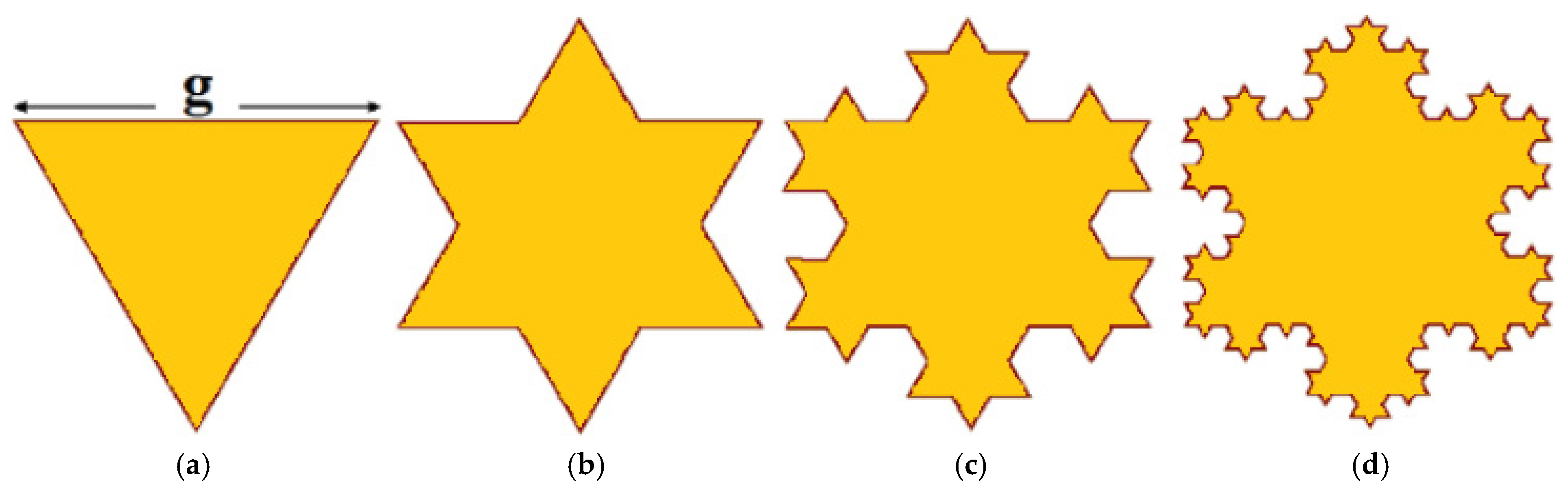
27,
28]. The Koch fractal is generated through an iterative process starting from a simple equilateral triangular geometry, as illustrated in
Figure 1a–d. In the initial stage, a conventional triangular radiator with side length
g is considered. For each subsequent iteration, the middle third of every line segment is replaced by two segments forming an outward equilateral triangular protrusion. This recursive process increases the effective electrical length of the radiator without enlarging its overall footprint, enabling the excitation of multiple resonant modes within a compact structure.
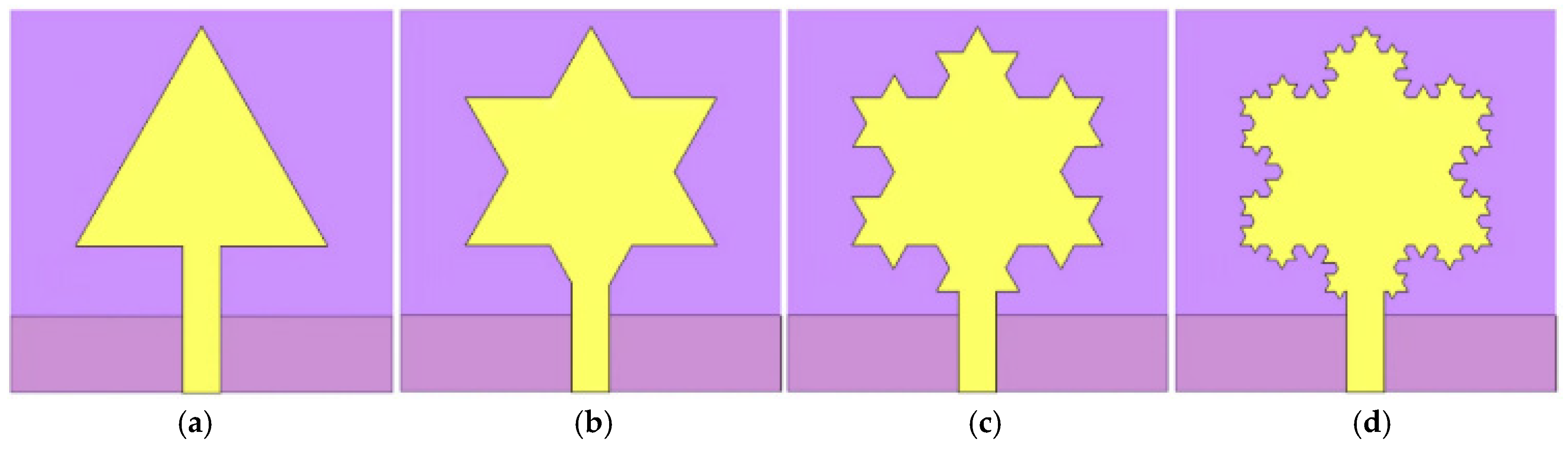
The evolution of the monopole antenna element based on the Koch fractal geometry is shown in
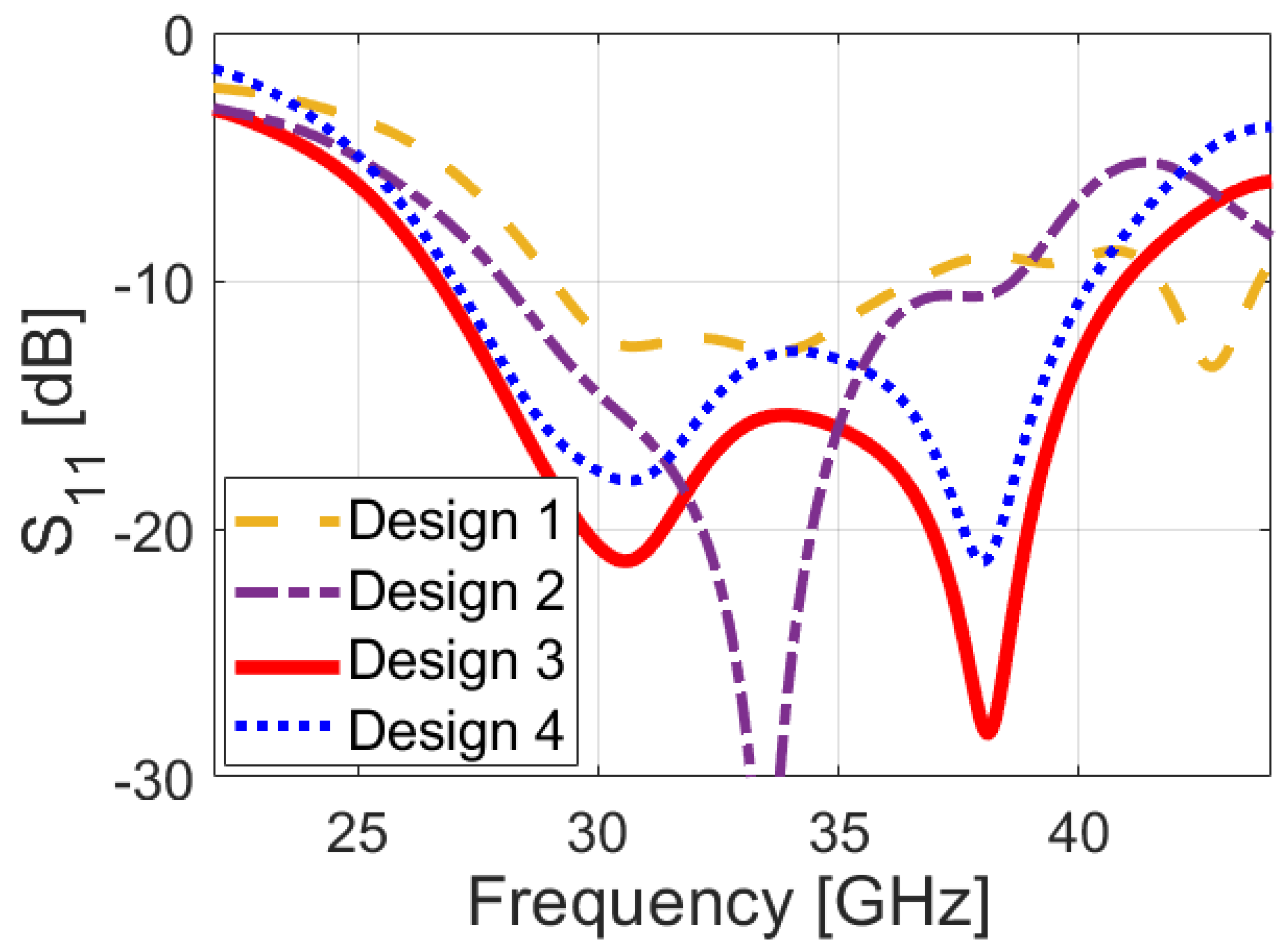
Figure 2. In the basic configuration, the antenna consists of a triangular monopole fed by a microstrip line, which exhibits limited impedance bandwidth and supports only a small number of resonant modes in the mmWave frequency range. By introducing the first fractal iteration along the edges of the radiator, the effective current path length is increased, resulting in improved impedance matching and the appearance of additional resonances. Further application of the Koch perturbations in the second iteration significantly enhances the wideband behavior of the antenna by generating multiple closely spaced resonant modes, which merge to form a continuous super-wide impedance bandwidth. The simulated reflection coefficient (S
11) corresponding to the different fractal iterations is presented in
Figure 3.
It is observed that the basic and first-iteration geometries exhibit narrowband characteristics with limited impedance matching over the mmWave spectrum. In contrast, the second-iteration Koch fractal antenna demonstrates a substantial improvement in impedance bandwidth, achieving wideband operation across the 26.5–41 GHz range. Although the third iteration increases the geometrical complexity and electrical length, marginal bandwidth reduction is obtained, accompanied by irregular impedance behavior and increased sensitivity to fabrication tolerances at mmWave frequencies. Therefore, the second iteration provides the best trade-off between bandwidth enhancement, radiation stability, and manufacturability [
32,
33].
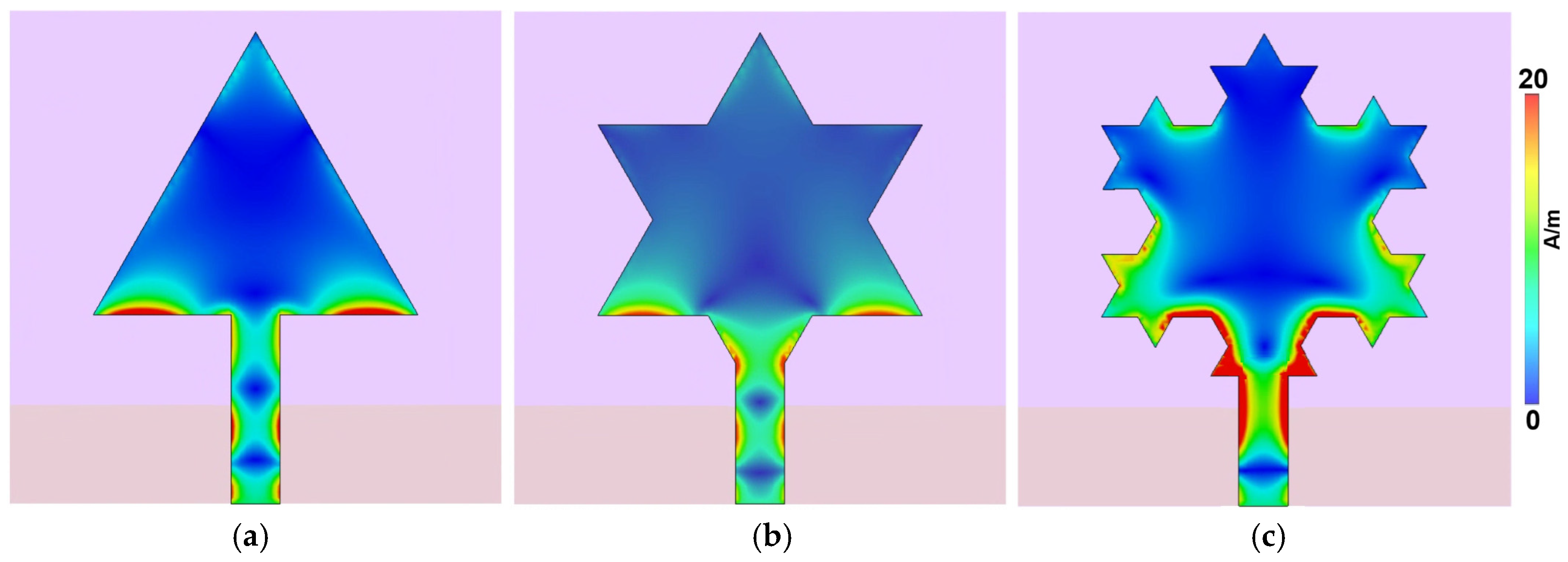
To further clarify the bandwidth enhancement mechanism, the surface current distributions of the first three antenna configurations at the second resonance of 38 GHz are compared in
Figure 4, including the basic geometry (Design 1), first iteration (Design 2), and second iteration (Design 3). For Design 1, the current is mainly concentrated around the feed transition and lower radiator edges, while the upper radiator region is weakly excited, indicating that the basic triangular monopole does not effectively support the upper-band resonance. In Design 2, the first Koch perturbation increases the effective electrical length and introduces additional current paths along the modified edges; however, the current distribution remains relatively limited. In contrast, Design 3 exhibits stronger and more distributed current concentrations along the fractal edges, lower slots, and feed transition region. This confirms that the second Koch iteration enhances the excitation of the upper-band resonant mode around 38 GHz. The strengthened second resonance, together with the lower resonant mode, improves impedance matching over a wider frequency range and explains the bandwidth enhancement observed in
Figure 3.
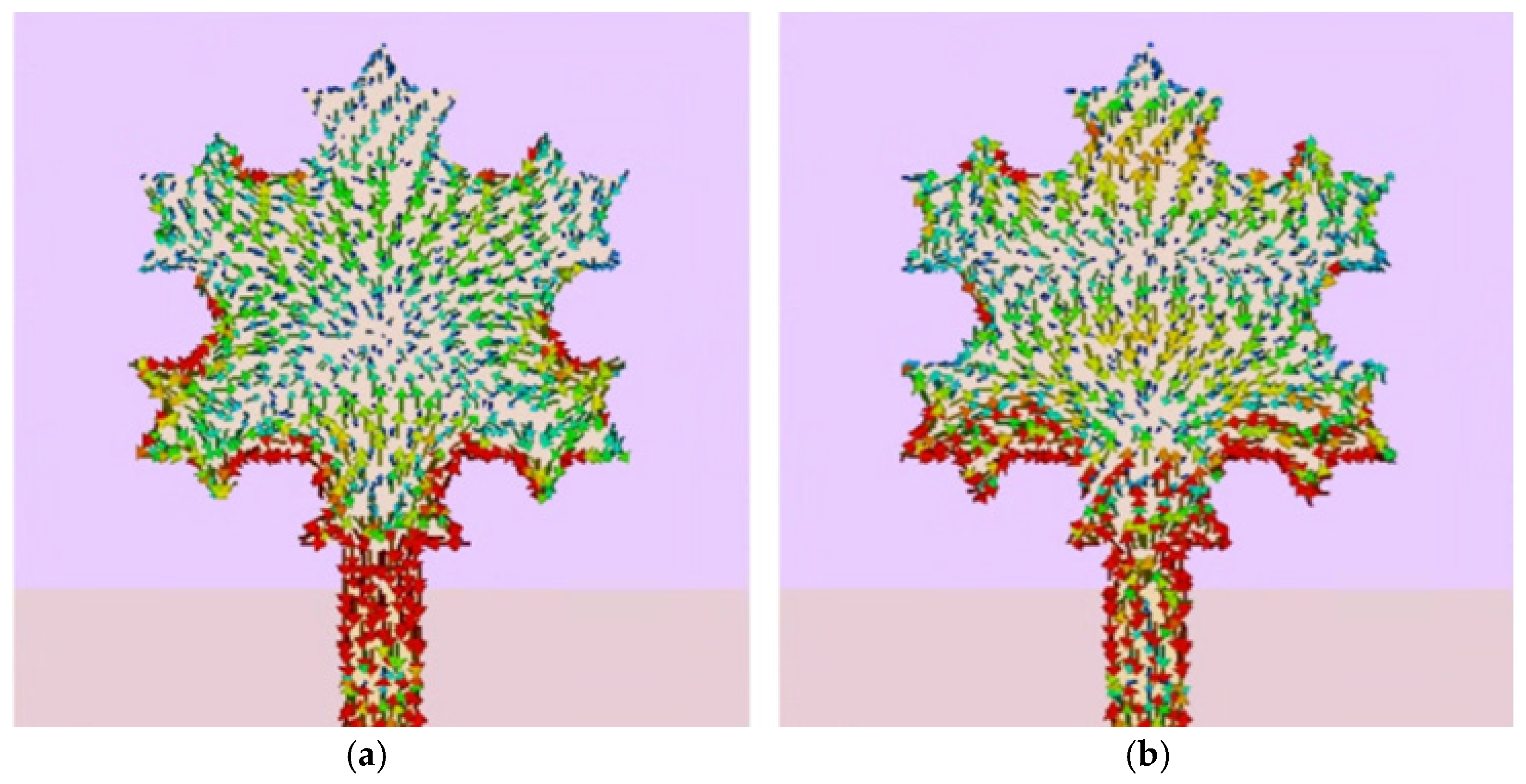
The bandwidth enhancement can therefore be interpreted using a current-path-based explanation. In the basic triangular monopole, the resonant behavior is mainly governed by a relatively simple current path along the radiator, resulting in limited impedance bandwidth. With the introduction of Koch perturbations, the effective electrical length increases and additional current paths are created along the fractal edges. In the second iteration, the self-similar geometry provides multiple current paths with different effective electrical lengths, which excite adjacent resonant modes across the mmWave band. The overlap of these resonant modes contributes to the observed super-wideband response and provides an effective balance between resonant-mode generation, wideband impedance matching, and fabrication practicality. The surface current density distributions of the optimized second-iteration Koch fractal antenna element at 30 GHz and 38 GHz are illustrated in
Figure 5a and
Figure 5b, respectively. At 30 GHz, strong current concentrations are observed along the lower edges of the fractal radiator and around the junction between the feed line and the radiating element, indicating that the lower resonant mode is primarily governed by the overall electrical length of the monopole structure. At 38 GHz, the surface current distribution becomes more localized and pronounced along the higher-order fractal edges and fine geometric features of the radiator, demonstrating the excitation of the upper-band resonant mode associated with the self-similar Koch segments. The coexistence of current paths with different effective electrical lengths enables multiple resonances to be excited within the mmWave band, which collectively contributes to the super-wideband characteristics [
34,
35].
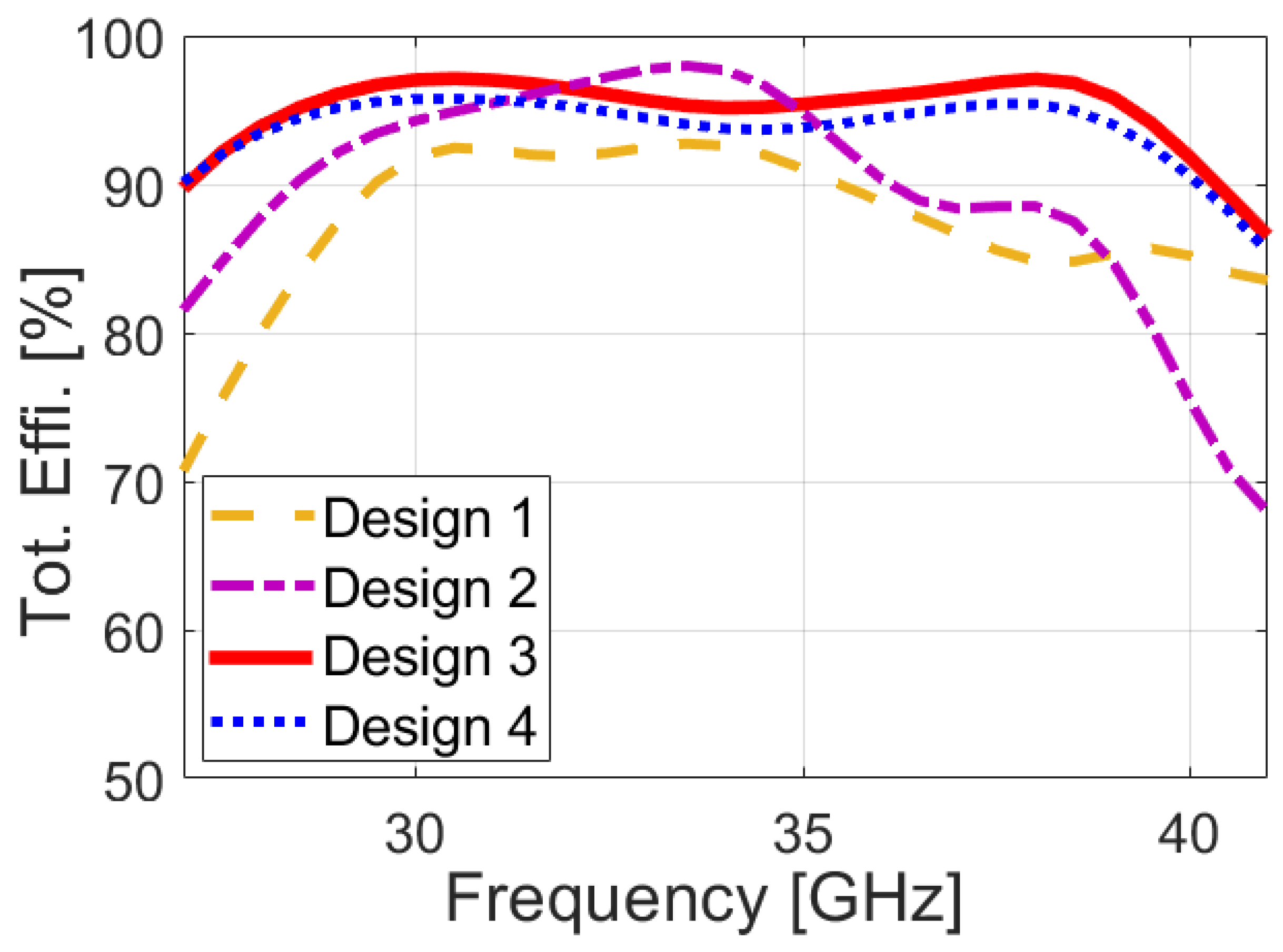
Figure 6 presents the simulated total efficiency of the antenna elements corresponding to the different fractal iterations shown in
Figure 2. The basic geometry (Design 1) exhibits high efficiency across most of the operating band due to its simple structure; however, its limited impedance bandwidth restricts its applicability for wideband mmWave operation. The first fractal iteration (Design 2) shows noticeable improvement in bandwidth, but at the cost of reduced radiation efficiency at the lower end of the band, primarily due to impedance mismatch and increased surface current confinement. A significant enhancement in efficiency is observed for the second-iteration Koch fractal antenna (Design 3), which maintains high total efficiency exceeding 90% across the majority of the 26.5–41 GHz band. This improvement is attributed to the optimized balance between increased electrical length and controlled geometrical complexity, which enables efficient excitation of multiple resonant modes while minimizing conductor and dielectric losses. In contrast, the third iteration (Design 4) exhibits a slight degradation in efficiency at higher frequencies, particularly beyond 38 GHz, due to excessive fractal perturbations that introduce additional losses and increase sensitivity to fabrication tolerances at mmWave frequencies. These results further confirm that the second-iteration Koch fractal geometry provides the most favorable trade-off between wideband impedance matching, efficiency, and manufacturability.
Figure 7 shows the three-dimensional radiation patterns of the proposed antenna element at 30 GHz and 38 GHz. At both frequencies, the antenna exhibits well-maintained radiation performance with nearly omnidirectional coverage, which is suitable for mmWave applications requiring wide angular coverage. The radiation patterns remain almost consistent across the operating band, with no significant pattern distortion or deep nulls observed. These results confirm that the antenna maintains reliable radiation performance and is well suited for integration into compact MIMO systems [
36,
37].
3. MIMO Fractal Antenna Array
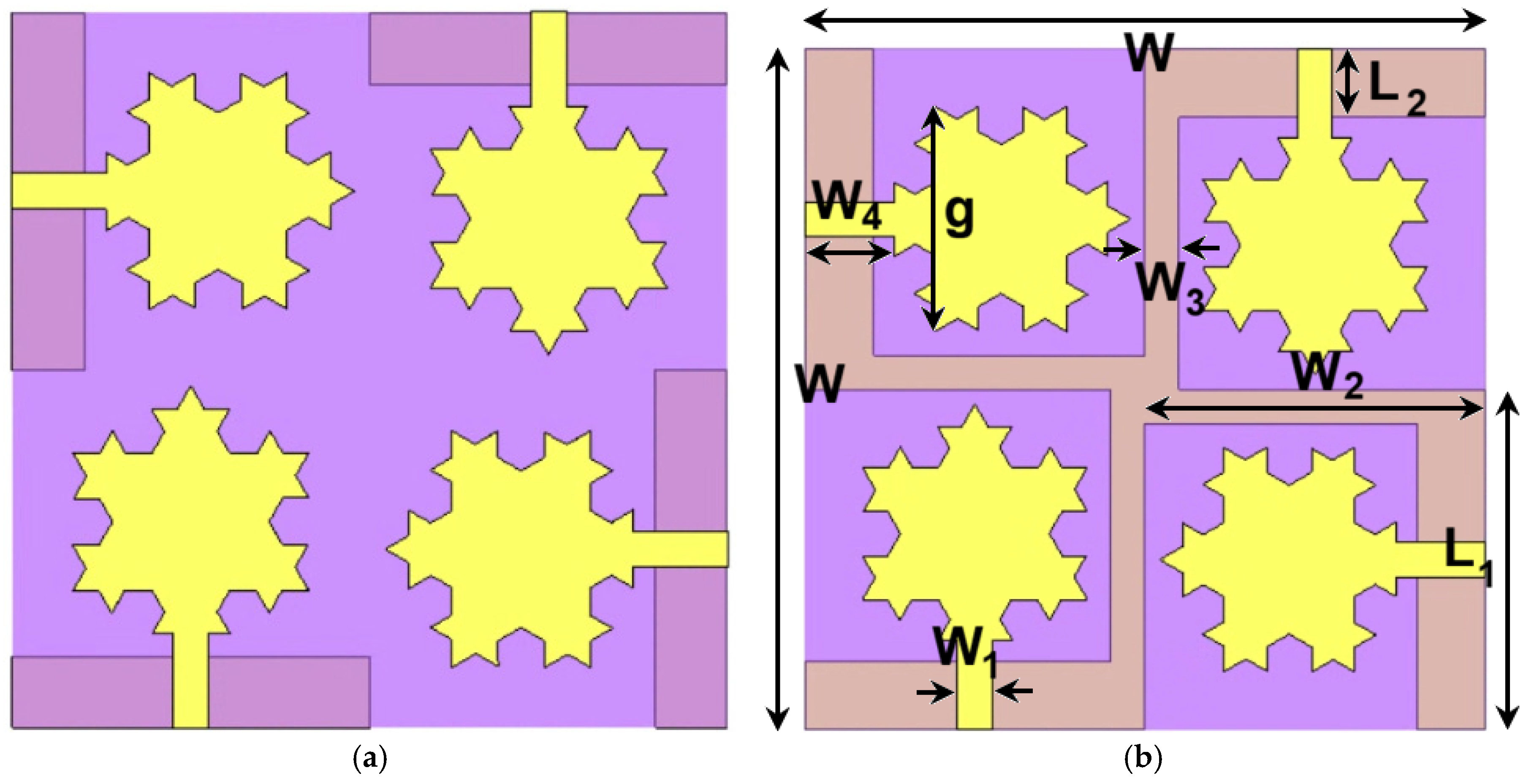
The optimized second-iteration Koch fractal antenna element is used to realize a four-port mmWave MIMO antenna array, as shown in
Figure 8. The antenna elements are arranged in a symmetric configuration to achieve polarization diversity within a compact footprint.
Each element is independently fed, enabling efficient multiport operation for MIMO applications.
Figure 8a illustrates the MIMO configuration without ground-plane modification, where higher mutual coupling exists between adjacent elements. To improve this, a modified shared ground plane is introduced in the final design, as shown in
Figure 8b. The design parameter values are listed in
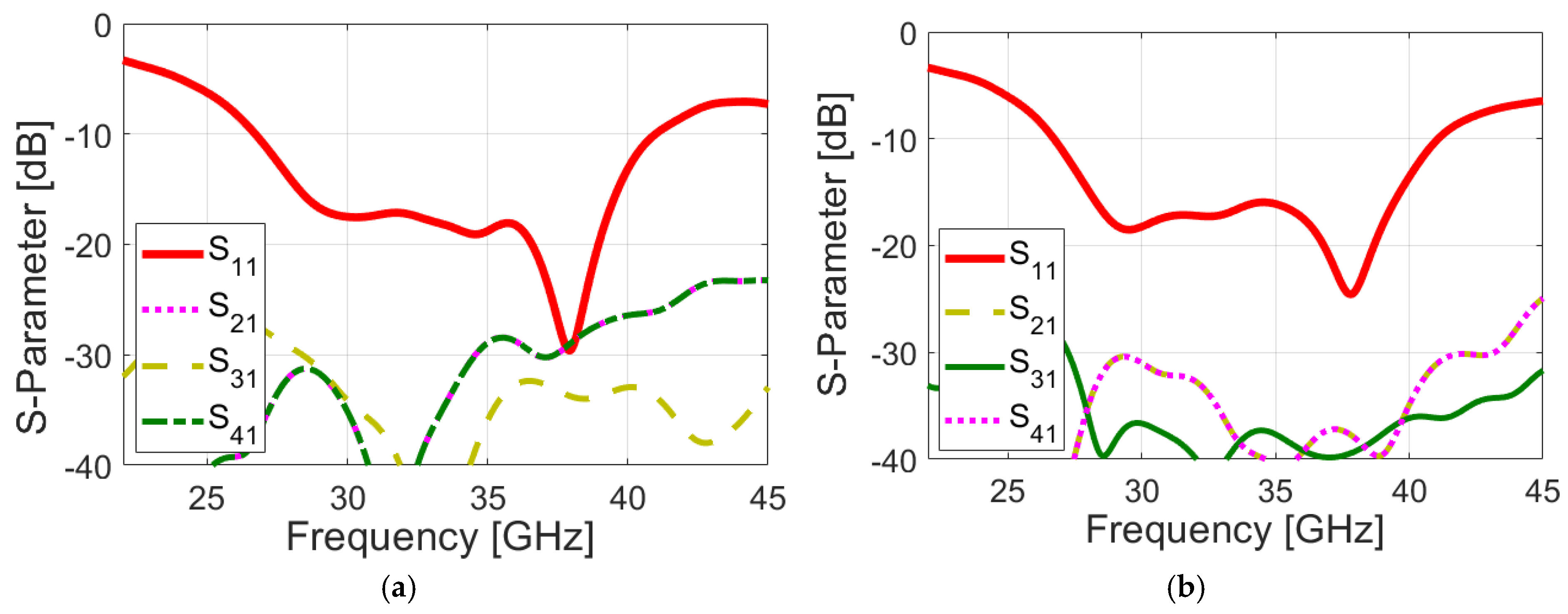
Table 1. The proposed ground-plane modification effectively suppresses surface current coupling while maintaining a fully connected ground structure, which is desirable for practical fabrication. The simulated S-parameters of both configurations are presented in
Figure 9. The reflection coefficient (S
11) confirms wideband impedance matching across the operating band of 26.5–41 GHz. In addition, the modified ground plane improves isolation, with the mutual coupling coefficients reduced to below −30 dB over most of the mmWave frequency range [
4,
38].
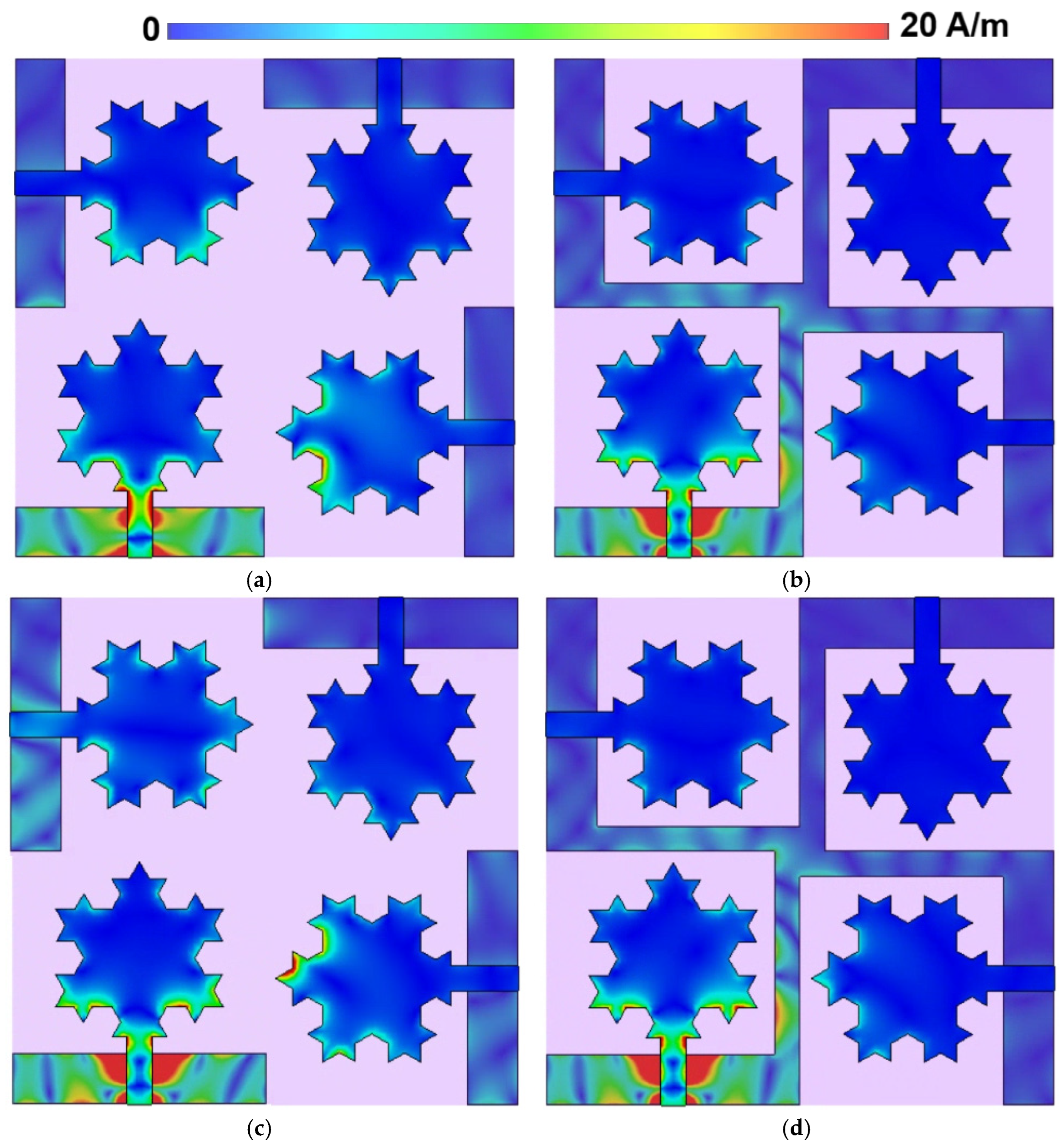
To clarify the role of the connected modified shared ground plane in mutual coupling suppression,
Figure 10 compares the surface current distributions of the MIMO antenna with and without the connected ground when Port 1 is excited. In the configuration without the connected ground, noticeable induced currents are observed on the neighboring elements and their feeding regions, indicating stronger inter-element interaction. After connecting the ground sections through the proposed modified ground plane, the current distribution becomes more controlled, and the induced currents on the adjacent elements are reduced at both 28 GHz and 38 GHz. This confirms that the connected shared ground redistributes the surface current and suppresses the dominant coupling paths between ports. The improvement is also consistent with the S-parameter comparison in
Figure 9, where the isolation is improved to around −30 dB over most of the operating band.
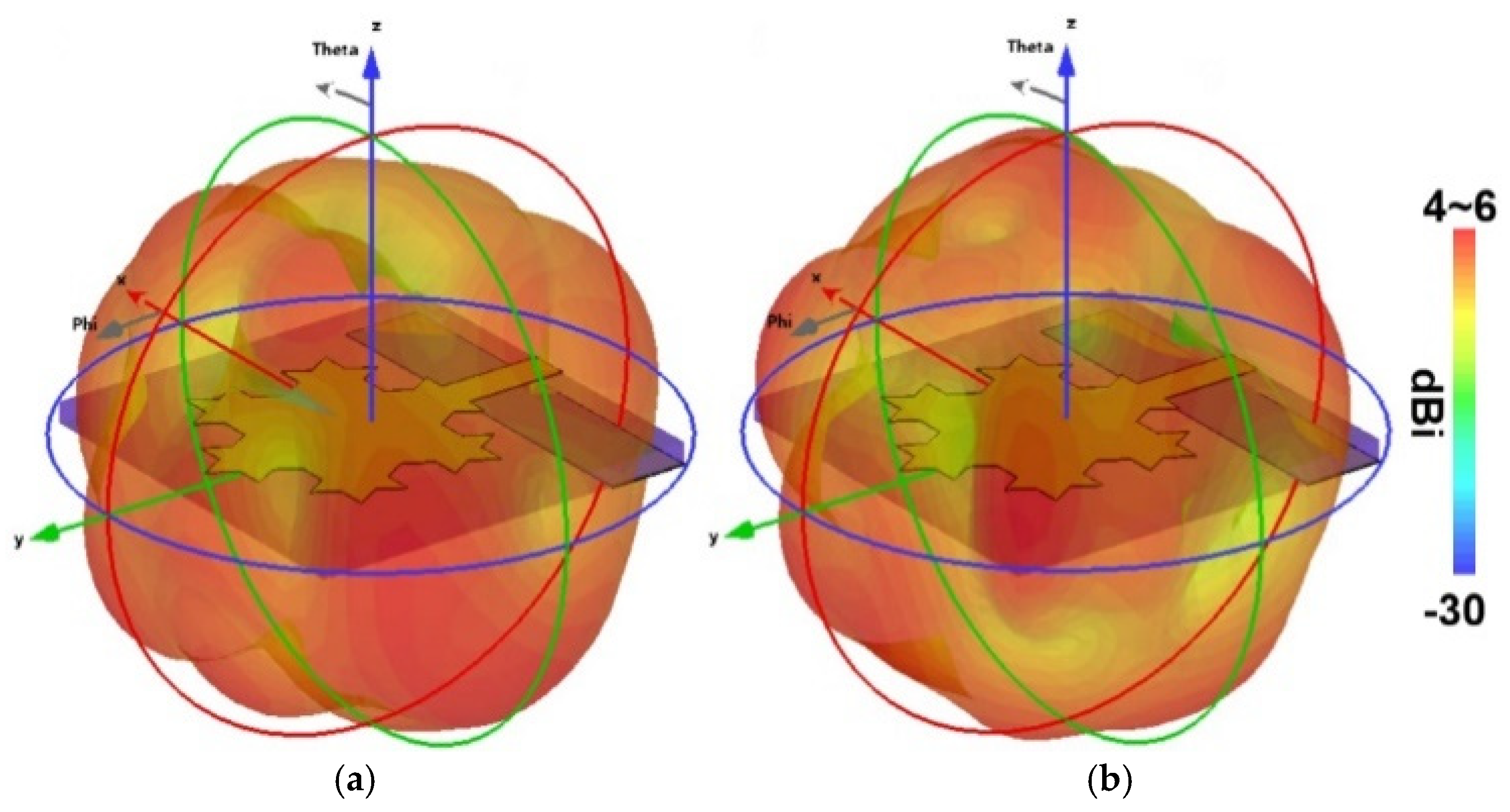
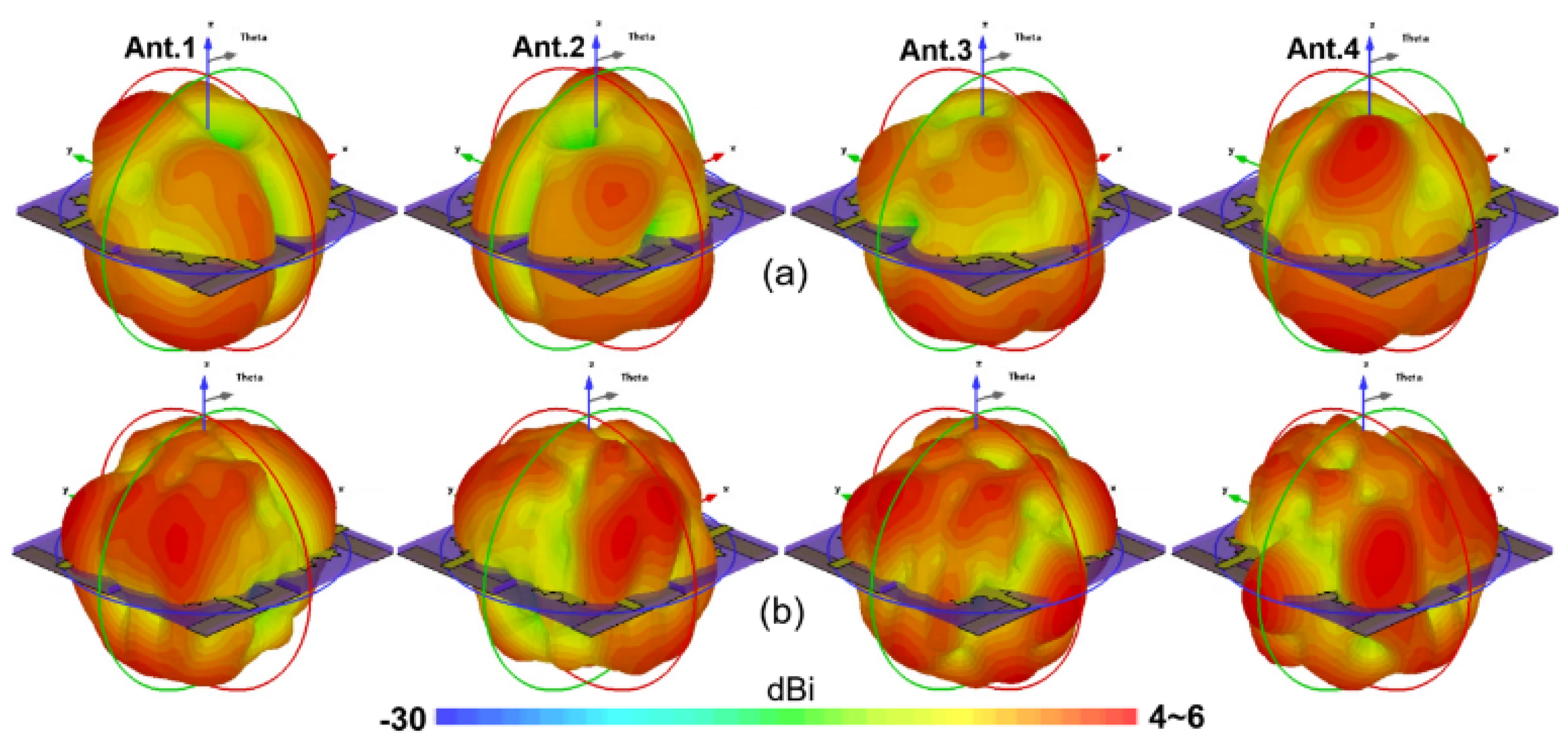
Figure 11 illustrates the three-dimensional radiation patterns of the proposed four-port MIMO antenna elements at 28 GHz and 38 GHz. At both frequencies, all antenna elements exhibit stable radiation characteristics with similar pattern shapes and nearly omnidirectional coverage, indicating good pattern diversity among the ports. The radiation behavior remains consistent across the operating band, with no significant pattern distortion observed between different elements. This uniform radiation performance confirms that the proposed MIMO configuration preserves the radiation characteristics of individual elements while supporting effective multiport operation [
39].
Figure 12 illustrates the efficiency and gain characteristics of a single MIMO antenna element across the operating frequency range. As shown in
Figure 12a, the antenna achieves high radiation efficiency, remaining above 95% over most of the band, while the total efficiency exceeds 90%, indicating minimal dielectric and conductor losses despite the compact fractal geometry. The small deviation between radiation and total efficiency confirms good impedance matching across the operating frequencies.
Figure 12b shows that the realized gain varies between 4 and 6 dBi, with peak values observed around the lower and upper portions of the mmWave band. These results demonstrate that the proposed antenna element maintains stable efficiency and gain performance, making it well suited for compact mmWave multiport systems [
40].
4. Prototyping and Result Validation
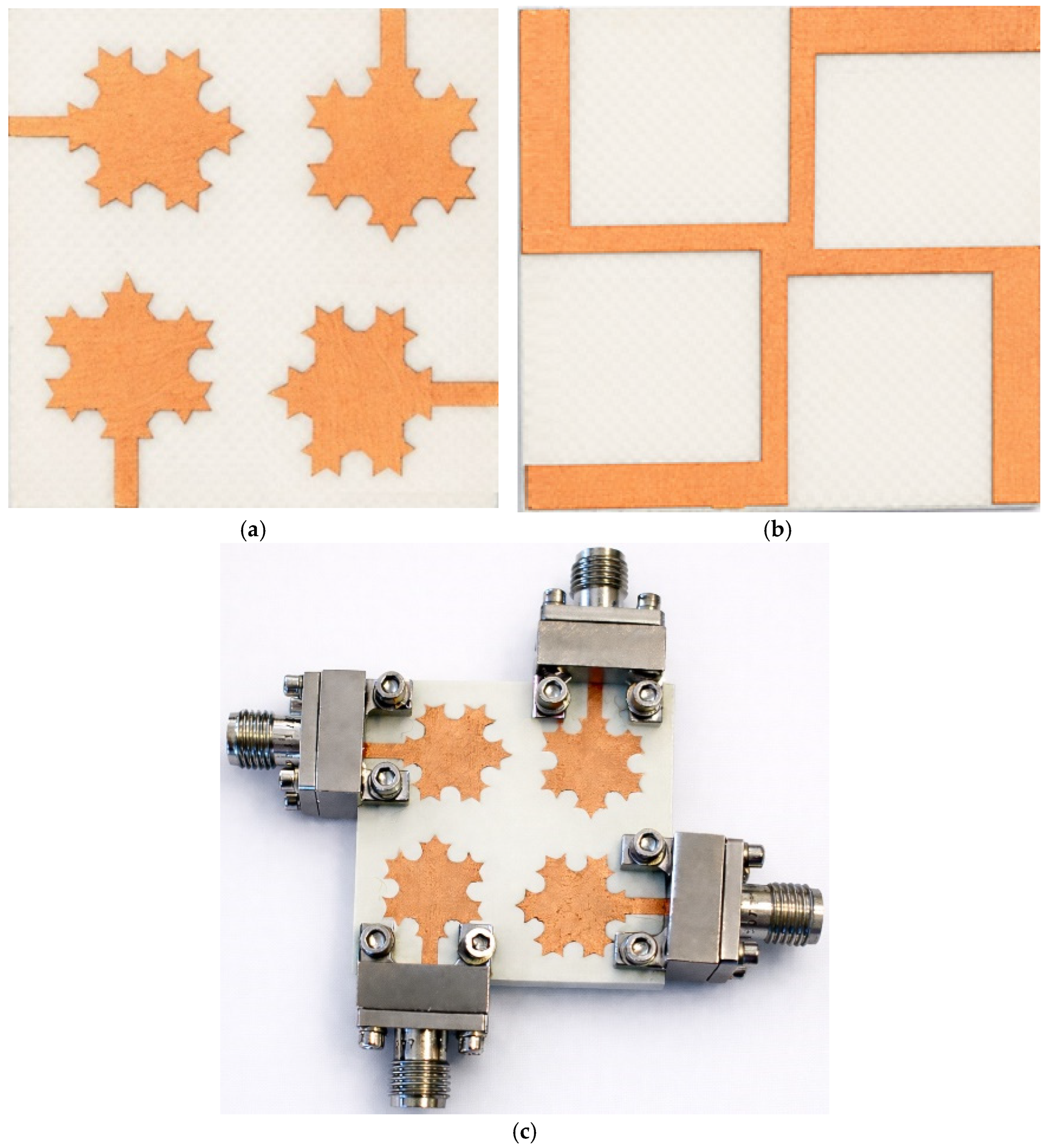
To validate the proposed design, a prototype of the four-port Koch fractal mmWave MIMO antenna was fabricated on a 0.8 mm-thick RO4835 substrate using standard PCB etching techniques.
Figure 13 shows the fabricated antenna, where
Figure 13a illustrates the top layer containing the Koch fractal radiating elements and microstrip feed lines, while
Figure 13b presents the bottom layer with the modified shared ground plane. The fabricated prototype closely follows the optimized design dimensions, confirming the feasibility of realizing the proposed fractal geometry and ground-plane structure using conventional manufacturing processes. The feeding method is illustrated in
Figure 13c, where a mmWave-compatible end-launch connector is used for each element.
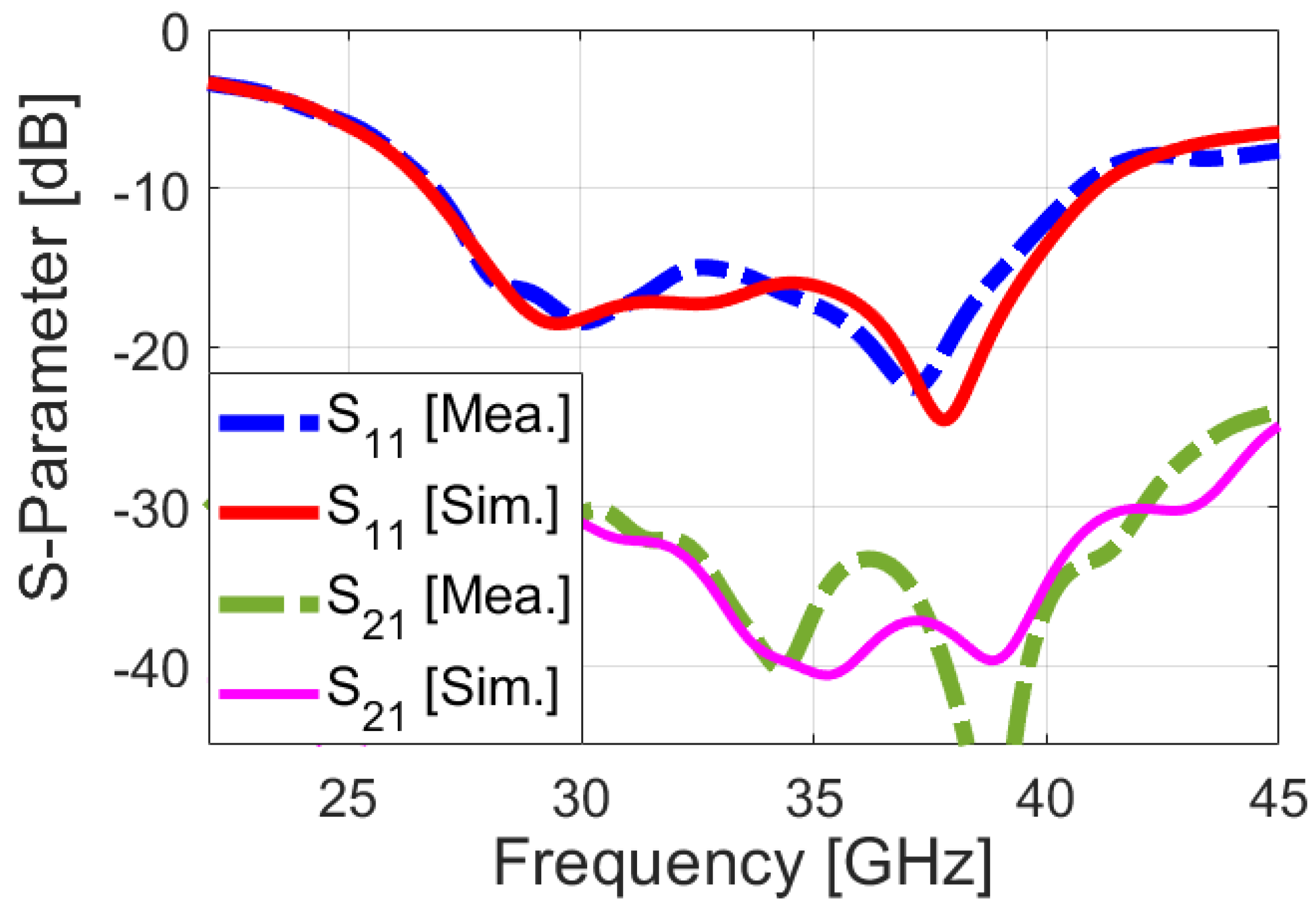
Figure 14 compares the measured and simulated S-parameter results of the proposed MIMO antenna. As shown, a good agreement is observed between measurements and simulations across the operating band of 26.5–41 GHz. The measured reflection coefficient (S
11) confirms wideband impedance matching, while the transmission coefficient (S
21) remains below −30 dB over most of the mmWave band, validating the low mutual coupling achieved by the modified shared ground plane. Minor discrepancies between measured and simulated results can be attributed to fabrication tolerances, connector effects, and measurement uncertainties at mmWave.
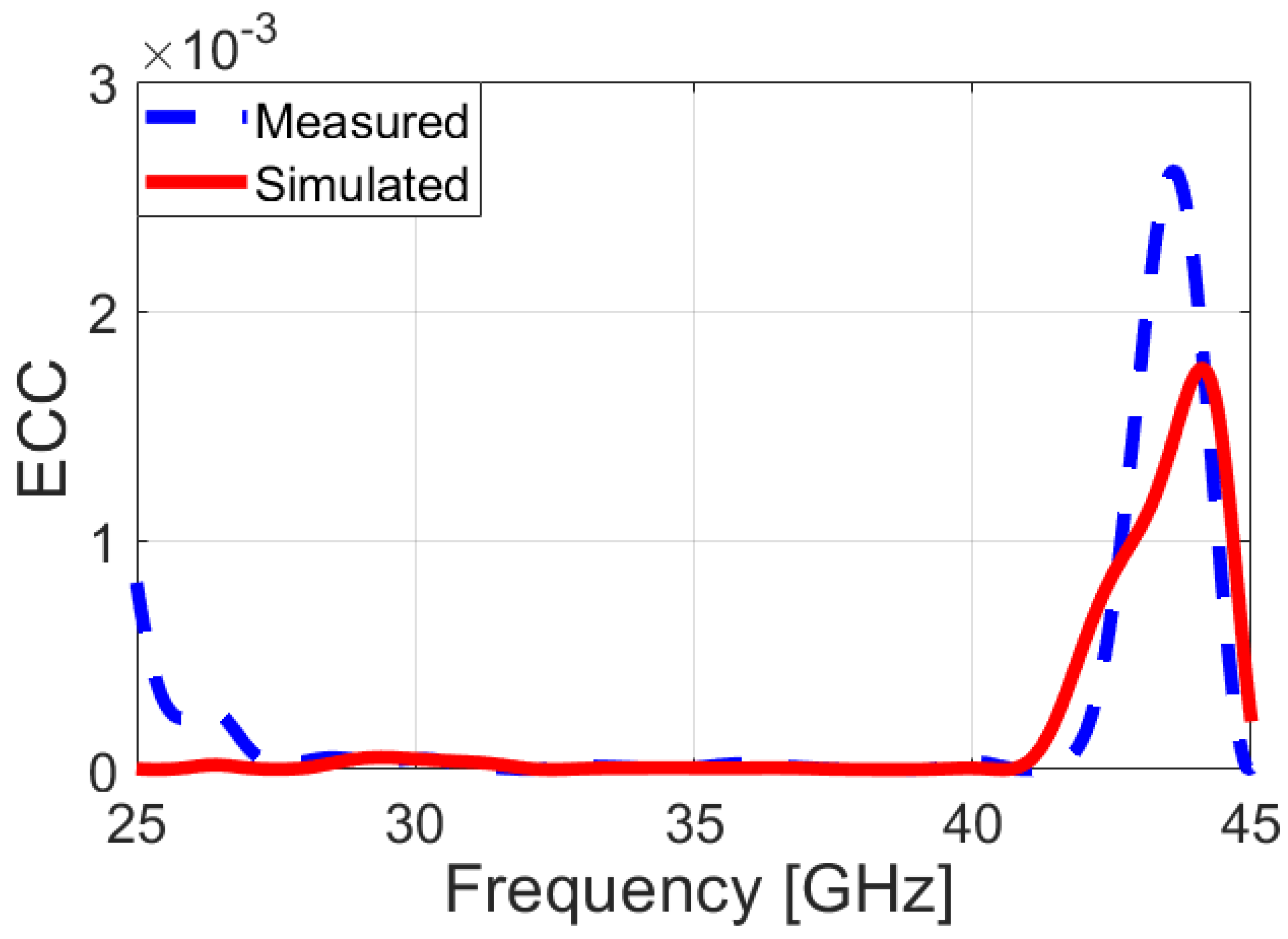
Figure 15 presents the measured and simulated envelope correlation coefficient (ECC) of the proposed MIMO antenna. The ECC values remain extremely low across the operating band, well below the acceptable threshold for practical MIMO systems, indicating excellent diversity performance [
41,
42]. The close agreement between measured and simulated ECC results further confirms the reliability of the proposed design and its suitability for high-performance mmWave MIMO applications.
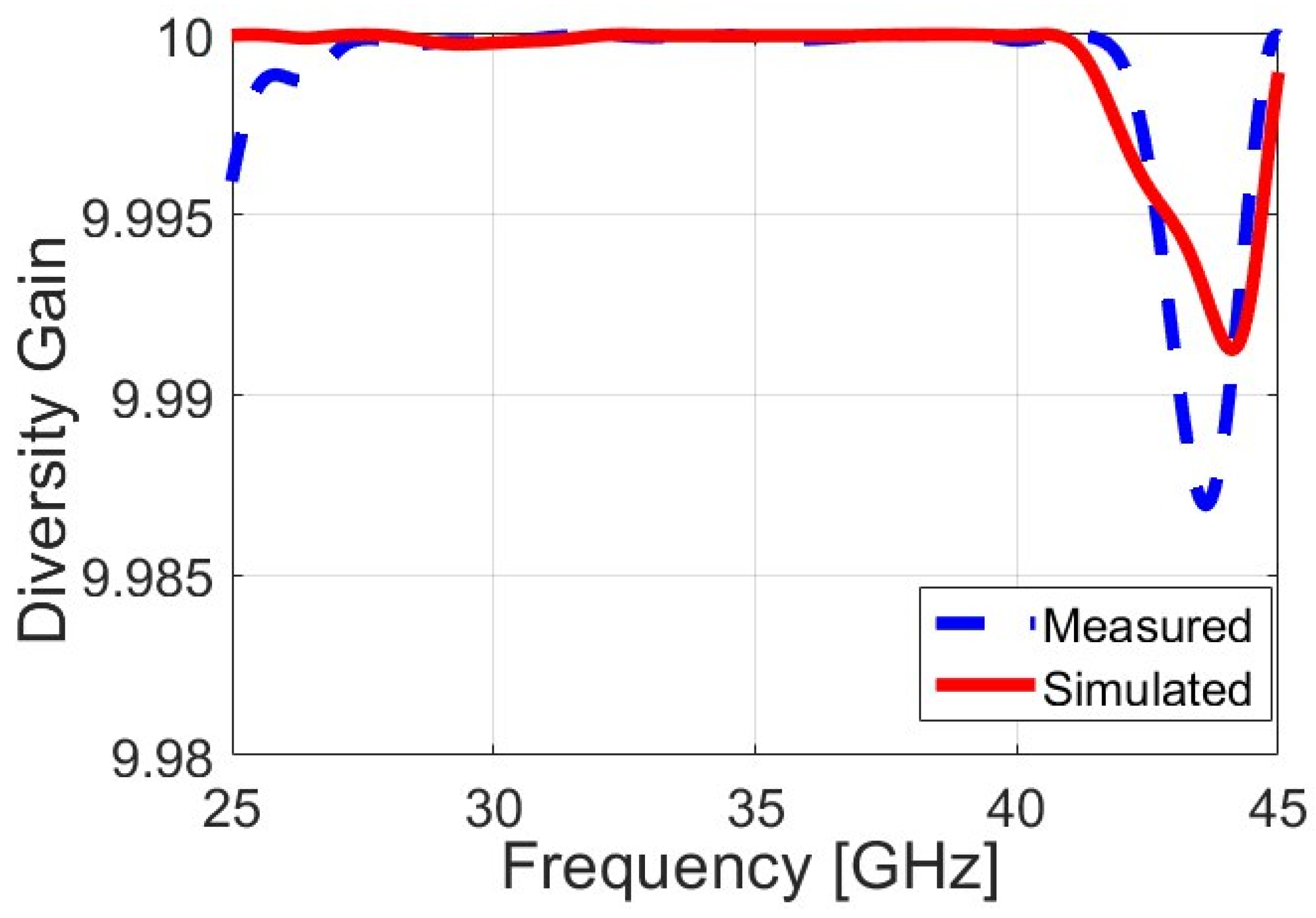
Figure 16 shows the measured and simulated diversity gain (DG) of the proposed MIMO antenna across the operating frequency range. The diversity gain remains close to the ideal value of 10 dB throughout the band, indicating excellent diversity performance [
43]. A strong agreement between measured and simulated results is observed, with only minor deviations at higher frequencies due to measurement uncertainties.
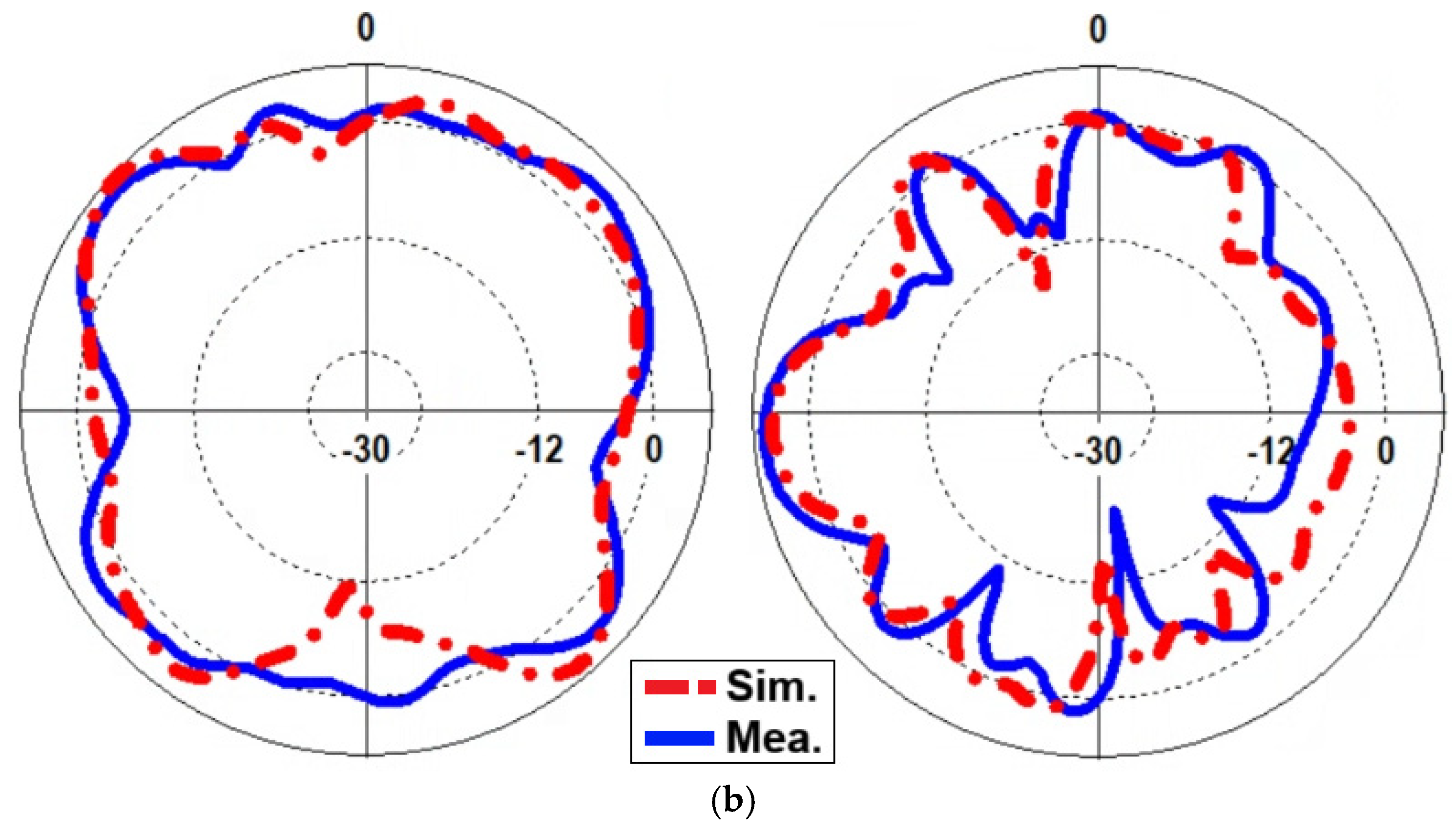
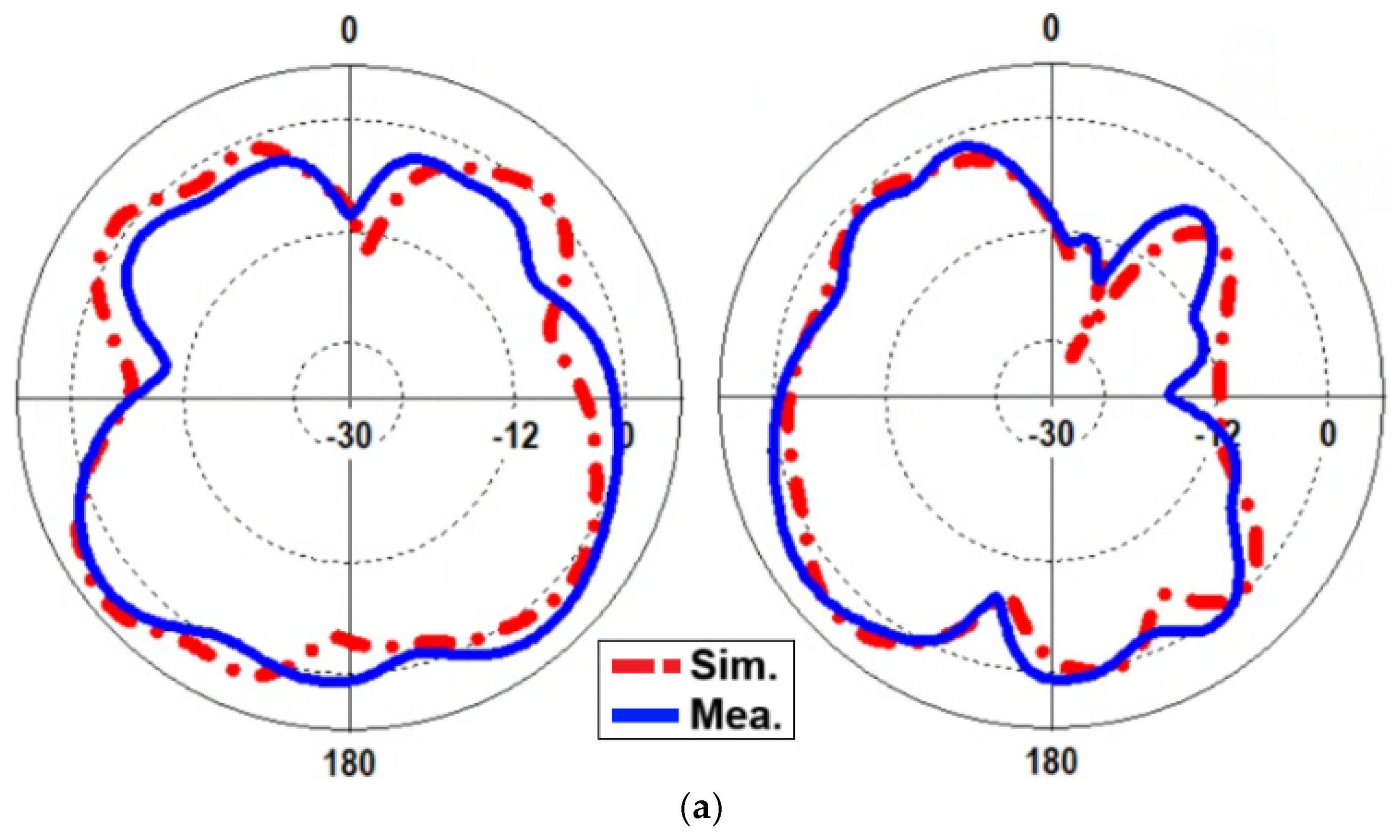
Figure 17 presents the measured and simulated two-dimensional radiation patterns of Antenna 1 in the E-plane and H-plane at 28 GHz and 38 GHz. A good agreement between the measured and simulated results is observed at both frequencies, confirming the accuracy of the proposed antenna design. The radiation patterns exhibit stable and nearly omnidirectional characteristics, particularly in the H-plane, with no deep nulls across the main coverage region. Minor discrepancies between measured and simulated patterns are mainly attributed to fabrication tolerances, connector effects, and measurement uncertainties at mmWave frequencies [
6]. Overall, the results demonstrate that the proposed antenna maintains consistent radiation behavior across the operating band, supporting its suitability for practical mmWave MIMO applications [
44].
Table 2 compares the simulated and measured gain and efficiency of Antenna 1 at 28 GHz and 38 GHz, which are the same frequencies used for the measured radiation-pattern validation in
Figure 17. The gain and efficiency measurements were performed under the same calibrated mmWave measurement environment used for radiation-pattern characterization. The measured gain values of 5.6 dBi and 4.4 dBi are in good agreement with the simulated values of 5.8 dBi and 4.5 dBi, respectively. Similarly, the measured efficiencies remain above 90% at both frequencies, confirming the high radiation performance of the fabricated prototype. The small deviations between measured and simulated results are mainly attributed to fabrication tolerances, connector losses, chamber calibration uncertainty, and measurement setup limitations at mmWave frequencies.
6. Flexibility and Scalability Characteristics
In practical wireless devices, antennas are often subjected to mechanical deformation due to installation constraints, device curvature, or wearable and conformal applications. Therefore, it is essential to evaluate the electromagnetic performance of the proposed MIMO antenna under bending conditions [
45]. In this section, the flexibility of the suggested fractal antenna array is investigated by analyzing its performance under different bending angles to assess the impact of mechanical deformation on impedance matching, mutual coupling, radiation and overall MIMO behavior.
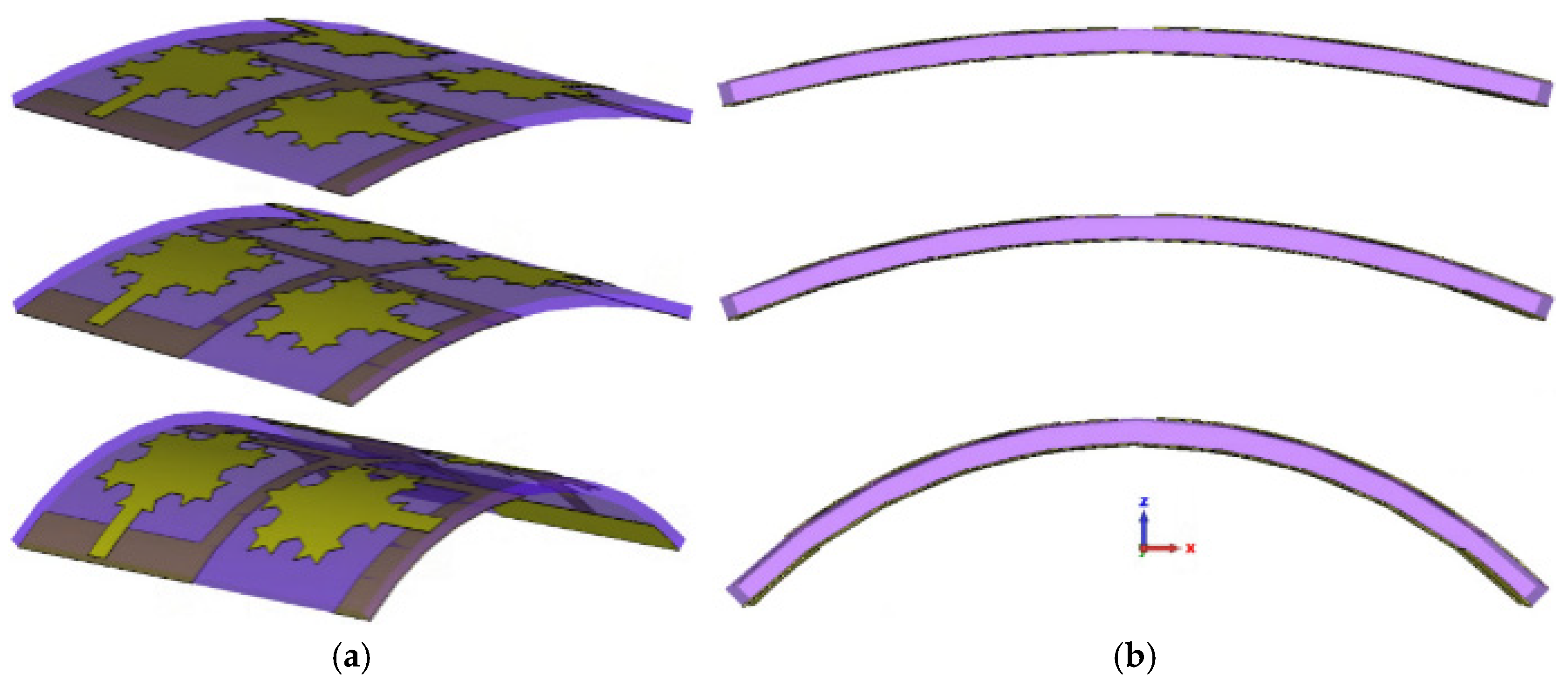
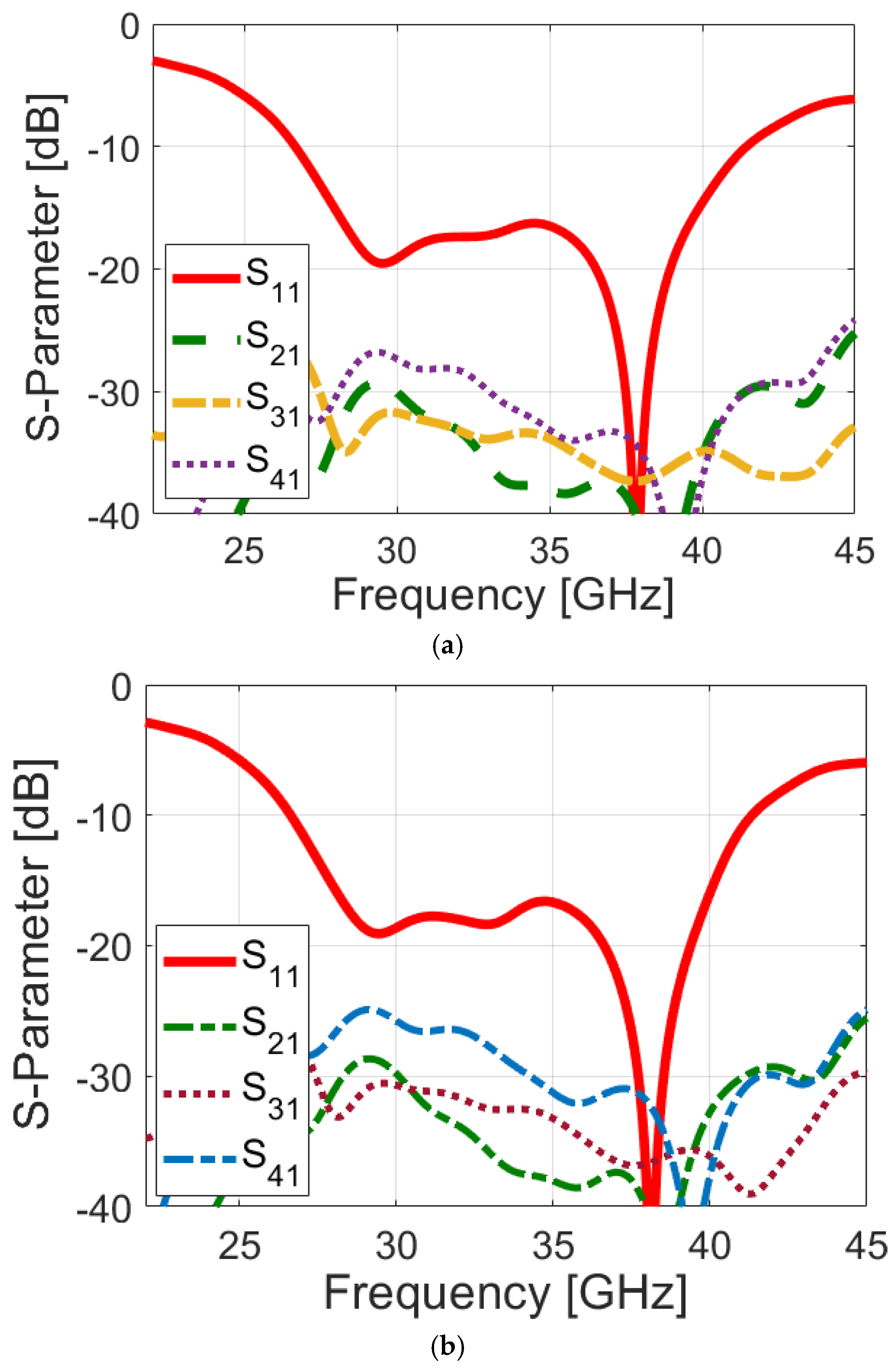
Figure 18 illustrates the bending configurations of the mmWave MIMO antenna for the selected deformation angles of 15°, 30°, and 45°. The antenna is bent along the longitudinal axis while preserving the original feeding and ground-plane structure. As shown in
Figure 19, for all bending cases, S
11 remains below −10 dB over the 26.5–41 GHz operating band, corresponding to an impedance bandwidth of 14.5 GHz. In addition, the mutual coupling parameters S
21, S
31, and S
41 remain low across most of the band. As the bending angle increases, a slight variation in inter-element coupling is observed, with coupling levels changing from approximately −30 dB to −20 dB. This behavior is primarily attributed to the modification of surface current distributions and the reduced effective spacing between antenna elements caused by mechanical deformation.
Nevertheless, the observed coupling levels remain within acceptable limits. These results confirm that the antenna maintains stable wideband performance, enhanced inter-element isolation, and robust MIMO characteristics under mechanical deformation, demonstrating its suitability for flexible and conformal applications. The stable bending performance can be attributed to the distributed current behavior of the Koch fractal radiator and the symmetric connected shared-ground configuration. The second-order Koch geometry provides multiple current paths along the fractal edges, reducing excessive dependence on a single dominant current path. Therefore, moderate mechanical deformation does not significantly disturb the overall resonant behavior. In addition, the connected shared ground plane helps maintain a continuous RF reference plane and controls current redistribution among the antenna elements under bending. Compared with flexible MIMO antennas that rely on isolated ground sections or additional decoupling structures, the proposed configuration offers improved structural continuity and more stable inter-element isolation under conformal deformation.
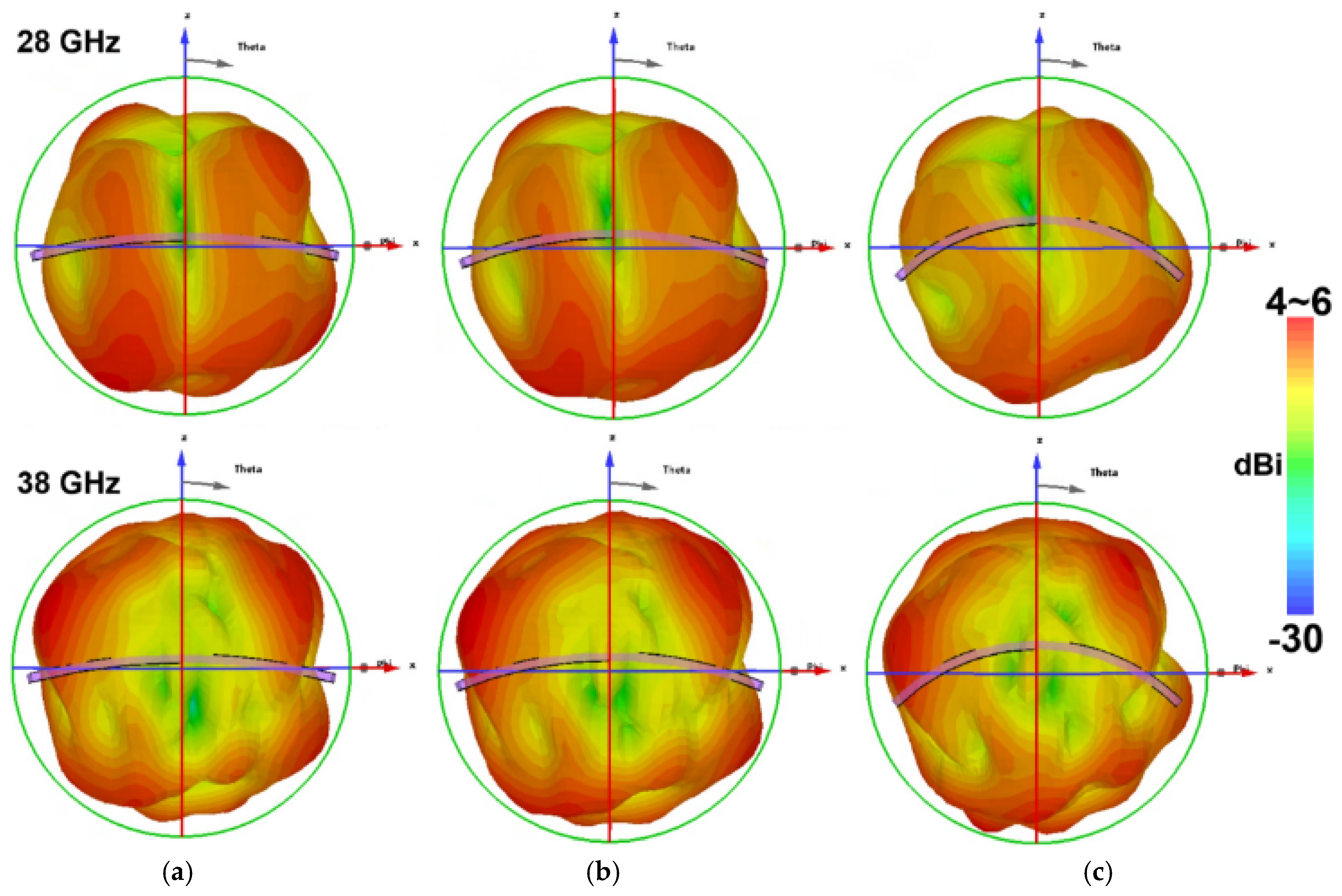
Figure 20 shows the three-dimensional radiation patterns of the proposed MIMO antenna under bending angles of 15°, 30°, and 45° at 28 GHz and 38 GHz. The radiation characteristics remain stable for all bending configurations, with only minor variations in pattern shape and directivity as the bending angle increases. No significant pattern distortion or deep nulls are observed at either frequency [
31].
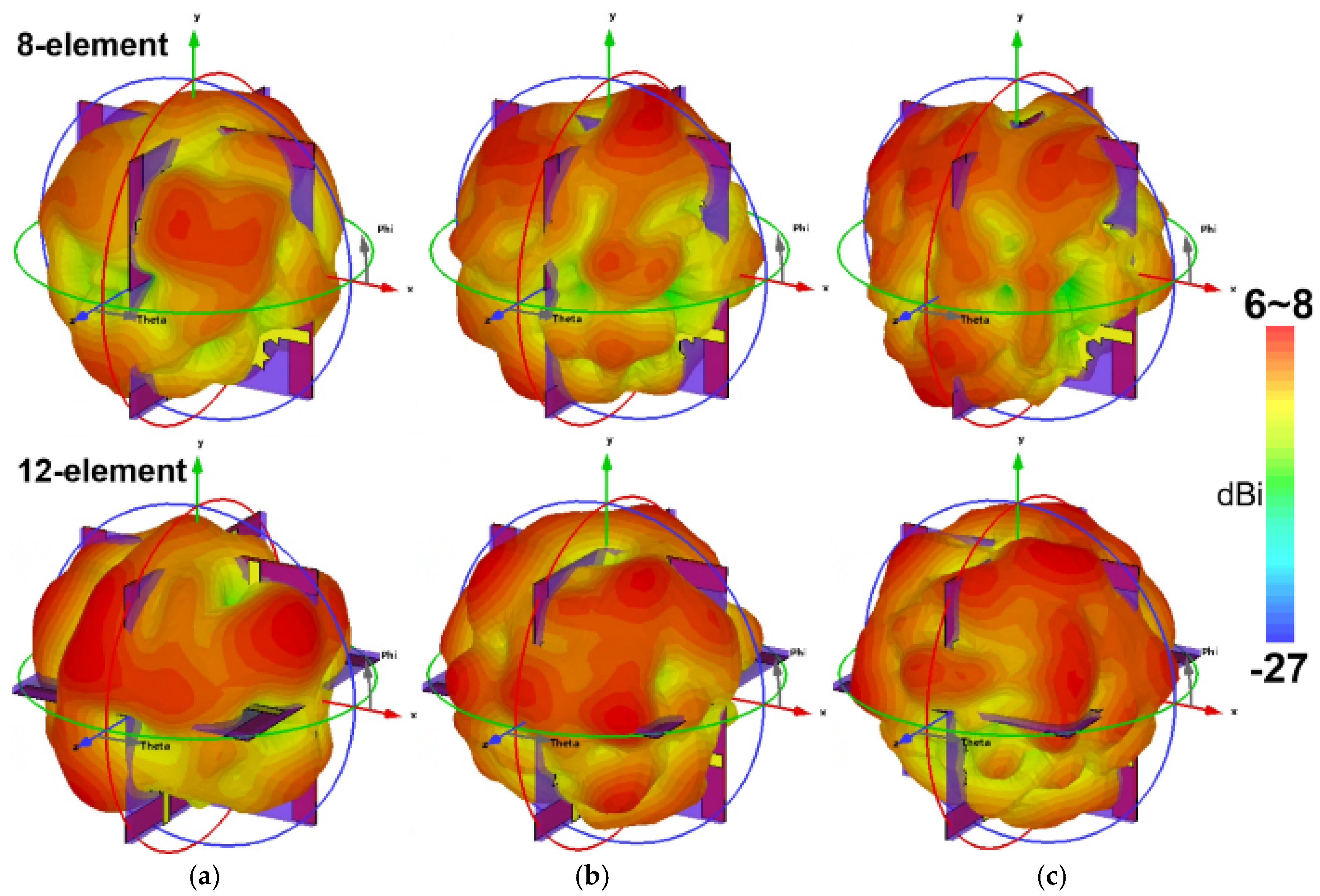
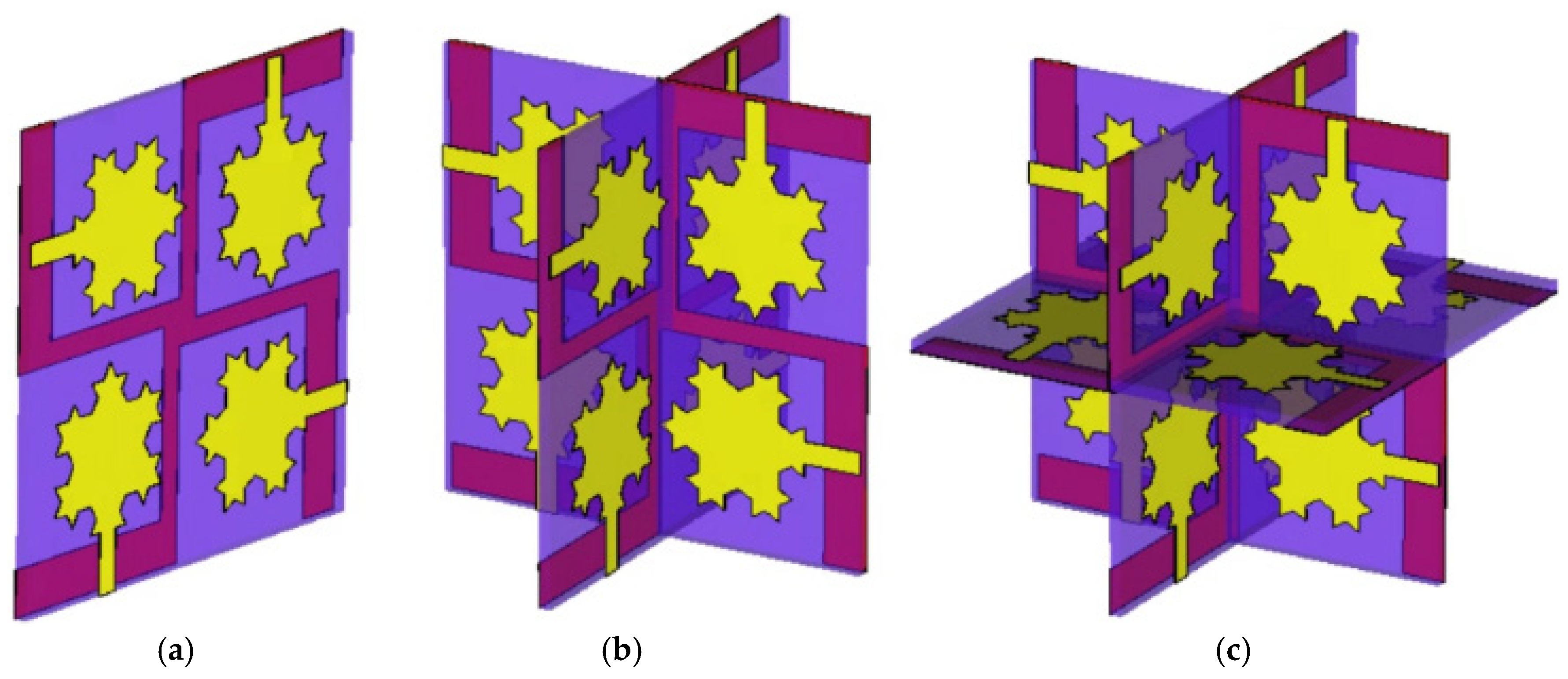
To demonstrate the scalability of the proposed fractal-based mmWave MIMO antenna, the design is extended from the original four-element configuration to eight-element and twelve-element MIMO arrangements, as illustrated in
Figure 21. The antenna elements are arranged in orthogonal and stacked configurations while preserving the same element geometry, feeding mechanism, and shared ground-plane concept. This approach allows the number of antenna ports to be increased without modifying the individual radiator design or increasing the overall footprint significantly, highlighting the modular nature of the proposed antenna concept.
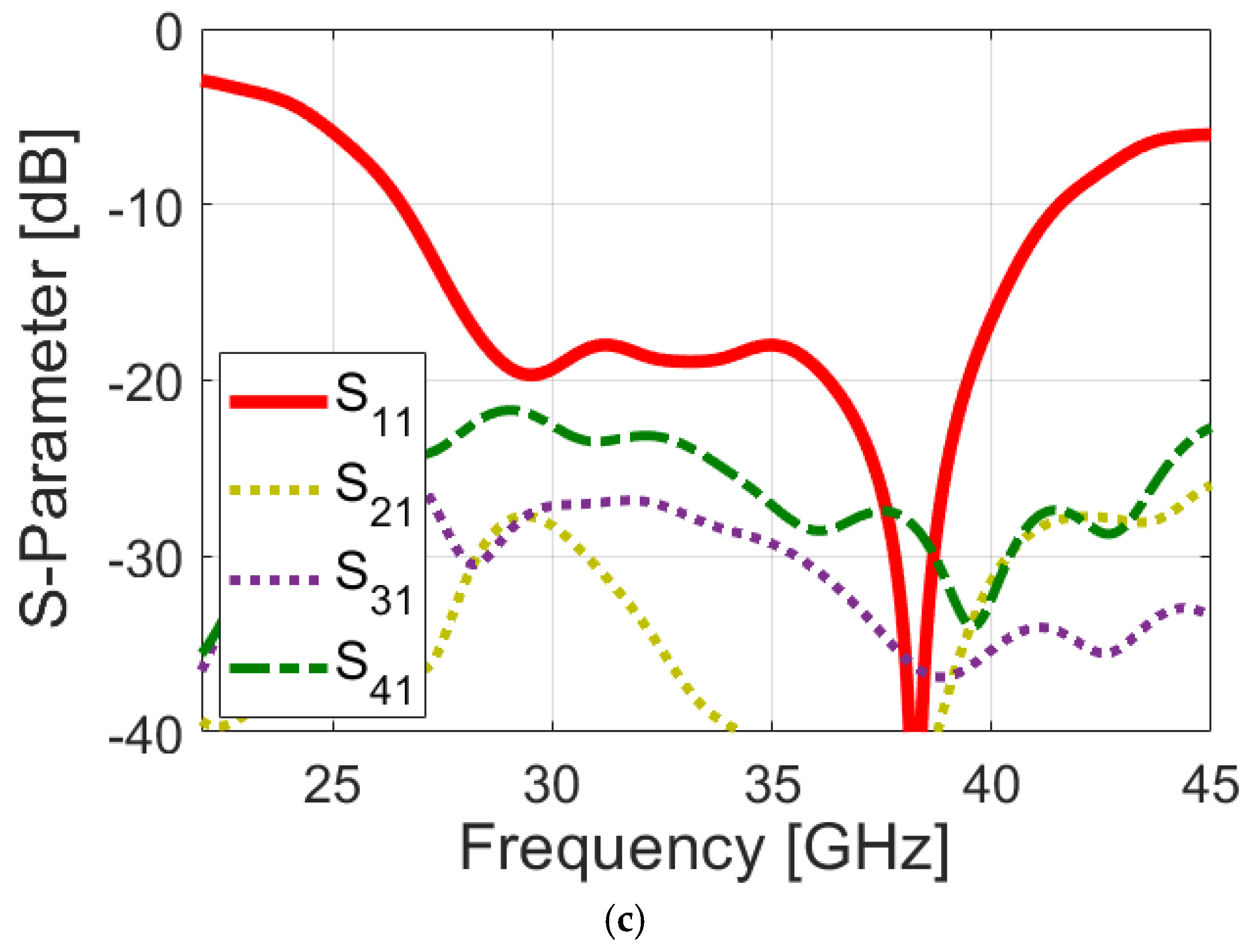
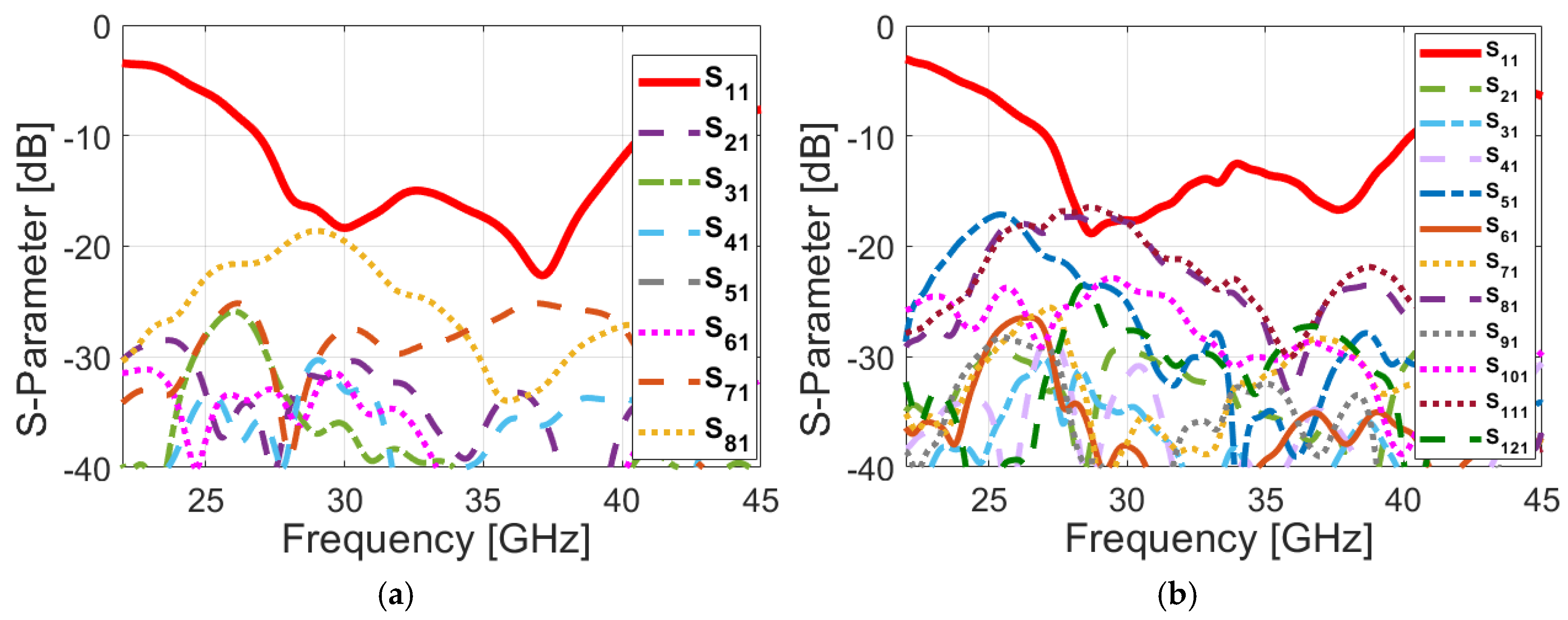
The simulated S-parameter results for the eight-element and twelve-element MIMO configurations are presented in
Figure 22. For both configurations, the input reflection coefficient (S
11) remains below −10 dB over the 26.5–41 GHz operating band, confirming that wideband impedance matching is maintained as the number of antenna elements increases. In addition, the mutual coupling parameters between adjacent and non-adjacent elements remain low, generally below −17 dB and reaching values better than −30 dB across most of the band. Although a slight increase in coupling is observed as the number of elements increases, particularly in the twelve-element configuration, the isolation levels remain within acceptable limits for high-order MIMO systems [
46].
Figure 23 illustrates the three-dimensional radiation patterns of the proposed eight-element and twelve-element MIMO antenna configurations at 28 GHz, 33 GHz, and 38 GHz. For both configurations, the radiation patterns remain stable with broad angular coverage, indicating that the fundamental radiation characteristics of the individual antenna elements are preserved as the array size increases. A slight increase in pattern directivity and lobe density is observed in the twelve-element configuration, which is attributed to the higher number of radiating elements and their closer proximity. Despite the increased array complexity, no significant pattern distortion or deep nulls are observed across the operating band [
47]. The radiation behavior remains well distributed, confirming that the proposed antenna architecture maintains consistent radiation performance when scaled to higher-order MIMO configurations.
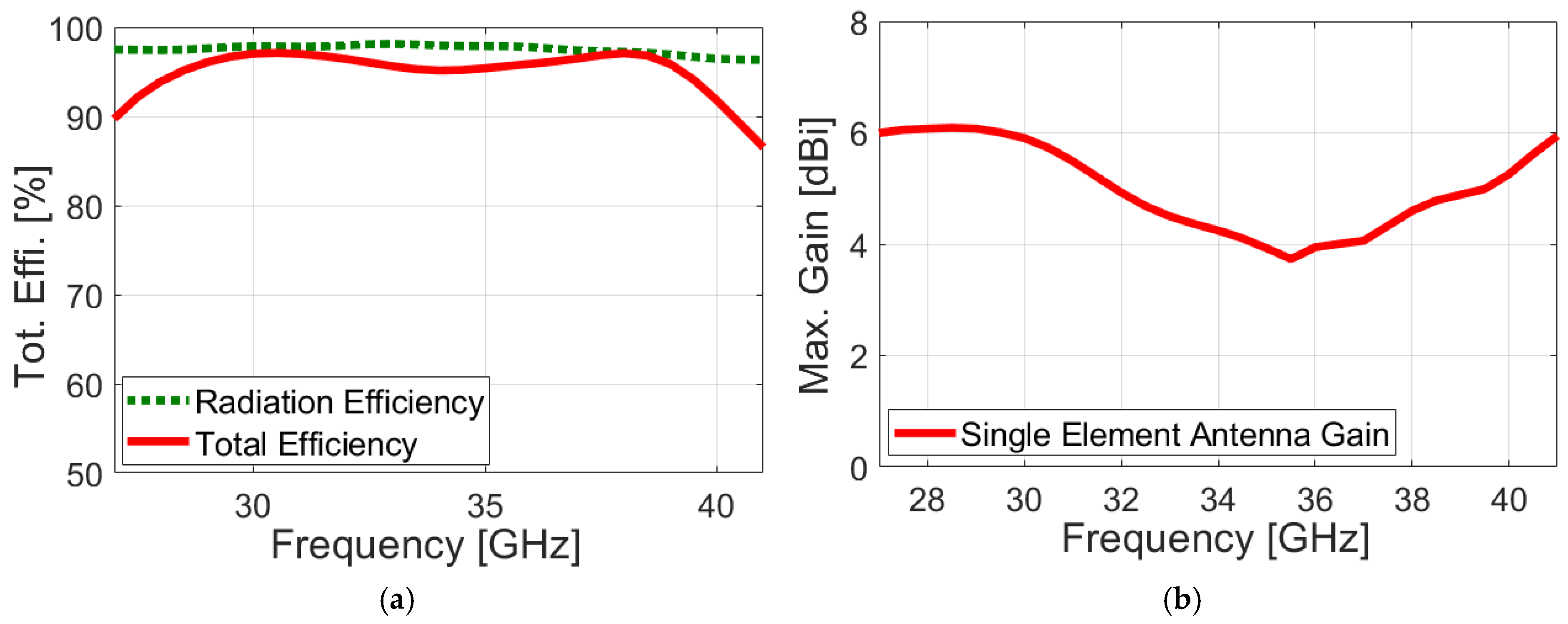
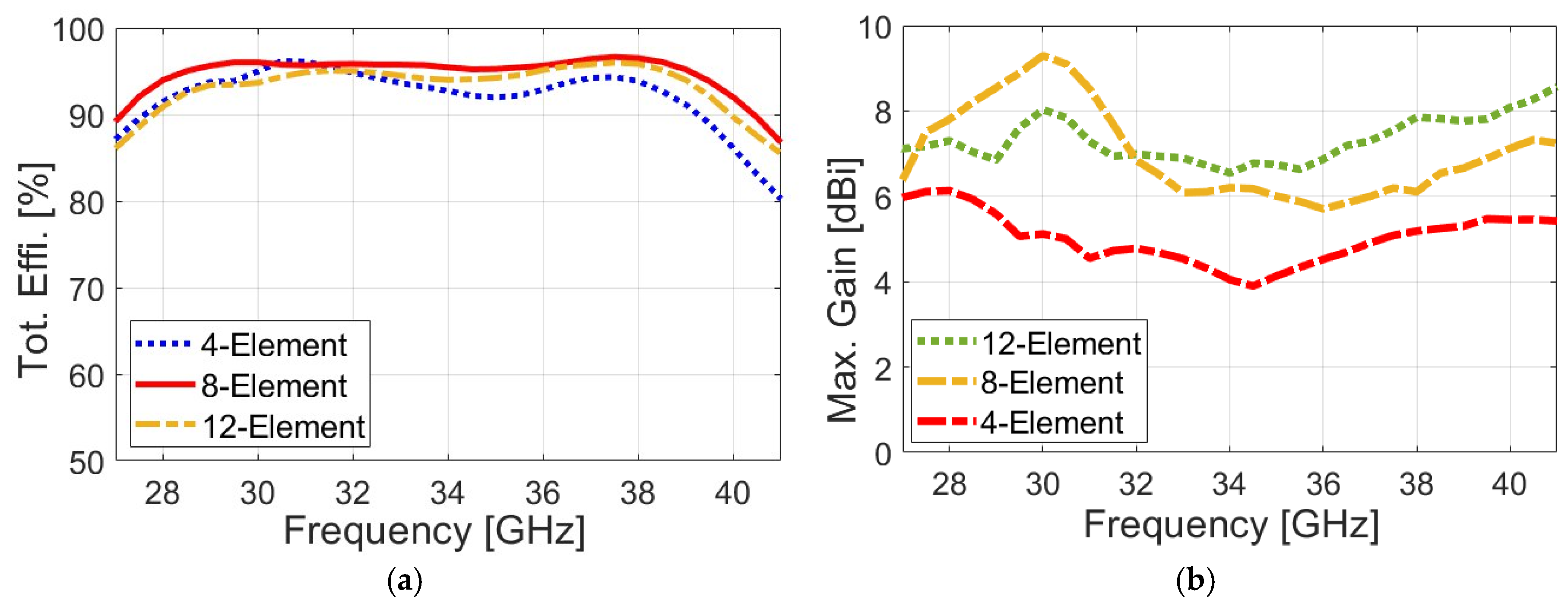
Figure 24 compares the total efficiency and maximum realized gain of the proposed MIMO antenna for four-, eight-, and twelve-element configurations. As shown in
Figure 24a, all configurations maintain high total efficiency across the operating band, with values exceeding 90% over most of the 26–41 GHz range. A slight reduction in efficiency is observed as the number of elements increases, which is mainly attributed to increased inter-element interactions and conductor losses in denser MIMO arrangements; however, the efficiency remains within acceptable limits for practical mmWave systems.
Figure 24b shows the maximum realized gain for different array sizes. As expected, the realized gain increases with the number of antenna elements, with the twelve-element configuration achieving the highest gain across the band, followed by the eight-element and four-element designs. This gain enhancement confirms the effectiveness of the scalable architecture in supporting higher-order configurations while preserving wideband operation and high efficiency [
48].
It should be noted that the flexibility and scalability investigations are performed numerically as proof-of-concept studies to evaluate the feasibility of the proposed antenna architecture under conformal deformation and higher-order MIMO extension. The fabricated four-port prototype experimentally validates the main antenna design, while the bending and 8-/12-element configurations numerically demonstrate that the proposed concept can maintain acceptable impedance matching, isolation, and radiation characteristics under extended operating scenarios. Fabrication and calibrated mmWave measurement of bent prototypes and higher-order non-planar configurations require additional dedicated prototypes and experimental setup time; therefore, experimental validation of these extended configurations will be considered in future work. From a practical integration perspective, the compact 30 × 30 mm
2 footprint and connected shared-ground configuration make the proposed antenna suitable for integration into compact mmWave user equipment, conformal devices, and future 5G/6G wireless platforms. The shared-ground structure provides a continuous RF reference plane, which is beneficial for integration with RF front-end circuits and multiport feeding networks. However, practical implementation may be affected by packaging materials, device housing, nearby electronic components, and user-body proximity, particularly in wearable or handheld scenarios. Therefore, additional co-design with the device platform, packaging environment, and beamforming circuitry may be required for final product-level deployment. The scalable 8- and 12-element configurations also indicate the potential compatibility of the proposed architecture with beam-steering, beam allocation, and high-capacity MIMO systems, where advanced beam and power allocation techniques can further improve mmWave network performance [
49].