Article

Research on Lithium-Ion Battery Diaphragm Defect Detection Based on Transfer Learning-Integrated Modeling


by
Lihua Ye
,
Xu Zhao
,
Zhou He
,
Zixing Zhang
,
Qinglong Zhao
and
Aiping Shi
*
School of Automotive and Traffic Engineering, Jiangsu University, Zhenjiang 212013, China
*
Author to whom correspondence should be addressed.
Electronics 2025, 14(9), 1699; https://doi.org/10.3390/electronics14091699

Submission received: 1 April 2025 / Revised: 18 April 2025 / Accepted: 21 April 2025 / Published: 22 April 2025
(This article belongs to the Special Issue 2D/3D Industrial Visual Inspection and Intelligent Image Processing)

Abstract

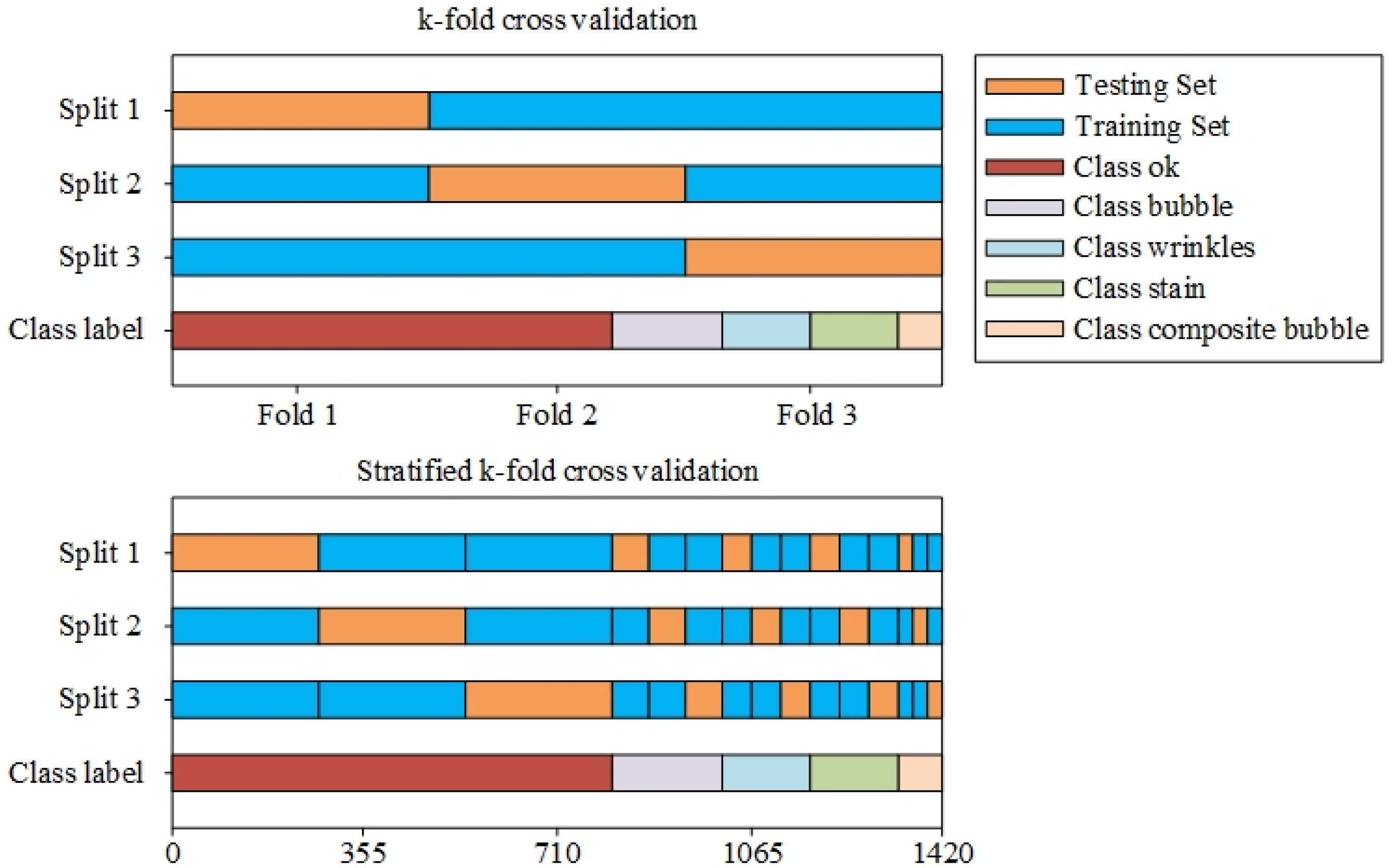
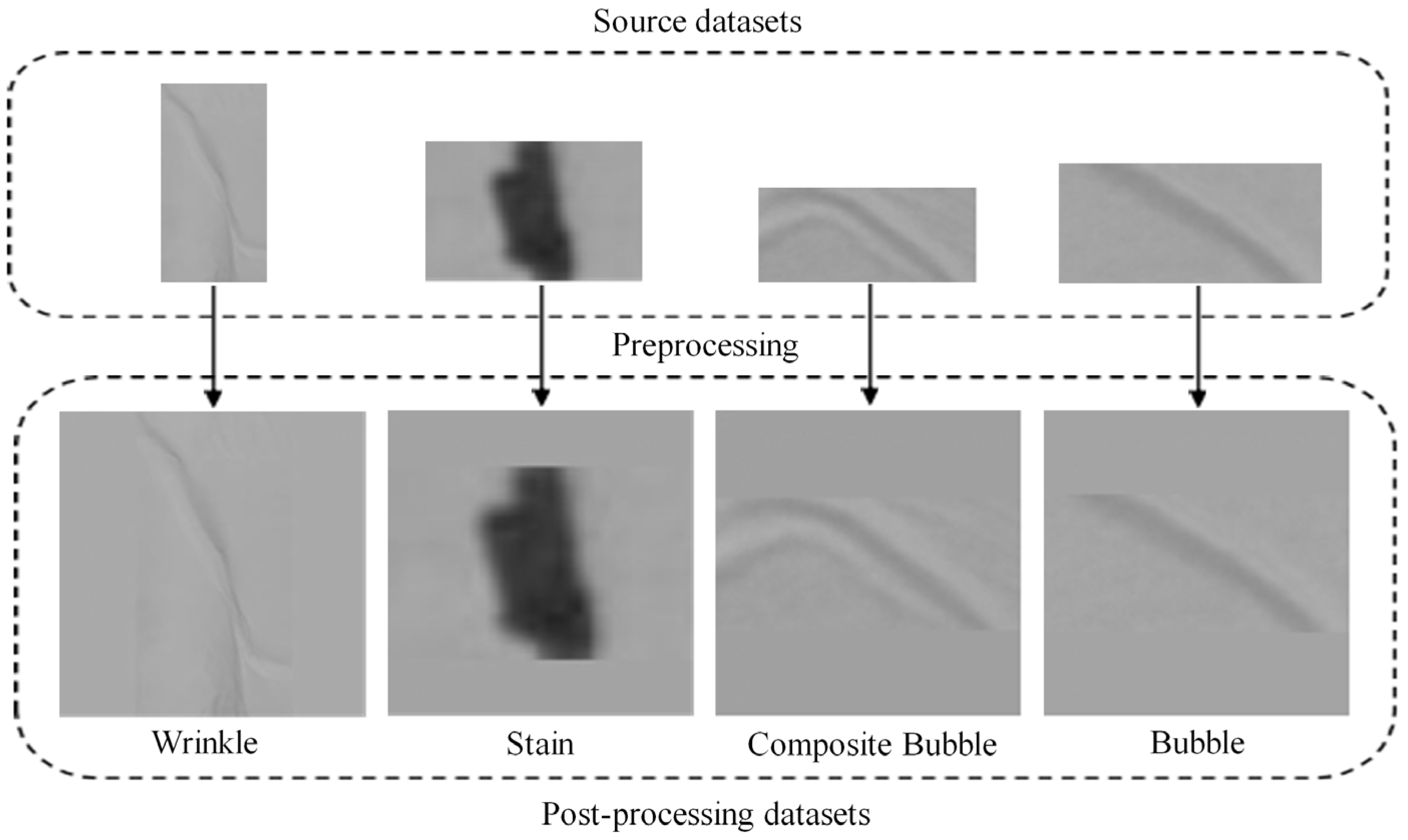
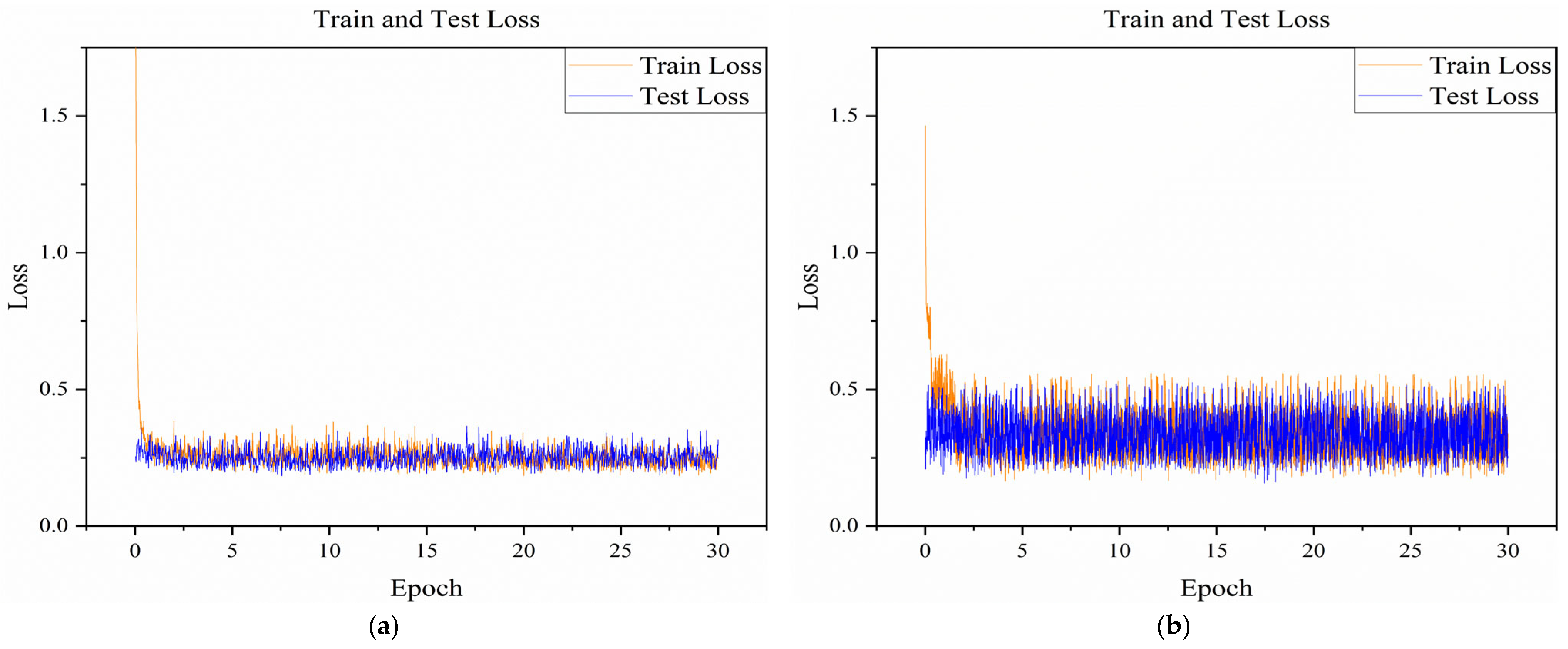
Ensuring the security and reliability of lithium-ion batteries necessitates the development of a robust methodology for detecting defects in battery separators during production. This study initially uses data augmentation techniques in the data processing phase, followed by the utilization of the weighted random sampler method for sampling. Additionally, the dataset is partitioned using the Stratified K-Fold cross-validation method to tackle imbalanced sample data. Subsequently, an ensemble of object detection algorithms involving Faster Region Convolutional Neural Network and RetinaNet is developed. The ensemble method employs a voting mechanism to ascertain the most accurate predictions and utilizes the Adaptive Delta optimization algorithm with adaptive learning rates. This algorithm adjusts the learning rate based on parameter change rates, eliminating the requirement for setting an initial learning rate to ensure result convergence. Finally, a model fine-tuning technique using pre-training transfer learning is applied to improve the detection performance of the ensemble model. Experimental results show that the improved methodology demonstrates a 16.26% increase in recall, a 7.05% improvement in precision, an 11.83% rise in balanced F Score, and a 0.23 increase in the area under the Receiver Operating Characteristic curve. The study results indicate that the proposed method is an effective and accurate approach to detecting defects in lithium-ion battery separators.
Keywords: battery defect detection; transfer learning; model integration; class imbalance battery defect detection; transfer learning; model integration; class imbalance