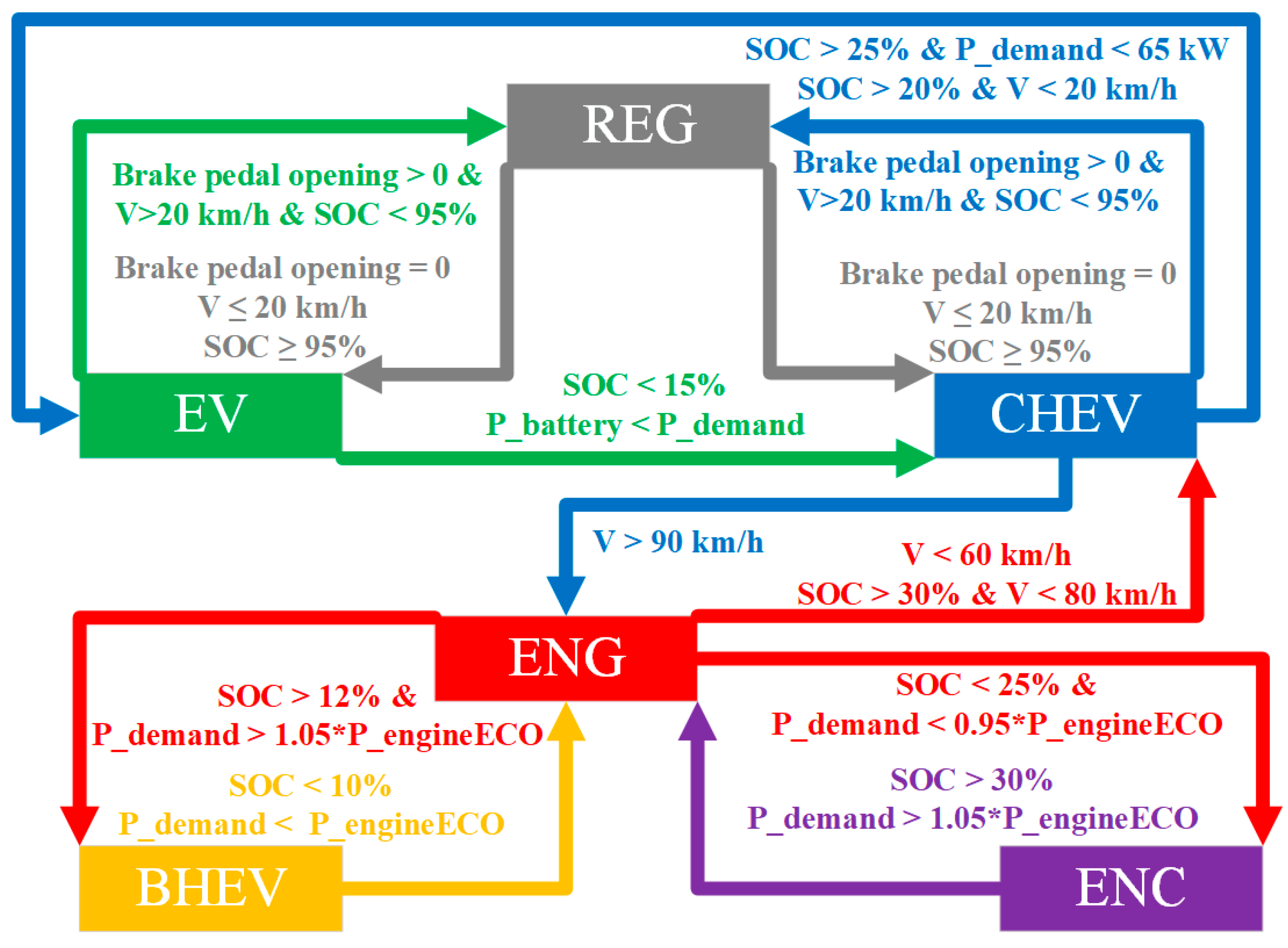
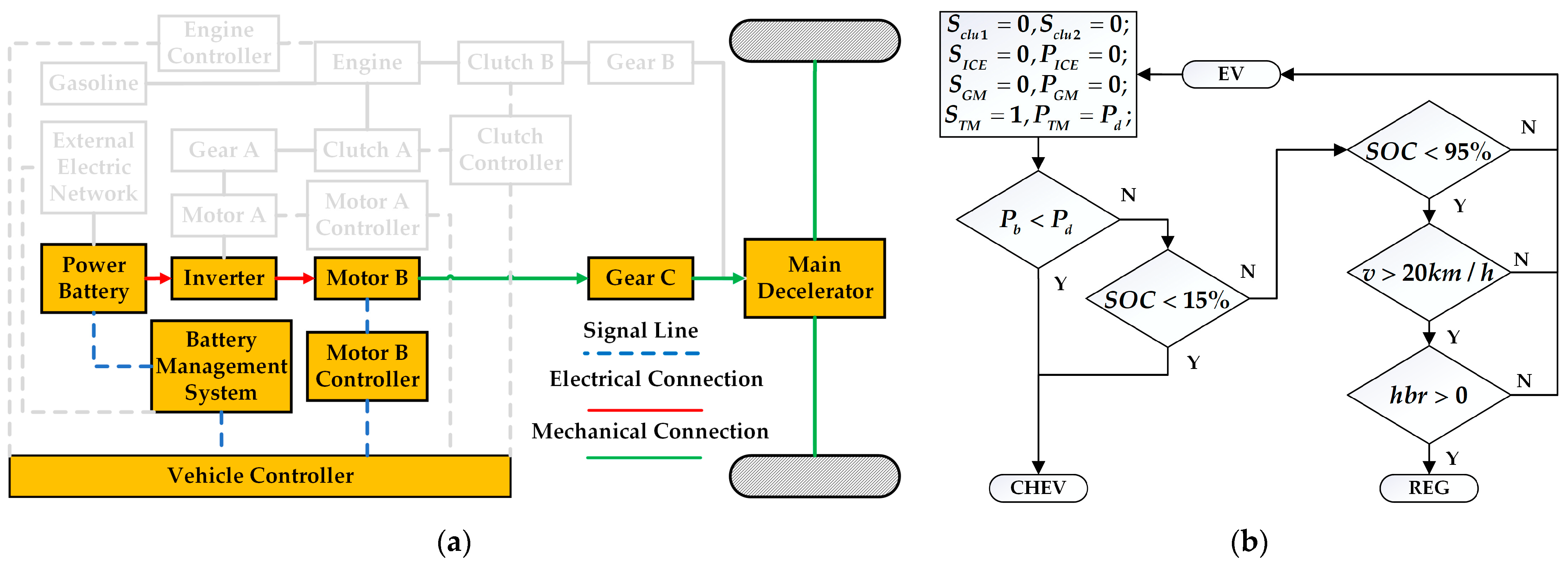
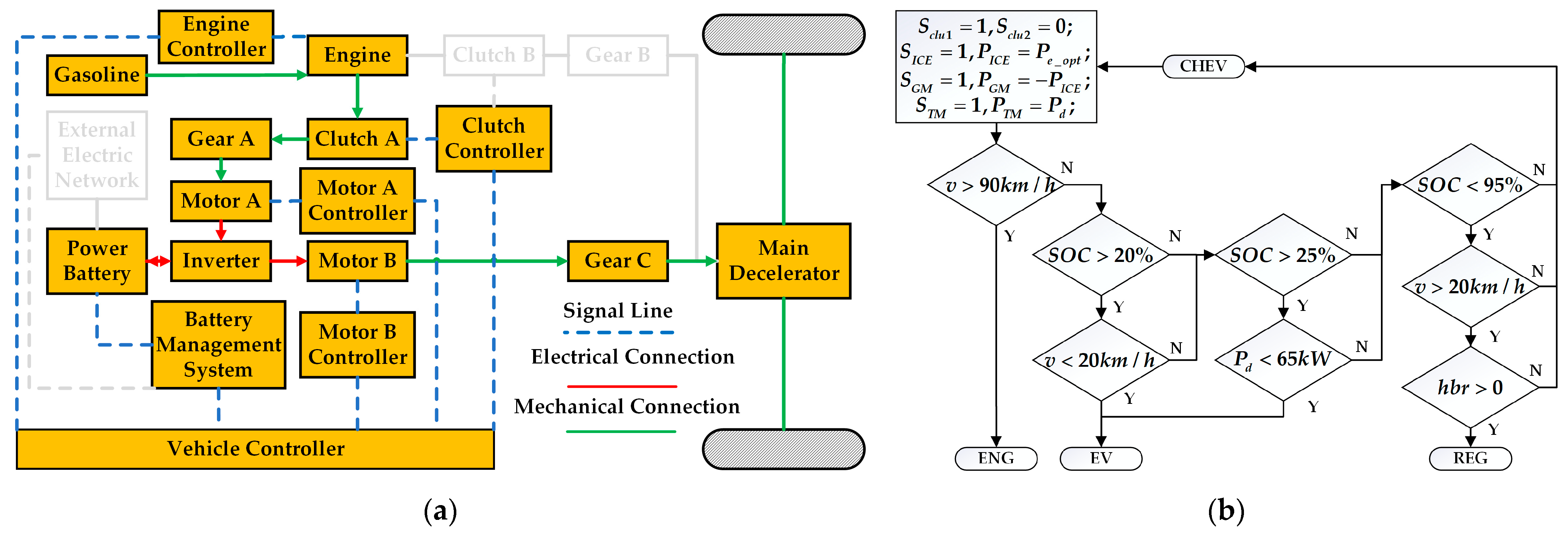
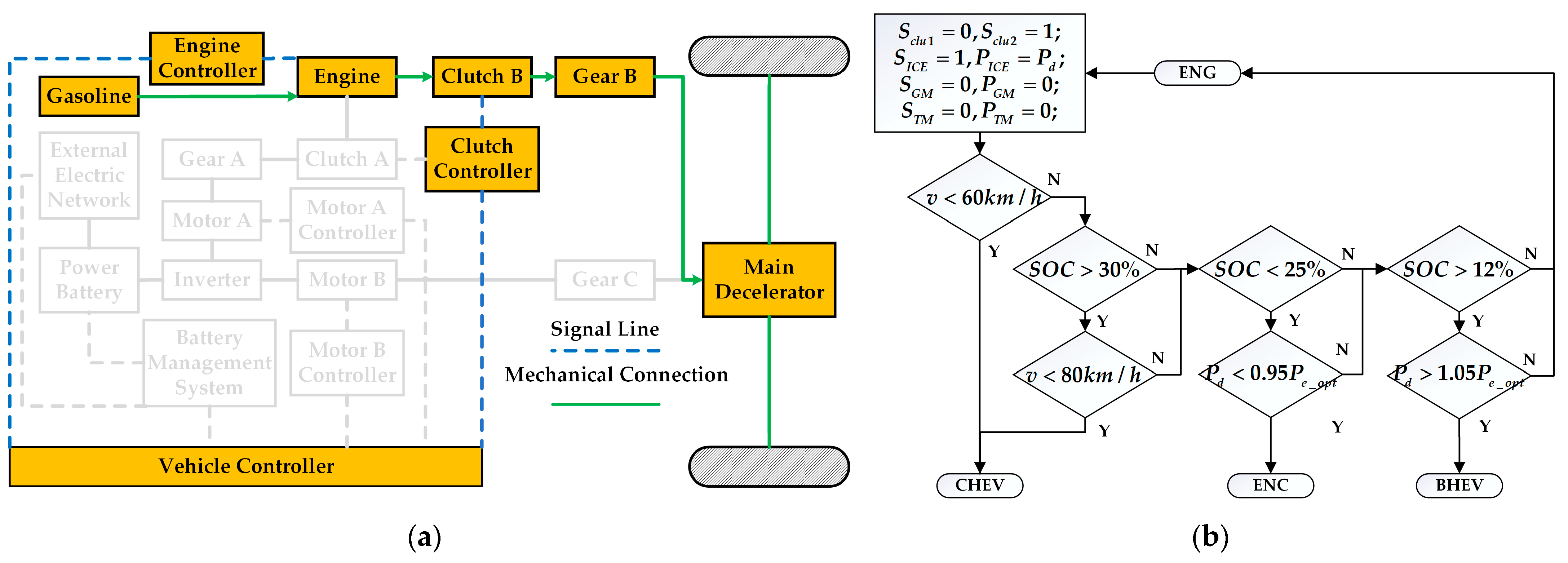
Rule-Based Control Strategy for a Novel Dual-Motor PHEV Improved by Dynamic Programming

 , ,
, , Abstract
Share and Cite
Zou, S.; Zhang, J.; Yang, Y.; Zhou, Y.; Liu, Y.; Peng, J.; Feng, X. Rule-Based Control Strategy for a Novel Dual-Motor PHEV Improved by Dynamic Programming. Electronics 2025, 14, 1450. https://doi.org/10.3390/electronics14071450
Zou S, Zhang J, Yang Y, Zhou Y, Liu Y, Peng J, Feng X. Rule-Based Control Strategy for a Novel Dual-Motor PHEV Improved by Dynamic Programming. Electronics. 2025; 14(7):1450. https://doi.org/10.3390/electronics14071450
Chicago/Turabian StyleZou, Shunzhang, Jun Zhang, Yu Yang, Yunshan Zhou, Yunfeng Liu, Jingyang Peng, and Xiaokang Feng. 2025. "Rule-Based Control Strategy for a Novel Dual-Motor PHEV Improved by Dynamic Programming" Electronics 14, no. 7: 1450. https://doi.org/10.3390/electronics14071450
APA StyleZou, S., Zhang, J., Yang, Y., Zhou, Y., Liu, Y., Peng, J., & Feng, X. (2025). Rule-Based Control Strategy for a Novel Dual-Motor PHEV Improved by Dynamic Programming. Electronics, 14(7), 1450. https://doi.org/10.3390/electronics14071450