Verification of Maximum Torque Per Joule Loss Control of a Wound-Rotor Synchronous Machine with Strongly Non-Linear Parameters

Abstract
1. Introduction
2. Wound-Rotor Synchronous Machine Control Regions
- p is the number of its pole-pairs
- Ld, Lq are machine inductances in the d and q axes
- id, iq are currents in d and q axes
- Lf’ is the field-winding inductance referred to the stator
- Ra is machine armature resistance
- ψa is machine armature flux linkage
- ei is machine back electromotive force
2.1. Maximum Torque per Joule Loss Control Region
2.2. Maximum Torque per Ampere Control Region
2.3. Adaptive Field-Weakening Control Region
2.4. Wound-Rotor Synchronous Machine Optimal Control Regions
2.5. Transitions Between WRSM Control Regions
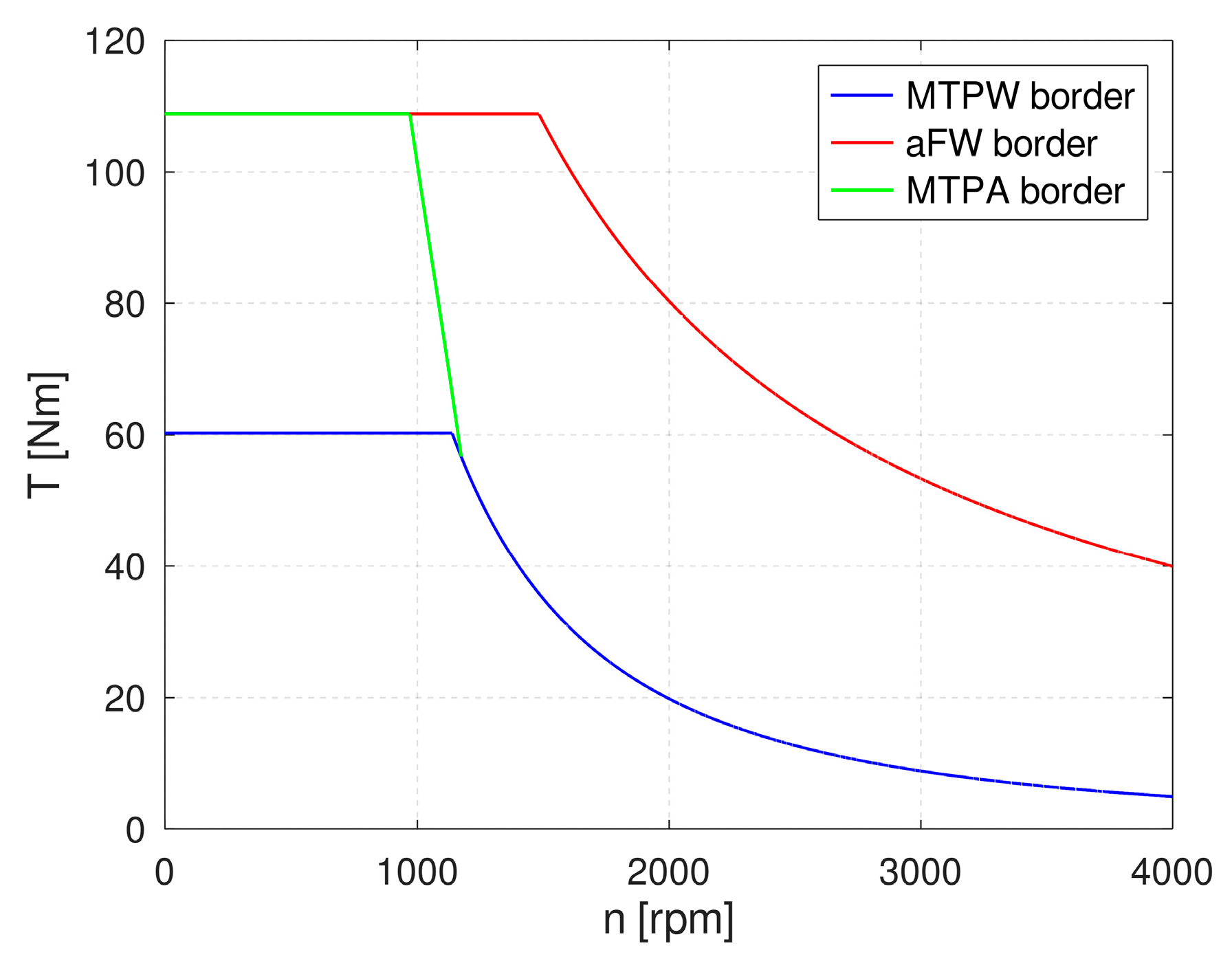
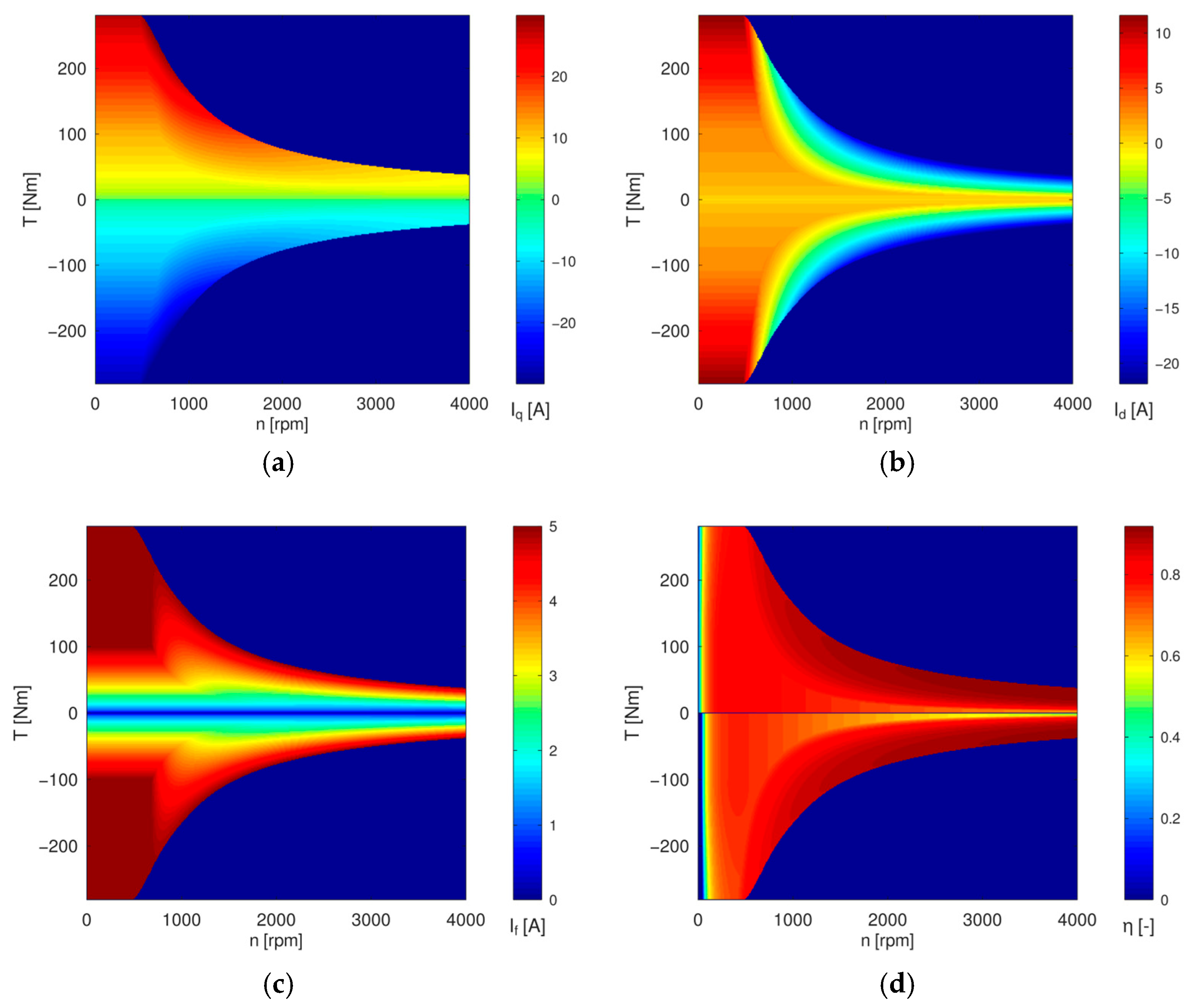
2.6. Overall Behaviour of the Wound-Rotor Synchronous Machine Under Optimal Control
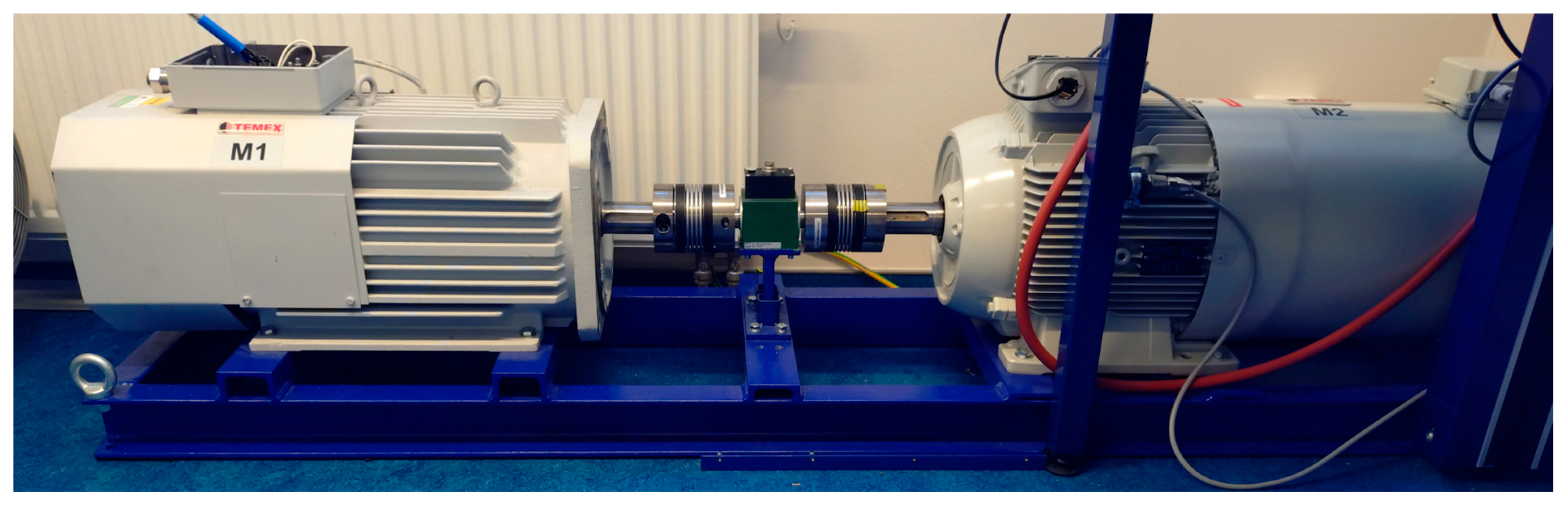
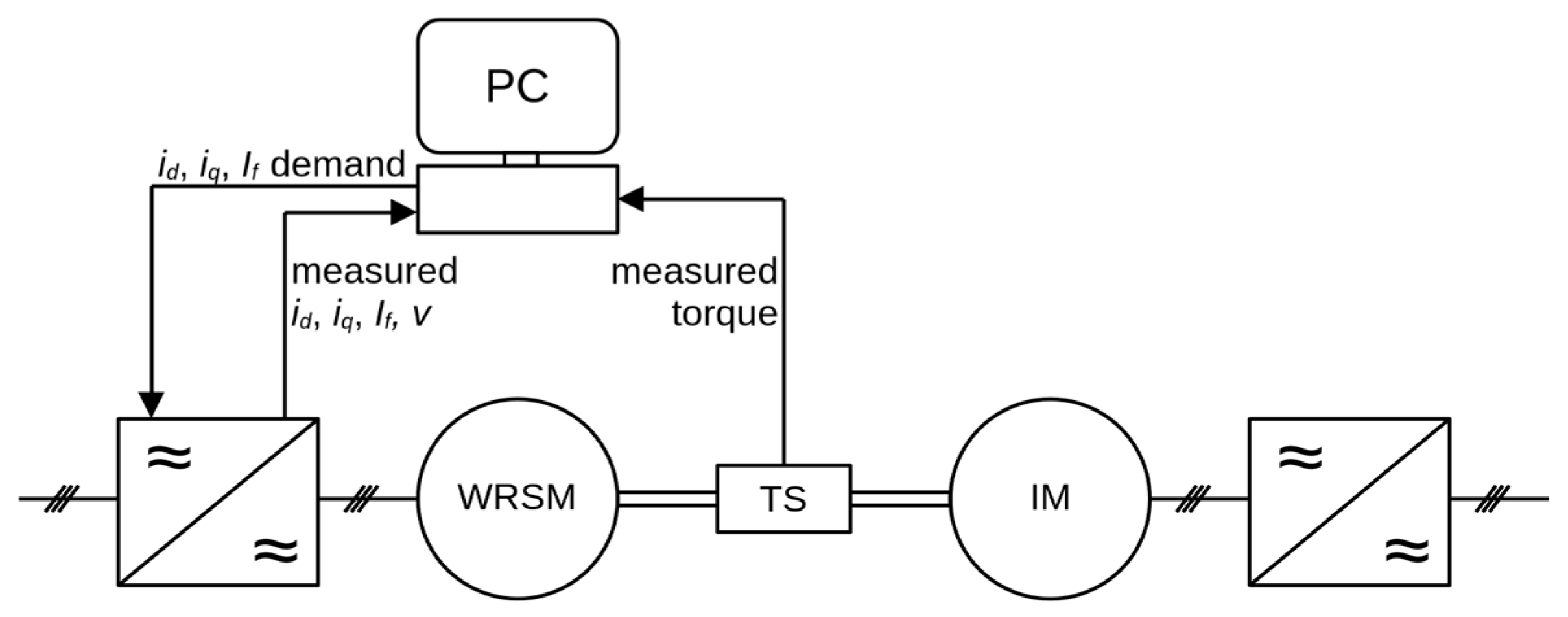
3. Experimental Verification
- Verification of the machine control using measured constant equivalent circuit parameters.
- Verification of the machine control using non-linear equivalent circuit parameters derived from measured WRSM flux maps
4. Control Properties While Considering Linear Parameters
5. Control Properties While Considering Non-Linear Parameters
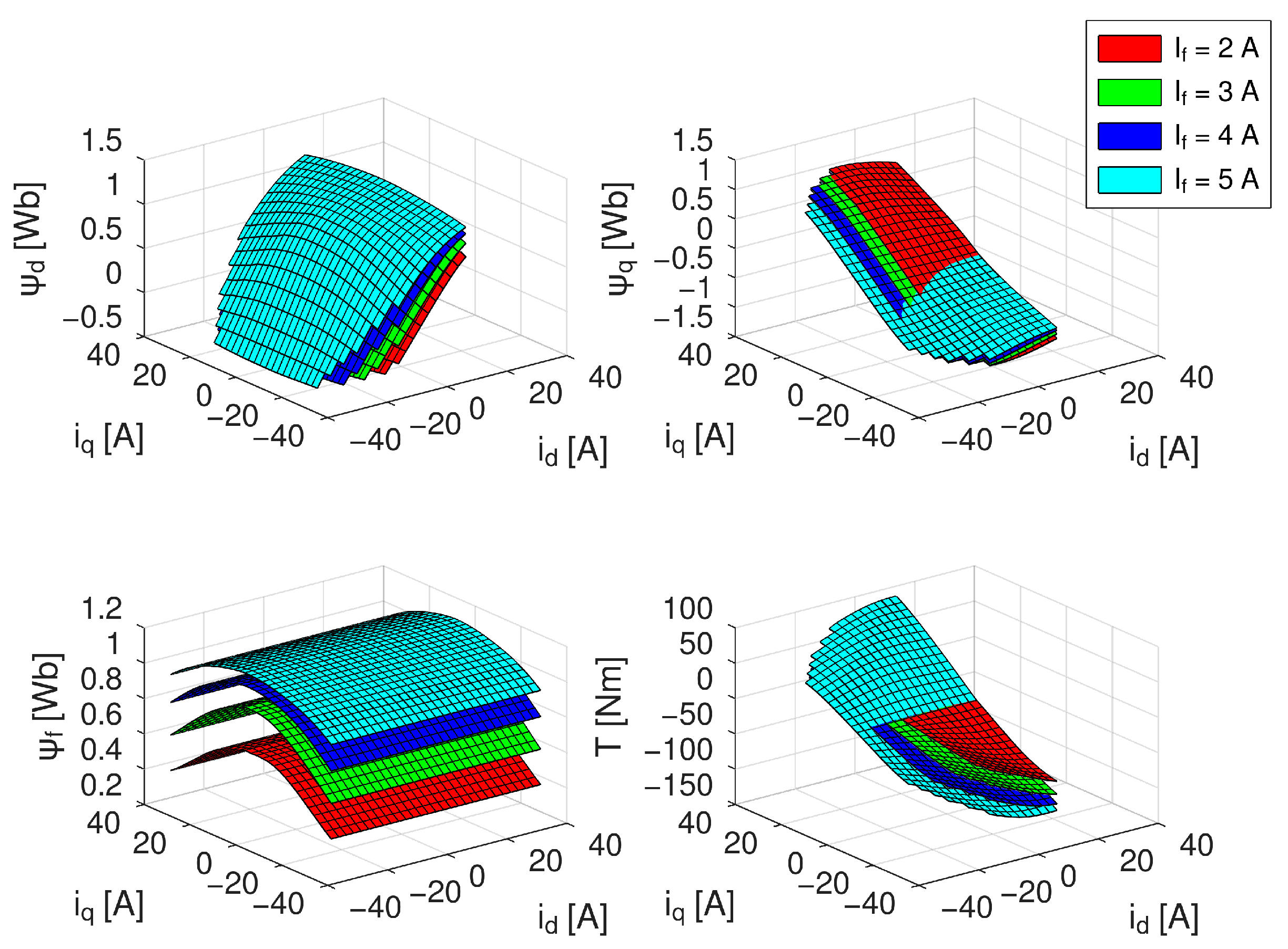
5.1. Wound-Rotor Synchronous Machine Flux Maps
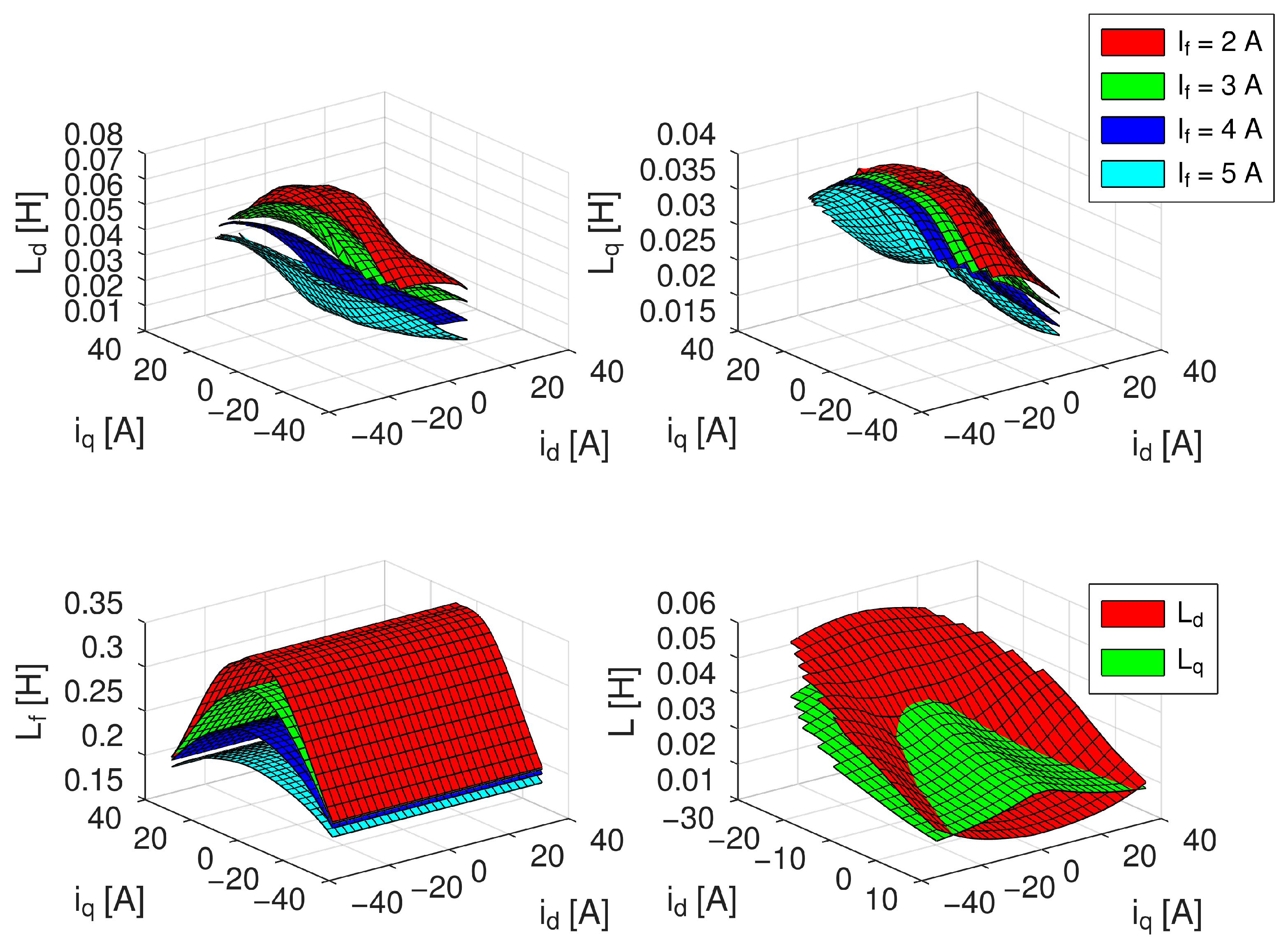
5.2. Wound-Rotor Synchronous Machine Equivalent Circuit Parameters
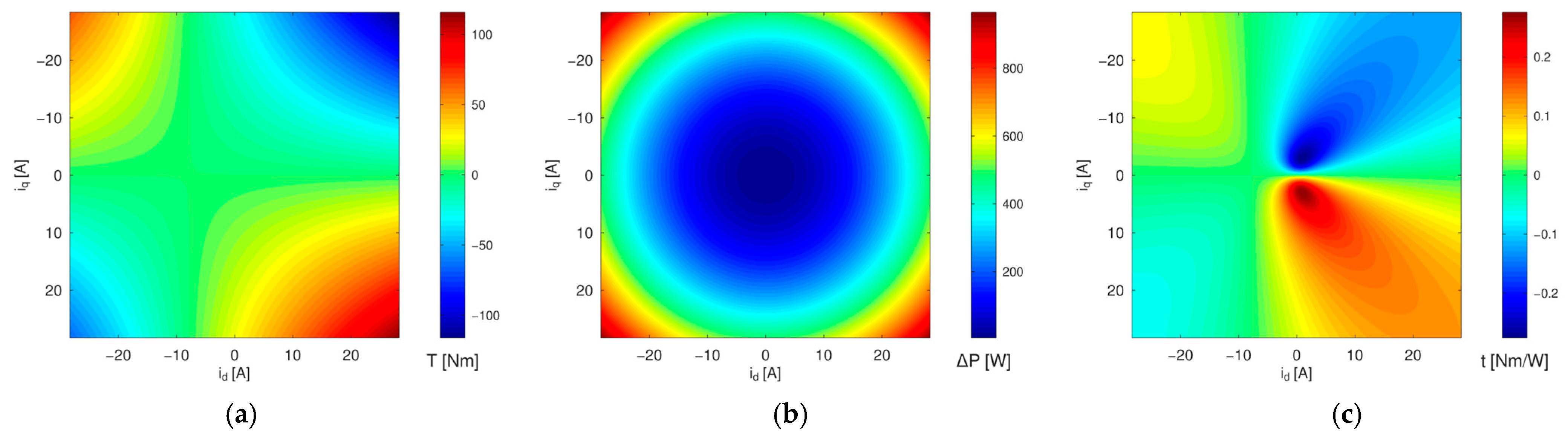
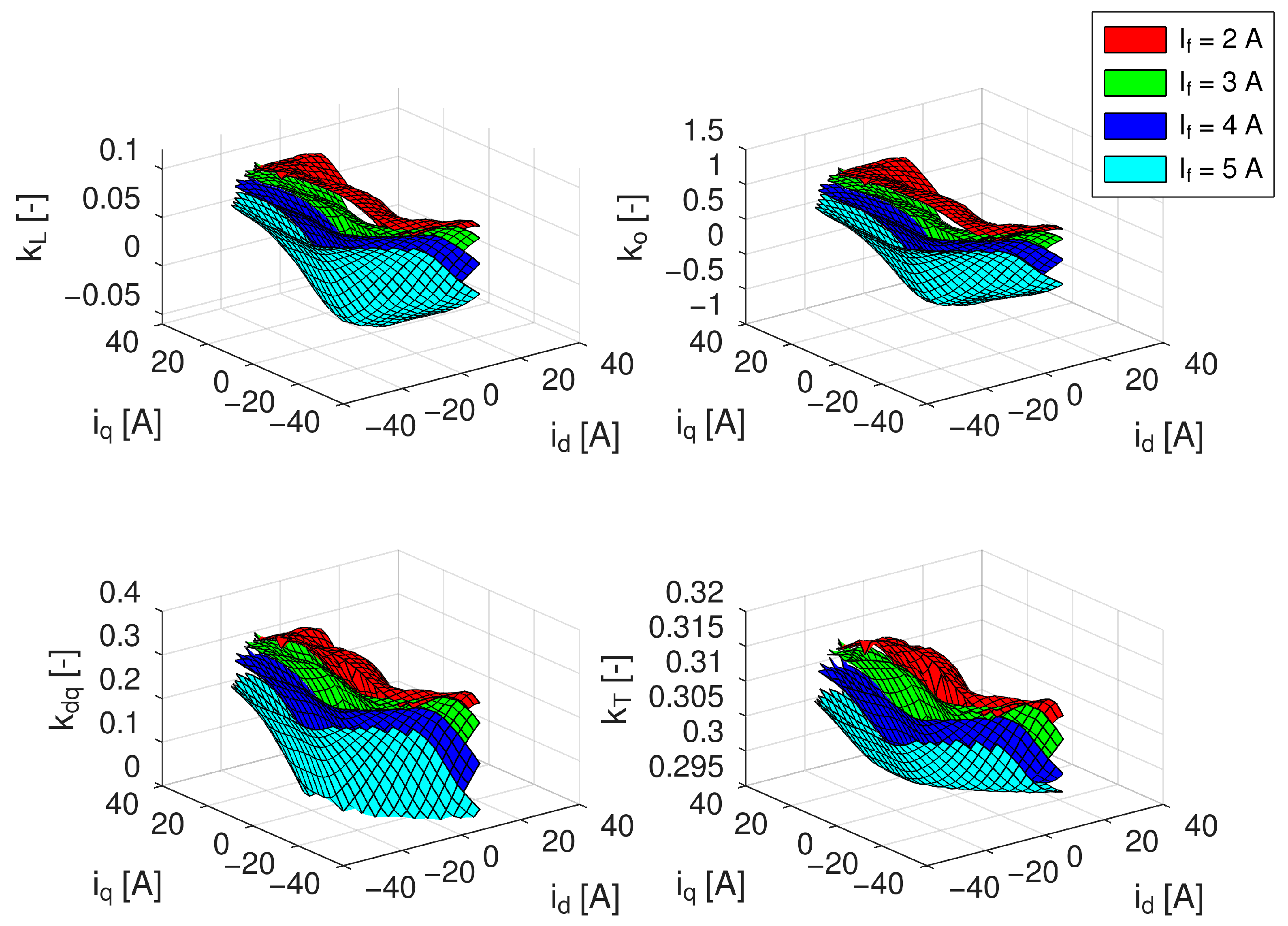
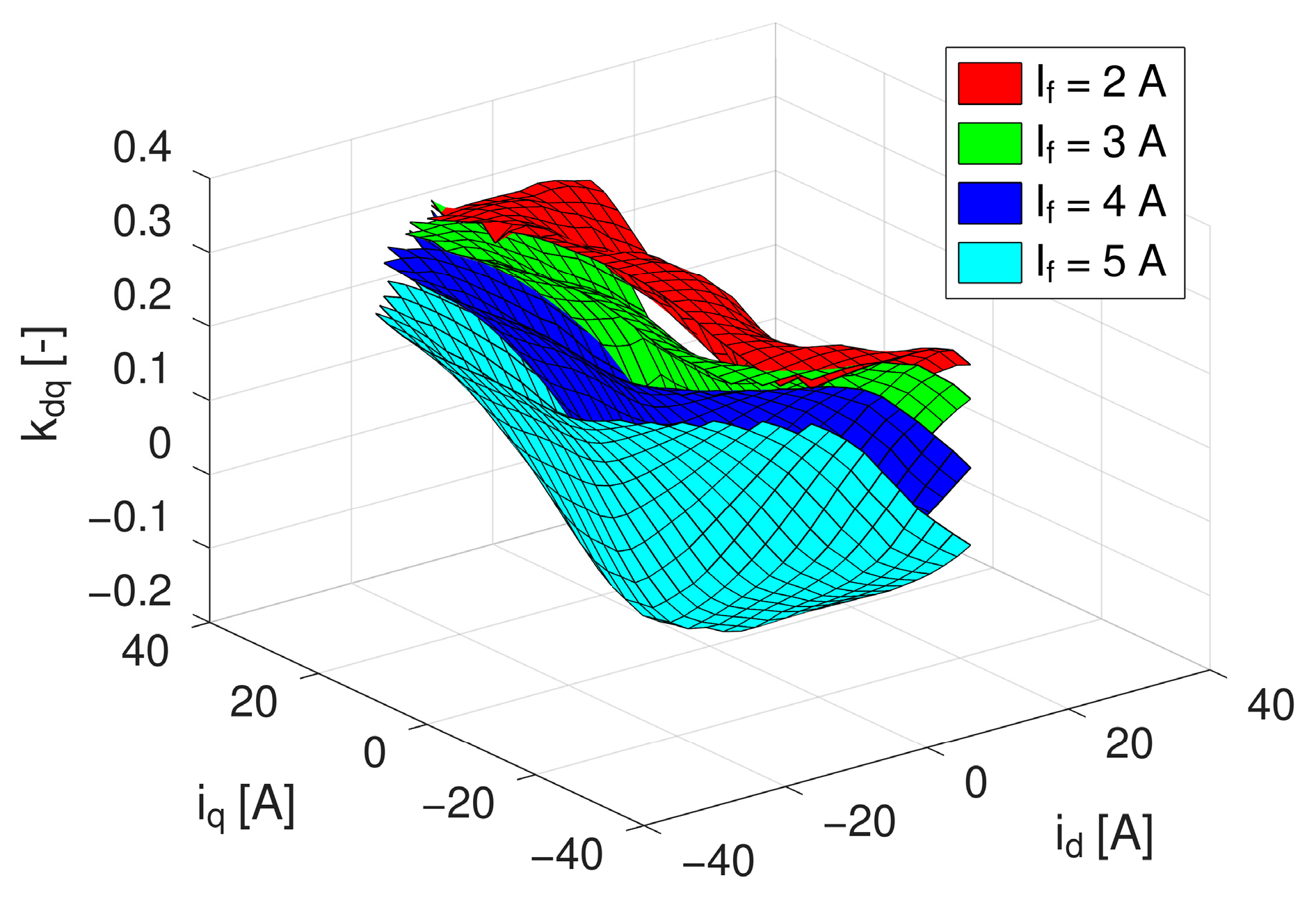
5.3. Maximum Torque per Joule Loss Control Factors
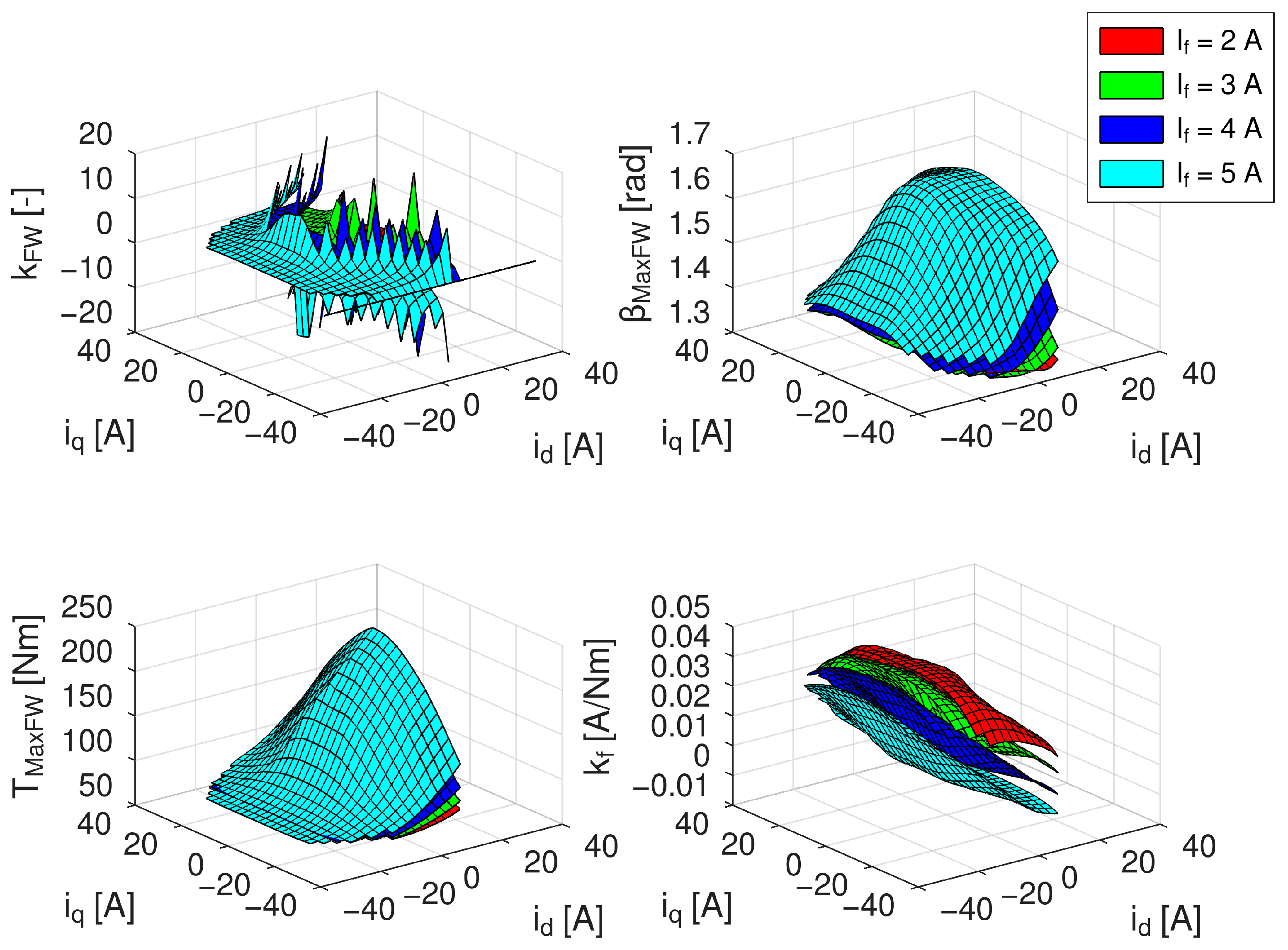
5.4. Adaptive Field-Weakening Control Factors
6. Experimental Verification of Optimal Wound-Rotor Synchronous Machine Control Strategy
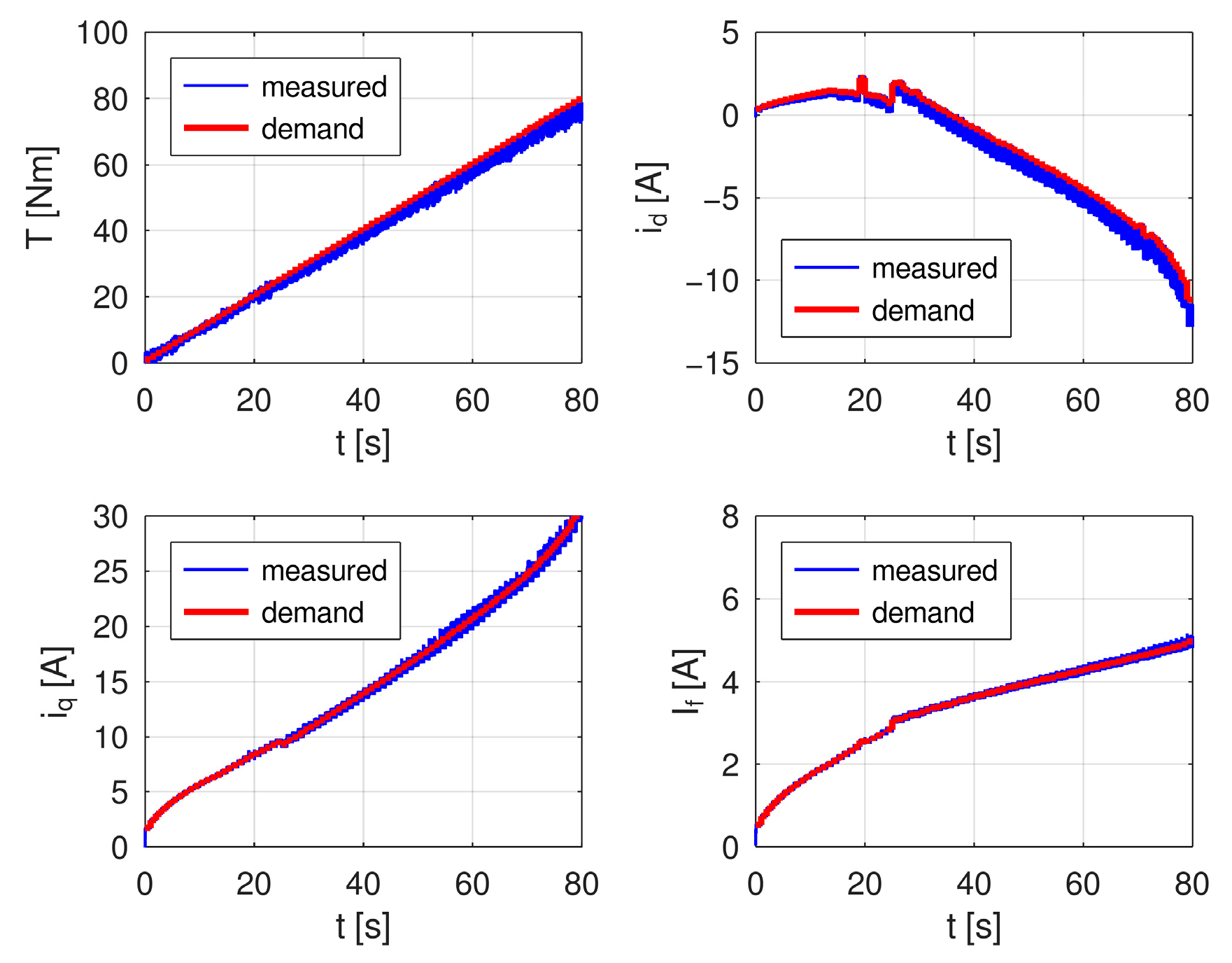
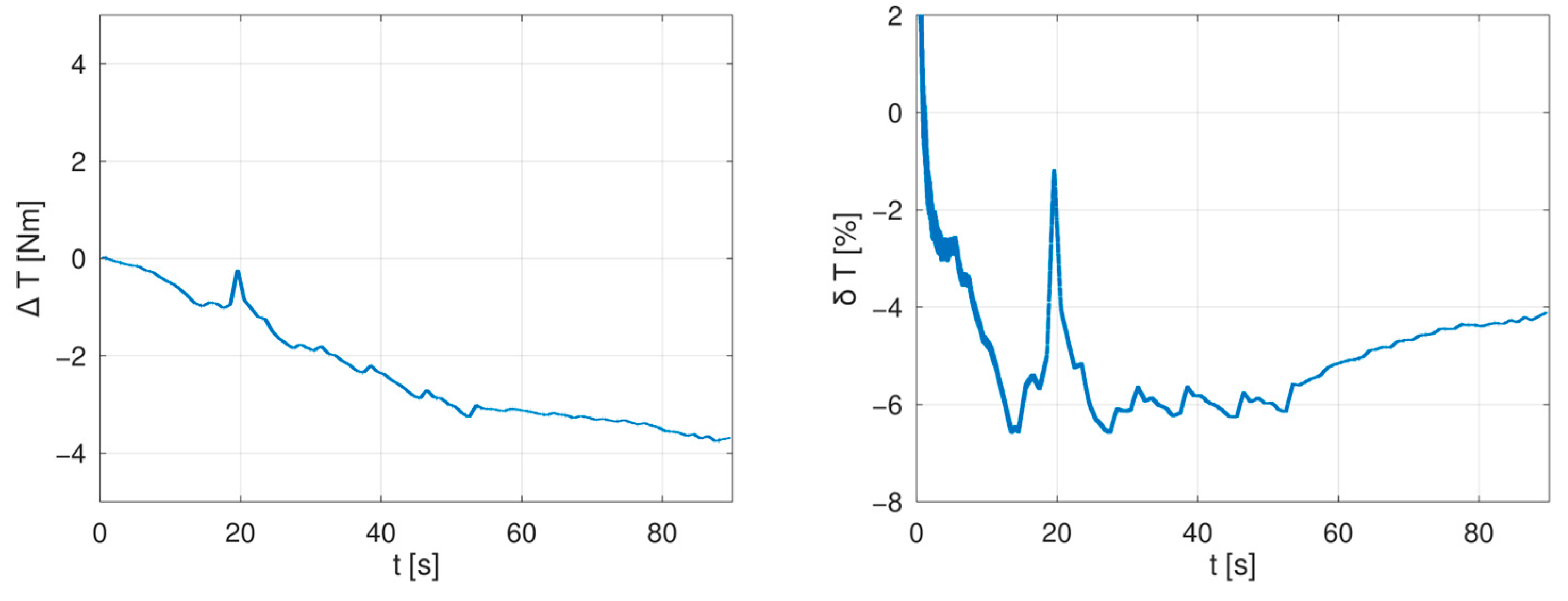
- constant speed of 300 rpm, pure MTPJ region
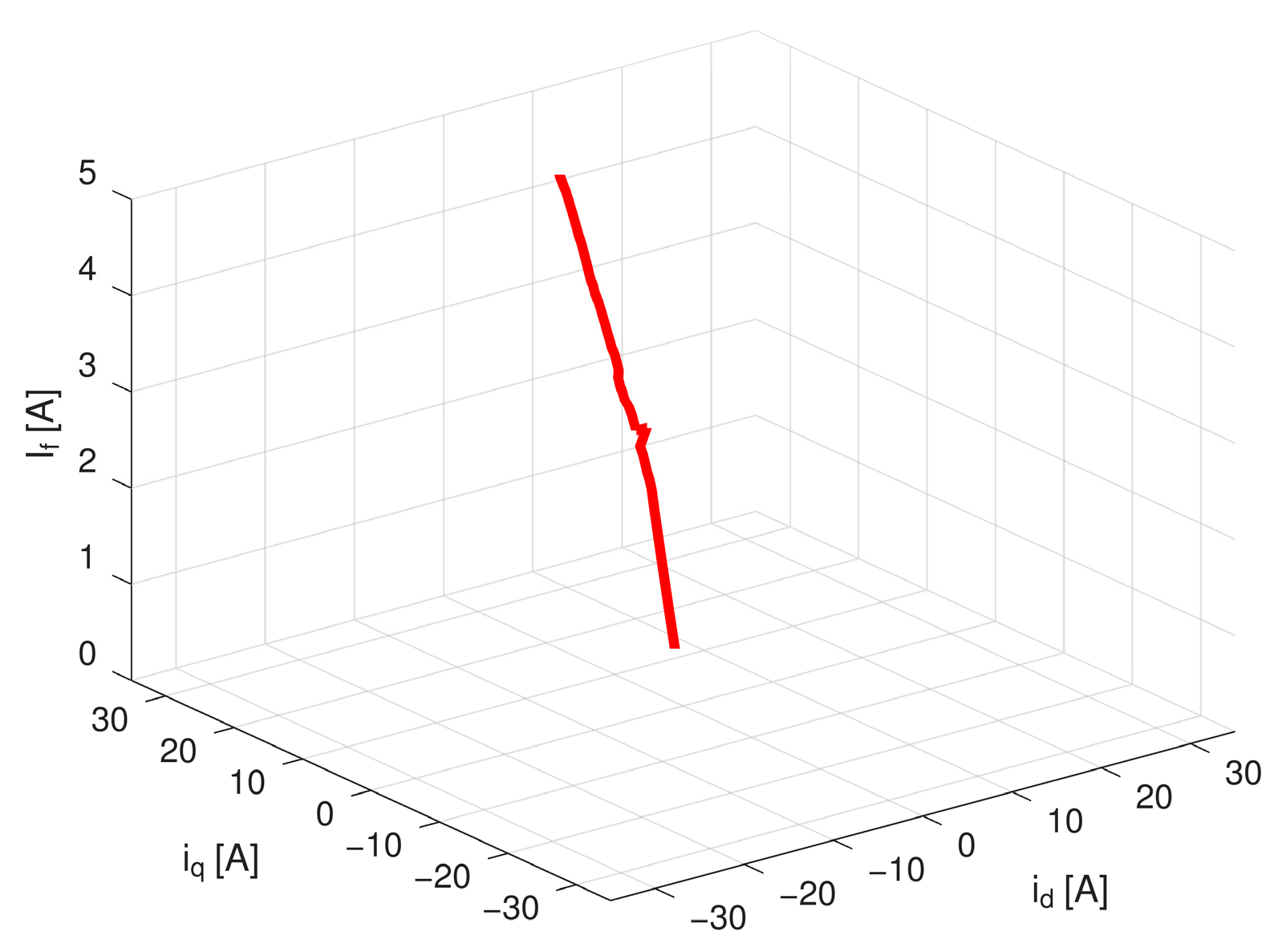
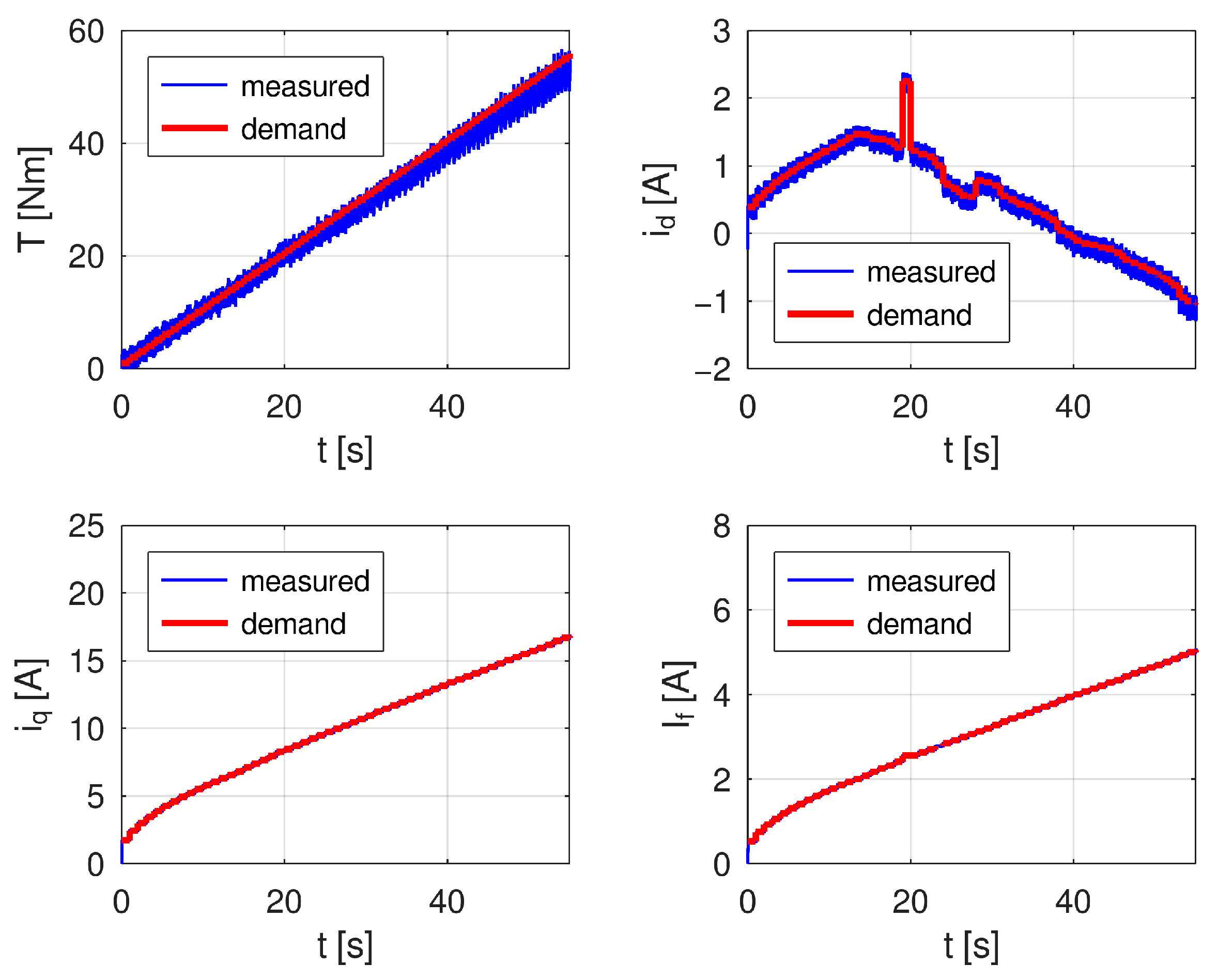
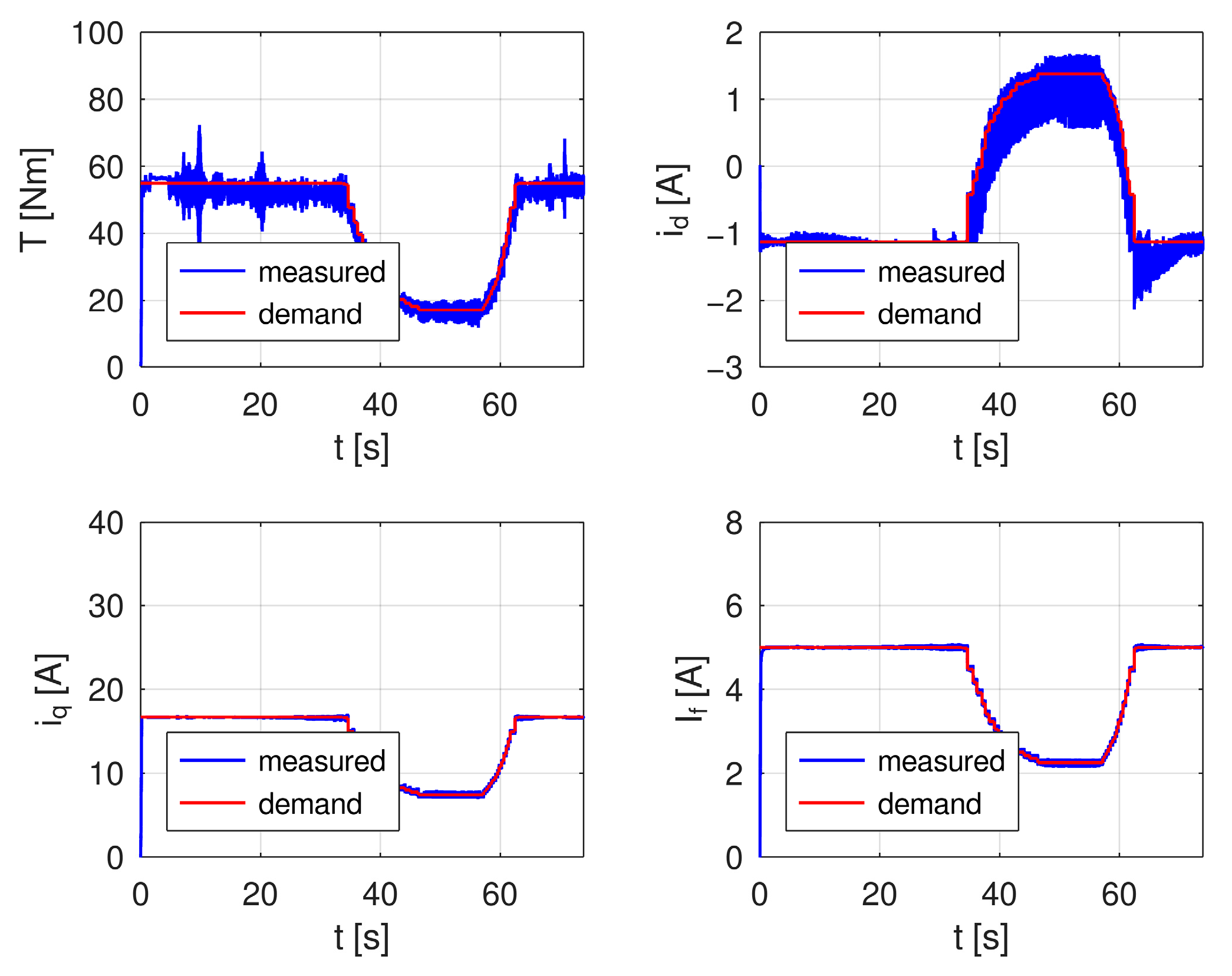
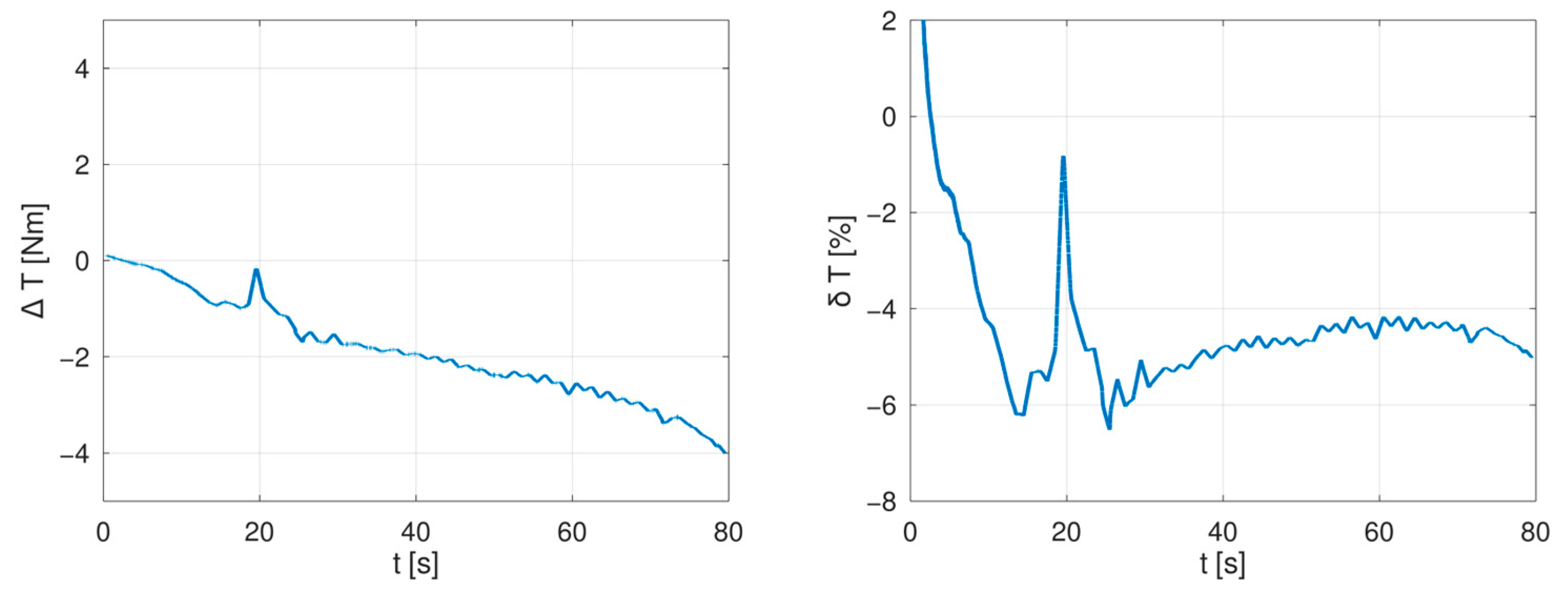
- constant speed of 1000 rpm, transiting from MTPJ to MTPA region
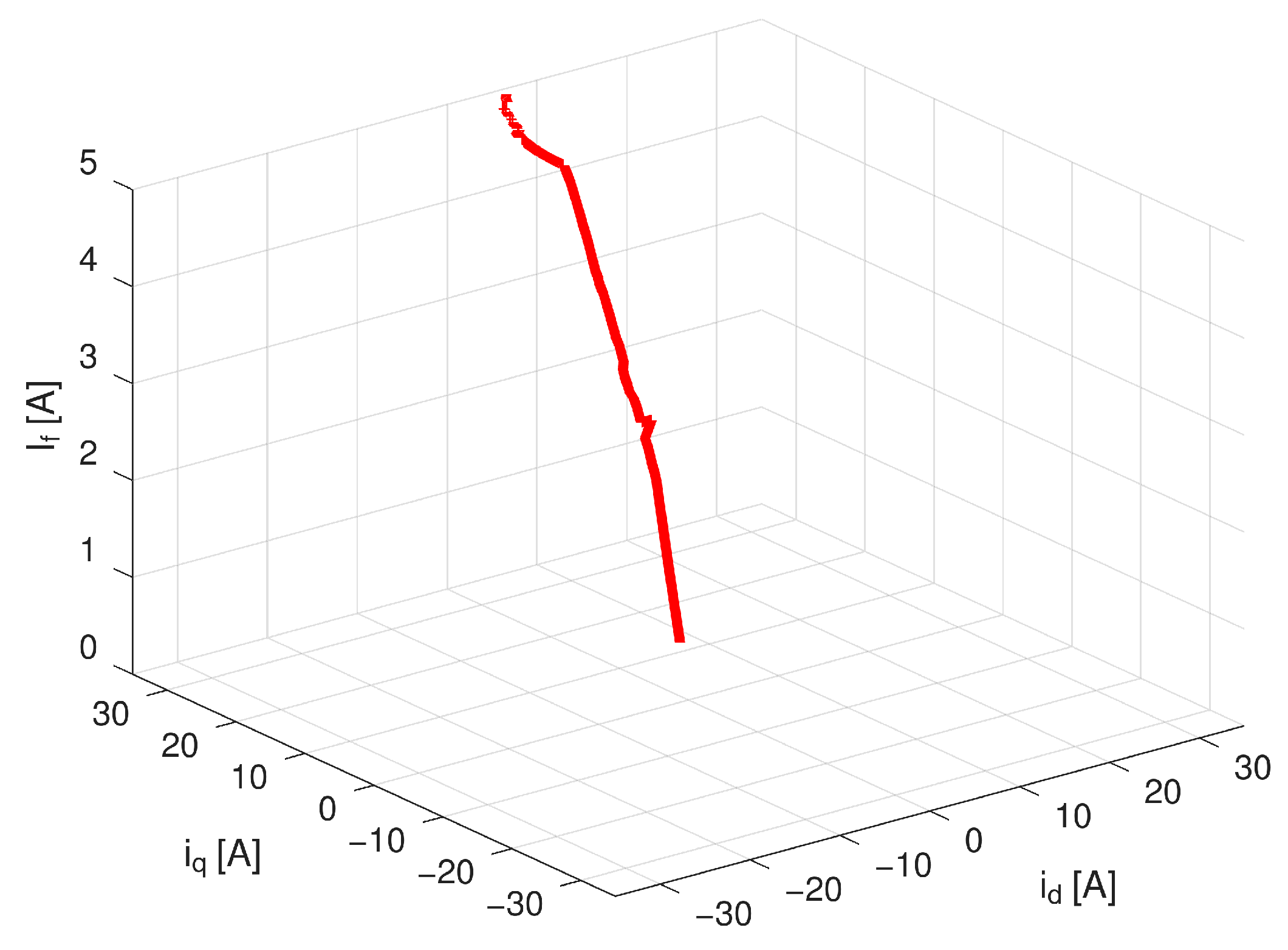
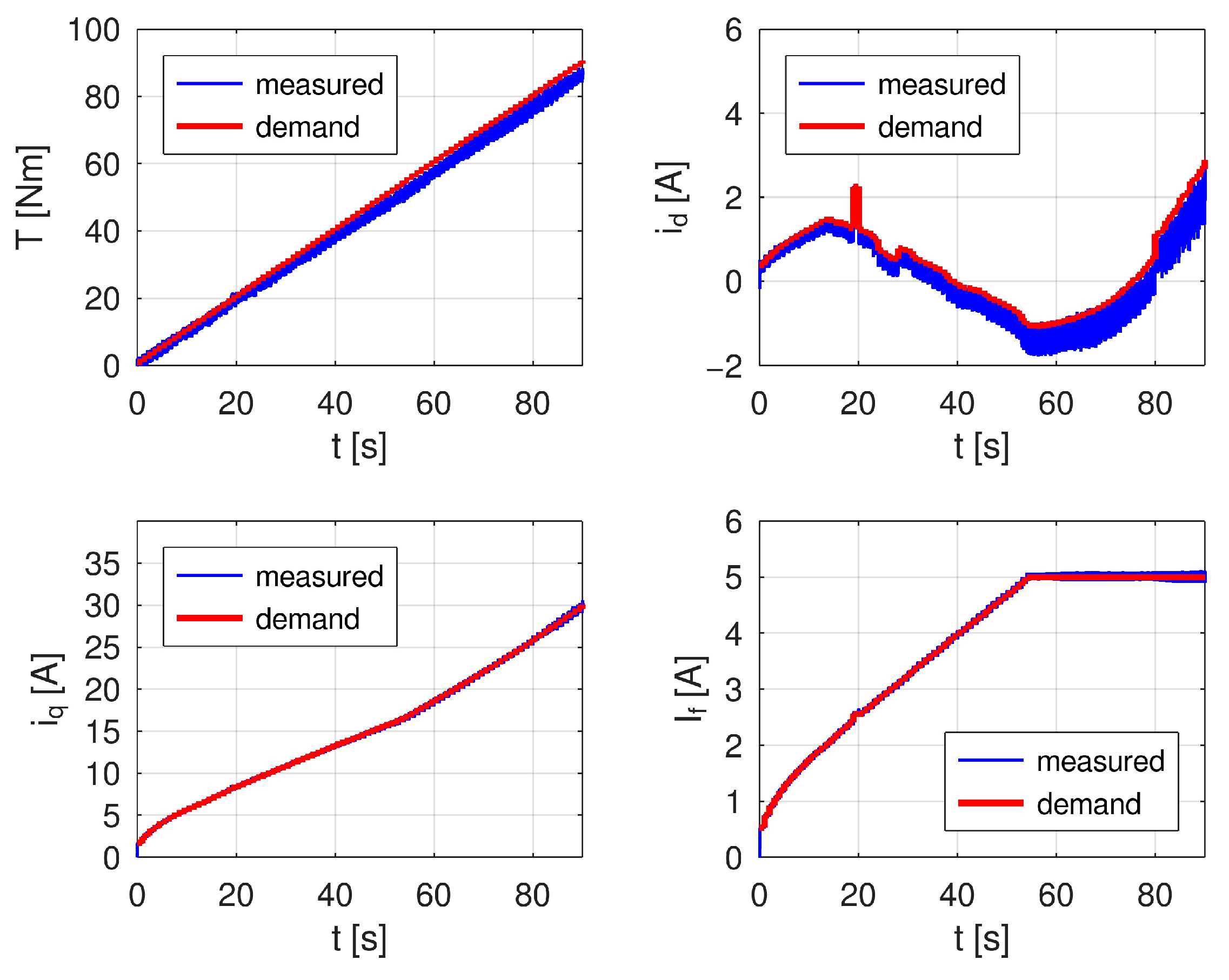
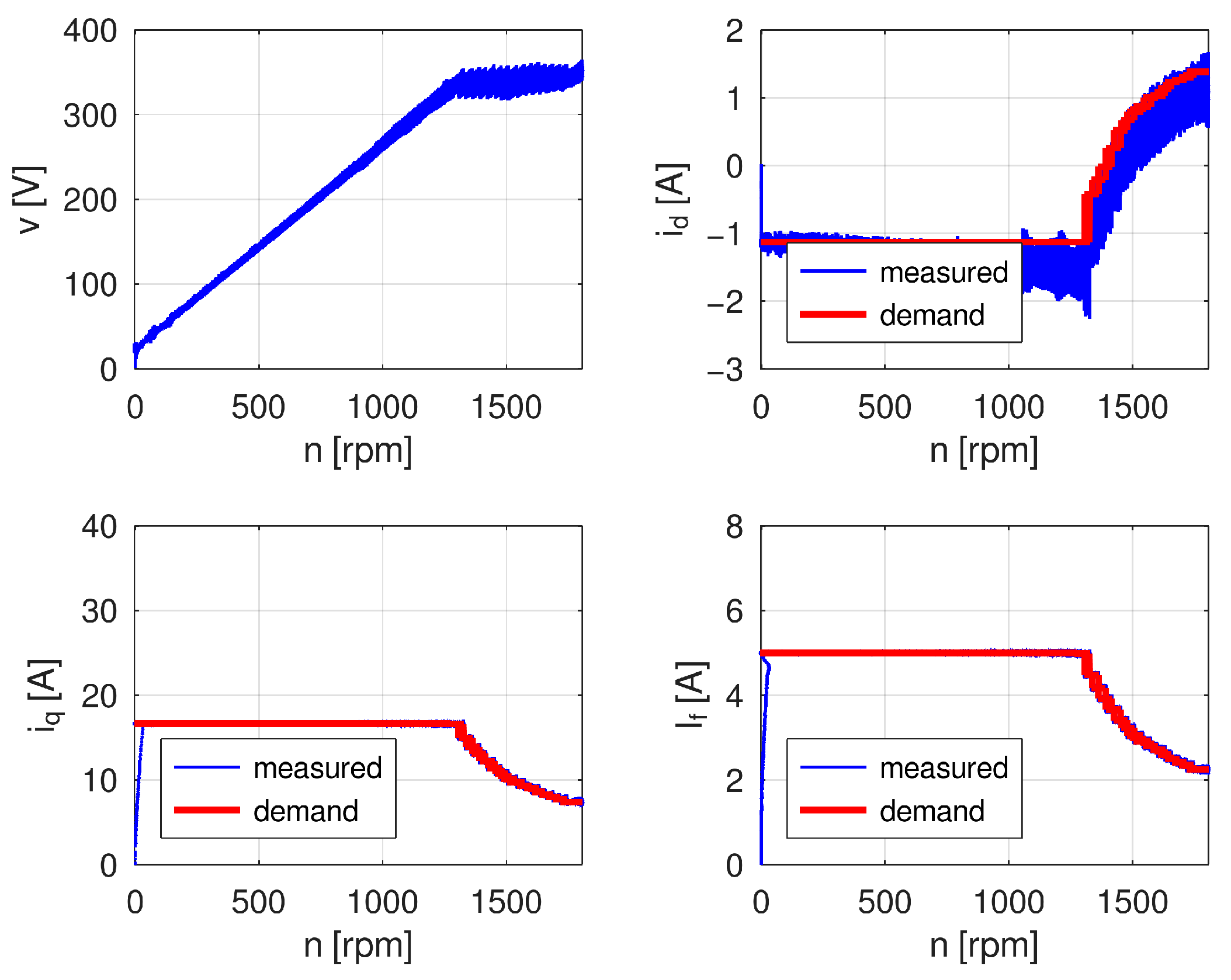
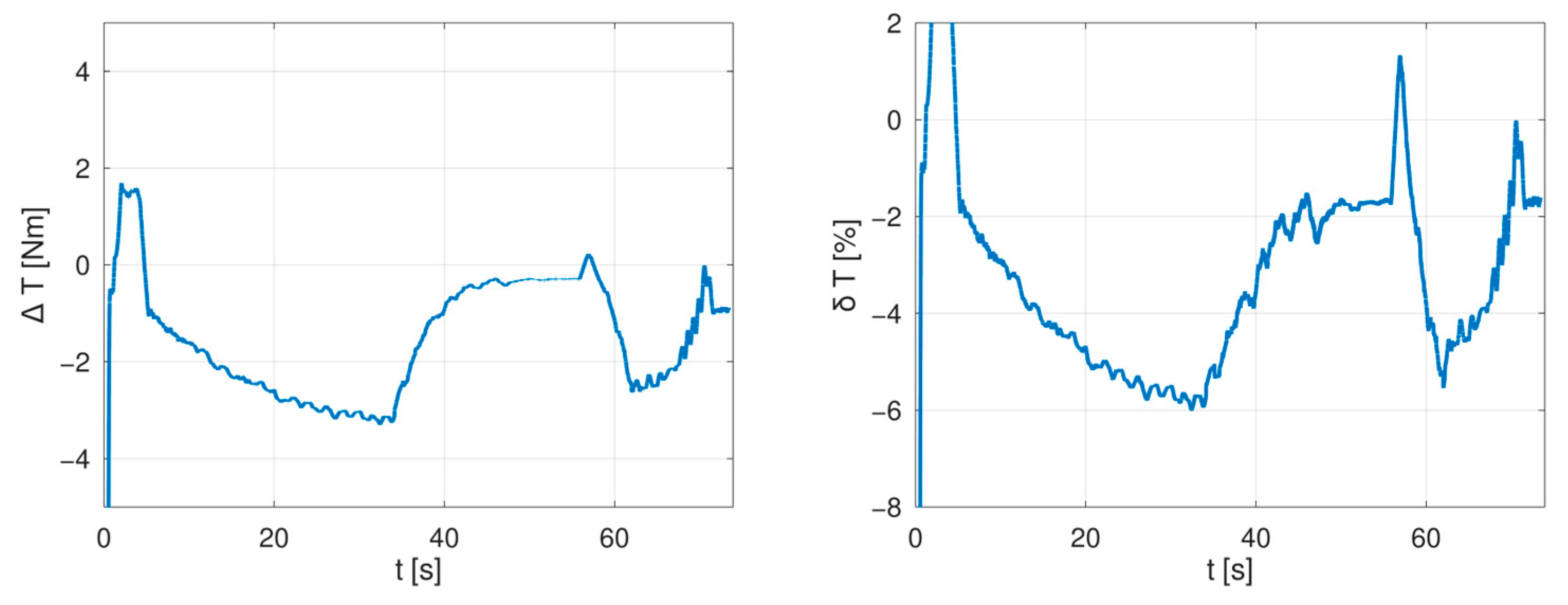
- constant speed of 1500 rpm, transiting of MTPJ to aFW region
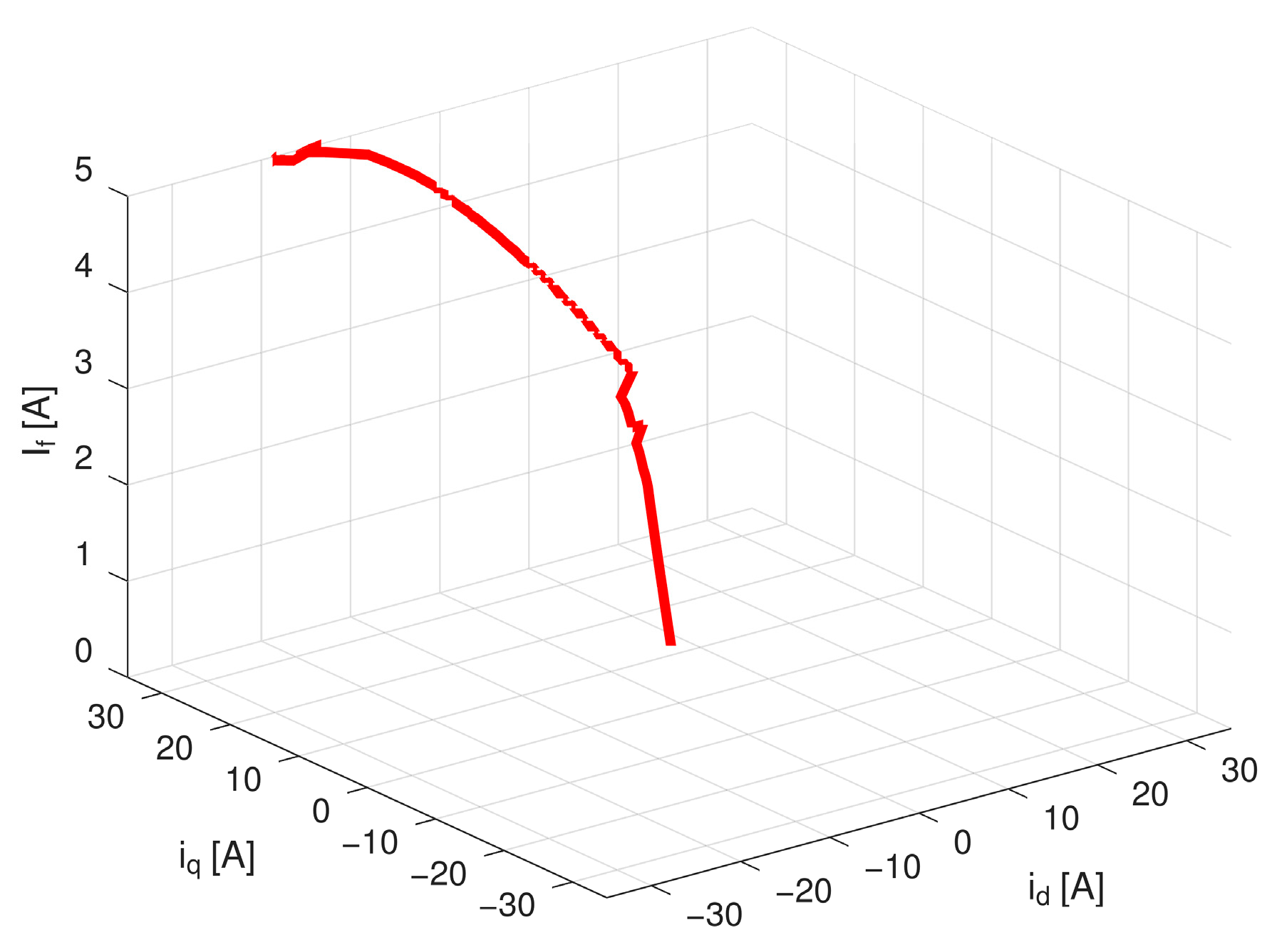
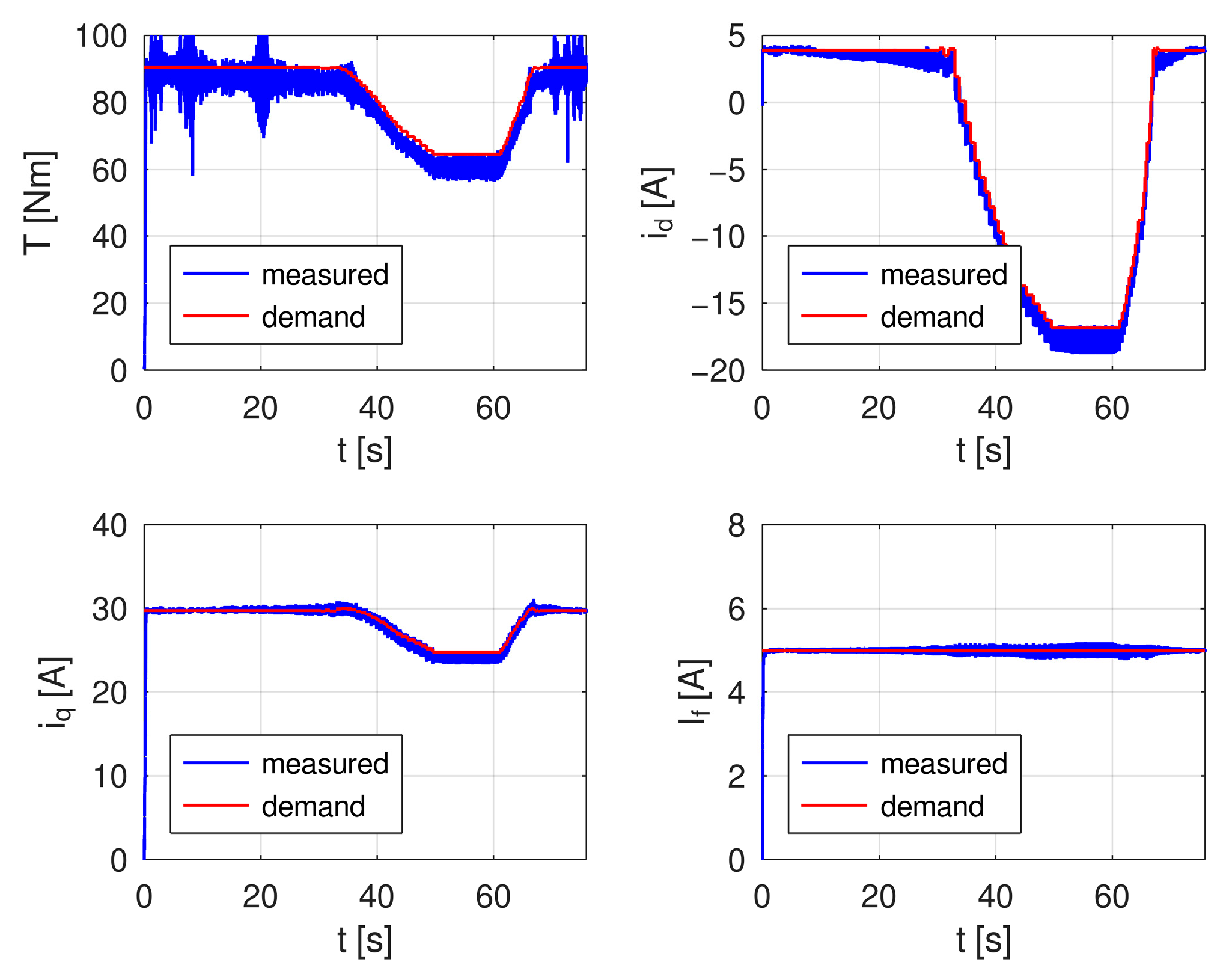
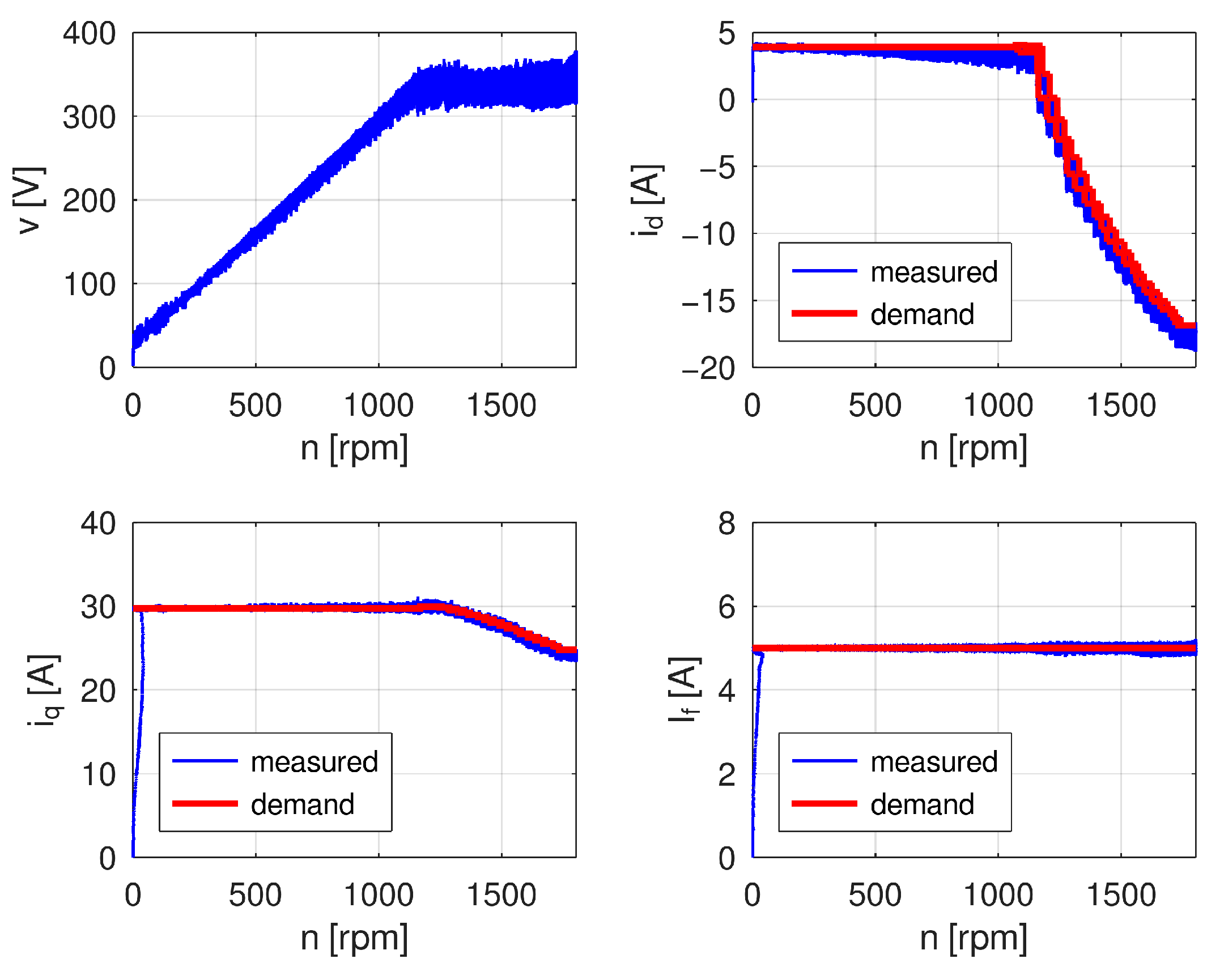
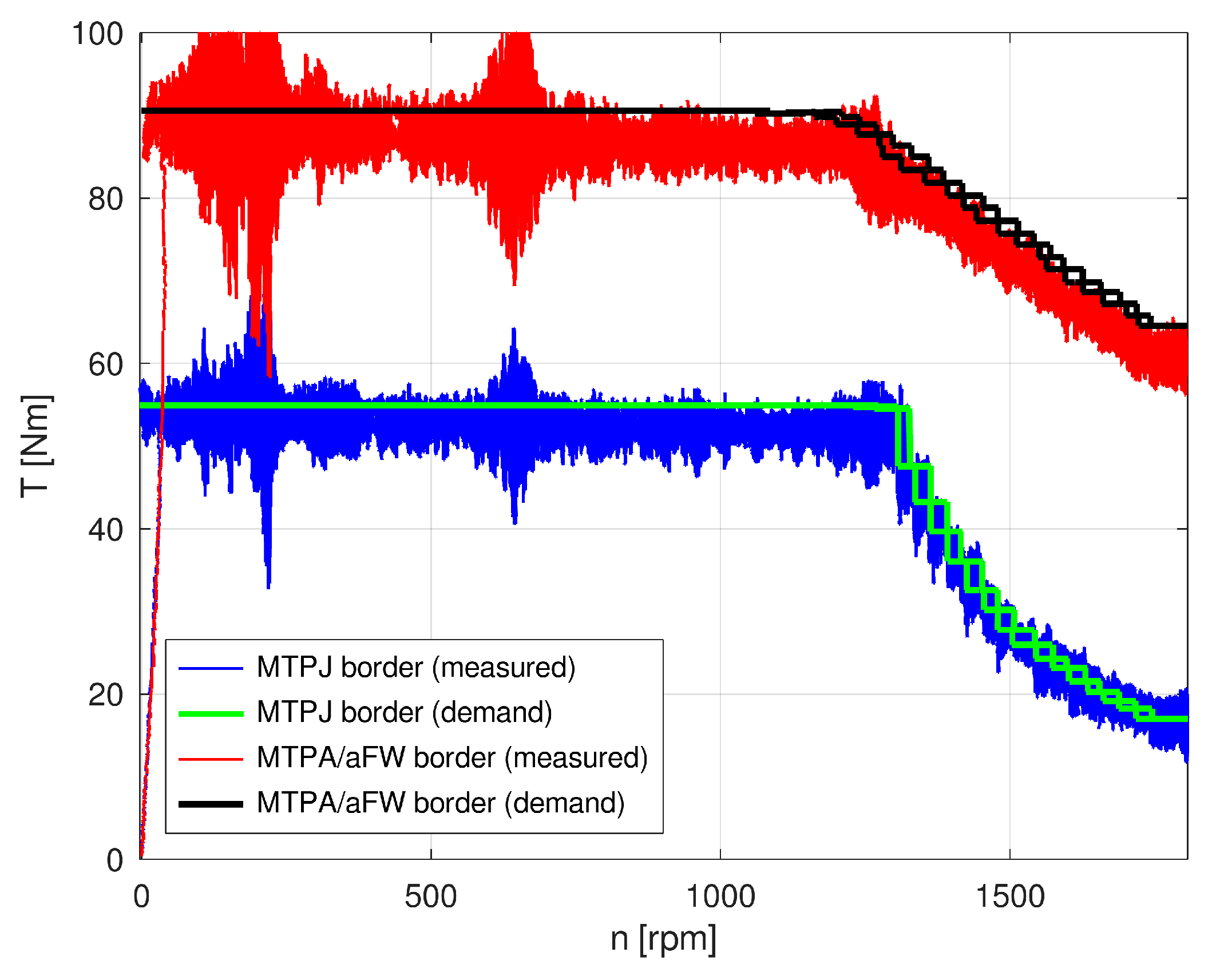
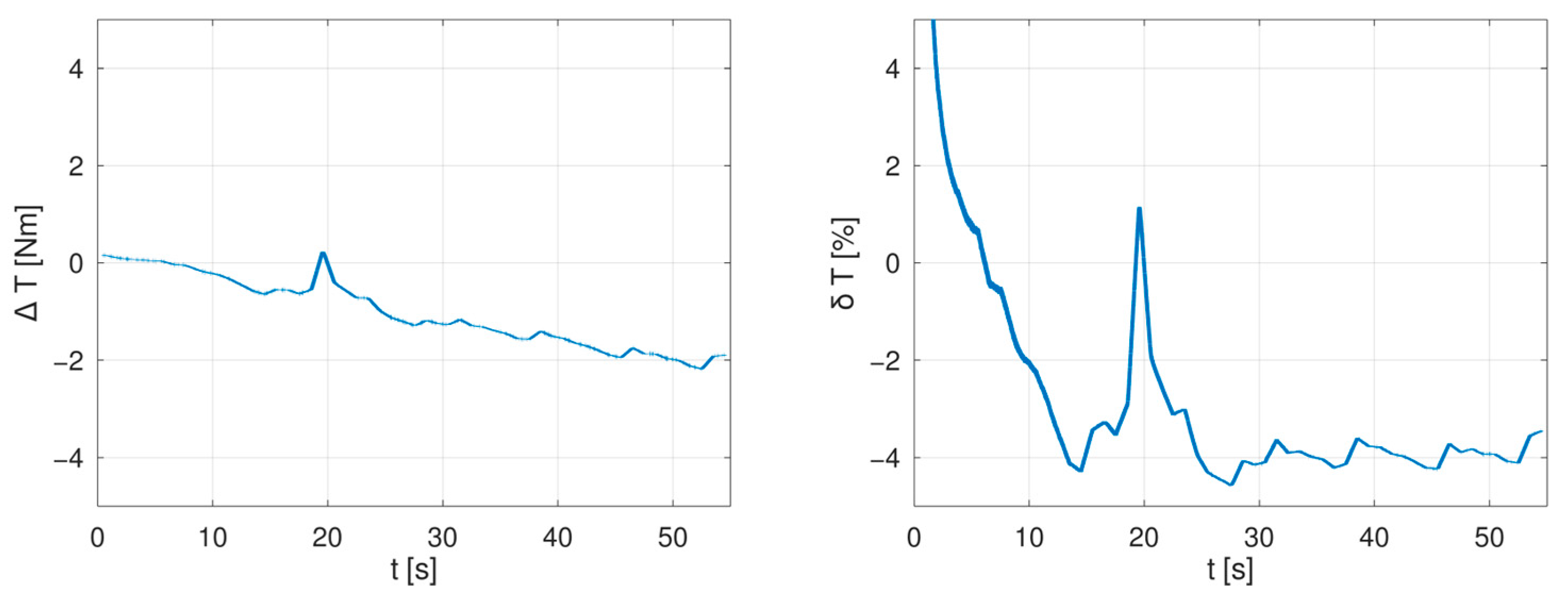
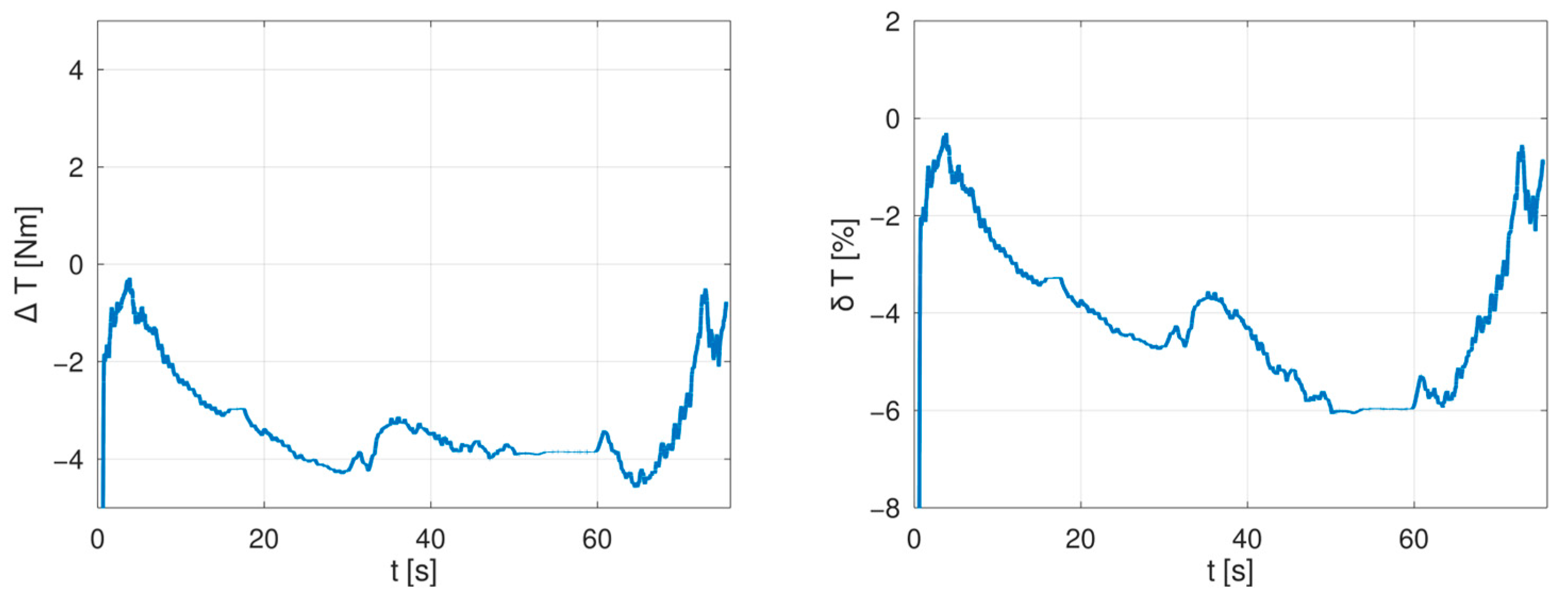
- speed range 0 to 1800 rpm, upper limit of MTPJ region
- speed range 0 to 1800 rpm, upper limit of MTPA and aFW regions
6.1. Maximum Torque per Joule Loss Control Region
6.2. The Transition from Maximum Torque per Joule Loss to Maximum Torque per Ampere
6.3. The Transition from Maximum Torque per Joule Loss to Adaptive Field-Weakening Control Region
6.4. Wound-Rotor Synchronous Machine Optimal Control Constraints
7. Discussion
- The derivation of the presented relation considers neither iron core losses nor mechanical losses. Since the iron core losses increase with approximately 1.5th power of magnetic flux density and second power of power supply frequency (i.e., machine speed), they affect measured data especially in regions of high saturations and high speeds. The mechanical losses increase with third power of the machine speed, hence their effect would be most observable in high-speed regions.
- The source data (measured flux maps) are relatively sparse to precisely describe saturation of the machine magnetic circuit. From this point of view a higher flux maps density would lead to more precise results.
- In the case of the used machine, the highest used frequency was 60 Hz only, hence the AC loss effects could have been neglected during the measurement. Since all tests were performed during a relatively short time, the thermal effect on machine resistances was negligible as well.
- The measurement methodology utilises an open-loop architecture—pre-calculated data are used as inputs and system response is measured without any feedback. A closed-loop architecture compensating for torque error by modification of input currents would then be able to compensate for the effect of loss components, which could not be considered during the derivation of control equations.
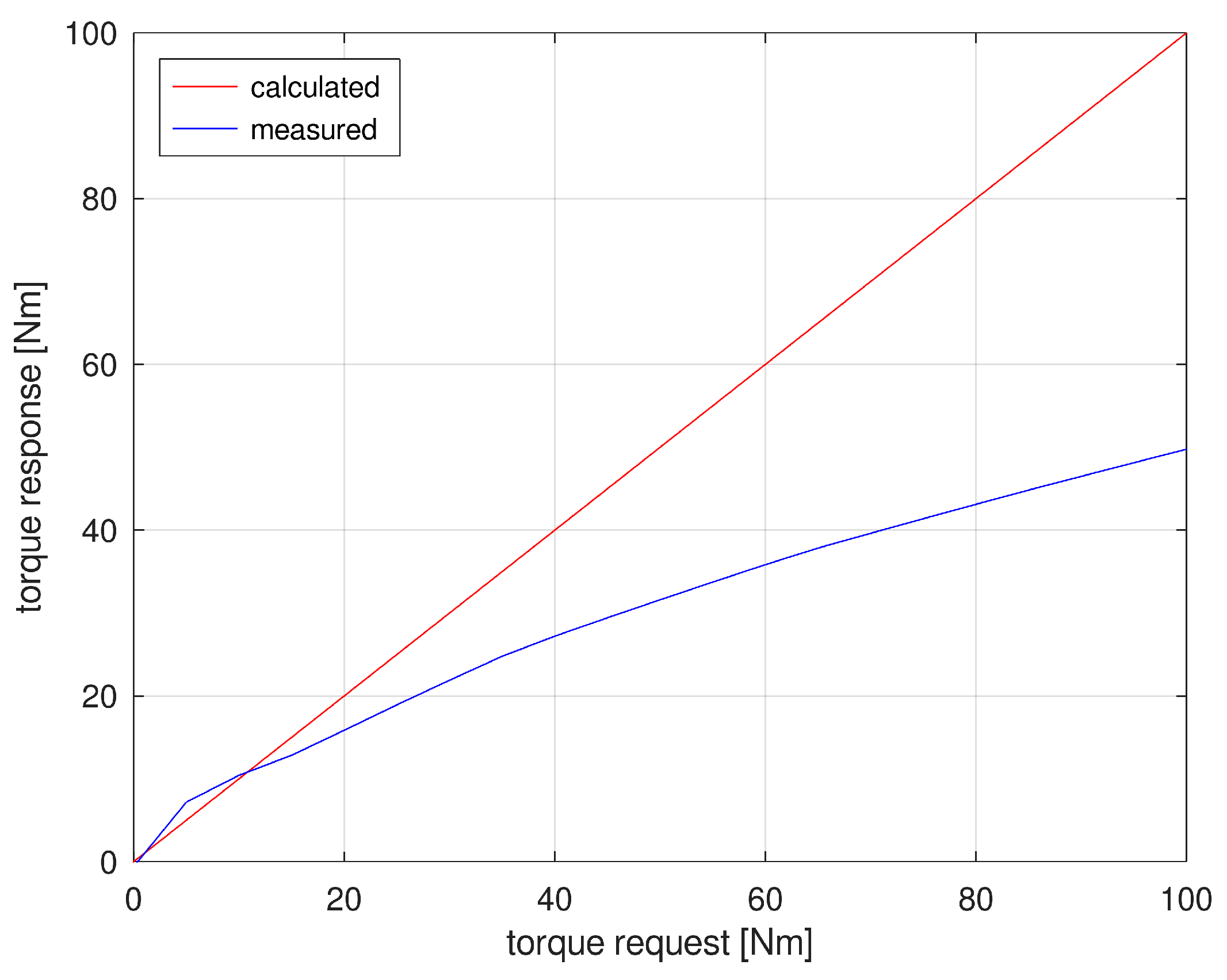
- The key measurement devices used for the measurement were BURSTER 8661-5200 torque sensor with precision ±0.1% of full-scale (200 Nm) and current transducers LA 55-P [31] with a maximal declared measurement error of ±0.90 %. The measurement error of both measuring elements is significantly below the observed discrepancy, hence the detected error exceeds the precision of the measuring equipment.
8. Conclusions
- A region of maximum torque per Joule loss control, which covers the full machine speed span with lower torque, where all three currents are scaled to keep the Joule losses at a minimal level.
- In the region of lower speeds and high torques when the field-winding current reaches its maximal value, the machine exhibits static excitation and behaves like a permanent magnet synchronous machine; i.e., in this control region, the MTPA known from PMSMs is used.
- In a region of higher speeds and torques it is possible to use adaptive field-weakening, i.e., proportional increase in machine field-winding current, to reach the highest possible torque while keeping the field-winding losses low and low value of direct axis current.
Author Contributions
Funding
Data Availability Statement
Conflicts of Interest
References
- Hussain, A.; Baig, Z.; Toor, W.; Ali, U.; Idrees, M.; Shloul, T.; Ghadi, Y.; Alkahtani, H. Wound Rotor Synchronous Motor as Promising Solution for Traction Applications. Electronics 2022, 11, 4116. [Google Scholar] [CrossRef]
- Widmer, J.D.; Martin, R.; Kimiabeigi, M. Electric Vehicle Traction Motors without Rare Earth Magnets. Sustain. Mater. Technol. 2015, 3, 7–13. [Google Scholar] [CrossRef]
- Jenkins, J. A Closer Look at Brushed AC Motors in EVs. Charged EVs. Available online: https://chargedevs.com/features/a-closer-look-at-brushed-ac-motors-in-evs/ (accessed on 18 November 2025).
- The Renault ZOE Motor: Energy Efficiency and Power! Renault Group. Available online: https://www.renaultgroup.com/en/magazine/energy-and-motorization/the-renault-zoe-motor-energy-efficiency-and-power/ (accessed on 18 November 2025).
- Zf Makes Magnet-Free Electric Motor Uniquely Compact and Competitive. ZF Press Center. Available online: https://press.zf.com/press/en/releases/release_60480.html (accessed on 18 November 2025).
- Valeo and MAHLE Expand Their Product Range of Magnet Free Electric Motors to Upper Segment Applications Through a Joint Development of iBEE (Inner Brushless Electrical Excitation). Valeo. Available online: https://www.valeo.com/en/valeo-and-mahle-expand-their-product-range-of-magnet-free-electric-motors-to-upper-segment-applications-through-a-joint-development-of-ibee-inner-brushless-electrical-excitation/ (accessed on 18 November 2025).
- Alani, M.; Oner, Y.; Tameemi, A. Electrical Machines in Automotive: Evaluation of Current Technologies and Future Requirements. Electr. Eng. 2023, 105, 477–491. [Google Scholar] [CrossRef]
- Wang, R.; Pekarek, S.; Bash, M. Alternative Excitation Strategies for a Wound Rotor Synchronous Machine Drive. In Proceedings of the 2012 IEEE Energy Conversion Congress and Exposition (ECCE), Raleigh, NC, USA, 15–20 September 2012; IEEE: New York, NY, USA, 2012; pp. 2300–2307. [Google Scholar] [CrossRef]
- Pinhal, D.B.; Gerling, D. Performance Map Calculation of a Salient-Pole Synchronous Motor with Hairpin Winding. In Proceedings of the 2019 IEEE 28th International Symposium on Industrial Electronics (ISIE), Vancouver, BC, Canada, 12–14 June 2019; IEEE: Vancouver, BC, Canada, 2019; pp. 359–365. [Google Scholar] [CrossRef]
- Chu, W.Q.; Zhu, Z.Q.; Zhang, J.; Liu, X.; Stone, D.A.; Foster, M.P. Investigation on Operational Envelops and Efficiency Maps of Electrically Excited Machines for Electrical Vehicle Applications. IEEE Trans. Magn. 2015, 51, 8103510. [Google Scholar] [CrossRef]
- Friedrich, G. Experimental Comparison between Wound Rotor and Permanent Magnet Synchronous Machine for Integrated Starter Generator Applications. In Proceedings of the 2010 IEEE Energy Conversion Congress and Exposition, Atlanta, GA, USA, 12–16 September 2010; IEEE: Atlanta, GA, USA, 2010; pp. 1731–1736. [Google Scholar] [CrossRef]
- Seol, H.-S.; Jeong, J.-M.; Lee, J.; Jin, C.-S. Current Control of WRSM Considering Magnetic Saturation Phenomenon. IEEE Trans. Magn. 2016, 52, 8204104. [Google Scholar] [CrossRef]
- Nguyen, Q.K.; Schuster, J.; Roth-Stielow, J. Energy Optimal Control of an Electrically Excited Synchronous Motor Used as Traction Drive. In Proceedings of the 2015 9th International Conference on Power Electronics and ECCE Asia (ICPE-ECCE Asia), Seoul, Republic of Korea, 1–5 June 2015; IEEE: Seoul, Republic of Korea, 2015; pp. 2789–2795. [Google Scholar] [CrossRef]
- Märgner, M.; Hackmann, W. Control Challenges of an Externally Excited Synchronous Machine in an Automotive Traction Drive Application. In Proceedings of the 2010 Emobility—Electrical Power Train, Leipzig, Germany, 8–9 November 2010; IEEE: New York, NY, USA, 2010; pp. 1–6. [Google Scholar] [CrossRef]
- Carpiuc, S.-C.; Lazar, M. Efficient State Reference Generation for Torque Control in Externally Excited Synchronous Machines. In Proceedings of the 2012 16th International Conference on System Theory, Control and Computing (ICSTCC), Sinaia, Romania, 12–14 October 2012; IEEE: New York, NY, USA, 2012; pp. 1–7. [Google Scholar]
- Kim, Y.; Nam, K. Copper-Loss-Minimizing Field Current Control Scheme for Wound Synchronous Machines. IEEE Trans. Power Electron. 2017, 32, 1335–1345. [Google Scholar] [CrossRef]
- Girardin, A.; Friedrich, G. Optimal Control for a Wound Rotor Synchronous Starter Generator. In Proceedings of the Conference Record of the 2006 IEEE Industry Applications Conference Forty-First IAS Annual Meeting, Tampa, FL, USA, 8–12 October 2006; IEEE: New York, NY, USA, 2006; Volume 25, pp. 14–19. [Google Scholar] [CrossRef]
- Uzel, D.; Peroutka, Z. Optimal Vector Control for Wound Rotor Salient Pole Synchronous Motors over Full Speed Range. In Proceedings of the 2015 17th European Conference on Power Electronics and Applications (EPE’15 ECCE-Europe), Geneva, Switzerland, 8–10 September 2015; IEEE: Geneva, Switzerland, 2015; pp. 1–7. [Google Scholar] [CrossRef]
- Preindl, M.; Bolognani, S. Model Predictive Direct Torque Control With Finite Control Set for PMSM Drive Systems, Part 1: Maximum Torque Per Ampere Operation. IEEE Trans. Ind. Inf. 2013, 9, 1912–1921. [Google Scholar] [CrossRef]
- Uzel, D.; Šmídl, V.; Peroutka, Z. Gradient Descent Maximum Torque Control up to the Base Speed of Wound Rotor Synchronous Motors. In Proceedings of the 2016 17th International Conference on Mechatronics—Mechatronika (ME), Prague, Czech Republic, 7–9 December 2016; IEEE: New York, NY, USA, 2016; pp. 1–6. [Google Scholar]
- Haala, O.; Wagner, B.; Hofmann, M.; Marz, M. Optimal Current Control Of Externally Excited Synchronous Machines In Automotive Traction Drive Applications. Int. J. Electr. Comput. Energetic Electron. Commun. Eng. 2013, 7, 1133–1139. [Google Scholar] [CrossRef]
- Capitanio, A.; Nuzzo, S.; Sala, G.; Barater, D.; Franceschini, G. Analysis of Externally Excited Synchronous Motors Operation Under Joule Losses Minimization Control. In Proceedings of the 2024 International Conference on Electrical Machines (ICEM), Torino, Italy, 1–4 September 2024; IEEE: Torino, Italy, 2024; pp. 1–7. [Google Scholar] [CrossRef]
- Eldeeb, H.; Hackl, C.M.; Horlbeck, L.; Kullick, J. A Unified Theory for Optimal Feedforward Torque Control of Anisotropic Synchronous Machines. Int. J. Control. 2018, 91, 2273–2302. [Google Scholar] [CrossRef]
- Hackl, C.M.; Kullick, J.; Monzen, N. Optimale Betriebsführung von nichtlinearen Synchronmaschinen. In Elektrische Antriebe—Regelung von Antriebssystemen; Schröder, D., Böcker, J., Eds.; Springer: Berlin/Heidelberg, Germany, 2021; pp. 829–1079. [Google Scholar] [CrossRef]
- Monzen, N.; Hackl, C.M. Artificial Neural Network Based Optimal Feedforward Torque Control of Electrically Excited Synchronous Machines. In Proceedings of the 2023 IEEE 32nd International Symposium on Industrial Electronics (ISIE), Espoo, Finland, 19 June 2023; IEEE: Helsinki, Finland, 2023; pp. 1–8. [Google Scholar] [CrossRef]
- Armando, E.; Guglielmi, P.; Pellegrino, G.; Bojoi, R. Flux Linkage Maps Identification of Synchronous AC Motors under Controlled Thermal Conditions. In Proceedings of the 2017 IEEE International Electric Machines and Drives Conference (IEMDC), Miami, FL, USA, 21–24 May 2017; IEEE: Miami, FL, USA, 2017; pp. 1–8. [Google Scholar] [CrossRef]
- Preindl, M.; Bolognani, S. Model Predictive Direct Torque Control With Finite Control Set for PMSM Drive Systems, Part 2: Field Weakening Operation. IEEE Trans. Ind. Inf. 2013, 9, 648–657. [Google Scholar] [CrossRef]
- 8661—High-precision Torque Sensor—Burster.de. Available online: https://www.burster.com/products/sensors/torque-sensors/rotating-applications/8661 (accessed on 2 December 2025).
- IEC 60034-4-1:2018; Rotating Electrical Machines—Part 4-1: Methods for Determining Electrically Excited Synchronous Machine Quantities from Tests. International Electrotechnical Commission: Geneva, Switzerland, 2018. Available online: https://webstore.iec.ch/en/publication/31052 (accessed on 18 November 2025).
- Eaton, J.W.; Bateman, D.; Hauberg, S.; Wehbring, R. GNU Octave Version 9.4.0 Manual: A High-Level Interactive Language for Numerical Computations. 2024. Available online: https://docs.octave.org/v9.4.0/ (accessed on 18 November 2025).
- LA 55-P. LA55. Closed Loop Hall Effect. Available online: https://www.lem.com/en/product-list/la-55p (accessed on 2 December 2025).



| Machine Parameter | Value | Units |
|---|---|---|
| rated power | 11,000 | W |
| rated speed | 1500 | Rpm |
| maximal speed | 1800 | Rpm |
| rated voltage | 400 | V |
| rated current | 20 | A |
| maximal field winding current | 5 | A |
| winding phases | 3 | - |
| rotor poles | 4 | - |
| Machine Parameter | Value | Units |
|---|---|---|
| armature resistance | 0.40 | Ω |
| direct axis inductance | 62.49 | Mh |
| quadrature axis inductance | 35.71 | Mh |
| field winding resistance | 6.70 | Ω |
| field winding inductance | 2.90 | H |
| Measurement Type | Speed [rpm] | Mean Error [%] | Standard Deviation [%] |
|---|---|---|---|
| MTPJ region | 300 | −2.73 | 2.54 |
| MTPJ/MTPA regions | 1000 | −5.02 | 1.17 |
| MTPJ/aFW regions | 1500 | −4.33 | 1.67 |
| MTPJ region limit | variable | −3.17 | 1.99 |
| MTPA/aFW limits | variable | −4.10 | 1.55 |
Disclaimer/Publisher’s Note: The statements, opinions and data contained in all publications are solely those of the individual author(s) and contributor(s) and not of MDPI and/or the editor(s). MDPI and/or the editor(s) disclaim responsibility for any injury to people or property resulting from any ideas, methods, instructions or products referred to in the content. |
© 2025 by the authors. Licensee MDPI, Basel, Switzerland. This article is an open access article distributed under the terms and conditions of the Creative Commons Attribution (CC BY) license (https://creativecommons.org/licenses/by/4.0/).
Share and Cite
Hruska, K.; Glac, A.; Suchy, O. Verification of Maximum Torque Per Joule Loss Control of a Wound-Rotor Synchronous Machine with Strongly Non-Linear Parameters. Electronics 2025, 14, 4924. https://doi.org/10.3390/electronics14244924
Hruska K, Glac A, Suchy O. Verification of Maximum Torque Per Joule Loss Control of a Wound-Rotor Synchronous Machine with Strongly Non-Linear Parameters. Electronics. 2025; 14(24):4924. https://doi.org/10.3390/electronics14244924
Chicago/Turabian StyleHruska, Karel, Antonin Glac, and Ondrej Suchy. 2025. "Verification of Maximum Torque Per Joule Loss Control of a Wound-Rotor Synchronous Machine with Strongly Non-Linear Parameters" Electronics 14, no. 24: 4924. https://doi.org/10.3390/electronics14244924
APA StyleHruska, K., Glac, A., & Suchy, O. (2025). Verification of Maximum Torque Per Joule Loss Control of a Wound-Rotor Synchronous Machine with Strongly Non-Linear Parameters. Electronics, 14(24), 4924. https://doi.org/10.3390/electronics14244924