Article

Characterizing THz Scattering Loss in Nano-Scale SOI Waveguides Exhibiting Stochastic Surface Roughness with Exponential Autocorrelation
Department of Electrical and Computer Engineering, University of Idaho, Moscow, ID 83844-1023, USA
*
Author to whom correspondence should be addressed.
These authors contributed equally to this work.
Electronics 2022, 11(3), 307; https://doi.org/10.3390/electronics11030307

Submission received: 24 November 2021 / Revised: 10 January 2022 / Accepted: 16 January 2022 / Published: 19 January 2022
(This article belongs to the Special Issue Computational Electromagnetics for Industrial Applications)

Abstract

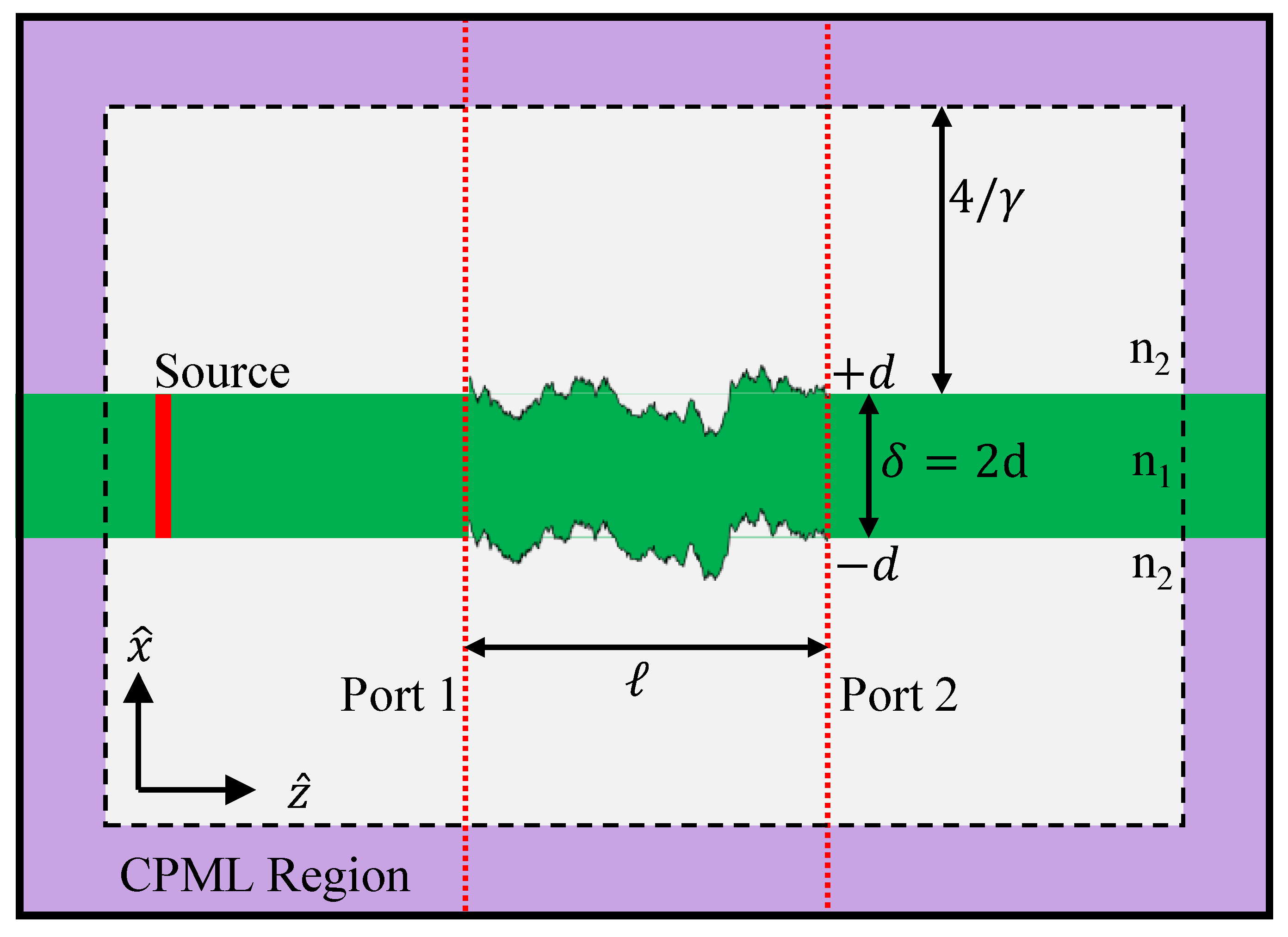
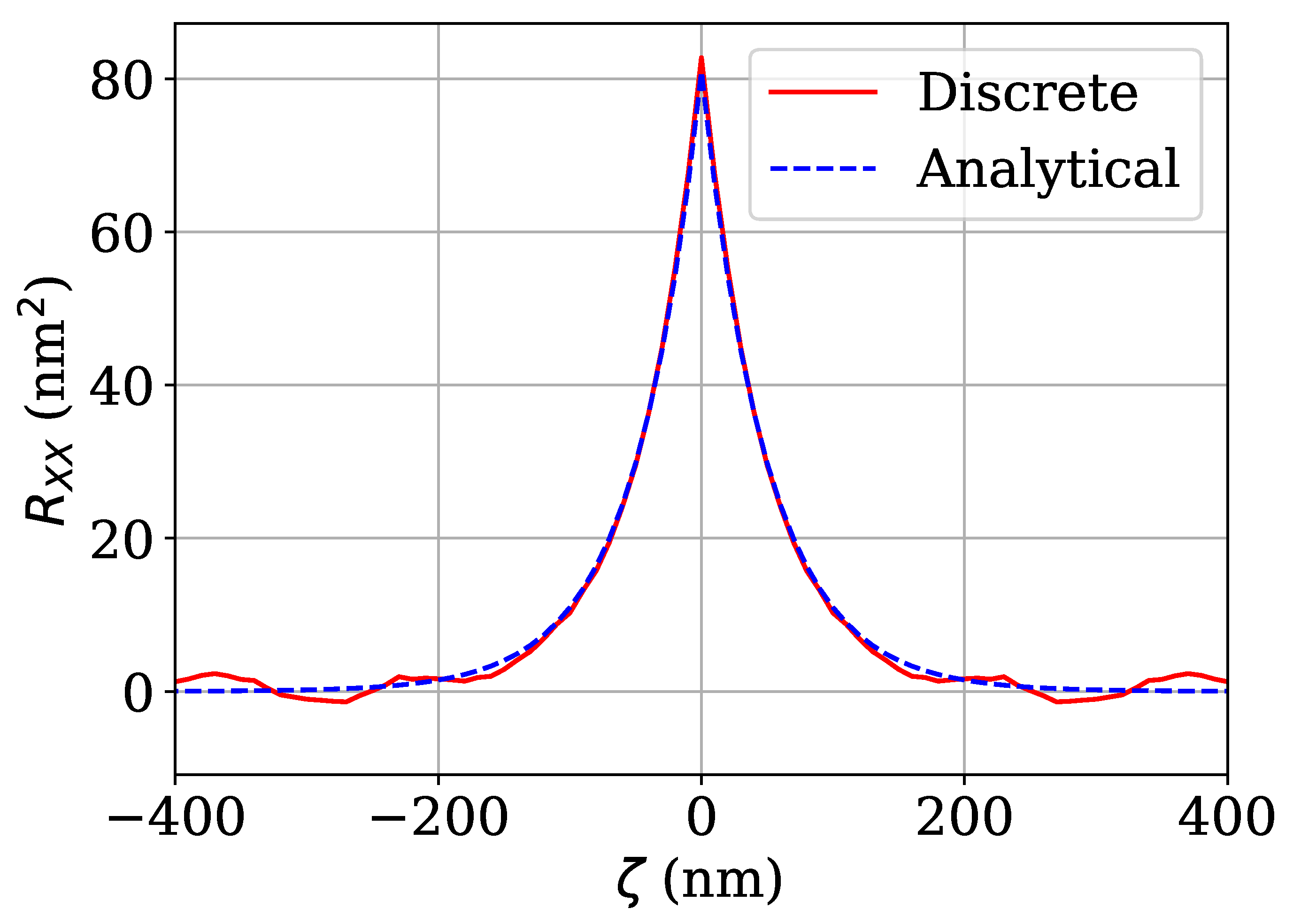
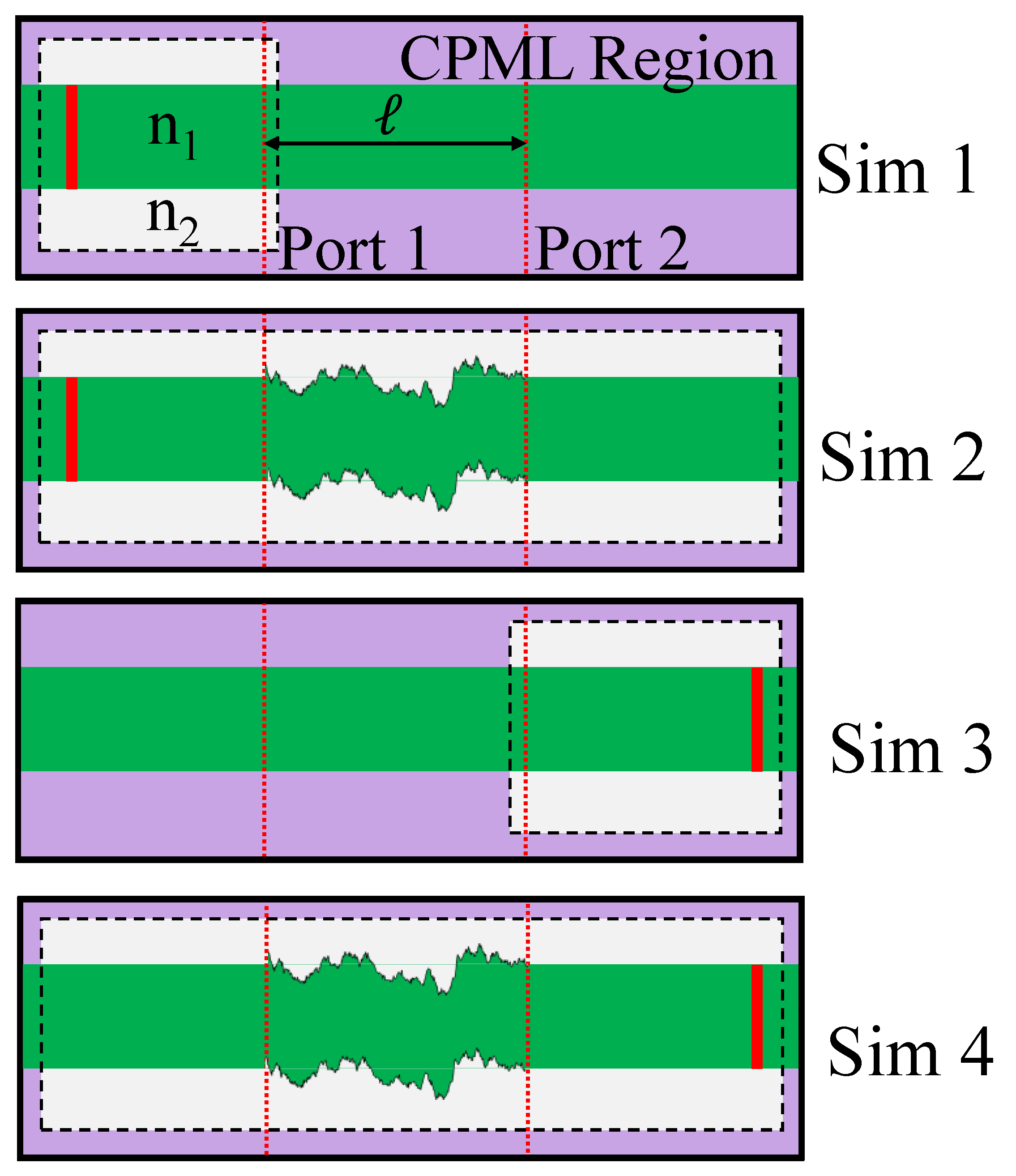
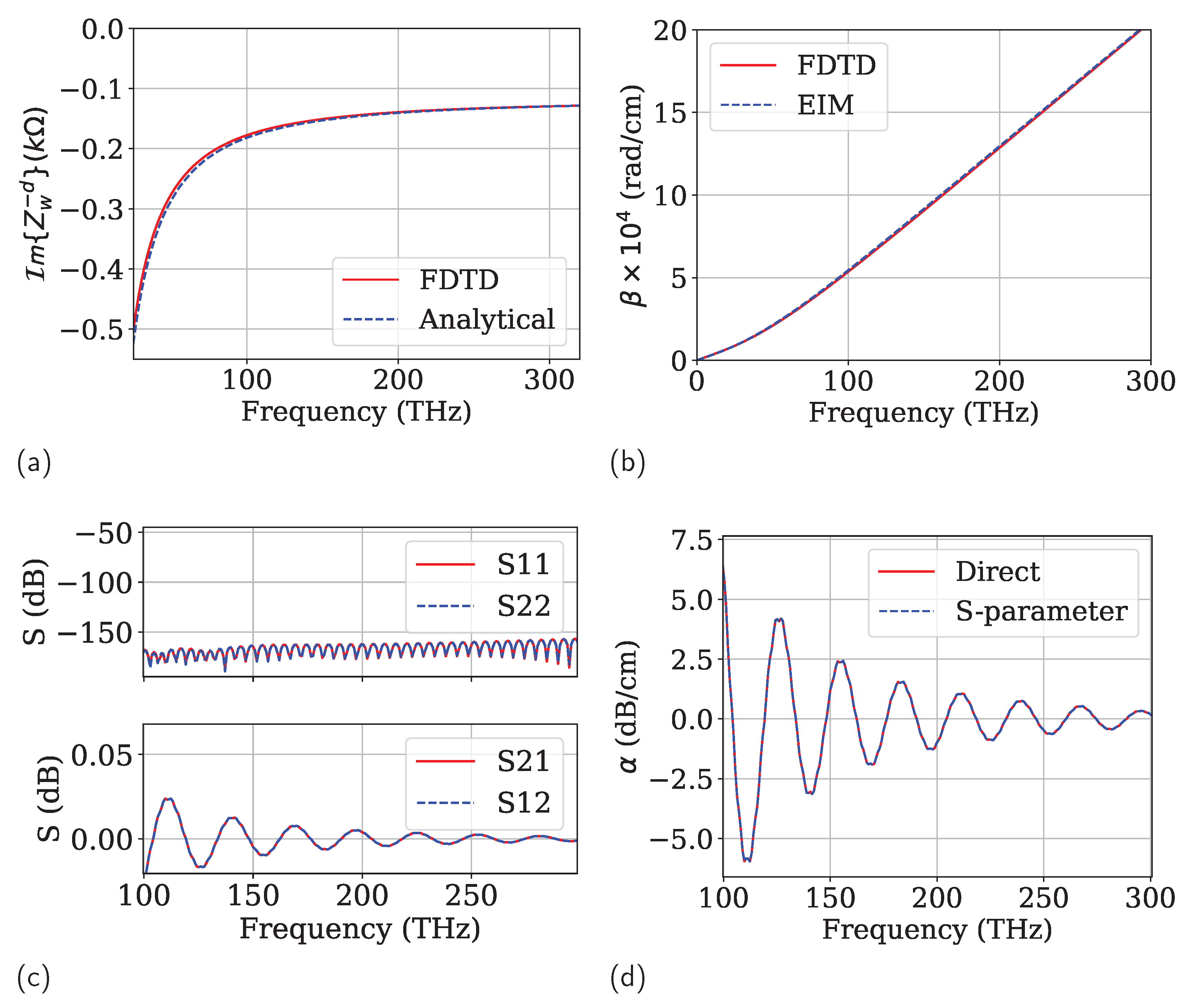
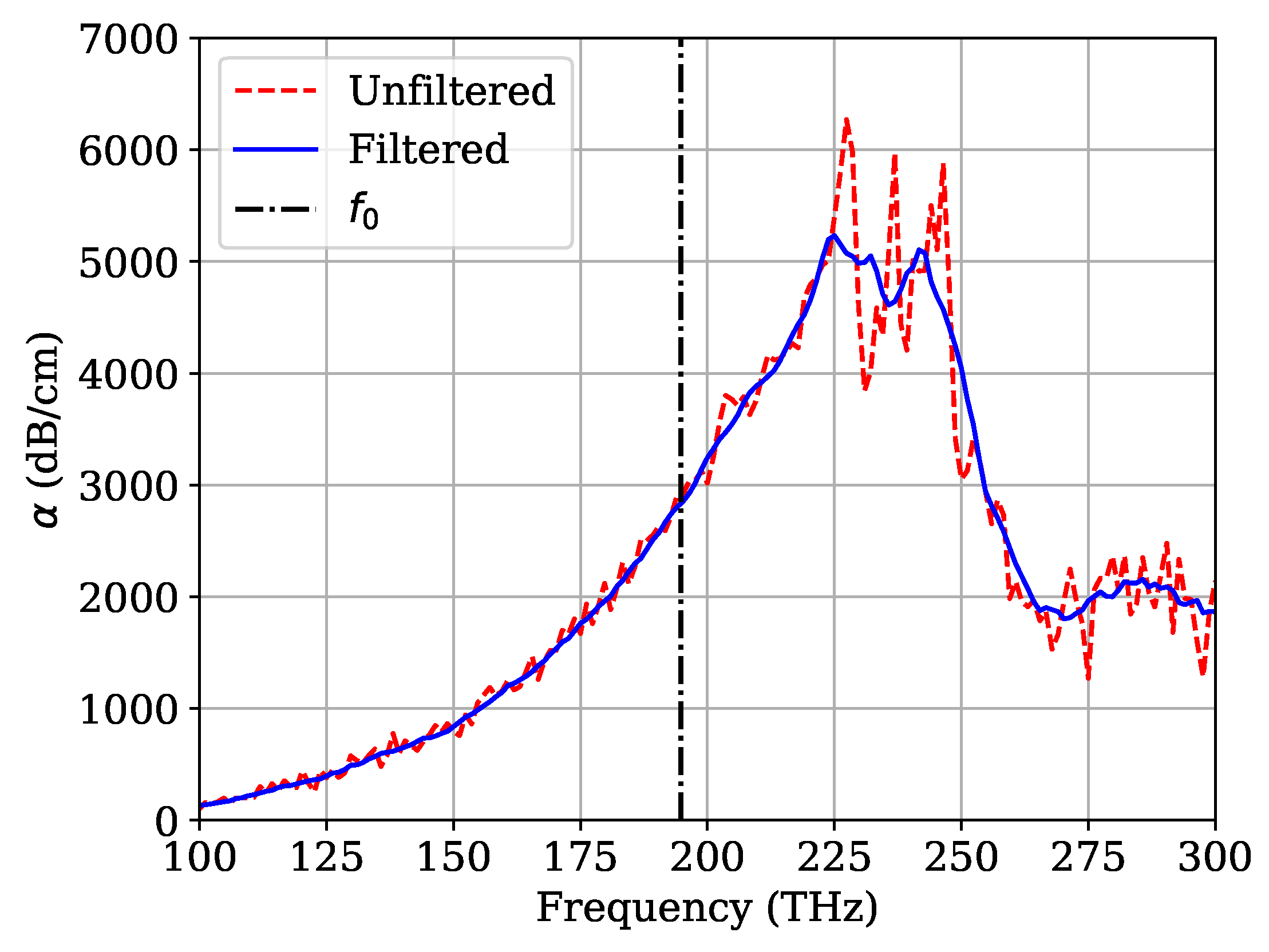
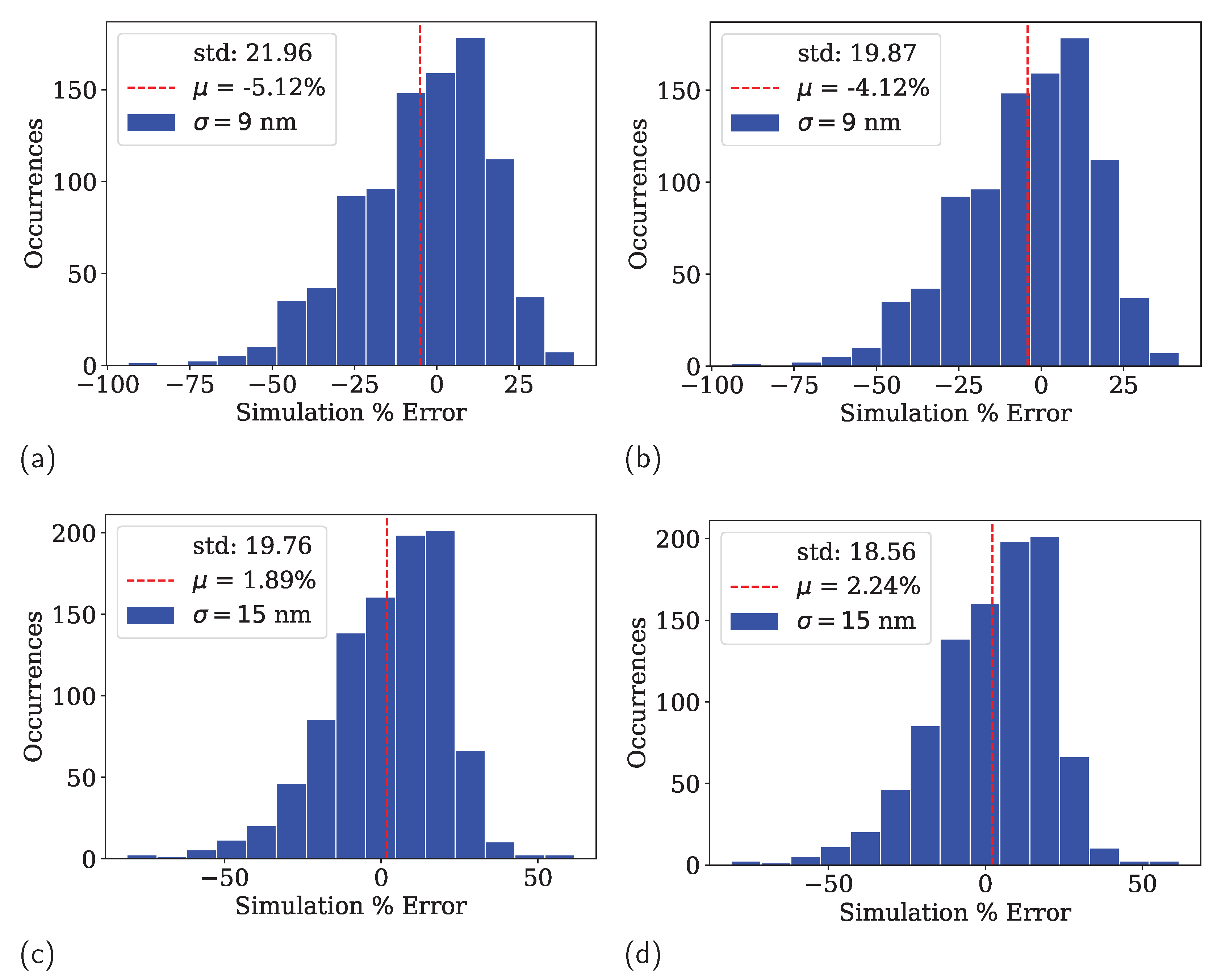
Electromagnetic (EM) scattering may be a significant source of degradation in signal and power integrity of high-contrast silicon-on-insulator (SOI) nano-scale interconnects, such as opto-electronic or optical interconnects operating at 100 s of THz where two-dimensional (2D) analytical models of dielectric slab waveguides are often used to approximate scattering loss. In this work, a formulation is presented to relate the scattering (propagation) loss to the scattering parameters (S-parameters) for the smooth waveguide; the results are correlated with results from the finite-difference time-domain (FDTD) method in 2D space. We propose a normalization factor to the previous 2D analytical formulation for the stochastic scattering loss based on physical parameters of waveguides exhibiting random surface roughness under the exponential autocorrelation function (ACF), and validate the results by comparing against numerical experiments via the 2D FDTD method, through simulation of hundreds of rough waveguides; additionally, results are compared to other 2D analytical and previous 3D experimental results. The FDTD environment is described and validated by comparing results of the smooth waveguide against analytical solutions for wave impedance, propagation constant, and S-parameters. Results show that the FDTD model is in agreement with the analytical solution for the smooth waveguide and is a reasonable approximation of the stochastic scattering loss for the rough waveguide.
Keywords: dielectric slab waveguide; discrete filtering; exponential autocorrelation; FDTD; optical interconnects; photonics; random roughness; stochastic scattering loss; scattering parameters; S-parameters dielectric slab waveguide; discrete filtering; exponential autocorrelation; FDTD; optical interconnects; photonics; random roughness; stochastic scattering loss; scattering parameters; S-parameters