Article

Trajectory Prediction with Correction Mechanism for Connected and Autonomous Vehicles
1
School of Computer, Electronics and Information, Guangxi University, Nanning 530004, China
2
Guangxi Key Laboratory of Multimedia Communications and Network Technology, Nanning 530004, China
3
China-ASEAN International Join Laboratory of Integrated Transport, Nanning University, Nanning 541699, China
*
Author to whom correspondence should be addressed.
Electronics 2022, 11(14), 2149; https://doi.org/10.3390/electronics11142149

Submission received: 12 May 2022 / Revised: 3 July 2022 / Accepted: 5 July 2022 / Published: 9 July 2022

Abstract

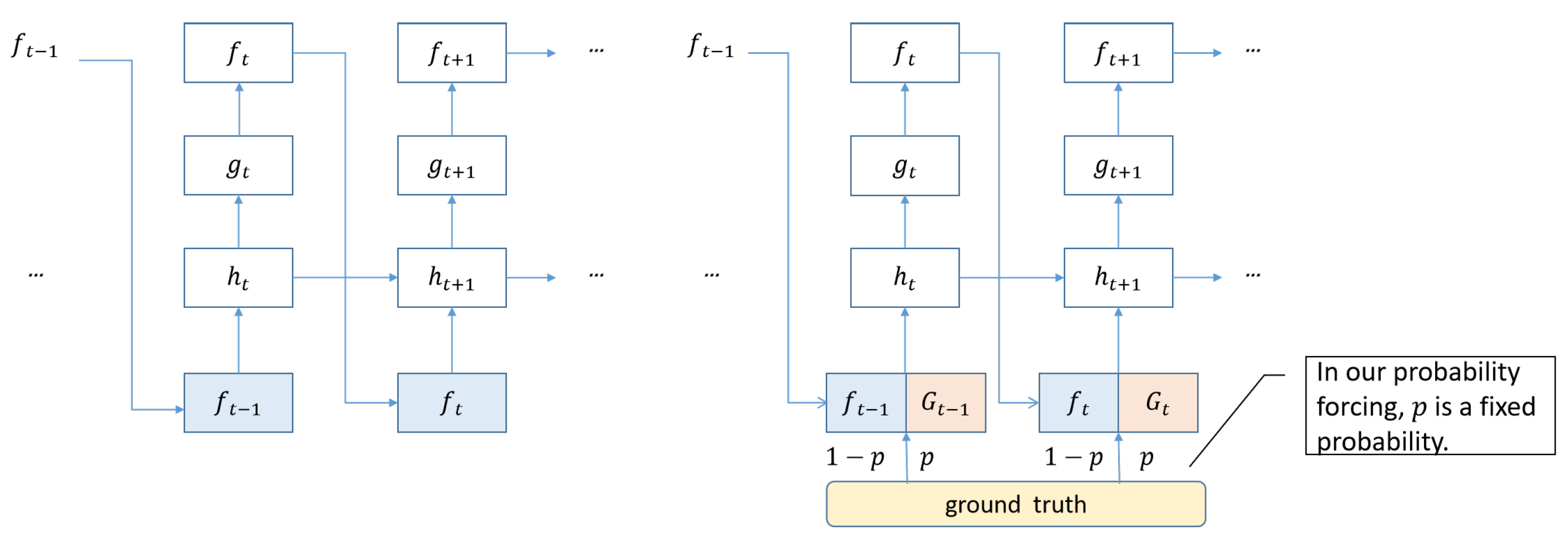
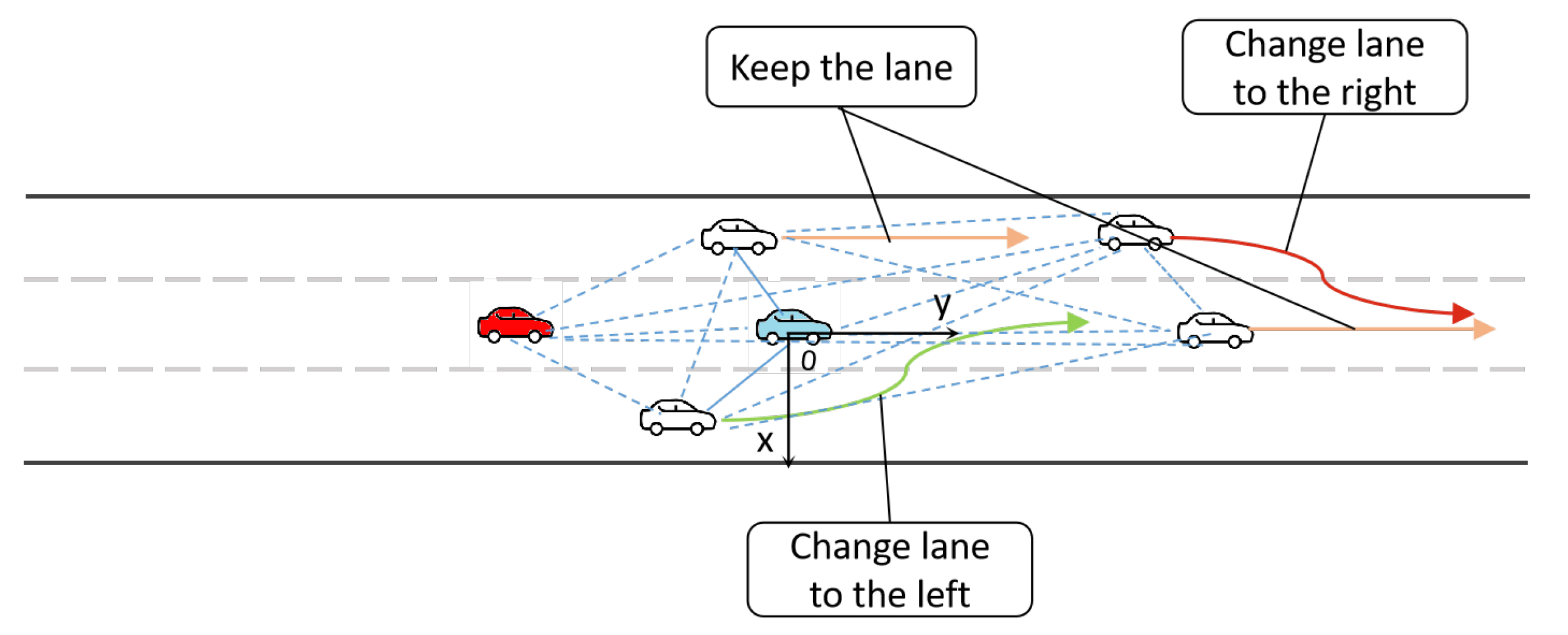
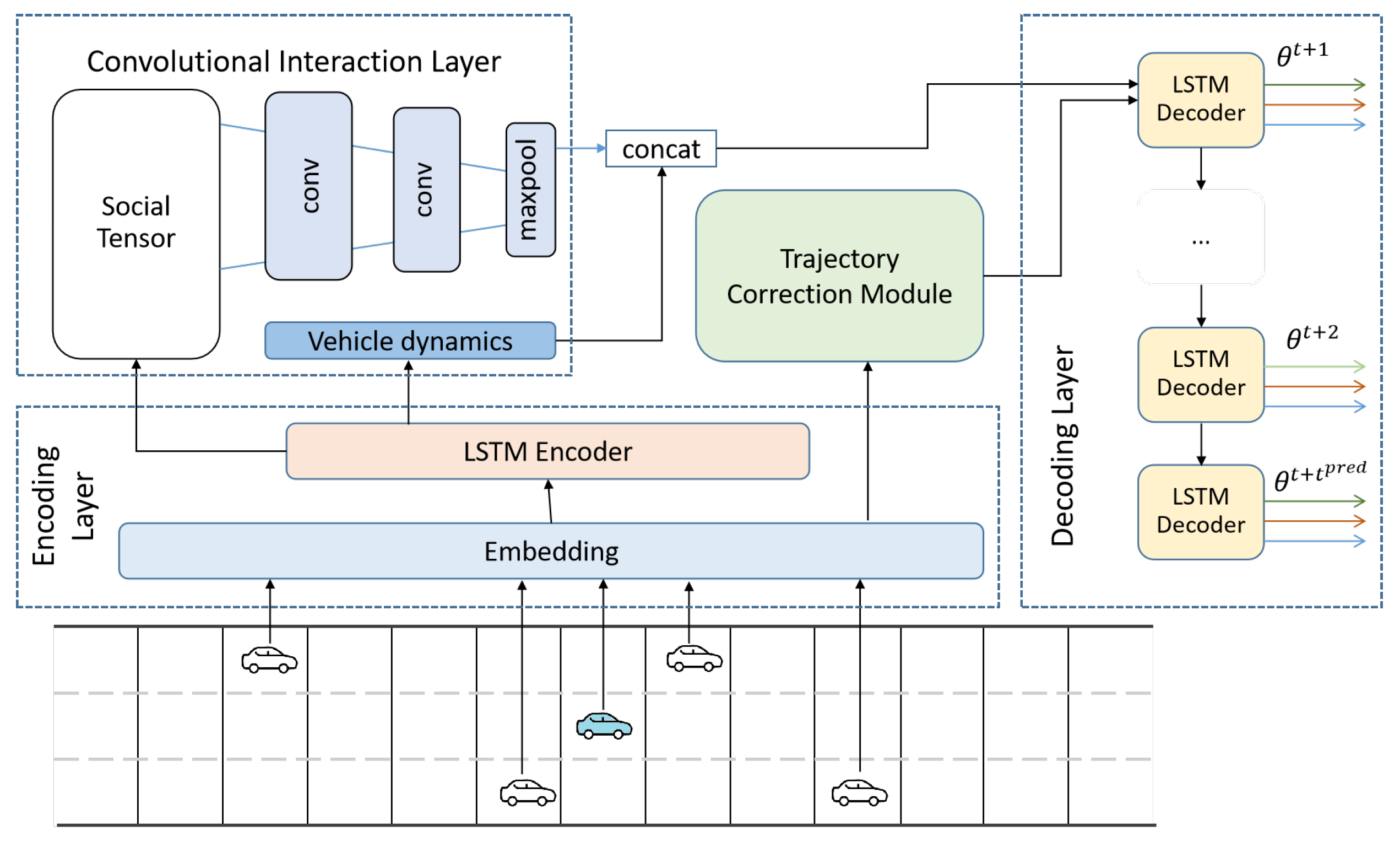
Trajectory prediction of surrounding vehicles is a critical task for connected and autonomous vehicles (CAVs), helping them to realize potential dangers in the traffic environment and make the most appropriate decisions. In a practical traffic environment, vehicles may affect each other, and the trajectories may have multi-modality and uncertainty, which makes accurate trajectory prediction a challenge. In this paper, we propose an interactive network model based on long short-term memory (LSTM) and a convolutional neural network (CNN) with a trajectory correction mechanism, using our newly proposed probability forcing method. The model learns the interactions between vehicles and corrects their trajectories during the prediction process. The output is a multimodal distribution of predicted trajectories. In the experimental evaluation of the US-101 and I-80 Next-Generation Simulation (NGSIM) real highway datasets, our proposed method outperforms other contrast methods.
Keywords: trajectory prediction; connected and autonomous vehicles; interactive network; correction mechanism; probability forcing; multimodal distribution trajectory prediction; connected and autonomous vehicles; interactive network; correction mechanism; probability forcing; multimodal distribution