
A Cosmetic Formulation Containing Hydrolyzed Fish Skin Extract Enhances Procollagen Production and Improves Wrinkle Appearance: A Randomized, Double-Blind, Split-Face Clinical Trial

 , ,
, ,
Abstract
1. Introduction
2. Materials and Methods
2.1. Preparation of Hydrolyzed Fish Skin (HFS) Extract
2.2. In Vitro Assay
2.2.1. Cell Culture
2.2.2. Cell Viability Assay
2.2.3. Measurement of Type I Procollagen Production
2.2.4. Measurement of Matrix Metalloproteinase-1 (MMP-1) Production in UVB-Irradiated HDFs
2.2.5. Measurement of Elastase Activity Inhibition
2.3. Clinical Study
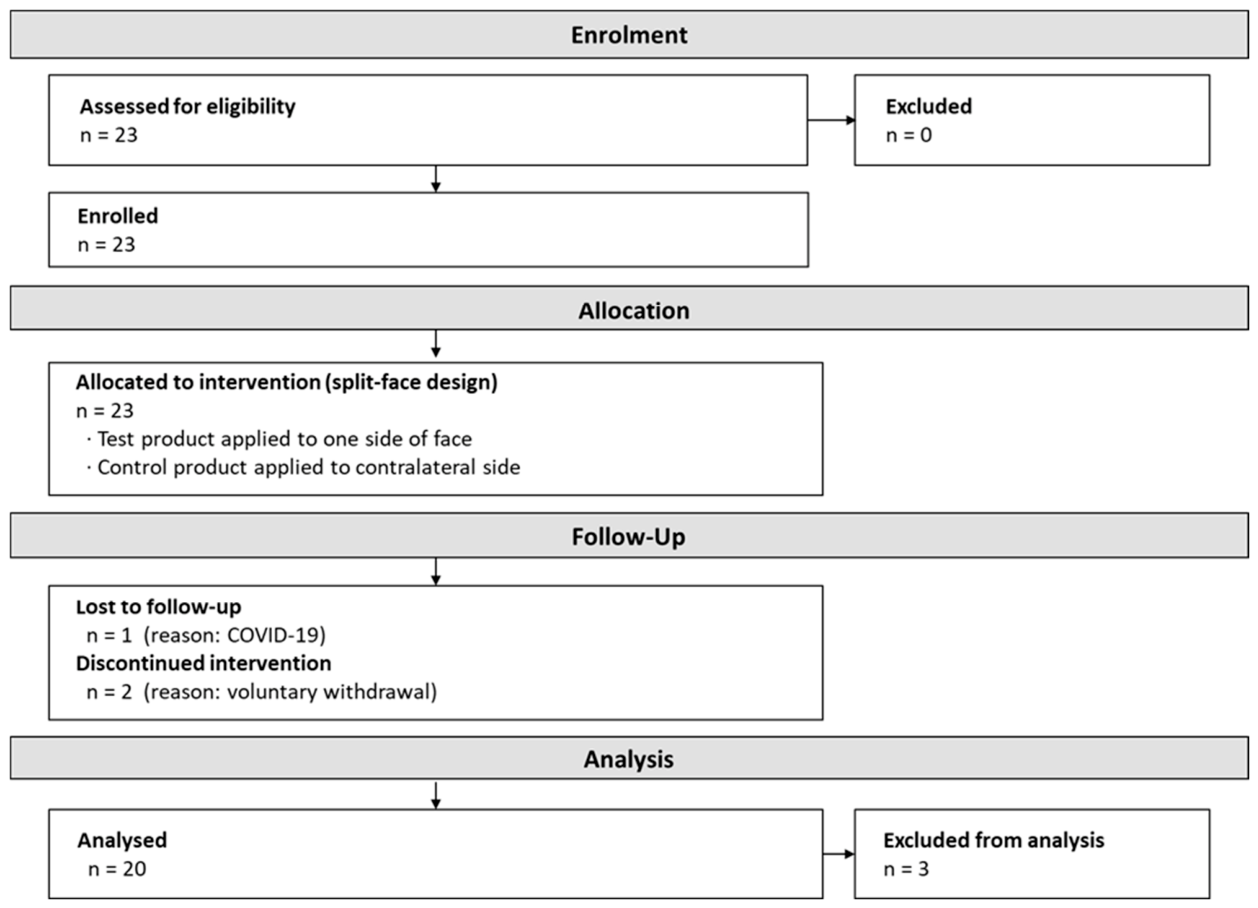
2.3.1. Study Design
2.3.2. Participants (Inclusion and Exclusion Criteria)
- (1)
- Female subjects aged 45–58 years with wrinkles of grade ≥3 at the test site, as determined using standardized photographic grading according to the judgment of the principal investigator;
- (2)
- Absence of acute or chronic systemic diseases, including dermatological disorders;
- (3)
- Provision of written informed consent after receiving sufficient explanation of the study objectives and procedures;
- (4)
- Ability and willingness to comply with all study visits and follow-up assessments throughout the study period.
- (1)
- Pregnancy, breastfeeding, or the possibility of becoming pregnant;
- (2)
- Use of topical formulations containing steroids for the treatment of skin diseases for more than 1 month;
- (3)
- Participation in the same or a similar clinical study within 6 months prior to enrollment;
- (4)
- Presence of sensitive or hypersensitive skin;
- (5)
- Abnormal skin conditions at the test site, including visible pigmentation, acne, erythema, or telangiectasia;
- (6)
- Use of identical or similar cosmetic products or pharmaceutical agents on the test site within 3 months prior to study initiation;
- (7)
- History of dermatological procedures at the test site, such as skin resurfacing, botulinum toxin injections, wrinkle removal procedures, or other skin treatments, or plans to undergo such procedures within 6 months;
- (8)
- Presence of chronic systemic diseases, including asthma, diabetes mellitus, or hypertension;
- (9)
- Any condition considered by the principal investigator to interfere with safe participation or reliable evaluation of the study outcomes.
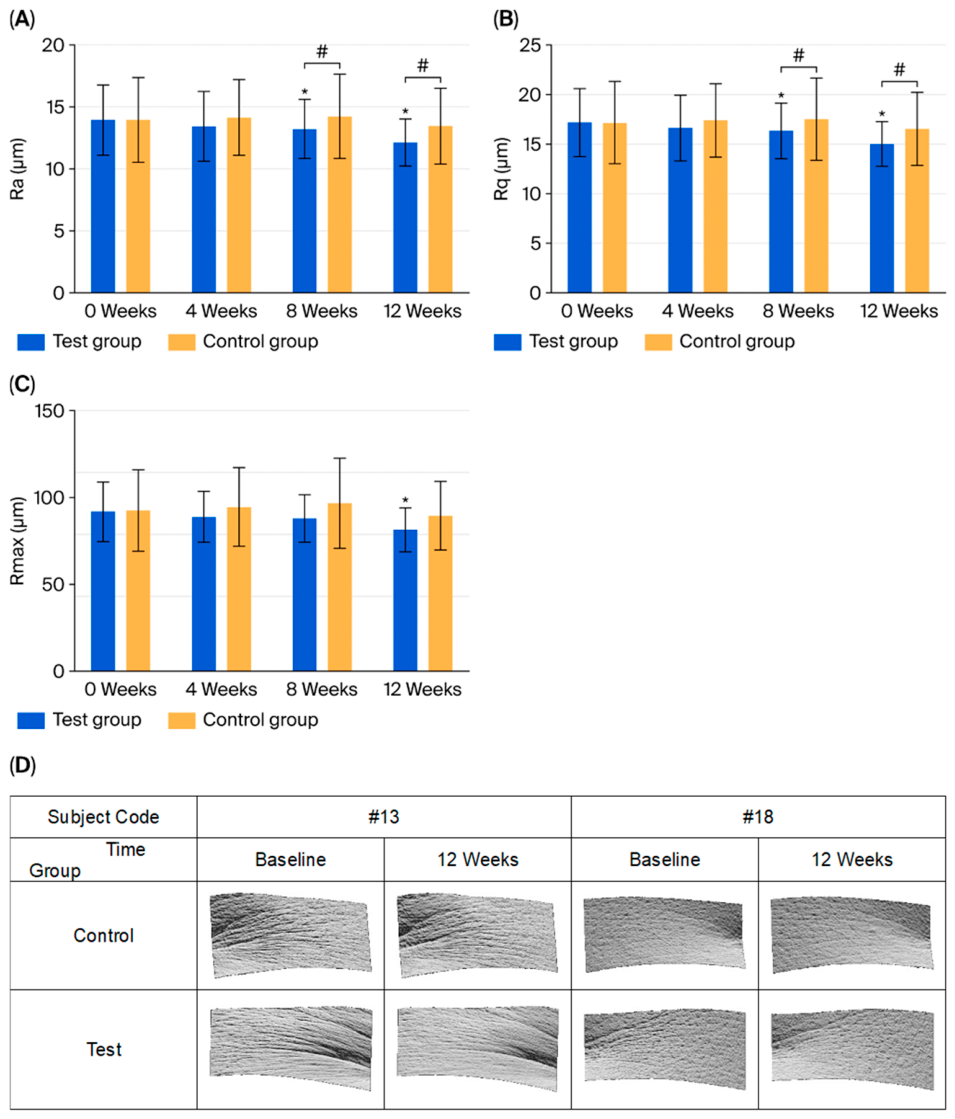
2.3.3. Instrumental Assessment of Wrinkles
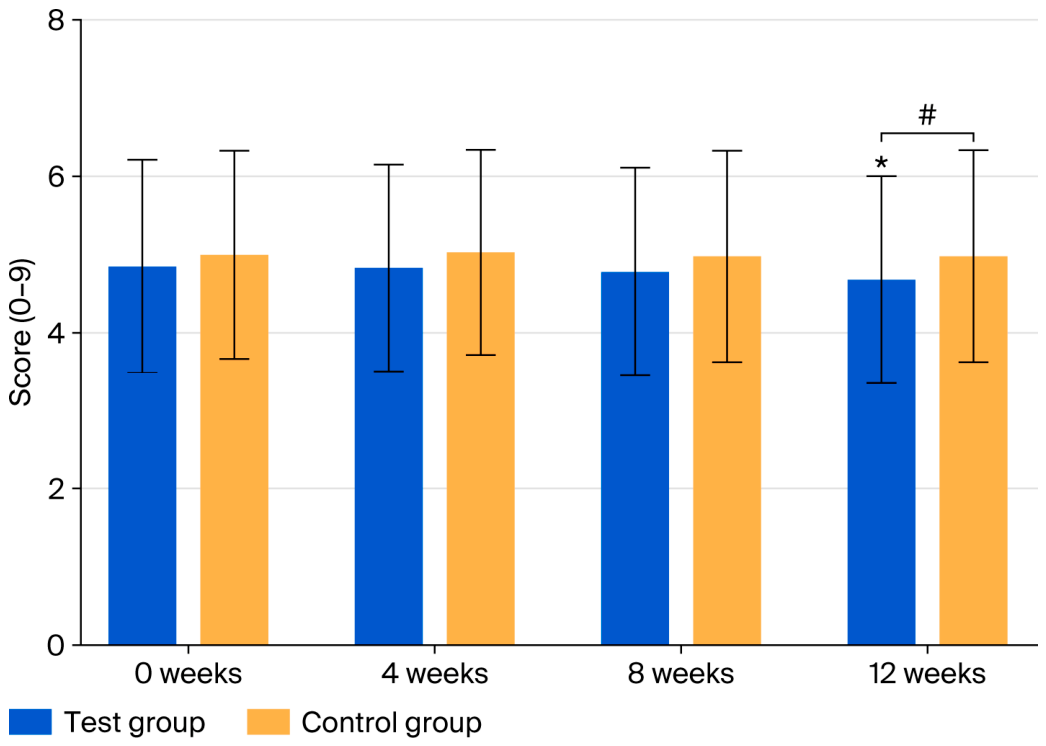
2.3.4. Visual Assessment of Wrinkles
2.3.5. Outcomes
2.4. Statistical Analysis
3. Results
3.1. Quantitative Determination of Gly–Pro–Hyp (GPH) Content in HFS Extract
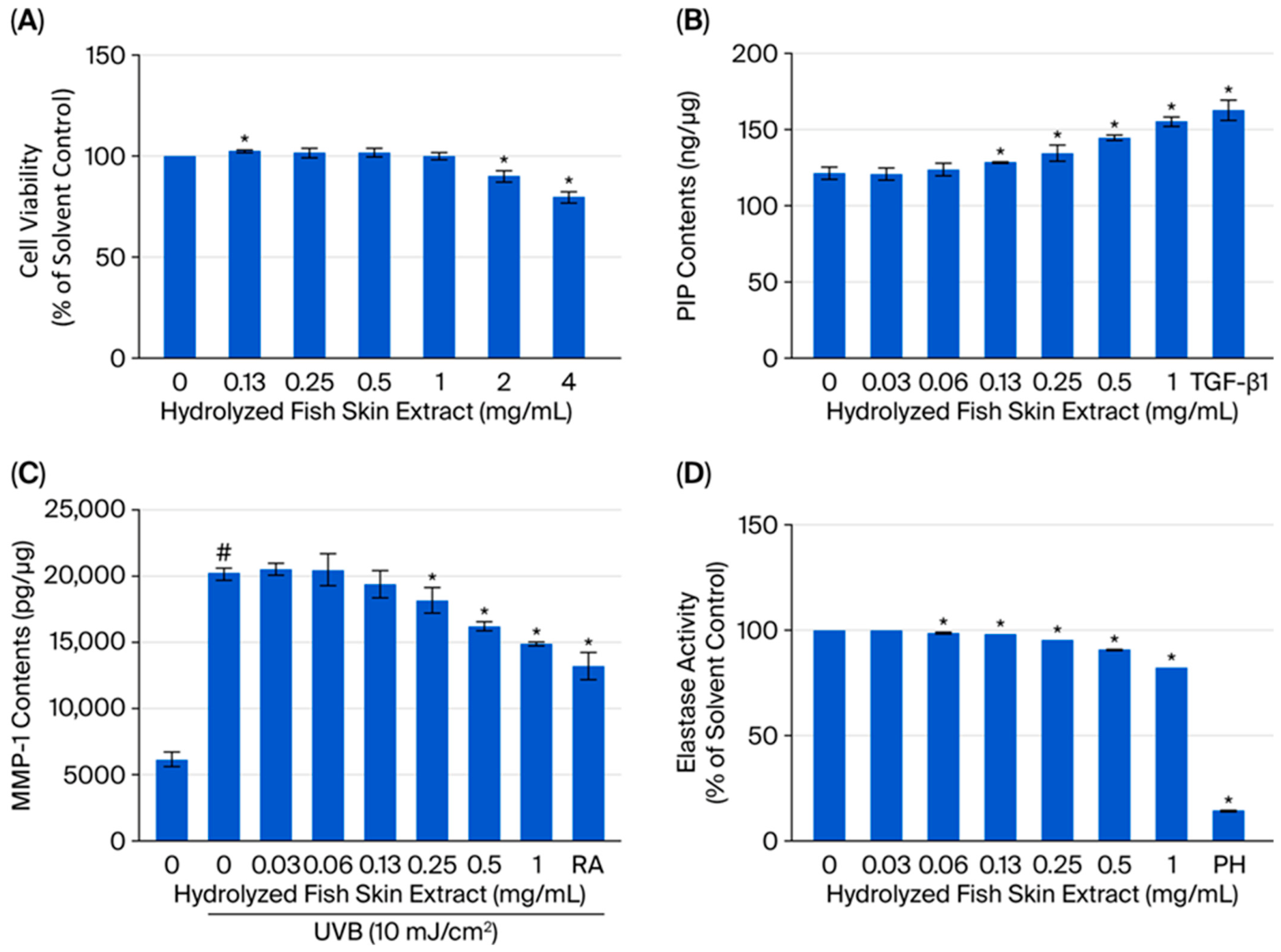
3.2. In Vitro Effects of HFS Extract on Wrinkle Improvement
3.2.1. Cell Viability
3.2.2. Type I Procollagen Production in Human Dermal Fibroblasts
3.2.3. Inhibition of MMP-1 Production in UVB-Irradiated HDFs
3.2.4. Inhibition of Elastase Activity
3.3. Clinical Efficacy and Safety of the Test Product on Wrinkle Improvement
3.3.1. Participant Characteristics
3.3.2. Analysis of Wrinkle Parameters Using a 3D Imaging System
3.3.3. Visual Grading Results of Wrinkles
3.3.4. Subjective Evaluations by Participants
3.3.5. Compliance and Safety
4. Discussion
5. Conclusions
Author Contributions
Funding
Institutional Review Board Statement
Informed Consent Statement
Data Availability Statement
Conflicts of Interest
Abbreviations
| HDF | Human dermal fibroblast |
| MMP-1 | Matrix metalloproteinase-1 |
| PIP | Procollagen Type I C-Peptide |
| HFS | hydrolyzed fish skin |
| GPH | Glycine–Proline–Hydroxyproline |
References
- Fisher, G.J.; Kang, S.; Varani, J.; Bata-Csorgo, Z.; Wan, Y.; Datta, S.; Voorhees, J.J. Mechanisms of photoaging and chronological skin aging. Arch. Dermatol. 2002, 138, 1462–1470. [Google Scholar] [CrossRef]
- Pillai, S.; Oresajo, C.; Hayward, J. Ultraviolet radiation and skin aging: Roles of reactive oxygen species, inflammation and protease activation, and strategies for prevention of inflammation-induced matrix degradation—A review. Int. J. Cosmet. Sci. 2005, 27, 17–34. [Google Scholar] [CrossRef] [PubMed]
- Varani, J.; Dame, M.K.; Rittie, L.; Fligiel, S.E.; Kang, S.; Fisher, G.J.; Voorhees, J.J. Decreased collagen production in chronologically aged skin: Roles of age-dependent alteration in fibroblast function and defective mechanical stimulation. Am. J. Pathol. 2006, 168, 1861–1868. [Google Scholar] [CrossRef]
- Pyun, H.B.; Kim, M.; Park, J.; Sakai, Y.; Numata, N.; Shin, J.Y.; Shin, H.J.; Kim, D.U.; Hwang, J.K. Effects of Collagen Tripeptide Supplement on Photoaging and Epidermal Skin Barrier in UVB-exposed Hairless Mice. Prev. Nutr. Food Sci. 2012, 17, 245–253. [Google Scholar] [CrossRef] [PubMed]
- Aguirre-Cruz, G.; Leon-Lopez, A.; Cruz-Gomez, V.; Jimenez-Alvarado, R.; Aguirre-Alvarez, G. Collagen Hydrolysates for Skin Protection: Oral Administration and Topical Formulation. Antioxidants 2020, 9, 181. [Google Scholar] [CrossRef]
- Seong, S.H.; Lee, Y.I.; Lee, J.; Choi, S.; Kim, I.A.; Suk, J.; Jung, I.; Baeg, C.; Kim, J.; Oh, D.; et al. Low-molecular-weight collagen peptides supplement promotes a healthy skin: A randomized, double-blinded, placebo-controlled study. J. Cosmet. Dermatol. 2024, 23, 554–562. [Google Scholar] [CrossRef]
- Chae, M.; Bae, I.H.; Lim, S.H.; Jung, K.; Roh, J.; Kim, W. AP Collagen Peptides Prevent Cortisol-Induced Decrease of Collagen Type I in Human Dermal Fibroblasts. Int. J. Mol. Sci. 2021, 22, 4788. [Google Scholar] [CrossRef] [PubMed]
- Zague, V. A new view concerning the effects of collagen hydrolysate intake on skin properties. Arch. Dermatol. Res. 2008, 300, 479–483. [Google Scholar] [CrossRef]
- Proksch, E.; Schunck, M.; Zague, V.; Segger, D.; Degwert, J.; Oesser, S. Oral intake of specific bioactive collagen peptides reduces skin wrinkles and increases dermal matrix synthesis. Skin Pharmacol. Physiol. 2014, 27, 113–119. [Google Scholar] [CrossRef]
- Al Hajj, W.; Salla, M.; Krayem, M.; Khaled, S.; Hassan, H.F.; El Khatib, S. Hydrolyzed collagen: Exploring its applications in the food and beverage industries and assessing its impact on human health—A comprehensive review. Heliyon 2024, 10, e36433. [Google Scholar] [CrossRef]
- Lee, H.J.; Jang, H.L.; Ahn, D.K.; Kim, H.J.; Jeon, H.Y.; Seo, D.B.; Lee, J.H.; Choi, J.K.; Kang, S.S. Orally administered collagen peptide protects against UVB-induced skin aging through the absorption of dipeptide forms, Gly-Pro and Pro-Hyp. Biosci. Biotechnol. Biochem. 2019, 83, 1146–1156. [Google Scholar] [CrossRef]
- Liang, J.; Pei, X.; Zhang, Z.; Wang, N.; Wang, J.; Li, Y. The protective effects of long-term oral administration of marine collagen hydrolysate from chum salmon on collagen matrix homeostasis in the chronological aged skin of Sprague-Dawley male rats. J. Food Sci. 2010, 75, H230–H238. [Google Scholar] [CrossRef]
- Rovero, P.; Malgapo, D.M.H.; Sparavigna, A.; Beilin, G.; Wong, V.; Lao, M.P. The Clinical Evidence-Based Paradigm of Topical Anti-Aging Skincare Formulations Enriched with Bio-Active Peptide SA1-III (KP1) as Collagen Modulator: From Bench to Bedside. Clin. Cosmet. Investig. Dermatol. 2022, 15, 2693–2703. [Google Scholar] [CrossRef] [PubMed]
- Lee, J.S.; Yoon, Y.C.; Kim, J.M.; Kim, Y.H.; Kang, Y.H.; Shin, Y.C. Liquid collagen from freshwater fish skin ameliorates hydration, roughness and elasticity in photo-aged skin: A randomized, controlled, clinical study. Nutr. Res. Pract. 2024, 18, 357–371. [Google Scholar] [CrossRef]
- Kim, D.U.; Chung, H.C.; Choi, J.; Sakai, Y.; Lee, B.Y. Oral Intake of Low-Molecular-Weight Collagen Peptide Improves Hydration, Elasticity, and Wrinkling in Human Skin: A Randomized, Double-Blind, Placebo-Controlled Study. Nutrients 2018, 10, 826. [Google Scholar] [CrossRef] [PubMed]
- Jung, J.W.; Lee, Y.W.; Choe, Y.B.; Ahn, K.J. An 8-week face-split study to evaluate the efficacy of cosmeceuticals using non-invasive bioengineering devices. Skin Res. Technol. 2013, 19, 324–329. [Google Scholar] [CrossRef] [PubMed]
- Fujimura, T.; Haketa, K.; Hotta, M.; Kitahara, T. Global and systematic demonstration for the practical usage of a direct in vivo measurement system to evaluate wrinkles. Int. J. Cosmet. Sci. 2007, 29, 423–436. [Google Scholar] [CrossRef]
- Trojahn, C.; Schario, M.; Dobos, G.; Blume-Peytavi, U.; Kottner, J. Reliability and validity of two in vivo measurements for skin surface topography in aged adults. Skin Res. Technol. 2015, 21, 54–60. [Google Scholar] [CrossRef]
- Koo, T.K.; Li, M.Y. A Guideline of Selecting and Reporting Intraclass Correlation Coefficients for Reliability Research. J. Chiropr. Med. 2016, 15, 155–163. [Google Scholar] [CrossRef]
- Peng, Z.; Gao, J.; Su, W.; Cao, W.; Zhu, G.; Qin, X.; Zhang, C.; Qi, Y. Purification and Identification of Peptides from Oyster (Crassostrea hongkongensis) Protein Enzymatic Hydrolysates and Their Anti-Skin Photoaging Effects on UVB-Irradiated HaCaT Cells. Mar. Drugs 2022, 20, 749. [Google Scholar] [CrossRef]
- Zhang, X.; Zhuang, H.; Wu, S.; Mao, C.; Dai, Y.; Yan, H. Marine Bioactive Peptides: Anti-Photoaging Mechanisms and Potential Skin Protective Effects. Curr. Issues Mol. Biol. 2024, 46, 990–1009. [Google Scholar] [CrossRef]
- Evans, M.; Lewis, E.D.; Zakaria, N.; Pelipyagina, T.; Guthrie, N. A randomized, triple-blind, placebo-controlled, parallel study to evaluate the efficacy of a freshwater marine collagen on skin wrinkles and elasticity. J. Cosmet. Dermatol. 2021, 20, 825–834. [Google Scholar] [CrossRef]
- Amnuaikit, T.; Shankar, R.; Benjakul, S. Hydrolyzed fish collagen serum from by-product of food industry: Cosmetic product formulation and facial skin evaluation. Sustainability 2022, 14, 16553. [Google Scholar] [CrossRef]
- Shin, J.H.; Kim, A.H.; Lee, H.W.; Kim, J.I.; Lee, H.K. The beneficial effects of collagen tripeptide on deep wrinkling and skin moisturization: A randomized controlled trial. J. Food Nutr. Res. 2021, 9, 508–515. [Google Scholar] [CrossRef]
- Yoon, T.; Lee, H.-Y.; Jung, W.-K. Skin health functionality evaluation of collagen peptide with the application of meta analytical approach. J. Funct. Foods 2024, 121, 106411. [Google Scholar] [CrossRef]
- Pu, S.Y.; Huang, Y.L.; Pu, C.M.; Kang, Y.N.; Hoang, K.D.; Chen, K.H.; Chen, C. Effects of Oral Collagen for Skin Anti-Aging: A Systematic Review and Meta-Analysis. Nutrients 2023, 15, 2080. [Google Scholar] [CrossRef]
- Lee, Y.I.; Lee, S.G.; Jung, I.; Suk, J.; Lee, M.H.; Kim, D.U.; Lee, J.H. Effect of a Topical Collagen Tripeptide on Antiaging and Inhibition of Glycation of the Skin: A Pilot Study. Int. J. Mol. Sci. 2022, 23, 1101. [Google Scholar] [CrossRef] [PubMed]
- Sionkowska, A.; Adamiak, K.; Musial, K.; Gadomska, M. Collagen Based Materials in Cosmetic Applications: A Review. Materials 2020, 13, 4217. [Google Scholar] [CrossRef] [PubMed]
- Park, S.Y.; Lee, S.H.; Kim, H.T.; Park, H.J.; Kim, D.U.; Kim, S.U.; Heo, I. Efficacy and safety of low-molecular-weight collagen peptides in knee osteoarthritis: A randomized, double-blind, placebo-controlled trial. Front. Nutr. 2025, 12, 1644899. [Google Scholar] [CrossRef] [PubMed]



| Characteristic | Category | Frequency (n) | Percentage (%) |
|---|---|---|---|
| Age (years) | Range | 45–58 | |
| Mean ± SD | 52.40 ± 3.79 | ||
| Skin Type | Dry | 14 | 70.00 |
| Normal | 5 | 25.00 | |
| Oily | 1 | 5.00 | |
| Combination | 0 | 0.00 | |
| Problem skin | 0 | 0.00 | |
| Skin Surface Texture | Smooth | 3 | 15.00 |
| Moderate | 14 | 70.00 | |
| Rough | 3 | 15.00 | |
| Daily UV Exposure | <1 h | 7 | 35.00 |
| 1–3 h | 12 | 60.00 | |
| >3 h | 1 | 5.00 | |
| Average Sleep Duration | ≤5 h | 0 | 0.00 |
| 5–8 h | 18 | 90.00 | |
| >8 h | 2 | 10.00 | |
| Smoking Status | Non-smoker | 20 | 100.00 |
| <10 cigarettes/day | 0 | 0.00 | |
| ≥10 cigarettes/day | 0 | 0.00 | |
| Skin Irritation Sensitivity | Yes | 0 | 0.00 |
| No | 20 | 100.00 | |
| Stinging Sensitivity | Yes | 0 | 0.00 |
| No | 20 | 100.00 | |
| History of Adverse Skin Reactions | Yes | 0 | 0.00 |
| No | 20 | 100.00 |
Disclaimer/Publisher’s Note: The statements, opinions and data contained in all publications are solely those of the individual author(s) and contributor(s) and not of MDPI and/or the editor(s). MDPI and/or the editor(s) disclaim responsibility for any injury to people or property resulting from any ideas, methods, instructions or products referred to in the content. |
© 2026 by the authors. Licensee MDPI, Basel, Switzerland. This article is an open access article distributed under the terms and conditions of the Creative Commons Attribution (CC BY) license.
Share and Cite
Choi, E.; Chung, H.-C.; Kim, D.-U.; Chu, Y.-k.; Koh, J.; Baek, J.H. A Cosmetic Formulation Containing Hydrolyzed Fish Skin Extract Enhances Procollagen Production and Improves Wrinkle Appearance: A Randomized, Double-Blind, Split-Face Clinical Trial. Cosmetics 2026, 13, 125. https://doi.org/10.3390/cosmetics13030125
Choi E, Chung H-C, Kim D-U, Chu Y-k, Koh J, Baek JH. A Cosmetic Formulation Containing Hydrolyzed Fish Skin Extract Enhances Procollagen Production and Improves Wrinkle Appearance: A Randomized, Double-Blind, Split-Face Clinical Trial. Cosmetics. 2026; 13(3):125. https://doi.org/10.3390/cosmetics13030125
Chicago/Turabian StyleChoi, Eunjung, Hee-Chul Chung, Do-Un Kim, Yun-kyeong Chu, Jaesook Koh, and Ji Hwoon Baek. 2026. "A Cosmetic Formulation Containing Hydrolyzed Fish Skin Extract Enhances Procollagen Production and Improves Wrinkle Appearance: A Randomized, Double-Blind, Split-Face Clinical Trial" Cosmetics 13, no. 3: 125. https://doi.org/10.3390/cosmetics13030125
APA StyleChoi, E., Chung, H.-C., Kim, D.-U., Chu, Y.-k., Koh, J., & Baek, J. H. (2026). A Cosmetic Formulation Containing Hydrolyzed Fish Skin Extract Enhances Procollagen Production and Improves Wrinkle Appearance: A Randomized, Double-Blind, Split-Face Clinical Trial. Cosmetics, 13(3), 125. https://doi.org/10.3390/cosmetics13030125