
Organoleptic Evaluation, User Acceptability, and Cosmetic Safety of Physiorelax Forte Plus Formulations in a Pediatric Population

 ,
,
Abstract
1. Introduction
2. Materials and Methods
2.1. Topical Formulations for Evaluation
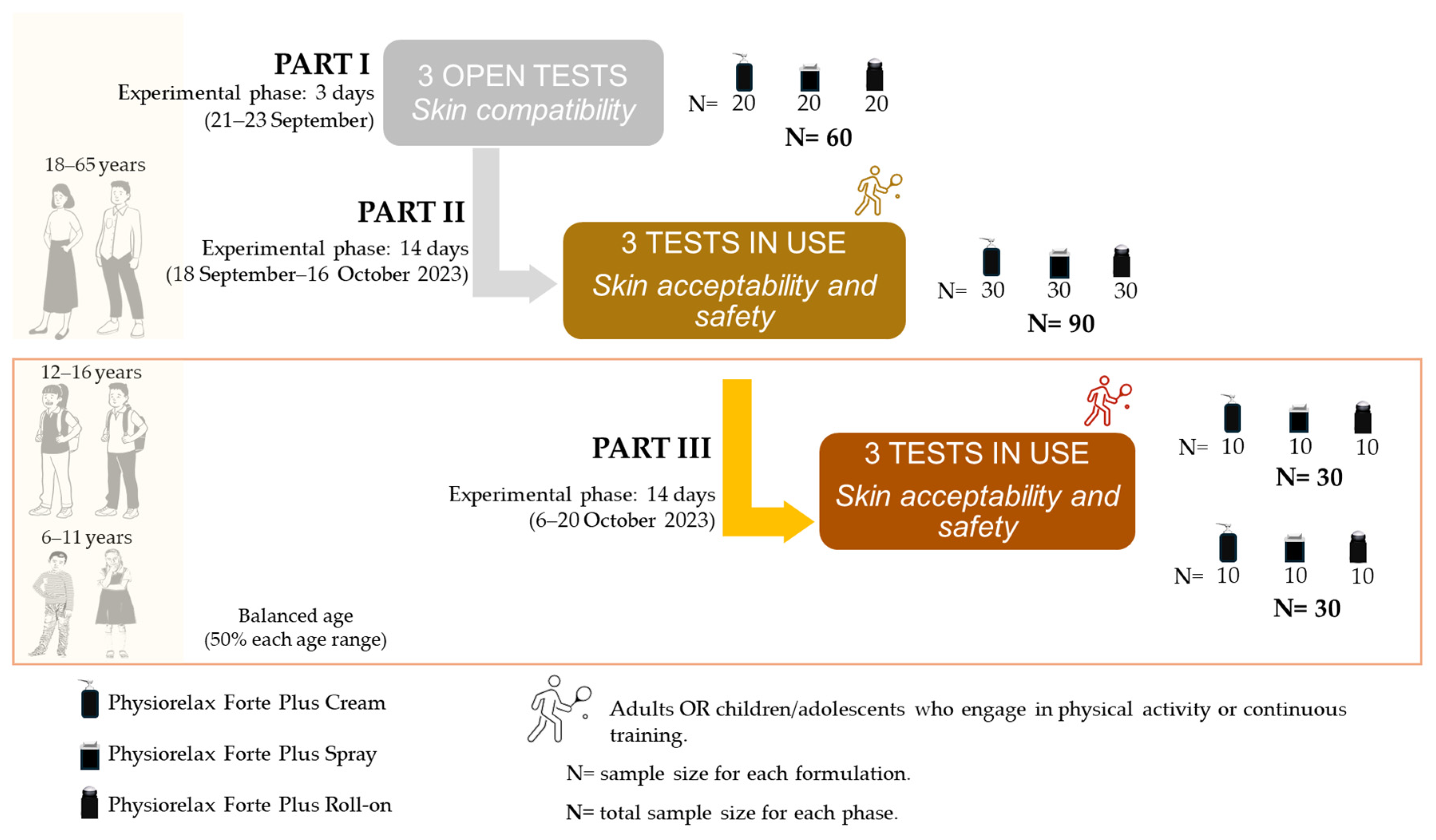
Study Design
2.2. Parts I and II: Testing in Healthy Adult Volunteers
2.2.1. Part I: Open Skin Compatibility Tests
2.2.2. Part II: In-Use Skin Acceptability and Cosmetic Safety Testing
2.3. Part III: Testing in a Healthy Pediatric Volunteer Population
Part III: In-Use Skin Acceptability and Cosmetic Safety Testing
2.4. Definition of Sensitive Skin and Rationale for Adult Pre-Screening
2.5. Compliance Assessment During the In-Use Tests
2.6. Ethical and Regulatory Compliance
2.7. Statistical Analysis
Sample Size Justification
3. Results
3.1. Part I: Open Skin Compatibility Tests in Adult Volunteers
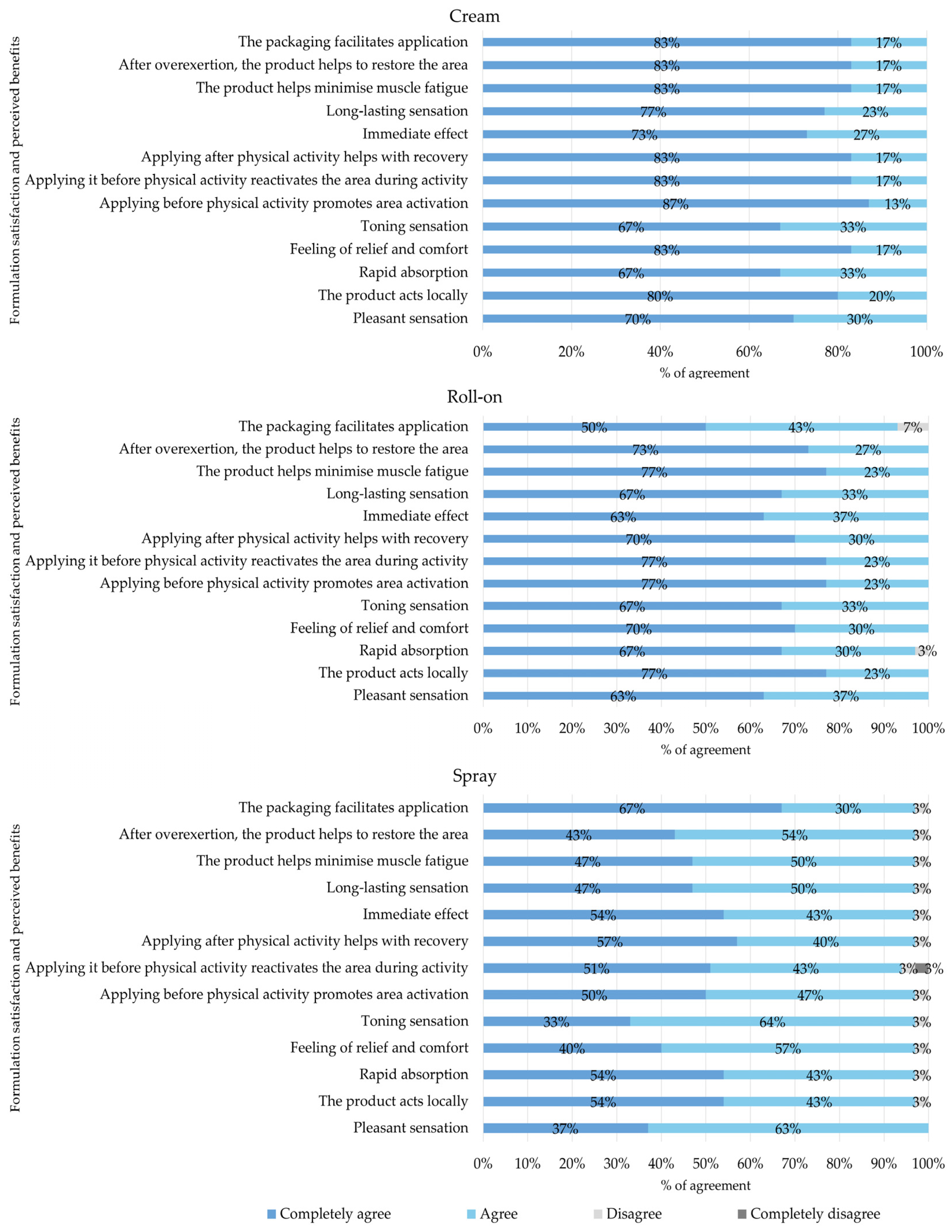
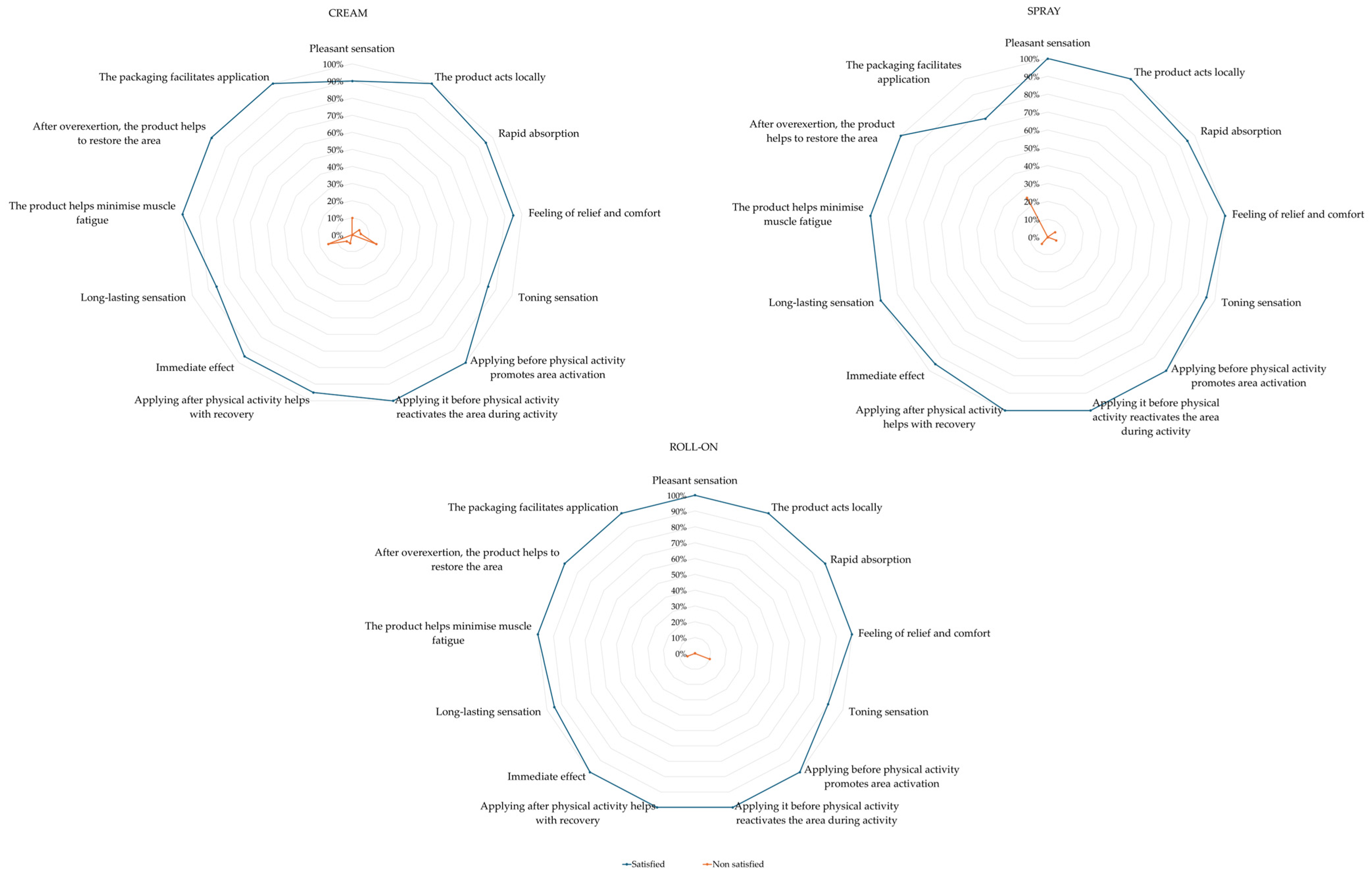
3.2. Part II: In-Use Skin Acceptability and Cosmetic Safety Testing in Adult Volunteers
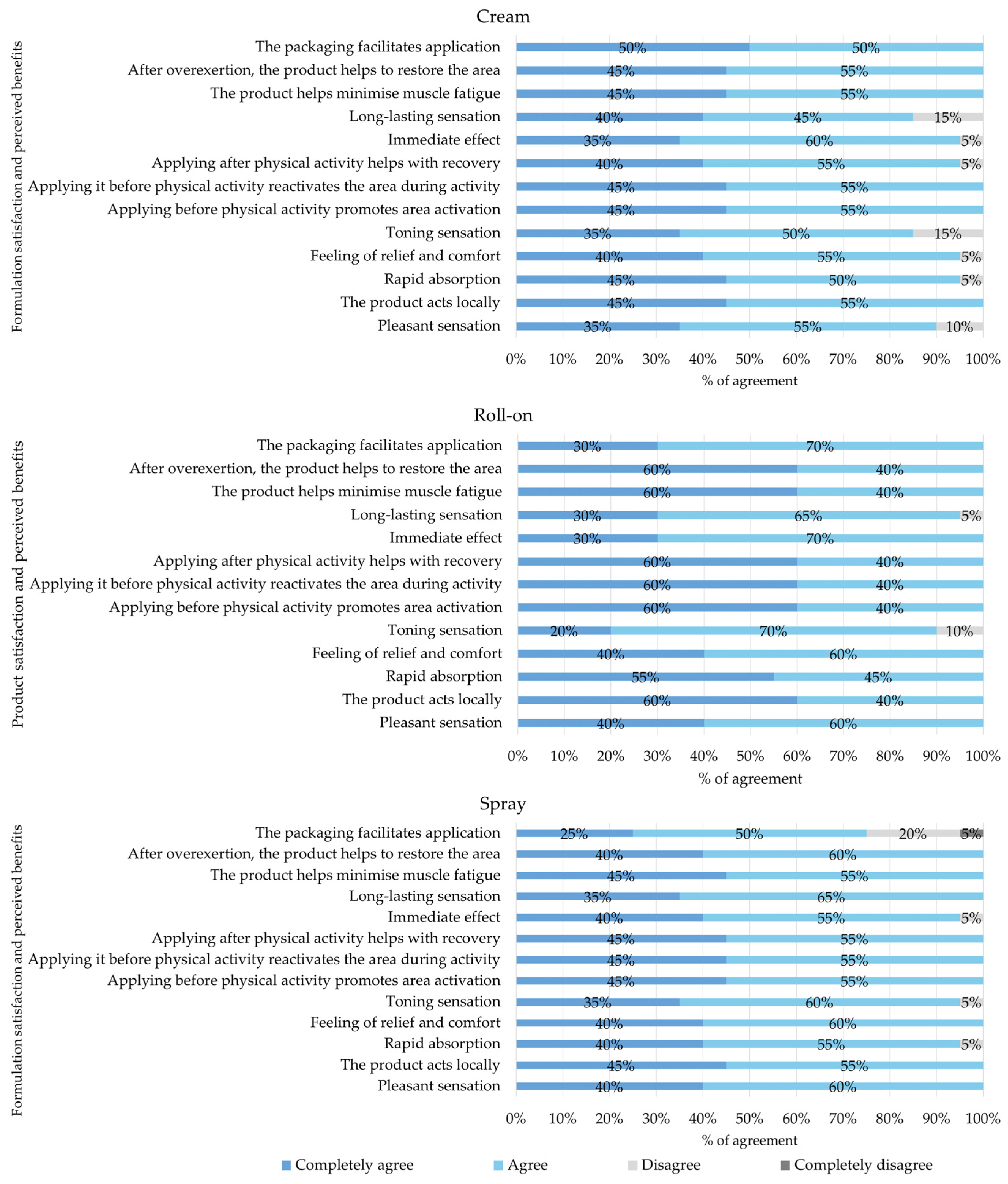
3.3. Part III: In-Use Skin Acceptability and Cosmetic Safety Testing in a Pediatric Population

3.4. Compliance Assessment of All Participants During the In-Use Tests
4. Discussion
Limitations
5. Conclusions
Author Contributions
Funding
Institutional Review Board Statement
Informed Consent Statement
Data Availability Statement
Acknowledgments
Conflicts of Interest
Abbreviations
| AEMPS | Spanish Agency of Medicines and Medical Devices |
| AEs | Adverse Events |
| COLIPA | European Cosmetic, Toiletry and Perfumery Association |
| CPMP | Committee for Proprietary Medicinal Products |
| EC | European Commission |
| E6 | ICH guideline |
| ICH | International Council for Harmonisation |
| OJ/EC | Official Journal of the European Communities |
| PC | Principal Component |
| PCA | Principal Component Analysis |
| R1 | Revision 1 |
| SCCS | Scientific Committee on Consumer Safety |
| WHO | World Health Organization |
References
- Dall’Oglio, I.; Gasperini, G.; Carlin, C.; Biagioli, V.; Gawronski, O.; Spitaletta, G.; Grimaldi Capitello, T.; Salata, M.; Vanzi, V.; Rocco, G.; et al. Self-Care in Pediatric Patients with Chronic Conditions: A Systematic Review of Theoretical Models. Int. J. Environ. Res. Public Health 2021, 18, 3513. [Google Scholar] [CrossRef]
- Field, T. Massage Therapy Research Review. Complement. Ther. Clin. Pract. 2016, 24, 19–31. [Google Scholar] [CrossRef]
- Field, T.M.; Quintino, O.; Hernandez-Reif, M.; Koslovsky, G. Adolescents with Attention Deficit Hyperactivity Disorder Benefit from Massage Therapy. Adolescence 1998, 33, 103–108. [Google Scholar] [PubMed]
- Maddigan, B.; Hodgson, P.; Heath, S.; Dick, B.; St. John, K.; McWilliam-Burton, T.; Snelgrove, C.; White, H. The Effects of Massage Therapy & Exercise Therapy on Children/Adolescents with Attention Deficit Hyperactivity Disorder. Can. Child Adolesc. Psychiatry Rev. 2003, 12, 40–43. [Google Scholar]
- Kolehmainen, N.; Thornton, C.; Craw, O.; Pearce, M.S.; Kudlek, L.; Nazarpour, K.; Cutler, L.; Sluijs, E.V.; Rapley, T. Physical Activity in Young Children across Developmental and Health States: The Active CHILD Study. eClinicalMedicine 2023, 60, 102008. [Google Scholar] [CrossRef] [PubMed]
- Faienza, M.F.; Urbano, F.; Chiarito, M.; Lassandro, G.; Giordano, P. Musculoskeletal Health in Children and Adolescents. Front. Pediatr. 2023, 11, 1226524. [Google Scholar] [CrossRef]
- de Britto Pereira, P.A.D.; Mendes Abdala, C.V.; Portella, C.F.; Ghelman, R.; Schveitzer, M.C. Pediatrics Massage Evidence Map. Complement. Ther. Med. 2021, 61, 102774. [Google Scholar] [CrossRef]
- Nanehkeran, M.M.; Nourbakhsh, A. Musculoskeletal Issues and Risks in School Children Associated with Cellphone and Backpack Use and Strategies That Parents and Teachers Can Adopt to Prevent Them. Med. Res. Arch. 2025, 13. [Google Scholar] [CrossRef]
- Larose, D.; Massie, C.-L.; St-Aubin, A.; Boulay-Pelletier, V.; Boulanger, E.; Lavoie, M.D.; Yessis, J.; Tremblay, A.; Drapeau, V. Effects of Flexible Learning Spaces, Active Breaks, and Active Lessons on Sedentary Behaviors, Physical Activity, Learning, and Musculoskeletal Health in School-Aged Children: A Scoping Review. J. Act. Sedentary Sleep Behav. 2024, 3, 30. [Google Scholar] [CrossRef]
- Sanfilippo, A.M.; Barrio, V.; Kulp-Shorten, C.; Callen, J.P. Common Pediatric and Adolescent Skin Conditions. J. Pediatr. Adolesc. Gynecol. 2003, 16, 269–283. [Google Scholar] [CrossRef]
- Kong, F.; Galzote, C.; Duan, Y. Change in Skin Properties over the First 10 Years of Life: A Cross-Sectional Study. Arch. Dermatol. Res. 2017, 309, 653–658. [Google Scholar] [CrossRef]
- Stamatas, G.N.; Roux, P.-F.; Boireau-Adamezyk, E.; Lboukili, I.; Oddos, T. Skin Maturation from Birth to 10 Years of Age: Structure, Function, Composition and Microbiome. Exp. Dermatol. 2023, 32, 1420–1429. [Google Scholar] [CrossRef]
- Bertrán Novella, J.; Garcia Gonzalez, N.; Guiró Coll, P.; Asensio Torres, D.; Palenzuela Larrarte, S.; Giménez, M. Cosmetic and Application Qualities of the Cream Physiorelax Compared to Another Topical Cream for Musculoskeletal Health Care: An Organoleptic Expert Panel Approach. J. Cosmet. Dermatol. 2025, 24, e70368. [Google Scholar] [CrossRef]
- Kriplani, P.; Guarve, K.; Baghael, U.S. Arnica montana L.—A Plant of Healing: Review. J. Pharm. Pharmacol. 2017, 69, 925–945. [Google Scholar] [CrossRef]
- Gyawali, N.; Rayamajhi, A.; Karki, D.; Pokhrel, T.; Adhikari, A. Arnica Montana L.: Traditional Uses, Bioactive Chemical Constituents, and Pharmacological Activities. In Medicinal Plants of the Asteraceae Family: Traditional Uses, Phytochemistry and Pharmacological Activities; Devkota, H.P., Aftab, T., Eds.; Springer Nature: Singapore, 2022; pp. 61–75. ISBN 978-981-19-6080-2. [Google Scholar]
- Mcgregor, G.; Fiebich, B.; Wartenberg, A.; Brien, S.; Lewith, G.; Wegener, T. Devil’s Claw (Harpagophytum procumbens): An Anti-Inflammatory Herb with Therapeutic Potential. Phytochem. Rev. 2005, 4, 47–53. [Google Scholar] [CrossRef]
- Barnes, J.; Anderson, L.A.; Phillipson, J.D. St John’s Wort (Hypericum perforatum L.): A Review of Its Chemistry, Pharmacology and Clinical Properties. J. Pharm. Pharmacol. 2001, 53, 583–600. [Google Scholar] [CrossRef]
- Muley, B.P.; Khadabadi, S.S.; Banarase, N.B. Phytochemical Constituents and Pharmacological Activities of Calendula Officinalis Linn (Asteraceae): A Review. Trop. J. Pharm. Res. 2009, 8, 455–465. [Google Scholar] [CrossRef]
- Efstratiou, E.; Hussain, A.; Nigam, P.; Moore, J.; Ayub, M.; Rao, J. Antimicrobial Activity of Calendula Officinalis Petal Extracts against Fungi, as Well as Gram-Negative and Gram-Positive Clinical Pathogens. Complement. Ther. Clin. Pract. 2012, 18, 173–176. [Google Scholar] [CrossRef]
- Beeswax—An Overview|ScienceDirect Topics. Available online: https://www.sciencedirect.com/topics/agricultural-and-biological-sciences/beeswax (accessed on 23 February 2026).
- Bogdanov, S. Beeswax: Production, Properties, Composition, Control. In The Beeswax Book; Bogdanov, S., Ed.; Bee Product Science Publishing: Muehlethurnen, Switzerland, 2009; pp. 1–17. [Google Scholar]
- Mahendran, G.; Rahman, L.U. Ethnomedicinal, Phytochemical and Pharmacological Updates on Peppermint (Mentha × Piperita L.)—A Review. Phytother. Res. 2020, 34, 2088–2139. [Google Scholar] [CrossRef]
- Chakraborty, K.; Chakravarti, A.R.; Bhattacharjee, S. Bioactive Components of Peppermint (Mentha piperita L.), Their Pharmacological and Ameliorative Potential and Ethnomedicinal Benefits: A Review. J. Pharmacogn. Phytochem. 2022, 11, 109–114. [Google Scholar] [CrossRef]
- Patel, A. The Healing Herbs of Traditional Medicine: A Review of the Phytochemical and Pharmacological Significance of Mentha Piperita (Peppermint). Eur. J. Biomed. Pharm. Sci. 2024, 11, 378–386. [Google Scholar]
- Galeotti, N.; Di Cesare Mannelli, L.; Mazzanti, G.; Bartolini, A.; Ghelardini, C. Menthol: A Natural Analgesic Compound. Neurosci. Lett. 2002, 322, 145–148. [Google Scholar] [CrossRef]
- Shiekh, R.A.E.; Atwa, A.M.; Elgindy, A.M.; Mustafa, A.M.; Senna, M.M.; Alkabbani, M.A.; Ibrahim, K.M. Therapeutic Applications of Eucalyptus Essential Oils. Inflammopharmacology 2025, 33, 163–182. [Google Scholar] [CrossRef]
- Eucalyptus Oil—An Overview|ScienceDirect Topics. Available online: https://www.sciencedirect.com/topics/pharmacology-toxicology-and-pharmaceutical-science/eucalyptus-oil (accessed on 23 February 2026).
- Duda-Madej, A.; Viscardi, S.; Grabarczyk, M.; Topola, E.; Kozłowska, J.; Mączka, W.; Wińska, K. Is Camphor the Future in Supporting Therapy for Skin Infections? Pharmaceuticals 2024, 17, 715. [Google Scholar] [CrossRef]
- Shabbir, A.; Parvinzadeh Gashti, M. Camphor’s Therapeutic Uses and Potential Hazards: An In-Depth Review of Its Medicinal Applications. Molecules 2026, 31, 648. [Google Scholar] [CrossRef]
- Lim, H.C.; Lee, S.K.; Keng, J.W.; Lee, E.Q.; Tan, E.S.S.; Liew, K.B.; Mai, C.W.; Lee, S.K.; Chen, L.; Low, M.L.; et al. Mechanistic Insights and Clinical Evidence of Helianthus annuus Linn. (Sunflower) Seed Oil for Dermatological Applications: A Narrative Review. Drug Deliv. Transl. Res. 2025, 15, 4260–4276. [Google Scholar] [CrossRef]
- Becker, L.C.; Boyer, I.J.; Bergfeld, W.F.; Belsito, D.V.; Hill, R.A.; Klaassen, C.D.; Liebler, D.C.; Marks, J.G., Jr.; Shank, R.C.; Slaga, T.J.; et al. Safety Assessment of Helianthus Annuus (Sunflower)-Derived Ingredients as Used in Cosmetics. Int. J. Toxicol. 2023, 42, 93S–116S. [Google Scholar] [CrossRef]
- Leong, E.J.; Tan, L.F.; Yap, V.-L.; Rajagopal, M.; Chandran, R. Cosmetological Applications of Citrus Limon: A Mini-Review. Indian J. Nat. Prod. Resour. 2024, 15, 286–293. [Google Scholar] [CrossRef]
- Huang, J.; Xu, X.; Liu, C.; Liu, L. Exploring the Potential of Lemon Peel Extracts in Cosmetics: Chemical Composition and Bioactive Properties. J. Microbiol. Biotechnol. 2025, 35, e2412042. [Google Scholar] [CrossRef]
- Klimek-Szczykutowicz, M.; Szopa, A.; Ekiert, H. Citrus Limon (Lemon) Phenomenon—A Review of the Chemistry, Pharmacological Properties, Applications in the Modern Pharmaceutical, Food, and Cosmetics Industries, and Biotechnological Studies. Plants 2020, 9, 119. [Google Scholar] [CrossRef]
- Chen, X.; Ding, Y.; Guan, H.; Zhou, C.; He, X.; Shao, Y.; Wang, Y.; Wang, N.; Li, B.; Lv, G.; et al. The Pharmacological Effects and Potential Applications of Limonene from Citrus Plants: A Review. Nat. Prod. Commun. 2024, 19. [Google Scholar] [CrossRef]
- Spréa, R.M.; Finimundy, T.C.; Calhelha, R.C.; Pires, T.C.S.P.; Prieto, M.A.; Amaral, J.S.; Barros, L. Comprehensive Analysis of Soybean (Glycine Max L.) by-Products: Nutritional Value, Phenolic Composition, and Bioactive Properties. Food Biosci. 2024, 62, 105382. [Google Scholar] [CrossRef]
- Waqas, M.K.; Akhtar, N.; Mustafa, R.; Jamshaid, M.; Khan, H.M.S.; Murtaza, G. Dermatological and Cosmeceutical Benefits of Glycine max (Soybean) and Its Active Components. Acta Pol. Pharm. 2015, 72, 3–11. [Google Scholar] [PubMed]
- Bylka, W.; Znajdek-Awiżeń, P.; Studzińska-Sroka, E.; Dańczak-Pazdrowska, A.; Brzezińska, M. Centella Asiatica in Dermatology: An Overview. Phytother. Res. 2014, 28, 1117–1124. [Google Scholar] [CrossRef]
- Park, K.S. Pharmacological Effects of Centella Asiatica on Skin Diseases: Evidence and Possible Mechanisms. Evid.-Based Complement. Altern. Med. 2021, 2021, 5462633. [Google Scholar] [CrossRef]
- Phetcharat, L.; Wongsuphasawat, K.; Winther, K. The Effectiveness of a Standardized Rose Hip Powder, Containing Seeds and Shells of Rosa Canina, on Cell Longevity, Skin Wrinkles, Moisture, and Elasticity. Clin. Interv. Aging 2015, 10, 1849–1856. [Google Scholar] [CrossRef]
- Oargă (Porumb), D.P.; Cornea-Cipcigan, M.; Cordea, M.I. Unveiling the Mechanisms for the Development of Rosehip-Based Dermatological Products: An Updated Review. Front. Pharmacol. 2024, 15, 1390419. [Google Scholar] [CrossRef]
- Angelov, G.; Boyadzhieva, S.S.; Georgieva, S.S. Rosehip Extraction: Process Optimization and Antioxidant Capacity of Extracts. Cent. Eur. J. Chem. 2014, 12, 502–508. [Google Scholar] [CrossRef]
- Robinson, M.K.; Perkins, M.A. A Strategy for Skin Irritation Testing. Am. J. Contact Dermat. 2002, 13, 21–29. [Google Scholar] [CrossRef]
- Bhuvaneswari, V.S.; Chandan, R.S. Review on Safety Assessment of a Cosmetic Product. Int. J. Curr. Pharm. Res. 2018, 10, 1–6. [Google Scholar] [CrossRef]
- Scientific Committee on Consumer Safety (SCCS). Notes of Guidance for the Testing of Cosmetic Ingredients and Their Safety Evaluation—12th Revision. Available online: https://health.ec.europa.eu/publications/sccs-notes-guidance-testing-cosmetic-ingredients-and-their-safety-evaluation-12th-revision_en (accessed on 23 February 2026).
- Nakada, T.; Hostynek, J.J.; Maibach, H.I. Use Tests: ROAT (Repeated Open Application Test)/PUT (Provocative Use Test): An Overview. Contact Dermat. 2000, 43, 1–3. [Google Scholar] [CrossRef]
- Cosmetics Europe (COLIPA). Guidelines for the Safety Assessment of a Cosmetic Product; Cosmetics Europe: Brussels, Belgium, 2004. [Google Scholar]
- Bowman, J.P.; Berger, R.S.; Mills, O.H.; Kligman, A.M.; Stoudemayer, T. The 21-Day Human Cumulative Irritation Test Can Be Reduced to 14 Days without Loss of Sensitivity. J. Cosmet. Sci. 2003, 54, 443–449. [Google Scholar]
- Misery, L.; Loser, K.; Ständer, S. Sensitive Skin. J. Eur. Acad. Dermatol. Venereol. 2016, 30, 2–8. [Google Scholar] [CrossRef]
- Willis, C.M.; Shaw, S.; De Lacharrière, O.; Baverel, M.; Reiche, L.; Jourdain, R.; Bastien, P.; Wilkinson, J.D. Sensitive Skin: An Epidemiological Study. Br. J. Dermatol. 2001, 145, 258–263. [Google Scholar] [CrossRef] [PubMed]
- Farage, M.A. The Prevalence of Sensitive Skin. Front. Med. 2019, 6, 98. [Google Scholar] [CrossRef]
- Fitzpatrick, T.B. The Validity and Practicality of Sun-Reactive Skin Types I through VI. Arch. Dermatol. 1988, 124, 869–871. [Google Scholar] [CrossRef]
- Baba, A.; Aregbesola, A.; Caldwell, P.H.Y.; Elliott, S.A.; Elsman, E.B.M.; Fernandes, R.M.; Hartling, L.; Heath, A.; Kelly, L.E.; Preston, J.; et al. Developments in the Design, Conduct, and Reporting of Child Health Trials. Pediatrics 2024, 154, e2024065799. [Google Scholar] [CrossRef] [PubMed]
- Petracek, J.; Fialova, M. Spontaneous Reporting Systems. In Principles and Practice of Pharmacovigilance and Drug Safety; Jose, J., Cox, A.R., Paudyal, V., Eds.; Springer International Publishing: Cham, Switzerland, 2024; pp. 231–250. ISBN 978-3-031-51089-2. [Google Scholar]
- Dobrev, H.P. Ethical Aspects of Cosmetic Testing. In Practical Aspects of Cosmetic Testing: How to Set up a Scientific Study in Skin Physiology; Fluhr, J.W., Ed.; Springer Nature: Berlin/Heidelberg, Germany, 2020; pp. 15–25. [Google Scholar]
- Cosmetics Europe (COLIPA). Guidelines for Cosmetic Product Claim Substantiation; Cosmetics Europe: Brussels, Belgium, 2019. [Google Scholar]
- Misery, L.; Ständer, S.; Szepietowski, J.C.; Reich, A.; Wallengren, J.; Evers, A.W.M.; Takamori, K.; Brenaut, E.; Gall-Ianotto, C.L.; Fluhr, J.; et al. Definition of Sensitive Skin: An Expert Position Paper from the Special Interest Group on Sensitive Skin of the International Forum for the Study of Itch. Acta Derm.-Venereol. 2017, 97, 4–6. [Google Scholar] [CrossRef] [PubMed]
- Cosmetics Europe (COLIPA). Guidelines for the Evaluation of the Efficacy of Cosmetic Products-Revised; Cosmetics Europe: Brussels, Belgium, 2008. [Google Scholar]
- Jairoun, A.A.; Al-Hemyari, S.S.; Shahwan, M.; El-Dahiyat, F.; Zyoud, S.H.; Jairoun, O.; Shayeb, M.A. Development and Validation of an Instrument to Appraise the Tolerability, Safety of Use, and Pleasantness of a Cosmetic Product. Cosmetics 2023, 10, 15. [Google Scholar] [CrossRef]
- Ludriksone, L.; Garcia Bartels, N.; Kanti, V.; Blume-Peytavi, U.; Kottner, J. Skin Barrier Function in Infancy: A Systematic Review. Arch. Dermatol. Res. 2014, 306, 591–599. [Google Scholar] [CrossRef]
- Kovács, A.; Péter-Héderi, D.; Perei, K.; Budai-Szűcs, M.; Léber, A.; Gácsi, A.; Csányi, E.; Berkó, S. Effects of Formulation Excipients on Skin Barrier Function in Creams Used in Pediatric Care. Pharmaceutics 2020, 12, 729. [Google Scholar] [CrossRef]
- Trompette, A.; Ubags, N.D. Skin Barrier Immunology from Early Life to Adulthood. Mucosal Immunol. 2023, 16, 194–207. [Google Scholar] [CrossRef]
- Kail, R.V. Children and Their Development, 6th ed.; Pearson Education: Upper Saddle River, NJ, USA, 2012; ISBN 978-0-205-03494-9. [Google Scholar]
- Black, M.M.; Walker, S.P.; Fernald, L.C.H.; Andersen, C.T.; DiGirolamo, A.M.; Lu, C.; McCoy, D.C.; Fink, G.; Shawar, Y.R.; Shiffman, J.; et al. Early Childhood Development Coming of Age: Science through the Life Course. Lancet 2017, 389, 77–90. [Google Scholar] [CrossRef] [PubMed]
- Warshaw, E.M.; Schlarbaum, J.P.; Silverberg, J.I.; DeKoven, J.G.; Fransway, A.F.; Taylor, J.S.; Maibach, H.I.; Fowler, J.F.; Atwater, A.R.; Reeder, M.J.; et al. Contact Dermatitis to Personal Care Products Is Increasing (but Different!) In Males and Females: North American Contact Dermatitis Group Data, 1996–2016. J. Am. Acad. Dermatol. 2021, 85, 1446–1455. [Google Scholar] [CrossRef] [PubMed]
- Pap, E.B.; Temesvári, E.; Németh, I.; Sárdy, M.; Pónyai, G. Contact Hypersensitivity in Adolescents. Pediatr. Dermatol. 2018, 35, 769–773. [Google Scholar] [CrossRef] [PubMed]
- Davis, E.; Nicolas, C.; Waters, E.; Cook, K.; Gibbs, L.; Gosch, A.; Ravens-Sieberer, U. Parent-Proxy and Child Self-Reported Health-Related Quality of Life: Using Qualitative Methods to Explain the Discordance. Qual. Life Res. 2007, 16, 863–871. [Google Scholar] [CrossRef]
- Mack, J.W.; McFatrich, M.; Withycombe, J.S.; Maurer, S.H.; Jacobs, S.S.; Lin, L.; Lucas, N.R.; Baker, J.N.; Mann, C.M.; Sung, L.; et al. Agreement Between Child Self-Report and Caregiver-Proxy Report for Symptoms and Functioning of Children Undergoing Cancer Treatment. JAMA Pediatr. 2020, 174, e202861. [Google Scholar] [CrossRef]
- Roydhouse, J.; Reeve, B.B. Incorporating Information from Proxies for Patient-Centered Outcomes in Adult and Pediatric Oncology Settings. J. Clin. Oncol. 2023, 41, 1518–1522. [Google Scholar] [CrossRef]
- Arbuckle, R.; Abetz-Webb, L. “Not Just Little Adults”: Qualitative Methods to Support the Development of Pediatric Patient-Reported Outcomes. Patient-Patient-Centered Outcomes Res. 2013, 6, 143–159. [Google Scholar] [CrossRef]

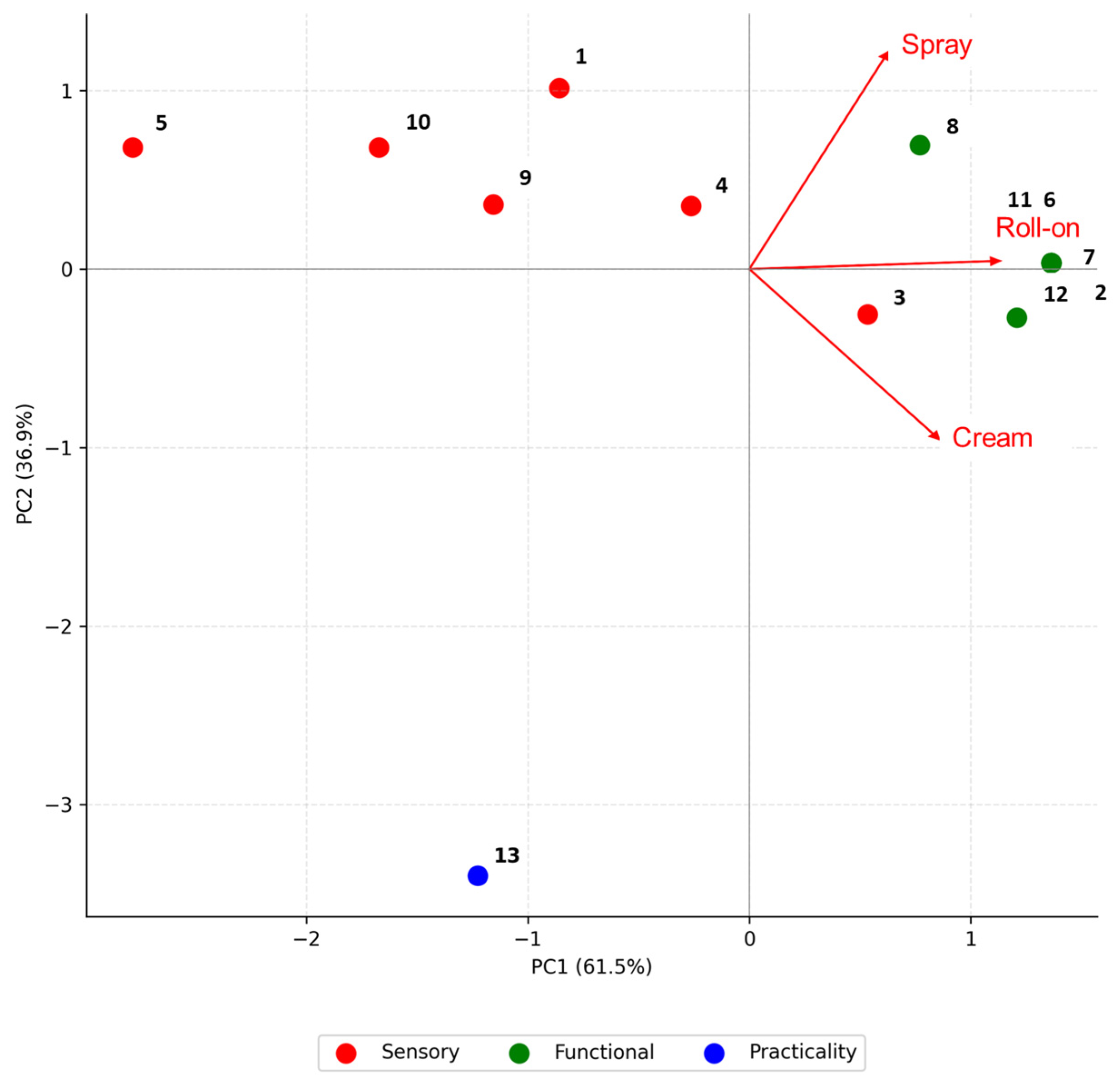

| Item | Question |
|---|---|
| 1 | After using the product, do you feel that it provides a pleasant sensation on the skin? |
| 2 | Do you consider that using the product acts in a localized way in the area? |
| 3 | Do you find that the product is absorbed quickly? |
| 4 | Do you consider that the use of the product provides a feeling of relief and comfort in the area? |
| 5 | Do you consider that the use of the product provides a toning sensation after its application? |
| 6 | Do you consider applying the product before physical activity helps to activate the area? |
| 7 | Do you consider applying the product before physical activity, does it reactivate the area during physical activity? |
| 8 | Do you consider that applying the product after physical activity helps the area to recover? |
| 9 | Do you consider that when applying for the product, it takes effect immediately? |
| 10 | Do you consider that the effect of the product lasts on the skin, creating a long-lasting sensation? |
| 11 | Do you think that after using the product it helps to minimize muscle fatigue? |
| 12 | After physical overexertion, do you think it helps to restore the exercised area? |
| 13 | Do you consider that the type of packaging facilitates the application of the product? |
| Open Skin Compatibility Tests in Adults Total N = 60 | In-Use Skin Acceptability Tests in Adults Total N = 90 | In-Use Skin Acceptability Tests in a Pediatric Population Total N = 60 | |
|---|---|---|---|
| Cream | N = 20 | N = 30 | N = 20 |
| Age, years | |||
| Mean (SD) | 38.5 (8.4) | 38.3 (12.0) | 11.5 (3.0) |
| Median (IQR) | 39.5 (10.5) | 39.5 (21.3) | 11.5 (5.0) |
| Sex, male/female | 10/10 | 19/11 | 11/9 |
| N (%) | (50%, 50%) | (63.3%, 36.7%) | (55%, 45%) |
| Fitzpatrick phototypes N (%) | I: 0 | I: 0 | I: 0 |
| II: 6 | II: 2 | II: 8 | |
| III: 14 | III: 28 | III: 11 | |
| IV: 1 | |||
| Spray | N = 20 | N = 30 | N = 20 |
| Age, years | |||
| Mean, SD | 37.1 (11.2) | 35.8 (12.7) | 11.3 (3.0) |
| Median (IQR) | 37.5 (16.0) | 36.0 (18.8) | 11.5 (5.3) |
| Sex, male/female | 11/9 | 12/18 | 7/13 |
| N (%) | (55%, 45%) | (40%, 60%) | (35%, 65%) |
| Fitzpatrick phototypes N (%) | I: 1 | I: 0 | I: 0 |
| II: 4 | II: 2 | II: 9 | |
| III: 15 | III: 28 | III: 11 | |
| Roll-on | N = 20 | N = 30 | N = 20 |
| Age, years | |||
| Mean, SD | 37.6 (10.9) | 37.9 (12.0) | 10.9 (3.1) |
| Median (IQR) | 39.0 (18.5) | 38.5 (17.8) | 11.5 (4.3) |
| Sex, male/female | 9/11 | 15/15 | 10/10 |
| N (%) | (45%, 55%) | (50%, 50%) | (50%, 50%) |
| Fitzpatrick phototypes N (%) | I: 1 | I: 0 | I: 0 |
| II: 4 | II: 1 | II: 5 | |
| III: 15 | III: 29 | III: 13 | |
| IV: 2 |
Disclaimer/Publisher’s Note: The statements, opinions and data contained in all publications are solely those of the individual author(s) and contributor(s) and not of MDPI and/or the editor(s). MDPI and/or the editor(s) disclaim responsibility for any injury to people or property resulting from any ideas, methods, instructions or products referred to in the content. |
© 2026 by the authors. Licensee MDPI, Basel, Switzerland. This article is an open access article distributed under the terms and conditions of the Creative Commons Attribution (CC BY) license.
Share and Cite
Bertrán Novella, J.; Asensio-Torres, D.; Palenzuela-Larrarte, S.; Giménez, M. Organoleptic Evaluation, User Acceptability, and Cosmetic Safety of Physiorelax Forte Plus Formulations in a Pediatric Population. Cosmetics 2026, 13, 85. https://doi.org/10.3390/cosmetics13020085
Bertrán Novella J, Asensio-Torres D, Palenzuela-Larrarte S, Giménez M. Organoleptic Evaluation, User Acceptability, and Cosmetic Safety of Physiorelax Forte Plus Formulations in a Pediatric Population. Cosmetics. 2026; 13(2):85. https://doi.org/10.3390/cosmetics13020085
Chicago/Turabian StyleBertrán Novella, Jordi, David Asensio-Torres, Sonia Palenzuela-Larrarte, and Mónica Giménez. 2026. "Organoleptic Evaluation, User Acceptability, and Cosmetic Safety of Physiorelax Forte Plus Formulations in a Pediatric Population" Cosmetics 13, no. 2: 85. https://doi.org/10.3390/cosmetics13020085
APA StyleBertrán Novella, J., Asensio-Torres, D., Palenzuela-Larrarte, S., & Giménez, M. (2026). Organoleptic Evaluation, User Acceptability, and Cosmetic Safety of Physiorelax Forte Plus Formulations in a Pediatric Population. Cosmetics, 13(2), 85. https://doi.org/10.3390/cosmetics13020085