Article

Antioxidant and Anticollagenase Activities of Fermented Pomegranate (Punica granatum L.) Peel Juice


by
Faizatun Faizatun
1,*,
Nur Miftahurrohmah
2 and
Rosmawati Rosmawati
3,4
1
Department of Pharmaceutical Technology, Faculty of Pharmacy, Universitas Pancasila, Srengseng Sawah, Jagakarsa, Jakarta 12640, Indonesia
2
Department of Microbiology, Faculty of Pharmacy, Universitas Pancasila, Srengseng Sawah, Jagakarsa, Jakarta 12640, Indonesia
3
Magister of Pharmacy, Faculty of Pharmacy, Universitas Pancasila, Srengseng Sawah, Jagakarsa, Jakarta 12640, Indonesia
4
Department of Pharmaceutical Technology, Faculty of Health Sciences and Pharmacy, Universitas Gunadarma, Depok 16424, Indonesia
*
Author to whom correspondence should be addressed.
Cosmetics 2026, 13(2), 73; https://doi.org/10.3390/cosmetics13020073
Submission received: 7 December 2025 / Revised: 16 February 2026 / Accepted: 23 February 2026 / Published: 18 March 2026
(This article belongs to the Section Cosmetic Technology)

Abstract

Skin aging is driven by intrinsic factors, such as the accumulation of reactive oxygen species, and extrinsic factors, including ultraviolet (UV) radiation, which accelerate oxidative stress and extracellular matrix degradation. Strategies to mitigate skin aging often focus on antioxidant and anticollagenase activities. Several studies have shown that Pomegranate (Punica granatum L.) peel is an underutilized by-product rich in ellagitannins, which can be hydrolyzed into ellagic acid, a compound with well-documented bioactivity. Therefore, this study aims to investigate the effect of microbial fermentation using Lactiplantibacillus plantarum and Saccharomyces cerevisiae on the physicochemical properties and bioactivity of pomegranate peel juice. Non-fermented juice (NFJ), L. plantarum-fermented juice (LFJ), and S. cerevisiae-fermented juice (SFJ) were used for comparative evaluation. The results showed that fermentation (LFJ and SFJ) led to decreased pH and sugar content, along with significant increases in ellagic acid concentration, antioxidant activity, and collagenase inhibition compared to NFJ. After 168 h, ellagic acid levels increased to 329.87 µg/mL in LFJ and 341.41 µg/mL in SFJ, compared to 263.86 µg/mL in NFJ. Antioxidant activity also increased to 73.82%, 83.25%, and 82.70% for NFJ, LFJ, and SFJ, respectively. Meanwhile, collagenase inhibition was 67.43%, 71.81%, and 73.66% for NFJ, LFJ, and SFJ, respectively. These results provide scientific evidence that microbial fermentation enhances the bioactivity of pomegranate peel juice, showing its potential as a sustainable source of natural ingredients for future cosmetic applications. Further studies on formulation, stability, and safety are needed to translate the results into practical skincare products.

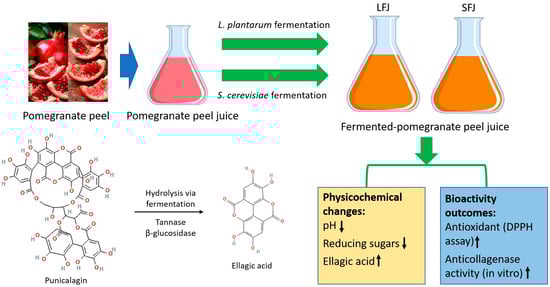
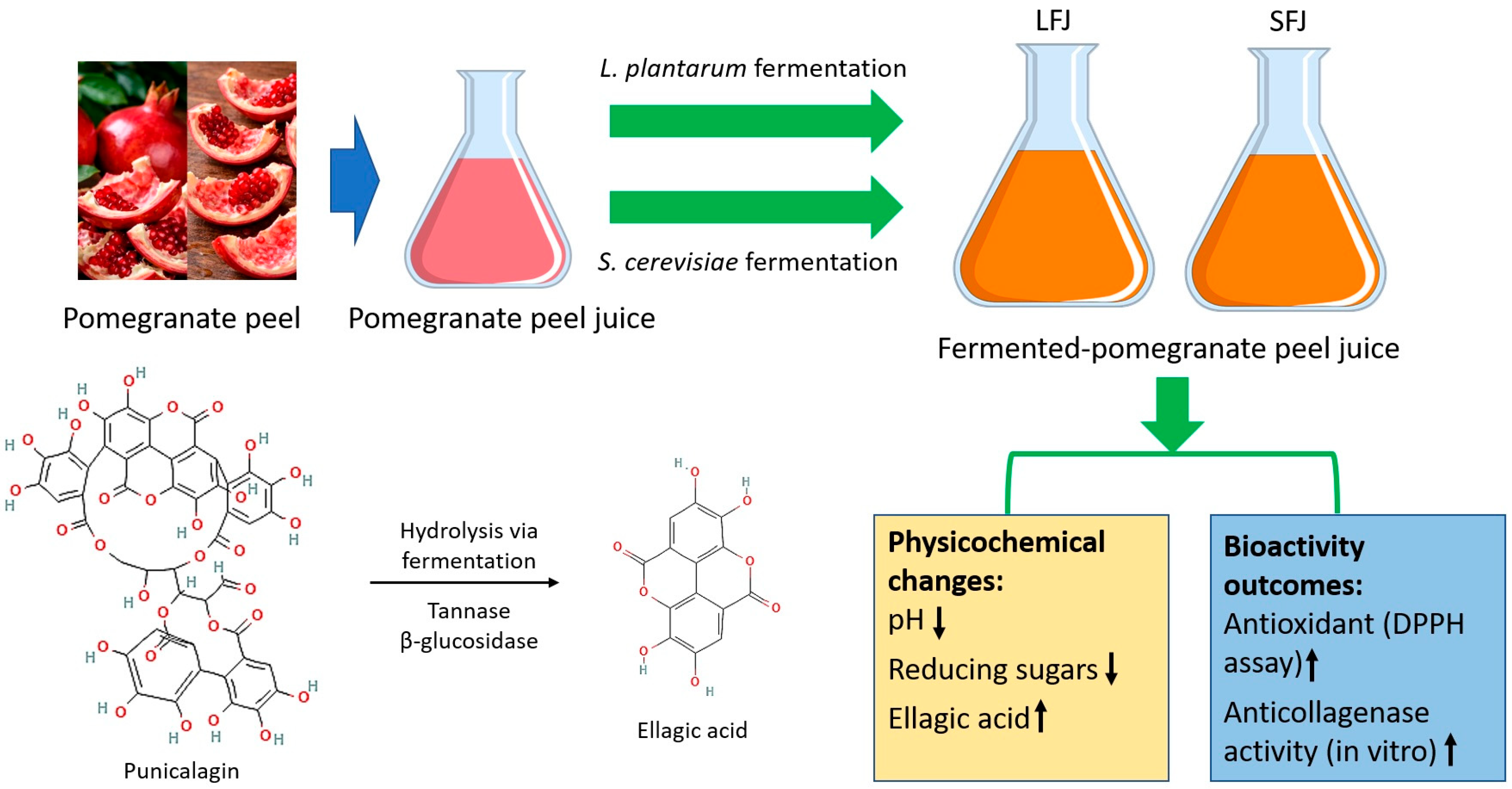
Graphical Abstract

1. Introduction

The skin is the largest organ of the human body and serves as a protective barrier against environmental stressors such as ultraviolet (UV) radiation, pollution, and dust. Continuous exposure to these factors has been reported to accelerate skin aging, characterized by oxidative stress and degradation of extracellular matrix components. UV radiation induces the expression of matrix metalloproteinases (MMPs). According to previous studies, MMPs are enzymes that degrade collagen and elastin, leading to loss of elasticity and the appearance of wrinkles [1,2]. Therefore, preventing premature aging requires strategies that combine antioxidant and anticollagenase activities to protect the skin structure.
Natural products have attracted considerable attention as sources of bioactive compounds for cosmetic applications. Pomegranate (Punica granatum L., family Lythraceae) has been reported to be rich in ellagitannins, especially punicalagin, which can be hydrolyzed to release ellagic acid [3,4,5]. In addition, ellagic acid is a polyphenolic compound with well- documented antioxidant and anticollagenase properties, making it a promising candidate for skin health applications [6]. While pomegranate juice and seed extracts have been widely studied and utilized in cosmetic formulations, the peel remains underutilized despite being a major by-product of fruit processing and a rich source of hydrolyzable tannins [4,7]. This represents a study gap, as peel fermentation has received limited attention compared to juice or seed extracts, particularly in relation to its cosmetic relevance.
Microbial fermentation represents a sustainable and effective strategy to enhance the bioavailability of ellagic acid from pomegranate peel. Enzymes, such as tannase and β-glucosidase, produced by microorganisms can hydrolyze ellagitannins, thereby increasing ellagic acid yield [8]. Previous studies have demonstrated that Lactiplantibacillus plantarum and Saccharomyces cerevisiae are capable of converting ellagitannins into ellagic acid, with significant improvements in antioxidant activity compared to unfermented substrates [9,10]. However, direct comparisons of different microbial strains in peel fermentation under identical conditions remain scarce. Addressing this gap provides novelty, as it allows systematic evaluation of fermentation kinetics and bioactivity outcomes, clarifying the role of microbial species in enhancing cosmetic-relevant properties.
In this study, pomegranate peel was fermented separately using L. plantarum and S. cerevisiae to investigate changes in ellagic acid content, reducing sugar levels, pH, and microbial growth over 7 days. The antioxidant and anticollagenase activities of the fermented extracts were then evaluated in vitro using the 2,2-diphenyl-1-picrylhydrazyl (DPPH) assay and a collagenase inhibition kit. By providing scientific evidence of the bioactivity of fermented pomegranate peel, the results show its potential as a sustainable natural ingredient for future cosmetic formulations, in line with current trends in green cosmetics and the circular economy [11].

2. Materials and Methods

2.1. Materials

Fresh pomegranate (Punica granatum L., family Lythraceae) fruits at the commercially mature stage (red peel) were obtained from local gardens in Situbondo, East Java, Indonesia. The following materials were used, including Lactiplantibacillus plantarum ATCC 8014 (Microbiologics®, St. Cloud, MN, USA), Saccharomyces cerevisiae ATCC 9763 (Microbiologics®, St. Cloud, MN, USA), de Man Rogosa and Sharpe (MRS) agar (Merck, Rahway, NJ, USA), potato dextrose agar (PDA, Merck), ellagic acid standard (Merck Supelco, Darmstadt, Germany), and ascorbic acid (Indonesia Pharmacopeia Reference Standards/BPFI). Others included (-)-epigallocatechin gallate (EGCG, Abcam, Cambridge, UK), methanol (HPLC grade, Merck Supelco), acetonitrile (HPLC grade, Merck Supelco), sodium hydroxide (NaOH, Merck), O-phosphoric acid (Merck), 2,2-diphenyl-1-picrylhydrazyl (DPPH, Himedia, Mumbai, India), collagenase assay kit (Abcam), 3,5-dinitrosalicylic acid (DNSA, Sigma Aldrich, St. Louis, MO, USA), D(+)-glucose anhydrous (Merck), and sodium sulfite anhydrous (Merck).

2.2. Preparation of Pomegranate Peel Juice

Pomegranate fruits were washed with tap water, then the peel was separated from the flesh, and cut into small pieces. A 20% (w/v) suspension of pomegranate peel was prepared in 1 L of distilled water and homogenized using a juicer. The juice was filtered sequentially through cotton cloth and Whatman filter paper. The pH of the filtrate was adjusted to 6.2 using 2 M NaOH, followed by sterilization in an autoclave at 121 °C for 15 min (1 atm pressure) [12].

2.3. Microbial Preparation and Fermentation Conditions

Fermentation was carried out with modifications of previously reported methods [12,13]. L. plantarum ATCC 8014 was cultured in MRS broth for 18 to 24 h at 37 °C. The culture was centrifuged at 10,000 rpm for 10 min, and the cell pellets were resuspended in sterile saline to an OD600 of 1.0 ± 0.1 (≈108 CFU/mL). S. cerevisiae ATCC 9763 was cultured on PDA for 48 h at 28 °C, and colonies were resuspended in sterile saline to an OD600 of 1.0 ± 0.1.
Sterilized pomegranate peel juice was inoculated separately with each microbial suspension (1% v/v inoculum) and incubated at 37 °C for L. plantarum and 28 °C for S. cerevisiae. Samples were collected at 0, 24, 48, 72, 96, 120, 144, and 168 h to measure OD600, reducing sugar, pH, and ellagic acid content. Antioxidant activity was assessed at 0, 2, 4, and 7 days, while collagenase inhibition was measured at day 4. Cultures were centrifuged at 6000 rpm for 10 min, and the supernatants were used for analysis. Non-fermented juice (NFJ), L. plantarum-fermented juice (LFJ), and S. cerevisiae-fermented juice (SFJ) were used for comparative evaluation.

2.4. Determination of Reducing Sugar Content

Reducing sugar was quantified using a modification of the DNSA method with glucose as the standard [14,15]. Briefly, 1 mL of sample or glucose standard (100–500 µg/mL) was mixed with 3 mL distilled water and 2 mL DNSA reagent, homogenized, and heated at 80 °C for 10 min. After cooling to room temperature (20 °C), absorbance was measured at 540 nm using a UV-Vis spectrophotometer (Halo DB, Southbank, Australia). Reducing sugar content was calculated from the calibration curve y = 0.0016x − 0.1444, R2 = 0.9963 (Figure S1).

2.5. Determination of Ellagic Acid Content

Ellagic acid content was quantified by HPLC (Agilent, Santa Clara, CA, USA) as previously reported [10,16]. A Zorbax Eclipse Plus C18 column (4.6 × 150 mm, 5 µm) was used with a mobile phase of acetonitrile and 0.1% phosphoric acid (18:82, v/v), flow rate 1 mL/min, column temperature 25 °C, injection volume 20 µL, and detection wavelength 254 nm. Standard ellagic acid (20–100 µg/mL) was used to construct a calibration curve y = 250.3x − 1272; R2 = 0.9995 (Figure S2). The limit of detection (LOD) and limit of quantification (LOQ) values were 2.046 µg/mL and 6.819 µg/mL, respectively (Table S1). Samples were centrifuged at 6000 rpm for 10 min, and supernatants were filtered through 0.22 µm syringe filters before injection.

2.6. Phytochemical Screening

Phytochemical screening was performed to identify major groups of bioactive compounds (alkaloids, anthraquinones, flavonoids, glycosides, saponins, and tannins) using standard qualitative methods [17,18].

2.7. Determination of Antioxidant Activity

Antioxidant activity was measured using the DPPH radical scavenging assay [19]. A 240 µg/mL DPPH solution in methanol was prepared. Subsequently, 1 mL of DPPH solution was mixed with 3 mL of ethanol and 1 mL of the sample or ascorbic acid standard (1–5 µg/mL). The mixtures were incubated in the dark for 30 min, and absorbance was measured at 517 nm. Radical scavenging activity was calculated as:
%   Inhibition = A b s o r b a n c e   b l a n k A b s o r b a n c e   s a m p l e A b s o r b a n c e   b l a n k × 100 %

2.8. Determination of Anticollagenase Activity

Collagenase inhibition was measured using a colorimetric collagenase activity assay kit (Abcam, ab196999, Cambridge, UK) according to the manufacturer’s instruction. The substrate N-[3-(2-Furyl)acryloyl]-Leu-Gly-Pro-Ala (FALGPA) was used to mimic collagen structure. Collagenase from Clostridium histolyticum served as the positive control, and 1,10-phenanthroline was used as the inhibitor control. Reactions were carried out at 37 °C in the dark for 30 min, and absorbance was measured at 345 nm.

2.9. Statistical Analysis

All quantitative data were conducted in triplicate and analyzed statistically using 1-way ANOVA, followed by Tukey post hoc, using Minitab 21.4.1 software. A value of p < 0.05 was considered statistically significant. Data were presented as mean ± SD. Graphs were generated using OriginPro® 2024.

3. Results and Discussion

3.1. Fermentation

Microbial fermentation is widely recognized as a sustainable bioprocess to enhance the bioavailability and bioactivity of plant-derived compounds [20]. In this study, pomegranate peel juice was fermented using L.plantarum and S. cerevisiae to investigate changes in physicochemical parameters and bioactivity relevant to cosmetic applications.
The growth profiles of L. plantarum ATCC 8014 and S. cerevisiae ATCC 9763 in pomegranate peel juice are shown in Figure 1a. At 0 h, both strains exhibited a lag phase, reflecting adaptation to the new substrate. Between 24 and 72 h, cultures entered the exponential phase, with OD600 values increasing significantly, showing active cell division. After 72 to 96 h, growth slowed and entered a stationary phase, in which cell proliferation balanced cell death. Beyond 96 h, OD600 values declined slightly, consistent with the onset of the death phase due to nutrient depletion and accumulation of acidic metabolites. However, NFJ showed negligible changes in OD600, confirming the absence of microbial growth.
These growth dynamics were consistent with previous reports on lactic acid bacteria and yeast fermentation in fruit substrates, where exponential growth typically occurred within the first 48 h, followed by stabilization [21,22]. The stationary phase observed at ~96 h suggested this time point as optimal for harvesting bioactive metabolites, aligning with a previous study, which reported a maximum ellagic acid yield after ~72 to 96 h of L. plantarum fermentation of pomegranate juice [10].
Initial pH values of all samples were ~5.4 (Figure 1c). During fermentation, pH decreased progressively, reaching 5.18 ± 0.06 in LFJ and 4.86 ± 0.04 in SFJ after 168 h, while NFJ remained stable. Based on this study, the acidification reflected microbial metabolism. L. plantarum produced lactic acid through carbohydrate fermentation, while S. cerevisiae generated organic acids as secondary metabolites during sugar utilization [22,23]. The lower final pH in SFJ compared to LFJ suggested stronger acidification by yeast metabolism, consistent with reports that S. cerevisiae could produce acetic acid and other organic acids in addition to ethanol [24].
Reducing sugar content decreased markedly in fermented samples (Figure 1b). LFJ declined from 1008.02 µg/mL to 569.75 µg/mL, while SFJ decreased from 961.58 µg/mL to 229.06 µg/mL after 168 h. NFJ showed only a minor reduction (1089.22 µg/mL to 944.56 µg/mL), likely due to natural juice instability during storage. The sharper decline in SFJ indicated more efficient sugar utilization by yeast compared to lactic acid bacteria, consistent with yeast’s rapid glycolytic metabolism [24].
These results were consistent with previous studies showing that L. plantarum preferentially metabolized glucose and fructose to lactic acid, while S. cerevisiae rapidly consumed sugars to support ethanol and acid production [22,23,24]. The observed sugar depletion and pH reduction confirmed active microbial metabolism and provided biochemical evidence of fermentation progress. Importantly, these changes establish the foundation for subsequent increases in ellagic acid release and bioactivity, as microbial hydrolysis of ellagitannins was facilitated under acidic conditions [10,25].

3.2. Determination of Ellagic Acid in Pomegranate Peel Juice Fermentation with HPLC

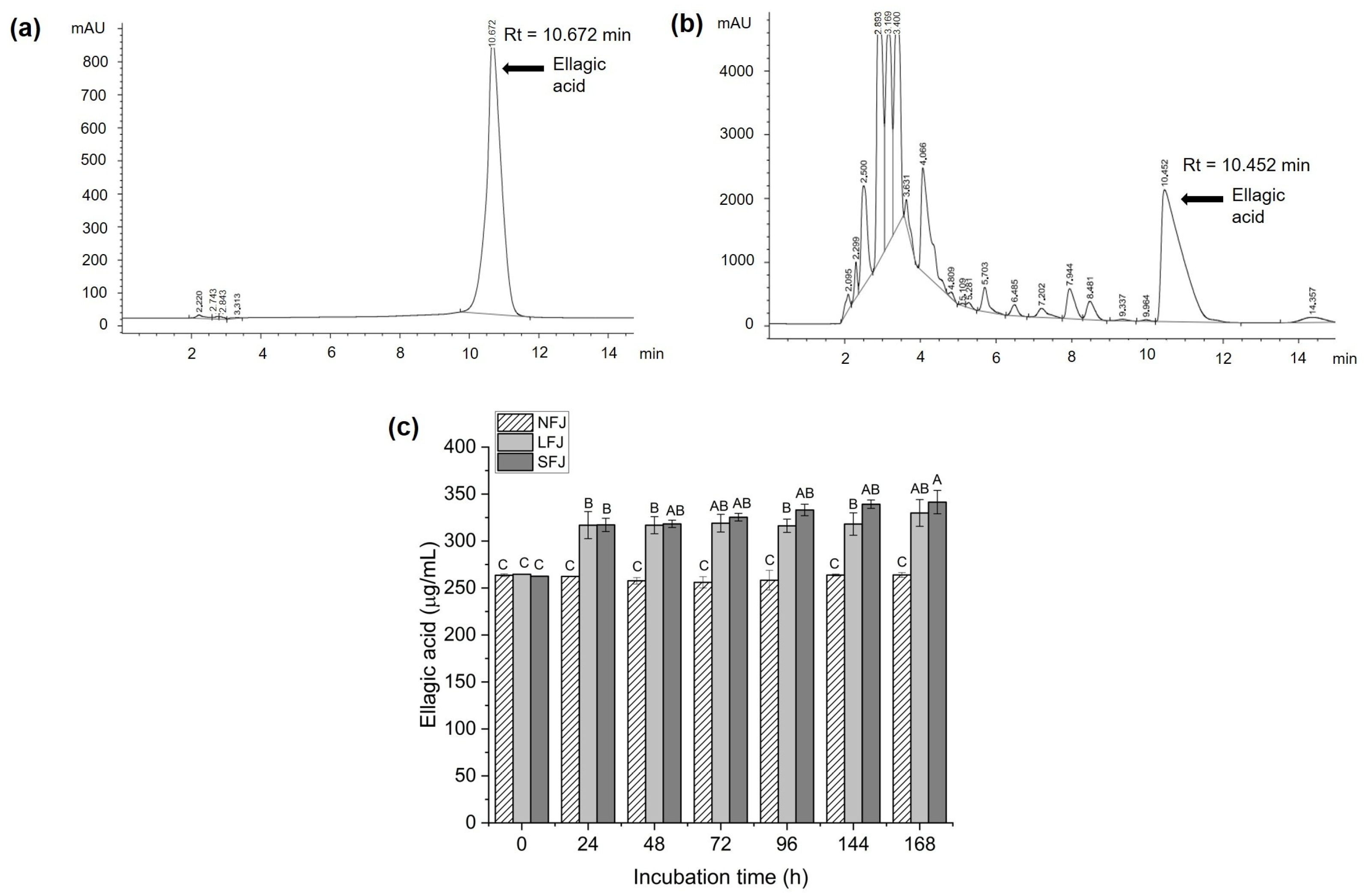
Fermentation conditions facilitated ellagic acid release from ellagitannins, and HPLC analysis was conducted to evaluate changes in ellagic acid levels during the process [10,16]. Ellagic acid was successfully detected in pomegranate peel juice using validated HPLC conditions, with retention times consistent between the ellagic acid standard and fermented samples (Figure 2a,b). The calibration curve (20–100 µg/mL) showed excellent linearity (R2 = 0.9995), with LOD and LOQ values of 2.046 µg/mL and 6.819 µg/mL, respectively, confirming the sensitivity and reliability of the method. No interference was observed at the ellagic acid retention time, indicating good selectivity.
Ellagic acid levels increased significantly after fermentation (Figure 2c). In LFJ, ellagic acid content increased from 263.61 µg/mL to 329.87 µg/mL (24.96% increase), while SFJ reached 341.41 µg/mL (29.51% increase) after 168 h. However, NFJ remained unchanged (~263 µg/mL), confirming that microbial activity was responsible for the enhanced release of ellagic acid. Statistical analysis (ANOVA, Tukey post hoc) showed significant differences (p < 0.05) between fermented and non-fermented samples.
The increase in ellagic acid could be attributed to microbial hydrolysis of ellagitannins, particularly punicalagin, into ellagic acid. L. plantarum produced tannase and β-glucosidase, which facilitated ellagitannin breakdown, while S. cerevisiae contributed through enzymatic hydrolysis and acidic conditions generated during sugar metabolism [10,22,25,26]. The higher ellagic acid yield in SFJ than in LFJ suggested that yeast metabolism could be more efficient at liberating ellagic acid under the tested conditions.
These findings were consistent with a previous study, which reported enhanced ellagic acid production from pomegranate juice fermented with L. plantarum [10], and S. cerevisiae fermentation of pomegranate peel by-products yielded tannin-rich extracts with increased ellagic acid content [22]. The observed increase emphasized the potential of microbial fermentation as a sustainable strategy to valorize pomegranate peel waste into bioactive compounds relevant for cosmetic applications.

3.3. Phytochemical Content of Fermented Pomegranate Peel Juice

Phytochemical screening of red pomegranate peel juice revealed the presence of several secondary metabolites, including alkaloids, flavonoids, tannins, phenolics, triterpenoids, glycosides, anthraquinones, and saponins. This result was consistent with several previous reports [27,28]. Previous studies have shown that pomegranate peel is a rich source of hydrolyzable tannins, especially punicalagin, which can be hydrolyzed into ellagic acid with strong bioactivity [4,26]. The detection of diverse phytochemicals supported the multifunctional potential of fermented pomegranate peel juice as a natural source of cosmetic bioactives.

3.4. Antioxidant Activity

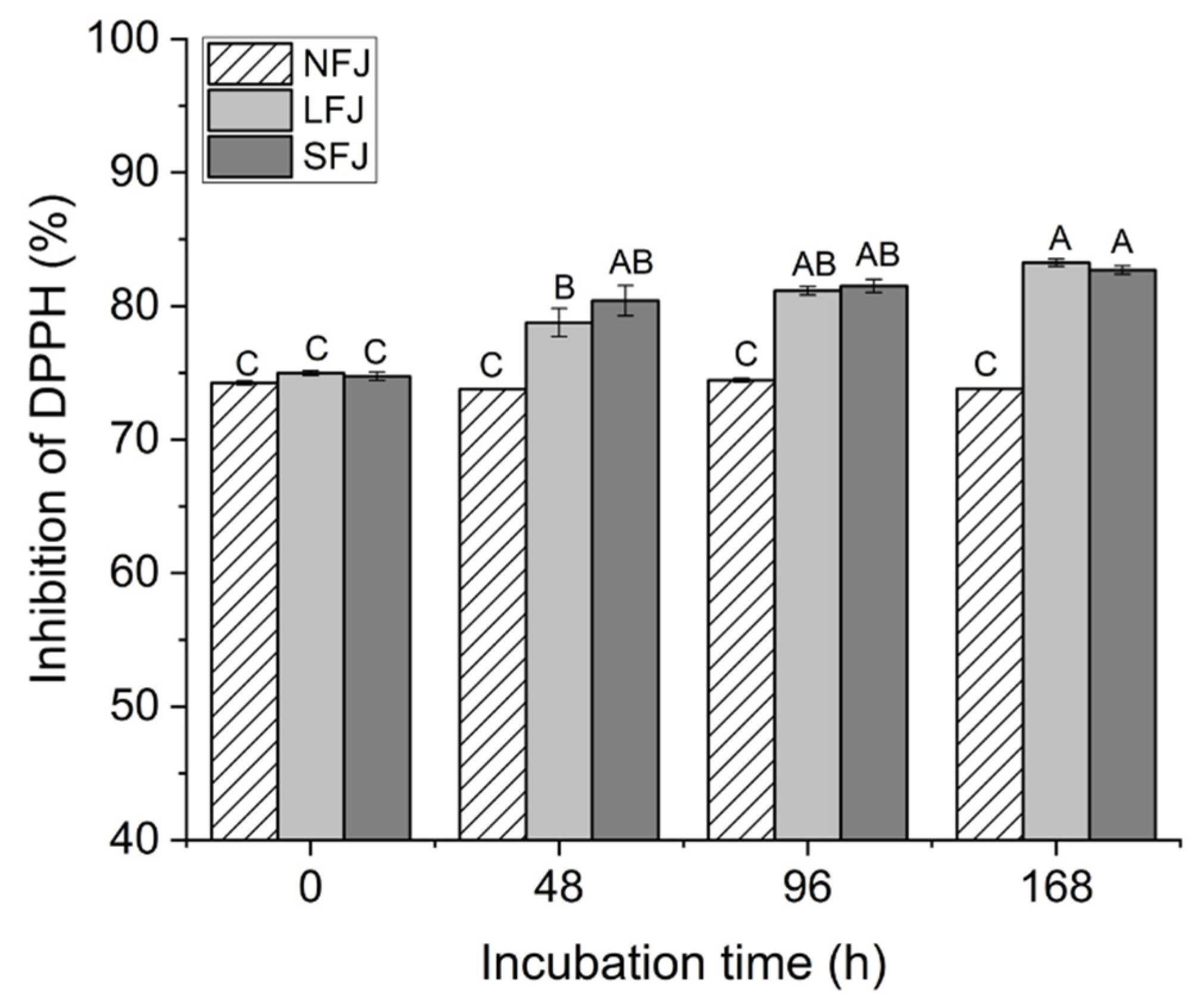
The antioxidant activity of fermented pomegranate peel juice was evaluated using the DPPH assay, which reflected the ability of phenolic compounds to neutralize free radicals through electron or hydrogen donation. The reduction in DPPH absorbance at 517 nm corresponded to the scavenging effect of bioactives such as flavonoids, tannins, and ellagic acid released during fermentation [28,29]. As shown in Figure 3, antioxidant activity increased significantly in fermented samples compared to NFJ. At 0 h, all samples exhibited similar inhibition (~74%). After 168 h, LFJ and SFJ showed marked increases, reaching 83.25% and 82.70%, respectively, while NFJ remained unchanged (73.81%). Statistical analysis confirmed significant differences (p < 0.05) between fermented and non-fermented samples.
The enhancement of antioxidant activity could be attributed to the release of ellagic acid and other phenolic compounds during fermentation. These findings were consistent with previous studies. Microbial metabolism, particularly by L. plantarum and S. cerevisiae, facilitated the hydrolysis of ellagitannins and conversion into more bioavailable phenolics, which contributed to radical scavenging activity [22,30]. The results showed microbial fermentation as an effective strategy to improve the functional properties of pomegranate peel juice, supporting its potential as a natural ingredient for cosmetic formulations targeting oxidative stress and skin aging.

3.5. Anticollagenase Activity

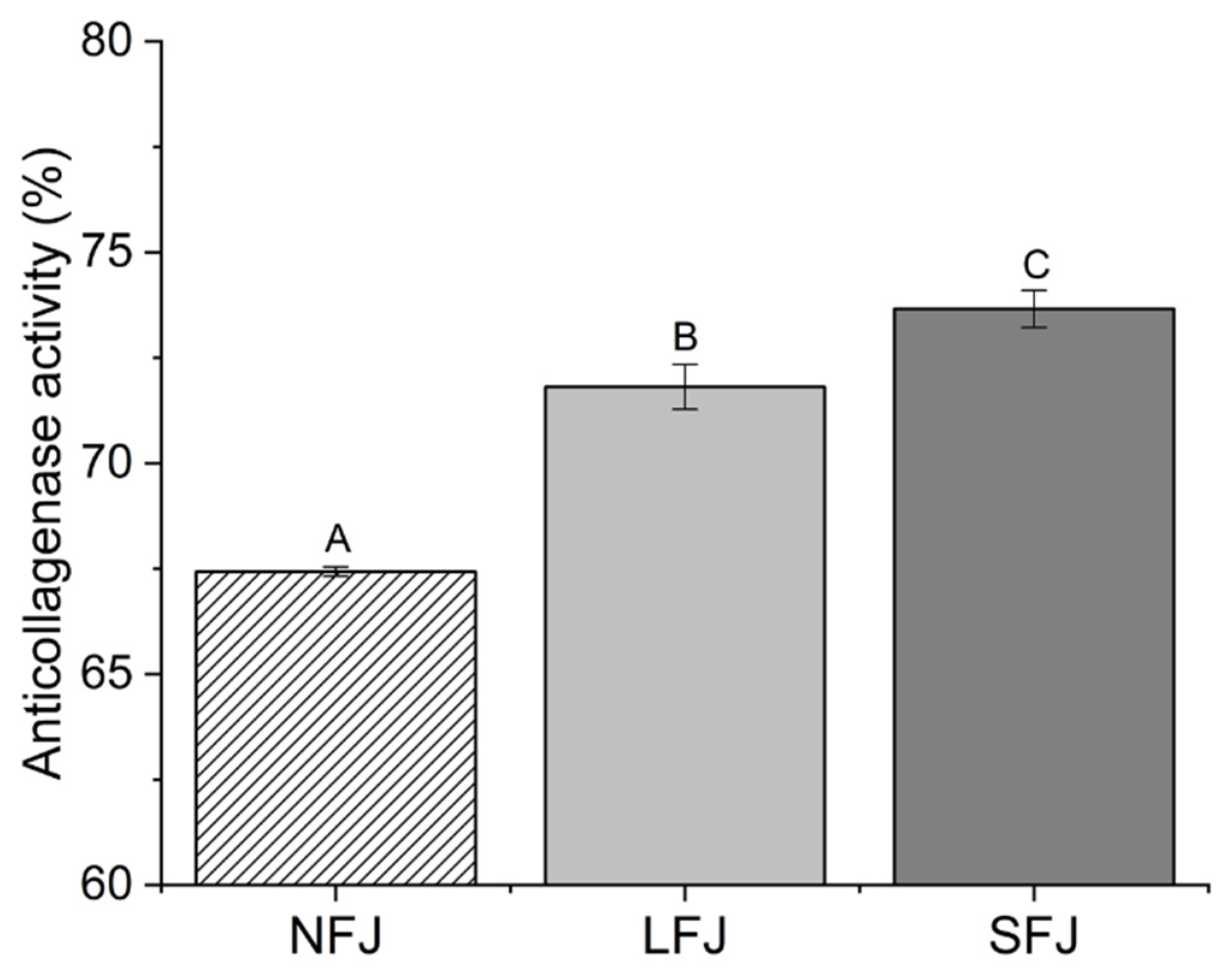
Collagenase inhibition assays demonstrated that fermentation enhanced the anticollagenase activity of pomegranate peel juice compared to the non-fermented control (Figure 4). NFJ exhibited the lowest inhibition (67.43%), while LFJ and SFJ showed significantly higher activities (71.81% and 73.66%, respectively). Statistical analysis confirmed that each group differed significantly (p < 0.05).
These findings suggested that fermented pomegranate peel juice, especially its ellagic acid content, not only functioned as a potent antioxidant but also exhibited potential collagenase-inhibitory properties, thereby protecting the extracellular matrix from enzymatic degradation. These multifunctional properties were consistent with previous studies, which reported increased collagen and elastin production in dermal fibroblasts treated with ellagic acid, emphasizing its promise in topical formulations for skin health [6,11]. Recent findings also showed its anti-inflammatory and antimicrobial roles in fibroblast cultures, reinforcing its potential as a multifunctional cosmetic bioactive [31]. Based on the results of this study, these insights suggested that fermentation-derived ellagic acid could be further developed into stable, bioavailable formulations targeting oxidative damage, extracellular matrix preservation, and skin rejuvenation.

4. Conclusions

In conclusion, this study demonstrates that microbial fermentation of pomegranate peel juice using L. plantarum and S. cerevisiae alters its physicochemical properties and enhances its bioactivity. Fermentation leads to a decrease in pH and reducing sugar content, accompanied by a significant increase in ellagic acid concentration, antioxidant activity, and collagenase inhibition compared to NFJ. The findings confirm that microbial metabolism facilitates the release of ellagic acid and other phenolic compounds from pomegranate peel, thereby improving its functional properties. While this study did not extend to product formulation, the results provide scientific evidence supporting fermented pomegranate peel as a promising raw material for future development of natural-based cosmetic ingredients. Further studies focusing on formulation, stability, and safety evaluation will be necessary to translate these findings into practical applications.

Supplementary Materials

The following supporting information can be downloaded at: https://www.mdpi.com/article/10.3390/cosmetics13020073/s1, Figure S1: Standard curve of glucose; Figure S2: Standard curve of ellagic acid; Table S1: Validation parameters of ellagic acid measurement using HPLC.

Author Contributions

Conceptualization, F.F. and N.M.; methodology, F.F. and N.M.; software, not applicable; validation, F.F., N.M. and R.R.; formal analysis, F.F., N.M. and R.R.; investigation, F.F., N.M. and R.R.; resources, F.F. and R.R.; data curation, R.R.; writing—original draft preparation, F.F. and R.R.; writing—review and editing, N.M.; visualization, N.M.; supervision, F.F. and N.M.; funding acquisition, F.F. All authors have read and agreed to the published version of the manuscript.

Funding

This research and the APC of this manuscript were funded by the Fundamental Research Grant (SP DIPA-023.17.1.690523/2024) from the Ministry of Higher Education, Research, and Technology of the Republic of Indonesia, awarded to Dr. apt. Faizatun (Contract No. 0038/LPPM/UP/VI/2024).

Institutional Review Board Statement

Not applicable.

Informed Consent Statement

Not applicable.

Data Availability Statement

No new data were created or analysed in this paper. Data sharing is not applicable for this paper.

Acknowledgments

We acknowledge the financial support from the Ministry of Higher Education, Research, and Technology of the Republic of Indonesia through the 2024 research grant awarded to Faizatun (SP DIPA-023.17.1.690523/2024, Contract No. 0038/LPPM/UP/VI/2024). We also thank the Instrumentation Laboratory, Faculty of Pharmacy, Gunadharma University, Jakarta, for providing access to the HPLC facilities, and Herbarium Depokensis, Department of Biology, University of Indonesia, Jakarta, for assistance with plant identification.

Conflicts of Interest

The author declares that there is no potential conflict of interest.

References

  1. Feng, C.; Chen, X.; Yin, X.; Jiang, Y.; Zhao, C. Matrix Metalloproteinases on Skin Photoaging. J. Cosmet. Dermatol. 2024, 23, 3847–3862. [Google Scholar] [CrossRef]
  2. Naharro-rodriguez, J.; Bacci, S.; Hernandez-bule, M.L.; Perez-gonzalez, A. Decoding Skin Aging: A Review of Mechanisms, Markers, and Modern Therapies. Cosmetics 2025, 12, 144. [Google Scholar] [CrossRef]
  3. Tumbarski, Y.; Ivanov, I.; Vrancheva, R.; Mazova, N. Pomegranate Peels: A Promising Source of Biologically Active Compounds with Potential Application in Cosmetic Products. Cosmetics 2025, 12, 169. [Google Scholar] [CrossRef]
  4. Mashile, B.; Setholdi, R.; Izu, G.O.; Erukainure, O.L.; Mashele, S.S.; Makhafola, T.J.; Eze, K.C.; Chukwuma, C.I. Temperature-Dependent Extraction and Chromatographic Recovery and Characterisation of Ellagitannins with Potent Antioxidant and Glycaemic Control Properties from ‘Wonderful’ Pomegranate Peel. Int. J. Food Sci. Technol. 2023, 59, 408–424. [Google Scholar] [CrossRef]
  5. Du, J.; Wang, H.; Zhong, L.; Wei, S.; Min, X.; Deng, H.; Zhang, X.; Zhong, M. Bioactivity and Biomedical Applications of Pomegranate Peel Extract: A Comprehensive Review. Front. Pharmacol. 2025, 16, 1569141. [Google Scholar] [CrossRef] [PubMed]
  6. Castellacci, R.; Bergonzi, M.C. An Insight on Ellagic Acid Formulations for the Management of Skin Diseases. Molecules 2025, 30, 4493. [Google Scholar] [CrossRef]
  7. Singh, J.; Kaur, H.P.; Verma, A.; Chahal, A.S.; Jajoria, K.; Rasane, P.; Kaur, S.; Kaur, J.; Gunjal, M.; Ercisli, S.; et al. Pomegranate Peel Phytochemistry, Pharmacological Properties, Methods of Extraction, and Its Application: A Comprehensive Review. ACS Omega 2023, 8, 35452–35469. [Google Scholar] [CrossRef]
  8. Chavez-Gonzalez, M.L.; Sepuvelda, L.; Ascacio-Valdes, J.A.; Napolitano, A.; Kuddus, M.; Buenrostro, J.; Aguilar, C.N. Microbial Production of Ellagic Acid. In Microbial Production of Food Bioactive Compounds; Jafari, S.M., Harzevili, F.D., Eds.; Springer: Cham, Switzerland, 2023; pp. 1–15. ISBN 9783030814038. [Google Scholar]
  9. Raya-morquecho, E.M.; Aguilar-zarate, P.; Sepúlveda, L.; Michel, M.R.; Iliná, A.; Aguilar, C.N.; Ascacio-Valdés, J.A. Ellagitannins and Their Derivatives: A Review on the Metabolization, Absorption, and Some Benefits Related to Intestinal Health. Microbiol. Res. 2025, 16, 113. [Google Scholar] [CrossRef]
  10. Liu, H.; Xu, P.; Cheng, M.; Lei, S.; Liu, Q.; Wang, W. Optimization of Fermentation Process of Pomegranate Peel and Schisandra Chinensis and the Biological Activities of Fermentation Broth: Antioxidant Activity and Protective Effect Against H2O2-induced Oxidative Damage in HaCaT Cells. Molecules 2021, 26, 3432. [Google Scholar] [CrossRef]
  11. Duckworth, C.; Stutts, J.; Clatterbuck, K.; Nosoudi, N. Effect of Ellagic Acid and Retinoic Acid on Collagen and Elastin Production by Human Dermal Fibroblasts. Biomed. Mater. Eng. 2023, 34, 473–480. [Google Scholar] [CrossRef]
  12. Li, Z.; Teng, J.; Lyu, Y.; Hu, X.; Zhao, Y.; Wang, M. Enhanced Antioxidant Activity for Apple Juice Fermented with Lactobacillus Plantarum ATCC14917. Molecules 2019, 24, 51. [Google Scholar] [CrossRef]
  13. Berenguer, M.; Vegara, S.; Barrajón, E.; Saura, D.; Valero, M.; Martí, N. Physicochemical Characterization of Pomegranate Wines Fermented with Three Different Saccharomyces Cerevisiae Yeast Strains. Food Chem. 2016, 190, 848–855. [Google Scholar] [CrossRef] [PubMed]
  14. Miller, G.L. Use of Dinitrosalicylic Acid Reagent for Determination of Reducing Sugar. Anal. Chem. 1959, 31, 426–428. [Google Scholar] [CrossRef]
  15. Negrulescu, A.; Patrulea, V.; Mincea, M.M.; Ionascu, C.; Vlad-Oros, B.A.; Ostafe, V. Adapting the Reducing Sugars Method with Dinitrosalicylic Acid to Microtiter Plates and Microwave Heating. J. Brazilian Chem. Soc. 2012, 23, 2176–2182. [Google Scholar] [CrossRef]
  16. Assunção, P.I.D.; Cardoso da Conceicao, E.; Borges, L.L.; Marciano de Paula, J.A. Development and Validation of a HPLC-UV Method for the Evaluation of Ellagic Acid in Liquid Extracts of Eugenia uniflora L. (Myrtaceae) Leaves and Its Ultrasound-Assisted Extraction Optimization. Evid.-Based Complement. Altern. Med. 2017, 2017, 1501038. [Google Scholar] [CrossRef]
  17. Sadat, A.F.M.N.; Hasan, M.M.; Islam, M.S.; Sharma, D.; Islam, M.R.; Sultana, A.; Azad, M.A.K. Validation of Aqueous Ultrasound Assisted Extraction Method by Using Fresh Leaves of Moringa Oleifera with Conventional Extraction Method. J. Appl. Sci. 2021, 7, 27–33. [Google Scholar]
  18. Harborne, J.B. Phytochemical Methods, 3rd ed.; Chapman & Hall: London, UK, 1998. [Google Scholar]
  19. Baliyan, S.; Mukherjee, R.; Priyadarshini, A.; Vibhuti, A.; Gupta, A.; Pandey, R.P.; Chang, C. Determination of Antioxidants by DPPH Radical Scavenging Activity and Quantitative Phytochemical Analysis of Ficus religiosa. Molecules 2022, 27, 1326. [Google Scholar] [CrossRef]
  20. Zamudio-sosa, V.E.; Cabanillas-bojórquez, L.A.; García-armenta, E.; Criollo-mendoza, M.S.; Medrano-felix, J.A.; Astorga-gaxiola, A.H.; Heredia, J.B.; Contreras-angulo, L.A.; Gutiérrez-grijalva, E.P. Microbial Fermentation: A Sustainable Strategy for Producing High-Value Bioactive Compounds for Agriculture, Animal Feed, and Human Health. Appl. Microbiol. 2026, 6, 17. [Google Scholar] [CrossRef]
  21. Mousavi, Z.E.; Mousavi, S.M.; Razavi, S.H.; Hadinejad, M.; Emam-Djomeh, Z.; Mirzapour, M. Effect of Fermentation of Pomegranate Juice by Lactobacillus plantarum and Lactobacillus acidophilus on the Antioxidant Activity and Metabolism of Sugars, Organic Acids and Phenolic Compounds. Food Biotechnol. 2013, 27, 1–14. [Google Scholar] [CrossRef]
  22. Khatib, M.; Cecchi, L.; Zonfrillo, B.; Agostino, S.D.; Bertelli, D.; Truzzi, E.; Pagliarini, E.; Di Gioia, D.; Bellumori, M.; Mulinacci, N. Saccharomyces cerevisiae Fermentation of Pomegranate Peel By-Product Yields Tannin-Rich Extracts and Potentially Prebiotic Polysaccharides. Foods 2026, 15, 605. [Google Scholar] [CrossRef]
  23. Naseem, A.; Akhtar, S.; Ismail, T.; Qamar, M.; Sattar, D.; Saeed, W.; Esatbeyoglu, T.; Bartkiene, E.; Rocha, J.M. Effect of Growth Stages and Lactic Acid Fermentation on Anti-Nutrients and Effect of Growth Stages and Lactic Acid Fermentation on Anti-Nutrients and Nutritional Attributes of Spinach (Spinacia Oleracea). Microorganisms 2023, 11, 2343. [Google Scholar] [CrossRef]
  24. Li, H.; Huang, J.; Wang, Y.; Wang, X.; Ren, Y.; Yue, T.; Wang, Z. Study on the Nutritional Characteristics and Antioxidant Activity of Dealcoholized Sequentially Fermented Apple Juice with Saccharomyces Cerevisiae and Lactobacillus Plantarum Fermentation. Food Chem. 2021, 363, 130351. [Google Scholar] [CrossRef] [PubMed]
  25. Moccia, F.; Flores-gallegos, A.C.; Chavez-Gonzalez, M.L.; Sepulveda, L.; Marzorati, S.; Verotia, L.; Panzella, L.; Ascacio-Valdes, J.A.; Aguilar, C.N.; Napolitano, A. Ellagic Acid Recovery by Solid State Fermentation of Pomegranate Wastes by Aspergillus niger and Saccharomyces cerevisiae: A Comparison. Molecules 2019, 24, 3689. [Google Scholar] [CrossRef]
  26. Caballero, V.; Est, M.; Tom, F.A.; Morcuende, D.; Mart, I. Biodegradation of Punicalagin into Ellagic Acid by Selected Probiotic Bacteria: A Study of the Underlying Mechanisms by MS- Based Proteomics. J. Agric. Food Chem. 2022, 70, 16273–16285. [Google Scholar] [CrossRef] [PubMed]
  27. Farag, R.S.; Abdel-latif, M.S.; Emam, S.S.; Tawfeek, L.S. Phytochemical Screening and Polyphenol Constituents of Pomegranate Peels and Leave Juices. Agric. Soil Sci. 2014, 1, 86–93. [Google Scholar]
  28. Kafeel, S.; Inam-ur-raheem, M.; Khan, M.R.; Faisal, M.N. Phytochemical Characterisation and Antioxidant Capacities of Pomegranate Peel. Int. J. Food Sci. Technol. 2023, 58, 4543–4550. [Google Scholar] [CrossRef]
  29. Yamauchi, M.; Kitamura, Y.; Nagano, H.; Kawatsu, J.; Gotoh, H. DPPH Measurements and Structure—Activity Relationship Studies on the Antioxidant Capacity of Phenols. Antioxidants 2024, 13, 309. [Google Scholar] [CrossRef]
  30. Pontonio, E.; Montemurro, M.; Pinto, D.; Marzani, B.; Trani, A.; Ferrara, G.; Mazzeo, A.; Gobbetti, M.; Rizzello, C.G. Lactic Acid Fermentation of Pomegranate Juice as a Tool to Improve Antioxidant Activity. Front. Microbiol. 2019, 10, 1550. [Google Scholar] [CrossRef]
  31. Ramos-Torrecillas, J.; González-Acedo, A.; Melguizo-Rodríguez, L.; Ruiz, C.; De Luna-Bertos, E.; Illescas-Montes, R.; García-Martínez, O. Anti-Inflammatory and Antimicrobial Effect of Ellagic Acid and Punicalagin in Dermal Fibroblasts. Int. J. Mol. Sci. 2025, 26, 8681. [Google Scholar] [CrossRef]
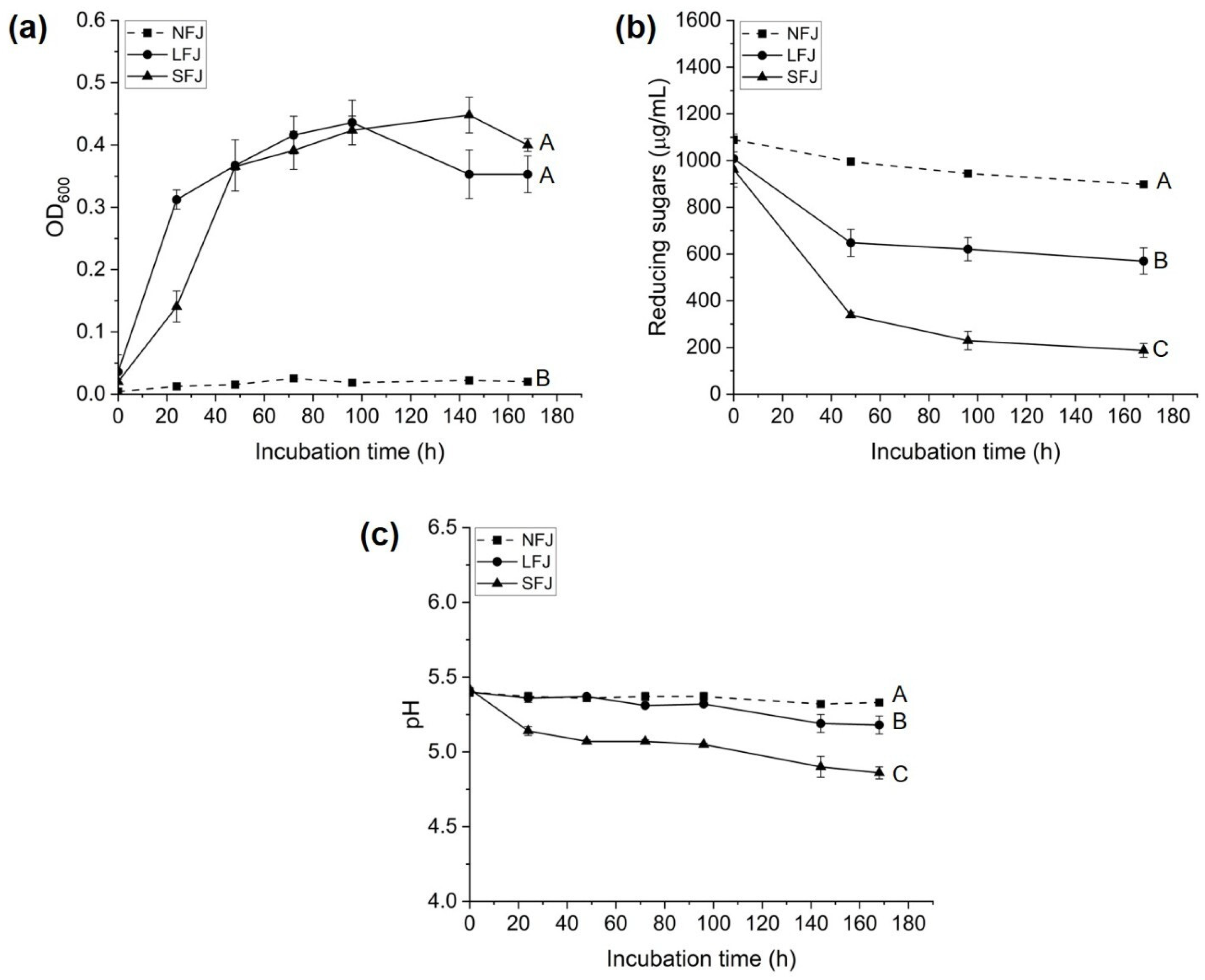
Figure 1. Fermentation profile of pomegranate peel juice by L. plantarum and S. cerevisiae. (a) OD600, (b) reducing sugar content, (c) pH. NFJ = non-fermented pomegranate peel juice, LFJ = L. plantarum-fermented pomegranate peel juice, SFJ = S. cerevisiae-fermented pomegranate peel juice. n = 3. Statistical analysis used 1-way ANOVA followed by the Tukey post hoc test. Different letters indicate a significant difference (p < 0.05).
Cosmetics 13 00073 g001
Figure 2. Ellagic acid content in the samples. (a) Chromatogram of standard ellagic acid, (b) chromatogram of fermented pomegranate peel juice, (c) ellagic acid content of samples. NFJ = non-fermented pomegranate peel juice, LFJ = L. plantarum-fermented pomegranate peel juice, SFJ = S. cerevisiae-fermented pomegranate peel juice. Ellagic acid content was measured using HPLC. n = 3. Statistical analysis used one-way ANOVA followed by the Tukey post hoc test. Different letters mean a significant difference (p < 0.05).
Cosmetics 13 00073 g002
Figure 3. DPPH Inhibition by Fermented Pomegranate Peel Juice. NFJ = non-fermented pomegranate peel juice, LFJ = L. plantarum-fermented pomegranate peel juice, SFJ = S. cerevisiae-fermented pomegranate peel juice. n = 3. Statistical analysis used one-way ANOVA followed by the Tukey post hoc test. Different letters mean a significant difference (p < 0.05).
Cosmetics 13 00073 g003
Figure 4. Inhibition of Collagenase Enzyme. NFJ = non-fermented pomegranate peel juice, LFJ = L. plantarum-fermented pomegranate peel juice, SFJ = S. cerevisiae-fermented pomegranate peel juice. n = 3. Statistical analysis used one-way ANOVA followed by the Tukey post hoc test. Different letters indicate a significant difference (p < 0.05).
Cosmetics 13 00073 g004
Disclaimer/Publisher’s Note: The statements, opinions and data contained in all publications are solely those of the individual author(s) and contributor(s) and not of MDPI and/or the editor(s). MDPI and/or the editor(s) disclaim responsibility for any injury to people or property resulting from any ideas, methods, instructions or products referred to in the content.