1. Introduction
The skin functions as a large, metabolically active interface that acts as the body’s primary physical barrier against the external environment. Beyond its obvious mechanical role, it serves simultaneously critical functions including limiting transepidermal water loss (TEWL), preventing penetration of xenobiotics, supporting a diverse microbiome, and participating in immune surveillance [
1]. Lipids are central to these functions. In mammalian epidermis, keratinocyte differentiation culminates in the formation of a stratum corneum composed of protein-rich corneocytes embedded in a continuous lipid matrix. This matrix is dominated by ceramides, cholesterol, and long-chain free fatty acids, organized into lamellar bilayers that provide the principal resistance to water loss and chemical ingress [
2,
3]. As keratinocytes differentiate and migrate from the basal layer to the stratum corneum, phospholipids are largely degraded and replaced with neutral lipids and sphingolipids, which are delivered to the extracellular space via lamellar bodies in the stratum granuloseum and subsequently remodeled to form the mature barrier lipid arrays [
2,
3].
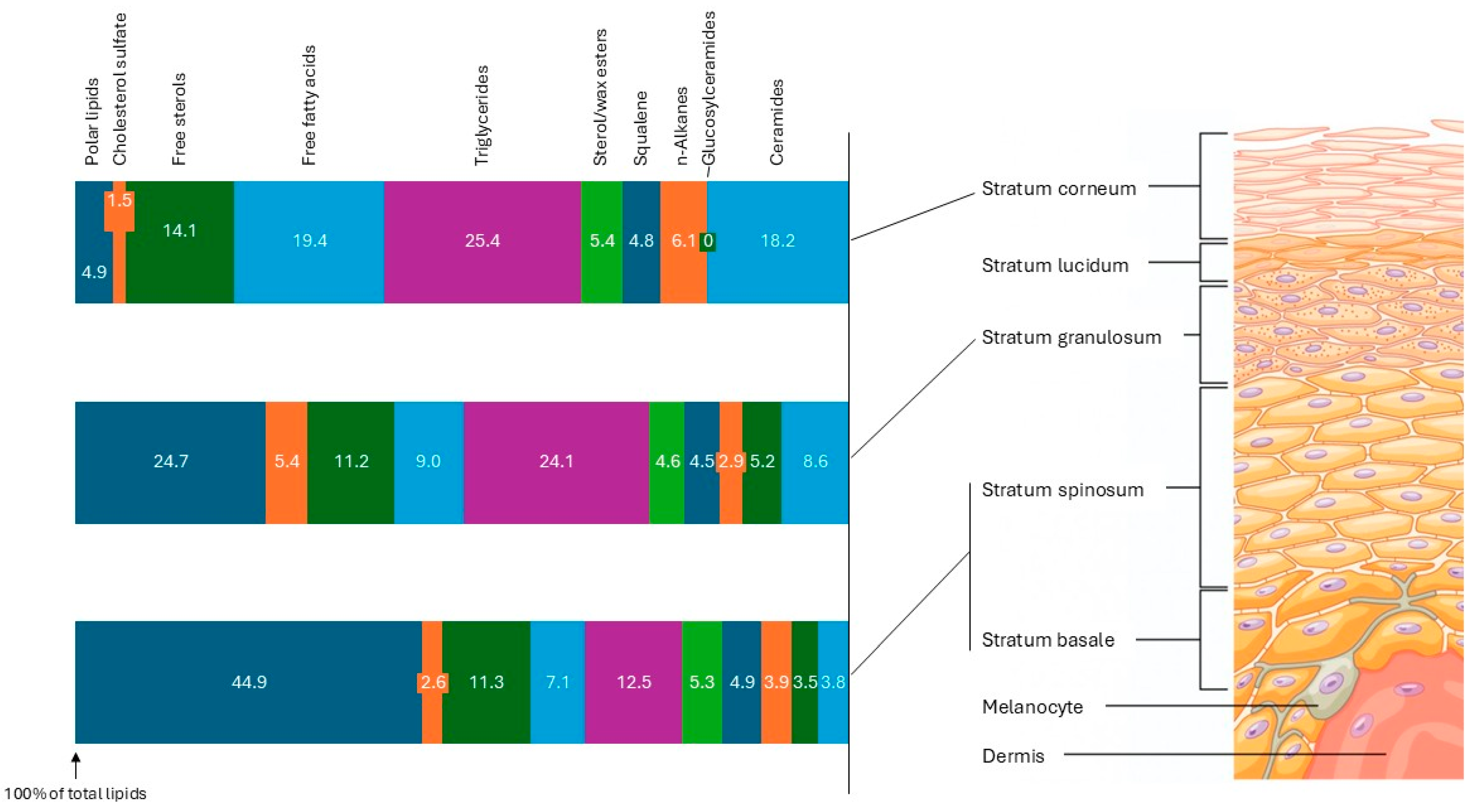
Classic quantitative studies have highlighted that this remodeling is accompanied by marked shifts in the distribution of lipid classes (
Figure 1), fatty-acid chain lengths, and saturation levels. In human sole epidermis, the transition from the living layers to the stratum corneum is associated with an enrichment of very-long-chain and α-hydroxy fatty acids and an increased proportion of odd and branched chains, while monoenoic fatty acids remain largely Δ9-unsaturated [
4,
5]. At the same time, sebaceous glands synthesize and excrete a specialized mixture rich in triglycerides and their hydrolysis products, wax esters, and squalene, with smaller amounts of cholesteryl esters and free sterols [
5,
6,
7]. These sebaceous secretions mix with epidermal lipids to form the surface lipid film, the composition of which varies by anatomical site, age, and sebaceous activity. This film acts as a protective barrier and is essential for maintaining surface pH, hydration, photo-reactivity, and microbial homeostasis [
5,
6,
7].
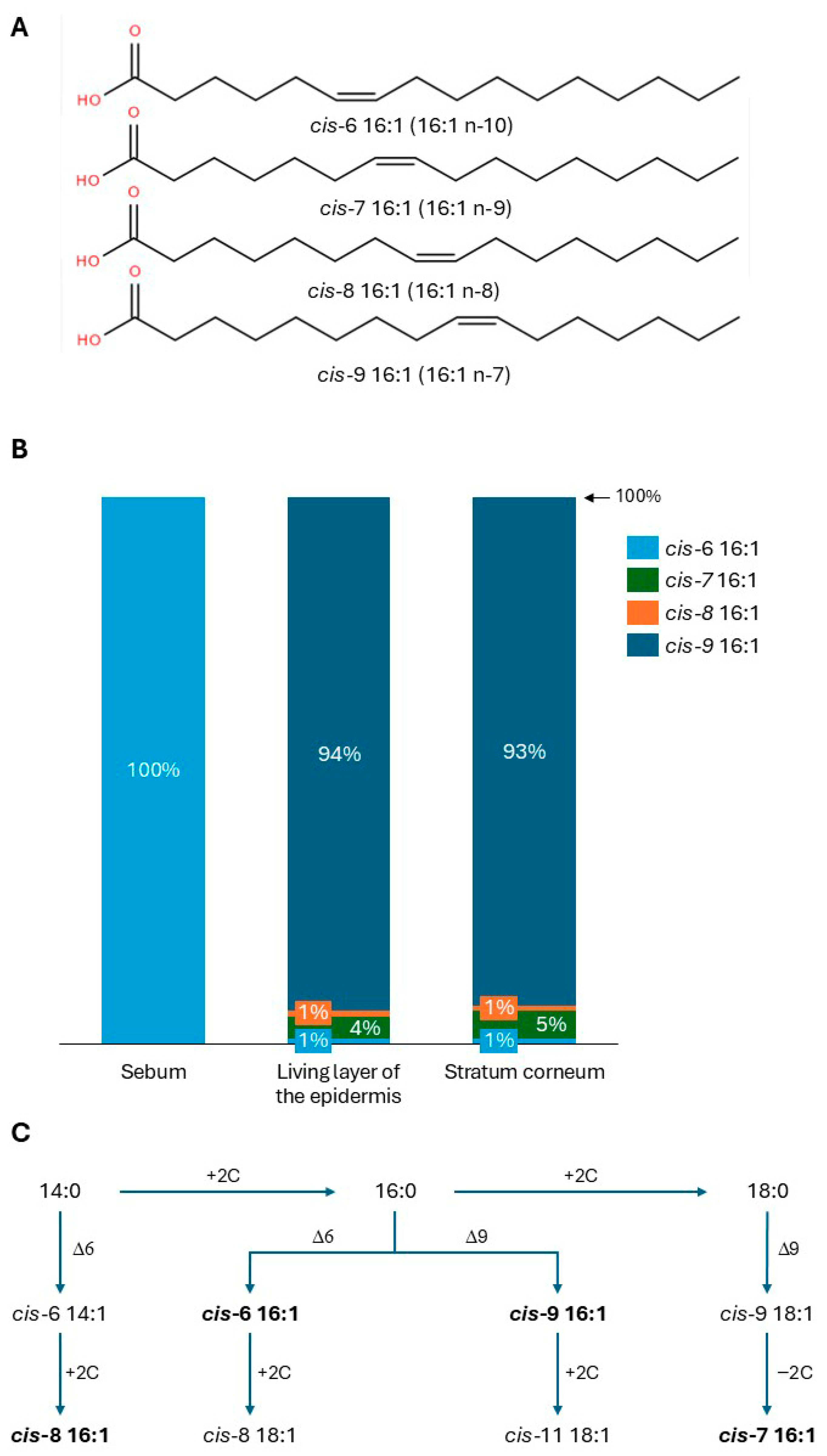
Within this lipid complex, monounsaturated hexadecenoic (16:1) fatty acids represent a key biochemical link between epidermal and sebaceous compartments (
Figure 2A). Palmitoleic acid (
cis-9 16:1, POA) is detectable in the living epidermis and stratum corneum ([
4],
Figure 2B), whereas its Δ6 positional isomer, sapienic acid (
cis-6 16:1), is the dominant monoenoic fatty acid in human sebum and skin surface lipids ([
7,
8],
Figure 2B). Other minor positional isomers such as
cis-7 16:1 and
cis-8 16:1 have been detected in the living part of the epidermis as well as in the stratum corneum ([
4],
Figure 2B). These isomers are formed by the desaturation of palmitic acid in the Δ6 or Δ9 positions for sapienic acid or POA, respectively; while the two Δ8 (
cis-8 16:1) and Δ7 (
cis-7 16:1) isomers are formed by elongation of
cis-6 14:1 and chain shortening of
cis-9 18:1 acids via β-oxidation, respectively (
Figure 2C).
These isomers influence membrane packing, modulate the fluidity of intercellular lipid lamellae, and contribute to the antimicrobial and immune-modulatory functions of the skin surface lipid film. Early work already identified free fatty acids, including 16:1 species, as key components of the innate antimicrobial barrier of sebum and surface lipids, with selective activity against Gram-positive bacteria [
9]. In atopic dermatitis, both the free and total sapienic acid content of non-lesional skin is markedly reduced compared with healthy individuals, and this deficit correlates with increased
Staphylococcus aureus colonization density [
10].
Interest in POA has been further stimulated by its proposed signaling role as a “lipokine”. In systemic metabolism, POA has been linked to modulation of insulin sensitivity, adipose tissue function, hepatic lipid handling and inflammation; however, human data remain heterogeneous and are influenced by differences between endogenous and dietary sources, as well as by distinction between
cis- and
trans-isomers [
11,
12,
13,
14]. These systemic observations raise the possibility that POA may also exert hormone-like effects on cutaneous tissues when delivered via the circulation or from local sebaceous and epidermal synthesis.
At the same time, there is growing commercial and clinical interest in POA-rich oils and concentrates as cosmetic and dermatological ingredients. Topical formulations containing POA or its derivatives are being explored for antimicrobial, lubricating, anti-inflammatory, and wound-healing properties, while oral supplements based on POA-rich marine or botanical oils have been explored for potential effects on skin hydration, elasticity, wrinkles and acne [
15,
16,
17,
18,
19,
20]. In parallel, several natural lipid matrices, most notably sea buckthorn pulp oil, macadamia nut oil, and avocado oil, have been identified as particularly rich or moderate sources of POA compared with conventional vegetable oils and animal fats [
21,
22,
23,
24,
25,
26,
27].
Despite this expanding body of work, a consolidated view of POA in the context of human skin biology is lacking. In particular, the relationships between endogenous POA in epidermal and sebaceous lipids, the effects of exogenous topical or oral POA on skin outcomes, and the relevance of different natural POA sources have not been systematically integrated. The objective of this mini-review is therefore to (i) summarize the organization and functional roles of cutaneous lipids, with emphasis on monounsaturated C16 fatty acids; (ii) critically appraise experimental and clinical evidence regarding topical and dietary POA exposure and skin-related outcomes; and (iii) describe key POA-rich dietary and botanical sources, highlighting their potential relevance for skin-focused interventions. The following sections first address the lipid architecture of human skin before turning to the emerging data on POA as a bioactive component at the skin interface.
2. Lipid Composition of Human Skin
Human skin contains several distinct but interconnected lipid pools that collectively maintain structural integrity, barrier function and immune homeostasis. In the viable epidermis, phospholipids, sphingolipids, and sterols predominate in cellular membranes and account for nearly half of the total lipid content in the basal-spinous layers. As keratinocytes undergo progressive differentiation toward the stratum corneum, polar lipid content declines markedly, accompanied by a reciprocal enrichment in neutral lipids and sphingolipids (
Figure 1). Quantitative analyses show that polar lipids fall from ~45% of total epidermal lipid in the lower layers to <5% in the stratum corneum, where ceramides, free cholesterol and free fatty acids become the dominant species. Smaller but consistent amounts of cholesterol sulfate, triglycerides, sterol/wax esters, squalene and
n-alkanes are also present [
2,
3] (
Figure 1). This lipid remodeling is driven largely by lamellar bodies formed in the upper spinous and granular layers. These secretory organelles package a complex mixture of lipids, enzymes and glycoproteins that are exocytosed into the extracellular space at the interface between the stratum granulosum and the stratum corneum (
Figure 1). The initially stacked lamellar body disks subsequently reorganize into continuous, planar lamellae that completely fill the intercellular spaces between corneocytes, giving rise to the characteristic “brick-and-mortar” architecture of the stratum corneum, in which protein-rich corneocytes are embedded within a continuous lipid matrix [
2] (
Figure 1). Despite the near absence of phospholipids, this lipid mixture, comprising ceramides, glycosphingolipids, free cholesterol, cholesterol sulfate, and long-chain free fatty acids, self-assembles into highly ordered bilayers, forming a robust yet flexible hydrophobic barrier [
2,
3].
Within the stratum corneum, ceramides and related sphingolipids are highly enriched in very-long-chain saturated fatty acids (22:0–26:0), whereas the free fatty acid and esterified fractions (e.g., triglycerides and sterol esters) are dominated by lipid species containing 16:0, 18:0, 18:1, and 18:2 acyl groups [
3]. Classic studies on human sole epidermis further demonstrated that, as keratinocytes transition from the living layers to the stratum corneum, there is a shift toward longer-chain and α-hydroxy fatty acids, especially above 20 carbon chain length, and a higher proportion of odd and branched-chain species in the cornified layer [
4]. Monoenoic fatty acids in both living and cornified layers are predominantly Δ9-unsaturated, with oleic acid (
cis-9 18:1) as the major species and hexadecenoic isomers (16:1) also present. These observations support the view that a substantial fraction of monoenes in skin surface lipids derives from keratinocyte-origin lipids rather than from sebum alone [
4,
5,
6].
Superimposed on this epidermal lipid system is the sebaceous lipid pool. Sebaceous glands synthesize and secrete a highly specialized mixture rich in triglycerides and their hydrolysis products, wax esters and squalene, with smaller contributions from cholesteryl esters and free sterols [
5,
6,
7]. Triglycerides, di- and mono-acylglycerols, and free fatty acids together account for approximately 60% of human sebum, wax esters for about one-quarter, and squalene for ~10–12%. In contrast, epidermal lipids are characterized by the presence of phospholipids and sterol esters, and are essentially devoid of wax esters and squalene [
7]. The skin surface lipid film is therefore a composite of sebaceous and epidermal lipids whose relative contributions vary with anatomical site, age, and sebaceous gland activity [
6].
3. Roles of Skin Lipids in Barrier Function and Cutaneous Homeostasis
The most extensively documented function of skin lipids is their role in regulating the permeability barrier. The densely packed lamellae formed by ceramides, cholesterol, and free fatty acids in the stratum corneum provide the principal resistance to transepidermal water loss (TEWL) and to the penetration of exogenous substances. TEWL is a key physiological marker of skin barrier integrity, reflecting the passive diffusion of water through the stratum corneum and serving as a sensitive indicator of barrier disruption, hydration status, and susceptibility to irritation and inflammation. Experimental depletion or extraction of intercellular lipids, through dietary essential fatty acid deficiency or exposure to organic solvents and detergents, results in increased water loss and enhanced penetration of both hydrophilic and lipophilic tracers between corneocytes, directly linking intercellular lipids to barrier integrity [
2]. Comparisons across body sites further show that regional differences in total lipid content and in the ratio of neutral lipids to sphingolipids correlate more closely with permeability than do stratum corneum thickness or corneocyte number, underscoring the central importance of lipid architecture for barrier competence [
2,
3].
Beyond their structural role, epidermal lipids are also metabolically active participants in cutaneous signaling. Essential-fatty-acid-derived polyunsaturated fatty acids, particularly arachidonic acid (20:4 n−6), are incorporated into epidermal phospholipids and serve as precursors for eicosanoids that regulate keratinocyte proliferation, differentiation, and inflammation. Studies using human epidermal enzyme preparations have shown that epidermis can elongate γ-linolenic acid (18:3 n−6) to dihomo-γ-linolenic acid (20:3 n−6), but lacks detectable Δ6 and Δ5 desaturase activities, indicating that arachidonic acid is not synthesized locally from linoleic acid and must instead be supplied from extracutaneous sources before being remodeled within epidermal phospholipids [
28]. In psoriatic epidermis, alterations in fatty acid composition and increased liberation of arachidonic acid from membrane phospholipids have been associated with enhanced eicosanoid production, illustrating how dysregulated lipid metabolism can disturb epidermal homeostasis and contribute to inflammatory skin disease [
28].
Several specialized lipids contribute to the fine-tuning of desquamation and stratum corneum cohesion. Cholesterol sulfate, which is synthesized predominantly in the epidermis and accumulates in the stratum granulosum, persists in small amounts in the stratum corneum and is thought to regulate corneodesmosomal degradation. Elevated cholesterol sulfate and reduced steroid sulfatase activity are associated with retention hyperkeratosis in recessive X-linked ichthyosis [
2]. Conversely, experimental and clinical conditions that reduce or structurally perturb intercellular lipids are frequently accompanied by abnormal scaling, supporting the concept that both barrier integrity and controlled shedding depend on the quantity and composition of intercellular lipids [
2,
3].
Sebaceous and surface lipids provide further layers of homeostatic regulation at the interface between the skin and the external environment. The atypical chain lengths, branching patterns, and degree of unsaturation of many sebaceous fatty acids, together with the accumulation of squalene and wax esters, are considered metabolically “perverse” compared with internal lipid pools, yet are proposed to confer selective functional advantages [
7]. These features, along with free fatty acids generated by host- and microbial-derived lipases, promote surface acidification, the formation of hydrophobic films that limit sweat evaporation, and the establishment of a biochemical niche that favors commensal microorganisms while restricting overgrowth of potential pathogens [
6,
7]. In addition, components such as squalene, cholesterol intermediates, and
n-alkanes may also modulate the oxidative and biophysical properties of the surface lipid film and the stratum corneum lipid matrix, potentially contributing to protection against environmental insults and to the thermal behavior of the barrier [
2,
3].
4. Impact of Topical Exposure of POA on Skin Outcomes
Early evidence demonstrated that sebum lipids, particularly free fatty acids, contribute significantly to the skin’s innate antimicrobial barrier, with sapienic acid identified as one of the most potent components (
Table 1, [
9]). Detailed fractionation studies have shown that sapienic acid is the predominant monoenoic fatty acid in human sebum (
Figure 2B) and exhibits strong antimicrobial activity, at concentrations ranging from 10–20 μg/mL, against key Gram-positive organisms, including
Staphylococcus aureus and
Streptococcus salivarius, with minimal inhibitory concentrations in the low microgram-per-milliliter range [
9]. Notably, both Δ6 and Δ9 isomers of hexadecenoic acid demonstrated comparable microbial efficacy against these pathogens, indicating that this activity is largely independent of double-bond position [
9].
Beyond their direct bactericidal effects, both POA and sapienic acid reduce adhesion of the yeast
Candida albicans to the stratum corneum, suggesting a role in enhancing barrier resilience against opportunistic pathogens [
9]. An important extension of this antimicrobial profile is the observation that POA exhibits a synergistic killing effect when combined with low concentrations of ethanol. This combination produces rapid and pronounced reductions in viable counts of
Staphylococcus aureus, including methicillin-resistant strains, as well as of typically more resistant Gram-negative species such as
Pseudomonas aeruginosa and
Cutibacterium acnes [
9]. These findings emphasize the potential application of POA in topical antiseptic formulations aimed at both routine skin hygiene and pathogen-targeted interventions.
More recent study has further examined POA in its calcium salt form, which can form naturally on the skin during cleansing through interactions between free fatty acids and divalent ions in tap water. The resulting calcium di-palmitoleate displays a distinctive lamellar crystalline structure and pronounced hydrophobicity, allowing it to persist on the skin surface under ambient conditions (
Table 1, [
29]). Functionally, this form exhibits notable lubricity, significantly reducing friction relative to free fatty acids or untreated surfaces, which may enhance sensorial properties in topical product applications [
29]. From a microbiological perspective, the calcium salt tested at 100 ppm in a 2wt% ethanolic solution retains selective antimicrobial activity, effectively reducing populations of
Staphylococcus aureus and
Cutibacterium acnes while sparing
Staphylococcus epidermidis, a commensal species important for maintaining skin homeostasis [
29].
At the cellular level, POA-enriched preparations protect keratinocytes from oxidative and inflammatory stress (
Table 1). Using HaCaT human keratinocytes, Song and co-workers reported that pretreatment with 7-MEGA™ 500 (an oil concentrate containing 50% POA produced from fish oil) increased cell viability after H
2O
2 exposure, reduced intracellular reactive oxygen species (ROS) levels, and significantly inhibited H
2O
2-induced expression of cyclooxygenase-2 (COX-2) and prostaglandin E2 (PGE
2), as well as the secretion of Tumor necrosis factor alpha (TNF-α) and Interleukin-1 beta (IL-1β) [
15]. In the same model, 7-MEGA™ decreased matrix metalloproteinase-1 (MMP-1) expression while increasing type I procollagen (PCOL1) and elastin levels, indicating a net shift toward matrix preservation and enhanced regenerative capacity under oxidative stress [
15]. Notably, these protective effects were comparable to or greater than those of highly purified POA at equivalent concentration, supporting POA as a key bioactive component within the oil concentrate [
15].
POA-enriched oils also modulate UVB-induced pathways associated with photo-oxidative skin aging (
Table 1). Park and colleagues investigated 7-MEGA™ in UVB-irradiated HaCaT keratinocytes and human dermal fibroblasts (HDFs), demonstrating that non-cytotoxic concentrations (0.05–0.25 vol.%) of 7-MEGA™ significantly suppressed UVB-induced upregulation of COX-2 and matrix metalloproteinase-3 (MMP-3) at both protein and messenger RNA (mRNA) levels in keratinocytes and attenuated the phosphorylation and expression of Activator protein-1 (AP-1) components c-Fos and c-Jun [
16]. In HDFs, the same treatment partially reversed the UVB-induced decrease in PCOL1 protein, suggesting an anti-wrinkle, extracellular matrix (ECM)-preserving effect mediated in part through reduced MMP-3-driven matrix degradation [
16]. Given that 7-MEGA™ contains ~53.5% POA and that previous studies reported comparable inhibitory effects of 7-MEGA™ and POA on H
2O
2-induced COX-2 and MMP-1 in HaCaT cells, these findings further implicate POA as a key mediator of anti-inflammatory and anti-photoaging responses. However, high concentrations of the isolated fatty acid can induce lipotoxicity [
15,
16], a property common to many purified free fatty acids. More directly, Okamoto et al. examined purified POA as the major fatty acid (~30%) in sea buckthorn pulp oil in UVB-irradiated normal human dermal fibroblasts. Pretreatment with POA (0.03–3 µg/mL) rescued cell viability following 50 mJ/cm
2 UVB exposure, decreased intracellular ROS generation, and maintained procollagen 1A1 mRNA and collagen I protein levels compared to UVB treatment alone [
30]. POA and sea buckthorn pulp oil also prevented the UVB-induced reduction of transforming growth factor-β1 (TGF-β1) protein, while POA significantly suppressed UVB-stimulated MMP-1 mRNA and protein expression, collectively indicating direct anti-photoaging actions via preservation of TGF-β1–collagen signaling and suppression of collagenase activity in dermal fibroblasts [
30]. Taken together with keratinocyte data, these findings support a model in which POA mitigates UVB-driven ROS production, inflammatory enzyme induction, and extracellular matrix degradation across multiple skin cell types [
15,
16,
30].
In addition to its antimicrobial and anti-inflammatory properties, POA has also been shown to exert significant wound-healing effects, further supporting its relevance for topical applications (
Table 1, [
17]). In a preclinical rat excisional wound model, Weimann and co-workers demonstrated that topical application of POA accelerated wound closure over a 12-day observation period, resulting in a markedly smaller wound area compared with vehicle-treated controls [
17]. This enhanced repair was accompanied by a pronounced reduction in local inflammation, as POA treatment substantially reduced neutrophil infiltration at the wound site, a key determinant of the early inflammatory phase of healing. Using an air-pouch inflammation model, the same study revealed that POA significantly inhibited lipopolysaccharide (LPS)-induced production of pro-inflammatory mediators, including TNF-α, IL-1β, Interleukin-6 (IL-6), macrophage inflammatory protein-3α (MIP-3α), and L-selectin, while leaving vascular endothelial growth factor (VEGF) levels unaffected, thereby preserving angiogenic potential [
17]. The combined reduction in leukocyte recruitment and inflammatory cytokine release suggests that POA shifts the wound microenvironment toward a more favorable resolution phase, limiting prolonged or excessive inflammation, both of which are known to impair optimal tissue repair. Consistent with earlier in vitro observations in keratinocytes and fibroblasts, these preclinical findings indicate that POA promotes a more efficient transition from inflammation to tissue regeneration. Altogether, the data from Weimann and co-workers’ position POA as a bioactive lipid capable of enhancing the wound-healing process through modulation of inflammatory pathways and improved tissue dynamics [
17]. Although derived from animal models, these results align with the broader mechanistic profile of POA observed in ex vivo and cellular systems, reinforcing its potential utility in topical formulations aimed at supporting impaired or sensitive skin.
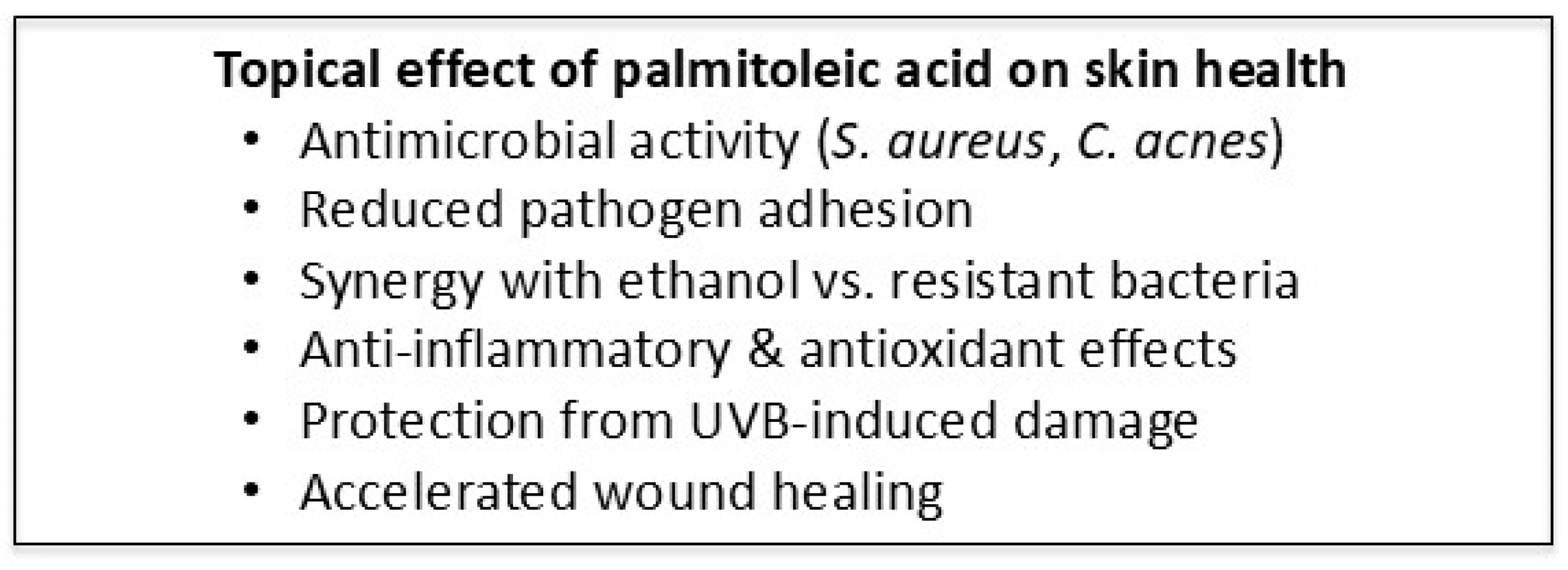
Taken together, the reported effects of POA, including antimicrobial protection, reduction in pathogen adhesion, modulation of inflammatory signaling, mitigation of UVB-induced damage, and promotion of wound repair, occur predominantly in the context of topical exposure, where POA directly interacts with skin surface lipids and resident cells. Most of the available evidence is derived from in vitro, ex vivo, or preclinical studies. Overall, these findings support POA as a multifunctional lipid mediator with considerable potential for topical dermatological and cosmetic applications (
Figure 3).
5. Impact of Oral POA Supplementation on Skin Outcomes
Oral POA supplementation has been evaluated in randomized clinical trials primarily in healthy middle-aged women for skin barrier function and age-associated photo-oxidative endpoints (
Table 2, [
18,
19]), as well as in adolescents and young adults [
20] with severe acne using a multi-nutrient formulation enriched in linoleic and POA salts. In a 12-week randomized, double-blind, placebo-controlled trial in 79 women aged 42–59 years with periorbital wrinkles, oral 7-MEGA™ (500 mg of Alaskan pollock oil concentrate twice daily; providing 500 mg/day POA) significantly increased corneometer-measured skin hydration and reduced TEWL at both 6 and 12 weeks compared with a corn-oil placebo, indicating a clinically relevant improvement in skin-barrier function [
18]. Although significant within-group improvements were observed in cutometer-derived elasticity parameters (R2, R5, R7), surface roughness, wrinkle volume and investigator-graded crow’s-feet lines, between-group differences for these structural and wrinkle outcomes did not reach statistical significance. This pattern suggests that at the administrated dose and in this population, the primary benefit of POA supplementation is improvement of barrier function rather than macroscopic wrinkle reversal [
18].
A larger 12-week randomized, double-blind, placebo-controlled trial in 96 women aged 40–59 years used the same 7-MEGA™ ingredient (1000 mg twice daily; providing approximately 1000 mg/day POA) but focused on more detailed assessments of wrinkle and pigmentation (
Table 2, [
19]). In this study, repeated measures of peri-orbital wrinkles using a three-dimensional optical system showed significant reductions across all wrinkle parameters (R1–R5: overall roughness, maximum roughness, mean roughness, wrinkle depth, and arithmetic roughness) from week 4 onward in the POA group, with highly significant superiority over placebo by week 12, consistent with an anti-wrinkle effect [
19]. Skin hydration at the cheek and forearm increased significantly by week 4 and remained higher than placebo (corn oil) at week 12, whereas TEWL exhibited a non-significant downward trend, again suggesting improved water-retention capacity of the stratum corneum without a pronounced effect on evaporative loss [
19]. Cutometer analysis demonstrated significant gains in gross, net and biological elasticity (R2, R5, R7) compared with placebo at 12 weeks. In parallel, mexameter measurements showed reductions in melanin index and global photo-damage score without meaningful changes in erythema, indicating that oral POA-rich oil can enhance dermal–epidermal resilience and reduce photo-induced dyspigmentation without pro-erythematous effects [
19].
Across both Korean trials [
18,
19], POA supplementation was well tolerated, with only mild and self-limiting gastrointestinal symptoms reported and no clinically relevant laboratory abnormalities observed. These observations support a favorable short-term safety profile for POA doses of approximately 500–1000 mg/day in otherwise healthy middle-aged women.
In inflammatory acne, POA has been administered in the form of its calcium salt as part of a nutraceutical formulation also containing magnesium phosphate and calcium linoleate (100 mg of each per capsule, administered once daily for six months) in adolescents and young adults with resistant grade IV nodulocystic acne (
Table 2, [
20]). In this single-blind, randomized, multicenter comparison with standard-dose isotretinoin (
cis-13 retinoic acid, 0.5–1.0 mg/kg/day), 257 subjects receiving the mineral–fatty-acid supplement were reported by the investigators to achieve complete regression of acne signs and symptoms after six months, compared witgh 68% of the 275 isotretinoin-treated participants, yielding to a statistically significant difference favoring the supplement [
20]. Follow-up of a subgroup who crossed over from isotretinoin to the supplement because of persistent disease showed complete clearance after an additional six months of treatment, and sustained remission for up to five years was reported. However, these long-term outcomes were based on uncontrolled observational follow-up [
20]. The supplement was associated with minimal adverse effects (limited to somnolence), in contrast to frequent mucocutaneous and mood-related adverse events reported in the isotretinoin group. Importantly, attribution of clinical efficacy to POA per se is constrained by the multi-component nature of the intervention, which included magnesium, linoleic acid, and structured dietary advice (low sugar, low glycemic load). Each of these factors may independently contribute to lesion regression through anti-inflammatory, antimicrobial, and hormonal mechanisms, underscoring the need for controlled studies to isolate the specific contribution of POA [
20].
Mechanistic support for a role of POA in acne control comes from earlier in vitro work demonstrating that POA has direct bactericidal activity against
Cutibacterium acnes and
Staphylococcus aureus and can act synergistically with metronidazole to inhibit anaerobic growth of
Cutibacterium acnes (
Table 2). In addition, POA reduced neutrophil-derived ROS without affecting ROS generated by cell-free xanthine oxidase systems [
20,
31]. In these experiments, concentrations of POA considered physiologically relevant for skin surface or follicular environments (0.05–5 μg/mL), POA alone only modestly inhibited bacterial growth or neutrophil functions, but in combination with metronidazole they markedly suppressed
Cutibacterium acnes proliferation and neutrophil ROS generation, leading the authors to propose that endogenous free fatty acids such as POA in the skin may potentiate the anti-inflammatory efficacy of systemic or topical antibiotics in rosacea and acne [
31].
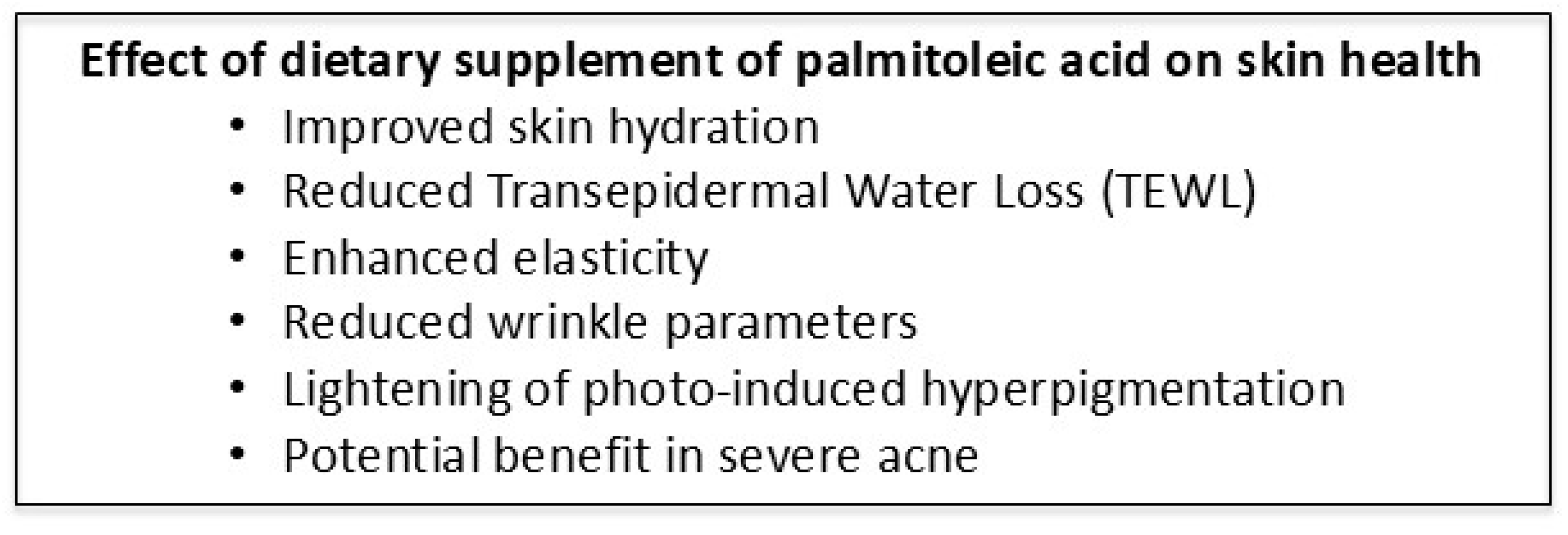
Collectively, these data indicate that oral administration of POA-rich preparations can improve skin hydration and barrier function, enhance elasticity and reduce wrinkles in aging facial skin, and, when delivered as part of multi-component regimens, may contribute to durable control of severe acne (
Figure 4).
6. Natural Dietary Sources of Palmitoleic Acid
Only a limited number of foods provide POA in nutritionally meaningful amounts (see
Table 3). Composition data indicate that sea buckthorn (
Hippophae rhamnoides) berry pulp and peel oils are the richest botanical sources described to date, with POA typically accounting for approximately 11–27% of total fatty acids in
Hippophae rhamnoides ssp. carpatica and up to ~32–42% in
Hippophae rhamnoides ssp.
mongolica. In contrast, sea buckthorn seed oil contains only trace amounts of POA (~0.1–0.5%) and is instead dominated by linoleic and α-linolenic acids [
21,
22,
25,
26,
27]. Macadamia kernel oil represents the second major plant-derived source of POA. Across multiple cultivars, POA generally accounts for ~14–36% of total fatty acids (most often ~20–30%), with oleic acid remaining the predominant monounsaturated fatty acid (MUFA) [
10,
23,
24,
32]. Avocado (
Persea americana) fruit and oil provide intermediate POA levels, with reported contents ranging from ~2–15% of total fatty acids depending on the cultivar, maturity, and processing, with commercial edible oils typically falling in the ~2–10% range [
27].
Beyond botanical sources, marine and ruminant fats contribute additional, though more modest, amounts of POA. Dietary surveys describe salmon flesh and cod liver oil as relatively POA-rich marine fats, with palmitoleate contributing approximately 6% and 7% of total fatty acids, respectively [
10]. Concentrated POA-rich preparations, such as 7- MEGA™ or Provinal™, which contain approximately 50% POA among total fatty acids, are produced from selected fish oils [
14,
15,
17,
18]. Provinal™ and 7-MEGA™ are marketed and used as dietary supplements, with positioning that targets both skin-related outcomes and broader aspects of metabolic health. In ruminant fat and full-fat dairy products, POA is present mainly as the
trans isomer (
trans-9 16:1), which typically represents <1% of total plasma fatty acids but serves as a robust biomarker of dairy-fat intake [
10,
11,
12,
13]. In contrast, most conventional vegetable oils (for example, canola, sunflower and soybean) contain ≤0.5% POA and are therefore considered minor contributors compared with sea buckthorn pulp oil, macadamia oil, avocado oil and selected marine or dairy fats [
10,
26].
Despite the relatively high POA levels reported for sea buckthorn pulp oil, macadamia oil, and, to a lesser extent, avocado oil, their use as primary POA sources for cosmetics and dermatological products is constrained by agronomic and supply chain factors. Sea buckthorn berries have modest oil yields, require labor-intensive harvesting in limited growing regions, and show pronounced subspecies- and batch-to-batch variability in POA content.
Similarly, macadamia and avocado oils originate from long-cycle tree crops that are primarily cultivated for food, such that competition with edible uses, climatic vulnerability, and fluctuating harvest volumes restrict the availability of surplus high-grade oil for specialty applications. To address these limitations, Zhou and co-workers [
33] have recently described a controlled fermentation process in which microalgae are used to produce an oil containing approximately 58% POA of total fatty acids, yielding a highly enriched and compositionally consistent source of POA. In contrast to terrestrial crops, algal fermentations can be performed year-round in closed bioreactors with minimal land and freshwater use, precise control of fatty-acid profile and contaminants, and straightforward downstream purification into standardized cosmetic-grade ingredients. Together, these features position algal-derived POA-rich oils as scalable and potentially more sustainable alternatives tailored to dermatological and cosmetic applications [
33].
7. Conclusions
In the broader landscape of lipid-based cosmetic and nutricosmetic ingredients, most fatty acids commonly used today are selected primarily for emollience and barrier-support functions that mirror abundant stratum corneum lipids, whereas POA is comparatively “skin-native” (detectable in viable epidermis and stratum corneum) and therefore may offer a differentiated, biomimetic route to combine sensorial benefits with bioactivity [
1,
2,
3,
4]. From a topical perspective, hexadecenoic acids contribute to the endogenous chemical barrier at the skin surface, and 16:1 species show selective antimicrobial activity (including anti-adhesion against and synergy with low ethanol) that can complement conventional preservative/antiseptic strategies; in parallel, POA’s ability to form calcium di-palmitoleate provides a distinctive formulation-relevant mechanism (persistent lubricity with selective bactericidal activity that spares commensal
Staphylococcus epidermidis [
9,
29]. Cellular and preclinical data further suggest that POA-enriched oils modulate oxidative/UVB injury pathways and can accelerate wound repair, supporting functional claims beyond those typically targeted by more ubiquitous fatty acids [
15,
16,
17,
30]. Orally, POA is mechanistically distinct from omega-3/omega-6 paradigms as an omega-7 MUFA with proposed lipokine-like signaling, and two placebo-controlled trials using a standardized POA-rich marine concentrate report improvements in hydration and barrier function (TEWL), with additional signals for wrinkles/elasticity and pigmentation at higher dose; exploratory acne findings in a multi-nutrient regimen and mechanistic synergy with metronidazole further motivate controlled, POA-specific studies [
11,
18,
19,
20,
31]. Although POA is low in most commodity vegetable oils (≤0.5%), commercially viable supply is supported by POA-rich botanical oils (sea buckthorn pulp/peel; macadamia; avocado), concentrated marine oils (~50% POA), and emerging fermentation-derived microalgal oils (~58% POA) that enable scalable, compositionally consistent ingredients [
10,
11,
12,
13,
14,
15,
17,
18,
23,
24,
25,
26,
27,
33].
Taken together, current evidence positions POA as a multifunctional component of the skin’s lipid architecture, operating at the interface of epidermal and sebaceous metabolism and contributing to the organization, fluidity, and antimicrobial character of the skin surface. Experimental models consistently indicate that POA can modulate oxidative and inflammatory pathways, support matrix preservation, and promote tissue repair, complementing its intrinsic role in shaping the biochemical environment experienced by the cutaneous microbiota. Early clinical findings further suggest that POA-rich formulations may support improvement in barrier function, hydration, age-associated photo-oxidation and inflammatory skin conditions.