Systematic Review

Plant Extracts as Antibacterial and Antifungal Agents in Medical Textiles: A Systematic Review of Key Components, Efficacy, and Application Techniques

by
Praxedes Jeanpierre Merino-Ramirez
and
Rebeca Salvador-Reyes
*
Facultad de Ingeniería, Universidad Tecnológica del Perú, Lima 150101, Peru
*
Author to whom correspondence should be addressed.
Resources 2026, 15(4), 52; https://doi.org/10.3390/resources15040052
Submission received: 11 February 2026 / Revised: 14 March 2026 / Accepted: 26 March 2026 / Published: 30 March 2026

Abstract

This systematic review examines the use of plant-derived extracts as antibacterial and antifungal agents in medical textiles, with an emphasis on active components, extraction techniques, biological efficacy, target microorganisms, and fabric application methods. This study is framed within the context of natural resource-based plant biomass and agro-industrial residues as a sustainable source of high-value functional compounds for resource valorization. Searches in Scopus and Web of Science followed the PIOC framework and PRISMA protocol. From an initial 389 records, 38 studies met the eligibility criteria. We identified a sustained growth in publications between 2020 and 2025, and six predominant thematic lines related to medical textiles, sustainability, antimicrobial assessment, structural characterization, natural dyeing optimization, and antioxidant functionalization. Among the most studied species, Aloe barbadensis and Salvia officinalis were prominent. Leaves were the most frequently used plant organ, highlighting their relevance as readily available renewable biomass resources. Maceration was the most common extraction method, although ultrasound-assisted extraction yielded a broader metabolite profile and better preserved thermolabile compounds, demonstrating the impact of biomass conversion techniques on resource efficiency and extract quality. Cotton 100% (plain weave) was the most widely used substrate, and the exhaustion method (immersion/exhaust dyeing) was the preferred application technique. Overall, plant extracts obtained through the sustainable management and valorization of plant resources achieved high inhibition against pathogenic bacteria, including resistant strains, and consistent antifungal activity, supporting their potential for developing functional and sustainable medical textiles. These findings align with the goals for responsible production and good health and well-being and reinforce the role of biomass-based resource systems within a circular bioeconomy, opening avenues to optimize formulations, standardize methodologies, and evaluate post-laundering performance and in vivo biocompatibility.

1. Introduction

Interest in integrating natural compounds into medical textiles has increased in recent decades, driven by the need to reduce the environmental footprint of synthetic finishes, to lessen allergic reactions in patients [1], and promote the value-added use of natural resource-based plant biomass, including agro-industrial by-products, as renewable sources of bioactive compounds with potential benefits in wound healing and skin condition management [2,3,4]. Plant extracts have emerged as sustainable antibacterial and antifungal alternatives within the framework of sustainable resource management, biomass valorization, and circular bioeconomy-oriented resource strategies.
However, the efficacy of these extracts is heterogeneous. Phytochemical composition varies across species and conditions, which are intrinsically linked to the origin, type, and physicochemical properties of the plant material, shaping activity against bacteria and fungi [3,5]. Likewise, extraction methods, maceration, percolation, distillation, and supercritical fluid extraction represent key biomass conversion routes that modulate the concentration and availability of active principles [6,7,8], directly influencing resource efficiency and utilization pathways. When transferred to textile substrates, performance also depends on fabric type/structure, application/impregnation technique, and processing conditions (e.g., temperature, time, concentration), underscoring the need for a critical synthesis of the available evidence [9].
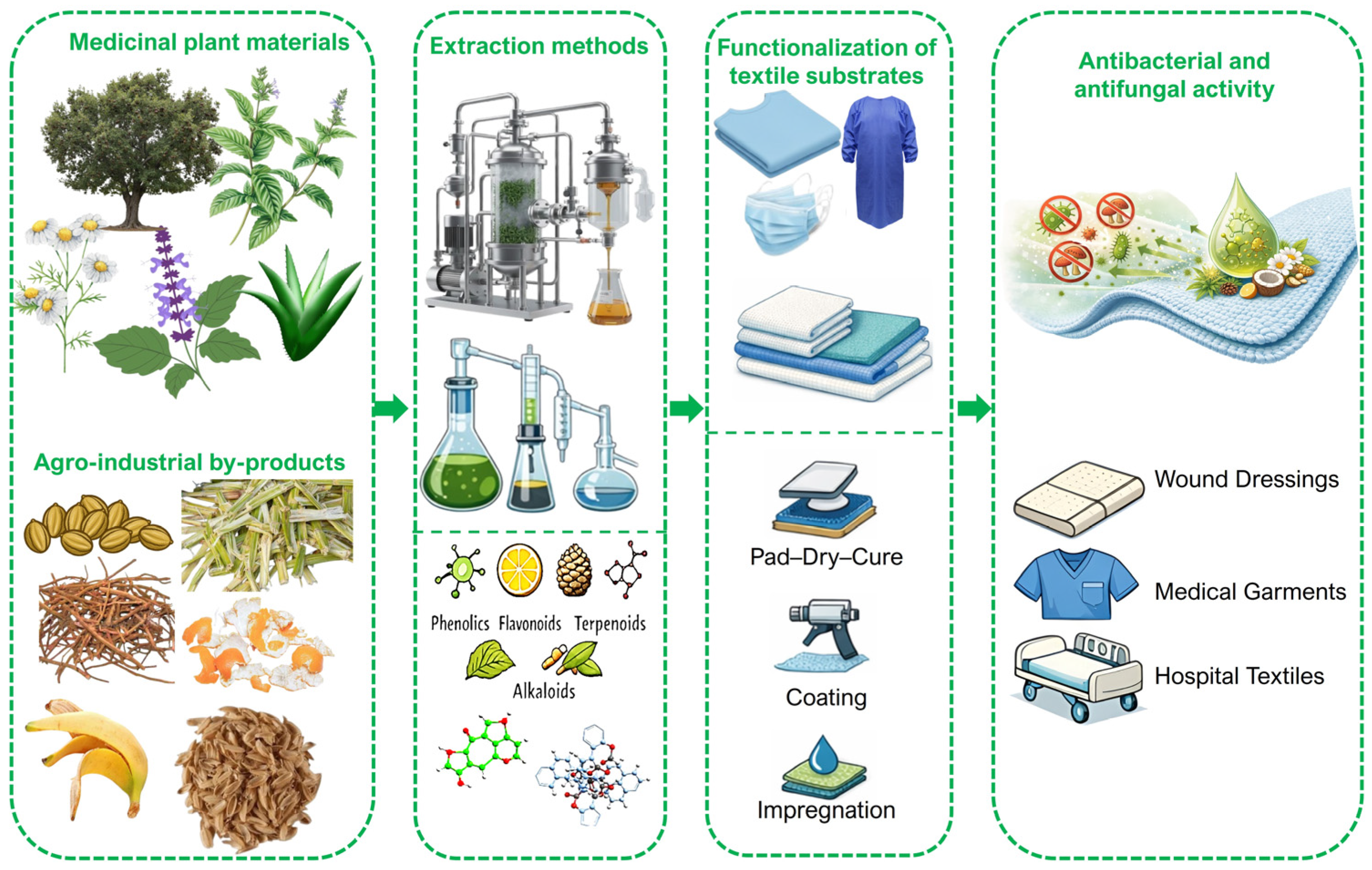
To our knowledge, no prior study has provided a comprehensive and rigorous comparison of the effectiveness of different plant-derived extracts used as antibacterial and antifungal agents in medical textiles from a natural resource valorization perspective. This gap offers an opportunity to consolidate dispersed knowledge and position medical textile functionalization as a value-added application of plant-based bioactive compounds, including those sourced from agro-industrial residues/by-products, as part of bio-based resource value chains. Therefore, this systematic literature review (SLR) aims to compile, systematize, and analyze the application of plant extracts obtained from plant materials and agro-industrial residues/by-products as antibacterial and antifungal agents in the development of medical textiles, with particular attention to their active components, extraction methods, target microorganisms (e.g., specific pathogenic bacteria and fungi), activity assessment methods, and fabric application techniques. The findings are intended to inform the development of functional and sustainable medical textiles while supporting resource conservation and bio-based value chains aligned with the Sustainable Development Goals related to responsible production and good health and well-being (Figure 1).

2. Methodology

2.1. Search Strategy

The primary research question was as follows: how have plant extracts been used and evaluated as antibacterial and/or antifungal agents in the development of medical textiles, considering botanical origin, extraction methods, composition, application techniques on fabrics, and outcomes for efficacy and post-laundering durability? The methodological approach was based on the PIOC framework. Problem: there is a need to develop medical textiles (e.g., woven and nonwoven fabrics, gauzes, bandages, and garments) with effective antibacterial and/or antifungal properties that remain functional after laundering and are safe for biomedical use. Intervention: plant-derived extracts obtained from any plant part were included, while essential oils and combinations with metal nanoparticles were excluded to avoid potential synergy-related bias. Outcomes: antibacterial and/or antifungal activity was evaluated using standardized metrics (e.g., zone of inhibition, colony count, MIC/MBC/MFC) and, when available, post-laundering durability and in vitro biocompatibility. Context: medical and biomedical applications.
This systematic review was not prospectively registered in a public registry. Although no formal public registration was completed before the review process began, the methodological approach was established a priori, including the primary research question, the PIOC framework, the specific review questions, the databases consulted, the search strategy, and the inclusion and exclusion criteria. The review was subsequently conducted in accordance with the PRISMA 2020 guidelines to ensure methodological transparency, consistency, and reproducibility.
The following specific questions were formulated derived from the primary question and the PIOC framework:
(a)
Which plant extracts have been evaluated for use in medical textiles, and what are their key characteristics and attributed bioactivities?
(b)
What are the antimicrobial, antifungal, and antioxidant activities of the pure extracts against model pathogens?
(c)
Which textile substrates and application/functionalization techniques have been used and under what processing conditions?
(d)
Which target microorganisms were assessed, and what antibacterial/antifungal efficacy was observed according to standardized assays?
(e)
What durability performed the functionalization exhibit (retention after laundering/exposure) and what evidence of in vitro safety/biocompatibility was reported?
Searches were conducted in Scopus and Web of Science Core Collection with no time restrictions, limiting the document type to articles and proceedings papers and the language to English or Spanish. Search strings were applied to Title/Abstract/Keywords (Scopus) or Topic (WoS). The last search was performed in June 2025, yielding 389 records.
Search equation: (TITLE-ABS-KEY (textile OR fabric OR cloth OR gauze OR microfiber OR “Surgical Dressings”) AND TITLE-ABS-KEY (plant AND extract OR extract OR “Plant-derived compounds”) AND TITLE-ABS-KEY (antifungal OR “antimicrobial” OR “antibacterial” OR “antiviral” OR “antiseptic” OR composition OR “Escherichia Coli” OR staphylococcus OR salmonella OR pseudomone OR “Anti-microbial” OR “Anti-Bacterial” OR “Anti-Infective” OR bacillus OR “gram positive” OR “gram negative” OR “Minimum Inhibitory” OR “Minimum Bactericidal” OR “Minimum Fungicidal” OR inhibition OR “colony count” OR “Log reduction” OR inhibition OR hplc) AND TITLE-ABS-KEY (medicine OR hospital OR medical OR biomedical) AND (LIMIT-TO (DOCTYPE, “ar”)).

2.2. Screening and Selection

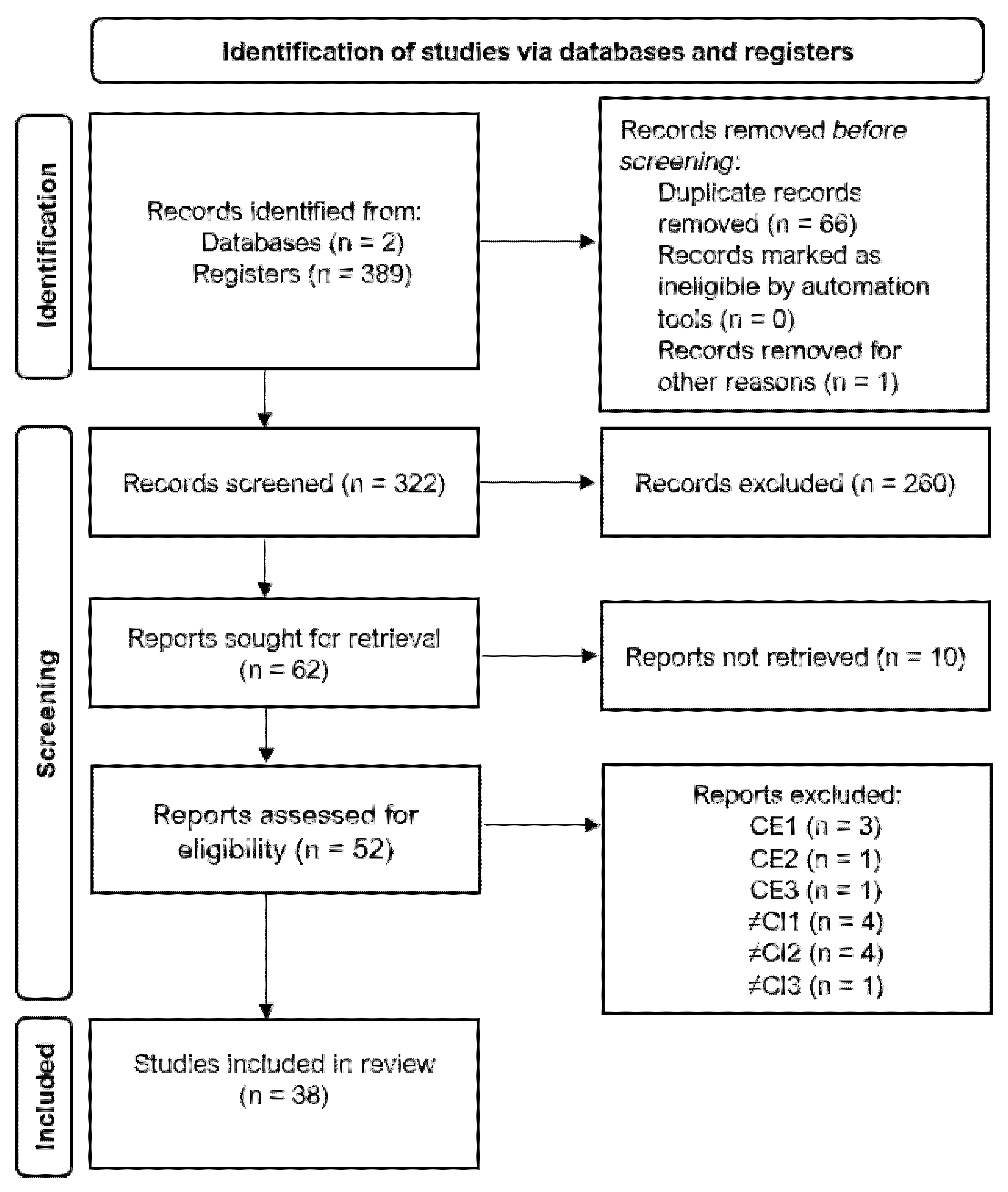
The selection process followed the PRISMA 2020 guidelines [10] and is summarized in Figure 2. In the initial stage, 66 duplicates and one record were removed before screening (e.g., language outside the predefined scope), leaving 322 records for title/abstract screening. Of these, 260 were excluded because they did not address medical textiles functionalized with plant extracts or because they lacked relevant outcomes, and 62 proceeded to full-text retrieval. Ten reports could not be retrieved (e.g., access restrictions or insufficient information); therefore, 52 articles were assessed in full. Reports were excluded if they did not meet the primary objective (application of the extract to the textile), combined extracts with metal nanoparticles, employed essential oils, or lacked laboratory experimentation or ethical approval when applicable. A total of 38 studies met the criteria and were included in the review.
The exclusion of studies involving essential oils or combinations with metal nanoparticles was based on the specific scope of this review. The main intervention focused exclusively on plant-derived extracts, as these represent a distinct class of bioactive compounds with extraction processes, chemical profiles, and application behaviors different from essential oils. In addition, studies combining plant extracts with metallic nanoparticles were excluded because such systems often generate synergistic antimicrobial effects that may obscure the intrinsic activity of the plant extract itself. Moreover, many nanoparticle-based systems incorporate inorganic or non-renewable components, which contrasts with the sustainability-oriented perspective adopted in this review. Therefore, restricting the analysis to plant extracts alone allowed a more consistent comparison of extraction strategies, functionalization methods, and antimicrobial performance in medical textiles. Records containing these combinations were excluded during the screening stage under the predefined exclusion criteria EC2 and EC3.
Inclusion criteria:
  • IC1: application of plant extracts (fabrics, medical materials, or garments) in textiles for medical purposes.
  • IC2: plant-derived extracts obtained from any plant part.
  • IC3: report of antibacterial and antifungal activity with a description of the technique and metric employed.
  • IC4: chemical characterization of the samples when available.
  • Exclusion criteria:
  • EC1: application of the extract to the textile is not the primary objective.
  • EC2: combined use with metal nanoparticles.
  • EC3: use of essential oils (out of scope).
  • EC4: non-applied studies (proposals or plans without experimentation).
  • EC5: clinical/in vivo studies without ethical approval.
Table 1 provides a summary of the 38 selected articles after screening and eligibility.
In addition to the eligibility criteria, the methodological quality of the included studies was considered during the screening process. A formal risk-of-bias or quality assessment tool was not applied, as the objective of this review was primarily descriptive and focused on mapping the use of plant extracts in medical textiles rather than performing a quantitative synthesis or meta-analysis. Instead, minimum quality requirements were ensured through the predefined eligibility criteria and the evaluation of methodological transparency during full-text screening. Studies were included only when they provided a clear description of experimental protocols, antimicrobial testing procedures, and quantitative outcome metrics. Furthermore, all selected records originated from peer-reviewed journals indexed in Scopus and Web of Science, which apply editorial and peer-review processes that contribute to an initial level of scientific quality control. This approach ensured that the evidence analyzed met basic standards of methodological rigor and reporting transparency.

2.3. Data Extraction and Processing

Data extraction was performed using a standardized form. The following were recorded for each study: plant species and part, extraction method and parameters (solvent and concentration, time, temperature, and specific conditions such as power/sonication), reported compound profile (when available), textile substrate (composition and structure), application technique (exhaustion, pad–dry–cure, spray, microencapsulation, among others), and associated processing conditions. The evaluation technique (e.g., agar diffusion, colony count, and relevant AATCC/ISO/JIS standards), primary metric (zone of inhibition in mm; MIC/MBC/MFC; log reduction or percent inhibition), and durability (number of laundering cycles and retained activity) were collected. Safety/biocompatibility indicators (e.g., in vitro cytotoxicity) were included when available. The information was organized in a spreadsheet (Table S1, Supplementary Material). Bibliometric analysis and term co-occurrence visualization were conducted using VOSviewer v1.6.19 (Centre for Science and Technology Studies, Leiden University, Leiden, The Netherlands), and data organization/processing was performed with Microsoft Excel (Microsoft Corporation, Microsoft 365 MSO, Washington, WA, USA).
Table 1. Selected articles on the use of plant extracts in textile medical applications.
RefTitleSourceYearCountryN° Cites
[1]Synergistic surface treatment of corn fabric using Dielectric Barrier Discharge plasma and plant extracts for enhancing antibacterial performanceIndustrial Crops And Products2024India0
[2]Aqueous extraction of buckwheat hull and its functional application in eco-friendly dyeing for wool fabricTextile Research Journal2020China15
[3]Antifungal effect of Aloe barbadensis Miller gel extract on Candida albicans: Development of an eco-friendly herbal antifungal finish on cotton fabric for medical applicationDiscover Applied Sciences2024Mexico, Australia, Sri Lanka1
[4]Modification of cotton gauze using Cynodon dactylon (Bermuda grass) and assessment of the chemical and antimicrobial propertiesScientific Reports2024Bangladesh, USA0
[5]Production of anticandidal cotton textiles treated with oak gall extractRevista Argentina De Microbiologia2013Egypt15
[6]Development and Characterization of Wound Dressing Material Coated with Natural Extracts of Curcumin, Aloe vera and Chitosan Solution Enhanced with rhEGF (REGEN-DTM)Journal Of Natural Fibers2021India, Ethiopia7
[7]Antimicrobial activity of cotton and silk fabric with herbal extract by micro encapsulationAsian Pacific Journal Of Tropical Medicine2010India32
[8]Investigation of selected functional properties of Grona trifloral biomass treated cotton fabricBiomass Conversion And Biorefinery2025India0
[9]Bioactive and biodegradable cotton fabrics produced via synergic effect of plant extracts and essential oils in chitosan coating systemScientific Reports2024Poland6
[11]Investigation on the application of Musa acuminata leaf methanol extract on cellulose fabricJournal Of Natural Fibers2020India5
[12]Selected Aromatic Plants Extracts as an Antimicrobial and Antioxidant Finish for Cellulose Fabric- Direct Impregnation MethodFibers And Polymers2021Serbia, Spain5
[13]Durable Antibacterial Cotton Fabrics Based on Natural Borneol-Derived Anti-MRSA AgentsAdvanced Healthcare Materials2020China55
[14]An In Vitro Analysis of Antibacterial Property of Mikania micrantha Leaves Extract as a Textile Finish with Crosslinking Agent and Its Washing EfficacyFibers And Polymers2024India0
[15]Factors affecting dyeing and antibacterial behavior of cotton fabrics dyed with extract of Diospyros mollis GriffCellulose2024Vietnam2
[16]Antimicrobial and wound healing properties of cotton fabrics functionalized with oil-in-water emulsions containing Pinus brutia bark extract and Pycnogenol® for biomedical applicationsCytotechnology2021Turkey8
[17]Reactive eco-friendly dyeing of natural fabrics using a novel herbal composite containing extracts of Hemigraphis colorata and Bacopa monnieriJournal Of Industrial Textiles2023India0
[18]Characterization of tea aqueous extracts and their utilization for dyeing and functionalizing fabrics of different chemical compositionsMacedonian Journal Of Chemistry And Chemical Engineering2023Serbia2
[19]Harnessing the power of green and rooibos tea aqueous extracts for obtaining colored bioactive cotton and cotton/flax fabrics intended for disposable and reusable medical textilesCellulose2024Serbia2
[20]Dyeing Performance and Anti-Superbacterial Activity of Cotton Fabrics Dyed with Chamaecyparis obtusaMolecules2023South Korea2
[21]Development of medical cotton fabrics with Punica granatum L. extract finishing for nosocomial infections controlJournal Of Natural Fibers2019Malaysia5
[22]Effect of medicinal herb extracts treated garments on selected diseasesIndian Journal Of Traditional Knowledge2012India11
[23]Antibacterial PET–Silk fabric containing Salvia officinalis extractJournal Of Natural Fibers2019Iran5
[24]Nanoemulsion of Capsicum fruit extract as an eco-friendly antimicrobial agent for production of medical bandagesBiocatalysis And Agricultural Biotechnology2020Egypt58
[25]Biocompatible Polysaccharide-Based Wound Dressing Comprising Cellulose Fabric Treated with Gum Tragacanth, Alginate, Bacterial Cellulose, and Chamomile ExtractsStarch/Staerke2024Iran5
[26]A promising eco-sustainable wound dressing based on cellulose extracted from Spartium junceum L. and impregnated with Glycyrrhiza glabra L. extract: Design, production and biological propertiesInternational Journal Of Biological Macromolecules2024Italy, France2
[27]Antibacterial activity of Garcinia mangostana peel-dyed cotton fabrics using synthetic and natural mordantsSustainable Chemistry And Pharmacy2021Indonesia17
[28]Cashew (Anacardium occidentale L.) bark extract for eco-safe dyeing of mordanted cotton fabric: Colorimetric and biomedical functional propertiesSustainable Chemistry And Pharmacy2024Nigeria, Saudi Arabia5
[29]Development of Antimicrobial and Wound Healing Properties on Cotton Medical Bandage by using the Extract of Eco-Friendly HerbsJournal Of The Institution Of Engineers (India): Series E2021Bangladesh5
[30]Sustainable dyeing of wool yarns with renewable sourcesEnvironmental Science And Pollution Research2022Iran10
[31]Phytochemical screening, antimicrobial activity and antimicrobial finishing of polyherbal extract on nonwoven wound dressingResearch Journal Of Pharmacy And Technology2019India0
[32]A study on antibacterial property of herbal encapsulate treated fabricResearch Journal Of Pharmacy And Technology2018India1
[33]Antimicrobial activity of cotton fabric treated with Quercus infectoria extractIndian Journal Of Fibre And Textile Research2007India68
[34]The effect of mordant salts on antibacterial activity of wool fabric dyed with pomegranate and walnut shell extractsColoration Technology2012Iran69
[35]Copper enriched medicinal herbal treated garments for selective skin diseasesIndian Journal Of Fibre And Textile Research2014India4
[36]Development of disposable herbal treated skullcapAsian Journal Of Microbiology, Biotechnology And Environmental Sciences2017India1
[37]A study of Chrysanthemum coronarium antibacterial efficacy on cotton for hospital textilesInternational Journal Of Green Pharmacy2018India0
[38]In vitro antibacterial and cytotoxic activities of plasma-modified polyethylene terephthalate nonwoven dressing with aqueous extract of Rhizome Atractylodes macrocephalaMaterials Science And Engineering C2017China39
[39]Antimicrobial activity of cotton fabric treated with Aloevera extractInternational Journal Of Applied Environmental Sciences2011India7

3. Results

3.1. Bibliometric Profile

3.1.1. Publication Trend over Time

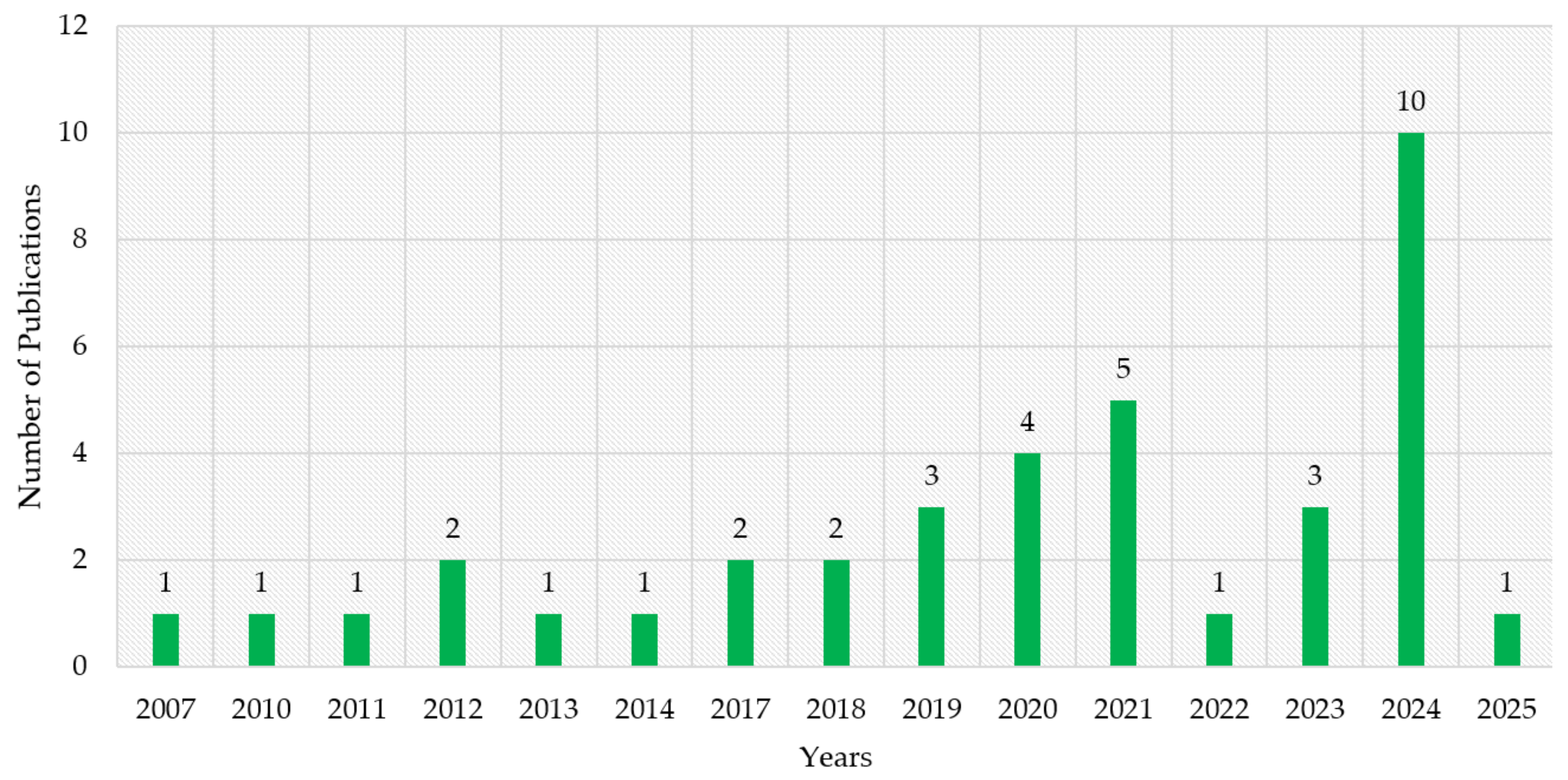
Scientific output on the use of plant extracts as antibacterial and/or antifungal agents in medical textiles shows an upward trajectory (Figure 3). Between 2007 and 2014, contributions were isolated (one article per year; 2.63% each of n = 38). From 2019 onward, a sustained increase is observed (2019: 7.89%; 2020: 10.53%; 2021: 13.16%), peaking in 2024 with 10 articles (26.32%). The uptick in 2020, coincident with the COVID-19 context, may have reinforced the demand for antimicrobial solutions in healthcare products. Overall, the pattern supports the recent consolidation of the field, consistent with the pursuit of safer, more sustainable, and functional materials and with advances in extraction and textile functionalization methods [4].

3.1.2. Keyword Incidence over Time

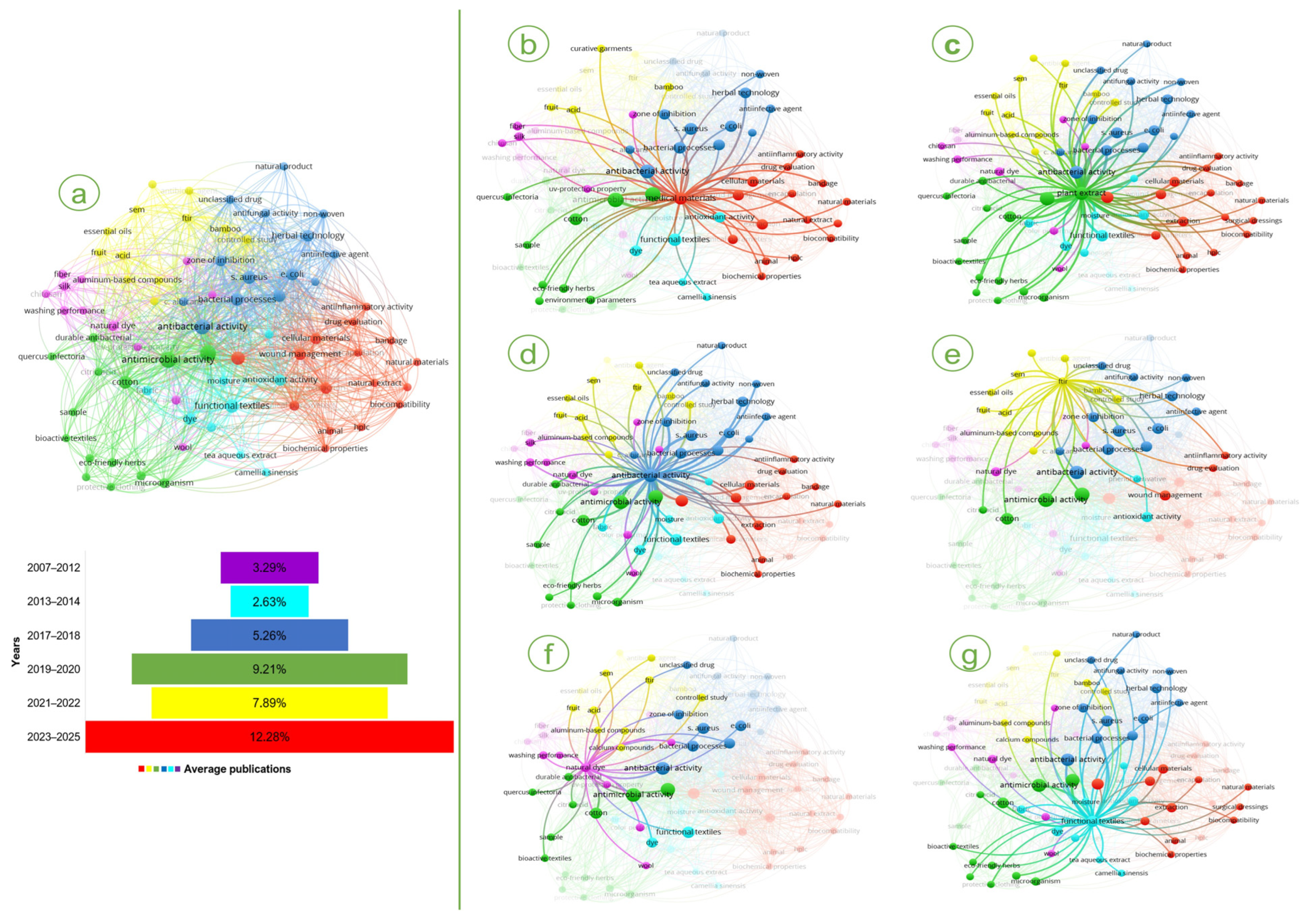
Temporal analysis indicates an evolving thematic focus (Figure 4a). In 2007–2012 (purple), terms related to natural dyeing and the valorization of phytocompounds in protein fibers (silk, wool) predominated. From 2013 (blue), “antibacterial activity” became prominent, signaling a shift toward in vitro validation against S. aureus and E. coli. In 2017–2018 (light blue), “functional textiles” emerged, emphasizing bioactive properties (e.g., antioxidant capacity and moisture retention), often linked to tea extracts. In 2019–2020 (green), “plant extract” was consolidated as a descriptor of sustainable sources; in 2021–2022 (yellow), structural/chemical characterization (e.g., FTIR) increased; and in 2023–2025 (red), “medical materials” gained frequency, reflecting application-oriented research toward biocompatible medical materials enriched with natural compounds.
Keyword co-occurrence analysis identified six thematic areas. The red cluster corresponds to medical textiles and wound management (Figure 4b), emphasizing biocompatible materials, notably dressings and bandages functionalized with natural extracts, and anti-inflammatory/biochemical properties, including encapsulation approaches. The green cluster aggregates sustainable bioactive textiles (Figure 4c), highlighting compounds from Aloe barbadensis and Quercus infectoria applied to cotton substrates for protective garments, aligned with sustainable textile innovation. The blue cluster centers on antimicrobial evaluation and cytotoxicity (Figure 4d) via in vitro assays against S. aureus, E. coli, and C. albicans using halo of inhibition and colony counts, which are essential to validate the efficacy and safety of functional textiles. The yellow cluster emphasizes the structural and chemical characterization of therapeutic textiles (Figure 4e), with FTIR and SEM being used recurrently. The purple cluster addresses the optimization of natural dyes in natural fibers (silk, wool) (Figure 4f), focusing on UV protection, wash fastness, and color performance, underscoring process optimization in the application of natural dyes. Finally, the light-blue cluster (Figure 4g) depicts an emerging line of green technologies through aqueous tea extracts (Camellia sinensis), valued for antioxidant activity and textile functionality.

3.1.3. Publications by Country

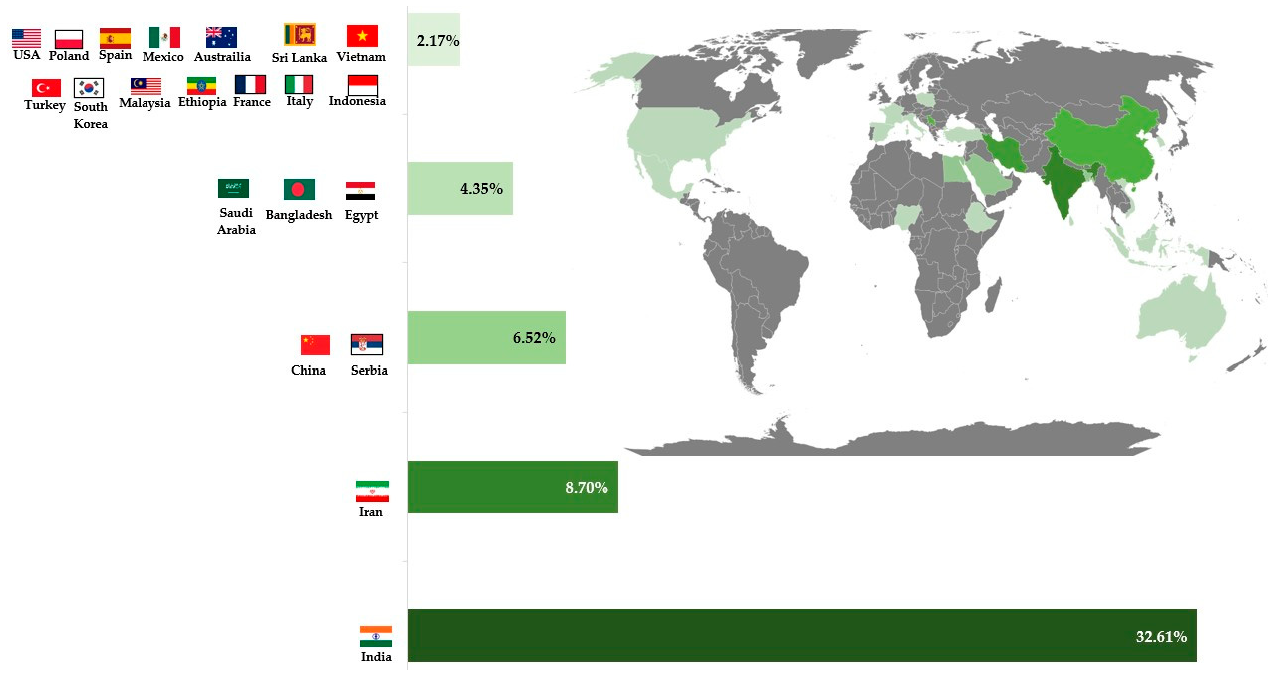
As shown in Figure 5, production is concentrated in Asia: India leads with 15 studies (32.61%), followed by Iran with four (8.70%). China and Serbia report three each (6.52%), while Bangladesh, Saudi Arabia, and Egypt contribute two studies per country (4.35%). The remaining countries, including the United States, Poland, Spain, Mexico, Australia, Sri Lanka, Vietnam, Turkey, South Korea, Malaysia, Ethiopia, France, Italy, Indonesia, and Nigeria, each contributed one publication (2.17%). This distribution is consistent with the availability of plant resources and with installed R&D capacity in textile and biomedical domains. In India, botanical diversity and a robust research ecosystem support leadership, whereas specialized institutions in textiles and biomedicine are notable in Iran [40].
Counts are based on institutional affiliations; therefore, internationally co-authored works may be counted in more than one country, reinforcing the area’s multinational and collaborative character. A relative underrepresentation of Latin America and Africa (with sporadic contributions) is also observed, suggesting opportunities to expand biogeographical coverage and validate applications within diverse clinical–regulatory contexts [41]. Overall, the data indicate a field undergoing recent expansion, with consolidated hubs in Asia and a relevant presence in Europe, and with scope for broader international consolidation.

3.2. Principal Plant Extracts and Their Characteristics

3.2.1. Sources, Extraction Methods, Composition, and Bioactivity Attributes

Across the studies included in this SRL, plant-derived extracts applied to medical textiles display a broad spectrum of bioactivities (Table 2). The most frequently reported effects were anti-inflammatory (15.57%), antioxidant (14.97%), and antibacterial (11.08%), followed by antimicrobial (10.78%), antifungal (8.68%), and wound-healing (8.08%). These percentages reflect reporting frequency rather than effect magnitude, indicating a consistent focus on multitarget therapeutic profiles. Such emphasis aligns with the abundant presence of secondary metabolites, flavonoids, tannins, polyphenols, terpenes, alkaloids, and phenolic acids, known to modulate oxidative, inflammatory, and infectious processes [19]. Previous evidence has also shown that flavonoids, tannins, and terpenoids can achieve antimicrobial performance comparable to that of conventional antibiotics while mitigating oxidative stress and supporting tissue repair [42,43].
With respect to botanical sources and plant organs, species with established use in phytotherapy predominate, notably Aloe spp. (≈20% of studies; [3,6,9,22,35,39]) and Salvia spp. (≈12%; [9,12,23]). Leaves were the most used organ (56.06%), presumably due to higher concentrations of active metabolites, followed by fruits and peels (13.64%); roots, stems, and seeds were less frequently used (3.03–4.55%). This pattern underscores an opportunity to broaden the use of underexploited organs to valorize agricultural by-products within a circular economy framework [44,45,46]. Several non-conventional sources were also identified, such as aquatic Bacopa and brown macroalgae-derived alginate, expanding the portfolio of sustainable raw materials with biomedical potential (Table 2).
Maceration was the most prevalent extraction procedure (42.86%), followed by Soxhlet extraction (14.29%) and decoction (11.43%). These versatile methods, typically employing ethanol, methanol, or water, can provide satisfactory phytochemical recovery; however, solvent system, temperature, extraction time, and particle size are highly dependent on yields and profiles [38]. This dependence is illustrated in S. officinalis leaves from Serbia, where continuous maceration with 65% ethanol/water (solid–liquid 1:5, 20 °C, 48 h) efficiently recovered polyphenols [12], whereas ultrasound-assisted extraction (UAE) of S. officinalis leaves in Iran using absolute ethanol (1:20, 20 min) afforded a broader volatile profile, including cineole and thujone, among others, together with rosmarinic acid [23]. In Aloe barbadensis, manual fileting followed by low-temperature ethanolic precipitation (<5 °C) favored acemannan, aloin, anthraquinones, and polysaccharides [3], whereas alcoholic maceration and acetone extraction shifted the composition toward alkaloids and curcuminoids [35,39]. Collectively, these findings indicate that geographical origin and process parameters jointly govern the quantity and diversity of bioactives, reinforcing the need for methodological standardization to enable inter-study comparability [47,48].
The recent literature further suggests that process-intensification strategies, such as UAE and supercritical fluid extraction (SFE), can overcome the limitations of traditional techniques by enhancing the recovery of thermolabile constituents (e.g., essential oil components and volatile polyphenols) and reducing processing times [47]. The raw-material origin, solvent system, and parameter configuration directly shape the phytochemical profile [49], underscoring the importance of harmonized protocols for the development of biomedical textiles [48].
Beyond the usual emphasis on polyphenols and flavonoids, several studies have identified less conventional metabolites that contribute materially to bioactivity (Table 2). Ethanolic extracts of M. micrantha contain phlobatannins and steroids associated with antimicrobial and anti-inflammatory actions [29]. Soxhlet extraction of B. monnieri recovered bacosides A and B, triterpenic saponins with neuroprotective activity, together with alkaloids such as backside and brahmin [17]. Complex mixtures in Cynodon dactylon include rare organic acids (docosanoic and o-hydroxyphenylacetic), β-sitosterol, and triterpenes such as friedelin and rundown, which are linked to anti-inflammatory, antifungal, and wound-healing effects [4,29]. Extracts of Diospyros mollis and Pinus brutia exhibited high tannin and flavonoid contents, consistent with antibacterial and antifungal action [15,16]. Salvia officinalis and Mentha piperita combine essential oil constituents with diterpenes and flavonoids, a profile associated with antioxidant and antimicrobial effects and additional neuroprotective potential [12,23]. Particularly relevant is the valorization of by-products: Garcinia mangostana peel, rich in xanthones and flavonoids, and Punica granatum peel, with a high tannin content, provide antioxidant and anti-inflammatory properties and anti-cancer attributes, positioning these residues as sustainable inputs for dermoprotective and anti-aging functionalities [27,34].
Concordance between composition and observed effects across multiple species was observed. In C. dactylon, the combined presence of flavonoids, phenolic acids, and triterpenes coheres with antioxidant, anti-inflammatory, antimicrobial, and wound-healing outcomes, plausibly through attenuation of oxidative damage, modulation of inflammatory mediators, and facilitation of tissue repair [4,29]. In D. mollis and P. brutia, high tannin and flavonoid contents are associated with efficacy against bacteria and fungi [15,16]. Salvia and Mentha extracts investigated in Italy, Serbia, and Iran exhibit essential oil constituents with diterpenes and flavonoids, compatible with dual antioxidant and antimicrobial performance, with Salvia additionally linked to neuroprotective effects [12,23]. In parallel underexplored but high-potential sources, such as garcinia cambogia and its by-products, such as Punica peel, the feasibility of sustainable inputs for designing dermoprotective and wound-healing textiles is reinforced [27,34].
From a technological standpoint, extracts rich in tannins and flavonoids can simultaneously improve dye affinity and anchoring to the substrate while conferring antimicrobial and antioxidant functions; polysaccharides such as alginate or acemannan provide film-forming capacity and can serve as carriers for controlled release; and extraction-method selection should be aligned with the stability of target metabolites, prioritizing ultrasound, microwave-assisted extraction, Soxhlet, or conventional maceration according to matrix and objectives. Although translation to clinical use requires in vivo validation and ethically approved trials, the available findings point to a promising strategy for reducing nosocomial infections by controlling common hospital pathogens such as S. aureus, E. coli, C. albicans, and P. aeruginosa.

3.2.2. In Vitro Activity: Antibacterial, Antifungal, Anti-Inflammatory, and Antioxidant

Multiple assays were employed to evaluate the antibacterial performance of plant-derived extracts, enabling comparisons across matrices and species (Table 3). Broth microdilution revealed notable potency for borneol, with MICs of 39 µg/mL against E. coli, 156 µg/mL against S. aureus, and 50 µg/mL against methicillin-resistant S. aureus (MRSA) [13]. Colony-forming unit (CFU) counts showed marked bacterial load reductions for Diospyros extracts: an aqueous extract of fresh fruit achieved 96.65% inhibition in E. coli and 92.29% in S. aureus, whereas a dry-fruit extract enriched in tannins reached 88.90% and 90.50%, respectively [15]. Using the same metric, the black tea and rooibos extracts reached 99.99% inhibition against both E. coli and S. aureus [19]. Agar-based methods corroborated these outcomes. In the herbal extracts of Terminalia, Withania, Madhuca, and Syzygium, agar well/disk diffusion yielded inhibition zones of up to 23 mm against Acinetobacter baumannii, with moderate-to-high halos of about 21 mm against E. coli and S. aureus and moderate halos near 18 mm for Proteus mirabilis, showing efficacy comparable to that of tetracycline used as a positive control [31]. Given the increasing multidrug resistance of A. baumannii in nosocomial infections, these magnitudes are clinically pertinent (Table 3). Additional agar well diffusion (0.25–12 mg/mL) and time-kill assays (0–4 mg/mL, 24–48 h) demonstrated clear, dose-dependent bactericidal effects against S. aureus [26]. Broth microdilution in tea extracts further indicated MIC values around 500 µg/mL for green and black teas against S. aureus and E. faecalis, with higher thresholds (>1000 µg/mL) for rooibos and hibiscus across several Gram-negative species [18] (Table 3).
Chemical composition helps to rationalize these effects. In the ethanolic herbal extract described in [31], oleic acid (13.77%) and linoleic acid (4.67%) were identified among 44 constituents. These unsaturated fatty acids are associated with the destabilization of Gram-negative bacterial membranes, including A. baumannii, while tannins and flavonoids contribute via protein denaturation and other cellular targets. The presence of these compounds not only supports the therapeutic potential of the studied species but also opens opportunities for natural resource-based biomedical solutions. For context, Na et al. [50,51] reported high efficacy of synthetic 4H-4-oxoquinolizine derivatives against XDR A. baumannii. Although plant-derived metabolites do not share this scaffold, the observed activity of oleic and linoleic acids suggests a complementary mechanism centered on membrane permeabilization. Similarly, Luna et al. [52] identified chlorinated isothiazolones as potent bactericides against MDR A. baumannii. While such molecules are absent from the plant extracts assessed here, the combined action of natural metabolites, tannins, sesquiterpenes, and phenolics can exert substantial antimicrobial pressure, supporting their inclusion in non-antibiotic strategies to help mitigate resistance in hospital environments.
Other clinically relevant bacteria, notably E. coli and S. aureus, also exhibited susceptibility to these natural components (oleic acid, linoleic acid, tannins, and flavonoids) [31], likely through combined effects on cell-envelope integrity and oxidative stress. Consistently, in Punica leaf extracts, linoleic acid (~12%) was identified as a key contributor to antibacterial activity, with inhibition zones of 23.3 mm against Streptococcus sp. and 16.3 mm against Yersinia sp., both exceeding the reference antibiotic chloramphenicol under the reported conditions [21]. Together with polyphenolic constituents, these membrane-active fatty acids may be valuable for managing multidrug-resistant respiratory and dermal pathogens, offering a promising route to reduce reliance on synthetic antibiotics in clinical contexts.
Antifungal activity was less extensively reported than antibacterial outcomes, but it remained informative (Table 4). Green and black tea leaf extracts showed MIC values of 500–1000 µg/mL against C. albicans, whereas hibiscus exhibited no relevant activity within that range. At equivalent concentrations, efficacy was limited against E. faecalis and B. subtilis, and no effects were detected against K. pneumoniae, S. typhimurium, or P. aeruginosa at concentrations >1000 µg/mL [18]. In Punica, inhibition against C. albicans was moderate, but activity against filamentous fungi, including Aspergillus niger, Rhizopus sp., Fusarium solani, and Mucor fulvum, was scarce or absent, suggesting fungus-specific responses conditioned by plant composition and organs [21]. Consistent with these trends, well/disk-diffusion assays performed according to the CLSI guidelines reported clear inhibition zones, for example, 24.00 ± 1.00 mm at 5 mg/mL in a well diffusion test (CLSI M44), with macrodilution in broth (CLSI M27) showing a statistically significant dose–response [3].
The antioxidant capacity was broadly demonstrated using DPPH and ABTS assays (Table 5). Green and black tea leaf extracts consistently exceeded 90% inhibition in DPPH and reached ≈98–100% in ABTS, whereas rooibos showed intermediate DPPH efficacy (78.1%) [18]. Additional measurements corroborated these trends, with >99.8% ABTS inhibition for green tea and rooibos [19]. In ethosomal formulations containing Glycyrrhiza root extract, intracellular reactive oxygen species (ROS) decreased by ≈75% as determined by the DCFH-DA assay [26]. Although direct anti-inflammatory testing was not predominant across studies, the same Glycyrrhiza ethosomes inhibited NF-κB nuclear translocation observed by confocal microscopy, an effect attributed to glycyrrhizin (104.94 µg/mg), with antiviral and immunomodulatory implications [26].
Effectiveness depended on the extraction technique, plant organ, and phytochemical profile. Ethanolic macerates of mixed herbs [31] showed high chemical diversity, with 44 identified constituents including fatty acids (palmitic, oleic, and linoleic), flavonoids, and sesquiterpenes, consistent with antimicrobial and antioxidant effects. Likewise, static maceration with 70% ethanol applied to Glycyrrhiza roots [26] enabled the isolation of glycyrrhizin, glycyrrhetinic acid, and flavonoids, yielding a triple action (anti-inflammatory, antioxidant, antibacterial) of interest for multifunctional finishing. In contrast, the α-(+)-borneol–PDMAEMA adduct [13], obtained by chemical synthesis without a specified plant part, exhibited antibacterial activity but lacked broader phytochemical characterization and additional bioactivities, limiting its translational value for plant-extract-based textile strategies.
Complementarily, leaf extracts [3,18,19,21,53] obtained by decoction or ethanolic maceration exhibited solid bioactive profiles; notably, green and black teas were effective against bacteria and yeasts and consistently showed >90% antioxidant capacity, attributable to their high concentrations of flavonoids, phenolic compounds, and other polyphenols. Several studies have documented clear dose–response relationships, reinforcing the validity of these extracts as multifunctional agents. In comparison with the prior literature, the present findings are consistent with those of Zhou et al. [54], who identified synergy between antioxidant and antimicrobial activities in flavonoid-rich extracts, particularly when leaf material is processed by decoction or ethanolic maceration; likewise, Yasseen and Khshan [55] emphasized that plant antimicrobial activity depends on the concentration, bioactive fraction, and plant part employed.
Regarding methods, a technique–bioactivity relationship was evident: chemical synthesis [13] produced a compound effective against Gram-negative bacteria; ethanolic maceration [31] generated extracts with broad bioactive diversity; root maceration [26] enhanced anti-inflammatory effects; and leaf decoction [3,18,19,21] was distinguished by flavonoids and phenolic acids linked to antioxidant and antimicrobial endpoints. These observations are consistent with those of Saxena et al. [56], who highlighted the efficacy of extracting flavonoids by decoction and maceration. In addition, Jia et al. [57] validated the application of DPPH/ABTS methods and showed a direct correlation between phenolic content and radical-scavenging capacity. Finally, Rana et al. [58] underscored that combining chemical analyses (e.g., GC-MS, FTIR) with biological assays allows more precise identification of active metabolites, strengthening the therapeutic potential of natural extracts.

3.3. Effectiveness of Plant Extracts on Medical Textiles

3.3.1. Substrates, Textile Structures, and Application Techniques

The studies analyzed employed a wide range of substrates for functionalization with plant extracts. 100% cotton, in both woven and knitted forms, predominated due to its biocompatibility, ease of impregnation, low cost, and high capacity to absorb/retain bioactive compounds; accordingly, it was the most recurrent substrate in medical applications [4,5,9,13,16,21,22,24,27,29,37]. Natural blends (e.g., cotton/silk, bamboo/cotton) appeared in a second tier of frequency, leveraging complementary mechanical and sensory properties that favor comfort, absorbency, and resilience in functional textiles [14,32]. Technical/functional fibers, Tencel [31], and PET/polyester [23,36], were reported less frequently and mainly in specialized products (dressings, disposable materials), where surface activation or pretreatments are often required to enhance extract adhesion. Finally, non-conventional fibers (soy, lotus, “milk”/casein-based, banana) are emerging, still at an experimental stage, but of interest for their eco-sustainable and innovative focus [17].
With respect to fabric construction, woven fabrics were the most common [4,9,11,14,15,23,26,27,32], particularly plain weave (taffeta) [12,17,19,22,33] and satin [37], whose tighter structures favor uniform distribution of extracts on the surface. Knitted fabrics were also used [3,5,16,18,21,29], including jersey [22] and tuck weave [8], offering elasticity and better garment adaptability [3,5,16,18,21,29], although they may exhibit lower retention of finishes unless appropriate conditioning/preadsorption steps are applied. Nonwovens [6,25,36,38], notably spunlaced [31], are widely used in medical applications, such as bandages, due to their large absorbent surface and direct skin contact. Cotton was typically procured from established commercial suppliers (e.g., Keumsang, Bao Minh) or local markets [27,39]. Fibers such as viscose, Tencel, PET, wool, and bamboo were acquired from specialized companies, including Shanghai Guizhi [31], Vatan Co. [34], Matimpex [9], and Yazdbaf [23]. For innovative blends or alternative fibers (e.g., aloe vera-, soy-, or lotus-derived), supply primarily originated from textile innovation laboratories in India or university research centers [17].
Immersion/exhaustion was the most frequently reported application (impregnation) technique owing to its simplicity and robust initial performance [9,12,15,18,20,21,22,24,26,27,28,30,32,34]. The pad–dry–cure process improved adhesion to fibers through the combined effects of pressure, temperature, and chemical curing [1,3,5,7,8,14,16,17,29,32]. Mordanting, implemented as a pre-, co-, or post-step, enhances chemical fixation via metal salts [4,20,27,34,37] or crosslinkers such as citric acid [17,21]. Less frequent but innovation-oriented approaches include microencapsulation, which protects actives and enables controlled release [7,35], and physical technologies such as ultrasound [25] or plasma treatment [38], both of which improve the penetration and anchoring of extracts on textile surfaces. Thermal curing was also recurrent across studies, facilitating crosslinking of compounds within the substrate and commonly used in combination with the aforementioned techniques.
Across methods, commonly reported process parameters included impregnation and curing temperatures of 40–100 °C and curing temperatures of 100–180 °C, treatment times of 15–120 min, liquor ratios of 1:10–1:100 (depending on technique and extract viscosity), and slightly acidic pH (5.0–6.5), particularly when citric acid acted as a crosslinker (Table 6). Typical nip pressures in padding (foulard) processes ranged from 0.08 to 5 psi, adjusted to fabric type and desired pick-up.
These findings are consistent with external references: Emam et al. [59] showed that metal mordants (e.g., silver nitrate, alum) in cotton functionalized with natural extracts increase antimicrobial activity. Yusoff et al. [60] highlighted the potential of plasma and ultrasound to enhance the fixation and retention of active principles. From a technological adoption standpoint, cotton remains the central substrate due to its chemical affinity, hypoallergenic character, and processability; immersion/exhaustion is the most accessible route, and its effectiveness increases when combined with mordanting or thermal curing. Emerging strategies, such as microencapsulation, ultrasound, and plasma, point toward finishes with controlled release and greater functional sustainability. Finally, the incorporation of alternative plant-based fibers (soy, aloe, and lotus) delineates a trend toward ecofunctional medical textiles, aligned with circularity criteria, and reduced reliance on synthetic inputs [17].

3.3.2. Antimicrobial Effectiveness on Textiles

Plant-derived extracts applied to functional textiles showed notable antimicrobial performance against both Gram-positive (S. aureus) and Gram-negative (E. coli, Pseudomonas aeruginosa) pathogens (Table 7 and Table 8). In most studies, inhibition exceeded 90%, with a reduction of up to 99.9% under optimized application conditions, supporting their potential as sustainable alternatives to conventional synthetic finishes.
Regarding evaluation methods, standardized assays that enable cross-study comparability were clearly preferred. The quantitative AATCC 100 method was most frequently employed [4,11,15,16,20,21,22,23,30,33,34,39] to measure the reduction in colony-forming units (CFU) in treated surfaces [4,11,15,16,20,21,22,23,30,33,34,39]. The agar diffusion AATCC 147 test [6,7,8,11,18,22,24,25,27,29,31,32,33,36,37,39] was also widely used to visualize inhibition zones, providing complementary qualitative evidence. For example, cotton textiles treated with green tea extract achieved 99.79% and 99.33% inhibition against E. coli and S. aureus, respectively [19]. Cotton garments impregnated with turmeric and neem produced inhibition zones of up to 38 mm against S. aureus [22]. In another study, nanoencapsulated Terminalia (fruit) extracts applied to 50/50 bamboo/cotton blends generated inhibition zones of up to 47 mm against E. coli [32]. Although both AATCC methods are informative, AATCC 100 provided more robust and comparable results by quantifying the percent bacterial reduction. As expected, the process parameters, temperature, immersion time, and extract-to-fiber ratio were decisive for efficacy (Table 7).
Mechanistically, activity is associated with the presence of bioactive metabolites (flavonoids, tannins, terpenes, and alkaloids) that disrupt microbial membranes, increase reactive oxygen species, and interfere with metabolic pathways, culminating in cell lysis [18]. Performance can be enhanced by incorporating biopolymers such as chitosan or using metal mordants (e.g., FeSO4, AlCl3, CuSO4). Cotton textiles treated with Salvia and Sambucus in combination with chitosan showed high activity (+++) against S. aureus and E. coli according to PN-EN ISO 20645:2006 [9], whereas metal mordanting with Fe2(SO4)3 yielded 100% inhibition against P. aeruginosa under AATCC 100 [34] (Table 7).
Application routes and temperature, concentration, and fixation time settings critically shaped outcomes. With immersion, woven cotton impregnated at 56.36 °C for 90 min using an 89:100 v/v Diospyros extract reached 99.9% inhibition against E. coli and S. aureus, outperforming a standard treatment at 60 °C for 60 min with 40:60 v/v, which achieved 90.79% and 90.99%, respectively [15]. By contrast, Pinus extract applied to knitted cotton via pad–dry–cure (two passes, 100% pick-up, dry 100 °C/3 min, cure 150 °C/3 min) produced moderate inhibition against S. aureus and no activity against E. coli, while exhibiting antifungal activity against Aspergillus brasiliensis (84.2%) and no effect against C. albicans [16] (Table 8). Although both studies used fruits as extract sources, differences in fabric structure (woven vs. knit), and especially in application route and parameters, conditioned efficacy, with immersion showing the higher antibacterial potency in this comparison (Table 7).
To overcome the limitations of traditional impregnation, more sophisticated functionalization strategies have emerged. Notably, the exhaust application of a silk hydrogel vehicle on PET–silk fabrics, followed by UV irradiation, achieved 99.33% inhibition against E. coli and 99.99% against S. aureus [23]. Similarly, combining an aqueous bath with ultrasound and a crosslinker (FeCl3) improved apigenin fixation from chamomile and delivered >99% antibacterial efficacy on nonwoven cotton against both Gram-negative and Gram-positive bacteria [25]. These advanced approaches enhance the penetration and anchoring of actives and favor the stability and wash durability of the textile (Table 7).
The fiber type also influenced the antibacterial and antifungal outcomes. With green tea extract, the largest inhibition zones against S. aureus and E. coli were observed on polyester (up to 21.7 mm), wool (20.0 mm), and polyamide (18.3 mm), with lower values on cotton (17.7 mm) and cellulose acetate (16.0 mm) [18]. This pattern reflects substrate hydrophilicity/hydrophobicity, which affects the retention and release of the active compound. Durability after laundering was substrate- and method-dependent; up to 95.7% efficacy remained after 50 wash cycles in textiles treated by dip-coating with a BP1-b-HM copolymer [13]. Natural-fiber blends also showed distinct performances: 50% silk/50% cotton reached 21.22 mm halos against S. aureus, while 47/53 cotton/linen delivered 94.28% inhibition (14,19). Thus, fiber composition governs not only the affinity for the active agent but also the release kinetics, implying that the same formulation can perform differently depending on the substrate. Consistent with this, Asanović et al. [61] reported that the fabric morphology and penetration depth of the treatment are key to retention: woven structures tend to favor higher fixation within the fiber matrix, whereas knits can also effectively retain actives, albeit sometimes with changes to physical properties (Table 7 and Table 8).
The effect of mordants was matrix-dependent and could either potentiate or diminish bioactivity. An aqueous leaf extract of Cynodon inhibited S. aureus by 99.99% but only 22% against E. coli (even with AgNO3), likely due to the Gram-negative lipopolysaccharide barrier and lower abundance of lipophilic metabolites [4]. Without mordants, a decoction extract of Chamaecyparis reduced CFU by up to 99.7% for S. aureus, Klebsiella pneumoniae, and MRSA; adding Cu, Fe, or Al slightly decreased efficacy, suggesting that complexation with flavonoids and tannins lowers bioavailability [20]. Conversely, an ethanolic leaf extract of Punica produced complete inhibition of E. coli (100%), MRSA (99.99%), and Candida utilis (99.99%), attributed to lipophilic constituents (e.g., ethyl pentadecanoate, bis(6-methylheptyl) benzene-1,2-dicarboxylate, linoleic acid) and excellent retention on cotton via acetic-acid mordanting and citric-acid fixation [21]. For the Punica peel, Al, Cu, and Sn mordants increased activity to complete inhibition against P. aeruginosa, whereas Fe2+ and Cr reduced it [34] (Table 7). Antifungal endpoints were likewise substrate- and chemistry-sensitive: an ethanolic Quercus extract on cotton produced an 18 mm halo against C. albicans (MIC 27.5 µg/mL) [5], and a HibiscusPhyllanthusWrightia combination on nonwoven polyester achieved 80 mm against A. niger and 72 mm against Trichoderma reesei [36] (Table 8). Yao et al. [62] noted that Cu2+ can enhance activity (improved fixation of phenolics/tannins), whereas Fe2+ can reduce it through complexation and lower bioavailability.

3.3.3. Other Biological Activities in Textiles

Antibacterial (antibiotic-like) activity was assessed on 100% cotton textiles impregnated with Anacardium bark extract using the exhaust method, yielding differential outcomes depending on the post-treatment, as determined by agar diffusion against E. coli and S. aureus [28]. The irradiated base fabric (RCF) showed no antibacterial activity, whereas the bark extract (RCF-CB) dye produced a moderate effect. Efficacy increased with post-mordanting, rising further with iron salt (RCF-IS-CB) and calcium salt (RCF–CC-CB), reaching high levels with an herbal mordant (RCF-VAL-CB) and a maximum with the SBL biomordant (RCF-SBL-CB). This performance was attributed to a synergistic interaction between flavonoids in the CB dye and anthocyanins in the biomordant. The antimicrobial effect remained stable after seven laundering cycles, indicating durability and practical sustainability. Mechanistically, the activity is linked to the phenolic –OH functional groups in the polyphenols and flavonoids present in the extract, which are well-documented to disrupt microbial membranes, destabilize essential proteins, and inhibit bacterial growth.
Several studies have also evaluated the antioxidant activity of functionalized medical textiles, thereby complementing antibacterial findings and underscoring their multifunctional potential. In 100% viscose treated by immersion with leaf extracts [12], DPPH scavenging reached 87.71% for Salvia (highest value), 65.92% for Mentha, 68.81% for an oxidized mixture, 43.54% for Lavandula, 52.08% for Pimpinella, and 11.82% for Foeniculum, compared with 2.38% in the untreated control. The results of multi-garment applications with green, black, rooibos, and hibiscus teas applied by immersion [18] were as follows: On wool, ABTS was 88.47% (green), 89.79% (black), 87.22% (rooibos), and 88.26% (hibiscus), whereas DPPH was 96.15% (green), 97.27% (black), 41.61% (rooibos), and 23.06% (hibiscus). On polyacrylonitrile, ABTS was 100% (green), 89.93% (black), 81.60% (rooibos), and 65.90% (hibiscus), whereas DPPH was 66.68% (green), 91.58% (black), 48.55% (rooibos), and 23.42% (hibiscus). On polyester, ABTS was 100% (green), 91.04% (black), 88.06% (rooibos), and 91.18% (hibiscus), with DPPH at 54.93% (green), 73.98% (black), 51.51% (rooibos), and 20.07% (hibiscus). On polyamide, ABTS was 100% (green), 89.51% (black), 91.18% (rooibos), and 99.93% (hibiscus), and DPPH was 100% (green), 98.36% (black), 92.04% (rooibos), and 100% (hibiscus). On cotton, ABTS was 100% (green), 88.82% (black), 90.63% (rooibos), and 99.65% (hibiscus), whereas DPPH was 100% (green), 96.32% (black), 65.56% (rooibos), and 27.20% (hibiscus). Finally, on cellulose acetate, ABTS reached 100% (green), 89.51% (black), 89.86% (rooibos), and 100% (hibiscus), whereas DPPH reached 100% (green), 97.14% (black), 97.63% (rooibos), and 84.57% (hibiscus). Reproducibility on cotton and cotton/linen blends was confirmed in [19], where green tea and rooibos achieved approximately 100% and ~99.63% ABTS inhibition, respectively, in 100% cotton, 70/30 cotton/linen, and 47/53 cotton/linen. Consistently, in 100% cotton impregnated by exhaustion with anacardium [28], DPPH antioxidant capacity was low in the irradiated base fabric (RCF), increased after dyeing (RCF-CB), and boosted by calcium (RCF-CC-CB) and iron (RCF-IS-CB) post-mordants, reaching the best values with herbal mordants (VAL, SBL) and remaining after seven washes.
Together, these findings confirm the versatility of plant bioactives in conferring antioxidant properties across a wide range of textile fibers and their potential to enable multifunctional, durable, and sustainable materials that retain performance after multiple laundering cycles, strengthening their feasibility for real-world applications in medical textiles and other high-value products.

3.3.4. Post-Wash Durability and Physical Performance

Wash durability is critical for ensuring the long-term functionality of antimicrobial medical textiles, and multiple studies have shown that the performance depends on both the chemistry of the active agent and the fixation route (Table 9).
For cotton finished with a leaf extract of Punica, AATCC 147 revealed notable persistence, especially against E. coli: after 30 laundering cycles, the efficacy remained 85.6% (4.7 × 10⁸ CFU/mL), and after 50 cycles, it was still 78.8% (6.9 × 10⁸ CFU/mL) [21]. In contrast, activity against S. aureus (MRSA) declined more sharply (51.8% at 30 washes; 50.6% at 50), suggesting that retention of the active may be more effective against Gram-negative bacteria. The lower post-wash efficacy against S. aureus also points to cell-wall structure and composition as determinants of antimicrobial persistence, underscoring the need to optimize formulations for a more balanced spectrum after laundering. Persistence has been attributed to hydrophobic constituents, such as ethyl pentadecanoate and bis(6-methylheptyl) benzene-1,2-dicarboxylate, and to continuous-agitation impregnation followed by citric acid fixation under heat, which promotes stable bonding to cellulose.
Using standard FZ/T 73023–2006, dip-coating a BP1-b-HM copolymer incorporating α-(+)-borneol-PDMAEMA retained 97.6% and 96.4% efficacy against E. coli and S. aureus, respectively, after 50 wash cycles [13]. The potential of polymeric matrices to enhance wash durability in plant-extract-functionalized textiles has been widely demonstrated. Biopolymers such as chitosan and synthetic copolymers like BP1-b-HM provide strong chemical and physical interactions with both fibers and bioactive compounds, creating a protective barrier that minimizes leaching during laundering [13,22]. Hydrophobic constituents of plant extracts, including phenolics and terpenoids, exhibit higher retention when paired with specialized polymer matrices, as the polymer network promotes adsorption and entrapment within the fiber structure [21,34]. Studies combining hydrophobic bioactives with polymers reported retention rates above 95% even after 50 wash cycles, highlighting the role of polymer type, concentration, and fixation method in achieving long-lasting antimicrobial performance [13,21,22,34].
Therefore, strategically combining polymer matrices with appropriate plant extracts represents a promising approach for designing highly durable and sustainable antimicrobial medical textiles. Finally, under AATCC 124 with direct dyeing using aqueous botanical extracts, the Azadirachta (neem) leaf + Thespesia (portia) fruit combination stood out without synthetic fixatives, retaining 90% activity after the second wash and 60% after the sixth, well above aloe gel (41%) or sandalwood–nutmeg (44%) finishes [22]. The performance is consistent with a high load of phenolic and other hydrophobic phytochemicals with strong affinity for cellulose, highlighting that strategic selection of botanical source and plant part is pivotal for durable, sustainable antimicrobial finishes beyond advanced chemistries.
Pursuing maximum persistence under more demanding scenarios, we also evaluated protein fibers (Table 9). Wool (100%) dyed by exhaust with Punica peel and walnut extracts, rich in tannins, polyphenols, and -OH/C=O groups capable of interacting with keratin, showed moderate efficacy immediately after dyeing without mordant (62% against P. aeruginosa, 76.5% against S. aureus, and 50% against E. coli), but activity dropped substantially after laundering and light exposure [34]. Metal mordants produced striking contrasts: copper (2%) with the dye achieved >99.7% efficacy against all three bacteria and maintained >97% after 50 wash cycles and under irradiation, demonstrating exceptional fixation of the active. Aluminum and tin also yielded high retention (≥93% post-wash; ≥95% post-light), whereas ferric sulfate showed good stability for S. aureus and E. coli but lower stability for P. aeruginosa. Chromium and ferrous sulfate suffered significant losses after washing or light exposure, indicating less stable interactions with the protein matrix. The high durability of certain mordants can be explained by the abundance of amino and carboxyl groups in wool that coordinate with metal ions, creating stable bridges between phenolic dye constituents and the keratin structure. Overall, these results confirm that the synergy among an appropriate mordant, the bioactive’s chemistry, and the intrinsic affinity of protein fibers are decisive for maintaining antimicrobial function against laundering and photodegradation. Metal mordants with high complexation capacity not only reinforce the fixation of the active to the fiber but also impart notable photostability, an essential attribute for medical textiles designed for real-world, demanding use.
Table 10 highlights that S. aureus and E. coli are the most extensively investigated pathogens in plant-extract-functionalized textiles, consistently showing strong antimicrobial performance across multiple studies [1,4,6,7,8,11,12,13,14,15,17,18,19,22,24,29,31,32,35,36,37]. In particular, S. aureus exhibited inhibition zones up to 43 mm and reductions reaching 100%, confirming its high susceptibility to plant-derived bioactive compounds. Comparable inhibition levels were observed for E. coli (up to 47 mm and 99.99% reduction), although the broader MIC range (39 μg/mL to >1000 μg/mL) suggests higher tolerance among Gram-negative strains. In contrast, P. aeruginosa generally displayed lower susceptibility, with MIC values frequently exceeding 1000 μg/mL despite moderate inhibition zones in some studies [7,8,18,21,34,39]. Fungal assays revealed moderate antifungal responses against C. albicans, with MIC values between 0.0275 and 7.50 mg/mL [3,5,12,18,21,24,31]. Notably, several studies reported durable antimicrobial activity after repeated laundering, maintaining up to 96–99% effectiveness after as many as 50 washing cycles, supporting the potential of plant-based functionalization for long-lasting antimicrobial textiles.
Several studies have evaluated the tinting/dyeing potential of these plant extracts beyond conferring antimicrobial inhibition to medical textiles (Table 11). For example, in a study using leaf extracts plus chitosan [9], color performance assessed under CIE 15:2004 showed pronounced chromatic shifts on cotton, with a strong dependence on plant species. Salvia produced the largest overall change (ΔE = 34.59) and a marked decrease in lightness (L* = 60.57), followed by Sambucus (ΔE = 16.67, L* = 79.97) and Aloe (ΔE = 16.52, L* = 81.13). The immersion (exhaust) impregnation method, 50 °C; 1 g of extract and 1 g of essential oil; 1 h of stirring; 30 min of impregnation; 1:20 liquor ratio (L:R) 1:20; and 24 h of drying, favored uniform color fixation. These results indicate that both the chemical nature of the extract and the chitosan–cellulose interaction are decisive for achieving intense hues with controlled brightness, offering functional and esthetic advantages for medical textiles. The color differences depended more on the chemistry and concentration of the botanical compounds than on the physical processing conditions.
In cotton dyed with Garcinia peel extract [27], the mordant type and temperature strongly influenced the final shade. Changes in lightness (L*) and the red coordinate (a*) were minimal with pre-mordanting alone, although the yellow coordinate (b*) rose slightly with temperature. In contrast, combining pre- and post-mordanting produced broader chromatic shifts: L* dropped markedly (42.2–68.5), whereas a* and b* increased, especially with Ca(OH)2 (5–10%), alum (5–10%), and Indigofera leaves at 60 °C, an optimal temperature that promotes fiber swelling and uptake. The ferrous sulfate generated duller tones. The full process comprised boiling pretreatment with detergent and Na2CO3, initial mordanting at 80–90 °C, traditional immersion dyeing (80 °C for 1 h) or 24 h maceration, and cold post-mordanting. Overall, the mordant–temperature synergy was decisive for intensifying and stabilizing color, while mordant selection governed the final hue and saturation (Table 11).
In the development of natural medical textiles, abrasion resistance is a key attribute to ensure the durability and effectiveness of functional dressings under frictional wear during use. In the evaluated study [6], bamboo fibers were impregnated and dried with leaf extracts of curcumin and Aloe vera and tested according to ASTM D4157-13. The average abrasion resistance values were very similar between the povidone-iodine (PVP-I) control (≈ 5.80%) and the CAC formulations, regardless of the presence or concentration of rhEGF (5.80–5.89%). This behavior may be associated with the chemistry of curcumin, whose phenolic (–OH) and carbonyl (C=O) groups favor more stable interactions with the fiber, contributing to mechanical resistance, whereas Aloe vera, while potentially contributing via -NH hydrogen bonding, has a more hydrophilic matrix that is less resistant to rubbing. The impregnation process used a pressure of 2 bar, a line speed of 2 m/min, drying at 80 °C for 15 min, and 24 h conditioning, achieving ~80% moisture uptake; this suggests that during clinical use, the water-retention capacity could influence both dressing comfort and structural integrity.
Absorbency performance is essential in natural medical textiles because it directly affects comfort, fluid management, and functional performance on skin or wounds. Different methods and treatment compositions enabled quantification and comparison of absorbency under varied conditions across the reviewed studies. In a 100% polyester PET–silk fabric treated by exhaust with a silk hydrogel vehicle (20% w/v) and a Salvia extract (20% v/v, ethanolic solution with 7% water), a gravimetric method recorded an increase in water uptake from ≈ 95 units in the control to ≈ 120 units after treatment, an improvement of 26.3%, plausibly attributable to rosmarinic acid in Salvia [23]. In cotton dressings impregnated via an aqueous bath with ultrasound assistance (70% power, 20 °C, 10 min) and FeCl3 as a crosslinker, using alginate (brown macroalgae) and chamomile extracts, AATCC 79-2014 and DIN 53,923 tests showed that the fabric absorbed 91.2% of water (9.12 mL out of 10 mL), likely driven by alginic acid and apigenin glycosides for aqueous uptake, with chamomile terpenoids and esters contributing to lipid absorption [25]. In a tuck-wafe cotton knit treated with ethanolic and methanolic Desmodium extracts by impregnation, drying, and curing, the MMT (AATCC 195) test gave OMMC values of 0.44–0.69, AOTI values of 452.6–694.2, maximum wetting radii of 19.3–26.1 mm, and absorption rates of 35.54–68.35%/s, reflecting treatment-dependent differences in the speed and uniformity of moisture spread [8]. Taken together, the observed differences appear to arise from both the chemical nature of the extracts and the application conditions (vehicle, ultrasound, curing) as well as the textile substrate, offering clear levers to optimize medical textiles for enhanced fluid handling that supports wound healing and patient comfort.

3.3.5. Skin Safety and Functional Properties for Clinical Use

As part of advances in the use of plant extracts for medical textiles, one study [4] assessed the skin-irritation potential of cotton bandages treated with Cynodon leaf extracts using ISO 10993-10:2010. The primary irritation index was 0.01, indicating a virtually negligible cutaneous reaction risk. This finding supports the dermatological safety of the treatment and its potential for prolonged skin contact. However, the work represents an initial screening; confirmation under more demanding clinical conditions remains necessary. From a product-development standpoint, evaluating the irritant potential of textile materials is essential to ensure biocompatibility and safety during direct skin contact, meaning the textile should not elicit adverse reactions and should also permit the growth of human tissues.
Another study examined the biocompatibility of 100% natural taffeta fabrics produced from fibers of Aloe vera, banana, corn, eucalyptus, lotus, milk, orange, rose, and soybean treated with Hemigraphis and Bacopa leaf extracts [17]. The fabrics showed no cytotoxicity at test concentrations of 5, 15, and 25 (as reported) using an in vitro MTT assay, maintaining cell viability of 95.3–97.6%. These data confirm high compatibility with human cells without adverse effects. Within the context of sustainable medical textiles, the value of this investigation lies in its exploration of relatively understudied natural fibers as safe, eco-friendly options for materials in direct contact with skin or wounds. Biocompatibility in these textiles is significant because it points to safe use in wound dressings, medical apparel, and functional fabrics, implying that adding natural compounds need not compromise cell viability or provoke adverse reactions, an important step toward therapeutic, sustainable textiles with high clinical potential.
Complementary cytotoxicity assessments depict a varied landscape of cellular safety, with studies applying standardized methods and different cell models. In one case, MTT testing showed that 100% cotton fabrics treated with green tea (Camellia sinensis) leaf extract were non-cytotoxic and exhibited a high release of bioactive compounds [19], suggesting therapeutic potential without compromising cell viability. In contrast, another MTT study on human hepatocellular carcinoma (HepG2) and buffalo green monkey kidney (BGM) cell lines reported that cotton treated with a Capsicum nanoemulsion maintained cell viability not lower than 59% [24], not indicative of severe acute toxicity, but notably reduced compared with untreated cotton (~99%), warranting caution for prolonged use. More favorably, under ISO 10993-5, composites containing chamomile extract and brown seaweed alginate showed no toxicity and promoted cell proliferation, underscoring the positive contribution of herbal extracts to biocompatibility [25]. Finally, in polyethylene terephthalate (PET) dressings modified with Atractylodes rhizome extracts and evaluated per ASTM F895-11:1990, ISO 10993-5:2009, and ISO 10993-12:2012, all treated variants (PET-RAM, PET-AAc-RAM, PET-PT-RAM, PET-PT-AAc-RAM) scored 0 in every test (no cellular reactivity), whereas the positive control showed a severe reaction [38]. Overall, incorporating natural compounds into textiles can maintain, or even improve, cell compatibility, although cases such as Capsicum demonstrate that not all extracts are equally safe; each formulation must be evaluated under its specific use conditions to avoid adverse clinical effects.
Beyond cellular safety, research on functional medical textiles has explored other relevant properties, notably anti-odor performance, which has been evaluated primarily under Swiss standards SNV 195,651 and SNV 195,6. The results consistently show improved olfactory perception compared with untreated fabrics, although the performance varies with both the substrate and extract. In one study [17], 100% natural fabrics (from Aloe vera, banana, corn, eucalyptus, lotus, milk, orange, rose, and soybean) impregnated with Hemigraphis and Bacopa leaf extracts were rated from “pleasant” to “very pleasant,” indicating not only an absence of malodor but also a positive sensory contribution, likely from inherent aromatic constituents. In a second study [29] using a scale from 1 (no odor) to 5 (intolerable odor), the untreated gray control scored 5 (intolerable), whereas the pretreated fabric without extract improved slightly to 4 (annoying). In contrast, both woven and knit fabrics impregnated with Cynodon or Mikania extracts achieved a score of 2 (weak odor), which markedly reduced malodor compared with the control. This effect may be linked to the antimicrobial action of phenolics, flavonoids, and tannins that limit odor-producing bacteria. While both approaches are effective, the first adds an esthetic dimension (pleasant aroma), whereas the second focuses on odor neutralization, suggesting that combining both could enhance hygiene and sensory experience in medical and everyday textiles.
Beyond odor control, air permeability is another key parameter in the design of functional medical textiles. It helps maintain a dry, cool microclimate and is crucial for breathability and patient comfort during prolonged wear, complementing antimicrobial and sensory performance in clinical and daily contexts. Cotton and silk fabrics treated with Azadirachta, Curcuma, and Ocimum extracts and tested per IS:6359-1971 [7] showed a moderate reduction in mean air permeability (from 163.82 to 146.91 cm3/cm2/s), whereas silk remained virtually unchanged (78.72 to 78.72 cm3/cm2/s), indicating that treatment preserved silk porosity. In 100% polyester fabrics impregnated with Hibiscus, Phyllanthus, and Wrightia extracts [36], although the specific test method was not reported, considerably higher permeability values were obtained (means of 1700, 900, and 34 cm3/cm2/s across measurement configurations), reflecting substantial airflow even after extract application. Comparatively, treatment effects on permeability depend on both fiber type and extract: changes are minimal in dense natural fibers such as silk, whereas high permeability in synthetics like polyester can favor ventilation and moisture control but may imply a lower barrier against pathogens or contaminants. In medical contexts, controlled permeability is advantageous because it permits air exchange and sweat evaporation without compromising protection. It is particularly valuable in dressings, surgical apparel, and bandages that require prolonged comfort and hygienic performance.
Protection against ultraviolet radiation is also gaining attention. A study using Musa leaf extracts [11] applied to cotton by pad-mangle impregnation yielded modest improvements: +1 unit in UPF, +0.27 in UVA, +0.3 in UVB, and a +0.6% increase in total UV blocking, an effect possibly associated with lignin in the extract. In contrast, buckwheat hull extracts [2] applied to wool via direct dyeing combined with mordanting produced excellent ultraviolet (UV) protection with a UV-protection factor (UPF) of >50, likely linked to phenolic constituents such as quercetin and rutin. These findings suggest that agricultural by-products, such as hulls, an underexplored resource, have strong potential as natural sources for UV-blocking textiles, contributing to a circular economy and potentially reducing reliance on synthetic additives and environmental impact.
Wound-healing activity has been a central target in the development of dressings and medical textiles, as effective skin regeneration can restore tissue integrity, help prevent infection, and reduce cosmetic sequelae. In vitro human keratinocyte (HaCaT) assays showed that cotton fabrics treated with 2% Pinus extract increased cell proliferation and accelerated closure of the cell-free gap from the first 12 h, promoting cell migration and re-epithelialization, effects that are likely driven by flavonoids [16]. Complementary in vivo studies in male Wistar rats evaluated bamboo dressings impregnated with Aloe vera, curcumin, and rhEGF [6]. Healing outcomes improved progressively: the control (PVP-I) showed incomplete closure with marked scarring at day 21; CAC (Aloe + curcumin) achieved good healing with a faint scar; CAC I yielded minimal scarring with well-regenerated skin; CAC II reached near-complete regeneration without notable scarring; and CAC III achieved complete regeneration with normal skin color and texture, accelerating healing by ~25–54%. These effects align with the literature on the wound-healing activity of curcuminoids and glycoproteins, and amino acids containing aloe polysaccharides/–NH. In another study, cotton dressings impregnated with Glycyrrhiza extract in ethosomes [26] closed scratch wounds in 3T3 cells within 48 h, thereby shortening the healing time and increasing the migration speed. These effects were associated with glycyrrhizin, 18β-glycyrrhetinic acid, phenols, and flavonoids. Finally, in a rabbit model [29], cotton bandages treated with Mikania and Cynodon extracts achieved complete healing by day 5 without signs of infection, likely due to their flavonoids and tannins. Taken together, the effectiveness of this study appears to depend on synergy among bioactive compounds (curcuminoids, polysaccharides, glycyrrhizin, phenols, and tannins) and the delivery system, with key limitations stemming from formulation variability and experimental conditions. Even so, the evidence supports plant-extract-impregnated medical textiles as active platforms to manage and accelerate wound healing while combining protection, bioactivity, and comfort.


3.3.6. Clinical Evaluation of Plant-Extract-Impregnated Medical Textiles

Plant-extract-impregnated textiles have progressed from proof of concept to early clinical evaluation, marking a notable advancement in functional medical materials. In one study, 100% cotton garments treated with Azadirachta, Aloe, Santalum, Thespesia, Terminalia, Ocimum, Curcuma, Eucalyptus, Rubia, Cardiospermum, Myristica, and Justicia extracts produced clinically meaningful improvements across several conditions. For example, T-shirts impregnated with Neem and Thespesia extracts were effective against psoriasis; garments containing sacred basil benefited patients with asthma; and Curcuma-Neem combinations were effective against hepatic disorders. In addition, strips impregnated with Eucalyptus and Cardiospermum extracts alleviated headache and joint pain, respectively, while sandalwood handkerchiefs were useful for sinusitis and the common cold, with functionality retained through 10–15 washes using natural, nonionic detergents [22].
Complementing these results, a separate study of cotton garments microencapsulated with Aloe, bitter gourd, Cuminum, and ginger reported 90% improvement in inflammatory skin disorders, 95% in seasonal cutaneous allergy, and 90% in scabies, with lower effectiveness in urticaria (60%) and eczema (45%) [35]. Finally, a 100% polyester fabric treated with Hibiscus, Phyllanthus, and Wrightia extracts was found to be non-irritating after 24 h of contact, producing neither erythema nor edema and thereby reinforcing its biocompatibility for prolonged use [36]. Taken together, these early clinical findings underscore the substantial therapeutic potential of plant extracts in medical textiles, while variability in efficacy across compounds highlights the need to optimize formulations for specific indications and to confirm safety and durability in larger, controlled clinical studies.

4. Current Challenges and Future Perspectives

Scaling plant-extract finishes for medical textiles faces several intertwined constraints related to botanical feedstock selection, compositional variability, and regulatory requirements. First, extract variability and stabilization remain difficult: the quality and concentration of bioactives fluctuate with plant species, cultivation conditions, harvest season, and extraction protocol, which undermines treatment reproducibility and cross-study consistency. During industrial impregnation and subsequent use, extracts can degrade under heat, humidity, and light, thereby diminishing antimicrobial efficacy and overall functionality. Second, integration must not compromise textile performance. Embedding bioactivity derived from plant-derived extracts without sacrificing mechanical strength, esthetics, or comfort is technically demanding, and achieving uniform fixation and sustained release of active compounds across the fabric continues to be challenging. Third, wash durability is critical: medical textiles must retain activity through repeated wash–use cycles, and doing so consistently still requires optimization and standardization. Cost pressures compound these issues; compared with conventional synthetic finishes, plant-based treatments can be more expensive because extraction, purification, and application steps are complex, potentially limiting commercial viability. Regulatory hurdles add further friction: demonstrating biocompatibility, non-toxicity, and efficacy within stringent frameworks is resource-intensive, while the lack of universal standards complicates cross-study comparisons and slows market and clinical acceptance. Finally, the botanical scope of current studies is narrow, with a predominant focus on conventional plants. Despite their potential to enhance performance and improve sustainability, agro-industrial residues/by-products and lesser-known species are still underexplored.
The outlook is promising if innovation and standardization advance in tandem. Research should broaden the feedstock base beyond traditional plants to include agricultural by-products and residues, framed as alternative biomass resources, as well as species from lacustrine ecosystems and other biodiversity-rich but underexplored regions; this would expand the repertoire of bioactives while advancing biomass valorization and circular-economy goals. Stabilization and controlled release should be strengthened through nanotechnology and biotechnology. For example, nanoencapsulation can protect labile compounds and enable controlled, prolonged release from plant-derived extracts without impairing textile properties. Fixation and durability can be improved by pairing fiber-surface modification with advanced impregnation and fixation chemistries, ensuring wash fastness while preserving functionality. On the economic front, process optimization and scalable manufacturing strategies applied to extraction and finishing are expected to reduce costs and support wider industrial adoption. Progress toward harmonized evaluation and certification protocols that ensure safety, efficacy, and biocompatibility is equally important, thereby facilitating acceptance in stringent regulatory markets and building confidence among clinicians and consumers. Ultimately, integrating these textiles into healthcare could reduce healthcare-associated infections and improve patient quality of life, aligning with sustainable development objectives and reinforcing the role of bio-based value chains in the growing demand for eco-friendly, health-conscious solutions in the medical textile industry.

5. Conclusions

This systematic review shows that plant-derived extracts are a versatile, high-value source of bioactives, chiefly polyphenols, flavonoids, fatty acids, and tannins, with proven antibacterial, antifungal, antiviral, antiseptic, and antioxidant performance on medical textiles. Traditional species such as Aloe and Salvia stand out, with activity against clinically relevant, and in some cases, multidrug-resistant, pathogens (e.g., E. coli, S. aureus, and A. baumannii). Efficacy is strongly dependent on (i) extraction method and parameters, which determine extract composition and bioactive availability, (ii) application route and fixation chemistry, and (iii) substrate properties, with 100% cotton frequently favored for its biocompatibility and uptake capacity. Advanced functionalization (e.g., microencapsulation, judicious use of metal mordants) further improves stability and wash durability, thereby maintaining performance over multiple laundering cycles and enhancing resource-use efficiency.
Insufficient process standardization, variability in reproducibility, and limited industrial scalability, together with regulatory hurdles for safety and efficacy, remain key barriers. Addressing these gaps will require harmonized test protocols, dose–response and mechanism-of-action studies, rigorous cytotoxicity/biocompatibility assessments, and clinically oriented validations, contributing to evidence-based sustainable resource management. Broadening the feedstock base beyond conventional plants to include agricultural by-products and underexplored species as alternative biomass resources for valorization can expand the palette of functional chemistries while supporting natural resource conservation, resource recovery, and circular bioeconomy objectives. With these advances, plant-extract-based finishes can enable sustainable, safe, and effective medical textiles, strengthen biomass-based value chains, support public health goals, and accelerate responsible adoption across healthcare and the textile industry within a circular resource-use framework.
Overall, this perspective highlights plant biomass and agro-industrial residues as strategic renewable natural resources, positioning medical textile functionalization as a value-added pathway for resource valorization, conservation, and circular use. Integrating antimicrobial textile development with sustainable resource management principles strengthens biomass-based value chains and supports responsible production within circular bioeconomy frameworks.

Supplementary Materials

The following supporting information can be downloaded at https://www.mdpi.com/article/10.3390/resources15040052/s1, Table S1: Extraction of selected studies included in the systematic review.

Author Contributions

Conceptualization, P.J.M.-R. and R.S.-R.; Methodology, P.J.M.-R. and R.S.-R.; Software and data analysis, P.J.M.-R.; Original draft preparation, writing, review, and editing, P.J.M.-R. and R.S.-R.; Supervision, project administration and funding acquisition, R.S.-R. All authors have read and agreed to the published version of the manuscript.

Funding

This research received no external funding.

Institutional Review Board Statement

Not applicable.

Data Availability Statement

The original contributions presented in this study are included in the manuscript. Please contact the corresponding author for further inquiries.

Acknowledgments

The authors gratefully acknowledge the Universidad Tecnológica del Perú (UTP).

Conflicts of Interest

The authors declare no conflicts of interest.

References

  1. Singh, M.; Vajpayee, M.; Ledwani, L.; Nema, S.K. Synergistic Surface Treatment of Corn Fabric Using Dielectric Barrier Discharge Plasma and Plant Extracts for Enhancing Antibacterial Performance. Ind. Crops Prod. 2024, 222, 120029. [Google Scholar] [CrossRef]
  2. Zhang, W.; Yao, J.; Huang, P.; Xing, S. Aqueous Extraction of Buckwheat Hull and Its Functional Application in Eco-Friendly Dyeing for Wool Fabric. Text. Res. J. 2020, 90, 641–654. [Google Scholar] [CrossRef]
  3. Fernando, A.; Perera, R.; Jayawardane Mamm Saavedra, R. Antifungal Effect of Aloe barbadensis Miller Gel Extract on Candida Albicans: Development of an Eco-Friendly Herbal Antifungal Finish on Cotton Fabric for Medical Application. Discov. Appl. Sci. 2024, 6, 19. [Google Scholar] [CrossRef]
  4. Bristi Ul Rahman, A.; Malitha Sb Rahman, O.; Shoukat, S. Modification of Cotton Gauze Using Cynodon dactylon (Bermuda Grass) and Assessment of The Chemical and Antimicrobial Properties. Sci. Rep. 2024, 14, 31650. [Google Scholar] [CrossRef]
  5. Tayel, A.A.; El-Tras, W.F.; Abdel-Monem, O.A.; El-Sabbagh, S.M.; Alsohim, A.S.; El-Refai, E.M. Production of Anticandidal Cotton Textiles Treated with Oak Gall Extract. Rev. Argent. Microbiol. 2013, 45, 271–276. [Google Scholar] [CrossRef]
  6. Prakash, C.; Sukumar, N.; Ramesh, P.; Kubera Sampath Kumar, S. Development and Characterization of Wound Dressing Material Coated with Natural Extracts of Curcumin, Aloe Vera and Chitosan Solution Enhanced with Rhegf (Regen-Dtm). J. Nat. Fibers 2021, 18, 2019–2032. [Google Scholar] [CrossRef]
  7. Saraswathi, R.; Krishnan, P.N.; Dilip, C. Antimicrobial Activity of Cotton and Silk Fabric with Herbal Extract by Micro Encapsulation. Asian Pac. J. Trop. Med. 2010, 3, 128–132. [Google Scholar] [CrossRef]
  8. Saniya, A.; Divya, R.; Sharmila, M.; Kumar, S.S.; Kumar, B.S. Investigation of Selected Functional Properties of Grona Trifloral Biomass Treated Cotton Fabric. Biomass Convers. Biorefinery 2025, 15, 6735–6742. [Google Scholar] [CrossRef]
  9. Szadkowski, B.; Śliwka-Kaszyńska, M.; Marzec, A. Bioactive and Biodegradable Cotton Fabrics Produced via Synergic Effect of Plant Extracts and Essential Oils in Chitosan Coating System. Sci. Rep. 2024, 14, 8530. [Google Scholar] [CrossRef]
  10. Page, M.; McKenzie, J.; Bossuyt, P.; Boutron, I.; Hoffmann, T.; Mulrow, C.; Shamseer, L.; Tetzlaff, J.; Akl, E.; Brennan, S.; et al. The Prisma 2020 Statement: An Updated Guideline for Reporting Systematic Reviews. BMJ 2021, 372, n71. [Google Scholar] [CrossRef]
  11. Mothilal, B.; Prakash, C.; Ramesh Babu, V.; Ganapathy, C.; Sivamani, S. Investigation on The Application of Musa acuminata Leaf Methanol Extract on Cellulose Fabric. J. Nat. Fibers 2020, 17, 132–139. [Google Scholar] [CrossRef]
  12. Kramar, A.; Petrović, M.; Mihajlovski, K.; Mandić, B.; Vuković, G.; Blagojević, S.; Kostić, M. Selected Aromatic Plants Extracts as An Antimicrobial and Antioxidant Finish for Cellulose Fabric-Direct Impregnation Method. Fibers Polym. 2021, 22, 3317–3325. [Google Scholar] [CrossRef]
  13. Yang, L.; Zhan, C.; Huang, X.; Hong, L.; Fang, L.; Wang, W.; Su, J. Durable Antibacterial Cotton Fabrics Based on Natural Borneol-Derived Anti-Mrsa Agents. Adv. Healthc. Mater. 2020, 9, 2000186. [Google Scholar] [CrossRef] [PubMed]
  14. Neog, R.; Kola, N. An In Vitro Analysis of Antibacterial Property of Mikania Micrantha Leaves Extract as A Textile Finish with Crosslinking Agent and Its Washing Efficacy. Fibers Polym. 2024, 25, 2569–2583. [Google Scholar] [CrossRef]
  15. Nguyen, T.T.; Nguyen, C.T.; Vo, Q.A.; Pham, P.T.H.; Thai, H. Factors Affecting Dyeing and Antibacterial Behavior of Cotton Fabrics Dyed with Extract of Diospyros mollis Griff. Cellulose 2024, 31, 1329–1352. [Google Scholar] [CrossRef]
  16. Secim-Karakaya, P.; Saglam-Metiner, P.; Yesil-Celiktas, O. Antimicrobial and Wound Healing Properties of Cotton Fabrics Functionalized with Oil-In-Water Emulsions Containing Pinus brutia Bark Extract and Pycnogenol® for Biomedical Applications. Cytotechnology 2021, 73, 423–431. [Google Scholar] [CrossRef]
  17. Karpagavalli, V.S.; Sumithra, M. Reactive Eco-Friendly Dyeing of Natural Fabrics Using a Novel Herbal Composite Containing Extracts of Hemigraphis colorata and Bacopa monnieri. J. Ind. Text. 2023, 53, 15280837231173154. [Google Scholar] [CrossRef]
  18. Pavun, L.; Spasojević, D.; Ivanovska, A.; Lađarević, J.; Milenković, M.T.; Uskoković-Marković, S. Characterization of Tea Water Extracts and Their Utilization for Dyeing and Functionalization of Fabrics of Different Chemical Compositions. Maced. J. Chem. Chem. Eng. 2023, 42, 263–273. [Google Scholar] [CrossRef]
  19. Ivanovska, A.; Milenković, J.; Lađarević, J.; Mihajlovski, K.; Dojčinović, B.; Ugrinović, V.; Škaro Bogojević, S.; Kostić, M. Harnessing The Power of Green and Rooibos Tea Aqueous Extracts for Obtaining Colored Bioactive Cotton and Cotton/Flax Fabrics Intended for Disposable and Reusable Medical Textiles. Cellulose 2024, 31, 9523–9542. [Google Scholar] [CrossRef]
  20. Choi, N.Y.; Park, B.I. Dyeing Performance and Anti-Superbacterial Activity of Cotton Fabrics Dyed with Chamaecyparis obtusa. Molecules 2023, 28, 6497. [Google Scholar] [CrossRef]
  21. Binti Mohd Nor Hamin, N.S.; Sahadan, M.Y.; Rozman, N.A.S.; Wen Nee, T.; Woei Yenn, T.; Zahan, K.A.; Suzana, W.; Ring, L.C. Development of Medical Cotton Fabrics with Punica granatum L Extract Finishing for Nosocomial Infections Control. J. Nat. Fibers 2019, 16, 404–411. [Google Scholar] [CrossRef]
  22. Karuppuswamy, C.; Ramachandran, T.; Vigneswaran, C. Effect of Medicinal Herb Extracts Treated Garments on Selected Diseases. Artic. Indian J. Tradit. Knowl. 2012, 11, 493–498. [Google Scholar]
  23. Jafari Khosroabadi, A.; Hemmatinejad, N.; Bashari, A. Antibacterial Pet-Silk Fabric Containing Salvia officinalis Extract. J. Nat. Fibers 2019, 16, 263–274. [Google Scholar] [CrossRef]
  24. El-Naggar, M.E.; Soliman, R.A.; Morsy, O.M.; Abdel-Aziz, M.S. Nanoemulsion of Capsicum Fruit Extract as An Eco-Friendly Antimicrobial Agent for Production of Medical Bandages. Biocatal. Agric. Biotechnol. 2020, 23, 101516. [Google Scholar] [CrossRef]
  25. Tohidi, A.; Montazer, M.; Mianehro, A.; Rad, M.M. Biocompatible Polysaccharide-Based Wound Dressing Comprising Cellulose Fabric Treated with Gum Tragacanth, Alginate, Bacterial Cellulose, and Chamomile Extracts. Starch-Stärke 2024, 76, 2300117. [Google Scholar] [CrossRef]
  26. Sallustio, V.; Rossi, M.; Mandrone, M.; Rossi, F.; Chiocchio, I.; Cerchiara, T.; Longo, E.; Fratini, M.; D’Amico, L.; Tromba, G.; et al. A Promising Eco-Sustainable Wound Dressing Based on Cellulose Extracted from Spartium junceum L. and Impregnated with Glycyrrhiza glabra L Extract: Design, Production and Biological Properties. Int. J. Biol. Macromol. 2024, 272, 132883. [Google Scholar] [CrossRef]
  27. Indrianingsih, A.W.; Rosyida, V.T.; Darsih, C.; Apriyana, W. Antibacterial Activity of Garcinia mangostana Peel-Dyed Cotton Fabrics Using Synthetic and Natural Mordants. Sustain. Chem. Pharm. 2021, 21, 100440. [Google Scholar] [CrossRef]
  28. Jabar, J.M.; Al-Ahmary, K.M.; Alshdoukhi, I.F.; Alghamdi, A.A.; El-Rayyes, A.; Alrahili, M.R. Cashew (Anacardium occidentale L) Bark Extract for Eco-Safe Dyeing of Mordanted Cotton Fabric: Colorimetric and Biomedical Functional Properties. Sustain. Chem. Pharm. 2024, 39, 101587. [Google Scholar] [CrossRef]
  29. Ghosh, J.; Hasan, Z.; Chakrabortty, A. Development of Antimicrobial and Wound Healing Properties on Cotton Medical Bandage by Using The Extract of Eco-Friendly Herbs. J. Inst. Eng. Ser. E 2021, 102, 75–86. [Google Scholar] [CrossRef]
  30. Baseri, S. Sustainable Dyeing of Wool Yarns with Renewable Sources. Environ. Sci. Pollut. Res. 2022, 29, 53238–53248. [Google Scholar] [CrossRef]
  31. Karpagam, P.; Manonmani, G.; Brindha, D. Phytochemical Screening, Antimicrobial Activity and Antimicrobial Finishing of Polyherbal Extract on Nonwoven Wound Dressing. Res. J. Pharm. Technol. 2019, 12, 632–636. [Google Scholar] [CrossRef]
  32. Banupriya, J.; Maheshwari, V. A Study on Antibacterial Property of Herbal Encapsulate Treated Fabric. Res. J. Pharm. Technol. 2018, 11, 953–956. [Google Scholar] [CrossRef]
  33. Gupta, D.; Laha, A. Antimicrobial Activity of Cotton Fabric Treated with Quercus infectoria Extract. Indian. J. Fibre Text. Res. 2007, 32, 88–92. [Google Scholar]
  34. Ghaheh, F.S.; Nateri, A.S.; Mortazavi, S.M.; Abedi, D.; Mokhtari, J. The Effect of Mordant Salts on Antibacterial Activity of Wool Fabric Dyed with Pomegranate and Walnut Shell Extracts. Color. Technol. 2012, 128, 473–478. [Google Scholar] [CrossRef]
  35. Ganesan, P.; Ramachandran, T. Copper Enriched Medicinal Herbal Treated Garments for Selective Skin Diseases. Indian J. Fibre Text. Res. 2014, 39, 185–189. [Google Scholar]
  36. Sivgnanam, C.; Jagannathan, S. Development of Disposable Herbal Treated Skullcap. Asian J. Microbiol. Biotechnol. Environ. Sci. 2017, 19, S72–S77. [Google Scholar]
  37. Krishnaveni, V.; Rajkumar, G. A Study of Chrysanthemum coronarium Antibacterial Efficacy on Cotton for Hospital Textiles. Int. J. Green Pharm. 2018, 12, S579–S582. [Google Scholar]
  38. Shu, Y.T.; Kao, K.T.; Weng, C.S. In Vitro Antibacterial and Cytotoxic Activities of Plasma-Modified Polyethylene Terephthalate Nonwoven Dressing with Aqueous Extract of Rhizome Atractylodes macrocephala. Mater. Sci. Eng. C 2017, 77, 606–612. [Google Scholar] [CrossRef]
  39. Thamarai Selvi, B.; Rajendren, R.; Nithyalakshmi, B.; Gayathirignaneswari, S. Antimicrobial Activity of Cotton Fabric Treated with Aloevera Extract. Int. J. Appl. Environ. Sci. 2011, 6, 127–131. [Google Scholar]
  40. Mansoori, P. 50 Years of Iranian Clinical, Biomedical, and Public Health Research: A Bibliometric Analysis of the Web of Science Core Collection (1965–2014). J. Glob. Health 2018, 8, 020701. [Google Scholar] [CrossRef]
  41. Saha, J.; Mondal, M.I.H. Antimicrobial Textiles from Natural Resources: Types, Properties and Processing. Antimicrob. Text. Nat. Resour. 2021, 1–43. [Google Scholar] [CrossRef]
  42. Surulichamy, L.; Chandrasekaran, D.; Dakshinamoorti, A. Antioxidant and Anti-Inflammatory Effects of Cayratia auriculata (Roxb): A Traditional South Indian Medicinal Plant. Biomed. Pharmacol. J. 2025, 18, 957–963. [Google Scholar] [CrossRef]
  43. Akhtar, N.; Mirza, B. Phytochemical Analysis and Comprehensive Evaluation of Antimicrobial and Antioxidant Properties of 61 Medicinal Plant Species. Arab. J. Chem. 2018, 11, 1223–1235. [Google Scholar] [CrossRef]
  44. Vastrad, J.V.; Byadgi, S.A.; Goudar, G.; Kotur, R. Characterization of Phytoconstituents in Leaf Extracts of Forest Species for Textile Applications. For. Prod. J. 2014, 64, 259–264. [Google Scholar] [CrossRef]
  45. Rahman, M.M.; Koh, J.; Hong, K.H. Coloration and Multi-Functionalization of Cotton Fabrics Using Different Combinations of Aqueous Natural Plant Extracts of Onion Peel, Turmeric Root, and Pomegranate Rind. Ind. Crops Prod. 2022, 188, 115562. [Google Scholar] [CrossRef]
  46. Velásquez, M.A.S. Use of Maize (Zea mays) Residues in The Industry: Bibliographical Review. Rev. Iberoam. Vitic. Agroind. Y Rural. 2024, 11, 212–229. [Google Scholar]
  47. Zaky, A.A.; Witrowa-Rajchert, D.; Nowacka, M. Revolution of Bioactive Compound Extraction: Impacts on Food Safety, Health, and Sustainability. Food Saf. Health 2025, 3, 315–333. [Google Scholar] [CrossRef]
  48. Gartlehner, G.; West, S.L.; Mansfield, A.J.; Poole, C.; Tant, E.; Lux, L.J.; Lohr, K.N. Clinical Heterogeneity in Systematic Reviews and Health Technology Assessments: Synthesis of Guidance Documents and The Literature. Int. J. Technol. Assess. Health Care 2012, 28, 36–43. [Google Scholar] [CrossRef]
  49. Kompoura, V.; Karapantzou, I.; Mitropoulou, G.; Parisis, N.; Gkalpinos, V.; Anagnostou, V.; Tsiailanis, A.; Vasdekis, E.; Koutsaliaris, I.; Tsouka, A.; et al. Exploiting The Beneficial Effects of Salvia officinalis L. Extracts in Human Health and Assessing Their Activity as Potent Functional Regulators of Food Microbiota. Food Chem. 2024, 441, 138175. [Google Scholar] [CrossRef]
  50. Zonouz, A.M.; Rahbardar, M.G.; Hosseinzadeh, H. Antidotal and Protective Effects of Mangosteen (Garcinia mangostana) Against Natural and Chemical Toxicities: A Review. Iran. J. Basic Med. Sci. 2023, 26, 492–503. [Google Scholar]
  51. Na, S.H.; Jeon, H.; Kim, Y.J.; Kwon, H.I.L.; Selasi, G.N.; Nicholas, A.; Yun, C.; Lee, S.; Lee, J. Antimicrobial Activity of Novel 4h-4-Oxoquinolizine Compounds Against Extensively Drug-Resistant Acinetobacter Baumannii Strains. Int. J. Antimicrob. Agents 2017, 49, 107–111. [Google Scholar] [CrossRef]
  52. Luna, B.L.; Garcia, J.A.; Huang, M.; Ewing, P.J.; Valentine, S.C.; Chu, Y.M.; Ye, Q.Z.; Xu, H.H. Identification and Characterization of Novel Isothiazolones with Potent Bactericidal Activity Against Multi-Drug Resistant Acinetobacter Baumannii Clinical Isolates. Int. J. Antimicrob. Agents 2019, 53, 474–482. [Google Scholar] [CrossRef] [PubMed]
  53. Yang, A.; Tian, Y.; Li, X. Unveiling The Hidden Arsenal: New Insights Into Proteus Mirabilis Virulence in Utis. Front. Cell. Infect. Microbiol. 2024, 14, 1465460. [Google Scholar] [CrossRef] [PubMed]
  54. Zhou, M.J.; He, X.Z.; Li, C.J.; Liang, X.F. Study on Antioxidant Activity and Synergistic Effect of Flavonoids from Zanthoxylum armatum Dc. Food Mach. 2023, 39, 139–143. [Google Scholar]
  55. Abed Yasseen, K.; Talib Khshan, K. Identification and Evaluation of Phytochemicals Extracted from Syzygium aromaticum (L.) and Cinnamomum zeylanicum (L.) on some antibiotic-resistant bacteria. Microb. Biosyst. 2025, 10, 106–116. [Google Scholar] [CrossRef]
  56. Saxena, R.; Mitra, A.; Joshi, S.; Sharma, R.; Rai, P.K.; Ansari, S.; Mirza, N.; Srivastava, N.; Maurya, V.K. Potential Pharmacological Health Benefits of Flavonoids. In Aap Advances in Nutraceuticals: The Flavonoids: Extraction and Applications; Apple Academic Press: Palm Bay, FL, USA, 2024; pp. 101–129. [Google Scholar]
  57. Jia, X.; Aziz, Z.; Bi, Y.; He, C.; Tang, M.; Dong, K. Influence Factors Analysis of Two Methods for Evaluating Antioxidant Activity In Vitro: Dpph and Abts Assays. China Surfactant Deterg. Cosmet. 2024, 54, 866–872. [Google Scholar]
  58. Rana, A.; Negi, P.B.; Sahoo, N.G. Phytochemical Screening and Characterization of Bioactive Compounds from Juniperus Squamata Root Extract. Mater. Today Proc. 2021, 48, 672–675. [Google Scholar] [CrossRef]
  59. Emam, H.E.; El-Hawary, N.S.; Mashaly, H.M.; Ahmed, H.B. Author Correction: Involvement of silver and palladium with red peanuts skin extract for cotton functionalization. Sci. Rep. 2024, 14, 10020. [Google Scholar] [CrossRef]
  60. Yusoff, I.M.; Mat Taher, Z.; Rahmat, Z.; Chua, L.S. A Review of Ultrasound-Assisted Extraction for Plant Bioactive Compounds: Phenolics, Flavonoids, Thymols, Saponins and Proteins. Food Res. Int. 2022, 157, 111268. [Google Scholar] [CrossRef]
  61. Asanović, K.; Mihailović, T.; Škundrić, P.; Simović, L. Some Properties of Antimicrobial Coated Knitted Textile Material Evaluation. Text. Res. J. 2010, 80, 1665–1674. [Google Scholar] [CrossRef]
  62. Yao, T.; Zeng, X.; Li, H.; Luo, T.; Tao, X.; Xu, H. Metal-Polyphenol Coordination Nanosheets with Synergistic Peroxidase-Like and Photothermal Properties for Efficient Antibacterial Treatment. Int. J. Biol. Macromol. 2024, 269, 132115. [Google Scholar] [CrossRef]
Figure 1. Conceptual framework of plant biomass valorization for antibacterial and antifungal medical textiles. The framework illustrates the flow from plant materials and agro-industrial residues through the extraction of bioactive compounds to their application on textile substrates, highlighting the sustainable use of resources, functionalization strategies, and contribution to bio-based value chains.
Resources 15 00052 g001
Figure 2. PRISMA 2020 flow diagram summarizing the study selection process for this SLR. The diagram illustrates the number of records at each stage, identification, screening, eligibility, and inclusion, culminating in 38 studies. Reasons for exclusion and key steps such as duplicate removal and full-text assessment are indicated.
Resources 15 00052 g002
Figure 3. Annual publication trend on the use of plant-derived extracts as antibacterial and antifungal agents in medical textiles from 2007 to 2025 (n = 38). The figure shows a gradual increase in scientific output over time, with a marked rise from 2019 onwards and a peak in publications in 2024.
Resources 15 00052 g003
Figure 4. Keyword co-occurrence network showing six thematic clusters in studies on plant-derived extracts applied to medical textiles. Node size represents keyword frequency, and link strength indicates co-occurrence. Each cluster highlights a distinct research theme.
Resources 15 00052 g004
Figure 5. Geographic distribution of studies on plant-derived extracts in medical textiles. Asia is the main research hub, with additional contributions from Europe, the Americas, Africa, and Oceania.
Resources 15 00052 g005
Table 2. Plant-derived pure extracts applied to medical textiles: source/plant part, the extraction method and parameters and composition.
Ref.Source/Parts UsedExtraction MethodExtraction ParametersComposition
Leaves
[1]Camellia sinensisSolvent dissolutionSolvent: 99.9% ethanol; 60 °C × 1 hCatechins (EGCG) and terpenoids (eugenol)
[3]Aloe barbadensis MillerPrecipitationSolvent: 95% ethanol (precipitation); <5 °C (cooling) × 10–15 s; pH 3.5 (1% HCl)Polysaccharides (acemannan) and anthraquinones (aloin)
[4]Cynodon dactylonSolvent dissolutionSolvent: water; T° ambient for 7 days; stirring/homogenizationPhenolics/phenolic acids (ferulic, p-coumaric, vanillic); flavonoids (apigenin, luteolin, (iso)vitexin/(iso)orientin); terpenes/triterpenes (phytol, friedelin); sterols (β-sitosterol); alkaloids (ergonovine); lignin/oligosaccharides
[6]CurcuminEthanol dilutionSolvent: Absolute ethanol; continuous stirring × 12 h at 20 °CFunctional groups: phenol (–OH), methoxy ether (–OCH3), carbonyl (C=O), hydrocarbon –CH2
Aloe veraDiscontinuous maceration (absolute ethanol)S:L 1:2; 1st, 2nd, and 3rd macerations (24 h agitation each); Combine three fractions; evaporated ethanol at 20 °CAmino functional group: NH
[11]Musa acuminataMacerationSolvent: 80% MeOH (v/v); S:L ratio: 1:10 (10 g/100 mL); T° ambient temperature × 7 daysPhenolics; lignin/hemicellulose/cellulose; functional groups (amines, aldehydes, carbonyls, and amides)
[12]Salvia officinalisMacerationSolvent: 65% EtOH/H2O (v/v); S:L 1:5; 20 °C × 48 hPolyphenolic constituents
[14]Mikania micranthaMacerationSolvent: 100% MeOH; S:L 1:5; 40–50 °C (evap.) × ~30 min; stirring at 150 rpmPhenolic compounds
[17]Hemigraphis colorataStandard Soxhlet60–100 °C for 6 h; 180 rpm, 40 °C, 2 h
Flow 1 mL/min; solvent: deionized H2O (20 mL); C3Cl3N3 and NaOH (0.04 M) at 37 °C
Flavonoids, phenols, alkaloids, terpenes, and aromatic compounds
Bacopa monnieriBacosides (A, B); flavonoids (luteolin and apigenin); alkaloids (bacosine and brahmine); saponins; phenolic acids
[18]Green, Black, Rooibos, Hibiscus tea DecoctionQualitative paper (5–13 µm, 73 g/m2); S:L, 20 g/1000 mL; 100 °C × 5 min; cooling × 2 hFlavonoids, phenolic compounds, and oxidants
[19]Green teaDecoctionS:L, 20 g/1000 mL; ~100 °C × 5 min; stand/cool × 2 h at 20 °CPhenolics: hydroxybenzoic and hydroxycinnamic acids (20.59%); flavonoids: flavan-3-ols (16.67%), C-glycosides (15.69%), and O-glycosides (16.67%)
Rooibos teaPhenolics: hydroxybenzoic and hydroxycinnamic acids (17.17%, 20.20%); flavonoids: C-glycosides (19.19%), O-glycosides (17.17%), and aglycones (10.10%)
[21]Punica granatum L.Absolute-ethanol macerationS:L 1:20; 3-day maceration; Whatman No. 1 filter; Fifty °C (concentration); dry at 20 °CPhenolics: 2,4-di-tert-butylphenol (10%); fatty acids: octadeca-9,12-dienoic acid (12%); esters: ethyl pentadecanoate (25.4%); N-containing: [(Z)-[1-adamantyl(phenyl)methylidene]amino] (14.5%); phthalates: bis(6-methylheptyl) benzene-1,2-dicarboxylate (34.4%)
[23]Salvia officinalisEthanol decoction assisted by ultrasoundSolvent: ethanol; S:L 1:20; 20 min ultrasound;
Büchner funnel filtration; and rotary evaporation at ~40 °C
Oils: α-thujone, β-thujone, cineole, camphor, borneol, linalool, carvacrol, and eugenol; polyphenols: rosmarinic, caffeic, ferulic, and chlorogenic acids; flavonoids: apigenin, luteolin, and quercetin; diterpenes: carnosol and carnosic acid
[29]Mikania micrantha; Cynodon dactylonEthanol dissolutionS:L 100 g/1000 mL (1:10); Stand × 7 days; Continuous stirring at 50 °C; and Dry (constant weight)Alkaloids, tannins, steroids, phlobatannins, flavonoids, and saponins
Fruit
[15]D. mollis GriffTemperature-assisted macerationPre-drying at 60 °C; size ≈10 µm; Solvent: 99.8% acetone; S:L 1:5; Sixty °C (ultrasound) × 60 minTannins, hydroquinones, saponins
[16]Pinus brutia TenSoxhlet (ethanol)Particle size: 1 mm; solvent: EtOH; S:L: 100 g/1000 mL; 60 °C (vacuum concentration) × 6 h (three cycles)Polyphenols: tannins, flavonoids, proanthocyanidins, and phenolic acids
[24]Capsicum annuum L.Ethanolic maceration with stirringSolvent: Absolute ethanol (250 mL); S:L 1:10 (magnetic stirring); 12–16 h at 25 °C; filtration (8-ply gauze); evaporation at 40 °C; storage at 4 °CMonoterpenes: 2-methyl-1,5-hexadien-3-ol (3.75%), linalyl acetate (18.38%); aldehydes: 9,12-octadecadienal (29.99%); esters: Z,Z-10,12-hexadecadien-1-ol acetate (14.65%)
[32]Terminalia chebula80% ethanol macerationS:L 10 g/50 mL (1:5); solvent: 80% ethanol; ~12–16 h at 20 °C; evaporation up to 15 mL at 20 °CPhenolics: phenols and polyphenols; alcohols: hydroxyls; carbohydrates: cellulose, pectin, and sugars; acids: carboxylic acids and esters; alkanes: hydroxyls
Other parts
[2]Buckwheat (Fagopyrum esculentum)/HullsDecoctionWash/dry at 50 °C; pulverize for 2–3 min at 30,000 rpm; 100-mesh; S:L 1:50; centrifuge at 100 °C for 140 min; centrifuge 5000 rpm × 10 min; filter/cool at 25 °C, pH 7.0Phenolic compounds (quercetin and rutin)
[25]Alginate (brown algae)Aqueous-solution preparationS:L 0.5 g/100 mL; stirring at 800 rpm for 6 h (mixing); stirrer (Heidolph 2102 RZR, Schwabach, Germany)Alginate (polymannuronic acid); mannuronate: β-D-mannuronic acid; guluronate: α-L-guluronicacid)
[26]G. glabra L./RootsEthanolic maceration Solvent: 70% ethanol; S:L 300 g/1000 mL; 12–16 h at 40 °C; 4 °C storageGlycyrrhizin (104.94 µg/mg); 18β-glycyrrhetinic acid (0.06 µg/mg), phenols (55.56 µg/mg), and flavonoids
[27]Garcinia mangostana/PericarpCitric-acid decoctionSolvent: 10% citric acid; S:L 1:10; 90 °C × 1 hHydroxyl groups: alcohols and phenols; phenolic compounds: flavonoids and polyphenols; alkenes with double bonds: xanthones and flavones; polyphenols; flavonoids; xanthones
Ethanolic macerationSolvent: ethanol; S:L 1:5; 20 °C × 24 h
[28]Anacardium occidentale L./BarkMicrowave extractionSolvent: water/ethanol (85:15); S:L 2.5 g/250 mL (1:40); Oven 105 °C (constant weight)Polyphenols, flavonoids; phenols, tannins; phenolic acids, esters; terpenoids, aromatic compounds; glycosides; lignans
[31]Terminalia bellerica/HerbsEthanolic macerationSolvent: ethanol; S:L 1:5; ≈25 °C × 48 h; 120 rpm of agitation; Whatman No. 1 filterPhenolics: phenols, flavonoids, tannins; alkaloids; amines; terpenes: phytol (2.62%); fatty acids: n-hexadecanoic (15.85%), oleic (13.77%), linoleic (4.67%); hydrocarbons: alkanes, dotriacontane (13.04%), eicosane; furfural (1.86%)
[34]Punica G./PeelDecoctionSolvent: distilled H2O; S:L 1:20; 90 °C × 90 minTannins: polyphenols; functional groups: hydroxyl, carbonyl
S:L = solid–liquid ratio; T = temperature.
Table 3. In vitro antibacterial activity of plant-derived extracts: assay type, targets, and quantitative outcomes.
Ref.AssayAntibacterial Activity
[13]MIC/MBC (broth)E. coli: 39 μg/mL ↑ S. aureus: 156 μg/mL ↓ MRSA: 50 μg/mL ↓↑.
[15]CFU/mL countDried tannins: E. coli 88.90% ↑ S. aureus 90.50% ↑.
Aqueous extract (1:2 w/v): E. coli 96.65% ↑ S. aureus 92.29%.
[18]Broth MICGram-positive (S. aureus, E. faecalis): MIC 500 μg/mL ↑ (green & black tea).
Gram-negative (E. coli): MIC 500 μg/mL ↑ (green tea).
Other strains (B. subtilis, S. typhimurium, P. aeruginosa): ≥1000 μg/mL (NA).
[19]CFU/mL countE. coli 99.99% ↑↑ S. aureus 99.99% ↑↑.
[21]Disk diffusionYersinia sp.: 16.3 ± 0.6 mm ↑↑ E. coli: 11.7 ± 1.2 mm ↑↓ P. aeruginosa: 13.3 ± 0.6 mm ↑↓ P. mirabilis: 11.3 ± 1.5 mm ↓ (vs. AR).
Broth MICMRSA: 10.3 ± 0.6 ↑ Streptococcus sp.: 23.3 ± 1.2 ↑↑ B. coagulans: 11.7 ± 1.2 NA; B. cereus: 11.0 ± 0 NA (vs. AR).
[26]Agar diffusion Inhibition zones observed against S. aureus and E. coli.
Bacterial killing S. aureus: dose-dependent effectiveness.
[31]Well diffusionA. baumannii: 23 mm ↑ E. coli: 21 mm ↑↓–↑ S. aureus: 21 mm ↑↓–↑ P. mirabilis: 18 mm ↑↓. Positive control (tetracycline): ≈23–25 mm ↑↑ (AR); Negative control (DMSO): 0 mm.
NA = no activity; AR = reference antibiotic; MIC = microdilution. Arrow key: ↓ low effectiveness; ↑↓ moderate effectiveness; ↑ high effectiveness; ↑↑ very high effectiveness.
Table 4. Antifungal activity of plant-derived extracts in vitro.
Ref.AssayAntifungal Activity
[3]Well diffusion (CLSI M44)Inhibition zone: 24.00 ± 1.00 mm ↑ (5 mg/mL); Positive control: 32.83 ± 0.76 mm.
Broth macrodilution (CLSI M27)Dose–response effect ↑↑ (p < 0.05).
[18]MIC (microdilution)C. albicans: green tea 500 μg/mL ↑ black tea 1000 μg/mL ↓↑ rooibos 1000 μg/mL ↓↑ hibiscus >1000 μg/mL (NA).
[21]Disk diffusionC. albicans: 15.0 ± 1.0 mm ↑↑ (vs. AR 11.0 ± 0).
C. utilis: 11.3 ± 1.2 mm ↓ (vs. AR 11.7 ± 0.6).
A. niger, Rhizopus sp.: NA.
Broth MICF. solani, Mucor fulvum: NA (vs. AR).
NA = no activity; AR = reference antifungal; MIC = microdilution. Arrow key: ↓ low effectiveness; ↑↓ moderate effectiveness; ↑ high effectiveness; ↑↑ very high effectiveness.
Table 5. In vitro antioxidant activity of plant-derived extracts.
Ref.AssayAntioxidant Activity
[13]ROS ↓ (DCFH-DA)ND.
[18]DPPHGreen tea: 92.8% ↑ Black tea: 93.1% ↑ Rooibos tea: 78.1% ↓↑.
ABTSGreen tea: 97.8–100% ↑↑ Black tea: 97.8–100% ↑↑ Rooibos tea: 97.8–100% ↑↑.
[19]ABTS>99.8% ↑↑.
[26]DPPH−75% ROS (ethosomes) ↓↑.
ND: not determined; ↓: low effectiveness; ↓↑: moderate effectiveness; ↑: high effectiveness; ↑↑: very high effectiveness.
Table 6. Textile substrates and application techniques: composition, structure, and process parameters.
Ref.Textile TypeFiber CompositionStructureApplication TechniqueFixation StrategyThermal/Physical Treatment
[1]FabricCorn fiberNDPad–dry–cureCitric acid ester crosslinkingLow curing (~80 °C)
[2]FabricWoolWovenExhaust dyeingMordant-assisted fixationHigh-temperature dyeing (~100 °C)
[3]FabricCottonKnitPad–dry–cureAcid-assisted fixationModerate curing (80–110 °C)
[4]BandageCottonWovenPre-/Meta-/Post-mordantingAg+ coordination (metal mordant)Moderate heating (~60 °C) + ambient drying
[5]FabricCottonKnitPad–dry–cureDirect fixationModerate curing (<100 °C)
[6]DressingBambooNonwovenCoatingDirect film formationMild heating (~80 °C)
[7]FabricCotton/SilkWovenMicroencapsulation + padBinder-assisted encapsulationHigh curing (~120 °C)
[9]FabricCottonWovenImmersionChitosan film formationModerate heating (~50 °C)
[11]FabricCottonWovenPad–mangleDirect adsorptionMild heating (≤60 °C)
[12]FabricViscoseWovenImmersionHydrogen bonding (EtOH-assisted)Ambient
[14]FabricSilk/cotton blendsWovenPad–dry–cureCitric acid ester crosslinkingModerate curing
[15]FabricCottonWovenImmersion/exhaustDirect tannin adsorptionModerate–high heating (40–100 °C)
[16]FabricCottonKnitPad–dry–cureDirect fixationHigh curing (>120 °C)
[17]Yarn/FabricNatural fibersWovenPad–dry–cure + exhaustCitric acid crosslinkingModerate heating (60–80 °C)
[18]FabricWool/acetate/PA/cottonKnitImmersionDirect adsorptionAmbient drying
[19]FabricCotton/linen blendsWovenImpregnationDirect adsorptionAmbient
[20]FabricCottonWovenImmersion dyeingMetal mordant coordinationMild heating (~40 °C)
[21]FabricCottonKnitBath impregnationAcid pre-mordant + citric acidModerate heating (~50 °C)
[22]GarmentCottonWoven/KnitDirect dyeingTraditional adsorptionBoiling (~100 °C) + sun drying
[23]FabricPET–silkWovenExhaust + hydrogelHydrogel carrierUV irradiation
[24]FabricCottonNDImmersion–paddingNanoemulsion adsorptionAmbient drying
[25]DressingCottonNonwovenBath + ultrasoundFe3+ coordinationUltrasound-assisted + mild heating
[26]DressingCottonWovenDirect impregnationEthosomal carrierNo thermal curing
[27]FabricCottonNDTraditional immersionAlum/Fe mordant coordinationModerate heating (80–90 °C)
[28]FabricCottonNDTraditional exhaustDirect adsorptionMicrowave-assisted + oven drying
[29]BandageCottonKnitPadder impregnationDirect adsorptionStenter drying
[30]YarnMerino woolYarnExhaust dyeingMordant-assisted fixationHigh heating (~95 °C)
[32]FabricBamboo/cottonWovenPad–dry–cure/ExhaustNanocapsule + citric acid crosslinkingModerate heating (~50 °C)
[33]FabricCottonWovenPad-batchDirect adsorptionControlled bath
[34]FabricWoolKnitExhaust dyeingAlum mordant coordinationHigh heating (~90 °C)
[35]GarmentCottonKnitMicroencapsulation + padPolymer encapsulationVery high curing (~180 °C)
[36]FabricPolyesterNonwovenImmersion/Pad–dry–cureDirect adsorptionModerate–high curing (80–160 °C)
[37]FabricCottonWovenPad–dry–cureAlum mordant coordinationModerate curing (~100 °C)
[38]DressingPETNonwovenPlasma + grafting + padPlasma activation + covalent graftingPlasma + thermal curing
[39]FabricCottonNDPad–dry–cureCitric acid crosslinkingMild heating (~60 °C)
ND: not determined.
Table 7. In vitro antibacterial activity of plant-extract-functionalized textiles across standardized assays.
Ref.Standard/AssayTextile/Treatment (Best Case)Target MicroorganismsBest Antibacterial Performance
[1]AATCC 90-2011 Functionalized textile (after five washes)E. coli, S. aureus↑↑ 90–94% (E. coli); ↑↑ 95–97% (S. aureus)
[2]Agar diffusionWool dyed with alum (KAl(SO4)2·12H2O)E. coli, S. aureus↑ 80.52% (E. coli); ↑↓ 60.88% (S. aureus)
[3]Agar diffusionPlant extract (4 mg/mL)C. albicans↑↓ 66.7% inhibition
[4]AATCC 100Functional textileS. aureus, E. coli↑↑ 99.99% (S. aureus); ↓ 22% (E. coli)
[6]AATCC 147CAC III (max curcumin + rhEGF)E. coli, S. aureus↑ 24 mm (E. coli); ↑↑ 28 mm (S. aureus); ↑↓ 44% better than control
[7]Agar disk diffusion 15 mg microcapsulesPseudomonas, S. aureus, E. coli↑↓ 12.5 mm (Pseudomonas); ↑↓ 11 mm (S. aureus); ↓ 5 mm (E. coli)
[8]Agar diffusion30% plant extractE. coli, S. aureus, Enterococcus, P. aeruginosa↑↑ 38 mm (E. coli); ↑↑ 35 mm (S. aureus); ↑↑ 37 mm (Enterococcus)
[9]PN-EN ISO 20645:2006Plant extract + chitosanE. coli, S. aureus, B. subtilis↑↑ (+++) for all strains
[11]AATCC 147-1998/AATCC 100-1998Dyed textile (S9, 7% at 50 °C)S. aureus, E. coli↑↓ >58.88% reduction; AR gentamicin ↑↑ 23 mm
[12]ATCC 25923, 24433Plant extractsS. aureus↑↑ MIC = 0.12 mg/mL
[13]Viable cell countFunctional textile (50 washes)E. coli, S. aureus↑↑ 95.7% reduction
[14]AATCC 90-2011Eri silk/cottonS. aureus↑↑ 21.22 mm
[15]AATCC 100-20 Optimized dyeing (56.36 °C, 90 min)E. coli, S. aureus↑↑ 99.9%
[16]AATCC 1002% plant extractS. aureus, E. coli↑↓ (S. aureus); SA (E. coli)
[17]ISO 20645Eucalyptus extractE. coli, S. aureus↑↑ 36 mm (E. coli); ↑↑ 36 mm (S. aureus)
[18]Agar diffusionPolyester + green tea extractS. aureus, E. coli↑ 21.7 mm (S. aureus); ↑ 21.0 mm (E. coli)
[19]ASTM E2149-01 Cotton + rooibos teaE. coli, S. aureus↑↑ 99.97% (E. coli); ↑ 92.56% (S. aureus)
[20]CFU countCu-mordanted textileS. aureus, MRSA, K. pneumoniae↑↑ 99.7%
[21]AATCC 100Functional textileE. coli, MRSA↑↑ 100% (E. coli); ↑↑ 99.99% (MRSA)
[22]AATCC 100Neem–ThespesiaS. aureus, E. coli↑↑ 38 mm (S. aureus); ↑ 82% (E. coli)
[23]AATCC 100Functional textileE. coli, S. aureus↑↑ 99.33–99.99%
[24]Agar disk plate2.5% extractS. aureus, E. coli↑ 21 mm (S. aureus); ↑↓ 15 mm (E. coli)
[25]Agar disk plateChamomile (apigenin-rich)E. coli, S. aureus↑↑ 99.2–99.5%
[27]Agar diffusionNatural mordantsE. coli, S. aureus↑ 18.14 mm (Ca(OH)2); SA with FeSO4, alum, acetic acid
[29]Modified agar diffusionPlant extract vs. amoxicillin (AR)E. coli, S. aureus↑ 20 mm (S. aureus); ↑↓ 11 mm (E. coli)
[30]AATCC 100-2004 Date-seed treated textileS. aureus↑ 85% reduction
[31]AATCC 147-1988Functional textileMultiple strains incl. MRSA↓ 5.5–9.2 mm
[32]AATCC 147Fruit nanocapsulesE. coli, S. aureus↑↑ 47 mm; ↑↑ 43 mm
[33]AATCC 147-1993/AATCC 100-1993QI + CuSO4 (best case)E. coli, B. subtilis↑↓ 57%; ↑ 89%
[34]AATCC 100-19932% Cu + 20% dyeP. aeruginosa, S. aureus, E. coli↑↑ 99–100% (after dyeing, washing, light)
[35]SN 195-920Direct-treated fabricS. aureus, E. coli↑↑ 26 mm (S. aureus); ↑ 24 mm (E. coli)
[36]AATCC 147-2004Functional textileE. coli, S. aureus↑↑ 32 mm; ↑↑ 29 mm
[37]AATCC 147 Cotton coated (25%)S. aureus, E. coli↑↑ 28 mm; ↑↑ 26 mm
[38]JIS L 1902:1999/2002PET-PT-AAc-RAMS. aureus, E. coli↑↓ 12.84 mm; ↑↓ 16.81 mm
[39]AATCC 147-1993/AATCC 100-1993Functional textileMultiple bacteria↑↑ up to 99.8%
AR = reference antibiotic; SA = no activity; ↓ = low effectiveness; ↑↓ = moderate effectiveness; ↑ = high effectiveness; ↑↑ = very high effectiveness; (+++) = very high qualitative effectiveness.
Table 8. Antifungal activity of plant-extract-functionalized textiles across standardized assays.
Ref.Assay/StandardAntifungal Activity
[9]PN–EN ISO 14119:2005S. nigra L. + Chitosan: ↓ C. albicans; ↑ (++) A. niger
S. officinalis L. + Chitosan: ↑ (++) A. niger
Aloe barbadensis Miller + Chitosan: ↓ C. albicans; ↑ (++) A. niger
[12]ATCC 25923–24433C. albicans: Pimpinella anisum: ↑↑ 0.45 mg/ML; Foeniculum/Lavandula: ↑ 1.87 mg/mL; M. piperita/Marrubium: ↓ 3.75 mg/mL; Salvia: SA 7.50 mg/mL
[5]Broth MicrodilutionCIM: ↑ 27.5 μg/mL
AATCC 100–1999C. albicans H (most resistant strain): ↑ 18 mm
[16]AATCC 100Aspergillus brasiliensis: 1%: 84.2%; Candida albicans: 2%: 78.8%
[21]AATCC–100Candida utilis (1.64 × 10⁸ UFC/mL): ↑↑ 99.99%
[24]Agar Disk PlateC. albicans: 1%: ↑ 18 mm; 2.5%: ↑ 23 mm; 5%: ↑ 21 mm
A. niger: 1%: ↑ 17 mm; 2.5%: ↑ 20 mm; 5%: ↑ 17 mm
[31]AATCC 30–2004C. albicans: ↓ 8 mm; Observation: Visible inhibition around the fabric
A. niger: SA 0 mm; Observation: No growth under the coated fabric was observed.
Control (uncoated fabric): SA = 0 mm; Observation: Evident fungal growth
[36]AATCC 30–2003A. niger: ↑↑ 80 mm; T. reesei: ↑↑ 72 mm
[39]AATTC–147–1993Aspergillus: Control (untreated fabric): ↓ (+) (AR); ↑↑ 30.0 mm
Candida: Control (untreated fabric): ↓ (+) (AR); ↑ 22.0 mm
Cryptococcus: Control (untreated fabric): ↓ (+) (AR); ↑ 17.0 mm; ↑ 90%
AATTC–100–1993Aspergillus: ↑↑ 98.05; Candida: ↑ 89.7%; Cryptococcus: ↑ 90%
AR = reference antibiotic; SA = no activity; ↓ = low effectiveness; ↑ = high effectiveness; ↑↑ = very high effectiveness; (++) = moderate qualitative effectiveness
Table 9. Post-wash durability and lightfastness of antimicrobial performance in textiles functionalized with plant extracts.
Ref.Standard/AssayWash/Light ConditionMicroorganism(s)Antimicrobial Performance
[1]AATCC 124–20095 washesNDTreated textile: ↑↓ 55–60%; Control: ↓ 40%
[3]OD67015 washesC. albicans↓ 15.0%
[5]ND1–5 washesNDProgressive loss: ↑↓ 73% (1st) → ↑ 88% (2nd) → ↑ 93% (3rd) → ↑↑ 99% (4th) → ↑↑ 100% (5th)
[13]FZ/T 73023–200650 washesE. coli, S. aureus↑↑ 97.6% (E. coli); ↑↑ 96.4% (S. aureus)
[14]ISO 6330E:198410 washesS. aureusEri silk/Cotton: ↓ 8 mm; Eri silk: ↑↓ 10.22 mm; Eri/Mulberry silk: ↑↓ 11.22 mm
[15]ISO 105-D02:201630 washesE. coli, S. aureus↑↓ 65.59% (E. coli); ↑↓ 66.53% (S. aureus)
[19]ISO 105–C08:2010NDE. coli, S. aureusGreen tea: Cotton: ↑↓ 70.25% (E. coli), ↓ 46.11% (S. aureus); Cotton/Linen blends: SA 0% (E. coli), ↑↓ 52.63–78.59% (S. aureus)
Rooibos tea: Cotton: ↑↓ 52.34–69.14%; Blends: SA 0% (E. coli), ↑↓ 55.34–62.99% (S. aureus)
[21]AATCC 14730–50 washesE. coli, MRSA, C. utilisE. coli: ↑ 85.6% (30), ↑ 78.8% (50); MRSA: ↑↓ ~51%; C. utilis: ↑↓ 67.7% (30) → ↓ 12.8% (50)
[22]AATCC 1242–14 washesS. aureusPlant combinations show gradual decay; all reach SA 0% at 12–14 washes (Aloe, Neem, Turmeric, Holy basil blends)
[24]AATCC 61 (2A)-199610 washes, 37 °CND2.5% Capsicum nanoemulsion: inhibition zone remains effective
[30]AATCC 61–19965 washesS. aureusDyeing: ↓ 36%, SA 0%; Treated/dyed date seeds: ↓ 42%, ↓ 21%
[33]AATCC 100–19941–5 washesB. subtilis, E. coliQI + metal mordants show ↑↑ up to 100% (1 wash) and ↑↓ 75–99.6% (5 washes); QI alone rapidly loses activity
[34]AATCC 61/Atlas Suntest XLS+Washing + light exposureP. aeruginosa, S. aureus, E. coliCopper, aluminum and tin mordants retain ↑↑ ≥95% after washing and light; no mordant and low Fe show sharp decay
[35]AATCC 61–20035–10 washesNDMicroencapsulation retains activity after 10 washes; direct application loses efficacy
[37]ND1–25 washesS. aureus, E. coliInhibition zone decreases progressively: ↑↓ 16–15 mm (1 wash) → ↓ 2–1 mm (25 washes)
[39]ISO 6330–1984E15–20 washesNDAloe-treated textiles retain activity up to 15 washes; gradual decay up to 20 washes
ND = not determined; SA = no activity; ↓ = low effectiveness; ↑↓ = moderate effectiveness; ↑ = high effectiveness; ↑↑ = very high effectiveness.
Table 10. Summary of reported antimicrobial activity ranges of plant-extract-functionalized textiles against major microbial pathogens. (r1-4).
Ref.PathogenMIC RangeInhibition Zone Range (mm)% Inhibition/Reduction RangeDurability After WashingPlant Sources Reported
[4,6,7,8,11,12,13,14,15,17,18,19,22,24,29,31,32,35,36,37]S. aureus0.12–156 μg/mL4–43 mm22–100%5–50 washes (up to 96.4–99.9% retained)Aloe vera, neem, curcuma, green and black tea, chamomile, Cynodon dactylon, Mikania micrantha
[1,4,6,7,8,13,15,17,18,19,21,22,24,29,31,32,35,36,37]E. coli39–>1000 μg/mL3–47 mm0–99.99%5–50 washes (up to 97.6% retained)Aloe vera, neem, curcuma, green and rooibos tea, chamomile, plant tannins
[7,8,18,21,34,39]P. aeruginosa>1000 μg/mL5–34 mm62–100%up to 20 washes (variable retention)herbal dyes with metal mordants, plant extracts
[3,5,12,18,21,24,31]C. albicans0.0275–7.50 mg/mL8–24 mm15–99.99%up to 15 washes (activity decreases markedly)Pimpinella anisum, Foeniculum vulgare, Lavandula spp., Salvia spp., tea extracts
Table 11. Color retention and fastness of functionalized textiles.
Ref.Standard/MethodFiber/TreatmentKey Color MetricsColor Retention & Fastness
[2]AATCC 61–2013/AATCC 8–2008Mordanted/unmordantedK/S: 5.09 (no mordant) → 5.72 (post-mordant)Wash fastness: 4–4.5; Light fastness: 5–6
ΔE: 1.07–10.43
[4]ISO 11643/ISO 105–A03NDGray scale: 4–5High wash fastness
[9]CIE 15:2004Plant extractsSalvia: ΔE = 34.59; L* = 60.57Salvia shows very intense color change; Aloe retains high brightness
S. nigra: ΔE = 16.67; L* = 79.97
Aloe: ΔE = 16.52; L* = 81.13
[15]ISO 105–A02NDΔE* = 25.09 ± 0.01; Color strength = 18.52Deep black shade with high dye absorption
[18]Kubelka–Munk (K/S)Wool, PA, Cotton, CAWool: K/S 16.86–19.12 (high–very high)Dye affinity strongly dependent on fiber type
PA: 7.71–11.38 (medium–good)
Cotton: 1.65–8.42 (very low–medium)
CA: 9.39–12.96 (medium–good)
[19]ISO 105–C08:2010Cotton/Cotton–LinenΔE*: Green tea 17.66–24.18; Rooibos 15.19–21.68Green tea produces more intense colors; washing reduces color by 5.3–11.1×
K/S: ~no change–1.36
[20]K/S + CIELABMordanted textilesK/S: 11.37–15.38 (highest with Al)Wash & dry clean: 4–5; Rubbing: 4–5; Light: 3–4
L*: 30–65; a*: 2–10; b*: 5–30
[22]ISO 105–C06 A1M (40 °C)Plant combinationsNDWash fastness grades: Aloe (3); Sandalwood/Myristica (2); Turmeric/Neem (1–2)
[27]CIELAB (CR-20)Pre-mordant/Post-mordantL*: 42.2–69.1; a*: −0.9–22.2; b*: 14.8–23.2Optimal dye uptake at 60 °C; alum and Ca(OH)2 most effective
[28]CIELAB + exhaustion (mg/g)Microwave-treated fabricsLower L* with herbal mordants; higher exhaustionPost-mordanting improves color depth and vibrancy
[30]ASTM E308/E1331; ISO 105–C03/B02Wool + date seedK/S max = 17.53; ΔE* = 18.07–25.20Wash fastness: 3–4; Light fastness: 5–6
[34]ISO 105–C01/ISO 105–B01Pomegranate & Walnut + mordantsK/S up to 13.18 (Fe); L* down to 29.96Metallic mordants (Cr, Cu, Sn) significantly improve light and wash fastness (up to 7)
* = indicates values in the CIE L*a*b* color space. ND = not determined.
Disclaimer/Publisher’s Note: The statements, opinions and data contained in all publications are solely those of the individual author(s) and contributor(s) and not of MDPI and/or the editor(s). MDPI and/or the editor(s) disclaim responsibility for any injury to people or property resulting from any ideas, methods, instructions or products referred to in the content.