Article

An Edge AI System Framework Based on the Asset Administration Shell Standard
1
Department of Big Data Analytics, Kyung Hee University, Giheung-gu, Yongin-si 17104, Gyeonggi-do, Republic of Korea
2
Department of Industrial and Management Systems Engineering, Kyung Hee University, Giheung-gu, Yongin-si 17104, Gyeonggi-do, Republic of Korea
*
Author to whom correspondence should be addressed.
Systems 2026, 14(2), 205; https://doi.org/10.3390/systems14020205

Submission received: 14 January 2026 / Revised: 8 February 2026 / Accepted: 11 February 2026 / Published: 15 February 2026
(This article belongs to the Special Issue Digital Engineering Strategies of Smart Production Systems)

Abstract

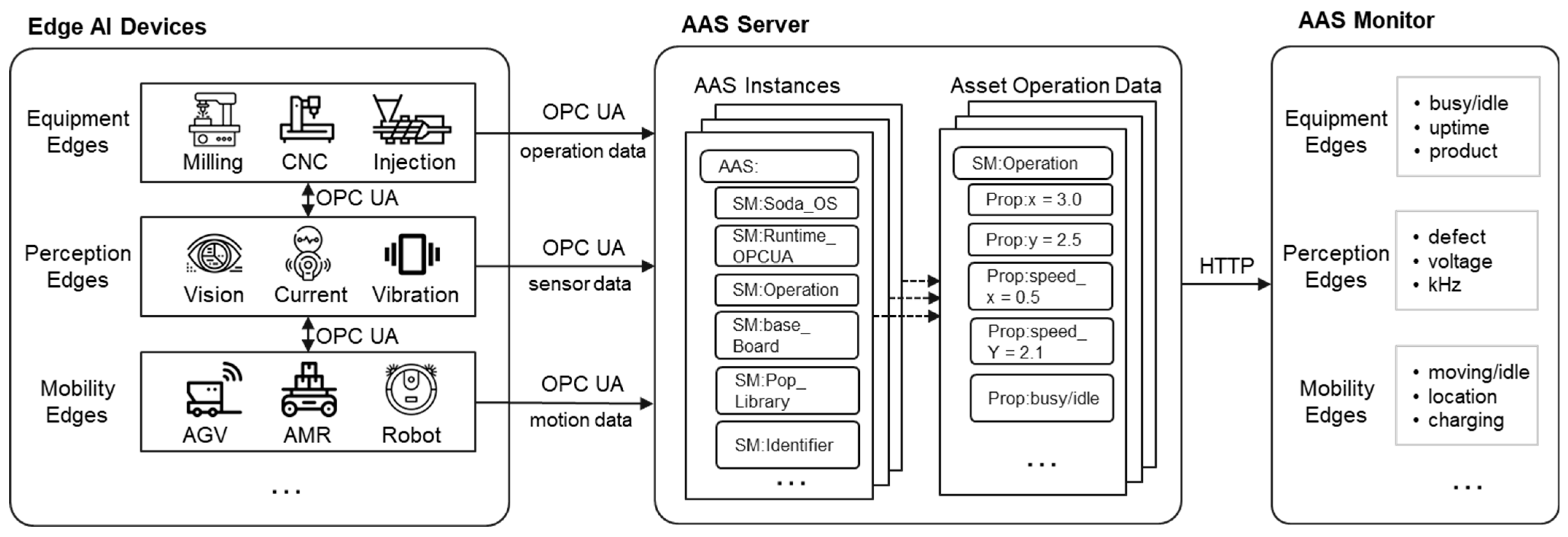
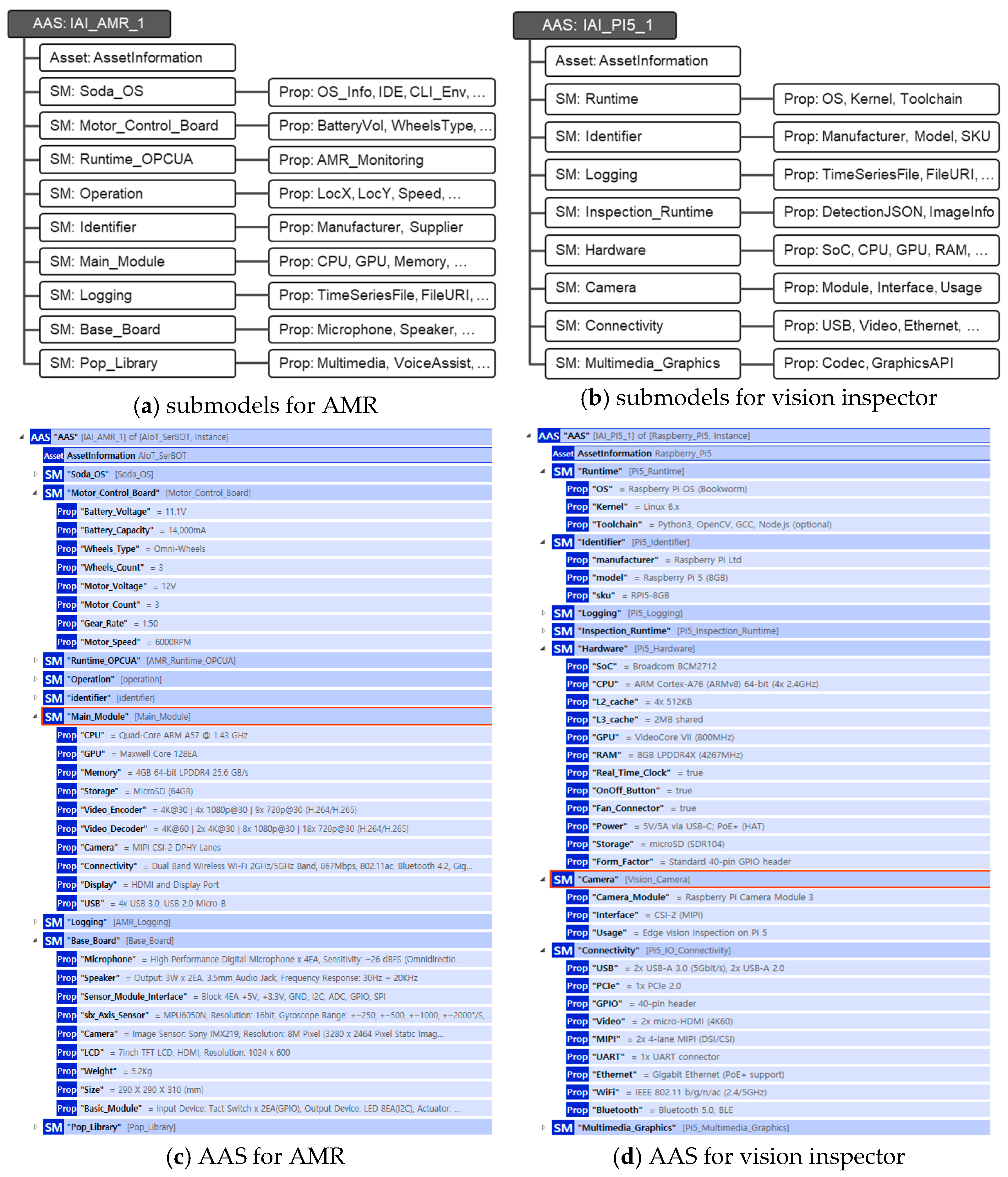
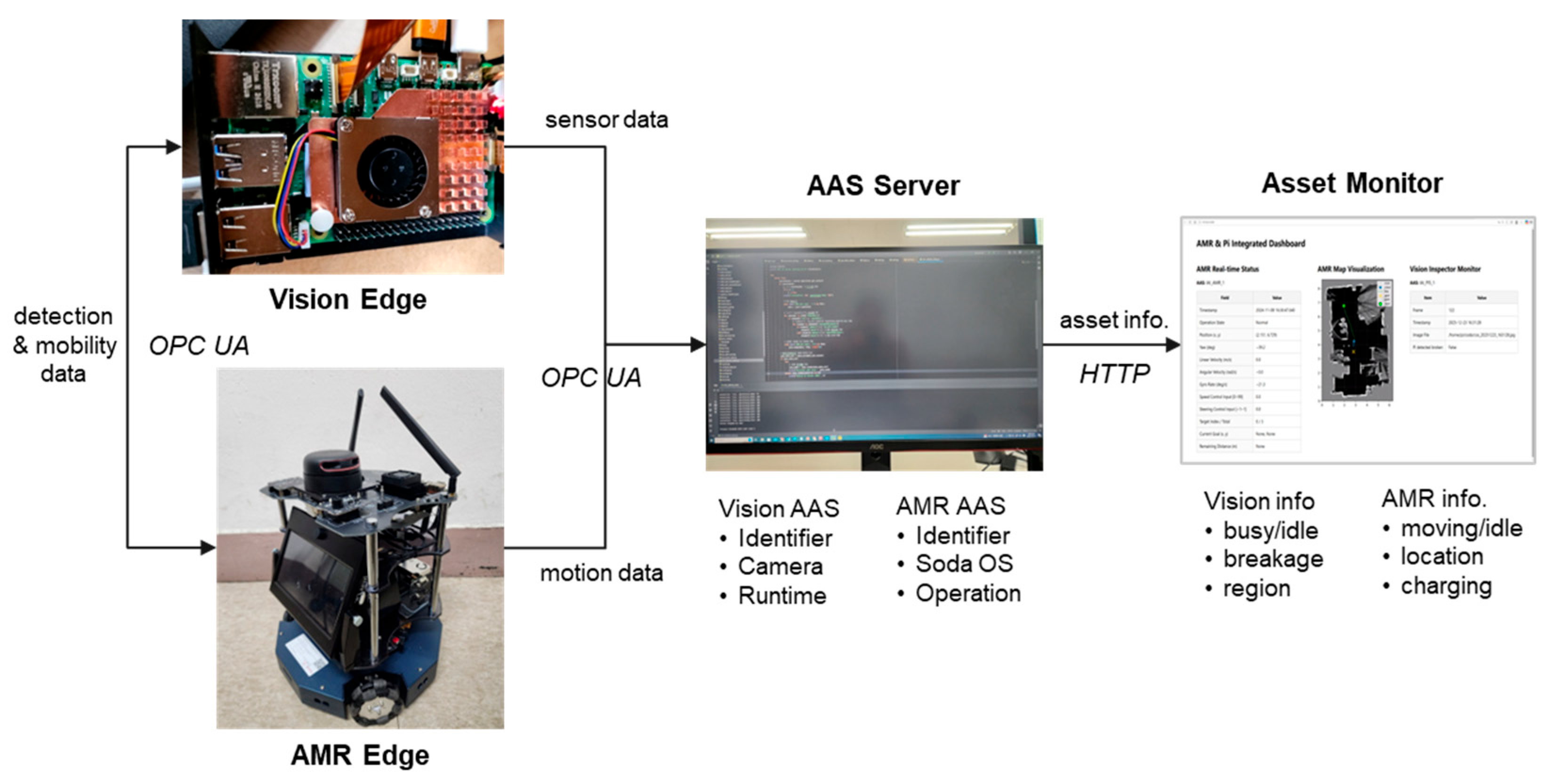
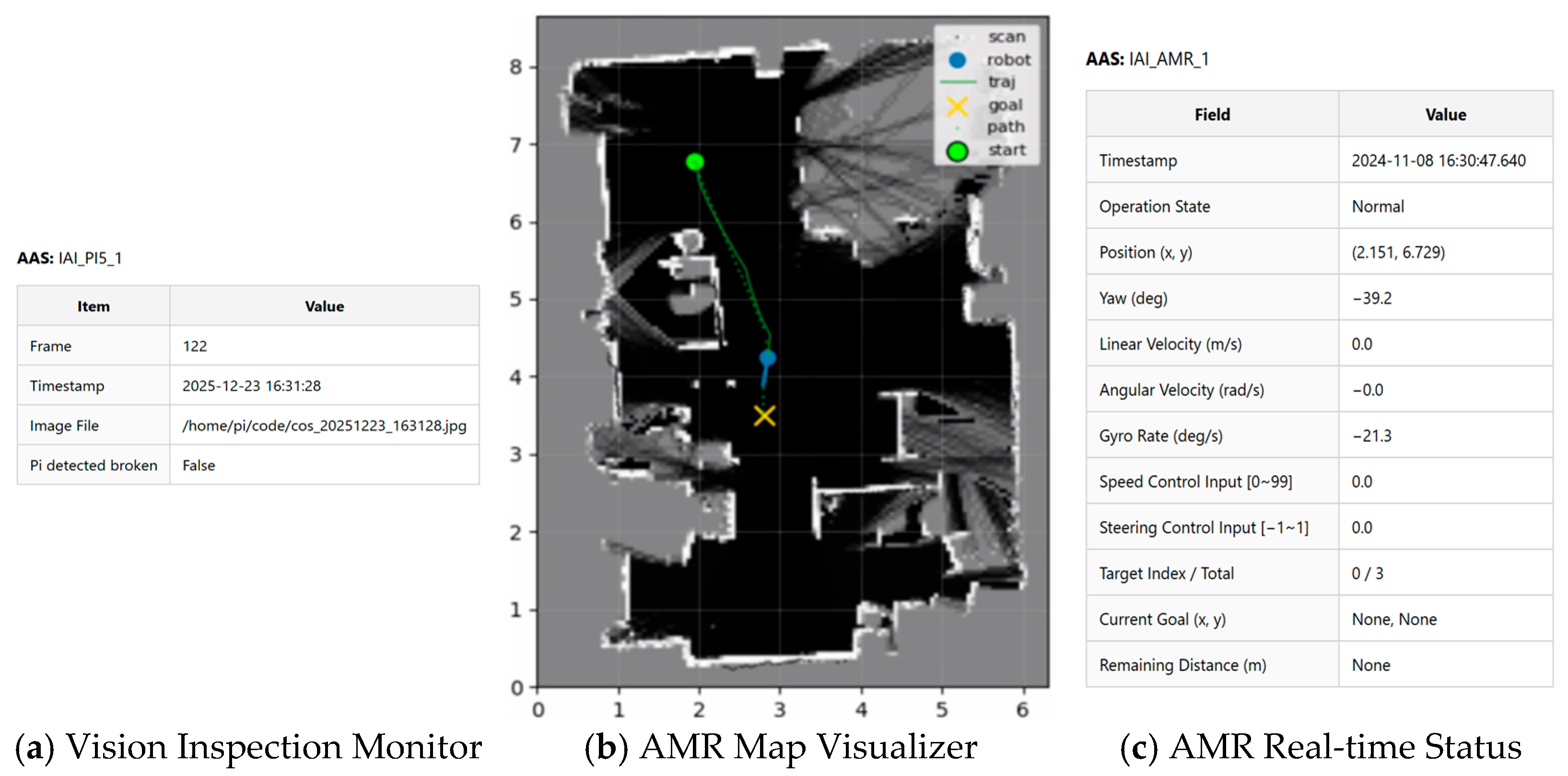
The manufacturing industry is rapidly moving toward Artificial Intelligence (AI)-driven autonomous manufacturing, which requires distributed Edge AI architectures in which intelligent devices collaborate in real time. However, the practical deployment of Edge AI is hindered by the lack of standardized, asset-centric integration across heterogeneous devices. This study presents an Asset Administration Shell (AAS)-based Edge AI framework that enables interoperable and coordinated operation among Edge devices through standardized digital asset representations and OPC UA-based communication. In the proposed framework, each Edge device is represented as an AAS-compliant digital assets, enabling both direct inter-edge coordination and centralized asset management. To demonstrate the feasibility of the framework, a functional prototype was implemented consisting of a Raspberry Pi-based Vision Inspector, an autonomous mobile robot (AMR), and an AAS-based monitoring server. Vision-based fault detection is performed directly at the Edge and transmitted in real time to the AMR and the AAS Server, enabling event-driven autonomous response and system-level monitoring. Experimental results show that real-time fault detection and response can be achieved on resource-constrained edge devices while maintaining standardized, asset-level information exchange and interoperability across heterogeneous assets. These results indicate that the AAS-based Edge AI framework provides a practical and scalable foundation for asset-centric autonomous manufacturing systems requiring both real-time operational intelligence and systematic asset management.
Keywords: Edge AI; asset administration shell (AAS); OPC UA; autonomous manufacturing Edge AI; asset administration shell (AAS); OPC UA; autonomous manufacturing