2. Materials and Methods
This study employed a qualitative–quantitative approach with a central quasi-experimental method complemented by a focus group interview.
Although only 44 participants were available in the real-life classroom, the study’s RQs span multiple interrelated constructs (TEL knowledge, capabilities, critical thinking and decision-making, attitudes towards DTE, systems thinking dimensions, and five plus one facets of engagement) and ask not only “whether” the experiment works but also “how” and “for whom.” Addressing that conceptual breadth with a single factor pre-/post-test would leave important relationships unexamined and inflate the risk of confounders. A richer methodological strategy is therefore warranted for five main reasons. (1) Maximising information per participant. With small samples, power is gained not by adding people (which is impossible) but by extracting more data points from each one [
101,
102]. Repeated-measures designs, multi-subscale instruments, and within-subject gain scores all multiply the effective
n and can outperform larger between-group designs in efficiency, provided assumptions are checked. (2) Protecting internal validity. Parallel control groups, pre-test covariates, and random (or at least intact-class) assignment help rule out maturation, history, and selection effects that disproportionately threaten small samples, where a single outlier can skew the results. Rigorous design elements—e.g., balance checks, covariate-adjusted ANCOVA, or permutation tests—mitigate those threats. (3) Reducing Type I error across many outcomes. Because the objectives cover several dependent variables, multivariate techniques (e.g., MANOVA or structural-equation models fitted with robust/bootstrapped estimators) keep family-wise error in check and allow latent constructs to be modelled explicitly instead of treating every sub-score as independent. (4) Triangulating quantitative effects with validity evidence. Mixed-methods elements, such as cognitive-interview probes to refine items or open-ended reflections to illuminate mechanisms, add construct and consequential validity without inflating the sample-size demands; qualitative strands can be analysed thematically and then linked back to quantitative patterns. (5) Estimating effect sizes and practical significance. Small samples rarely achieve conventional significance under simple tests; however, journals now emphasise effect sizes and confidence/credibility intervals. Modern methods (bias-corrected bootstrap CIs, Bayesian posterior distributions) generate stable estimates even when
df are low, helping readers to judge the educational relevance [
101].
To offset the statistical constraints of a 44-student experiment and to illuminate the mechanisms behind any observed effects, we embedded a post-course focus group interview as a qualitative complement to the quantitative data. Methodologically, the focus group (a) triangulates the experiment’s impact by probing participants’ lived experiences of systems thinking tasks, ICT tools, and classroom dynamics, thereby enhancing the construct validity; (b) contextualises quantitative patterns, helping to explain, for example, why particular dimensions of TEL or student engagement improved more than others; (c) surfaces unanticipated outcomes and moderating factors, such as prior digital skill, collaborative norms, or perceived assessment pressure, that small-sample statistics alone might miss; and (d) generates design-oriented insights to refine the learning model for broader implementation. In short, integrating a focus group strand transforms the study from a narrow efficacy test into a richer mixed-methods inquiry that both strengthens the internal validity and broadens the practical significance of the findings despite the limited
n [
101].
A quasi-experimental design was selected because the study took place in an authentic higher education environment, where students were organised into pre-existing groups and full randomisation was not feasible due to complex scheduling constraints, such as lecturer timetables, classroom availability, the number of groups across different subjects, the diversity of subjects (mandatory or elective), and fixed collaboration arrangements with partner kindergartens. In real educational contexts, such organisational and ethical constraints make true experimental control and complete randomisation unattainable; therefore, quasi-experimental designs are considered an appropriate and widely accepted alternative [
101,
103].
Random assignments were applied only at the group level, allocating intact groups to either the experimental or control condition. To strengthen internal validity, we incorporated pre-test measurements, statistical controls for baseline differences (ANCOVA/MANCOVA), a consistent weekly course structure, and uniform assignment formats throughout the semester.
As the study also included a post-intervention focus group, the design followed an embedded mixed-methods approach, which is recommended for enhancing explanatory depth in intervention research conducted in authentic settings [
101].
2.1. Participants
For effective experimental teaching, learning, and convenience [
101], a convenience sampling method was used in this study. Because the 44 participants originated from a single intact cohort that was readily available to the researchers, the sampling frame represents a non-probability sample of accessible students. Within that convenience sample, each student was then allocated to conditions by simple random assignment, yielding one experimental group (
n = 22) and one control group (
n = 22) of equal size. Thus, the study employed a convenience sample with simple random assignment, giving the design the internal-validity advantages of a randomised controlled trial, while acknowledging that the external validity is limited to cohorts similar to the one sampled. The sample is demographically homogeneous, as all participants were second-year students in the preschool education programme at the University of Ljubljana, Slovenia, in academic year 2024/2025. The students in both groups did not differ in age, gender, or programme-related characteristics. They were 20–21 years old and predominately females (
n = 44, 100%), which is typical for this teacher education programme. Most students in this programme had also completed Vocational Secondary School for Early Childhood Education, so both groups had similar prior educational backgrounds, particularly regarding DTE content. No significant demographic differences were expected or observed between the two groups.
In addition, one of the authors was a conductor of laboratory work, which serves as a practice-based, exploratory, and reflective learning environment, where pre-service preschool teachers engage with subject-specific content through hands-on activities. In the context of DTE education, student teachers in laboratory settings may (1) explore DTE concepts (e.g., energy transfer, mechanical systems, or digital fabrication) through guided experiments or problem-solving tasks; (2) develop and test instructional materials, such as lesson plans or teaching aids involving tools like robotics kits, 3D printers, or simulations; (3) apply pedagogical strategies (e.g., inquiry-based learning, design-based learning, or systems thinking) in controlled settings that simulate classroom teaching; (4) integrate digital technologies and ICT tools into instructional design and student assessment, fostering both technological and pedagogical content knowledge (TPACK); and (5) reflect on their teaching practice, often through peer feedback or mentoring sessions.
Laboratory work thus bridges theory and practice, helping student teachers to internalise not just how to teach but also what and why, especially when teaching complex STEM- or technology-related topics.
2.2. Course Format
The study took the form of an experiment and was designed to expose students in the Technical education course [
104] to different teaching and learning methods, particularly during laboratory work. The lectures were the same for all participants, while the approaches used during the practical sessions and the integrated kindergarten performances varied between the groups.
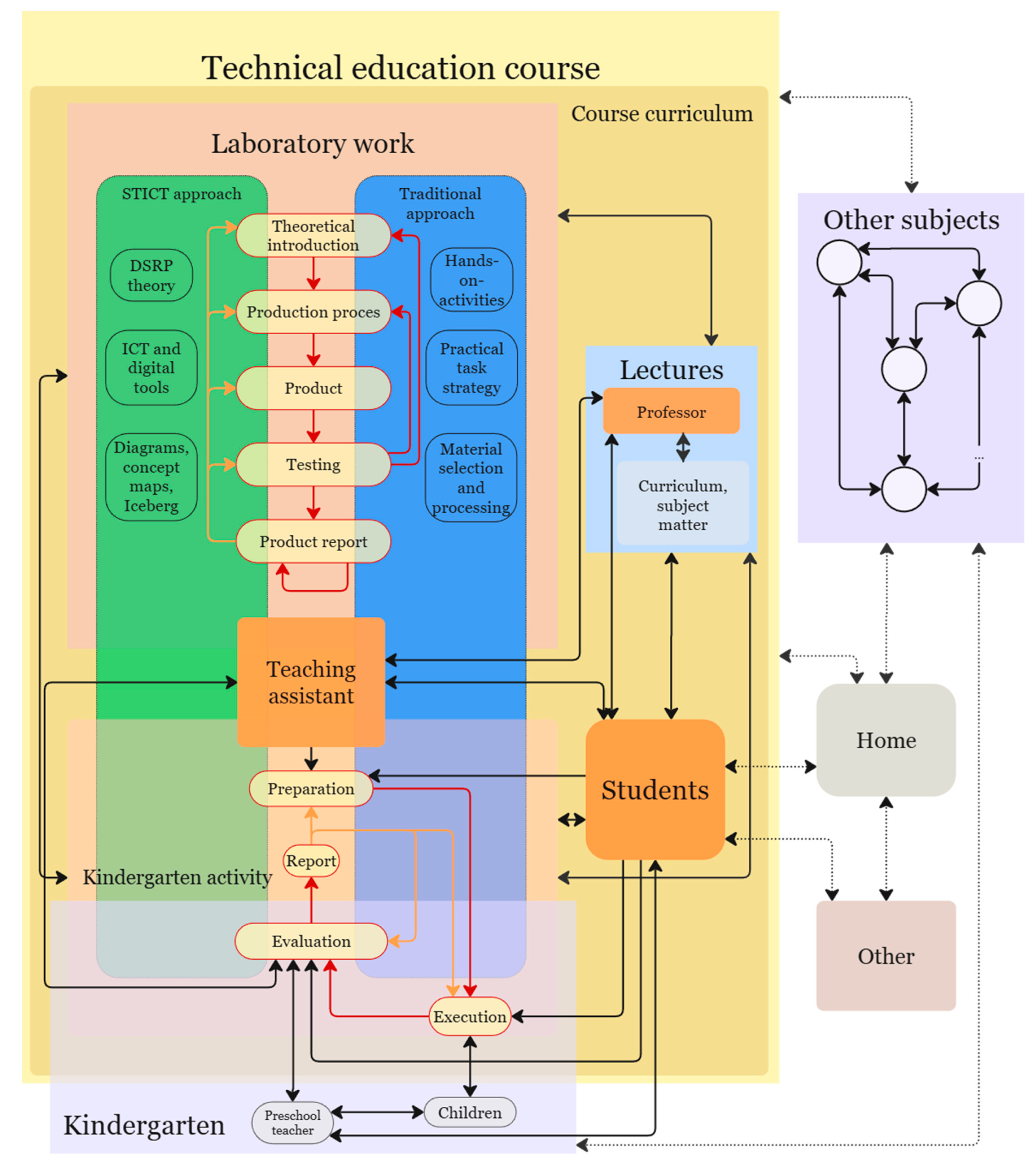
The delivery of the course was based on a system of interactions, as illustrated in
Figure 2. The students were involved in a multilevel work structure that combined laboratory work, lectures, work with children in kindergarten, reporting, and evaluation. The experimental group worked within the STICT approach: the products suitable for use in preschool and their development that emerged during the activities were guided by DSRP theory [
39]. In some exercises, the students also used concept maps, phase diagrams, and the iceberg model to structure their thinking. In addition, the experimental group received digital and ICT support through using laptops to work with different types of software for data processing and visualisation, simulations, technical drawing, collaborative environments, 3D modelling, and 3D printing. Robot kits and VR headsets were also integrated into the learning process. The control group followed a more linear traditional approach through standard production stages: classic teacher-centred teaching with product creation based on direct task execution and technical specifications. Both teaching approaches focussed on hands-on activities and the choice of materials and processes geared toward making products that would be part of preschool education [
9].
Figure 2 illustrates the feedback loops, the lecturers’ delivery of content, and the students’ reflection through product reports and evaluations, emphasising the interconnected roles of all stakeholders in the ecosystem of the course. The collaboration with the kindergarten, where the students implemented and evaluated their products in collaboration with the preschool teachers, is also shown. The inclusion of different levels (students, assistants, professors, preschool teachers, children, other educators, etc.) allows for a comprehensive understanding of the educational system and the impact of the approach on the quality of learning.
Figure 2 was created by authors using Miro software (Education plan, web-based version) [
105].
It is important to realise that systems thinking to DTE issues cannot be completely ruled out. The nature of the work (e.g., the manufacture of products) requires knowledge of the elements, their role, and their interrelationships, as well as knowledge and differentiation of materials, processes, and so on. In the testing phase, it is natural to adjust and retest based on the feedback on the function and usefulness of the product. In this context, we clarify that we are aware all students were exposed to systems thinking to some extent, but in the experimental group, systems thinking was emphasised and supported solely through the use of advanced ICT and digital tools. The key differences between STICT and traditional approach is also presented in
Table 4.
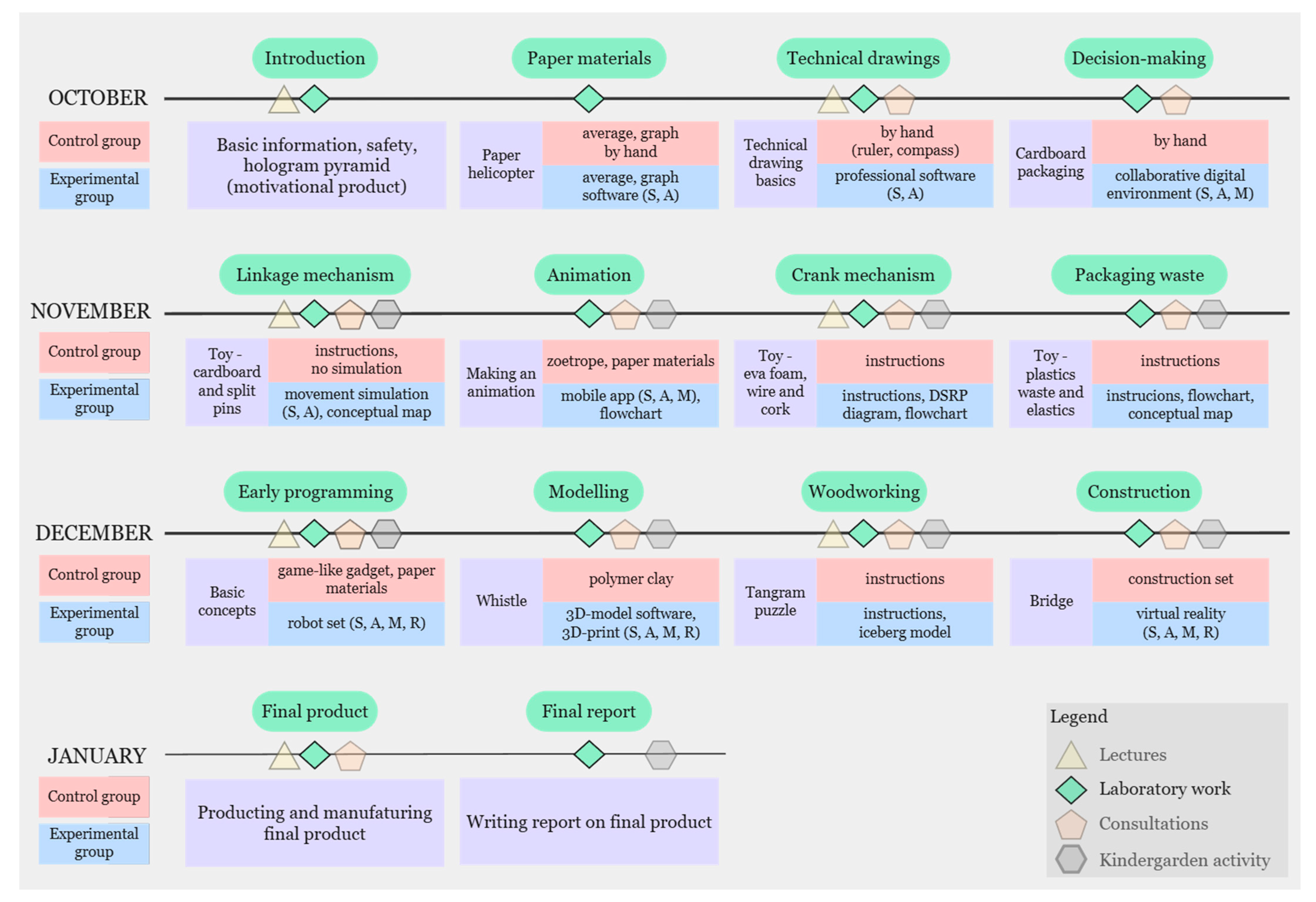
Figure 3 provides a chronological overview of the delivery of the Technical education course [
104] over one semester (October–January) in the 2024/25 academic year, comparing the activities and content taught by the control group (traditional approach) and the experimental group (STICT approach). Each content area is shown above, and the specific tasks and resources for students are listed below. The form coding distinguishes the type of learning activity in a given week (lectures, laboratory work, consultations, and kindergarten activities). In the experimental group, activities were upgraded in line with DSRP theory and included the use of ICT and digital tools, categorised according to the SAMR (Substitution, Augmentation, Modification, Redefinition) model [
106]. SAMR stages indicate the integration of ICT and digital tools and pedagogical redesign.
Figure 3 illustrates the parallelism of the activities over time and allows for a direct comparison of the pedagogical depth and complexity.
Figure 3 was created by the authors using Miro software (Education plan, web-based version) [
105].
The experiment lasted one semester. The course comprised the following contact hours: 15 lecture sessions (45 min each), 15 laboratory sessions (90 min each), and an integrated kindergarten performance consisting of a preparation and counselling session (45 min), a performance session (60 min), and a reflection session (30 min). The STICT approach was implemented throughout the semester with a clear course plan defining the content focus, learning objectives, and intended use of digital tools for each lesson. Laboratory activities followed predefined task sequences and teaching templates, ensuring that basic procedures and expected outcomes remained consistent across lessons. Although complete control of instructor influence in authentic settings is not possible [
107], instructor bias was reduced through pedagogical consistency: shared lectures for both groups, the same course providers (lectures, laboratory exercises, kindergarten activity), scheduled exercises for the entire semester to minimise week-to-week variability, structured laboratory assignments (specified goals, procedures, tasks), a unified learning content focus (products for kindergarten children), identical reflection and evaluation of products, the same time frame for exercises, and the same faculty space.
2.3. Data Collection Process
The research proposal was reviewed and approved by the Ethics Commission of the University of Ljubljana (approval number 42/2024) before data collection. The study followed a pre-test/post-test quasi-experimental design supplemented by a post-experiment focus group interview. Quantitative instruments were administered at both time points to chart the changes in (a) TEL, (b) attitudes towards DTE, and (c) self-assessed systems thinking; students’ engagement with the course was measured post-test only. All instruments were administered in person using the paper-and-pencil method, under the supervision of a course instructor. This controlled in situ administration ensured a high level of standardisation and contributed to an exceptionally high response rate. Completion of the pre-test required approximately 30–40 min, while the post-test required 35–45 min.
One week after the experiment, a focus group comprising six students (three per each group) was convened to enrich and contextualise the statistical results. The participants were chosen by stratified purposeful sampling: within each group, one high-, one average-, and one low-achiever (based on combined grades for the post-course artefact and its written report) were invited, ensuring a breadth of viewpoints on the learning experience. Each focus group interview lasted 60 min. This mixed-methods approach maximised internal validity, while providing nuanced insights into how the STICT approach influenced literacy, attitudes, systems thinking, and classroom engagement.
2.4. Instruments and Validation Procedures
Because the study employed a multi-method design, measurement validation was completed at the pre-test stage. Establishing reliability, factorial structure, and measurement invariance before any instructional exposure ensures that subsequent changes detected by the model can be attributed to the experiment rather than to shifts in the psychometric properties of the scales themselves. Given the modest sample size (
n = 44), we limited the use of SmartPLS [
108] to measurement validation only, extracting the composite reliability, average variance extracted (AVE), and the Fornell–Larcker criteria were used to evaluate convergent and discriminant validity; no structural paths were estimated. This strategy balances the advantages of PLS-SEM for small samples—its distribution-free estimation of reflective indicators—with the risk of unstable path coefficients under such conditions. By validating the scales pre-experiment and refraining from causal modelling, we ensured that subsequent analyses (tetrachoric exploratory factor analysis (EFA) and group comparisons) rested on psychometrically sound constructs without over-interpreting any relationships that the sample was under-powered to detect. The approach therefore safeguards internal validity while acknowledging the study’s statistical limitations.
2.4.1. Technological and Engineering Literacy Test
The TEL test, used in this study, was developed based on Avsec and Jamšek’s [
109] method for measuring technological literacy. Their original instrument consisted of 35 items and covered all three TEL dimensions: knowledge, capabilities, and critical thinking and decision-making [
12]. For the purpose of this study, we designed three test forms, which were validated to provide evidence on the content validity (by three experts from the field) and construct and criterion validity of what was used in the pilot study before the experiment started. A 25-item test was piloted in three forms, where each form was tested in a classroom-sized sample of students (25–30). Students who tested the TEL test forms were selected from the same study programme but from year 3 (already finished with the Technical education course) and from year 1, who had not seen the subject yet. Each item consisted of a question or statement followed by five responses each, where the most correct response was graded as 1, while distractors were grade as 0. Based on McDonald’s ω reliability information and the corrected item–total correlation coefficient, the most reliable test form with the largest item discrimination power was chosen, while five items were excluded from the test, as suggested by Cohen and Swerdlik [
110]. Thus, the maximum achievable test score was 20 points.
The TEL test includes items targeting different levels, namely knowledge, capabilities, and critical thinking and decision-making. It is important to recognise that these dimensions are interwoven. The test items were distributed across different core disciplines and contexts, according to the STEL [
12]. Examples of the test items can be found in
Appendix A.
The final 20-item version of the test was administered as both a pre-test and post-test. Following data collection, the responses were analysed using item response theory (IRT) analysis to assess the validity of the measurement scales, evaluate the plausibility of the IRT models that predict participants responses, and examine the dimensionality in the TEL using Principal Component Analysis (PCA) on the standardised residuals. Modelling and item analysis were conducted using the jMetrik package v4.1.1 [
111] as free and open software (
https://itemanalysis.com/jmetrik-download/, accessed on 30 June 2025). PCA revealed three factors with eigenvalues greater than 2 (one greater than 3), which pointed toward multidimensionality in the TEL structure [
112,
113]; see
Table 5. Moreover, checking the fit statistics of the weighted mean square value and unweighted mean square value showed that all values fell between 0.8 and 1.2 for multiple choice questions, indicating that the measurement and items functioned well [
113].
Since the PCA pointed toward the multidimensionality of the TEL data, we applied a three-parametric logistic model with the Benjamini and Hochberg [
114] correction to control the false discovery rate in the context of multiple hypothesis testing. This ensures a more reliable identification of potential item misfit while preserving the statistical power and reducing the likelihood of spurious rejections due to random variation [
115]. Based on the adjusted
p-values obtained through the Benjamini–Hochberg false discovery rate procedure, no items showed a statistically significant misfit under the three-parametric logistic model (the adjusted critical threshold was
q = 0.0025). As no substantial misfit was detected following the correction, all 20 items were retained for further analysis, and their scores were summed to compute the total TEL score.
Since the sample size was rather small (
n = 44), we used multi-stage robust methodology to further verify the items’ and dimensions’ structure. First, to evaluate the internal structure of the 20 dichotomous items, we conducted the EFA based on a tetrachoric correlation matrix in Jamovi (Version 2.6 [
116], (
https://www.jamovi.org, accessed on 16 July 2025) with Seol matrix plugin [
117]. Tetrachoric correlations are recommended for binary data, because they estimate the association between underlying continuous latent variables [
118]. Principal axis factoring was chosen because it does not assume multivariate normality. The number of factors was determined using parallel analysis of the polychoric matrix and inspection of the scree plot. Given the theoretical overlap among constructs, we applied an oblique (Oblimin) rotation. Items were retained if their primary loading was ≥0.35 and exceeded any secondary loading by ≥0.15 [
119]. Finally, we calculated McDonald’s omega reliability coefficients to determine whether each dimension met the required threshold of 0.70 [
120]. The overall adequacy of the data was examined using the Kaiser–Meyer–Olkin (KMO) measure of sampling adequacy = 0.63 (mediocre) with Bartlett’s test of sphericity, χ
2 (171) = 312,
p < 0.001.
Factor 1 (12 items, McDonald’s ω = 0.79) explained 15.7% of the common variance, Factor 2 (four items, McDonald’s ω = 0.82) 13.0%, and Factor 3 (four items, McDonald’s ω = 0.77) 11.7% (total = 40.4%). All items meet the loading criterion, and no one was removed from the subsequent analyses.
The three-factor solution aligned with the theoretical domains of TEL as knowledge, capabilities, and critical thinking and decision-making. The reliability estimates were acceptable given the small sample (n = 44). Nevertheless, future studies with larger samples should confirm this structure using confirmatory factor analysis or multidimensional IRT.
2.4.2. Students Attitudes Towards Design, Technology, and Engineering
Students’ attitudes towards DTE were assessed with a 27-item questionnaire adapted from Ardies et al. [
26]. Each item was scored on a 5-point Likert scale ranging from 0 (never) to 4 (always). Following the adaptation procedure recommended by Avsec and Jagiełło-Kowalczyk [
29], two content experts reviewed each item for linguistic clarity and contextual relevance. The final instrument comprised six theoretically grounded attitudes dimensions; see
Table 6.
An example of an attitudes towards a DTE item is “I think machines are boring.”
Earlier validation work [
29] showed robust convergent and discriminant validity for all six factors of the attitudes towards DTE, a pattern replicated in the current study. As shown in
Table 7, all constructs of the student attitudes towards DTE met the criteria for convergent validity, consistent with the recommendations of Cheung et al. [
121].
After estimating the measurement model in SmartPLS [
108] (
https://www.smartpls.com, accessed on 11 July 2025), we evaluated the convergent validity using the criteria proposed by Cheung et al. [
121]. As reported in
Table 8, all indicators showed outer loadings above the preferred threshold of 0.70 (with 0.60 as the minimum acceptable value). Composite reliability (ρ
C), Cronbach’s α, and Dijkstra–Henseler’s ρ
A for every construct fell within the recommended range of 0.70 to 0.95 [
122], while the AVE for each latent variable exceeded the 0.50 benchmark. Collectively, these statistics provided strong evidence of convergent validity for the measurement model.
We next evaluated the discriminant validity of the survey constructs. As shown in
Table 8, all six constructs within the student attitudes towards DTE model met the established criteria. In particular, the Fornell–Larcker criterion was satisfied, with the square root of each construct’s AVE exceeding its correlations with all other constructs [
123].
In addition, the cross-loading analysis confirmed that each indicator demonstrated its highest loading on the intended construct, providing additional support for discriminant validity within the measurement model. Next, the heterotrait–monotrait (HTMT) ratios of inter-construct correlations ranged from 0.13 to 0.69, which is well below the conservative threshold of 0.85 suggested by Henseler et al. [
124].
2.4.3. Students Systems Thinking, Strategic Thinking, and Reliance on Authority
In the technology-enhanced Technical education course for pre-service preschool teachers, the development of systems thinking, strategic thinking, and reliance on authority are mutually reinforcing facets of professional competence.
Systems thinking is the capacity to recognise components of a complex system, trace feedback loops, and anticipate emergent behaviours over time. In DTE courses that integrate ICT and digital tools (e.g., learning management systems, simulation software, data dashboards), systems thinking enables pre-service preschool teachers to achieve the following:
Map how content, pedagogy, and technology interrelate (as in the TPACK framework), such that instructional goals, tool affordances, and learner needs align coherently [
125].
Anticipate unintended consequences, for instance, how the introduction of an automated grading tool may affect student motivation or data privacy practices [
126].
Design iterative system-level interventions (e.g., blended learning sequences) that adapt as stakeholder needs evolve [
127].
Strategic thinking refers to setting long-range goals, formulating plans to achieve them, monitoring progress, and adapting in response to feedback. Within courses integrating ICT and digital tools, strategic thinking empowers pre-service preschool teachers to achieve the following:
Reliance on authority describes the tendency to defer to expert models, institutional guidelines, or disciplinary standards when validating knowledge or choosing teaching practices. In the early stages of teacher preparation, such reliance can achieve the following:
Provide clear scaffolds (e.g., exemplars of best-practice lesson plans, privacy, and accessibility checklists) that reduce the cognitive load in navigating complex ed-tech environments [
125].
Encourage adherence to evidence-based standards (e.g., ITEEA’s STEL [
12]) and legal mandates (e.g., GDPR) that novices might otherwise overlook. However, if over-emphasised, this can inhibit the critical appraisal of tools in terms of pedagogical fit or creative adaptability to local classroom contexts [
68].
When we created an instrument to assess the aforementioned measures, we considered the following:
All measures are complementary, not siloed—systems thinking provides the map, strategic thinking informs the journey, and calibrated reliance on authority helps students to decide which guidebooks to trust along the way.
Digital affordances amplify both the positives and the pitfalls—well-designed simulations and analytics can accelerate learning, but they also make epistemic authority cues more salient; thus, conscious pedagogical design is required.
A balanced course purposefully cycles learners through moments of guided authority and open inquiry, steadily shifting the locus of control from external experts to informed student strategists who see the whole system.
By making these relationships explicit, DTE education integrating ICT and digital tools can cultivate pre-service preschool teachers who think systemically, plan strategically, and question authority when appropriate—a profile increasingly demanded in service, industry, and society contexts.
Considering the aforementioned points, we adopted the scales originally developed by Moore et al. [
40]. These scales of systems thinking were later tested by Dolansky et al. [
45] and Avsec et al. [
131], while Kurent and Avsec [
129] tested all scales and demonstrated adequate convergent and discriminant validity, as along with moderate reliability.
The EFA employing principal axis factoring corroborated a three-factor solution for the systems thinking scale (17 items in total). The extracted dimensions were (i) interrelations and feedback (ST1; five items), (ii) diversity of causes and variations (ST2; four items), and (iii) sequence and causality of connections (ST3; eight items). To capture students’ broader study improvement orientations, we complemented this instrument with strategic approaches to study and change the scale adapted from Moore et al. [
40], yielding two conceptually distinct factors: reliance on authority (RA; four items) and strategic thinking (STR; four items). The EFA results support a clear and theoretically coherent latent structure for the newly developed instrument. The sampling adequacy was mediocre (KMO = 0.68) and Bartlett’s test of sphericity was highly significant (
p < 0.001), indicating that the correlation matrix was suitable for factor analysis. Principal axis factoring, followed by oblique rotation to allow for construct inter-correlations, revealed a three-factor solution for the systems thinking items and two additional factors for the strategic approach items, in line with Velicer’s MAP criterion [
132].
All items employed a six-point response format ranging from 0 (never) to 5 (always), framed by the stem “
When I want to make an improvement…,” allowing participants to report the frequency with which they employ each systems thinking or strategic approach behaviour. The measures and typical focus of the items are detailed in
Table 9.
An illustrative systems thinking item is “I consider the cause and effect that is occurring in a situation.”
For relevance of authority, an example item is “I think the leaders of the organization have the best ideas.”
Internal consistency coefficients (Cronbach’s α) ranged from 0.75 (diversity of causes and variations) to 0.84 (sequence and causality of connections), indicating acceptable reliability [
122]; see
Table 10.
Table 10 demonstrates that every indicator attained an outer loading above the recommended threshold of 0.60, attesting to adequate item reliability. Composite reliability (ρ
C), Cronbach’s α, and Dijkstra–Henseler’s ρ
A for each construct all fell within the accepted range of 0.70–0.95, indicating strong internal consistency. In addition, the AVE for every latent variable exceeded 0.50, suggesting that each construct explained for more than half of the variance in its indicators [
121]. Collectively, these metrics provide compelling evidence for the convergent validity of the measurement model [
121].
Discriminant validity was assessed in the next step. As shown in
Table 11, all five constructs within student systems thinking and strategic orientation demonstrated adequate discriminant validity. Specifically, the Fornell–Larcker criterion was satisfied, with each construct’s square root AVE exceeding its correlations with all other constructs [
123]. Additionally, the cross-loading analysis confirmed that each indicator demonstrated its highest loading on the intended construct, providing further evidence of discriminant validity across the measurement model. Next, the HTMT ratios of inter-construct correlations ranged from 0.15 to 0.66, which is well below the conservative 0.85 benchmark proposed by Henseler et al. [
124].
The observed pattern of factor loadings/inter-factor correlations validated the multidimensional measurement model, thus confirming that students’ systems thinking is not monolithic; in particular, sensitivity to feedback, breadth of causal search, and temporal–causal sequencing constitute separable competences. Strategic approaches, in turn, bifurcate into adaptive planning versus deference to authority, suggesting qualitatively different epistemic orientations that may differentially predict learning outcomes. This validated structure offers a robust foundation for investigating how nuanced facets of systems and strategic thinking jointly influence technology-enhanced learning behaviours and performance in a manner supported by ICT and digital tools [
129].
2.4.4. Students’ Engagement with the Technical Education Course
Engagement across cognitive, behavioural, social, emotional, aesthetic, and ICT dimensions is critical in Technical education courses for pre-service preschool teachers, as it underpins both the acquisition of DTE content and the development of dispositions needed to integrate and model technology-rich instruction [
68].
Cognitive engagement enables deeper understanding of engineering principles and system-level reasoning, enabling pre-service preschool teachers to analyse complex artefacts and anticipate design trade-offs [
133,
134]. Behavioural engagement through hands-on, iterative activities fosters mastery of technical tools and persistence in problem-solving, which are essential for engineering literacy [
134,
135]. Social engagement in collaborative projects cultivates communication, peer feedback skills, and the teamwork mindset characteristic of real-world engineering practice [
133,
136]. Emotional engagement, including interest, enjoyment, and resilience in the face of technical challenges, sustains motivation during open-ended design tasks and supports long-term commitment to learning new technologies [
135,
137].
Aesthetic engagement, stimulated by well-designed, immersive learning environments (e.g., VR simulations), nurtures creativity and user-centred thinking—key facets of responsible technological design [
135]. ICT engagement, made evident through the active use and critical evaluation of digital platforms for collaboration and feedback, builds pre-service teachers’ TPACK and readies them to scaffold authentic learning experiences integrating ICT and digital tools for their future students [
136,
138].
Pre-service teachers in technology-rich Technical education courses require not only content mastery, but also multifaceted engagement, cognitive, behavioural, emotional, social, aesthetic, and ICT-specific, to develop the dispositions and skills needed for 21st-century classrooms. Adopting and integrating three validated instruments—namely, Naibert and Barbera’s Activity Engagement Survey (AcES) [
139] for cognitive, behavioural, emotional, and social engagement; Diessner et al.’s Engagement with Beauty Scale [
140] for aesthetic engagement; and Kunina-Habenicht and Goldhammer’s [
141] PISA-derived ICT Engagement scales—provides a comprehensive measurement framework.
Naibert and Barbera’s AcES explicitly measures four dimensions of engagement at the activity level—cognitive (reflecting effort to connect new knowledge with prior understanding and to learn from mistakes), behavioural (indicating focus, persistence, and active participation during activities), emotional (capturing enjoyment, interest, or boredom related to learning), and social (showing collaboration, sharing, and building on others’ ideas). It has strong internal consistency (ω > 0.80) and a stable bifactor structure, as demonstrated across multiple STEM settings [
139].
Problem-based and flipped-classroom studies show that, when pre-service teachers are highly engaged along these four dimensions, they are more likely to adopt active pedagogy themselves (e.g., inquiry-, design-, and systems-based learning) [
137]. Moreover, longitudinal evidence indicates that positive teacher–student and peer relationships in active learning courses sustain emotional and behavioural engagement over time [
142]. Diessner et al.’s Engagement with Beauty Scale [
140] measures emotional, cognitive, physiological, and transcendental responses to natural, artistic, and moral beauty with demonstrated reliability (Cronbach α ≈ 0.9) and factor validity. It can be expected that, in DTE courses, aesthetic sensitivity (e.g., user interface elegance, visual data representation) enhances creativity and human-centred design competencies [
135]. Aesthetic engagement might correlate with moral elevation and prosocial motivation, supporting ethical technology use and responsible engineering literacy [
143].
Kunina-Habenicht and Goldhammer’s PISA-2015 ICT Engagement scales assess perceived ICT competence and autonomy within a self-determination framework, with strong factorial validity demonstrated across national samples (CFI > 0.93; RMSEA < 0.06) [
136,
141]. Moreover, autonomy support and competence satisfaction in ICT use are foundational to intrinsic motivation and digital self-efficacy [
137,
143], while in online and blended teacher-education contexts, higher perceived ICT autonomy predicts innovative pedagogical integration and sustained technology use [
136,
137].
By adopting these complementary measures, pre-service teacher programmes can more accurately monitor and foster the broad range of engagements necessary for high-quality DTE education integrating ICT and digital tools. Thus, we prepared an instrument for measurement of the aforementioned scales, with the item distribution and relevant typical areas of focus detailed in
Table 12.
An example of a cognitive engagement item is “I stayed focused during today’s activity.”
An example of an ICT engagement item is “I feel comfortable using digital devices that I am less familiar with.”
To establish the psychometric soundness of the engagement battery, we first examined its convergent validity by verifying that each construct’s indicators loaded strongly on their intended latent factor, and that the composite reliability, Cronbach’s α, ρ
A, ρ
C, and AVE values all surpassed accepted thresholds (ρ ≥ 0.70; AVE ≥ 0.50); see
Table 13.
We then assessed the discriminant validity through Fornell–Larcker and HTMT criteria, which indicated that every construct shared more variance with its own indicators than with any other construct and that all HTMT ratios fell below the 0.85 cut-off [
124] (
Table 14). Together, these results demonstrate that the six engagement dimensions—cognitive, behavioural, emotional, social, aesthetic, and ICT—are internally coherent yet empirically distinct, supporting their simultaneous inclusion in subsequent structural analyses.
2.4.5. Internal Validity and Design Limitations
This pre–post classroom experiment was conducted in one intact cohort of second-year pre-service preschool teachers (n = 44). Within this convenience sample, students were randomly allocated to the experimental STICT condition or a traditional control (n = 22 per group). Lectures were identical across groups; only the laboratory pedagogy and ICT supports differed, with delivery standardised via a fixed weekly schedule, common learning objectives, structured tasks, and shared instructors. These choices reduce between-group contamination while preserving ecological validity.
We note several internal-validity constraints and our mitigations:
Selection/baseline imbalance: random assignment was coupled with covariate-adjusted (M)ANCOVA after verifying assumptions (e.g., homogeneity of regression), which increases precision and reduces bias from any residual baseline variation.
Instructor/expectancy effects: because one author helped deliver laboratory sessions, some expectancy or interaction effects cannot be fully excluded, despite the safeguards above; this is a known risk in authentic instructional settings.
History/maturation/testing/instrumentation: both groups followed the same semester calendar and lecture content, limiting history/maturation threats; instruments were validated at pre-test (reliability, AVE, Fornell–Larcker/HTMT), and we used PLS-SEM only for measurement validation prior to exposure—no structural paths were estimated—so subsequent group comparisons rest on stable constructs rather than shifting measures.
Common-method variance: several outcomes are self-reports (e.g., systems thinking, engagement), but TEL was assessed with a performance test developed and piloted for this study, partly offsetting shared-method bias.
Statistical power: the modest sample (n = 44) limits sensitivity to smaller effects; accordingly, we emphasise effect sizes and confidence intervals and interpret marginal findings cautiously. With n = 22 per arm, a two-sided α = 0.05 test provides ≈ 80% power only for large post-test differences (illustrative Hedges’ g ≈ 0.84). In an ANCOVA that adjusts for baseline, the minimal detectable effect is smaller—≈0.60–0.73 under plausible pre–post correlations of r = 0.50–0.70—but remains above many theoretically meaningful small-to-moderate effects. Accordingly, null findings should not be interpreted as evidence of absence; we emphasise effect sizes with 95% CIs, use multivariate tests (Pillai), Holm/Benjamini–Hochberg control where appropriate, and robust/bootstrapped estimators to stabilise inferences in a small-sample setting.
Given the ratio of predictors to observations in some models (e.g., multi-group tests and moderated regressions with interactions), there is a heightened risk of overfitting; we therefore interpret model-specific patterns as exploratory and emphasise effect sizes and confidence intervals.
Together, these design and analytic safeguards strengthen internal validity within an authentic course context, while transparently acknowledging residual risks that could not be eliminated.
2.5. Data Analysis Strategy
Our choice of statistical models was driven by the structure of each RQ, the design of the measures (number of time points, number of correlated outcomes), and the constraints of a small-sample experiment, rather than by assumption checks alone. In short, we used (M)ANCOVA whenever a RQ was formulated in terms of between-group differences at post-test while controlling for baseline, and we used mixed ANOVA when a research question explicitly concerned within-person change (time) and Group × Time interactions. Multivariate extensions (MANCOVA) were used whenever conceptually related outcomes were measured on the same scale to (a) respect their covariance structure and (b) reduce family-wise Type I error. For interpretive discipline under small-sample constraints, we treated RQ1–RQ3 as primary and RQ4–RQ5 as exploratory. Across all analyses we foreground effect sizes and 95% CIs, applied Holm/Benjamini–Hochberg adjustments to multiple tests, and interpret p-values near 0.05 with caution. For data analysis, we used IBM SPSS Statistics (v.25).
Although this study was not powered for formal mediation, our a priori theory of change treats systems thinking as the proximal cognitive mechanism for TEL gains [
12,
94], with ICT-enabled supports functioning as scaffolds that may reduce perceived difficulty and increase engagement [
63,
96,
100]. Accordingly, analyses emphasised post-test TEL (proximal outcome) and explored whether systems thinking subscales and engagement patterns aligned with this mechanism [
96,
97]. RQ1 asks whether students taught with the STICT approach show higher post-test TEL and more positive attitudes than those taught traditionally, after taking pre-test levels into account. Conceptually, the focus is on adjusted end-of-course differences between groups, not on modelling the entire pre–post trajectory. Accordingly, we used the following:
ANCOVA for overall TEL: Group (experimental vs. control) as a fixed factor and pre-test TEL as a covariate. This parameterisation removes baseline variability and yields a more precise estimate of the instructional effect than change scores or a Group × Time interaction in a mixed ANOVA, which is recommended for pre-test/post-test control group designs when baseline differences and small samples are a concern.
MANCOVA for the three correlated TEL dimensions (knowledge, capabilities, critical thinking and decision-making) and for the six attitudes-towards-DTE subscales. Here, MANCOVA is preferable to a series of univariate ANCOVAs because it (a) tests whether the STICT approach has an overall multivariate effect on the literacy or attitude profile and (b) controls the family-wise Type I error rate when multiple, moderately correlated outcomes are analysed together. Follow-up univariate ANCOVAs were interpreted only when the multivariate test was significant.
To address RQ 1, we compared the learning and attitudinal outcomes of the experimental (STICT approach) and control groups (traditional approach) while adjusting for baseline performance. Preliminary checks confirmed that (a) all scale scores were approximately normally distributed, (b) no multivariate outliers were present, and (c) the Pre × Group regression slope interaction was non-significant for every dependent variable, satisfying the homogeneity-of-regression assumption required for covariance analyses. Accordingly, three sequential models were specified. First, overall TEL at post-test served as the criterion in a one-way ANCOVA with Group as the fixed factor and Pre-TEL as the covariate. Second, the three TEL sub-dimensions (knowledge, capabilities, and critical thinking and decision-making) were entered simultaneously in a 3-variable MANCOVA, with each dimension’s pre-test score acting as its covariate; a significant Pillai’s trace was followed by protected univariate ANCOVAs (Holm–Bonferroni adjusted). Third, the six attitudes towards DTE constructs recorded on 5-point Likert scales were analysed in a 6-variable MANCOVA with matching pre-test covariates. For any construct that violated interval-scale or normality assumptions, a cumulative-logit mixed model with random intercepts for participants replaced the ANCOVA. All tests used α = 0.05 (two-tailed), while partial η
2, Hedges’
g, and partial ω
2 (including correction for small sample sizes) with 95% confidence intervals were calculated to quantify effect sizes. For between-group contrasts we report Hedges’
gadj (bias-corrected standardised mean difference on ANCOVA-adjusted means). Positive values favour STICT (reversed for outcomes where lower is better). We describe magnitudes using simple ranges: negligible < 0.20, small ≈ 0.20–0.49, medium ≈ 0.50–0.79, large ≈ 0.80–1.19, very large ≥ 1.20; 95% CIs are shown alongside estimates [
144].
By contrast, RQ2 is explicitly framed in terms of pre-test to post-test gains in systems thinking (“higher pre-test to post-test gains in self-assessed systems thinking…”). For this reason, systems thinking was analysed in two complementary ways:
ANCOVA/MANCOVA, mirroring the logic of RQ1, to test whether post-test systems thinking scores (overall and by dimension) differ between groups after adjusting for pre-test levels. This keeps the interpretation of “treatment effects” consistent across RQ1 and RQ2 and increases power by partialling out baseline variance.
A 2 × 2 mixed (Group × Time) repeated-measures ANOVA for the overall systems thinking score. This model addresses the specifically longitudinal part of RQ2 by directly testing the Time main effect (overall improvement from pre- to post-test) and the Group × Time interaction (whether the shape of the change trajectory differs between STICT and traditional instruction). Mixed ANOVA is therefore used only for constructs and RQs where the interaction between time and group is of primary substantive interest; it is not the default model for all outcomes. In other words, MANCOVA is used whenever we are primarily interested in the multivariate post-test profile, whereas mixed ANOVA is reserved for the one case (systems thinking) where the RQ explicitly concerns differential change over time.
Self-assessed systems thinking ability was recorded at the start (pre-test) and end (post-test) of the semester, as (i) a single composite score and (ii) three theoretically grounded sub-dimensions—interrelations and feedback, diversity of causes and variations, and sequence and causality of connections. Preliminary diagnostics showed (a) approximately normal score distributions within each group, (b) no multivariate outliers, and (c) a non-significant Pre × Group regression slope interaction for every scale, satisfying the homogeneity-of-regression requirement for covariance analysis. On this basis, treatment effects were tested in two tiers: (1) overall gain. A one-way analysis of covariance (ANCOVA) was used to compare post-test systems thinking (overall) score across groups while controlling for pre-test performance. (2) Dimension-specific gains. The three sub-scales were analysed simultaneously in a three-variable multivariate ANCOVA (MANCOVA), with Group as the fixed factor and their respective pre-test scores as covariates. A significant Pillai’s trace triggered protected follow-up univariate ANCOVAs for each dimension, with Holm–Bonferroni control of family-wise α. For every univariate test, we report adjusted means ± SE, F, η2p, Hedges’ g, ω2p, and 95% CIs.
Engagement was measured only at post-test and is conceptualised as a multidimensional profile (cognitive, behavioural, social, emotional, aesthetic), with ICT engagement treated as a related but distinct covariate. Because there is no pre-test, mixed ANOVA is not applicable here. Instead, we used a post-test-only MANCOVA (with ICT engagement as covariate) to test whether the STICT approach produced a different overall engagement profile than the traditional approach and then examined which engagement facets contributed to any multivariate effect.
Self-assessed pre-service preschool teachers’ engagement in the Technical education course was analysed in a post-test-only covariance design. To examine dimensional patterns, a five-variable MANCOVA was conducted with Group as the fixed factor and ICT engagement as the covariate; a significant multivariate Pillai’s trace triggered Holm–Bonferroni-protected univariate ANCOVAs for cognitive, behavioural, social, emotional, and aesthetics engagement. Model assumptions (normality, homogeneity of variance, homogeneity of regression slopes, Box’s M) were inspected.
To answer RQ4, we examined whether the three post-experiment systems thinking (ST) dimensions—(a) interrelations and feedback, (b) diversity of causes and variations, and (c) sequence and causality of connections—predict (1) technological and engineering literacy and (2) attitudes towards DTE after the course, and whether these relationships differed between the experimental group and the control group. All analyses were conducted with SmartPLS v. 4.1.1 [
108]. The analytical strategy consisted of the following steps:
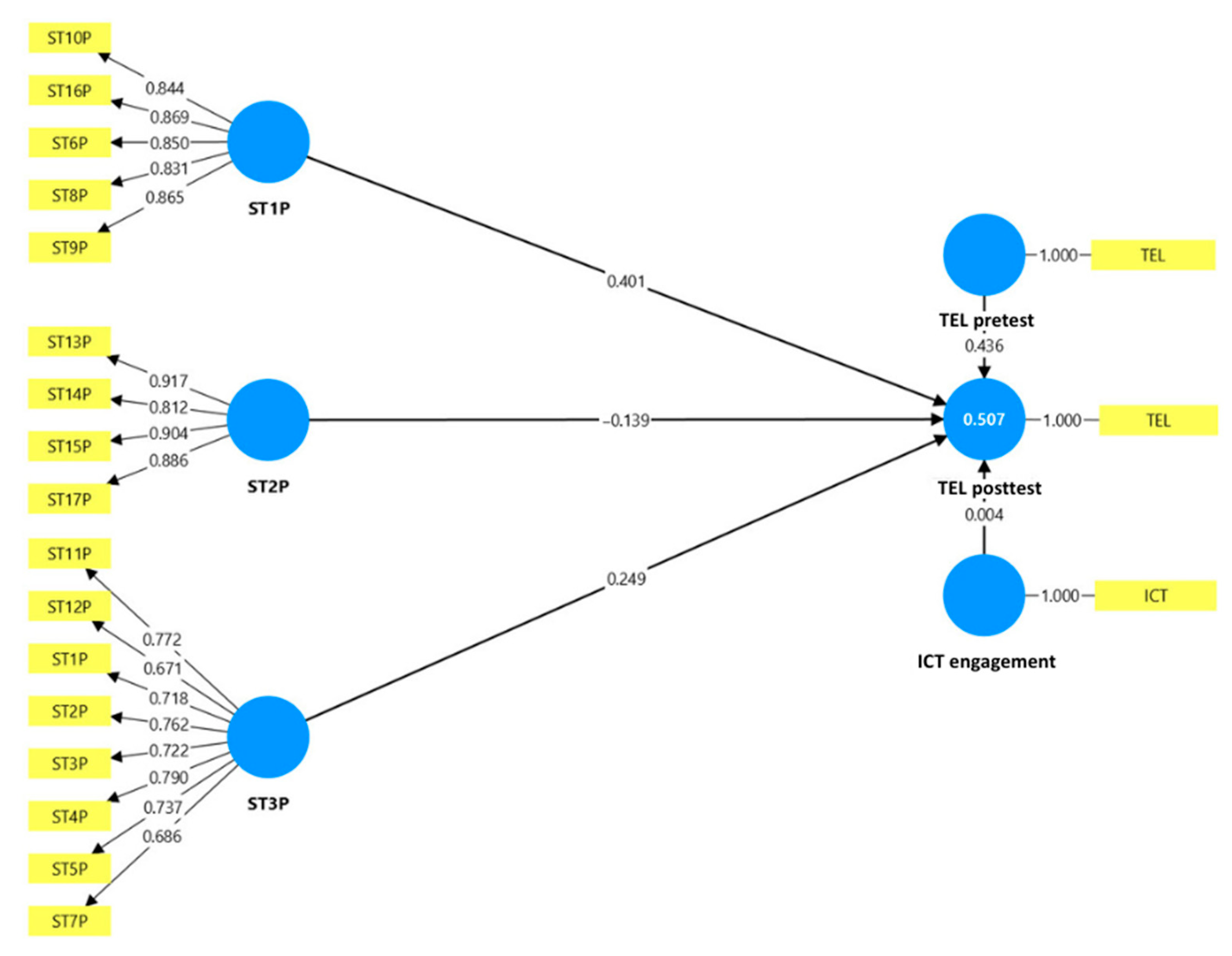
Model setup—build two PLS-SEM models: post ST dimensions → TEL post (controls = TEL pre, ICT-engagement) and ST → six attitudes towards DTE constructs (same controls).
Measurement checks—confirm reliability and validity (α/CR/ρA, AVE ≥ 0.50, HTMT < 0.85).
Collinearity and endogeneity—ensure outer/inner VIF < 3 and run Gaussian copula tests.
Structural paths—5000 sample BC bootstrap; report β, p, CI95, and f2.
Predictive assessment—blindfolding (Q2), PLSpredict (RMSE vs. LM, Q2_predict).
Group comparison—test measurement invariance (MICOM), then compare path strengths with PLS-MGA and permutation.
To address the second part of RQ4, we ran a set of six moderated multiple regression models, one for each of the post-experiment attitudes towards the DTE outcome (TCA, IT, BT, BGD, PCT, PDT), using Jamovi’s GAMLj module (v 2.4) [
145]. In each model, we entered the three systems thinking constructs (interrelations and feedback, diversity of causes and variations, sequence and causality of connections) and the group factor (0 = control, 1 = experimental) as Block 1 main effects, followed in Block 2 by their cross-product interaction terms (e.g., Diversity × Group) to test whether slopes differed between cohorts. Parameter estimates were calculated with heteroskedasticity-consistent HC3 standard errors and 5000 bias-corrected bootstrap confidence intervals to safeguard against small-sample non-normality (
n = 22 per group). Simple slope tests and Johnson–Neyman plots were requested in the case of any significant interactions. Model fit was evaluated via change in R
2, while partial η
2 was calculated to provide effect size estimates. To control the family-wise Type I error across the six outcomes, Benjamini–Hochberg false-discovery-rate adjustment (α = 0.05) was applied to the interaction
p-values. To curb overfitting in a small-sample setting (
n = 22 per group), we limited model complexity, applied FDR control to interaction
p-values, and prioritised bootstrapped CIs and out-of-sample checks (PLSpredict); nevertheless, regression and multi-group estimates should be viewed as hypothesis-generating.
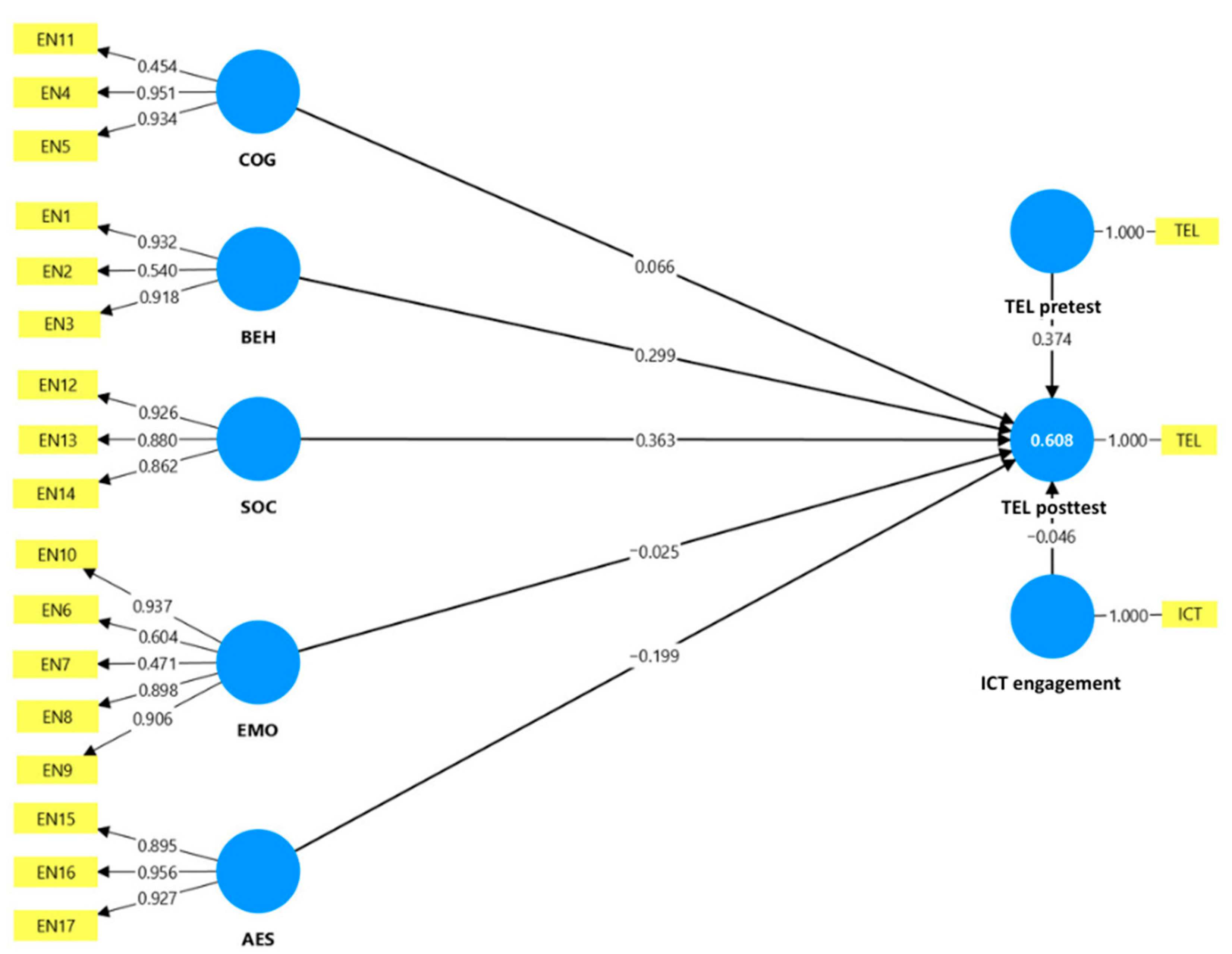
To answer RQ5, we used the same analytical procedure as for RQ4, but using the constructs of student engagement (COG, BEH, SOC, EMO, AES) as predictors. The control variable was ICT engagement.
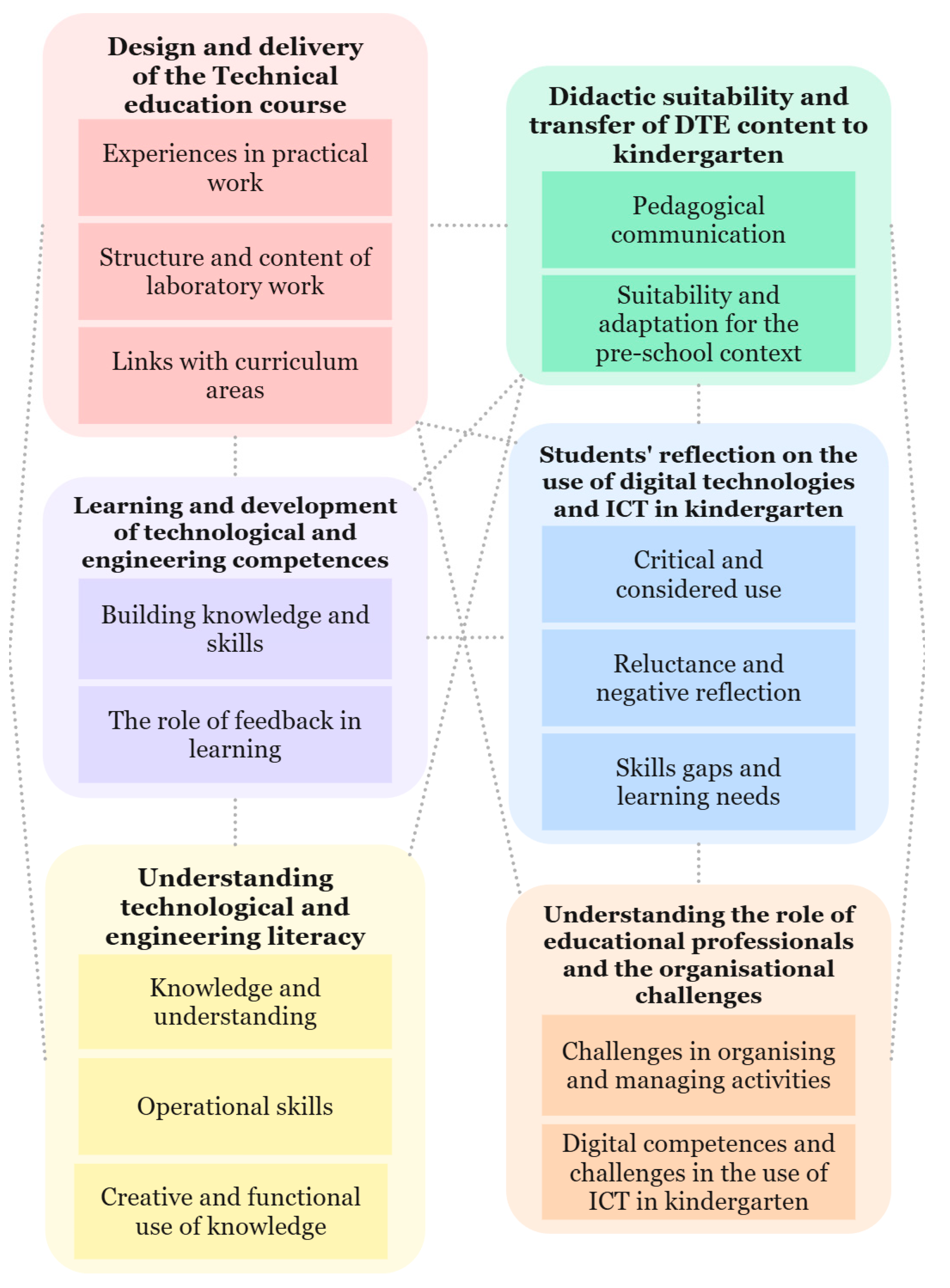
To analyse the focus group data and address RQ6, we used a method based on Braun and Clarke’s [
146] thematic analysis within an inductive approach of a realist epistemological framework at the semantic level. This consisted of six steps, namely,
We transcribed the data or the focus group discussions and wrote down the initial ideas after repeated readings.
We created codes for important phrases/sentences. We coded interesting, characteristic data in the whole sentence and collected the data relevant to each code.
We grouped the generated codes into potential themes and collected all data relevant to each theme.
We checked the consistency of the specific potential themes and their codes with the original data set (citations). This is an important step in the creation of a thematic map.
We reviewed and analysed the themes, potential subthemes, and codes several times with the aim of improving the characteristics of each theme and creating clear definitions and names for each theme.
We analysed the finally identified themes (subthemes) and codes, related them to the RQs and literature, and produced a report on the analysis.
The purpose of the focus group was to complement and support the quantitative findings in terms of understanding the participants’ experiences, attitudes, and perspectives. To this end, it is useful to favour thematic analysis over other qualitative methods, such as grounded theory, which aim to build a new theory based on the data [
146,
147]. Thematic analysis [
146] enables flexible identification and interpretation of meanings within a data set, aiming to emphasise the most important patterns that emerge during the focus group discussion. In addition, the results can be linked to previously collected quantitative data, compatible with a mixed methods approach.
3. Results
We begin by reporting descriptive statistics (means, standard deviations, and sample sizes) for every scale and sub-scale, in order to lay the groundwork for the subsequent inferential analyses. We then address each RQ (1–6) in turn, reporting the statistical results and their interpretation.
3.1. Descriptive Statistics
Before conducting inferential analyses, the data set was screened for data quality issues. All cases (n = 44) were inspected for item-level missingness (<2% overall), and no pattern of systematic omission emerged; the few isolated gaps were replaced using expectation–maximisation. Univariate outliers were evaluated with standardised z-scores (|z| > 3.29) and multivariate outliers with Mahalanobis distance (p < 0.001), resulting in no deletions. Parametric assumptions were then assessed. For each scale score within each instructional group, Shapiro–Wilk tests indicated that the normality assumption was satisfied (all p > 0.05), while Q–Q plots confirmed symmetric, bell-shaped distributions. Levene’s tests demonstrated homogeneity of variances across groups (all p > 0.10), while inspection of box plots revealed no heteroscedastic tendencies.
Table 15 and
Table 16 present the descriptive statistics (means and standard deviations) for every construct, forming the basis for the subsequent analyses.
Technological and engineering literacy: Both cohorts started at comparable baselines for the three components (knowledge (TEL 1), capabilities (TEL 2), and critical thinking and decision-making (TEL 3)), as well as the composite literacy score (TEL total). After the one-semester experiment, the experimental group registered uniform gains across all facets (ΔTEL 1 = +0.08; ΔTEL 2 = +0.20; ΔTEL 3 = +0.19; ΔTEL total ≈ +2.5 points). In contrast, the control group showed only marginal improvement in knowledge and capabilities (both +0.01) and a notable decline in critical thinking and decision-making performance (−0.25), yielding an overall drop of almost one scale point in TEL total (−0.95). These results imply that the systems thinking, design thinking, and ICT-rich methods emphasised in the experimental syllabus strengthened students’ ability to analyse, apply, and evaluate technological problems holistically, whereas the conventional programme did not prevent erosion of higher-order reasoning.
Attitudes towards DTE: The attitudinal change results were more heterogeneous. Technological career aspirations (TCA) and interest in technology (IT) rose in both groups, but more sharply in the control cohort (TCA, +0.31 vs. +0.18; IT, +0.46 vs. +0.17, respectively). The control students also reported a small decrease in boredom with technology (BT, −0.08), whereas boredom crept up slightly in the experimental arm (+0.07). In the socially oriented scales, shifts were modest: stereotypical beliefs about gender differences (BGD) edged upward by <0.05 in both groups, and perceived consequences of technology (PCT) increased in parallel (+0.46 vs. +0.22).
A divergent pattern emerged for perceived difficulty of technology (PDT): the experimental group judged technology to be somewhat easier after the course (−0.15), whereas the control group found it harder (+0.29). Taken together, the data suggest that the conventional course fuelled enthusiasm but also heightened anxiety about complexity, while the experimental design tempered excitement yet fostered a sense of technological self-efficacy.
Systems thinking and strategic orientation: Both treatments produced sizeable improvements in the three systems thinking sub-skills. The experimental condition showed higher gains in each dimension, especially sequence and causality of connections mapping (ST3, +0.71 vs. +0.27) and the overall systems thinking score (ST total, +9.7 vs. +6.2). This aligns with the module’s explicit emphasis on tracing material processing chains and feedback loops during project work.
In the reliance on authority (RA) dimension, the control cohort showed a larger reduction (−0.33 vs. −0.06), suggesting that exposure to a more traditional but student-centred workshop sequence encouraged greater autonomy in rule interpretation than the structured, technology-mediated tasks provided to the experimental group. Strategic thinking (STR) improved in both samples, with the control group again presenting a slight advantage (+0.33 vs. +0.17). Despite this, endpoint means converged to the same level (3.38–3.45), indicating functional equivalence in forward planning skills across conditions.
The experimental pedagogy delivered clear cognitive benefits—robust gains in TEL and systems thinking—while maintaining or lowering perceived task difficulty. The control pathway excelled in motivational domains (interest, aspirations), but at the cost of rising difficulty perceptions and stagnant critical thinking outcomes. Educators may therefore consider blending the two approaches: retain the systems-oriented projects to cultivate higher-order reasoning, while integrating the enthusiasm-building elements to sustain affective engagement without inflating perceived complexity.
Next, we provide descriptive statistics on student engagement with the Technical education course, which was measured only after the experiment.
The post-test descriptive statistics (
Table 16) indicate generally high levels of engagement across both cohorts (2.5 as a mid-point of the scale). With 22 students in each condition (
n = 44), the STICT approach shifted engagement in a clear, multifaceted way. The experimental cohort reported much stronger social engagement (Hedge’s
g ≈ +0.82), indicating that mapping interconnected problems and co-constructing digital models successfully deepened peer interaction. Behavioural (
g ≈ +0.34) and cognitive engagement (
g ≈ +0.39) also rose to a moderate degree, suggesting that systems thinking encouraged more persistent on-task participation and reflective strategic learning. In contrast, three dimensions were higher in the control group: aesthetic engagement (AES;
g ≈ −0.49), with students in the control group perceiving their learning activities as more aesthetically appealing or creatively satisfying; emotional tone (
g ≈ −0.27), reflecting slightly higher positive affect among controls; and ICT self-confidence (
g ≈ −0.28), implying that the structured use of technology in the experimental group left less room for free exploration.
Taken together, the STICT approach clearly amplified collaboration and depth of engagement, but may constitute a trade-off in terms of the personal enjoyment and aesthetic appreciation that flourish when learners have greater latitude to shape the look and feel of their artefacts. These findings highlight the need to balance the functional rigour of systems modelling with opportunities for aesthetic expression and autonomous, emotion-rich experiences in future iterations of the course. Given the modest sample (n = 22 per group) and the single post-test snapshot, the observed effects should be interpreted cautiously; nevertheless, they provide actionable guidance for refining technical education pedagogies aimed at pre-service preschool teachers.
3.2. Effect of STICT Approach on Technological and Engineering Literacy and Attitudes Towards Design, Technology, and Engineering
Preliminary analyses showed that the association between TEL pre- and post-test scores was linear and did not vary by group (non-significant group × pre-test interaction, p > 0.05). Levene’s test of equality of error variances was non-significant (F(1, 42) = 0.18, p = 0.67), satisfying the homogeneity assumption. Visual inspection of residuals suggested no serious departures from normality.
An analysis of covariance (ANCOVA) was performed to determine whether participation in the group taught using the STICT approach was associated with higher post-test TEL scores compared to the group taught using the traditional approach, after controlling for TEL pre-test performance.
There was a statistically significant effect of group on the TEL post-test score (
F(1, 41) = 20.53,
p < 0.001, partial η
2 = 0.34, ω
2p = 0.31, adjusted mean difference Δ = 3.475, 95% CI [1.926, 5.023]; corresponding Hedges’
gadj =1.41), indicating a very large practical impact [
144]. The covariate, TEL pre-test was also significant (
F(1, 41) = 28.46,
p < 0.001), confirming that initial literacy predicted post-test performance.
Adjusted mean TEL scores were M = 12.92 (SE = 0.54) for the experimental group and M = 9.44 (SE = 0.54) for the control group—a mean difference of 3.47 points (95% CI [1.92, 5.03]). Thus, pre-service preschool teachers from the STICT approach group demonstrated higher TEL across knowledge, capabilities, and critical thinking and decision-making dimensions than peers in the traditional approach group, supporting H1a–H1d of RQ1.
Next, we analysed how final scores in the TEL dimensions differed across both groups, controlled by pre-test scores on TEL. Box’s M, Levene’s tests, and group × covariate interaction terms all indicated that assumptions of multivariate normality, equality of covariance matrices, homogeneity of variance, and homogeneity of regression slopes were met.
A one-way MANCOVA was performed to compare the experimental and control groups’ combined post-test scores for TEL-knowledge (TEL 1), TEL-capacity (TEL 2), and TEL-critical thinking and decision-making (TEL 3), while controlling for their respective pre-test scores; furthermore, the overall multivariate effect of group was significant (Wilks’ Λ = 0.36, F(3, 37) = 6.85, p = 0.001, partial η2 = 0.36). Taken together, these results indicate that the three literacy dimensions differed between groups after adjusting for baseline levels.
After adjusting for pre-test TEL scores, a multivariate analysis of covariance showed a significant overall effect of the STICT approach on TEL (Wilks’ Λ = 0.36, F(3, 37) = 6.85, p = 0.001, partial η2 = 0.36). Follow-up univariate ANCOVAs revealed that the experimental group scored higher than the control group in TEL-knowledge (F(1, 39) = 6.99, p = 0.012, partial η2 = 0.15, partial ω2 = 0.12) and TEL-critical thinking and decision-making (F(1, 39) = 16.90, p < 0.001, partial η2 = 0.30, ω2 = 0.26), while the difference for TEL-capacity was marginal (F(1, 39) = 4.09, p = 0.050, partial η2 = 0.10). For TEL-knowledge, the adjusted mean difference was Δ = 0.113, 95% CI [0.026, 0.199]; corresponding Hedges’ gadj = 0.825, while for TEL-critical thinking, the adjusted mean difference was Δ = 0.319, 95% CI [0.162, 0.475]; corresponding Hedges’ gadj = 1.286. The adjusted mean difference for TEL-capacity as marginal was Δ = 0.198, 95% CI [0.000, 0.397]; corresponding Hedges’ gadj = 0.655.
Group accounted for 15% of the residual variance in TEL-knowledge (partial η
2 = 0.15, ω
2 = 0.12), representing a medium-to-large educational effect [
4]. For TEL-capacity, the effect was smaller but still meaningful (η
2 = 0.10, ω
2 = 0.07). The largest impact appeared in the critical thinking and decision-making dimension, where the course explained 30% of the adjusted variance (η
2 = 0.30, ω
2 = 0.26)—a large effect by conventional benchmarks (Very small/trivial < 0.01, Small 0.01–0.05 (0.06), Medium ≈ 0.06–0.13 (0.14), and Large ≥ 0.14 [
148,
149]).
These results partially support the hypotheses of RQ1: participation in the STICT approach substantially improved pre-service preschool teachers’ technological knowledge and critical thinking abilities, with a more modest effect on capabilities.
A one-way MANCOVA examined whether the students in the experimental group (STICT approach) reported more positive attitudes towards DTE across six sub-dimensions, controlling for baseline attitudes. The overall multivariate effect of group was not significant (Wilks’ Λ =0.74, F(6, 31) = 1.83, p = 0.125, partial η2 = 0.26).
However, a significant univariate group difference was found for perceived difficulty of technology (PDT; F(1, 36) = 10.88, p = 0.002, partial η2 = 0.23, ω2 = 0.19), partially indicating a large effect in favour of the experimental group. The adjusted mean difference for PDT was Δ = −0.526, 95% CI [−0.850, −0.203]; corresponding Hedges’ gadj = −1.07. Participants in the experimental group (STICT approach) reported substantially lower levels of perceived difficulty of technology compared with the control group (traditional approach). No other attitude dimensions showed a statistically significant group difference (p > 0.05).
These findings partially support the hypothesis H1e of RQ1: participation in the group using the STICT approach did not broadly reshape general attitudes toward DTE, but significantly lowered students’ perceived difficulty of technology—a key affective barrier to engaging with technological content. Reducing the perceived difficulty of technology is an important precursor to active participation and may facilitate subsequent gains in confidence and literacy.
Taken together, the pattern is consistent with an advantage of the STICT approach on the TEL composite, alongside a clear reduction in perceived difficulty of technology. At the same time, the multivariate test for attitudes was not significant, and several subgroup effects were modest or imprecisely estimated. Given the small sample (n = 22 per group) and the number of correlated outcomes examined, these estimates carry wide confidence intervals; therefore, we interpret them as preliminary and context-bound, not definitive. In practical terms, the STICT cohort appears better prepared to analyse and justify design choices, but replication with larger, more diverse cohorts is needed to confirm the magnitude and robustness of these effects.
3.3. Impact of the STICT Approach on Students’ Systems Thinking
A one-way analysis of covariance was conducted to examine whether students in the group taught using the STICT approach reported higher post-test self-assessed systems thinking than the group taught using traditional approach, after adjusting for baseline systems thinking scores. The covariate, that is, the pre-test systems thinking score, was not a significant predictor of post-test performance (F(1, 41) = 0.73, p = 0.399, partial η2 = 0.02). Controlling for this covariate, no statistically significant group difference emerged on post-test (F(1, 41) = 0.61, p = 0.440, partial η2 = 0.02). The adjusted mean difference for total score of systems thinking controlled for the covariate was Δ = 2.284, 95% CI [−3.626, 8.194]; corresponding Hedges’ gadj = 0.28. Thus, no evidence emerged that the STICT approach produced larger overall gains in self-assessed systems thinking, when compared to the traditional approach.
Separate ANCOVAs were conducted for the three dimensions of self-assessed systems thinking ability, controlling for baseline scores. No significant group differences emerged.
Interrelations and feedback: F(1, 39) = 0.01, p = 0.946, partial η2 = 0.000. The adjusted mean difference was Δ = −0.014, 95% CI [−0.432, 0.403]; corresponding Hedges’ gadj = 0.000.
Diversity of causes and variations: F(1, 39) < 0.01, p = 0.999, partial η2 = 0.000. The adjusted mean difference was Δ = 0.000, 95% CI [−0.484, 0.485]; corresponding Hedges’ gadj = 0.000.
Sequence and causality connections: F(1, 39) = 2.64, p = 0.112, partial η2 = 0.06. The adjusted mean difference was Δ = 0.316, 95% CI [−0.078, 0.701]; corresponding Hedges’ gadj = 0.496.
Pre-test scores were not significant covariates (all p > 0.27). These findings indicate that the STICT approach did not produce greater gains in self-assessed systems thinking ability (either overall or within specific dimensions), relative to the traditional approach.
Across both the overall systems thinking score and the three sub-dimensions, participation in the group taught using the STICT approach failed to yield significantly greater pre- to post-test gains in comparison with the control group taught using traditional approach. Any observable advantage in the sequence and causality connections dimension was small (partial η2 ≈ 0.06), and did not reach statistical significance (p = 0.112 > 0.05).
A 2 × 2 mixed-design (group × time) repeated-measures ANOVA was conducted to examine changes in systems thinking scores from pre- to post-test under the STICT approach (experimental group) and the traditional approach (control group). Time (pre vs. post) was treated as the within-subjects factor, and group was the between-subjects factor. The significant main effect of time was detected (F(1, 42) = 17.06, p < 0.001, partial η2 = 0.289).
Regardless of group, participants’ systems thinking scores increased substantially from pre- to post-test. The partial eta-squared of 0.289 denotes a large effect, indicating that close to 29% of the within-person variance in scores can be attributed to the passage of time (i.e., learning or maturation during the study period). The time × group interaction was not significant (F(1, 42) = 1.52, p = 0.224, partial η2 = 0.035). Although both groups improved, the magnitude of their gains did not differ statistically; thus, the STICT approach did not produce a greater increase than the traditional approach. The interaction’s partial η2 of 0.035 is small, suggesting that less than 4% of the variance in change scores can be attributed to group membership.
These findings suggest that, while the study period fostered overall growth in systems thinking skills, the specialised course did not confer an incremental advantage beyond that already gained through normal instruction and experience.
Although no additional advantage of the STICT approach over the traditional course was detected in self-assessed systems thinking, both groups showed statistically and practically meaningful gains over the semester. This pattern suggests that structured, hands-on work with DTE content—regardless of approach—can help pre-service preschool teachers become more aware of interrelations, feedback loops, and causal sequences in technological systems. From a practical standpoint, the findings indicate that a single-semester intervention is sufficient to raise students’ self-perceptions of systems thinking competence, but may be too short for differences between instructional models to fully emerge. Longer or repeated exposure to explicitly scaffolded systems thinking tasks might therefore be necessary if programmes wish to translate these trends into clear between-group advantages in future cohorts.
3.4. Effects of the STICT Approach on Students’ Engagement with Technical Education Course
A MANCOVA was performed to evaluate whether the STICT approach increased post-experiment engagement across cognitive, behavioural, social, emotional, and aesthetic dimensions, controlling for participants’ overall ICT engagement. The overall multivariate effect of group was significant (Wilks’ Λ = 0.73, F(5, 37) = 2.96, p = 0.031, partial η2 = 0.274). Taken together, the results indicate that the five engagement dimensions differed between groups after adjusting for baseline levels.
Social engagement differed significantly by group (F(1, 41) = 7.98, p = 0.007, partial η2 = 0.163, partial ω2 = 0.137), with course participants reporting higher levels of collaborative interaction than controls—indicating a strong educational effect. The adjusted mean difference was Δ = 0.619, 95% CI [0.177, 1.062]; corresponding Hedges’ gadj = 0.87. No significant group differences emerged for cognitive, behavioural, emotional, or aesthetic engagement (all p ≥ 0.137).
ICT engagement as a covariate positively predicted only aesthetic engagement (F = 3.95, p = 0.046), indicating that baseline enthusiasm for ICT was associated with stronger post-test engagement in the aesthetic domain, independent of course participation.
The STICT approach selectively boosted social engagement, fostering greater collegial collaboration around DTE teaching. It did not significantly affect cognitive, behavioural, emotional, or aesthetic engagement once pre-existing ICT enthusiasm was considered.
The engagement results show that the STICT approach selectively boosted social engagement to a moderate extent, while leaving cognitive, behavioural, emotional, and aesthetic engagement largely comparable across groups once baseline levels were taken into account. This means that the experimental course particularly strengthened students’ tendencies to collaborate, communicate, and co-design with peers—behaviours that are central to team-based planning and implementation of DTE activities in preschool settings. The finding that ICT engagement predicted higher aesthetic engagement also has practical relevance: students who felt more confident and interested in digital tools were more likely to experience the course as visually and creatively appealing. Overall, the pattern suggests that STICT can be used to cultivate richer collaborative practices without compromising other forms of engagement, which is valuable for preparing teachers who will often work in teams and with shared technological resources.
3.5. Relationships Between Systems Thinking Competencies, Technological and Engineering Literacy, and Attitudes Towards Design, Technology, and Engineering After the Experiment
To answer the first part of RQ4, we prepared a measurement model which proved sound on every psychometric front. Its internal consistency was strong, with Cronbach’s α ranging from 0.87 to 0.91, composite reliability (CR) from 0.90 to 0.93, and Dijkstra–Henseler’s ρA from 0.88 to 0.92—each comfortably above the 0.70 benchmark. Convergent validity was evident as the AVE spanned 0.54 to 0.78, surpassing the 0.50 criterion. Discriminant validity was likewise secured: HTMT ratios for all construct pairs fell between 0.10 and 0.82, staying well below the conservative 0.85 threshold. Taken together, these figures confirm that the latent constructs were measured reliably, capturing ample indicator variance while remaining empirically distinct.
Collinearity posed no threat to the model: outer-model VIFs spanned 1.00 to 2.85, while inner-model VIFs ranged from 1.12 to 2.98—both well under the conservative cut-off of 3.3 [
150]—confirming that neither indicators nor latent predictors inflated one another. Endogeneity was likewise ruled out: Gaussian copula tests returned non-significant
p-values, ranging from 0.13 to 0.90 across all structural paths, indicating that omitted variable bias is unlikely and the predictors can be treated as exogenous.
All psychometric hurdles were cleared: items loaded cleanly on their factors and the four latent variables (three systems thinking dimensions and TEL) possessed strong internal consistency, shared ample within-construct variance, and remained empirically separable. Collinearity was well below the conservatively low threshold, such that estimated path coefficients would not be biased upward. Finally, the Gaussian copula procedure detected no latent omitted variable bias, supporting causal interpretation of the subsequent structural relationships.
With a reliable, valid, and diagnostically sound measurement structure in place, the model is suitably poised to examine how pre-service preschool teachers’ perceptions of interrelations and feedback, diversity of causes and variations, and sequence and causality of connections within complex systems translate into their TEL. A path model of the influence of systems thinking on TEL, controlled by the pre-test TEL scores and ICT engagement, is shown in
Figure 4.
The structural model explained 50.7% of the variance in TEL (
R2 = 0.507), indicating substantial explanatory power and suggesting that the predictors meaningfully contribute to understanding pre-service preschool teachers’ TEL [
150]. As detailed in
Table 17, the standardised path coefficients (β)—along with their bias-corrected and accelerated 95% confidence intervals,
p-values, and Cohen’s
f2 effect sizes—provide a comprehensive assessment of the strength, precision, and practical relevance of the individual relationships within the model.
The structural model identified several statistically and practically meaningful predictors of post-test TEL. The strongest predictor was TEL pre-test performance (β = 0.436,
p < 0.001), which corresponded to a large effect size (
f2 = 0.343), indicating a substantial and consistent influence of prior knowledge on post-test outcomes (see
Table 17).
Among the post-test systems thinking predictors, interrelations and feedback (ST1P) was the strongest positive contributor to TEL (β = 0.401, 95% CI [0.090, 0.727], p = 0.012), with a small-to-moderate effect size (f2 = 0.115). This relationship suggests that pre-service preschool teachers who feel more capable of identifying interdependencies and feedback loops within systems are more likely to develop higher levels of TEL, a skill central to planning and evaluating technology-enhanced learning activities in preschool settings.
Sequence and causality connections (ST3P) also showed a significant positive relationship with TEL (β = 0.249, 95% CI [−0.020, 0.467], p = 0.040), accompanied by a small effect size (f2 = 0.095). This suggests that understanding cause–effect chains and temporal logic support learners’ abilities to implement structured, process-oriented educational activities aligned with curriculum goals in early DTE education such as modelling and fabrication.
In contrast, diversity of causes and variations (ST2P) did not significantly predict TEL (β = −0.139, p = 0.425) and had only a negligible effect size (f2 = 0.013). While variation and multifactorial thinking are critical to open-ended problem-solving, they may not directly translate into measured post-test gains in TEL within the scope of the course.
The pre-test TEL score emerged as the strongest overall predictor (β = 0.436, p < 0.001), with a large effect size (f2 = 0.343), emphasising the importance of prior knowledge in shaping post-instruction performance.
Finally, ICT usage during the experiment did not significantly impact TEL post-test scores (β = 0.004, p = 0.976; f2 = 0.000), suggesting that the mere presence of technology is not sufficient—that is, systems-level understanding and thoughtful integration are essential, as also emphasised through the course’s focus on systems thinking supported by ICT and digital tools and sustainability frameworks.
Next, we investigated whether the strength of these relationships differed between the experimental and control groups. To this end, we tested measurement invariance (MICOM), followed by comparisons of path strengths via Partial Least Squares Multi-Group Analysis (PLS-MGA) and permutation [
151]. The MICOM procedure confirmed measurement equivalence across both groups, providing evidence that the model’s constructs were conceptually and statistically comparable. Following the three-step MICOM procedure, we first established configural invariance by ensuring identical model structure, indicators, and data treatment across groups. Second, compositional invariance was supported, as the correlations between composite scores across groups did not differ significantly from 1. Finally, tests of equality of composite means and variances revealed no meaningful differences, thus meeting the full criteria for partial to full measurement invariance. This finding validates that the observed differences in path relationships between groups can be attributed to true differences, rather than inconsistencies in how the constructs were measured.
The PLS-MGA results complemented by permutation testing (see
Table 18) identified a statistically significant group difference in one path: the effect of diversity of causes and variations (ST2P) on TEL post-test. In the experimental group, this relationship was strongly positive (β = 0.739); meanwhile, in the control group, it was strongly negative (β = −0.331). The difference in path coefficients was statistically significant (
p = 0.005), suggesting a reversal in the direction and magnitude of the effect across groups. This result implies that students’ self-perceived ability to consider multiple causes and variations in systems thinking influences their TEL differently depending on the group context—potentially due to differing prior experiences, instructional conditions, or cognitive profiles.
For other paths—including those from ICT usage, interrelations and feedback (ST1P), sequence and causality connections (ST3P), and TEL pre-test scores—no statistically significant differences between groups were observed (p > 0.05). Although ST1P → TEL showed a relatively large coefficient difference (Δβ = −0.389), the difference was not statistically significant (p = 0.229), suggesting that this effect may be relatively stable across groups.
In summary, while most structural relationships appeared to be robust across subgroups, the influence of diversity of causes and variations (ST2P) on TEL differed significantly, highlighting the importance of tailoring instruction to group-specific cognitive approaches to systems thinking.
We also analysed how systems thinking related to attitudes towards DTE after the experiment, as well as whether the strength of these relationships differed between groups.
The simultaneous entry of the three post-experiment systems thinking dimensions—interrelations and feedback (ST1P), diversity of causes and variations (ST2P), and sequence and causality connections (ST3P)—together with the group factor (experimental, control) yielded a significant regression model for boredom with technology (BT) perceived on post-test (F(4, 39) = 2.90, p = 0.034), explaining 22.9% of the variance (R2adj = 0.150). Diversity of causes and variations emerged as the only unique predictor: a 1 SD increase in diversity of causes and variations was associated with a 0.75 SD decrease in boredom with technology (unstandardised b = −0.776, SE = 0.248, 95% CI [−1.20, −0.27]; standardised β = −0.751; t = −3.13, p = 0.003; partial η2 = 0.200). Meanwhile, interrelations and feedback (β = 0.325, p = 0.157; η2 = 0.051) and sequence and causality connections (β = 0.212, p = 0.224; η2 = 0.038) did not reach significance. After adjusting for the systems thinking predictors, the group factor effect was negligible (control—experimental = 0.115, β = 0.147, t = 0.52, p = 0.608; η2 = 0.007), and a Bonferroni-corrected post hoc test confirmed that the adjusted mean difference between cohorts was small and non-significant (Mdiff = −0.12, SE = 0.22, t = −0.52, p = 0.608, dadj = 0.16). Collectively, these findings indicate that lower boredom with technology is driven chiefly by students’ appreciation of diversity and variation within systems thinking, rather than by the group factor (instructional approach).
Next, we observed significant differences regarding the perceived difficulty of technology. A linear model predicting perceived difficulty of technology from the three systems thinking constructs plus group factor was statistically reliable (
F(4, 39) = 3.57,
p = 0.014), accounting for 27% of the variance (
R2 = 0.268,
R2ajd = 0.193). The group factor was the strongest contributor: students in the control cohort reported markedly higher difficulty (unstandardised
b = 0.642,
SE = 0.187; 95% CI 0.301–0.985; β = 0.962;
t = 3.43,
p = 0.001; partial η
2 = 0.231). A Bonferroni-adjusted post hoc comparison confirmed the gap: the experimental group’s adjusted mean was 0.64 units lower than the control group’s (
t = −3.43,
p =0.001), constituting a large effect (
dadj = 1.07) [
110].
Among the systems thinking dimensions, sequence and causality of connections (ST3) showed a positive, unique association with perceived difficulty (b = 0.395, SE = 0.169; 95% CI 0.105–0.691; β = 0.380; t = 2.33, p = 0.025; partial η2 = 0.123), whereas neither interrelations and feedback or diversity of causes and variations were significant predictors (both |β| < 0.18, p > 0.51).
We can conclude that perceived difficulty of technology is principally shaped by the instructional approach/group factor, in particular, control students perceive technology to be more difficult, and, to a lesser extent, by students’ tendency to think in terms of sequence and causality of connections. Strengthening sequence and causality of connections skills in the context of systems thinking may therefore raise awareness of complexity, but could also heighten feelings of perceived difficulty of technology, suggesting a need for supportive scaffolds within the traditional approach.
From a substantive perspective, the structural analyses indicate that not all facets of systems thinking are equally consequential for TEL in this context. Interrelations and feedback (ST1) and sequence and causality of connections (ST3) both showed positive, practically meaningful links with post-test TEL, suggesting that the ability to trace how components influence one another over time is directly tied to students’ capacity to plan, execute, and justify technological designs. In contrast, diversity of causes and variations (ST2) played a more context-dependent role, supporting reduced boredom with technology but showing differing associations with TEL across instructional groups. For teacher education, this implies that systems thinking activities which explicitly foreground feedback loops and causal chains may be particularly effective levers for raising TEL, whereas variation-oriented tasks need to be carefully aligned with the course structure to avoid overloading students or introducing counterproductive complexity.
3.6. Relationships Between Student Engagement in Technical Education Course and Technological and Engineering Literacy and Attitudes Towards Design, Technology, and Engineering After the Experiment
To answer the first part of RQ5, regarding whether student engagement in the Technical education course predicts TEL, we prepared a structural measurement model using smartPLS v. 4.1.1 [
108]. All constructs of engagement had been validated in advance with respect to convergent and discriminant validity (see
Section 2.3). Next, we checked for collinearity issues, which were found to pose no threat to the model: outer-model VIFs spanned 1.00 to 3.19 and inner-model VIFs ranged from 1.14 to 1.37—both well under the conservative cut-off of 3.3 [
150]—confirming that neither indicators nor latent predictors inflated one another. Endogeneity was likewise ruled out: Gaussian copula tests returned non-significant
p-values ranging from 0.28 to 0.99 across all structural paths, indicating that omitted variable bias is unlikely and the predictors can be treated as exogenous.
With a reliable, valid, and diagnostically sound measurement structure in place, the model is suitably poised to examine how pre-service preschool teachers’ perceptions of interrelations and feedback, diversity of causes and variations, and sequence and causality of connections within complex systems translate into their TEL. The path model of the influence of students’ engagement constructs (COG, BEH, SOC, EMO, AES) on TEL, controlled by the pre-test TEL scores and ICT engagement, is shown in
Figure 5.
The structural model accounted for 60.8% of the variance in TEL (
R2 = 0.608), indicating a substantial explanatory power and suggesting that the predictors meaningfully contribute to understanding pre-service preschool teachers’ TEL [
150].
Predictive validity was assessed with PLSpredict (10-fold cross-validation, one replication). The focal endogenous construct returned a Stone–Geisser statistic of
Q2 = 0.38, exceeding the 0.35 “large” benchmark for out-of-sample relevance and therefore indicating strong predictive capability [
152]. Complementing this result, the PLS-SEM model achieved a root-mean-squared error (RMSE) of 2.945—markedly lower than the linear-model (LM) benchmark (RMSE = 4.262). This translates into a roughly 31% reduction in prediction error relative to the LM baseline and a 38% improvement over the grand-mean benchmark implied by
Q2, confirming that the structural specification not only explains the calibration sample but also generalises well to unseen observations.
The Partial Least Squares path model was estimated on the combined sample of students from the experimental and control groups. All paths were controlled for prior knowledge (TEL pre-test), such that they reflect the growth in literacy that occurred during the one-semester Technical education course.
As detailed in
Table 19, the standardised path coefficients (β)—together with their bias-corrected and accelerated 95% confidence intervals,
p-values, and Cohen’s
f2 effect sizes—provide a thorough assessment of the strength, precision, and practical relevance of each relationship within the model.
The medium-size effect of TEL pre-test score (β = 0.374, f2 = 0.285) indicates that roughly one-third of the explained variance in post-test scores stems from what students already knew. Retaining this control assures that the following coefficients capture gains due to engagement rather than initial advantage.
A 1 SD rise in social engagement (teamwork, peer dialogue, co-design) was found to predict a 0.36 SD improvement in TEL (p = 0.013, f2 = 0.249). This medium effect aligns with the STICT approach’s strong emphasis on collaborative workshops and e-portal activities, where students co-construct artefacts and critique peers’ prototypes. It appears to translate directly into literacy gains, particularly for the experimental section where systems thinking tasks required intensive group modelling and iteration. Under the STICT approach, these interactions likely became richer (shared simulations, joint troubleshooting), magnifying their influence compared with the control group.
Observable effort (e.g., attendance, on-task persistence, timely submission) adds a small-to-medium increment (p = 0.018, β = 0.299, f2 = 0.189). The hands-on nature of the course (30 h laboratory work and integrated practice) means that students literally learn through making; those who invested more behavioural energy had more opportunities to manipulate digital fabrication tools and apply systems thinking heuristics, hence leading to greater TEL growth.
When including social and behavioural channels into the model, self-reported deep processing strategies (cognitive engagement) add no significant predictive power (β = 0.066, p = 0.61). Two interpretations are plausible: (a) the ICT scaffoldings (interactive simulations, augmented reality) standardised cognitive engagement across groups, resulting in minimal between-student variability; (b) deeper strategies exert their influence primarily through observable behaviours and peer discourse already captured by the other paths.
Aesthetic engagement captures the degree to which students are absorbed by the look, feel, and creative appeal of design activities (β = −0.199, p = 0.175). The small, non-significant negative effect suggests that an intense focus on visual or stylistic qualities may divert attention from the functional, mechanism-centred reasoning that TEL assessments reward. Alternatively, students who struggled with DTE aspects might have compensated by over-emphasising aesthetics, producing the observed direction.
Emotional enjoyment and ICT engagement display small, non-significant negative coefficients. In an environment where tasks, tools, and timelines were tightly specified—especially regarding the experimental group’s systems thinking projects—there may have been limited scope for personal course direction, diluting the statistical link to TEL. Likewise, ICT attitudes scarcely mattered because all students, even those in the control group, engaged with digital tools for planning and fabrication (as mandated by the syllabus). Attitudes towards DTE showed little between-student spread, yielding an insignificant path (β = −0.046). Emotional engagement (β = −0.025) was likewise unrelated to measured literacy once more behaviour-proximal facets were controlled.
Overall, the model indicates that TEL growth in the STICT environment is driven chiefly by peer interaction and active doing, whereas purely individual or affective dimensions play secondary roles once those channels are optimised.
In order to answer whether predictive relationships differ between the experimental and control groups, we conducted a multi-group comparison of structural paths. Prior to comparing the structural relations across instructional conditions, we followed Henseler et al.’s [
153] MICOM procedure to assess measurement invariance. Configural and compositional invariance were satisfied for every latent construct and the equality-of-means/variances step supported at least partial invariance, meeting the prerequisite for multi-group analysis.
We then applied permutation-based MGA in SmartPLS (5000 permutations, group size equalised to the smaller sample), in order to test whether the path coefficients differed between the experimental and control groups. For each structural link, the difference statistic (β exp–β ctrl) was compared against its empirical reference distribution; a two-tailed α = 0.05 criterion was used to flag significant contrasts.
We found that no path exhibited a statistically significant difference between groups (all permutation p-values ≥ 0.23). The strengths of the relationships between the six engagement dimensions and post-test TEL were statistically equivalent for students from both groups. Therefore, the STICT approach did not alter how each engagement dimension translated into literacy gains; instead, its pedagogical value likely lies in elevating the overall levels of key engagement behaviours (especially social and behavioural), rather than changing the functional form of the engagement–TEL relationship.
To answer the second part of RQ5, regarding whether student engagement in the Technical education course predicts their attitudes towards DTE, we performed regression analysis.
A linear model that entered group factor together with the five engagement dimensions—cognitive, behavioural, social, emotional, and aesthetic—was not statistically significant at the omnibus level (F(6, 37) = 1.84, p = 0.117), although it accounted for 23% of the variance in technological career aspirations (R2 = 0.230, R2adj = 0.105). Among the predictors, emotional engagement emerged as the only unique contributor: higher excitement, interest, and motivation during course activities were associated with stronger technological career aspirations (unstandardised b = 0.489, SE = 0.218, 95% CI [0.01, 0.84]; β = 0.42; t(37) = 2.25; p = 0.031; partial η2 = 0.163). Aesthetic engagement showed a small, non-significant positive trend (β = 0.23, p = 0.289), whereas cognitive, behavioural, and social engagement were unrelated to technological career aspirations once the other variables were controlled (|β| ≤ 0.11, p ≥ 0.675). The group factor was likewise trivial (β = −0.11, p = 0.791), and a Bonferroni-adjusted post hoc test confirmed no reliable difference between experimental and control cohorts (Mdiff = 0.07, SE = 0.28; t(37) = 0.27; p = 0.791; dadj = 0.09).
The engagement model for interest in technology was statistically robust (F(6, 37) = 5.42, p < 0.001), accounting for 47% of the variance in scores (R2 = 0.468, R2adj = 0.382). Across the five engagement dimensions, emotional engagement emerged as the strongest unique predictor: greater excitement, enthusiasm, and motivation during course activities were associated with higher interest in technology (b = 0.447, SE = 0.151, 95% CI [0.15, 0.72]; β = 0.43; t = 2.95; p = 0.005; partial η2 = 0.23). Aesthetic engagement also contributed positively (b = 0.301, SE = 0.104, 95% CI [0.06, 0.50]; β = 0.39; t = 2.89; p = 0.006; partial η2 = 0.19). Cognitive engagement showed only a trend-level association (p = 0.075), whereas behavioural and social engagement were non-significant once the other variables were controlled (both p > 0.40).
The group factor effect was negligible (β = 0.13, p = 0.451), and a Bonferroni-adjusted post hoc test confirmed no reliable difference between the experimental and control cohorts (Mdiff = 0.17, SE = 0.23; t(37) = 0.76; p = 0.451; dadj = 0.28).
In summary, students’ interest in technology is driven primarily by how emotionally engaged they feel—and, to a lesser extent, by the aesthetic appeal of the learning experience—whereas cognitive, behavioural, and social engagement dimensions, as well as the group factor, tend not to play independent roles once these factors are controlled.
Next, we analysed the effects of student engagement on the perceived difficulty of technology dimension of attitudes towards DTE. The engagement model was statistically reliable (F(6, 37) = 3.61, p = 0.006), explaining 37% of the variance (R2 = 0.370, R2adj = 0.267) in perceived difficulty of technology. After all five engagement facets had been entered simultaneously, the group factor remained the only unique predictor: students in the control cohort perceived technology as substantially more difficult than their experimental peers (unstandardised b = 0.761, SE = 0.218, 95% CI [0.33, 1.17]; β = 1.17; t(37) = 3.49; p = 0.001; partial η2 = 0.28, partial ω2 = 0.24). None of the engagement dimensions—cognitive, behavioural, social, emotional, or aesthetic—were significant when controlling for group (all |β| ≤ 0.23, p ≥ 0.12).
A Bonferroni-adjusted post hoc comparison corroborated the magnitude of the implementation gap: the experimental group’s adjusted mean difficulty score was 0.76 units lower than the control group’s (t(37) = −3.49, p = 0.001), comprising a very large effect (Cohen’s dadj = 1.35).
Perceived difficulty of technology is driven primarily by implementation exposure—students taught using the STICT approach perceived technology to be markedly easier—whereas how they engaged cognitively, behaviourally, socially, emotionally, or aesthetically with the activities adds no independent explanatory power.
In practical terms, the engagement models highlight that “doing and collaborating” matter most for students’ literacy, whereas “feeling good” about the course is especially important for their long-term attitudes. Behavioural and social engagement showed medium-sized contributions to TEL, indicating that students who invested more effort and interacted more intensively with peers during the course achieved greater gains in technological and engineering literacy. Emotional and aesthetic engagement, by contrast, were key for predicting interest in technology and technological career aspirations, even when other forms of engagement were controlled. These patterns suggest that well-designed STICT-based courses should deliberately foster both collaborative, hands-on participation (to build TEL) and emotionally positive, aesthetically appealing learning experiences (to sustain interest and openness towards DTE in future professional practice).
3.7. Thematic Analysis of Students’ Experiences and Perceptions with the Technical Education Course
We followed Braun and Clarke’s [
146] method for thematic analysis. The codes were developed inductively and descriptively, and were specific enough in themselves not to require detailed definitions. As suggested by the abovementioned authors [
146], we assigned broader quotations to the codes such that the context itself would not become too fuzzy. In the topic identification phase, we also created subtopics by combining codes that were more closely related in content. After repeated review and harmonisation of the themes, subthemes, and codes into meaningful wholes, 6 themes, 15 subthemes, and 42 codes were identified (
Figure 6).
Figure 6 was created by the authors using Miro software (Education plan, web-based version) [
105].
Design and delivery of the Technical education course:
Students positively evaluated the organisation and diversity of the course content, which covers several areas of technology (E1: “I think all areas of technology and engineering were included, a bit of plastic, a bit of wood, a bit of artificial materials, then we programmed and had a 3D printer, for example. There was a bit of everything, so you could really experience what you like to design/process the most.”). They mentioned the clarity and consistency of the structure of the laboratory work and the gradualness of learning. They positively evaluated the acquisition of experience through group work and unusual tools (C3: “I liked it when we made things in the workshop and were confronted with new machines, etc., that we wouldn’t have come across otherwise.”). In the course, they recognised the usefulness of the content for their work and the links to other areas of preschool curricula [
9] and, thus, the didactic value of the products.
Didactic suitability and transfer of DTE content to kindergarten:
Students linked their own technical experiences to their future work and critically evaluated the suitability of technical activities for the kindergarten. The importance of competence in explaining procedures, giving instructions, and adapting the complexity of activities to children was emphasised. The usefulness of reports from exercises for their further work was also expressed, which opens up a further sub-theme covering the evaluation of products, materials, and technical activities from the perspective of preschool use (E1: “Yes, we have received a number of products for the future. … everything is listed.”). The aspects of simplicity, alternative use, and the importance of manual skills developed through technical content for children’s development were emphasised (C1: “I think they [the children] lack manual skills and we can benefit from this area [DTE].”).
Learning and development of technological and engineering competences:
The students emphasised the importance of practical work with different materials and the gradual expansion of technical knowledge and skills. Through the technical lessons, they gained experience, broadened their knowledge, and deepened their understanding of technical processes (E1: “… you search online for an idea that you would use in kindergarten. Now you realise that, for example, normal office paper might not be suitable for this [chosen product/idea].”). They emphasised the accessibility and accuracy of feedback and recognised its importance for the purpose of reflection and learning (C1: “The feedback is the product itself anyway—how you did it. And in the end, you’ve seen exactly where you were or weren’t accurate [in the production].”).
Students’ reflection on the use of digital technologies and ICT in kindergarten:
The focus group of students showed great concern regarding the use of digital technology and ICT in kindergartens, as these are already used excessively and inappropriately in their free time. The students emphasised the importance of targeted and sensible use of digital technology and ICT (C2: “I think that children today are so busy with their mobile phones and computers that you have to approach this issue with a certain amount of purpose and planning, otherwise you can only make the situation worse.”). They repeatedly emphasised that the use of digital technologies and ICT only brings limited added value. They also mentioned the feeling of a lack of experience, skills, and knowledge in dealing with digital technologies and ICT and, consequently, the fear of making mistakes when using digital technologies and ICT in kindergarten (C1: “I have the impression that I am falling further and further behind with the rapid technological advances. I used to feel competent enough, but now I feel like I’m getting worse and worse.”).
Understanding technological and engineering literacy:
The students emphasised the importance of understanding plans and technical drawings, knowledge of materials, work equipment, work safety, and the manufacturing technology itself (E2: “… That it is logical to you what a certain thing represents. And that you can see a drawing and imagine what this product will look like.”). The sub-theme of operational technical skills was expressed primarily in terms of the use of materials and work equipment in practice and the implementation of procedures. In addition to basic technical knowledge and skills, students also emphasised the creative dimensions of TEL, such as the ability to independently design products and adapt technical knowledge to real-life and educational situations (C1: “To design new, creative products yourself.”).
Understanding the role of educational professionals and the organisational challenges:
Students emphasised the complexity of supervising and monitoring a group in technical activities. The dimension of lack of knowledge in the use of ICT and digital tools among preschool teachers is evident. The students recognised incompetence in this area as a reason for not using digital technologies (C2: “I have the impression that preschool teachers know far too little about it [ICT and digital tools] and then avoid it.”). They emphasised the need for basic digital skills for preschool teachers and their future work (E1: “ … And [I would like to learn more about] archiving data. … also, about hiding data when you share the file. … for yourself and for the safety of the children.”). The importance of structural and spatial limitations for the qualitative implementation of activities with digital content in kindergarten was highlighted (E3: “This content [ICT and digital tools] should be introduced in primary schools because there are computer classrooms, and each child can use their own computer, and they can all work together.”).
To highlight the key differences between experimental and control groups,
Table 20 summarises the main results and their practical significance from the analysis of TEL, attitudes towards DTE, systems thinking, and engagement among pre-service preschool teachers.
Compared with the traditional approach—and controlling for pre-test—the STICT group showed substantially higher TEL overall (Δ ≈ 3.5/20; partial η2 = 0.34) with large gains in critical thinking/decision-making and medium gains in knowledge; perceived difficulty with technology was significantly lower (partial η2 ≈ 0.23). Both groups’ self-reported systems thinking improved over time, without a differential gain. STICT selectively raised social engagement. Mechanistically, interrelations/feedback and causal-sequence thinking predicted TEL, as did social and behavioural engagement; notably, diversity-of-causes thinking boosted TEL only under STICT, highlighting the value of systems thinking scaffolds paired with ICT.
4. Discussion
In the following sections, we discuss the results of our study, with a particular focus on the role of the STICT approach in technical education and its potential to promote the TEL of pre-service preschool teachers. The key findings of the discussion, in the form of short responses to the RQs (1–6), are presented in the final table (
Table 21). The study’s limitations and directions for future work are also presented.
4.1. The Role of the STICT Approach in Technical Education Regarding Students’ Level of Technological and Engineering Literacy and Attitudes Towards Design, Technology, and Engineering
The results show that the experimental group outperformed the control group on all TEL measures. Accordingly, hypotheses H1a–H1d (TEL overall, knowledge, capabilities, critical thinking and decision-making) were supported. The experimental group progressed across all TEL components, achieving statistically significantly higher results for overall TEL as well as in the dimensions of knowledge and critical thinking and decision-making, while the difference in the capabilities dimension was marginal and should therefore be interpreted cautiously. The higher TEL achievements of the experimental group are consistent with the theoretical alignment, as the TEL construct includes practices such as systems thinking, collaboration, communication, creating/making, and critical thinking [
12], which align with the STICT approach. The experimental group used the DSRP theory to examine products in class, thus promoting their understanding of contexts, connections, and consequences, which is directly related to higher results in critical thinking and decision-making [
38]. Azad and Moore [
154] similarly highlight that systems thinking supports more comprehensive understanding of complex problems by drawing attention to the connections between technical, social, and environmental factors. In contrast to merely theoretically explaining systems thinking, its practical application in engineering examples is supported by Monat et al. [
53]. Just as in STEM education, where fundamental concepts need to be taught clearly and directly [
155], it is also important in educating pre-service preschool teachers that they learn basic DTE content explicitly. The STICT approach may have contributed to this improvement, although this interpretation should be viewed cautiously and within the limits of the study design.
Several studies [
43,
156,
157] have used a systems thinking approach to improve understanding and process efficiency. Some reported positive effects [
43,
156], while Green et al. [
157] did not observe statistically significant effects in average achievement, which the authors attributed to possible cognitive overload due to the abstract complexity of the tasks. M. Frank [
51] showed that systems thinking approach and project-based learning increase the technological literacy of future teachers and engineering students, confirming our findings. Higher achievement in knowledge can also be explained by the use of conceptual maps as tools of systems thinking, which we used repeatedly in the learning process [
158]. An additional explanation may be the use of digital technology, which enables the visualisation of processes, access to information, faster learning feedback loops, etc., which research suggests can enhance learning outcomes under certain conditions. In our study, these features may have supported the observed gains, although alternative explanations cannot be ruled out. According to the SAMR model, the integration of ICT and digital tools can significantly transform learning activities [
106]. Simulations, collaborative environments, and virtual laboratories help to familiarise students with DTE content, which promotes deeper understanding and memorisation of concepts [
159].
The experimental group’s TEL advantage and lower perceived difficulty co-occurred with similar pre–post gains in self-assessed systems thinking in both groups. We interpret this as evidence that the active ingredient is systems thinking applied during performance, while ICT chiefly acts as a scaffold that makes relational structure salient and lowers effort barriers (e.g., via multiple representations and immediate feedback) [
96,
98]. This reading is consistent with meta-analytic evidence that concept mapping and related representational supports produce meaningful STEM gains [
73,
97], and that need-supportive designs enhance motivation [
63], with complementary findings for collaborative/awareness supports and immersive technologies [
95,
99,
100].
The marginal differences in the capabilities dimension in our results raise the question of why greater differences did not occur. Systems thinking tools (e.g., DSRP theory, conceptual maps) aim to structure the understanding of complex phenomena and support reflection, strengthening knowledge, critical thinking, and decision-making. Meanwhile, the capabilities dimension is more experiential, situational, and relates to cognitive and practical skills [
21]. Both groups engaged in similar laboratory work, providing comparable opportunities to practically improve their skills. As skill development requires extended practice and feedback, major changes were unlikely to occur within one semester.
Progress in the control group was more modest, with the dimension of critical thinking and decision-making even declining. The one-semester course duration was likely too short to observe strong learning effects, as the participants in the focus group themselves noted. Product-oriented laboratory work emphasised process and safety over cause-and-effect relationships, stakeholder interdependence, and so on, which are at the core of higher TEL practices (problem-solving strategies, decision-making, communication) [
12,
160]. Furthermore, a systematic review [
161] has indicated that structured supports, such as digital tools, diagrams, and hands-on activities, strengthen explanation, reasoning, and decision-making abilities in the context of science learning, thus affecting the dimension of critical thinking and decision-making.
The results revealed effects on students’ attitudes towards DTE. Hypothesis H1e (more positive attitudes in experimental group) is partially confirmed, as an overall improvement in attitudes in the experimental group did not occur, while the changes across the subscales varied. Interest in technology and technological career aspirations were more pronounced in the control group, perceived consequences of technology increased in both groups and, most importantly, perceived difficulty significantly decreased in the experimental group. Such heterogeneity of attitudes aligns with the literature [
162,
163,
164], as it depends on the lesson design, learning contexts, approaches, task difficulty, sense of control, “speed” of success, and other factors. Furthermore, Tzeng et al. [
162] noted that engineering design-based curricula do not always improve attitudes towards engineering. Taking these findings into account, statistically insignificant effects and small differences between groups are to be expected.
Statistically significant differences in favour of the experimental group were only found in the perceived difficulty of technology dimension. The STICT approach appears to help students to break down complex problems and understand the relationships between them, improving their competence. Interactive, student-centred, and contextually embedded forms of teaching, e.g., research-oriented tasks, accessible research equipment, simulations, or digital workshops, can significantly reduce anxiety and strengthen positive attitudes towards subject content [
165,
166,
167]. Similarly, control value theory [
168] predicts that improved perceived control reduces negative emotions (e.g., perceived difficulty), while only indirectly supporting more lasting attitudinal shifts. According to flow theory [
169], negative perceptions/anxiety among learners can be mitigated by a sense of competence. More positive attitudes are expected in this case, partly because the learning experience shifts from an excessive challenge to a balanced one.
The lack of support for the hypothesis regarding attitudes towards DTE may be attributed to the characteristics of attitude construct. This is supported by research showing that training related to technological content, despite initially lower results, improves both knowledge and self-confidence in the content and its teaching [
170]. However, other studies have found that, despite progress in knowledge of these contents, self-confidence in teaching them remains low [
171]. Additionally, research [
172,
173] indicates that attitudes towards subject content are neither completely fixed nor entirely malleable, but represent a dynamic psychological construct with substantial individual differences. Change requires sustained exposure, meaningful personal experiences, and repeated reinforcement [
28].
The absence of significant differences in attitudes towards DTE (H1e) can also be explained by the nature of the attitudinal construct and the measurement instrument used. The scale derived from the PATT used in this study captures broad, general orientations towards technology, such as perceived difficulty, social relevance, and interest [
26], rather than attitudes specific to a particular field, such as teaching technical activities in preschool settings. Both groups in this study were intensively engaged in practical design tasks, creating products specifically for preschool use and implementing them in authentic kindergarten settings. This may positively influence attitudes and self-confidence towards incorporating such content into practice, but may not be sufficient to change overall attitudes towards DTE. Preschool education students are also usually less technologically and engineering-oriented or possess lower initial interest in technological domains compared with students in engineering-related fields, which can make attitudinal shifts harder to achieve within a single-semester intervention.
4.2. The Role of the STICT Approach in Technical Education Regarding Students’ Level of Systems Thinking
The results regarding the self-assessment of systems thinking among students revealed several noteworthy patterns. Both groups showed noticeable progress after the experiment, but there were no statistically significant differences between them, nor were there any differences in individual dimensions. Although the experimental group achieved a slightly higher mean value in terms of overall achievement and the dimensions of sequence and causality of connections, the differences were not statistically significant. In this respect, hypotheses H2a–H2d are rejected.
One plausible explanation relates to the nature of DTE content, encompassing the development, understanding, application, and evaluation of technological and engineering products, systems, and processes for improved quality of life, as well as their professional design and implementation. This necessarily requires the consideration of interrelationships, feedback loops, trade-offs, and broader contextual impacts [
24]. New standards [
12] also explicitly include systems thinking; therefore, the traditional approach already included some elements of systems thinking. Although not explicitly expressed or supported, it still promoted systems thinking, which may have contributed to improvement in both groups.
The statistically insignificant difference in progress between groups with different intensities of systems thinking application is consistent with the findings of Dolansky et al. [
45], who evidenced a clear gap between high-dose and no-dose exposure while, in the high-dose vs. low-dose group comparison, only a trend without statistically significant characteristics was observed. Gilissen et al. [
174] noted the need for frequent use of systems thinking in different and new contexts. Similarly, Kordova et al. [
175] found that longer systems thinking-focused exposure leads to progress, in contrast to short courses; the effect became evident only after two semesters, highlighting systems thinking as a teachable competence requiring dedicated courses and tools [
175]. Ben-Zvi-Assaraf and Orion [
176] emphasised that the development of systems thinking is sequential and hierarchical, with lower levels forming the basis for higher ones, without the possibility of skipping any levels.
Khajeloo and Siegel [
177] further concluded that, with clear instructions and appropriate support, conceptual maps can serve as an effective tool for stimulating thinking. However, our results do not statistically support this, likely due to the limited intensity and frequency of their use in the experimental group. The tasks within the course were mainly focused on creating products for kindergartens, through learning about materials, manufacturing processes, and related topics. Systems thinking was mainly emphasised in the analysis of the products, but not in the decisions made during the production process itself; this shortcoming may partly help explain the lack of significant differences in some areas.
Although the results of the systems thinking assessment were not statistically significantly higher, the higher mean values for sequence and causality of connections indicated a trend that had already been identified in the pilot study [
68]. The results, with the control group showing a greater reduction in reliance on authority and slightly more pronounced progress in strategic thinking, can be explained by constructivist frameworks [
178,
179]. Due to the introduction of novelties (new technologies, applications, software), digitally supported tasks were more structured and “step-by-step” in nature, which can temporarily reinforce procedural dependence—the expected price of high structure for beginners. This may have increased reliance on authority and reduced the development of strategic thinking. The pilot study [
68] revealed that the dimensions of the flow state—such as clear goals, merged action and awareness, and autotelic experience—are useful for the development of systems thinking, while, in certain situations, attention may be strongly focused on the task, leading to focus and loss of perception of time, which, on the other hand (in addition to aesthetic engagement), proved to be a negative predictor of systems thinking [
68]. This can lead to tunnel vision, which reduces the overall view and the bigger picture. In this study’s experiment, we addressed this by providing teaching assistant guidance and peer assistance to maintain a holistic range of attention, which may be a plausible mechanism for greater gains in causal chain reasoning and overall performance. The flow state is not in itself unambiguously “stimulating” or “inhibiting” for systems thinking, with its effect depending on the nature of the task; for example, in more technically oriented tasks, it can lead to tunnel vision and less systems thinking, while in tasks that require reflection and connection, it can create optimal conditions for the development of systems thinking [
169].
Within the given time and content framework, both approaches appeared to support systems thinking, but without a significant advantage of the experimental implementation on self-assessment. Therefore, the use of the STICT approach does not necessarily guarantee that results will be immediately visible or statistically significant. The findings thus suggest that a longer-term, repetition, and gradual implementation of the systems thinking approach in combination with ICT and digital support may be needed.
4.3. The Role of the STICT Approach in Technical Education Regarding Students’ Level of Engagement
An analysis of the students’ self-reported engagement in the Technical education course revealed a statistically significant effect of group (control or experimental), with a statistically significant difference between the individual dimensions observed only for social engagement. This confirms hypothesis H3c, but rejects H3a, H3b, H3d, and H3e. The mean values between the groups were higher for the experimental group in the dimensions of social, behavioural, and cognitive engagement, with a statistically significant difference, as mentioned above, only for social engagement in favour of the experimental group. In the following, we answer RQ3 and interpret the patterns in the context of the scientific literature.
The higher social engagement in our experimental group is consistent with the idea that such environments may encourage the coordination of perspectives and problem-solving groups, directly activating collaborative interactions among students [
180]. Collaborative systems thinking is defined as an emergent property of teams that arises from member interactions and focuses attention on the relationships, context, and dynamics of the system [
180]. Grohs et al. [
181] also placed the social component at the core of systems thinking competence by developing a framework and scenario tool for complex and collaborative problem-solving, which explains the rapid response of social engagement in our experimental group. In such environments, increased peer coordination is to be expected (e.g., raising stakeholder awareness, agreeing on compromises).
In addition, the development of digital technologies further enables effective remote collaboration, enhancing the potential of systems thinking practices. Higher social engagement aligns with findings in the field of computer-supported collaborative learning. In a meta-analysis of computer-supported collaborative learning environments, Chen et al. [
182] reported large and medium effects on social interaction, with moderate effects on learning outcomes. These results indicate a successful increase in interactions between group members when using digital technology and ICT, which help to explain why there are greater differences between groups in social engagement and smaller differences in cognitive or behavioural dimensions, which is consistent with our findings. However, the effects of ICT are not universal but depend on the type of learning activity. In addition, students’ digital skills also influence their participation in the use of ICT [
58]. Although students rated ICT engagement relatively highly in the survey, the interview results showed that they generally believed they need more training and are not keeping up with the rapid development of technology.
If digital technology primarily facilitates coordination and information sharing, it is plausible that social indicators may be more responsive than cognitive and behavioural ones. Furthermore, some findings [
182] indicate that ICT-supported collaborative learning can improve learning outcomes (e.g., knowledge), which we cannot equate with self-assessed cognitive or behavioural engagement, as examined in our study. The demonstrated effects on achievement do not necessarily translate into clear differences between cognitive and behavioural engagement, which often require longer interventions [
182]. The absence of differences in self-reported engagement can also be interpreted in terms of moderating factors. In a review on higher education conducted by Bond et al. [
183], they stated that tools designed to increase engagement are not homogeneous and that their effects depend greatly on the type of task and the method of implementation, with indicators (cognitive, behavioural, emotional) distributed differently across studies. Regarding emotional engagement, the results concerning the use of ICT and computer-supported collaborative learning and their connections with emotional engagement are inconsistent between some studies [
184]. Affective indicators are not as prominent in higher education studies, and vary greatly depending on the type of task and tool (e.g., games, video conferences) [
184]. Self-determination theory [
185] suggests that higher emotional engagement arises when the needs for competence, autonomy, and relatedness are satisfied. Flow theory [
169] likewise proposes that complex tasks requiring an optimal balance between challenge and ability lead to a feeling of complete engagement and diminished awareness of time. Systematic problem-solving within the framework of systems thinking has the potential to trigger this state and increase emotional engagement; however, the combination of systems thinking and the use of new digital technologies and tools may have been too demanding. At the same time, based on the findings of the pilot study [
68] and the existence of certain inhibitors of systems thinking (high concentration, loss of perception of time), we deliberately did not create an environment for a complete flow experience, which may explain why the students in the experimental group did not become more emotionally engaged.
Regarding aesthetic engagement in the context of digitally supported subjects in higher education, this aspect often remains in the background, with emphasis placed more on functionality, solving complex problems, and collaborative processes [
183]. The same applies to the technical content in our Technical education course [
104], where the functionality and usability of the manufactured product and the precision of its manufacture are of primary importance, while aesthetics is not the main focus. In our pilot study [
129], pre-service preschool teachers also reported relatively higher cognitive and social engagement, while aesthetic engagement remained lower. This pattern is consisted with the idea that aesthetics engagement in a tertiary environment may require a different didactic approach (e.g., explicit design of the aesthetic experience, longer exposure), according to our experience with a sample of pre-service preschool teachers. With a different design (longer, more condensed experimental intervention, different tasks, different digital technology and ICT selected), it is possible that broader differences in cognitive or behavioural self-assessments might emerge [
182,
184].
Aesthetic aspects were not explicitly addressed or targeted in the STICT approach in the Technical education course [
104], which may help explain the absence of group differences. Nevertheless, ICT engagement consistently predicted higher aesthetic engagement. This is consistent with the technology acceptance model (TAM) which posits that users’ attitudes and perceived usefulness are key determinants of their experience with digital tools [
186,
187].
4.4. Relationship Between Pre-Service Preschool Teachers’ Self-Assessed Systems Thinking and Their Technological and Engineering Literacy and Attitudes Towards Design, Technology, and Engineering
Our results show that the two dimensions of systems thinking (interrelations and feedback, and sequence and causality of connections) are statistically significantly positively correlated with TEL. With regard to attitudes towards DTE, while no general effects were found, some specific effects were observed: greater consideration of variations predicts less boredom with technology, while a more pronounced perception of sequence and causality of connections predicts a greater perceived complexity of technology.
These findings provide support for hypotheses H4a and H4c, whereas H4b was not supported, as the overall effect was not statistically significant. Further analysis between groups suggests that the effect is context-dependent and not uniformly positive. As for hypotheses H4d–H4f, which concern the influence of individual dimensions of systems thinking (ST1–ST3) on the dimensions of attitudes towards DTE, we cannot confirm these hypotheses either. However, regarding hypothesis H4e, a positive effect of diversity of causes and variations on the dimension of boredom with technology was found, with the sequence and causality of connections dimension influencing higher perceived difficulty of technology. The other effects were not statistically significant. We reject hypothesis H4g, concerning stronger positive connections in the experimental group, as the aforementioned effects were not more strongly positively connected. Only for the diversity of causes and variations dimension showed statistically significant group difference which (albeit in the opposite direction) favoured the experimental group.
The connection between the dimensions of systems thinking and TEL are consistent with theoretical expectations, given the results discussed above. DTE content inherently involves systems thinking. This is further evidenced by a study [
188] which found statistically significant differences among engineering students between their first years and at the end of their studies. DTE systems are often understood as a network of interconnected components, where changes in one part affect the others. In our case, the systems were simplified but included an understanding of the relationships between elements in the manufacture and testing of a product; this also provided feedback, as understood by the students in the focus group (C2: “Yes, because feedback is already a product in itself—how you made it and, in the end, seeing where you were accurate and where you were not …”). Technological solutions are often designed as processes that have a sequential structure and causality, which also applied to our experiment and product manufacturing [
104]. This raises the question of why no statistical significance was found in the dimension of diversity of causes and variations, and, moreover, why the direction of the connection changed depending on the group to which the students belonged. The plausible explanation may relate to the design of the study and the experiment: given the nature of the work in the subject—especially in the group taught using the traditional approach—the products were created according to the principle of a work assignment, following instructions. In contrast, in the experimental group, the emphasis was on the STICT approach and, therefore, systems thinking dimensions (ST1–ST3). In the control group using the traditional approach, to achieve the goal of creating functional and useful products, greater emphasis was placed on the relationships between parts, causality, sequence (steps of production), and feedback, while the diversity of causes and variations was not considered crucial. As a result, students’ thinking may have remained more linear and process-oriented, which may help explain why emphasising diversity of causes did not support understanding and may even have been perceived as confusing, resulting in negative associations [
189]. Meanwhile, the experimental group learned about variations while working with digital support. With the latter approach, students found it easier to change parameters with a higher degree of risk without causing damage. Simulation, digital models, and ICT support can make important contributions to learning in this context, as they enable visualisation, changes in inputs and outputs, dynamic responses, and more [
190]. Individuals who report greater sensitivity to the diversity of causes and variations in systems also tended to report lower boredom with technology. This pattern is theoretically plausible, as thinking about multiple possible causes, interactions, and variations may stimulate cognitive interest and a sense of challenge. This also confirmed the previous finding [
191] that exposure to tasks with consistently high complexity has beneficial effects on learning without negatively affecting intrinsic interest. Perceiving multidimensional systems and interdependencies can thus lead to greater situational interest and less monotony when working with technology.
On the other hand, the sequence and causality of connections dimension was positively related to the perceived difficulty of technology, implying that participants who are more sensitive to sequences and causal connections perceived the DTE as more challenging. There is not much empirical evidence in the literature to directly confirm such a connection, but similar findings have been reported by Barker [
192], where students perceived content about complex systems as “difficult or challenging to explicate and actualise,” indicating that a higher level of understanding of complexity is often accompanied by a greater perception of difficulty. It is important to note that such difficulty does not necessarily mean less knowledge but may instead reflect deeper and more reflective understanding of technological systems and their multifaceted nature.
4.5. Pre-Service Preschool Teachers’ Engagement as a Predictor of Technological and Engineering Literacy and Attitudes Towards Design, Technology, and Engineering
The results of the study show that behaviour and social engagement are statistically significant predictors of TEL. Regarding the dimensions of attitudes towards DTE, the emotional and aesthetics domains were mainly perceived. Emotional engagement was positively associated with technological career aspirations, while both emotional and aesthetic engagement were associated with interest in technology. The predictive relationships identified did not differ between the groups. These findings provide support for hypotheses H5b, H5c, H5i, and H5j, while remaining hypotheses (H5a, H5d–H5h, H5k) were not supported.
The results, which indicate the predictive value of behavioural and social engagement in the DTE content, coincide with the findings of previous studies [
193,
194]. In particular, more collaboration, coordination, and “doing” were associated with greater progress in TEL. Active/collaborative forms of learning in STEM fields has been shown to greatly improve academic results and reduce the likelihood of failure, with “doing” and “peer interaction” typically being stronger mechanisms than purely discursive/narrative cognitive strategies [
193].
Students’ mental effort in an activity did not predict TEL, with the latter primarily examining planning, error correction, communication in teams, systems thinking, and so on [
12,
160], which are behavioural and socially manifested by nature. Cognitive and emotional engagement did not have significant impacts on TEL; however, this does not necessarily contradict the research by Wei et al. [
195], who demonstrated the effects of cognitive engagement on immediate learning outcomes in a design-based engineering learning approach, particularly when introduced systematically through several related modules rather than in a single short project [
195]. Regarding duration and perceived progress, students in the focus interview also stated that one hour of practice per week during the semester is too short a period to determine with certainty whether progress has been made in their perceived TEL. Furthermore, engagement primarily supports immediate goals, such as clearer explanation of the material, task completion, and cooperation. Literacies and attitudes represent a broader context or a more distant goal, and are strongly influenced by other factors such as interest, self-efficacy, perceived usefulness, and a sense of belonging to the profession [
196].
According to the control value theory [
168], emotions indirectly affect achievement through self-regulation and motivation. The direct effect of emotions on achievement was weak or even negative when mediators were included in the model, consistent with our findings of non-statistical significance.
Aesthetic engagement showed a statistically insignificant small and negative predictive power for TEL. As TEL is defined as the ability to understand and apply technological principles, develop solutions, and communicate/collaborate, rather than aesthetic judgement [
12,
160], it is not surprising that aesthetic engagement does not predict functionally oriented knowledge. Schummer et al. [
197] pointed out that aesthetic values significantly influence the process of technological and engineering design (problem selection, solution strategies, presentations), complementing or competing with functional, epistemic, ethical, and economic values. As most of our subject was devoted to learning about materials, processing, and guided manufacturing products, with a smaller part devoted to designing their own, the study’s findings are to be expected, despite the recognised importance of aesthetics in our case. The concepts of functionality, usability, and precision prevailed, while aesthetics was not crucial in this regard [
104].
The situation differed for attitudes towards DTE. The second part of the answer to RQ5 indicates that attitudes towards DTE—specifically, interest in technology and aspirations for technological career—originate primarily from emotional engagement (enjoyment, interest, excitement), with aesthetic engagement also supporting the dimension of interest in technology. This is consistent with control value theory [
168], which states that positive emotions such as enjoyment arise when students feel in control of the demands and perceive the task as valuable, thereby strengthening their interest in DTE. Furthermore, flow theory [
169] explains that this emotional engagement intensifies when perceived abilities and task demands are balanced, resulting in optimal engagement and intrinsic motivation. Together, these concepts indicate that emotional engagement may be an important predictor of students’ attitudes towards DTE, as it fosters both sustained interest and positive learning experiences. These findings are also supported by a study by Ruf et al. [
186], who highlighted the significant role of aesthetic factors in shaping learning experiences. They confirmed that the aesthetics of the interface can influence interest and learning, even when learning applications with different designs provide the same optimal support.
It is also important to note that there were no significant differences in paths between the groups (i.e., H5k was not confirmed). This suggests that the STICT approach may raise the overall level of key behaviours and social practices, rather than alter the relationship between engagement and TEL or attitudes towards DTE. This suggests that the experimental condition did not negatively affect participants’ engagement. Finally, the perceived difficulty of the technology was lower in the experimental group. In team environments integrating digital tools and ICT, tools and peer support increase the sense of control, thus reducing perceived difficulty. This is consistent with predictions based on control value theory (i.e., higher control leads to fewer negative emotions and less difficulty) [
168].
4.6. Experiences and Perceptions of Pre-Service Preschool Teachers with the Technological Education Course
Reflective thematic analysis [
146] identified six themes, which together reflect the diverse experience and perception of pre-service preschool teachers regarding the Technical education course and its practical relevance.
The well-structured and practically supported implementation of the course appeared to support positive student experiences. Transfer to kindergarten is realistic if it remains purposefully planned and appropriate to the stage of development, but ensuring the competence of educators and the systemic conditions for the safe and didactically meaningful use of ICT and digital tools remain key challenges.
The results, which demonstrated a positive assessment of the organisation and diversity of content, are consistent with the principles of experiential learning according to Kolb [
198] and constructivist pedagogy [
179], where knowledge is built through active participation and reflection. The inclusion of multiple materials and technologies (wood, plastic, 3D printing, programming) supports the development of holistic TEL [
12], enabling an understanding of technology as an interdisciplinary process.
Students highlighted the importance of understanding plans, drawings, materials, and work processes, which aligns with the fundamental components of TEL [
12]. In addition to technical knowledge, they also emphasised the creative component. The importance of creativity during the preschool period, along with planning activities and creating an appropriate learning environment for children, has also been emphasised by other preschool teachers and assistants in practice [
199].
The students clearly acknowledged the need to adapt DTE content to the developmental characteristics of children, in line with the principles of pedagogical content knowledge [
200]. Their emphasis on manual skills and the learning process with materials, as opposed to the use of digital technology, corresponds with studies demonstrating that frequent use of touch screens may hinder the development of children’s manual skills [
201,
202]. The emphasis on practical work with materials and reflective learning is also consistent with the concept of TEL [
12]. Learning through practical experience, where students see the immediate results of their work, can support metacognitive awareness.
The results, which indicated the students’ ambivalent attitudes towards the use of ICT and digital tools in kindergarten, aligns with research on digital paradox in early childhood [
203]. The students recognised both the potential and the risks of digital technology, and emphasised the need for targeted and meaningful use that complements, rather than replaces, children’s experiential learning [
201,
204]. Scepticism about their own ICT competencies was also confirmed by the findings of Martín et al. [
205], who stated that educators often express lower ratings of ICT competencies despite belonging to the generation of so-called “digital natives.” The emphasis on data security and ethical considerations aligns with established principles of digital ethics in education [
206]. Recognising the need for specific digital competences aligns with UNESCO [
207] guidelines, which emphasise the digital sovereignty of teachers at various levels: teaching and learning, school administration, and continuing professional development.
The overall analysis reveals that students found the course relevant to their future profession, as it combined professional and DTE training, didactic transfer, and reflection on broader pedagogical and social issues. Experiences ranged from developing technical skills and creativity to strengthening critical judgement about the use of technology and understanding the organisational context of work in kindergartens. At the same time, the results gained from the focus group point to the need for a balance between digital and material learning in the preschool period. This is consistent with the paradigm of “hybrid technical education,” where digital technology is a tool for understanding, creating, and connecting. Based on the results, the course was perceived as a meaningful way to connect academic learning with the professional identity and competencies of pre-service preschool teachers.
As the study combined a quasi-experimental design with qualitative insights from a focus group, the findings allow interpretation of group differences and participants’ experiences, but do not permit definitive causal conclusions. The explanatory interpretations presented in the discussion (and synthesised in
Table 21) should therefore be understood as theoretically grounded and supported by participant feedback, but not as confirmed causal mechanisms.
4.7. Limitations and Recommendations for Future Work
Several important limitations of this study should be acknowledged when interpreting the results. The study was conducted at one institution and on one course, with a single and relatively small sample of 44 pre-service preschool teachers. This limits the generalisation of the results to other programmes and contexts. The findings should therefore be viewed as context-specific, and replication with larger and more diverse cohorts is needed to confirm the robustness of the observed effects.
The present design was powered to detect only large between-group differences at post-test (illustrative MDE g ≈ 0.84), or ≈ 0.60–0.73 after ANCOVA adjustment for baseline under typical pre–post correlations (r ≈ 0.50–0.70). As a result, small-to-moderate effects and interactions may have gone undetected, and nulls should be interpreted cautiously. We therefore place analytical weight on effect sizes with 95% CIs, multivariate tests that control family-wise error, and convergent qualitative evidence, and we identify several findings (e.g., moderation and multi-group differences) as exploratory pending replication.
As preschool education is a predominantly female field, the sample was not analysed by gender. The research was conducted within a specific group which generally comes from less DTE-oriented environments and has limited experience with DTE content. This strongly shaped how participants perceived and evaluated the implemented learning model.
Although these findings cannot be directly generalised to other student groups, they point to the potential of STICT approach to support learning for individuals with low initial confidence and limited DTE experience. It is reasonable to assume that students from more technically oriented disciplines (e.g., teachers of technical subjects, technology or engineering, engineers) might also benefit from such an approach—potentially to an even greater extent, as they could build upon existing ICT competences and apply systems thinking to more complex problems.
As the experiment was conducted in the context of a university course with specific technological tools and pedagogical support, its effects may vary in other settings or among learners with different prior knowledge. On the other hand, systems thinking has proven to be an effective approach in other STEM fields [
73,
208] as well, confirming its flexibility and applicability in different educational environments.
The quasi-experimental design inherently limited control over all variables. Differences in implementation times, group dynamics, and external factors such as other instructor or student environments may have influenced the results.
Although several measures were taken to ensure accuracy and consistency of instruction, including a predetermined weekly course schedule, structured laboratory work, specific learning objectives, fixed time frames, and consistent assignment formats, potential bias related to the authors’ involvement in designing and implementing the study cannot be entirely ruled out. Instructor expectations, behaviours, and interaction patterns can influence student outcomes [
107], and familiarity with the intervention may have affected performance despite the preventive measures. Therefore, this remains a methodological limitation of our study. In addition, because one of the authors was involved in delivering parts of the laboratory work sessions, an expectancy effect remains possible. This should be taken into account when interpreting the findings.
Another limitation is the duration of the experiment. The experiment was conducted over one semester, which may be too short a period for some outcomes (e.g., more lasting changes in attitudes). In focus interviews, students also expressed the view that the course should be longer to allow for more noticeable progress. In the future, it would be good to test a more condensed or longer version.
It would also be useful to conduct follow-up monitoring to gain insight into the sustainability or stability of the effects, following a longitudinal design with follow-up measurement (e.g., 3–6 months) or, preferably, observation of the transfer to practice in kindergarten and monitoring of the effects on children (where ethically and practically possible).
As much of the data collection relied on self-assessments (e.g., systems thinking, engagement), this introduces the possibility of common method variance and socially desirable responses. While we measured TEL multidimensionally, in future studies, we could include more scenario- or performance-based tasks (e.g., communication and collaboration, according to NAEP [
160]). The measurement of systems thinking could be expanded with scenario tasks, concept maps, diagrams, analysis of recordings [
49], and similar methods.
The sample size was also relatively small, which reduces the power of the tests to detect smaller effects and interactions. Although PLS-SEM was used exclusively to validate research measurements and is suitable for complex constructs and small sample sizes, it provides limited statistical power, particularly for detecting mild effects in ANOVA and MANCOVA analyses. Therefore, interpreting effect sizes requires caution. Additionally, some models, particularly those with interaction terms or subgroup splits, may be more unstable in small samples; to mitigate overfitting, we applied conservative estimation (HC3, bootstrapped CIs), multiplicity control, and PLS-predictive checks, but residual risk remains. In the future, it would be useful to expand the study with larger samples and include other faculties and study programmes (e.g., classroom teachers, teachers of technology and natural sciences) to assess its external validity.
By measuring the initial state of digital skills, the learning model can be more effectively differentiated and adapted to support participants’ knowledge. For further research, we also suggest examining the digital competence needs of educators in practice and taking these into account in the development of curricula.
For easier understanding and interpretation, it would be useful to measure additional factors such as cognitive load, perceived difficulty, flow state, self-direction, or self-regulation among students. However, given their involvement in many projects and research studies, the students in our case may have been saturated with questionnaires, which could have led to superficial responses and, consequently, less accurate results.
Future research should aim to achieve stronger internal validity, richer measurement, and greater transferability. Given the results supporting a combined approach, it is sensible to maintain systems thinking with explicit modelling of loops, causality, and dynamics, supported by ICT and digital tools to strengthen causal reasoning and a holistic view, simultaneously monitoring the relationships between competencies and task complexity to achieve the stimulating aspects of flow while avoiding possible cognitive overload and narrowing of the system perspective.