Article

A Cost-Optimization Model for Water-Scarcity Mitigation Strategies Towards Differentiated City Types in China


Uncertain Decision Making Laboratory, Business School, Sichuan University, Chengdu 610065, China
*
Author to whom correspondence should be addressed.
Systems 2026, 14(1), 6; https://doi.org/10.3390/systems14010006
Submission received: 29 October 2025 / Revised: 6 December 2025 / Accepted: 13 December 2025 / Published: 19 December 2025

Abstract

Water scarcity has become a major bottleneck to global sustainable development, threatening ecosystem security and socio-economic stability. However, previous studies have failed to distinguish regional characteristics of scarcity and to propose cost-optimal differentiated management strategies. We systematically assessed the scarcity patterns and seasonal dynamics of 350 prefecture-level cities in China during the period 2021–2024, developed a city classification scheme based on scarcity intensity and seasonal variability, and established a least-cost optimization model to identify the optimal management portfolios for different scarcity types. The results show that water pollution significantly exacerbates scarcity intensity and prolongs its duration; the classification framework reveals the complexity and heterogeneity of scarcity across China; and the optimization model demonstrates that even under the widespread implementation of existing measures, further portfolio optimization can still achieve an additional 9.31–69.32% reduction in scarcity under cost-effective conditions. The findings enable decision-makers to develop differentiated and cost-efficient management strategies.

1. Introduction

Water resources constitute a fundamental pillar for human society and ecological sustainability. However, global water security is increasingly threatened by critical shortages, posing multifaceted challenges to sustainable development. Current projections indicate that approximately 4 billion people worldwide experience severe water scarcity annually for at least one month [1]. With continuous population growth and economic development, global water demand shows an irreversible upward trajectory [2]. It is estimated that by 2050, between 4.7 and 6.1 billion people will face clean water scarcity for at least one month each year [3]. This intensifying crisis presents a critical barrier to achieving Sustainable Development Goal 6 (SDG6), which explicitly targets universal access to clean water and sustainable resource management [4].
The ramifications of water scarcity extend beyond quality of life to permeate socioeconomic systems. For instance, global economic losses attributable to water shortages could reach $11.1 trillion [5], while agricultural productivity declines threaten food security [6], thereby jeopardizing Sustainable Development Goal 2 (SDG2). China exemplifies these challenges, with per capita water availability at merely 25% of the global average [7,8], and marked spatial–temporal disparities in resource distribution [9]. Different regions and provinces exhibit significant heterogeneity in water resource availability [10], exemplified by northern China’s 18% share of national water resources despite comparable land area and population to southern regions [11]. Water scarcity has become a critical bottleneck constraining sustainable economic development [12,13]. Therefore, comprehensively understanding and systematically addressing water scarcity is not only conducive to improving the ecological environment but also of great significance for ensuring sustained economic growth and social stability.
In recent years, significant progress has been made in global water scarcity assessment, particularly in the diversification of indicators and methodologies. Early studies primarily focused on measuring water quantity shortages, widely adopting indices such as the Falkenmark indicator, the Water Stress Index (WSI), and the Criticality Ratio [1,14]. To strengthen ecological protection, some indicators incorporated environmental flow requirements, thereby expanding the boundaries of water scarcity assessment [15]. With the growing recognition of water quality constraints, indicators such as the grey water footprint were introduced to evaluate the impact of pollution on available freshwater resources. More advanced approaches, such as the composite indices proposed by van Vliet, Flörke [13], have integrated water quantity, water quality, environmental flows, and various water-use sectors, and have been applied at the global scale to assess water availability under scenarios of expanded clean water technologies. At the same time, researchers have increasingly turned to scenario-based analyses, widely incorporating climate change and socioeconomic development pathways to project future trends in water scarcity [16,17]. These studies highlight the significant risks that global warming and population growth may substantially exacerbate water scarcity, providing important warnings for policy-making.
At the same time, scholars have increasingly recognized that addressing water scarcity requires not only assessment but also the design of actionable management strategies. Existing literature has emphasized the role of economic instruments, such as water pricing and pollution taxes, in improving management efficiency [7,18]. Many cities and countries have invested in reservoirs and dams to increase storage [19], built seawater desalination plants [20], or implemented inter-basin water transfer projects to import water from wetter regions [21]. These supply-side measures have substantially enhanced water availability and enabled some water-scarce regions to sustain large populations. On the other hand, demand-side strategies focus on conservation and efficiency, aiming to reduce withdrawals. Such measures include improving agricultural irrigation [22], such as the adoption of drip systems and new crop varieties, promoting industrial water recycling [23], encouraging household water-saving devices [24], and applying pricing or policy instruments to curb excessive consumption. A third category of interventions targets water quality improvement: investing in wastewater treatment, controlling industrial discharges, and reducing agricultural runoff (e.g., optimizing fertilizer use), which can effectively expand usable water resources by improving the quality of polluted supplies [25,26]. While these studies have demonstrated the significance of policy and engineering interventions, most evaluations remain limited to single measures or aggregate effects, and seldom provide differentiated, context-specific strategies tailored to distinct scarcity types. This limitation is especially pronounced in China, where extensive water management programs have already been implemented. In such a context, a pressing and more practical question arises: given the multitude of existing measures, can water scarcity still be further alleviated through optimized combinations of interventions, thereby achieving higher cost-effectiveness and continuing to reduce shortages?
Considerable progress has been made in water-scarcity assessment, with studies examining water quantity, water quality, drivers, and spatial patterns. These efforts tend to emphasize the severity or distribution of scarcity but seldom translate into place-specific and actionable management solutions. A critical limitation lies in the weak linkage between assessment outcomes and policy implementation, which reduces the practical relevance of research findings. In summary, the shortcomings of existing research can be grouped into three aspects: (i) a disconnection between scarcity assessment and management design, (ii) limited understanding of the impact of monthly changes in scarcity on water resources management, and (iii) the absence of cost-optimal portfolios of mitigation measures, especially how to cost-effectively combine various measures to reduce water scarcity and reduce the impacts brought by the monthly variation of scarcity, at a time when water quality problems are increasingly prominent.
This study constructs a systematic methodological framework to address three limitations in existing research. First, this study establishes a direct link between assessment and management by embedding water scarcity indicators into an optimization decision-making framework. Within a unified model, water scarcity under the combined constraints of water quantity and water quality is characterized simultaneously and incorporated as a constraint governing the selection and implementation intensity of management measures. As a result, management strategies no longer rely on exogenous assumptions but are endogenously determined by scarcity conditions, achieving a systematic linkage from scarcity diagnosis to management design. Second, this study characterizes the dynamic process of water scarcity at a monthly scale and explicitly incorporates seasonal variation into the management optimization process. By calculating water scarcity levels based on monthly water supply–demand relationships and water quality conditions, management measures are required to satisfy scarcity control requirements in all months, thereby revealing how seasonal fluctuations influence the selection of management portfolios and the trade-offs among different measures, and addressing the limitations of analyses based solely on annual average indicators. Third, this study develops an optimization model with the objective of minimizing total management costs. The model simultaneously includes demand-side water-saving measures, supply-side regulation and water transfer options, and pollution control measures, and explicitly considers their costs, implementation limits, and realistic baseline conditions. Under increasing water-quality pressures, this framework is able to identify, across different cities and seasons, cost-effective combinations of multiple measures to alleviate water scarcity, thereby addressing the deficiencies of existing research in terms of cost efficiency and integrated management.
Building upon the above methodological framework, this study aims to achieve the following research objectives: 1. To systematically characterize the patterns of water scarcity in Chinese cities under the dual constraints of water quantity and water quality, as well as their monthly scale seasonal variability. 2. To construct a framework of urban water scarcity with clear management relevance based on the intensity of water scarcity and its seasonal fluctuation characteristics. 3. Under the premise of considering existing governance foundations and implementation constraints, to identify the most cost-effective combinations of management measures for alleviating water scarcity across different types of cities.
The remainder of this paper is organized as follows: Section 2 describes the data sources and the proposed methodological framework, including the classification of urban water scarcity and the optimization model. Section 3 presents the main results at the national and city levels. Section 4 provides a detailed discussion of the underlying economic–water resource mechanisms and policy implications. Finally, Section 5 summarizes the main conclusions and outlines directions for future research.

2. Materials and Methods

2.1. An Integrated Modeling Approach for Water Scarcity

To address the challenge of joint water quantity and quality constraints, we developed an integrated modeling approach that combines diagnostic evaluation of water scarcity with cost-optimization of mitigation strategies. This approach is designed to support evidence-based policy decisions by identifying where, why, and how water scarcity occurs, and what combinations of management actions can most cost-effectively reduce scarcity under spatially differentiated and resource-constrained conditions.
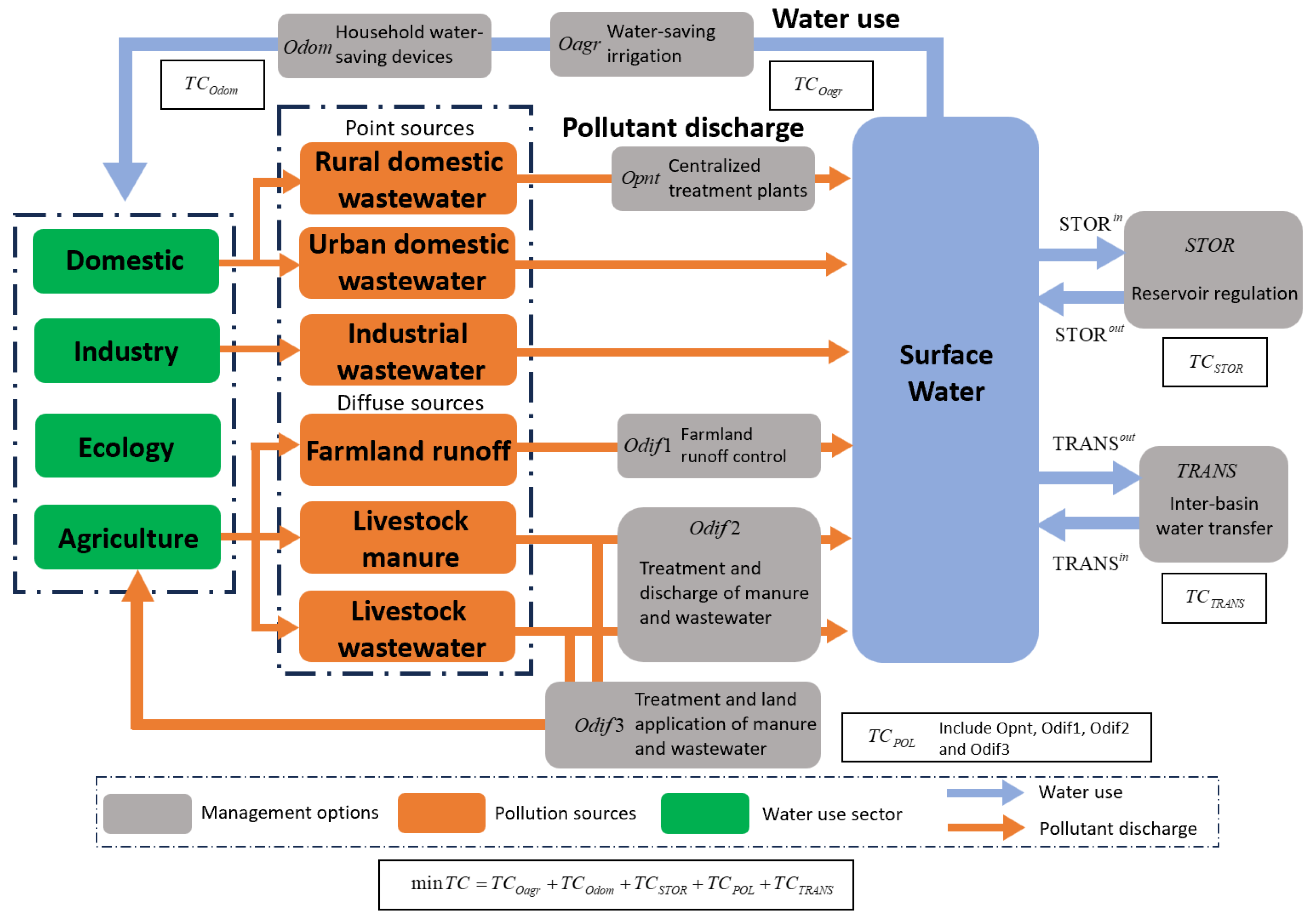
The first module adopts the method proposed by van Vliet, Flörke [13], which evaluates water scarcity by integrating quantity-based indicators and quality-related constraint. Using this indicator, we systematically assess the spatial distribution and seasonal dynamics of water scarcity across Chinese cities during the period 2021–2024, classify dominant scarcity types, and identify key driving factors. The second module develops a classification framework based on the city’s scarcity level and the monthly change of scarcity, capturing the diversity of scarcity mechanisms and providing a basis for management differentiation. The third module develops a city-scale optimization model that explicitly evaluates a portfolio of water quantity and water quality management measures and identifies cost-minimizing combinations for alleviating water scarcity under realistic constraints. The model considers a wide range of feasible interventions, including water-saving measures in agricultural and domestic sectors, inter-basin water transfer, reservoir storage regulation, point-source pollution control, farmland runoff treatment, and livestock manure and wastewater treatment. For each measure, both its implementation cost and its effectiveness in reducing water withdrawals or pollutant loads are considered. By jointly combining these measures, the model simulates how different management portfolios can collectively reduce water scarcity pressures while minimizing total management costs. In addition, the model incorporates the current implementation levels of management measures in China as baseline conditions, ensuring that the identified cost-minimizing strategies represent realistic, incremental improvements. To provide an overview of the three-module framework, Figure 1 presents a simple conceptual diagram.
This study develops an integrated modeling framework applied at a monthly scale across the vast majority of prefecture-level cities in China during the period 2021–2024 under representative hydrological and policy scenarios. The first module diagnoses the spatial distribution, dominant types, and key drivers of urban water scarcity based on observational data from 2021 to 2024 and provides a baseline for evaluating the effectiveness of mitigation strategies. Building on this, the optimization module targets representative cities with pronounced scarcity characteristics to construct a cost-minimization model, identifying optimal combinations of management interventions under real-world resource and policy constraints. The model outputs include spatial patterns of urban water scarcity, as well as differentiated mitigation pathways constrained by cost-effectiveness, supporting evidence-based regional water management. The datasets used in this study are summarized in Table 1, including the key variables, spatial and temporal resolution, and primary data sources. More detailed descriptions of data sources and associated processing information are provided in Supplementary Table S1.

2.2. Regional Water Scarcity Assessment

We adopted the integrated evaluation model proposed by van Vliet, Flörke [13] and Ma et al. [37]. The model developed in this study comprehensively incorporates four major water use sectors: ecological, domestic, industrial, and agricultural water use. In addition, and in order to gain a deeper understanding of water scarcity in China, this study incorporates a broader set of water quality parameters than previous research, including four representative indicators as constraints: total nitrogen (TN), total phosphorus (TP), ammonia nitrogen (NH3–N), and chemical oxygen demand (COD). The comprehensive water-scarcity index consists of two components: the water-scarcity index based on quantity and the water-scarcity index based on quality. The quantity-based water-scarcity index is defined as the ratio of total water withdrawals to available water resources:
W S q u a n t i t y = D m Q E F R
where W S q u a n t i t y is the quantity-based water scarcity; Q is water availability; D m is water withdrawal for sector m (including domestic, agricultural, industrial, and ecological water-use sector); E F R is environmental-flow requirements. Incorporating environmental-flow requirements into water-scarcity assessments allows for an evaluation that prioritizes the sustainable development of local ecosystems. Water availability and withdrawal data are sourced from the China Water Resources Bulletin [27,28,29,30]. The original data are reported on an annual basis and are disaggregated into monthly data using water availability data [38,39] and the disaggregation method for withdrawal data from previous studies [40,41,42] (see Supplementary Notes S1 and S2 for details of the disaggregation method). The E F R is calculated based on variable monthly flow approach [15], assigning 60%, 45%, and 30% of the average monthly natural runoff to ecological needs during low, medium, and high flow periods, respectively.
For the quality-based water-scarcity indicator, the additional volume of water needed to dilute non-compliant water to acceptable quality standards is evaluated and subsequently compared to the available water (this kind of dilution does not necessarily occur in reality, it is only a method to simulate the effect of water quality on water availability [13]. This approach quantifies the water scarcity arising from inadequate water quality:
W S q u a l i t y = m d q m Q E F R
d q m = max d q m , n
d q m , n = 0 , C n C max m , n D m C n C max m , n 1 , C n > C max m , n
where W S q u a l i t y is the quality-based water scarcity; d q m , n represents the additional amount of water required for sector m to dilute the water quality parameter n in order to transform non-compliant water into usable water. C n is the concentration of water quality parameter n ; C m a x m , n represents the maximum acceptable concentration of water quality parameter n for sector m . Water-quality data (2021–2024) were provided by the national environmental monitoring network including 3641 sampling sites (Supplementary Table S1). The maximum acceptable concentration of water-quality parameter n for sector m was determined according to the Chinese national standard GB 3838-2002 [43]. These thresholds of water-quality parameters represent the minimum water quality requirements for sector-specific uses: COD = 20.0 mg L−1, NH3-N = 1.0 mg L−1, TN = 1.0 mg L−1 and TP = 0.2 mg L−1 for domestic uses (water quality level I–III), COD = 30.0 mg L−1, NH3-N = 1.5 mg L−1, TN = 1.5 mg L−1 and TP = 0.3 mg L−1 for industrial uses (water quality not inferior to level IV), and COD = 40.0 mg L−1, NH3-N = 2.0 mg L−1, TN = 2.0 mg L−1 and TP = 0.4 mg L−1 for agriculture uses and eco-environmental compensation (water quality not inferior to level V).
Combined water scarcity W S is determined by combining the indicators for both quantity-based water scarcity and quality-based water scarcity:
W S = W S q u a n t i t y + W S q u a l i t y
According to previous studies [1,37], water scarcity (WS) was classified into four levels. When WS < 1, the condition was defined as low water scarcity. A range of 1 < WS < 1.5 was considered moderate water scarcity, while WS > 2 indicated severe water scarcity.

2.3. Classification of Scarcity Types

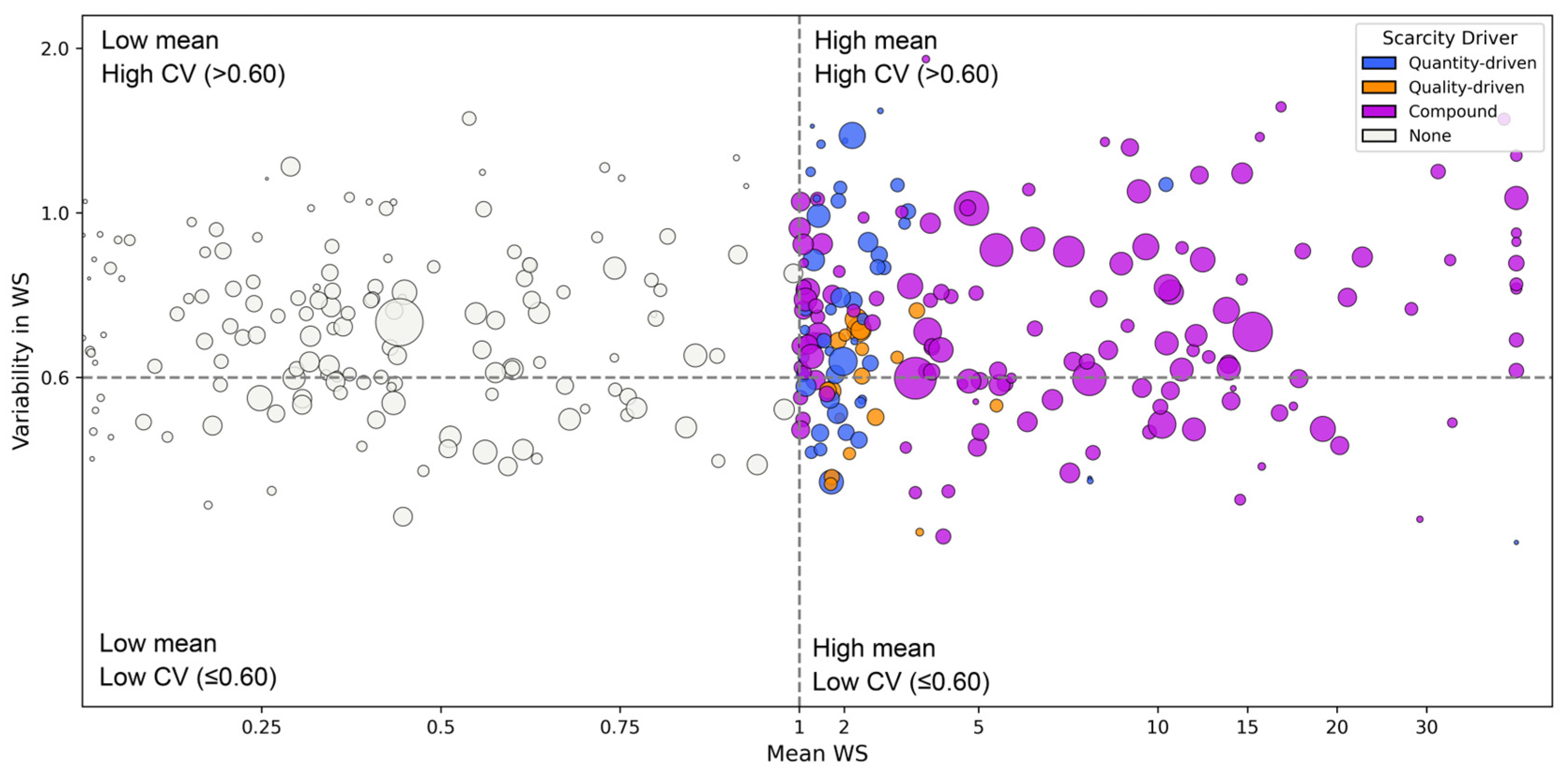
Water scarcity in China is characterized by significant complexity and temporal variability, making it impractical to apply a single management measure nationwide. Therefore, it is necessary to develop a classification framework to provide directional guidance for context-specific management. The classification relies on two diagnostic indicators: the annual mean and the coefficient of variation (CV) of monthly water scarcity (WS) rates. WS is defined as the ratio of dilution-adjusted water demand to available water supply, with values exceeding 1 indicating the occurrence of water scarcity. This threshold follows established conventions in structural scarcity assessment [1,44]. The coefficient of variation (CV), calculated as the ratio of the standard deviation to the mean, is widely employed in hydrological studies to quantify the seasonality of water availability [45,46]. In this study, CV is used as a coarse proxy to describe the intra-annual variability of WS. Previous studies commonly classify precipitation variability as low when CV < 0.2, moderate at 0.2–0.3, and high when CV exceeds 0.3–0.4, with strongly seasonal (e.g., monsoonal or semi-arid) climates frequently exhibiting substantially higher CV values [47]. In the context of river flow, variability tends to be more pronounced than rainfall variability because hydrological processes amplify seasonal concentration and episodic extremes [48]. Accordingly, several hydrological studies adopt CV ≈ 0.6 (60%) as a practical cutoff to distinguish strongly seasonal or highly variable flow regimes, and this threshold is also derived from a previous study [49]. A CV of 0.6 implies that the magnitude of monthly fluctuations is comparable to or greater than half of the mean value, indicating large intra-annual swings and a pronounced concentration of water availability in limited periods. On this basis, this study adopts CV = 0.6 to differentiate cities with pronounced intra-annual water-scarcity fluctuations from those with relatively stable conditions.
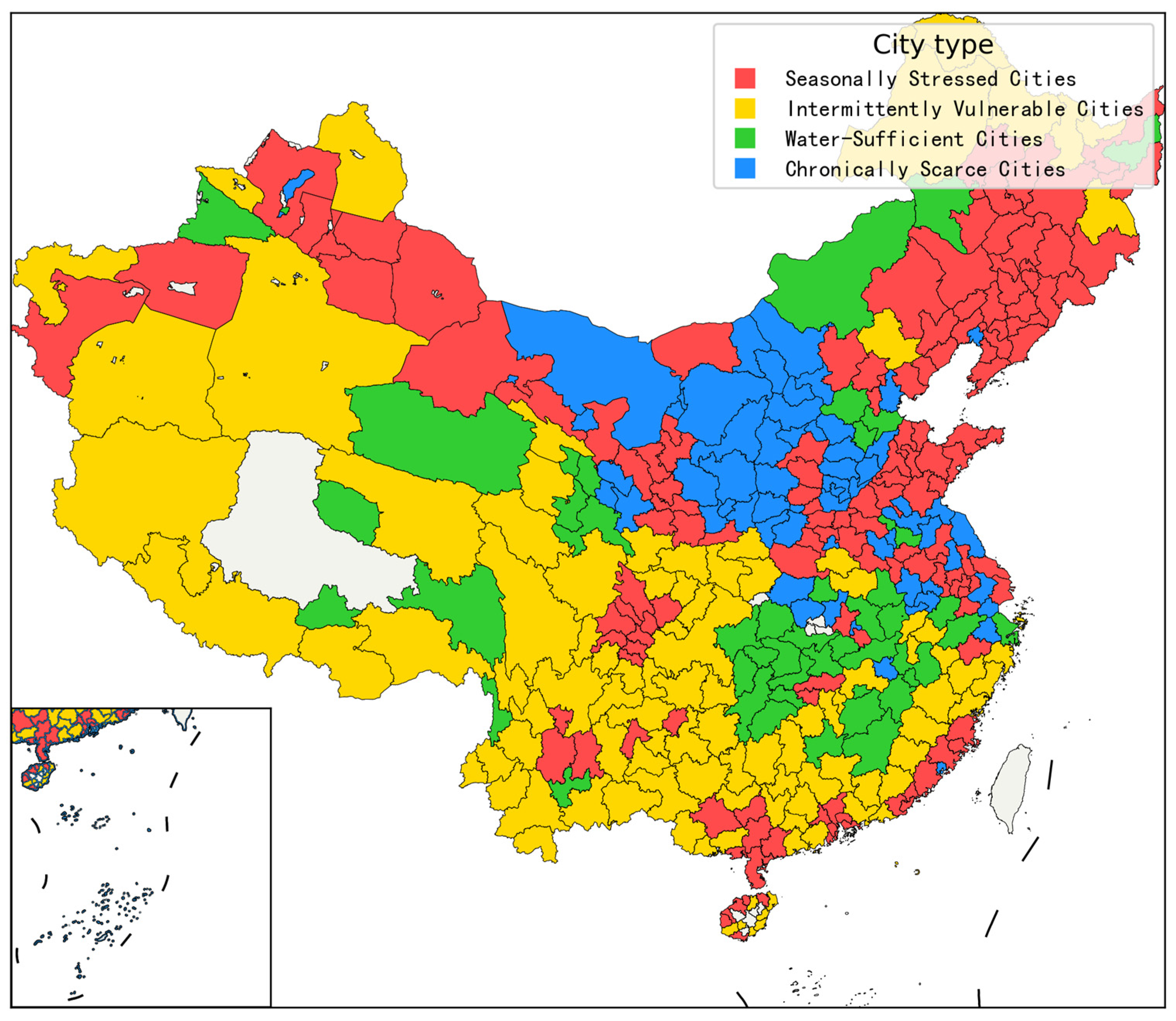
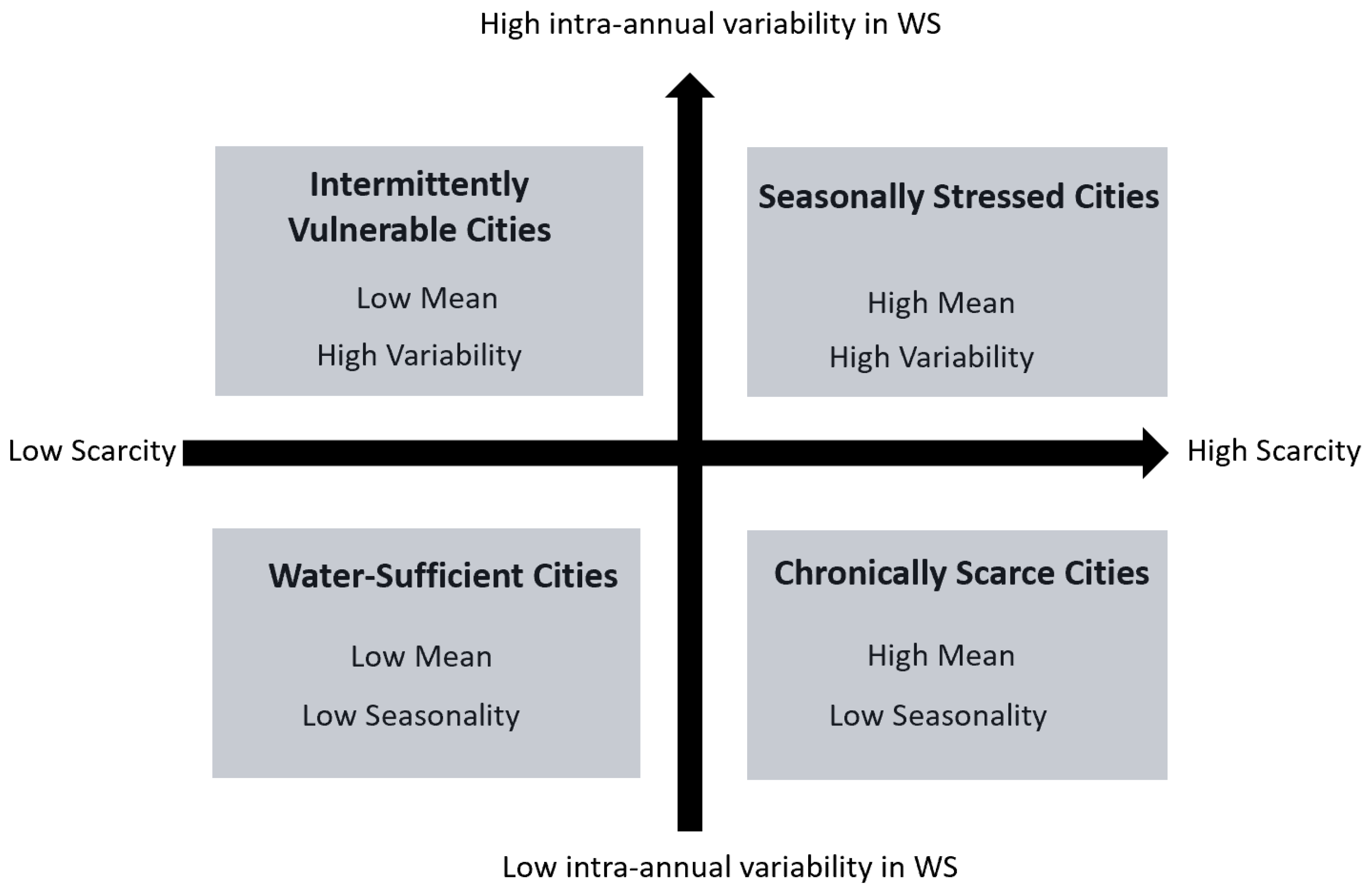
Based on the joint distribution of mean and CV, cities are categorized into four water-scarcity types, as illustrated in Figure 2. Specifically, they are: (1) Seasonally stressed cities, where scarcity has a high mean and high variability, indicating not only a relatively high overall level of scarcity but also pronounced intra-annual fluctuations. (2) Intermittently vulnerable cities, where scarcity has a low mean but high variability and may encounter the risk of temporary shortages. (3) Water-sufficient cities, where scarcity has a low mean and low variability, the level is relatively low and intra-annual fluctuations are not obvious, and water supply is relatively sufficient and stable. (4) Chronically scarce cities, where scarcity has a high mean but low variability. These cities remain in a structural scarcity state throughout the year, with high scarcity intensity but limited fluctuation.

2.4. Water-Scarcity Optimization Model

2.4.1. Water-Scarcity Management Options

To identify cost-effective strategies for alleviating water scarcity, this study incorporates a diverse portfolio of water-scarcity management options into the optimization framework. The management measures selected in this study are consistent with both the practical context of water scarcity and pollution control in China and the strategic orientation of national policies. On the one hand, agricultural irrigation remains the largest water-consuming sector in China, where inefficient irrigation practices and agricultural non-point source pollution exacerbate water shortages and pollutant loads [25,50]; rural environmental infrastructure is relatively underdeveloped, with a domestic wastewater treatment rate of only 25.5%, far lower than that in urban areas [51]; meanwhile, a large amount of manure and wastewater from livestock production remains insufficiently treated in most regions. In China, chemical oxygen demand (COD) emissions reached 21.44 million tons, of which 46.67% originated from livestock breeding [52]. On the other hand, the Chinese government has explicitly called for the promotion of water-saving irrigation, the wider adoption of household water-saving devices, the expansion of rural wastewater-treatment facilities, and the safe disposal and resource utilization of livestock manure in a series of plans and standards, such as the 14th Five-Year Plan for Water Security [53] and the 14th Five-Year Plan for the Comprehensive Management of Water Environment in Key River Basins [51]. Therefore, incorporating these water-saving and pollution-control measures into the optimization model is not only scientifically necessary but also highly aligned with policy priorities, ensuring that the model reflects real-world management conditions while remaining consistent with national strategic directions.
Water-quantity management strategies consist of water-saving technologies for agriculture and domestic sectors, as well as regulation of surface storage and inter-basin water transfer. Agricultural water-saving management options ( O a g r ) include low-pressure pipe irrigation, micro-irrigation, and sprinkler irrigation, which have demonstrated significant water-saving efficiency according to national irrigation modernization plans. Domestic measures ( O d o m ) refer to the installation and adoption of domestic water-saving appliances (e.g., water-efficient faucets, showerheads, toilets, and washing machines), which reduce per capita household water demand rather than altering supply. In parallel, reservoir storage and transfer schemes are incorporated to capture the spatial–temporal heterogeneity of water availability. These measures reflect institutional efforts to establish a multi-source, regionally coordinated water-supply framework in China.
Water-quality management measures focus primarily on pollution reduction to decrease contaminant loads and enhance water usability, thereby alleviating quality-induced water scarcity. Two categories of interventions are included in this study. The first category addresses diffuse pollution control, encompassing management of agricultural runoff and resource-based reuse of livestock manure and aquaculture wastewater. Agricultural runoff control ( O d i f 1 ) denotes the interception and treatment of agricultural non-point source runoff through engineered measures such as grassed swales and constructed wetlands, thereby reducing nutrient and organic pollutant delivery to surface waters. The treatment of mixed livestock manure and wastewater for compliant discharge ( O d i f 2 ) represents a management option in which manure and wastewater are jointly treated to meet discharge standards. Separate treatment of livestock manure and wastewater followed by land application ( O d i f 3 ) represents a management option in which manure and wastewater are treated independently and then returned to farmland as organic fertilizer and irrigation water, thereby reducing direct pollutant discharge while promoting resource recycling. The point-source pollution-control options ( O p n t ), emphasizing the construction of rural domestic sewage collection and treatment systems to increase rural wastewater-treatment rates, are included to reduce direct pollutant discharges from rural households. Expanding and upgrading township sewer networks and decentralized treatment facilities can substantially reduce direct pollutant discharges from domestic sewage, thereby protecting and improving the quality of drinking-water sources and ecological water bodies. All management options in this study are summarized in Table 2.

2.4.2. Optimization Model Design

This study develops a city-scale optimization model for water resource management, with the core objective of minimizing the total management cost while ensuring effective mitigation of water scarcity (Figure 3). The model simultaneously incorporates both water quantity and water quality pressures, and integrates multiple management options, including agricultural water-saving irrigation, domestic water conservation, point-source pollution control, non-point source management (farmland runoff, livestock manure, and wastewater), reservoir regulation, and inter-basin water transfer. It systematically simulates how different combinations of these measures improve the water scarcity index and affect overall costs. The rationale for adopting this modeling approach lies in the fact that urban water scarcity in China exhibits complex spatiotemporal heterogeneity and is often driven by multiple interacting mechanisms, making simple assessments insufficient to guide practical interventions. Beyond quantifying the severity of scarcity, the model provides location-specific management pathways, thereby bridging the gap between assessment and implementation and facilitating the translation of research findings into actionable policy recommendations.
The optimization model aims to minimize the total management cost by simultaneously considering multiple categories of measures, including agricultural and domestic water saving, reservoir regulation, inter-basin water transfer, point-source control, and nonpoint-source control. The objective function is expressed in Equation (6):
min T C = TC O a g r + TC O d o m + T C S T O R + T C P O L + T C T R A N S
where T C is the total cost, T C O a g r , T C O d o m , T C S T O R , T C P O L and T C T R A N S represent the costs of agricultural water saving, domestic water saving, reservoir regulation, pollution control, and inter-basin water transfer, respectively.
Simulation of water-quantity management options. The water-quantity measures include agricultural and domestic water saving, reservoir regulation, and inter-basin water transfer. Equation (7) defines monthly available water in city j as natural runoff minus water stored in reservoirs and exported to other basins, plus reservoir releases and imported transfer water; Equation (8) calculates the total water saving in city j as the sum of agricultural and domestic water savings. Agricultural water saving is estimated as the product of total agricultural water demand, the coverage rate of water-saving measures, and the corresponding water-saving efficiency of agricultural technologies. Domestic water saving is calculated as the product of monthly water saving per water-saving appliance, the regional coverage rate, and the total population. The water-saving efficiencies of agricultural and domestic water-use measures were referenced from previous studies [24,35]; Equation (9) specifies the reservoir mass balance constraint, and constrains annual reservoir operations by requiring that total storage inflow equals total storage outflow over the year; and Equation (10) ensures that the volume of inter-basin water exports cannot exceed the local surplus water, by constraining water transfers to occur only after satisfying environmental-flow requirements and local water demands.
Qa j = Qn j STOR j i n + STOR j o u t + TRANS j i n TRANS j o u t
T S j = O a g r D a , j X O a g r S O a g r + O d o m S O d o m X O d o m P 10 12
j = 1 12 STOR j i n = j = 1 12 STOR j o u t  
TRANS j o u t Q a j E F R m D m , j
where
Qa j : total available water quantity in month j (billion m3).
Qn j : natural river runoff in month j . (billion m3)
STOR j i n , STOR j o u t : amount of water that goes into/taken out of the storage in month j (billion m3).
TRANS j i n , TRANS j o u t : imported/exported water volume from water transfers (billion m3).
D a j : agricultural sector water demand in month j (billion m3).
X O a g r : implementation rate of agricultural water-saving measures (0–1).
S O a g r : share of water use that is saved by implementing agricultural water-saving measures (0–1). Specific values are provided in Supplementary Table S2.
X O d o m : coverage rate of domestic water efficient appliances (0–1).
S O d o m : domestic water saving from water efficient appliances (dm3·capita−1·d−1).
P : total population (number of individuals).
E F R : total amount of water for the environmental flow requirements (billion m3).
D m , j : Water demand of sector m in month j (billion m3).
Simulation of water pollution management options. Pollutants discharged at the source do not fully enter surface water, as part of them is retained, decomposed, or settled during soil infiltration, surface runoff, ditches, or wetland processes. Accordingly, reduction in pollutant discharge does not completely translate into surface water concentrations. To address this, delivery coefficients are introduced to simulate the fraction of reduced pollutant loads that eventually reach surface water bodies, thereby linking pollution abatement to ambient water quality. Because the estimation of delivery coefficients requires long-term synchronous monitoring of both water quality and water quantity, the delivery coefficients used in this study were adopted from previous studies conducted in China [55], specific values are provided in Supplementary Table S3.
Equation (11) estimates the total local pollutant load based on the pollutant concentration in surface water and the total volume of surface water bodies [26]. Equation (12) estimates the pollutant concentration in surface water after pollution management by subtracting the total pollutant reduction achieved by all point- and non-point-source measures from the pollutant load, and then dividing the remaining load by the available surface water volume in city j. The reduction effects of pollution-management measures are simulated by quantifying the pollutant load reductions delivered to surface water bodies from different point-source and diffuse-source interventions. For point-source wastewater treatment measures, pollutant reduction is estimated based on the treated wastewater volume and the difference between influent and effluent pollutant concentrations, adjusted by a delivery coefficient to represent the fraction of reductions ultimately reaching surface waters. For diffuse-source measures, including farmland runoff mitigation and livestock manure and wastewater management, pollutant reduction is calculated as a function of implementation coverage, treated area or volume, technology-specific removal efficiencies, and corresponding delivery coefficients. Detailed formulations are provided in Supplementary Note S3.
P L n , j = C n , j Q n j 10 3
C n , j t r e a t e d = P L n , j O p n t R L O p n t , n , j + R L O d i f 1 , n , j + R L O d i f 2 , n , j + R L O d i f 3 , n , j Q a j 10 3
where
P L n , j : total load of pollutant n in month j (ton).
C n , j : observed surface concentration of pollutant n in month j (mg·L−1).
R L O p n t , n , j : reduction in pollutant n load in month j due to point source pollution management options (ton).
R L O d i f 1 , n , j , R L O d i f 2 , n , j , R L O d i f 3 , n , j : reduction in pollutant n load in month j due to diffuse source pollution management options (ton).
C n , j t r e a t e d : projected surface concentration of pollutant n in month j , after applying additional pollution control measures beyond the current baseline (mg·L−1).
Implementation constraints of management options. In practice, many Chinese regions have already partially implemented measures such as agricultural water-saving irrigation, rural wastewater treatment, and livestock manure management. Assuming zero implementation would not only deviate from policy reality but also overestimate the available potential. Therefore, this study incorporates the already-implemented shares of these measures as baseline conditions. Equations (13)–(17) impose upper bounds on the implementation levels of different water-saving and pollution control measures. These constraints ensure that the decision variables do not exceed the remaining implementation potential beyond existing baseline conditions, such that the sum of measure coverage is limited by one minus the corresponding baseline implementation rate. In this way, the model not only reflects the constraints of existing water management practices but also provides more targeted incremental optimization pathways, thereby enhancing both policy relevance and practical applicability. The baseline scenario data of each region are derived from the official reports of each region and the statistical yearbook. The coverage of high-efficiency irrigation in each city was obtained from the China Water Resources Statistical Yearbook [56]. The penetration rate of water-saving appliances was derived from municipal water-saving reports [57,58]. The rural domestic wastewater treatment rate was obtained from the China Urban–Rural Construction Statistical Yearbook [59]. No nationwide statistics exist for farmland runoff treatment. However, according to the 2021 Implementation Plan for Agricultural Non-Point Source Pollution Control and Supervision (Trial), China has carried out pilot projects for farmland tailwater treatment in some counties. Therefore, farmland runoff treatment in China is still at the pilot stage. This aligns with existing research [25], which indicates that in most regions, farmland runoff is discharged directly into rivers without treatment, relying only on natural attenuation and the farmland’s own water-retention capacity. Therefore, the coverage rate of farmland runoff treatment was set to zero in this study. The utilization rates of livestock and poultry manure and wastewater were obtained from the reports of the Ministry of Agriculture and from municipal implementation plans for the resource utilization of livestock and poultry breeding waste [60,61]. Detailed parameter values are listed in Supplementary Table S7.
O a g r X O a g r 1 E O a g r b a s e
X O d o m 1 E O d o m b a s e
X O d i f 1 1 E O d i f 1 b a s e
X O d i f 2 + X O d i f 3 1 E L M W b a s e
O p n t X O p n t 1 E O p n t b a s e
where
E O a g r b a s e , E O d o m b a s e , E O p n t b a s e , E O d i f 1 b a s e , E L m w b a s e : baseline coverage proportion of management options, representing the fraction of the measure already implemented prior to optimization (0–1).
X O d i f 1 , X O d i f 2 , X O d i f 3 : coverage rate of diffuse source pollution-management options, including farmland runoff management option ( X O d i f 1 ), livestock manure and wastewater discharge after treatment ( X O d i f 2 ) and land application ( X O d i f 3 ) (0–1).
Water scarcity constraints. After the implementation of management measures, it is necessary to recalculate the post-treatment water scarcity. Equations (18)–(21) describe the water-scarcity constraints after implementation of management measures. Equation (18) defines the monthly water-scarcity level in city j as the ratio between effective water demand and water available for human use: the numerator consists of total sectoral water demands minus total water saving ( T S j ) plus the additional dilution water required for each sector ( m d q m , j ), while the denominator is the available water quantity ( Q a j ) minus the environmental-flow requirement (EFR). Equations (19) and (20) determine the dilution water d q m , n , j using a grey-water-footprint approach [3]. The dilution water refers to the additional amount of dilution water required to dilute the water that does not meet the sectoral water quality requirements into water that meets the requirements. For each sector m and pollutant n, Equation (20) first computes the extra water d q m , n , j needed to dilute the post-treatment concentration C n , j t r e a t e d down to the sector-specific standard C m a x m , n : no dilution is required if the standard is met, whereas when C n , j t r e a t e d exceeds C m a x m , n the additional dilution water is proportional to sectoral demand. Equation (19) then takes the maximum d q m , n , j across pollutants, so that dilution water for each sector is governed by the pollutant requiring the largest volume. At the same time, it is required that the scarcity intensity does not exceed the threshold commonly used in previous studies (e.g., WS < 1 for low, 1 < WS < 1.5 for moderate, WS > 2 for severe) [37], as specified in Equation (21).
W S j = m D m , j T S j + m d q m , j Q a j E F R
d q m , j = max n d q m , n , j
d q m , n , j = 0 ,   C n , j t r e a t e d C max m , n D m , j C n , j t r e a t e d C max m , n 1 , C n , j t r e a t e d > C max m , n
W S j W S t h r e s h o l d
where
W S j : level of water scarcity in month j after the implementation of management measures.
T S j : total water savings in month j .
d q m , n , j : additional volume of dilution water required in month j to meet the water quality standard for pollutant n demanded by sector m .
C max m , n : maximum allowable concentration of pollutant n in water used by sector m (mg·L−1).
Cost simulation. The total management cost is calculated by aggregating the costs of different categories of water-quantity and water-quality management measures. For water-saving measures in the agricultural and domestic sectors, total costs are estimated as the product of implementation scale and unit cost. The costs of reservoir regulation and inter-basin water transfer are calculated based on the monthly volume of regulated storage and transferred water, respectively, multiplied by the corresponding unit operating costs. For pollution control measures, including point-source wastewater treatment, farmland runoff mitigation, and livestock manure and wastewater management, total costs are calculated as the sum of annual operational costs and annualized construction costs, with construction investments amortized over the design lifetime of each facility or measure. Detailed formulations of cost function are provided in Supplementary Note S4.
During the optimization process, target scarcity thresholds were set sequentially at 2 (severe scarcity), 1.5 (moderate scarcity), and 1 (low scarcity). If these targets could not be simultaneously achieved, the objective was adjusted to minimizing the overall level of water scarcity. The optimization model was solved using Gurobi Optimizer 12.0.2 [62].

3. Results

3.1. Water Scarcity in China

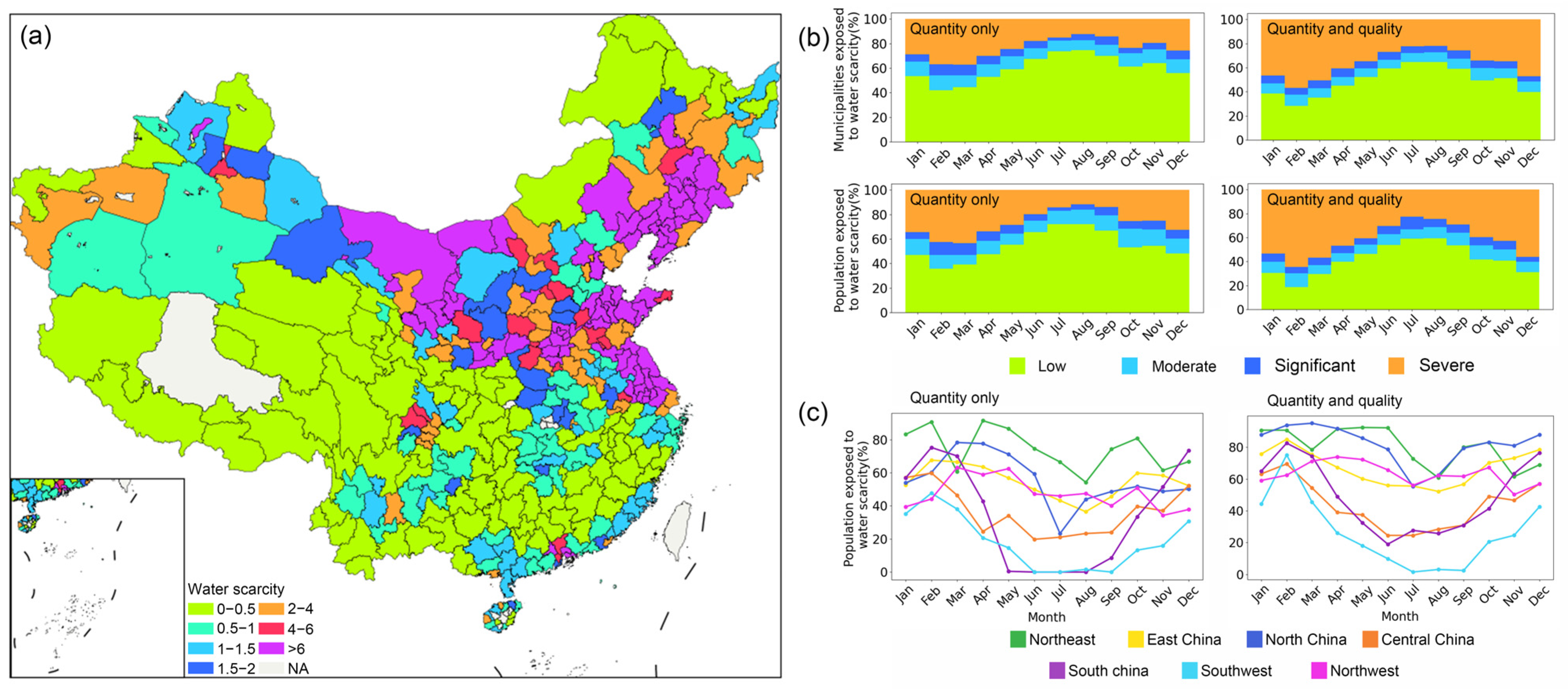
To comprehensively reveal the urban-scale water scarcity patterns in China, this study employed a diagnostic method that integrates water supply–demand balance with water quality constraints. At the annual scale, the results indicate that water scarcity is widespread across the country. As shown in Figure 4a, among the 350 prefecture-level cities assessed, 202 cities (57.71%) experienced varying degrees of water scarcity, affecting a population of 907 million, which accounts for 64.34% of the national total. Among them, North China exhibited the most severe situation, where on average 81.82% of the population was exposed to water scarcity throughout the year, significantly higher than the national level.
At the temporal scale, water scarcity in China exhibits pronounced seasonal fluctuations, with the most severe conditions occurring during the winter and spring seasons. Figure 4b illustrates the monthly variations in the number of cities experiencing water scarcity and the proportion of the affected population. February represents the peak of national water scarcity, with as many as 253 cities affected, accounting for 72.28%. By contrast, during June to August, with increasing precipitation, the number of water-scarce cities declined to 127–146, accounting for 36.29–41.71%. After incorporating water quality constraints, the proportion of the national population exposed to water scarcity increased significantly, rising by 7.56–17.17% compared with the water quantity-only scenario. Correspondingly, the number of water-scarce cities increased by 27–56 compared with the water-quantity-only scenario.
Water scarcity in China also exhibits pronounced regional disparities. Based on the seven major geographical divisions of China, the temporal trends of population exposure to water scarcity were analyzed separately (Figure 4c). The shortage problem is more severe in northern China. For example, in North China, the population exposure under the water quantity-only scenario already reached 55.57%, and further increased to 81.82% when water quality constraints were considered, representing the highest level nationwide. The Northeast and Northwest regions also showed relatively high exposure rates. Under the water quantity-only scenario, the exposure rates in the Northeast and Northwest were 74.28% and 47.65%, respectively, which increased to 80.24% and 63.23% after considering water quality impacts. By contrast, the shortage problem in southern regions was relatively moderate. For instance, in South China, only 18.15% of the population was exposed to scarcity under the water quantity-only scenario, but this increased to 26.10% when water-quality constraints were included.
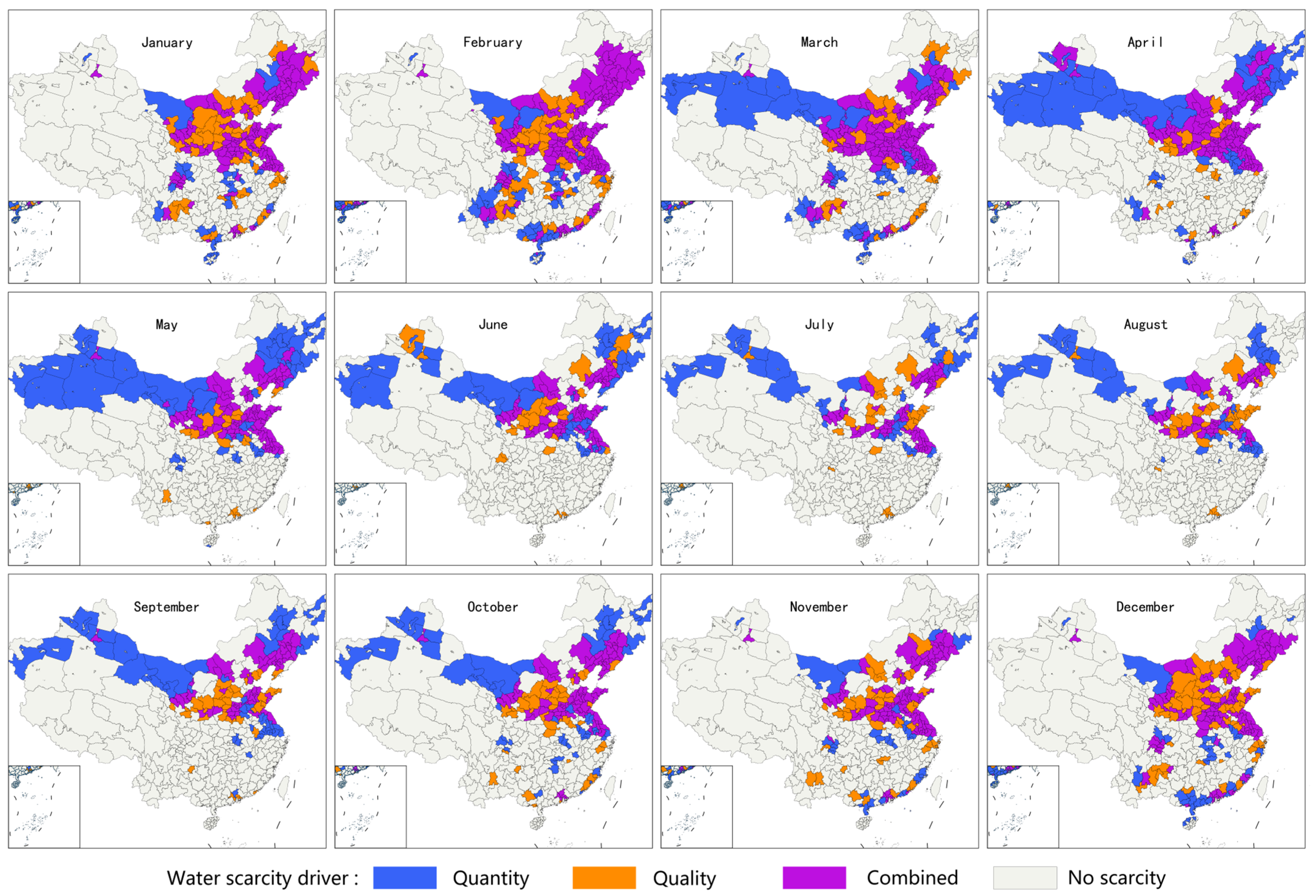
Furthermore, the driving factors of water scarcity can be categorized into three types: quantity-driven, quality-driven, and compound (quantity–quality jointly driven). As shown in Figure 5, from January to March and November to December, compound scarcity persisted across multiple regions, with relatively large numbers of affected cities. From May to August, the spatial extent of scarcity contracted noticeably; however, many northern cities remained under scarcity conditions, and in some regions, scarcity persisted year-round. In addition, some cities exhibited transitions in their scarcity-driving types across different months. For instance, Chengdu shifted sequentially from compound-driven to quantity-driven, then to non-scarcity, and finally back to quantity-driven and compound-driven from January to December. This dynamic shift in driving mechanisms across seasons reflects the temporal variability of water scarcity drivers. Overall, urban scarcity types were not fixed throughout the year but exhibited certain dynamic changes over time, highlighting the diversity and temporal sensitivity of scarcity mechanisms. Urban water scarcity in China thus demonstrates strong temporal dynamics, significant spatial heterogeneity, and clear seasonal evolution of driving factors, underscoring the complexity and variability of water-scarcity problems.

3.2. Seasonality of Water Scarcity in China

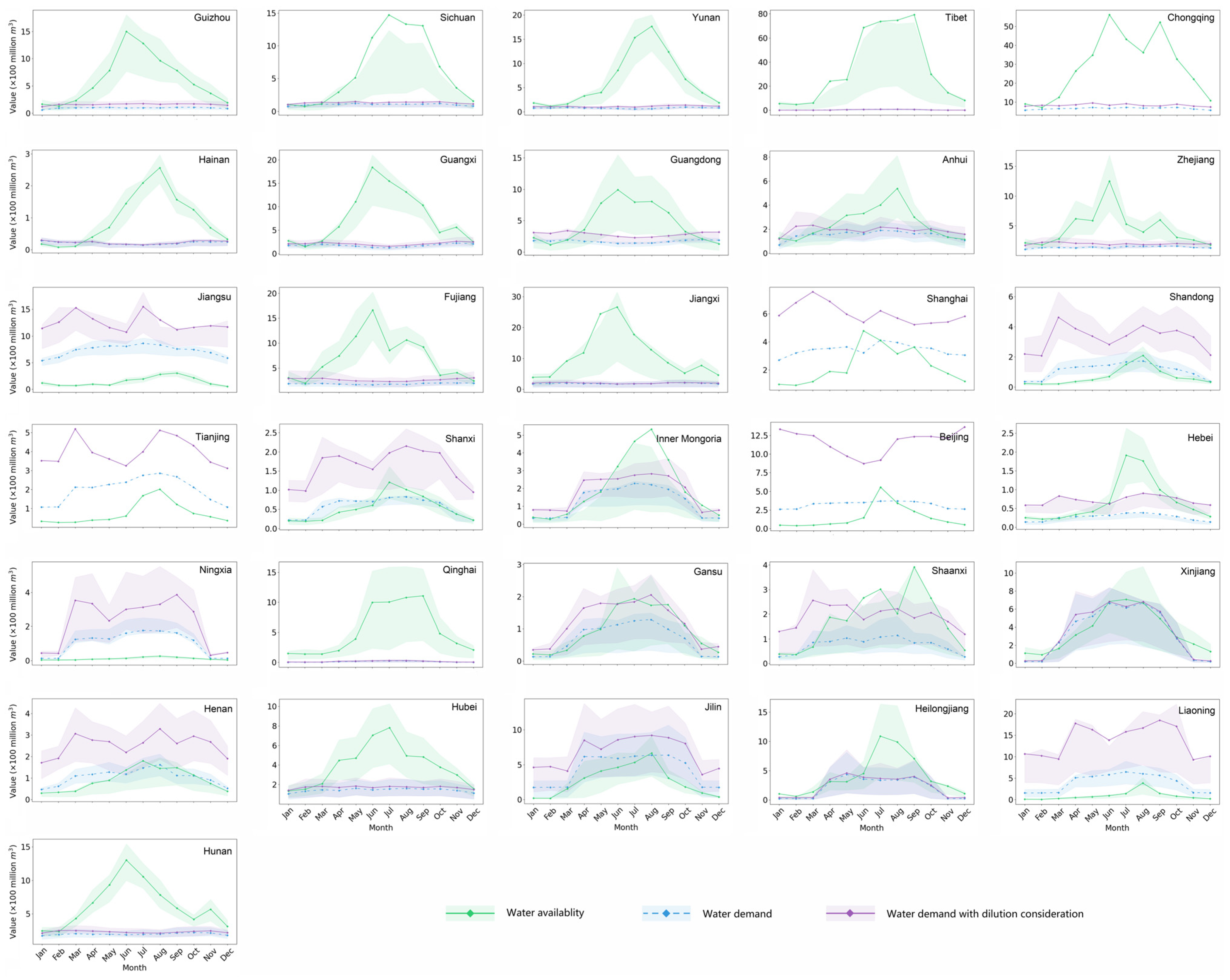
Water scarcity in China is strongly influenced by the seasonal variability of water availability. Under the water-quantity-only scenario, most southern provinces experienced water scarcity primarily during January–March and November–December, corresponding to the local dry season, when available water resources were concentrated in a few months.
For example, in Guangdong Province, the average available water resources from July to September reached 1.53–1.77 billion m3, whereas from January to March they dropped to only 0.12–0.19 billion m3 (Figure 6). The July–September average accounted for 57.76% of the annual total. In Guangxi Province, the average available water resources during May–August were 0.78–0.99 billion m3, compared with only 0.12–0.23 billion m3 in January–March, with the May–August average accounting for 60.61% of the annual total. Although the concentration period of water availability varied across provinces due to climate differences, a common feature in southern regions was the seasonal concentration of available water resources. For instance, in Guangxi, the July–September concentration coincided with the May–August pattern in Guangdong, which could easily result in inter-provincial differences in the timing of water scarcity. In contrast to the pronounced seasonal variation in water availability, water demand in southern provinces was relatively stable throughout the year. For instance, the annual average water demand was 0.06–0.1 billion m3 in Yunnan and 0.14–0.2 billion m3 in Guangdong. In northern provinces, the overall available water resources were relatively low, and water scarcity persisted across longer periods. For example, in Henan Province, the average available water resources from June to September were 0.14–0.18 billion m3 but only 0.03–0.04 billion m3 during January–March. In Hebei Province, the July–September average was 0.10–0.19 billion m3, compared with only 0.02–0.03 billion m3 in January–March. The July–September average accounted for 57.16% of the annual total. Compared with southern provinces, the northern provinces exhibited lower overall water availability, indicating that some regions might continue to face water scarcity even during relatively wet periods.
Water pollution exacerbated the severity of water scarcity during dry periods, extended the duration of scarcity, and further reinforced temporal imbalances. To more specifically illustrate how water pollution amplifies the severity of water scarcity during dry periods, Guangdong and Anhui Provinces are selected as illustrative examples. In Guangdong, the average water demand from January to April under the water-quantity-only scenario was 0.18 billion m3, which increased to 0.31 billion m3 under the combined water-quantity–quality scenario. From May to August, the corresponding values were 0.15 billion m3 and 0.25 billion m3, respectively. During January–April, the average water scarcity degree in Guangdong was 0.81 under the water-quantity-only scenario, rising to 1.40 under the combined scenario. From May to August, the scarcity degree increased from 0.17 to 0.29 after considering water-quality constraints.
In Anhui Province, the average water demand from January to April under the water-quantity-only scenario was 0.19 billion m3, rising to 0.20 billion m3 under the combined scenario. From May to August, the corresponding values were 0.18 billion m3 and 0.20 billion m3, respectively. The average water-scarcity degree in Anhui during January–April was 0.86 under the water-quantity-only scenario, which increased to 1.26 after considering water-quality constraints. From May to August, the scarcity degree rose from 0.45 to 0.50 when water-quality impacts were included. Overall, compared with the water-quantity-only scenario, the average number of months experiencing water scarcity in Guangdong increased from 3 to 5, and in Anhui from 2 to 5, with the maximum duration of consecutive scarcity rising from 1 month to 3 months.

3.3. Classification of Water Scarcity Types in China

From the classification results, many cities in China are facing severe seasonal water scarcity problems, which pose significant challenges for temporal allocation and emergency-response capacity in water security. Seasonal water scarcity primarily refers to the mismatch caused by pronounced seasonality in precipitation and water-source replenishment, while pollutant concentrations in water bodies also exhibit substantial seasonal variations. These factors further reduce water availability and intensify shortages during dry periods in certain cities, ultimately leading to large intra-annual fluctuations in scarcity levels.
According to the assessment, a total of 138 cities (39.42% of the evaluated cities) were identified as seasonally stressed cities (Figure 7). intermittently vulnerable cities numbered 103 (29.43%), sharing the common characteristic of strong intra-annual variability, high adaptation difficulty, and increased requirements for water resource regulation systems and pollution load control. In contrast, the number of water-sufficient cities was the lowest, only 45 (12.86%). Additionally, 64 cities (18.29%) were classified as chronically scarce cities, characterized by stable scarcity throughout the year. The distribution of different city types is shown in Figure 8.
In China, pollution is one of the key factors exacerbating water scarcity. All cities with an average water-scarcity (WS) intensity greater than 1 (a total of 202 cities) were classified into three categories: quantity driven, quality driven, and combined. Among these severely water-scarce cities, 135 (66.83%) were constrained by both water quantity and quality simultaneously. Quantity-driven cities numbered 49 (24.26%), mostly distributed in regions with an average WS of 1–3. Quality-driven cities accounted for only 18 (<8.91%), mainly distributed in regions with an average WS of 1–5. With increasing WS levels, the number of cities classified as solely quantity-driven or quality-driven declined sharply, and nearly all highly scarce regions (e.g., WS > 5) were compound types. This demonstrates that the synergistic impact of pollution and water shortage is the dominant feature of water-scarce cities in China. Considering city population scale, China has 14 megacities with permanent populations exceeding 10 million. Among these, 11 are seasonal scarcity cities, 2 are persistent scarcity cities, and 1 is an intermittent scarcity city, resulting in a scarcity incidence of 92.86%. Of the 13 water-scarce megacities, 11 were identified as compound type and 2 as quantity-driven type. This indicates that highly populated and densely urbanized cities in China commonly face severe water scarcity and are particularly vulnerable to the combined pressures of water quantity and quality, which substantially increases the difficulty and complexity of ensuring water security.

3.4. Results of the Optimization Model for Water-Scarcity Management

Given the limitations in data availability, it is impractical to apply the optimization model uniformly across all cities nationwide. Therefore, it is necessary to identify a set of representative cities that reflect the diversity of urban water-scarcity mechanisms, enabling a generalized yet context-sensitive modeling strategy. Given the limitations in data availability and computational feasibility, this study adopts a representative-city approach rather than conducting city-level optimization for all urban areas nationwide. The selection of representative cities was guided by three criteria: (1) The seven representative cities are distributed across the major river basins and regional hydrological systems where water-resource conflicts are most pronounced in China, including the Haihe River Basin, the Yellow River Basin, the Yangtze River Basin, the Pearl River Basin, and the southwestern river systems. This spatial distribution reflects the main geographic patterns of urban water resource challenges in China. (2) Coverage of key combinations of water scarcity types and dominant drivers identified in the city classification framework. The selected cities represent the major scarcity types, including seasonal scarcity, persistent scarcity, and intermittent vulnerability, and encompass different dominant drivers, namely quantity-driven, quality-driven, and compound stress. This ensures consistency between the selected study objects and the national water-scarcity pattern. (3) Coverage of a sufficiently wide range of water-scarcity severity. The representative cities exhibit substantial differences in water-scarcity (WS) levels and their seasonal variability, characterized by the coefficient of variation (CV). This includes cities with relatively high scarcity and pronounced variability, as well as cities with lower overall scarcity but with episodic risks. Such coverage avoids restricting conclusions to a single severity range and enhances the interpretability and transferability of the modeling results across different urban contexts.
Building on this classification, we further incorporated climate zone, watershed context, and data accessibility to finalize the selection of seven representative cities: Beijing, Wuhan, Kunming, Chongqing, Hohhot, Guangzhou, and Shanghai. Table 3 summarizes the water-scarcity characteristics and classification results of the selected cities.
Table 4 reports the outcomes of the cost-optimization model for water-scarcity management across seven major Chinese cities. After optimization, Beijing and Guangzhou still exhibit relatively high scarcity levels (4.69 and 2.27), while Kunming and Chongqing show the lowest levels (1.00 and 0.40). In terms of scarcity-reduction efficiency, Beijing and Guangzhou achieve the largest reduction rates (0.69 and 0.65). Cost burdens vary dramatically. Guangzhou incurs the highest total cost, reaching 22.74 billion CNY, followed by Shanghai at 18.16 billion CNY and Kunming at 14.85 billion CNY. Chongqing and Hohhot require much lower investments, at 0.42 and 2.15 billion CNY. Consistent with this, Guangzhou also shows the highest marginal cost, spending 0.35 billion CNY for each 1% reduction in scarcity, while Hohhot demonstrates the most cost-effective performance (0.04 billion CNY/%). Overall, different cities exhibit significantly different balances between scarcity reduction and economic cost, indicating the need for region-specific water management strategies rather than a uniform mitigation approach.
The evaluation results indicate that the selected water quantity and quality management options can alleviate water-scarcity problems to varying degrees. Water-saving measures could conserve between 0.0093 and 0.5742 billion m3 of water across different cities (Table 5). Reservoir regulation demonstrated a strong capacity to enhance water supply during dry periods, with an additional 0.073–1.6242 billion m3 of water supplied, although this was associated with relatively high construction and operation costs, ranging from 0.3837 to 8.5580 billion CNY (Table 5). Taking Beijing as an example, the South-to-North Water Transfer Project provided an additional 0.96 billion m3 of external water resources. Compared with local reservoir regulation, its unit cost was considerably lower, making it an efficient supplementary pathway.
In terms of pollution control, farmland runoff interception has been widely adopted across many cities, with an annual reduction potential of 4.80–76.65 kilotons of COD, 4.25–67.88 kilotons of TN, 0.28–4.52 kilotons of NH3-N, and 0.05–0.76 kilotons of TP, at a relatively low cost of 0.02–0.39 billion CNY, demonstrating high cost-effectiveness. Rural domestic wastewater treatment also showed significant removal efficiency, reducing 3.05–8.67 kilotons of COD, 0.24–0.69 kilotons of TN, 0.16–0.54 kilotons of NH3-N, and 0.03–0.04 kilotons of TP, with costs ranging from 0.09 to 0.15 billion CNY. Livestock and poultry manure treatment and resource utilization demonstrated the strongest reduction potential, with 4.27–65.10 kilotons of COD, 0.69–12.35 kilotons of TN, and 0.28–5.24 kilotons of NH3-N removed, at a treatment cost of 0.03–0.37 billion CNY (Table 6).
Although many Chinese cities have already implemented a wide range of water management measures, the results show that optimized allocation of water-saving, pollution control, and storage infrastructure options can effectively reduce water scarcity levels while controlling costs. Among the seven representative cities with seasonal scarcity, the degree of scarcity alleviation ranged from 9.31% to 69.32%, with total costs between 0.38 and 9.04 billion CNY, depending on city type and measure combinations. The highest cost-effectiveness was found in Hohhot, where each 1% reduction in water scarcity required only 0.04 billion CNY. By contrast, the lowest cost-effectiveness was observed in Guangzhou, where the cost per 1% reduction reached 0.37 billion CNY.
The results indicate that Guangzhou incurred the highest cost in reducing water scarcity, as its mitigation strategy relies heavily on water quantity measures such as agricultural water-saving and reservoir regulation. Although Guangzhou and Shanghai exhibit similar coverage of agricultural water-saving measures, differences in agricultural water-use intensity and crop structure result in substantially higher unit-area agricultural water demand in Guangzhou. Consequently, agricultural water-saving measures in Guangzhou are able to release larger volumes of water, but only through large-scale and high-cost implementation. This explains why Guangzhou shows the highest total mitigation cost while not exhibiting the lowest cost-effectiveness. In contrast, long-term urbanization in Shanghai has significantly reduced the share of agricultural water use within the overall water system. At the same time, high population density and intensive industrial activity have increased water demand and pollution loads from domestic and industrial sectors. As a result, further reductions in water scarcity require disproportionately higher economic investments, particularly because domestic water use is subject to the most stringent water quality requirements, which reduces the effectiveness of water-quality measures. These structural conditions ultimately lead to the lowest cost-effectiveness observed among the studied cities. Beijing follows a different optimization pathway due to its unique water infrastructure conditions. The South-to-North Water Diversion Project alleviates water-quantity constraints to a certain extent, allowing Beijing to achieve the greatest reduction in water scarcity among all cities without incurring the highest total cost.

4. Discussion

This study systematically assessed the water scarcity status of 350 prefecture-level cities across China during the period 2021–2024 and established a city classification framework based on the intensity and seasonal variability of water scarcity. It further proposed a set of differentiated and cost-optimal management combinations applicable to different types of cities and validated their effectiveness through representative case studies. The evaluation results indicate that water scarcity is not only influenced by seasonal variability in water availability but is also significantly aggravated in terms of severity and persistence by water pollution. Pollution-induced scarcity intensification and its consistency with previous findings highlight that pollution amplifies the affected population [37]. Previous studies emphasized population exposure to pollution-driven scarcity [3,21], and our study further highlights the seasonal impact of pollution on water scarcity. Pollution can exacerbate scarcity during dry periods, increase the number of months experiencing scarcity, extend the duration of consecutive scarcity periods, and consequently lead to potential excessive groundwater withdrawal and adverse impacts on crop growth [1,44].
Water scarcity in China is not a one-dimensional problem but is jointly shaped by water quantity, water quality, and pronounced seasonal variability, with different types of cities facing systematically different constraint mechanisms and cost-optimal intervention pathways. This implies that management approaches centered on annual average water conditions and dominated by single engineering measures are unlikely to deliver further, cost-effective improvements in water security on top of existing policy efforts.
For seasonally water-stressed cities, the results indicate that water scarcity is highly concentrated in specific months, being most pronounced during the winter–spring dry season. At the same time, water-quality constraints are significantly amplified in dry periods, which not only intensifies the severity of shortages but also markedly prolongs their duration. This pattern suggests that the fundamental challenge faced by these cities is not insufficient annual water availability but a structural mismatch among water quantity, water quality, and water demand at the monthly scale. Consequently, policy efforts should not continue to focus primarily on expanding supply capacity or increasing annual reliability targets. Instead, the management focus should shift to the monthly scale, explicitly incorporating water-quality constraints into both supply scheduling and demand management. Specifically, the definition and allocation of available water during dry months should be based on effective water resources after accounting for water-quality limitations, rather than solely on natural runoff or nominal engineering supply capacity. Moreover, the cost-optimization results show that under dry-season conditions, reducing pollution loads to indirectly increase usable water often yields greater benefits than supply-oriented measures such as additional abstractions or inter-basin water transfers. This implies that in seasonally stressed cities, redirecting part of water-related investment from supply expansion toward the control of agricultural non-point source pollution and livestock-related pollution can not only improve water quality but also alleviate water scarcity in critical periods in a more cost-effective manner, thereby enhancing overall regulatory efficiency.
For chronically water-scarce cities, the results of this study, with Hohhot as a representative example, indicate that water stress is not triggered by pronounced seasonal fluctuations but instead persists at a relatively stable yet elevated level throughout the year. Even during comparatively wet periods, the buffering capacity of the water-resource system remains highly limited. Taking Hohhot as a case in point, the model results show that under conditions where agricultural and domestic water-saving measures, as well as part of the supply and regulation capacity, already exhibit high baseline implementation levels, further demand-side water savings contribute only marginally to alleviating water scarcity, whereas the role of water quality constraints in amplifying effective water demand cannot be ignored. In regions where livestock production constitutes a major economic activity, long-term pressure from manure and wastewater discharges on surface water quality directly reduces water availability and thereby reinforces structural water scarcity. The cost-optimization results further demonstrate that, compared with simply tightening discharge standards or continuing to rely on high-cost water-saving engineering measures, increasing the rate of livestock-manure resource utilization and reducing direct pollutant loads to water bodies yield more stable reductions in overall water scarcity per unit cost. These findings suggest that the key policy leverage for chronically water-scarce cities lies not only in improving water-use efficiency to reduce demand but also in enhancing water availability through sustained reductions in pollution loads. Specifically, for cities such as Hohhot, positioning livestock-manure resource utilization and rural pollution control as core components of the water-resource management framework, rather than as ancillary environmental measures, is more consistent with the underlying scarcity mechanisms and more conducive to maintaining the long-term stability of the water-resource system at manageable costs.
For intermittently vulnerable cities, water scarcity is mainly characterized by the coexistence of high seasonal variability and relatively low average scarcity. In these cities, water resource conditions are generally manageable during most months, but extreme months can easily trigger a rapid crossing of scarcity thresholds, leading to episodic risks. The cost-optimization results indicate that such cities do not require the comprehensive deployment of high-standard, full-coverage management measures. Instead, they are better served by a set of low-cost and highly targeted interventions that reduce the probability of severe shortages in extreme months. For example, adopting cost-effective, basic agricultural water-saving technologies together with medium-standard rural wastewater treatment measures can substantially dampen the impact of seasonal fluctuations on the water resource system without imposing a heavy fiscal burden. By prioritizing the mitigation of extreme monthly scarcity events, rather than the complete elimination of water scarcity, these cities can achieve a more favorable balance between risk reduction and management costs.
Existing studies have confirmed that China’s current water-scarcity management measures have already benefited over 1.1 billion people, alleviating water scarcity to varying degrees [21,63]. Our findings further demonstrate that through optimized combinations of water quantity and quality management options, water scarcity can be reduced by an additional 9.31–69.32% under cost-minimization conditions. Agricultural nonpoint source control, particularly farmland runoff interception, is recognized as a cost-effective measure with strong pollution-reduction potential. Although nearly all cities adopted farmland runoff interception in the model results, China’s current agricultural pollution-control system still suffers from insufficient investment and limited scale, with agriculture remaining the dominant nonpoint pollution source in many regions [25,64]. Thus, farmland runoff interception not only represents the most cost-efficient option but also serves as an indispensable supplement to existing management strategies.
Compared with existing studies, previous research has demonstrated at the national scale that incorporating water quality constraints can substantially increase estimated water scarcity levels relative to quantity-only assessments (e.g., Ma et al. [37]). However, such studies largely remain at the diagnostic stage and do not further quantify the extent to which water scarcity can be alleviated through optimized management under current conditions. Other modelling efforts have explored the cost-effectiveness of water-quantity and water-quality measures under future or hypothetical scenarios, often at the basin scale (e.g., Baccour et al. [26]), but these analyses typically focus on a single water-quality parameter and do not explicitly account for the mitigation measures that have already been widely implemented in China. Similarly, nationwide assessments that consider existing large-scale solutions (e.g., Li et al. [21]) primarily evaluate their influence on scarcity patterns rather than identifying cost-optimal combinations of management actions. Building on these studies, the proposed framework advances existing approaches along several key dimensions, as summarized in Table 7. Specifically, this study integrates water-quantity constraints with multiple water-quality parameters within a unified scarcity indicator and incorporates existing mitigation measures as baseline conditions. Moreover, by embedding the scarcity diagnostics into a cost-minimization framework, the model is able to identify cost-optimal management strategies under dual quantity and quality constraints. In addition, this study introduces a scarcity-based classification framework to characterize heterogeneity in scarcity intensity and seasonal variability across cities, supporting differentiated water-management strategies. Together, these features distinguish the proposed framework from closely related water-scarcity modelling studies and enhance its relevance for practical water-resource management.
In order to evaluate the robustness of the optimization framework, three sensitivity analyses were conducted. The detailed numerical results of these analyses are reported in Supplementary Tables S9–S11, and their key implications are summarized below. The first analysis examines uncertainty in the unit costs of major water-management and pollution-control measures and shows that cost perturbations mainly affect total management costs, while post-optimization water-scarcity levels and the overall structure of optimal management portfolios remain largely unchanged. The second analysis focuses on uncertainty in pollutant-delivery coefficients for agricultural non-point source pollution, domestic wastewater, and livestock manure and wastewater; variations in these parameters lead primarily to limited reallocations among pollution-control measures, with negligible effects on overall water-scarcity outcomes. The third analysis evaluates uncertainty in baseline coverage assumptions representing existing implementation levels of management measures and indicates that, although total costs and portfolio composition may vary—particularly in large cities and agriculturally dominated regions—post-optimization water-scarcity levels remain generally stable. Taken together, these analyses demonstrate that, under reasonable uncertainty ranges, parameter variability mainly influences cost allocation and measure selection, whereas the effectiveness of water-scarcity mitigation is relatively robust.
The baseline coverage constraints (Equations (18)–(21)) play a critical role in introducing realism into the optimization model by explicitly incorporating the proportions of water management and pollution control measures that had already been implemented prior to the study period. These constraints restrict the model to explore only incremental improvements built upon existing implementation levels. By imposing upper bounds on decision variables, the baseline coverage constraints directly reduce the feasible solution space of the optimization problem. For measures with already high baseline coverage—such as domestic water-saving appliances in large cities or highly efficient irrigation technologies that have been widely adopted in some regions—the potential for further expansion is strictly limited. As a result, the model cannot reduce water scarcity or costs by unrestricted expansion of a single measure. Instead, the optimization process must trade off among measures that still have remaining implementation potential, leading to more diversified management portfolios. From the optimization results, the baseline coverage constraints are found to have a significant impact on the structure of optimal management portfolios and on substitution patterns among different measures, while uncertainty in baseline coverage has only a limited effect on post-optimization water scarcity levels. According to the sensitivity analysis, in most cities these constraints primarily influence total management costs by altering the allocation of investments among demand-side water-saving measures, water quality improvement options, and engineering-based regulation measures, without inducing substantial changes in water scarcity intensity. The inclusion of baseline coverage constraints therefore helps to avoid overestimation of the potential of individual measures and provides more feasible and policy-relevant management pathways for decision-making.
A linear cost assumption is adopted in the construction of the optimization model in this study. This assumption is widely used in previous study [26,34], as it facilitates model solvability and enables consistent comparison across regions. Linear cost assumption may introduce uncertainty, especially when measures approach their implementation upper limits, where marginal costs may exhibit nonlinear changes. From a theoretical perspective, the linear cost assumption may either underestimate or overestimate the actual costs of certain measures at high coverage levels. For example, residential water-saving appliances, high-efficiency agricultural irrigation, or pollution-control facilities typically have relatively low unit costs during the early stages of deployment; however, as the implementation scale expands, the remaining potential tends to be concentrated in areas with poorer technical conditions and higher implementation difficulty, where marginal costs may increase substantially. Nevertheless, the cost parameter sensitivity analysis provides indirect evidence for assessing the influence of the linear cost assumption on the core conclusions. The sensitivity analysis shows that, under scenarios in which the unit costs of major management and pollution control measures are increased by 25% and 50%, the optimized level of water scarcity (WS) remains stable in most cities, and the optimal management pathways do not undergo substantial changes. This indicates that, within a reasonable range, even if actual costs exhibit a certain degree of nonlinearity or uncertainty, the effectiveness of water scarcity mitigation and the selection of management pathways are highly robust to the cost assumptions. Changes in costs are mainly reflected in total management costs and unit costs of scarcity reduction, and are unlikely to overturn the primary governance directions revealed by the optimization results. Overall, the use of a linear cost assumption in this study represents a reasonable methodological simplification, which facilitates systematic comparison of the cost effectiveness of different measures across cities at the national scale. Combined with the results of the cost-parameter sensitivity analysis, we conclude that this assumption does not significantly affect the core conclusions regarding water-scarcity mitigation effectiveness and overall management pathways.
Uncertainty in water-quality monitoring data may affect the model results, as the estimation of quality-constrained water scarcity in this study relies directly on observed pollutant concentrations. Such uncertainty primarily operates by altering the estimated amount of dilution water required. If monitoring concentrations are higher than the actual citywide average water quality, the model may overestimate the effective water demand induced by water-quality constraints; conversely, if monitoring stations are predominantly located in relatively better-quality waters, the impact of quality constraints on the water-resource system may be underestimated. Because the characterization of water-quality constraints in the model is based on whether pollutant concentrations exceed sector-specific water-quality standards, rather than on extreme values from individual monitoring sites, the framework is still capable of capturing the systemic influence of water quality on water availability at the aggregate level. From an optimization perspective, uncertainty in water-quality monitoring data may lead to changes in the scale of implementation of different pollution control measures in the optimal solution, but such effects are mainly reflected in the intensity of measure deployment rather than in the overall strategic direction. In other words, even in the presence of monitoring uncertainties, the model consistently favors management pathways that reduce pollution loads and alleviate pressure on water bodies in cities where water-quality constraints are significant, rather than shifting toward strategies that rely exclusively on supply expansion to replace water quality improvement.
Nevertheless, this study has certain limitations in diagnosing and simulating scarcity and management options. First, the data largely rely on statistical yearbooks and monitoring records, and uncertainties exist in pollutant discharge and treatment cost parameters for some cities, which may affect model accuracy. Second, the simulation was constrained by computational limits, and the optimization was applied only to representative cities, rather than all cities nationwide. Third, the model’s applicability under extreme climate conditions (e.g., prolonged droughts, floods) was not explicitly assessed. Such events may cause abrupt shifts in both water availability and pollutant concentrations, which could significantly affect scarcity levels and the effectiveness of management options. Incorporating climate extremes into future simulations would improve the robustness of policy recommendations. Fourth, the model assumes current institutional and policy frameworks remain stable. However, real-world policy changes—such as shifts in wastewater standards, water pricing mechanisms, or environmental regulations—could alter the feasibility and cost-effectiveness of certain interventions. These dynamic policy factors deserve further consideration in future work. Finally, certain regional or socio-economic factors (e.g., population migration, industrial relocation, technological adoption) were not explicitly modeled, though they may strongly influence future water demand and pollutant loads. In addition, some of the parameter data adopted in this study are based on a single literature source and may not fully reflect actual variations under different regional conditions, which increases the uncertainty of the model results to some extent. Future studies could further constrain the ranges of these parameters through field-monitoring data or long-term observations.

5. Conclusions

This study proposes and applies an integrated assessment–classification–optimization framework, systematically revealing the patterns, seasonal dynamics, and underlying mechanisms of water scarcity across 350 prefecture-level cities in China. The results demonstrate that water pollution not only significantly exacerbates the severity of scarcity but also prolongs its duration, thereby amplifying the risks of seasonal supply–demand imbalances. The city classification framework, constructed based on scarcity intensity and variability, highlights the complexity and heterogeneity of urban water scarcity in China and provides a scientific basis for developing differentiated management strategies for different city types.
From a management perspective, the least-cost optimization model developed in this study indicates that even in the context of extensive implementation of water management measures in China, further portfolio optimization can still reduce water scarcity levels by an additional 9.31–69.32% under cost-effective conditions. The results show that agricultural non-point source pollution control, especially farmland runoff interception, has outstanding cost-effectiveness and is the most critical supplementary measure, while manure recycling and domestic wastewater treatment play a greater role in cities with severe pollution or high population density. This demonstrates that integrated management addressing both water quantity and quality, tailored to local conditions, can not only effectively alleviate water scarcity but also enhance management efficiency.
The main contribution of this study lies in proposing and empirically validating a comprehensive framework that links problem identification, typological diagnosis, and cost optimization. This framework provides scientific, systematic, and practical pathways for different types of cities to design effective management strategies under limited resources. Future research should further advance data refinement, model robustness, and cross-regional coordination, promoting a transition in water-resource management from single-factor control toward multidimensional, dynamic, and policy-integrated governance, thereby better supporting water security strategies in China and globally.

Supplementary Materials

The following supporting information can be downloaded at: https://www.mdpi.com/article/10.3390/systems14010006/s1, Supplementary Note S1: Water availability; Supplementary Note S2: Sectoral water use; Supplementary Note S3. Simulation of the reduction effects of pollution management measures; Supplementary Note S4. Simulation of the cost of management measures; Table S1: Data sources; Table S2: Effects and costs of water quantity management options; Table S3: Delivery coefficients; Table S4: Effects and costs of water quality management options; Table S5: Pollutant concentrations in domestic wastewater across regions; Table S6: Pollutant effluent standards for wastewater treatment levels; Table S7: Manure and wastewater generation coefficients of livestock; Table S8: Baseline conditions of implemented measures; Table S9: Results of cost parameter sensitivity analysis; Table S10: Results of Baseline coverage sensitivity analysis; Table S11: Results of delivery coefficients sensitivity analysis.

Author Contributions

Conceptualization, Z.Z. and Y.Y.; methodology, Z.Z. and Y.Y.; software, Z.Z. and Y.Y.; validation, Z.Z., Y.Y. and X.W.; formal analysis, X.W.; writing—original draft preparation, Z.Z., Y.Y. and X.W.; writing—review and editing, Z.Z. and Y.Y.; visualization, Y.Y. and X.W.; supervision, Z.Z.; project administration, Z.Z.; funding acquisition, Z.Z. All authors have read and agreed to the published version of the manuscript.

Funding

This research was supported by the National Natural Science Foundation of China (Grant No. 71971150), the Project of Research Center for System Sciences and Enterprise Development (Grant No. Xq16B05), and the Fundamental Research Funds for the Central Universities of China (Grant No. SXYPY202313).

Data Availability Statement

The data supporting the findings of this study are available from the corresponding author upon reasonable request.

Conflicts of Interest

The authors declare no conflicts of interest.

References

  1. Mekonnen, M.M.; Hoekstra, A.Y. Four billion people facing severe water scarcity. Sci. Adv. 2016, 2, e1500323. [Google Scholar] [CrossRef] [PubMed]
  2. Wada, Y.; Bierkens, M.F. Sustainability of global water use: Past reconstruction and future projections. Environ. Res. Lett. 2014, 9, 104003. [Google Scholar] [CrossRef]
  3. Jones, E.R.; Bierkens, M.F.P.; van Vliet, M.T.H. Current and future global water scarcity intensifies when accounting for surface water quality. Nat. Clim. Change 2024, 14, 629–635. [Google Scholar] [CrossRef]
  4. UN-Water. Progress on Level of Water Stress—2024 Update; UN-Water: Geneva, Switzerland, 2024. [Google Scholar]
  5. Wang, C.; Shuai, C.; Chen, X.; Sun, J.; Zhao, B. Linking local and global: Assessing water scarcity risk through nested trade networks. Sustain. Dev. 2024, 33, 1–18. [Google Scholar] [CrossRef]
  6. Liu, X.; Liu, W.; Tang, Q.; Liu, B.; Wada, Y.; Yang, H. Global Agricultural Water Scarcity Assessment Incorporating Blue and Green Water Availability Under Future Climate Change. Earth’s Future 2022, 10, e2021EF002567. [Google Scholar] [CrossRef]
  7. Jiang, Y. China’s water scarcity. J. Environ. Manag. 2009, 90, 3185–3196. [Google Scholar]
  8. Sun, S.; Zhou, X.; Liu, H.; Jiang, Y.; Zhou, H.; Zhang, C.; Fu, G. Unraveling the effect of inter-basin water transfer on reducing water scarcity and its inequality in China. Water Res. 2021, 194, 116931. [Google Scholar] [CrossRef]
  9. Huang, W.; Shuai, C.; Xiang, P.; Chen, X.; Zhao, B. Mapping water scarcity risk in China with the consideration of spatially heterogeneous environmental flow requirement. Environ. Impact Assess. Rev. 2024, 105, 107400. [Google Scholar] [CrossRef]
  10. Wang, Y.; Wang, Y.; Su, X.; Qi, L.; Liu, M. Evaluation of the comprehensive carrying capacity of interprovincial water resources in China and the spatial effect. J. Hydrol. 2019, 575, 794–809. [Google Scholar] [CrossRef]
  11. Piao, S.; Ciais, P.; Huang, Y.; Shen, Z.; Peng, S.; Li, J.; Zhou, L.; Liu, H.; Ma, Y.; Ding, Y.; et al. The impacts of climate change on water resources and agriculture in China. Nature 2010, 467, 43–51. [Google Scholar] [CrossRef]
  12. van Vliet, M.T.H.; Jones, E.R.; Flörke, M.; Franssen, W.H.P.; Hanasaki, N.; Wada, Y.; Yearsley, J.R. Global water scarcity including surface water quality and expansions of clean water technologies. Environ. Res. Lett. 2021, 16, 024020. [Google Scholar] [CrossRef]
  13. van Vliet, M.T.H.; Flörke, M.; Wada, Y. Quality matters for water scarcity. Nat. Geosci. 2017, 10, 800–802. [Google Scholar] [CrossRef]
  14. Falkenmark, M.; Lundqvist, J.; Widstrand, C. Macro-scale water scarcity requires micro-scale approaches. Nat. Resour. Forum 1989, 13, 258–267. [Google Scholar] [CrossRef]
  15. Pastor, A.V.; Ludwig, F.; Biemans, H.; Hoff, H.; Kabat, P. Accounting for environmental flow requirements in global water assessments. Hydrol. Earth Syst. Sci. 2014, 18, 5041–5059. [Google Scholar] [CrossRef]
  16. He, C.; Liu, Z.; Wu, J.; Pan, X.; Fang, Z.; Li, J.; Bryan, B.A. Future global urban water scarcity and potential solutions. Nat. Commun. 2021, 12, 4667. [Google Scholar] [CrossRef]
  17. Schewe, J.; Heinke, J.; Gerten, D.; Haddeland, I.; Arnell, N.W.; Clark, D.B.; Dankers, R.; Eisner, S.; Fekete, B.M.; Colón-González, F.J.; et al. Multimodel assessment of water scarcity under climate change. Proc. Natl. Acad. Sci. USA 2014, 111, 3245–3250. [Google Scholar] [CrossRef]
  18. Strokal, M.; Kahil, T.; Wada, Y.; Albiac, J.; Bai, Z.; Ermolieva, T.; Langan, S.; Ma, L.; Oenema, O.; Wagner, F.; et al. Cost-effective management of coastal eutrophication: A case study for the Yangtze river basin. Resour. Conserv. Recycl. 2020, 154, 104635. [Google Scholar] [CrossRef]
  19. Grygoruk, M.; Mirosław-Świątek, D.; Chrzanowska, W.; Ignar, S. How Much for Water? Economic Assessment and Mapping of Floodplain Water Storage as a Catchment-Scale Ecosystem Service of Wetlands. Water 2013, 5, 1760–1779. [Google Scholar] [CrossRef]
  20. Ai, C.; Zhao, L.; Han, M.; Liu, S.; Wang, Z. Mitigating water imbalance between coastal and inland areas through seawater desalination within China. J. Clean. Prod. 2022, 371, 133418. [Google Scholar] [CrossRef]
  21. Li, M.; Yang, X.; Wang, K.; Di, C.; Xiang, W.; Zhang, J. Exploring China’s water scarcity incorporating surface water quality and multiple existing solutions. Environ. Res. 2024, 246, 118191. [Google Scholar] [CrossRef] [PubMed]
  22. Yang, R.; Gao, Q. Water-saving irrigation promotion and food security: A study for China. Sustainability 2021, 13, 12212. [Google Scholar] [CrossRef]
  23. Zhuang, Y.; Zhang, L.; Chiu, Y.-h.; Guo, Z.; Chu, Y.; Du, X. Evaluating the recycling efficiency of industrial water use systems in China: Basin differences and factor analysis. J. Environ. Manag. 2022, 316, 115313. [Google Scholar] [CrossRef]
  24. Rasoulkhani, K.; Logasa, B.; Presa Reyes, M.; Mostafavi, A. Understanding Fundamental Phenomena Affecting the Water Conservation Technology Adoption of Residential Consumers Using Agent-Based Modeling. Water 2018, 10, 993. [Google Scholar] [CrossRef]
  25. Lu, Y.; Wang, C.; Yang, R.; Sun, M.; Zhang, L.; Zhang, Y.; Li, X. Research on the progress of agricultural non-point source pollution management in China: A review. Sustainability 2023, 15, 13308. [Google Scholar] [CrossRef]
  26. Baccour, S.; Goelema, G.; Kahil, T.; Albiac, J.; van Vliet, M.T.H.; Zhu, X.; Strokal, M. Water quality management could halve future water scarcity cost-effectively in the Pearl River Basin. Nat. Commun. 2024, 15, 5669. [Google Scholar] [CrossRef]
  27. Ministry of Water Resources of China. China Water Resources Bulletin 2021; China Water & Power Press: Beijing, China, 2021.
  28. Ministry of Water Resources of China. China Water Resources Bulletin 2022; China Water & Power Press: Beijing, China, 2022.
  29. Ministry of Water Resources of China. China Water Resources Bulletin 2023; China Water & Power Press: Beijing, China, 2023.
  30. Ministry of Water Resources of China. China Water Resources Bulletin 2024; China Water & Power Press: Beijing, China, 2024.
  31. Zou, X.; Li, Y.e.; Cremades, R.; Gao, Q.; Wan, Y.; Qin, X. Cost-effectiveness analysis of water-saving irrigation technologies based on climate change response: A case study of China. Agric. Water Manag. 2013, 129, 9–20. [Google Scholar] [CrossRef]
  32. Pohlner, H. Institutional change and the political economy of water megaprojects: China’s south-north water transfer. Glob. Environ. Change 2016, 38, 205–216. [Google Scholar] [CrossRef]
  33. Ministry of Environmental Protection of the People’s Republic of China. Guidelines for the Construction and Investment of Rural Domestic Wastewater Treatment Projects; Ministry of Environmental Protection of the People’s Republic of China: Beijing, China, 2013.
  34. Sun, X.; Hu, Z.; Li, M.; Liu, L.; Xie, Z.; Li, S.; Wang, G.; Liu, F. Optimization of pollutant reduction system for controlling agricultural non-point-source pollution based on grey relational analysis combined with analytic hierarchy process. J. Environ. Manag. 2019, 243, 370–380. [Google Scholar] [CrossRef]
  35. Zou, X.; Li, Y.-e.; Gao, Q.; Wan, Y. How water saving irrigation contributes to climate change resilience—A case study of practices in China. Mitig. Adapt. Strateg. Glob. Change 2012, 17, 111–132. [Google Scholar] [CrossRef]
  36. Ministry of Ecology and Environment of the People’s Republic of China. Handbook on Accounting Methods and Coefficients for Pollution Discharge in the Statistical Survey of Emission Sources; Ministry of Ecology and Environment: Beijing, China, 2021.
  37. Ma, T.; Sun, S.; Fu, G.; Hall, J.W.; Ni, Y.; He, L.; Yi, J.; Zhao, N.; Du, Y.; Pei, T.; et al. Pollution exacerbates China’s water scarcity and its regional inequality. Nat. Commun. 2020, 11, 650. [Google Scholar] [CrossRef] [PubMed]
  38. Gou, J.; Miao, C.; Samaniego, L.; Xiao, M.; Wu, J.; Guo, X. CNRD v1. 0: A high-quality natural runoff dataset for hydrological and climate studies in China. Bull. Am. Meteorol. Soc. 2021, 102, E929–E947. [Google Scholar]
  39. Miao, C.; Gou, J. CNRDv1.0: The China Natural Runoff Dataset Version 1.0 (1961–2018); National Tibetan Plateau/Third Pole Environment Data Center: Beijing, China, 2022. [Google Scholar] [CrossRef]
  40. Zhang, K.; Li, X.; Zheng, D.; Zhang, L.; Zhu, G. Satellite-Based Global Irrigation Water Use Data Set (2011–2018); National Tibetan Plateau/Third Pole Environment Data Center: Beijing, China, 2021. [Google Scholar] [CrossRef]
  41. Zhang, K.; Li, X.; Zheng, D.; Zhang, L.; Zhu, G. Estimation of global irrigation water use by the integration of multiple satellite observations. Water Resour. Res. 2022, 58, e2021WR030031. [Google Scholar] [CrossRef]
  42. Voisin, N.; Liu, L.; Hejazi, M.; Tesfa, T.; Li, H.; Huang, M.; Liu, Y.; Leung, L. One-way coupling of an integrated assessment model and a water resources model: Evaluation and implications of future changes over the US Midwest. Hydrol. Earth Syst. Sci. 2013, 17, 4555–4575. [Google Scholar] [CrossRef]
  43. GB 3838-2002; Environmental Quality Standards for Surface Water. Ministry of Environmental Protection of the People’s Republic of China: Beijing, China, 2002.
  44. Wada, Y.; Van Beek, L.; Viviroli, D.; Dürr, H.H.; Weingartner, R.; Bierkens, M.F. Global monthly water stress: 2. Water demand and severity of water stress. Water Resour. Res. 2011, 47, 1–17. [Google Scholar] [CrossRef]
  45. Deitch, M.J.; Sapundjieff, M.J.; Feirer, S.T. Characterizing Precipitation Variability and Trends in the World’s Mediterranean-Climate Areas. Water 2017, 9, 259. [Google Scholar] [CrossRef]
  46. You, C.; Qu, H.; Yin, L.; Guo, L. Modeling the distribution of cultural ecosystem services based on future climate variables under different scenarios. Sci. Rep. 2024, 14, 27301. [Google Scholar] [CrossRef]
  47. Edo, A.; Jilo, N.; Muluneh, F. Spatial-temporal rainfall trend and variability assessment in the Upper Wabe Shebelle River Basin, Ethiopia: Application of innovative trend analysis method. J. Hydrol. Reg. Stud. 2021, 37, 100915. [Google Scholar] [CrossRef]
  48. Müller, M.F.; Roche, K.R.; Dralle, D.N. Catchment processes can amplify the effect of increasing rainfall variability. Environ. Res. Lett. 2021, 16, 084032. [Google Scholar] [CrossRef]
  49. Rutkowska, A.; Kohnová, S. Comparison of tests for trend in location and scale parameters in hydrological and precipitation time series. Acta Sci. Pol. Form. Circumiectus 2021, 19, 43–53. [Google Scholar] [CrossRef]
  50. Zhang, H.; Zhou, Q.; Zhang, C. Evaluation of agricultural water-saving effects in the context of water rights trading: An empirical study from China’s water rights pilots. J. Clean. Prod. 2021, 313, 127725. [Google Scholar]
  51. National Development and Reform Commission of the People’s Republic of China. 14th Five-Year Plan for Comprehensive Management of Water Environment in Key River Basins; National Development and Reform Commission of the People’s Republic of China: Beijing, China, 2022.
  52. Wang, Y.; Zhang, Y.; Li, J.; Lin, J.-G.; Zhang, N.; Cao, W. Biogas energy generated from livestock manure in China: Current situation and future trends. J. Environ. Manag. 2021, 297, 113324. [Google Scholar] [CrossRef] [PubMed]
  53. National Development and Reform Commission of the People’s Republic of China. 14th Five-Year Plan for Water Security; National Development and Reform Commission of the People’s Republic of China: Beijing, China, 2022.
  54. GB 18918-2002; Discharge Standard of Pollutants for Municipal Wastewater Treatment Plant. Ministry of Environmental Protection of the People’s Republic of China: Beijing, China, 2002.
  55. Ma, D.; Shi, H.; Feng, A. Estimation of agricultural non-point source pollution based on watershed unit: A case study of Laizhou Bay. Acta Ecol. Sin. 2013, 33, 6412–6420. [Google Scholar]
  56. Ministry of Water Resources of the People’s Republic of China. China Water Resources Statistical Yearbook; China Water & Power Press: Beijing, China, 2023.
  57. Beijing Municipal Water Authority. Beijing’s 14th Five-Year Plan for the Development of a Water-Saving Society; Beijing Municipal Government: Beijing, China, 2022.
  58. Guangzhou Municipal Water Authority. Guangzhou Water Conservation Plan (2018–2035); Guangzhou Municipal Government: Guangzhou, China, 2020.
  59. Ministry of Housing and Urban-Rural Development of the People’s Republic of China. China Urban-Rural Construction Statistical Yearbook; China Statistics Press: Beijing, China, 2023.
  60. General Office of Beijing Municipal People’s Government. Notice on Issuing the Implementation Plan for Resource Utilization of Livestock and Poultry Breeding Waste in Beijing; Beijing Municipal People’s Government: Beijing, China, 2018.
  61. General Office of Wuhan Municipal People’s Government. Notice on Issuing the Implementation Plan for Resource Utilization of Livestock and Poultry Breeding Waste in Wuhan; Wuhan Municipal People’s Government: Wuhan, China, 2018.
  62. Gurobi Optimization, LLC. Gurobi Optimizer Reference Manual; Gurobi Optimization, LLC: Beaverton, OR, USA, 2024. [Google Scholar]
  63. Ma, T.; Zhao, N.; Ni, Y.; Yi, J.; Wilson, J.P.; He, L.; Du, Y.; Pei, T.; Zhou, C.; Song, C.; et al. China’s improving inland surface water quality since 2003. Sci. Adv. 2020, 6, eaau3798. [Google Scholar] [CrossRef] [PubMed]
  64. Ministry of Agriculture of the People’s Republic of China. Implementation Opinions on Strengthening the Prevention and Control of Agricultural Non-Point Source Pollution; Ministry of Agriculture of the People’s Republic of China: Beijing, China, 2015.
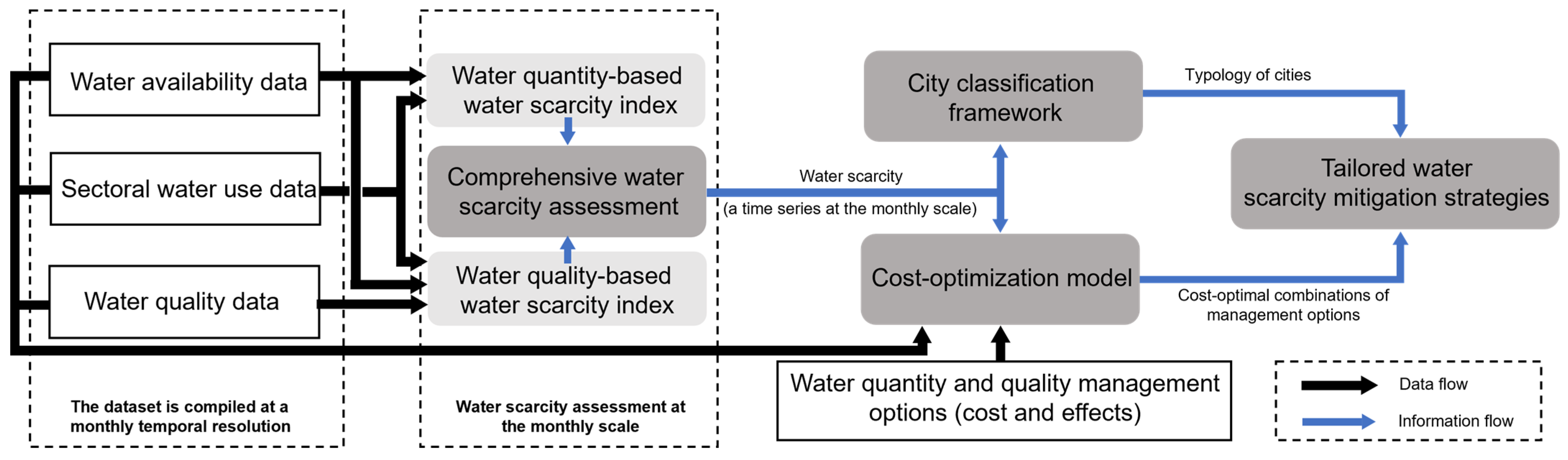
Figure 1. Conceptual diagram of the three-module framework.
Systems 14 00006 g001
Figure 2. Framework of scarcity type classification.
Systems 14 00006 g002
Figure 3. Conceptual framework of the city-scale water-scarcity optimization model.
Systems 14 00006 g003
Figure 4. Annual and monthly water-scarcity assessments in China. (a) Annual water scarcity. (b) Monthly proportions of cities and population exposed to different scarcity levels under “quantity only” and “quantity and quality” scenarios. (c) Monthly regional variations in population exposure under the two scenarios.
Systems 14 00006 g004
Figure 5. Monthly distribution of water=scarcity drivers in China.
Systems 14 00006 g005
Figure 6. Monthly variations in water supply and demand across provinces in China. (The coloured lines represent the mean monthly water volume for the entire reference period. The shaded envelopes indicate the 25th and 75th percentile values for prefecture-level cities within the same province).
Systems 14 00006 g006
Figure 7. Classification result of water scarcity. Each circle represents a prefecture-level city, and its size is proportional to the local population.
Systems 14 00006 g007
Figure 8. Spatial Distribution of Different City Types.
Systems 14 00006 g008
Table 1. Summary of data sources.
VariablesSpatial and Temporal Resolution/Management MeasuresPrimary Source
Data related to water-scarcity assessment
Water availabilityAt the city level on an annual basisChina Water Resources Bulletin [27,28,29,30]
Water qualityAt the sampling-site level on a monthly basisChina National Environmental
Monitoring Centre
Sectoral water useAt the city level on an annual basisChina Water Resources Bulletin [27,28,29,30]
Data related to scarcity-optimization model
Cost parametersWater savingZou et al. [31], Rasoulkhani et al. [24]
Water storageGrygoruk et al. [19]
Water transferPohlner [32]
point-source
pollution control
obtained from government
guidelines [33]
farmland runoff treatmentSun et al. [34]
livestock manure and wastewater treatmentSun et al. [34]
Effect parametersWater savingZou et al. [35], Rasoulkhani et al. [24]
point-source
pollution control
obtained from government
statistical survey [36]
farmland runoff treatmentSun et al. [34]
livestock manure and wastewater treatmentSun et al. [34]
Table 2. Management Options.
OptionsDescription
Agricultural water-saving management options
O a g r Low-pressure pipe irrigation
Micro-irrigation
Sprinkler irrigation
Domestic water-saving management options
O d o m Water-efficient bathroom faucet
Water-efficient kitchen faucet
Water efficient showerhead
Water efficient toilet
Water-efficient washing machine
Water efficient dishwasher
Water transfers
STOR Water storage
TRANS Water transport
Rural domestic wastewater management options
O p n t Construction of centralized treatment plants with Class I-A effluent standards. *
Construction of centralized treatment plants with Class I-B effluent standards.
Construction of centralized treatment plants with Class II effluent standards.
Farmland runoff management option
O d i f 1 Interception and treatment of agricultural non-point source runoff.
Livestock manure and wastewater treatment options
O d i f 2 Treatment of mixed livestock manure and wastewater for direct discharge after meeting standards.
O d i f 3 Livestock   manure   and   wastewater   are   separately   treated   to   meet   required   standards   and   then   returned   to   farmland ,   including   manure   treatment   for   land   application   ( O d i f 3 _ m a n u r e )   and   wastewater   treatment   for   land   application   ( O d i f 3 _ l s w w ).
* Classes I-A, I-B, and II refer to different effluent standards for wastewater treatment in China and are defined by the Chinese National Standard GB 18918-2002 [54].
Table 3. Summary of Representative Cities.
CityAverage WSCoefficient of VariationScarcity DriverTypeRegion
Beijing15.290.711CompoundSeasonal scarcity cityNorth China
Wuhan1.9750.639QuantitySeasonal scarcity cityCentral China
Kunming2.1460.778QualitySeasonal scarcity citySouthwest
Chongqing0.4420.734-Intermittent scarcity citySouthwest
Hohhot4.2130.31CompoundPersistent scarcity cityNorth China
Guangzhou5.4970.91CompoundSeasonal scarcity citySouth China
Shanghai3.5880.60CompoundSeasonal scarcity cityEast China
Table 4. Results of the cost-optimization model for water-scarcity management.
CityBeijingGuangzhouHohhotKunmingShanghaiWuhanChongqing
Scarcity level after optimization4.692.271.721.002.251.350.40
Scarcity-reduction rate 0.690.650.590.530.370.320.09
Total cost
(billion CNY)
8.7022.742.1514.8518.162.900.42
Cost per 1% shortage reduction
(billion CNY/%)
0.130.370.040.280.490.100.05
Table 5. Optimization results of water-quantity management measures.
Water-Quantity OptionsBeijingGuangzhouHohhotKunmingShanghaiWuhanChongqing
CostsWater Saving
/Transfer
CostsWater Saving
/Transfer
CostsWater Saving
/Transfer
CostsWater Saving
/Transfer
CostsWater Saving
/Transfer
CostsWater Saving
/Transfer
CostsWater Saving
/Transfer
Agriculture
water saving
Low-pressure pipe irrigation0.00000.00000.00000.00001.36390.00937.85210.30840.00000.00000.00000.00000.00000.0000
micro irrigation2.06620.025614.00230.57420.00000.00000.00000.000014.34240.32200.00000.00000.00000.0000
Sprinkler irrigation0.00000.00000.00000.00000.00000.00000.00000.00000.00000.00000.12130.35880.00000.0000
Water transfersWater storage3.77420.71718.55801.62420.38360.0736.44311.22423.65000.69352.73370.51950.00000.0000
Water transport2.62660.96000.00000.00000.00000.00000.00000.00000.00000.00000.00000.00000.00000.0000
Notes: 1. The unit of costs is billion CNY, while the units of water saving and water transfer are billion m3. 2. The absence of certain measures in the table indicates that they were either not selected by any city in the optimization results or had already achieved a sufficiently high coverage proportion in the corresponding cities (Supplementary Table S3). 3. Within the selected cities, Beijing is the sole city located on the route of the South-to-North Water Diversion Project, and thus the only one with the option of inter-basin water transfer.
Table 6. Optimization results of water-quality management measures.
Water-Quality OptionsBeijingGuangzhouHohhotKunmingShanghaiWuhanChongqing
CostsPollutants ReducedCostsPollutants ReducedCostsPollutants ReducedCostsPollutants ReducedCostsPollutants ReducedCostsPollutants ReducedCostsPollutants Reduced
Rural domestic wastewaterTreatment of wastewater to CLASS I-A standard0.1541 8.67370.08943.04850.00000.00000.08314.52850.09484.27190.00000.00000.00000.0000
0.68780.34470.00000.24440.39250.00000.0000
0.53690.27000.00000.16060.25510.00000.0000
0.04120.04140.00000.02740.02980.00000.0000
Agriculture runoffFarmland runoff control0.0444 8.82810.02414.80040.161932.19540.091718.22890.051310.21290.069813.87320.385476.6486
7.81834.251328.512816.14389.044712.286367.8812
0.52020.28291.89711.07410.60180.81754.5166
0.08720.04740.31800.18010.10090.13700.7572
Livestock wasteDischarge after co-treatment 0.0000 0.00000.00000.00000.007211.9810.00000.00000.00000.00000.00000.00000.039265.0960
0.00000.00002.2720.00000.00000.000012.3458
0.00000.00000.96400.00000.00000.00005.2376
0.00000.00000.96400.00000.00000.00005.2376
Land application after treatment 0.0358 6.76220.076514.19850.234232.84040.380459.33200.02624.27210.095718.46510.00000.0000
1.07202.25425.35479.56890.68602.92230.0000
0.43880.92282.19273.91800.28091.19630.0000
0.55711.16942.69324.87440.35121.52150.0000
Notes: 1. The unit of costs is billion CNY, while the units of pollutants reduced are kiloton. 2. Measures not listed in the table were not selected by any city in the optimization model. 3. For each measure, the pollutants reduced are reported in the order of COD, TN, NH3-N, and TP. Costs are expressed in billion CNY, and pollutant reduction is expressed in kton.
Table 7. Comparison of the proposed framework with related water-scarcity modelling studies.
AspectMa et al. [37]Li et al. [21]Baccour et al. [26]This Study
Study domainNationwideNationwidePearl River BasinNationwide
Quantity–quality
coupled indicator
Number of water-quality parameters3314
Identification of cost-optimal strategies
Consideration of existing
mitigation measures in China
Scarcity-based classification framework
Disclaimer/Publisher’s Note: The statements, opinions and data contained in all publications are solely those of the individual author(s) and contributor(s) and not of MDPI and/or the editor(s). MDPI and/or the editor(s) disclaim responsibility for any injury to people or property resulting from any ideas, methods, instructions or products referred to in the content.