Seasonal Spatial Distribution of Metapenaeopsis provocatoria longirostris in the Southern Yellow and East China Seas and Habitat Area Variation Prediction Under Climate Scenarios


Key Laboratory of Fisheries Remote Sensing Ministry of Agriculture and Rural Affairs, East China Sea Fisheries Research Institute, Chinese Academy of Fishery Sciences, Shanghai 200090, China
*
Authors to whom correspondence should be addressed.
Biology 2025, 14(10), 1328; https://doi.org/10.3390/biology14101328
Submission received: 16 August 2025
/
Revised: 18 September 2025
/
Accepted: 25 September 2025
/
Published: 26 September 2025
(This article belongs to the Special Issue Global Fisheries Resources, Fisheries, and Carbon-Sink Fisheries)
Simple Summary
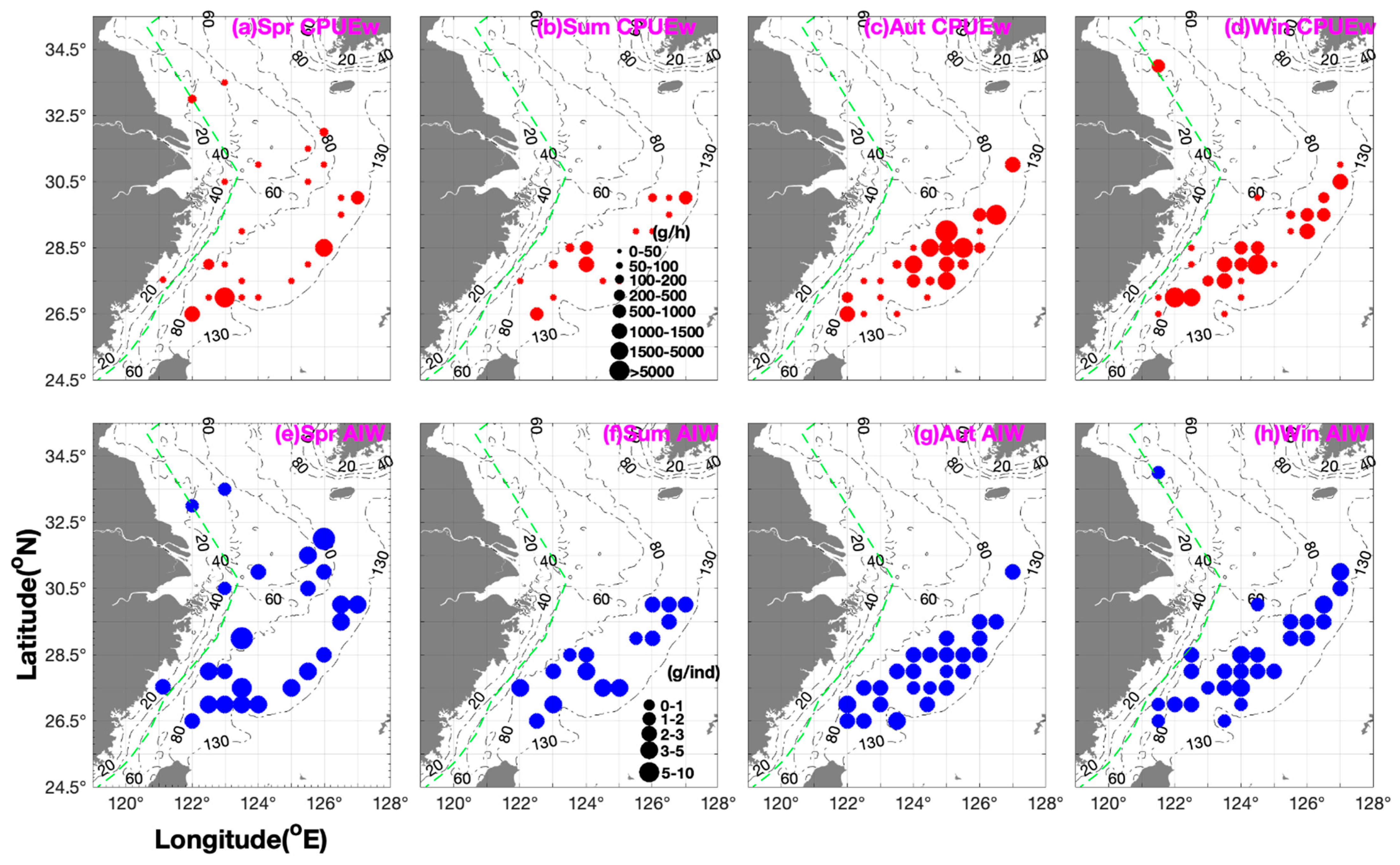
Crustaceans are currently facing important threats to their survival due to heavy fishing pressure and climate warming. At the same time, very limited ecological information is available for the shrimp species Metapenaeopsis provocatoria longirostris in the East China Seas. To identify them, we conducted field surveys from 2018 to 2019 and employed ensemble models under climate scenarios. We found that this species exhibited a decrease in biomass and abundance throughout the year, with values being higher in autumn than in winter, spring, and summer, in this order, as well as a decrease in size, with values being higher in spring than in summer and autumn/winter. With regard to its migration route, we argued that adults mainly spawn in spring in the fishing grounds of Mindong and Yuwai, preferring higher water temperature and salinity as well as greater depth. Recruitment occurs in summer in the inshore area near Yushan Island, which is used for feeding and as a nursery area, and in autumn, recruits migrate to the offshore Yuwai area. Then in winter, the main cohorts migrate southward to the fishing grounds of Wentai and Mindong for overwintering. Our findings provide key life history trait information for the resource management and plans of M. provocatoria longirostris in the future.
Abstract
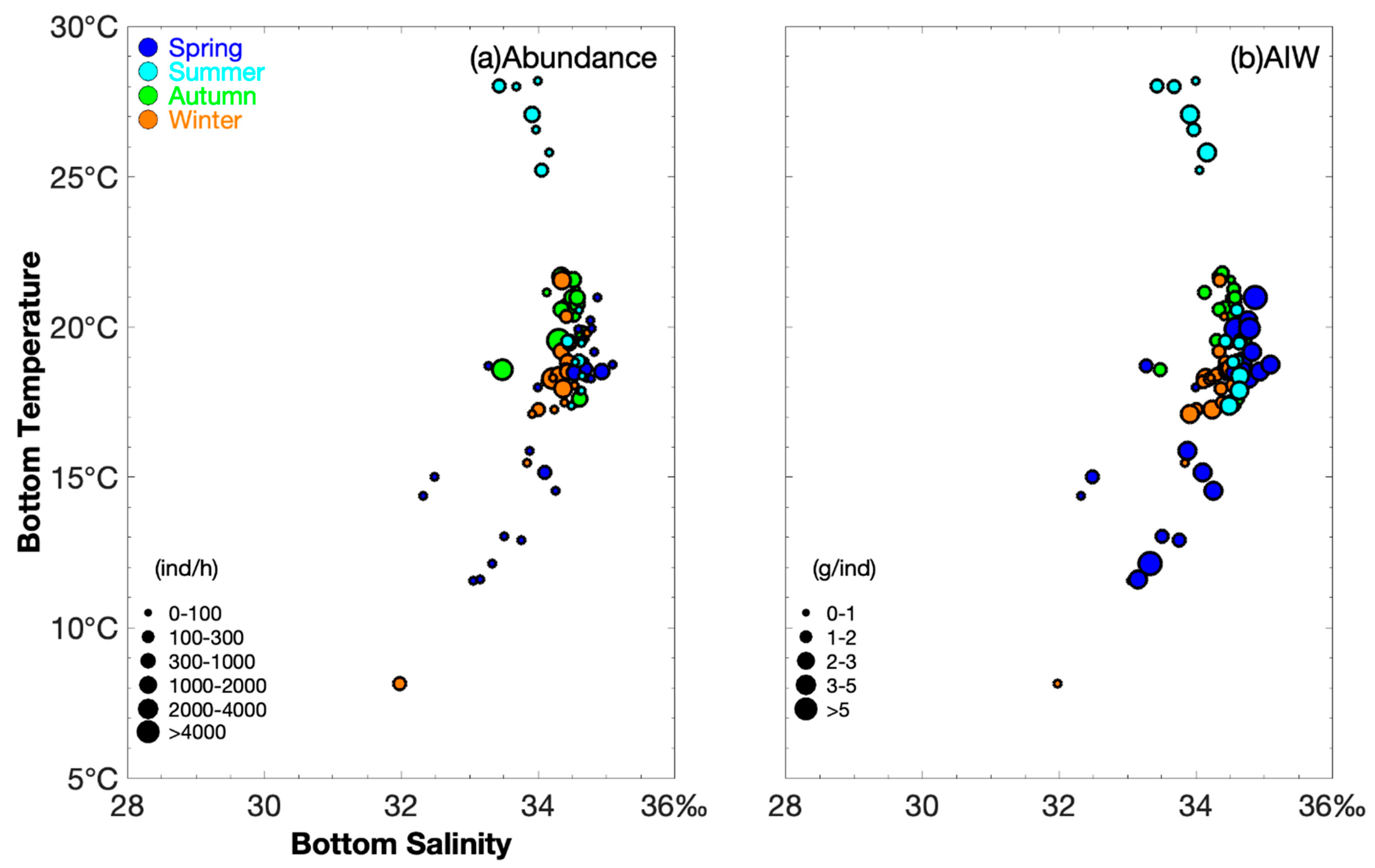
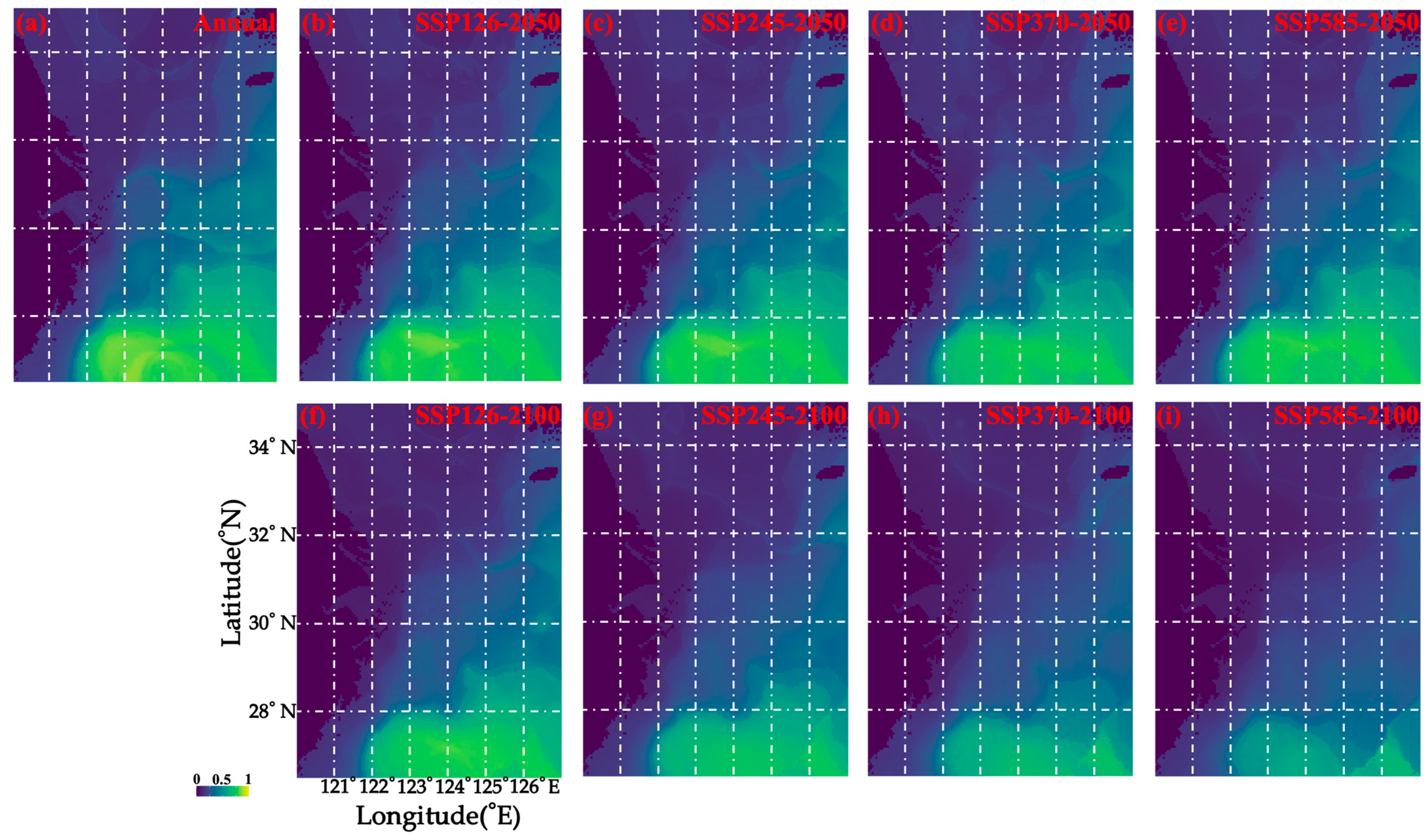
In real fisheries management practices, ecological information on the seasonal distribution patterns and characteristics of marine economic fauna and responses to climate change is necessary. In this study, we analyzed data obtained from surveys conducted between 2018 and 2019 in the southern Yellow and East China Seas, using ensemble models to predict variations in the habitat area of Metapenaeopsis provocatoria longirostris across seasons and under different climate scenarios. The highest abundances were observed at the following water temperature and salinity conditions, respectively: 18.5 °C and 34.5‰–35‰ in spring, 18.9–28 °C and 33.4–34.6‰ in summer, 18.6–21.7 °C and 33.5–34.4‰ in autumn, and 18–21.5 °C and 34‰ in winter. The major cohort was concentrated at depths of 100–110 m and 85–105 m in spring and summer, respectively, and at 80–100 m and 70–120 m in autumn and winter, respectively. In spring and winter, M. provocatoria longirostris was distributed in the continental shelf waters of the East China Sea, at wider salinity (30–35‰) and water temperature (8–26 °C) ranges, whereas in summer and autumn, the distribution shifted offshore. The values predicted for habitat loss under different climate scenarios were ranked as follows: ~70% loss under SSP585-2100 > ~50% loss under SSP370-2100 > ~30% loss under SSP245-2100 > ~15% loss under SSP126-2100 and SSP370-2050 > ~1–5% under SSP126-2050, SSP245-2050, and SSP585-2050. No great gains in habitat were predicted under any scenario. Our findings can contribute to the establishment of appropriate fisheries management schemes for the rational exploitation of M. provocatoria longirostris. Our predictions can assist in improving fisheries management practices within the context of climate change.