PiggyBac Transposon Mining in the Small Genomes of Animals
by
 , , and
Mengke Guo
1,†,
George A. Addy
1,†,
Naisu Yang
1,
Emmanuel Asare
1,
Han Wu
2,
Ahmed A. Saleh
1,3,
Shasha Shi
1,
Bo Gao
1 and
Chengyi Song
1,*
1
College of Animal Science & Technology, Yangzhou University, Yangzhou 225009, China
2
Department of Immunology, School of Medicine, Shenzhen University, Shenzhen 518060, China
3
Animal and Fish Production Department, Faculty of Agriculture (Alshatby), Alexandria University, Alexandria City 11865, Egypt
*
Author to whom correspondence should be addressed.
†
These authors contributed equally to this work.
Biology 2024, 13(1), 24; https://doi.org/10.3390/biology13010024
Submission received: 14 December 2023
/
Accepted: 29 December 2023
/
Published: 31 December 2023
(This article belongs to the Special Issue De Novo Detection of Transposons)
Simple Summary
Transposable elements (TEs) are mobile genetic elements that play vital role in defining and contributing to the size, shape and structure of both prokaryotic and eukaryotic genomes in nature. The piggyBac (PB), a superfamily of DNA transposons, has been isolated over the years from various organisms including insects, fungi and plants. These piggyBac transposon systems have high efficiency with a wide usage in the study of gene therapies, mutagenesis and transgenesis. Currently, there is limited information available on DNA transposons in small (compact) genomes of animals. Therefore, this study aims to annotate the PB transposons in small genomes of animals, revealing their evolution profiles in both vertebrate and invertebrate genomes.
Abstract
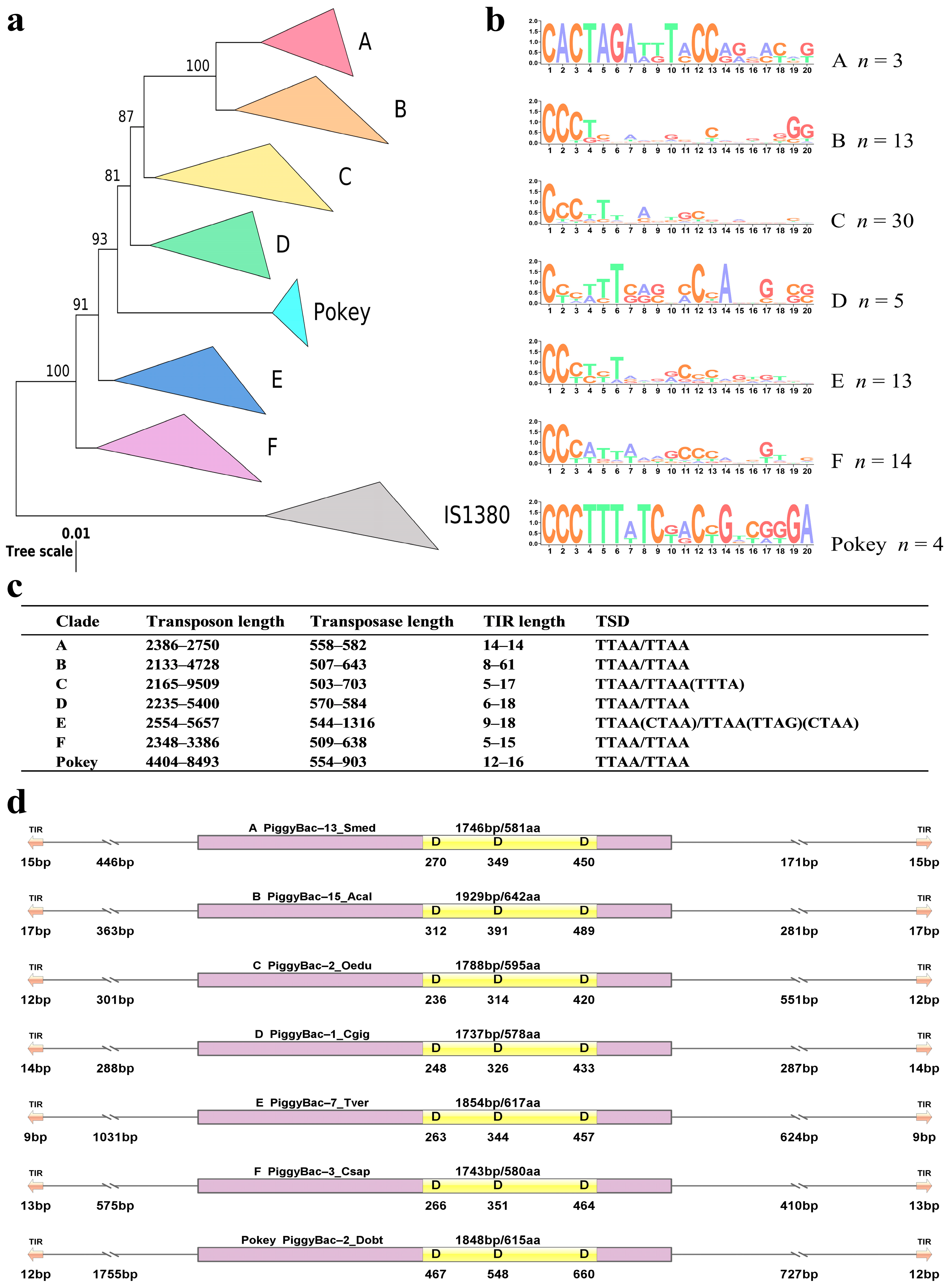
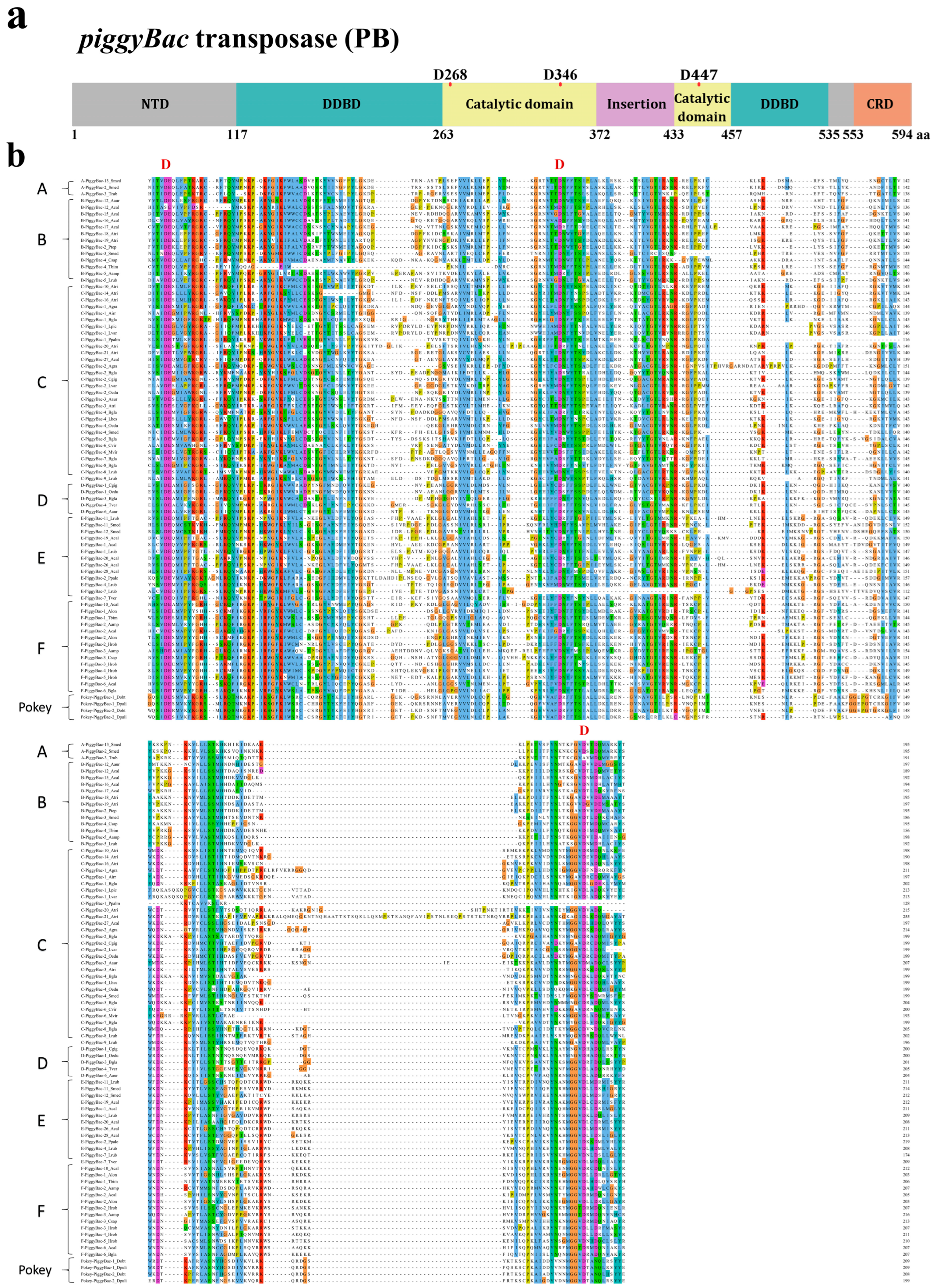
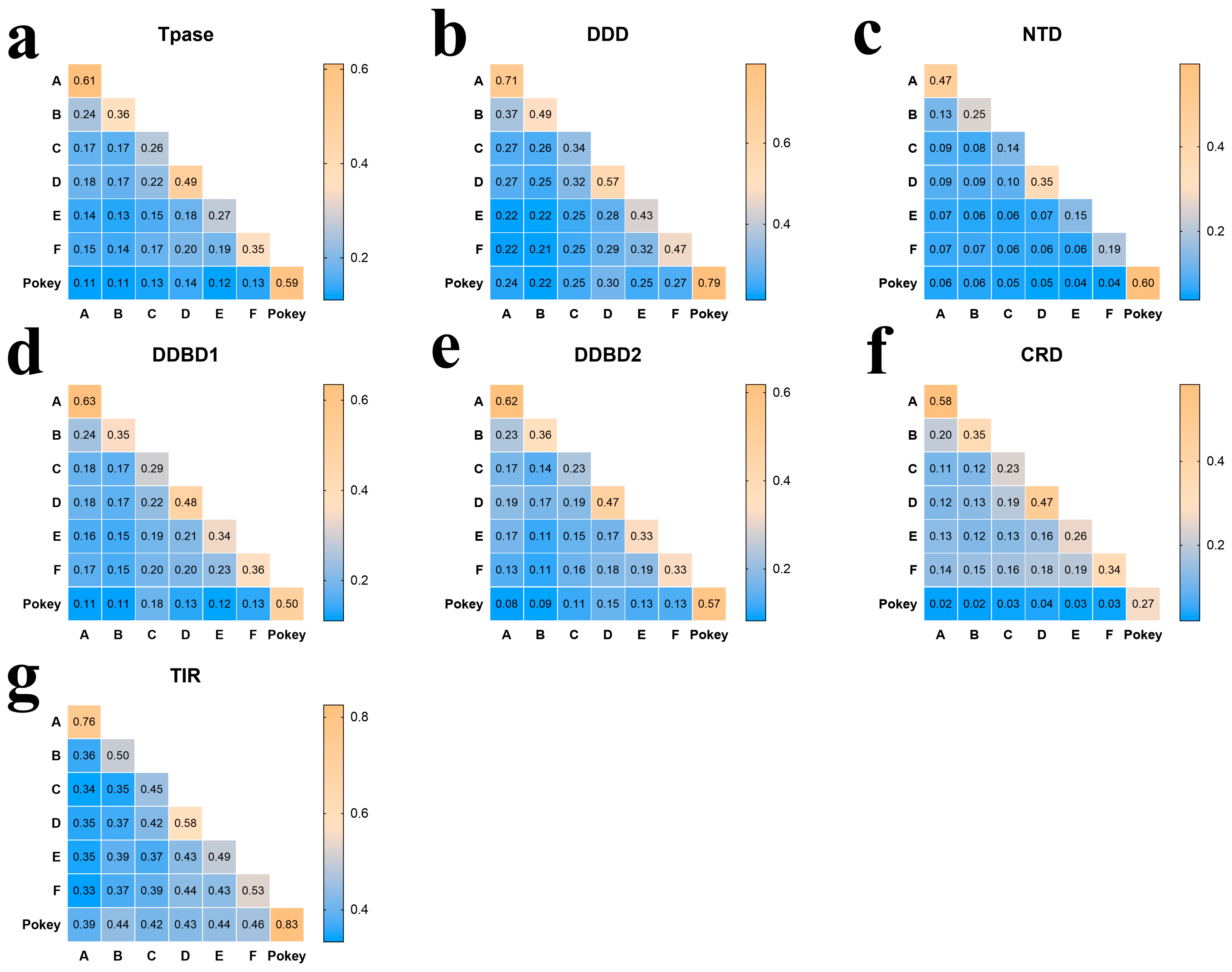
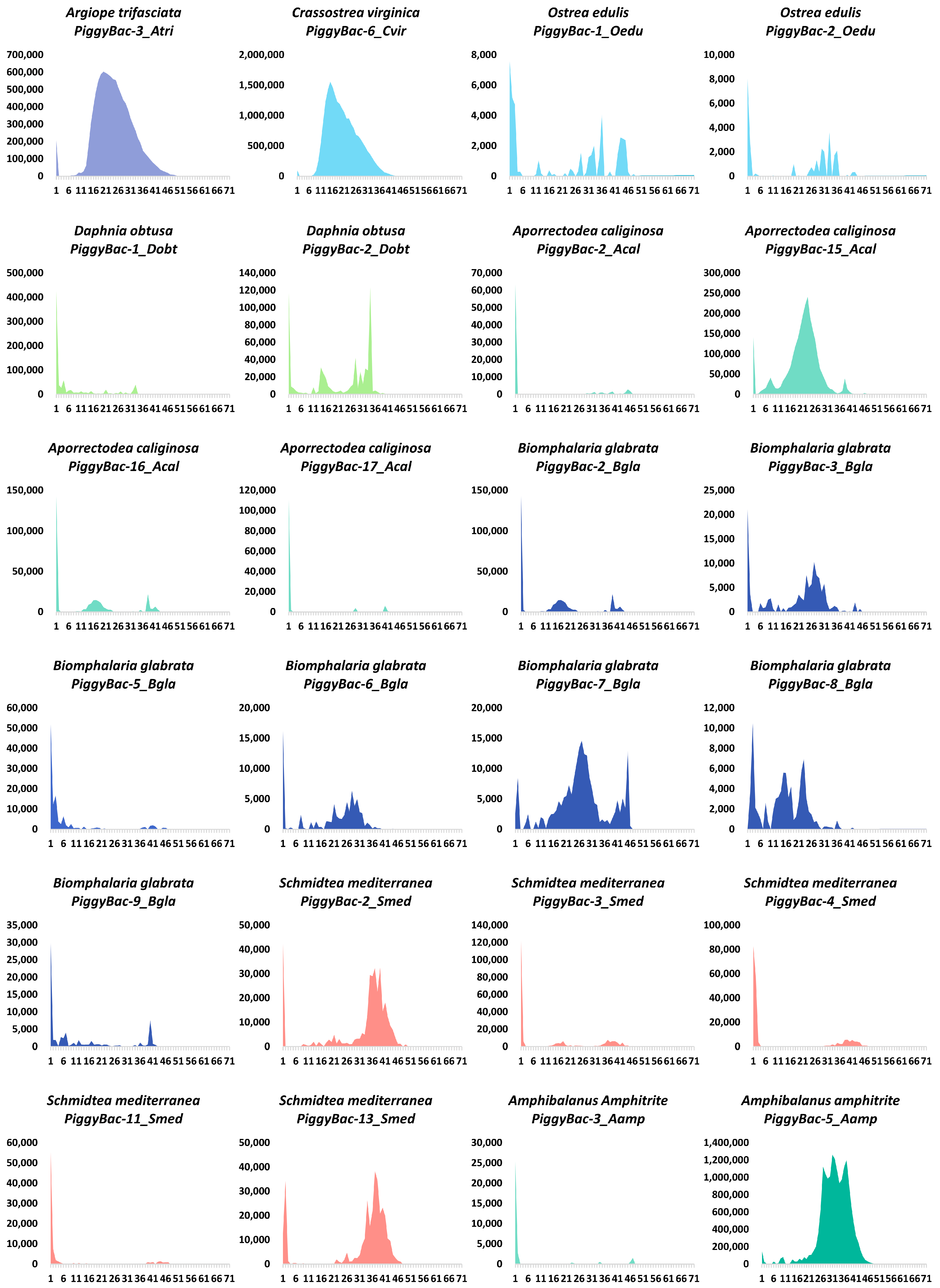
TEs, including DNA transposons, are major contributors of genome expansions, and have played a very significant role in shaping the evolution of animal genomes, due to their capacity to jump from one genomic position to the other. In this study, we investigated the evolution landscapes of PB transposons, including their distribution, diversity, activity and structure organization in 79 species of small (compact) genomes of animals comprising both vertebrate and invertebrates. Overall, 212 PB transposon types were detected from almost half (37) of the total number of the small genome species (79) investigated. The detected PB transposon types, which were unevenly distributed in various genera and phyla, have been classified into seven distinct clades or families with good bootstrap support (>80%). The PB transposon types that were identified have a length ranging from 1.23 kb to 9.51 kb. They encode transposases of approximately ≥500 amino acids in length, and possess terminal inverted repeats (TIRs) ranging from 4 bp to 24 bp. Though some of the transposon types have long TIRs (528 bp), they still maintain the consistent and reliable 4 bp target site duplication (TSD) of TTAA. However, PiggyBac-2_Cvir transposon originating from the Crassostrea virginica species exhibits a unique TSD of TATG. The TIRs of the transposons in all the seven families display high divergence, with a highly conserved 5′ end motif. The core transposase domains (DDD) were better conserved among the seven different families compared to the other protein domains, which were less prevalent in the vertebrate genome. The divergent evolution dynamics analysis also indicated that the majority of the PB transposon types identified in this study are either relatively young or old, with some being active. Additionally, numerous invasions of PB transposons were found in the genomes of both vertebrate and invertebrate animals. The data reveals that the PB superfamily is widely distributed in these species. PB transposons exhibit high diversity and activity in the small genomes of animals, and might play a crucial role in shaping the evolution of these small genomes of animals.
Keywords:
transposon; piggyBac; evolution