Apomictic Mountain Whitebeam (Sorbus austriaca, Rosaceae) Comprises Several Genetically and Morphologically Divergent Lineages
by
 , ,
, ,
Alma Hajrudinović-Bogunić
1,
Božo Frajman
2,*,
Peter Schönswetter
2,
Sonja Siljak-Yakovlev
3 and 
Faruk Bogunić
1,* 1
Faculty of Forestry, University of Sarajevo, Zagrebačka 20, 71000 Sarajevo, Bosnia and Herzegovina
2
Department of Botany, University of Innsbruck, Sternwartestrasse 15, 6020 Innsbruck, Austria
3
Ecologie Systématique Evolution, CNRS, Université Paris-Sud, AgroParisTech, Université Paris-Saclay, 91400 Orsay, France
*
Authors to whom correspondence should be addressed.
Biology 2023, 12(3), 380; https://doi.org/10.3390/biology12030380
Submission received: 30 January 2023
/
Revised: 22 February 2023
/
Accepted: 23 February 2023
/
Published: 27 February 2023
(This article belongs to the Special Issue Advances in Plant Taxonomy and Systematics)
Simple Summary
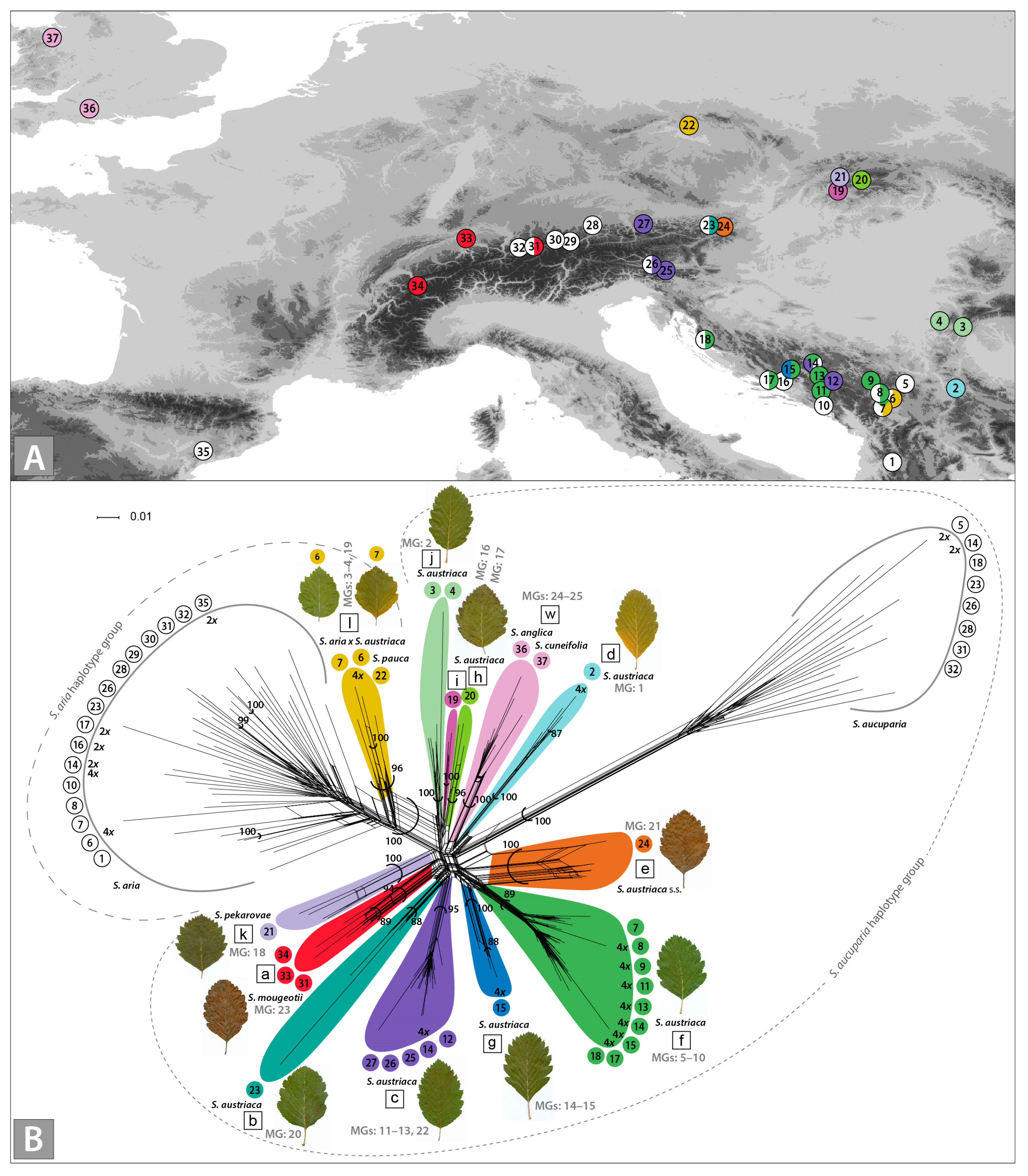
The genus Sorbus (whitebeams, rowans, and service trees) encompasses forest trees and shrubs characterised by exceptional diversity resulting from the interplay of polyploidisation, hybridization, and apomixis. The spatiotemporal processes driving Sorbus diversification remain poorly understood. This research aims to provide insights into the evolution and diversification patterns of mountain whitebeam (S. austriaca) covering most of its range in the mountains of Central and South-eastern Europe. Our molecular and morphometric data revealed pronounced cryptic diversity within the S. austriaca complex; it is composed of different lineages, that likely originated via multiple allopolyploidisations accompanied by apomixes, and these lineages exhibit different distribution patterns. Our results are particularly valuable from a biodiversity conservation perspective due to the continuing generation of novel diversity in sympatric populations of the parental taxa. Such derived diversity requires process-oriented conservation plans and measures.
Abstract
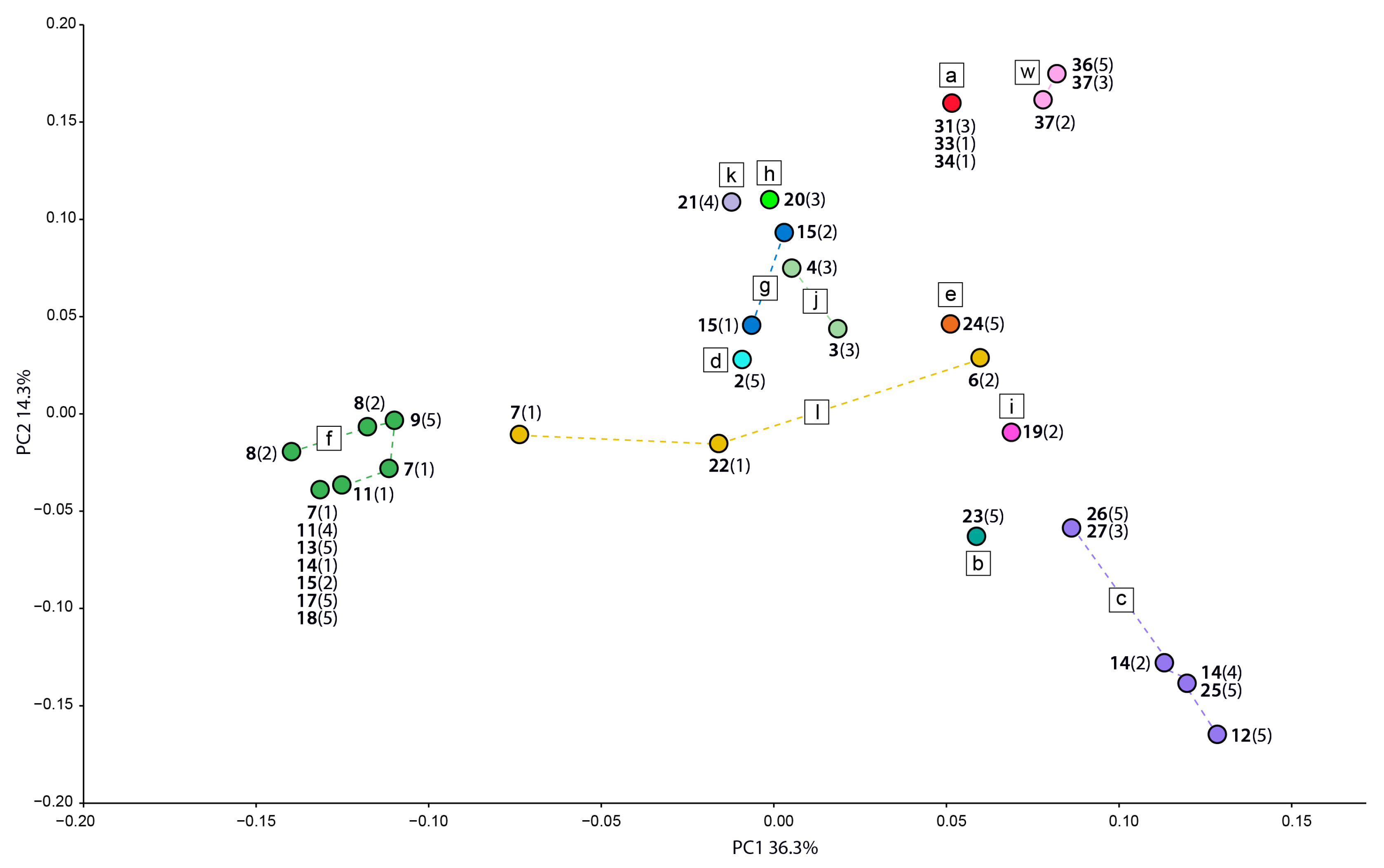
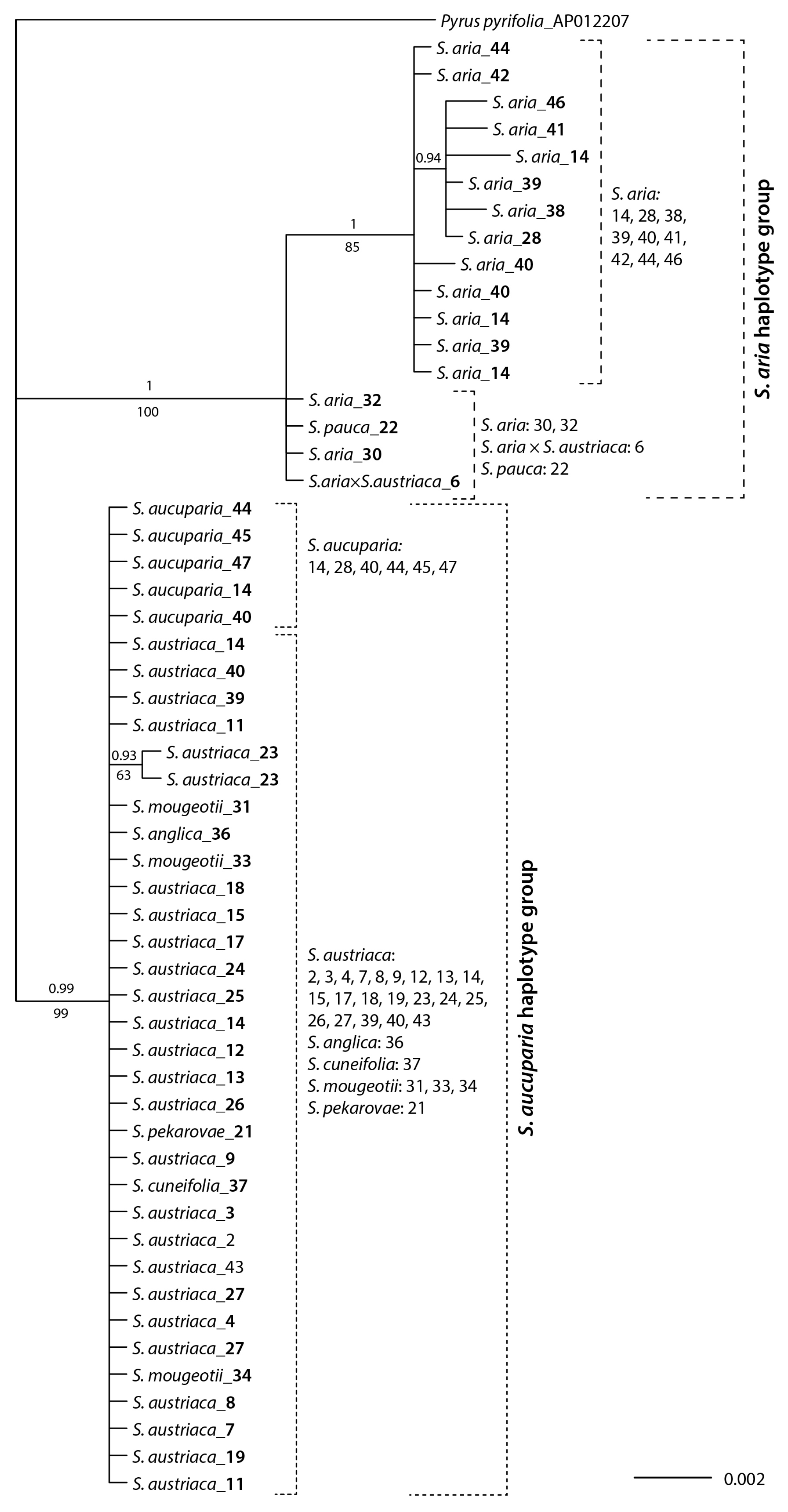
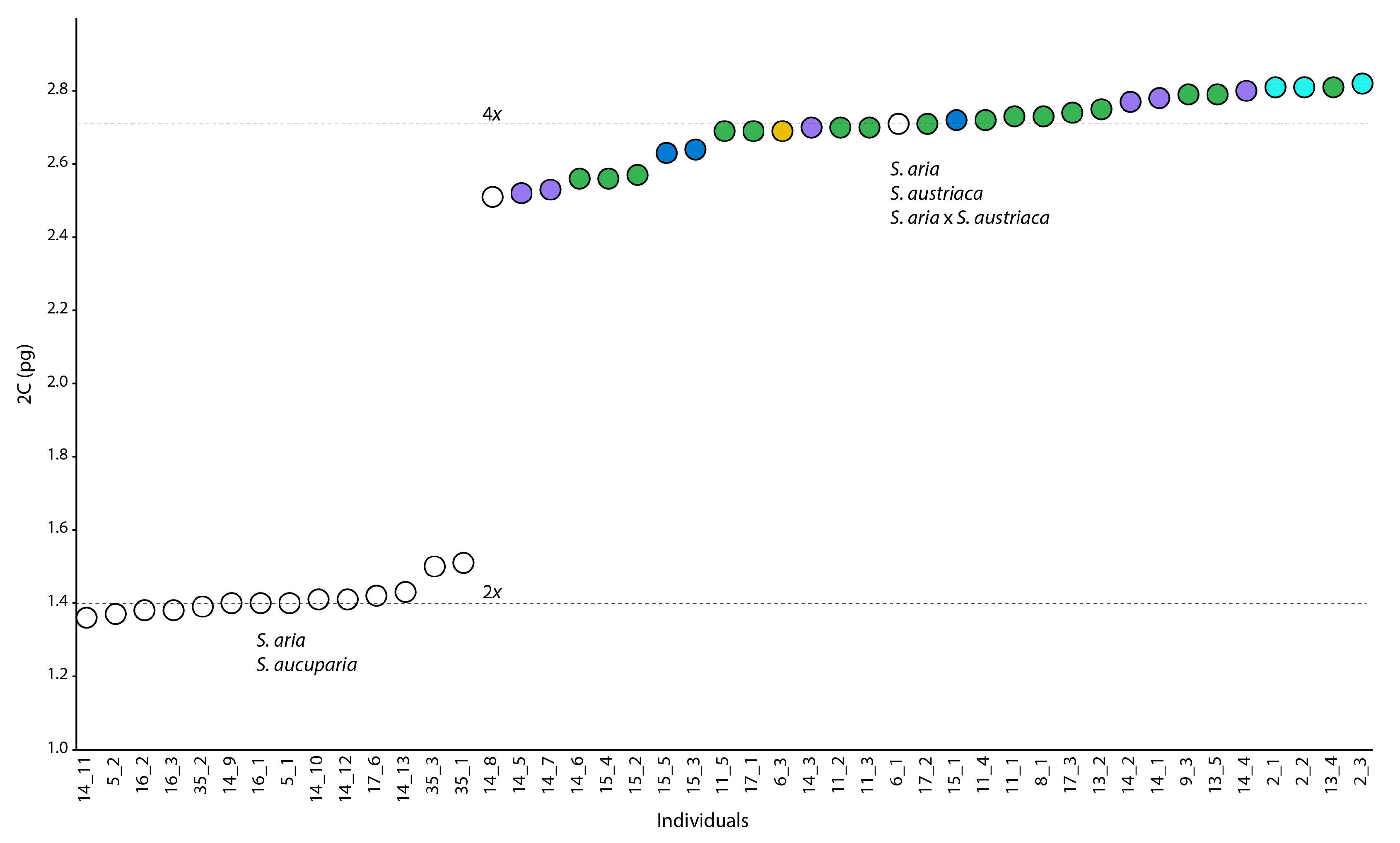
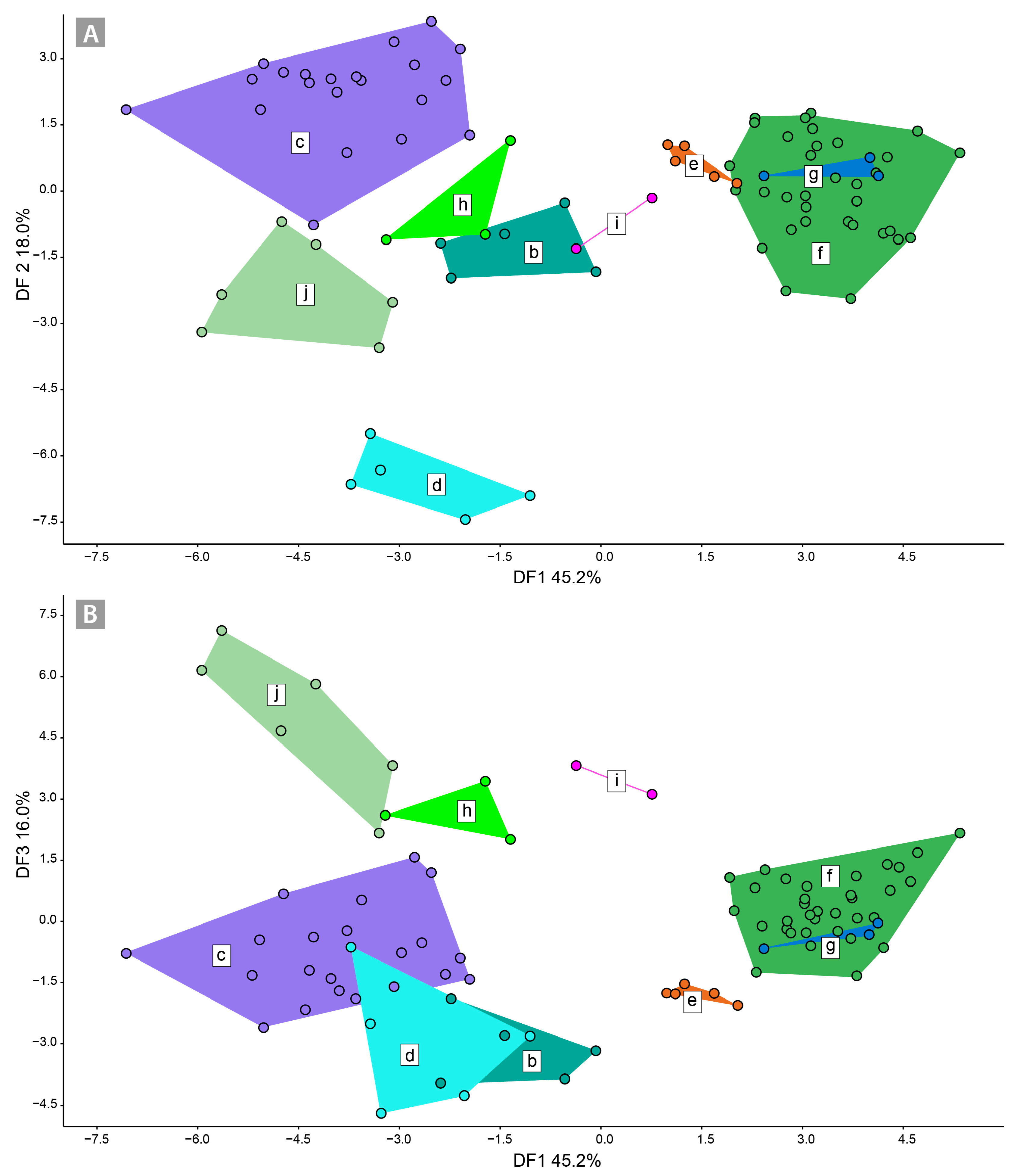
The interplay of polyploidisation, hybridization, and apomixis contributed to the exceptional diversity of Sorbus (Rosaceae), giving rise to a mosaic of genetic and morphological entities. The Sorbus austriaca species complex from the mountains of Central and South-eastern Europe represents an allopolyploid apomictic system of populations that originated following hybridisation between S. aria and S. aucuparia. However, the mode and frequency of such allopolyploidisations and the relationships among different, morphologically more or less similar populations that have often been described as different taxa remain largely unexplored. We used amplified fragment length polymorphism (AFLP) fingerprinting, plastid DNA sequencing, and analyses of nuclear microsatellites, along with multivariate morphometrics and ploidy data, to disentangle the relationships among populations within this intricate complex. Our results revealed a mosaic of genetic lineages—many of which have not been taxonomically recognised—that originated via multiple allopolyploidisations. The clonal structure within and among populations was then maintained via apomixis. Our results thus support previous findings that hybridisation, polyploidization, and apomixis are the main drivers of Sorbus diversification in Europe.
Keywords:
apomixis; hybridisation; multiple origins; polyploidy; Sorbus austriaca