Thermal Stability and Flammability Behaviors of Phosphorus/Graphene Oxide Co-Modified Waterborne Polyurethane Coatings: An Experimental Study


Highlights
- P- and SiO2@GO can be used together to modify waterborne polyurethane coatings.
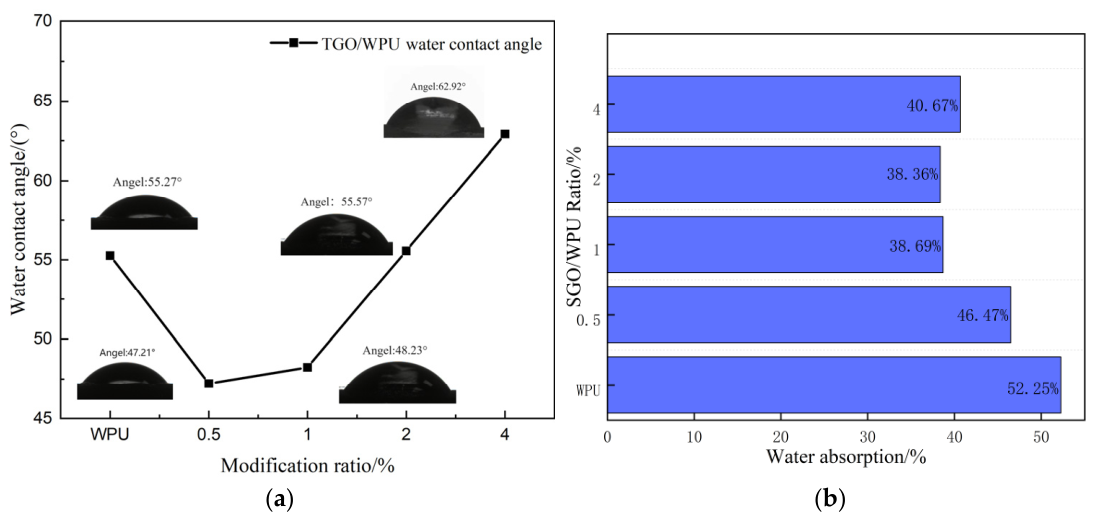
- SiO2@GO (2%) significantly enhances WPU hydrophobicity and thermal stability.
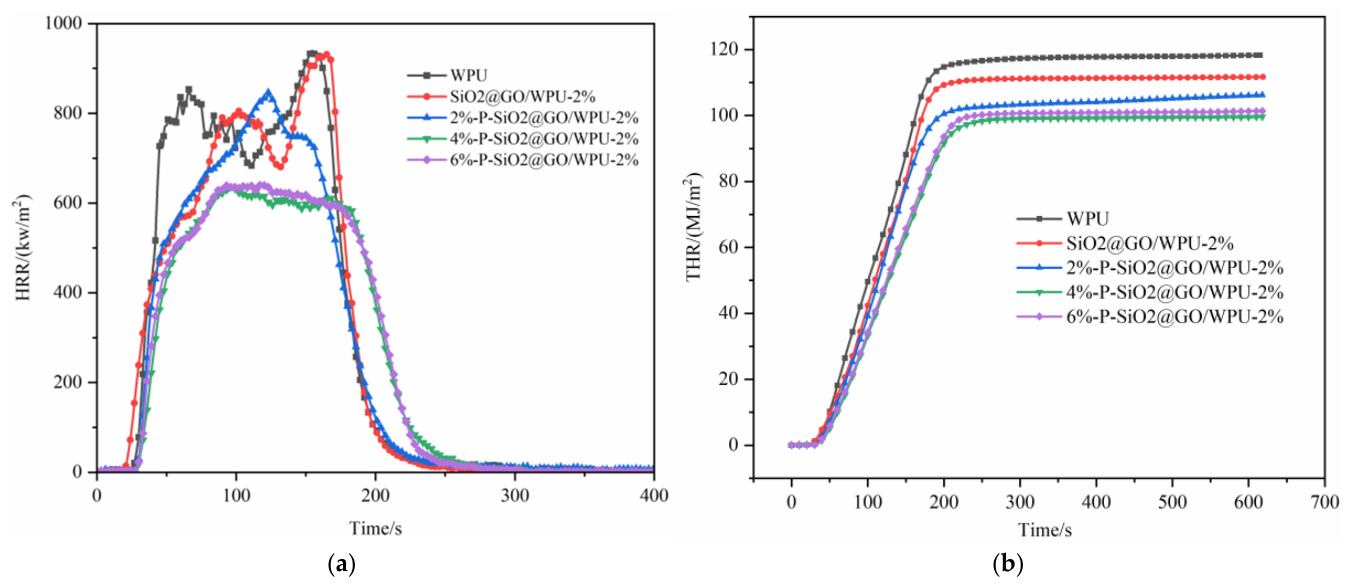
- P-/SiO2@GO-modified WPU reaches an LOI of 32.2% and reduces PHRR by 32.4%.
- The flame-retardant performance of WPU was significantly enhanced.
Abstract
1. Introduction
2. Experimental Section
2.1. Main Reagents
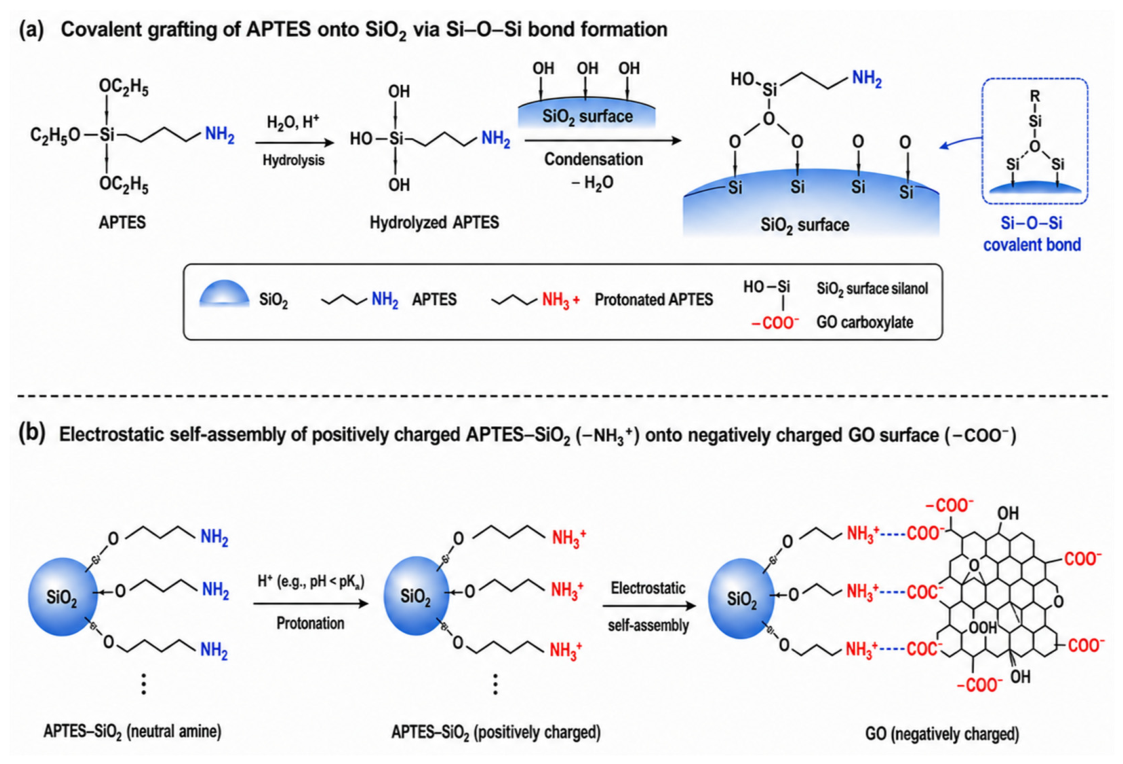
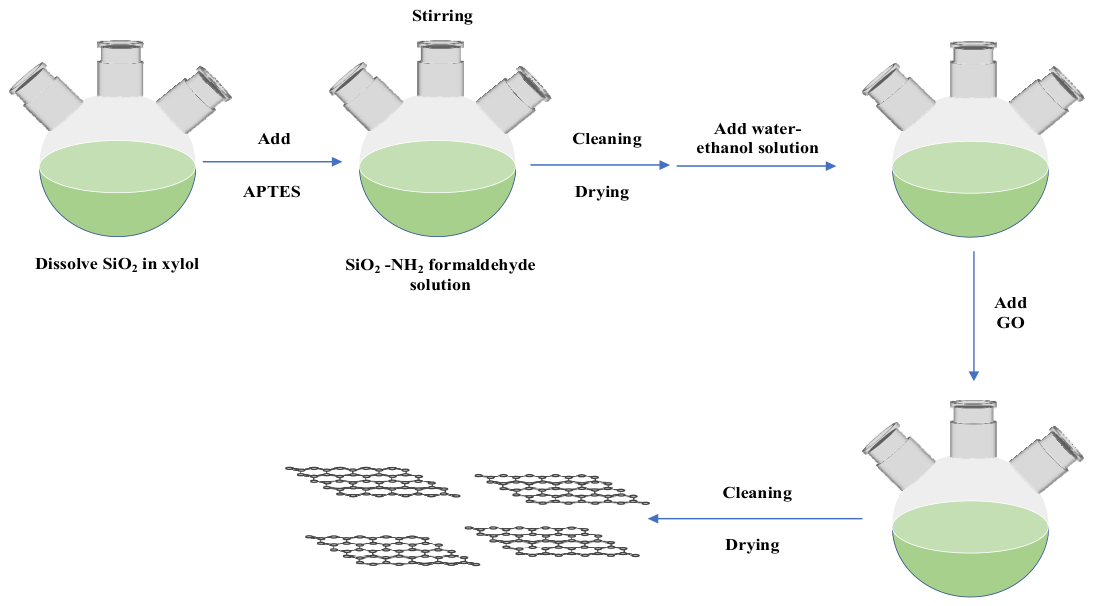
2.2. Preparation of Silica-Modified Graphene Oxide
2.3. Preparation of Modified Graphene Oxide/Waterborne Polyurethane Emulsion
2.4. Preparation of Waterborne Polyurethane Film Modified with Phosphorus/Graphene Oxide
3. Experimental Testing and Characterization
4. Results and Discussion
4.1. Analysis of the Structure and Properties of Modified Graphene Oxide
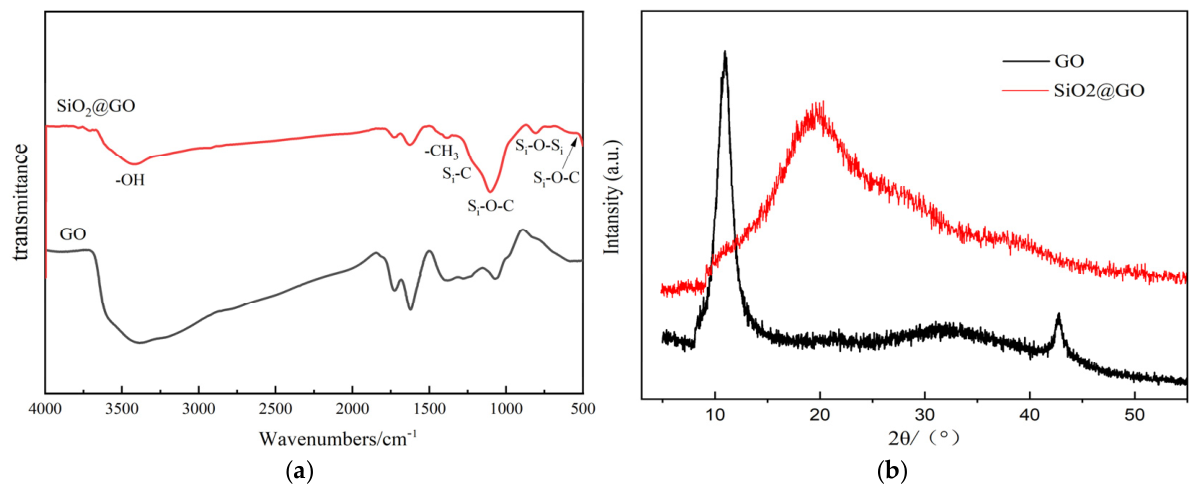
4.1.1. Chemical Molecular Structure Analysis
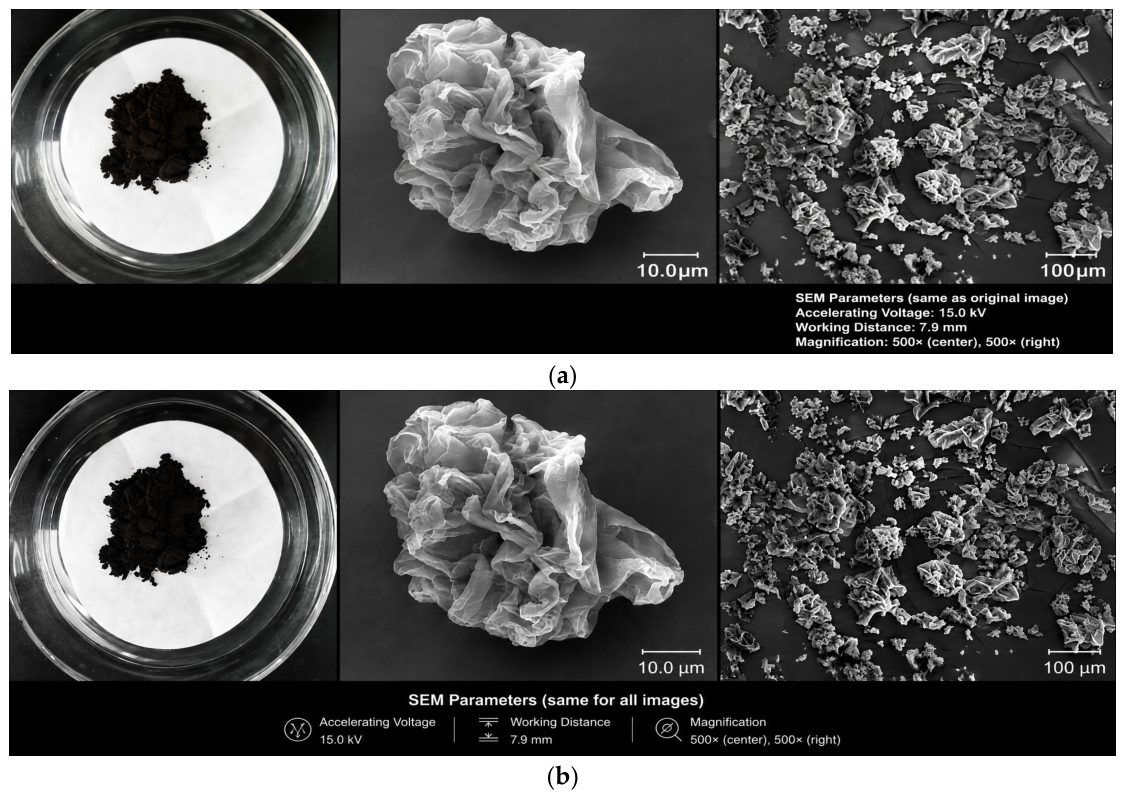
4.1.2. Micro-Morphological Analysis
4.2. Characterization of the Performance of SiO2@GO/WPU
4.3. Performance Test of Waterborne Polyurethane (WPU) Synergistically Modified by Phosphorus Flame Retardant (P-) and SiO2@GO
4.3.1. Limiting Oxygen Index (LOI) Test
4.3.2. Analysis of Cone Calorimeter Performance
4.3.3. TG Analysis
5. Conclusions
- (1)
- Utilizing the phosphorus-based flame retardant THPO as a chain extender alongside the synergistic modification of waterborne polyurethane (WPU) with SiO2@GO, the fabricated P-SiO2@GO coating exhibits superior hydrophobicity, enhanced thermal stability, and outstanding flame retardancy. These combined properties render the coating highly promising for applications across the construction, transportation, and textile industries, particularly in fire-hazardous environments.
- (2)
- The addition of SiO2@GO and P- containing various components exhibits a significant co-modification effect in enhancing the flame-retardant properties of the coating. When 2% SiO2@GO and 4% P- are added, the water absorption rate of the coating decreases by 13.89%, and the heat release rate and heat release amount are reduced by 32.4% and 15.9%, respectively, thereby balancing the coating’s functional use and thermal stability.
- (3)
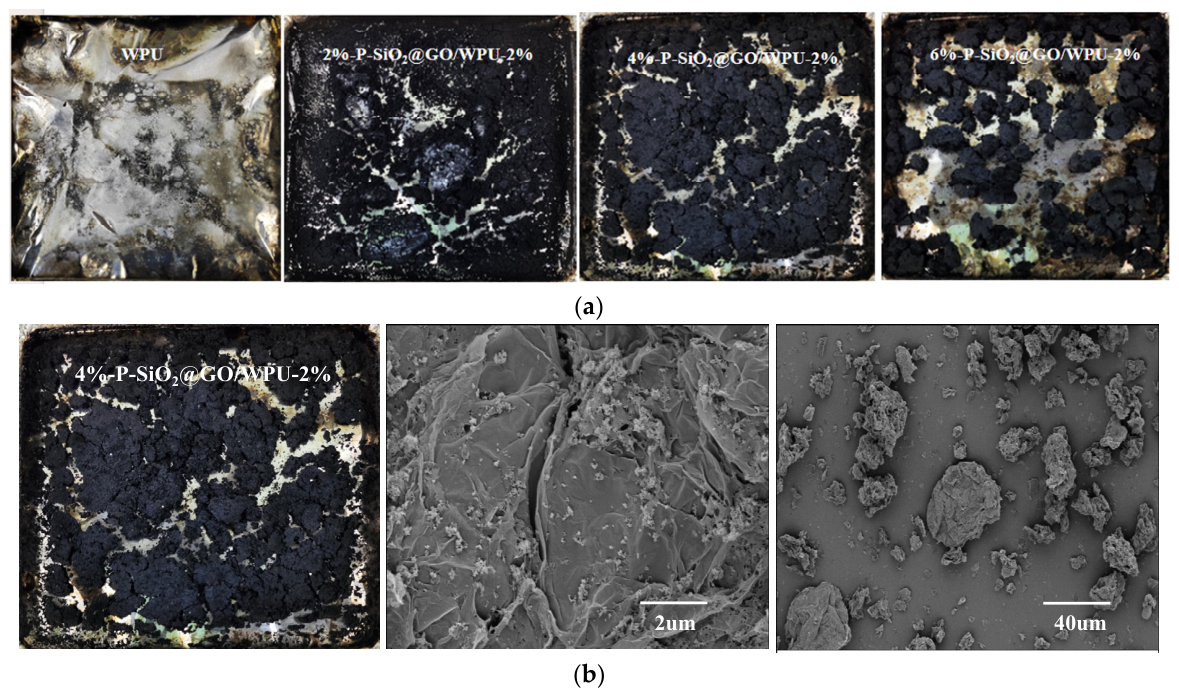
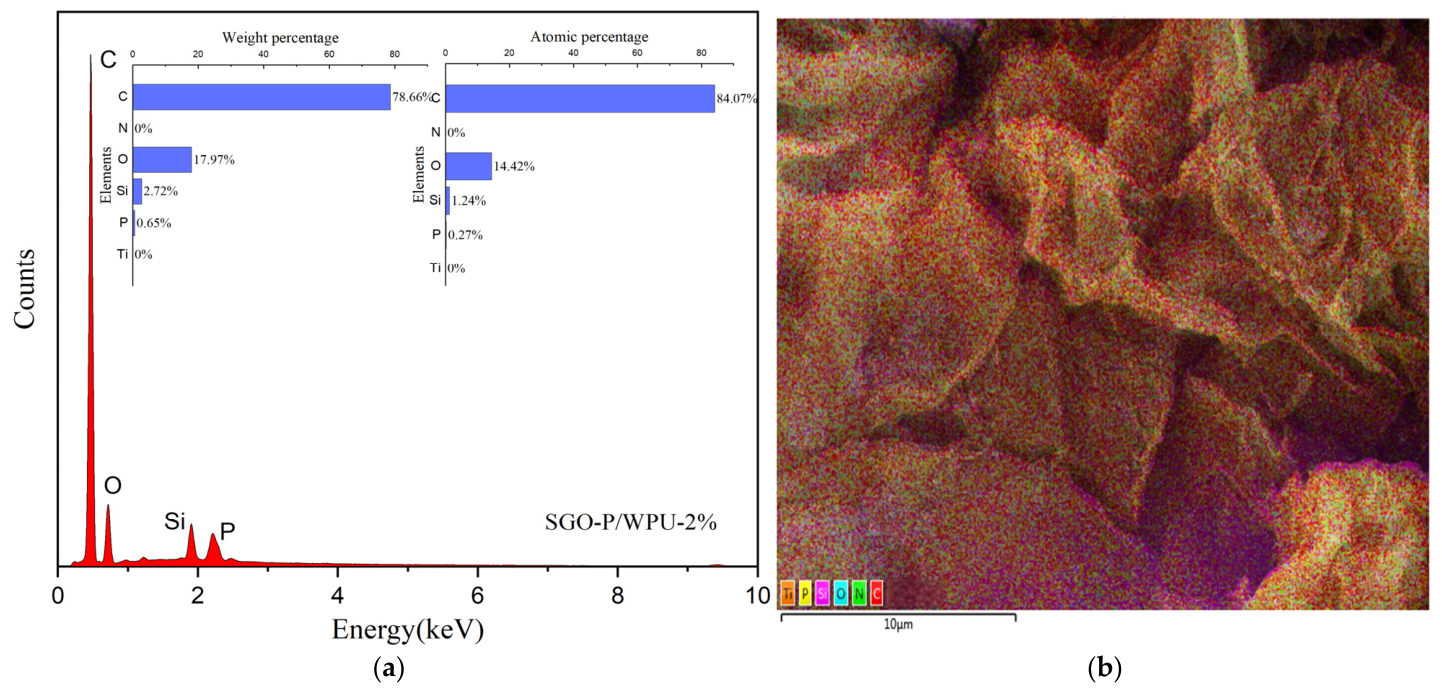
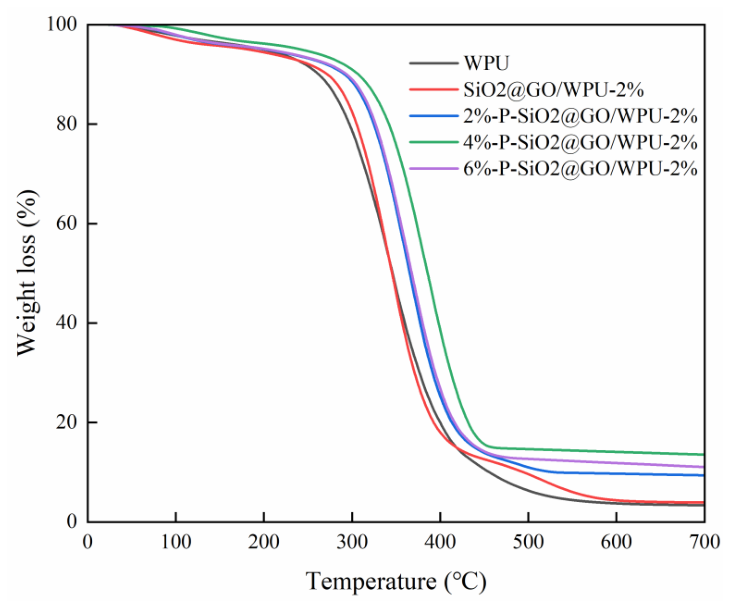
- Scanning electron microscopy (SEM) and thermogravimetric analysis (TGA) indicate that, subsequent to high-temperature calcination, P-SiO2@GO/WPU generates a continuous and dense P/Si-containing carbonaceous ceramic-like barrier layer on its surface. This protective layer can be attributed to the synergistic charring effect of phosphorus-containing species and the high-temperature sintering/ceramization of silicon-containing components within the char matrix. The resultant compact barrier efficiently impedes the volatilization of combustible gases and heat transfer. Moreover, the synergistic modification with P-SiO2@GO elevates the initial decomposition temperature of waterborne polyurethane. When 4% phosphorus-based flame retardant and 2% SiO2@GO are incorporated, the material’s limiting oxygen index reahces 32.2%, suggesting excellent flame retardancy.
- (4)
- Future research will prioritize the systematic assessment of the coatings’ long-term weatherability and UV aging resistance under dynamic, severe environmental conditions. Concurrently, evaluating the interfacial adhesion and compatibility across diverse industrial substrates is indispensable for expanding their application spectrum. Ultimately, streamlining the electrostatic self-assembly preparation process will provide the essential theoretical and technical frameworks required for scalable, economically viable mass production.
Author Contributions
Funding
Data Availability Statement
Acknowledgments
Conflicts of Interest
References
- Yan, Z.; Qiao, H.; Wang, Y.; Mei, Y.; Li, J.; Qin, C. Preparation and Performances of Nano-SiO2 Modified Graphene Oxide/Waterborne Polyurethane Composites. China Plast. Ind. 2024, 52, 63–68. [Google Scholar] [CrossRef]
- Chen, X.; Wang, S.; Yang, T.; Wu, Z. Development of Silicone Modified Waterborne Polyurethane Leather Finishing Agent. Silicone Mater. 2025, 39, 6–11. [Google Scholar]
- Gu, L.; Ge, Z.; Huang, M.; Luo, Y. Halogen-free flame-retardant waterborne polyurethane with a novel cyclic structure of phosphorus− nitrogen synergistic flame retardant. J. Appl. Polym. Sci. 2015, 132, 859–869. [Google Scholar] [CrossRef]
- Wu, W.; Mo, Y.; Yue, M.; Huang, X.; Hu, C. Research Progress in Waterborne Polyurethane Flame-retardant Composite Materials. New Chem. Mater. 2025, 53, 15–17+23. [Google Scholar] [CrossRef]
- Si, J.; Li, Y.; Yu, X. Curing behavior and mechanical properties of an eco-friendly cold-mixed epoxy asphalt. Mater. Struct. 2019, 52, 81. [Google Scholar] [CrossRef]
- Yu, W.; Sisi, L.; Haiyan, Y.; Jie, L. Progress in the functional modification of graphene/graphene oxide: A review. RSC Adv. 2020, 10, 15328–15345. [Google Scholar] [CrossRef]
- Yu, Y.; Xu, R.; Chen, J.; Kang, J.; Xiang, M.; Li, Y.; Li, L.; Sheng, X. Ordered structure effects on β-nucleated isotactic polypropylene/graphene oxide composites with different thermal histories. RSC Adv. 2019, 9, 19630–19640. [Google Scholar] [CrossRef]
- Yu, Y.; Zeng, F.; Chen, J.; Kang, J.; Yang, F.; Cao, Y.; Xiang, M. Effects of ordered structure on non-isothermal crystallization kinetics and subsequent melting behavior of β-nucleated isotactic polypropylene/graphene oxide composites. J. Therm. Anal. Calorim. 2019, 136, 1667–1678. [Google Scholar] [CrossRef]
- Chen, J.; Zhang, W.; Ge, H.; Tan, J.; Liu, J. Preparation and properties of phenolic resin/graphene oxide encapsulated SiO2 nanoparticles composites. Polym. Eng. Sci. 2018, 58, 2143–2148. [Google Scholar] [CrossRef]
- Zhao, X.; Li, J.; Li, Q.; Qiao, L.; Zhang, L.; Liu, Z.; Yang, C. Fabrication of a scratch & heat resistant superhydrophobic SiO2 surface with self-cleaning and semi-transparent performance. RSC Adv. 2018, 8, 25008–25013. [Google Scholar] [CrossRef]
- Gallo, E.; Schartel, B.; Schmaucks, G.; von der Ehe, K.; Böhning, M. Effect of well dispersed amorphous silicon dioxide in flame retarded styrene butadiene rubber. Plast. Rubber Compos. 2013, 42, 34–42. [Google Scholar] [CrossRef]
- Pavlicevic, J.; Spírková, M.; Jovicic, M.; Budinski-Simendic, J.; Pilic, B.; Balos, S. Structure-Functional property relationship of aliphatic polyurethane-silica hybrid films. Prog. Org. Coat. 2019, 126, 62–74. [Google Scholar] [CrossRef]
- Schartel, B.; Schmaucks, G. Flame Retardancy Synergism in Polymers Through Different Inert Fillers’ Geometry. Polym. Eng. Sci. 2017, 57, 1099–1109. [Google Scholar] [CrossRef]
- Huang, G.; Gao, J.; Wang, X.; Liang, H.; Ge, C. How can graphene reduce the flammability of polymer nanocomposites? Mater. Lett. 2012, 66, 187–189. [Google Scholar] [CrossRef]
- Wang, X.; Hu, Y.; Song, L.; Yang, H.; Xing, W.; Lu, H. In situ polymerization of graphene nanosheets and polyurethane with enhanced mechanical and thermal properties. J. Mater. Chem. 2011, 21, 4222–4227. [Google Scholar] [CrossRef]
- Kim, H.; Miura, Y.; Macosko, C.W. Graphene/Polyurethane Nanocomposites for Improved Gas Barrier and Electrical Conductivity. Chem. Mater. 2010, 22, 3441–3450. [Google Scholar] [CrossRef]
- Wu, D.; Zhao, P.; Zhang, M.; Liu, Y. Preparation and properties of flame retardant rigid polyurethane foam with phosphorus–nitrogen intumescent flame retardant. High Perform. Polym. 2013, 25, 868–875. [Google Scholar] [CrossRef]
- Su, Q.; Yang, L.; Lv, J.; Di, K.; Chen, X. Phosphorus and Silicon Synergistic Flame Retardant Modified Waterborne Polyurethane. China Synth. Resin Plast. 2020, 37, 24–27+38. [Google Scholar] [CrossRef]
- Li, J.; Wang, C.; Wang, H.; Huang, Y.; Xu, G. Study of Waterborne Polyurethane Modified with Halogen-Free Silica Sol Flame Retardant. Paint. Coat. Ind. 2011, 41, 38–43. [Google Scholar]
- Chattopadhyay, D.K.; Webster, D.C. Thermal stability and flame retardancy of polyurethanes. Prog. Polym. Sci. 2009, 34, 1068–1133. [Google Scholar] [CrossRef]
- Liang, S.Y.; Neisius, N.M.; Gaan, S. Recent developments in flame retardant polymeric coatings. Prog. Org. Coat. 2013, 76, 1642–1665. [Google Scholar] [CrossRef]
- Gaan, S.; Liang, S.Y.; Mispreuve, H.; Perler, H.; Naescher, R.; Neisius, M. Flame retardant flexible polyurethane foams from novel DOPO-phosphonamidate additives. Polym. Degrad. Stabilit 2015, 113, 180–188. [Google Scholar] [CrossRef]
- Shi, Y.; Yu, B.; Duan, L.J.; Gui, Z.; Wang, B.; Hu, Y.; Yuen, R.K.K. Graphitic carbon nitride/phosphorus-rich aluminum phosphinates hybrids as smoke suppressants and flame retardants for polystyrene. J. Hazard. Mater. 2017, 332, 87–96. [Google Scholar] [CrossRef]
- Ma, C. Synthesis of Phosphine Oxide-Containing Hyperbranched Flame Retardants and Study on Flame Retardancy and Mechanisms of Their Typical Polymer Composites. Ph.D. Thesis, University of Science and Technology of China, Hefei, China, 2017. Available online: https://kns.cnki.net/kcms2/article/abstract?v=wdP5rvnYoIyaLszcXn6YpM2nGlc4i4ZfzQVL3gOO6rH79lnlyGkTnHwmwu0cUM4Nfynx4j4mEBhgf8Byme9U4NlbBjfldyl_UmbLLPWrEMUfUxN4jXwokYHVndjMto4Scz2ICekRLBs47Y-fzaBPsJheTqEOSfyzE4Av6xL_Flf883BDn7UWm70tBy8EF73V&uniplatform=NZKPT&language=CHS (accessed on 15 January 2026).
- Hummers, W.S.; Offeman, R.E. Preparation of graphitic oxide. J. Am. Chem. Soc. 1958, 80, 1339. [Google Scholar] [CrossRef]
- Ramezanzadeh, B.; Haeri, Z.; Ramezanzadeh, M. A facile route of making silica nanoparticles-covered graphene oxide nanohybrids (SiO2-GO); fabrication of SiO2-GO/epoxy composite coating with superior barrier and corrosion protection performance. Chem. Eng. J. 2016, 303, 511–528. [Google Scholar] [CrossRef]
- ASTM D2863-17; Standard Test Method for Measuring the Minimum Oxygen Concentration to Support Candle-Like Combustion of Plastics (Oxygen Index). ASTM International: West Conshohocken, PA, USA, 2017.
- ISO 5660-1:2015; Reaction-to-Fire Tests—Heat Release, Smoke Production and Mass Loss Rate—Part 1: Heat Release Rate (Cone Calorimeter Method) and Smoke Production Rate (Dynamic Measurement). International Organization for Standardization: Geneva, Switzerland, 2015.
- Cui, M.; Li, J.; Chen, X.; Hong, W.; Chen, Y.; Xiang, J.; Yan, J.; Fan, H. A halogen-free, flame retardant, waterborne polyurethane coating based on the synergistic effect of phosphorus and silicon. Prog. Org. Coat. 2021, 158, 106359. [Google Scholar] [CrossRef]
- Liang, X.; Liu, C.; Chen, Y.; Yin, F.; Bao, D.; Zhou, G. Waterborne polyurethane composites flame retardancy based on the bi-DOPO derivatives and dangling poly(dimethylsiloxane) chains. Prog. Org. Coat. 2023, 177, 107388. [Google Scholar] [CrossRef]





| Sample Code | WPU Emulsion/(g) | WPU Solids/(g) | SiO2@GO/(g) | THPO (P-)/(g) |
|---|---|---|---|---|
| WPU | 100 | 30 | 0 | 0 |
| SiO2@GO/WPU-0.5% | 100 | 30 | 0.15 | 0 |
| SiO2@GO/WPU-1% | 100 | 30 | 0.3 | 0 |
| SiO2@GO/WPU-2% | 100 | 30 | 0.6 | 0 |
| SiO2@GO/WPU-4% | 100 | 30 | 1.2 | 0 |
| 2%-P-SiO2@GO/WPU-2.0% | 100 | 30 | 0.6 | 0.6 |
| 4%-P-SiO2@GO/WPU-2.0% | 100 | 30 | 0.6 | 1.2 |
| 6%-P-SiO2@GO/WPU-2.0% | 100 | 30 | 0.6 | 1.8 |
| SiO2@GO Content (wt%) | Water Contact Angle (°) Mean ± SD (n = 3) | Water Absorption (%) Mean ± SD (n = 3) |
|---|---|---|
| 0 | 55.27 ± 1.92 | 52.25 ± 2.18 |
| 0.5 | 48.84 ± 2.05 | 46.47 ± 1.95 |
| 1.0 | 62.26 ± 1.83 | 38.69 ± 1.74 |
| 2.0 | 68.57 ± 2.44 | 38.36 ± 1.61 |
| 4.0 | 63.42 ± 2.16 | 40.67 ± 1.78 |
| Name of Film | WPU | SiO2@GO/WPU-2% | 2%-P-SiO2@GO/WPU-2% | 4%-P-SiO2@GO/WPU-2% | 6%-P-SiO2@GO/WPU-2% |
|---|---|---|---|---|---|
| Limiting oxygen index/(%) | 17.8 | 20.3 | 26.7 | 32.2 | 31.6 |
| Name of Film | Time to Ignition/s | Peak Heat Release Rate/(kW·m−2) | Total Heat Release/(MJ·m−2) | Smoke Production Rate/(m2·s−1) |
|---|---|---|---|---|
| WPU | 15 | 942.1 | 118.3 | 0.019 |
| SiO2@GO/WPU-2% | 20 | 931.2 | 111.7 | 0.017 |
| 2%-P-SiO2@GO/WPU-2% | 27 | 746.0 | 106.2 | 0.043 |
| 4%-P-SiO2@GO/WPU-2% | 28 | 636.5 | 99.5 | 0.049 |
| 6%-P-SiO2@GO/WPU-2% | 29 | 640.1 | 101.4 | 0.050 |
Disclaimer/Publisher’s Note: The statements, opinions and data contained in all publications are solely those of the individual author(s) and contributor(s) and not of MDPI and/or the editor(s). MDPI and/or the editor(s) disclaim responsibility for any injury to people or property resulting from any ideas, methods, instructions or products referred to in the content. |
© 2026 by the authors. Licensee MDPI, Basel, Switzerland. This article is an open access article distributed under the terms and conditions of the Creative Commons Attribution (CC BY) license.
Share and Cite
Lv, C.; Liang, X.; Zhou, H.; Han, C.; Hu, B.; Xu, T. Thermal Stability and Flammability Behaviors of Phosphorus/Graphene Oxide Co-Modified Waterborne Polyurethane Coatings: An Experimental Study. Coatings 2026, 16, 691. https://doi.org/10.3390/coatings16060691
Lv C, Liang X, Zhou H, Han C, Hu B, Xu T. Thermal Stability and Flammability Behaviors of Phosphorus/Graphene Oxide Co-Modified Waterborne Polyurethane Coatings: An Experimental Study. Coatings. 2026; 16(6):691. https://doi.org/10.3390/coatings16060691
Chicago/Turabian StyleLv, Chen, Xiaoyu Liang, Hangyu Zhou, Chao Han, Bingqing Hu, and Tong Xu. 2026. "Thermal Stability and Flammability Behaviors of Phosphorus/Graphene Oxide Co-Modified Waterborne Polyurethane Coatings: An Experimental Study" Coatings 16, no. 6: 691. https://doi.org/10.3390/coatings16060691
APA StyleLv, C., Liang, X., Zhou, H., Han, C., Hu, B., & Xu, T. (2026). Thermal Stability and Flammability Behaviors of Phosphorus/Graphene Oxide Co-Modified Waterborne Polyurethane Coatings: An Experimental Study. Coatings, 16(6), 691. https://doi.org/10.3390/coatings16060691