1. Introduction
In the context of increasingly stringent requirements regarding the characteristics of materials used in the aeronautical industry, aluminum alloys from the 2xxx series, such as 2196, 2043 and 2099, are gaining particular importance due to their superior mechanical properties and low weight. Machining these alloys by cutting requires careful monitoring and the optimization of technological parameters to ensure surface quality and process efficiency.
The paper presents the results obtained from training and testing two artificial neural networks and two decision tree algorithms, based on experimental data obtained from the machining of aluminum alloys 2196, 2043 and 2099, with the aim of predicting the tool-life of milling cutters with uncoated inserts (code XDHT150440R-U10-HU612) and DLC-coated inserts (code XDHT150440R-U11-V0105-P). Accurate knowledge of tool-life prediction is essential, as it enables the timely replacement of cutting tools before failure due to excessive exploitation. This approach can significantly contribute to reducing the rate of non-conformities and manufacturing costs.
Modeling the complex phenomena involved in the machining of these materials is essential for understanding the influence of process parameters on the final characteristics of the parts. Due to their ability to learn complex nonlinear relationships between variables, artificial neural networks (ANNs) and tree-based ones respectively constitute modern and efficient tools for analyzing and predicting the quality of machined parts and the behavior of cutting tools used in machining processes.
Research objectives:
Implementation of the experimental plan to establish the tool-life of the two types of cutting inserts;
Statistical analysis of the data obtained during the experiment;
Training and testing the artificial neural networks and tree-based ones;
Performance evaluation of the four models;
Formulation of conclusions regarding the tool-life and machining costs.
2. Experimental Methodology
The experimental research was carried out within the company Universal Alloy Corporation Europe Ltd., located in Dumbravita, Maramures County, Romania.
In this section, the types of materials for which the experiment is performed, the equipment and cutting tools used, and the experimental methodology will be presented. To carry out the experiment, we need equipment such as a numerically controlled machine, milling cutters, cutting inserts, cutting-tool measuring and balancing machines, a roughness tester, a microscope and measuring and control devices.
Aluminum-based alloys containing lithium (Al-Li) constitute an advanced class of materials used extensively in the aeronautical field, due to their exceptional properties. The introduction of lithium as an alloying element determines a series of technological and mechanical advantages essential for the construction of modern aerostructures.
Reducing weight is one of the most valuable assets of these alloys. Lithium is the lightest metal known, and its incorporation into the aluminum matrix contributes to the decrease in the total density of the material. Reducing the structural weight of the components allows for improved fuel efficiency and increased aircraft autonomy. The high mechanical strength, in relation to the low density, makes Al-Li alloys have a higher specific strength than conventional aluminum alloys. This allows the design of thinner components that are still strong enough to withstand the intense mechanical stresses in flight. Increased corrosion resistance is another important advantage, providing greater durability in severe weather conditions and aggressive environments, such as those found at high altitudes or in coastal areas.
Also, modern manufacturing technologies, necessary for the uniform processing of Al-Li alloys, have led to the development of innovative casting, rolling and machining methods, contributing to the overall advancement of aerospace technology.
2.1. Aluminum Alloy 2196-T8511
Alloy 2196-T8511 is an aluminum–lithium-based extruded material designed for aerospace applications that require an optimal combination of low density, high mechanical strength, and durability in corrosive environments. The T8511 heat treatment helps in stabilizing the structure and achieving improved mechanical properties. Compared with traditional alloys used in the aerospace industry, such as 7075 and 2024, alloy 2196 offers superior performance in both specific strength and corrosion behavior. It also stands out for its good machinability, which is essential for the manufacturing of complex components. Currently, 2196-T8511 is used to make fuselage rails, seat rails, and other structural components in which a balance between low weight and mechanical performance is required [
1].
2.2. Aluminum Alloy 2043-T83
Alloy 2043-T83 is an advanced 2xxx series copper–lithium alloy developed for aerospace structural applications where a combination of high strength, crack toughness and damage tolerance is required. The T83 heat treatment involves a cold working process after thermal solution and artificial precipitation, resulting in a stable microstructure with excellent performance. Compared with conventional alloys 2024-T3 or 2124-T851, alloy 2043 offers superior mechanical strength and improved crack propagation characteristics, making it suitable for critical aircraft components such as fuselage panels, structural plates and interior components subjected to cyclic loads. This alloy also exhibits satisfactory machinability and good fatigue behavior, compatible with today’s requirements for lightweight and durable aerospace structures [
2].
2.3. Aluminum Alloy 2099-T83
The 2099-T83 Al-Li alloy is one of the most advanced metallurgical solutions developed for aerospace applications, characterized by a low density, high mechanical strength and excellent structural stability in demanding environments. Its optimized chemical composition, based on the addition of lithium, copper and manganese, provides a significantly higher strength-to-weight ratio compared with conventional aluminum alloys. The addition of lithium directly contributes to reducing density by up to 3%, which causes a significant decrease in the mass of aero structural components. At the same time, an increase in rigidity is achieved, an essential aspect for maintaining structural integrity during flight.
Key characteristics include:
Superior specific strength and rigidity, maintained even under variable thermal conditions;
Excellent fatigue and damage tolerance, allowing the material to be used in components subjected to repetitive stress cycles;
High corrosion resistance, especially against stress corrosion cracking, making it suitable for chemically and atmospherically aggressive environments;
Thermal stability over a wide temperature range, making it suitable for both civil and military or space applications.
Typical applications of alloy 2099 include:
Fuselage panels and bulkheads;
Wing structural components;
Spacecraft load-bearing structures;
Cryogenic fuel tanks;
Helicopter structural components [
3].
2.4. The Cutting Tools Used for the Machining Experiment
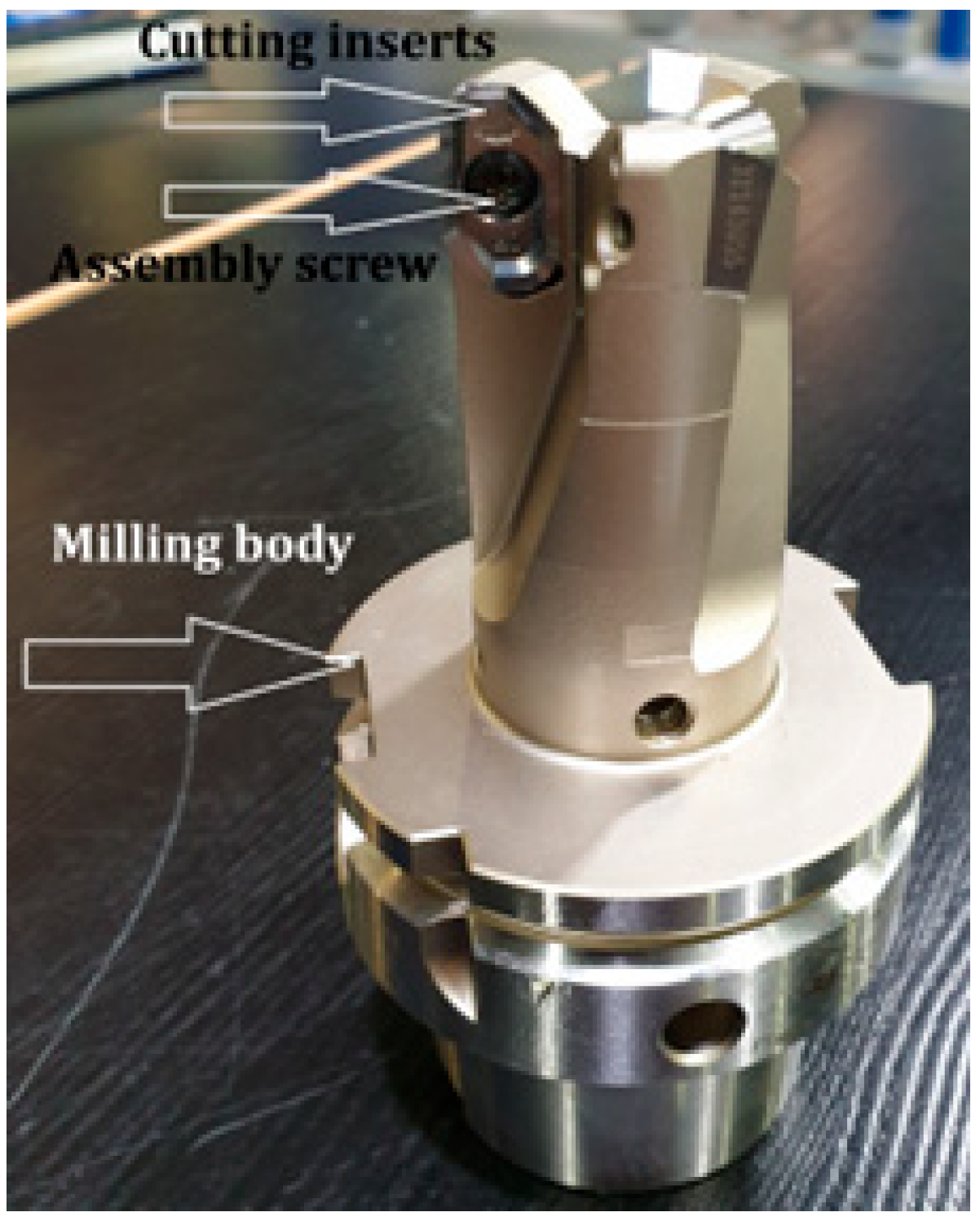
The Mapal ICM901-032-086-A063-Z3R-XD15, produced in Aalen, Germany, is a high-precision milling cutter designed for advanced machining applications. This type of tool is equipped with an HSK-A63 clamping system, known for its superior rigidity and dimensional stability in dynamic working conditions, especially at high speeds. The constructive configuration of the milling cutter allows the installation of three removable inserts. The inserts are fixed using dedicated screws, code M4×7.8-TX15-IP, designed to ensure firm clamping, high stability and good repeatability in the event of successive replacements.
This constructive configuration offers several operational advantages, such as reducing vibrations and increasing the stability of the machining process, improving the quality of the surfaces obtained, increasing the durability of the tool-insert assembly and high efficiencies in front and side milling operations. Also, the design of the milling body includes internal channels for optimal flow of the coolant, facilitating thermal dissipation and extending the life of the inserts [
4].
Figure 1 illustrates the tool geometry, the positioning of the insert and the configuration of the HSK-A63 clamping system [
4], providing a clear representation of the relevant constructive elements.
Dynamic balancing is essential, as it reduces vibrations that occur at very high speeds, thus protecting the spindle, bearings and cutting tools. An unbalanced tool holder can cause rapid wear, poor surface quality and dimensional deviations. Balancing improves accuracy, cutting tool durability and operational safety, enabling the machine to operate at its intended speed. The holes in the tool holder allow the mass distribution to be adjusted to achieve the necessary balance above 25,000 rpm.
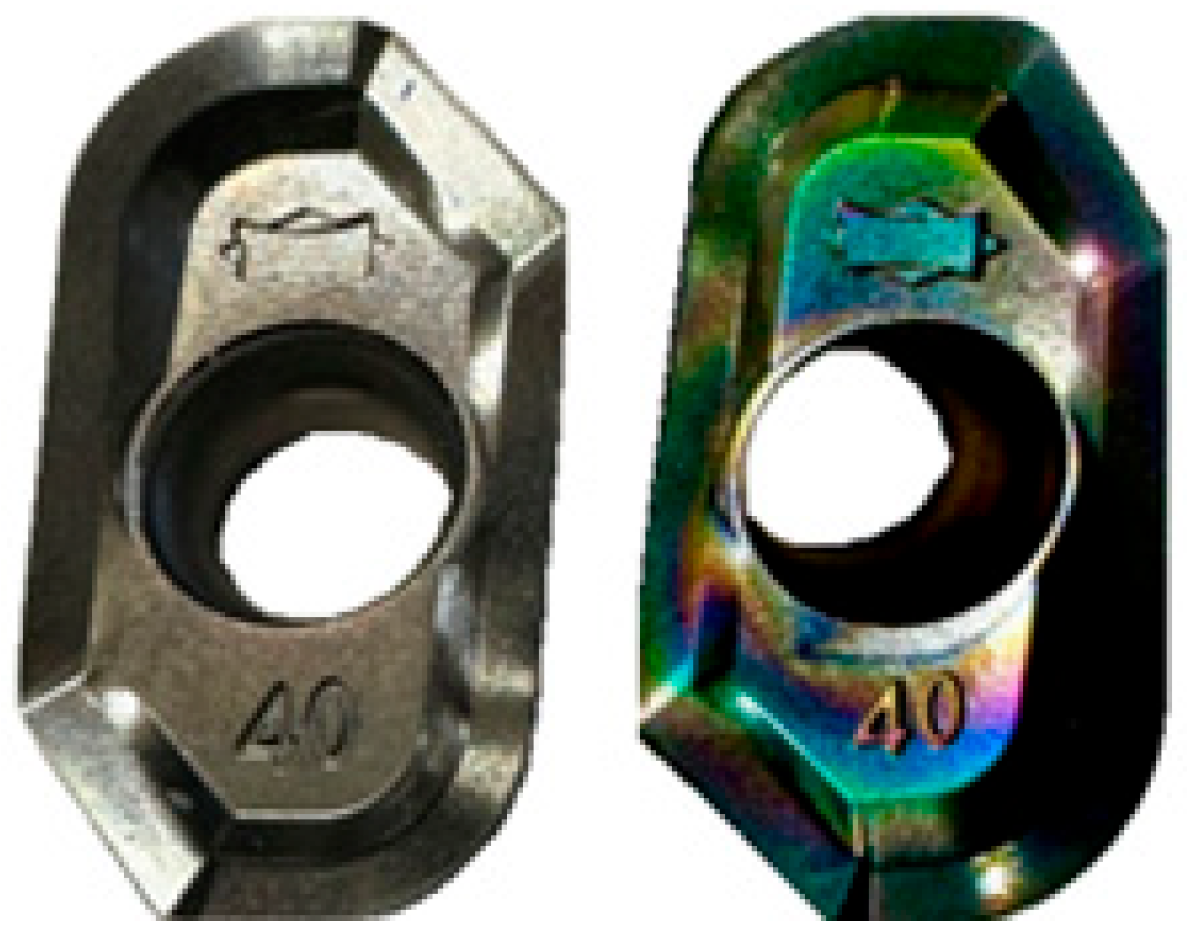
The uncoated cutting inserts with the Mapal code XDHT150440R-U10-HU612 [
4] shown on the left side of
Figure 2 and the DLC-coated cutting inserts with the Mapal code XDHT150440R-U11-V0105-P shown on the right side of
Figure 2 are metal carbide inserts. The only difference between the two types of inserts is that one has a DLC coating. DLC (diamond-like carbon) is a thin amorphous carbon coating with diamond-like properties, applied to cutting tools by methods such as PVD (physical vapor deposition) or PACVD (plasma-assisted chemical vapor deposition). It contains a combination of sp3 (like diamond) and sp2 (like graphite) bonds, providing high hardness and low friction. Advantages of DLC coatings: high hardness, low friction, corrosion resistance, and good machining performance [
5].
2.5. Equipment
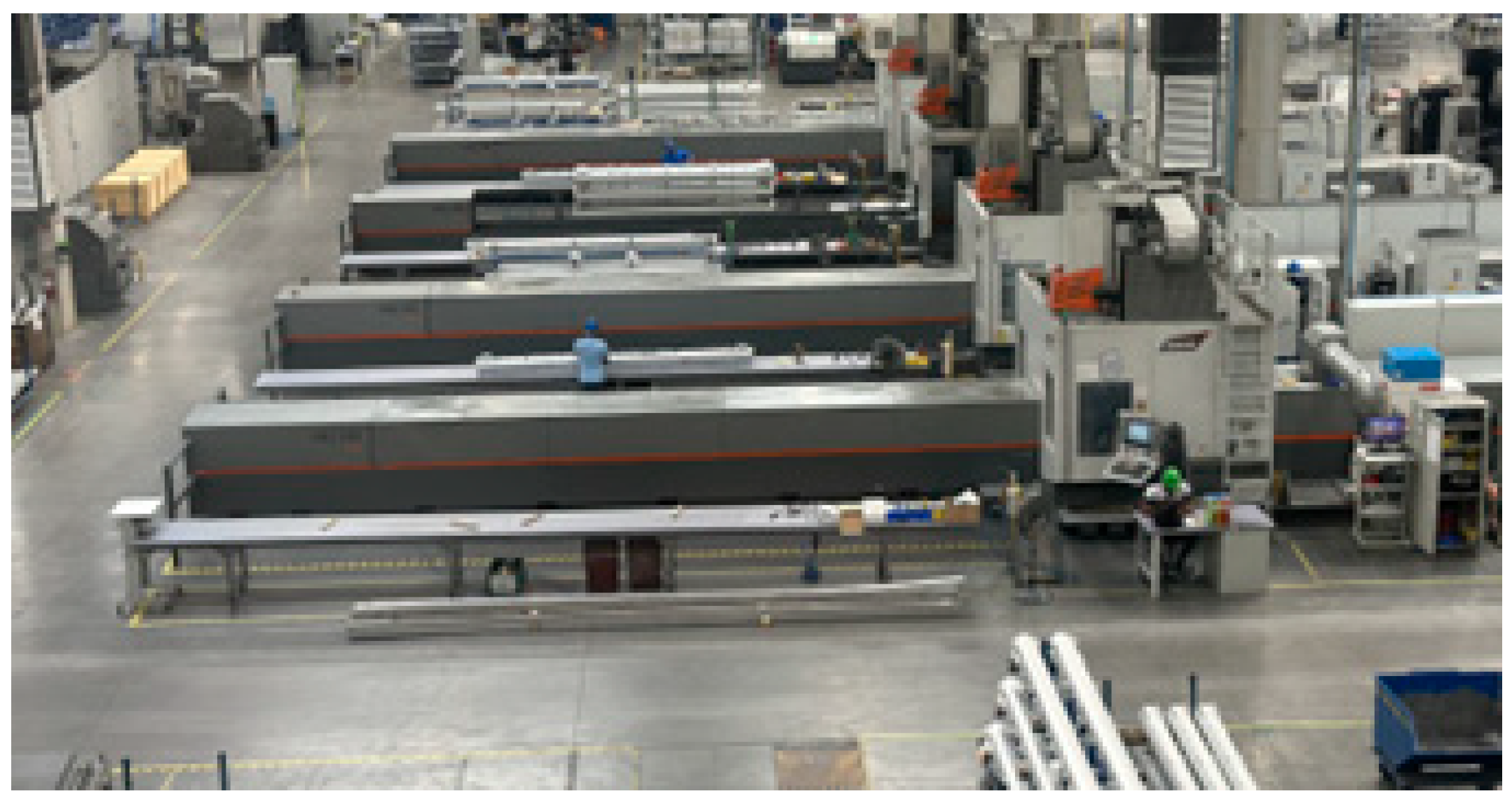
The CNC machine used for machining was the Bavius PBZ HD 600, produced in Baienfurt, Germany, and it is shown in
Figure 3. It has the following important characteristics [
6]:
Maximum dimensions of the machined part: 12,000 × 800 × 575 mm;
Maximum travel of the spindle on the Y axis: 1000 mm;
Maximum axis movement speed: X = 70 m/min, Y = 40 m/min, Z = 40 m/min;
Spindle technical maximum data: Power of 80 kW/h, speed of 30,000 rpm, and torque of 36 N/m.
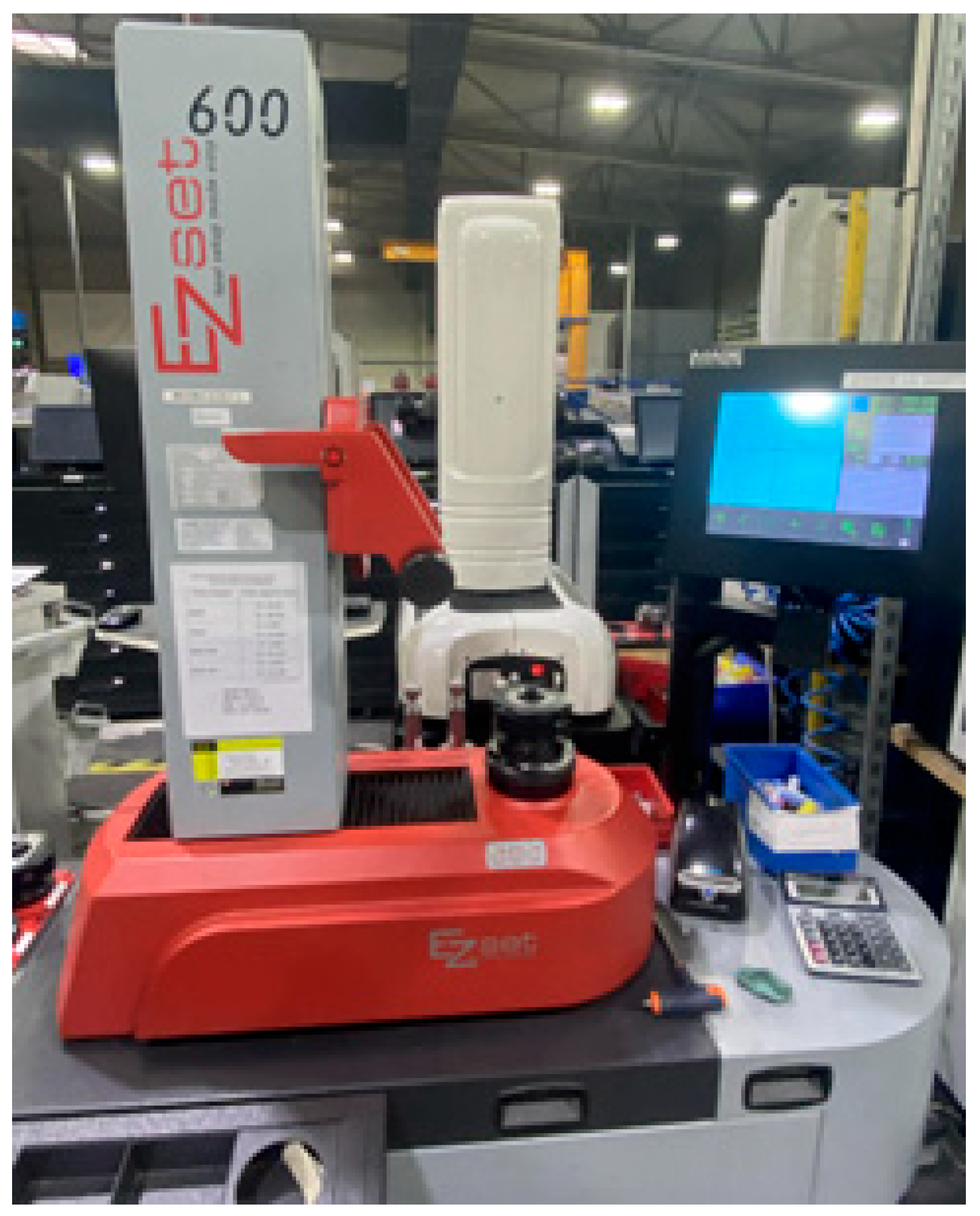
The EZset 600 presetter, produced in Pleidelsheim, Germany, is an advanced tool-measuring, -setting and -checking system for CNC machining. It offers an extended measuring range with a maximum tool length of 600 mm and a diameter of 400 mm, allowing the efficient preparation of large tools before inserting them into the machine. It is equipped with SK-40, HSK E50, HSK-A63, and HSK-A100 adapters. The advanced optical system, based on a CCD camera with a telecentric lens, enables measurements with an accuracy of 1 μm, as well as the visual inspection of edges at magnifications of up to 20×. The dedicated software integrates automatic functions for determining the tool contour and identifying the edge shape, facilitating quality control and minimizing setting errors. By external tool presetting, the EZset 600 helps to reduce the downtime of the CNC machine and increase the productivity of the technological process [
7]. The EZset 600 measuring machine was used for measuring the characteristics of the tool. The system is shown in
Figure 4.
2.6. Process Parameters
To carry out the machining experiment, a series of representative technological parameters for the milling process were established. The choice of these parameter values was made based on the recommendations provided by tool manufacturers and the specialized literature, aiming to obtain a varied range of cutting conditions that would allow efficient training of the neural network. Since MATLAB 2025b only works with numerical values, each parameter was assigned an integer.
Table 1 presents the process parameters and the index assigned for MATLAB according to each type of process parameter.
2.7. Dataset and Outliers
Microsoft Excel was used for collecting all the data. The dataset was structured into five columns. The first column represents the type of alloy to be machined, second column the machining operation, third column the adopted feed per tooth, fourth column the insert type, and fifth column the cutting face. The tool-life of the cutting tools was established based on three criteria: the roughness of the finished parts, the value of the loads on the spindle and the visual and microscopic analysis of the faces of the cutting inserts.
IQR (interquartile range) is a statistical measure of data dispersion, representing the difference between the upper quartile (Q3) and the lower quartile (Q1). In applied research, the IQR is valued for its robustness and for reflecting the variability of real data better than outlier-sensitive measures. Therefore, it is frequently used in experimental data quality analysis, industrial data processing, robust statistics, and the reporting of results in engineering, social and biomedical sciences [
8,
9]. Steps to identify outliners using IQR:
After data processing, from the initial total of 1440 recorded values, the procedure for identifying and eliminating outliers indicated the need to exclude 7 of them. Thus, the final data set used in the analysis was reduced to 1433 valid values, considered representative of the real behavior of the system.
2.8. Values for Models Testing
To test the models developed in the research, additional experimental data sets were used, corresponding to new combinations of input parameters, different from those used in the learning stage. Performance results approximately show how the model will behave with unseen data [
8].
Feed per tooth parameter was modified, being chosen to cover an extended range of variations and to allow the evaluation of the generalization capacity of the proposed model. An additional series of 48 experimental experiments were performed, carried out under conditions like the initial ones, to ensure the consistency and comparability of the results. The cumulative duration of these experiments was approximately 218 h of machining, which reflected both the complexity of the investigated process and the extent of the experimental effort required to obtain a relevant and robust data set (
Table 2).
The data thus obtained were used exclusively in the testing stage of the models, allowing an objective assessment of its predictive performance outside the exact domain of the training data. Thus, the aim was to verify the stability of the model, the accuracy of the predictions and its ability to respond correctly to variations in the technological input parameters, an essential aspect for its practical applicability in real industrial conditions.
3. Machine Learning and Supervised Learning
3.1. Artificial Neural Networks
ANNs are mathematical models inspired by biological neural networks. They are used to solve complex problems, such as pattern recognition, classification, regression or the modeling of nonlinear processes. The neural network used was a “multilayer perceptron”, which is one of the most widely used ANN architectures, including one or more hidden layers between the input and output layers. The neurons are fully connected between the layers, and the network is usually trained with the backpropagation algorithm. MLP can model complex nonlinear relationships and is suitable for regression, classification and modeling problems of industrial processes, including materials processing [
9,
10,
11].
The program used for ANN modeling was MATLAB (v.2025), which is a computing environment and high-level programming language developed by MathWorks. MATLAB provides specialized tools for the development and training of neural networks. A major advantage is the dedicated toolboxes, which allow rapid implementation of machine-learning and artificial-intelligence algorithms [
12]. The use of artificial neural networks (ANNs) in the analysis of technological processes in the field of advanced materials processing represents a modern and efficient method for modeling the complex relationships between process parameters and the output characteristics of the obtained parts.
The benefits of employing a multilayer perceptron (MLP) neural network with feedforward propagation can be summarized as follows:
Nonlinear modeling capability: Al-Li alloy machining processes involve complex nonlinear relationships between technological parameters (alloy, feed per tooth, machining operation, etc.) and the resulting characteristics. The MLP network can learn these relationships without requiring an explicit mathematical formulation [
13].
Generalization capability: After training, the network can provide accurate predictions for new, unfamiliar data, making it ideal for industrial applications where machining conditions may vary [
12].
Flexibility and scalability: The network structure can be adjusted (number of neurons, hidden layers, activation functions), providing adaptability depending on the complexity of the data set and the desired accuracy.
Robustness in the presence of noise: ANNs can identify relevant patterns even in the presence of experimental data with natural variations or noise, which is common in real processing conditions [
14].
Proven applicability in industry: MLP-type ANNs have already been successfully used in the modeling of milling, turning, grinding and heat treatment processes, especially for materials used in the aerospace field (including aluminum, titanium and composites).
Two MATLAB ANN algorithms are used in this paper: trainlm (Levenberg–Marquardt backpropagation) and trainbr (Bayesian regularization backpropagation).
3.2. Tree-Based Algorithms
Tree-based algorithms can be applied in a wide variety of fields, due to their flexibility and ability to structure and analyze data. They can replace certain classical statistical procedures, being used to identify patterns in data sets, extract relevant information from texts, fill in missing values, or optimize search and classification processes. They also have important applications in fields such as medicine, industry, or economics, where they contribute to supporting the decision-making process.
In machine learning, tree-based algorithms are considered some of the most popular regression and prediction techniques. They allow the construction of easy-to-understand and interpretable models, which can be represented graphically and efficiently manage both numerical and categorical data.
At the same time, these methods are used to develop predictive models capable of estimating behaviors, results or trends based on available data. By continuously comparing the real results with those generated by the model, relevant relationships between variables can be identified and the accuracy of predictions can be improved.
The purpose of using tree-based algorithms in such contexts is to obtain robust and interpretable predictive models, which allow the evaluation and optimization of the analyzed processes. Through their hierarchical structure and the use of decision rules, these algorithms facilitate a clear understanding of the influence of variables on the result, thus contributing to making informed and efficient decisions.
Several tree-based algorithms are implemented in MATLAB. Those suitable for the parameters of the cutting process are fitrtree (simple trees) and fitrensemble (random forest and boosting). The fitrtree algorithm creates a regression tree, and fitrensemble combines multiple trees [
15,
16].
3.3. Strategy for the Development of Learning Algorithms
To model the relationship between the technological parameters of the aluminum alloys’ machining process (2196, 2043 and 2099) and the predicted tool-life, we designed four algorithms based on the MATLAB algorithms.
In the case of the four models, the strategy has been designed as two stages that will allow the following:
By applying this strategy, the random effects specific to machine-learning regression algorithms were minimized.
3.4. Normalization of Dataset
The input dataset is defined by a combination of five predictors of different natures, categorical and numerical, organized as follows:
Alloy Type (1, 2, 3)—Categorical variable that indicates the nature of the processed material. Numerical values represent distinct classes of alloys, with no ordinal significance or continuous type relationship between them.
Machining Operation (1, 2)—Categorical variable describing the type of technological process applied. The two values represent discrete states of the process.
Tooth Feed (fz)—Continuous numerical variable expressed in specific physical units. This is the only variable that directly reflects a continuous process size and directly influences tool wear.
Insert Type (1, 2)—Categorical variable that differentiates the construction types or materials of the tools used.
Cutting Face (1, 2)—Categorical variable indicating the active area of the tool involved in the cutting process.
From the point of view of the nature of the data, predictors are divided into
Numerical Predictor (continuous): Tooth Feed;
Categorical predictors: Alloy Type, Machining Operation, Insert Type, Cutting Face.
The output dataset, represented by the actual tool-life, is numerical data.
This mixed structure has direct implications on how data is processed and entered into the model: the numerical variable is used directly, and categorical variables require specific treatment. Categorical variables must be converted by one-hot encoding into a numerical format. Also, the numerical data (input and output) has been normalized.
3.5. Parameters for Determining the Performance of Learning Algorithms
The performance of a learning algorithm can be assessed by several parameters, used both in the learning and validation stages of the model. The most important are the following.
A mean square error measures the average of the differences between the observed values and predicted ones by the model:
where
n is the number of observations;
—the observed value; and
—the estimated value.
A smaller
MSE value translates to a more accurate model. It is sensitive to extreme values (outliers) because the errors are squared [
12]. It is one of the most common performance measurements in regression.
A root mean square error measures the quadratic mean of the differences between the observed values and the predicted ones by the model:
The coefficient of determination (R
2) measures the proportion of the variation in the actual and predicted data.
means that the model perfectly explains the variation in the data,
represents the fact that the model is very good, and
denotes a weak model:
where
is the mean of the observed data.
Based on the mean absolute percentage deviation (
MAPD), we conceptualized a parameter that we named Relative Amplitude, calculated as the absolute difference between the target value and the predicted output, normalized by the average of the two values expressed as a percentage. This parameter provides a scale-independent measure of the prediction error, allowing comparison across different value ranges:
The mean of the Relative Amplitude is:
3.6. Best Architecture for ANN Models
To find the best architectures in the ANN models, we wrote two scripts (for trainbr—Bayesian regularization and for trainlm—Levenberg–Marquardt, respectively) that trained each architecture ten times to reduce the influence of random initialization. The best architecture is the one with the lowest average RMSE.
Considered architectures are the following:
Input layer: Ten neurons
Output layer: One neuron
Hidden layer: Two with [10 5], [10 10], [15 10], [15 15], [20 10], [20 15], [20 20] (first value from the array represents the number of neurons from the first hidden layer, second value represents the number of neurons from the second hidden layer)
Function fitting network: fitnet
Network training function: trainbr and trainlm
Transfer function: For hidden layers, tansig; for output layer, purelin
Data set: In the case of trainbr, 100% for training; 80% for training and 20% for validation in the case of trainlm
Epochs: In the process of training the artificial neural networks, an essential parameter that influences both the accuracy of the model and the training time is the number of epochs. An epoch represents a complete traversal of the entire training data set [
17,
18,
19,
20,
21]: for trainbr 3000, for trainlm 1000.
Due to the differences between the two algorithms, the selection of the best architecture was made for trainlm based on the mean RMSE of the values obtained at internal validation and on the mean RMSE obtained at training in the case of trainbr.
The choice of the best architecture was made based on the average
RMSE of the ten script runs; the results, sorted in ascending order, are presented in
Table 3 for trainlm and
Table 4 for trainbr, respectively.
In conclusion, in the case of trainlm, the best architecture tested is the one with 15 neurons in the first hidden layer and 10 in the second, respectively, and in the case of trainbr, 20/15.
3.7. Best Architecture for Tree-Based Algorithms Models
The fitrtree and fitrensemble algorithms present the option of finding the best architectures.
In the case of fitrtree, the resulting optimal hyperparameters are: MinLeafSize = 1 and MaxNumSplits = 55, and in the case of fitrensemble: Method = LSBoost, NumLearningCycles = 107, LearnRate = 0.50031245, MinLeafSize = 34, and MaxNumSplits = 1430.
3.8. Best Models
To minimize the effects of the stochastic character of the learning algorithms, it makes sense that the four models based on the best architecture should be run multiple times. They were run fifteen times, and subsequently, the four best models were saved.
The comparative results of the four best models obtained from Stage 1, based on experimental data for learning, are presented in
Table 5, the statistics considered being
RMSE and
R-squared.
The comparative results, obtained from Stage 2, based on experimental data for testing, are presented in
Table 6, the statistics considered being RMSE, R-squared and MeanRelAmpl.
Table 7 shows a comparison of the difference between learning and testing in the case of the four models analyzed.
The values of R-squared confirm that trainbr is the model with the best generalization, while trainlm shows the highest degree of overlearning, and tree models occupy an intermediate position.
3.9. Sensitive Analysis
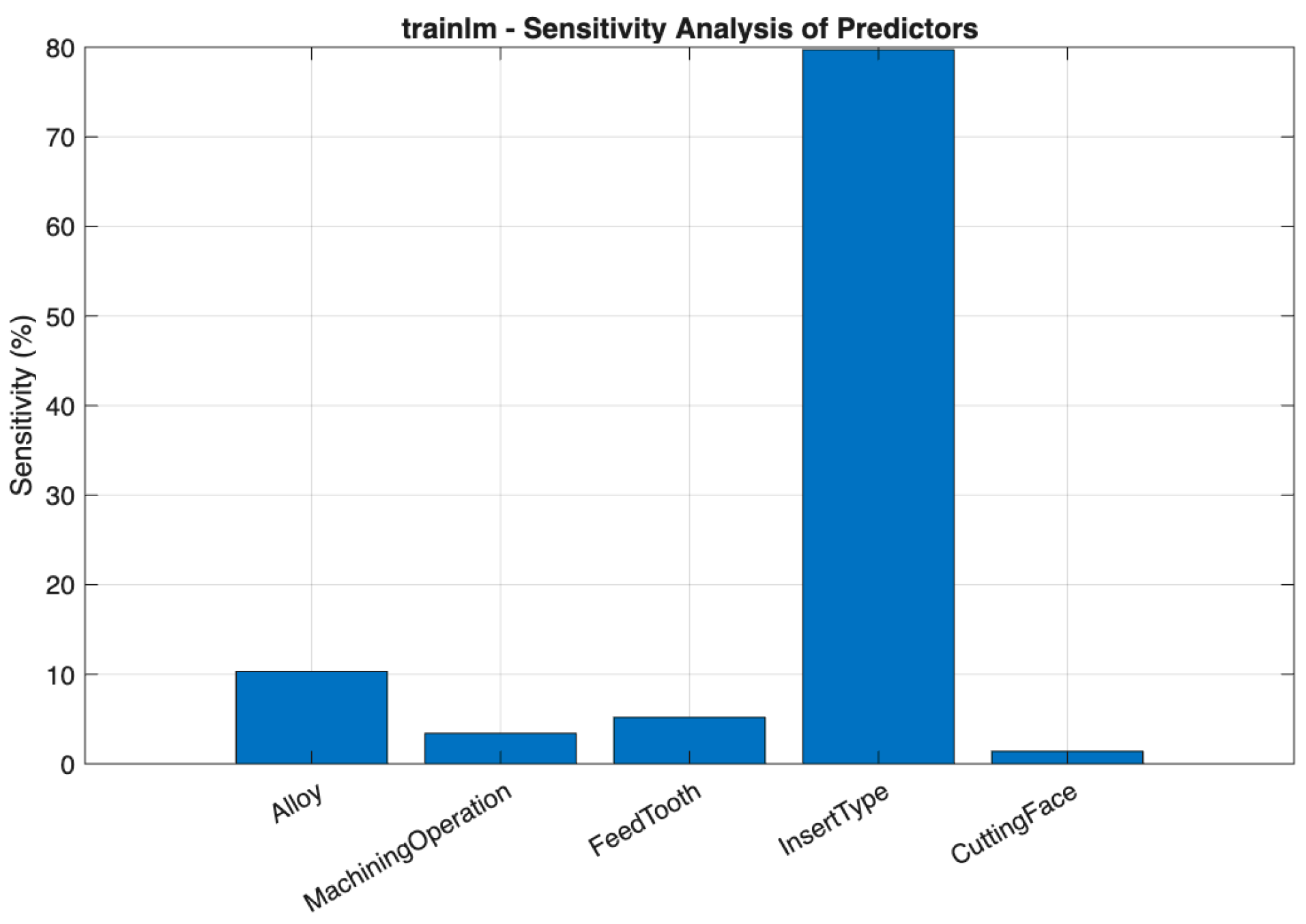
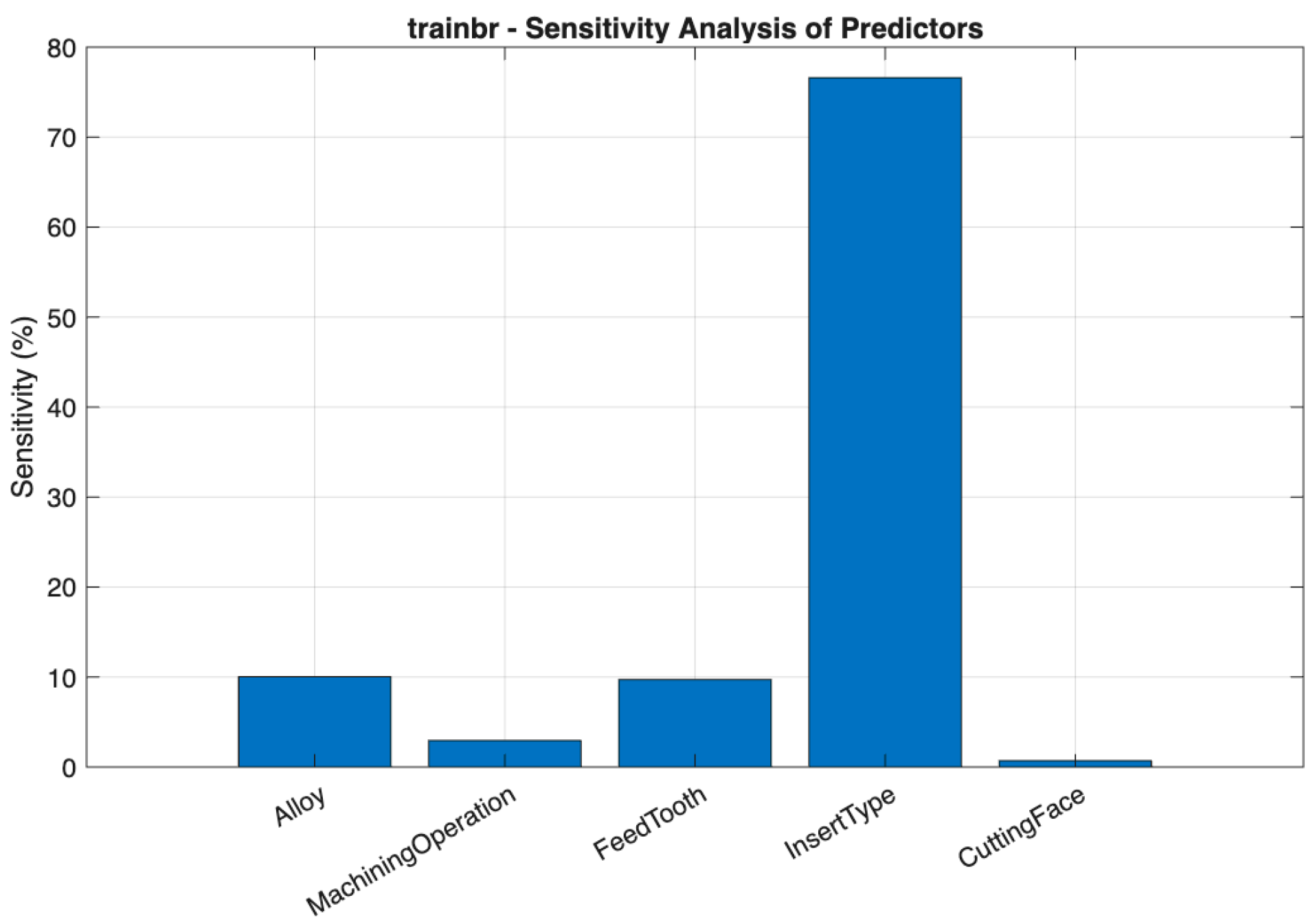
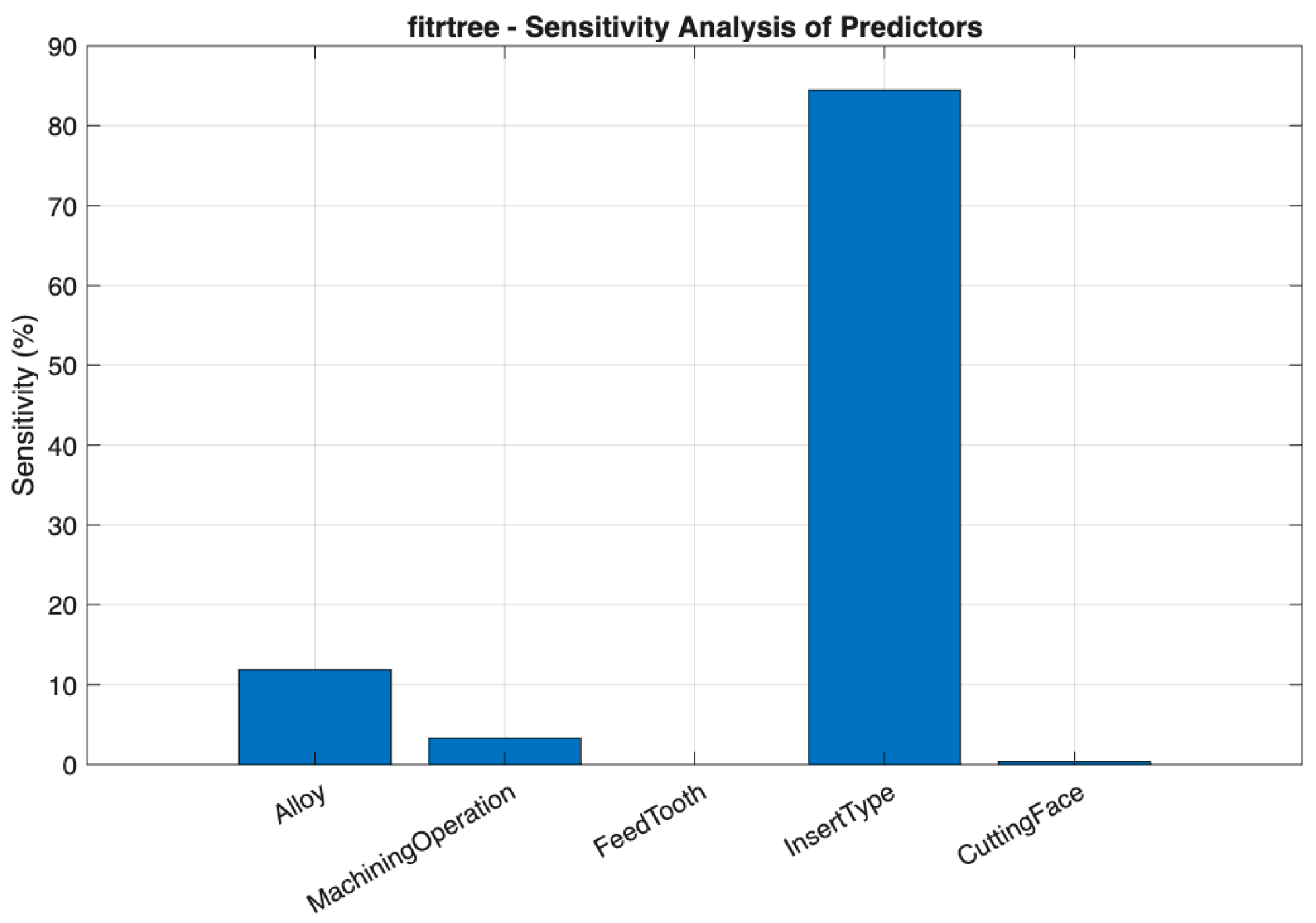
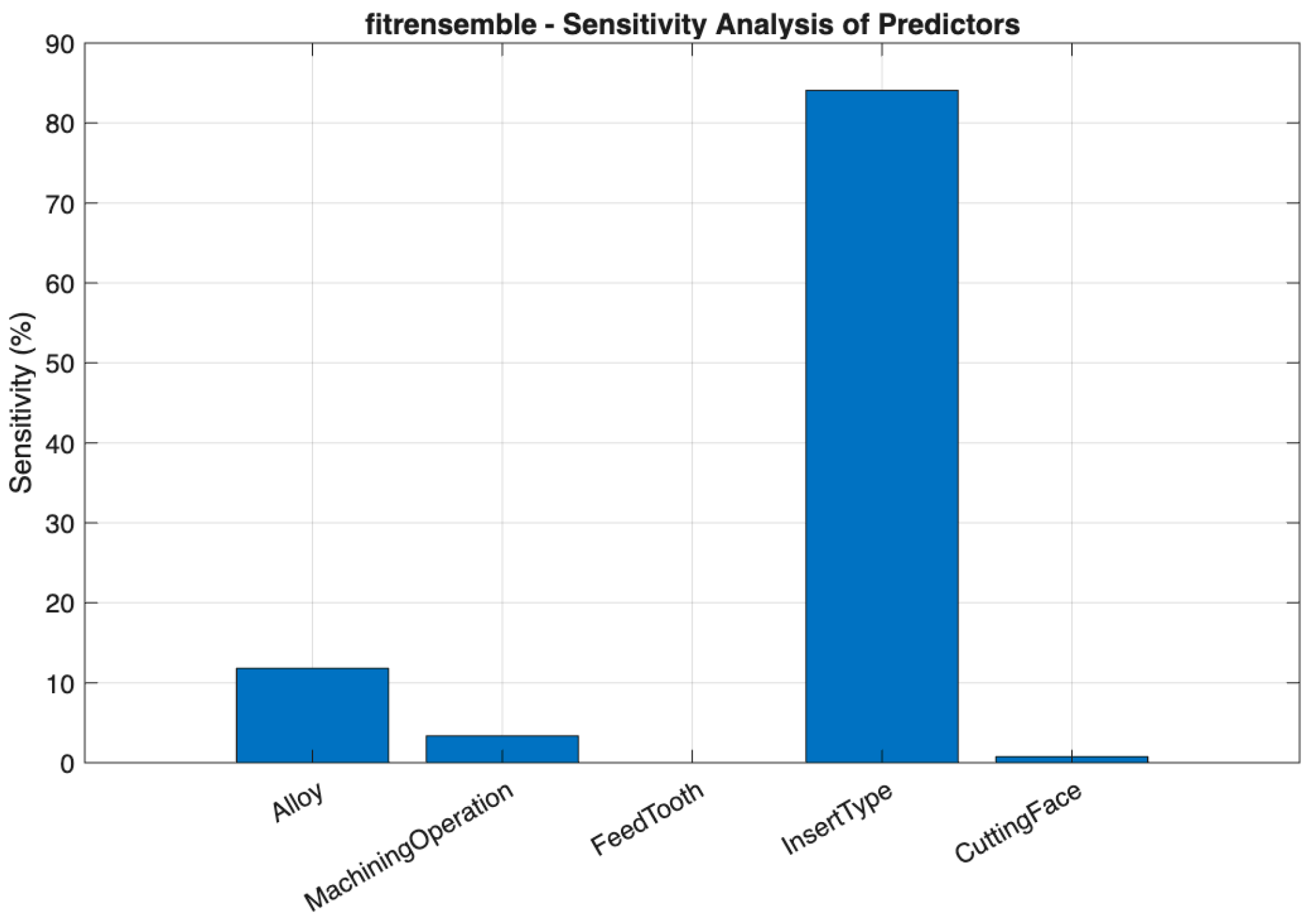
Each of the four models have Insert Type as the most important parameter of machining, being followed by Alloy in second. FeedToth is ranked third in the case of tree-type models and fourth in the case of ANN. The Machining Operation parameter is ranked fourth in tree model types and ranked last in the case of ANN models.
The differing results in sensitive analysis between the tree-type and ANN models can be explained by their difference in approach: the tree models offer an explicit evaluation, based on error reductions by means of discrete partitioning in predictor space, while ANN models distribute the influence of the variables in nonlinear structures.