Review

Surface Degradation of Titanium and Zirconia Dental Implants in the Oral Environment: A Scoping Review of Mechanisms and Clinical Implications


by
Michał Ciszyński
1,
Bartosz Chwaliszewski
1,
Wojciech Niemczyk
1,2,
Wojciech Simka
3,4,
Marzena Dominiak
1 and
Jakub Hadzik
1,*
1
Department of Dental Surgery, Faculty of Medicine and Dentistry, Medical University of Wroclaw, 50-425 Wroclaw, Poland
2
Department of Periodontal Diseases and Oral Mucosa Diseases, Faculty of Medical Sciences in Zabrze, Medical University of Silesia, 40-055 Katowice, Poland
3
Faculty of Chemistry, Silesian University of Technology, 44-100 Gliwice, Poland
4
Faculty of Medicine and Life Sciences, University of Latvia, LV-1004 Riga, Latvia
*
Author to whom correspondence should be addressed.
Coatings 2026, 16(4), 504; https://doi.org/10.3390/coatings16040504

Submission received: 19 March 2026 / Revised: 16 April 2026 / Accepted: 19 April 2026 / Published: 21 April 2026

Highlights

What are the main findings?
Titanium undergoes corrosion, wear, and tribocorrosion in oral conditions.
Zirconia degradation involves aging, phase transformation, and wear.
Surface degradation mechanisms differ fundamentally between materials.
What are the implications of the main findings?
Surface alterations affect material performance and biointerface behavior.
Titanium degradation is supported by strong experimental evidence.
Zirconia degradation lacks consistent clinical and in vivo validation.

Abstract

Titanium dental implants are widely regarded as the gold standard for the rehabilitation of missing teeth due to their high survival rates and favorable mechanical properties. However, in the oral environment, implant materials are continuously exposed to complex chemical, mechanical, and biological factors that may lead to surface degradation, including corrosion, tribocorrosion, and mechanical wear. These processes can alter implant surface characteristics and influence biological responses in peri-implant tissues. Zirconia implants have been introduced as alternative material due to their favorable aesthetics and biocompatibility. Nevertheless, zirconia ceramics are also susceptible to degradation phenomena, including hydrothermal aging, phase transformation, and surface wear under specific conditions, although their clinical relevance remains unclear. In addition, emerging hybrid titanium–zirconia implant systems introduce new considerations regarding surface stability. This scoping review, conducted in accordance with PRISMA-ScR guidelines, summarizes the current evidence on degradation mechanisms affecting titanium, zirconia, and hybrid dental implants, with particular focus on processes occurring in the oral environment and their biological and clinical implications. The available evidence differs substantially between the two materials. While titanium degradation is well documented and supported by both experimental and clinical studies, the evidence for a hybrid implant remains limited and is largely based on in vitro and mechanistic data.

1. Introduction

Dental implants have long been regarded as the standard of care for restoring lost dentition. They can be applied in a wide range of cases, from a single missing tooth to full-arch restorations. Since their introduction by Brånemark in the 1950s, many modifications have been introduced to implant surfaces and their macro- and microtopography, resulting in increased success rates. Over time, the ability to osseointegrate has significantly improved [1].
Despite continuous improvements, titanium dental implants are not free from limitations, including susceptibility to corrosion. When exposed to oxygen, titanium forms a TiO2 layer, which is expected to inhibit deterioration. This oxide layer is very thin and is present both on commercially pure titanium and on the Ti6Al4V alloy commonly used for implant manufacturing. Various processes are used to improve titanium’s surface properties, increase the thickness of the oxide layer, and enhance corrosion resistance [2,3]. Nonetheless, titanium compounds have been detected in peri-implant tissues, and their concentration correlates with the extent of marginal bone loss and peri-implantitis [4]. The presence of titanium in peri-implant tissues has also been shown to stimulate osteoclastogenesis [5]. Corrosion of titanium, through surface alterations, is known to promote bacterial colonization and reduce host cell attachment and proliferation [6,7]. These limitations have led to the development of alternative implant materials, among which zirconia (zirconium oxide, ZrO2) has gained particular attention [1,8].
However, zirconia is not entirely free from degradation-related issues. Although it generally shows high chemical stability, some studies have reported its susceptibility to degradation under certain conditions. Compared with titanium, the body of literature on zirconia implants is still limited, especially in terms of degradation mechanisms in the oral environment. This represents an important knowledge gap, as titanium corrosion is considered a contributing factor to peri-implantitis.
Surface properties affecting the success of implant therapy include roughness, wettability, chemical composition at the surface, and topography. Many techniques are utilized to improve the surface properties of dental implants. Among the techniques are UV light exposure, heat treatment, reactive plasma treatment, anodizing, hydroxylation, plasma oxidation, and application of various coatings. Any degradation can negatively impact the biological properties of the implant surface, thus leading to impairment of healing [1].
Due to the heterogeneity of the available evidence and the limited clinical data on zirconia, a scoping review approach was considered appropriate. The aim of this scoping review was to systematically map the current evidence on degradation mechanisms and influencing factors affecting titanium and zirconia dental implants, with particular focus on processes occurring in the oral environment and their potential biological and clinical implications, and to identify existing gaps in the literature, particularly regarding zirconia implants.

2. Materials and Methods

This article was conducted in accordance with the Preferred Reporting Items for Systematic Reviews and Meta-Analyses extension for Scoping Reviews (PRISMA-ScR). A scoping review approach was selected to systematically map the extent, range, and nature of the available evidence on degradation- and wear-related phenomena of dental implant materials and to identify key concepts and knowledge gaps within a heterogeneous body of literature. The methodology was designed to provide a broad overview of the available evidence rather than a quantitative synthesis.

2.1. Search Strategy

Electronic searches were conducted in MEDLINE via PubMed, Embase, Scopus, and Google Scholar. All databases were searched from their inception to the date of the final search, which was performed in June 2025. No restrictions were applied with respect to the year of publication in order to capture both foundational and more recent evidence. The search was limited to publications available in the English language. Search results from each database were exported for subsequent screening and deduplication as part of the study selection process.
The search strategy was structured around two main concepts: dental implant materials and degradation-related mechanisms or consequences. For the material component, terms related to titanium and zirconia were used, including commonly reported variations and synonyms. These included titanium, titanium alloys, commercially pure titanium, Ti-6Al-4V, zirconia, zirconium dioxide, ZrO2, and yttria-stabilized zirconia. For the implant component, the strategy included terms such as dental implants, oral implants, endosseous implants, implant abutments, and implant components.
Degradation-related terms included corrosion and wear, as well as additional relevant phenomena identified through Medical Subject Headings (MeSHs) and domain knowledge, such as tribocorrosion, galvanic corrosion, pitting, fretting, abrasion, fatigue, aging, low-temperature degradation, hydrothermal aging, phase transformation, surface degradation, ion release, particle release, and metal release. Clinically relevant outcomes potentially associated with material degradation, including peri-implantitis, were also considered where appropriate.
In PubMed, the search combined MeSH terms and free-text keywords in titles and abstracts using Boolean operators. MeSH terms such as “Dental Implants,” “Titanium,” “Zirconium Dioxide,” “Corrosion,” “Degradation,” and “Wear” were combined with corresponding free-text terms to increase sensitivity. The search strategy was adapted for Embase using Emtree terms and database-specific syntax and for Scopus using title, abstract, and keyword fields.
Due to platform limitations, Google Scholar was searched using simplified combinations of the core keywords, and the first 1000 results sorted by relevance were screened, in line with common scoping review practice. Equivalent concepts and terminology were retained across all databases to ensure consistency and broad coverage of the literature.

2.2. Eligibility Criteria

Eligibility criteria were defined a priori using the population–concept–context (PCC) framework in accordance with PRISMA-ScR guidance.
The population of interest comprised dental implants and implant components used in oral rehabilitation, without restrictions on patient characteristics or experimental model, allowing inclusion of in vitro, in vivo, and clinical studies.
The concept addressed the material degradation of titanium- and zirconia-based dental implants. Sources of evidence were eligible if they investigated degradation-related mechanisms such as corrosion, tribocorrosion, wear, aging, low-temperature or hydrothermal degradation, surface alterations, phase transformations, or the release of ions or particles, as well as their mechanical, biological, or clinical consequences.
The context was dental implantology within the oral environment. Studies conducted under laboratory, preclinical, or clinical conditions were included, provided their findings were relevant to dental implants. Evidence focusing exclusively on non-dental applications was excluded unless clearly transferable. Only full-text articles published in English were considered, with no restrictions on year of publication.

2.3. Study Selection

All records retrieved from the electronic searches were exported into reference management software, where duplicate entries were identified and removed prior to screening.
Title and abstract screening was performed independently by two reviewers (MC and BC) to assess potential relevance to the objectives of the scoping review. Articles that clearly did not address dental implants or did not involve titanium or zirconia materials were excluded at this stage. Full texts of potentially eligible sources were then retrieved and assessed independently by the same reviewers against the predefined eligibility criteria. Any discrepancies arising during either the title and abstract screening or full-text assessment were resolved through discussion and consensus.
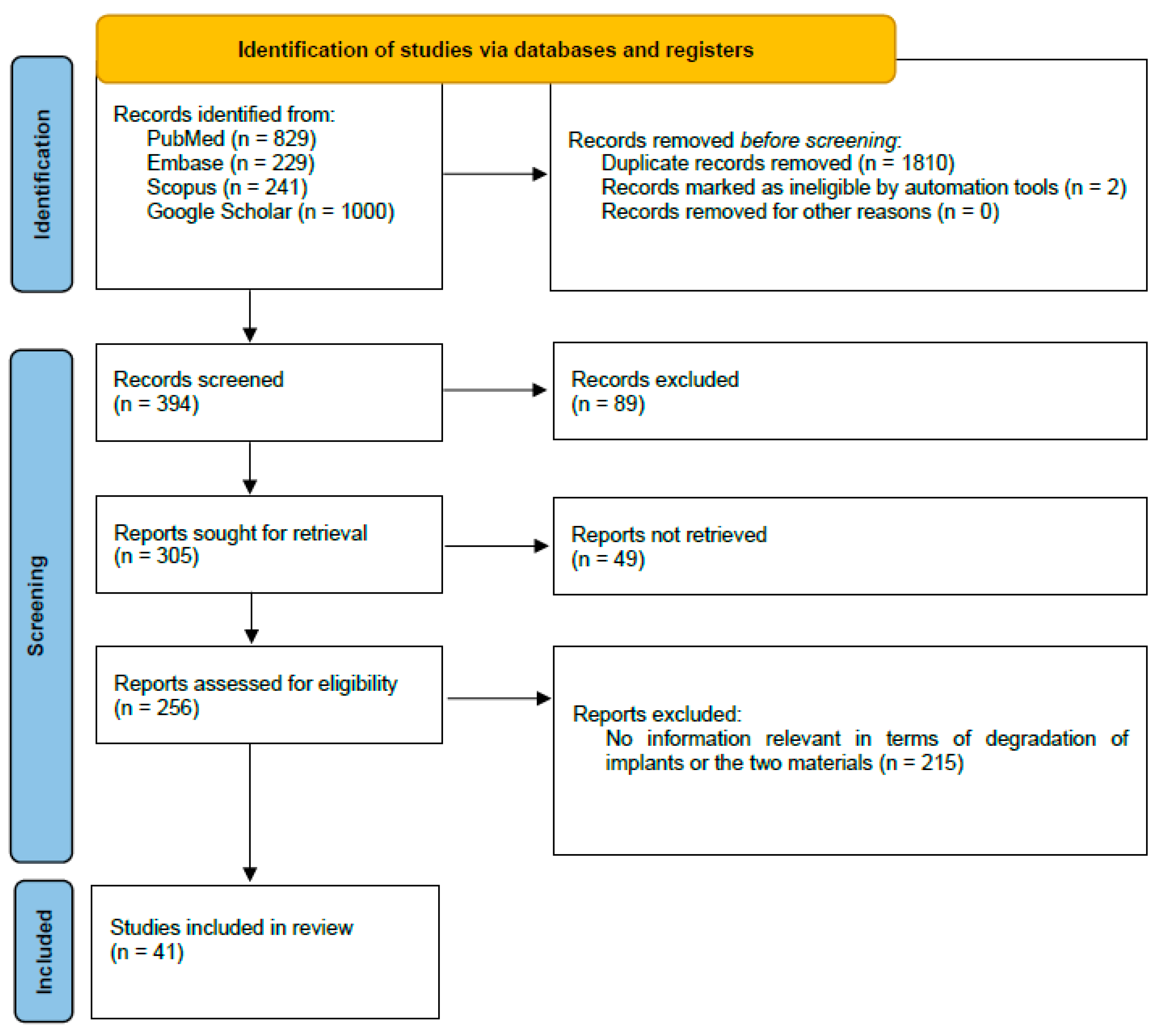
The selection process followed predefined criteria while allowing clarification of inclusion decisions where necessary. The final number of sources included in the review, along with reasons for exclusion at the full-text stage, was documented and is presented using a flow diagram in line with PRISMA-ScR guidance (Figure 1).

2.4. Scanning Electron Microscope Photographs Acquisition

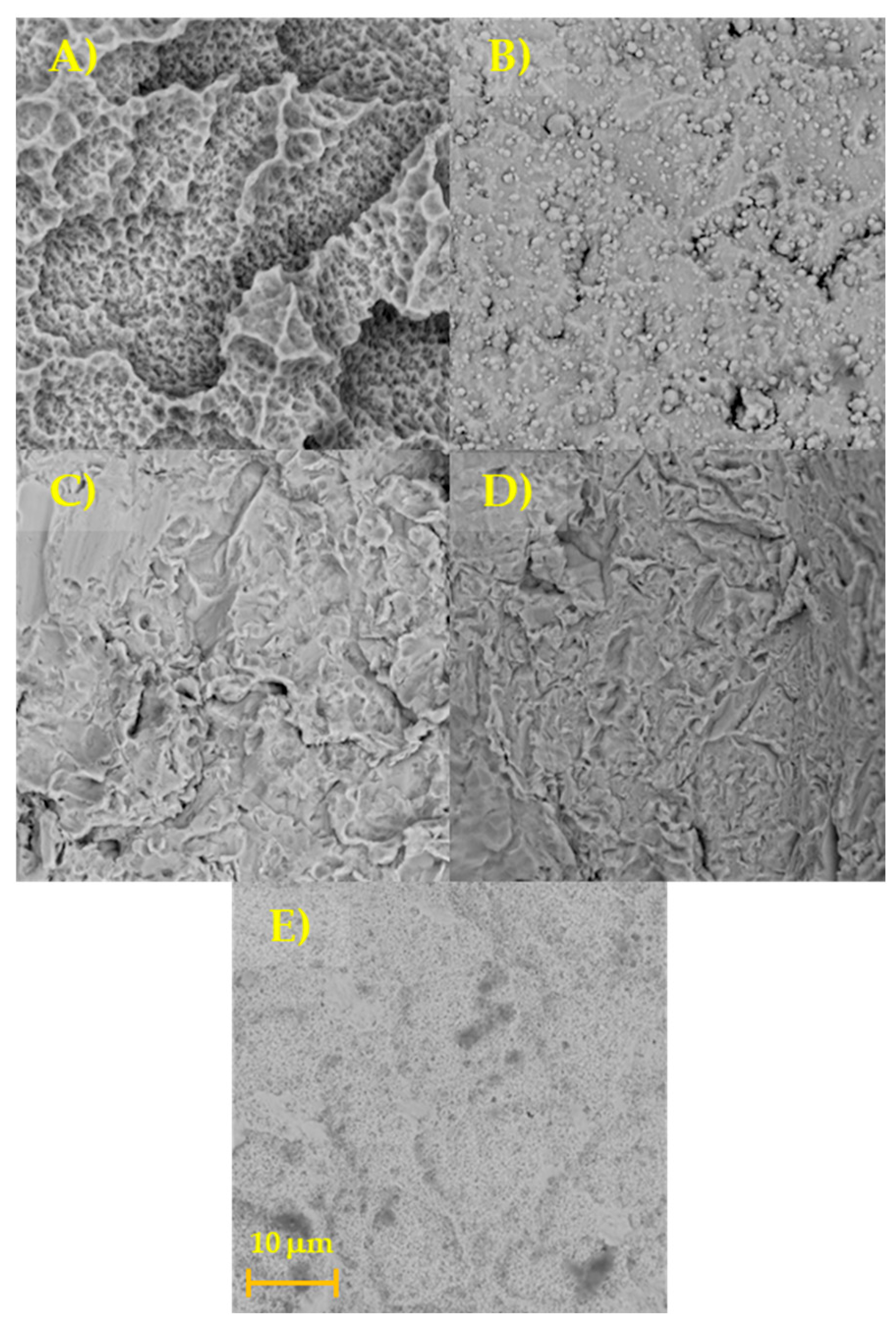
To illustrate differences between implant surface types, scanning electron microscopy (SEM; Phenom ProX-Thermo Fisher Scientific, Eindhoven, The Netherlands) images were acquired. To ensure reproducibility, all images were obtained under identical conditions. The samples were mounted on the specimen stage prior to imaging. Micrographs were acquired at an accelerating voltage of 15 kV and a magnification of 5000×.

3. Suggested Mechanisms of Titanium Degradation

Titanium is generally recognized as a highly reactive metal; however, paradoxically, this reactivity contributes to its exceptional corrosion resistance. When exposed to an oxygen-rich environment, titanium rapidly forms a thin and stable titanium dioxide (TiO2) layer on its surface, typically measuring between 1.5 and 10 nm in thickness. This protective oxide film is chemically stable and forms spontaneously, which explains why most corrosion studies on titanium focus on the properties and durability of TiO2.
It is well established that once this oxide layer is damaged, the underlying titanium becomes vulnerable to corrosion. The extent of corrosion then depends largely on environmental factors. To enhance corrosion resistance, alloying elements such as palladium, nickel, and molybdenum are often added to titanium. These elements support cathodic reactions and help preserve the metal’s passivity. Despite these measures, both titanium and its alloys remain susceptible to corrosion, and various factors are known to influence their degradation behavior [9].
Corrosion of titanium may occur through different mechanisms. According to the Pourbaix diagram, titanium becomes vulnerable under strongly oxidizing or strongly reducing conditions. Oxidation may lead to dissolution of the oxide layer, while reduction promotes hydride formation. Both processes decrease the passivity of titanium and reduce its corrosion resistance [10]. However, such conditions are unlikely to occur in the oral cavity.
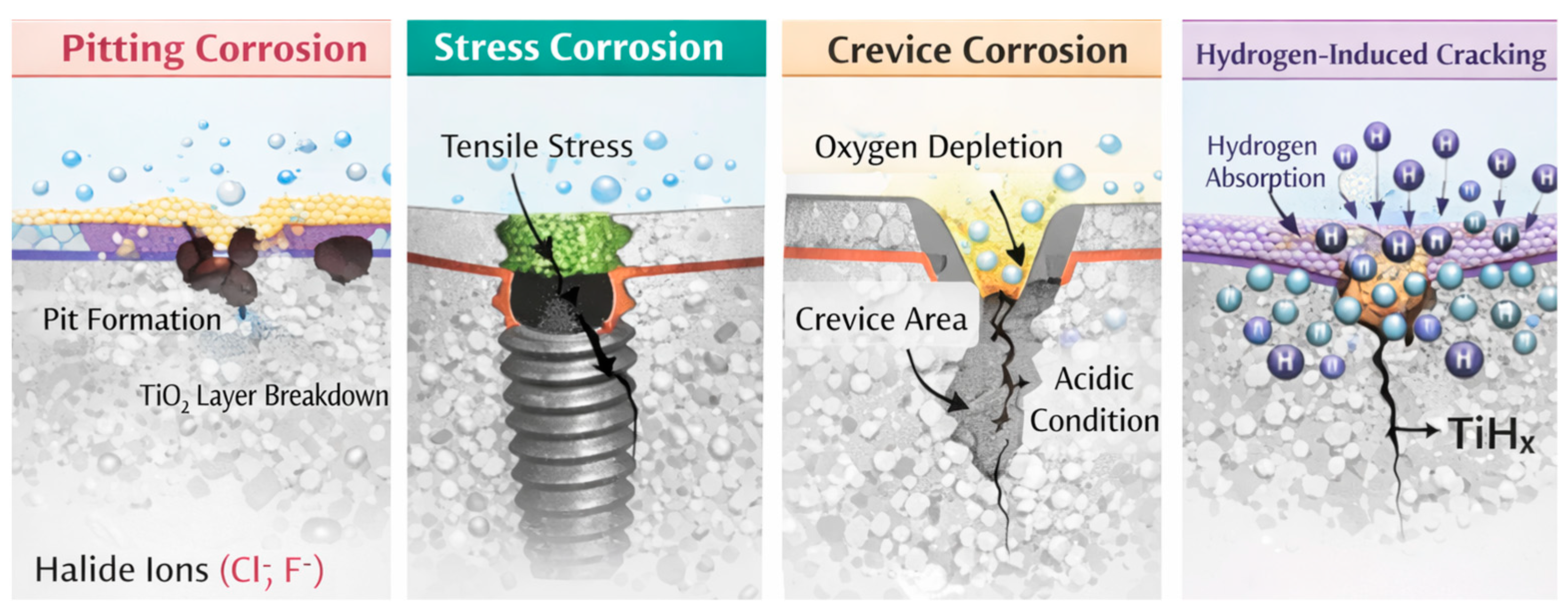
Under specific conditions, pitting corrosion, crevice corrosion, stress corrosion cracking, and hydrogen-induced cracking may occur on titanium surfaces [9,11,12,13].
Pitting corrosion is understood as the propagation of pits resulting from the localized breakdown of the TiO2 layer [11]. Its severity is influenced by temperature and the concentration of halide ions, such as fluorides, chlorides, iodides, and bromides [9]. Crevice corrosion occurs in confined spaces, where depleted oxygen levels prevent repassivation of the system [12]. The lack of oxygen leads to the dissolution of the metal.
Stress corrosion cracking can be divided into two main mechanisms: anodic dissolution at the crack tip and hydrogen embrittlement. The first mechanism begins at pits or crevices, where tensile forces cause cracks to propagate into the metal. Hydrogen-assisted cracking results from the absorption of hydrogen atoms (produced during the cathodic reaction) near the crack tip, followed by their diffusion into the titanium, promoting embrittlement. Hydrogen-induced cracking also results from hydrogen absorption but requires a significantly higher hydrogen concentration [9,13].
An example of such a chemical reaction is as follows:
TiO2 + 6HF → H2[TiF6] + 2H2O.
The mechanisms of titanium degradation can be seen in Figure 2.

4. Suggested Mechanisms of Zirconia Degradation

Among the polymorphic forms of zirconia, tetragonal zirconia polycrystals exhibit the most favorable characteristics for medical applications. They combine low porosity, high density, significant bending and compressive strengths, high fracture toughness, and strong resistance to fatigue. It also promotes the proliferation of osteogenic cells during osseointegration of implants manufactured out of it [1]. The transformation from the tetragonal to the monoclinic form occurs spontaneously at approximately 1000 °C, leading to fractures during the cooling of pure zirconia from the sintering temperature. The addition of yttrium oxide (yttria, Y2O3) can stabilize zirconia in a tetragonal state and allow it to be used as a structural material [14]. Like any other material, however, it is not free of flaws; it remains susceptible to degradation.
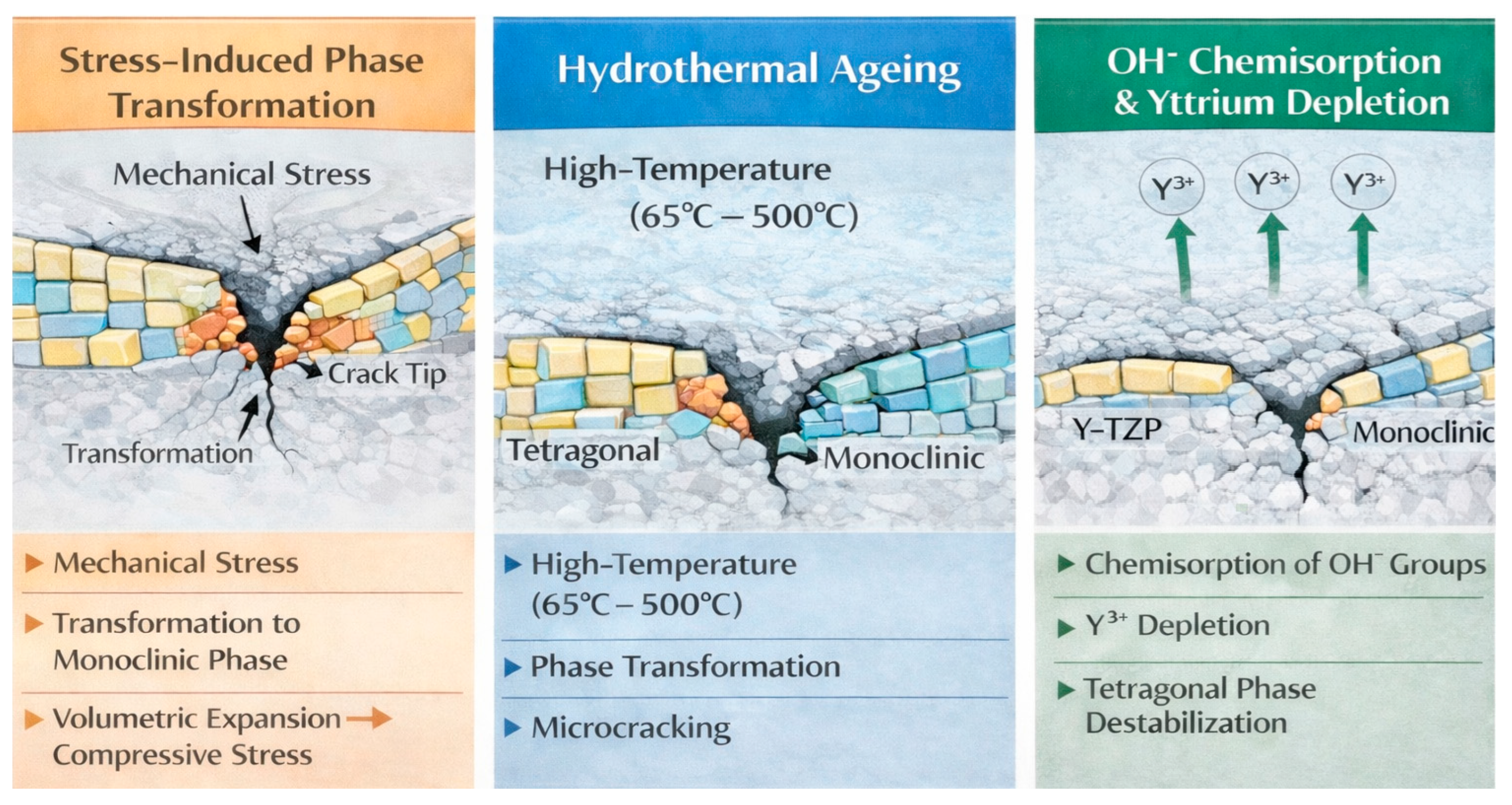
There are several suggested mechanisms of zirconia degradation, including low-temperature degradation (or hydrothermal aging), chemisorption of hydroxyl groups, and stress-induced phase transformation (sometimes referred to as stress-assisted degradation) [14].
Stress-induced phase transformation refers to zirconia’s ability to undergo transformation from the tetragonal to the monoclinic phase under mechanical stress. It was described in the 1970s by Garvie et al. as a toughening mechanism that acts to resist crack propagation [15]. The transformation from the tetragonal to the monoclinic phase occurs at the tip of cracks caused by mechanical stress. The volumetric expansion that occurs during the transformation (the monoclinic phase is characterized by a greater volume than the tetragonal phase) induces compressive stress. It has also been argued, on the other hand, that the monoclinic layer at the tip of a crack can improve mechanical properties thanks to its ability to withstand some compressive force. Nonetheless, the threshold between mechanical property improvement and deterioration appears to be very narrow [16].
Another mechanism of zirconia degradation is known as hydrothermal aging or low-temperature degradation. The critical temperature for the tetragonal-to-monoclinic transformation depends on the sintering temperature. Aging occurs within the temperature range of 65–500 °C, with the maximum rate observed around 250 °C. It has been shown that increasing the amount of yttria resulted in lower contents of monoclinic phase (4Y-TZP had significantly lower content of monoclinic phase than 3Y-TZP and 2Y-TZP) [12].
Another proposed mechanism of Y-TZP degradation involves chemisorption of hydroxyl groups (OH-) from water in the environment, leading to the formation of Y-OH and Zr-OH bonds on the Y-TZP surface. This process is thought to cause yttrium depletion, which in turn reduces the stability of the tetragonal phase of zirconium oxide [16]. There have also been reports of zirconia reduction, resulting in the formation of metallic zirconium [17]. The mechanisms of zirconia degradation can be seen in Figure 3.

5. Factors Influencing Implants’ Degradation in the Oral Cavity

As discussed earlier in the text, titanium can be prone to corrosion under specific conditions, and several factors are known to influence the degradation of titanium.
Titanium, as a metal, undergoes chemical and electrochemical corrosion. In contrast, zirconia, a ceramic oxide of zirconium, is primarily subject to surface degradation phenomena, including aging, phase transformation, and wear, rather than corrosion in the electrochemical sense.
Nonetheless, the factors influencing the degradation of both materials can be similar. Those variables may be categorized similarly to those affecting zirconia—physical, chemical, and biological ones. These include mechanical stresses and their consequences in the form of surface damage, fluctuations of pH [18] and temperature, the presence of different chemical components delivered with hygiene products [19] and food, and the presence of bacteria [20,21,22].
Considering chemical factors, the main environmental characteristics influencing corrosion of titanium are halide ions such as fluorides, chlorides, iodides, and bromides. Fluorides are particularly important, as their presence is known to affect the process of titanium’s degradation, causing pitting corrosion [23,24,25]. Nonetheless, other chemical factors, such as pH, can influence corrosion as well. The oral cavity’s environment, in its nature, is humid, which allows hydrolysis of acidic chemical compounds, reducing the pH level. Low pH in the oral cavity in the long run may increase the fixture’s surface roughness by affecting its superficial layer—this mechanism is also utilized in manufacturing processes to increase micro-roughness of implants’ surface (SLA surface), thus promoting their ability to osseointegrate. However, greater roughness also increases bacterial retention and can potentially promote further degradation [1,21,26]. Zirconia’s tetragonal-to-monoclinic transformation is known to accelerate in the presence of water or water vapor, and the transformation is accompanied by micro- and macro-cracking [16]. This transformation is accelerated by low pH levels in the oral cavity, which contribute to surface deterioration and increased roughness of zirconia [26]. This ability to be acid-susceptible is useful during the manufacturing process of zirconia [27]; nonetheless, it also presents a negative outcome when it comes to the oral cavity environment. Nucleation and propagation of surface cracks may occur during zirconia acid exposure, leading to the release of zirconia particles into the oral environment [26,27]. The acidic or alkaline nature of saliva can influence the degradation of zirconia. Low pH (acidic) oral cavity conditions, present in patients suffering from gastroesophageal reflux disease or among patients using a highly acidic diet, can lead to surface degradation or transformation of zirconia. Certain oral hygiene routines, such as frequent and excessive use of specific mouthwashes and toothpastes, may negatively affect the surface of zirconia implants. These oral hygiene products contain various compounds that promote enamel remineralization, many of which incorporate fluoride in the form of APF (acidulated phosphate fluoride) or stannous fluoride (SnF2) [28,29], both of which may contribute to the reduction in the pH level in the oral cavity, thus affecting the superficial layers of the ceramics and altering their structure, making them coarser and more prone to microbiota aggregation processes [26,30]. In vitro studies have shown potential in APF solutions of diverse concentrations to dissolve the superficial layers of dental ceramics, amalgam, and dental composites [31,32]. However, there is little in vivo evidence, and the exact impact of clinical fluoride applications on zirconia ceramics requires thorough investigation [30]. Aside from the influence of fluorides on pH, studies have also reported the effects of SnF2 on enamel erosion. Surface loss of tooth structure has been shown to be lower when dentifrice containing SnF2 was used compared to oral hygiene products without it [33,34,35].
In terms of physical factors, it is worth noting that forces generated during mastication are transferred via prosthetic suprastructures onto the implant core, damaging the protective TiO2 film and causing material degradation [36,37]. The wear process, known as material fatigue, involves the disruption of intermolecular bonds and the propagation of subsurface damage caused by repeated stress [36]. Moreover, implants are at risk of delamination, which is the process of microfractures occurring between the implant body and bone. This problem has been described in the case of hip implants and can occur around dental implants during mastication [38].
The predominant biological factor contributing to titanium corrosion is dental plaque, that is, the oral biofilm. Bacterial metabolism of carbohydrates changes the pH in the environment, altering its values by lowering them to as low as 3.0. This interplay between biological and chemical factors demonstrates how processes promoting corrosion occur simultaneously and must be considered collectively. The exposure of titanium alloys to acidic medium is associated with the corrosion of the connection between the implant and the fixture [30]. These processes have been well documented by multiple studies, and the impact of the biofilm on the titanium surface has been confirmed [39,40]. Nonetheless, we did not find any specific data confirming their influence on zirconia dental implants.
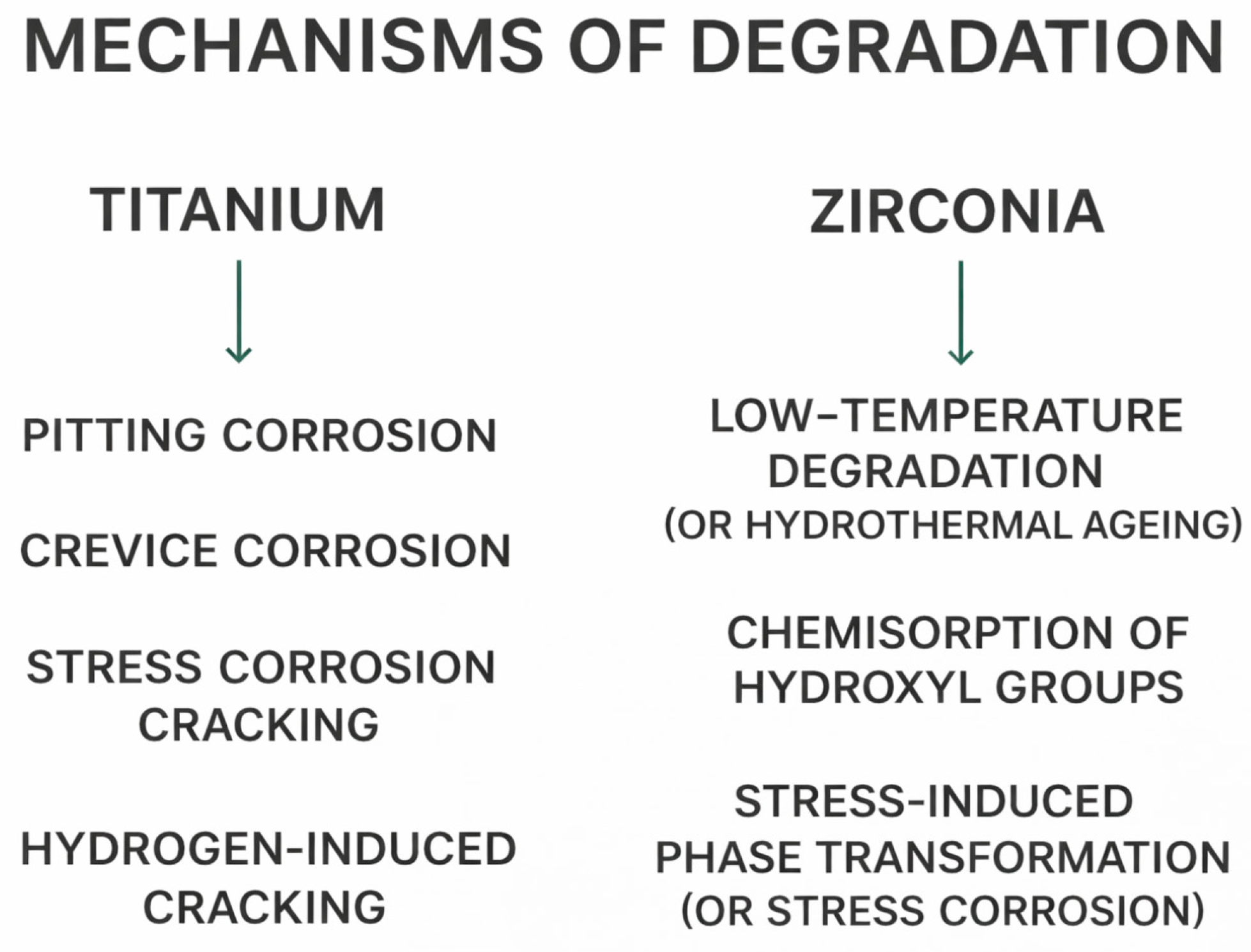
The mechanisms of degradation of titanium and zirconia are shown in Figure 4.
In addition to corrosion and biofilm-related degradation, histological and micromorphological evidence indicates that titanium release may occur at the bone–implant interface even in the absence of overt peri-implant infection [41,42,43,44,45]. Human retrieval studies and animal models have shown that ESEM/EDX is a useful approach for characterizing peri-implant remodeling and bone mineralization, including under different loading protocols and across different jaw sites [41,42]. In retrieved human mandibular implants, loading was associated with differences in peri-implant bone mineralization and morphology, whereas in a Macaca fascicularis model, immediately loaded implants showed broader titanium particle distribution and more active remodeling than unloaded controls [41,42]. Moreover, recent human soft-tissue analyses indicate that titanium micro-particles are commonly found around dental implants and are not restricted to sites with peri-implantitis, suggesting that particle dissemination may also be part of the normal long-term implant environment [43]. Importantly, titanium release may begin as early as implant insertion, because frictional forces, high insertion torque, dense bone, and implant macrogeometry can damage the surface and oxide layer [43,44,45]. Experimental studies have shown increasing surface deformation and titanium release with higher insertion torque values and with denser bone types [44,45]. By contrast, human histological data on zirconia remain much more limited and are largely derived from retrieved implants and peri-implantitis–affected tissues; therefore, conclusions regarding zirconia particle dissemination in clinically healthy conditions remain less robust than for titanium [46,47].

6. Harmful Consequences of Implants’ Degradation in the Oral Cavity

Studies on titanium implants have demonstrated a correlation between corrosion and peri-implantitis. Titanium compounds have been detected in peri-implant tissues, with higher concentrations observed at sites affected by peri-implant disease, suggesting a relationship between these processes [48]. This indicates that corrosion may have clinically relevant consequences. Titanium’s susceptibility to corrosion is therefore one of the factors that has encouraged clinicians and researchers to explore alternative implant materials.
Although zirconium oxide has also been reported to be susceptible to degradation, no studies were identified that directly evaluate the relationship between zirconia degradation and peri-implantitis. Surface degradation of zirconia may lead to the formation of surface cracks, which in turn can result in the release of ceramic particles. Ceramic particles are generally considered biologically inert; however, zirconia particles may, under certain conditions, undergo chemical changes, including the formation of zirconium hydroxide [1,16]. Adverse reactions to products of zirconia’s degradation have been reported in orthopedic applications, such as in a patient following hip arthroplasty with a ceramic femoral head [49]. However, no clear reports of adverse reactions related to zirconia dental implants were identified.
Periimplantitis is but one of many possible reasons for implant failure. Other causes of late implant failure include excessive loading, bruxism, teeth grinding at nighttime, retained subgingival dental cement, inadequate prosthetic construction and traumatic occlusion. Of course, early implant failure is also possible, and the reasons include poor bone quality and quantity, systemic diseases such as uncontrolled diabetes mellitus, AIDS, osteoporosis, medications such as corticosteroids and bisphosphonates, smoking, infection, lack of primary stability, and surgical trauma [50].
The degradation of titanium or zirconia, which undoubtedly leads to deterioration of mechanical properties, can propagate late implant failure rather than an early one. In the case of zirconia, a recent meta-analysis found that out of 4017 dental implants, 172 were lost. A majority was lost within the first year after implantation, and 26 failures were caused by implant fracture. It is worth noting that most of the implants that fractured are no longer commercially available, and there was a statistically significant difference between them and those still available. Moreover, a vast majority of the fractured implants were of narrow diameter [51]. For titanium, the most commonly identified cause of implant failure is infection [50].
The potential formation of cracks on the zirconia surface is an important factor to consider. Progressive degradation may lead to a reduction in mechanical strength, increasing the risk of fracture. While fractures of prosthetic abutments can usually be managed, a fracture of the implant itself requires removal and additional surgical intervention. Such complications should be regarded as treatment failure and, therefore, remain a critical concern.

7. Discussion

Evidence on titanium degradation is abundant and clinically confirmed, whereas zirconia degradation remains largely hypothetical, and that disproportion is highlighted throughout this article. As was mentioned above, both titanium and zirconia, although relatively resistant, can degrade in certain environments. While zirconia is intrinsically resistant, titanium, as a highly reactive metal, gains its resistance from the titanium oxide layer that forms on its surface when exposed to an aerobic environment. The main problem with titanium’s corrosion from the perspective of dental implantology is the fact that it is associated with periimplantitis [48].
The included studies were predominantly in vitro, with a smaller number of in vivo and clinical studies. Most of the available evidence on titanium was derived from both experimental and clinical studies, whereas zirconia-related evidence was largely limited to laboratory investigations. Only a limited number of studies addressed clinical outcomes directly.
The available literature suggests that zirconia may undergo surface degradation phenomena under specific chemical, thermal, and mechanical conditions; however, the clinical significance of these changes in the oral environment remains uncertain. Nonetheless, a major difference between the two materials is that the potentially harmful effect of zirconia degradation after dental treatment has not been confirmed in clinical studies. It has been suggested that degradation can cause zirconia implants to become more brittle, and we believe that it can be agreed that any wear of materials likely leads to a decrease in their mechanical strength.
Considering the variables affecting the degradation of materials in the oral cavity, some interesting conclusions can be drawn. The degradation of zirconia is undoubtedly not documented as well as the corrosion of titanium. Despite the fact that temperature and bacteria are known to influence the corrosion of different materials, in many cases, it is yet to be confirmed if the conditions specifically present in the oral cavity can promote the degradation of zirconia. It has been mentioned earlier in the text that temperature can influence the degradation of zirconia. The available data suggest that the average oral cavity temperature—though variable depending on factors such as age, diet, and smoking—remains within a range considered safe for zirconia ceramics [13,52,53,54,55]. Considering the temperature range at which hydrothermal aging is initiated, it can be generally concluded that such degradation is unlikely to occur under normal intraoral conditions. Only the ingestion of very hot foods or beverages (>65 °C) may transiently reach the threshold for aging. Nevertheless, intraoral factors other than temperature may still contribute to the aging process.
The effect of SnF2 on erosion is only known and well-described for enamel. Fluoride ions’ ability to form fluorapatite has long been known, and it appears unlikely that SnF2 would also reduce the extent of degradation of zirconia. This assumption, however, has not been experimentally confirmed. Similar to the case of intraoral hydrothermal degradation of zirconia, further studies are required to determine whether SnF2 exerts any protective effect on materials other than enamel.
The use of zirconia implants is still relatively low compared to titanium implants, mostly because of worries about possible mechanical problems. Numerous reports of zirconia implant fractures exist in the scientific literature [56,57,58]. Nevertheless, clinical evidence demonstrates that zirconia implants can achieve long-term success, with survival reported up to 10 years [59]. Recent meta-analyses further confirm high cumulative survival rates after 10 years (95.1%) [51] and no statistically significant differences compared with titanium implants in short-term survival (12 months; p = 0.0938) [60]. Zirconia implants also show similar bone-to-implant contact rates to their titanium counterparts [61].
Some of the mechanical problems that were concerning clinicians could have likely revolved around the fact that even in the case of implants made of zirconia, prosthetic abutments would still be connected with them using titanium screws. Titanium is characterized by more favorable tensile and bending strengths than zirconia. As a result, the stress generated during the tightening of retentive screws can lead to their deformation. Zirconia, however, as a ceramic material, will not deform, and such tensions can lead to potential fractures and failure of implants. While this reasoning for mechanical failures is largely speculative and has not been confirmed yet, it is backed by material properties, and such a scenario cannot be rejected [1].
The existing differences between titanium and zirconia dental implants result in different, generally well-known clinical advantages and disadvantages of the two materials. It can be agreed that titanium and its alloys present favorable mechanical properties, which are important from the perspective of chewing forces and load cycles that they are prone to after prosthetic loading. They are biocompatible and display very high success and survival rates. Nonetheless, their gray color can pose a drawback in the esthetic zone. Their zirconia counterparts, in turn, have a white color, which can be favorable in the esthetic zone. The microbial colonization of zirconia surfaces is slower, and their biocompatibility is considered better than that of titanium. Their mechanical properties have long been the root of complications, i.e., implant fractures. Nonetheless, zirconia implants manufactured today demonstrate satisfactory success rates [1]. The main drawback of titanium implants, which is expected not to be a problem in the case of zirconia ones, is their susceptibility to degradation. Whether zirconia implants are prone to degradation in the oral cavity is yet to be confirmed. Both materials have different characteristics, and each of them is advantageous over the other from some perspectives.
To combine the benefits of titanium and zirconia, hybrid implants consisting of a titanium core embedded in a 4–7 μm zirconia ceramic layer have been developed. The idea behind the CERID surface present on MyPlant Bio implants is to benefit from the best of both worlds, providing them with the mechanical strength characteristic of titanium and the biological properties of zirconia (Table 1) [1,62]. In fact, studies show that after cleansing cycles that included brushing of the samples, a slight increase in surface roughness was observed on titanium samples, while those covered with zirconium oxide showed no degradation. On top of that, the CERID surface was found to have an anti-inflammatory effect, proving that the zirconia surface can be beneficial in patients more susceptible to periimplantitis. The mentioned study was, however, conducted on samples in the shape of disks—the findings need to be confirmed using actual dental implants for the observations [63].
The design of hybrid titanium–zirconia implants may help address some of the limitations related to prosthetic abutment connections. When both the implant core and the retentive screw are made of titanium and appropriate torque is applied, the stresses generated at the interface are less likely to compromise the system. However, it should be noted that all-ceramic zirconia implants are not entirely free from the risk of peri-implantitis, and similar concerns may also apply to hybrid implant systems [66].
As mentioned earlier, in MyPlant Bio hybrid implants, the titanium core is covered with a 4–7 μm layer of amorphous zirconium oxide, intended to combine the advantages of both materials. Encapsulation of titanium within a zirconia layer may limit certain pathways of titanium corrosion, provided that the coating remains intact. However, this raises important questions regarding the management of peri-implantitis in such systems. Current treatment methods, including ultrasonic instrumentation and Er: YAG laser therapy [67,68], may affect the integrity of the coating.
Considering an implant with a diameter of 4 mm, the coating thickness corresponds to approximately 0.1–0.2% of the implant diameter. Therefore, any mechanical or physical intervention may compromise the coating and potentially expose the titanium core. The clinical implications of such exposure remain unclear, and further studies are required to evaluate the durability of the coating under therapeutic conditions.
Another aspect that should be considered is the mechanical strength of zirconia. According to available data, zirconia exhibits a static fracture strength in the range of 725–850 N [1]. At the same time, masticatory forces may exceed 1000 N in certain clinical situations [69,70]. This raises concerns not only about all-zirconia implants but also about the long-term stability of zirconia-based coatings. If chipping of the coating occurs, it may lead to effects similar to those observed after mechanical surface damage during peri-implantitis treatment. Although hybrid implants appear promising, further research is needed to confirm the long-term durability of such coatings.
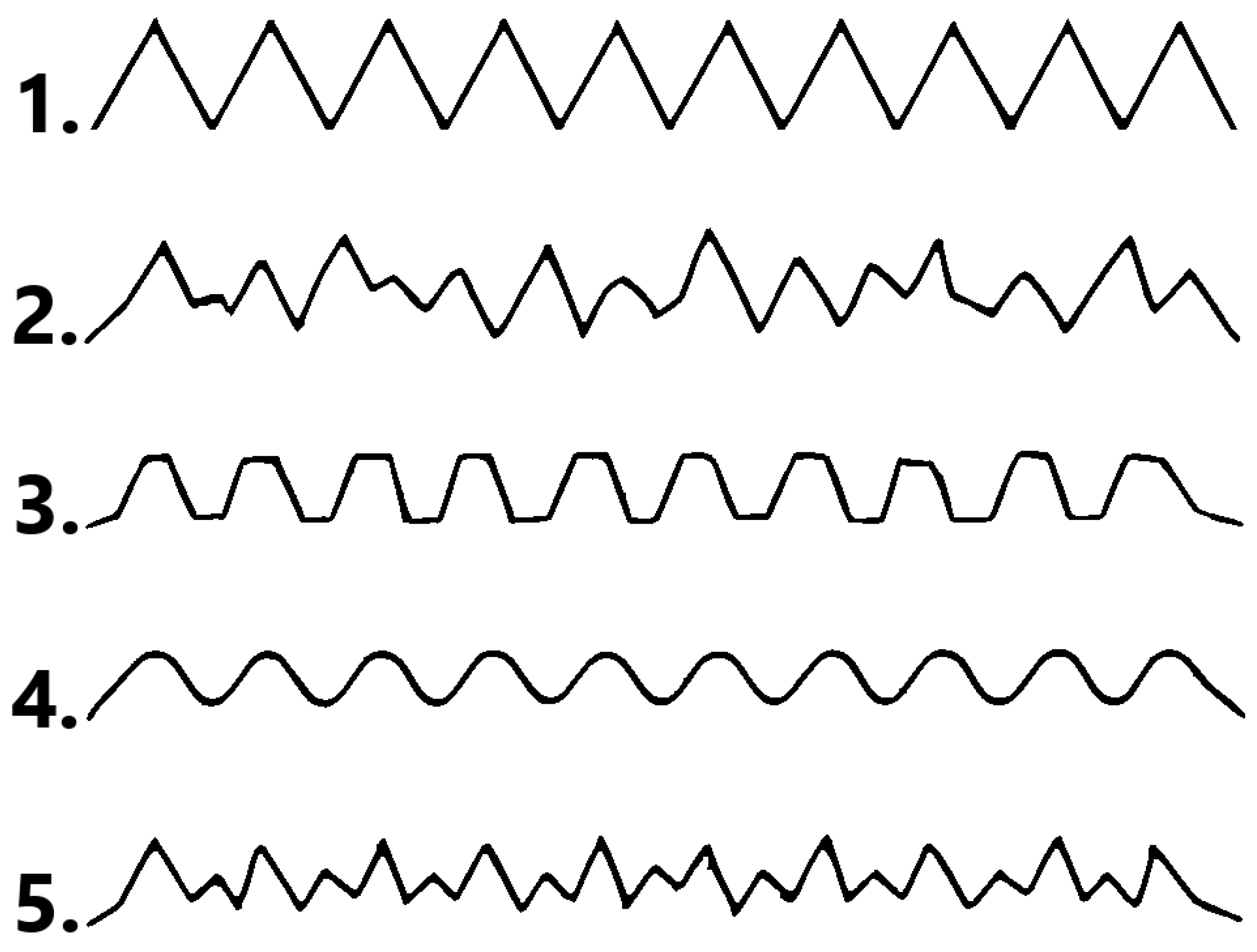
Osseointegration has been shown to be influenced by implant surface roughness, and it is generally accepted that a moderately rough surface (Sa 1–2 μm) provides optimal osteogenic response [1,71]. However, parameters such as Ra and Sa do not fully describe surface topography, as surfaces with different morphologies may exhibit similar roughness values (Figure 5). This aspect is not always sufficiently considered in the context of dental implants. Differences in topography may result not only from the material itself but also from the applied surface treatment protocols (Figure 6).
Surface topography may also influence susceptibility to mechanical damage and degradation. Features such as sharp edges may be more prone to chipping compared with smoother, more rounded surfaces. In addition, it has been suggested that surface characteristics may affect bacterial adhesion and subsequent degradation processes; however, this relationship requires further investigation.
Although the possible mechanisms of zirconia degradation and the factors promoting it have been described, no studies were identified that directly confirm the effect of intraoral conditions on the extent of its degradation. Corrosion is, by nature, a gradual process, and its clinical relevance in the case of zirconia implants remains unclear.
A comparison of the main degradation mechanisms and their potential consequences for different implant materials is presented in Table 2.

8. Limitations

It is important to highlight the limitations inherent to a scoping review, including the potential for selection bias in the choice of literature due to the significant heterogeneity of articles included. Nonetheless, the systematic strategy, including detailed search phrases and the fact that several databases were searched, should diminish the risk of omission of relevant articles in the process of choosing the bibliography. Another limitation is the disproportion between the available data on titanium and zirconia dental implants.

9. Conclusions

Titanium remains the most extensively studied and clinically documented implant material, with well-established advantages and limitations resulting from its long-standing use. It provides excellent mechanical strength and high survival rates; however, corrosion and its potential association with peri-implantitis remain important concerns.
Zirconia offers favorable biocompatibility and esthetic properties, with encouraging clinical outcomes. However, long-term clinical evidence is still limited, and mechanical complications, including implant fractures, remain a concern.
Hybrid titanium–zirconia implants may offer a promising approach by combining the advantages of both materials; however, their long-term durability and clinical performance require further investigation.

Author Contributions

Conceptualization, M.C. and J.H.; methodology, M.C. and J.H.; validation, W.S. and J.H.; formal analysis, W.S., M.D. and J.H.; investigation, M.C. and B.C.; data curation, M.C., W.N. and B.C.; writing—original draft preparation, M.C. and B.C.; writing—review and editing, W.S. and J.H.; supervision, W.S. and J.H. All authors have read and agreed to the published version of the manuscript.

Funding

This research was funded and supported by the Wroclaw University, grant no. SUBZ.B040.26.057.

Institutional Review Board Statement

Not applicable.

Informed Consent Statement

Not applicable.

Data Availability Statement

Data can be made available on request.

Acknowledgments

The authors would like to thank Bartosz Dudek for his help with the preparation of Figure 5. During the preparation of this manuscript/study, the authors used ChatGPT (software version GPT-5.4) for the purposes of Figure 2 and Figure 3. The authors have reviewed and edited the output and take full responsibility for the content of this publication.

Conflicts of Interest

The authors declare no conflicts of interest.

References

  1. Ciszyński, M.; Chwaliszewski, B.; Simka, W.; Dominiak, M.; Gedrange, T.; Hadzik, J. Zirconia dental implant designs and surface modifications: A narrative review. Materials 2024, 17, 4202. [Google Scholar] [CrossRef]
  2. Benea, L.; Lupu, A.R.; Bounegru, I.; Vizureanu, P. Effect of functional nanoporous tio2 film obtained on ti6al4v implant alloy to improve resistance in biological solution for inflammatory conditions. Int. J. Mol. Sci. 2023, 24, 8529. [Google Scholar] [CrossRef]
  3. Hadzik, J.; Kubasiewicz-Ross, P.; Simka, W.; Gębarowski, T.; Barg, E.; Cieśla-Niechwiadowicz, A.; Trzcionka Szajna, A.; Szajna, E.; Gedrange, T.; Kozakiewicz, M.; et al. Fractal Dimension and Texture Analysis in the Assessment of Experimental Laser-Induced Periodic Surface Structures (LIPSS) Dental Implant Surface-In Vitro Study Preliminary Report. Materials 2022, 15, 2713. [Google Scholar] [CrossRef] [PubMed]
  4. Olmedo, D.G.; Nalli, G.; Verdú, S.; Paparella, M.L.; Cabrini, R.L. Exfoliative cytology and titanium dental implants: A pilot study. J. Periodontol. 2013, 84, 78–83. [Google Scholar] [CrossRef]
  5. Eger, M.; Hiram-Bab, S.; Liron, T.; Sterer, N.; Carmi, Y.; Kohavi, D.; Gabet, Y. Mechanism and Prevention of Titanium Particle-Induced Inflammation and Osteolysis. Front. Immunol. 2018, 9, 2963. [Google Scholar] [CrossRef]
  6. Faverani, L.P.; Barao, V.A.R.; Pires, M.F.A.; Yuan, J.C.-C.; Sukotjo, C.; Mathew, M.T.; Assunção, W.G. Corrosion kinetics and topography analysis of Ti-6Al-4V alloy subjected to different mouthwash solutions. Mater. Sci. Eng. C Mater. Biol. Appl. 2014, 43, 1–10. [Google Scholar] [CrossRef]
  7. Chen, W.-Q.; Zhang, S.-M.; Qiu, J. Surface analysis and corrosion behavior of pure titanium under fluoride exposure. J. Prosthet. Dent. 2020, 124, 239.e1–239.e8. [Google Scholar] [CrossRef]
  8. Hadzik, J.; Botzenhart, U.; Krawiec, M.; Gedrange, T.; Heinemann, F.; Vegh, A.; Dominiak, M. Comparative evaluation of the effectiveness of the implantation in the lateral part of the mandible between short tissue level (TE) and bone level (BL) implant systems. Ann. Anat. 2017, 213, 78–82. [Google Scholar] [CrossRef] [PubMed]
  9. Prando, D.; Brenna, A.; Diamanti, M.V.; Beretta, S.; Bolzoni, F.; Ormellese, M.; Pedeferri, M. Corrosion of titanium: Part 1: Aggressive environments and main forms of degradation. J. Appl. Biomater. Funct. Mater. 2017, 15, e291–e302. [Google Scholar] [CrossRef] [PubMed]
  10. Schutz, R.W. Utilizing titanium to successfully handle chloride process environments. CIM Bull. 2002, 95, 84–88. [Google Scholar]
  11. Liu, J.; Alfantazi, A.; Asselin, E. Effects of Temperature and Sulfate on the Pitting Corrosion of Titanium in High-Temperature Chloride Solutions. J. Electrochem. Soc. 2015, 162, C189–C196. [Google Scholar] [CrossRef]
  12. Satoh, H.; Shimogori, K.; Kamikubo, F. The crevice corrosion resistance of some titanium materials. Platin. Met. Rev. 1987, 31, 115–121. [Google Scholar] [CrossRef]
  13. Hollis, A.C.; Scully, J.C. The stress corrosion cracking and hydrogen embrittlement of titanium in methanol-iodine solutions. Corros. Sci. 1993, 34, 837–850. [Google Scholar] [CrossRef]
  14. Chevalier, J.; Gremillard, L.; Deville, S. Low-Temperature Degradation of Zirconia and Implications for Biomedical Implants. Annu. Rev. Mater. Res. 2007, 37, 1–32. [Google Scholar] [CrossRef]
  15. Garvie, R.C.; Hannink, R.H.; Pascoe, R.T. Ceramic Steel? In Sintering Key Papers; Sōmiya, S., Moriyoshi, Y., Eds.; Springer: Dordrecht, The Netherlands, 1990; pp. 253–257. [Google Scholar]
  16. Lawson, S. Environmental degradation of zirconia ceramics. J. Eur. Ceram. Soc. 1995, 15, 485–502. [Google Scholar] [CrossRef]
  17. Lepist, T.T.; Mantyla, T.A. A Model for Structural Degradation of Y-TZP Ceramics in Humid Atmosphere. In A Collection of Papers Presented at the 13th Annual Conference on Composites and Advanced Ceramic Materials, Part 1 of 2: Ceramic Engineering and Science Proceedings; Wachtman, J.B., Ed.; John Wiley & Sons Inc.: Hoboken, NJ, USA, 1989; Volume 10, pp. 658–667. [Google Scholar]
  18. Suito, H.; Iwawaki, Y.; Goto, T.; Tomotake, Y.; Ichikawa, T. Oral factors affecting titanium elution and corrosion: An in vitro study using simulated body fluid. PLoS ONE 2013, 8, e66052. [Google Scholar] [CrossRef] [PubMed]
  19. Goutam, M.; Kumar, S.; Sushma, K.N.; Kharat, N.; Shankar, D.; Shrivastava, N. Assessment of effect of fluoride on titanium dental implants. J. Pharm. Bioallied Sci. 2022, 14, S220–S221. [Google Scholar] [CrossRef]
  20. Xu, W.; Yu, F.; Addison, O.; Zhang, B.; Guan, F.; Zhang, R.; Hou, B.; Sand, W. Microbial corrosion of metallic biomaterials in the oral environment. Acta Biomater. 2024, 184, 22–36. [Google Scholar] [CrossRef]
  21. Hanawa, T. A comprehensive review of techniques for biofunctionalization of titanium. J. Periodontal Implant Sci. 2011, 41, 263–272. [Google Scholar] [CrossRef]
  22. Souza, J.C.; Barbosa, S.L.; Ariza, E.A.; Henriques, M.; Teughels, W.; Ponthiaux, P.; Celis, J.P.; Rocha, L.A. How do titanium and Ti6Al4V corrode in fluoridated medium as found in the oral cavity? An in vitro study. Mater. Sci. Eng. C Mater. Biol. Appl. 2015, 47, 384–393. [Google Scholar] [CrossRef]
  23. Noguti, J.; de Oliveira, F.; Peres, R.C.; Renno, A.C.M.; Ribeiro, D.A. The role of fluoride on the process of titanium corrosion in oral cavity. Biometals 2012, 25, 859–862. [Google Scholar] [CrossRef]
  24. Souza, J.C.M.; Henriques, M.; Teughels, W.; Ponthiaux, P.; Celis, J.-P.; Rocha, L.A. Wear and corrosion interactions on titanium in oral environment: Literature review. J. Bio Tribo-Corros. 2015, 1, 13. [Google Scholar] [CrossRef]
  25. Schiff, N.; Grosgogeat, B.; Lissac, M.; Dalard, F. Influence of fluoride content and pH on the corrosion resistance of titanium and its alloys. Biomaterials 2002, 23, 1995–2002. [Google Scholar] [CrossRef]
  26. Thomas, A.; Sridhar, S.; Aghyarian, S.; Watkins-Curry, P.; Chan, J.Y.; Pozzi, A.; Rodrigues, D.C. Corrosion behavior of zirconia in acidulated phosphate fluoride. J. Appl. Oral Sci. 2016, 24, 52–60. [Google Scholar] [CrossRef]
  27. Sriamporn, T.; Thamrongananskul, N.; Busabok, C.; Poolthong, S.; Uo, M.; Tagami, J. Dental zirconia can be etched by hydrofluoric acid. Dent. Mater. J. 2014, 33, 79–85. [Google Scholar] [CrossRef]
  28. Wiegand, A.; Bichsel, D.; Magalhães, A.C.; Becker, K.; Attin, T. Effect of sodium, amine and stannous fluoride at the same concentration and different pH on in vitro erosion. J. Dent. 2009, 37, 591–595. [Google Scholar] [CrossRef]
  29. O’Toole, S.; Mistry, M.; Mutahar, M.; Moazzez, R.; Bartlett, D. Sequence of stannous and sodium fluoride solutions to prevent enamel erosion. J. Dent. 2015, 43, 1498–1503. [Google Scholar] [CrossRef]
  30. Turp, V.; Tuncelli, B.; Sen, D.; Goller, G. Evaluation of hardness and fracture toughness, coupled with microstructural analysis, of zirconia ceramics stored in environments with different pH values. Dent. Mater. J. 2012, 31, 891–902. [Google Scholar] [CrossRef] [PubMed]
  31. Darvell, B.W. The effect of topical fluoride on amalgam. Br. Dent. J. 1977, 142, 47–51. [Google Scholar] [CrossRef] [PubMed]
  32. el-Badrawy, W.A.; McComb, D.; Wood, R.E. Effect of home-use fluoride gels on glass ionomer and composite restorations. Dent. Mater. 1993, 9, 63–67. [Google Scholar] [CrossRef] [PubMed]
  33. Sakae, L.O.; Kairalla, C.A.; Viana, ÍE.L.; Carvalho, T.S.; Niemeyer, S.H.; Hara, A.T.; Scaramucci, T. Characteristics of tin-containing fluoride toothpastes related to erosive tooth wear protection. J. Dent. 2024, 143, 104901. [Google Scholar] [CrossRef]
  34. Al Saady, D.; Hall, C.; Edwards, S.; Reynolds, E.C.; Richards, L.C.; Ranjitkar, S. Erosion-inhibiting potential of the stannous fluoride-enriched CPP-ACP complex in vitro. Sci. Rep. 2023, 13, 7940. [Google Scholar] [CrossRef]
  35. Konradsson, K.; Lingström, P.; Emilson, C.-G.; Johannsen, G.; Ramberg, P.; Johannsen, A. Stabilized stannous fluoride dentifrice in relation to dental caries, dental erosion and dentin hypersensitivity: A systematic review. Am. J. Dent. 2020, 33, 95–105. [Google Scholar]
  36. Souza, J.C.M.; Barbosa, S.L.; Ariza, E.; Celis, J.P.; Rocha, L.A. Simultaneous degradation by corrosion and wear of titanium in artificial saliva containing fluorides. Wear 2012, 292–293, 82–88. [Google Scholar] [CrossRef]
  37. Landolt, D. Electrochemical and materials aspects of tribocorrosion systems. J. Phys. D Appl. Phys. 2006, 39, 3121–3127. [Google Scholar] [CrossRef]
  38. Nagentrau, M.; Tobi, A.L.M.; Jamian, S.; Otsuka, Y.; Hussin, R. Delamination-fretting wear failure evaluation at HAp-Ti-6Al-4V interface of uncemented artificial hip implant. J. Mech. Behav. Biomed. Mater. 2021, 122, 104657. [Google Scholar] [CrossRef]
  39. Guindy, J.S.; Schiel, H.; Schmidli, F.; Wirz, J. Corrosion at the marginal gap of implant-supported suprastructures and implant failure. Int. J. Oral Maxillofac. Implants 2004, 19, 826–831. [Google Scholar] [PubMed]
  40. Mabilleau, G.; Bourdon, S.; Joly-Guillou, M.L.; Filmon, R.; Baslé, M.F.; Chappard, D. Influence of fluoride, hydrogen peroxide and lactic acid on the corrosion resistance of commercially pure titanium. Acta Biomater. 2006, 2, 121–129. [Google Scholar] [CrossRef]
  41. Zamparini, F.; Gandolfi, M.G.; Spinelli, A.; Ferri, M.; Iezzi, G.; Botticelli, D.; Prati, C. Mineralization and morphology of peri-implant bone around loaded and unloaded dental implants retrieved from the human mandible. Oral Maxillofac. Surg. 2024, 28, 623–637. [Google Scholar] [CrossRef] [PubMed]
  42. Zamparini, F.; Spinelli, A.; Gandolfi, M.G.; Chersoni, S.; Tarsitano, A.; Badiali, G.; Toh, C.G.; Prati, C.; Romanos, G. Titanium migration and bone response in loaded osseointegrated implants: ESEM-EDX analysis in Macaca fascicularis. J. Periodontol. 2025, 1–13. [Google Scholar] [CrossRef] [PubMed]
  43. Dionigi, C.; Nagy, G.; Derks, J.; Ichioka, Y.; Tomasi, C.; Larsson, L.; Primetzhofer, D.; Berglundh, T. Titanium micro-particles are commonly found in soft tissues surrounding dental implants. Commun. Med. 2025, 5, 78. [Google Scholar] [CrossRef]
  44. Brancacci, E.; García González, S.; Galve-Huertas, A.; Bennani, A.; Hernandez Alfaro, F.; Aboul-Hosn Centenero, S. Influence of insertion torques on the surface integrity in different dental implants: An ex vivo descriptive study. Materials 2023, 16, 2330. [Google Scholar] [CrossRef] [PubMed]
  45. Silva, G.A.F.; Faot, F.; da Rosa Possebon, A.P.; da Silva, W.J.; Del Bel Cury, A.A. Effect of macrogeometry and bone type on insertion torque, primary stability, surface topography damage and titanium release of dental implants during surgical insertion into artificial bone. J. Mech. Behav. Biomed. Mater. 2021, 119, 104515. [Google Scholar] [CrossRef] [PubMed]
  46. Kohal, R.J.; Schwindling, F.S.; Bächle, M.; Spies, B.C. Peri-implant bone response to retrieved human zirconia oral implants after a 4-year loading period: A histologic and histomorphometric evaluation of 22 cases. J. Biomed. Mater. Res. B Appl. Biomater. 2016, 104, 1622–1631. [Google Scholar] [CrossRef]
  47. Fretwurst, T.; Müller, J.; Larsson, L.; Bronsert, P.; Hazard, D.; Castilho, R.M.; Kohal, R.; Nelson, K.; Iglhaut, G. Immunohistological composition of peri-implantitis affected tissue around ceramic implants—A pilot study. J. Periodontol. 2021, 92, 571–579. [Google Scholar] [CrossRef]
  48. Sadowsky, S.J. Has zirconia made a material difference in implant prosthodontics? A review. Dent. Mater. 2020, 36, 1–8. [Google Scholar] [CrossRef] [PubMed]
  49. Dawson-Amoah, K.G.; Waddell, B.S.; Prakash, R.; Alexiades, M.M. Adverse Reaction to Zirconia in a Modern Total Hip Arthroplasty with Ceramic Head. Arthroplast. Today 2020, 6, 612–616.e1. [Google Scholar] [CrossRef]
  50. Kochar, S.P.; Reche, A.; Paul, P. The Etiology and Management of Dental Implant Failure: A Review. Cureus 2022, 14, e30455. [Google Scholar] [CrossRef] [PubMed] [PubMed Central]
  51. Mohseni, P.; Soufi, A.; Chrcanovic, B.R. Clinical outcomes of zirconia implants: A systematic review and meta-analysis. Clin. Oral Investig. 2023, 28, 15. [Google Scholar] [CrossRef] [PubMed] [PubMed Central]
  52. Moore, R.J.; Watts, J.T.; Hood, J.A.; Burritt, D.J. Intra-oral temperature variation over 24 hours. Eur. J. Orthod. 1999, 21, 249–261. [Google Scholar] [CrossRef]
  53. Longman, C.M.; Pearson, G.J. Variations in tooth surface temperature in the oral cavity during fluid intake. Biomaterials 1987, 8, 411–414. [Google Scholar] [CrossRef] [PubMed]
  54. Kohorst, P.; Borchers, L.; Strempel, J.; Stiesch, M.; Hassel, T.; Bach, F.W.; Hübsch, C. Low-temperature degradation of different zirconia ceramics for dental applications. Acta Biomater. 2012, 8, 1213–1220. [Google Scholar] [CrossRef]
  55. Guo, X. On the degradation of zirconia ceramics during low-temperature annealing in water or water vapor. J. Phys. Chem. Solids 1999, 60, 539–546. [Google Scholar] [CrossRef]
  56. Cionca, N.; Hashim, D.; Mombelli, A. Zirconia dental implants: Where are we now, and where are we heading? Periodontol. 2000 2017, 73, 241–258. [Google Scholar] [CrossRef] [PubMed]
  57. Kong, N.; Chen, A.; Yan, W.; Zhang, H. Ceramic implant fracture: A clinical report. J. Prosthet. Dent. 2019, 122, 425–429. [Google Scholar] [CrossRef]
  58. Gahlert, M.; Burtscher, D.; Grunert, I.; Kniha, H.; Steinhauser, E. Failure analysis of fractured dental zirconia implants. Clin. Oral Implants Res. 2012, 23, 287–293. [Google Scholar] [CrossRef]
  59. Borgonovo, A.E.; Ferrario, S.; Maiorana, C.; Vavassori, V.; Censi, R.; Re, D. A Clinical and Radiographic Evaluation of Zirconia Dental Implants: 10-Year Follow-Up. Int. J. Dent. 2021, 2021, 7534607. [Google Scholar] [CrossRef]
  60. Padhye, N.M.; Calciolari, E.; Zuercher, A.N.; Tagliaferri, S.; Donos, N. Survival and success of zirconia compared with titanium implants: A systematic review and meta-analysis. Clin. Oral Investig. 2023, 27, 6279–6290. [Google Scholar] [CrossRef]
  61. Kubasiewicz-Ross, P.; Hadzik, J.; Dominiak, M. Osseointegration of zirconia implants with 3 varying surface textures and a titanium implant: A histological and micro-CT study. Adv. Clin. Exp. Med. 2018, 27, 1173–1179. [Google Scholar] [CrossRef]
  62. Tagliaferri, N.; Pisciotta, A.; Orlandi, G.; Bertani, G.; Di Tinco, R.; Bertoni, L.; Sena, P.; Lunghi, A.; Bianchi, M.; Veneri, F.; et al. Zirconia Hybrid Dental Implants Influence the Biological Properties of Neural Crest-Derived Mesenchymal Stromal Cells. Nanomaterials 2024, 14, 392. [Google Scholar] [CrossRef]
  63. Yamazoe, J.; Nakagawa, M.; Matono, Y.; Takeuchi, A.; Ishikawa, K. The development of Ti alloys for dental implant with high corrosion resistance and mechanical strength. Dent. Mater. J. 2007, 26, 260–267. [Google Scholar] [CrossRef]
  64. Hanawa, T. Zirconia versus titanium in dentistry: A review. Dent. Mater. J. 2020, 39, 24–36. [Google Scholar] [CrossRef]
  65. Almas, K.; Smith, S.; Kutkut, A. What is the best micro and macro dental implant topography? Dent. Clin. N. Am. 2019, 63, 447–460. [Google Scholar] [CrossRef] [PubMed]
  66. Esplin, K.C.; Tsai, Y.W.; Vela, K.; Diogenes, A.; Hachem, L.E.; Palaiologou, A.; Cochran, D.L.; Kotsakis, G.A. Peri-implantitis induction and resolution around zirconia versus titanium implants. J. Periodontol. 2024, 95, 1180–1189. [Google Scholar] [CrossRef]
  67. Wang, C.-W.; Ashnagar, S.; Gianfilippo, R.D.; Arnett, M.; Kinney, J.; Wang, H.-L. Laser-assisted regenerative surgical therapy for peri-implantitis: A randomized controlled clinical trial. J. Periodontol. 2021, 92, 378–388. [Google Scholar] [CrossRef]
  68. Schwarz, F.; Bieling, K.; Sculean, A.; Herten, M.; Becker, J. Treatment of periimplantitis with laser or ultrasound. A review of the literature. Schweiz. Monatsschr. Zahnmed. 2004, 114, 1228–1235. [Google Scholar] [PubMed]
  69. Zhang, Y.; Lawn, B.R. Evaluating dental zirconia. Dent. Mater. 2019, 35, 15–23. [Google Scholar] [CrossRef]
  70. Cosme, D.C.; Baldisserotto, S.M.; Canabarro, S.D.A.; Shinkai, R.S. Bruxism and voluntary maximal bite force in young dentate adults. Int. J. Prosthodont. 2005, 18, 328–332. [Google Scholar]
  71. Matos, G.R.M. Surface roughness of dental implant and osseointegration. J. Maxillofac. Oral Surg. 2021, 20, 1–4. [Google Scholar] [CrossRef] [PubMed]
Figure 1. Flow diagram of the study selection process according to PRISMA-ScR guidelines.
Coatings 16 00504 g001
Figure 2. Mechanisms of titanium degradation.
Coatings 16 00504 g002
Figure 3. The mechanisms of zirconia degradation.
Coatings 16 00504 g003
Figure 4. Mechanisms of degradation of titanium and zirconia.
Coatings 16 00504 g004
Figure 5. Five different surface profiles with identical average roughness. It can be seen that a surface with a certain Ra can have rounded peaks and bottoms, like surface number 4, or be pointy with sharp edges, like surface number 1. It remains hypothetical that such differences could correlate with the risk of damage to the surface of implants while inserting them with higher torque values, the risk of bacterial colonization, and surface degradation.
Coatings 16 00504 g005
Figure 6. SEM images of surface topography of: (A) Straumann Roxolid (TiZr); (B) MyPlant Bio (Ti/ZrOx); (C) Noris Medical (Titanium grade 5, Ti6Al4V, SLA surface); (D) Nano Prime dental implant (Pure Grade 4 Ti, SLA surface); (E) Neodent Zi (ZrO2) dental implants. The images were acquired by the authors.
Coatings 16 00504 g006
Table 1. Comparison of selected properties of titanium, all-ceramic (zirconia), and hybrid dental implants.
PropertyAll-Ceramic (ZrO2/Y2O3–Al2O3)Hybrid (TiZrOx)Titanium (Ti or Ti-6Al-4V)
ColorWhiteBlue-grayGray
Vickers hardness1200 HV~1000 HV200–400 HV
Tensile strength900–1200 MPaNot sufficiently reported800–1000 MPa
Fracture toughness5–10 MPa/m2Not sufficiently reported30–100 MPa/m2
Biocompatibility+++Not sufficiently reported+
Degradation and corrosion resistance+++Not sufficiently reported+
Surface roughness (Sa)0.3–1.5 (depending on surface treatment)0.5–1.1 1–1.5 (sandblasted, acid-etched—SLA)
Note: For tensile strength and fracture toughness, specific data for hybrid implants are not widely reported. It may be assumed that these values are comparable to those of titanium implants, while biocompatibility and resistance to degradation and corrosion may resemble those of all-ceramic implants. The amount of “+” signs accounts for better or worse characteristics. Triple “+” sign means better parameters than a single one. Values represent approximate ranges reported in the literature and may vary depending on material composition and surface treatment protocols [1,64,65].
Table 2. Main degradation mechanisms of dental implant materials and their potential clinical consequences.
MaterialMain Degradation MechanismsPotential Clinical
Consequences
Strength of Evidence
(Qualitative Assessment)
Titanium and alloys
Oxide layer breakdown
Pitting corrosion
Crevice corrosion
Stress corrosion cracking
Hydrogen-induced cracking
Strongly associated with peri-implantitis
Marginal bone loss
High
Zirconia
Hydrothermal aging
Stress-induced phase transformation
Chemisorption of hydroxyl groups
Increased surface roughness and bacterial retention
Implant or abutment fractures
Moderate
Hybrid Ti–Zr
Chipping or wear of thin ceramic coating (speculative)
Risk of exposing the titanium core if the coating fails
Low
Disclaimer/Publisher’s Note: The statements, opinions and data contained in all publications are solely those of the individual author(s) and contributor(s) and not of MDPI and/or the editor(s). MDPI and/or the editor(s) disclaim responsibility for any injury to people or property resulting from any ideas, methods, instructions or products referred to in the content.