Article

Effect of Asphalt Source on Energy Conservation and Emission Reduction Characteristics of Additive-Based Warm-Mix Asphalt and Life Cycle Assessment in the Construction Phase

1
RoadMainT Co., Ltd., Beijing 100095, China
2
Qingdao Highway Development Center, Qingdao 266075, China
3
College of Metropolitan Transportation, Beijing University of Technology, Beijing 100124, China
4
Zhejiang Communications Investment Group, Expressway Construction and Management Co., Ltd., Hangzhou 310024, China
*
Authors to whom correspondence should be addressed.
Coatings 2026, 16(3), 274; https://doi.org/10.3390/coatings16030274
Submission received: 9 December 2025 / Revised: 11 February 2026 / Accepted: 14 February 2026 / Published: 25 February 2026

Highlights

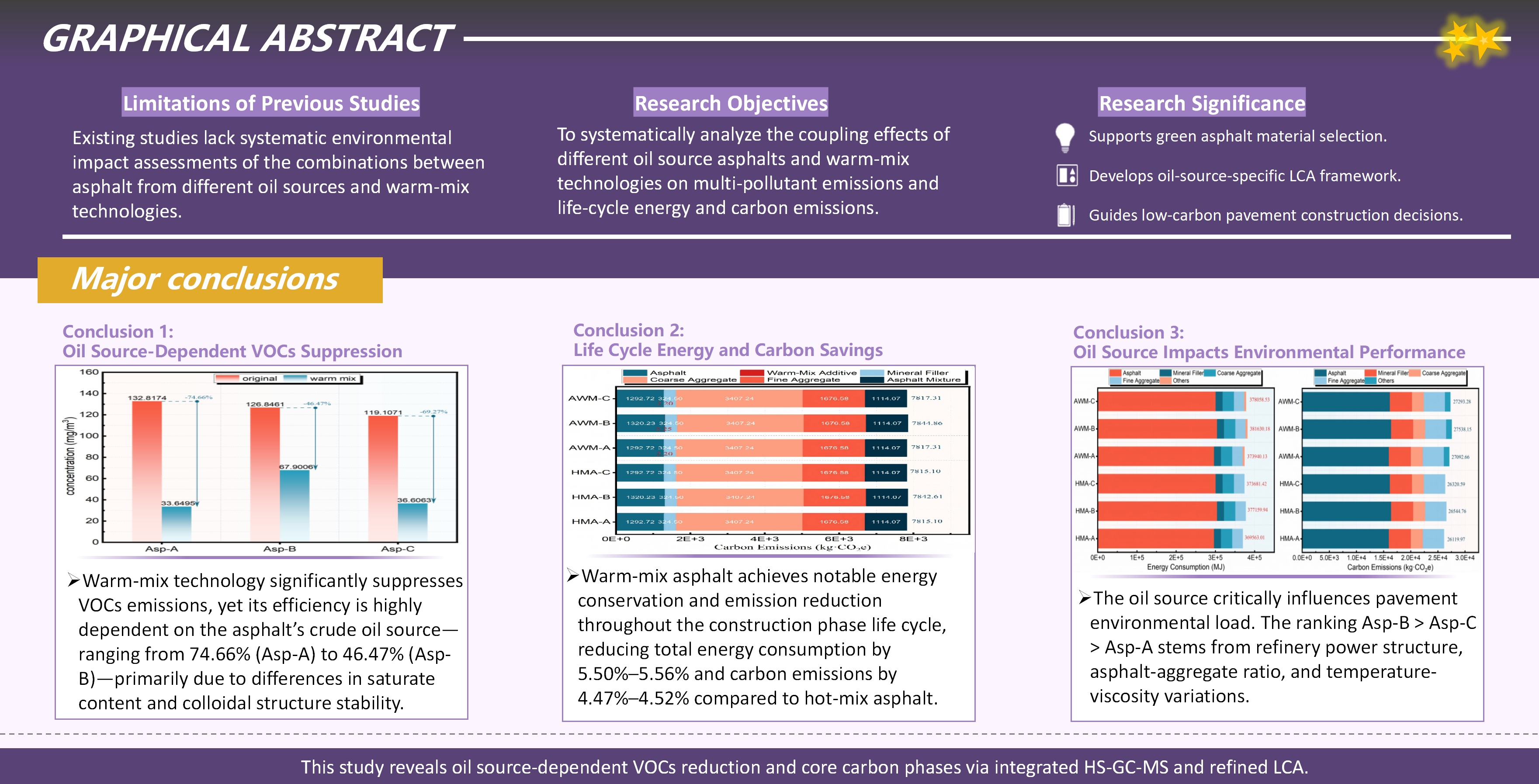
  • Warm-mix treatment reduces VOCs emissions by 46.47%–74.66% across oil sources.
  • VOCs composition shifts from oxygenates-dominated to multi-component (alkanes, aromatics) coexistence after warm mixing.
  • In the construction phase, WMA reduces energy use by 5.50%–5.56% and carbon emissions by 4.47%–4.52%.
  • Raw material production and mixing stages contribute over 80% of the total environmental load.
  • Aggregate heating and moisture vaporization account for >85% of energy use in the mixing stage.

Abstract
As core materials in pavement structures, asphalt mixtures are characterized by intensive energy consumption and significant carbon footprints throughout their construction cycle, making their construction a typical high-carbon process in road engineering. Warm-mix technology, leveraging its key advantages of reducing mixing temperatures and cutting energy consumption and emissions, has emerged as a green alternative to hot-mix mixtures. However, existing studies have lacked systematic environmental impact assessments of combinations of asphalt from different oil sources and warm-mix technologies. This study focuses on the additive type warm-mix technology (Evotherm M1) and uses three typical oil sources of 70# road petroleum asphalt. Using headspace gas chromatography–mass spectrometry (HS–GC–MS) and Life Cycle Assessment (LCA) methods, a systematic analysis was conducted across three dimensions: multi-component pollutant emissions, full life cycle stages, and multi-type warm-mix technologies. The analysis focused on the influence of warm-mix treatment on Volatile Organic Compound (VOC) emissions, as well as energy consumption and carbon emission characteristics throughout the full life cycle of the construction phase. Results indicate that warm-mix treatment significantly inhibits VOC emissions from all three oil source asphalts. The largest reduction was observed in Asp-A (74.66%), followed by Asp-C (69.27%), and the smallest in Asp-B (46.47%). The VOC compositions shifted from being dominated by oxygenates to a coexistence of multi-components such as alkanes and aromatic hydrocarbons. In the life cycle of the construction phase, compared with hot-mix mixtures, warm-mix technology reduced total energy consumption by 5.50%–5.56% and carbon emissions by 4.47%–4.52%. Raw material production and mixture mixing stages were identified as the core links for energy consumption and carbon emissions, accounting for over 80% of the totals. Differences among oil sources mainly stemmed from refinery power structure and the temperature–viscosity properties of asphalt. The research results provide theoretical support for material selection and process optimization of green construction of asphalt pavement using additive-based warm-mix technology.

Graphical Abstract

1. Introduction

Asphalt pavement has been widely used in highway and urban road construction due to its excellent road performance and driving comfort [1]. However, the entire construction process of asphalt mixtures—encompassing raw material preparation, mixing, transportation, paving, and compaction—is characterized by intensive energy consumption and concentrated carbon emissions, with its carbon footprint accounting for over 60% of the total carbon emissions from road engineering [2,3]. With the in-depth advancement of the “dual-carbon” strategy, reducing environmental load during the construction phase of asphalt pavement has become a critical research direction in the field of road engineering [4,5].
Warm-mix asphalt (WMA) technology, through additive modification, reduces mixing temperature by 30–40 °C while ensuring the road performance of mixtures, thereby significantly reducing fuel consumption and pollutant emissions. It is regarded as an ideal green alternative to hot-mix asphalt (HMA) [6,7,8]. Additive-based warm mixing achieves low-temperature mixing through chemical viscosity reduction. Although existing studies have confirmed the energy-saving and emission-reduction potential of warm-mix technology, most have focused on single-oil-source asphalt or partial construction links, neglecting the impact of asphalt oil source differences on warm-mix effectiveness [9,10,11].
The chemical composition and physical properties of asphalt are significantly influenced by crude oil origins. Asphalts from different oil sources exhibit distinct differences in the contents of saturates, aromatics, resins, and asphaltenes, which directly affect their temperature–viscosity characteristics, volatility, and compatibility with warm-mix additives [12,13]. For example, asphalt with high saturate content has lower viscosity, while asphalt rich in asphaltenes has a dense structure; their energy consumption requirements and pollutant release patterns during warm mixing are inevitably different [14]. The differences in energy structure (such as power sources and energy efficiency) during the refining process can also significantly affect carbon emissions during the asphalt production stage, which is a system boundary factor that must be considered when evaluating the environmental performance of asphalt throughout its life cycle. Additionally, most existing Life Cycle Assessments (LCAs) adopt industry average energy consumption and emission factors, failing to consider differences in power structures during the refining process of asphalts from various oil sources, which reduces the accuracy of evaluation results. Therefore, exploring the environmental response characteristics of combinations of different oil source asphalts and warm-mix technologies holds significant practical importance for promoting green construction of asphalt pavements.
Scholars worldwide have extensively investigated the performance and environmental benefits of warm-mix asphalt (WMA). Regarding pavement performance, Liu et al. [15] found that the high-temperature stability of additive-based WMA mixtures is slightly superior to that of traditional hot-mix asphalt (HMA). In terms of environmental advantages, a key focus has been on its energy-saving potential. Early laboratory and field experiments have consistently shown that WMA technology significantly reduces energy consumption during the mixing process. According to reports, energy savings rates typically range from 15% to 30% when the production temperature is reduced by 20–40 °C [16,17]. Compared to traditional hot mixing, warm mixing can reduce energy consumption by 0.75% for every 1 °C. Building on this, Zhao et al. [18] experimentally quantified that the WMA process can reduce energy consumption in the mixing stage by 15%–20%. Furthermore, Wang et al. [19] used gas chromatography–mass spectrometry (GC–MS) and observed that Volatile Organic Compound (VOC) emissions from WMA are reduced by over 30% compared to HMA.
However, existing studies still exhibit notable limitations: (1) Most research has focused on asphalt from a single crude oil source, lacking comparative analysis of the compatibility between different crude source asphalts and various WMA technologies [20,21]. (2) Investigations into VOC emissions have primarily concentrated on changes in total concentration, with insufficient analysis of compositional differences and their correlation with the chemical structure of asphalt [22,23]. (3) Life Cycle Assessment (LCA) studies have mostly concentrated on the mixing stage, lacking refined calculations that encompass the entire process chain, including raw material production, transportation, and on-site construction [24]. (4) Differences in factors such as power generation structures during crude oil refining, which significantly affect carbon footprint, are often not considered, thereby limiting the accuracy of environmental evaluations. Consequently, there is an urgent need to establish a multidimensional evaluation framework to systematically analyze the coupling effects between crude oil source variations and warm-mix technologies [25,26].

2. Materials and Methods

2.1. Raw Materials

2.1.1. Asphalt Binder

Three typical oil source 70# road petroleum asphalts were selected and labeled as Asphalt-A (Asp-A), Asphalt-B (Asp-B), and Asphalt-C (Asp-C). The 70# asphalt (binder) mentioned in this article refers to the penetration grade. Such an asphalt type is equivalent to a penetration value between 60 and 80, or refer to PG 70-22. Asp-A is a road petroleum asphalt with a density of less than one, characterized by low wax content, low sulfur content, high resin content, high dynamic viscosity, and high ductility after aging. Asp-B is derived from low-sulfur naphthenic, high-acid, heavy, viscous crude oil, featuring high density, low wax content, high resin content, and excellent low-temperature performance. The crude oil for Asp-C has high acid value, high heavy metal content, high carbon residue, and low saturated hydrocarbon content, resulting in the produced asphalt having high resin and asphaltene contents with low wax content. The properties of the three asphalts are presented in Table 1. The testing method refers to the industry standard “Test Regulations for Asphalt and Asphalt Mixtures in Highway Engineering” (JTG 3410-2025) [27] of the Ministry of Transport.
This study was conducted in China; therefore, the active Chinese specification, Technical Specifications for Construction of Highway Asphalt Pavement (JTG F40) [28], was used as a reference to evaluate the properties of asphalt materials. In particular, the suggested penetration value test temperatures are 15 °C, 25 °C, and 30 °C; the dynamic viscosity test temperature is 60 °C; the elongation test temperatures are 10 °C and 15 °C; the density test temperature is 15 °C; and the elongation test temperature after aging is 10 °C. All these temperature requirements are in line with the specific implementation of this specification in the Beijing and Shandong regions.
The component analysis test results for the three types of asphalt are shown in Table 2. The solvent precipitation and chromatographic column methods were used to analyze the four components of asphalt. The reference standard is the “Highway Engineering Asphalt and Asphalt Mixture Test Procedures” (JTG 3410-2025) (T0618) of the China Ministry of Transport.

2.1.2. Warm-Mix Additive and Foaming Medium

The additive-type warm-mix additive used was Evotherm M1, developed by Ingrevity (USA), which is a light brown liquid with a density of 0.92–0.95 g/cm3, a viscosity of 100–300 mPa·s (at 25 °C), and a flash point >180 °C. For the foamed warm-mix technology, laboratory-prepared distilled water was used as the foaming medium.

2.2. Sample Preparation

2.2.1. Preparation of Additive-Type Warm-Mix Asphalt

Evotherm M1 warm-mix additive was added at a dosage of 0.6% by mass of the asphalt. The base asphalt was heated to 150 °C to ensure sufficient fluidity for additive incorporation and then stirred at 3000 r/min for 30 min to achieve complete homogenization, thereby preparing the three warm-mix asphalt variants, labeled as Warm-Mix Asphalt-A (WMA-A), Warm-Mix Asphalt-B (WMA-B), and Warm-Mix Asphalt-C (WMA-C).

2.2.2. Preparation of Samples for HS-GC–MS Analysis

Asphalt samples (1.00 ± 0.05 g, with a mass deviation ≤5%) were accurately weighed and sealed in standard headspace vials to prevent the escape of volatile components. The samples were then placed on the tray of an auto-sampler and subjected to thermal desorption pretreatment according to a predetermined program. After achieving gas–solid phase equilibrium, the samples were ready for analysis. To ensure the reliability of the results, each asphalt sample was prepared and subjected to three parallel tests. The final report shows the average concentration and composition of VOCs from three parallel experiments.

2.3. Test Methods

2.3.1. HS-GC–MS Testing

HS-GC–MS (headspace gas chromatography–mass spectrometry) test reference AASHTO TP 148, an Agilent (Santa Clara, CA, USA) 7890B GC–MS system was used, with the following test conditions: headspace equilibrium temperature of 160 °C and equilibrium time of 30 min; chromatographic column: HP-5MS (30 m × 0.25 mm × 0.25 µ>m); carrier gas: helium (purity ≥ 99.999%) at a flow rate of 1.0 mL/min; temperature program: initial temperature of 40 °C (held for 3 min), increased to 250 °C at 10 °C/min (held for 10 min); mass spectrometry ion source: EI source at 230 °C, with a scanning range of m/z 35–500.
Qualitative analysis was performed using the NIST14.lib mass spectral database, combined with dual-dimensional verification via retention indices of standard substances, with a set spectral similarity threshold of 80 %. Quantitative analysis adopted the external standard method, using toluene as the standard substance. The VOC concentration was calculated according to Equation (1):
C i = A i A t * C t
wherein, C i —concentration of the analyte, mg/m3; A i —peak area of the analyte, dimensionless; A t —peak area of toluene, dimensionless; C t —concentration of toluene, mg/m3.

2.3.2. Life Cycle Assessment (LCA) Methodology

Referring to the standard ISO 14044, this study focuses on the construction phase of asphalt pavements, including raw material production, mixture mixing, material transportation, and on-site construction. The functional unit is defined as a 1 km long, 15 m wide, and 4 cm thick two-way four-lane AC-13 asphalt pavement, with the mixture density calculated as 2395.32 kg/m3. The warm mix asphalt mixtures of the three types of asphalt are respectively referred to as WMA-A, WMA-B, and WMA-C.
(1) This study focuses on the construction phase of asphalt pavement, and the system boundary covers four core links: raw material production, mixture mixing, material transportation, and on-site construction (energy consumption and emissions during use, maintenance, and disposal stages are not included).
(2) Life Cycle Inventory (LCI) Analysis: Data on unit energy consumption and carbon emissions of raw materials are presented in Table 2, and those of fuels are shown in Table 3, both referenced from the Intergovernmental Panel on Climate Change (IPCC) Guidelines for National Greenhouse Gas Inventories and relevant research results. Due to the small dosage of warm-mix additives, their production energy consumption and carbon emissions are not included.
(3) Impact Assessment: The global warming potential (GWP) was adopted as the quantitative indicator. The GWP values of CO2, CH4, and N2O are 1, 25, and 298, respectively, with carbon dioxide equivalent (CO2e) used as the unit for measuring emissions.
(4) Quantification of energy consumption and carbon emissions:
Raw material production stage: Energy consumption and carbon emissions were calculated using Equations (2) and (3), considering the energy consumption of asphalt heating, warm-mix additive mixing, and foaming equipment.
E C = E C n = ( m i E C i 0 )
In the formula:
EC —Total energy consumption, MJ;
EC n —Energy consumption of the nth stage, MJ;
m i —Usage of material type i, t;
EC i 0 —Unit energy consumption of material type i, MJ/t.
E = E n = ( m i E i 0 )
In the formula:
E —Total carbon emissions, kg CO2e;
E n —Carbon emissions of the nth stage, kg CO2e;
m i —Usage of material type i, t;
E i 0 —Unit carbon emissions of material type i, kg CO2e/t.
Mixing stage of the mixture: Calculate the material heating energy consumption according to formulas (4)–(6), and sum it up with the energy consumption of mechanical equipment.
Q = m i c i T T 0
In the formula:
Q—heat energy required for heating the material, MJ;
C i —specific heat capacity of material type i, MJ/(t °C);
T—heating temperature, °C;
T 0 —initial temperature, °C.
Q w = m w c w 100 T 0 + q w m w
wherein Q w —heat energy required for heating water, MJ; C w —specific heat capacity of water, MJ/(t °C); m w —mass of water, t; T o —initial temperature of water, °C; q w —latent heat of vaporization of water, MJ/t.
m d = Q N C V d a 1 a 2
wherein m d —diesel consumption, kg; N C V d —net calorific value of diesel, MJ/kg; a 1 —fuel efficiency of diesel, %; a 2 —heat exchange efficiency of the heating system, %.
M i j = m i m i 0 * L i 100 * q
wherein M i j —consumption of fuel type j for transporting material type i, kg; m i 0 —rated load capacity of the transport vehicle for material type i, t; L i —transport distance of material type i, km; q—fuel consumption per unit distance of the transport vehicle, kg/100 km.
On-site construction phase: Calculate fuel consumption and corresponding emissions based on the machine-hour consumption of mechanical equipment. Main on-site construction equipment includes asphalt mixture pavers, road rollers, water sprinkler trucks, etc.
To ensure the transparency of the Life Cycle Assessment (LCA) method, this study adopted the following key assumptions in the inventory analysis and explained their basis:
Summary of key assumptions:
(1) The system boundary is limited to the cradle-to-construction phase (raw material production, mixing, transportation, and on-site construction), with a focus on evaluating the incremental impact of the warm mixing process;
(2) The inventory data mainly adopts the average values from IPCC guidelines and the public industry literature to ensure the comparability of basic data;
(3) The transportation distance is set as a fixed value based on typical material source research (100 km for asphalt and 50 km for aggregate);
(4) Considering the extremely low dosage (0.6%) of Evotherm M1, ignoring its energy consumption and carbon emissions during the production stage;
(5) The energy consumption of construction machinery is based on standard shift quotas, representing the average operating conditions. The above assumptions may have some impact on the absolute value of the results, but due to the use of consistent benchmarks in comparative analysis (warm mix and hot mix, different oil sources), the relative comparison results are still reliable.

3. Analysis of VOC Emissions Behavior of Warm-Mix Asphalt

This chapter is based on HS-GC–MS experiments to analyze the influence and mechanism of warm-mix agents on the release of VOCs from asphalt from the perspective of material chemistry.

3.1. Characteristics of Total Ion Current (TIC) of VOCs

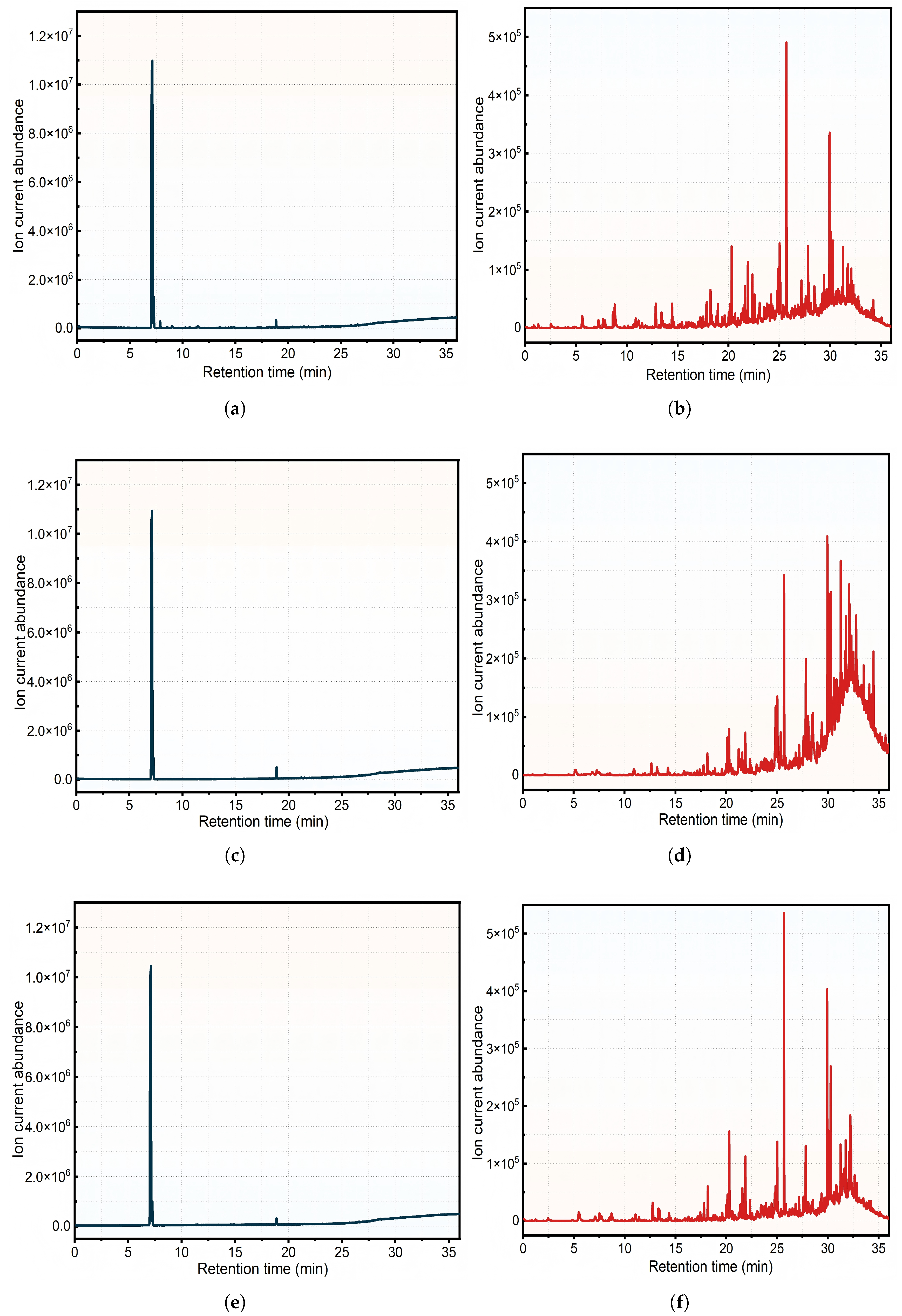
The total ion current (TIC) chromatograms of VOCs from asphalts of different oil sources before and after warm mixing are shown in Figure 1, which clearly shows the significant impact of warm-mixing treatment on the VOCs emission behavior.
The TIC chromatograms of the three base asphalts from different oil sources all show a typical single-peak characteristic, indicating that VOC emissions are concentrated in low-boiling point light components. Among them, the main peak of Asp-A asphalt appears at around 9 min with a peak value close to 1.1 × 10⁷, which is the highest among the three base asphalts, indicating the strongest volatility of its light components; the main peak of Asp-B asphalt shifts forward to 7 min with a peak value slightly lower than that of Asp-A, reflecting a slightly lower content of low-boiling point components; the main peak of Asp-C asphalt is also at 7 min but has the lowest peak value. This is consistent with the component characteristic of this asphalt—high asphaltene and low saturate content—and its dense structure inhibits the volatilization of light components.
After warm-mixing treatment, the TIC chromatograms of all asphalts undergo significant changes: the original high-intensity main peak disappears completely, and the total ion current abundance decreases overall, indicating a reduction in the total VOC emissions; meanwhile, a large number of small and medium-sized peaks appear in the range of 10–35 min, especially dense peaks in the 20–30 min interval. This shows that warm-mixing technology promotes the emission of some medium-boiling point components, and the VOC emissions transform from being dominated by a single light component to multi-component synergistic emissions. Among them, WMA-B has the most complex multi-peak structure, WMA-C has relatively concentrated peaks, and WMA-A has the lowest peak intensity. This difference is directly related to the response sensitivity of oil source components to the warm-mixing agent.

3.2. Characteristics of Total VOC Concentration Changes

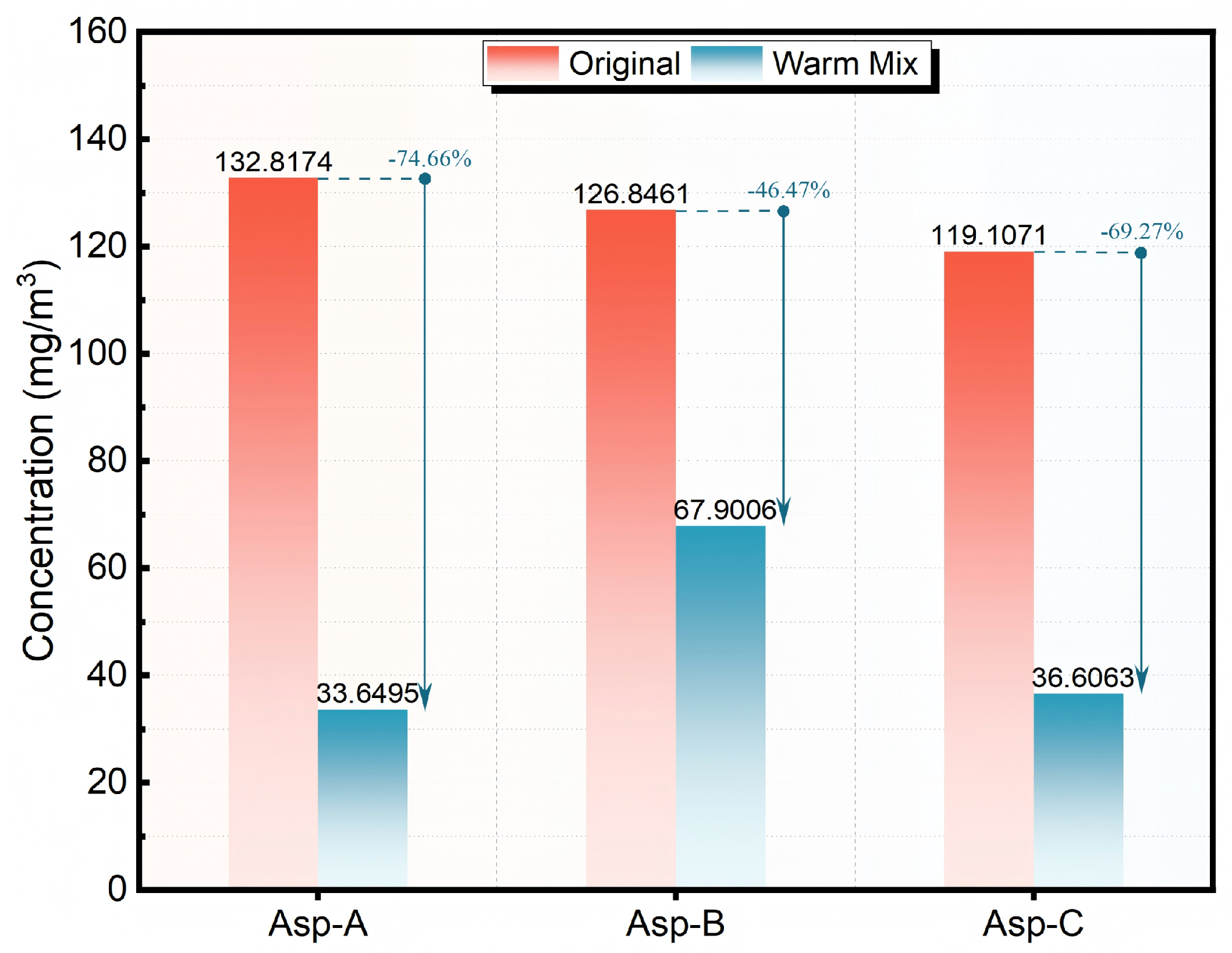
The test results of total VOC concentrations from asphalts of different oil sources before and after warm mixing are shown in Figure 2. The inhibitory effect of warm-mixing treatment on VOC emissions shows a significant oil source dependence.
At the base asphalt stage, Asp-A has the highest total VOC concentration (132.82 mg/m3), followed by Asp-B (126.85 mg/m3), and Asp-C has the lowest (119.11 mg/m3). This order is positively correlated with the saturate content (Asp-A: 39.61% > Asp-B: 35.24% > Asp-C: 26.90%), confirming that saturates, as the main light components, are the core source of VOC emissions.
After warm-mixing treatment, the total VOC concentrations of all three asphalts decrease significantly, but the reduction rates vary noticeably: Asp-A has the largest reduction rate (74.66%), dropping from 132.82 mg/m3 to 33.65 mg/m3; Asp-C ranks second in reduction rate (69.27%), falling to 36.61 mg/m3; Asp-B has the smallest reduction rate (46.47%) and still maintains a relatively high level of 67.90 mg/m3. There are significant differences in the emission reduction effects of asphalt from different oil sources, and the results from the same oil source have good repeatability (relative standard deviation <10%). This difference stems from the adaptation mechanism between oil source components and the warm-mixing agent: the high-saturate structure of Asp-A is highly responsive to the viscosity-reducing effect of the warm-mixing agent, which effectively blocks the volatilization path of saturates by promoting the association of polar molecules; the high-asphaltene structure of Asp-C forms a more stable colloidal system during warm mixing, inhibiting the escape of small aromatic molecules; however, the high-aromatic and high-resin component characteristics of Asp-B result in strong intermolecular forces, making it difficult for the warm-mixing agent to significantly change its volatilization properties, thus limiting the emission reduction effect.

3.3. Composition and Evolution Law of VOC Components

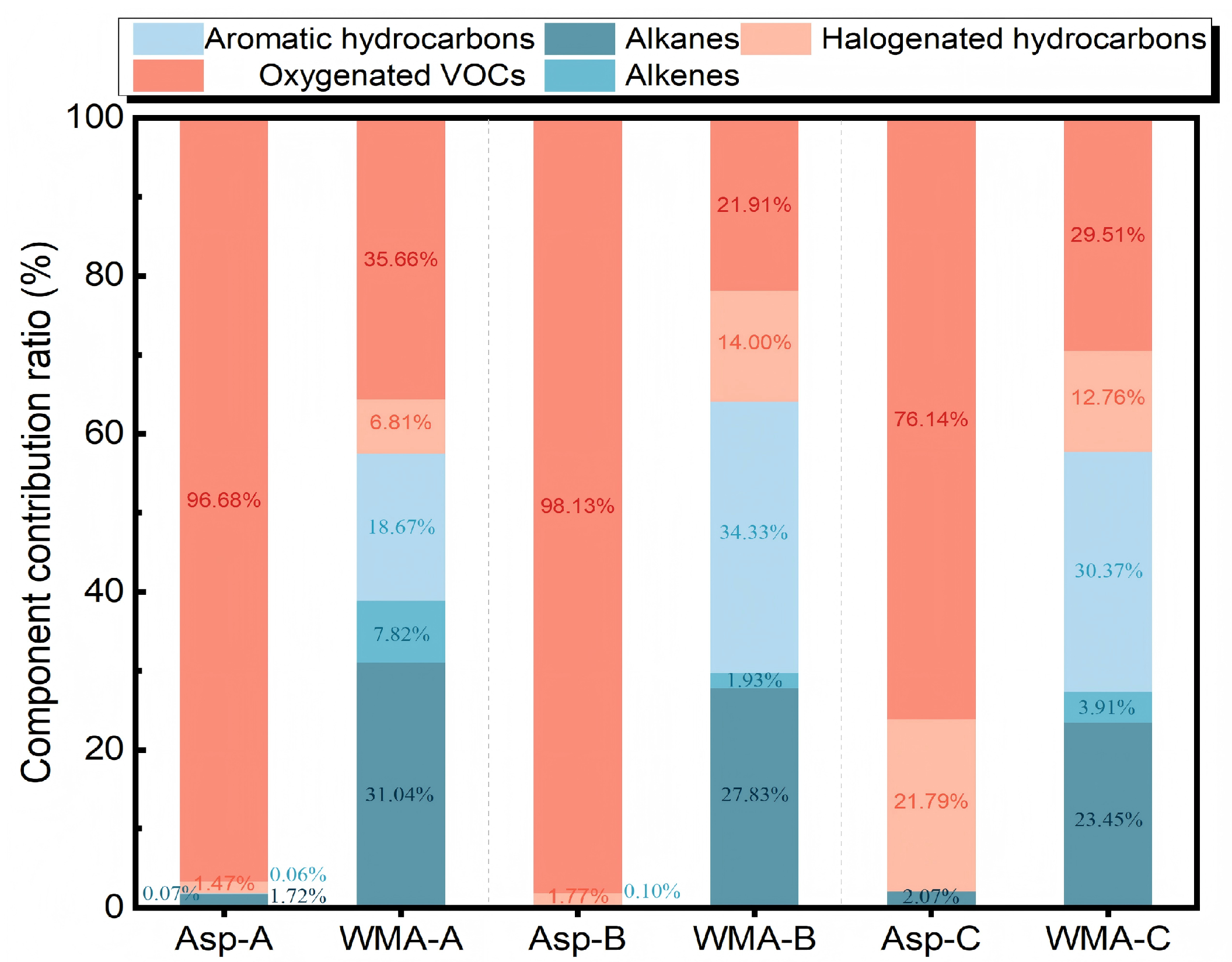
Through NIST database matching and retention index verification, a total of five main types of VOC components were identified: alkanes, alkenes, aromatics, halogenated hydrocarbons, and oxygen-containing compounds. The changes in component proportions of asphalts from different oil sources before and after warm mixing are shown in Figure 3.
At the base asphalt stage, the VOC components of the three asphalts are dominated by oxygen-containing compounds, but their proportions vary: Asp-B has the highest proportion (98.13%), followed by Asp-A (96.68%), and Asp-C has the lowest (76.14%). Asp-C also contains 21.79% halogenated hydrocarbons and 2.07% alkanes, making it the only base asphalt with the characteristic of multi-component coexistence, which is related to the geological characteristics of its crude oil origin and refining process; the proportions of other components in Asp-A and Asp-B are both lower than 2%, showing an almost pure oxygen-containing compound emission characteristic.
After warm-mixing treatment, the VOC components undergo a fundamental transformation: the proportion of oxygen-containing compounds drops sharply, while the proportions of alkanes, aromatics, and halogenated hydrocarbons increase significantly, with the change law showing oil source specificity.
(1) Asp-A: The proportion of oxygen-containing compounds decreases from 96.68% to 35.66%. Alkanes (31.04%) and aromatics (18.67%) become the main components, and the proportion of halogenated hydrocarbons increases slightly to 14.63%, indicating that the warm-mixing agent has the strongest associative effect on polar oxygen-containing small molecules;
(2) Asp-B: The proportion of oxygen-containing compounds drops to 21.91%, the proportion of aromatics soars to 34.33% (becoming the largest component), and alkanes (27.83%) and halogenated hydrocarbons (14.00%) increase simultaneously, reflecting the partial dissociation of Asp-B’s stable aromatic component structure during warm mixing;
(3) Asp-C: The proportion of oxygen-containing compounds decreases to 29.51%, the proportions of aromatics (30.37%) and halogenated hydrocarbons (12.76%) increase, and the proportion of alkanes reaches 23.45%, with a relatively balanced component distribution, consistent with Asp-C’s original basic characteristic of multi-component coexistence. Correlation analysis between VOC component changes and asphalt’s four components shows that: the growth rate of alkane VOCs is positively correlated with the decrease rate of saturates (Asp-A: 17.01% > Asp-C: 18.20% > Asp-B: 10.50%), confirming that alkanes are mainly derived from the thermal volatilization of saturates; the growth in aromatic VOCs is positively correlated with aromatic content (Asp-B: 38.67% > Asp-C: 39.77% > Asp-A: 32.45%), indicating that small aromatic molecules are mainly from the dissociation of aromatics; the new emissions of halogenated hydrocarbon VOCs are related to the reaction of the warm-mixing agent rather than the contribution of asphalt itself; the sharp decrease in oxygen-containing compounds is directly related to the inhibition of polar small molecule volatilization caused by the reduction in warm-mixing temperature.
The VOC sources of warm-mix asphalt have dual natures: one part inherits and changes the volatilization characteristics of the base asphalt, while the other part introduces new chemical pathways through additives. The VOC characteristics of basic asphalt are closely related to the thermal oxidative aging of asphalt during storage, transportation, and short-term thermal processes. Under heating conditions, the light components (especially aromatic components) of asphalt are prone to react with oxygen, producing oxygen-containing volatile compounds such as aldehydes, ketones, and carboxylic acids. Therefore, the compositional characteristics of VOCs in basic asphalt mainly reflect the degree of aging and oxidation experienced by its specific oil source composition during early processing and short-term thermal history.
The introduction of warm-mixing technology not only physically suppresses the volatilization of VOCs originating from asphalt aging by reducing the mixing temperature, but more importantly, the chemical properties of its additives introduce new VOC species (such as halogenated hydrocarbons) and change the relative composition of volatile components, thus forming a new spectrum of coexistence of alkanes, aromatic hydrocarbons, and oxygen-containing compounds. Therefore, the VOC emissions of warm-mix asphalt are the result of the combined effects of physical inhibition, selective changes in component volatilization, and chemical reactions of additives [29]. The limitation of this study is that the toxicity-weighted or health risk-based assessment of the reduction in volatile organic compounds is beyond its scope.
Evotherm M1 warm-mix agent has a significant effect on reducing the total mass concentration of VOCs in three types of oil source asphalt. The chemical composition of its emissions has undergone fundamental changes, and its comprehensive environmental and health impacts need to be further evaluated in combination with its component characteristics.
We acknowledge that the correlation analysis in this study may be limited by the sample size. Three asphalt binders (Asp-A, Asp-B, and Asp-C) were used to investigate the influence of different oil sources on the performance of warm-mix asphalt, which allowed key trends to be identified. Future studies will expand the sample size by including a wider range of asphalt types and oil sources to enhance the statistical robustness and reliability of the correlation analysis.

4. Energy Conservation and Emission Reduction Characteristics of Asphalt Pavement During the Construction Phase Life Cycle

This chapter is based on the LCA model and quantifies the energy consumption and carbon emission performance of different oil sources and warm-mixing processes throughout the construction process from a system accounting perspective.
In this study, the system boundary is defined as the entire stage from raw material production to the delivery of goods, covering raw material production, mixture mixing, transportation, and on-site construction. This stage is the main contributor to the environmental impact of asphalt pavement, accounting for approximately 80% to 95% of total energy consumption and carbon emissions. Moreover, it enables a targeted and data-reliable assessment of the impact of warm-mix asphalt technology and changes in its oil sources.
In this study, the energy consumption and carbon emissions involved in the production of additives were not explicitly considered, as the analysis mainly focused on the changes in asphalt binders and oil sources, and it was assumed that the impact of additives could be disregarded. Future work will expand the system boundary to include the production and transportation of warm-mix agents, in order to conduct a more comprehensive environmental assessment.
This study focuses on a direct comparison of the warm-mix asphalt treatment methods, but does not explicitly consider the storage history of the asphalt samples and the previous aging conditions. These factors may affect the chemical composition and performance of the asphalt during mixing and aging processes, including viscosity, volatility, and emission characteristics.

4.1. Energy Consumption and Carbon Emissions in the Raw Material Production Phase

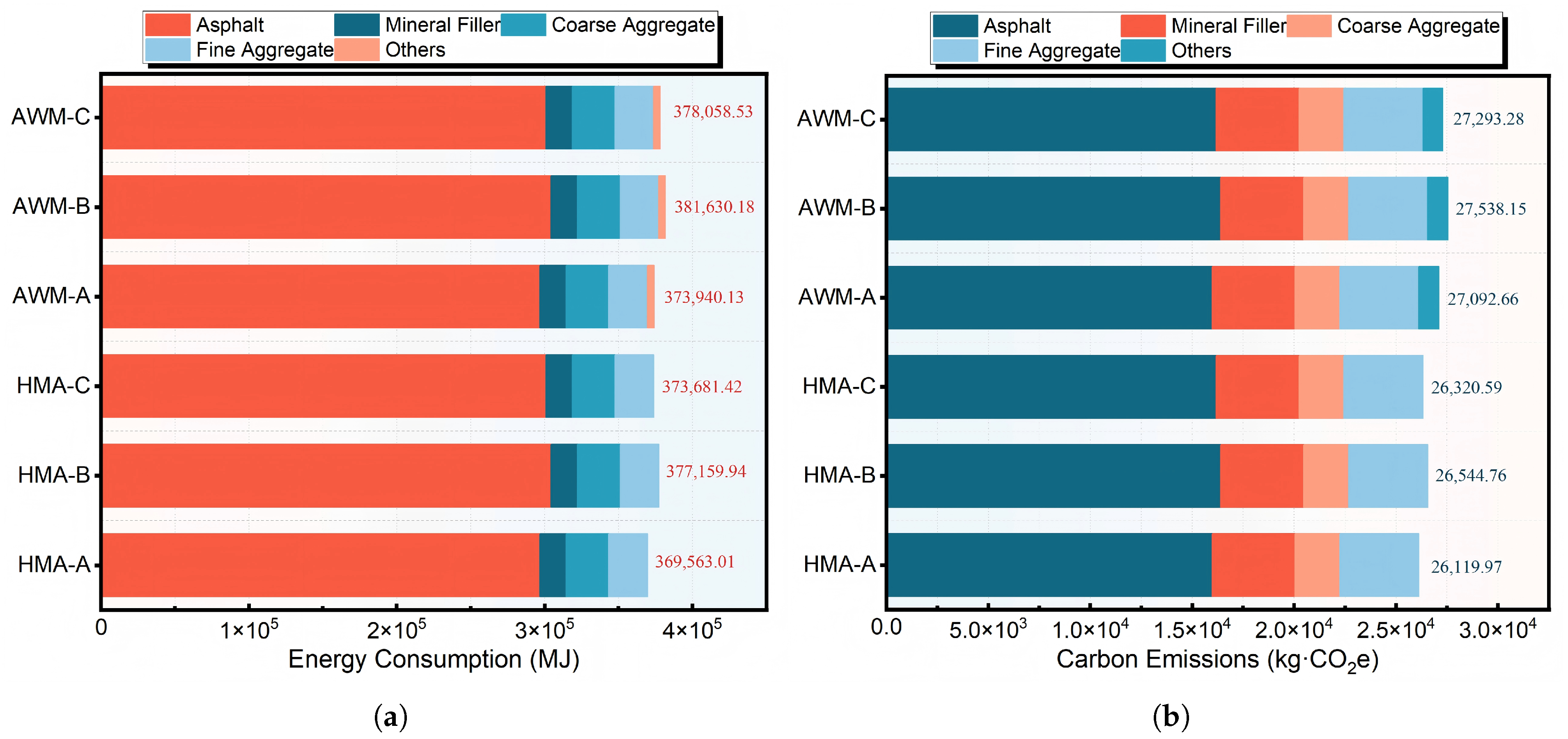
The quantitative results of energy consumption and carbon emissions in the raw material production phase are shown in Figure 4. The environmental load of this phase is affected by oil source characteristics.
Among hot-mix asphalt mixtures (HMA), HMA-A has the lowest energy consumption (369,563.01 MJ) and carbon emissions (26,119.97 kg·CO2e), HMA-B has the highest (energy consumption: 377,159.94 MJ; carbon emissions: 26,544.76 kg·CO2e), and HMA-C ranks in the middle. This order is inconsistent with the ranking of asphalt unit energy consumption/carbon emissions (Asp-C > Asp-B > Asp-A). The core reason is that the optimal asphalt–aggregate ratio of Asp-B mixture (4.8%) is higher than that of Asp-A and Asp-C (both 4.7%). Since asphalt accounts for over 80% of the environmental load of raw materials (aggregate and filler together account for less than 15%), the slight difference in asphalt–aggregate ratio has a greater impact on the total load than the difference in unit materials themselves.
The warm-mixing process has a limited impact on environmental load during the raw material production phase: due to the additional mixing step of warm-mixing agents, energy consumption and carbon emissions are slightly higher than those of HMA with the same oil source; for the same oil source, the energy consumption difference between AWM and HMA is about 1.2%, and the carbon emission difference is about 3.7%. This result indicates that the additional energy consumption of warm-mixing technology in the raw material production phase is negligible, and its energy conservation and emission reduction advantages are mainly reflected in the subsequent mixing process.
The essential impact of differences in oil sources has been further revealed: although Asp-B asphalt has lower unit energy consumption/carbon emissions than Asp-C, it has a higher environmental load throughout the entire stage due to the larger amount of mixture required; Asp-A, with its dual advantages of low refining energy consumption (mainly due to the high proportion of renewable energy in its refineries) and suitable oil-to-stone ratio, has become the most environmentally friendly choice in the raw material stage. This indicates that the environmental performance of asphalt is the result of the combined effects of chemical properties, mix design, and refining energy structure.
The essential impact of oil source differences is further revealed: although the unit energy consumption/carbon emissions of Asp-B asphalt are lower than those of Asp-C, the higher required dosage of the mixture leads to a higher full-phase environmental load; Asp-A, relying on the dual advantages of low unit load and appropriate asphalt–aggregate ratio, becomes the most environmentally friendly choice in the raw material phase. In addition, the difference in unit load of the three asphalts stems from the refinery’s power structure: Asp-C production relies most on thermal power generation with high carbon intensity, followed by Asp-B, while wind power accounts for 30% of Asp-A’s refinery power supply. This factor should be a key consideration in green material selection.

4.2. Energy Consumption and Carbon Emissions in the Mixture Mixing Phase

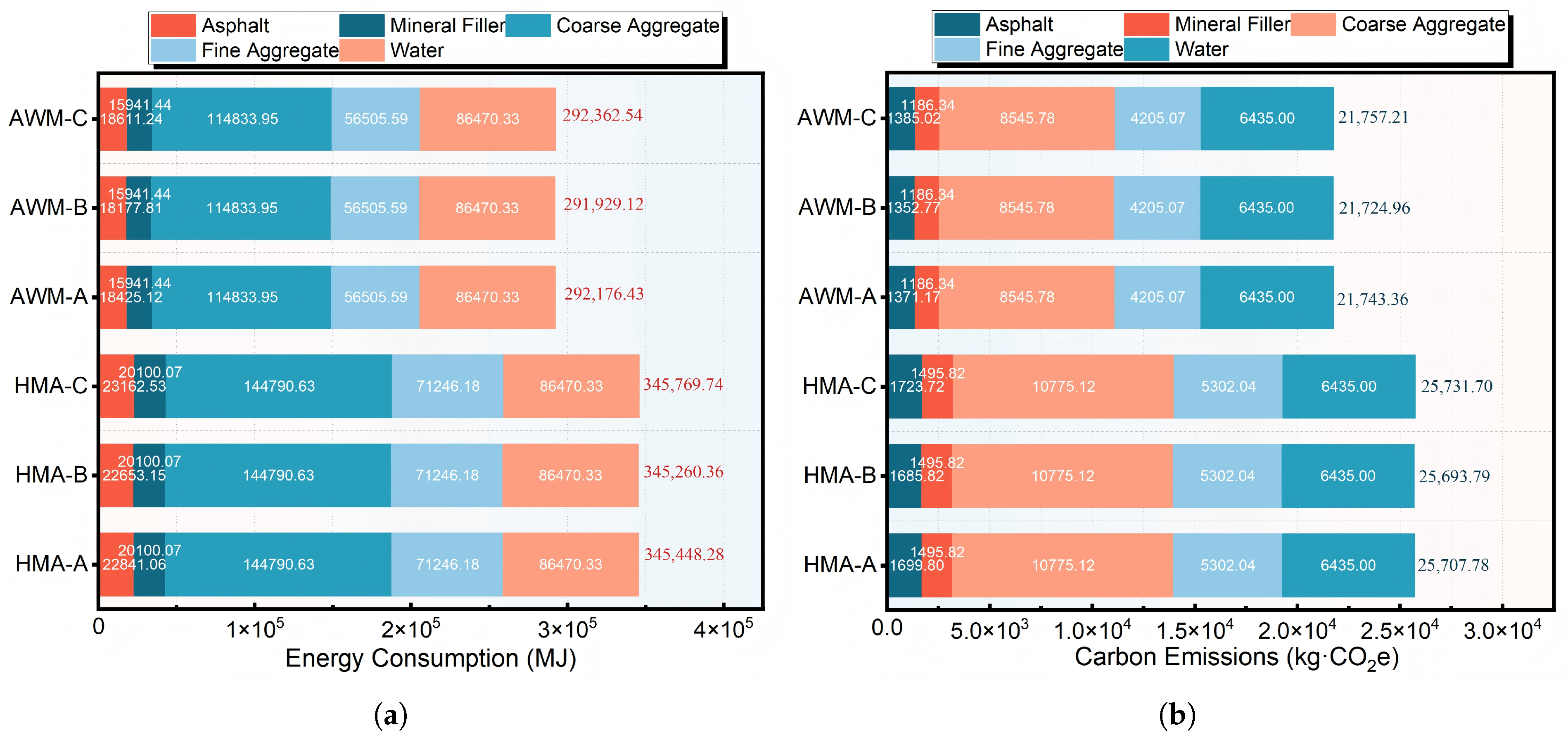
As the core energy-consuming link in asphalt pavement construction, the environmental load of the mixing phase consists of two parts: material heating energy consumption and mechanical equipment energy consumption. The test results are shown in Figure 5 and Table 4.
Material heating energy consumption shows significant process differences: HMA is the highest (345,679.76∼377,664.01 MJ), and AWM is (310,189.14∼323,823.39 MJ). This order is directly related to the mixing temperature. At the oil source level, Asp-B has the lowest heating energy consumption under all processes, Asp-C is the highest, and Asp-A ranks in the middle. This reflects Asp-B asphalt’s advantage of moderate heat capacity and good thermal conductivity, requiring less energy to heat to the target temperature, while Asp-C’s high-asphaltene structure leads to high viscosity, requiring more energy to maintain mixing workability.
Total carbon emission calculation results show that AWM-B has the lowest environmental load in the mixing phase, with 26,115.01 kg·CO2e; HMA-C ranks the highest with 30,121.75 kg·CO2e; for the same oil source, AWM reduces carbon emissions by 6.8%–8.3% compared with HMA. Mechanical equipment energy consumption accounts for about 8.5% of the total energy consumption, and is not affected by oil source or warm-mixing type, belonging to fixed environmental cost; while material heating energy consumption accounts for over 90%, which is the core control object for energy conservation and emission reduction in the mixing phase. Aggregate heating energy consumption accounts for 59%–62% of total material heating energy consumption, moisture vaporization energy consumption accounts for 25%∼30%, and asphalt heating energy consumption only accounts for 8%∼11%. This finding breaks the traditional perception that “asphalt heating is the main source of mixing energy consumption”, indicating that optimizing the aggregate drying process and reducing aggregate moisture content can become an additional breakthrough for energy conservation and emission reduction in the mixing phase.

4.3. Energy Consumption and Carbon Emissions in the Material Transportation Phase

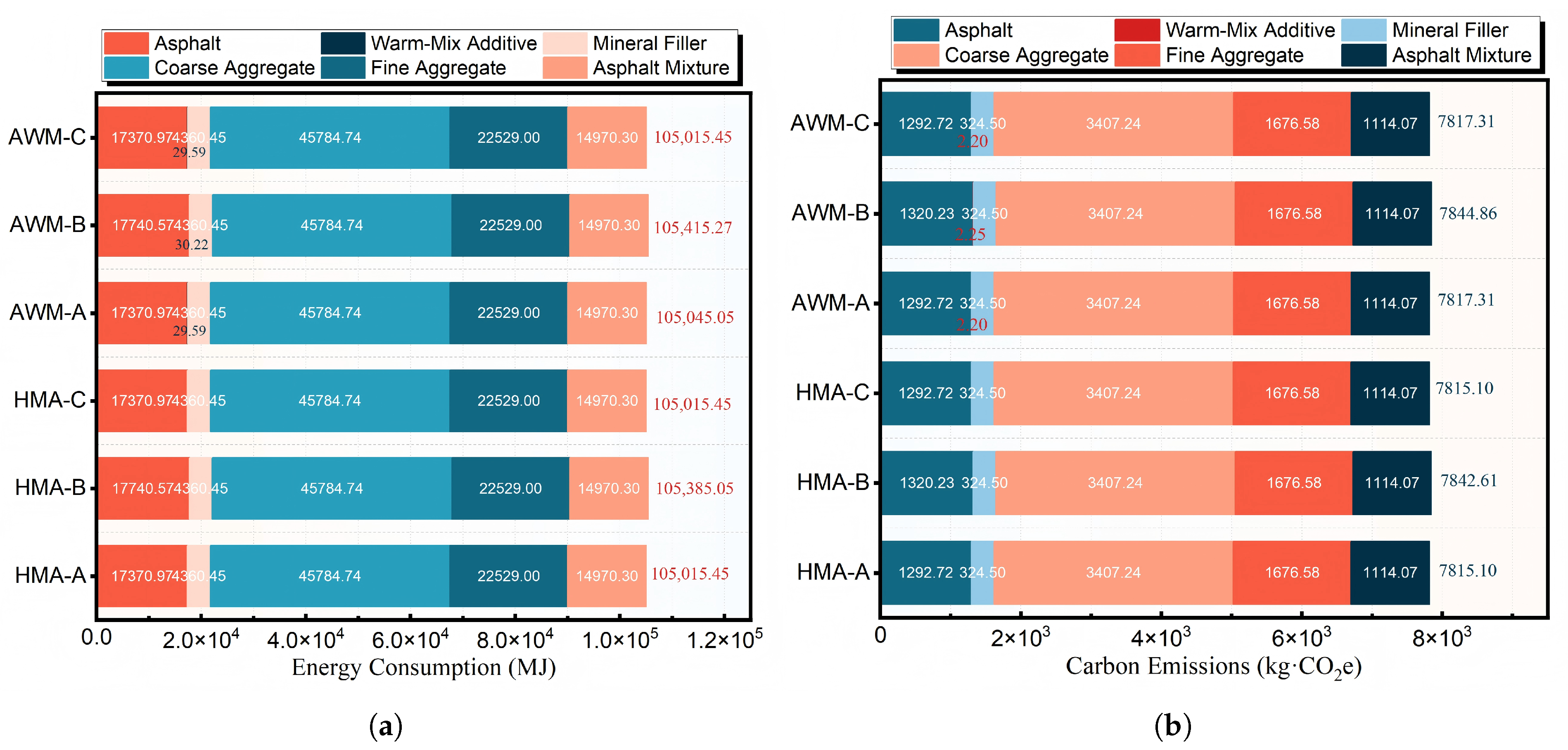
The quantitative results of energy consumption and carbon emissions in the transportation phase are shown in Figure 6. The environmental load of this phase is affected by both the type of transported materials and the asphalt dosage.
The transportation energy consumption differences among the three processes are minimal: due to the additional transportation of warm-mixing agents (transportation distance: 10 km), the energy consumption and carbon emissions of AWM are slightly higher than those of HMA, but the increase rate is less than 2%. This result indicates that the dosage of warm-mixing agents is small (only 0.6% of the asphalt mass), and the additional environmental load caused by their transportation is almost negligible.
Oil source difference remains the main influencing factor in the transportation phase: Asp-B has the highest transportation environmental load under all processes, Asp-A is the lowest, and Asp-C ranks in the middle, consistent with the raw material production phase. The core reason is that the optimal asphalt–aggregate ratio of Asp-B mixture is higher, leading to an increase in asphalt transportation volume. Moreover, the asphalt transportation distance (100 km) is much longer than that of aggregates and fillers (50 km), and the transportation energy consumption per unit mass of asphalt is twice that of aggregates, resulting in the slight difference in asphalt dosage being amplified into a significant difference in transportation load.
Overall, the total energy consumption (28,956.32–31,245.78 MJ) and carbon emissions (2103.68∼2289.45 kg·CO2e) in the transportation phase account for only 7.2%–8.5% and 5.1%–6.3% of the construction phase, respectively. Although the impact is limited, about 10%∼15% of emission reduction potential can still be achieved by optimizing the layout of material sources (shortening transportation distance) and improving the load utilization rate of transport vehicles.

4.4. Energy Consumption and Carbon Emissions in the On-Site Construction Phase

The calculation results of energy consumption and carbon emissions in the on-site construction phase are shown in Table 5. A unified construction machinery configuration (paver, roller, and sprinkler) is adopted in this phase, as shown in Table 6, so the energy consumption and carbon emissions are fixed values and not affected by the oil source.
The total energy consumption and carbon emissions in the on-site construction phase are 27,466.89 MJ and 2044.06 kg·CO2e, accounting for 6.8%–7.5% and 4.9%–5.6% of the total energy consumption and carbon emissions in the construction phase, respectively, making it the link with the lowest environmental load. However, the carbon emissions in this phase are mainly direct emissions from diesel combustion, with complex types of pollutants (including NOx, particulate matter, etc.), which have a significant impact on the air quality in the construction area. Therefore, the adoption of new energy construction machinery (such as electric pavers and LNG rollers) can simultaneously reduce carbon emissions and local air pollution, which is a green optimization direction for the on-site construction phase.
The environmental differences in asphalt oil sources are both due to geological and chemical characteristics (affecting VOC release, viscosity temperature behavior, and mixture dosage) and regional industrial infrastructure (affecting refinery carbon emissions). Therefore, in the selection of green materials, a “geological industrial” dual dimensional evaluation framework should be established, prioritizing the selection of oil sources with suitable chemical properties and clean refining to achieve full-chain emission reduction.

5. Conclusions

This study focuses on the construction stage of asphalt pavement using the additive-type warm-mix agent Evotherm M1. Through experiments and LCA analysis, the following conclusions are drawn:
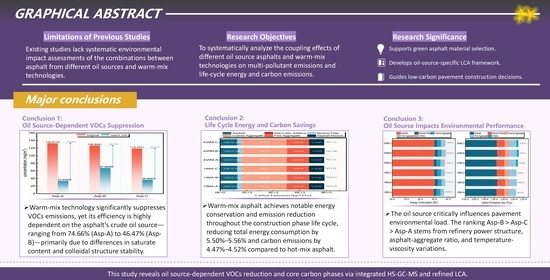
(1) Warm-mixing technology significantly inhibits VOC emissions from asphalts of different oil sources, but the emission reduction efficiency shows oil source dependence: Asp-A has the largest reduction rate (74.66%), followed by Asp-C (69.27%), and Asp-B has the smallest (46.47%). This difference is directly related to asphalt saturate content and colloidal structure stability.
(2) The evolution law of VOC components exhibits oil source specificity: base asphalt is dominated by oxygen-containing compounds (accounting for 76.14%–98.13%), and transforms into a multi-component coexistence of alkanes, aromatics, and oxygen-containing compounds after warm mixing; alkane VOCs are directly related to saturate volatilization, aromatic VOCs are related to aromatic dissociation, and halogenated hydrocarbon VOCs mainly originate from the reaction of warm mixing agents.
(3) In the full life cycle of the construction phase, warm-mixing technology achieves the optimal energy conservation and emission reduction effects, reducing total energy consumption by 5.50%–5.56% and carbon emissions by 4.47%–4.52% compared with hot-mix asphalt mixtures.
(4) The difference in oil sources has a significant impact on environmental load throughout the entire life cycle, and the comprehensive ranking is Asp-B>Asp-C>Asp-A. This is not only a result of the chemical properties of asphalt, but also closely related to the energy structure of the refining stage: Asp-A has become the optimal choice due to its high proportion of renewable energy and suitable oil-to-stone ratio in refineries; Asp-B has the highest comprehensive load due to its large amount of mixed materials and moderate refining energy consumption; and although Asp-C has a dense chemical structure, its performance is moderate due to the dependence of refineries on high-carbon electricity.
(5) Raw material production and mixture mixing are the core links of environmental load in the construction phase, accounting for 87.9% of total energy consumption and 85.1% of total carbon emissions, respectively; aggregate heating and moisture vaporization are the main energy consumption sources in the mixing phase (accounting for over 85%), serving as key breakthroughs for energy conservation and emission reduction. Although the transportation phase does not account for a high proportion of the entire lifecycle, the setting of transportation distance has a significant impact on local emission calculations. It is recommended to implement localized procurement and optimize logistics routes in practical engineering to enhance the accuracy of emission-reduction measures.
(6) It is suggested that in the selection of green materials for asphalt pavement, the chemical properties of asphalt, the design of mix proportions, and the energy structure during the refining stage should be considered simultaneously to achieve systematic optimization of carbon reduction throughout the entire lifecycle.

Author Contributions

Conceptualization, Z.P.; investigation, C.L. (Chenchen Li); data curation, J.X.; writing—original draft preparation, R.C. and C.L. (Chunliang Li). All authors have read and agreed to the published version of the manuscript.

Funding

This research was funded by the Major R&D project of Zhejiang Provincial Department of Transportation (ZJXL-SJT-202316A).

Institutional Review Board Statement

Not applicable.

Informed Consent Statement

Not applicable.

Data Availability Statement

Data is contained within the article.

Acknowledgments

We are grateful to the Major R&D project of Zhejiang Provincial Department of Transportation.

Conflicts of Interest

Authors Rong Chang and Zongjun Pan were employed by the company RoadMainT Co., Ltd. Author Chunliang Li was employed by the Qingdao Highway Development Center. Author Chenchen Li was employed by the company Zhejiang Communications Investment Group Expressway Construction and Management Co., Ltd. The remaining authors declare that the research was conducted in the absence of any commercial or financial relationships that could be construed as potential conflicts of interest.

References

  1. Yang, X.; You, Z.; Perram, D.; Hand, D.; Ahmed, Z.; Wei, W.; Luo, S. Emission analysis of recycled tire rubber modified asphalt in hot and warm mix conditions. J. Hazard. Mater. 2019, 365, 942–951. [Google Scholar] [CrossRef] [PubMed]
  2. Xia, W.; Dong, M.; Xu, T. Synergistic suppressions of porous warm mix agent and composite flame retardant on combustion and fume release of asphalt pavement. J. Clean. Prod. 2024, 443, 141003. [Google Scholar] [CrossRef]
  3. Wu, H.; Ji, X.; Song, W.; Deng, Z.; Zhan, Y.; Zou, X.; Li, Q.; He, F. Multi-scale analysis on fracture behaviors of asphalt mixture considering moisture damage. Constr. Build. Mater. 2024, 416, 135234. [Google Scholar] [CrossRef]
  4. Vega A, D.L.; Gilberto, M.A.; Dos Santos, J.M.O. Life cycle assessment of warm mix asphalt with recycled concrete aggregate. In IOP Conference Series: Materials Science and Engineering; IOP Publishing: Bristol, UK, 2019; Volume 603, p. 052016. [Google Scholar]
  5. Vega-Araujo, D.; Martinez-Arguelles, G.; Santos, J. Comparative life cycle assessment of warm mix asphalt with recycled concrete aggregates: A Colombian case study. Procedia CIRP 2020, 90, 285–290. [Google Scholar] [CrossRef]
  6. Milad, A.; Babalghaith, A.M.; Al-Sabaeei, A.M.; Dulaimi, A.; Ali, A.; Reddy, S.S.; Bilema, M.; Yusoff, N.I.M. A comparative review of hot and warm mix asphalt technologies from environmental and economic perspectives: Towards a sustainable asphalt pavement. Int. J. Environ. Res. Public Health 2022, 19, 14863. [Google Scholar] [CrossRef]
  7. Thives, L.P.; Ghisi, E. Asphalt mixtures emission and energy consumption: A review. Renew. Sustain. Energy Rev. 2017, 72, 473–484. [Google Scholar] [CrossRef]
  8. Gbolade, A.P.; Mishra, D. Quantifying the environmental impacts of reduced temperature chemical warm-mix asphalt with life cycle assessment. Road Mater. Pavement Des. 2025, 27, 1–18. [Google Scholar] [CrossRef]
  9. Liu, N.; Wang, Y.; Yang, H. Carbon Emission Model and Emission Reduction Technology in the Asphalt Mixture Mixing Process. Atmosphere 2023, 14, 1518. [Google Scholar] [CrossRef]
  10. del Carmen Rubio, M.; Moreno, F.; Martínez-Echevarria, M.J.; Martínez, G.; Vázquez, J.M. Comparative analysis of emissions from the manufacture and use of hot and half-warm mix asphalt. J. Clean. Prod. 2013, 41, 1–6. [Google Scholar] [CrossRef]
  11. Wang, D.; Yang, L.; Zhang, Q.; Zheng, Y.; Hu, L.; Cheng, K.; Wei, J. Comprehensive evaluation of energy consumption and carbon emissions of asphalt pavement recycling technology. Case Stud. Constr. Mater. 2024, 20, e02987. [Google Scholar] [CrossRef]
  12. Liu, Y.; Yang, J.; Wang, H.; Liu, S.; Fan, Y.; Zhou, Y.; Gong, M.; Huang, W. Energy consumption and carbon emissions of mixing plant in asphalt pavement construction with a case study in China and reduction measures. Case Stud. Constr. Mater. 2025, 22, e04165. [Google Scholar] [CrossRef]
  13. Espinoza, M.; Campos, N.; Yang, R.; Ozer, H.; Aguiar-Moya, J.P.; Baldi, A.; Loría-Salazar, L.G.; Al-Qadi, I.L. Carbon footprint estimation in road construction: La Abundancia–Florencia case study. Sustainability 2019, 11, 2276. [Google Scholar] [CrossRef]
  14. Yang, R.; Kang, S.; Ozer, H.; Al-Qadi, I.L. Environmental and economic analyses of recycled asphalt concrete mixtures based on material production and potential performance. Resour. Conserv. Recycl. 2015, 104, 141–151. [Google Scholar] [CrossRef]
  15. Liu, Q.; Yi, X.; Falchetto, A.C.; Wang, D.; Yu, B.; Qin, S. Carbon emissions quantification and different models comparison throughout the life cycle of asphalt pavements. Constr. Build. Mater. 2024, 411, 134323. [Google Scholar] [CrossRef]
  16. Liu, N.; Liu, L.; Li, M.; Sun, L. A comprehensive review of warm-mix asphalt mixtures: Mix design, construction temperatures determination, performance and life-cycle assessment. Road Mater. Pavement Des. 2024, 25, 1381–1425. [Google Scholar] [CrossRef]
  17. Guo, M.; Liu, H.; Jiao, Y.; Mo, L.; Tan, Y.; Wang, D.; Liang, M. Effect of WMA-RAP technology on pavement performance of asphalt mixture: A state-of-the-art review. J. Clean. Prod. 2020, 266, 121704. [Google Scholar] [CrossRef]
  18. Zhao, W.; Yang, Q. Life cycle assessment and multi-index performance evaluation of semi-flexible pavement after composite modification by using fly ash, rubber particles, warm mixing asphalt and recycled asphalt pavement. Constr. Build. Mater. 2023, 364, 129945. [Google Scholar] [CrossRef]
  19. Wang, P.; Li, K.; Mao, J. Research on the carbon neutralization of hot mix asphalt pavement based on life cycle assessment theory. Sci. Total Environ. 2024, 954, 176691. [Google Scholar] [CrossRef]
  20. Mascarenhas, Z.M.G.; Piao, Z.; Vasconcelos, K.L.; Poulikakos, L.D.; Bernucci, L.L.B. Comparative environmental performance of pavement structures considering recycled materials and regional differences. Sci. Total Environ. 2023, 858, 159862. [Google Scholar] [CrossRef]
  21. Liu, N.; Wang, Y.; Bai, Q.; Liu, Y.; Wang, P.S.; Xue, S.; Yu, Q.; Li, Q. Road life-cycle carbon dioxide emissions and emission reduction technologies: A review. J. Traffic Transp. Eng. (Engl. Ed.) 2022, 9, 532–555. [Google Scholar]
  22. Liu, Y.; Wang, Y.; Lyu, P.; Hu, S.; Yang, L.; Gao, G. Rethinking the carbon dioxide emissions of road sector: Integrating advanced vehicle technologies and construction supply chains mitigation options under decarbonization plans. J. Clean. Prod. 2021, 321, 128769. [Google Scholar] [CrossRef]
  23. Araújo, J.P.C.; Oliveira, J.R.M.; Silva, H.M.R.D. The importance of the use phase on the LCA of environmentally friendly solutions for asphalt road pavements. Transp. Res. Part D Transp. Environ. 2014, 32, 97–110. [Google Scholar] [CrossRef]
  24. Blaauw, S.A.; Maina, J.W.; Mturi, G.A.J.; Visser, A.T. Flexible pavement performance and life cycle assessment incorporating climate change impacts. Transp. Res. Part D Transp. Environ. 2022, 104, 103203. [Google Scholar] [CrossRef]
  25. Mustafa, M.F.; Liu, Y.; Duan, Z.; Guo, H.; Xu, S.; Wang, H.; Lu, W. Volatile compounds emission and health risk assessment during composting of organic fraction of municipal solid waste. J. Hazard. Mater. 2017, 327, 35–43. [Google Scholar] [CrossRef]
  26. Behnood, A. A review of the warm mix asphalt (WMA) technologies: Effects on thermo-mechanical and rheological properties. J. Clean. Prod. 2020, 259, 120817. [Google Scholar] [CrossRef]
  27. JTG 3410-2025; Standard Test Methods of Asphalt and Asphalt Mixtures for Highway Engineering. China Communications Press: Beijing, China, 2025.
  28. JTG F40; Technical Specifications for Construction of Highway Asphalt Pavements. China Communications Press: Beijing, China, 2004.
  29. Liu, D.; Li, J.; Guo, H.; Yang, K.; Cao, Q.; Guo, F.; Yao, T. Chemical composition-driven performance evaluation model for sbs-modified asphalt using multivariate statistical. Sci. Rep. 2025, 15, 43313. [Google Scholar] [CrossRef]
Figure 1. Total ion current (TIC) chromatograms of VOCs from asphalts of different oil sources before and after warm mixing. (a) Asp-A; (b) WMA-A; (c) Asp-B; (d) WMA-B; (e) Asp-C; (f) WMA-C.
Coatings 16 00274 g001
Figure 2. Characteristics of total VOC concentrations from asphalts of different oil sources before and after warm mixing.
Coatings 16 00274 g002
Figure 3. Characteristics of VOC component composition from asphalts of different oil sources before and after warm mixing.
Coatings 16 00274 g003
Figure 4. Characteristics of energy consumption and carbon emissions in the raw material production phase. (a) Energy consumption; (b) Carbon emissions.
Coatings 16 00274 g004
Figure 5. Characteristics of energy consumption and carbon emissions in the mixture mixing phase. (a) Energy consumption; (b) Carbon emissions.
Coatings 16 00274 g005
Figure 6. Characteristics of energy consumption and carbon emissions in the material transportation phase. (a) Energy consumption;(b) Carbon emissions.
Coatings 16 00274 g006
Table 1. Basic physicochemical properties of asphalts.
ParameterUnitRequirementsResultsTest Method
Asp-AAsp-BAsp-C
Penetration (100 g, 5 s)15  °C0.1mm-22  ± 0.03 21  ± 0.07 24  ± 0.06 T0604
25 °C60∼8072  ± 0.07 68  ± 0.09 71  ± 0.05
30 °C-112  ± 0.08 113  ± 0.04 116  ± 0.07
Penetration Index (PI)- 1.5 + 1.0 1.14   ± 0.011 1.27   ± 0.019 0.81   ± 0.013 T0604
Softening Point TR&B°C≥4646.5  ± 0.14 46.0  ± 0.19 47.5  ± 0.11 T0606
Dynamic Viscosity (60 °C)Pa·s≥180232.5  ± 3.8 223.5  ± 2.1 256.9  ± 4.6 T0620
Ductility (5 cm/min)10 °Ccm≥25>100>10049.0  ± 1.4 T0605
15 °Ccm≥100>100>100>100
Wax Content (Distillation Method)%≤2.21.9  ± 0.06 1.8  ± 0.11 1.3  ± 0.04 T0615
Flash Point (COC)°C≥260278  ± 2.1 287  ± 1.7 312  ± 2.9 T0611
Solubility (Trichloroethylene)%≥99.599.5  ± 0.32 99.7  ± 0.27 99.7  ± 0.19 T0607
Density (15 °C)g/cm3-0.977  ± 0.008 1.011  ± 0.011 1.049  ± 0.005 T0603
After RTFOTMass Change%≤± 0.80.050  ± 0.026 0.060  ± 0.093 0.070   ± 0.041 T0609
Residual Penetration Ratio%≥6166.2  ± 0.007 67.4  ± 0.011 64.8  ± 0.008 T0604
Residual Ductility (10 °C)cm≥613  ± 0.82 12  ± 0.43 ± 0.69 T0605
Table 2. Component analysis of asphalt.
AsphaltAsphaltene (%)Colloid (%)Saturation (%)Aromatics (%)
Asp-A0.0617.1839.6131.62
Asp-B4.7524.0930.4436.50
Asp-C8.9019.0926.9039.77
Table 3. Unit energy consumption and carbon emissions of mixture raw materials.
TypeUnitRaw Material Type
AsphaltMineral FillerCoarse AggregateFine Aggregate
Asp-AAsp-BAsp-C
Unit energy consumptionMJ/t4393.634412.224454.60207.3631.8258.56
Unit carbon emissionskg·CO2e/t236.53237.76239.5047.212.438.69
Table 4. Unit energy consumption and carbon emissions of various fuels.
TypeEnergy ConsumptionCarbon Emissions
Unit Unit Energy Consumption Unit Unit Carbon Emissions
DieselMJ/kg43.0kg·CO2e/kg3.20
Heavy oilMJ/kg40.4kg·CO2e/kg3.14
ElectricityMJ/kW·h3.6kW·h·CO2e/kW·h0.80
Table 5. Energy consumption and carbon emissions during the operation of mechanical equipment in the mixture mixing phase.
Type of Mechanical
Equipment
Energy TypeEnergy
Consumption (kg)
Energy
Consumption (MJ)
Carbon
Emissions (kg·CO2e)
Wheel Loader (≤2.0 m3)Diesel358.8115,428.871148.20
Asphalt Mixing Plant (≤160 t/h)Electricity3789.7913,643.253031.83
Dump Truck (≤5 t)Diesel65.632822.14210.02
Total31,894.264390.05
Table 6. Energy consumption and carbon emissions in the on-site construction phase.
Type of Mechanical
Equipment
Energy
Type
Energy
Consumption (kg)
Energy
Consumption (MJ)
Carbon
Emissions (kg·CO2e)
Asphalt Mixture Paver (≤9.0 m)Diesel163.017009.34521.63
Vibratory Roller (Tandem Drum, ≤10 t)Diesel353.8215,214.161132.22
Pneumatic Tire Roller (9–16 t)Diesel109.274698.49349.66
Water Sprinkler Truck (≤10,000 L)Diesel12.67544.9040.55
Total638.7727,466.892044.06
Disclaimer/Publisher’s Note: The statements, opinions and data contained in all publications are solely those of the individual author(s) and contributor(s) and not of MDPI and/or the editor(s). MDPI and/or the editor(s) disclaim responsibility for any injury to people or property resulting from any ideas, methods, instructions or products referred to in the content.