1. Introduction
Road pavements are a critical component of infrastructure that ensure safe and efficient transportation systems. However, their construction, maintenance, and end-of-life stages are associated with substantial material consumption, energy use, and greenhouse gas (GHG) emissions, which have increasingly attracted attention under global climate change mitigation and sustainable development goals. In response, the pavement industry has sought strategies to reduce environmental burdens by improving material efficiency, lowering production temperatures, and promoting the reuse and recycling of resources.
One widely adopted approach is the incorporation of crumb rubber (CR) derived from end-of-life tires (ELTs) into asphalt mixtures. This strategy not only diverts significant quantities of waste from landfills but also enhances pavement performance. Rubberized asphalt mixtures have been shown to improve resistance to cracking and fatigue, reduce traffic noise, decrease maintenance needs, and extend pavement service life [
1,
2,
3,
4].
Recent studies have advanced the understanding of crumb rubber modification in asphalt mixtures by examining the rheological behavior of rubber–bitumen binders [
5], reviewing the implementation of CR in road pavements from both mechanical and sustainability perspectives [
6], and analyzing the microstructural interactions and stability mechanisms within CR-modified binders.
Despite these advantages, conventional rubberized asphalt mixtures often require higher production and compaction temperatures than standard hot mix asphalt (HMA), resulting in increased energy demand and associated emissions.
Warm mix asphalt (WMA) technology offers a complementary solution by enabling asphalt production at temperatures typically 20–40 °C lower than those of HMA. The use of WMA additives reduces fuel consumption, lowers emissions, improves working conditions, and extends hauling distances without compromising mixture performance [
7,
8,
9]. Combining WMA technology with recycled rubber incorporation has the potential to preserve the mechanical and durability benefits of rubberized asphalt while mitigating the environmental drawbacks related to elevated production temperatures. Although several experimental and laboratory studies have investigated the performance of rubberized warm mix asphalt mixtures [
10,
11,
12,
13], their environmental implications have not yet been comprehensively quantified.
Life cycle assessment (LCA) provides a robust and internationally recognized framework to evaluate the environmental performance of pavement systems across all life cycle stages, from raw material extraction to end-of-life. Previous studies have applied LCA to assess rubberized asphalt mixtures [
14,
15,
16] and low-temperature asphalt production technologies [
17]. However, research focusing on the combined application of CR and WMA remains limited and is often restricted to cradle-to-gate system boundaries or assumes identical service lives for different pavement alternatives [
18]. Such simplifications can underestimate the influence of durability and maintenance strategies on long-term environmental performance.
Moreover, the maintenance phase is frequently overlooked or treated in a simplified manner in pavement LCAs, despite evidence that rubberized asphalt pavements can require fewer interventions over their service life [
19]. Ignoring differences in maintenance frequency and pavement lifespan may lead to biased conclusions when comparing conventional and innovative pavement technologies.
Recent life cycle assessment studies have addressed crumb rubber-modified asphalt pavements under different system boundaries and modeling assumptions. For example, Cao et al. performed a comparative cradle-to-gate and cradle-to-grave LCA of different crumb rubber asphalt technologies, highlighting the influence of durability and maintenance scenarios on life cycle environmental impacts [
20]. However, the integration of crumb rubber with warm mix asphalt technology and its comparison with conventional HMA pavements using a time-normalized functional unit remain scarcely explored in the literature [
21].
In this context, the present study aims to advance the current state of knowledge by explicitly integrating recycled crumb rubber and warm mix asphalt technology within a cradle-to-grave LCA framework while accounting for detailed maintenance schedules and alternative service life scenarios. Furthermore, the use of a time-normalized functional unit (m2·year) enables a transparent and consistent comparison between pavement solutions with different durability characteristics.
The present study aims to quantify and to compare the environmental performance of a conventional HMA pavement with that of an asphalt pavement incorporating recycled tire crumb rubber through the dry process and a warm mix asphalt additive (CR + WMA).
A comprehensive cradle-to-grave LCA is conducted in accordance with ISO 14040/44 standards, explicitly accounting for material production, construction, detailed maintenance operations, and end-of-life stages. Different service life scenarios are considered, and environmental impacts are normalized using a functional unit of 1 m2·year, enabling a robust comparison between pavements with different durability. By integrating long-term performance and maintenance effects, this study addresses a key gap in the existing literature and provides a more realistic assessment of the environmental benefits associated with CR + WMA pavement technology.
2. Materials and Methods
2.1. Goal and Scope Definition
The goal of this study is to evaluate and compare the environmental performance of a conventional HMA pavement and an alternative pavement incorporating recycled tire crumb rubber and a warm mix asphalt additive (CR + WMA pavement). The assessment aims to quantify the potential environmental benefits associated with reduced production temperatures, partial substitution of virgin materials, differences in maintenance-related contributions, reduced maintenance needs, and extended pavement service life.
A life cycle assessment (LCA) was conducted in accordance with ISO 14040 and ISO 14044 standards [
22,
23]. The system boundaries adopt a cradle-to-grave perspective, including raw material extraction and processing, asphalt mixture production, transportation, construction, maintenance activities over the service life, and end-of-life operations [
24].
The functional unit (FU) is defined as 1 m2 of pavement per year of service life (m2·year). This FU enables a consistent comparison between pavement alternatives with different durability and maintenance requirements, ensuring that the environmental impacts associated with extended service life are fully captured.
2.2. System Boundaries and Life Cycle Stages
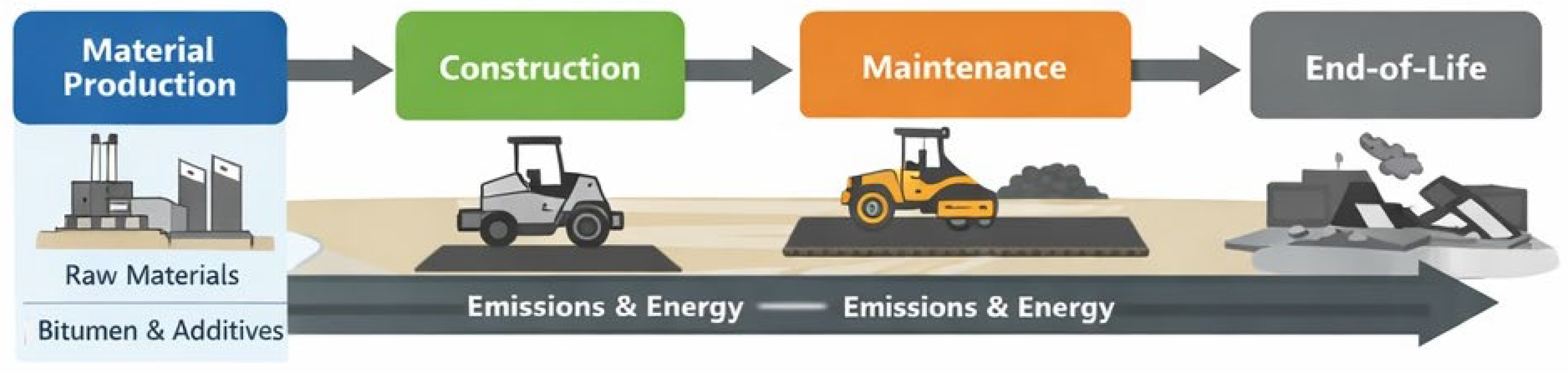
Figure 1 illustrates the system boundaries considered in this study. The life cycle of the pavement is divided into four main stages:
Material production includes the extraction and processing of raw materials, bitumen production, aggregate production, CR processing from end-of-life tires, and the production of WMA additives. Construction covers asphalt mixture production, transportation to the construction site, paving, and compaction. Maintenance includes all scheduled interventions required to ensure pavement functionality over its service life. End-of-life consists of milling operations, transportation of reclaimed materials, and disposal or recycling processes.
Both pavement alternatives are assumed to be constructed with identical structural layers, except for the asphalt wearing course, which differs in composition and production technology.
2.3. Pavement Structure and Mixture Design
The pavement structure analyzed in this study consists of a wearing course, binder course, base course, and sub-base layer, representative of a conventional flexible pavement used in medium-traffic road applications.
The CR-modified asphalt mixture considered in this study is produced using the dry process, whereby crumb rubber is added directly to the asphalt mixture during mixing, rather than being pre-blended with the bitumen. Consequently, the binder used in the CR + WMA pavement corresponds to a conventional bitumen interacting with crumb rubber particles within the mixture.
The CR content in the CR + WMA wearing course is 15% by weight of the binder, which is within the range commonly reported in the literature to achieve enhanced pavement performance.
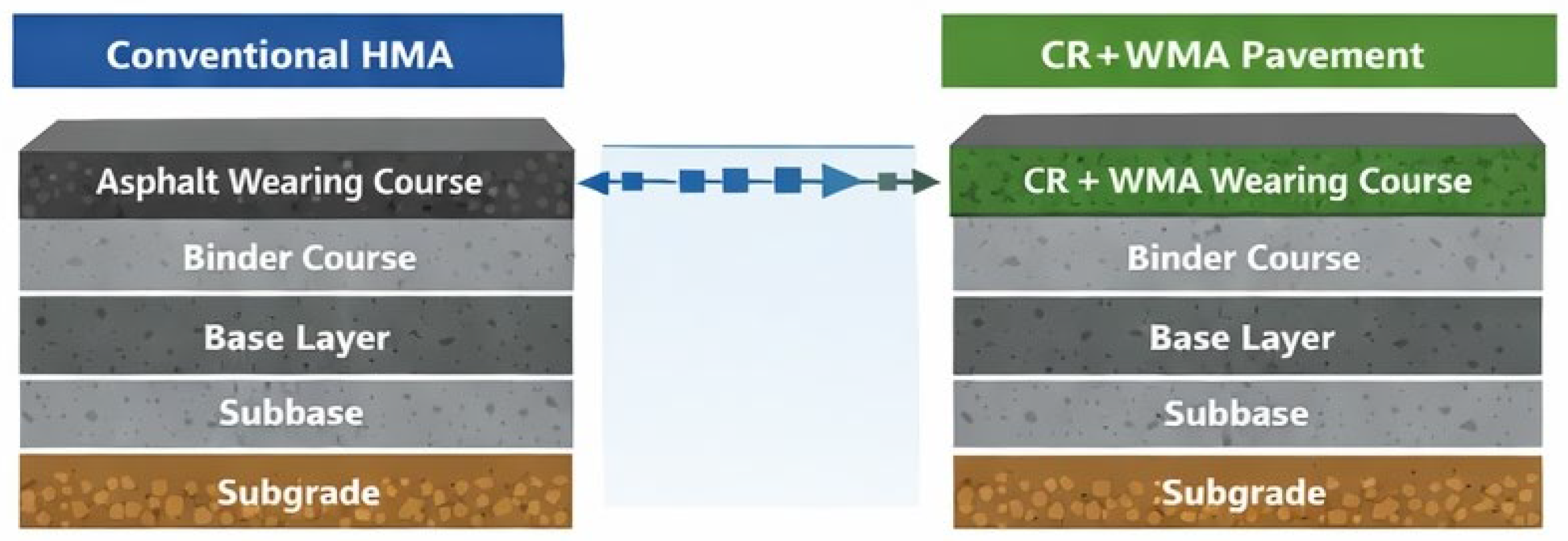
Figure 2 presents the pavement structures of each pavement, showing identical structural layers for both alternatives except for the wearing course. The wearing course considered in this study has a thickness of 5 cm, the binder course had a thickness of 7 cm and the base layer had a thickness of 13 cm, all representative of conventional layers used in medium-traffic flexible pavements.
Both pavement alternatives share the same structural configuration, differing only in the composition and production technology of the wearing course.
The conventional pavement employs an HMA wearing course, while the alternative solution incorporates a CR-modified asphalt produced with a WMA additive (CR + WMA), and this can be observed in
Table 1.
A conventional 50/70 penetration-grade bitumen was used as the base binder for both pavement alternatives. In the CR + WMA mixture, crumb rubber is incorporated using the dry process, while the same base bitumen is employed in the conventional HMA mixture, and a chemical WMA additive was used to reduce mixing and compaction temperatures.
The parameters reported in
Table 1 represent design assumptions and production conditions used as inputs for the LCA model, based on literature data and common engineering practice. They do not correspond to average experimental measurements and are therefore not associated with sample size or statistical dispersion.
These parameters do not correspond to laboratory or field experimental measurements, nor are they associated with statistical variability. Their purpose is to define representative and consistent scenarios for the life cycle assessment, enabling a transparent comparison between pavement alternatives under typical design and production conditions.
2.4. Maintenance Scenarios and Service Life
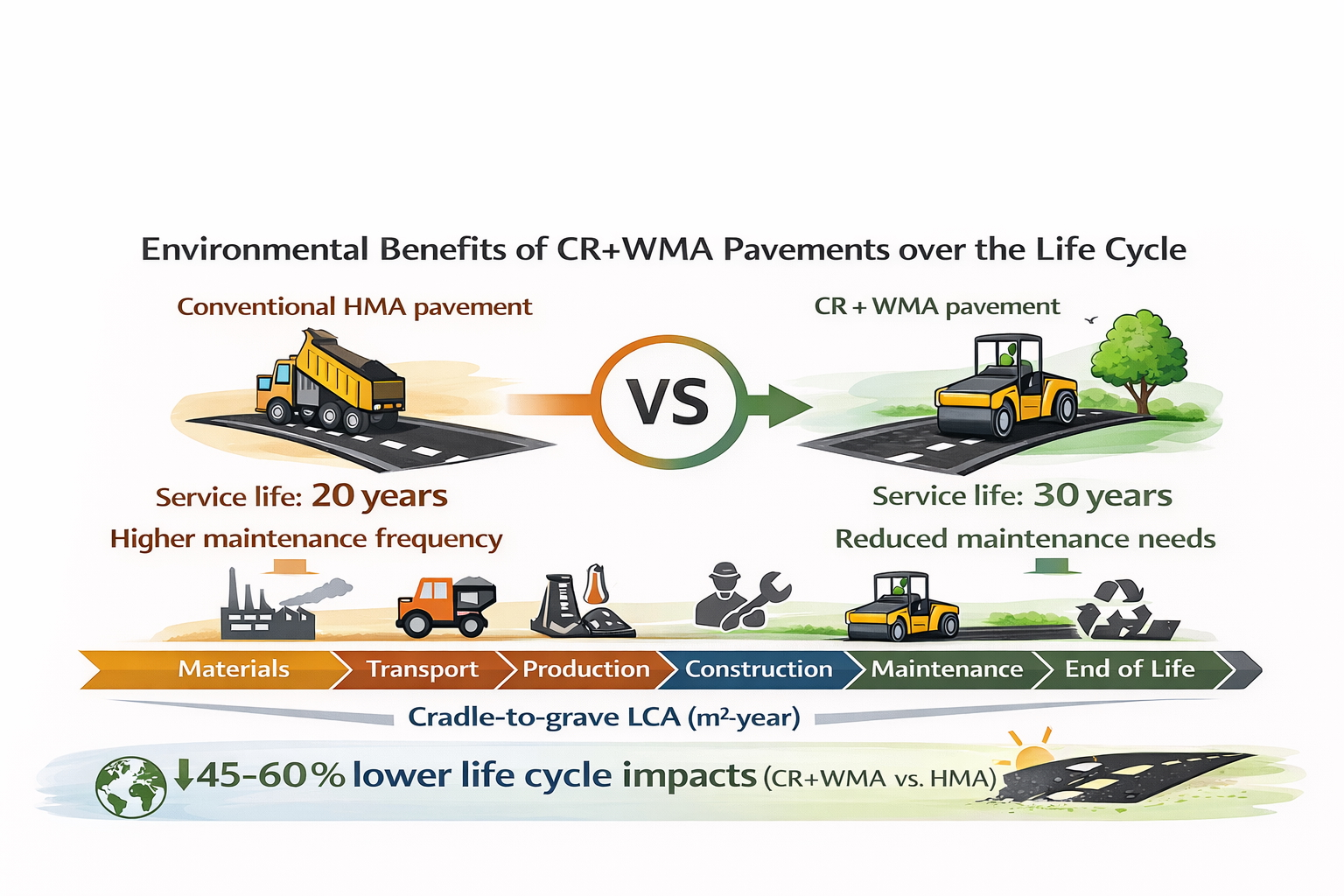
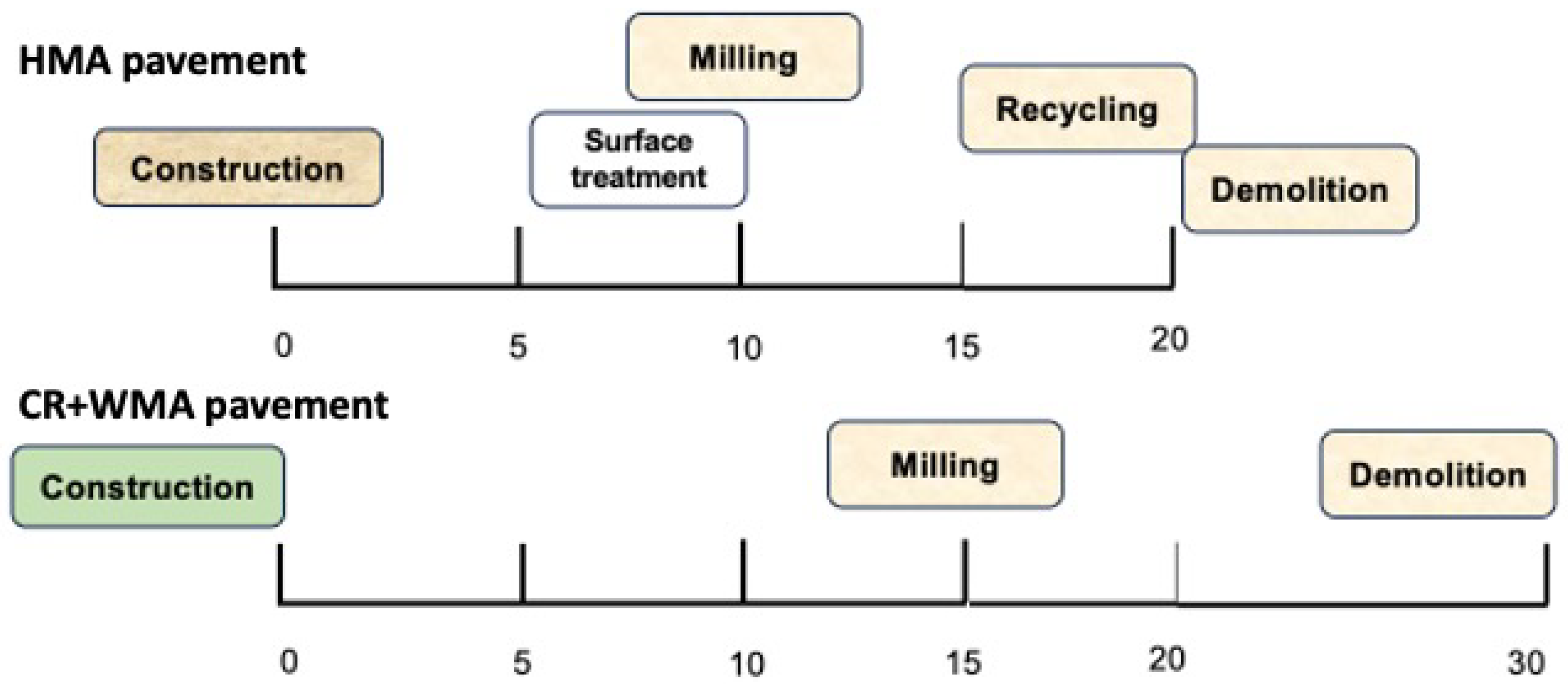
Pavement maintenance is explicitly modeled in the LCA to reflect realistic long-term performance differences between the two alternatives. Based on literature evidence and engineering practice, the service life of the conventional HMA pavement is assumed to be 20 years, while the CR + WMA pavement is assumed to have an extended service life of 30 years.
The maintenance assumptions adopted for the CR + WMA pavement are supported by both experimental and long-term field evidence reported in the literature. Laboratory studies have consistently shown that crumb rubber-modified asphalt mixtures exhibit significantly improved fatigue resistance compared to conventional HMA mixtures, which is commonly associated with extended structural service life and reduced deterioration rates. In particular, Souliman and Eifert [
25] reported fatigue lives for asphalt rubber mixtures several times higher than those of conventional HMA, based on laboratory fatigue testing and mechanistic analyses.
In addition, long-term field investigations have confirmed the enhanced durability of crumb rubber asphalt surface layers under real traffic and environmental conditions. Picado-Santos et al. [
19] evaluated the in-service performance of a crumb rubber asphalt pavement after eight years of traffic and reported very limited surface deterioration and no need for surface treatments during the observation period. Based on this experimental and field evidence, surface treatments were not included in the CR + WMA maintenance scenario within the analyzed service life horizon.
This longer service life is supported by studies reporting improved resistance to cracking and fatigue in CR-modified asphalt mixtures, which translates into fewer maintenance interventions and delayed rehabilitation operations over the pavement life cycle. Accordingly, the 30-year service life considered for the CR + WMA pavement represents a relative extension compared to conventional HMA pavements, rather than an assumption of the absence of aging or deterioration processes, which are explicitly accounted for through the maintenance scenarios included in the assessment.
Maintenance activities include surface treatments and milling operations, scheduled at different intervals depending on the pavement type. Although crumb rubber-modified binders are also subject to aging over time and therefore still require routine maintenance activities, the reduced frequency of maintenance interventions for the CR + WMA pavement reflects its improved resistance to cracking and fatigue reported in previous studies. These differences in maintenance requirements are explicitly considered in the life cycle assessment and play a key role in the environmental benefits observed for the CR + WMA pavement.
All maintenance activities are included within the system boundaries and allocated to the functional unit using the m
2·year normalization approach. Considering a road life span of 20 and 30 years for the conventional and the CR + WMA pavement, respectively, the time for the construction, rehabilitation operations, and demolition for each of the pavements studied are described in
Figure 3.
2.5. Life Cycle Inventory and Impact Assessment
Life cycle inventory data were compiled from three main sources. Primary data were defined by the authors and include pavement structure, mixture composition, production and compaction temperatures, transportation distances, maintenance schedules, and service life assumptions. Literature-based data were used to support durability-related assumptions and maintenance modeling. Secondary background data for energy supply, raw material production, and transport processes were obtained from established life cycle databases and applied consistently to both pavement alternatives. The life cycle assessment was conducted using SimaPro LCA software (version 9.6.1).
Crumb rubber derived from end-of-life tires was modeled as a secondary material. No upstream environmental burdens associated with tire manufacturing were allocated to the crumb rubber. However, the processing stages required to obtain crumb rubber, including tire shredding, grinding, and subsequent transportation to the asphalt plant, were explicitly included in the life cycle inventory.
Environmental impacts were calculated using the environmental footprint (EF) 2.0 method [
26,
27,
28] at the midpoint characterization level, considering sixteen impact categories, including climate change (kg CO
2 eq), ozone depletion (kg CFC-11 eq), ionizing radiation (kBq U-235 eq), photochemical ozone formation (kg NMVOC eq), respiratory inorganics (disease incidence), human toxicity (CTUh), acidification (mol H
+ eq), eutrophication (freshwater, marine, and terrestrial), freshwater ecotoxicity (CTUe), land use (Pt), water scarcity (m
3 deprivation), and resource use (energy carriers in MJ, and minerals and metals in kg Sb eq). Characterization factors defined by the European Commission were applied in accordance with ISO 14040/44 standards. No weighting or aggregation of impact categories was performed, in order to preserve transparency and avoid subjective value judgments in the comparison of pavement alternatives.
It is important to note that all environmental indicators reported in this study are model-based results derived from life cycle impact assessment (LCIA) calculations and not directly measured quantities. Impact category results (e.g., climate change, ozone depletion, photochemical ozone formation) were obtained by applying EF 2.0 characterization factors to the life cycle inventory flows, in accordance with ISO 14040/44 standards.
3. Results and Discussion
The results presented in this section correspond to normalized LCIA outcomes calculated using the EF 2.0 method and should be interpreted as comparative environmental indicators rather than measured emissions.
Building on the defined scope and life cycle inventory, this section presents the quantified environmental impacts for both pavement systems and interprets these results across all impact categories. The analysis emphasizes key drivers of impacts and highlights the reductions achieved through the incorporation of CR and WMA technologies.
3.1. Life Cycle Environmental Impacts
Table 2 presents the normalized environmental impacts of the conventional HMA pavement and the CR + WMA pavement across the sixteen midpoint impact categories considered in the environmental footprint (EF) 2.0 method. Results are expressed per functional unit of 1 m
2·year.
Table 3 shows the relative reduction in environmental impacts achieved by the CR + WMA pavement compared to the conventional HMA pavement.
Across all impact categories, the CR + WMA pavement shows a substantially lower environmental footprint than the conventional HMA alternative. Reductions range from approximately 45% to 60%, depending on the impact category. The most significant improvements are observed in climate change, fossil resource use, and energy-related impact categories, reflecting the combined effects of reduced production temperatures and partial substitution of virgin bitumen with recycled CR.
These results indicate that the integration of recycled materials and warm mix technology can deliver consistent environmental benefits when evaluated over the full life cycle of the pavement.
3.2. Contribution Analysis by Life Cycle Stage
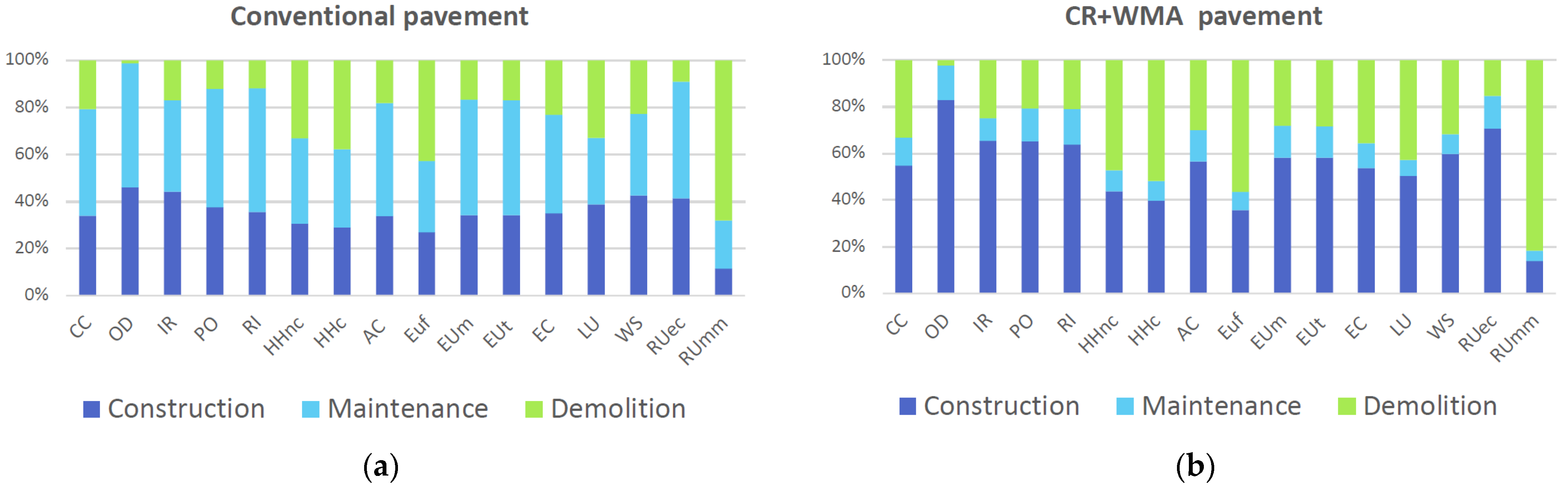
The percentages shown in
Figure 4 correspond to a contribution analysis by life cycle stage, in which the environmental impacts associated with each stage (material production, construction, use and maintenance, and end-of-life) are calculated separately and then normalized with respect to the total life cycle impact for each EF midpoint category. The resulting values therefore represent the relative contribution of each stage to the overall environmental impact and allow for a direct comparison between pavement alternatives.
Although material production and construction activities are presented as a combined stage in
Figure 4 for clarity, material production processes account for the largest share of impacts within this stage, consistently dominating the contribution across most EF midpoint categories.
For both alternatives, the construction stage represents a major contributor in most impact categories, reflecting the relevance of material production and asphalt mixture manufacturing. However, clear differences emerge in the relative importance of maintenance and end-of-life stages. In the conventional pavement, maintenance activities account for a substantial share of the impacts, particularly in several energy and resource-related categories, highlighting the influence of more frequent interventions over the service life. In contrast, the CR + WMA pavement shows a consistently lower contribution from maintenance, which can be attributed to reduced maintenance needs reported for rubberized pavements and to differences in maintenance-related contributions when impacts are normalized per m2·year.
End-of-life contributions are generally comparable between the two alternatives, although they become dominant in specific impact categories, indicating the relevance of demolition-related processes. Overall, the results emphasize the importance of explicitly accounting for maintenance and service life when assessing the environmental performance of pavement systems.
3.3. Influence of Service Life and Maintenance
The influence of service life assumptions on the normalized environmental impacts is determined by expressing the total life cycle environmental burdens relative to the functional unit of one square meter of pavement per year of service (m2·year). A longer service life results in a lower annualized environmental impact, as construction, maintenance, and end-of-life processes are distributed over a longer operational period.
In this study, differences in service life between the pavement alternatives are reflected through distinct maintenance and rehabilitation schedules, which directly affect the cumulative impacts and their normalization. The resulting normalized values therefore capture the combined effect of service life extension and reduced maintenance frequency rather than representing an arbitrary adjustment of the results.
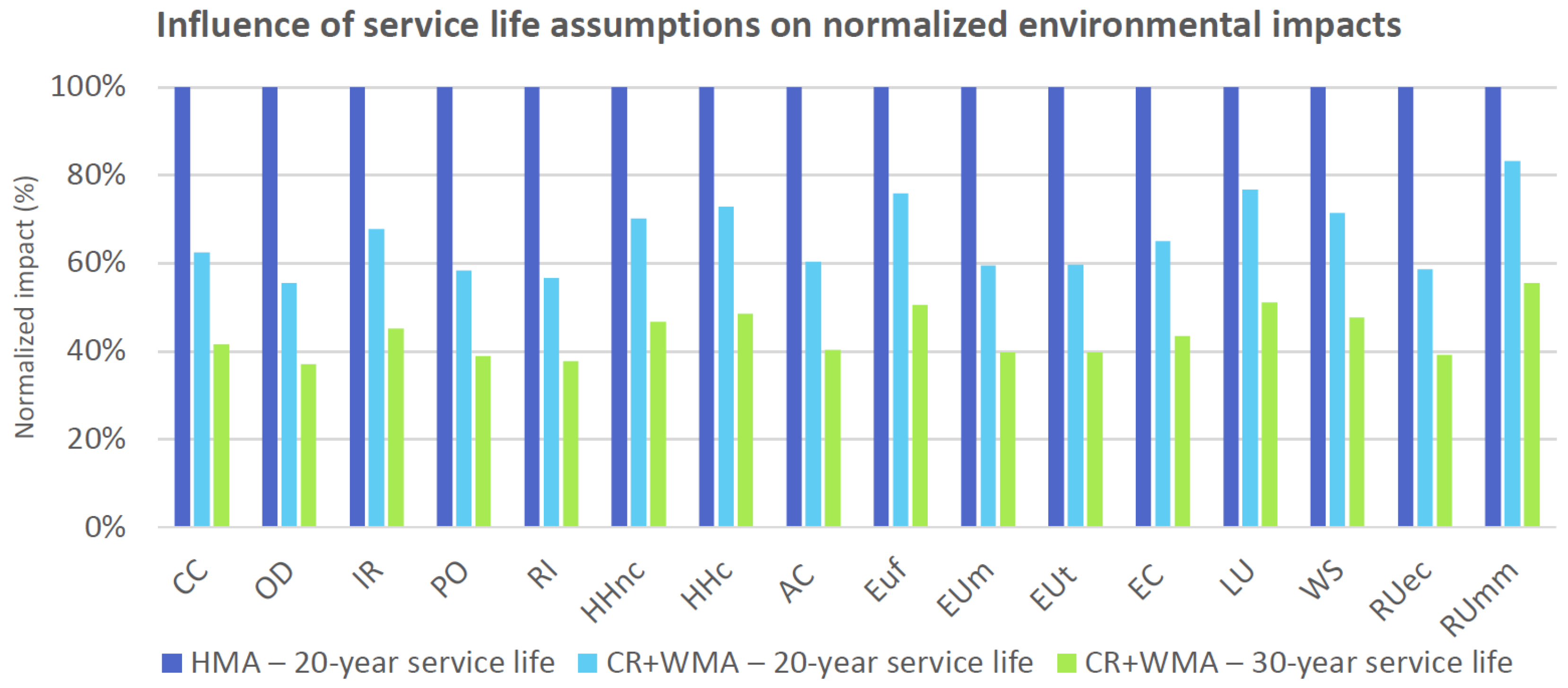
Figure 5 illustrates the influence of service life assumptions on the normalized environmental impacts of the pavement alternatives. Results are expressed per m
2 and year and are normalized with respect to the conventional HMA pavement with a 20-year service life, which is used as the reference scenario (100%).
When identical service lives are assumed for both pavements (20 years), the environmental differences between the alternatives are reduced; however, the CR + WMA pavement consistently exhibits lower impacts across all midpoint categories. Under this scenario, the observed reductions are associated with a combination of factors, including lower production temperatures enabled by WMA technology, the partial substitution of virgin bitumen with recycled CR during the construction phase, and both a reduced number of maintenance operations and the distribution of life cycle impacts over a longer service life when results are expressed per m2·year
By contrast, when realistic service life assumptions are applied—20 years for the conventional HMA pavement and 30 years for the CR + WMA pavement—the environmental advantages of the CR + WMA solution become markedly more pronounced across all impact categories. The extended service life distributes the environmental impacts associated with construction, maintenance, and end-of-life processes over a longer time horizon, resulting in lower impacts per functional unit (m2·year) and consequently reduced energy use, material consumption, and associated emissions when expressed on an annual basis.
Overall, these results emphasize the critical importance of durability and maintenance in pavement life cycle assessments. Assuming identical service lives or neglecting maintenance-related processes can result in a systematic underestimation of the environmental benefits of advanced pavement technologies. The adoption of a functional unit expressed as m2·year enables a consistent and transparent comparison between alternatives with different service lives and ensures that long-term performance effects are appropriately captured in the environmental assessment.
3.4. Comparison with the Existing Literature
The results obtained in this study are consistent with previous LCA studies on rubberized asphalt and WMA technologies, which report reductions in energy consumption and GHG emissions when recycled materials and lower production temperatures are applied. However, many existing studies are limited to cradle-to-gate system boundaries or assume identical service lives for different pavement alternatives.
By adopting a cradle-to-grave perspective and explicitly incorporating maintenance and service life differences, the present study provides a more comprehensive assessment of long-term environmental performance. The magnitude of the reductions observed in this work highlights the critical role of durability and maintenance in determining the environmental footprint of road pavements.
In addition, from an LCA perspective, a sensitivity analysis on the CR content was conducted, showing that moderate increases or decreases in CR dosage around 15% by weight of the binder do not significantly affect the overall environmental results. This is because the energy demand associated with crumb rubber processing (grinding) and transportation to the asphalt plant represents a very small contribution to total life cycle impacts, whereas the reduction in maintenance frequency and the extension of pavement service life remain the dominant factors driving the environmental benefits observed in this study.
While CR + WMA technologies offer well-documented durability and environmental advantages, their successful application requires appropriate mixture design and structural pavement design to ensure adequate load-bearing performance under specific traffic conditions. These aspects are beyond the scope of the present life cycle assessment.
One aspect frequently cited in the literature as a disadvantage of asphalt rubber pavements is the generation of fumes and odors during mixing and paving operations, particularly in conventional wet-process asphalt rubber produced at high temperatures. In the pavement configuration analyzed in this study, this issue is explicitly addressed through the combined use of dry-process crumb rubber incorporation and warm mix asphalt (WMA) technology. The lower mixing and compaction temperatures associated with WMA significantly reduce emissions, visible fumes, and odors during paving, thereby improving working conditions for construction crews. Consequently, the CR + WMA system analyzed mitigates one of the main practical concerns traditionally associated with asphalt rubber pavements.
In addition, it must be noted that pavement performance may be influenced by local climatic conditions, particularly in cold regions where low-temperature cracking mechanisms differ from those in warmer climates. When adequately designed, crumb rubber-modified asphalt has been shown to perform satisfactorily at low temperatures; however, further research based on long-term field data is needed to assess the behavior of CR + WMA pavements under different climatic conditions, including cold regions.
4. Conclusions
This study presented a comprehensive cradle-to-grave life cycle assessment (LCA) of an asphalt pavement incorporating recycled tire crumb rubber and a warm mix asphalt additive (CR + WMA), compared with a conventional hot mix asphalt (HMA) pavement. The assessment explicitly considered material production, construction, maintenance, and end-of-life stages, as well as different pavement service life scenarios, using a functional unit expressed as 1 m2·year.
The results demonstrate that the CR + WMA pavement consistently outperforms the conventional HMA alternative across all sixteen midpoint impact categories considered. When identical service lives are assumed for both pavements, the CR + WMA solution still exhibits lower environmental impacts, due to lower production temperatures, the incorporation of recycled crumb rubber, reduced maintenance needs, and the distribution of life cycle impacts over an extended service life when expressed per m2·year.
When a longer service life is considered for the CR + WMA pavement, the environmental advantages become substantially more pronounced. Distributing the life cycle impacts associated with construction, maintenance, and end-of-life processes over a longer time horizon results in significantly lower environmental impacts per m2 and year. This finding highlights the importance of durability as a key parameter influencing the long-term environmental performance of pavement systems.
Overall, the study emphasizes that assumptions regarding service life and maintenance play a critical role in pavement LCAs. Analyses that assume identical lifespans or neglect the temporal dimension of maintenance may systematically underestimate the environmental benefits of advanced pavement technologies. By adopting a cradle-to-grave perspective and a time-normalized functional unit, this work provides a more realistic basis for comparing pavement alternatives with different durability characteristics and supports more informed decision-making in sustainable road infrastructure design.
While the results of this study provide a robust comparative assessment of the environmental performance of CR + WMA and conventional HMA pavements within a cradle-to-grave LCA framework, further research could build upon this work by refining service life and maintenance assumptions using site-specific field data and by exploring a wider range of traffic and climatic conditions. In addition, future studies may incorporate uncertainty and sensitivity analyses to further investigate the influence of key modeling parameters on the environmental outcomes. Such developments would contribute to strengthening the evidence base for the long-term environmental benefits of rubberized warm mix asphalt pavements and support their broader implementation in different road contexts.