3.1. Microstructure and Defect Characteristics of As-Deposited Coatings
The material properties and microstructural features of coatings can substantially affect the abrasive–surface interaction and, consequently, the material removal behavior during drag finishing. In this study, a NiCrAlYSi bond coat was deposited by multi-arc ion plating, while columnar-structured YSZ and modified GZO ceramic topcoats were fabricated via EB-PVD. These three coatings, exhibiting pronounced differences in both intrinsic material properties and microstructural architectures, were employed to investigate surface morphology evolution and defect characteristics during drag finishing.
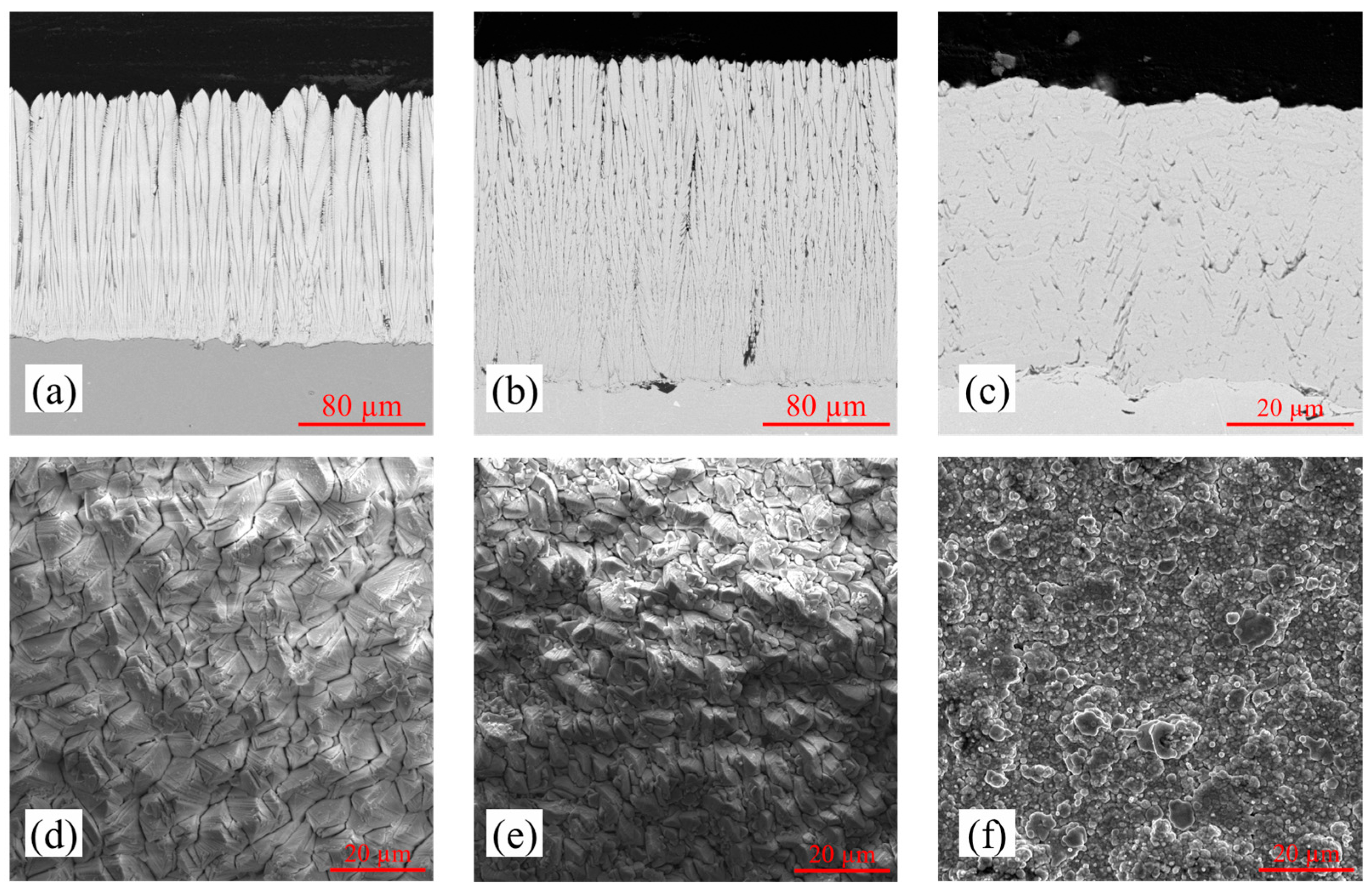
Figure 2 presents the as-deposited surface and cross-sectional morphologies of the NiCrAlYSi bond coat and the YSZ and modified GZO ceramic layers. The NiCrAlYSi bond coat shows an undulating surface, and its cross-section exhibits a typical metallic lamellar/stacked morphology, accompanied by a certain fraction of pores and local defects. Overall, this coating displays relatively high structural continuity and bulk compactness, with pores mainly appearing as isolated voids or locally clustered regions. The YSZ ceramic layer exhibits a columnar microstructure with columns extending outward from the interface; inter-column gaps and porosity constitute its dominant structural features. On the surface, column tips and local asperities are the primary contributors to roughness. In cross-section, the continuity of columns, the distribution of column widths, and the scale of inter-column gaps reveal marked heterogeneity, which underlies spatial variations in micro-scale structural integrity. The modified GZO topcoat is also columnar, yet differs from YSZ in column morphology, inter-column bonding, and defect distribution: the columns are generally wider, the surface shows fewer fine column-tip asperities and is instead characterized by more irregular protrusions, and the cross-section contains more pronounced inter-column gaps, porosity, and potential defects, indicating higher sensitivity in microstructural uniformity and local integrity. Therefore, although both YSZ and modified GZO are columnar ceramic topcoats, differences in column scale, defect morphology, and spatial distribution are expected to lead to distinct surface morphology evolution pathways during drag finishing.
Overall, distinct microstructural disparities are evident among the three coatings prior to drag finishing. The NiCrAlYSi bond coat exhibits a characteristic lamellar/stacked architecture, with pores distributed mainly as isolated voids or localized clusters, reflecting comparatively high structural continuity and overall densification. In contrast, both the YSZ and the modified GZO topcoats are dominated by a columnar microstructure, where inter-column gaps and pores constitute the primary heterogeneities; moreover, discernible differences exist between the two ceramics in terms of column scale, morphological integrity, and the spatial distribution of defects. This pre-finishing microstructural comparison provides a clear structural reference and an essential basis for interpreting subsequent differences in surface morphology evolution, defect response, and the associated variations in statistically derived roughness parameters across different coatings.
3.2. Surface Morphology Changes in Coatings Under the Action of a Single Large-Sized Abrasive
To establish the fundamental response of ceramic topcoats during drag finishing, spherical alumina abrasives with a diameter of 3 mm were first used to finish YSZ and modified GZO coatings. As shown in
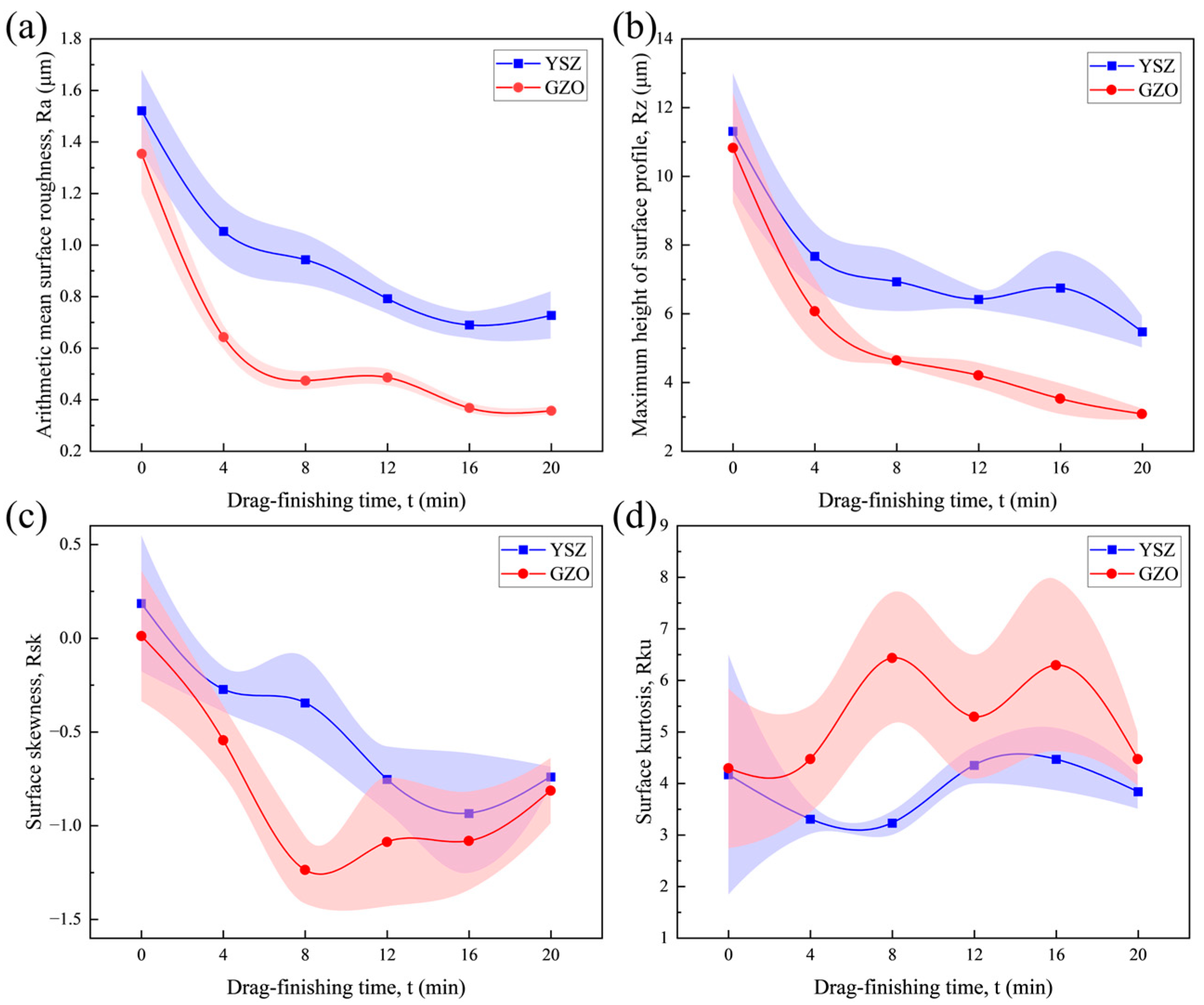
Figure 3, both types of ceramics exhibit an overall trend of decreasing roughness with time, but there are significant differences in processing uniformity and damage types. To comprehensively characterize the surface evolution of columnar EB-PVD coatings during finishing, Ra, Rz, Rsk, and Rku were used as roughness parameters, with the corresponding evolution curves shown in
Figure 3. Rz is used to reflect the variation in peak-to-valley values, while Rsk and Rku characterize the skewness and kurtosis of the height distribution, respectively, helping to distinguish between “peak-reduction leveling” and “damage-dominated” surface fluctuations. As shown in
Figure 3, after starting the finishing process, the Rsk value of modified GZO immediately becomes less than 0 and significantly larger than that of YSZ, indicating that its height distribution exhibits a more prominent “valley-dominated” negative skewness. At the same time, the Rku of modified GZO is much higher than that of YSZ, indicating that its surface height distribution has a stronger “heavy-tail” feature, where most areas tend to flatten, but still retain a few extreme features with large amplitudes, typically corresponding to deep pits or localized debris accumulation. This provides a statistical basis for the subsequent damage-dominated stage.
For YSZ, the surface mainly exhibits column tip flattening and local cutting planes after finishing, but several poorly processed areas can still be observed. The corresponding cross-sections also show insufficient removal in some areas, suggesting that single-particle abrasives have difficulty achieving equivalent coverage across all micro-regions on the significantly undulating columnar crystal surface, thereby introducing spatial non-uniformity. After 20 min of finishing, the average material removal for YSZ is approximately 1–3 μm, and the surface roughness is reduced to Ra ≈ 0.7 μm (
Figure 3). Combined with the evolution of Rz, Rsk, and Rku, YSZ mainly undergoes peak-reduction/leveling, but in some regions, the original surface features are retained, suggesting that its main bottleneck stems from insufficient local coverage rather than overall removal ability.
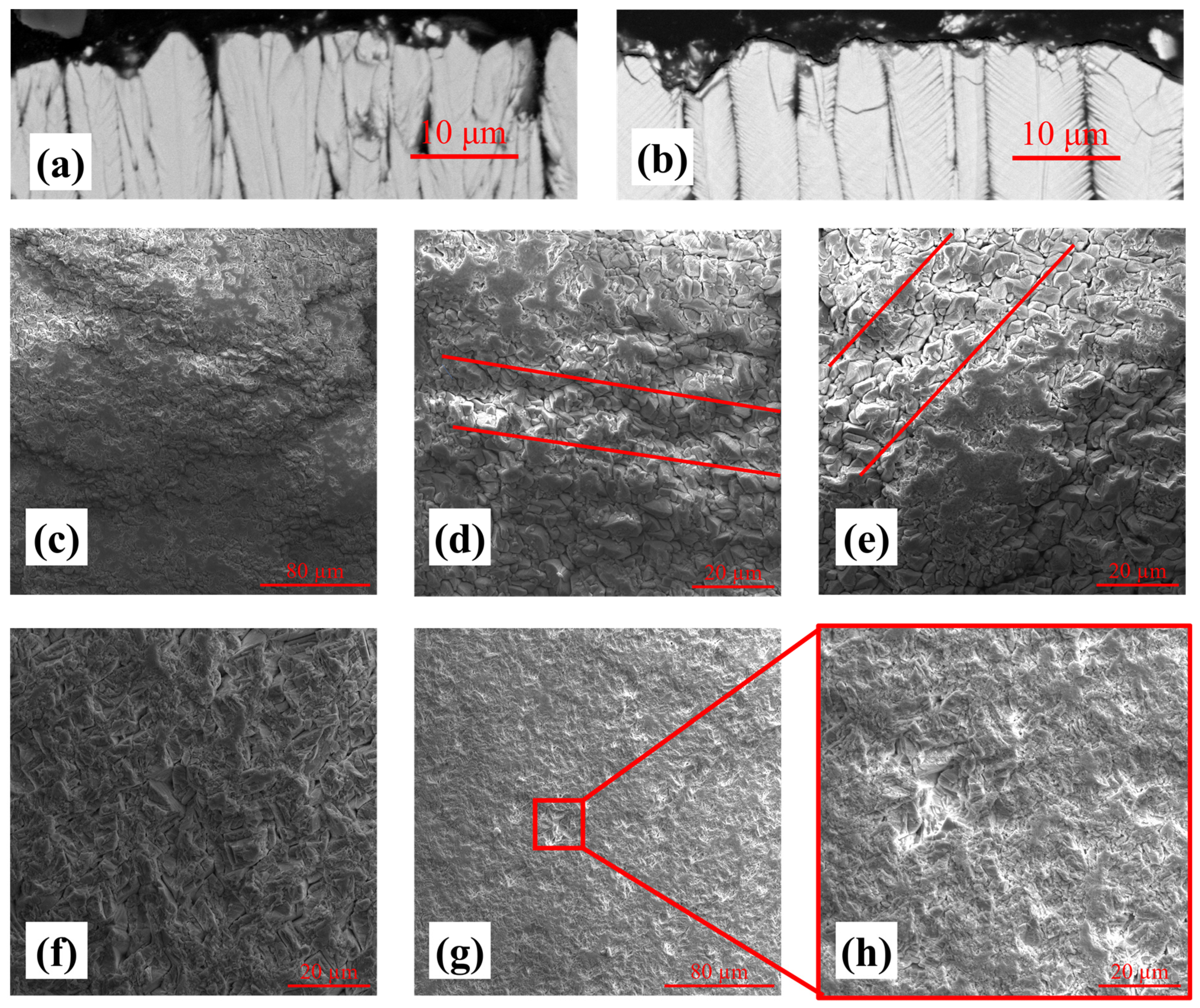
In contrast, the surface of modified GZO is more thoroughly processed, with significantly higher removal (over 5 μm). After 12–16 min of finishing, recognizable columnar crystal fracture/pull-out pits and fracture defects appear, and multiple inter-column cracks can be seen in the cross-section (
Figure 4b). In contrast, no similar inter-column cracks were observed in the YSZ cross-section (
Figure 4a), indicating intrinsic differences in their damage evolution pathways.
The finishing process of modified GZO uses a periodic reversal strategy, i.e., 2 min of clockwise rotation followed by 2 min of counterclockwise rotation, with a 4 min kinematic cycle. Based on a large number of repeated experimental results, the surface/cross-sectional evolution of modified GZO under this condition can be divided into three stages: (I) Rapid leveling stage (4–8 min), where the column tips are quickly removed in a short time, and the surface roughness significantly decreases, with few or no visible columnar pull-out and fracture defects; (II) Crack initiation and stable accumulation stage (8–12 min), where small micro-cracks start to be observed in the cross-section, but columnar pull-out remains rare, and the surface morphology shows minimal change compared to the 4–8 min stage; (III) Damage instability and pull-out dominated stage (12–16 min), where the cracks accumulated earlier begin to propagate, and a large number of pull-out defects are observed on the surface, along with a small amount of short continuous cutting planes. Based on the morphology criterion of “appearance of micro-cracks in the cross-section—significant increase in pull-out pits” and the trend of changes in Rz, Rsk, Rku, and other statistical parameters within this time window (
Figure 3), we identify 12–16 min as the characteristic time window for the transition of modified GZO from a “leveling-dominated” to a “damage/pull-out-dominated” phase.
Further comparison of the surface morphologies at different times for both YSZ and modified GZO (
Figure 4c–h) reveals that even after 16–20 min, YSZ retains many regions with the original surface morphology, whereas GZO shows little of the same “insufficiently processed area” at 4–8 min. Under these processing conditions, modified GZO has a wider column width, meaning the column tip characteristic scale is larger, and the individual column top is “wider,” making it more susceptible to normal impacts and triggering crack initiation. However, whether the cracks further propagate and evolve into columnar crystal fractures/pull-out removal is ultimately controlled by the material’s fracture toughness.
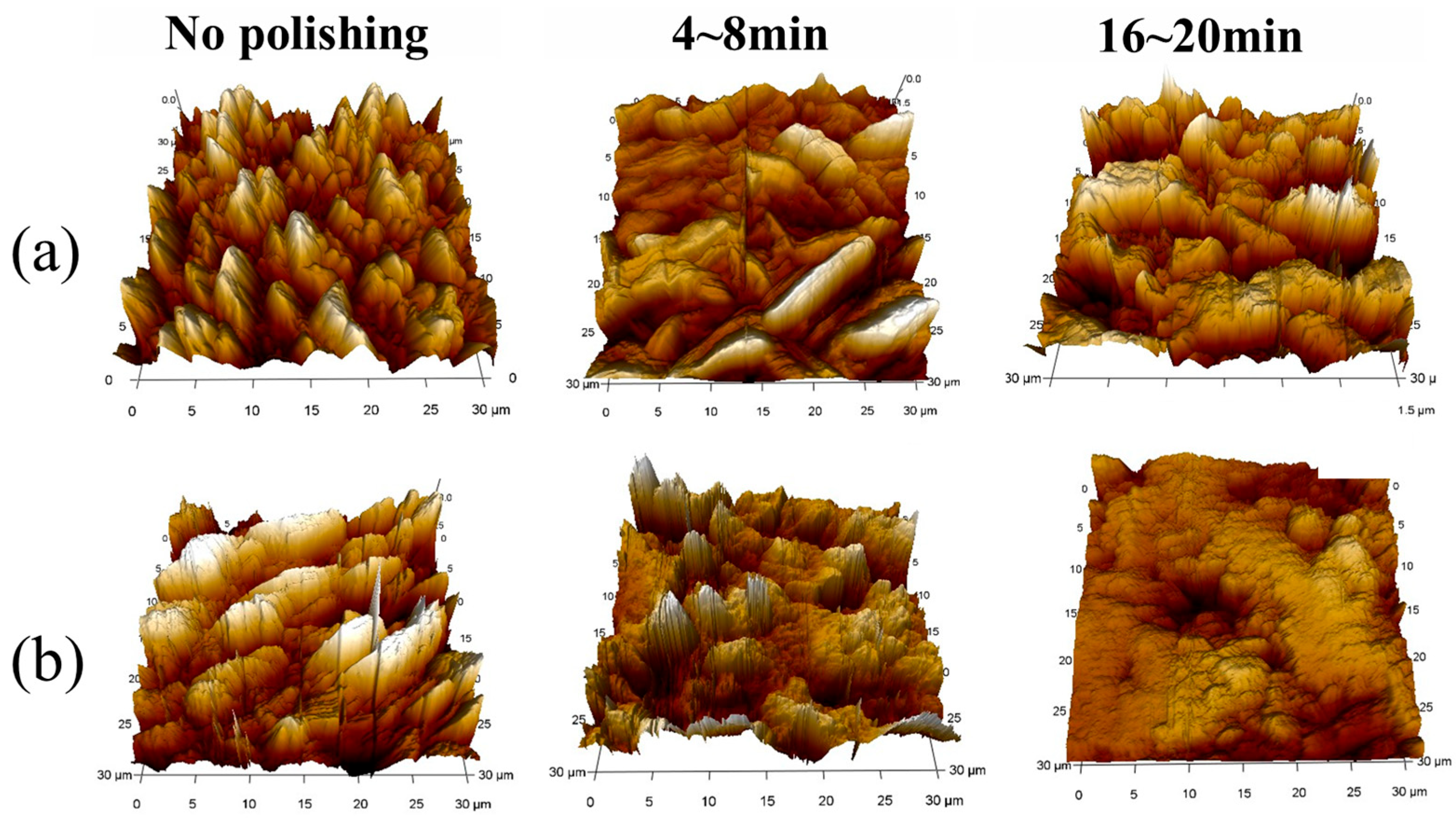
AFM was used to further analyze the micro-region morphology of the coatings: discrete micro-grooves/shallow micro-pits and local irregular undulations can still be identified in the areas of significantly reduced roughness for YSZ (
Figure 5a), while GZO shows more pronounced height-field discontinuities due to irregular cross-sections, debris accumulation, and pit defects (
Figure 5b). This difference is corroborated by the trends of changes in Rsk, Rku, and other height distribution statistical parameters, indicating a clear divergence in the “leveling-dominated” and “damage-dominated” evolutionary paths for the two materials.
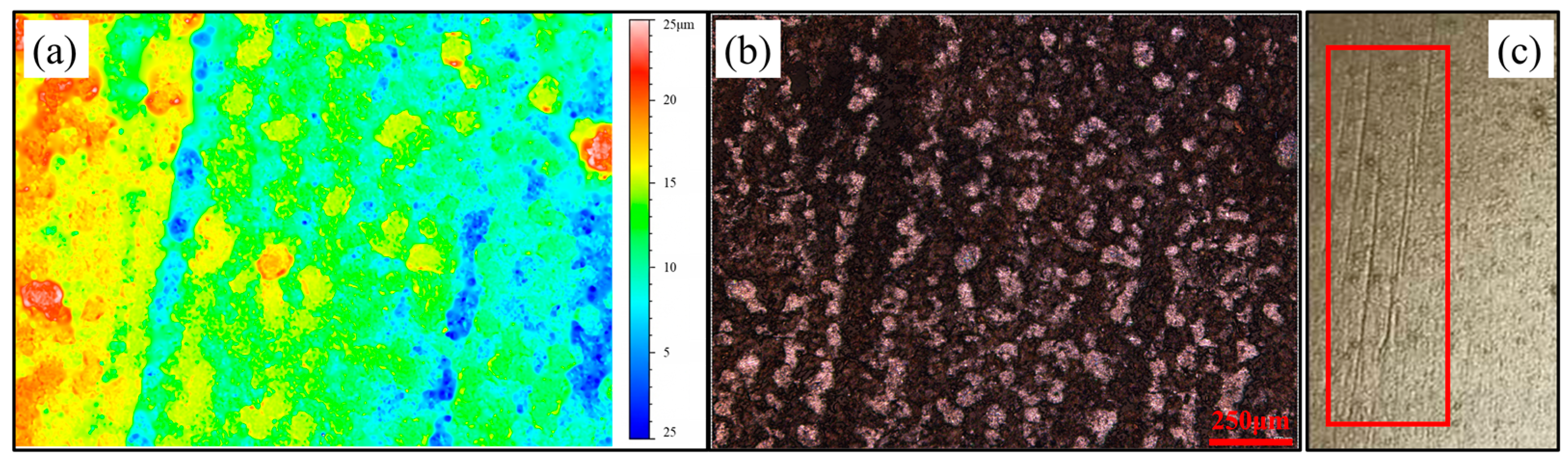
The results correspond to two core issues: first, the formation mechanism of inadequately processed areas in YSZ; second, why modified GZO, despite a more complete coverage, tends to experience excessive material removal and columnar crystal pull-out. To verify the contact state and load input characteristics, a relatively soft NiCrAlYSi bond coat was chosen as a reference sample, and the surface forces of samples of the same size were analyzed using DEM. Experimentally, under relatively “extreme” unidirectional rotation conditions, the bond coat was continuously polished for 20 min (without reversal), and surface grooves extending in specific directions appeared (
Figure 6), indicating that abrasive particle movement has a strong directional stability. Corresponding DEM results (
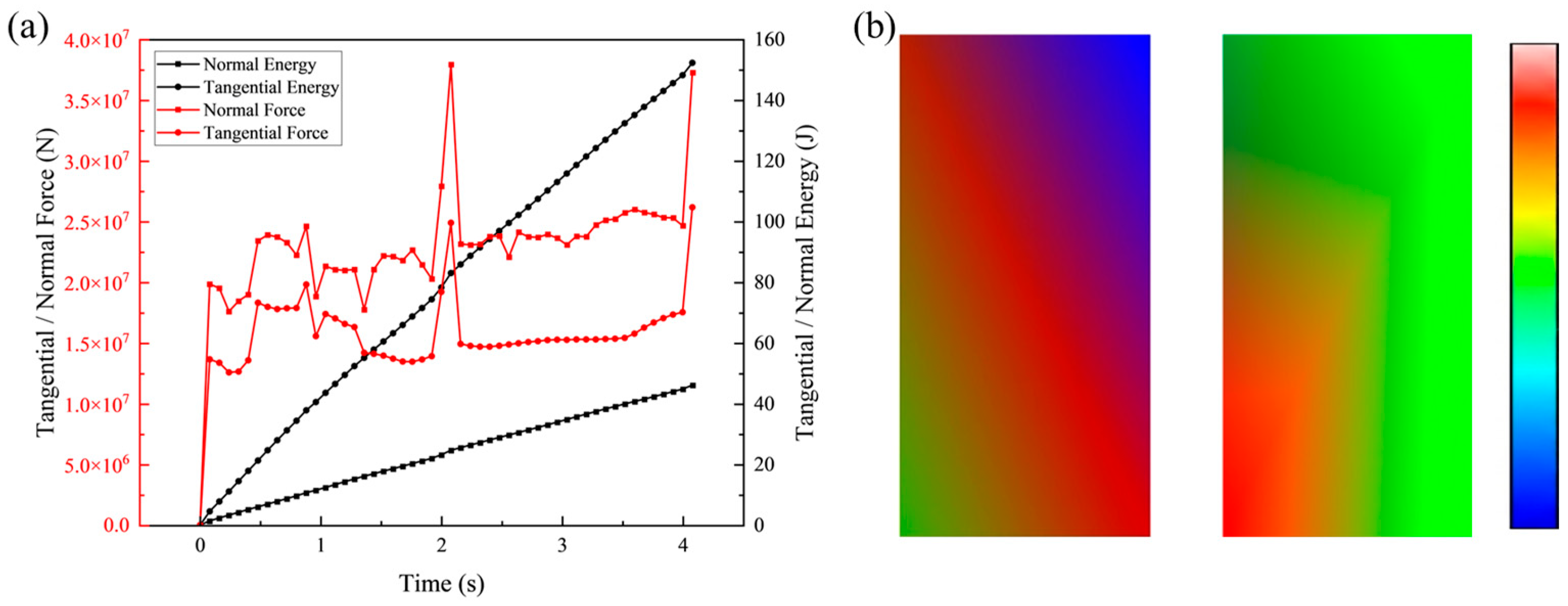
Figure 7) showed that under the combined rotational kinematics, abrasive particles on the specimen surface exhibited quasi-directional rolling/sliding trajectories, accompanied by about 0–30° of vertical offset. The areas with longer sliding paths had more concentrated contact, which easily led to the formation of directional grooves. Further, both simulation and experiment pointed to a stable source of spatial non-uniformity: abrasive particle clusters could form tight arrangements in local areas, and the unavoidable geometric gaps between particles would project stable low-contact-probability regions on the surface, resulting in spatial “shadowing effects” of material removal. This effect is particularly prominent under prolonged unidirectional rotation, presenting as continuous grooves in fixed directions that correspond to “unpolished/unprocessed” shadow bands, reflecting the local structure of the media and the “path memory” feature of abrasive motion.
In addition to the non-uniformity caused by abrasive contact, DEM force and energy statistics also indicate that drag finishing is not a “pure cutting” process: both tangential and normal loads occupy significant portions, and although normal forces have higher peaks, the accumulated tangential energy is still greater. This suggests that the contact process is primarily dominated by friction work input caused by sustained sliding, with a certain degree of normal collisions/indentations superimposed.
Such composite load input on relatively low-hardness, ductile metal surfaces usually manifests as continuous plowing and surface smoothing, without leading to fracture of structural units. However, for non-dense columnar ceramic topcoats, the fracture toughness of the material significantly modulates the micro-fracture and defect formation processes induced by normal impacts. Both YSZ and GZO have non-dense columnar structures, but YSZ has higher fracture toughness (about 1.8–4.5 MPa·m1/2), making the columns less likely to undergo large-scale fracture and pull-out under the same load input. Therefore, the removal process is mainly characterized by column tip flattening and localized cutting planes, with the primary issue being insufficient local coverage caused by the shadowing effect. In contrast, GZO has lower fracture toughness (about 1.0 MPa·m1/2), and the column width scale difference increases the loading characteristic of individual columns under normal impacts, making them more prone to micro-crack formation and expansion, thereby entering the damage-dominated stage earlier, resulting in higher material removal and stronger defect features. It should be noted that factors such as porosity, column spacing, and residual stress states may also contribute to the damage evolution process and affect the damage threshold and expansion rate. Within the scope of this study, based on the drastically different damage modes presented by the two coatings under similar load inputs, we believe that the difference in fracture toughness is one of the key controlling factors leading to the divergence in their material removal behavior.
Thus, under single-particle-size large-diameter spherical abrasives, the two ceramic topcoats exhibit differential removal behaviors: YSZ primarily involves limited peak shaving/smoothing, but localized insufficient polishing occurs due to abrasive particle packing and shadowing effects; modified GZO is more prone to micro-crack formation under normal impact, which evolves into columnar crystal fracture removal, resulting in excessive removal and an increased risk of over-polishing. This further indicates that tangential smoothing can be partially controlled by the process path, while normal impacts are harder to suppress, causing low-toughness ceramics to enter the damage-dominated stage earlier.
3.3. Surface Finishing Behavior Regulation Under Multi-Scale Abrasive Mixing Ratio
To mitigate the shadowing effect induced by monodisperse, large-size media on columnar surfaces and thereby improve finishing uniformity—while also reducing the risk of uncontrolled damage in low-fracture-toughness ceramics under normal-impact loading—a multiscale spherical media system with diameters of 1 mm and 3 mm was introduced. Three volume-fraction ratios (φ1 mm: φ3 mm = 2:8, 4:6, and 6:4) were employed to finish the YSZ and modified GZO coatings. The role of the multiscale media can be summarized in two aspects. First, the 1 mm particles can fill the interstices among the 3 mm spheres and access local micro-regions where large particles cannot stably engage, thereby increasing contact-point density, weakening low-contact-probability zones, and improving areal coverage. Second, the fine-scale multi-point contacts introduced by the smaller particles tend to promote tangential-scratching-dominated, stable removal, whereas the 3 mm particles maintain a certain level of normal load input and macroscopic shaping capability. Consequently, multiscale gradation provides an effective degree of freedom to tune the relative contributions of “cutting” versus “impact,” enabling a balance among removal efficiency, uniformity, and surface integrity.
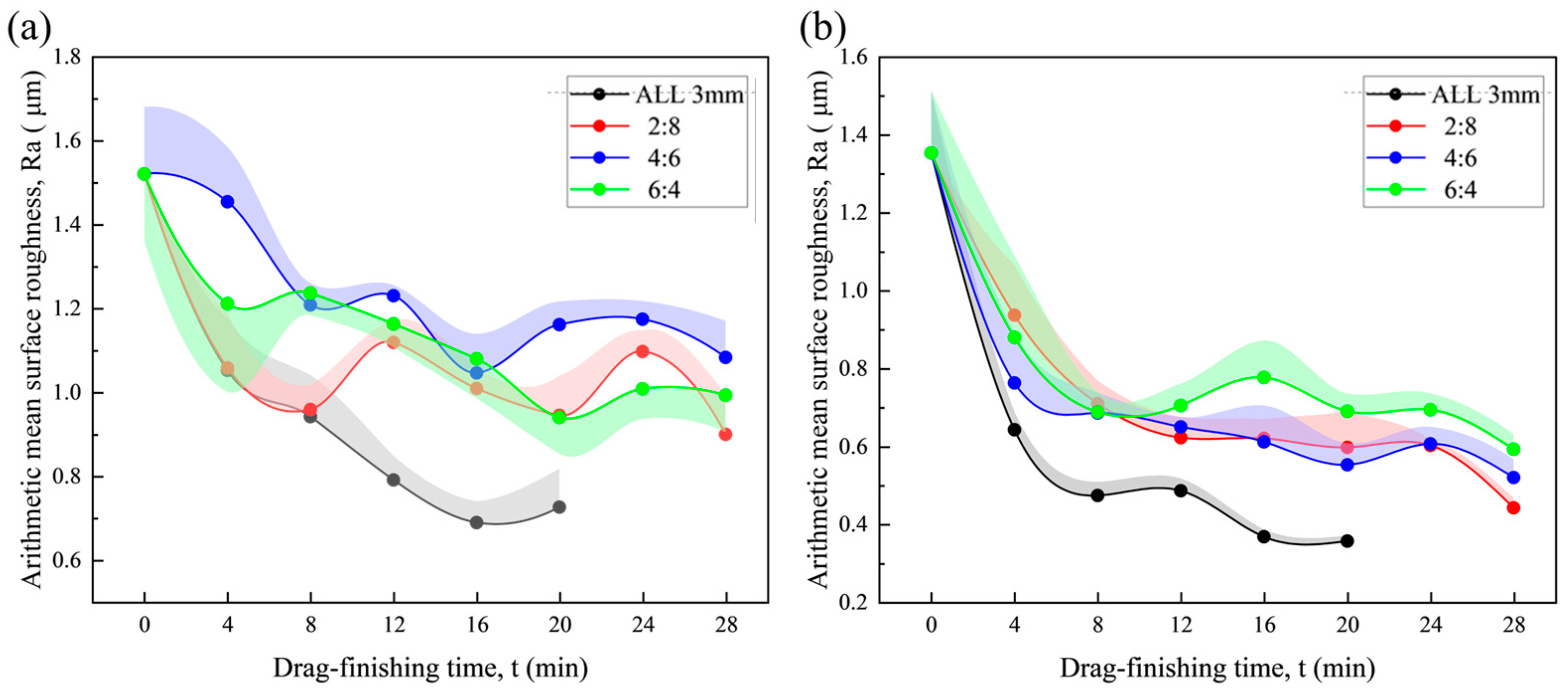
The roughness evolution directly reflects the removal-mode transition induced by media blending (
Figure 8). For YSZ, the 6:4 condition yields a near-linear decay with the most stable reduction process, whereas the 2:8 and 4:6 groups exhibit more pronounced fluctuations without a consistent rate advantage. In contrast, the modified GZO curves are overall smoother; however, as the fraction of 1 mm particles increases, the roughness-reduction rate becomes progressively suppressed, suggesting a shift from “impact-driven rapid removal” toward “cutting-dominated gradual planarization.” Consistently, the surface-morphology comparisons (
Figure 9,
Figure 10 and
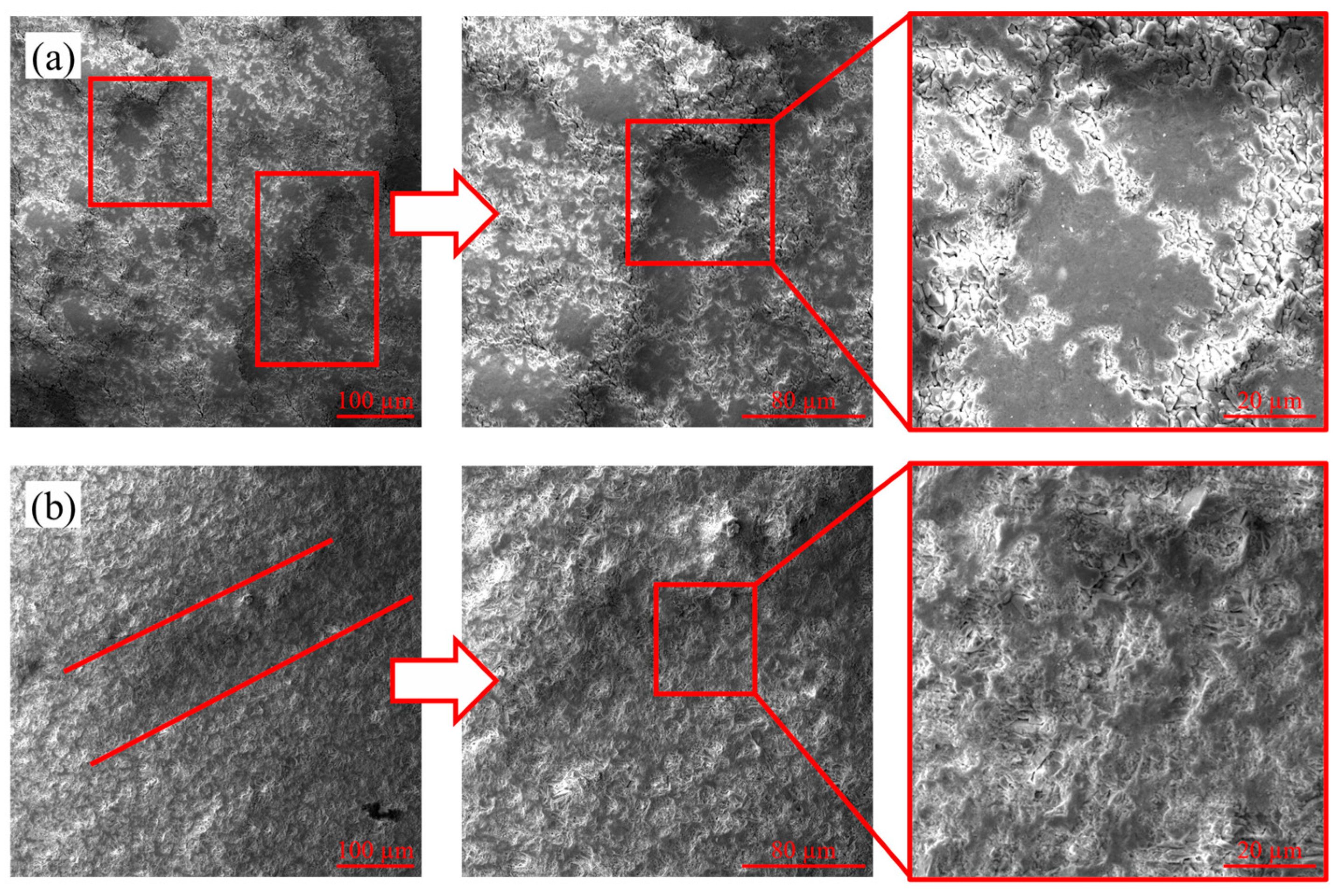
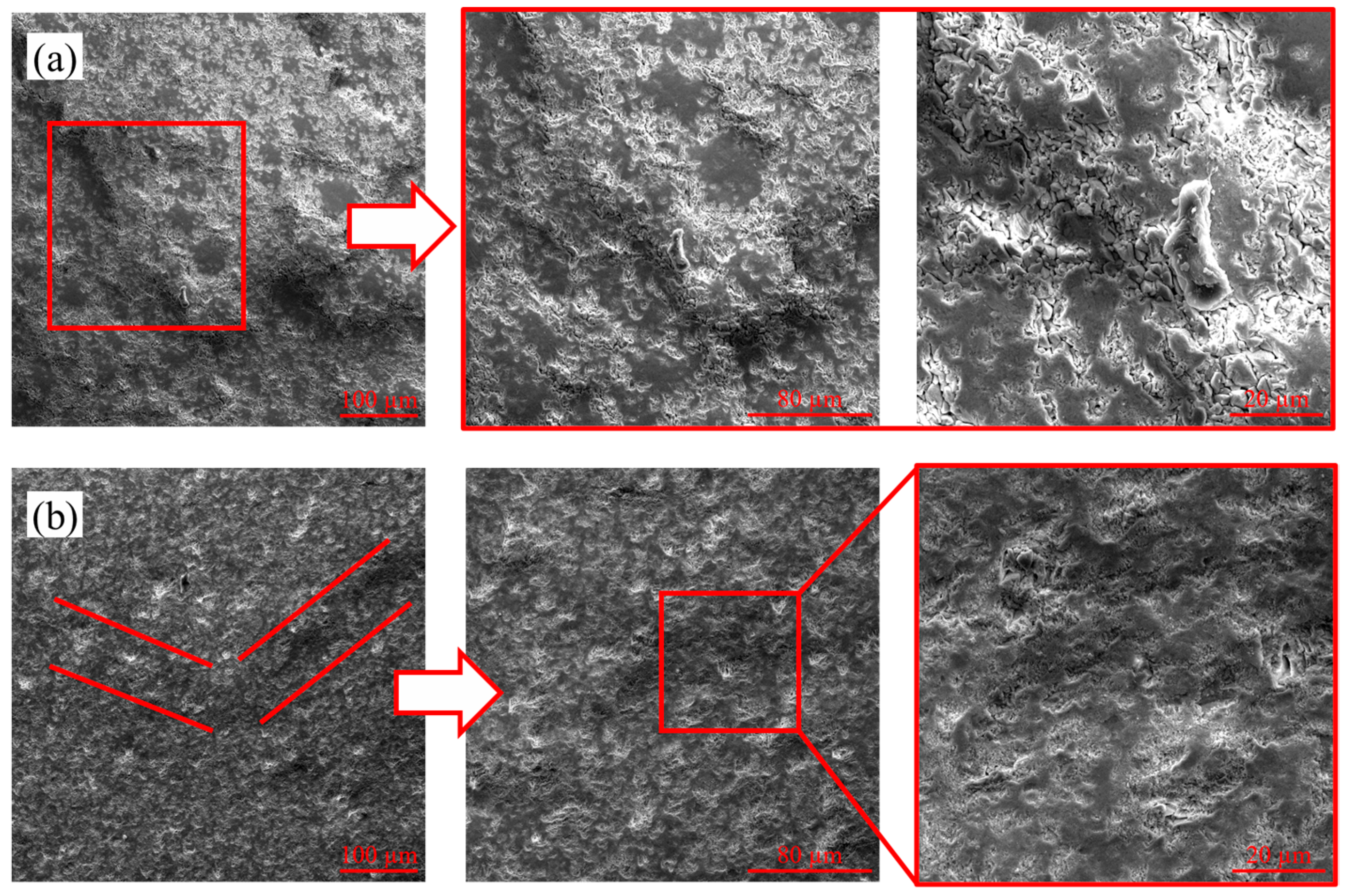
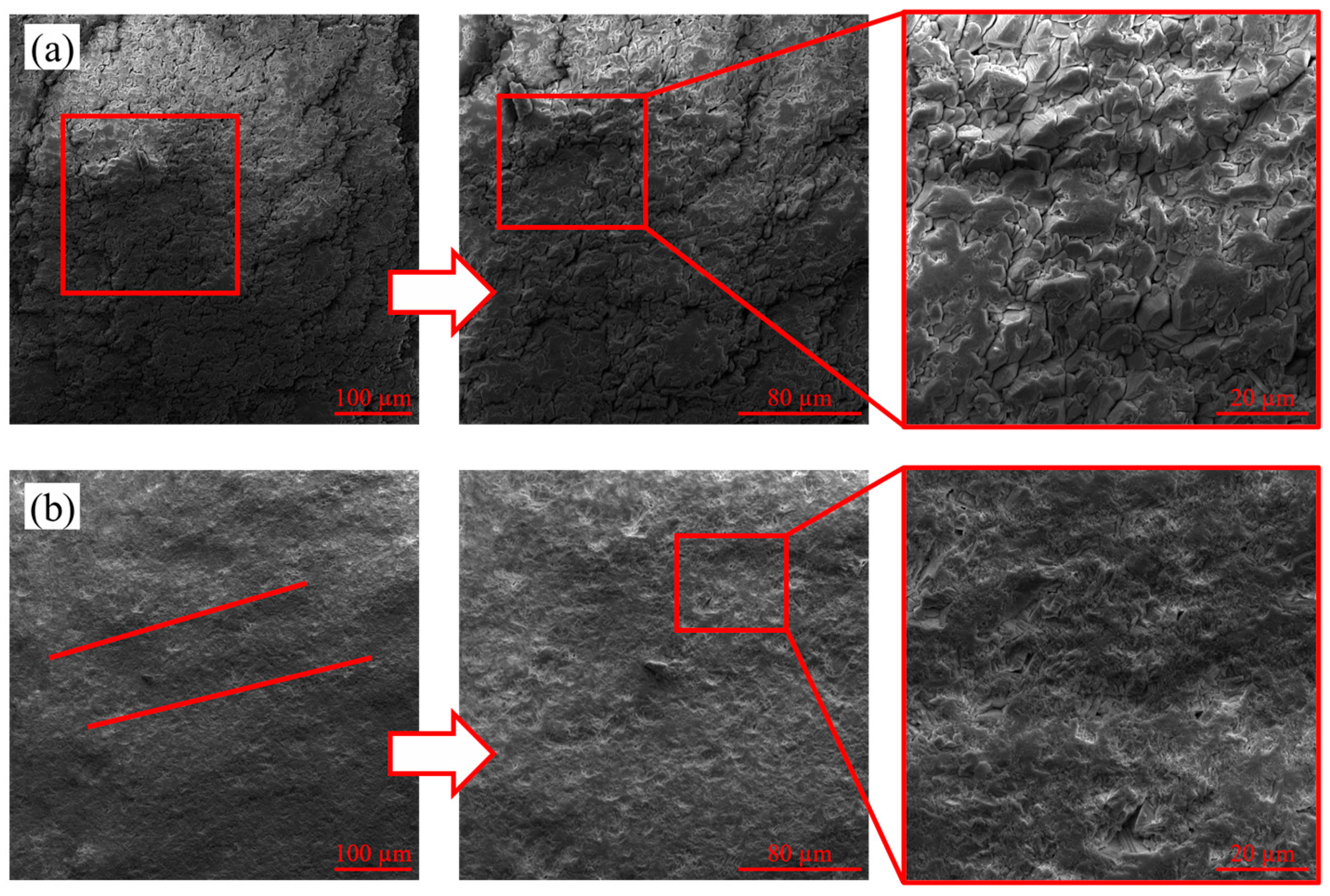
Figure 11) show that, unlike the 3 mm monodisperse condition where clear cutting marks are difficult to identify on both ceramics, introducing 1 mm particles produces discernible grooves and/or cutting facets on both YSZ and modified GZO, indicating that fine-scale tangential scratching is significantly activated. Notably, for modified GZO, distinct grooves and cutting facets—nearly absent under the 3 mm monodisperse condition—become evident under mixed media, serving as direct morphological evidence that small particles enhance tangential cutting. Moreover, the grooves on ceramic surfaces are generally sparse and short-ranged rather than developing into the long, continuous channels commonly observed on the bond coat, implying that multiscale media disrupt particle trajectories and weaken “path memory,” thereby promoting more uniform material removal.
Under the 2:8 ratio, the 1 mm abrasives primarily occupy the interstitial spaces between the 3 mm balls, leading to a denser packing state and stronger local confinement, which in turn restricts the free rolling and migration of the large balls in localized regions. This interstitial-filling effect modifies both load transfer pathways and the effective contact scale, shifting the abrasive–surface interaction toward multi-point, fine-scale tangential sliding. Accordingly, the surfaces are characterized by dispersed shallow grooves and fine scratching marks. In terms of specific morphology, YSZ still exhibits a limited number of relatively longer and more distinct furrows, indicating that the 3 mm balls can locally establish a larger contact scale and generate sliding ploughing. By contrast, GZO shows only sparse and shallow cutting traces, suggesting that the morphological expression is more readily attenuated by the pervasive columnar-fragmentation background; i.e., under the same tangential action, the low-toughness columnar system is more prone to concurrent micro-fracture, which reduces the apparent height contrast of groove features.
When the ratio is increased to 4:6, the two particle sizes become more comparable in both number and load contribution. The 1 mm abrasives impose a more pronounced semi-encapsulation/interstitial constraint on the 3 mm balls, making the rolling and sliding trajectories of the large balls more frequently perturbed and interrupted. Consequently, the post-finishing surfaces are more likely to exhibit multiple discontinuous short ploughing grooves. On YSZ, these short grooves appear clearer and more strongly oriented, indicating that tangential cutting is locally intensified but tends to distribute in a “short-range, multi-site” manner rather than developing into long continuous furrows. GZO also shows groove features, albeit shallower; this does not necessarily imply weaker cutting. Instead, it is more plausibly associated with the greater propensity of its columnar asperities to undergo widespread fragmentation—when extensive fracture/spallation occurs beyond the groove regions, the top layer is effectively “uniformly reduced,” thereby diminishing the relative height contrast and visual prominence of the grooves.
When the 1 mm fraction is further increased to 6:4, the packing density of the media rises markedly and the motion of the 3 mm balls becomes more strongly constrained. On YSZ, the number of ploughing grooves decreases substantially and the remaining traces become spot-like or segmented, indicating that long-range sliding contributed by the large balls is effectively suppressed and that cutting marks can no longer propagate persistently along a fixed path. This observation is consistent with the more stable roughness decay of YSZ in
Figure 9, suggesting a gradual transition from removal dominated by a few large-scale trajectories to a more uniformly distributed, multi-contact interaction. On GZO, a limited number of shallow grooves are still observed; local magnification reveals more distinct cutting facets and abrasion marks, further confirming that the addition of fine abrasives significantly enhances microscale tangential cutting. Nevertheless, the morphological expression remains influenced by the pervasive fragmentation of columnar features, resulting in weaker groove contrast and a greater tendency for grooves to coexist with pit-type defects.
In summary, the multi-particle-size mixed abrasive system enhances the micro-cutting on the ceramic surface through gap-filling effects and increased spatial density, making cutting features that were not significant under single-particle-size conditions more apparent. As the proportion of 1 mm abrasive particles increases, the strong impacts and long-range continuous sliding dominated by large particles gradually decrease, and the groove morphology shifts from relatively clear to shorter and more dispersed. During this process, the tangential force becomes more prominent, as smaller particles have higher spatial density and greater mass per unit volume, leading to more cutting effects. The sliding and scraping of abrasive particles help smooth the surface. In contrast, the normal force is more dominated by larger particles, resulting in impact forces and surface micro-crack formation. During the finishing process, YSZ coatings tend to retain cutting planes and short grooves more easily, as their higher fracture toughness makes the cutting process dominant. On the other hand, GZO coatings exhibit more frequent columnar-crystal breakage due to their lower fracture toughness, which weakens the contrast of cutting marks and is more easily dominated by pit-like defects. This is primarily because the normal force causes GZO surfaces to form more cracks and defects under normal impact.
As the proportion of 1 mm abrasive particles increases, although smaller particles help enhance the cutting effect, they also significantly reduce finishing efficiency, particularly in material removal rate. To balance removal efficiency and surface quality, using a mixed abrasive system proves more advantageous than single-particle-size abrasives. Smaller abrasive particles improve cutting precision and more effectively reduce surface roughness, while larger particles help increase removal efficiency. By optimizing the abrasive ratio, both removal efficiency and finishing precision can be improved, achieving effective reduction in surface roughness.
The abrasive ratio not only affects the stability and rate of roughness reduction but also reshapes the surface morphology and defect characteristics of the two types of ceramics by adjusting the relative contributions of “cutting” and “collision” forces. In particular, changing the abrasive ratio effectively modulates the interaction patterns of tangential and normal forces, further influencing the surface evolution characteristics of both ceramics during the finishing process. Additionally, finer abrasives represent higher finishing precision, while larger abrasives correspond to higher removal efficiency. The ratios studied in this research also provide a microscopic basis for the directional design of abrasive-based finishing process windows.