


Abstract
Achieving environmentally friendly, green, and non-toxic marine antifouling has long been a development goal of the modern coatings industry. However, in complex marine environments, non-toxic or low-toxic antifouling coatings often have a significantly reduced service life. Therefore, achieving stable antifouling performance on a low-toxic basis has always been a goal in this industry. By using fluorocarbon resin with low surface energy and spraying a well-mixed blend of alkaline earth metal oil-absorbing nanowires and nano zinc oxide particles that is under high pressure, half-embedded into the resin, and infiltrated with alkanes, the antifouling mechanism of these coatings is achieved by the slow release of oily components, creating a long-lasting liquid–liquid interface to separate biofouling from the coating. Thanks to this antifouling mechanism, the sample maintains a water contact angle of 100–110° for 42 days in static seawater, achieves over 98% resistance to bacterial adhesion, and reaches 99.9% resistance to protein and algae adhesion. This study provides a novel and promising solution for the strict implementation of low-toxic and harmless antifouling.
1. Introduction
Marine biofouling causes losses of up to hundreds of billions of dollars each year [1,2,3]. The various ‘biolayers’ resulting from this fouling reduce the lifespan of different marine equipment and machinery. Such accumulation greatly hampers ship navigation and causes biological invasions, posing significant threats to the economy, environment, and safety [4,5]. Conventional antifouling coatings often contain biocides with certain levels of toxicity [6], which remain harmful to the environment. Even low-toxic biocides can easily accumulate in the environment, where ‘Quantitative change leads to qualitative change’, posing environmental risks [7]. Therefore, it is urgent to develop a new type of comprehensive, efficient, long-lasting marine antifouling coating that is low in toxicity during both production and use.
Using inspiration from nature is essential, such as mimicking the surface structures of animals and plants like sharks [8,9], starfish [10], and lotus flowers [11]. The resulting biomimetic antifouling coatings have very good antifouling effects. Observations and studies of shark skin have revealed that shark skin itself has a very rough and porous shield–scale structure, with the hydrophobic mucus that is secreted trapped within these layers. This mucus is released slowly into the marine system to prevent marine fouling, showing environmentally friendly characteristics and creating multiple composite functions such as low surface energy, self-cleaning, and self-repair [12,13,14,15]. However, it is difficult to achieve both stable and efficient antifouling, as the complex structure is challenging to replicate and apply in large-scale industrial use. Hydrophobic materials use alkanes, and the antifouling mechanism of oleocoatings dominated by alkanes lies in the creation of a liquid–liquid interface. A liquid–liquid interface refers to the interface formed by two immiscible liquids. The antifouling performance of liquid–liquid interfaces is very high. Marine antifouling technology based on a liquid–liquid interface strategy has many advantages, such as fouling release [16,17,18] and the resulting super-slippery surfaces [19,20], effectively resisting the adhesion of fouling organisms. The used hexadecane has a solid–liquid phase change temperature between 18 and 20 °C, making it widely applicable to temperate seawater worldwide [21], and once again serves a slow-release function to prolong the stable existence of the liquid–liquid interface.
Herein, a low-toxic nanoporous-based oleocoating was designed and prepared. The antifouling mechanism of this coatings relies on its oil-absorbing nano-materials, which are doped with different proportions of nano zinc oxide. Nano zinc oxide is low-toxic, and its toxicology has been clearly and definitively established through extensive research [22,23]. By compounding the nano-materials with nano zinc oxide and spraying them onto the substrate surface, a rough porous micro–nano structure is formed, allowing lubricants to slowly seep out. This ensures that the liquid–liquid interface of the coating remains stable in seawater, effectively resisting fouling by bovine serum albumin, bacteria, and algae. Notably, the preparation and application of this coating employ low-toxicity, low-energy materials and processes, providing a novel and promising solution for sustainable marine antifouling.
2. Materials and Methods
2.1. Materials
Oleylamine (C18: 80–90%), 1-Octadecene (≥95%, GC), hexadecane, Phosphotungstic acid, Isopropyl alcohol (also known as Isopropanol), and nano zinc oxide were purchased from Shandong Keyuan Biochemical Co., Ltd. (Heze, China). Calcium nitrate tetrahydrate was purchased from Xilong Scientific Co., Ltd. (Shantou, China). The A and B components of D5551 antirust paint were purchased from Shanghai Xuanyang Chemical Materials Technology Co., Ltd. (Shanghai, China). The A and B components of fluorocarbon resin topcoat were purchased from Sichuan Xuanyang Chemical Materials Technology Co., Ltd. (Guang’an, China). PBS biological buffer solution (pH = 7.4) was purchased from Thermo Fisher Scientific (Suzhou, China) Co., Ltd. (Suzhou, China). The liquid bacterial culture medium (LM medium) and f/2 algal culture medium were prepared in-house (specific preparation methods are detailed in the Supplementary Materials). Fluorescent-labelled bovine serum albumin was purchased from Beijing Solarbio Science & Technology Co., Ltd. (Beijing, China). The strains of Chlorella, Escherichia coli (E. coli), and Staphylococcus aureus (S. aureus) were obtained from Hainan University (Haikou, China). Unless otherwise stated, all chemicals used in this study were of analytical grade and were used upon receipt without further purification.
2.2. Preparation of Nanoporouos-Based Oleocoatings
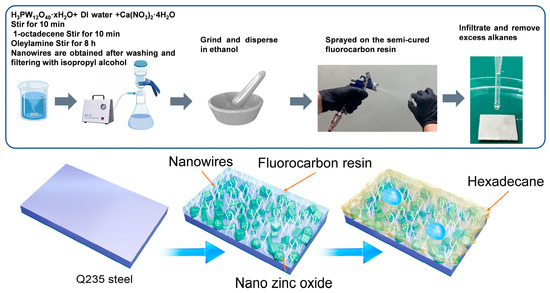
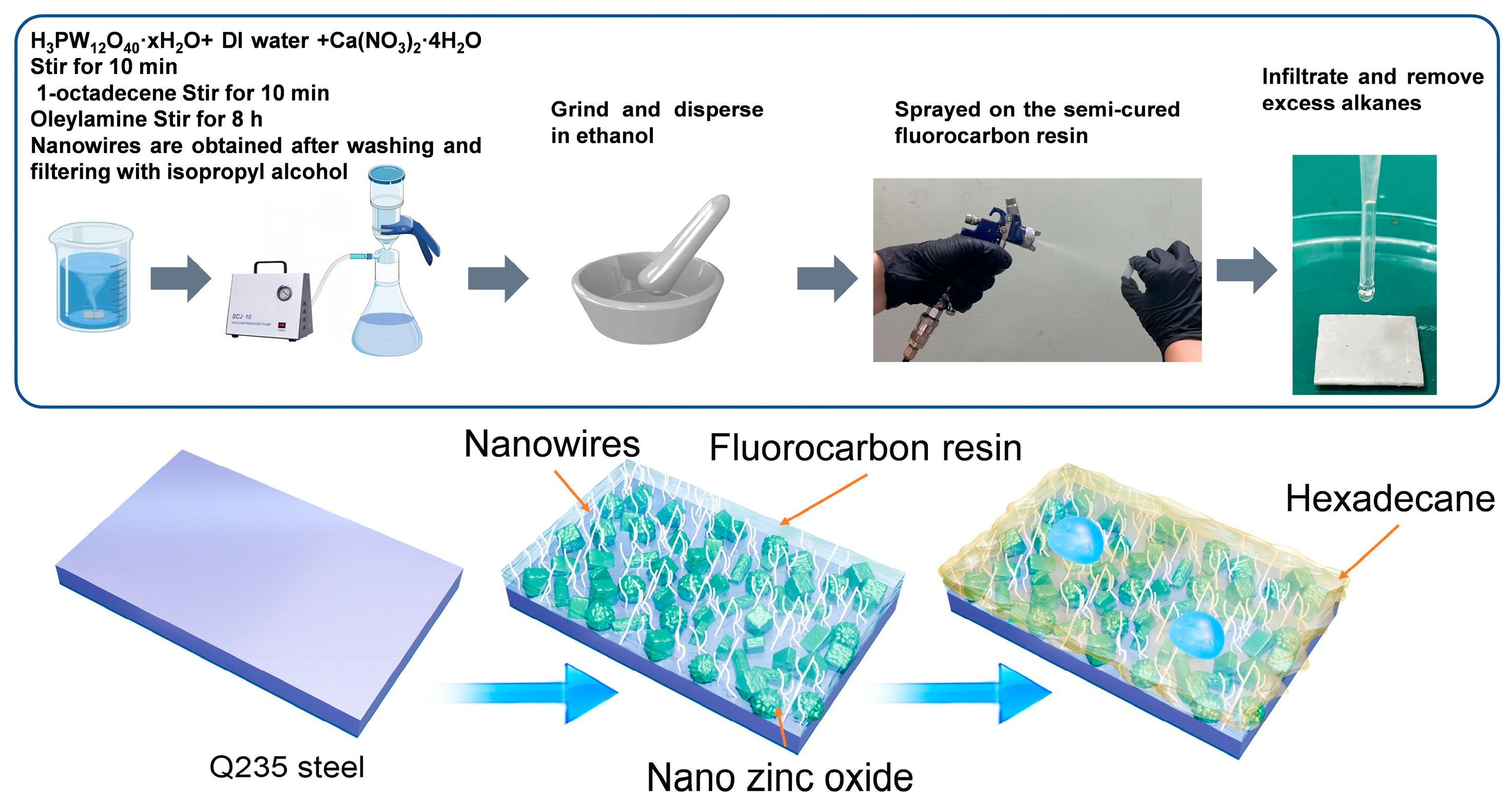
The preparation process of the nanoporous-based oleocoatings is shown in Figure 1. Inspired by Wang et al. [24], nanowires with excellent oil absorption were prepared as follows. Weigh 0.5 g of tetrahydrated calcium nitrate and 3.75 g of hydrated phosphotungstic acid, and dissolve them slowly one by one in 60 mL of deionised water. After about 5 min, both are completely dissolved in the deionised water; then, add 50 mL of 1-octadecene and stir for 10 min. After adding 15 mL of oleylamine, the solution’s viscosity rises sharply, and after about 20 min the viscosity stabilises. Stir for 6 h and wash at least three times with isopropanol, then filter and weigh the nanowire product. Mix the above nanowires with different amounts of nano zinc oxide and grind, where the percentage ratios of nanowires to nano zinc oxide are pure nanowires (NW100), NW80, NW60, NW40, NW20, and pure nano zinc oxide (hereafter referred to as NZnO). Then, disperse this in ethanol for later use. Apply fluorocarbon resin on pre-treated steel plates; when semi-cured (about 45 min), spray the above dispersion onto the surface using high-pressure air at approximately 0.65–0.7 MPa for 60–75 s. After complete curing, immerse it in hexadecane. Once fully wetted, remove the excess hexadecane until there are no visible oil droplets on the surface of the coatings. The prepared oleocoating is then ready.
Figure 1.
Schematic diagram of the preparation process of a nanoporous-based oleocoatings. Additional inclusion of a schematic diagram of its highly effective liquid–liquid interface as a new green and low-toxic marine antifouling solution.
2.3. Characterisation
All optical microscope photos were taken with the BM50-3M180 optical microscope system (Shenzhen Aosiwei Optical Instrument Co., Ltd., Shenzhen, China). The contact angle was measured at environmental temperature using the SDC-100H contact angle measurement system (Shengding Precision Instruments Co., Ltd., Dongguan, China). The easily oil-absorbing nanostructure prepared above was observed using a high-resolution transmission electron microscope (HRTEM, JEM-2100, JEOL, Tokyo, Japan), with a magnification of 20,000 times. The structure of the coatings surface was observed using a Verious G4 UC field emission scanning electron microscope (SEM) (Thermo Fisher Scientific, Waltham, MA, USA; the instrument is manufactured in Czechia). The average roughness before and after soaking in seawater was observed and measured using the VK-X250K laser confocal microscope (Keenseih (Hong Kong) Co., Ltd., instrument manufactured in Shenzhen, China). Observing the antiprotein and anti-algal adhesion condition of the samples using a LSM900 laser scanning confocal fluorescence microscope (Carl Zeiss AG, Württemberg, Germany).
2.4. Antibacterial Adhesion Test
The antibacterial adhesion test sample uses a 2 cm × 2 cm Q235 steel plate, and the coating is prepared by repeating the steps in Section 2.2. The Luria–Bertani (LB) plate method was used to study the anti-adhesion properties of the samples against E. coli and S. aureus. In a 50 mL centrifuge tube, 200 μL of the original bacterial suspension and 20 mL of LB culture medium were added. It is generally believed that the concentration of E. coli and S. aureus will reach 108 CFU/mL after 12 h of culture at a constant temperature of 37 °C; when this is achieved, the prepared plates are placed in the tube and culturing is continued for 24 h at the same temperature. Then, the samples are taken and the coated surface is gently rinsed with sterile PBS solution to remove loosely attached bacteria. If it is a one-sided coated sample, the other side should undergo complete disinfection to avoid interference from bacteria attached to the other surface. The side that needs disinfection can be placed on gauze soaked in 75% ethanol solution for 2 min and allowed to evaporate completely, and then placed in 20 mL of sterile PBS solution and treated with ultrasound for 15 min. Finally, the ultrasonic liquid was diluted 10,000 times and inoculated in LB medium at 30 °C for 24 h. The formation of colonies on LB was observed to evaluate the antibacterial adhesion performance of the sample. The evaluation can be completed by the following formula: M(%) = (MA − MB)/MA × 100%. Among them, M(%) indicates the anti-adhesion rate, MA represents the number of colonies in the blank control group, and MB represents the number of colonies in the experimental group.
2.5. Anti-Algal Adhesion Test
The anti-algae adhesion test sample uses a 2 cm × 2 cm Q235 steel plate, and the coating is obtained by repeating the steps of 2.2. The Chlorella is placed together with the sample in a culture medium and incubated for 50 days in a continuous light and 30 °C constant temperature incubator, ensuring that the f/2 algal culture medium is changed no more than once every 7 days. The algae coverage or contamination on the substrate surface is roughly observed using a low-magnification optical microscope. Afterwards, the sample is taken out and observed under an optical microscope to examine the adhesion of algae on the surface of the coatings. After staining with a 1 μg/mL concentration of DAPI fluorescent dye (Labgic Technology Co., Ltd., Beijing, China) for 15 min, the coated surface is gently rinsed with sterile PBS solution, and the cell nuclei and double-stranded DNA that adhered to the plate are observed and counted using the LSM 900 laser scanning confocal fluorescence microscope.
2.6. Antiprotein Adhesion Test
The antiprotein adhesion test sample uses a 2 cm × 2 cm Q235 steel plate, and the coating is obtained by repeating the steps of 2.2. Then the following is carried out: Place the sample in a concentration of 0.1 mg/mL bovine serum albumin (FITC-labelled) and incubate it on a shaker at 30 °C for 72 h. Afterwards, remove the sample and lightly rinse the coated surface with sterile PBS solution. Observe and count the bovine serum albumin adhered to the substrate using an LSM 900 laser scanning confocal fluorescence microscope. (Anti-adhesion characterisation data for 2.4, 2.5 and 2.6 were obtained using ImageJ software (ImageJ 1.8.0)).
2.7. Actual Seawater Test
Antifouling tests were conducted using seawater from Xiuying Port in Haikou, over a period of 60 days. This sea area is located in the northern part of Haikou City, China. The average seawater temperature is 23–25 °C, with a relative humidity of 84%, and salinity in the shallow waters ranges from 29.6‰ to 31.8‰. The nearshore waters are rich in organic and inorganic substances, and the frequent passage of various types of vessels has resulted in some oil pollution in this area.
3. Results and Discussion
3.1. Morphological Characterisation and Analysis of Nanoporous-Based Oleocoatings
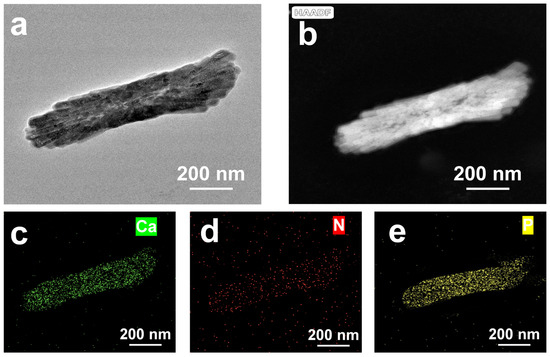
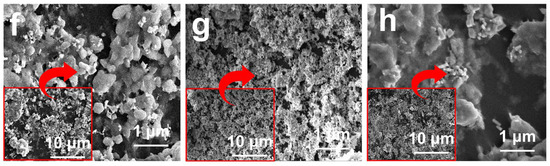
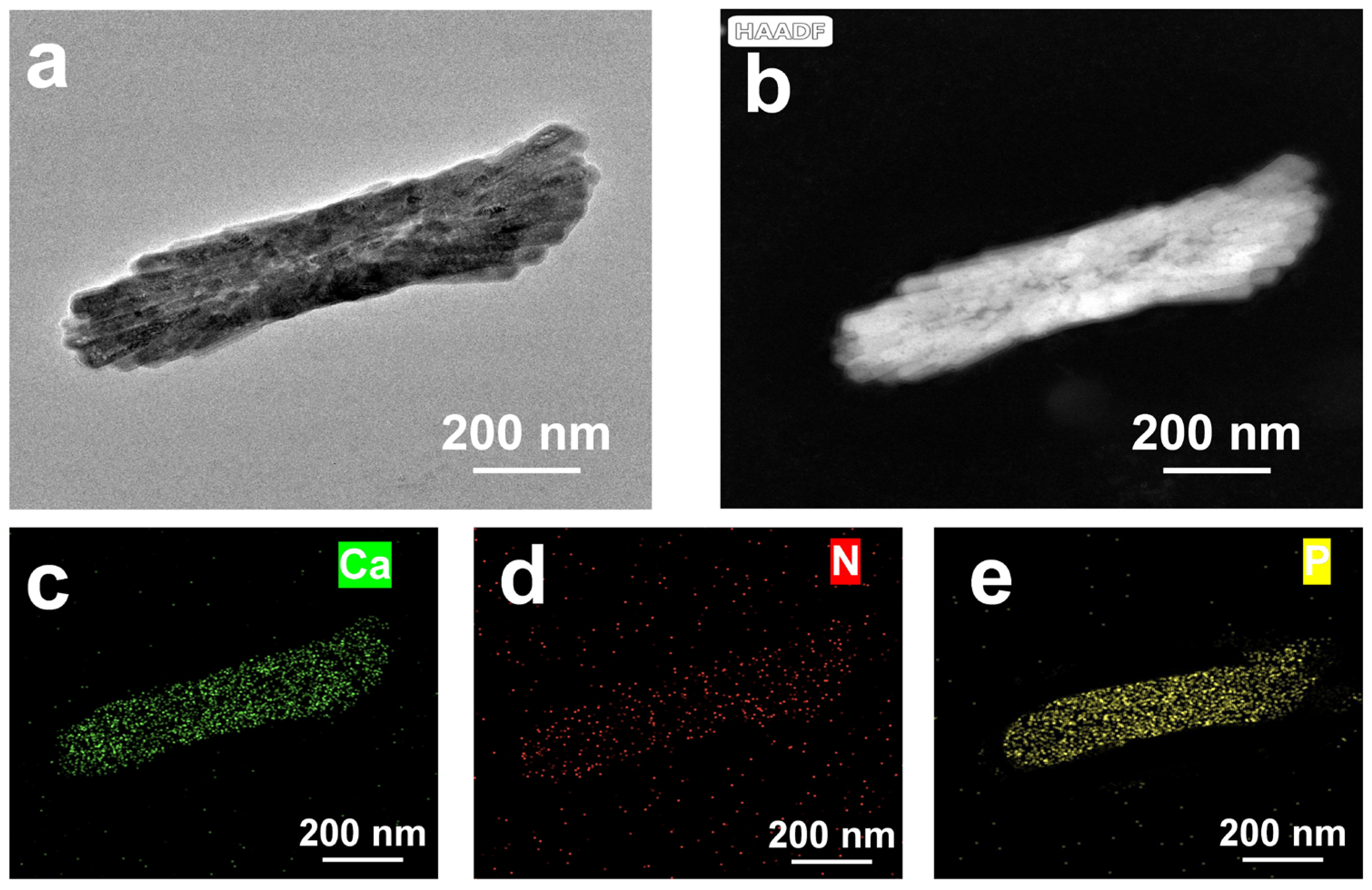
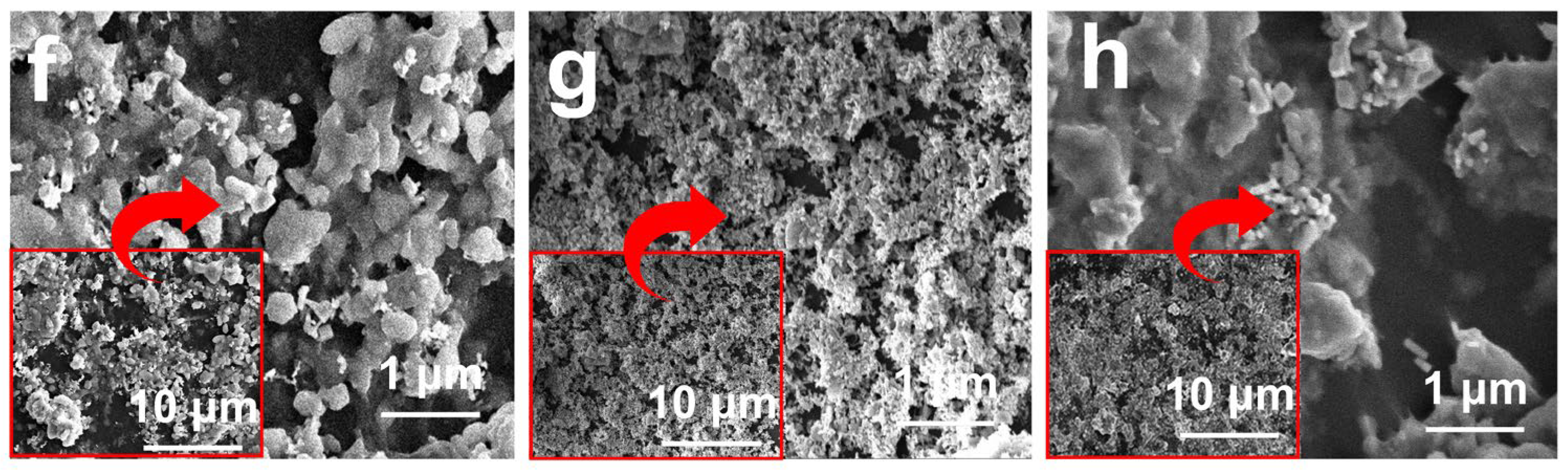
The oil absorption capacity and stable storage of the oleocoatings are important considerations in determining whether the liquid–liquid interface can persist stably. The intermolecular forces between volatile organic molecules are generally weaker than hydrogen bonds, hindering the semi-solidification of volatile organic liquids and the development of functional organic gels and coatings [25]. Here, a nanowire that easily combines with volatile alkanes was prepared. The HRTEM and EDS images of the nanowire are shown in Figure 2a–e, with a single nanowire size of approximately 600–800 nm and a single aspect ratio of about 1:15–1:20. The presence of Ca, N, and P elements in the EDS, indicating the loading of protonated oil amine with alkaline earth metals, demonstrates the successful preparation of the nanowires. These nanowires can form gel-like homogenous materials with various organic products, and a unit mass of the material can adsorb up to nearly 12 times its own mass of hexadecane to form a stable gel (Figures S1 and S2). However, the bonding between oleogels and various common substrates is usually weak, and as the oily components evaporate, it is difficult to form a continuous and stable coating layer with sufficient strength, which can be enhanced by doping with certain compounds (Figure S3). Here, a method is realised that can both achieve long-term absorption of oily components and maintain the stability of the coating interface. Low-toxic nano zinc oxide and nanowires are ground in ethanol and sprayed onto near-condensation fluorocarbon resin using high-pressure gas. Under the high-pressure gas, nanowires and nano zinc oxide easily embed into the resin and spread evenly on the surface, while also absorbing oily alkanes to form a stable liquid–liquid interface. Figure 2f–h show the SEM images of NW100, NW60, and NZnO components sprayed on the substrate surface (the SEM images of NW100, NW60, and NZnO after grinding but before spraying are shown in Figure S4). The images indicate that pure NW100 components of the nanowires appear small and waxy, adhering to the substrate, while pure nano zinc oxide NZnO appears as blocks on the substrate surface. When the nanowire content is 60%, it shows a fluffy and porous structure due to the cross-linking between nanowires and nano zinc oxide during grinding. The nanowires intersect and form a 3D network, and the intertwined nanowires and nano zinc oxide create a structure with multiple cavities that can lock in a large amount of organic liquid, slowing its evaporation and achieving a longer-lasting liquid–liquid interface.
Figure 2.
Preparation and characterisation of nanoporous-based oleocoating. (a,b) are TEM and HAADF-STEM images of oil-absorbing nanowires, respectively. (c–e) are the corresponding EDS images of Ca, N, and P elements mentioned above. (f–h) are SEM images of NW100, NW60, and NZnO sprayed on plates under an alkane-free state, respectively.
3.2. Dynamic Wetting Properties of Nanoporous-Based Oleocoatings
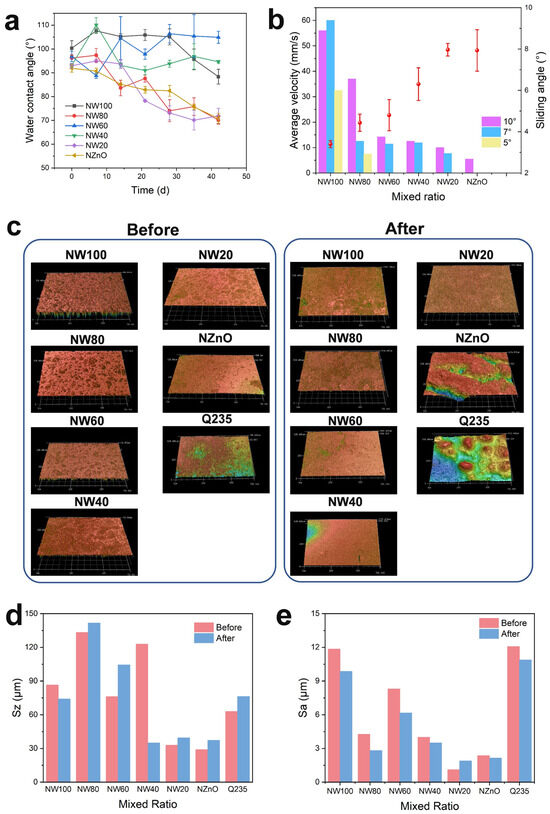
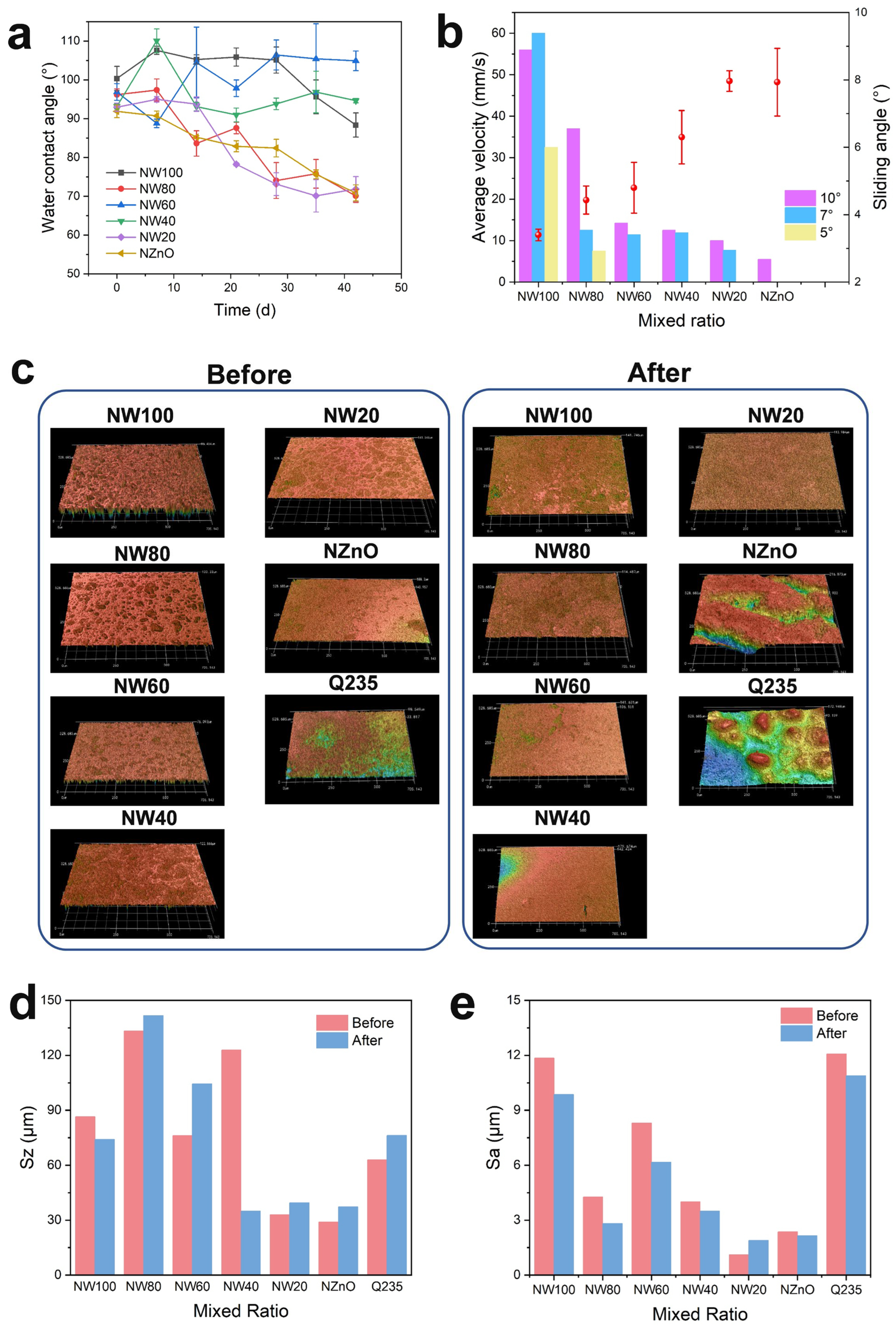
The interaction between liquid water and the surface of a coating is often influenced by both the surface morphology and chemical composition. The most direct way to characterise this interaction is by measuring the contact angle of water droplets on the surface. Some rough structures can often increase the water contact angle (WCA) and, within a certain range, reduce the water sliding angle (WSA) [26]. The changes in WCA of several coatings with different ratios after 42 days in seawater and air (Figure 3a; actual images of the water contact angle before and after soaking are shown in Figure S5) show that the WCA of all components on day 0 is almost between 90° and 105°, indicating hydrophobicity. This is due to the hydrophobic lubricating layer formed by the hexadecane stored in the rough structures. After seven days of soaking in seawater, the pressure of seawater allows the oil and nanowires to mix well and stably exude, forming a liquid–liquid interface that largely maintains the WCA without significant fluctuations. However, as the alkanes slowly exude, the effect of the liquid–liquid interface diminishes, causing the WCA to begin to decline. Benefiting from the excellent rough and porous structure, the liquid–liquid interface remains stable, with NW60 and NW40 components showing the smallest WCA decline, maintaining a stable WCA of 100–110° during the 42-day simulated seawater immersion. When measuring the initial WSA and the corresponding average speed (Figure 3b; actual slide image is shown in Figure S6), the surface remains relatively smooth due to its stable connection with the oily components, resulting in better sliding performance for NW100 and NW80 components. NW60 and NW40 components also exhibit good sliding speed and stable WSA. NW20 and nano zinc oxide, with almost no porous structure, only slide at an angle of around 9°, showing weaker performance. Changes in surface roughness of different samples after 50 days of seawater immersion were characterised using a laser microscope, as shown in Figure 3d,e. The nanoporous-based generated by mixing with nano zinc oxide can make the interface smoother under the action of seawater, demonstrating that this coating has a certain self-polishing property in seawater.
Figure 3.
Analysis of water contact angle and sliding performance of nanoporous-based oleocoating. (a) Variation in water contact angles every 7 days for NW/NZnO substrates with different compositions soaked in simulated seawater for 42 days. (b) The average sliding speed and initial sliding angle of NW/NZnO substrates with different ratios. (c) Laser confocal microscopy images of NW/NZnO with different ratios before and after soaking in seawater. (d,e) are the maximum groove depth (Sz) and average groove depth (Sa) corresponding to the laser confocal microscopy images.
3.3. Antifouling Performance of Nanoporous-Based Oleocoatings
Small molecular substances in the ocean can adhere to the surfaces of submerged objects within minutes, forming a conditioning film that promotes the attachment of various bacteria and algae, leading to the formation of biofilms and eventually triggering the settlement of large fouling organisms [27,28,29]. Blocking any one of these three stages is crucial for preventing biofouling. Therefore, it is necessary to study the antifouling performance of coatings against conditioning films, biofilms, and large fouling organisms separately.
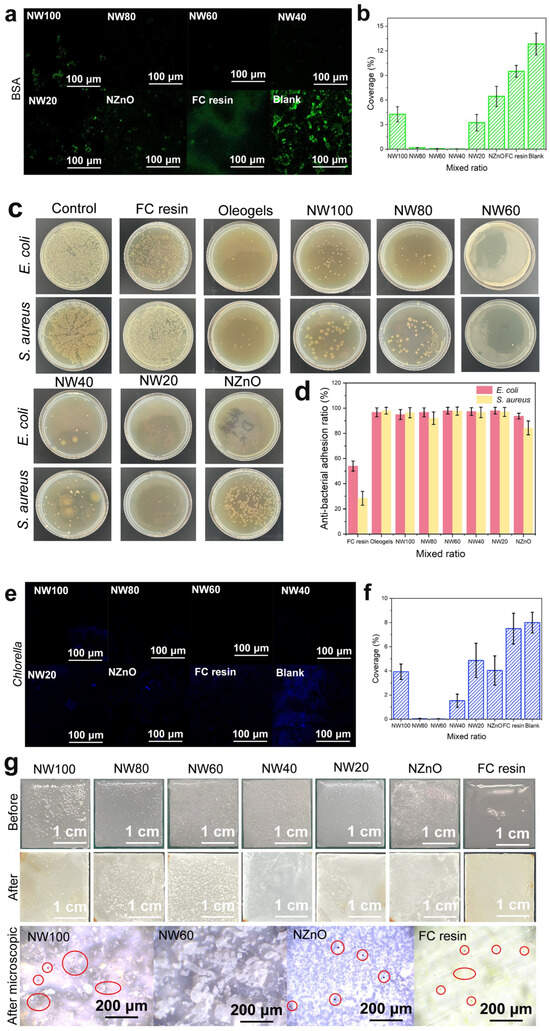
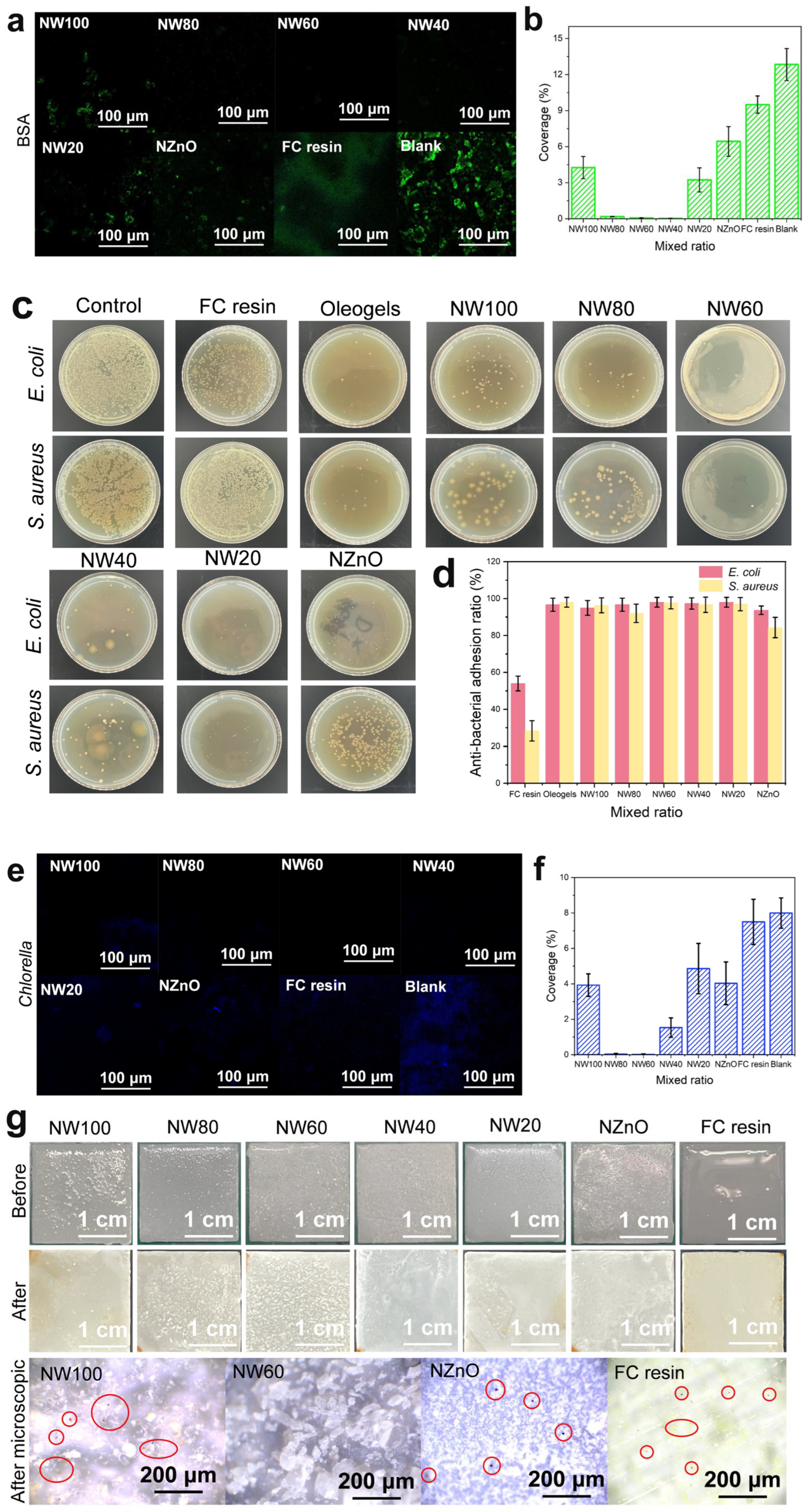
The formation of the conditioning film generally involves protein-dominated aggregation, which can provide adhesion conditions for bacteria and larger organisms. FITC-labelled bovine serum albumin (FITC-BSA) was used to investigate the antifouling capacity of the coatings against proteins. Distinct green fluorescence was detected in the blank sample and fluorocarbon resin (Figure 4a), with coverage of 13% and 9%, respectively, indicating BSA fouling. Slight protein content was also detected in NW100, NW20, and NZnO components, with coverages of 4.3%, 3.1%, and 6.4%, respectively. However, NW80, NW60, and NW40 components showed virtually no fluorescence, with contents of 0.16%, 0.07%, and 0.04%, respectively (Figure 4b), indicating minimal adhesion of bovine serum albumin on this type of coating.
Figure 4.
Analysis of the antifouling performance of nanoporous-based oleocoating. (a) BSA adhesion resistance test. (b) Corresponding BSA coverage. (c) E. coli and S. aureus adhesion resistance test. (d) Corresponding coverage of E. coli and S. aureus. (e) Chlorella adhesion resistance test. (f) Corresponding Chlorella DNA coverage. (g) 60-day actual seawater test and microscopic image results of each component.
The anti-adhesion performance of the samples against Gram-positive S. aureus and Gram-negative E. coli was studied as model bacteria, and the results are shown in Figure 4c. Compared with the blank control, the fluorocarbon resin was less able to withstand bacterial adhesion, with anti-E. coli and anti-S. aureus adhesion efficiencies of only 54% and 29%, respectively. Due to the protective effect of the liquid–liquid interface and the bactericidal effect of nanoscale zinc oxide, the anti-bacterial adhesion rates of the other components generally reached over 90%, with NW60, NW40, and NW20 showing the best anti-adhesion effects, resisting E. coli at rates over 98% and S. aureus at rates over 97%. These results indicate that the nanoporous oleocoatings have a positive resistance effect against S. aureus and E. coli.
Among marine organisms, besides proteins and bacteria, algae also have a strong biofouling capability. This study verifies the coating’s resistance to algal adhesion. Using DAPI staining for Chlorella DNA, the blank group’s coverage was 9%, while the fluorocarbon resin’s coverage was about 8%. In contrast, almost no algae adhered to the NW80 and NW60 components, with adhesion rates of only 0.04% and 0.027%, demonstrating excellent anti-algal adhesion performance. Actual seawater tests are shown in Figure 4g. In seawater left static for 60 days, images of the samples before and after immersion were taken (red circles indicate obvious biofouling). Some fouling deposits were detected on the NW100, NZnO, and fluorocarbon resin samples, with coverage rates calculated to be 11.2%, 9.7%, and 15.3%, respectively, while NW80 and NW60 hardly showed any adhered fouling organisms, with coverage close to 0%, further confirming the antifouling performance of the nanoporous-based oleocoatings.
4. Conclusions
In conclusion, a porous and highly antifouling oleocoating was designed and prepared. Firstly, the synergistic effect of highly oil-absorptive alkaline earth metal nanowires and nano zinc oxide renders the interface loose and porous, effectively locking in and stabilising the oily components. Secondly, the combination of the nanoporous substrate and oily components at the liquid–liquid interface, along with the anti-adhesion properties brought by hydrophobicity and the biocidal capability of nano zinc oxide, endows these coatings with excellent antifouling performance. The bacterial adhesion rates for NW80 to NW20 were all below 2%, and the protein and algal adhesions for NW60 were only 0.07% and 0.027%, respectively. In actual seawater tests, they could resist various fouling. This study proposes and prepares a green, wholly low-toxic antifouling interface, offering a new strategy for novel marine antifouling approaches.
Supplementary Materials
The following supporting information can be downloaded at https://www.mdpi.com/article/10.3390/coatings16020190/s1: Figure S1: Photographs of the oil gel and the oil gel mixed with nano zinc oxide; Figure S2: Oil absorption per unit mass of materials of different components; Figure S3: Compressive performance of the oleogel. (i) Compressive strength of the oil gel. (ii) Physical images of the oil gel failure; Figure S4: Components before spraying. (i)NW100. (ii) NW60. (iii) NZnO; Figure S5: Actual images of water contact angles before and after soaking in seawater for 42 days; Figure S6: Actual images of water droplets sliding at a 10° incline.
Author Contributions
Writing—original draft preparation, Z.C.; conceptualization, H.J.; investigation S.R.; validation, S.D.; project administration and funding acquisition, G.W. All authors have read and agreed to the published version of the manuscript.
Funding
This research was funded by the National Natural Science Foundation of China (Grant No. 52261045).
Institutional Review Board Statement
Not applicable.
Informed Consent Statement
Not applicable.
Data Availability Statement
Data are contained within the article and Supplementary Materials.
Conflicts of Interest
The authors declare that they have no known competing financial interests or personal relationships that could have appeared to influence the work reported in this paper.
References
- Nurhalimi, N.I.; Adim, S.A.; Noor, N.M.; Abas, A. Marine biofouling and antifouling: A decade of systematic review on the environmental risks to coastal water systems. Biofouling 2025, 41, 965–980. [Google Scholar] [CrossRef] [Scilit]
- Cui, Z.; Chen, Y.; Li, Y.; Xu, Q.; Sun, Z.; Ren, H. A multi-task deep learning framework for classification, detection, and segmentation of marine biofouling. Ocean Eng. 2025, 341, 122818. [Google Scholar] [CrossRef] [Scilit]
- Liu, Z.; Zheng, X.; Zhang, H.; Li, W.; Jiang, R.; Zhou, X. Review on formation of biofouling in the marine environment and functionalization of new marine antifouling coatings. J. Mater. Sci. 2022, 57, 18221–18242. [Google Scholar] [CrossRef] [Scilit]
- Vye, S.R.; Gregory, S.; Belchier, M.; Morley, S.A.; Brickle, P. Understanding the risk of marine introductions through the biofouling of vessels operating in the remote sub-Antarctic. Biol. Invasions 2025, 27, 211. [Google Scholar] [CrossRef] [Scilit]
- Huang, J. Research progress on sources, harms and countermeasures of marine pollution. E3S Web Conf. 2024, 553, 03005. [Google Scholar] [CrossRef] [Scilit]
- Shi, X.; Liang, H.; Li, Y. Review of Progress in Marine Anti-Fouling Coatings: Manufacturing Techniques and Copper- and Silver-Doped Antifouling Coatings. Coatings 2024, 14, 1454. [Google Scholar] [CrossRef] [Scilit]
- Lin, J.; Ding, X.; Gu, J.; Zhang, L.; Chao, J.; Zhang, H.; Feng, S.; Guo, C.; Xu, J.; Gao, Z. Organophosphate esters (OPEs) pollution characteristics, bioaccumulation and human consumption implication in wild marine organisms from the Yellow River Estuary, China. Mar. Pollut. Bull. 2024, 206, 116708. [Google Scholar] [CrossRef] [Scilit]
- Lee, H.J.; Shin, M.G.; Yoo, C.H.; Lee, M.S.; Park, H.; Hyeong, J.; Seong, M.S.; Na, J.G.; Lee, J.H.; Lee, J.S. A new anti-biofouling microfiltration: Combining sharkskin-inspired topology with in-situ silver nanoparticles. Sep. Purif. Technol. 2025, 355, 129636. [Google Scholar] [CrossRef] [Scilit]
- Choi, W.; Shin, M.; Lee, G.; Kim, D.; Yoo, C.; Lee, J.; Jung, H.; Lee, J. Anisotropic biofouling behavior of sharkskin-patterned desalination membranes. J. Membr. Sci. 2023, 683, 121814. [Google Scholar] [CrossRef] [Scilit]
- Raman; Labisch, S.; Dirks, J.H. A starfish-inspired 4D self-healing morphing structure. Sci. Rep. 2024, 14, 22024. [Google Scholar] [CrossRef] [Scilit] [PubMed]
- Farzam, M.; Beitollahpoor, M.; Solomon, S.E.; Ashbaugh, H.S.; Pesika, N.S. Advances in the Fabrication and Characterization of Superhydrophobic Surfaces Inspired by the Lotus Leaf. Biomimetics 2022, 7, 196. [Google Scholar] [CrossRef] [Scilit]
- Xiong, Y.; Fang, Z.; Tang, P.; Li, Y.; Jiang, H.; Li, J.; Li, Z.; Wang, G. MXene and cellulose nanofibers reinforced hydrogel with high strength and photothermal self-healing performances for marine antifouling. Carbohydr. Polym. 2025, 348, 122879. [Google Scholar] [CrossRef] [Scilit]
- Nguyen, T.; Oanh, D.; Lien, D.; Phuc, B. Revolutionizing acrylic emulsion coatings: Enhancing self-cleaning, anti-fouling, and antibacterial qualities through fluorosurfactant integration. Vietnam J. Chem. 2024, 62, 860–874. [Google Scholar] [CrossRef] [Scilit]
- Jiang, H.; Chen, X.; Fang, Z.; Xiong, Y.; Wang, H.; Tang, X.; Ren, J.; Tang, P.; Li, J.; Wang, G. NIR-Driven Self-Healing Phase-Change Solid Slippery Surface with Stability and Promising Antifouling and Anticorrosion Properties. ACS Appl. Mater. Interfaces 2024, 16, 34089–34099. [Google Scholar] [CrossRef] [Scilit]
- Yi, L.; Zhao, H.; Yu, J.; Guo, Q.; Qiu, H.; Chen, K. Design and synthesis of asymmetric comb-like waterborne polyurethane for self-healing chemical protective coatings. Chem. Eng. J. 2025, 525, 170006. [Google Scholar] [CrossRef] [Scilit]
- Mo, Y.; Xue, P.; Xing, J.; Liu, H.; Wang, J.; Liu, J. Conventional silicone coating improved by novel bioinspired microcavity arrays: Generating stable air bubble arrays for gas-liquid interface antifouling. Colloids Surf. A Physicochem. Eng. Asp. 2022, 644, 128887. [Google Scholar] [CrossRef] [Scilit]
- Ariyanti, D.; Sugianto, D.N.; Purbasari, A.; Lesdantina, D.; Handayani, E.P. Synthesis of environmental-friendly fouling release coating, PDMS-X, to prevent the attachment of marine biofouling. J. Indian Chem. Soc. 2025, 102, 101768. [Google Scholar] [CrossRef] [Scilit]
- Koschitzki, F.; Özcan, O.; Wanka, R.; Krisam, M.; Rosenhahn, A. Marine Fouling Release Performance of Amphiphilic Carboxybetaine Perfluoropolyether Methacrylate Polymer Coatings. Adv. Mater. Interfaces 2024, 11, 2400370. [Google Scholar] [CrossRef] [Scilit]
- Liang, Z.; Wu, S.; Liu, C.; Yang, H.; Darling, B.; Xu, Z. When SLIPS meets TIPS: An endogenous lubricant-infused surface by taking the diluent as the lubricant. Chem. Eng. J. 2021, 425, 130600. [Google Scholar] [CrossRef] [Scilit]
- Zhou, Y.; Cao, X.; Chen, Y.; Li, Y.; Ma, J.; Song, J.; Liu, X. Blue-ringed Octopus inspired slippery coating with physico-chemical synergistic antifouling properties. Chem. Eng. J. 2023, 477, 147117. [Google Scholar] [CrossRef] [Scilit]
- Gunnarson, J.; Stuecker, M.; Zhao, S. Drivers of future extratropical sea surface temperature variability changes in the North Pacific. npj Clim. Atmos. Sci. 2024, 7, 007025. [Google Scholar] [CrossRef] [Scilit]
- Szukalska, M.; Mrówczyński, R.; Kordowska, P.S.; Miechowicz, I.; Zalewski, T.; Grześkowiak, B.F.; Józefowska, M.J.B.; Nowicki, M.; Florek, E. How Do Particle Size, Dosage, and Exposure Duration Influence Oxidative Stress Parameters and the In Vivo Toxicological Profile of Polydopamine Nanoparticles? Free Radic. Biol. Med. 2025, 242, 614–635. [Google Scholar] [CrossRef] [Scilit] [PubMed]
- Holmes, A.M.; Kempson, I.; Turnbull, T.; Paterson, D.; Roberts, M.S. Penetration of Zinc into Human Skin after Topical Application of Nano Zinc Oxide Used in Commercial Sunscreen Formulations. ACS Appl. Bio Mater. 2020, 3, 3640–3647. [Google Scholar] [CrossRef] [Scilit]
- Zhang, S.; Shi, W.; Wang, X. Locking volatile organic molecules by subnanometer inorganic nanowire-based organogels. Science 2022, 377, 100–104. [Google Scholar] [CrossRef] [Scilit] [PubMed]
- Yuan, F.; Li, D.; Li, H.; Yu, B.; Wei, Y.; Deng, X.; Zhang, Y.; Wang, X. Multi-Compatible, Self-Healing, and Temperature-Responsive Organohydrogels by Sub-Nanowires. Adv. Mater. 2025, 37, e2500272. [Google Scholar] [CrossRef] [Scilit]
- Duan, J.; Long, G.; Xu, X.; Liu, W.; Li, C.; Chen, L.; Zhang, J.; Xiao, J. Hierarchical Micro/Nanostructures with Anti-Reflection and Superhydrophobicity on the Silicon Surface Fabricated by Femtosecond Laser. Micromachines 2024, 15, 1304. [Google Scholar] [CrossRef] [Scilit]
- Nieto, C.O.; Romeu, M.J.; Santos, R.T.; Gomes, L.C.; Mergulhão, F.J.; Palomo, J.M. Effect of Metal Bionanohybrids on Pre-formed Marine Biofilms. ACS Appl. Bio Mater. 2025, 8, 9451–9463. [Google Scholar] [CrossRef] [Scilit]
- Amador, C.I.; Fatima, N.; Jakobsen, A.S.S.; Macario, L.; Pichon, P.; Aldred, N.; Burmølle, M. Directed assembly of biofilm communities for marine biofouling prevention. Appl. Environ. Microbiol. 2025, 91, e0139225. [Google Scholar] [CrossRef] [Scilit]
- Xu, X.; Guo, S.; Vancso, G.J. Perceiving and Countering Marine Biofouling: Structure, Forces, and Processes at Surfaces in Sea Water Across the Length Scales. Langmuir ACS J. Surf. Colloids 2025, 41, 7996–8018. [Google Scholar] [CrossRef] [Scilit]
Disclaimer/Publisher’s Note: The statements, opinions and data contained in all publications are solely those of the individual author(s) and contributor(s) and not of MDPI and/or the editor(s). MDPI and/or the editor(s) disclaim responsibility for any injury to people or property resulting from any ideas, methods, instructions or products referred to in the content. |
© 2026 by the authors. Licensee MDPI, Basel, Switzerland. This article is an open access article distributed under the terms and conditions of the Creative Commons Attribution (CC BY) license.