Article

A Reasoned Diagnostic Procedure to Support the Restoration of the 17th Century Stucco Altar Dedicated to St. Michael the Archangel in Barbarano Romano (Viterbo, Italy)


1
Department of Economics, Engineering, Society and Business Organization, University of Tuscia, Largo dell’Università, 01100 Viterbo, Italy
2
Department for Innovation in Biological, Agro-Food and Forest Systems, University of Tuscia, Largo dell’Università, 01100 Viterbo, Italy
3
Department of Chemistry, Life Sciences and Environmental Sustainability (SCVSA), University of Parma, Parco Area delle Scienze 17/A, 43124 Parma, Italy
4
Department of Science, University of Roma Tre, Via della Vasca Navale 84, 00146 Rome, Italy
*
Author to whom correspondence should be addressed.
Coatings 2026, 16(1), 142; https://doi.org/10.3390/coatings16010142
Submission received: 20 December 2025 / Revised: 8 January 2026 / Accepted: 20 January 2026 / Published: 22 January 2026

Abstract

The 17th-century stucco altar dedicated to St. Michael the Archangel is an interesting, but very damaged, artwork located in the complex of St. Angel in the little town of Barbarano Romano in Central Italy. During the recent and quite necessary restoration carried out by University of Tuscia students on the Conservation and Restoration of Cultural Heritage Master’s program, some problems with the surface coating were encountered in the cleaning phase. Diagnostic and scientific analyses were crucial to better understanding the composition of these materials to perform the safest and most efficient cleaning procedures. The first of many steps required by this approach was an in situ analysis, starting from on-site analysis and diagnostic documentation through X-ray fluorescence spectroscopy and ultraviolet fluorescence photography, followed by laboratory investigations. The latter included µ-Raman and Fourier transform infrared spectroscopies, gas chromatography coupled with mass spectrometry, and scanning electron microscopy equipped with an energy-dispersive detector. Each technique provided useful data to determine the chemical composition of the white surface coating, which was found to be a non-original overpaint containing lead and organic binder. This overpaint had been applied to retouch the white stucco during a previous restoration project. All this new information contributed to achieving the final decision to remove this layer.

1. Introduction

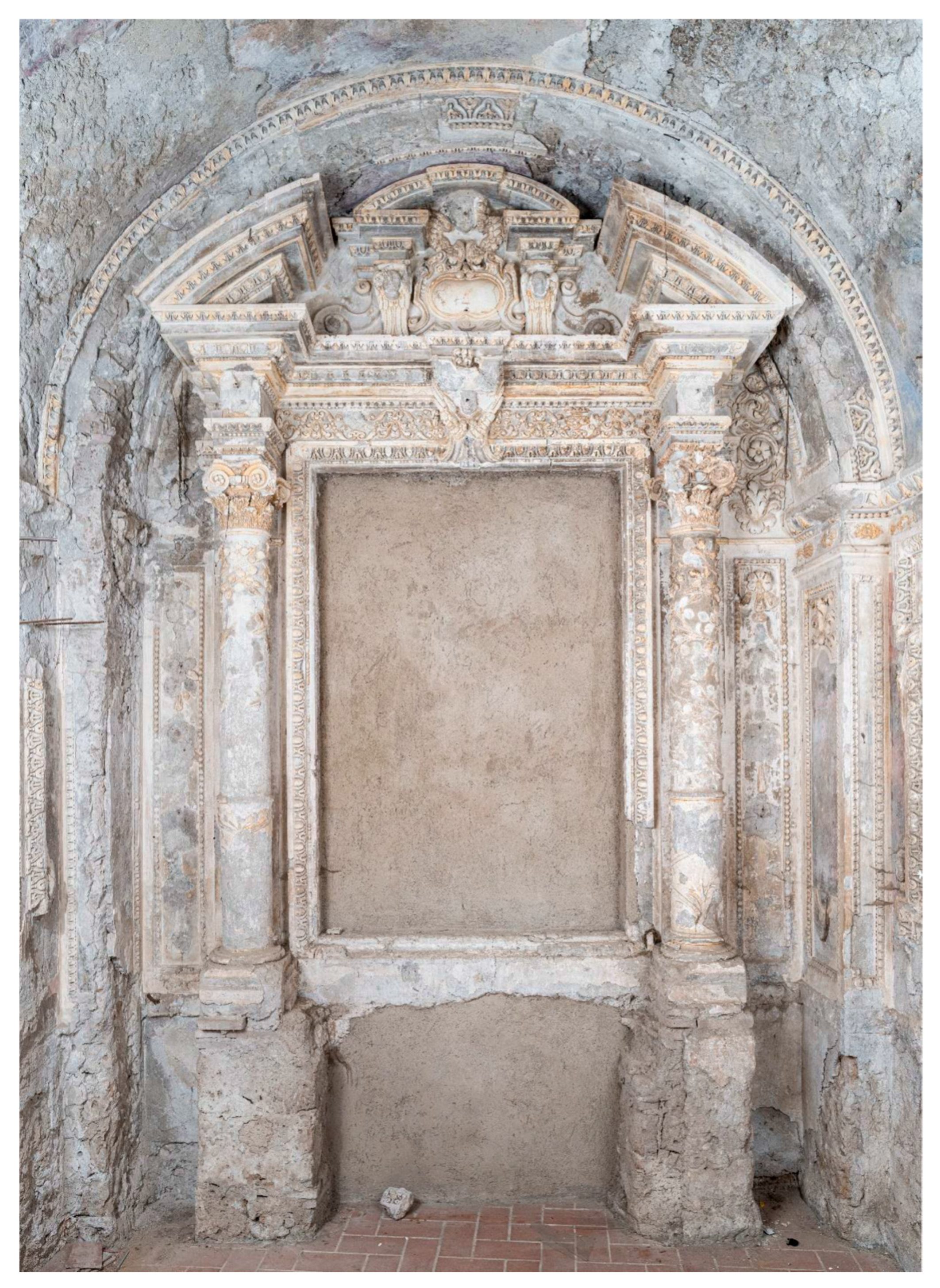
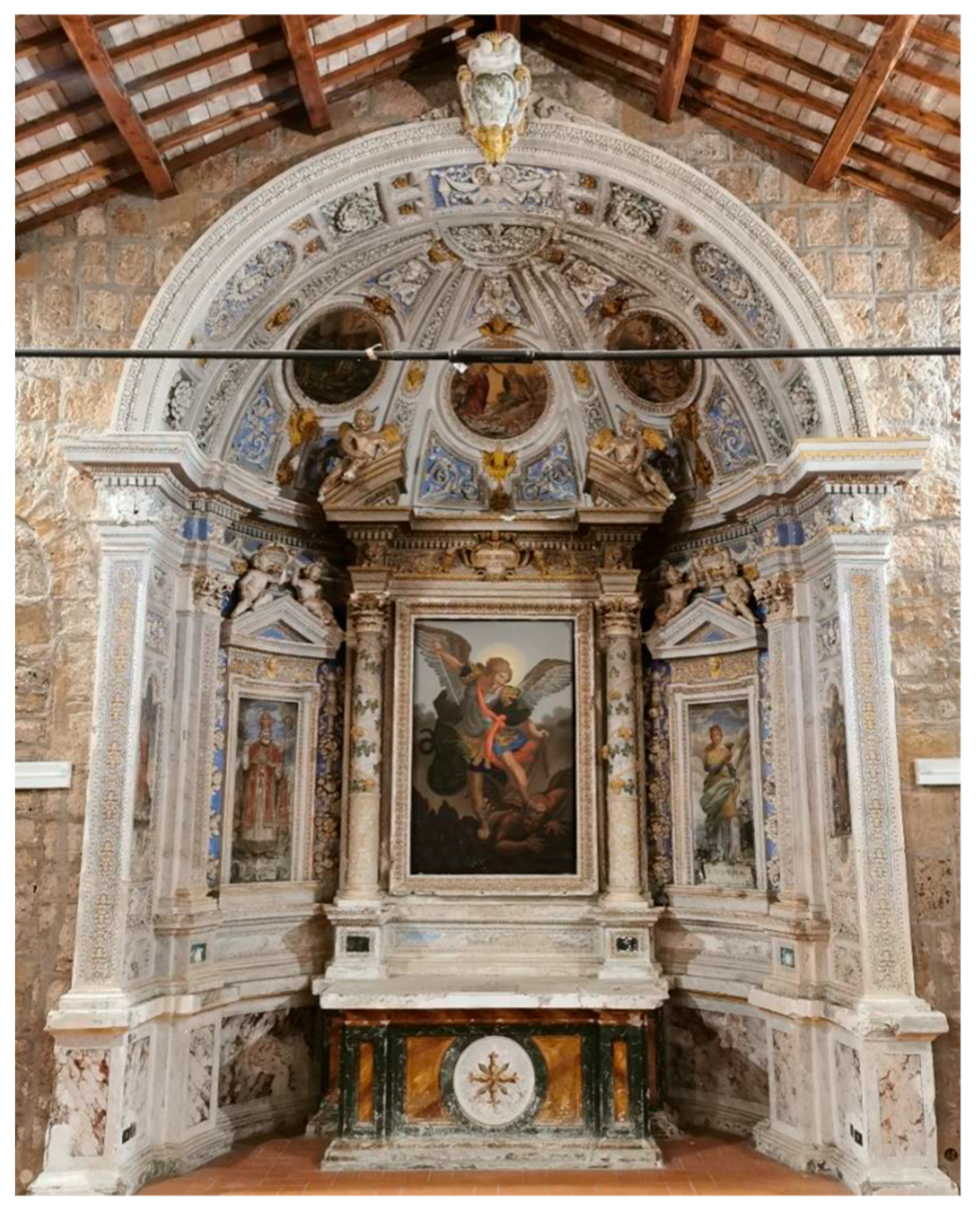
Stucco altars are relevant architectural elements that, with their refined plasticity and decorative quality, serve as a distinctive hallmark of Italian Baroque art. Nevertheless, they are not studied as extensively as paintings or polychrome artworks [1,2] and consequently, only a few scientific studies can be found on this topic [3,4,5,6,7], with even fewer on their gilding [8,9]. The development of a robust diagnostic procedure is therefore essential, not only to enable a deeper understanding of the materials and execution techniques, but also as a tool to support the planning of targeted restoration interventions, as in the case of the present study. Based on this general premise, the main aim of the present study is to illustrate the diagnostic and analytical procedure leading to the characterization of the surface materials of a 17th-century stucco altar devoted to St. Michael the Arcangel (Figure 1) and located in the Church of Saint Michael in the little town of Barbarano Romano near Viterbo (northern Lazio, Central Italy). The analyses carried out in support of the restoration project mainly aimed to define the cleaning process for the surface layer which appeared anomalous and not original due to its composition.
Moreover, during the restoration, the need arose to collect as much information as possible about past interventions on the church complex, so we decided to analyze a few samples from the Main Altar as a comparison (Figure 2), the only other altar in church with some stucco details. A comparison of the Main Altar surface materials with those of the St. Michael Altar was considered relevant for the present study and, above all, to date the superficial intervention on the altar of St. Michael.
The church housing the two altars is part of a large complex. Its current architecture reflects successive transformations, the most recent of which, dating to the late 20th century, converted the complex into a Historical–Archaeological Museum [10,11].
Looking at the church, the Altar of Saint Michael the Archangel is in the eponymous, contemporary chapel on the far left of the spaces behind the apse, set back to the left of the Main Altar. The entire church, particularly the chapel housing the Altar of Saint Michael the Archangel, is shrouded in a sort of time void, making its origins difficult to reconstruct; the only documented event is a major restoration at the end of the 18th century (Figure 1) [12] (p. 193). The complex situation and history of the Altar, and of the entire church in general, have been widely described in Marta Cristofori’s Master’s degree thesis [12]; in this paper, only some general information is supplied. Prior to the conservation intervention, the altar of Saint Michael the Archangel, originally decorated with white and gold moldings, was in an advanced state of deterioration with extensive lacunae and cracks to both the structure and surface. This was due not only to the long period of abandonment lasting for almost a century, attested to a few years before the major restoration, but also to high relative humidity, capillary rise, and rainwater infiltration, all particularly harmful to stone objects. In addition, unexpectedly, all the original white stucco moldings appeared hidden beneath a greyish layer, showing tones that were more intense on the frontal areas, less intense on the sides, and completely absent in the undercuts where brushstroke patterns are visible in some areas. The advanced state of deterioration highlights the difficulties encountered during the restoration treatment, particularly during cleaning, as it was hard to distinguish between original materials, products of alteration and degradation, and later interventions.
Within this framework, contextualization of the greyish layer is challenging, since it raised many questions during the planning of the cleaning intervention. For the reasons described above, a solid analytical procedure was developed to support the recently concluded restoration of the altar, in the hope it could serve as a model for complex cases like this which are characterized by the absence of historiographical references and the complete loss of the object’s formal unity [12]. The procedure first involved on-site non-invasive analysis, indispensable in modern diagnostics of cultural heritage, and continued with laboratory investigations focusing on the areas where the on-site data highlighted points of interest [13]. The success of this study was guaranteed by an active collaboration between restorers, art historians, and scientists, who, working together, have addressed the results of each step of the path to solve the questions that arose during the restoration [14,15]. The first step was devoted to in situ analysis by using ultraviolet fluorescence photography (UVF) and X-ray fluorescence spectroscopy (XRF), two widely used techniques in artwork examinations [16,17,18,19,20,21,22,23]. The on-site analysis revealed some interesting details of the stucco surfaces that needed to be further investigated to inform the final decision for the cleaning phase of the restoration. To reach this goal, scanning electron microscopy coupled with energy-dispersive spectroscopy (SEM-EDS), micro-Raman and Fourier transform infrared (FTIR) spectroscopies, and gas chromatography coupled with mass spectrometry (GC-MS) were used for material characterization, all widely applied techniques in the cultural heritage analysis of materials [24,25,26,27,28,29,30,31]. SEM-EDS was particularly useful for locating the chemical elements in the stratigraphy of the stucco surface so as to definitively establish the original/non-original uses of the surface coating [29,30,31]. The chosen investigation procedure demonstrated effectiveness in solving the questions that arose during the preliminary steps of the restoration activities, as detailed in this paper.

2. Materials and Methods

2.1. Ultraviolet Fluorescence Photography (UVF)

UVF photography was performed by using a Nikon (Nital SpA, Moncalieri Torino, Italy) D5300 digital camera equipped with a 35 mm lens, in front of which two filters were applied: a UV-IR cut filter and another named A that completely cuts the near-IR region. The spectra of the used filters have been previously published [32]. The parameters set on the camera were F-stop 20, exposure time 15 s, and sensitivity equal to ISO 250. The fluorescence of the surface was produced by irradiating it with two LED lamps (CR230B-HP 10 W) with an emission peak at 365 nm. Due to the presence of the scaffolding, UVF images were acquired from the upper portion of the stucco altar.

2.2. X-Ray Fluorescence Spectroscopy (XRF)

XRF spectra were acquired using a portable instrument supplied by Assing (Monterotondo, Rome, Italy) named Surface Monitor II. The spectrometer is equipped with a Ag anode operating at 40 kV and 76 µA. The acquisition time was set as 60 s, the distance from the analyzed surface equal to 94 mm, and the spot to 2 mm. The instrument was equipped with an Amptek X-123 Si-PIN detector (Bedford, MA, USA), with a resolution of 145 to 260 eV at 5.9 keV, and an optimum energy range of 1–40 keV. All spectra were collected by Gonio software (Version 2.0) supplied by Assing™. XRF analyses were performed on thirteen points, selected after the observation of the stucco surface by ultraviolet radiation. XRF points are reported in the Supplementary Materials (see Figure S1, numbered X1 to X14).

2.3. Micro-Sampling for Laboratory Analysis

By following the step-by-step process reported in the Introduction, selected micro-samples were taken from the altar surfaces to aid the laboratory investigation in identifying the materials and the eventual degradation products with the best level of certainty. As it was performed during restoration, sampling might sometimes appear non-sequential or confusing. However, work requirements made this process inevitable (see Table S1 in the Supplementary Materials for micro-sample description and numbering). For example, during work, it was necessary to sample in the same or similar areas for further analysis aiming at ascertaining the material characterization.
Overall, thirteen micro-samples were gathered: eleven from the St. Michael Altar and two from the Main Altar in the church to conduct a comparison of the surface materials. The micro-sample locations are shown in the Supplementary Materials (see Figures S2 and S3).
Micro-samples were analyzed in the form of powders or fragments, and in the form of cross-sections in the case of SEM-EDS analysis. These last ones were prepared by embedding the sample micro-samples in an acrylic resin and, after hardening of the resin, by cutting and polishing the little blocks to make them suitable for scanning electron microscope observation.

2.3.1. µ-Raman Spectroscopy

A total of six micro-samples were investigated using µ-Raman spectroscopy: five (namely P1, P3, P6, P7, and P9) from the altar of St. Michael the Archangel and one from the Main Altar. Micro-samples P3, P6, and P9 correspond to the greyish layer covering the stucco moldings, while micro-sample P7 refers to an area that was originally gilded. Micro-sample P1 was taken from a whitish, powdery area visually identified as a salt formed by efflorescence. The single micro-sample from the Main Altar consists of a molding strip which appears to be affected by the same white layer found on the altar of St. Michael the Archangel.
µ-Raman measurements were carried out at the Department of Science, Roma Tre University, using a Renishaw (Wotton-under-Edge Gloucestershire, UK) inVia Raman spectrometer equipped with diode lasers at 532 nm and 785 nm (with output powers of 100 mW and 180 mW, respectively), gratings with 1800 lines/mm for the 532 nm laser and 1200 lines/mm for the 785 nm laser source, and a Peltier-cooled 1024 × 256 pixel CCD detector. A Leica (Wetzlar, Germany) DM2700 M confocal microscope equipped with objectives of different magnifications (20×, 50×, and 100×) was used to focus the laser beam onto the micro-sample surface and to collect the scattered radiation. Spectra were acquired at room temperature in the wavenumber range 100–3600 cm−1, with a spectral resolution of approximately 1 cm−1 for the visible laser and ~5 cm−1 for the infrared laser, using a long-working-distance 50× objective. The 520.5 cm−1 line of a silicon standard was used for spectral calibration. WiRE 5.2 software (Renishaw, Wotton-under-Edge Gloucestershire, UK) was employed for measurement setup, data acquisition, subtraction of systematic errors, baseline correction, and data smoothing. Acquisition parameters were optimized to prevent laser-induced micro-sample degradation and to improve the signal-to-noise ratio: laser powers were kept <1 mW for the 532 nm source and <5 mW for the 785 nm source, with exposure times between 1 s and 3 s and 40 spectral accumulations.

2.3.2. Scanning Electron Microscopy with Energy-Dispersive Spectroscopy (SEM-EDS)

SEM-EDS analysis was performed on the micro-sample cross-sections at the Large Equipment Center of the University of Tuscia using a Jeol (Tokyo, Japan) JSM 6010 LA scanning electron microscope, operated at 20 kV as the acceleration voltage of the electrons. Before the SEM-EDS analysis, the micro-samples were placed on aluminum stubs, secured with carbon tape, and metalized with gold using a sputter-coater Balzers Union MED10 (Cae, Austin, TX, USA) operating under vacuum.

2.3.3. Fourier Transform Infrared Spectroscopy (FTIR)

FTIR analysis was performed using a Nicolet Avatar 360 spectrometer (Thermo Fisher Scientific, Waltham, MA USA) equipped with a diffuse reflectance accessory (DRIFT), a Michelson interferometer, and a detector based on deuterated triglycine sulfate (DTGS). Spectra were obtained by grinding about 10 mg of the micro-sample with spectrophotometric-grade potassium bromide (KBr), which was also used as background material. Spectra were processed with Omnic 8.0 software supplied by Thermo Fisher Scientific.

2.3.4. Gas Chromatography Coupled with Mass Spectrometry (GC/MS)

A GC/MS made-up 7820A GC system gas chromatograph (Agilent Technologies, Palo Alto, CA, USA), equipped with a Split/Splitless injection port and with a 5977B GC/MSD mass spectrometer (Agilent Technologies), was used to separate and identify the organic compounds on micro-samples P4, P8, P9, P10, P11, P12, and P13. Micro-samples were hydrolyzed and derivatized following the methods discussed in [33].
Chromatographic separation was performed with a Capillary GC Column SLBR-5MS (L × I.D. 30 m × 0.25 mm, df 0.25 μm) purchased from Sigma-Aldrich, Supelco (Darmstadt, Germany). The carrier gas (He, purity 99.995%) was used in constant flow mode at 20 mL/min. The mass spectrometer operated in EI-positive mode (70 eV).
The statistical calculation analysis was performed using PAST (PAleontological STatistics) 4.02 software. Chromatograms were reproduced using the Origin 8 program.

3. Results and Discussion

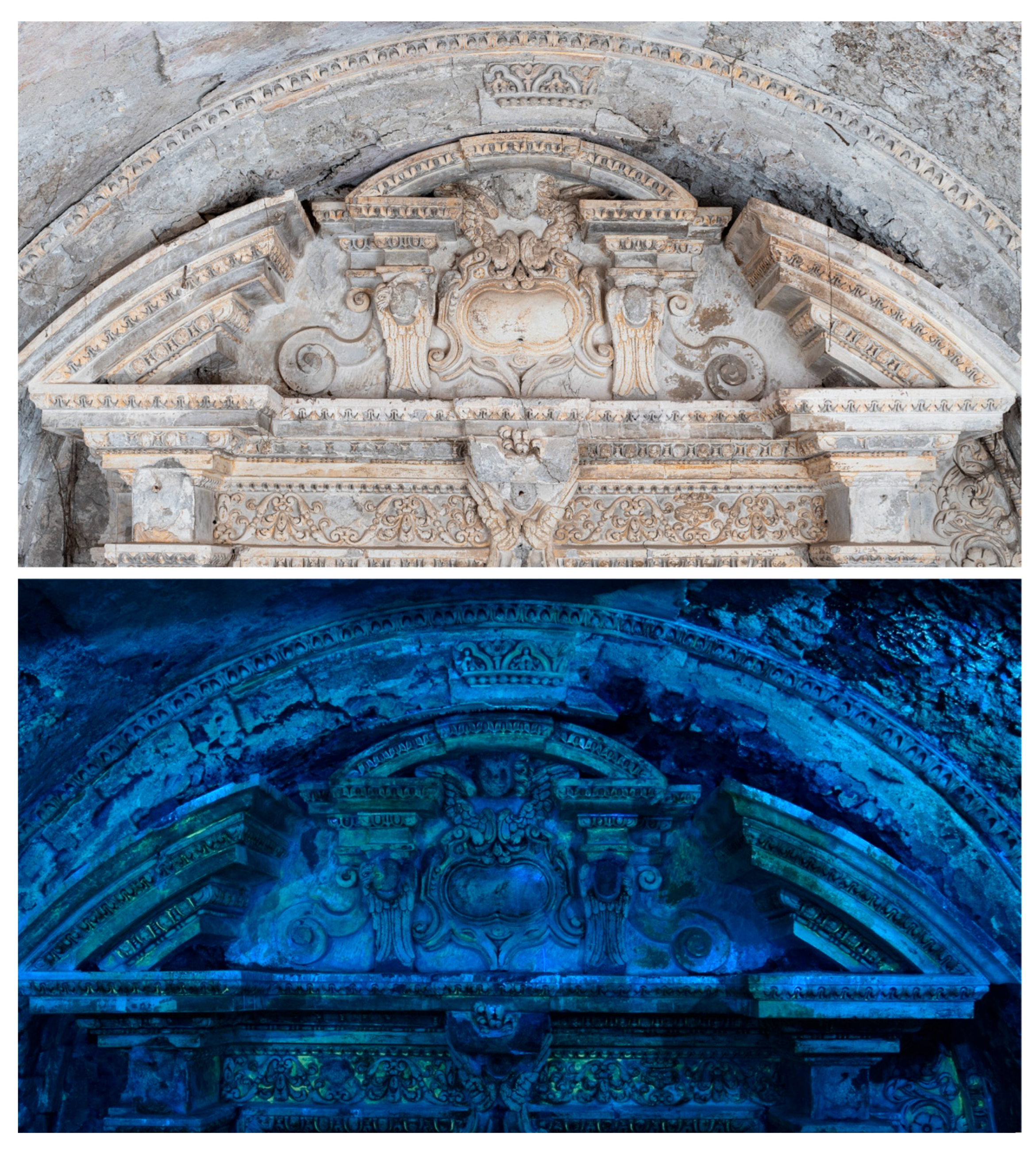
A first investigation of the stucco surfaces was performed using UVF photography. It is a fundamental technique in restoration since it gives information about the state of conservation [20,21,22,23]. The UVF images confirmed the bad state of conservation of the stuccoes, as observed by restorers from the scaffolding at the beginning of the work, and showed a diffused blue fluorescence due to the main constituting materials of the stuccoes, i.e., gypsum and probably organics. Moreover, an unexpected yellow fluorescence was observed non-homogeneously on the surfaces (Figure 3).
The yellow fluorescence seemed associated with a superimposed white layer partially interconnected, in some zones of the altar, with a dark or light grey surface color. This last appeared anomalous and was interpreted as a probable deposit of carbonaceous material, plausible if considering the presence of worshippers and lit candles in the chapel. The presence of soot in places of worship such as churches and chapels is common due to the use of candles (lit for devotion) that produce black deposits on surfaces [34,35,36,37,38]. However, in some zones, the grey layer was characterized by the presence of brushstrokes, indicating a possible intentional application, whereas in others it was completely absent (right side). This was quite puzzling, as also hinted in the Introduction, and had to be solved before proceeding with the cleaning operation.
The subsequent step was XRF analysis of the surface layers that revealed the unexpected presence of lead along with calcium, strontium, sulfur, and other minor elements such as iron. The other relevant element detected in the few remaining gilded zones was gold (see Supplementary Materials, Table S2).
Ca, Sr, and S are elements generally associated with bulk stucco [1,2,3,4,5,6,7,8], but how could Pb be associated?
Due to the white color, the presence of a white pigment, namely lead white, could be hypothesized, but its presence on white stucco is not documented. For this reason, we decided to deepen our investigation in the laboratory to confirm the presence of lead white, and to understand if lead white was added to the original surface of the stucco altar as a restoration intervention or if it was a constituent material of the artwork. Specifically, two techniques were used to address the above-mentioned doubts, µ-Raman spectroscopy and SEM-EDS, with the latter applied to the cross-sections in order to understand the time-sequence of artwork formation.
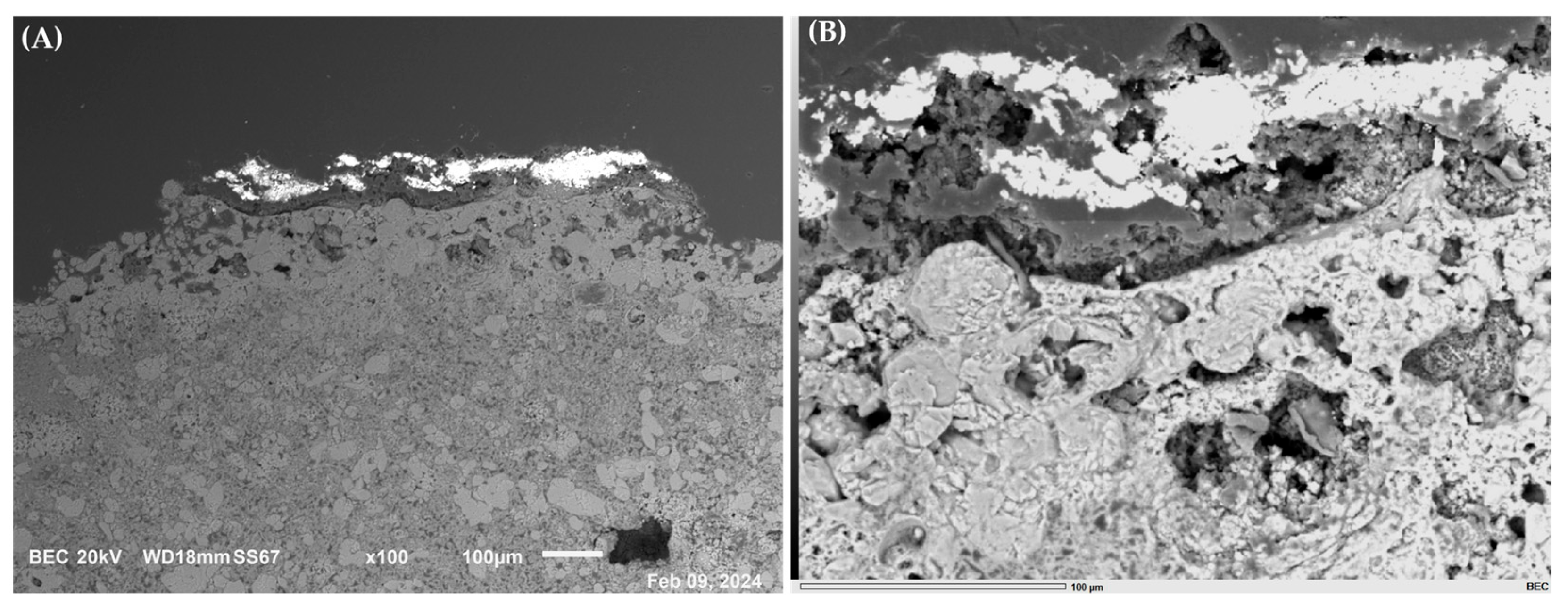
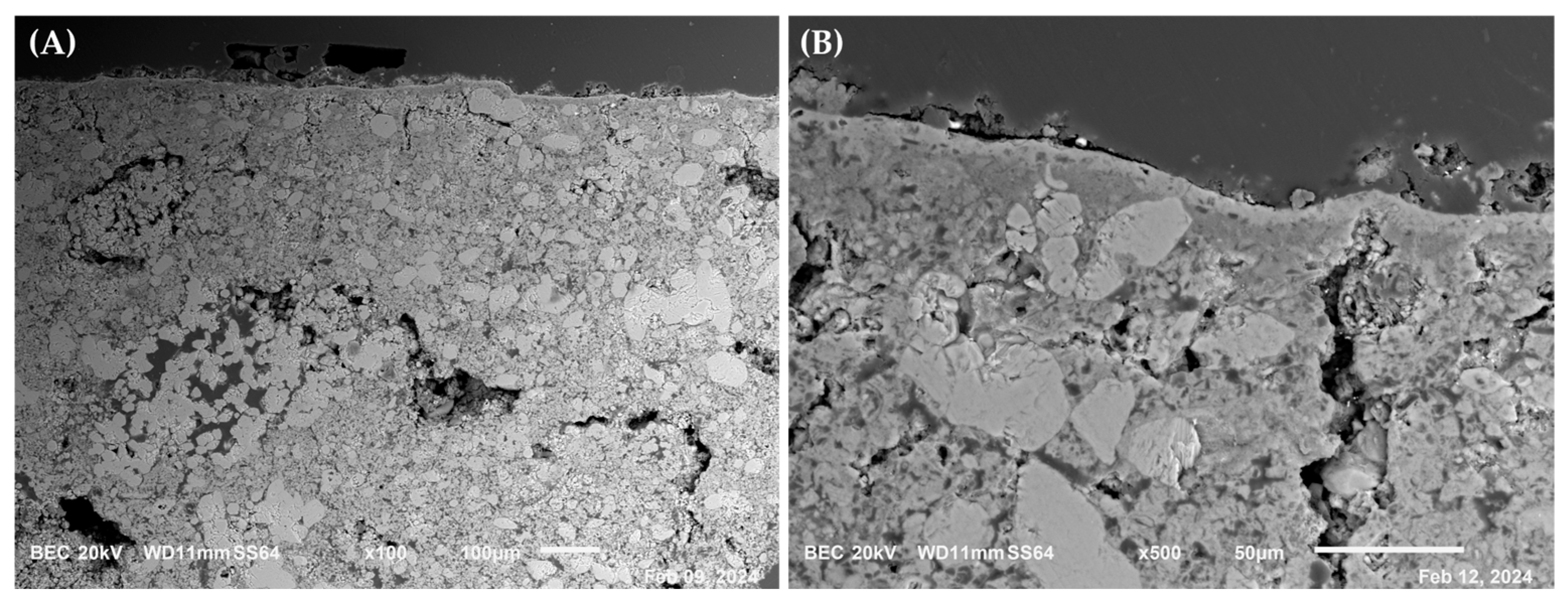
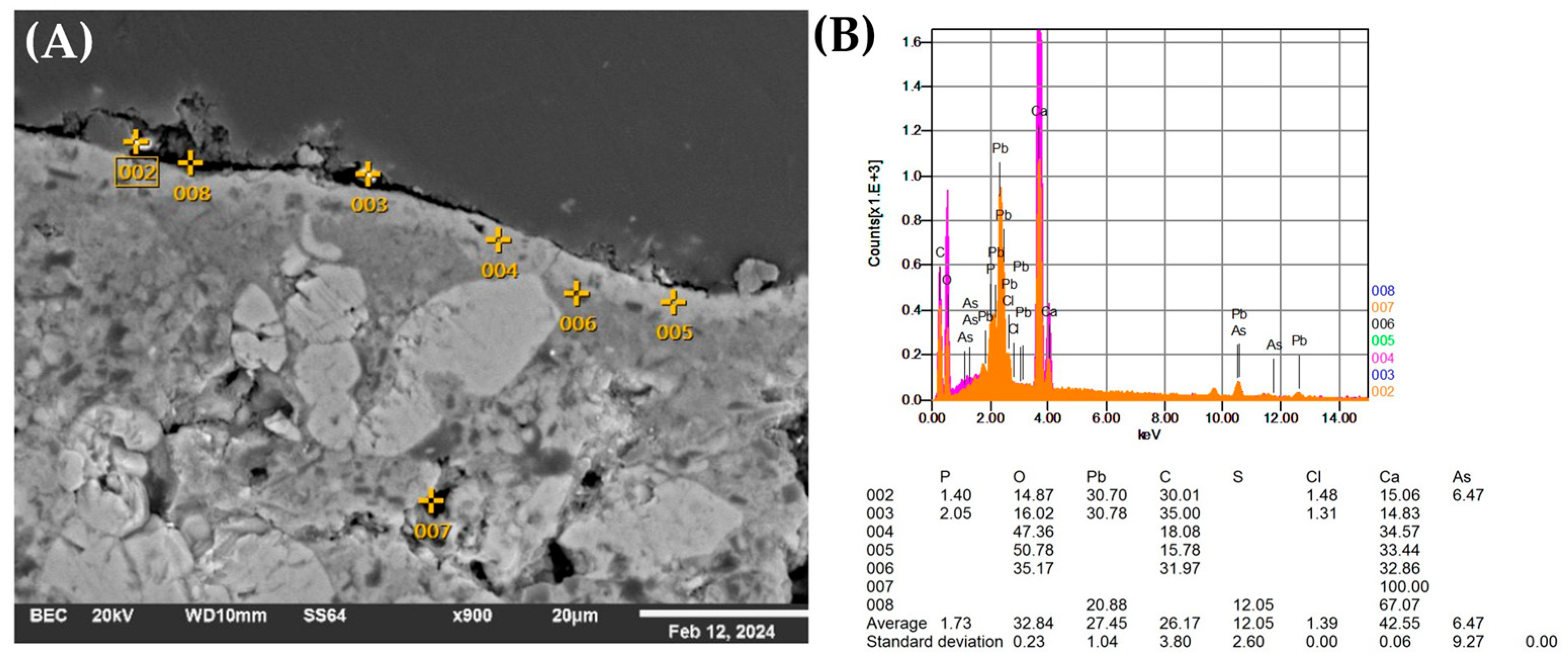
SEM–EDS analysis on cross-sections of micro-samples P4 and P5 was specifically used to investigate the chemical element distribution in the surface layer. In particular, attention was focused on the greyish layer containing lead (as determined by XRF) to understand where this element was located (Figure 4, Figure 5, Figure 6 and Figure 7).
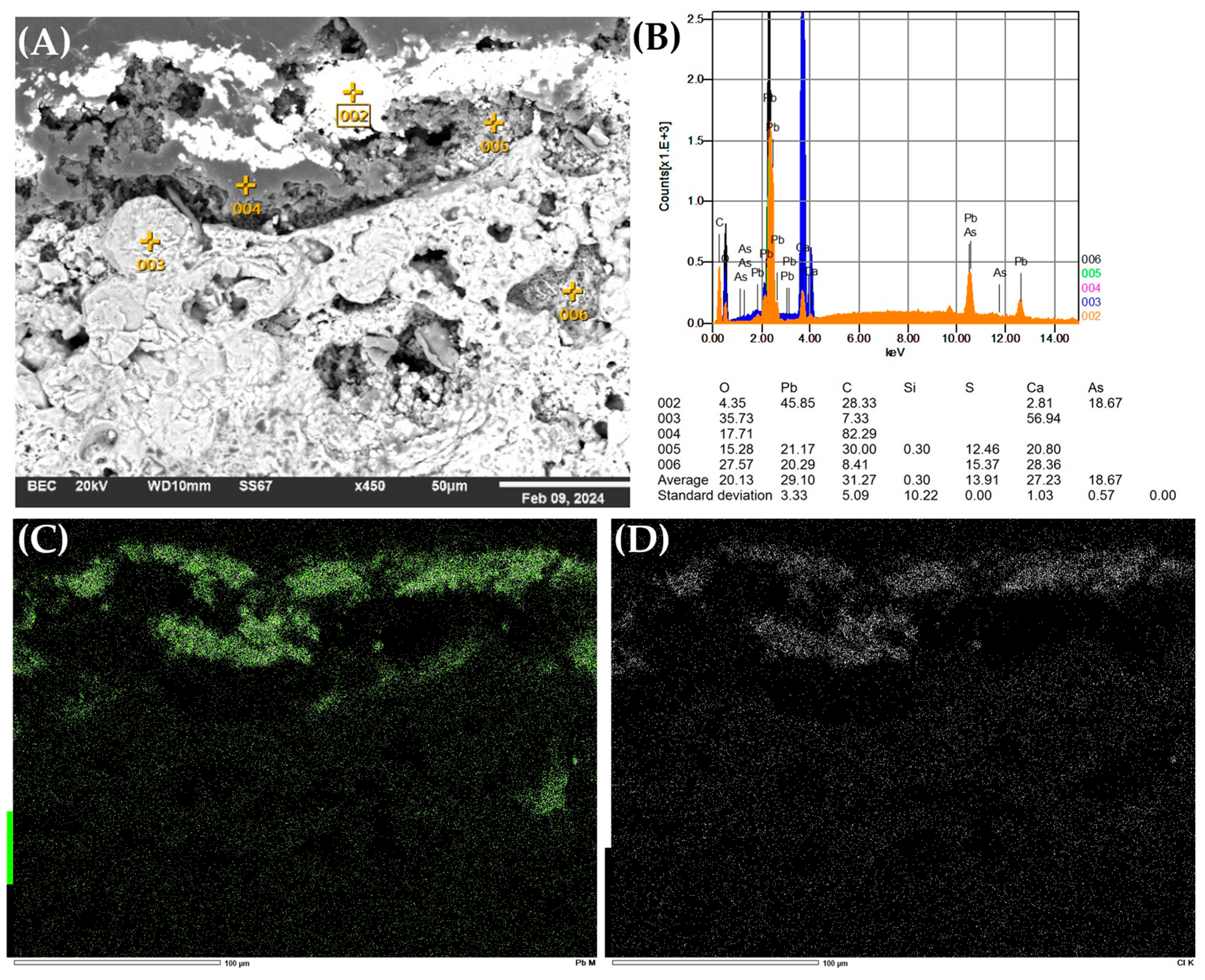
The chemical analysis was focused on the surface layer that appears brilliant white in BEC, suggesting the presence of chemical elements with higher atomic numbers [29,31,39,40]. In the brilliant white areas (002, 005, and 006 of P4; 002 and 003 of P5), EDS analysis indicates a strong Pb enrichment, enabling us to locate the lead-based compound on the surface of the examined micro-samples and definitively confirming the hypothesis that a white layer, probably based on lead white, was added in an ancient intervention on the altar to restore the original white color that became grey or black as a consequence of carbon deposits.
The presence of Cl in both micro-samples P4 and P5, in association with Pb (micro-sample P4, Figure 5, EDS maps of Pb and Cl; micro-sample P5, Figure 7), suggests the potential formation of alteration products of lead white. In the point analysis (Figure 5A,B), chlorine was not detected, probably because it was absent in the selected points of analysis (002, 005, and 006). This result is compatible with the presence of Pb-Cl compounds produced by inhomogeneous lead white degradation patterns.
To confirm this hypothesis and to characterize the lead and chlorine compounds, the subsequent step used micro-Raman analysis.
This technique was applied on micro-samples from the white/greyish layer (namely P3, P6, and P9) and, in addition, one micro-sample from the originally gilded area (P7) and one from an area identified by the restorers as affected by salt formed by efflorescence (P1).
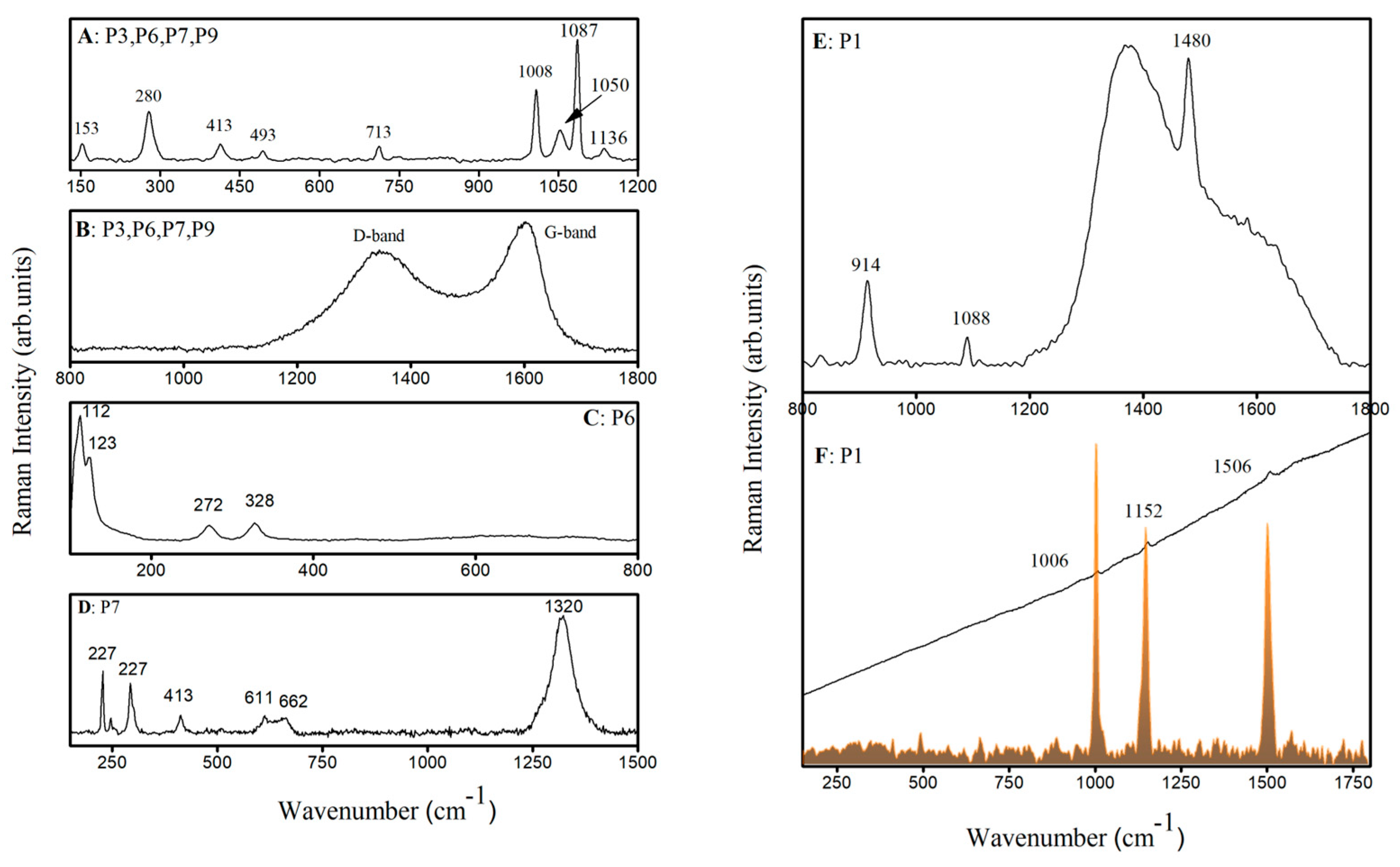
In the white/greyish layer over the stucco moldings (micro-samples P3, P6, and P9), as well as in the originally gilded area (micro-sample P7), Raman spectroscopy identified four phases, calcite, gypsum, lead white, and amorphous carbon, reinforcing the conclusions of previous analyses. Calcite showed bands at 156, 280, 713, and 1087 cm−1 [41] (Figure 8A), gypsum at 413, 493, 1008, and 1136 cm−1 [41] (Figure 8A), and lead white at 1050 cm−1, corresponding to the symmetric stretching of the carbonate group [41] (Figure 8A), and amorphous carbon was detected through the D- and G-bands located at 1333 and 1600 cm−1 [42] (Figure 8B). In addition, micro-sample P6 contains a basic lead salt, namely laurionite, PbCl(OH), formed by lead, chloride-rich solutions, and alkaline conditions with bands at 112, 123, 272, and 328 cm−1 [43] (Figure 8C), while micro-sample P7 shows clear evidence of hematite, with bands at 227, 248, 294, 412, 612, 662, and 1320 cm−1 [41] (Figure 8D). In micro-sample P1, Raman spectroscopy identified calcium oxalates with bands at 914 and 1480 cm−1 [44,45] (Figure 8E) and carotenoid pigments by the main bands located at 1509, 1152, and 1003 cm−1 [46] (Figure 8F).
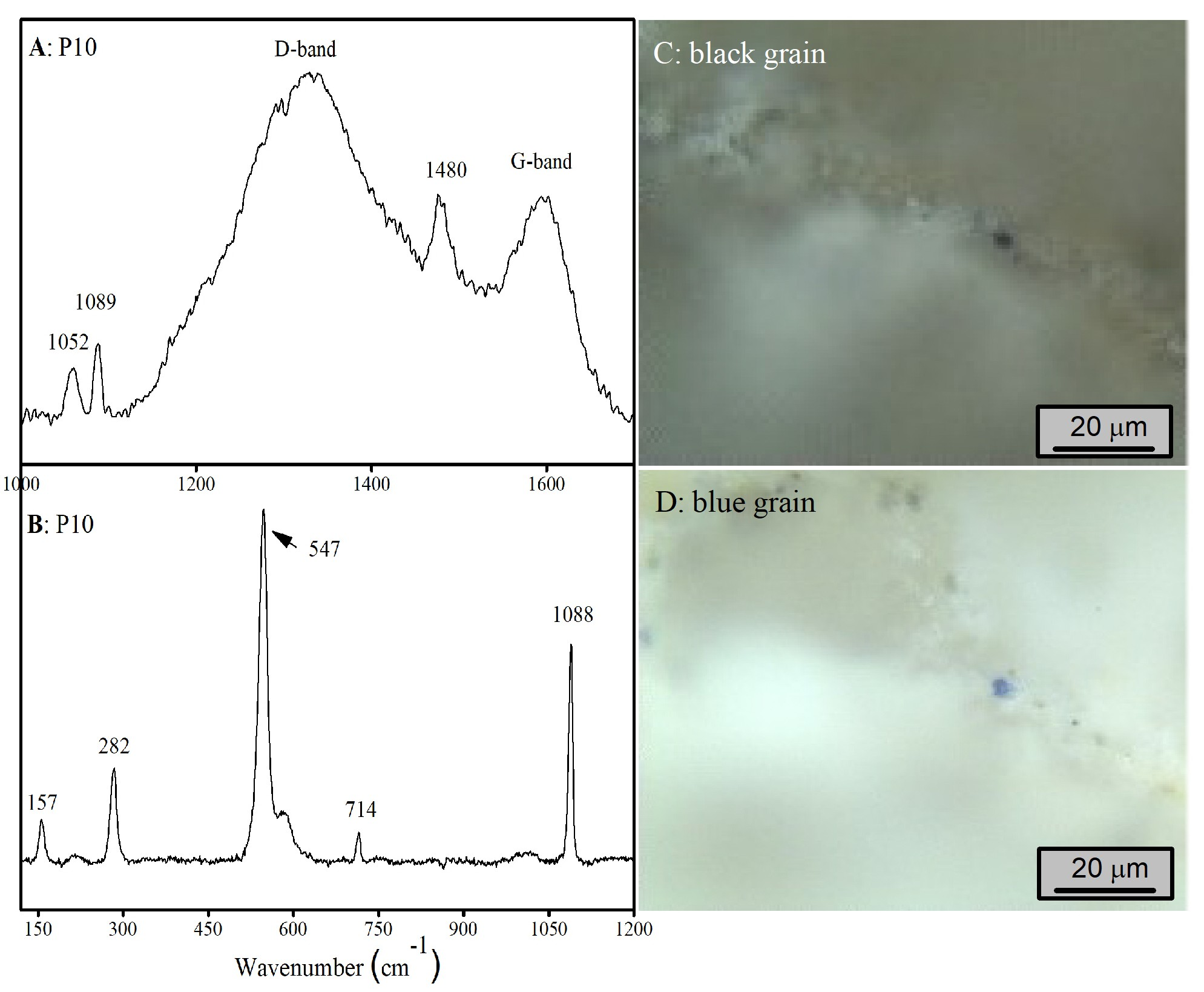
In addition, one micro-sample from the Main Altar, showing the same white/greyish layer and brushstroke pattern observed on the Altar of Saint Michael the Archangel, was investigated. Raman analysis allowed the identification of the same compounds: calcite (band at 1089 cm−1), lead white (band at 1052 cm−1) [41], and carbon black (band at 1320 and 1600 cm−1) [42] (Figure 9A). In addition, calcium oxalate was detected (band at 1480 cm−1 [44,45] (Figure 9A), and lazurite, with bands at 157, 282, 547, and 714 cm−1, was also observed [41] (Figure 9B).
A further investigation of the already available micro-samples was performed by FTIR spectroscopy and GC-MS analysis.
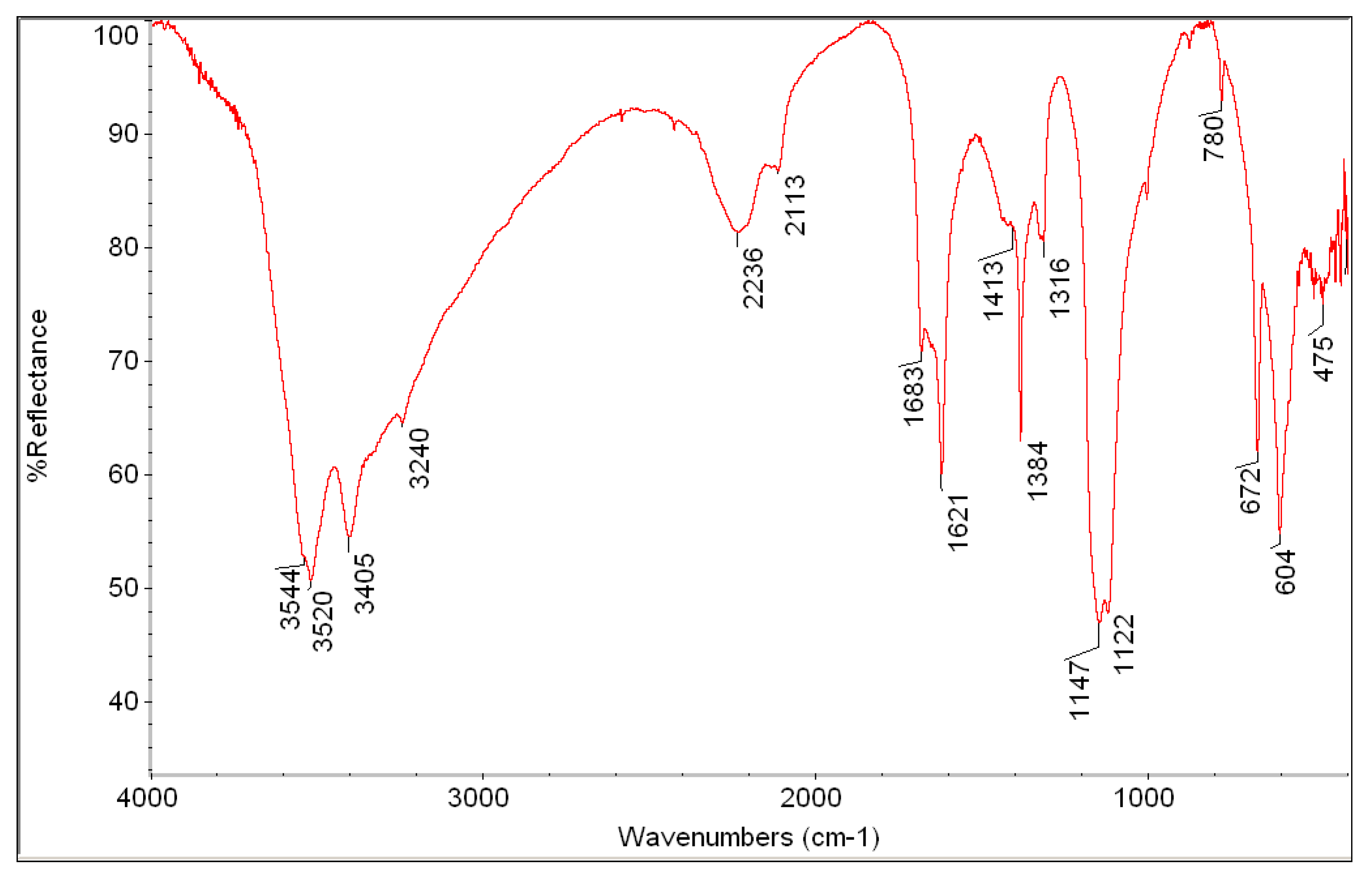
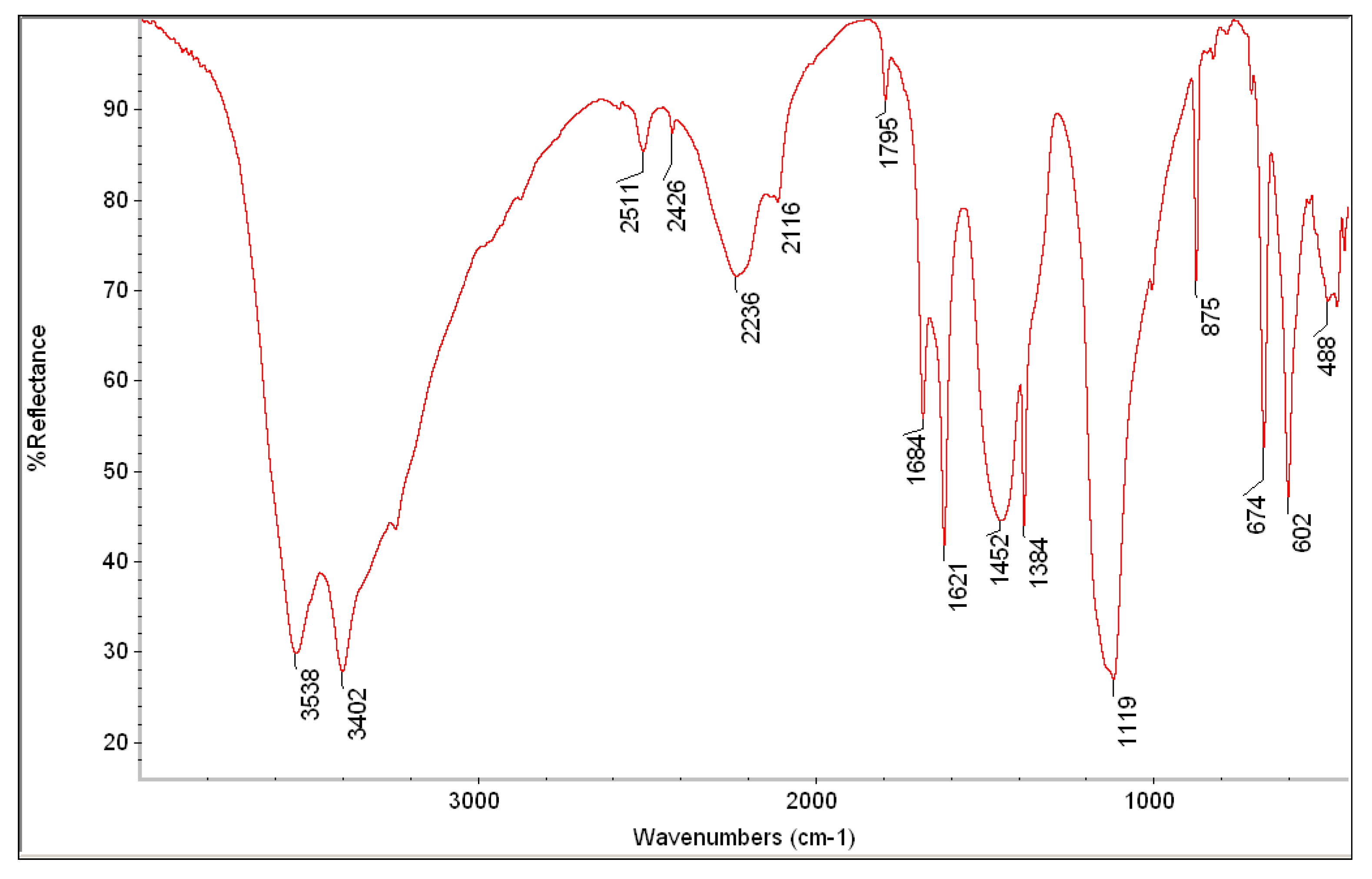
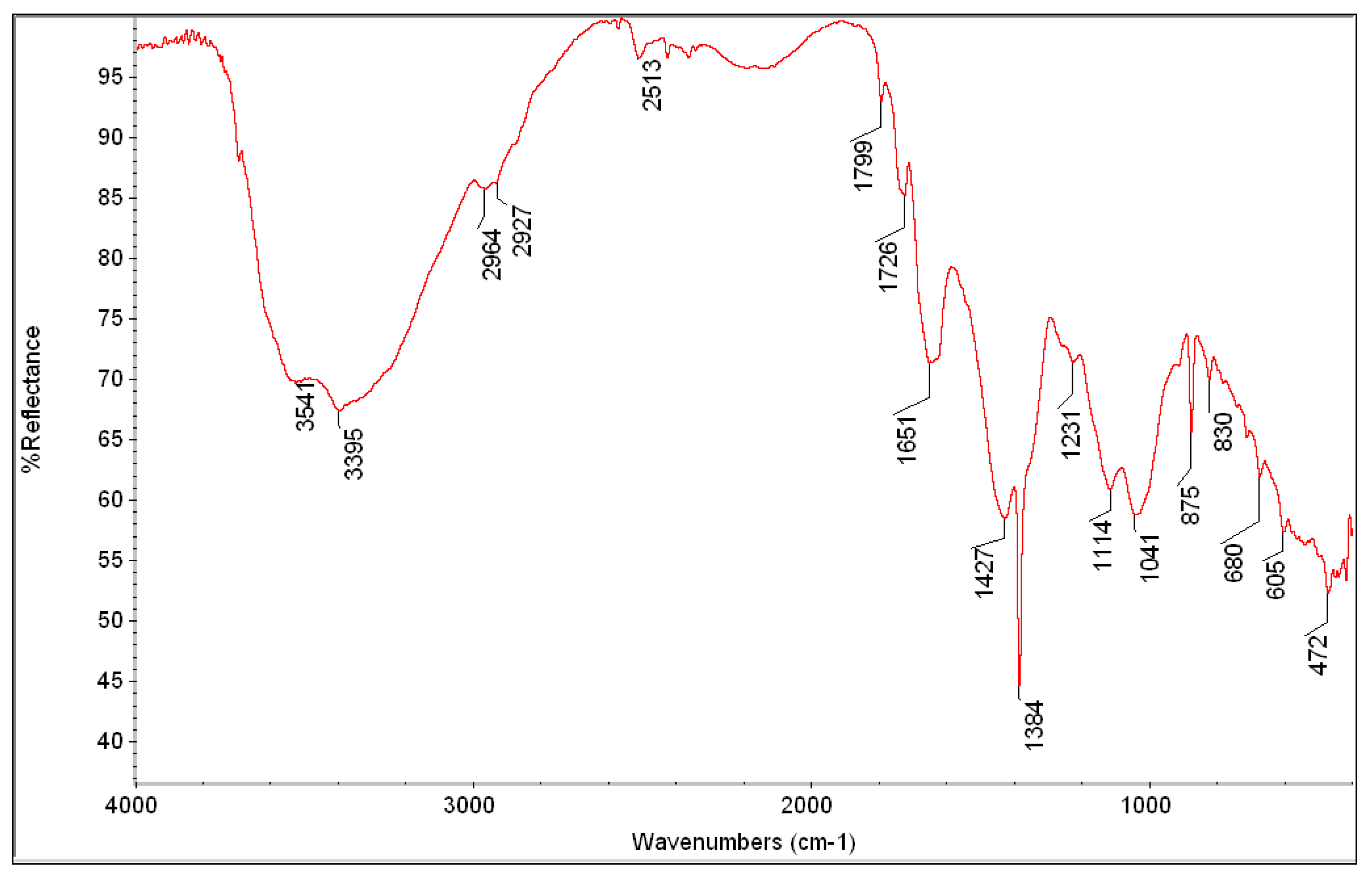
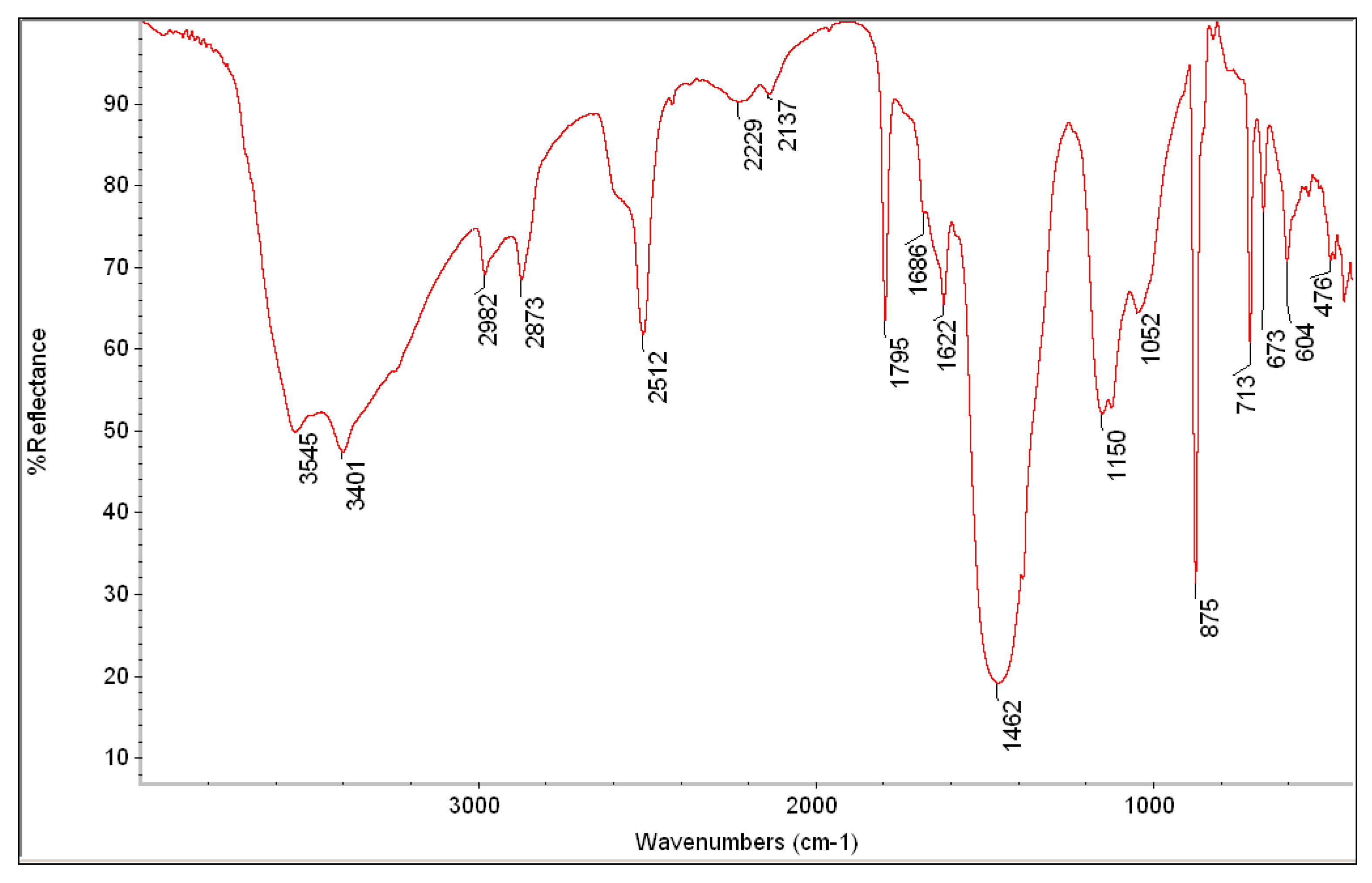
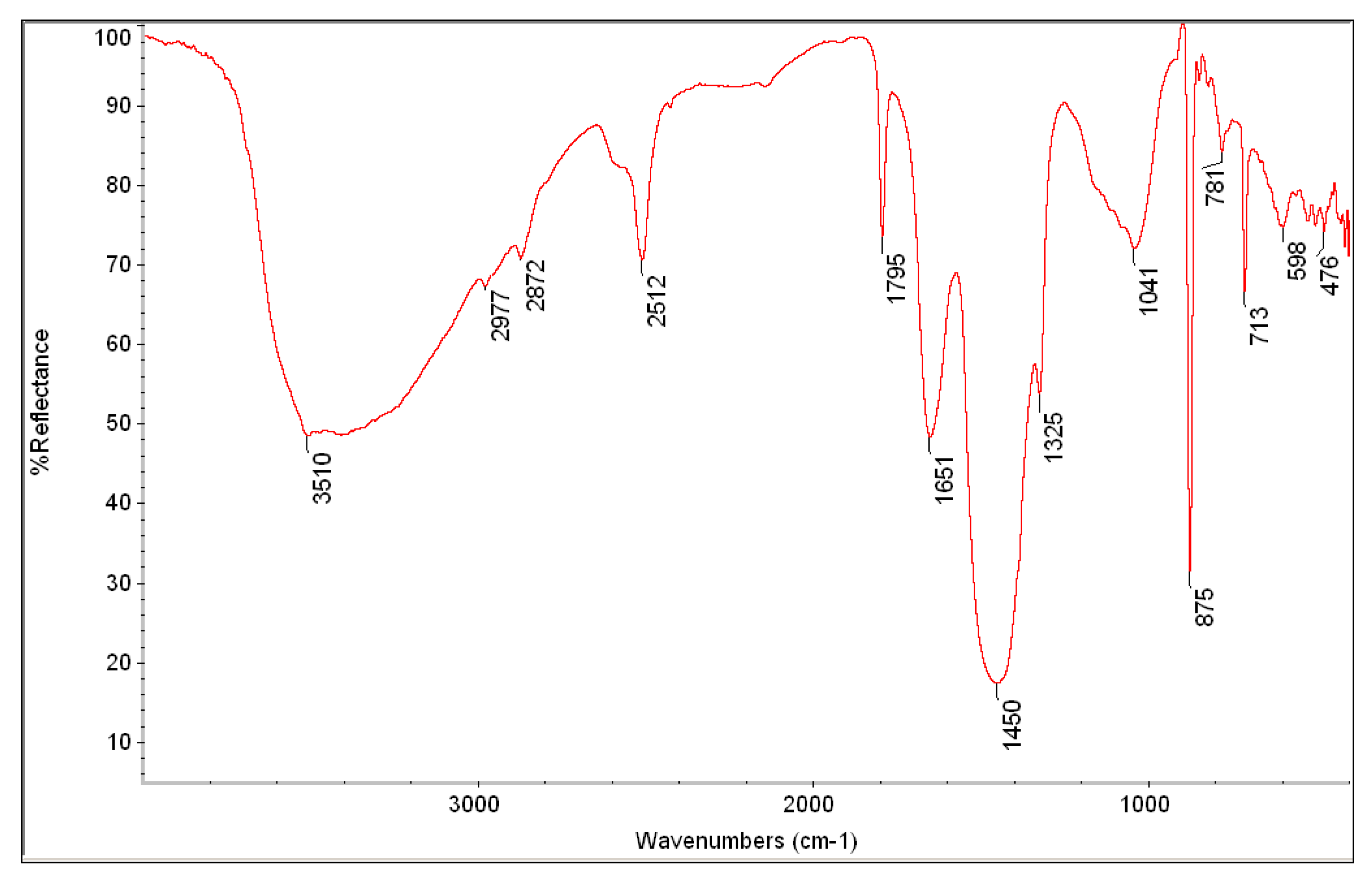
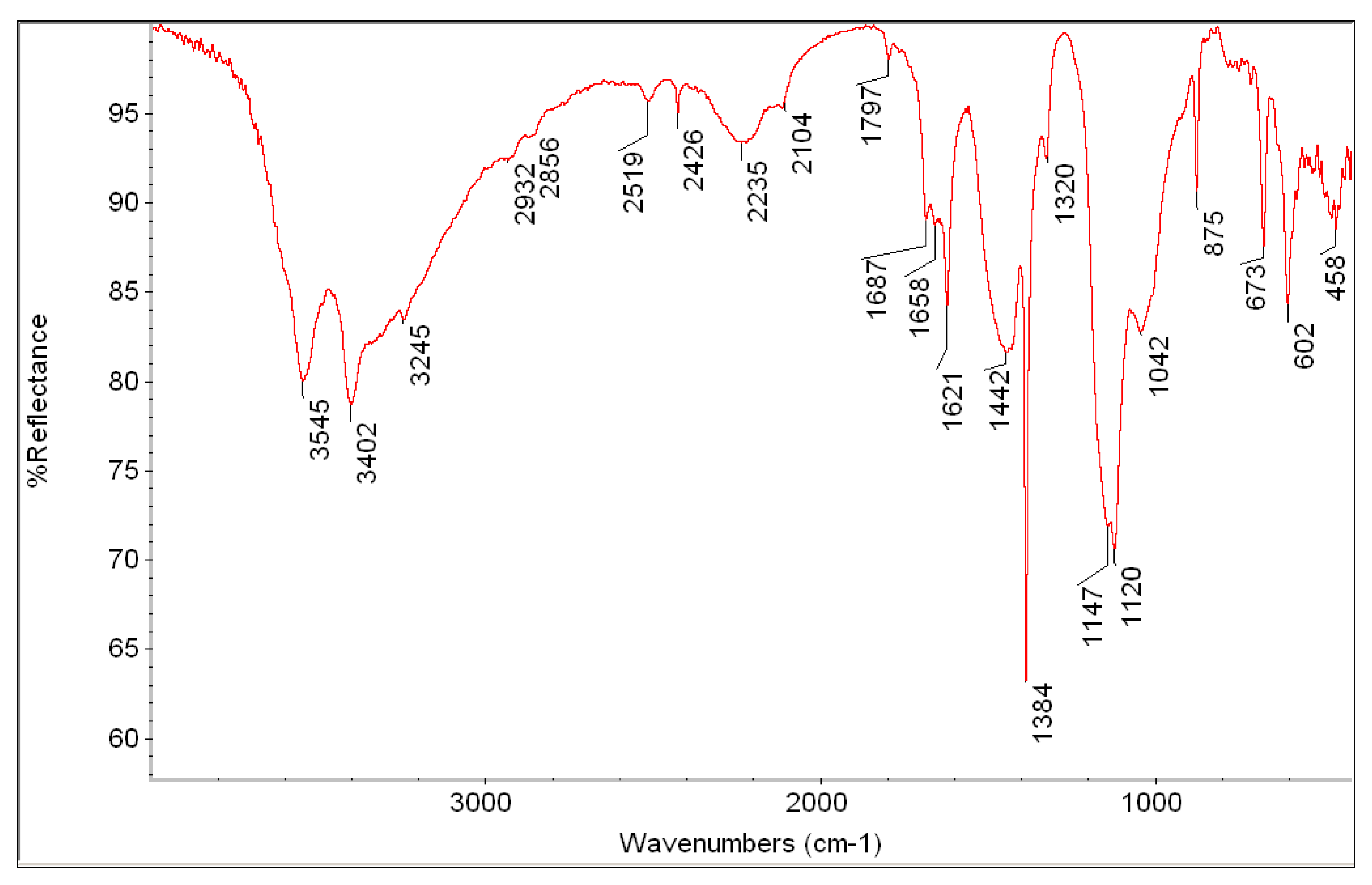
FTIR, applied on micro-samples P1, P2, P3, P4, P6, and P7, revealed the constant presence of gypsum (signatures at 3538–3545, 3395–3402, 2229–2236, 2104–2137, 1683–1687, 1621–1622, 672–680, 602–605, and around 450–480 cm−1) and calcite (signatures at 2511–2519, 1795–1799, around 1450, 875, and 713 cm−1) that are the main constituents of the stucco body (Figure 10, Figure 11, Figure 12, Figure 13, Figure 14 and Figure 15) [47,48].
Micro-samples P1 and P2, described by restorers as a salt formed by efflorescence, are mainly composed of gypsum and calcite with some signatures that could be attributed to oxalates (1384 cm−1, Figure 10) and others to organic compounds (2964, 2927, 1726, 1651, and 1321 cm−1; Figure 11), probably proteins (due to the C=O stretching band of the amide group at 1651 cm−1) and lipids (carbonyl band at 1726 cm−1) [49]. The presence of oxalates is also revealed in micro-samples P4 (signature at 1325 cm−1 in Figure 13), P6 and P7 (signatures at 1316–1320 and 1384 cm−1, Figure 14 and Figure 15) [49].
Some signatures may be associated with lead white, particularly those at 3520 and 1413 cm−1, visible in the spectrum of Figure 14 (micro-sample P6). Traces of organic compounds can be observed in the micro-sample P7 spectrum (Figure 15), also in this case attributable to proteins (signatures at 2932, 2856, and 1658 cm−1) [47,48,49].
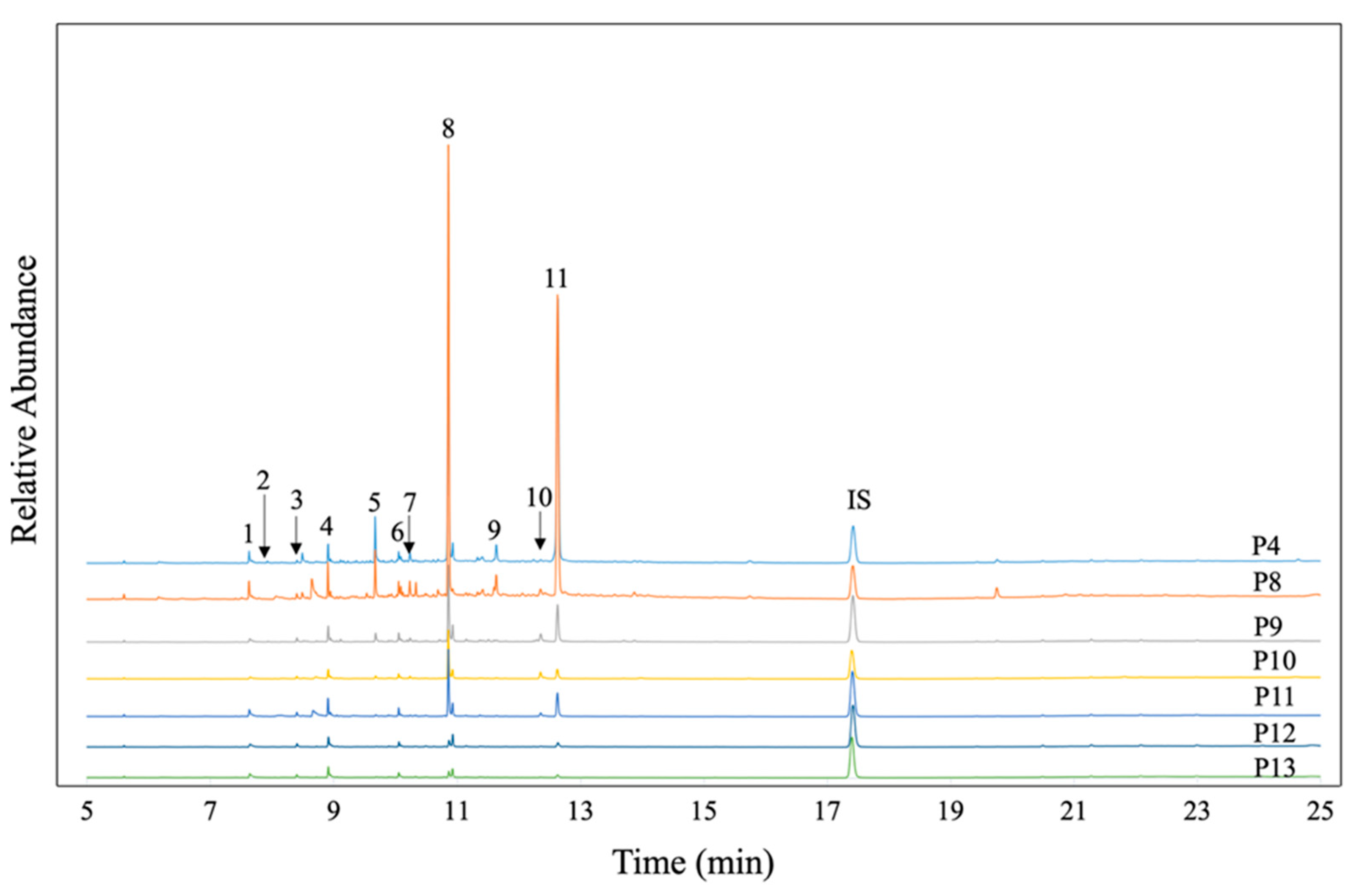
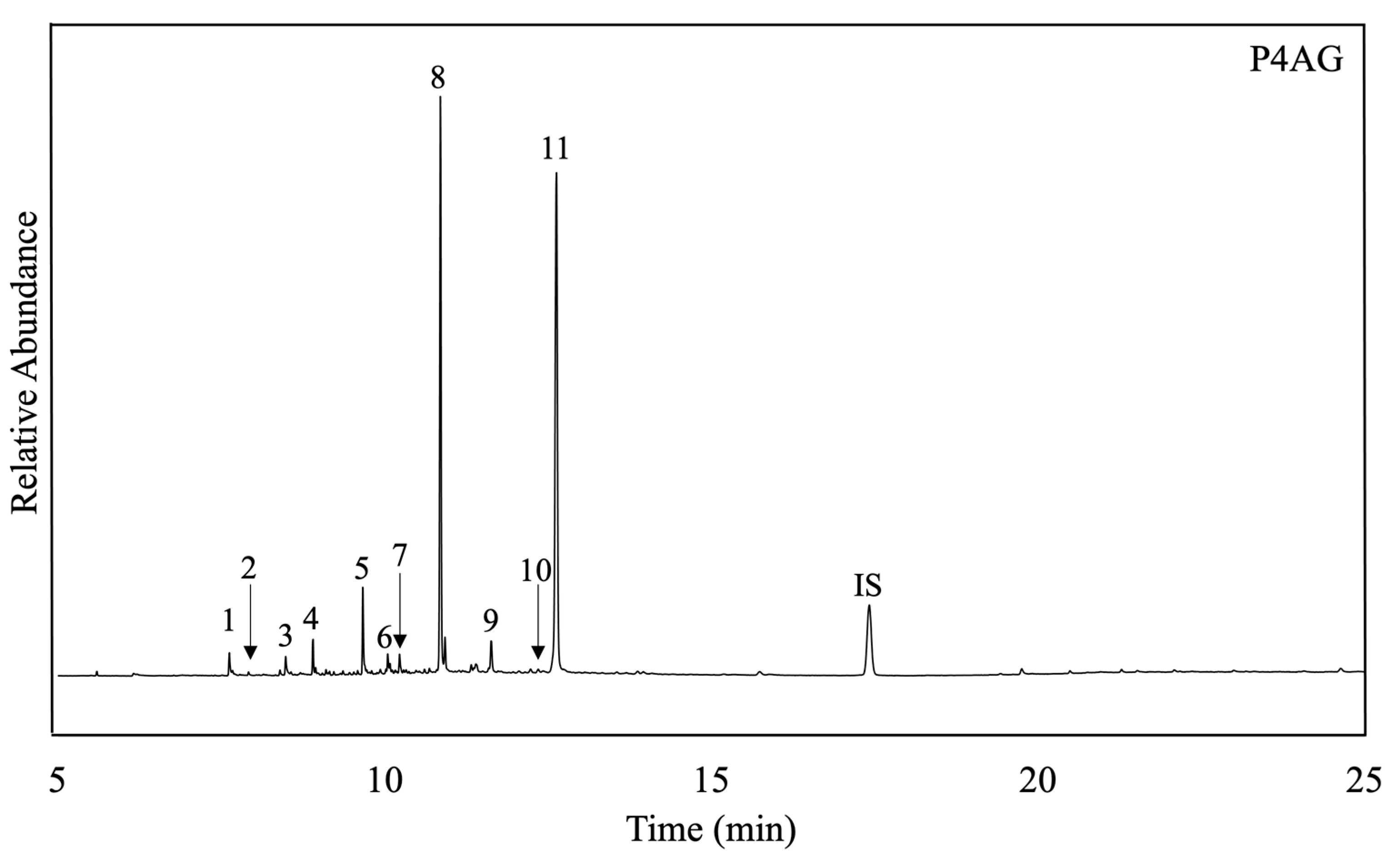
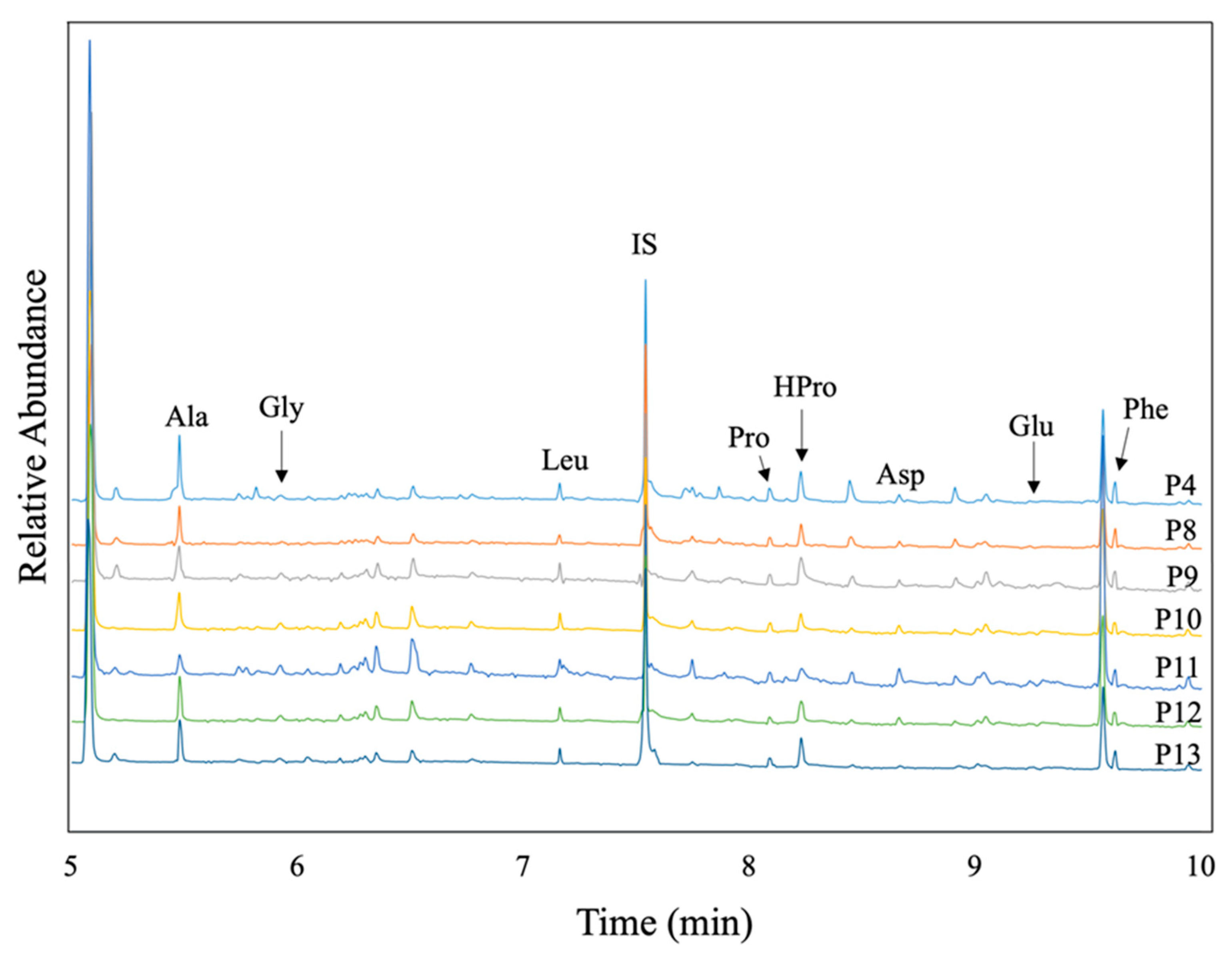
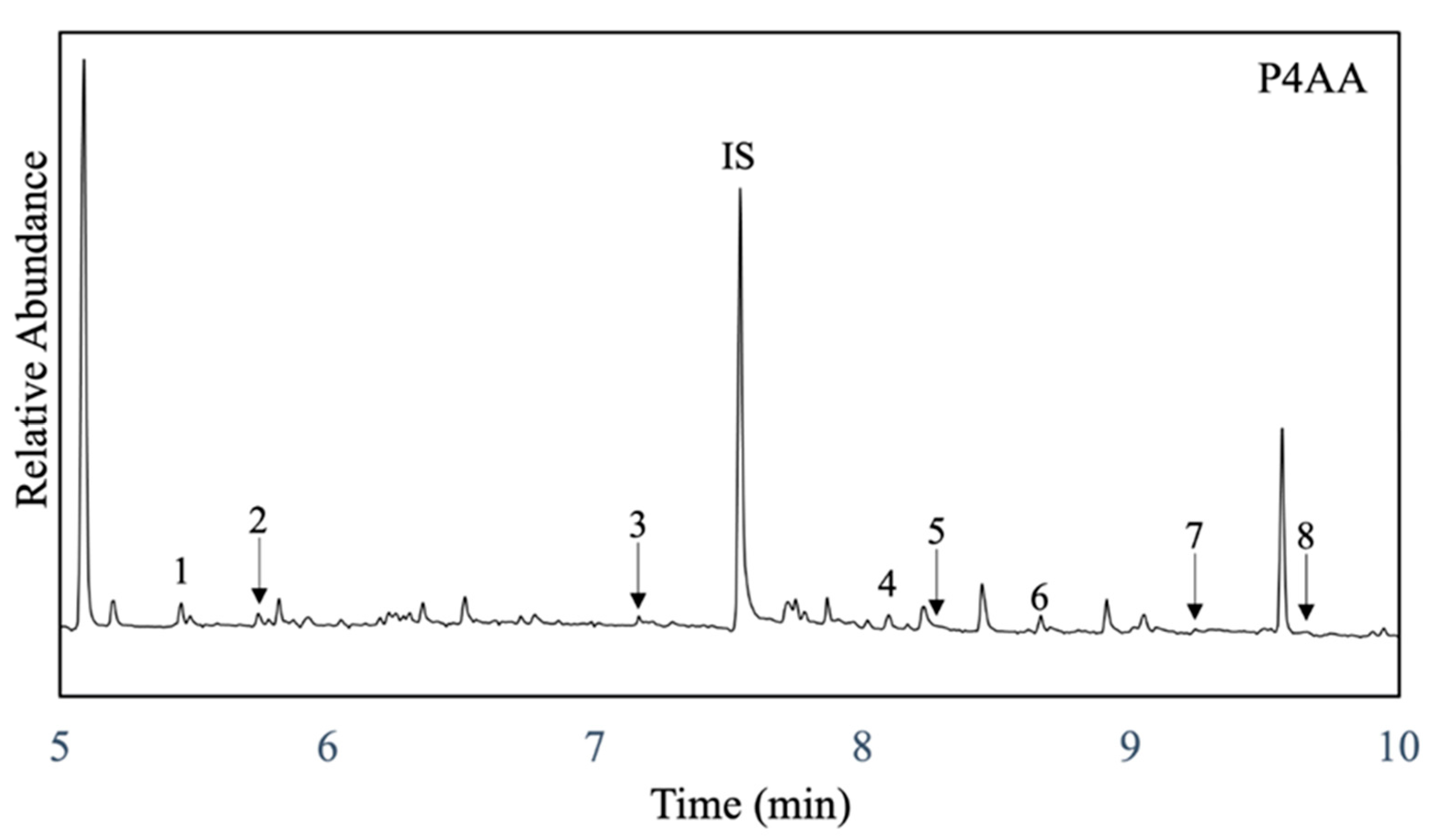
The FTIR analysis revealed the presence of organic materials, but it was not resolutive in the precise characterization of the protein and lipid typology. For this reason, we decided to use GC-MS investigation to determine the exact kind of organic binders, such as lipids and proteinaceous materials, by examining seven micro-samples (P4, P8, P9, P10, P11, P12, and P13) (Supplementary Materials, Table S1). The first very interesting result is that the lipid fraction detected was not attributable to drying oils, allowing us to state that the surface layer applied was not oil-based (Figure 16). In fact, we have identified the presence of azelaic (nonanedioic acid, saturated dicarboxylic acid), miristic (C14:0), palmitic (C16:0), oleic (C18:1) and stearic (C18:0) acids, but in particular the azelaic acid/palmitic acid ratio is much lower than 1, thus excluding the presence of any siccative oil, as visible in Figure 17 relative to micro-sample P4 [50]. In the chromatograms relative to the amino acid fractions, the detection of alanine, glycine, leucine, proline, hydroxyproline, aspartic acid, glutamic acid, and phenylalanine suggest the presence of a proteinaceous binder. Figure 18 shows the chromatographic profiles of the micro-samples. To better highlight the signals in the chromatograms, the signals of the micro-sample P4 are detailed in Figure 19.
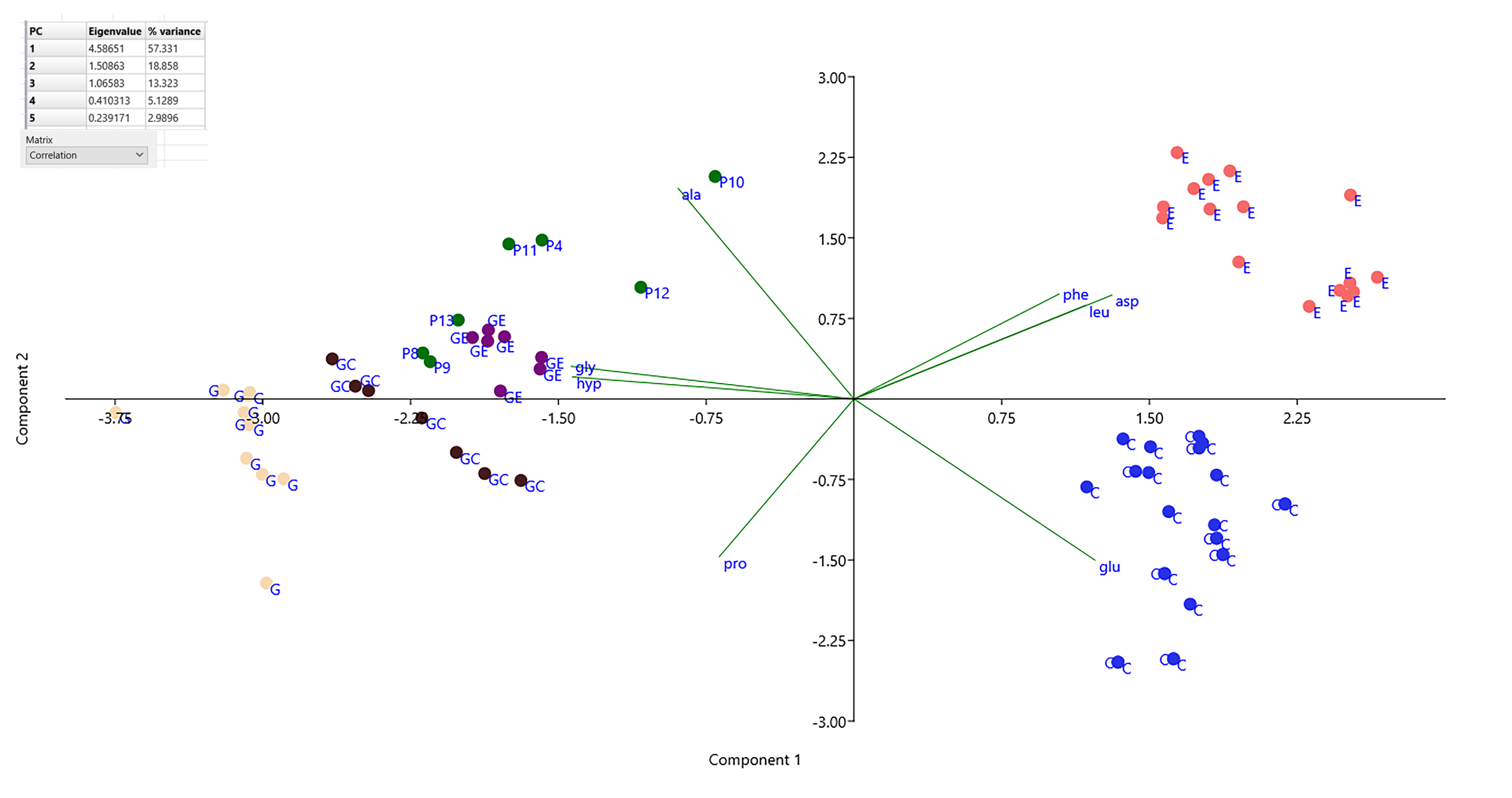
To distinguish the binding media, the percentage content of amino acids in each micro-sample was compared to those from a dataset of 65 reference samples of egg (whole, egg white, egg yolk), casein, animal glue, and mixtures from the reference collection of the Opificio delle Pietre Dure in Florence, Italy [51]. The comparison of the amino acid data was conducted through multivariate statistical analysis, employing the principal component analysis (PCA) method, used to characterize the unknown micro-samples. Principal component analysis was carried out on the correlation matrix of the relative percentage contents of eight amino acids (aspartic acid, glutamic acid, proline, hydroxyproline, phenylalanine, alanine, glycine, and leucine) [52]. The results are shown in Figure 20.
The first two components, PC1 and PC2, account for 57.33% and 18.86% of the total variance, respectively. PCA showed that the micro-samples have a similar composition, due to the amino acids from animal glue and egg. It is assumed that the lipid fraction found in all micro-samples is due to the lipid content of the egg yolk, and not to the presence of drying oils.

4. Conclusions

Starting from the on-site analysis using UVF imaging and XRF spectroscopy, an anomalous coating was found on the St. Michael Altar exhibiting yellow fluorescence and characterized by the presence of lead.
This raised important questions during the restoration, namely understanding whether the layer was original, whether lead was also present in the stucco mix, and how to proceed with the cleaning intervention.
To solve the question, we decided to proceed with a series of analyses aiming to characterize the materials of the coating and their distributions on the surface. The micro-samples obtained from the artwork surface during the restoration activities were examined using various techniques to gather as much information as possible. First, SEM-EDS was applied to map the lead found using XRF spectroscopy, revealing that it was not mixed with the original stucco, but was strictly limited to the surface coating.
A further step was used to characterize the chemical compounds associated with lead, with Raman spectroscopy applied. This technique confirmed the presence of a superficial lead white layer combined with black and greyish grains made of amorphous carbon. Laurionite was also detected within this white/greyish layer. In agreement with the interpretation proposed by Ermanno Avranovich Clerici et al. (2023), laurionite is read as an oxidation–chlorination product of lead white, formed through the interaction with reactive chlorine species present in the substrate [53]. We propose two main pathways for laurionite formation: (1) Environmental chlorination of lead white, favored by prolonged exposure to rainwater infiltration during the abandonment of the site. These conditions would enable the migration of soluble chloride salts via capillary rise [53]; subsequent evaporation could generate the pH and chloride concentrations required for laurionite precipitation [54,55]. (2) Anthropogenic introduction of chlorine, resulting from historical conservation actions, such as cleaning or biocidal treatments employing Cl-based solutions, which are documented as commonly used in past restoration practices [56]. In addition, Raman investigations combined with SEM-EDS analyses clarified the execution technique in the originally gilded areas, where the extensive use of hematite was identified. Even if the literature on Italian Baroque stucco gilding is limited, two main execution techniques are known: water gilding over bole based on the application of thin gold leaf over a red iron-rich clay primer mixed with animal glue [57]; and oil-mordant gilding, using an oil–resin primer often combined with red lacquers and/or lead-based pigments [58]. Although water gilding over bole is usually applied to paintings on canvas or wood, and oil-mordant gilding is typical for sculptural works, the SEM-EDS data coupled with FTIR, and GC–MS, which show no evidence of oil–resin compounds but rather of protein-based binders, indicate that water gilding over bole was used. In more detail, we hypothesize the use of a hybrid technique, involving a ground layer made of a mixture of red earth and lead white [59]. Concerning the protein-based binders, hypothesized from the results of FTIR spectroscopy, GC-MS identified a combination of animal glue and egg in all samples from both the Main Altar and St. Michael Altar.
To summarize, the stratigraphic pattern in the gilded areas may be described as follows: (1) over the stucco bulk, a mordant composed of lead white and bole mixed with binders based on egg and animal glues was applied; (2) adhering to this mordant layer, the gold leaf was applied; and (3) finally, a discontinuous layer of carbonaceous deposit partially hides the gold leaf layer.
As concerns the stucco bulk composition, the presence of calcite, as the main component, and gypsum, confirmed by Raman and FTIR spectroscopies, suggests the use of a “bastard stucco mixture” where the addition of gypsum to lime and marble dust had the functions of ensuring the greater plasticity of the mixture and accelerating the superimposition of the various phases, while maintaining all the consistency characteristics of the stucco [60,61,62]. Although no sample has been investigated with all the proposed analytical techniques, integrating the experimental data with the visual observation during the restoration allows us to hypothesize the stratigraphy of the artwork. The originally white stucco portions, later altered to a darker color, are characterized by the constant presence of two superimposed layers above the stucco bulk: a discontinuous layer of carbonaceous deposit of lampblack, present just above the stucco, and a layer of whitewash composed of white applied with a protein binder (egg and animal glue).
Finally, Raman and FTIR spectroscopies clarified the conservation state of the altar, revealing clear degradation products. In areas extensively affected by salt formed by efflorescence, both calcium oxalate and carotenoid pigments were detected, the latter only with the 532 nm excitation source due to the resonance effect [63]. Calcium oxalates and other types of oxalates are frequently found on artwork surfaces, as testified by a recently published review [64]. The coexistence of oxalates and carotenoids indicates biological colonization, either past or ongoing. In this context, high relative humidity, rainwater infiltration, and the probable use of an organic binder may have significantly favored biological activity. Similarly, on the Main Altar, although carotenoids were not detected, extensive calcium oxalate formation was observed. Here, in addition to lead white, lapis lazuli was identified, likely associated with the painted figure of Saint Vitus, which features a blue background and is located next to the sampling point.
Combining the results of the analyses with the information gathered from the archives and from the careful observation performed during the restoration, we derived that the lead white layer may be traced back to maintenance works contemporaneous with the chapel’s use during the 18th century [12] (p. 193). Given the presence of the same material in the renovation of the Main Altar, it is possible that the two interventions coincided. The repainting of the two altars could be dated to the renovation work carried out in 1785, when the church had already been in poor condition for over a decade, as reported in the archive documents referring to Pastoral Visits [12] (p. 285–296). The chapel is last described in the Pastoral Visits dated 1773 and its use was then suspended in 1785–1786 due to its deterioration [12] (p. 288).
It is therefore possible that before its final abandonment, an attempt was made to revitalize the chapel’s exterior appearance by applying the lead white layer, with the aim of concealing the stains of ongoing decay. The lead white layer, applied with a brush over the black deposit, would therefore have been used selectively in the most deteriorated areas. This explains why it was laid out in the areas most affected by pollution from black carbon produced from religious use. Lead white was certainly the most used white pigment with high covering power in the 18th century [65], and its use for coloring stucco was suggested in a 16th manuscript [66].
In conclusion, the combination of the results from the various analyses allowed us to definitively assess that the lead white layer was applied by a brush with an organic protein binder during a renovation work carried out around 1785–1786 to hide the blackened deteriorated surface. These results were discussed with the restorers, and it was finally decided to remove the non-original white/greyish coating.

Supplementary Materials

The following supporting information can be downloaded at https://www.mdpi.com/article/10.3390/coatings16010142/s1: Figure S1: Image of S. Michael Altar with the XRF measurement points; Figure S2: Image of St. Michael Altar with the sampling points; Figure S3: Image of the Main Altar with the two sampling points P10 and P12 used for comparison with micro-samples from the St. Michael Altar; Table S1: Micro-sample numbering and description; Table S2: Result of XRF analysis in terms of the detected chemical elements listed in order of decreasing counts (cps).

Author Contributions

Conceptualization, C.P., A.C., and A.S.; methodology, L.L., G.C., and M.C.; software, L.L., M.C., M.S., and M.P.; validation, C.P., A.S., and A.C.; formal analysis, L.L., C.P., M.S., M.P., A.S., and A.C.; investigation, M.C., G.C., and C.P.; resources, C.P., A.C., A.S., and L.L.; data curation, C.P., A.S., and A.C.; writing—original draft preparation, C.P.; writing—review and editing, all authors; visualization, L.L., M.C., A.C., A.S., M.S., and M.P.; supervision, C.P., A.S., and A.C.; project administration, C.P. and G.C.; funding acquisition, C.P., A.S., and A.C. All authors have read and agreed to the published version of the manuscript.

Funding

This research received no external funding.

Institutional Review Board Statement

Not applicable.

Informed Consent Statement

Not applicable.

Data Availability Statement

Data is contained within the article.

Acknowledgments

The authors would like to thank Anna Rita Taddei of the Large Equipment Center of the University of Tuscia for the SEM-EDS analysis on cross-sections and Giorgia Agresti, technician of the Laboratory of Diagnostics and Materials Science, for having prepared the cross-sections. The authors would like to thank Irene Torquati and Maria Matilde Coletta for the revision of the English language.

Conflicts of Interest

The authors declare no conflicts of interest.

References

  1. Caroselli, M.; Válek, J.; Zapletalová, J.; Felici, A.; Frankeová, D.; Kozlovcev, P.; Nicoli, G.; Jean, G. Study of Materials and Technique of Late Baroque Stucco Decorations: Baldassarre Fontana from Ticino to Czechia. Heritage 2021, 4, 1737–1753. [Google Scholar] [CrossRef]
  2. Groppi, F.; Vigliotti, D.; Lanteri, L.; Agresti, G.; Casoli, A.; Laureti, S.; Ricci, M.; Pelosi, C. Advanced documentation methodologies combined with multi-analytical approach for the preservation and restoration of 18th century architectural decorative elements at Palazzo Nuzzi in Orte (Central Italy). Int. J. Conserv. Sci. 2021, 12, 921–934. [Google Scholar]
  3. Gapper, C.; Orton, J. Plaster, Stucco and Stuccoes. J. Archit. Conserv. 2011, 17, 7–22. [Google Scholar] [CrossRef]
  4. Caroselli, M.; Mazzeo, R.; Rosi, F.; Toniolo, L.; Lagomarsino, S. Characterisation of the stucco decorations at the “Sacro Monte di Ossuccio” (16th–17th century), Como, Italy. Int. J. Conserv. Sci. 2016, 7, 527–540. [Google Scholar]
  5. Falchi, L.; Marian, M.; Rampazzi, L.; Crema, S. Stucco Forte in Venice between the 16th and 17th centuries: The case study of Addolorata Chapel stuccoes in San Pantalon’s church. Procedia Chem. 2013, 8, 92–99. [Google Scholar] [CrossRef]
  6. Sansonetti, A.; Andreotti, A.; Bertasa, M.; Bonaduce, I.; Corti, C.; Facchin, L.; La Nasa, J.; Spiriti, A.; Rampazzi, L. Territory and related artworks: Stuccoworks from the Lombard lakes. J. Cult. Herit. 2022, 54, 168–184. [Google Scholar] [CrossRef]
  7. Caroselli, M.; Zumbühl, S.; Cavallo, G.; Radelet, T. Composition and techniques of the Ticinese stucco decorations from the 16th to the 17th century: Results from the analysis of the materials. Herit. Sci. 2020, 8, 1–20. [Google Scholar] [CrossRef]
  8. Rampazzi, L.; Falchi, L.; Peruffo, D.; Crema, S. The stucco decorations from St. Lorenzo in Laino (Como, Italy): The materials and the techniques employed by the “Magistri Comacini”. Anal. Chim. Acta 2008, 630, 91–100. [Google Scholar] [CrossRef]
  9. Toniolo, L.; Colombo, C.; Bruni, S.; Fermo, P.; Casoli, A.; Palla, G.; Bianchi, C.L. Gilded stuccoes of the Italian Baroque. Stud. Conserv. 1998, 43, 201–208. [Google Scholar] [CrossRef]
  10. Musolino, G. Barbarano: Storia Civile Storia Religiosa; Agnesotti: Viterbo, Italy, 2001. [Google Scholar]
  11. Guerrini, G. Barbarano Feudo di Campidoglio dal XII al XIX Secolo; Gli Statuti; Cassa Rurale ed Artigiana di Barbarano Romano: Barbarano Romano, Italy, 1985. [Google Scholar]
  12. Cristofori, M. L’altare in Stucco Intitolato a San Michele Arcangelo nel Complesso di Sant’Angelo a Barbarano Romano: Un Caso di Diagnostica Applicata al Restauro. Master’s Thesis, University of Tuscia, Viterbo, Italy, 2024. [Google Scholar]
  13. Ma, C.; Dou, H.; Zhao, Z.; Qiu, X.; Li, H.; Wang, X. Review of in-situ non- and micro-destructive techniques for pigment analysis in architectural heritage. npj Herit. Sci. 2025, 13, 222. [Google Scholar] [CrossRef]
  14. Borg, B.; Dunn, M.; Ang, A.; Villis, C. The application of state-of-the-art technologies to support artwork conservation: Literature review. J. Cult. Herit. 2020, 44, 239–259. [Google Scholar] [CrossRef]
  15. Pelosi, C.; Balletti, F.; Agresti, G.; Lo Monaco, A. The diagnostic investigation through minimal sampling for religious artworks knowledge: Some case studies. Eur. J. Sci. Theol. 2019, 15, 223–235. [Google Scholar]
  16. Moioli, P.; Seccaroni, C. Analysis of Art Objects Using a Portable X-Ray Fluorescence Spectrometer. X-Ray Spectrom. 2000, 29, 48–52. [Google Scholar] [CrossRef]
  17. Musílek, L.; Čechák, T.; Trojek, T. X-ray fluorescence analysis in the study of paintings—An overview. Radiat. Eff. Defects Solids 2024, 179, 1218–1232. [Google Scholar] [CrossRef]
  18. Romani, A.; Clementi, C.; Miliani, C.; Favaro, G. Fluorescence Spectroscopy: A Powerful Technique for the Noninvasive Characterization of Artwork. Acc. Chem. Res. 2010, 43, 837–846. [Google Scholar] [CrossRef] [PubMed]
  19. Harth, A. X-ray fluorescence (XRF) on painted heritage objects: A review using topic modeling. Herit. Sci. 2024, 12, 17. [Google Scholar] [CrossRef]
  20. Cosentino, A. Practical notes on ultraviolet technical photography for art examination. Conserv. Patrim. 2015, 21, 53–62. [Google Scholar] [CrossRef]
  21. Lanteri, L.; Pelosi, C. 2D and 3D ultraviolet fluorescence applications on cultural heritage paintings and objects through a low-cost approach for diagnostics and documentation. Proc. SPIE 2021, 11784, 1178417. [Google Scholar] [CrossRef]
  22. Lanteri, L.; Pelosi, C.; Pogliani, P. Three-Dimensional Ultraviolet Fluorescence Imaging in Cultural Heritage: A Review of Applications in Multi-Material Artworks. J. Imaging 2025, 11, 245. [Google Scholar] [CrossRef]
  23. Keats Webb, E. UV induced luminescence. In UV-Vis Luminescence Imaging Techniques/Técnicas de Imagen de Luminiscencia UV-Vis; Conservation 360°; Picollo, M., Stols-Witlox, M., Fuster López, L., Eds.; Universitat Politecnica de Valencia: Valencia, Spain, 2020; pp. 35–60. Available online: https://monografias.editorial.upv.es/index.php/con_360/article/view/67 (accessed on 19 September 2025).
  24. Bitossi, G.; Giorgi, R.; Mauro, M.; Salvadori, B.; Dei, L. Spectroscopic Techniques in Cultural Heritage Conservation: A Survey. Appl. Spectrosc. Rev. 2005, 40, 187–228. [Google Scholar] [CrossRef]
  25. Ye, X.; Chen, Y.; Peng, L.; Yang, X.; Bai, Y. Application of spectroscopy technique in cultural heritage: Systematic review and bibliometric analysis. npj Herit. Sci. 2025, 13, 169. [Google Scholar] [CrossRef]
  26. Colombini, M.P.; Andreotti, A.; Bonaduce, I.; Modugno, F.; Ribechini, E. Analytical Strategies for Characterizing Organic Paint Media Using Gas Chromatography/Mass Spectrometry. Acc. Chem. Res. 2010, 43, 715–727. [Google Scholar] [CrossRef]
  27. Geddes da Filicaia, E.; Evershed, R.P.; Peggie, D.A. Review of recent advances on the use of mass spectrometry techniques for the study of organic materials in painted artworks. Anal. Chim. Acta 2023, 1246, 340575. [Google Scholar] [CrossRef] [PubMed]
  28. Sutherland, K. Gas chromatography/mass spectrometry techniques for the characterisation of organic materials in works of art. Phys. Sci. Rev. 2019, 4, 20180010. [Google Scholar] [CrossRef]
  29. Schreiner, M.; Melcher, M.; Uhlir, K. Scanning electron microscopy and energy dispersive analysis: Applications in the field of cultural heritage. Anal. Bioanal. Chem. 2007, 387, 737–747. [Google Scholar] [CrossRef] [PubMed]
  30. Moropoulou, A.; Zendri, E.; Ortiz, P.; Delegou, E.T.; Ntoutsi, I.; Balliana, E.; Becerra, J.; Ortiz, R. Scanning Microscopy Techniques as an Assessment Tool of Materials and Interventions for the Protection of Built Cultural Heritage. Scanning 2019, 2019, 5376214. [Google Scholar] [CrossRef]
  31. Piersigilli, P.; Citroni, R.; Mangini, F.; Frezza, F. Electromagnetic Techniques Applied to Cultural Heritage Diagnosis: State of the Art and Future Prospective: A Comprehensive Review. Appl. Sci. 2025, 15, 6402. [Google Scholar] [CrossRef]
  32. Bonizzoni, L.; Caglio, L.; Galli, A.; Lanteri, L.; Pelosi, C. Materials and Technique: The First Look at Saturnino Gatti. Appl. Sci. 2023, 13, 6842. [Google Scholar] [CrossRef]
  33. Casoli, A.; Santoro, S. Organic materials in the wall paintings in Pompei: A case study of Insula del Centenario. BMC Chem. 2012, 6, 107. [Google Scholar] [CrossRef]
  34. Yang, N.; Cremonesi, M.; Markevicius, T.; Dal Fovo, A.; Shumikhin, K.; Ducoli, E.; Rocha Pires, C.; Fontana, R.; Van Der Voort, P.; Leus, K.; et al. The reproduction of fire-born soot for comparative cleaning tests on heritage objects. npj Herit. Sci. 2025, 13, 593. [Google Scholar] [CrossRef]
  35. Bellan, L.M.; Salmon, L.G.; Cass, G.R. A study on the human ability to detect soot deposition onto works of art. Environ. Sci. Technol. 2000, 34, 1946–1952. [Google Scholar] [CrossRef]
  36. Grau-Bové, J.; Strlič, M. Fine particulate matter in indoor cultural heritage: A literature review. Herit. Sci. 2013, 1, 8. [Google Scholar] [CrossRef]
  37. Pagels, J.; Wierzbicka, A.; Nilsson, E.; Isaxon, C.; Dahl, A.; Gudmundsson, A.; Swietlicki, E.; Bohgard, M. Chemical composition and mass emission factors of candle smoke particles. J. Aerosol Sci. 2019, 40, 193–208. [Google Scholar] [CrossRef]
  38. Xi, J.F.; Yang, G.Q.; Cai, J.; Gu, Z.Z. A review of recent research results on soot: The formation of a kind of carbon-based material in flames. Front. Mater. 2021, 8, 695485. [Google Scholar] [CrossRef]
  39. Vasiliev, A.L.; Kovalchuk, M.V.; Yatsishina, E.B. Electron microscopy methods in studies of cultural heritage sites. Crystallogr. Rep. 2016, 61, 873–885. [Google Scholar] [CrossRef]
  40. Galván Josa, V.; Fracchia, D.; Castellano, G.; Crespo, E.; Kang, A.; Bonetto, R. Backscattered electron images, X-ray maps and Monte Carlo simulations applied to the study of plagioclase composition in volcanic rocks. Spectrochim. Acta B 2013, 81, 50–58. [Google Scholar] [CrossRef][Green Version]
  41. Burgio, L.; Clark, R.J.H. Library of FT-Raman spectra of pigments, minerals, pigment media and varnishes, and supplement to existing library of Raman spectra of pigments with visible excitation. Spectrochim. Acta A 2001, 57, 1491–1521. [Google Scholar] [CrossRef] [PubMed]
  42. Ferrari, A.C.; Robertson, J. Resonant Raman spectroscopy of disordered, amorphous, and diamondlike carbon. Phys. Rev. B 2001, 64, 075414. [Google Scholar] [CrossRef]
  43. Bersani, D.; Campani, E.; Casoli, A.; Lottici, P.P.; Marino, I.G. Spectroscopic study of the degradation products in the holy water fonts in Santa Maria della Steccata Church in Parma (Italy). Anal. Chim. Acta 2008, 610, 74–79. [Google Scholar] [CrossRef]
  44. Frausto-Reyes, C.; Loza-Cornejo, S.; Terrazas, T.; de la Luz Miranda-Beltrán, M.; Aparicio-Fernández, X.; López-Macías, B.M.; Morales-Martínez, S.E.; Ortiz-Morales, M. Raman spectroscopy study of calcium oxalate extracted from cacti stems. Appl. Spectrosc. 2014, 68, 1260–1265. [Google Scholar] [CrossRef]
  45. Frost, R.L. Raman spectroscopy of natural oxalates. Anal. Chim. Acta 2004, 517, 207–214. [Google Scholar] [CrossRef]
  46. Maguregui, M.; Knuutinen, U.; Trebolazabala, J.; Morillas, H.; Castro, K.; Martinez-Arkarazo, I.; Madariaga, J.M. Use of in situ and confocal Raman spectroscopy to study the nature and distribution of carotenoids in brown patinas from a deteriorated wall painting in Marcus Lucretius House (Pompeii). Anal. Bioanal. Chem. 2012, 402, 1529–1539. [Google Scholar] [CrossRef]
  47. Derrick, M.R.; Stulik, D.; Landry, J.M. Infrared Spectroscopy in Conservation Science; The Getty Conservation Institute: Los Angeles, CA, USA, 1999. [Google Scholar]
  48. IRUG Database. Available online: http://www.irug.org/search-spectral-database (accessed on 18 December 2025).
  49. Adrover Gracia, I. Applicazioni Della Spettrofotometria IR Allo Studio dei Beni Culturali; Il Prato: Padova, Italy, 2001. [Google Scholar]
  50. Blaško, J.; Kubinec, R.; Husová, B.; Přikryl, P.; Pacákova, V.; Štulík, K.; Hradilová, J. Gas chromatography/mass spectrometry of oils and oil binders in paintings. J. Sep. Sci. 2008, 31, 1067. [Google Scholar] [CrossRef]
  51. Lanterna, G.; Mairani, A.; Matteini, M.; Rizzi, M.; Vigato, A. Characterisation of decay markers on pictorial models simulating ancient polychromies. In Proceedings of the 2nd International Congress on Science and Technology for the Safeguard of Cultural Heritage in the Mediterranean Basin, Paris, France, 5–9 July 1999; Elsevier: Paris, France, 2000; pp. 487–489. [Google Scholar]
  52. Casoli, A.; Montanari, A.; Palla, L. Painted models simulating ancient polychromies: A statistical analysis of chemical results. In Proceedings of the 3rd International Congress on Science and Technology for the Safeguard of Cultural Heritage in the Mediterranean Basin, Paris, France, 9–14 July 2001; pp. 839–845. [Google Scholar]
  53. Avranovich Clerici, E.; de Meyer, S.; Vanmeert, F.; Legrand, S.; Monico, L.; Miliani, C.; Janssens, K. Multi-Scale X-ray Imaging of the Pigment Discoloration Processes Triggered by Chlorine Compounds in the Upper Basilica of Saint Francis of Assisi. Molecules 2023, 28, 6106. [Google Scholar] [CrossRef]
  54. Iorio, M.; Sodo, A.; Graziani, V.; Branchini, P.; Casanova Municchia, A.; Ricci, M.A.; Salvadori, O.; Fiorin, E.; Tortora, L. Mapping at the nanometer scale the effects of sea-salt derived chlorine on cinnabar and lead white by using delayed image extraction in ToF-SIMS. Analyst 2021, 146, 2392–2399. [Google Scholar] [CrossRef]
  55. Alun Humphreys, D.; Thomas, J.H.; Williams, P.A.; Symes, R.F. The chemical stability of mendipite, diaboleïte, chloroxiphite, and cumengéite, and their relationships to other secondary lead(II) minerals. Miner. Mag. 1980, 43, 901–904. [Google Scholar] [CrossRef]
  56. Ma, X.; Berrie, B.H. Lead chlorides in paint on a Della Robbia terra-cotta sculpture. Anal. Chem. 2020, 92, 4935–4942. [Google Scholar] [CrossRef]
  57. Sandu, I.C.A.; De Sá, M.H.; Pereira, M.C. Ancient ‘gilded’ art objects from European cultural heritage: A review on different scales of characterization. Surf. Interface Anal. 2011, 43, 1134–1151. [Google Scholar] [CrossRef]
  58. Katsibiri, O.; Boon, J.J. Investigation of the gilding technique in two post-Byzantine wall paintings using micro-analytical techniques. Spectrochim. Acta B 2004, 59, 1593–1599. [Google Scholar] [CrossRef]
  59. Sansonetti, A.; Striova, J.; Biondelli, D.; Castellucci, E.M. Colored grounds of gilt stucco surfaces as analyzed by a combined microscopic, spectroscopic and elemental analytical approach. Anal. Bioanal. Chem. 2010, 397, 2667–2676. [Google Scholar] [CrossRef] [PubMed]
  60. Scamozzi, V. Dell’idea Dell’architettura Universale; Ticozzi, S., Ed.; Coi Tipi di Borroni e Scotti: Milano, Italy, 1837. [Google Scholar]
  61. Gariani, G.; Lehuédé, P.; Leroux, L.; Wallez, G.; Goubard, F.; Bouquillon, A.; Bormand, M. First insights on the mineral composition of “stucco” devotional reliefs from Italian Renaissance Masters: Investigating technological practices and raw material sourcing. J. Cult. Herit. 2018, 34, 23–32. [Google Scholar] [CrossRef]
  62. Nardini, I.; Zendr, E.; Biscontin, G.; Riato, S. Composition and technology of historical stuccoes coming from Grimani Palace in Venice (Italy). J. Cult. Herit. 2007, 8, 61–64. [Google Scholar] [CrossRef]
  63. di Masi, A.; Sessa, R.L.; Cerrato, Y.; Pastore, G.; Guantario, B.; Ambra, R.; Di Gioacchino, M.; Sodo, A.; Verri, M.; Crucitti, P.; et al. Unraveling the Effects of Carotenoids Accumulation in Human Papillary Thyroid Carcinoma. Antioxidants 2022, 11, 1463. [Google Scholar] [CrossRef] [PubMed]
  64. Rampazzi, L. Calcium oxalate films on works of art: A review. J. Cult. Herit. 2019, 40, 195–214. [Google Scholar] [CrossRef]
  65. Gettens, R.J.; Kühn, H.; Chase, W.T. Lead white. In Artists’ Pigments. A Handbook of Their History and Characteristics, 1st ed.; Roy, A., Ed.; National Gallery of Art: Washington, DC, USA, 1993; Volume 2, pp. 67–81. [Google Scholar]
  66. Merrifield, M.P. Original Treatises on the Art of Painting (First Published 1804); Dover: New York, NY, USA, 1967. [Google Scholar]
Figure 1. A photograph of the stucco altar before the restoration and the positioning of the scaffolding necessary for the various operations (Credits: Gaetano Alfano, University of Tuscia).
Coatings 16 00142 g001
Figure 2. A photograph of the Main Altar (Credits: Marta Cristofori, University of Tuscia).
Coatings 16 00142 g002
Figure 3. Comparison between RGB (upper) and UVF (lower) images of the upper part of the stucco altar. A complete acquisition of the altar was not possible due to the presence of the scaffolding positioned at the beginning of the restoration activities.
Coatings 16 00142 g003
Figure 4. Backscattered Electron Composition (BEC) of micro-sample P4 at different magnifications: (A) 100×; (B) 1000×. (B) was used for microchemical analysis.
Coatings 16 00142 g004
Figure 5. Results of EDS point analysis on micro-sample P4. (A) BEC image with the measured points; (B) EDS spectra with the percentage (w/w) of the detected chemical elements; (C) EDS map of Pb and (D) EDS map of Cl showing the clear correlation of the two chemical elements.
Coatings 16 00142 g005
Figure 6. Backscattered Electron Composition (BEC) of micro-sample P5 at different magnifications: (A) 100×; (B) 500×. (B) was used for microchemical analysis.
Coatings 16 00142 g006
Figure 7. Results of EDS point analysis on micro-sample P5. (A) BEC image with the measured points; (B) EDS spectra with the percentage (w/w) of the detected chemical elements.
Coatings 16 00142 g007
Figure 8. μ-Raman spectra of the phases identified in the micro-samples from the white/greyish layer, the once-gilded decorated area, and an area extensively affected by salt formed by efflorescence on the Altar of St. Michael the Archangel. (A) Calcite, gypsum, and lead white (micro-samples P3, P6, P7, and P9); (B) amorphous carbon (micro-samples P3, P6, P7, and P9); (C) laurionite (micro-sample P6); (D) hematite (micro-sample P7); (E) calcite and calcium oxalate (micro-sample P1); and (F) carotenoid pigment with and without baseline subtraction (micro-sample P1).
Coatings 16 00142 g008
Figure 9. μ-Raman spectra of the phases identified in the micro-samples P10 from the white/greyish layer on the Main Altar. (A) Amorphous carbon, calcite, lead white, and calcium oxalate; (B) lazurite, (C) the black analyzed grain, and (D) the blue analyzed grain.
Coatings 16 00142 g009
Figure 10. FTIR spectrum of micro-sample P1.
Coatings 16 00142 g010
Figure 11. FTIR spectrum of micro-sample P2.
Coatings 16 00142 g011
Figure 12. FTIR spectrum of micro-sample P3.
Coatings 16 00142 g012
Figure 13. FTIR spectrum of micro-sample P4.
Coatings 16 00142 g013
Figure 14. FTIR spectrum of micro-sample P6.
Coatings 16 00142 g014
Figure 15. FTIR spectrum of micro-sample P7.
Coatings 16 00142 g015
Figure 16. GC-MS chromatograms of the lipid fraction of the micro-samples P4, P8, P9, P10, P11, P12, and P13. 1: C7Dioic; 2: C8Dioic; 3: C12; 4: C9Dioic; 5: C14; 6: C11Dioic; 7: C15; 8: C16; 9: C17; 10: C18:1; 11: C18; IS: Tetracosane.
Coatings 16 00142 g016
Figure 17. GC-MS chromatogram of the lipid fraction of the micro-sample P4. 1: C7Dioic; 2: C8Dioic; 3: C12; 4: C9Dioic; 5: C14; 6: C11Dioic; 7: C15; 8: C16; 9: C17; 10: C18:1; 11: C18; IS: Tetracosane.
Coatings 16 00142 g017
Figure 18. GC-MS chromatograms of the proteinaceous fraction of the micro-samples P4, P8, P9, P10, P11, P12, and P13. Ala (Alanine); Gly (Glycine); Leu (Leucine); Pro (Proline); HPro (Hydroxyproline); Asp (Aspartic Acid); Glu (Glutamic Acid); Phe (Phenylalanine); IS: NorLeucine.
Coatings 16 00142 g018
Figure 19. GC-MS chromatogram of the proteinaceous fraction of the micro-sample P4. 1: Alanine; 2: Gly-cine; 3: Leucine; 4: Proline; 5: Hydroxyproline; 6: Aspartic Acid; 7: Glutamic Acid; 8: Phenylalanine; IS: NorLeucine.
Coatings 16 00142 g019
Figure 20. PCA score plot of micro-samples P4, P8, P9, P10, P11, P12, and P13 and the relative percentage contents of the selected amino acids in 65 paint samples from the reference collection of the Opificio delle Pietre Dure, Florence, Italy. G = animal glue; GE = animal glue and egg; GC = animal glue and casein; C = casein; E = egg. The variance for each PC is also reported in the figure. Asp = aspartic acid, glu = glutamic acid, pro = proline, hyp = hydroxyproline, phe = phenylalanine, ala = alanine, gly = glycine, and leu = leucine.
Coatings 16 00142 g020
Disclaimer/Publisher’s Note: The statements, opinions and data contained in all publications are solely those of the individual author(s) and contributor(s) and not of MDPI and/or the editor(s). MDPI and/or the editor(s) disclaim responsibility for any injury to people or property resulting from any ideas, methods, instructions or products referred to in the content.