3.2. Microstructure
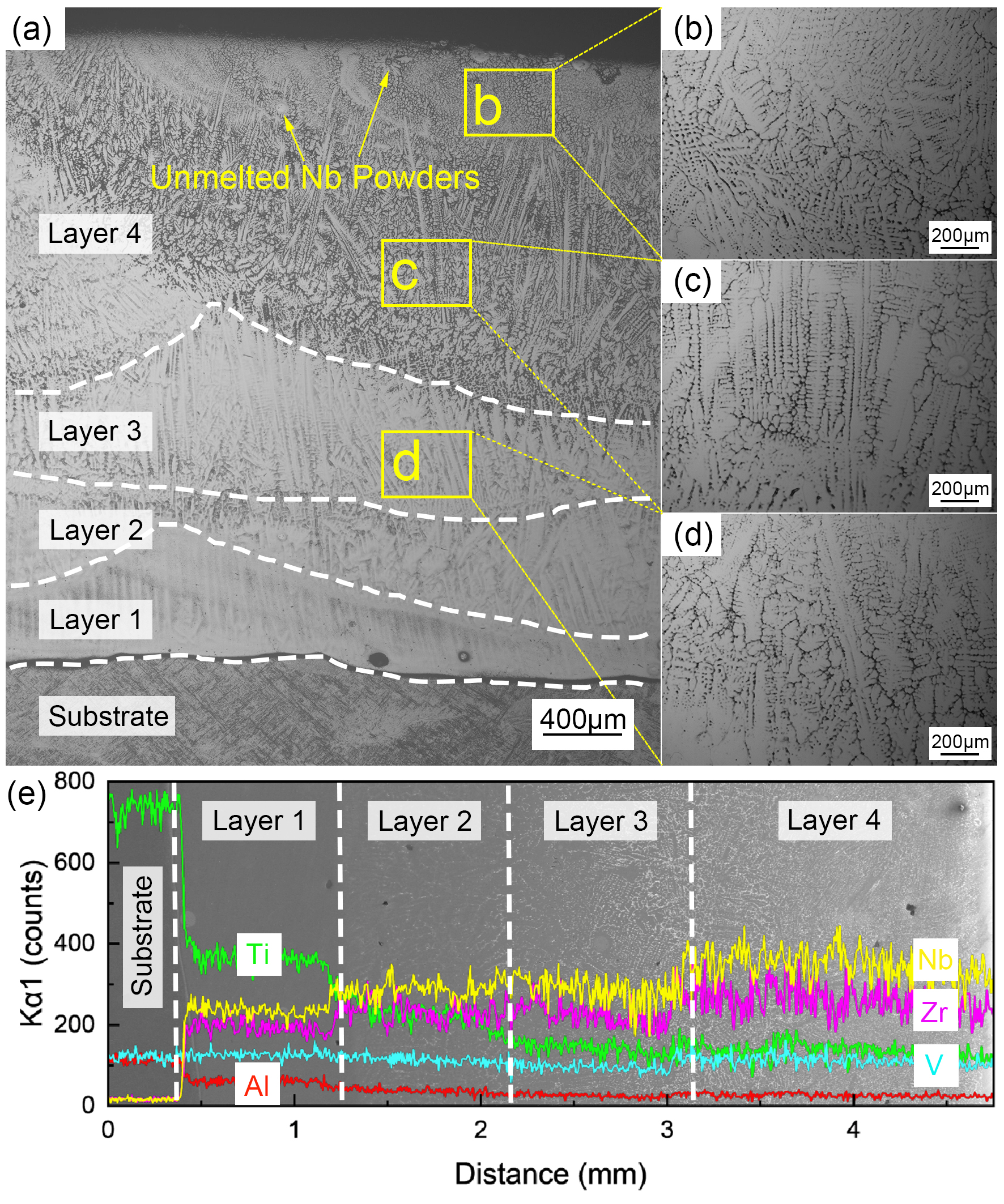
Figure 3a shows the overall microstructure of the TiNbZrV
0.2 coating cross-section (YOZ plane in
Figure 1a). Good metallurgical bonding is observed between the coating layers and between the coating and substrate with distinct layer boundaries. A small amount of unmelted Nb powder is present at the top.
According to rapid solidification theory [
29], the microstructure of laser cladding coating at different positions is related to temperature gradient (G) and crystal growth rate (R), and the G/R ratio represents the stability factor at solid–liquid interface.
Figure 3b presents the microstructure of the top of the coating, where the melt pool cooled rapidly, and the crystals grew fast, forming equiaxed crystals with a small size.
Figure 3c,d shows the microstructure in the middle section of the coating. This region is composed of columnar dendrites, which grew in the vertical direction. Closer to the base, the temperature gradient increased, allowing dendrites to undergo repeated heating and cooling cycles for a longer time [
30]. This extended thermal cycling facilitated crystal growth, resulting in increased crystal length and width. At the junction of coating and substrate, the temperature gradient is the greatest, and the crystal growth rate is the lowest. Crystal in this region grew in a planar crystal manner [
31]. The microstructure of other coatings is similar to TiNbZrV
0.2.
Figure 3e shows the elemental composition variation in the TiNbZrV
0.2 coating from bottom to top along the deposition direction. Ti content decreased layer by layer, while Nb and Zr contents increased, with V content remaining essentially constant. Melt pool flow is the main reason for this variation. During laser cladding, part of the laser energy acted on the substrate, melting its surface to form a melt pool. Under the combined effects of the Marangoni effect and laser forces, convection occurred within the melt pool. Ti atoms, abundant in the substrate, migrated into the coating, while Nb and Zr were exchanged into the substrate. Al existed in the substrate rather than in the cladding powder, so it flowed into the substrate along with the melting pool during the laser cladding process, and the content decreased layer by layer. As the number of cladding layers increased, the concentrations of all three elements stabilized. Since the mass fraction of V in both the substrate and TiNbZrV
0.2 powder was approximately 4%, and the extent of elemental exchange was similar, the V content remained essentially unchanged.
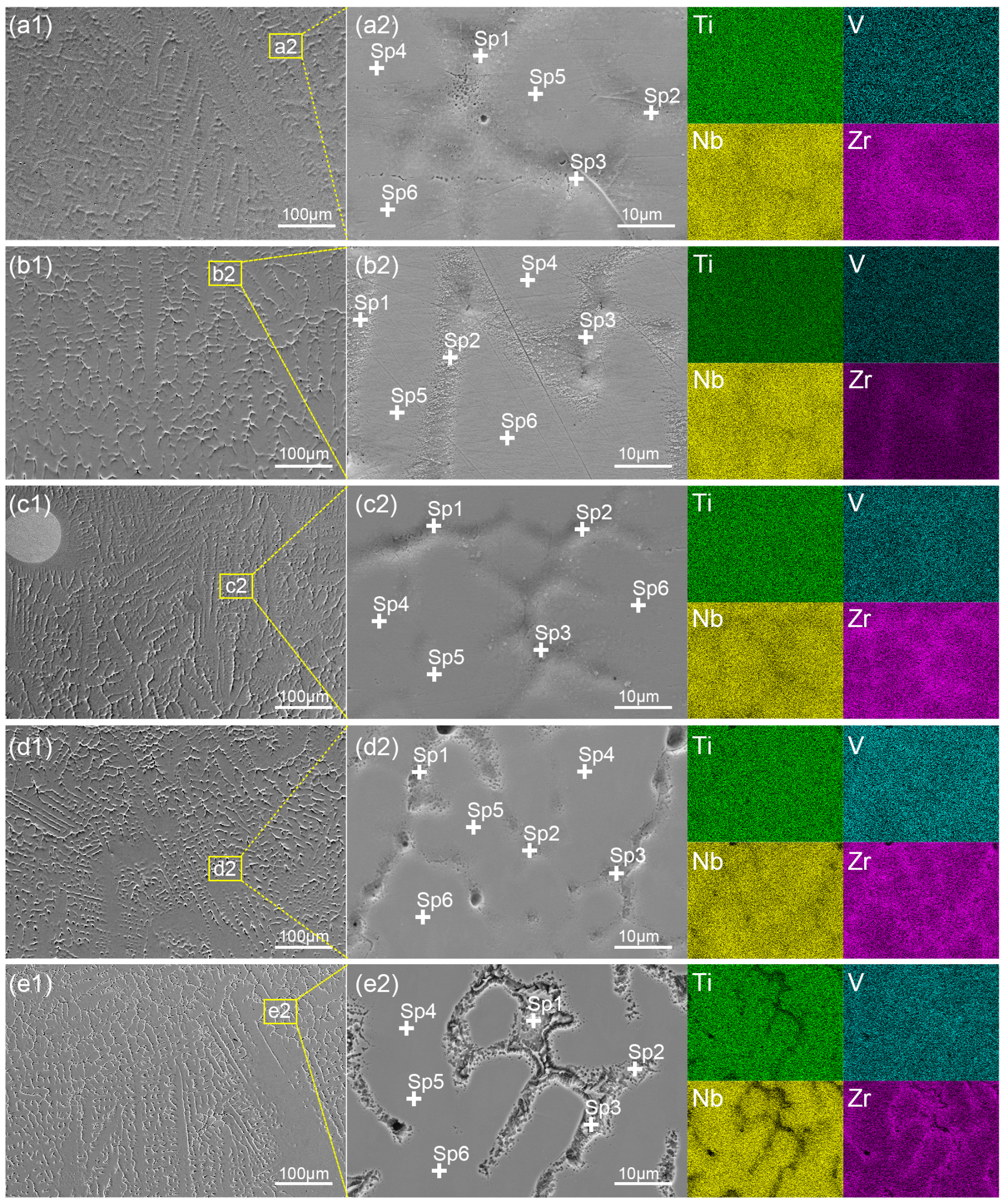
Figure 4 shows SEM microstructures and element distributions of TiNbZrVx coatings. As shown in
Figure 4(a1–e1), with the increase in V content, the morphology of dendrites changed, the primary dendrites became shorter and wider, while the number of secondary dendrite arms increased and the dendrite arms spacing decreased.
Figure 4(a2–e2) is the EDS mapping images of TiNbZrV
x coatings. Ti and V were uniformly distributed throughout the coatings, while Nb and Zr exhibited dendritic segregation. Zr content was higher in the inter-dendrite (ID) than within the dendrite regions (DR), while Nb primarily aggregated within the DR and was less distributed between them. This phenomenon arose because rapid cooling inhibited atomic diffusion, leading to non-equilibrium solidification [
32]. During cooling, the high-melting-point Nb (2468 °C) first reached its solidification temperature and crystallized at the dendrite trunks. The low-melting-point Zr (1852 °C) crystallized more slowly and, thus, enriched the dendrite interstices [
33].
Element contents of energy spectrums (Sp1–Sp6) shown in
Figure 4(a2–e2) were counted, and the result is shown in
Table 3. According to
Table 1, the Nb and Zr content should be reduced with the increase in V content. However, in fact, the inter-dendritic Zr and the dendritic Nb contents were maintained at about 42% and 37%, respectively, and the inter-dendritic V and Al contents were also higher than those within dendrites. It can be seen that Zr, V, and Al segregated to ID, Nb segregated to DR during solidification, and V promoted the degree of segregation.
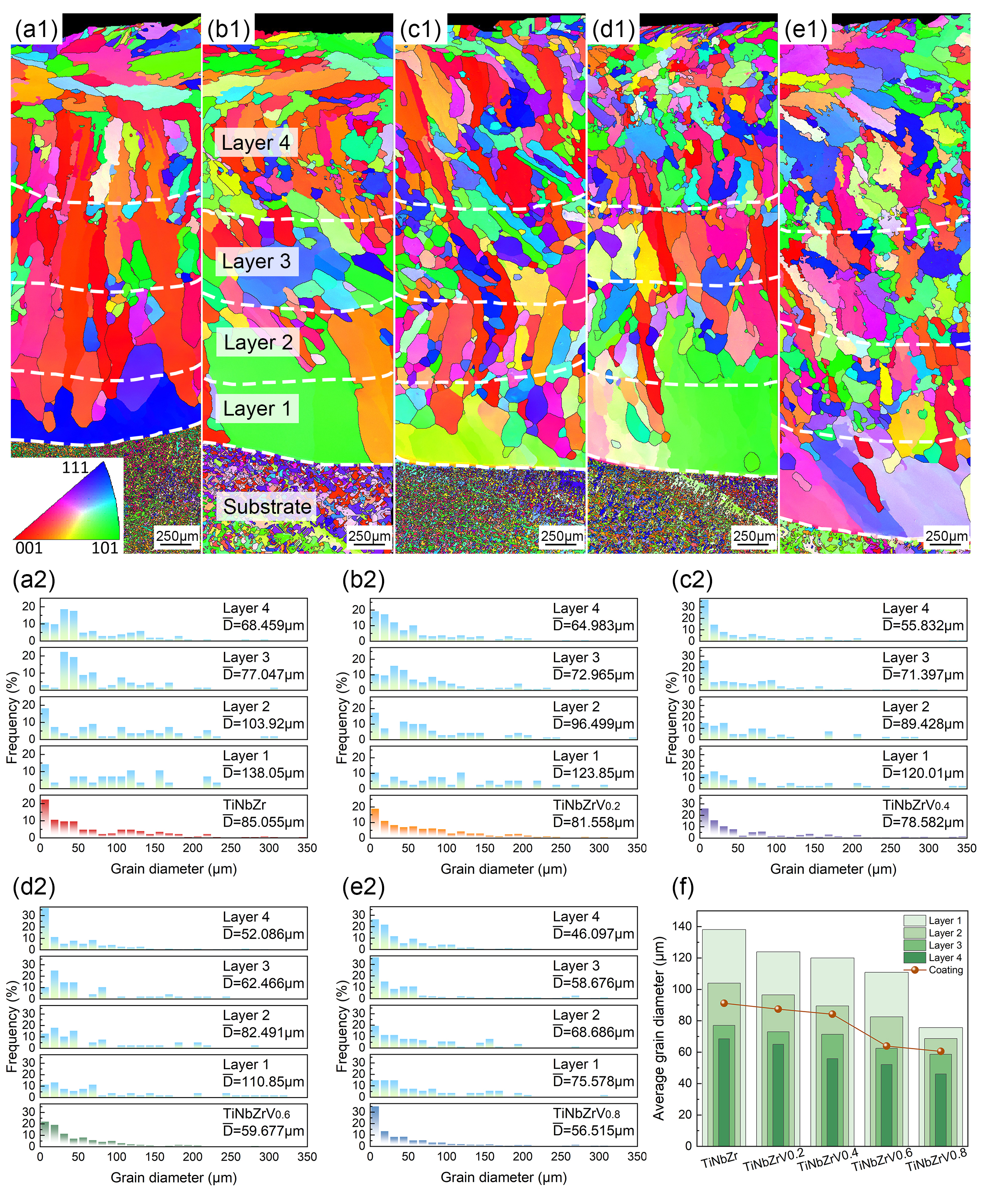
Figure 5(a1–e1) shows the inverse pole figures (IPF) of the coatings cross-section (YOZ plane in
Figure 1a). It can be observed that the grain size decreased gradually from the bottom to the top of the coatings. As shown in
Figure 5(a1), vertical columnar crystals with small orientation differences between adjacent grains were dominant in the central region (Layers 2–3) of TiNbZr, and a few equiaxed crystals appeared at the interlayer boundaries. These columnar crystals extended through both layers along the deposition direction. The top (Layer 4) of the coatings predominantly consisted of columnar crystals grown in a horizontal direction, which is the same direction as the laser cladding at the top. As shown in
Figure 5(b1,c1), with increasing V content, grain size in Layers 2–3 decreased, and the grains were still mainly columnar crystals. The top layer exhibited a mixed structure of equiaxed and columnar grains, with larger orientation differences between adjacent grains. When V content exceeded 0.6, as shown in
Figure 5(d1,e1), grain size further decreased significantly. Layers 2–4 of the coatings were predominantly composed of equiaxed grains, with grain sizes less than 250 μm.
Figure 5(a2–e2) and 5f shows the grain diameter distribution and average grain diameter variation in the coatings as a whole and in each layer. With increasing V content, the average grain diameter of the coatings decreased from 85.055 μm to 56.515 μm, representing a 33.55% reduction. The difference in grain size of each layer was also gradually reduced.
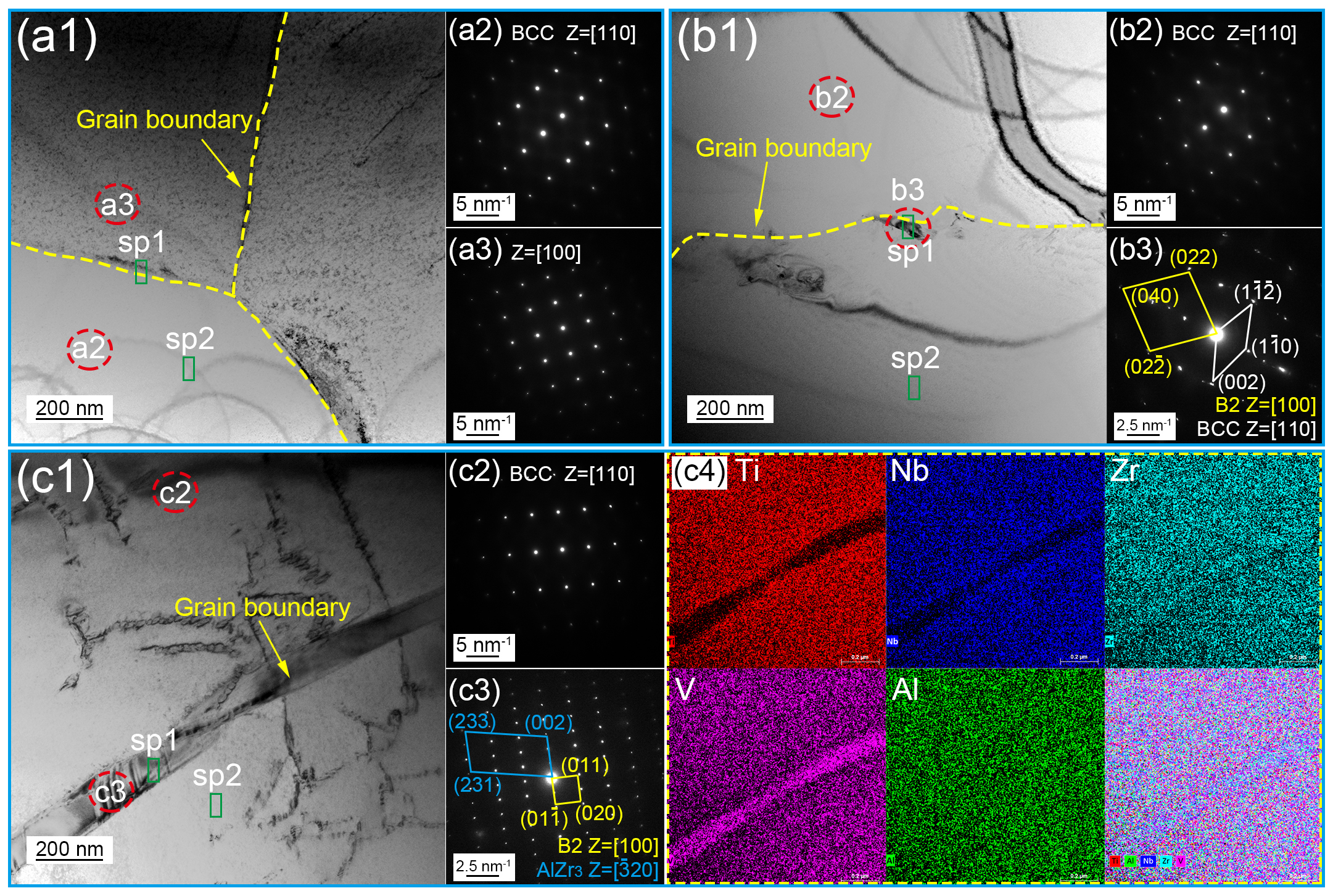
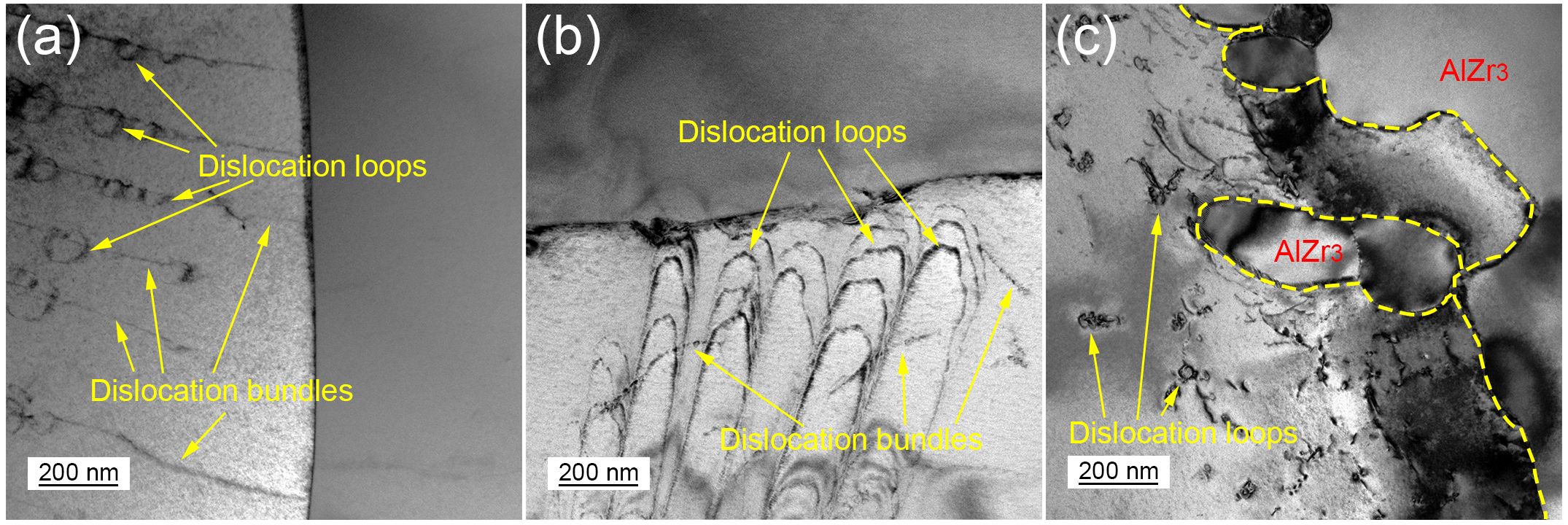
Figure 6 shows TEM test results of TiNbZr, TiNbZrV
0.4, and TiNbZrV
0.8 coatings. Element contents of grain boundaries (sp1) and crystals (sp2) were measured, and the results are shown in
Table 4. As shown in
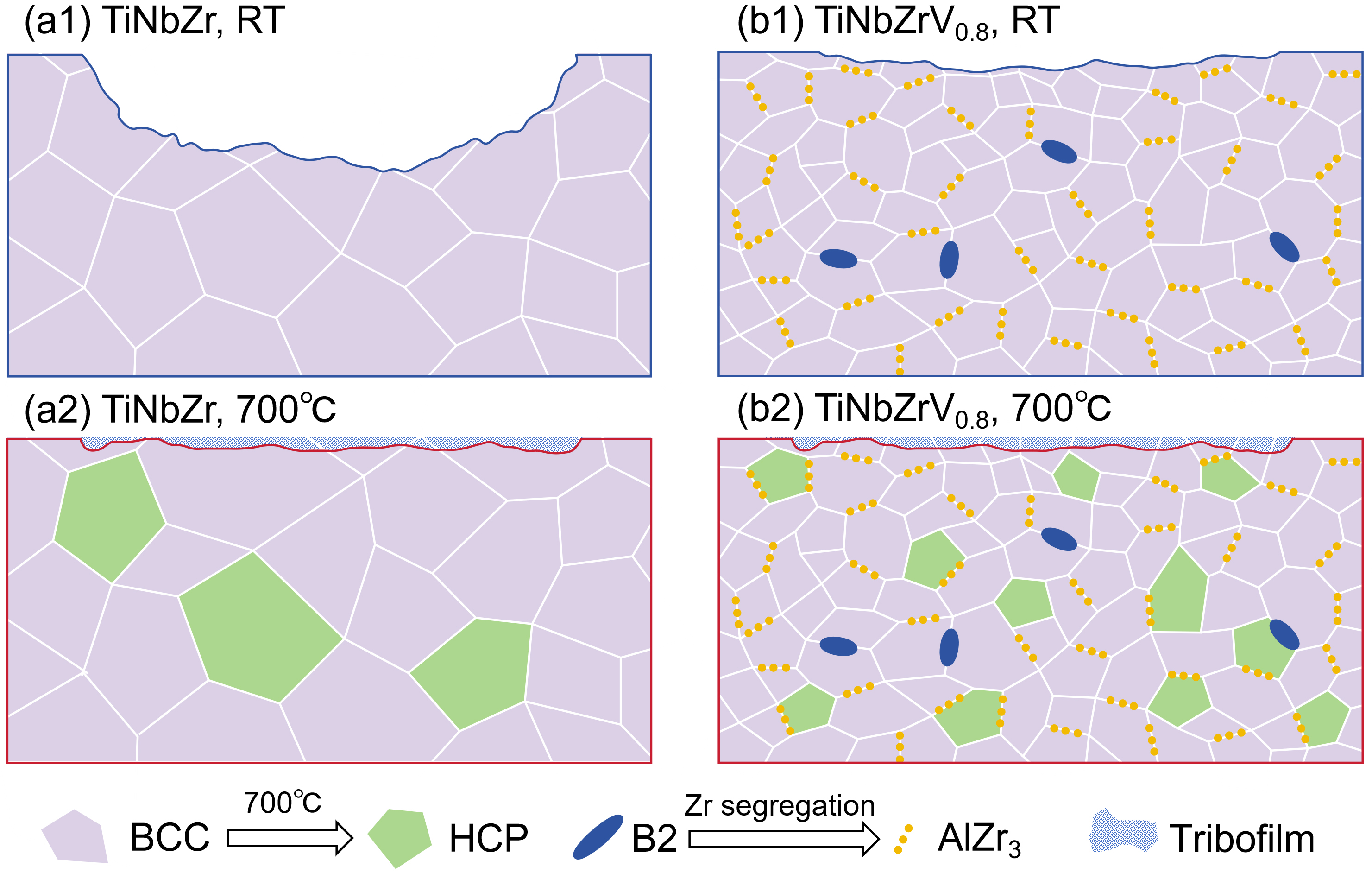
Figure 6(a1), in the bright field image of TiNbZr, the contrast distribution was uniform, and no precipitate was observed. The SAED images in directions [110] and [100] showed no diffraction spots of precipitated phases. The contrast of the crystal was also relatively uniform, and no obvious element segregation occurred, indicating that the coating consisted of a single BCC phase. Aggregated precipitates appeared on grain boundaries of TiNbZrV
0.4, and SAED images of the precipitates are shown in
Figure 6(b3). Two sets of diffraction spots appeared, and the weaker diffraction spot was the B2 phase. When V content increased to 0.8, as shown in
Figure 6(c1,c4), grain boundaries widened, V, Zr, and Al segregated at grain boundaries, and SAED images at grain boundaries also appeared two sets of diffraction spots, indicating the existence of AlZr
3 IMC.
Element segregation at grain boundaries was similar to dendrite in
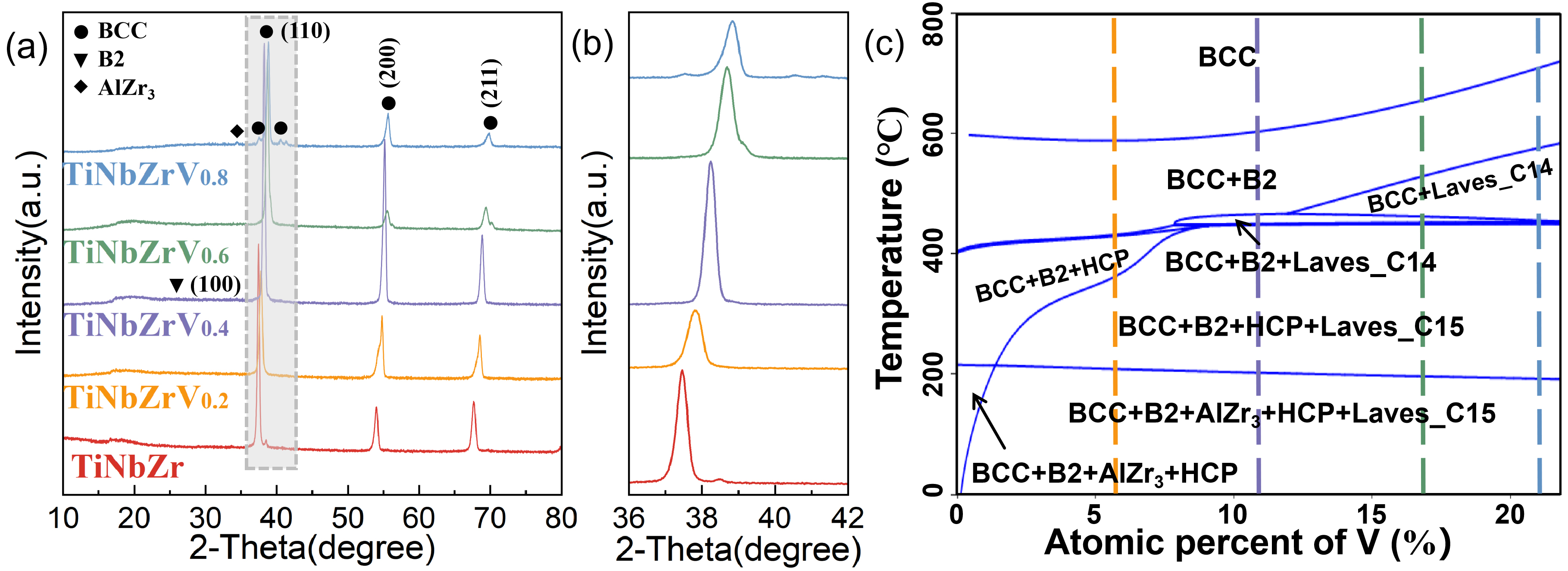
Figure 4. With the increase in V content, Zr, V, and Al are segregated at grain boundaries. Combined with the binary phase diagram in
Figure 2c, it can be determined that Zr segregation destroyed the order of the B2 phase and transformed it into AlZr
3 IMC [
34,
35].
3.4. Tensile Properties
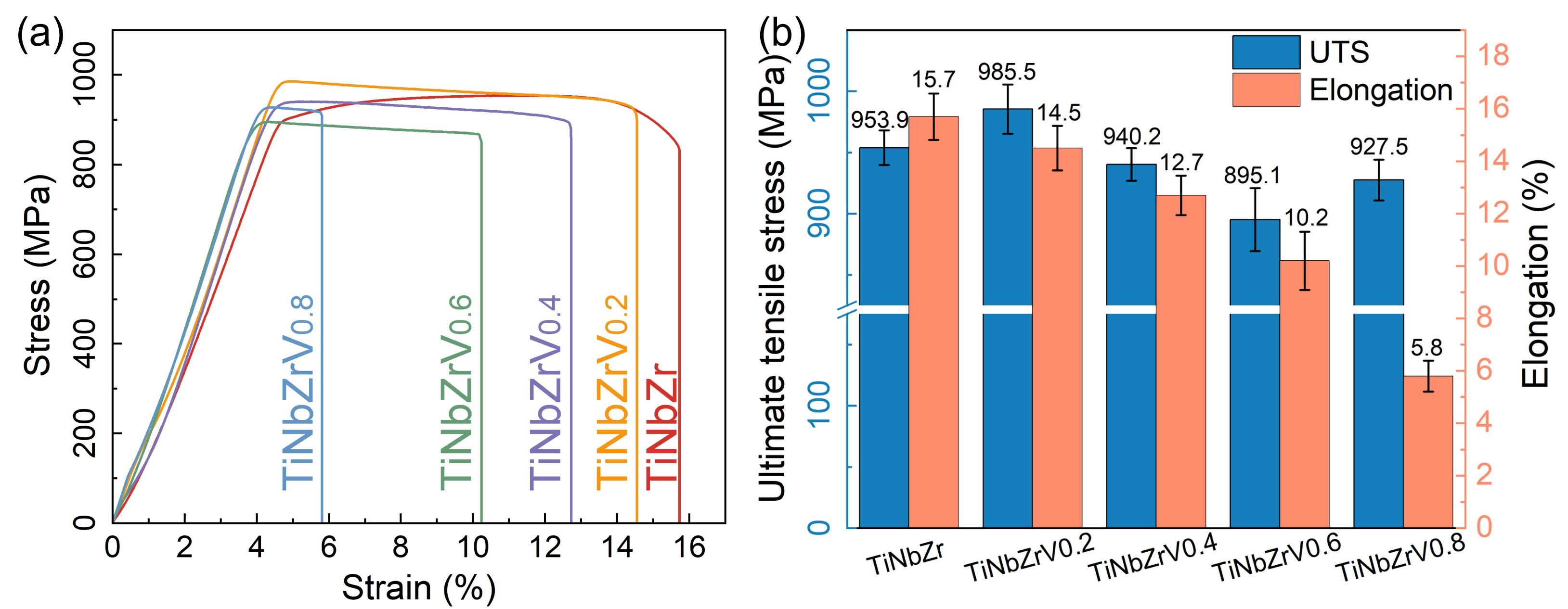
Figure 8 shows the stress–strain curves and corresponding mechanical properties of TiNbZr~TiNbZrV
0.8 tensile specimens. TiNbZrV
0.2 exhibited the highest ultimate tensile strength (UTS) at 985.2 MPa, while the tensile strengths of other specimens ranged between 890 and 960 MPa. The elongation at break of TiNbZr and TiNbZrV
0.2 specimens was 15.7% and 14.5%. For other specimens, elongation decreased with increasing V content. When V content reached 0.8, elongation dropped to 5.8%. Overall, TiNbZrV
0.2 shows the best mechanical properties with the highest UTS and a slightly lower elongation than TiNbZr.
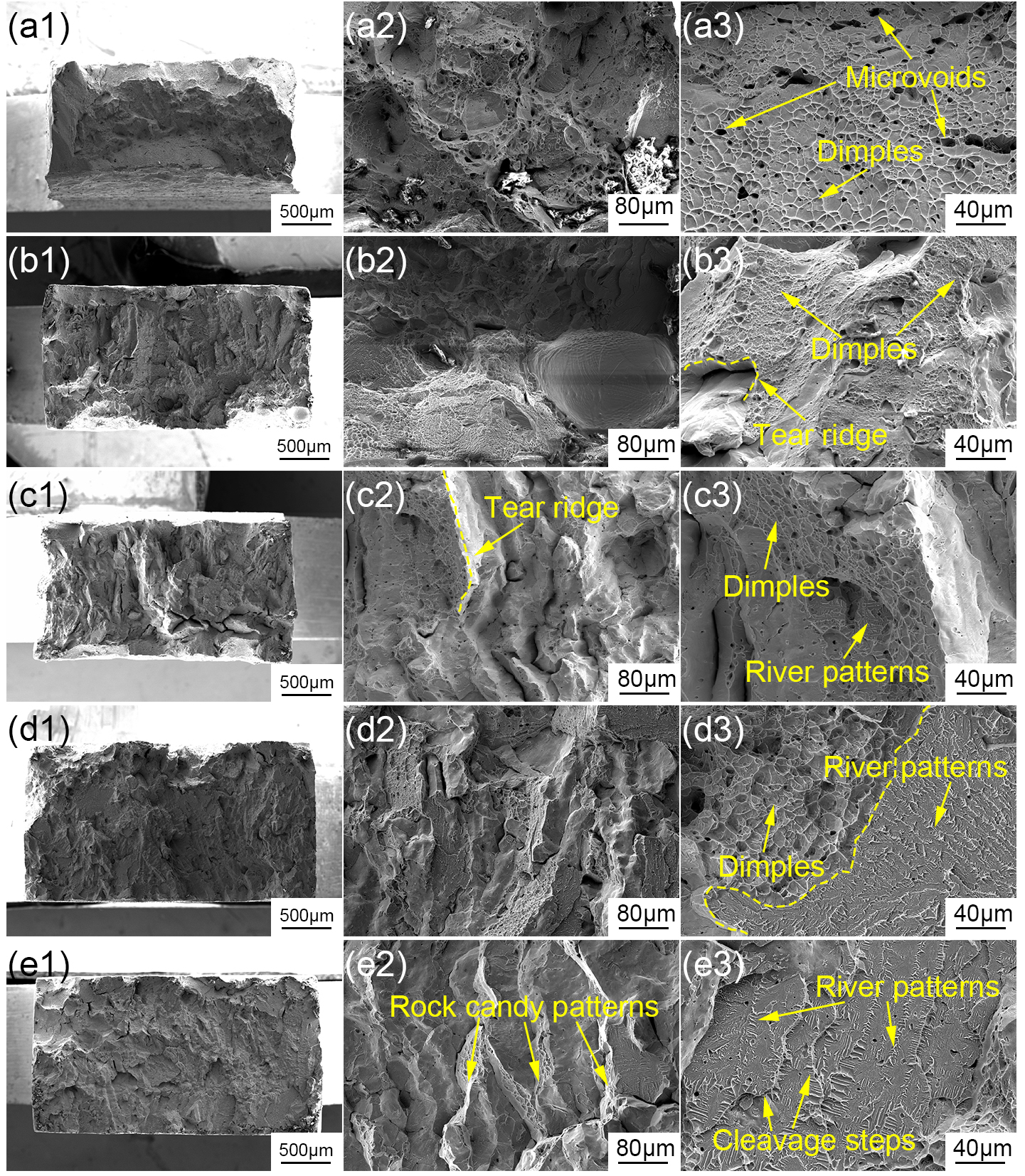
Figure 9 displays the fracture morphology of the specimens. As shown in
Figure 9(a3,b3), TiNbZr and TiNbZrV
0.2 exhibited ductile fracture, characterized primarily by dimples and microvoids. Tear ridges appeared on the fracture surfaces of TiNbZrV
0.2 and TiNbZrV
0.4 specimens, indicating localized plastic deformation [
37]. The longer tear ridges on the TiNbZrV
0.4 specimen suggested enhanced shear tearing during fracture. As shown in
Figure 9(c2–e2,c3–e3), fractures at TiNbZrV
0.4-TiNbZrV
0.8 exhibited both dimples and river patterns. With increasing V content, dimples decreased while river patterns increase. TiNbZrV
0.6 and TiNbZrV
0.8 displayed rock candy patterns and cleavage steps, showing intergranular fracture characteristics. The fracture mode was a mixed fracture of intergranular fracture and cleavage fracture.
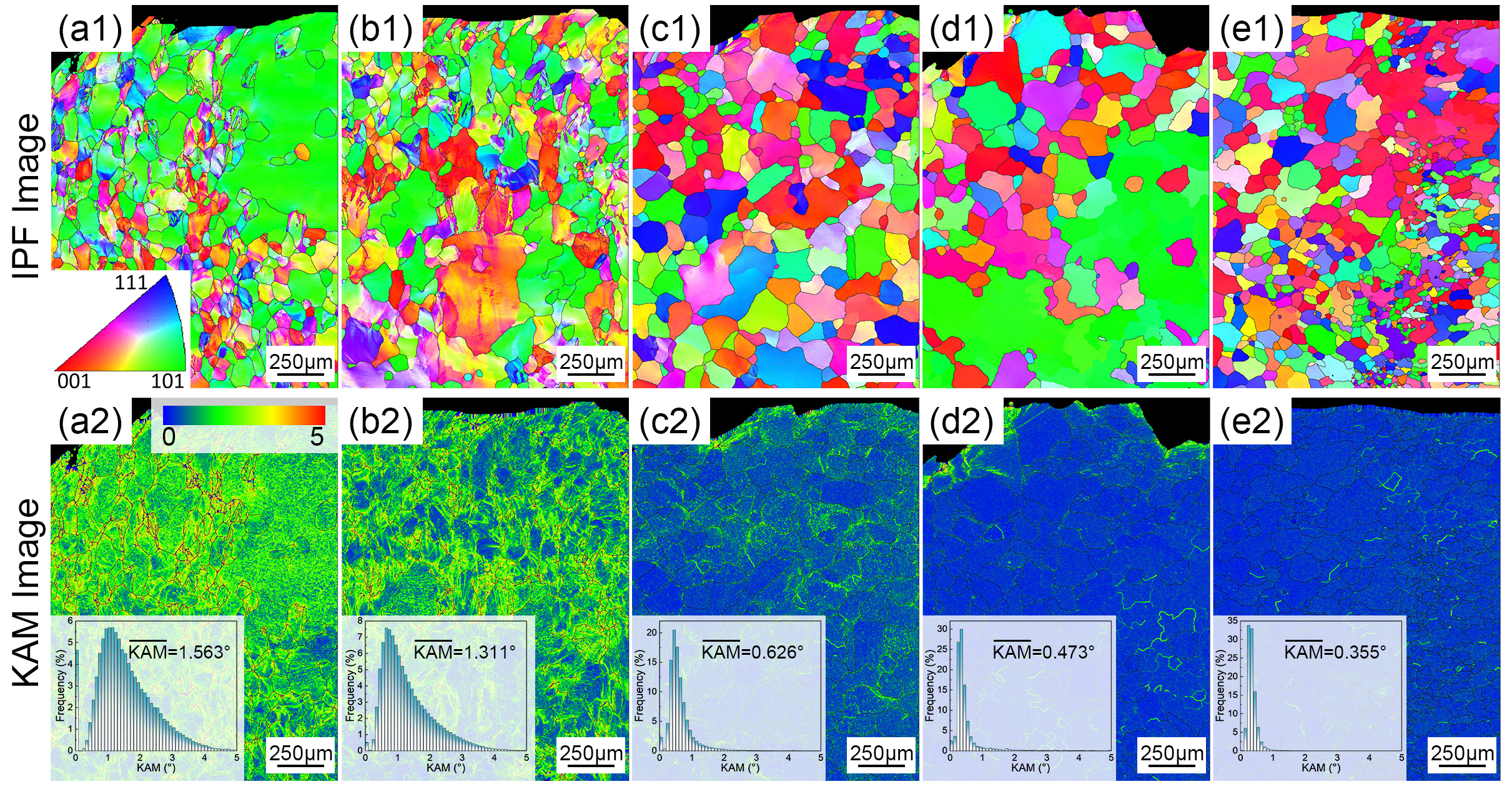
Figure 10 shows EBSD images of the XOY plane in
Figure 1a near the tensile fracture. The IPF images shown in
Figure 10(a1,b1) revealed that the grains near the fracture of TiNbZr and TiNbZrV
0.2 were elongated along the tensile direction, and stress concentration occurred in the grains. The stress concentration resulted from plastic deformation of crystals through slip, resulting in residual stress with uneven distribution. As V content increased, as shown in
Figure 10(c1–e1), both the extent to which the grains were elongated and the extent to which stress was concentrated decreased, indicating a decrease in the ability of the coating to plastically deform.
The KAM diagram displays orientation differences at grain boundaries and within crystals, which are related to dislocations and facilitate plastic deformation [
38]. As shown in
Figure 10(a2,b2), high-density dislocations appeared near the tensile fracture surfaces of TiNbZr and TiNbZrV
0.2, with average KAM values of 1.563° and 1.311°. The KAM values at grain boundaries exceeded those within grains, indicating that dislocations primarily accumulated at grain boundaries [
39], which exhibited higher local plastic deformation capacity. As shown in
Figure 10(c2,d2), the KAM values of TiNbZrV
0.4, TiNbZrV
0.6, and TiNbZrV
0.8 were lower than those of TiNbZr and TiNbZrV
0.2. High-density dislocations were concentrated near the fracture surface and decreased with increasing V content, indicating reduced dislocation density and diminished plastic deformation capacity.
3.5. Friction and Wear Behaviour
The instantaneous coefficient of friction (COF) can be calculated using the following equation:
where μ is the COF, F is the sliding friction force between the friction pair and friction surface, and N is the contact pressure between the friction pair and friction surface.
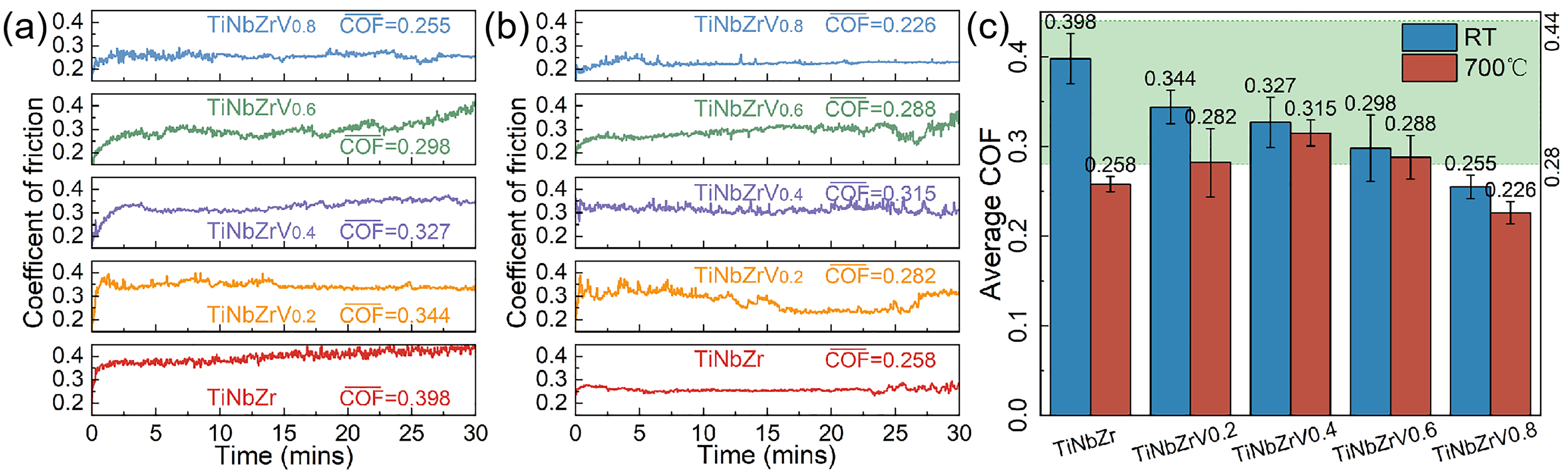
Figure 11a shows the time-dependent instantaneous COF curves of TiNbZrVx coatings at RT. It can be observed that the COF of TiNbZrV
0.2, TiNbZrV
0.4, and TiNbZrV
0.8 exhibited significant fluctuations during the running-in stage (0–5 min). This phase represented the break-in process between the coating and the friction pair. After the break-in completion, the COF gradually stabilized. The curves of TiNbZr and TiNbZrV
0.6 showed a continuous increase throughout the process, with the COF rising by over 0.1. This increase was attributed to excessive wear of the friction pair, where the contact pressure N failed to reach the set value, leading to an elevated COF.
Figure 11b shows the time-dependent variation in the instantaneous COF of TiNbZrVx coatings at 700 °C. Similar to the friction experiment at RT, the friction curve exhibited significant fluctuations in the initial stage. Between 5 and 25 min, the overall fluctuation of the COF curve decreased as the V content increased. After exceeding 25 min, the curves of TiNbZrV
0.2 and TiNbZrV
0.6 exhibited an upward trend, with the increase in COF exceeding 0.1. The curves of TiNbZr, TiNbZrV
0.4, and TiNbZrV
0.8 also remained relatively stable in the later friction stage, indicating that these coatings caused minimal wear to the friction pair during the friction process.
The average COFs of each sample are calculated and shown in
Figure 11c. The provisional technical conditions of the EMU brake disc “TJ-CL3102019” stipulate that the COF of the brake disc shall be within the range of 0.28~0.44 during braking. The average COFs of TiNbZr~TiNbZrV
0.6 at RT ranged from 0.28 to 0.44, meeting braking requirements. The COF of TiNbZrV
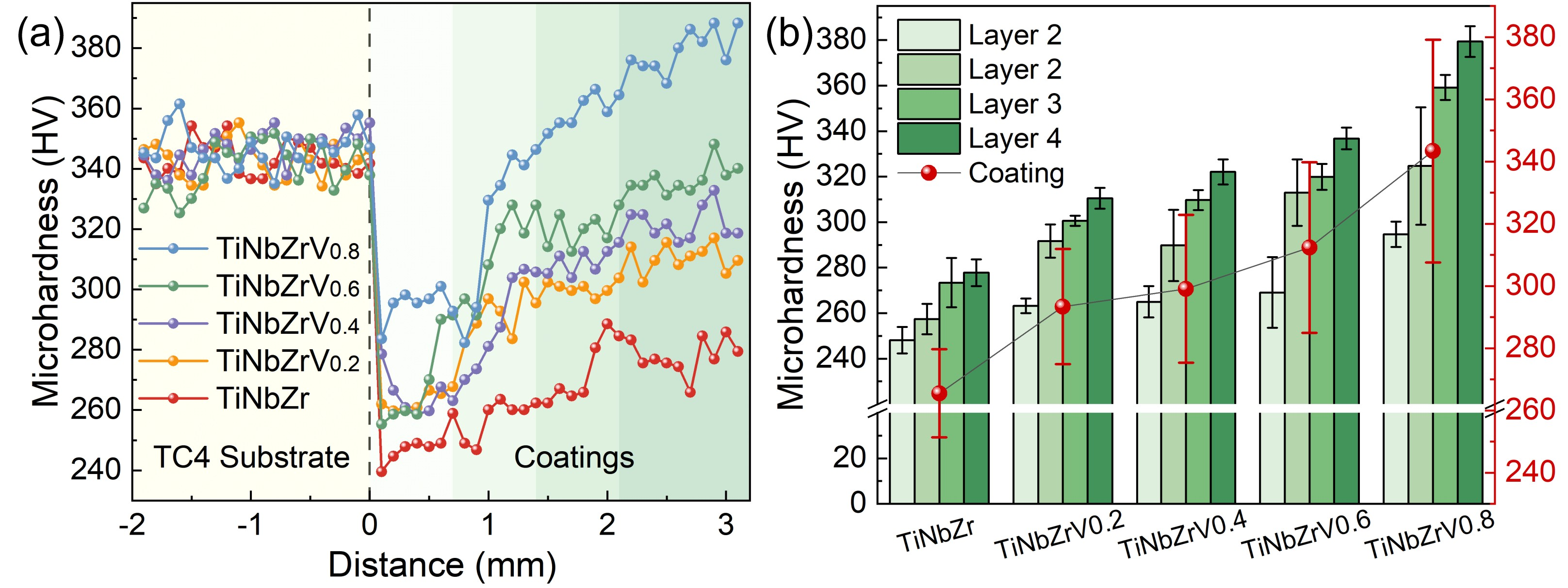
0.8 was 0.255 ± 0.013, which was below the normal operating requirement for brake discs. The COF of the coatings decreased gradually with the increase in V content at RT, which was caused by the increase in coating hardness and the decrease in plastic removal [
40,
41].
At 700 °C, the average COFs of the coatings were lower than at RT, initially increasing and then decreasing with increasing V content. The average COFs of TiNbZrV0.2, TiNbZrV0.4, and TiNbZrV0.6 were 0.282 ± 0.038, 0.315 ± 0.014, and 0.288 ± 0.024, respectively, meeting braking requirements. However, the COFs of TiNbZr and TiNbZrV0.8 were both below 0.28, failing to meet braking requirements. In summary, TiNbZrV0.2~TiNbZrV0.6 coatings met braking requirements for both ambient and elevated temperatures, with TiNbZrV0.4 exhibiting the smallest overall coefficient fluctuation.
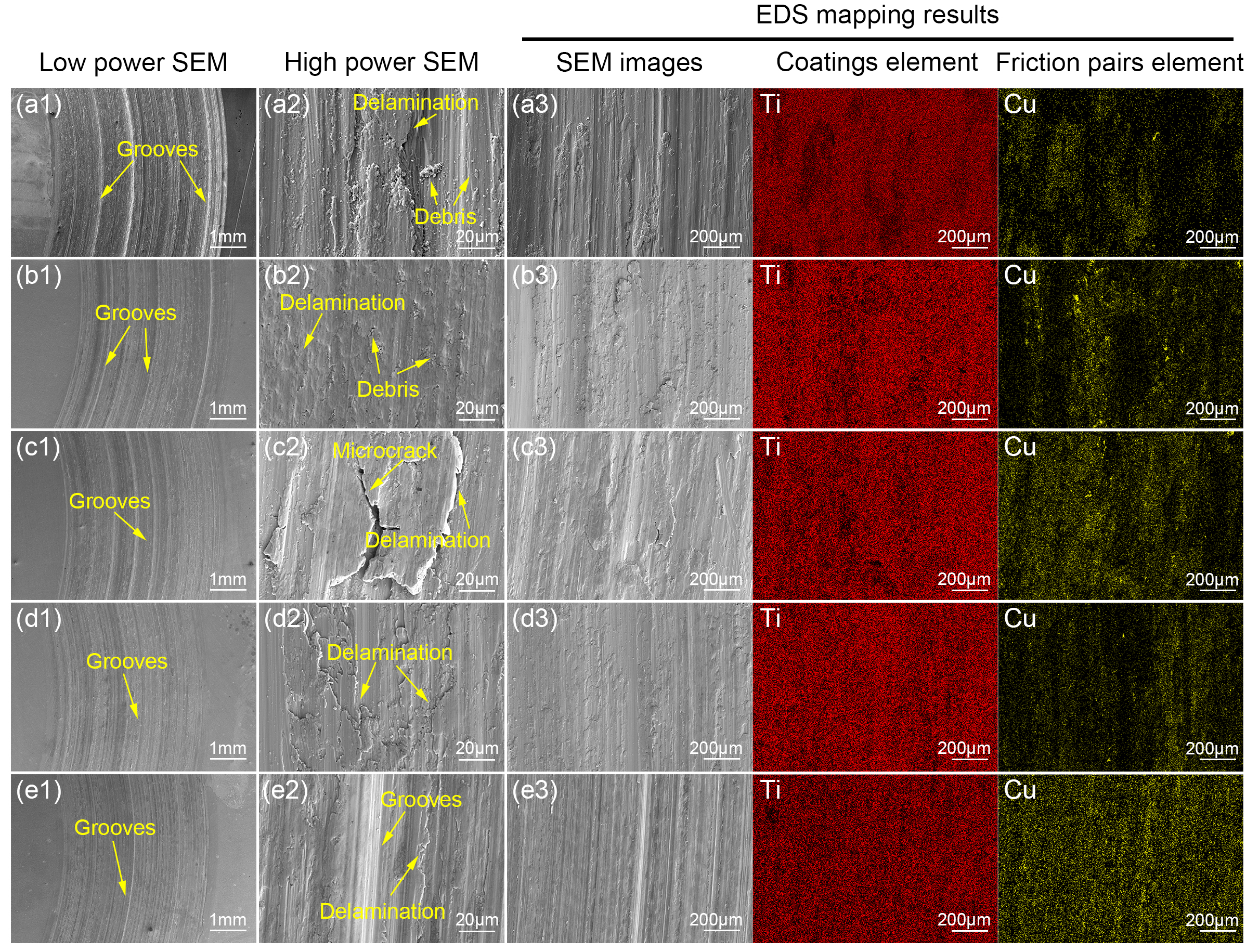
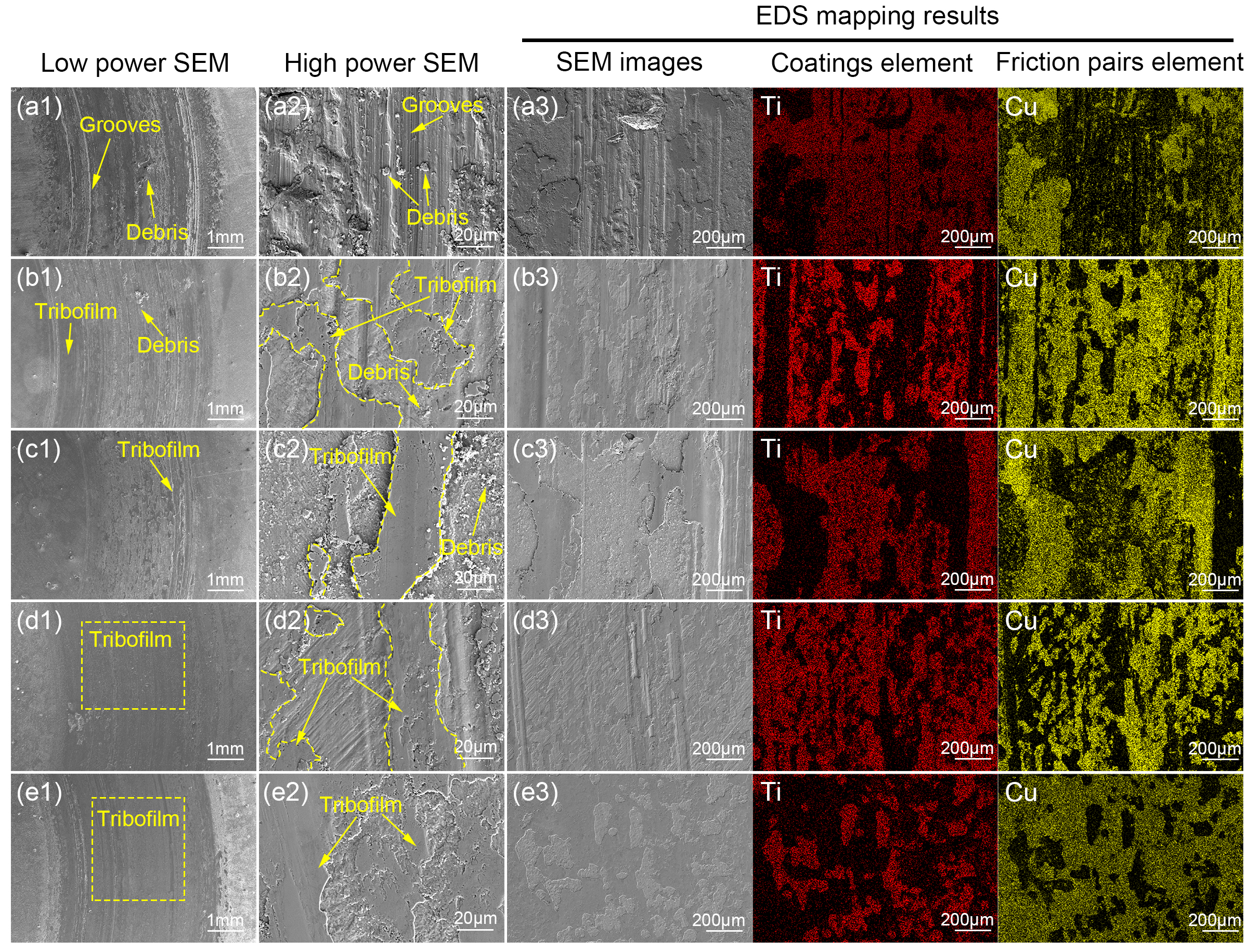
Figure 12 shows the surface morphology and the EDS spectra of the coatings and the friction pair’s main elements after the friction wear test at RT. As seen in
Figure 12(a1–e1) and
Figure 12(a2–e2), the wear surface morphology at RT was dominated by grooves and debris, which was the typical characteristic of abrasive wear [
42]. Grooves on the coating surface were formed by the cutting action of hard particles such as Cr-Fe, SiC, and SiC from the friction pair. Debris appeared as irregular particles, and EDS images showed higher Cu content in debris areas, indicating that debris primarily originated from the friction pair.
Figure 12(c2–e2) revealed delamination structures near the plow grooves in TiNbZrV
0.6 and TiNbZrV
0.8 coatings. These structures formed due to repeated compaction of debris.
Table 5 shows the major element contents on the wear surfaces at RT. The mass fraction of O fluctuated around 10%, indicating minor oxidative wear at RT. With increasing V content, the mass fraction of Cu decreased, suggesting that the degree of adhesive wear decreases. This trend was related to the hardness change in the coatings. The higher the hardness, the stronger the adhesion resistance of the coatings [
43].
Figure 13 shows the surface morphology of the coatings after the friction wear test at 700 °C, along with EDS spectra of the coatings and primary elements in the friction pair. Compared to RT, the worn surface appeared relatively smooth with reduced plowing and debris. Only shallow plowing and minor debris were observed on the TiNbZr surface. Surfaces from TiNbZrV
0.2~TiNbZrV
0.8 predominantly exhibited flake-like tribofilms. EDS images revealed that the tribofilm contained the friction pair element Cu but lacked the coating element Ti, indicating the tribofilm originated from the friction pair. At elevated temperature, the friction pair softened, allowing its components to adhere more readily to the coating surface, which accorded with the characteristics of adhesive wear. The transferred friction pair components rapidly oxidized at elevated temperature and were repeatedly compacted into dense films. These films partially functioned as lubricants, reducing the COF and wear rate [
44]. This explains the data in
Figure 11c, in which the average COF at elevated temperature was lower than that at RT. As V content increased, the tribofilm area expanded and the structure transitioned from dispersed to continuous.
Table 6 shows the content of major elements on the wear surface at 700 °C. Compared to RT, the O and Cu content on the wear surface was higher, indicating higher levels of oxidative wear and adhesive wear at elevated temperature. As V content increased, the mass fraction of Cu first increased and then decreased, indicating that the degree of adhesive wear first increased and then decreased. The mass fraction of Cu in the worn surface of the TiNbZrV
0.4 coating reached 29.91%, exhibiting the highest degree of adhesive wear.
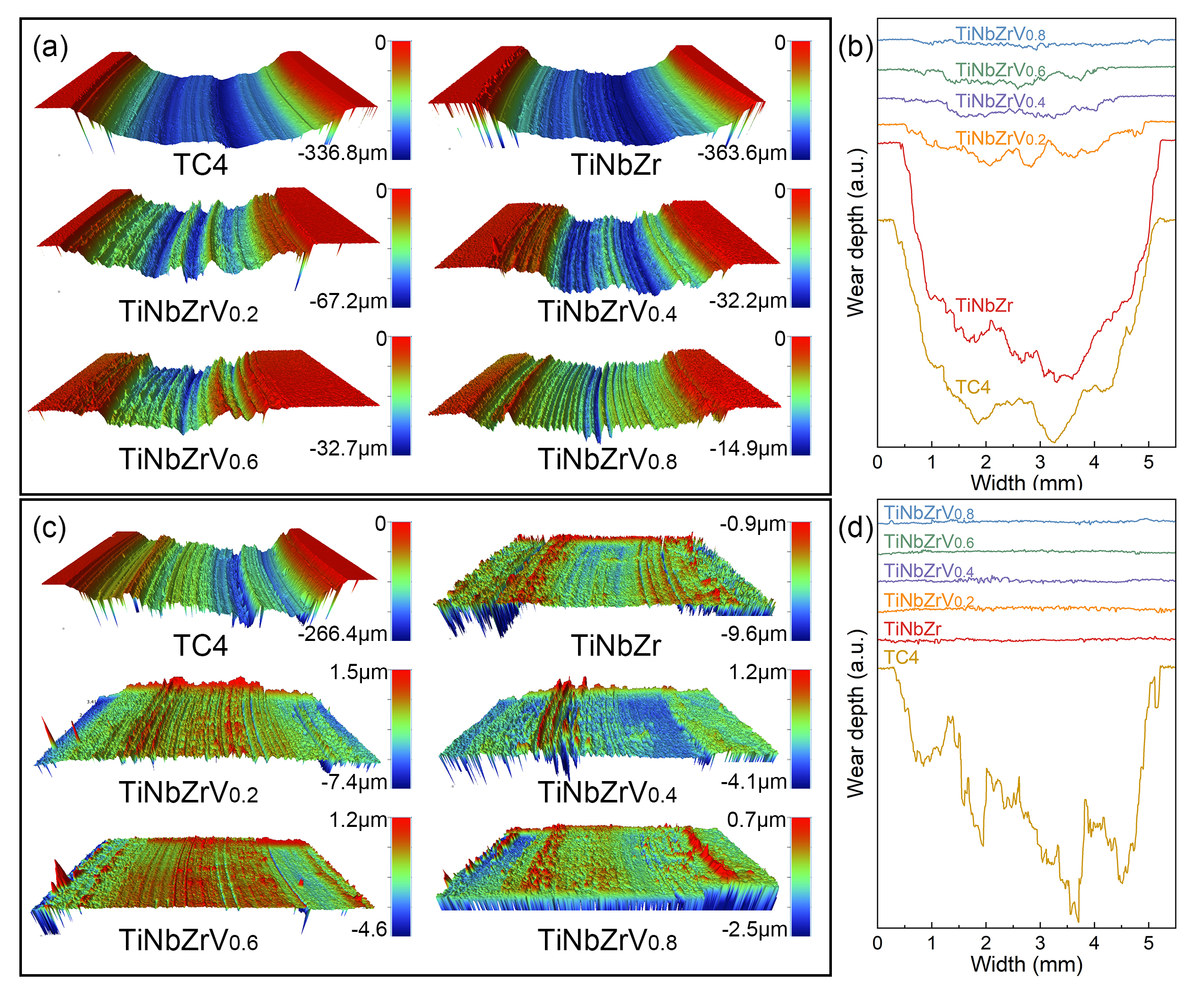
Figure 14 shows the wear scar profile and wear rate of TC4 and TiNbZrV
x coatings at RT and 700 °C. As shown in
Figure 14a,b, the wear scars of TC4 and TiNbZr coating at RT were composed of multi-channel grooves, showing a deep middle and shallow two sides, and the wear scar depth of TiNbZr reaches 363.6 μm. After V addition, the wear scar depth decreased obviously, the boundary between grooves became clearer, and the wear scar depth of TiNbZrV
0.8 decreased to 14.9 μm.
Figure 14c,d are profiles of wear scars at 700 °C. TC4 was more easily softened than the coatings at elevated temperature [
45], leading to the friction pair cutting more into it and forming grooves. However, the tribofilm played a role in protection and lubrication, and the grooves were shallower than those at room temperature. So the scar surface of TC4 was still dominated by furrows, but the wear depth decreased to 266.4 μm, which was lower than the wear depth at RT but far greater than the coating’s depth. The wear scars of TiNbZrV
x coatings were flattened, and the friction films adhering to the coating surface increased with increasing V content.
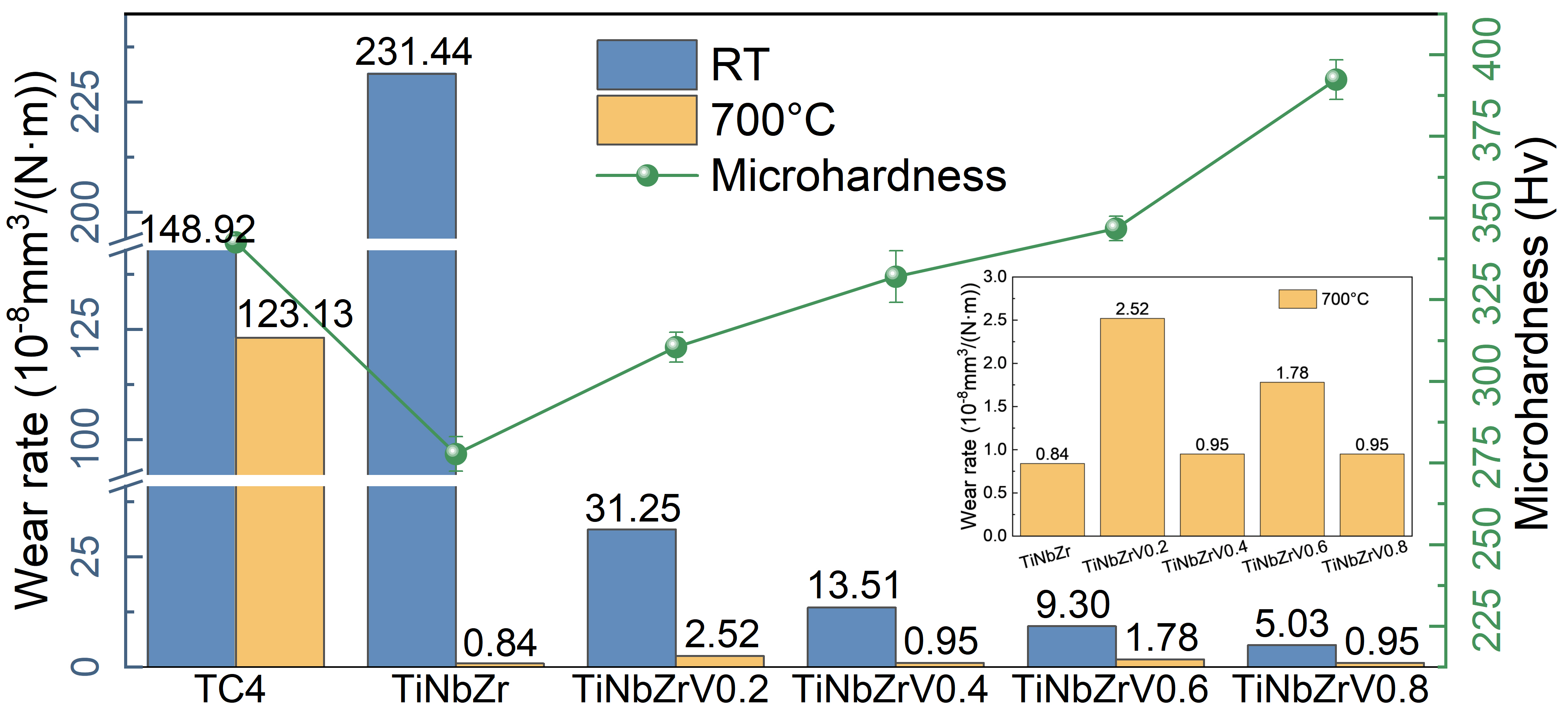
According to the Archard formula, the wear rate is inversely proportional to the hardness of the material [
46]. Measure the microhardness of the contact surface between the friction block and the friction pair, respectively, at room temperature, measure 5 times for each sample, and calculate the average value. Calculate the wear rates of TC4 and TiNbZrV
x coatings at RT and elevated temperature. The relationship between wear rate and microhardness of the contact surface is shown in
Figure 15. TC4 is composed of HCP and BCC phases [
47] and has higher hardness than single BCC. Therefore, TC4 showed higher microhardness and lower wear rate than TiNbZr. The wear rate of TC4 and TiNbZr at RT were 148.92 × 10
−8 mm
3/(N∙m) and 231.44 × 10
−8 mm
3/(N∙m). The addition of V can cause lattice distortion and hinder dislocation movement, and improve the plastic deformation resistance of the coating. Therefore, although the hardness of TiNbZrV
0.2 and TiNbZrV
0.4 was lower than that of TC4, the wear rates were greatly reduced. As V content increased, wear rate decreased continuously with increasing hardness and precipitates, because higher hardness values increased the bearing capacity of the coating to some extent [
48]. The wear rate of TiNbZrV
0.8 decreased to 5.03 × 10
−8 mm
3/(N∙m), which was 97.8% lower than that of TiNbZr.
The wear rate of TC4 at 700 °C decreases to 123.13 × 10⁻⁸ mm3/(N∙m), which is 17.32% lower than that at RT. For TiNbZrVx coatings, the decrease in wear rates was more obvious. The wear rates of the coatings fluctuated from 0.95 to 2.52, which were 99.64%, 91.93%, 92.97%, 80.86%, and 81.11% lower than those at RT, respectively.